
High-Protein Breakfasts: 20 Ideas with 30g+ Protein Each
Breakfast is the most under-proteinated meal of the day for most people. Starting with 30–40g of protein sets you up for better appetite control, improved muscle recovery, and an easier path to your daily protein target. Here are 20 practical ideas, ranked from fastest to prep to most filling.
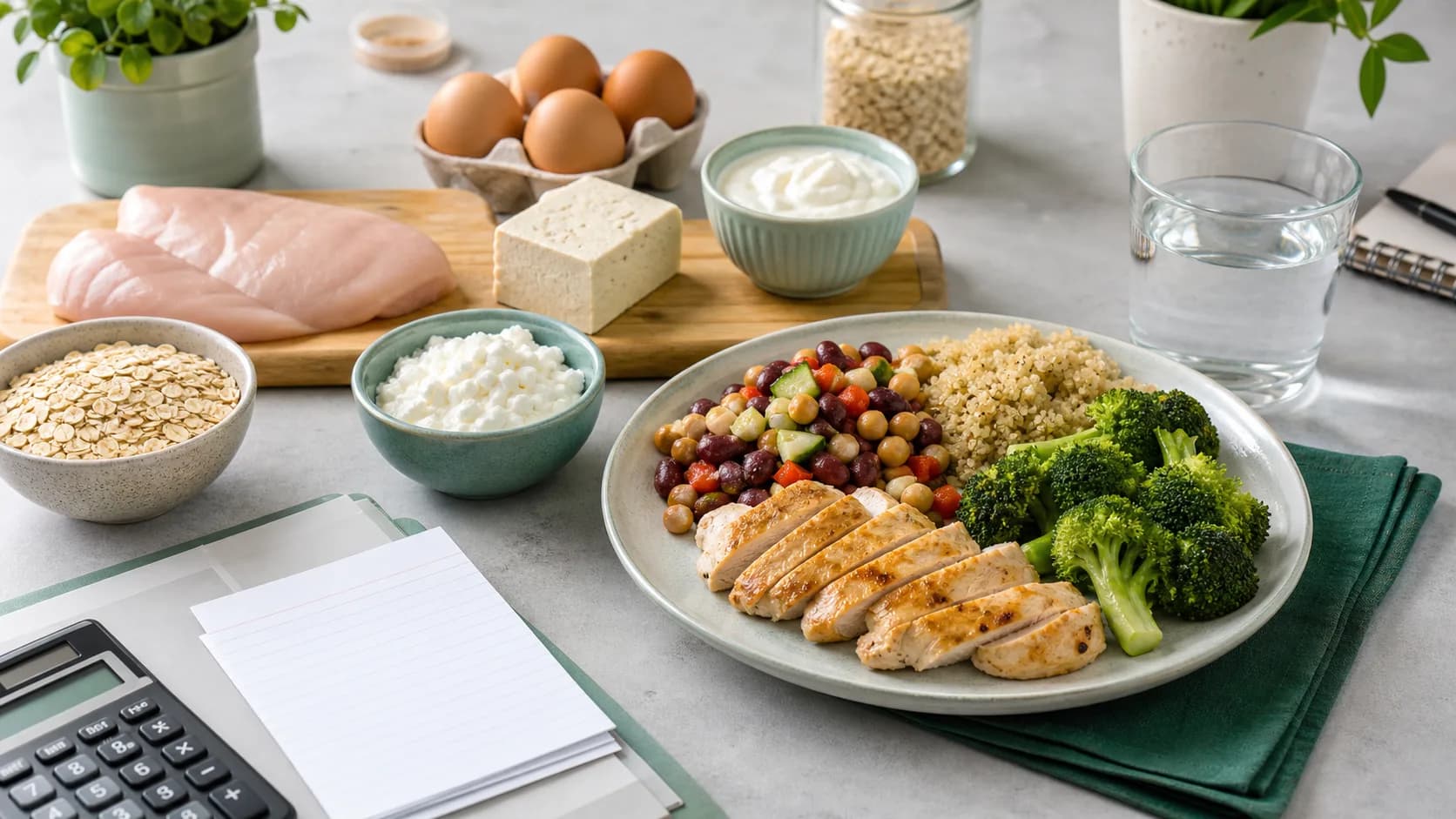
Avoiding eggs or tired of egg-based meals? Use the high-protein breakfast without eggs guide for yogurt, tofu, cottage cheese, protein oats, and savory no-egg options.
Why Front-Loading Protein at Breakfast Works
Breaks the Overnight Fast
After 7–10 hours without protein, muscle protein breakdown is elevated. A high-protein breakfast quickly reverses this and stimulates muscle protein synthesis.
Reduces Calorie Intake Later
A 2013 study found that a high-protein breakfast (35g) reduced ghrelin (hunger hormone) significantly more than a lower-protein breakfast and led to fewer calories consumed throughout the day.
Improves Body Composition
Research consistently shows that distributing protein evenly across meals (including breakfast) produces better body composition outcomes than concentrating protein in dinner — even at the same total daily intake.
Sustains Energy and Focus
Protein slows gastric emptying and stabilises blood glucose, reducing energy crashes 1–2 hours after eating that are common with carb-heavy breakfasts.
20 High-Protein Breakfast Ideas
Protein shake + Greek yogurt bowl
Mix 1 scoop whey with 200g Greek yogurt, top with berries and granola
4-egg omelette with cheese and turkey
Whisk 4 eggs, pour into pan, add 50g turkey breast and 30g cheddar
Cottage cheese + protein powder + berries
Mix 250g cottage cheese with 1 scoop unflavoured protein and 100g berries
Smoked salmon bagel + 2 eggs
Scramble 2 eggs, serve on toasted bagel with 80g smoked salmon and cream cheese
High-protein overnight oats
50g oats + 200ml milk + 1 scoop protein powder + 100g Greek yogurt — refrigerate overnight
Greek yogurt parfait (doubled portion)
300g 0% Greek yogurt + 50g granola + 100g berries + 1 tbsp nut butter
Egg white omelette (6 whites) + spinach
6 egg whites whisked with spinach and feta — low calorie, very high protein
Skyr (200g) + protein powder + granola
200g skyr + 0.5 scoop protein + 30g low-sugar granola
Chicken sausages + eggs + toast
2 chicken sausages + 3 scrambled eggs + 1 slice wholegrain toast
Tofu scramble with nutritional yeast
250g firm tofu crumbled and pan-fried with turmeric, nutritional yeast, and vegetables
3 eggs + turkey rashers + avocado
Fry 3 eggs + 3 turkey rashers, serve with half avocado on the side
Protein pancakes (banana + eggs)
2 eggs + 1 banana + 1 scoop protein powder blended and cooked as pancakes
Tuna on wholegrain toast + eggs
100g canned tuna + 2 boiled eggs on 2 slices wholegrain toast
Chia seed pudding with protein powder
3 tbsp chia seeds + 300ml milk + 1 scoop protein, refrigerate overnight
Quark with banana and nuts
250g quark + 1 banana + 30g mixed nuts — ready instantly
Smoked salmon + 3 scrambled eggs
3 eggs scrambled soft + 60g smoked salmon + capers on the side
Edamame bowl with eggs
100g edamame (microwaved) + 2 boiled eggs + soy sauce + sesame seeds
Cottage cheese on rye + smoked salmon
150g cottage cheese spread on 2 rye crispbreads + 60g smoked salmon
Whey protein oatmeal
50g oats cooked + 1 scoop whey stirred in off heat + banana + almond butter
High-protein yogurt with seeds and nuts
200g skyr or Greek yogurt + 2 tbsp hemp seeds + 2 tbsp pumpkin seeds + 1 tbsp chia
Best Protein Combinations for Breakfast
| Combination | Protein | Best For |
|---|---|---|
| Greek yogurt + whey protein | 35–45g | Maximum protein, minimum prep |
| Eggs + smoked salmon | 28–36g | Complete amino acids, omega-3s |
| Cottage cheese + protein powder | 36–42g | Casein-rich, high satiety |
| Tofu + nutritional yeast | 28–35g | Vegan, complete amino acids |
| Oats + milk + protein powder | 30–38g | Sustained energy, easy to prep |
| Skyr + seeds + nuts | 25–30g | Portable, no cooking required |
Meal Prep Tips for High-Protein Breakfasts
Boil a batch of eggs on Sunday
8–12 hard-boiled eggs last 5–7 days in the fridge. Grab 3 on busy mornings for 19g instant protein.
Prep overnight oats the night before
Takes 5 minutes the night before. Ready to eat straight from the fridge with 30–40g protein when you add protein powder.
Keep Greek yogurt and protein powder stocked
The fastest high-protein breakfast: 200g yogurt + 1 scoop whey stirred in. No cooking, 35+ grams of protein.
Pre-portion snack bags
Divide nuts, seeds, and portion-controlled items into daily bags to make assembly faster in the morning.
Buy ready-to-eat smoked salmon
No cooking needed, very high protein density. Paired with eggs or cottage cheese, it creates a fast, complete protein breakfast.
Frequently Asked Questions
How much protein should breakfast have?
Research on optimal protein distribution suggests each meal should provide enough protein to trigger muscle protein synthesis — approximately 25–40 g of protein per meal for most adults. Breakfast is often the lowest-protein meal of the day (many people eat 10–15g at breakfast vs 40–50g at dinner). Aiming for 30–40g of protein at breakfast is a practical and evidence-supported target that improves satiety, reduces mid-morning snacking, and helps hit daily protein totals.
Why is breakfast important for protein intake?
After an overnight fast of 7–10 hours, your body has been in a relative protein deficit. A high-protein breakfast replenishes amino acid availability and stimulates a muscle protein synthesis response after the overnight period. It also sets the tone for the day — studies consistently show that people who eat a protein-rich breakfast consume fewer total calories and feel fuller longer than those who eat a carb-heavy breakfast.
What is the highest-protein breakfast food?
On a per-gram-of-protein basis, the highest-protein breakfast foods are: protein powder (75–90g/100g), eggs (13g/100g, but easy to eat in quantity), Greek yogurt (10g/100g), cottage cheese (12g/100g), smoked salmon (22g/100g), and turkey or chicken breast. For practical, quick breakfasts: a protein shake with Greek yogurt provides 35–45g protein in minutes.
What are quick high-protein breakfasts?
The fastest high-protein breakfasts (under 5 minutes): protein shake (25g protein), Greek yogurt + protein powder mix (30–35g), cottage cheese with berries (24g/250g), hard-boiled eggs prepped the night before (3 eggs = 19g), smoked salmon with cream cheese on rice cakes (18g), or overnight oats with protein powder and milk (30g+).
Can I eat eggs every day?
For most healthy adults, eating eggs daily is safe and nutritionally beneficial. The concerns about dietary cholesterol from eggs affecting blood cholesterol are not supported by the current evidence for most people — the liver compensates for dietary cholesterol intake. Eggs are one of the most nutritionally complete foods available. People with familial hypercholesterolaemia or specific cardiovascular conditions should follow medical advice.
Are overnight oats high in protein?
Standard overnight oats (rolled oats + milk) provide about 8–12g of protein — reasonable but not high-protein. You can significantly boost the protein by adding: a scoop of protein powder (+22–25g), Greek yogurt instead of some milk (+10g/100g), and seeds like hemp or chia (+5g/3 tbsp). With these additions, overnight oats can easily reach 30–40g of protein per serving.