
7-Day High-Protein Meal Plan
A practical, week-long meal plan designed around 150g+ protein per day — covering breakfast, lunch, dinner, and a daily snack. Each meal is built around a clear protein anchor, with approximate protein and calorie counts.
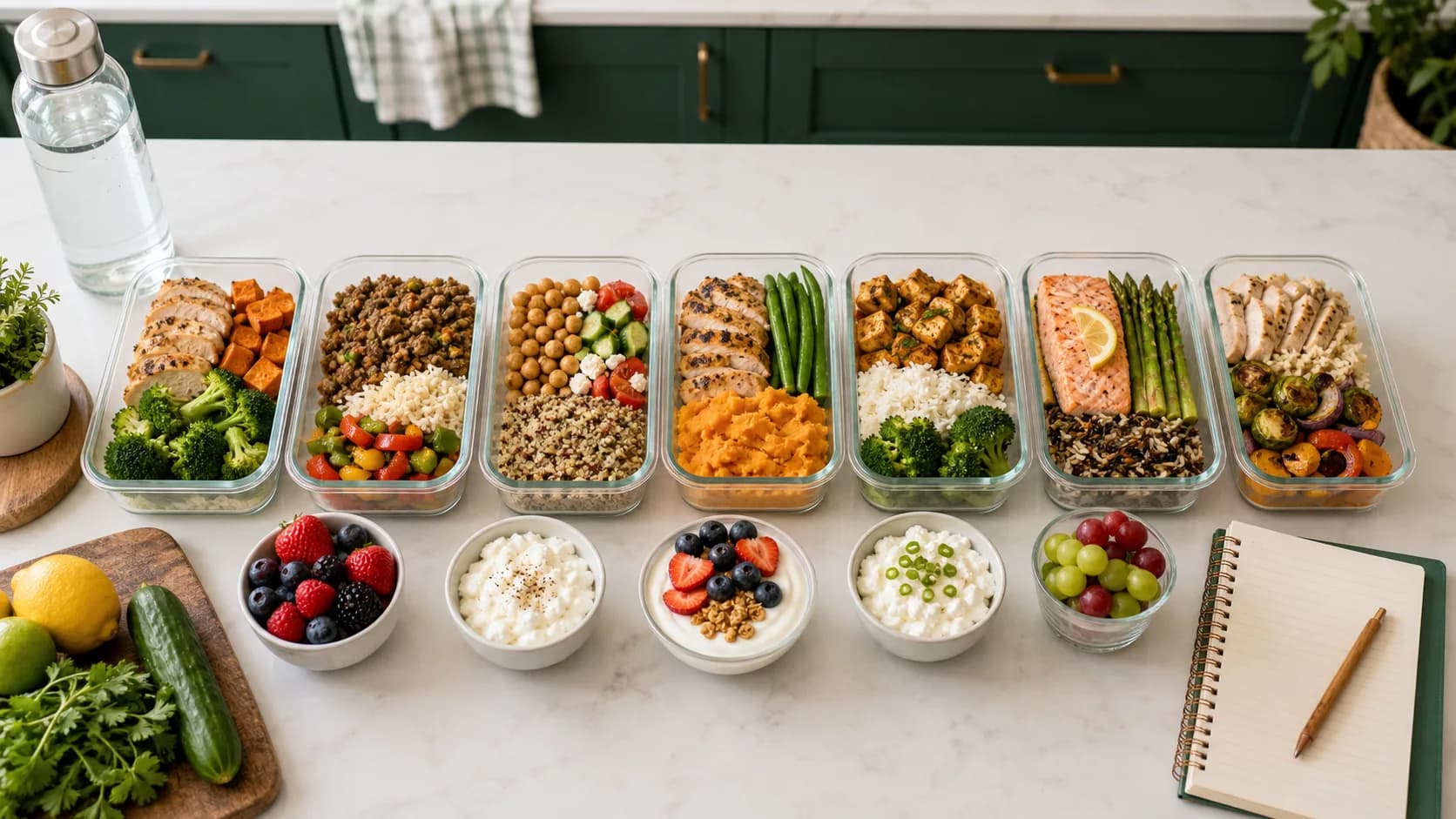
Who this plan is designed for
This plan targets approximately 1.8–2.0 g/kg body weight for an 80kg (176lb) person, providing around 155–165g protein per day. If you weigh significantly more or less, adjust portion sizes of the protein sources (meat, fish, yogurt, eggs) up or down accordingly. Use the Protein Calculator to find your exact target before starting.
Weekly Protein Overview
| Day | Total Protein | Approx. Calories | Highlight |
|---|---|---|---|
| Monday | 166g | ~1800 kcal | Lunch: 52g |
| Tuesday | 169g | ~1850 kcal | Lunch: 48g |
| Wednesday | 159g | ~1680 kcal | Lunch: 50g |
| Thursday | 176g | ~1910 kcal | Dinner: 62g |
| Friday | 159g | ~1780 kcal | Lunch: 52g |
| Saturday | 154g | ~1810 kcal | Lunch: 46g |
| Sunday | 170g | ~1870 kcal | Lunch: 54g |
Full 7-Day Plan
Day 1 — Monday
200g Greek yogurt (0% fat) + 30g whey protein stirred in + 40g rolled oats + 1 tbsp honey + berries
180g grilled chicken breast + 200g cooked brown rice + large mixed salad with olive oil dressing
200g cottage cheese (low-fat) + 1 apple
200g salmon fillet (baked) + 250g roasted sweet potato + steamed broccoli
Day 2 — Tuesday
4 whole eggs scrambled + 2 slices wholegrain toast + 1 tbsp butter + 100g smoked salmon
Large tuna salad: 200g canned tuna (drained) + 3 tbsp light mayo + celery + wholegrain wrap
30g whey protein shake with 250ml semi-skimmed milk
200g lean beef mince (stir-fried) + 150g cooked noodles + mixed vegetables + soy-ginger sauce
Day 3 — Wednesday
Protein pancakes: 3 eggs + 200g cottage cheese + 50g oats blended + topped with berries
180g baked cod + 200g cooked quinoa + roasted courgette and peppers with olive oil
150g edamame (shelled, salted) + 1 hard-boiled egg
200g turkey mince stir-fry with 2 cups mixed vegetables + 150g cooked basmati rice
Day 4 — Thursday
200g skyr (Icelandic yogurt) + 1 scoop vanilla whey + 30g granola + sliced banana
Chicken and black bean burrito bowl: 160g cooked chicken + 120g black beans + 150g brown rice + salsa
3 rice cakes + 150g low-fat cottage cheese + cucumber slices
2 salmon fillets (300g total, baked) + 200g roasted baby potatoes + asparagus
Day 5 — Friday
3-egg omelette with 50g feta + spinach + tomatoes + 2 slices wholegrain toast
Large chicken Caesar salad: 180g grilled chicken + romaine + 30g parmesan + low-cal dressing
1 protein bar (20g+ protein) + 1 orange
200g sirloin steak + 200g roasted sweet potato wedges + large green salad
Day 6 — Saturday
5-egg veggie scramble: eggs + mushrooms + peppers + onion + 50g cheddar + 2 slices sourdough
200g tuna + 200g mixed bean salad + olive oil + lemon + cherry tomatoes
200g Greek yogurt + 30g mixed nuts + drizzle of honey
200g chicken thighs (roasted) + 200g roasted root vegetables + gravy (low-fat)
Day 7 — Sunday
Overnight oats: 80g oats + 250ml skimmed milk + 30g whey protein + 2 tbsp peanut butter
200g cooked lentils + 180g grilled chicken strips + roasted peppers + wholegrain flatbread
30g whey protein shake + 1 banana
200g white fish fillet (baked) + 250g boiled baby potatoes + mixed vegetables + lemon butter
Principles Behind This Plan
This plan is built around five evidence-based principles for hitting high protein targets consistently:
Every meal has a protein anchor
Each meal — including snacks — has a clearly identified primary protein source that contributes 20–50g. Meals without a protein anchor (a salad with no protein source, toast with only a thin spread) are replaced or supplemented.
Protein is front-loaded
Breakfasts average 42–46g protein in this plan. Most people's protein shortfall comes from low-protein breakfasts (5–15g). Greek yogurt, eggs, cottage cheese, and protein shakes are the fastest path to a high-protein morning.
Variety across protein sources
The plan uses animal proteins (chicken, fish, beef, eggs, dairy) and some legumes to provide a range of amino acid profiles, plus micronutrients (omega-3s from fish, B12 from animal products, iron from beef) that vary across sources.
Practical and repeatable
No meal requires hard-to-find ingredients or complex cooking. Most can be batch-prepared in 30–60 minutes. Greek yogurt, cottage cheese, canned tuna, and hard-boiled eggs require no cooking at all.
Sunday Meal Prep: 60 Minutes to Simplify the Week
Prepping these items on Sunday covers most of the protein work for Days 1–4 without daily cooking:
Batch-cook 800g–1kg chicken breast
25 min · Covers 4–5 lunches/dinners
Hard-boil 8–10 eggs
12 min · Snacks + breakfast options for 3–4 days
Cook 400g brown rice or quinoa
20 min (unattended) · 3–4 portions of carbs with protein meals
Portion Greek yogurt containers
5 min · Pre-portioned 200g containers for 3–4 breakfasts
Wash and chop vegetables
10 min · Reduces friction for salads and stir-fries
Adjusting the Plan for Your Goals
| Goal | Adjustment | Keep the same |
|---|---|---|
| Fat loss | Reduce rice/potato/oats portions by 30–50%. Use 0% fat dairy. Total calories should be 300–500 below TDEE. | Keep all protein portions the same — high protein is most important during a deficit. |
| Muscle gain | Add 200–400 kcal from carbs (larger rice/potato portions, an extra banana, more oats). Total calories should be 200–400 above TDEE. | Protein portions stay the same — more protein doesn't mean more muscle once at ≥1.6 g/kg. |
| Maintenance | No major changes needed. Adjust total portion sizes to match your TDEE from the calculator. | All protein sources and meal structure stay the same. |
| Vegetarian | Replace chicken/fish/beef with: 200g Greek yogurt, 200g cottage cheese, 3–4 eggs, 200g tofu, or 200g tempeh per serving. | Keep the same total protein target. Vegetarian substitutions can fully replace animal proteins when portioned correctly. |
Sources reviewed
- USDA FoodData Central - U.S. Department of Agriculture
- Dietary Reference Intakes summary tables - National Academies Press
- International Society of Sports Nutrition Position Stand: protein and exercise - Journal of the International Society of Sports Nutrition
Frequently Asked Questions
How much protein per day does this meal plan provide?
This meal plan is designed for an 80kg (176lb) individual targeting approximately 1.8–2.0 g/kg body weight — around 145–165g protein per day. If you weigh more or less, scale portion sizes of the protein sources proportionally, or use the Protein Calculator to find your personalised target first.
Can I repeat meals from earlier in the week?
Yes — in practice, most people eat the same 5–10 meals repeatedly. Find 2–3 breakfasts, lunches, and dinners from this plan that you enjoy and rotate them. Variety across food groups matters for micronutrients, but you don't need a completely different meal every day to hit your protein target.
Is this meal plan suitable for vegetarians?
This plan includes primarily animal-based protein sources. For a vegetarian or vegan approach, replace chicken/fish/beef entries with equivalent portions of Greek yogurt, cottage cheese, eggs, tofu, tempeh, lentils, or edamame. See the Vegan Protein Guide for detailed plant-based protein strategies.
Do I need to follow this exact plan?
No — this is a template and reference, not a prescription. Use it to learn which meal structures reliably hit 35–50g protein per sitting, then adapt it to your food preferences, schedule, and budget. The most important principle is that every meal has a clear, identified protein anchor.
Should I meal prep for this plan?
Meal prepping Days 1–3 on Sunday (batch-cooking proteins and grains) dramatically reduces friction during the week. Prioritise prepping: chicken breast or thighs, hard-boiled eggs, and a large pot of legumes or grains. Breakfast items like Greek yogurt and cottage cheese require no prep.
What if I'm not hitting the protein targets?
Common causes: portion sizes are smaller than specified, you're substituting lower-protein foods, or you're skipping a meal. Check your intake with a tracking app (Cronometer or MyFitnessPal) for 3–5 days to identify which meals are falling short, then adjust those specific meals first.