
Snack recipes
High Protein Snack Recipes: Easy 20g+ Ideas for Every Goal
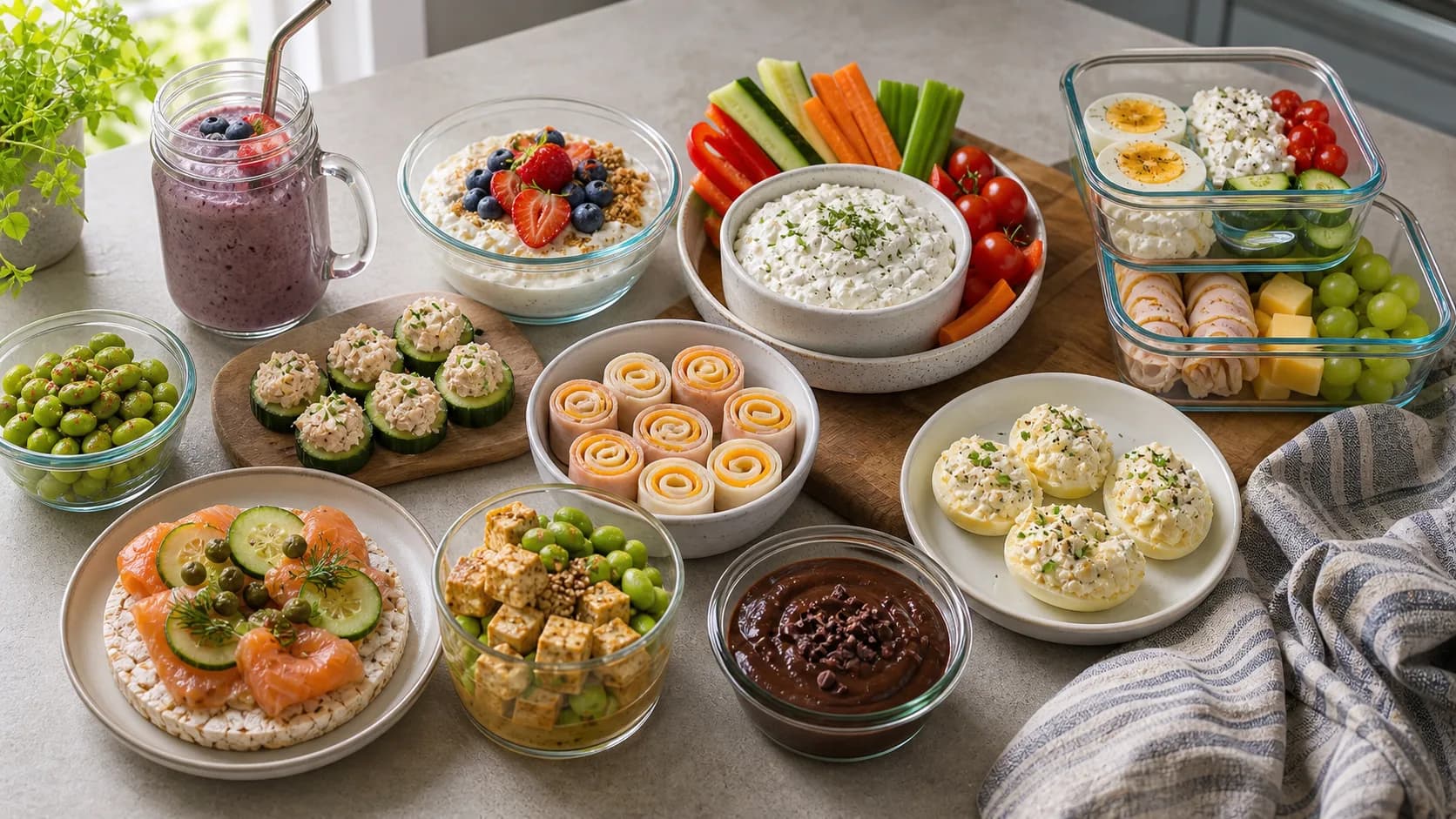
This complete guide to high protein snack recipes gives you beginner-friendly snacks, weight-loss snacks, muscle-gain snacks, no-cook options, meal-prep ideas, and under-400-calorie recipes with practical protein and calorie estimates. The recipes use Greek yogurt, skyr, cottage cheese, tuna, salmon, turkey, eggs, egg whites, edamame, tofu, roasted chickpeas, lentils, protein powder, peanut powder, oats, fruit, vegetables, and simple sauces so snacks can close protein gaps without turning into random grazing.
Key Takeaways
- A useful high protein snack recipe usually provides 15-35 g protein; lighter snacks may sit near 12-20 g and mini-meal snacks can reach 30-45 g.
- Beginners should start with no-cook anchors such as Greek yogurt, cottage cheese, tuna packets, skyr, eggs, turkey slices, edamame, tofu, and protein powder.
- For weight loss, keep protein high while measuring calorie-dense extras like nuts, nut butter, granola, cheese, oils, crackers, chocolate chips, dried fruit, and large wraps.
- For muscle gain, keep the protein anchor and add planned calories from oats, granola, fruit, milk, bagels, tortillas, rice cakes, nuts, seeds, avocado, or full-fat dairy.
- High protein snack recipes under 400 calories are easy when the recipe starts with lean protein, dairy, soy, seafood, eggs, vegetables, berries, or measured starches.
Article Structure
- 1. High Protein Snack Recipes: Comparison Table
- 2. High Protein Snack Recipes for Beginners
- 3. High Protein Snack Recipes for Weight Loss
- 4. High Protein Snack Recipes for Muscle Gain
- 5. High Protein Snack Recipes Under 400 Calories
- 6. What Makes a Snack Good for Weight Loss?
- 7. How Much Protein Should a Snack Have?
- 8. 30 High-Protein Snacks Ranked
- 9. Best Snacks by Situation
- 10. How to Meal Prep High-Protein Snacks
- 11. How to Read Protein Snack Labels
- 12. Full High Protein Snack Recipes
- 13. Snack Strategy by Goal
- 14. A Simple High-Protein Snack Prep System
- 15. Common Mistakes
Use This as Decision Support, Not a Treatment Plan
This page can help organize meals and questions, but it cannot set a personal medical nutrition target. Bring these points to the clinician managing the medication, diabetes care, kidney health, pregnancy planning, or side effects.
- What protein and calorie range fits my medication, weight-loss pace, kidney function, labs, and activity?
- Which symptoms should trigger a medication or clinical check-in rather than another food swap?
- Do I need body-composition monitoring, hydration guidance, constipation support, or referral to a registered dietitian?
High Protein Snack Recipes: Comparison Table
High protein snack recipes work best when the recipe has a clear job. Some snacks are small protein boosters between meals. Some are mini-meals for long workdays, training days, travel, or a late dinner. Some are sweet snacks that replace a dessert habit. Others are savory, crunchy, or portable so they can compete with vending-machine food, chips, pastries, or takeout sides.
A practical target for most high protein snack recipes is 15-35 g protein. If the snack is only closing a small gap, 12-20 g may be enough. If it replaces part of lunch, supports muscle gain, or sits around a workout, 25-45 g can make sense. Calories should match the job. A 170-calorie tuna cucumber cup and a 390-calorie turkey avocado wrap can both be good snacks, but they serve different goals.
| Snack recipe | Protein | Calories | Prep | Best use | Meal prep note |
|---|---|---|---|---|---|
| Greek Yogurt Protein Cheesecake Bowl | 32 g | 260 | 5 min | Beginner, sweet, under 400 | Prep dry topping separately. |
| Cottage Cheese Ranch Dip Box | 24 g | 210 | 7 min | Beginner, weight loss, high volume | Blend dip for 3-4 snack boxes. |
| Tuna Cucumber Protein Bites | 29 g | 190 | 8 min | No-cook, weight loss, under 400 | Assemble cucumber fresh for crunch. |
| Edamame Tofu Crunch Cup | 22 g | 280 | 10 min | Vegan, under 400 | Keep sauce separate until serving. |
| Turkey Cheese Roll-Up Box | 28 g | 310 | 6 min | Beginner, portable, under 400 | Pack pickles separately if watery. |
| Egg Cottage Cheese Bento | 26 g | 340 | 10 min | Under 400, meal prep, savory | Boil eggs ahead and keep chilled. |
| Chocolate Protein Chia Pudding | 29 g | 330 | 5 min | Sweet, meal prep, under 400 | Needs at least 2 hours to thicken. |
| Salmon Rice Cake Stack | 24 g | 290 | 7 min | Omega-3 rich, no-cook | Assemble rice cakes at serving. |
| Chicken Hummus Snack Plate | 34 g | 360 | 8 min | High satiety, under 400 | Use measured hummus. |
| Roasted Chickpea Skyr Bowl | 27 g | 350 | 5 min | Vegetarian, crunchy, under 400 | Keep chickpeas dry until serving. |
| Peanut Butter Banana Protein Smoothie | 35 g | 420 | 5 min | Muscle gain, low appetite | Blend fresh for best texture. |
| Turkey Avocado Mini Wrap | 33 g | 390 | 8 min | Muscle gain, portable, under 400 | Wrap tightly and chill. |
| Protein Oat Cookie Dough Bowl | 31 g | 380 | 6 min | Muscle gain, sweet, under 400 | Use measured oats and nut butter. |
| Cottage Cheese Tuna Melt Cups | 36 g | 360 | 12 min | Hot snack, under 400 | Toast cups just before eating. |
| Paneer Chaat Snack Bowl | 28 g | 390 | 10 min | Vegetarian, under 400 | Use reduced-fat paneer if needed. |
| Berry Skyr Freezer Bark | 20 g | 210 | 10 min | Beginner, sweet, meal prep | Freeze in single portions. |
Quick answer
The best high protein snack recipes start with a 15-35 g protein anchor, then use fruit, vegetables, fiber, starch, fat, and flavor based on the goal. For weight loss, choose lean protein and high-volume sides. For muscle gain, add useful calories from oats, fruit, milk, granola, wraps, nuts, or full-fat dairy. For under-400-calorie snacks, keep sauces, nut butter, granola, crackers, and cheese measured.
High Protein Snack Recipes for Beginners
High protein snack recipes for beginners should use foods that are easy to buy, easy to portion, and hard to ruin. Start with Greek yogurt, skyr, cottage cheese, tuna packets, boiled eggs, turkey slices, string cheese, edamame, tofu cubes, roasted chickpeas, protein powder, milk, soy milk, berries, cucumber, carrots, rice cakes, and simple seasonings. These ingredients let you build useful snacks without advanced cooking.
The easiest beginner formula is protein plus volume plus flavor. Greek yogurt becomes a cheesecake bowl when you add protein powder, berries, and a small crunchy topping. Cottage cheese becomes a dip when blended with dill, garlic, lemon, and vegetables. Tuna becomes a snack when mixed with yogurt or mustard and spooned onto cucumber. Turkey slices become a portable snack when rolled with cheese and packed with fruit or pickles.
| Beginner recipe | Why it is easy | Protein | Calories | Common mistake |
|---|---|---|---|---|
| Greek Yogurt Protein Cheesecake Bowl | No cooking, sweet, familiar texture | 32 g | 260 | Adding too much granola or honey. |
| Cottage Cheese Ranch Dip Box | Blend once, portion vegetables | 24 g | 210 | Eating dip from the tub instead of a serving. |
| Turkey Cheese Roll-Up Box | Assemble in minutes | 28 g | 310 | Using high-fat cheese or oversized portions unknowingly. |
| Egg Cottage Cheese Bento | Boil eggs ahead | 26 g | 340 | Not keeping eggs and dairy chilled. |
| Berry Skyr Freezer Bark | Mix, freeze, break into portions | 20 g | 210 | Treating the full tray as one serving. |
- Best first sweet snack: Greek Yogurt Protein Cheesecake Bowl.
- Best first savory snack: Cottage Cheese Ranch Dip Box.
- Best no-cook protein snack: Tuna Cucumber Protein Bites.
- Best packed snack: Turkey Cheese Roll-Up Box.
- Best beginner meal-prep snack: Berry Skyr Freezer Bark.
High Protein Snack Recipes for Weight Loss
High protein snack recipes for weight loss should solve hunger without quietly becoming an extra meal. The best choices combine protein with volume, fiber, water-rich foods, or slow-digesting texture. Greek yogurt, skyr, cottage cheese, tuna, shrimp, chicken breast, turkey slices, eggs, egg whites, tofu, edamame, and lentil soup can all work because they give meaningful protein before calories climb too high.
The calorie problems usually come from the extras, not the protein anchor. Granola, nuts, peanut butter, chocolate chips, trail mix, cheese, crackers, oil, mayonnaise, dried fruit, large wraps, and protein bars can be useful, but they are easy to over-pour. If weight loss is the goal, measure the dense foods and increase lower-calorie volume with cucumber, carrots, peppers, berries, greens, pickles, salsa, broth, herbs, lemon, vinegar, mustard, and hot sauce.
| Weight-loss snack recipe | Protein | Calories | Why it helps | Best add-on if still hungry |
|---|---|---|---|---|
| Tuna Cucumber Protein Bites | 29 g | 190 | Very lean protein plus crunchy volume. | Extra cucumber, tomatoes, or pickles |
| Cottage Cheese Ranch Dip Box | 24 g | 210 | Thick dairy dip and vegetables take time to eat. | More carrots, peppers, or broth |
| Edamame Tofu Crunch Cup | 22 g | 280 | Soy protein plus fiber and chewing. | Cabbage, cucumber, or miso broth |
| Egg Cottage Cheese Bento | 26 g | 340 | Eggs and cottage cheese are compact but filling. | Berries or raw vegetables |
| Chicken Hummus Snack Plate | 34 g | 360 | Lean chicken carries the protein; hummus is measured. | Salad greens or cucumber |
| Cottage Cheese Tuna Melt Cups | 36 g | 360 | High protein with a hot snack feel. | Salsa or side salad |
A high-protein snack does not need to be tiny. A 250-calorie snack that prevents a 600-calorie evening raid can be useful. But the snack should have boundaries: a measured serving, a container, a plate, or a clear recipe. Eating yogurt, granola, and nut butter straight from their containers makes the snack harder to track and easier to repeat past fullness.
High Protein Snack Recipes for Muscle Gain
High protein snack recipes for muscle gain need protein plus enough energy to help the day reach a surplus or a higher maintenance target. A very lean 150-calorie snack may be useful during a cut, but it may not help someone who is trying to gain muscle and struggling to eat enough. In that case, the snack should be a planned mini-meal, not just a low-calorie protein product.
Start with 25-45 g protein from Greek yogurt, cottage cheese, milk, soy milk, whey, casein, pea protein, turkey, chicken, tuna, salmon, tofu, tempeh, eggs, paneer, skyr, or edamame. Then add useful calories from oats, granola, banana, berries, bagels, tortillas, rice cakes, cereal, milk, nut butter, nuts, seeds, avocado, olive oil, or full-fat dairy. This keeps the snack purposeful rather than random.
| Muscle-gain snack recipe | Protein | Calories | Why it works | Easy calorie booster |
|---|---|---|---|---|
| Peanut Butter Banana Protein Smoothie | 35 g | 420 | Easy to drink when appetite is low. | Add oats or extra milk. |
| Protein Oat Cookie Dough Bowl | 31 g | 380 | Carbs and protein in a sweet spoon snack. | Add banana or more oats. |
| Turkey Avocado Mini Wrap | 33 g | 390 | Portable protein plus carbs and fat. | Add a second wrap or cheese. |
| Greek Yogurt Protein Cheesecake Bowl | 32 g | 260 | Strong protein base with room for toppings. | Add granola, cereal, or honey. |
| Salmon Rice Cake Stack | 24 g | 290 | Protein plus quick carbohydrates. | Add extra rice cakes or avocado. |
| Roasted Chickpea Skyr Bowl | 27 g | 350 | Vegetarian protein plus crunch. | Add nuts, seeds, or more chickpeas. |
For muscle gain, the snack should also fit around training. Before training, choose protein plus easy carbohydrates, such as a smoothie, yogurt with banana, rice cakes with salmon, or a turkey wrap. After training, choose a snack that you can repeat: Greek yogurt with protein powder, chocolate protein chia pudding, cottage cheese with fruit, or a milk-based shake. The exact timing matters less than hitting the total day consistently.
High Protein Snack Recipes Under 400 Calories
High protein snack recipes under 400 calories are usually the most useful category because they are large enough to matter but not so large that they erase a calorie deficit. The key is to choose a protein anchor first, then add measured flavor. If the snack starts with nut butter, trail mix, cheese, granola, or chocolate, it can still fit, but the calorie budget gets tight quickly.
Most recipes in this guide can fit under 400 calories with one simple rule: measure the dense ingredient. Use one spoon of peanut powder instead of free-poured peanut butter, 10 g granola instead of half a bowl, one rice cake instead of three, one small wrap instead of a large tortilla, or a measured cheese portion instead of repeated slices. Protein stays high when the base is Greek yogurt, cottage cheese, tuna, turkey, egg whites, tofu, edamame, chicken, skyr, or protein powder.
| Under-400 snack recipe | Protein | Calories | Why it stays under 400 | If you need more food |
|---|---|---|---|---|
| Tuna Cucumber Protein Bites | 29 g | 190 | Tuna is lean and cucumber adds volume. | Add more cucumber or tomatoes. |
| Cottage Cheese Ranch Dip Box | 24 g | 210 | Vegetables carry volume without many calories. | Add extra peppers or carrots. |
| Greek Yogurt Protein Cheesecake Bowl | 32 g | 260 | Greek yogurt and protein powder do most of the work. | Add berries before adding more granola. |
| Edamame Tofu Crunch Cup | 22 g | 280 | Soy foods add protein and fiber. | Add cabbage or broth. |
| Turkey Cheese Roll-Up Box | 28 g | 310 | Lean turkey keeps protein high. | Add grapes, cucumber, or pickles. |
| Egg Cottage Cheese Bento | 26 g | 340 | Eggs, egg whites, and cottage cheese combine efficiently. | Add raw vegetables or berries. |
| Chocolate Protein Chia Pudding | 29 g | 330 | Chia is measured and protein powder lifts the total. | Add strawberries or ice-cold milk on the side. |
| Turkey Avocado Mini Wrap | 33 g | 390 | Wrap and avocado are portion controlled. | Add salad or salsa. |
| Protein Oat Cookie Dough Bowl | 31 g | 380 | Oats and nut butter are measured. | Add berries, not more nut butter. |
| Paneer Chaat Snack Bowl | 28 g | 390 | Paneer portion is controlled and vegetables add volume. | Add cucumber, onion, tomato, and coriander. |
What Makes a Snack Good for Weight Loss?
A snack can support weight loss when it solves a specific problem. It might prevent a late-afternoon vending-machine run, close a protein gap, make a small lunch more satisfying, or keep you from arriving at dinner overly hungry. A snack becomes unhelpful when it is eaten automatically, adds calories without reducing hunger, or uses a "high protein" label to disguise a dessert.
The simplest test is the protein-to-calorie tradeoff. A snack with 20 g protein and 150 calories is very different from a snack with 20 g protein and 420 calories. Both can fit, but they serve different purposes. During fat loss, most people need snacks that deliver meaningful protein without using a large share of the daily calorie budget.
Satiety also matters. Liquid protein is convenient, but many people feel fuller from Greek yogurt, cottage cheese, eggs, edamame, tuna, tofu, or a soup because those foods provide texture, water, chewing, and sometimes fiber. If a shake works for you, use it. If a shake leaves you hunting for more food 30 minutes later, switch to a spoon or fork snack.
Protein
A meaningful snack usually provides at least 10 g protein. Larger targets may need 20-30 g.
Calories
For fat loss, many snacks work best in the 100-250 calorie range unless they replace a meal.
Fiber or volume
Fruit, vegetables, beans, lentils, chia, oats, or water-rich foods make protein more filling.
Repeatability
The snack should be easy enough that you can use it on an ordinary busy day.
How Much Protein Should a Snack Have?
If your daily target is around 90 g, a 10-15 g snack may be enough because main meals can carry most of the day. If your target is 130-170 g, a snack below 10 g protein may not move the number. In that case, use one or two snacks in the 20-30 g range or make your meals larger.
| Daily protein target | Meal pattern | Useful snack size | Example |
|---|---|---|---|
| 80-100 g | Three meals plus optional snack | 10-15 g | Greek yogurt, two eggs, edamame, cottage cheese cup |
| 100-130 g | Three meals plus one snack | 15-25 g | Skyr, tuna pack, cottage cheese, protein bar |
| 130-170 g | Three meals plus two snacks | 20-30 g | Whey shake, Greek yogurt plus powder, chicken strips |
| 170 g+ | Four or more eating occasions | 25-35 g | Planned mini-meal rather than casual snack |
The goal is not to hit a magic per-snack number. The goal is to make the whole day work. If breakfast and lunch are already high in protein, a lighter snack may be perfect. If breakfast was coffee and toast, the afternoon snack has to work harder. A protein calculator gives the target; snacks help distribute it.
30 High-Protein Snacks Ranked
| Rank | Snack | Protein | Calories | Best use |
|---|---|---|---|---|
| 1 | Greek yogurt plus half scoop whey | 30-35 g | 180-230 | Highest protein with spoon-food satiety |
| 2 | Cottage cheese, 250 g | 28-30 g | 190-230 | Slow-digesting dairy, very filling |
| 3 | Tuna packet with cucumber | 22-25 g | 100-160 | Portable lean protein |
| 4 | Whey protein shake | 22-27 g | 100-140 | Fast backup when food is not available |
| 5 | Skyr, 200 g | 20-25 g | 120-170 | Low-prep dairy snack |
| 6 | Chicken breast strips, 100 g | 25-31 g | 110-170 | Meal-prep snack or mini-meal |
| 7 | Turkey slices with pickles | 20-25 g | 120-200 | Low calorie, savory, fast |
| 8 | Edamame, shelled | 15-18 g | 180-220 | Plant protein plus fiber |
| 9 | Protein bar | 18-25 g | 180-280 | Emergency snack, travel, office |
| 10 | Two eggs plus string cheese | 18-20 g | 200-240 | Portable, satisfying, higher fat |
| 11 | Sardines on crackers | 20-24 g | 180-260 | Protein plus omega-3 fats |
| 12 | Tofu cubes with soy ginger dip | 17-22 g | 140-220 | Plant-based, meal-prep friendly |
| 13 | Lentil soup cup | 14-20 g | 180-260 | Warm, filling, high fiber |
| 14 | Cottage cheese vegetable dip | 15-20 g | 120-180 | High volume, low calorie |
| 15 | Greek yogurt with berries | 17-22 g | 120-190 | Sweet snack without much added sugar |
| 16 | Beef or turkey jerky | 10-18 g | 80-180 | Shelf-stable, watch sodium |
| 17 | Roasted chickpeas | 8-14 g | 160-280 | Crunchy, higher fiber, calorie varies |
| 18 | Protein oatmeal cup | 18-25 g | 220-320 | Better as a mini-meal |
| 19 | Smoked salmon cucumber bites | 15-20 g | 120-200 | Low-carb, high satiety |
| 20 | Milk or soy milk latte | 8-15 g | 100-200 | Light protein, not a full snack |
| 21 | Pumpkin seeds, 40 g | 10-12 g | 200-230 | Nutrient dense but calorie dense |
| 22 | Hummus and vegetables | 6-10 g | 150-250 | Great fiber, moderate protein |
| 23 | Black bean dip with vegetables | 8-12 g | 160-260 | Fiber-rich plant option |
| 24 | Peanut powder yogurt dip | 18-25 g | 150-220 | Sweet or savory depending seasoning |
| 25 | Protein pudding | 15-25 g | 150-280 | Dessert-style, label quality varies |
| 26 | Canned salmon on rice cake | 18-24 g | 160-240 | Shelf-stable if unopened |
| 27 | Hard-boiled eggs, three | 18-19 g | 210 | Good satiety, not low calorie |
| 28 | String cheese, two sticks | 12-14 g | 140-180 | Easy but may need fruit or vegetables |
| 29 | Mixed nuts | 6-10 g | 180-320 | Healthy fats, not protein efficient |
| 30 | Protein chips | 10-20 g | 150-250 | Convenient, usually less filling than whole food |
The ranking favors protein efficiency, satiety, and real-world usefulness. Nuts are nutritious, but they rank lower because they are calorie dense for the amount of protein they provide. Protein chips can fit, but they are often easier to overeat than yogurt, cottage cheese, tuna, edamame, or soup. The best snack is the one that solves hunger without creating a calorie surprise.
Best Snacks by Situation
No fridge
Tuna packets, jerky, protein bars, roasted chickpeas, shelf-stable protein drinks, and single-serve nut packs.
Low calorie
Greek yogurt, skyr, tuna with cucumber, cottage cheese dip, turkey slices, shrimp, and broth-based soup.
Plant-based
Edamame, tofu, roasted chickpeas, lentil soup, soy yogurt with protein powder, bean dip, and pea protein smoothies.
Late-night hunger
Cottage cheese, Greek yogurt, skyr, warm milk, or a small protein pudding can be easier than crunchy snack foods.
For travel, prioritize shelf-stable options and buy fresh food when you arrive. A tuna packet and crackers may not be glamorous, but it prevents a protein gap. At the office, keep one backup protein bar but do not make bars your only plan. Stock a fridge option if possible because spoon snacks usually produce better satiety for fewer calories.
For evening snacking, ask whether you are hungry, tired, underfed, or looking for a sweet ritual. If dinner was low in protein, cottage cheese or yogurt makes sense. If dinner was complete and you still want dessert, a small high-protein dessert can fit. The point is to choose intentionally instead of letting a "healthy snack" become open-ended grazing.
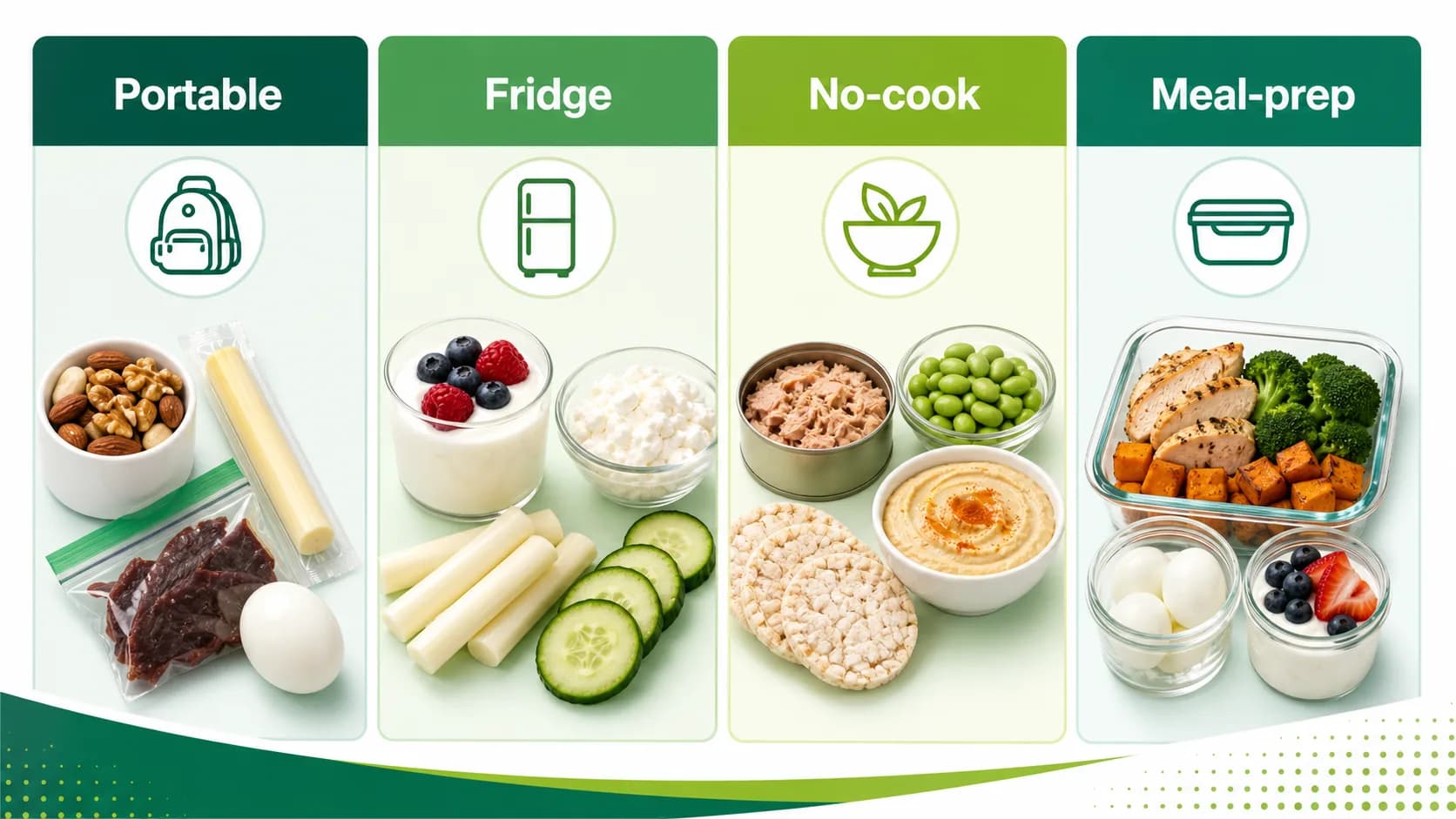
How to Meal Prep High-Protein Snacks
Snack prep works best when it is boring. Pick two cold snacks, one shelf-stable snack, and one sweet option for the week. That is enough variety without turning Sunday into a production. The reason many snack plans fail is that they depend on daily motivation. A clear container of pre-portioned cottage cheese dip is more powerful than a list of recipes you never assemble.
- Boil six to ten eggs and mark the date on the container.
- Portion Greek yogurt or cottage cheese into single servings before the week starts.
- Wash and cut cucumbers, carrots, peppers, or berries so the snack has volume.
- Keep tuna packets, jerky, and one protein bar in a desk drawer or gym bag.
- Pre-log your snack in your tracker if hitting a protein target is the main goal.
If you dislike reheated food, choose snacks that do not need reheating. If you overeat nuts, buy single-serve packs or choose pumpkin seeds as a garnish rather than a main snack. If protein bars trigger cravings, treat them as travel food only. Snack planning is personal because the best nutrition math fails when the food does not match your behavior.
How to Read Protein Snack Labels
A front label can say "protein" while the nutrition panel tells a different story. Turn the package around. Look at serving size, calories, protein grams, added sugars, fiber, sugar alcohols, sodium, and the first protein ingredient. A 250-calorie bar with 20 g protein can be useful. A 280-calorie cookie with 10 g protein is still mostly a cookie.
| Label item | Good sign | Caution sign |
|---|---|---|
| Protein | 15-25 g for a packaged snack | Less than 10 g while marketed as high protein |
| Calories | 100-250 for most snacks | 300+ unless it replaces a meal |
| Added sugar | Low or moderate | Dessert-level sugar with protein branding |
| Fiber | 3+ g can improve satiety | Very high fiber/sugar alcohols if they upset your stomach |
| Sodium | Reasonable for your diet | Jerky, deli meat, and bars can add up quickly |
Ingredient quality is not about perfection. It is about matching the snack to the job. A protein bar with a longer ingredient list is still useful if you are stuck in an airport and it prevents a missed meal. At home, whole-food options usually win because they are cheaper, more filling, and easier to combine with fruit or vegetables.
Full High Protein Snack Recipes
Use these full high protein snack recipes as templates. The protein and calorie estimates are practical ranges based on common portions, USDA values, and typical Nutrition Facts labels. If you use a branded yogurt, protein powder, wrap, cottage cheese, tuna packet, jerky, bar, or dairy product, check the exact label because the numbers can move quickly.
Greek Yogurt Protein Cheesecake Bowl
About 260 calories. A beginner-friendly sweet snack with Greek yogurt, protein powder, berries, and a measured crunchy topping.
Ingredients
- 250 g plain nonfat Greek yogurt
- 20 g vanilla whey, casein, or plant protein powder
- 100 g berries
- 10 g crushed graham cracker or low-sugar granola
- Lemon zest, vanilla, and cinnamon
Method
- 1. Stir protein powder into Greek yogurt slowly so the texture stays smooth.
- 2. Mix in lemon zest, vanilla, and cinnamon, then taste before adding sweetener.
- 3. Top with berries and a measured crunchy topping.
- 4. Chill for 10 minutes if you want a thicker cheesecake-style texture.
- 5. For muscle gain, add banana or more granola; for weight loss, keep the crunchy topping measured.
Cottage Cheese Ranch Dip Box
About 210 calories. A savory high-volume snack with blended cottage cheese and crunchy vegetables.
Ingredients
- 220 g low-fat cottage cheese
- Dill, garlic powder, onion powder, lemon juice, and black pepper
- 150-200 g cucumber, carrots, peppers, or celery
- Optional hot sauce
Method
- 1. Blend cottage cheese until smooth, or leave it chunky if you prefer texture.
- 2. Stir in dill, garlic, onion powder, lemon juice, pepper, and hot sauce.
- 3. Cut vegetables into sticks and portion them into a container.
- 4. Pack dip and vegetables separately if prepping more than one day ahead.
- 5. Use more vegetables for weight loss or add crackers and cheese for a higher-calorie snack.
Tuna Cucumber Protein Bites
About 190 calories. A no-cook lean protein snack with tuna, yogurt, mustard, herbs, and cucumber rounds.
Ingredients
- 130 g drained tuna in water
- 40 g plain Greek yogurt
- 1 tsp mustard
- 1 large cucumber, sliced into rounds
- Lemon juice, dill, black pepper, and optional capers
Method
- 1. Drain tuna well so the topping does not become watery.
- 2. Mix tuna with Greek yogurt, mustard, lemon, dill, pepper, and capers.
- 3. Spoon the tuna mixture onto cucumber rounds.
- 4. Eat immediately for best crunch, or pack tuna and cucumber separately.
- 5. Add rice cakes or whole-grain crackers if you need a more filling muscle-gain snack.
Edamame Tofu Crunch Cup
About 280 calories. A vegan snack cup with tofu, edamame, cucumber, cabbage, and soy ginger dressing.
Ingredients
- 120 g firm tofu, cubed
- 100 g shelled edamame
- 100 g cucumber and shredded cabbage
- 1 tsp sesame seeds
- Soy sauce, ginger, rice vinegar, lime, and chili flakes
Method
- 1. Press tofu briefly and cut it into small cubes.
- 2. Warm or thaw edamame, then cool if you want a chilled snack.
- 3. Mix soy sauce, ginger, rice vinegar, lime, and chili flakes.
- 4. Layer cabbage, cucumber, tofu, and edamame in a cup.
- 5. Add dressing at serving and use sesame seeds as a garnish rather than the main calorie source.
Turkey Cheese Roll-Up Box
About 310 calories. A portable beginner snack with turkey slices, cheese, grapes, and pickles.
Ingredients
- 100 g sliced turkey breast
- 30 g reduced-fat cheese or one string cheese
- 100 g grapes or apple slices
- Pickles or cucumber spears
- Mustard or hot sauce
Method
- 1. Lay turkey slices flat and add thin cheese strips.
- 2. Roll tightly and secure with toothpicks if needed.
- 3. Pack fruit and pickles in separate compartments.
- 4. Add mustard or hot sauce at serving.
- 5. Use lower-sodium turkey if deli meats are a frequent snack.
Egg Cottage Cheese Bento
About 340 calories. A prep-ahead savory snack box with eggs, cottage cheese, vegetables, and berries.
Ingredients
- 2 hard-boiled eggs
- 150 g low-fat cottage cheese
- 100 g tomatoes, cucumber, or peppers
- 80 g berries
- Everything seasoning, salt, pepper, or hot sauce
Method
- 1. Boil eggs ahead, cool them quickly, and keep them refrigerated.
- 2. Add cottage cheese to a small sealed cup.
- 3. Pack vegetables and berries in separate compartments.
- 4. Season eggs and cottage cheese right before eating.
- 5. For a lower-calorie version, use one whole egg plus extra egg whites; for muscle gain, add crackers or toast.
Chocolate Protein Chia Pudding
About 330 calories. A sweet meal-prep snack with protein powder, chia, milk, and cocoa.
Ingredients
- 25 g chocolate protein powder
- 180 ml low-fat milk or soy milk
- 150 g plain Greek yogurt or soy yogurt
- 15 g chia seeds
- 1 tsp cocoa powder
- Strawberries or raspberries
Method
- 1. Whisk protein powder, cocoa, milk, and yogurt until smooth.
- 2. Stir in chia seeds and let the mixture stand for 5 minutes.
- 3. Stir again so chia does not settle at the bottom.
- 4. Refrigerate for at least 2 hours or overnight.
- 5. Top with berries; add oats or banana if you need a higher-calorie snack.
Salmon Rice Cake Stack
About 290 calories. A no-cook snack with salmon, rice cakes, cucumber, yogurt sauce, and lemon.
Ingredients
- 90 g smoked salmon or drained canned salmon
- 2 rice cakes
- 50 g plain Greek yogurt
- Cucumber slices
- Lemon juice, dill, black pepper, and capers
Method
- 1. Mix Greek yogurt with lemon, dill, and black pepper.
- 2. Spread yogurt sauce over rice cakes.
- 3. Top with salmon, cucumber, and capers.
- 4. Eat soon after assembly so the rice cakes stay crisp.
- 5. Use one rice cake for a lighter snack or add avocado for muscle gain.
Chicken Hummus Snack Plate
About 360 calories. A high-satiety snack plate with chicken, hummus, vegetables, and pita chips or cucumber.
Ingredients
- 120 g cooked chicken breast
- 45 g hummus
- 150 g cucumber, carrots, peppers, or tomatoes
- 15 g pita chips or one small rice cake
- Paprika, lemon, and parsley
Method
- 1. Slice cooked chicken into bite-size strips.
- 2. Portion hummus into a small bowl so the serving is clear.
- 3. Add vegetables and a small crunchy item.
- 4. Season with paprika, lemon, and parsley.
- 5. For weight loss, use more vegetables and fewer chips; for muscle gain, add pita, crackers, or rice.
Roasted Chickpea Skyr Bowl
About 350 calories. A vegetarian savory bowl with skyr, roasted chickpeas, cucumber, herbs, and spices.
Ingredients
- 250 g plain skyr
- 70 g roasted chickpeas or roasted chana
- 100 g cucumber and tomato
- Mint, coriander, cumin, chili powder, and lemon
- Optional pinch of chaat masala
Method
- 1. Stir lemon, cumin, chili, mint, and coriander into skyr.
- 2. Add cucumber and tomato for volume.
- 3. Top with roasted chickpeas right before eating.
- 4. Keep chickpeas separate when meal prepping so they stay crunchy.
- 5. Use fewer chickpeas for weight loss or more chickpeas and olive oil for muscle gain.
Peanut Butter Banana Protein Smoothie
About 420 calories. A higher-calorie snack for muscle gain or low appetite.
Ingredients
- 250 ml low-fat milk or soy milk
- 1 banana
- 25 g whey, casein, or pea protein powder
- 16 g peanut butter or 12 g peanut powder
- Ice, cinnamon, and pinch of salt
Method
- 1. Add milk, banana, protein powder, peanut butter, ice, cinnamon, and salt to a blender.
- 2. Blend until smooth and thick.
- 3. Taste before adding sweetener because banana and powder may be enough.
- 4. Drink slowly so it functions as a snack rather than a quick beverage.
- 5. Use peanut powder and half a banana for a lower-calorie version.
Turkey Avocado Mini Wrap
About 390 calories. A compact muscle-gain or travel snack with turkey, avocado, yogurt sauce, and a small wrap.
Ingredients
- 110 g cooked turkey breast or sliced turkey
- 1 small whole-grain wrap
- 35 g avocado
- 40 g Greek yogurt
- Lettuce, tomato, lime, and black pepper
Method
- 1. Mix Greek yogurt with lime and black pepper.
- 2. Spread yogurt sauce and avocado on the wrap.
- 3. Add turkey, lettuce, and tomato.
- 4. Roll tightly and slice in half.
- 5. For weight loss, use less avocado and more vegetables; for muscle gain, add cheese or a second wrap.
Protein Oat Cookie Dough Bowl
About 380 calories. A sweet spoon snack with oats, protein powder, yogurt, and measured nut butter.
Ingredients
- 35 g rolled oats
- 25 g vanilla protein powder
- 150 g Greek yogurt
- 10 g peanut butter or almond butter
- Cinnamon, vanilla, and 5 g mini chocolate chips
Method
- 1. Stir oats, protein powder, Greek yogurt, cinnamon, and vanilla until thick.
- 2. Add a splash of milk if the mixture is too dry.
- 3. Swirl in measured nut butter.
- 4. Top with mini chocolate chips.
- 5. Chill for 10 minutes; add banana or extra oats for muscle gain.
Cottage Cheese Tuna Melt Cups
About 360 calories. A warm high-protein snack with tuna, cottage cheese, light cheese, and English muffin or toast cups.
Ingredients
- 120 g drained tuna in water
- 100 g low-fat cottage cheese
- 1 light English muffin or two small toast rounds
- 15 g reduced-fat cheese
- Mustard, parsley, pepper, and chopped celery
Method
- 1. Mix tuna with cottage cheese, mustard, celery, parsley, and pepper.
- 2. Spoon onto English muffin halves or toast rounds.
- 3. Top with measured cheese.
- 4. Toast until hot and lightly browned.
- 5. Serve with tomatoes or salad to keep the snack filling without pushing calories high.
Paneer Chaat Snack Bowl
About 390 calories. A vegetarian snack bowl with paneer, chickpeas, cucumber, tomato, yogurt, and chaat spices.
Ingredients
- 100 g paneer, cubed
- 70 g cooked chickpeas
- 100 g cucumber, tomato, and onion
- 50 g plain yogurt or curd
- Lemon, coriander, cumin, chili, and chaat masala
Method
- 1. Cube paneer and lightly season it with cumin, chili, and lemon.
- 2. Combine chickpeas, cucumber, tomato, onion, and coriander.
- 3. Fold in paneer and yogurt.
- 4. Finish with chaat masala and extra lemon.
- 5. Use reduced-fat paneer for lower calories or add roti chips for muscle gain.
Berry Skyr Freezer Bark
About 210 calories per portion. A make-ahead frozen snack with skyr, berries, and a small crunchy topping.
Ingredients
- 300 g plain skyr
- 15 g vanilla protein powder
- 120 g berries
- 10 g chopped pistachios or granola
- Vanilla and lemon zest
Method
- 1. Stir skyr with protein powder, vanilla, and lemon zest.
- 2. Spread thinly on a parchment-lined tray.
- 3. Scatter berries and the measured crunchy topping over the surface.
- 4. Freeze until firm, then break into portions.
- 5. Store frozen portions in a sealed container and let one soften for a few minutes before eating.
Snack Strategy by Goal
The same snack can be excellent or unhelpful depending on the goal. A protein bar with 260 calories may be perfect before a long commute, but it may be too calorie-dense for someone who wanted a light afternoon snack. A whey shake may be efficient for muscle gain, but it may not satisfy someone who needs chewing, fiber, and food volume during a fat-loss phase.
For weight loss, choose snacks that create a long fullness window for the calories. Greek yogurt, skyr, cottage cheese, tuna packets, boiled eggs, edamame, lentil soup, chicken strips, and cottage cheese dips usually perform well because they combine protein with either volume, thickness, fiber, or chewing. Liquid-only snacks can still work, but judge them by what happens two hours later.
For muscle gain, the snack can be more calorie-positive. Add granola to Greek yogurt, use milk instead of water in shakes, pair jerky with fruit, add nuts to cottage cheese, or build a turkey and cheese wrap instead of eating plain turkey slices. The point is to make it easier to reach both protein and calories, not to keep every snack as lean as possible.
For GLP-1 users or people with very low appetite, snack size matters more than snack branding. A half protein shake, a yogurt cup, a small tuna packet, or a few bites of cottage cheese may be more realistic than a large meal. Keep backup snacks bland, simple, and easy to stop and restart. A snack that can be eaten in two rounds is often more useful than a snack that must be finished immediately.
| Goal | Best snack style | Examples | Watch out for |
|---|---|---|---|
| Fat loss | High protein, high satiety, controlled calories | Greek yogurt, cottage cheese dip, tuna, edamame, boiled eggs | Nuts, cheese, and bars that push calories up quickly. |
| Muscle gain | Protein plus useful calories | Milk-based shake, yogurt with granola, turkey wrap, cottage cheese with nuts | Snacks so lean that total calories stay too low. |
| Desk work | Portable and not messy | Protein bar, jerky, tuna packet, roasted edamame, string cheese | Snacks with strong odor or no fiber that trigger more grazing. |
| Evening cravings | Sweet or savory dessert-style protein | Greek yogurt cheesecake bowl, casein pudding, cottage cheese dip | Treating protein dessert as unlimited food. |
| Low appetite | Small volume and easy texture | Half shake, skyr, soup cup, cottage cheese, soft tofu | Forcing large portions and then skipping later meals. |
A useful rule is to decide the snack's job before choosing it. If the job is hunger control, pick volume and fiber. If the job is protein efficiency, pick lean dense protein. If the job is performance, add carbohydrate. If the job is preventing late-night overeating, choose a snack that feels enjoyable enough that you do not go searching for a second snack immediately afterward.
A Simple High-Protein Snack Prep System
Snack prep should be boring enough that it actually happens. Pick one fridge snack, one shelf-stable snack, and one sweet snack for the week. That gives you coverage for home, office, commute, and evening cravings without buying ten different specialty products.
A strong weekly setup could be cottage cheese ranch dip with vegetables, tuna packets or jerky for backup, and Greek yogurt cheesecake bowls for sweet cravings. A vegetarian setup could be edamame, roasted chana, skyr or Greek-style curd, and tofu snack boxes. A vegan setup could be soy yogurt with pea protein, roasted edamame, hummus with extra tofu, and a soy milk protein smoothie.
Portioning matters because snack foods are easy to eat straight from the container. Put cottage cheese, yogurt, roasted chickpeas, nuts, jerky, and protein desserts into serving containers. If you need a higher-calorie snack, build that serving intentionally. If you need a lower-calorie snack, do not rely on willpower around open bags and tubs.
- Choose a default 20-30 g protein snack for days when meals run late.
- Keep one emergency snack in your bag, car, desk, or gym kit.
- Prep cut vegetables or fruit so high-protein dips feel easy.
- Buy single-serve options when large containers lead to grazing.
- Review your snack choices after a week using hunger, calories, digestion, and convenience.
The best snack plan is the one that reduces decision fatigue. When hunger hits, you should already know the option. That is how snacks help traffic goals on the page too: readers want ranked lists, but they stay when the guide turns those lists into a practical weekly system.
For content quality, include both familiar whole foods and realistic packaged options. Readers search for protein bars and shakes, but many also need cottage cheese, yogurt, tuna, edamame, eggs, roasted chana, and tofu ideas. Covering both sides builds trust because the article does not pretend everyone has the same schedule, budget, kitchen access, or appetite pattern.
Common Mistakes
The first mistake is confusing nutritious with low calorie. Nuts, seeds, hummus, avocado, peanut butter, and cheese can all fit a healthy diet, but they are calorie dense. If fat loss is the goal, measure them until your portions are consistent. A handful can become several hundred calories quickly.
The second mistake is choosing a snack that does not address hunger. A low-calorie protein drink might look perfect on paper, but if you still eat chips afterward, the snack failed its job. Try switching to Greek yogurt, cottage cheese, edamame, soup, or eggs and compare how long you stay satisfied.
The third mistake is using snacks to patch a poorly planned day forever. Snacks are useful, but main meals still matter. If every day requires three emergency snacks to hit protein, breakfast and lunch probably need a stronger protein anchor. Fix the meals first, then use snacks as support.
Common Questions
Related Guides and Tools
Sources reviewed
- USDA FoodData Central - U.S. Department of Agriculture
- Dietary Guidelines for Americans, 2025-2030 - U.S. Department of Agriculture and U.S. Department of Health and Human Services
- Current Dietary Guidelines - Office of Disease Prevention and Health Promotion
- Dietary Reference Intakes summary tables - National Academies Press / NCBI Bookshelf
- International Society of Sports Nutrition Position Stand: protein and exercise - Journal of the International Society of Sports Nutrition
- How to Understand and Use the Nutrition Facts Label - U.S. Food and Drug Administration
- Added Sugars on the Nutrition Facts Label - U.S. Food and Drug Administration
- Cold Food Storage Chart - FoodSafety.gov