
High Protein Foods: 50+ Foods Ranked by Protein Content
A complete, USDA-based reference covering meats, fish, dairy, eggs, and plant proteins — all ranked by grams of protein per serving. Use this alongside your daily target from the Protein Calculator to build meals that consistently hit your number.
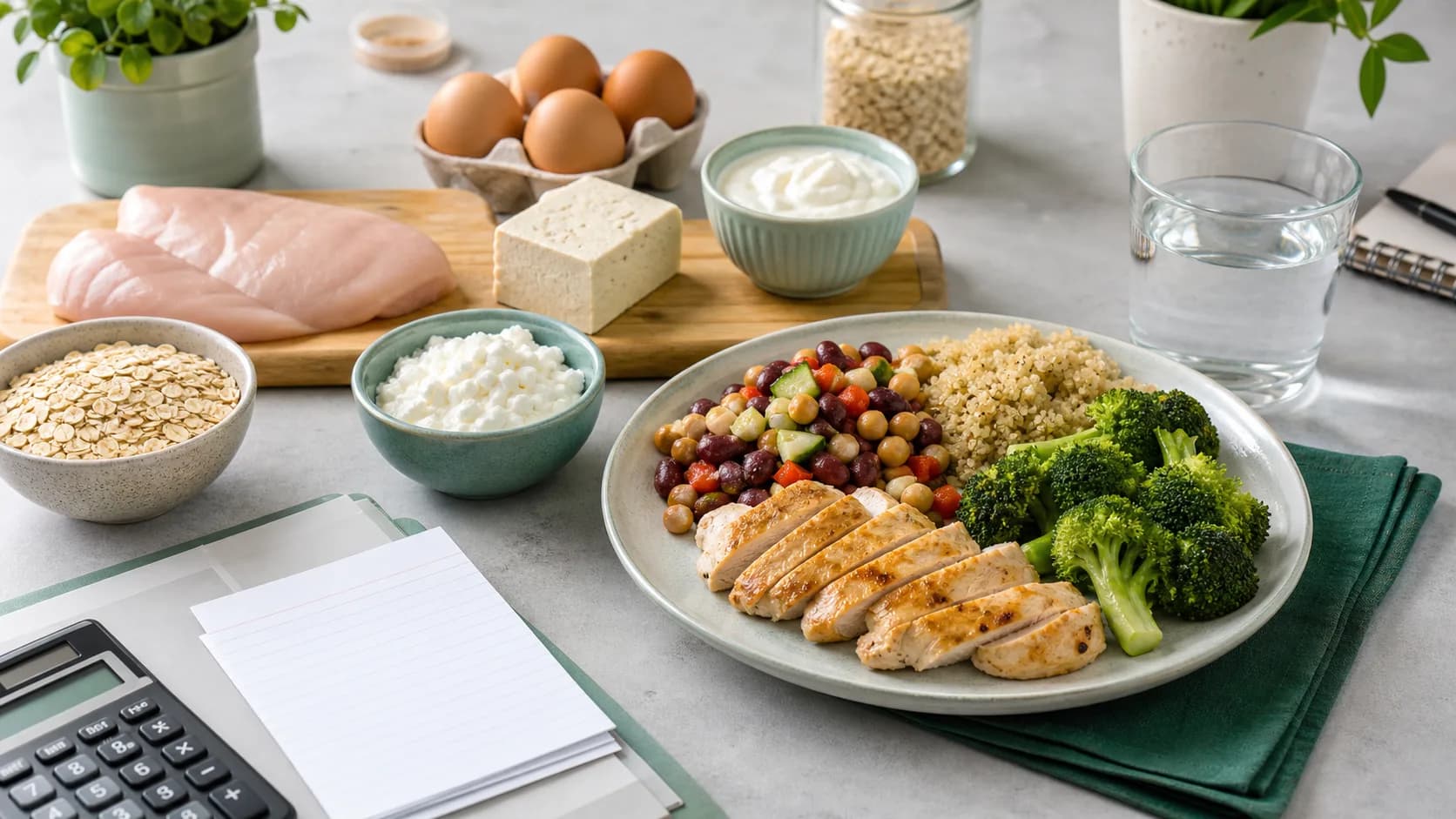
Top 20 Highest Protein Foods by Serving
Sorted by grams of protein per typical serving. Whole foods only (protein powders excluded).
| # | Food | Protein |
|---|---|---|
| 1 | Chicken Breast (cooked) | 46g |
| 2 | Turkey Breast (cooked) | 44g |
| 3 | Pork Tenderloin (cooked) | 40g |
| 4 | Tuna Steak (cooked) | 40g |
| 5 | Venison / Deer (cooked) | 39g |
| 6 | Lean Ground Beef 93/7 (cooked) | 39g |
| 7 | Bison / Buffalo (cooked) | 38g |
| 8 | Salmon (cooked) | 38g |
| 9 | Sirloin Steak (cooked) | 37g |
| 10 | Pork Loin Chop (cooked) | 37g |
| 11 | Lean Ground Turkey 93/7 (cooked) | 36g |
| 12 | Tilapia (cooked) | 35g |
| 13 | Halibut (cooked) | 35g |
| 14 | Chicken Thigh (cooked, skinless) | 34g |
| 15 | Mahi-Mahi (cooked) | 34g |
| 16 | Tuna (canned in water) | 33g |
| 17 | Shrimp (cooked) | 30g |
| 18 | Crab (cooked) | 29g |
| 19 | Scallops (cooked) | 28g |
| 20 | Lobster (cooked) | 28g |
Values approximate based on USDA data for cooked or as-sold weights.
Meat & Poultry
Full chart →| Food | Protein |
|---|---|
| Chicken Breast (cooked) | 46g |
| Turkey Breast (cooked) | 44g |
| Pork Tenderloin (cooked) | 40g |
| Venison / Deer (cooked) | 39g |
| Lean Ground Beef 93/7 (cooked) | 39g |
| Bison / Buffalo (cooked) | 38g |
| Sirloin Steak (cooked) | 37g |
| Pork Loin Chop (cooked) | 37g |
| Lean Ground Turkey 93/7 (cooked) | 36g |
| Chicken Thigh (cooked, skinless) | 34g |
Fish & Seafood
Full chart →| Food | Protein |
|---|---|
| Tuna Steak (cooked) | 40g |
| Salmon (cooked) | 38g |
| Tilapia (cooked) | 35g |
| Halibut (cooked) | 35g |
| Mahi-Mahi (cooked) | 34g |
| Tuna (canned in water) | 33g |
| Shrimp (cooked) | 30g |
| Crab (cooked) | 29g |
| Scallops (cooked) | 28g |
| Lobster (cooked) | 28g |
| Sardines (canned in water) | 25g |
| Cod (cooked) | 18g |
Eggs & Dairy
Full chart →| Food | Protein |
|---|---|
| Whey Protein Powder | 24g |
| Casein Protein Powder | 24g |
| Cottage Cheese (low-fat) | 24g |
| Skyr (Icelandic yogurt) | 24g |
| Quark (plain, low-fat) | 22g |
| Greek Yogurt (nonfat) | 20g |
| Egg Whites | 14g |
| Ricotta Cheese (part-skim) | 14g |
| Hard-Boiled Eggs (2 large) | 13g |
| Eggs, whole (2 large) | 13g |
| Parmesan Cheese (grated) | 11g |
| Kefir (plain, low-fat) | 10g |
| Skim Milk | 9g |
| Cheddar Cheese | 7g |
Plant-Based
Full chart →| Food | Protein |
|---|---|
| Tofu (firm) | 26g |
| Seitan (wheat gluten) | 25g |
| Pea Protein Powder | 24g |
| Tempeh | 19g |
| Edamame (shelled, cooked) | 18g |
| Lentils (cooked) | 18g |
| Chickpeas (cooked) | 15g |
| Black Beans (cooked) | 15g |
| Kidney Beans (cooked) | 15g |
| Hemp Seeds | 10g |
| English Peas / Green Peas (cooked) | 8.6g |
| Nutritional Yeast | 8g |
| Quinoa (cooked) | 8g |
| Pumpkin Seeds (pepitas) | 7g |
| Almonds | 6g |
| Chia Seeds | 5g |
Expanded food comparison
Search 80 Source-Matched USDA Food Records
Compare carefully selected meats, seafood, eggs, dairy, and plant foods from the supplied USDA dataset. Every number below is for 100 g of the exact food state shown, so cooked, raw, canned, and drained entries should not be treated as interchangeable.
80 food records match the current filters.
| Food and source | Food state | Protein | Calories | Protein / 100 cal |
|---|---|---|---|---|
Parmesan cheese, hard Eggs & DairyUSDA NDB 01033 | As sold | 35.8 g | 392 kcal | 9.1 g |
Nonfat dry milk, calcium reduced Eggs & DairyUSDA NDB 01093 | Dry powder | 35.5 g | 354 kcal | 10.0 g |
Romano cheese Eggs & DairyUSDA NDB 01038 | As sold | 31.8 g | 387 kcal | 8.2 g |
Roasted chicken breast, meat only Meat & PoultryUSDA NDB 05064 | Cooked, roasted | 31.0 g | 165 kcal | 18.8 g |
Top sirloin filet, choice and lean Meat & PoultryUSDA NDB 23257 | Cooked, grilled | 30.8 g | 167 kcal | 18.4 g |
Venison Meat & PoultryUSDA NDB 17165 | Cooked, roasted | 30.2 g | 158 kcal | 19.1 g |
Lamb loin, choice and lean Meat & PoultryUSDA NDB 17027 | Cooked, broiled | 30.0 g | 216 kcal | 13.9 g |
Roasted pumpkin and squash seed kernels Plant-BasedUSDA NDB 12016 | As sold | 29.8 g | 574 kcal | 5.2 g |
Common octopus Fish & SeafoodUSDA NDB 15230 | Cooked, moist heat | 29.8 g | 164 kcal | 18.2 g |
Rabbit Meat & PoultryUSDA NDB 17178 | Cooked, roasted | 29.1 g | 197 kcal | 14.8 g |
European anchovies, canned in oil and drained Fish & SeafoodUSDA NDB 15002 | Canned, drained | 28.9 g | 210 kcal | 13.8 g |
Roasted turkey breast, meat and skin Meat & PoultryUSDA NDB 05192 | Cooked, roasted | 28.7 g | 189 kcal | 15.2 g |
Showing 12 of 80 matching records
Source: USDA FoodData Central. These selected records use SR Legacy NDB identifiers from the supplied dataset. SR Legacy is a fixed historical release, so newer Foundation Foods data or a current package label may differ.
How to Use This List to Hit Your Daily Protein Target
Build Around Anchor Proteins
Pick one high-protein anchor food per meal (chicken breast, salmon, cottage cheese, tofu) that delivers 20–40 g on its own. Then stack smaller protein sources — eggs, Greek yogurt, legumes — across the day to fill the gap to your daily target.
Track Cooked Weights
All meat and fish values in this list are for cooked weight. Raw chicken breast (~150 g raw) loses water during cooking and ends up closer to 110–120 g cooked — but the protein is still ~35–37 g. Weigh after cooking for accuracy.
Distribute Across Meals
Research supports spreading your daily protein across 3–5 meals with 20–40 g each. Rather than eating 150 g of protein at dinner, aim for consistent doses at breakfast, lunch, dinner, and snacks.
Mix Sources for Variety
Rotating between meat, fish, dairy, and plant proteins covers a broader range of micronutrients. Salmon provides omega-3s; red meat provides iron and zinc; dairy provides calcium; legumes provide fiber and folate.
Frequently Asked Questions
What food has the most protein per 100g?
Protein powders (whey, casein, pea) lead with around 80 g of protein per 100 g. Among whole foods, dried spirulina (~57 g/100 g), nutritional yeast (~50 g/100 g), and seitan (~25 g/100 g) rank highest. For animal foods, chicken breast (~31 g/100 g) and fresh tuna (~27 g/100 g) are among the best.
Which protein foods are best for weight loss?
Lean, lower-calorie protein sources are ideal for weight loss: chicken breast, cod, shrimp, egg whites, cottage cheese, and Greek yogurt all provide high protein with fewer total calories. These foods maximize satiety — the feeling of fullness — while keeping your calorie budget intact.
What are the best high protein foods for vegetarians?
Top vegetarian protein sources include eggs, Greek yogurt, cottage cheese, and ricotta. For vegans: seitan (25 g/100 g), firm tofu (17 g/100 g), tempeh (19 g/100 g), edamame, lentils, chickpeas, and pea protein powder. Combining different plant sources throughout the day ensures you get all essential amino acids.
How many grams of protein should I eat per meal?
Research suggests 20–40 g of protein per meal effectively stimulates muscle protein synthesis. Spreading your daily total across 3–5 meals is more effective than concentrating it all in one or two sittings. Use this food list to build meals that reliably hit 25–40 g per sitting.
Are plant proteins as good as animal proteins?
Animal proteins are generally more bioavailable and are complete proteins (containing all essential amino acids). Most plant proteins are incomplete on their own, but eating a variety of plant protein sources throughout the day covers all amino acids. Plant-based eaters may benefit from targeting the higher end of protein recommendations (10–20% more) to account for lower digestibility.
Explore by Category
Know Exactly How Much Protein You Need
Use the free, evidence-based calculator to get your personalized daily protein target, then use this food list to hit it with meals you actually enjoy.
Calculate My Daily Protein