
Plant-Based Proteins — Protein Chart
Plant-based protein sources can absolutely support muscle building, fat loss, and general health goals. Use this chart to see exactly how many grams of protein each serving provides and build meals that hit your daily target from the Protein Calculator.
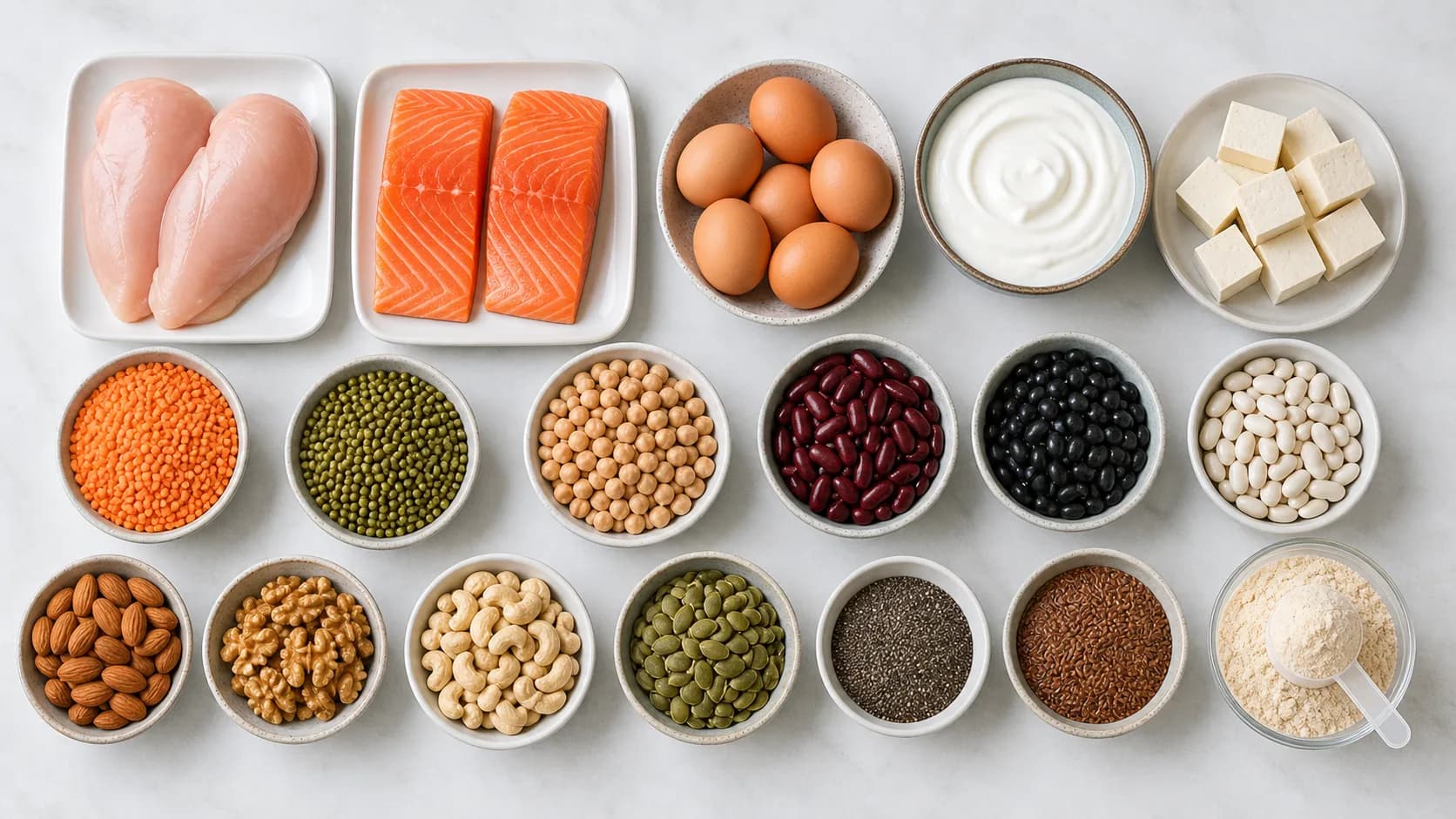
Getting Enough Protein on a Plant-Based Diet
Meeting high protein targets is very achievable on a plant-based diet. Seitan delivers 25 g per 100 g — matching chicken. Tempeh and firm tofu are close behind. Combine these with legumes (lentils, chickpeas, black beans), seeds (hemp, pumpkin), and nutritional yeast throughout the day to easily hit 120–180 g of protein. Pea protein powder provides a convenient boost when whole-food sources aren't enough.
Protein per Serving — Plant-Based Proteins
| Food | Serving | Protein | Per 100 g |
|---|---|---|---|
| Seitan (wheat gluten) | 100 g / 3.5 oz | 25g | 25g |
| Tempeh | 100 g / 3.5 oz | 19g | 19g |
| Tofu (firm) | 150 g / 5.3 oz | 26g | 17g |
| Soya Nuggets (dry) | 50 g dry / cooked after soaking | 26g | 52g |
| Edamame (shelled, cooked) | 155 g / 1 cup | 18.4g | 11.9g |
| Lentils (cooked) | 200 g / 1 cup | 18g | 9g |
| Arhar Dal / Toor Dal (dry) | 50 g / 1/4 cup | 11g | 22g |
| Asparagus (cooked) | 100 g / 3.5 oz | 2g | 2g |
| Broccoli (steamed) | 100 g / florets | 3g | 3g |
| Enoki Mushrooms (cooked) | 100 g / cooked | 2.7g | 2.7g |
| Brussels Sprouts (cooked) | 100 g / roasted or steamed | 3g | 3g |
| Drumstick Leaves / Moringa Leaves | 50 g / fresh leaves | 5g | 9g |
| Artichoke Hearts | 120 g / drained | 4g | 3g |
| Chickpeas / Garbanzo Beans (cooked) | 164 g / 1 cup | 15g | 9g |
| Moong Dal (dry split mung) | 50 g / dry | 12g | 24g |
| Chana Dal (dry split Bengal gram) | 50 g / dry | 11g | 22g |
| Durum Wheat Semolina | 60 g / dry | 8g | 13g |
| Dosa Batter | 120 g / batter | 6g | 5g |
| Falafel | 100 g / prepared | 13g | 13g |
| Black Beans (cooked) | 170 g / 1 cup | 15g | 9g |
| Fava Beans / Broad Beans (cooked) | 170 g / cooked | 12.9g | 7.6g |
| Butter Beans / Lima Beans (cooked) | 170 g / cooked | 13g | 8g |
| Cannellini Beans (cooked) | 170 g / cooked | 14g | 8g |
| Black-Eyed Peas (cooked) | 170 g / 1 cup | 13g | 8g |
| Adzuki Beans (cooked) | 170 g / 3/4 cup | 13g | 8g |
| Kidney Beans (cooked) | 177 g / 1 cup | 15g | 9g |
| Pea Protein Powder | 30 g / 1 scoop | 24g | 80g |
| Hemp Seeds | 30 g / 3 tbsp | 10g | 32g |
| Pumpkin Seeds (pepitas) | 28 g / 1 oz | 7g | 30g |
| Nutritional Yeast | 15 g / 2 tbsp | 8g | 50g |
| Quinoa (cooked) | 185 g / 1 cup | 8g | 4g |
| Amaranth (dry) | 45 g / 1/4 cup | 6g | 14g |
| Buckwheat Groats / Kasha (dry) | 45 g / dry | 6g | 13g |
| Einkorn Wheat (dry) | 45 g / dry | 6.5g | 14.5g |
| Farro (cooked) | 170 g / about 1 cup | 9.9g | 5.8g |
| Brown Rice (cooked) | 195 g / about 1 cup | 5g | 3g |
| English Peas / Green Peas (cooked) | 160 g / 1 cup | 8.6g | 5.4g |
| Sweet Potato (cooked) | 130 g / 1 medium | 2g | 2g |
| Banana | 118 g / 1 medium | 1g | 1g |
| Chia Seeds | 28 g / 2 tbsp | 5g | 17g |
| Flaxseeds | 15 g / ground seeds | 2.7g | 18.3g |
| Almonds | 28 g / 1 oz | 6g | 21g |
| Cashews | 28 g / 1 oz | 5g | 18g |
| Earthnuts / Peanuts | 28 g / 1 oz | 7.2g | 25.8g |
| Brazil Nuts | 28 g / 1 oz | 4g | 14g |
| Sunflower Seeds | 28 g / 1 oz | 6g | 21g |
| Spirulina (dried) | 7 g / 1 tbsp | 4g | 57g |
Values are approximate based on USDA data for cooked weights. Powder values are per serving as labeled. Actual protein varies by brand and preparation.
Best Picks by Goal
Best Plant Proteins
Use these when a plant-based meal needs the highest protein density.
Best Whole-Food Sides
These add protein, fiber, and carbohydrates alongside a main protein source.
Vegan Protein Boosters
Use these when total daily protein is hard to reach from meals alone.
Notes on Each Plant Protein
Highest protein density of any plant food; meat-like texture
Tempeh
19gFermented soy; higher protein and more digestible than tofu
Tofu (firm)
26gVersatile; absorbs marinades and flavors well
Indian vegetarian staple; track dry weight before soaking
Complete young soybean protein; track shelled edible weight
Budget-friendly; high in iron and folate
Common Indian dal; cooked protein per 100g is lower because of water
Low-density protein vegetable; useful as a supportive side
Supportive protein vegetable with fiber and micronutrients
Low-density vegan protein; useful for volume, soups, hot pots, and tofu bowls
Higher-protein vegetable side; track oil and toppings separately
Protein-rich leafy green; track fresh, cooked, dried, and powder forms separately
Fiber-rich vegetable; moderate protein for a vegetable
Base for hummus and curries; filling and nutritious
Indian dal staple; cooked bowl protein depends on water content
Indian pulse staple; cooked bowl protein depends on water content
Used in pasta, upma, couscous, suji, sooji, and rava; track dry weight
Prepared rice-urad dal fermented batter; track oil, sambar, chutney, and fillings separately
Falafel
13gPrepared vegan chickpea or fava fritters; protein and calories depend on recipe and oil
High in fiber; great in bowls, tacos, and soups
Moderate vegan legume also listed as broad beans; avoid in favism/G6PD deficiency unless medically cleared
Creamy moderate-protein legume; good in stews and salads
White kidney bean for soups and salads; use cooked or drained weight
Fiber-rich pulse with minerals; pairs well with rice or corn
Moderate-protein pulse; pairs well with rice or grains
Kidney Beans (cooked)
15gClassic bean for chili; robust flavor
Plant-based alternative to whey; high leucine
Hemp Seeds
10gComplete protein; rich in omega-3 and omega-6
Pumpkin Seeds (pepitas)
7gDense protein per gram; great as a topping
Nutritional Yeast
8gCheesy flavor; complete protein; high in B vitamins
Complete protein grain; all nine essential amino acids
Complete protein pseudocereal with a stronger amino-acid profile than many grains
Complete plant-protein pseudocereal; track dry groats before cooking
Ancient wheat with moderate protein; contains gluten
Farro (cooked)
9.9gWheat-based ancient grain; moderate protein and contains gluten
Low-protein grain base; pair with beans, lentils, dal, or tofu
Supportive plant protein with fiber; use cooked shelled weight
Carb side, not a protein anchor; pair with stronger protein
Banana
1gUseful for carbs and smoothies; add a protein source
Mostly complete seed protein; rich in fiber and omega-3 ALA
Flaxseeds
2.7gHigh by 100 g but a small serving; grind for better digestibility
Almonds
6gProtein-dense nut; also high in vitamin E and magnesium
Cashews
5gVegan snack nut; useful in sauces but calorie-dense
Botanical legume used as a nut; calorie-dense, so measure servings
Selenium-rich nut; small measured portions are typical
Sunflower Seeds
6gGood snack protein; high in vitamin E and selenium
Spirulina (dried)
4gHighest protein density of any plant food by weight; add to smoothies
Tips for Hitting Your Protein Target on a Plant-Based Diet
Lead Every Meal with Protein
Build each meal around a primary plant protein source — tempeh bowl, tofu stir-fry, lentil soup, or seitan steak — before adding vegetables and grains. This ensures protein doesn't get crowded out by lower-protein foods.
Use Pea Protein for Convenience
On days when whole-food plant proteins fall short, a single scoop of pea protein powder adds 20–24 g of protein to a smoothie or oatmeal with minimal effort. A good tool for bridging the gap to your daily target.
Variety Covers All Amino Acids
Eating a variety of plant proteins throughout the day — legumes, grains, seeds, and soy products — naturally provides all essential amino acids without needing to carefully combine foods in every single meal.
Batch Cook Legumes and Grains
Cook a large batch of lentils, chickpeas, or black beans at the start of the week. Store in the fridge and add to salads, bowls, soups, and wraps for quick high-protein additions throughout the week.
Frequently Asked Questions
Can you get enough protein from plant-based foods alone?
Yes. With careful planning, it is entirely possible to meet protein needs from plant-based foods. Combining different plant protein sources throughout the day (e.g., legumes plus grains, soy products, seeds) ensures you get all essential amino acids. Plant-based athletes can meet even high protein targets with foods like seitan, tempeh, tofu, legumes, and pea protein powder.
What is the best plant-based protein source?
Seitan (wheat gluten) has the highest protein density at about 25 g per 100 g. Tempeh and firm tofu are excellent soy-based options at 17–19 g per 100 g. Among whole foods, edamame and lentils offer great protein alongside fiber and micronutrients. Pea protein powder is the most convenient for hitting high daily targets.
Are plant proteins complete proteins?
Most plant proteins are considered 'incomplete' because they are low in one or more essential amino acids. However, soy products (tofu, tempeh, edamame) and quinoa are complete proteins. By eating a variety of plant proteins throughout the day, you will naturally cover all essential amino acids without needing to carefully combine them in every meal.
Do vegans need to eat more protein than omnivores?
Some guidelines suggest vegans aim for 10–20% more total protein to account for lower digestibility of plant proteins (lower PDCAAS scores). In practice, this means a vegan aiming for 1.6 g/kg might target 1.8–1.9 g/kg. Using high-quality plant proteins like soy, seitan, and pea protein minimizes this gap.
Is tofu a good protein source?
Yes. Firm tofu provides about 17 g of protein per 100 g and is a complete protein (soy). A 150 g serving delivers 26 g of protein with minimal saturated fat. Tofu is also extremely versatile — it can be scrambled, grilled, baked, or added to stir-fries and soups.
How does pea protein compare to whey protein?
Pea protein is slightly lower in the amino acid methionine compared to whey, but research has found it produces similar muscle-building results when matched for total protein and leucine. Pea protein is a strong choice for vegans and those who are lactose intolerant.
Other Protein Chart Categories
Know How Much Protein You Need
Get your personalized daily protein target, then use this chart to build plant-based meals that consistently hit it — whether you're vegan, vegetarian, or just adding more plants.
Calculate My Daily Protein