
Eggs & Dairy — Protein Chart
Eggs and dairy products are among the highest-quality protein sources available, providing complete amino acid profiles that are highly bioavailable. Use this chart to plan snacks and meals that add up to your daily target from the Protein Calculator.
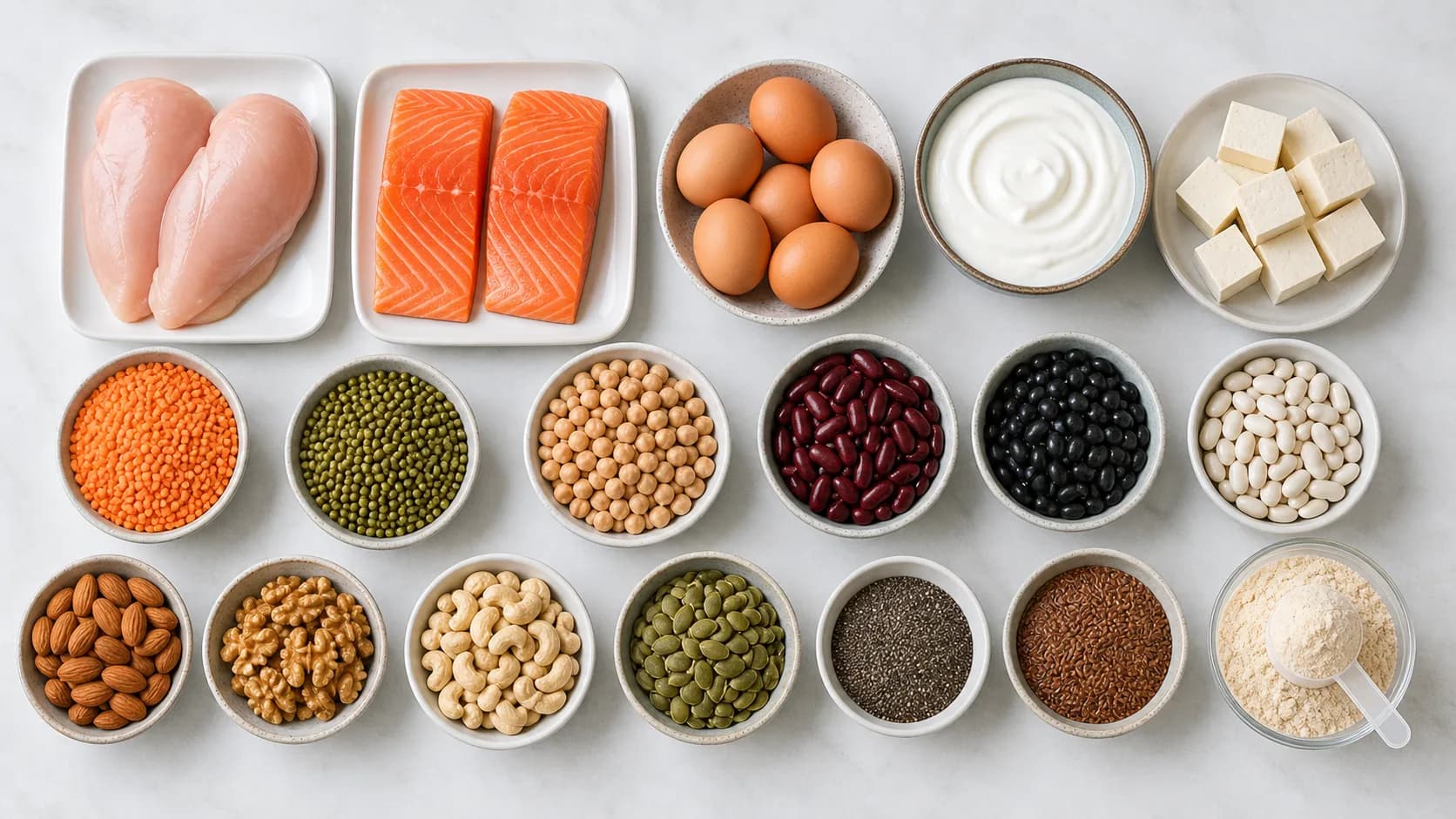
Why Eggs & Dairy Excel as Protein Sources
Eggs score near-perfectly on protein quality metrics because of their exceptional amino acid balance. Dairy proteins — especially whey and casein in Greek yogurt and cottage cheese — are similarly complete and are among the most studied proteins for muscle building. A combination of eggs at breakfast and Greek yogurt or cottage cheese as a snack can easily deliver 35–40 g of protein with minimal prep.
Protein per Serving — Eggs & Dairy
| Food | Serving | Protein | Per 100 g |
|---|---|---|---|
| Cottage Cheese (low-fat) | 200 g / 7 oz | 24g | 12g |
| Greek Yogurt (nonfat) | 200 g / 7 oz | 20g | 10g |
| Dahi / Curd (plain) | 200 g / bowl | 7g | 3.5g |
| Egg Whites | 4 whites (130 g) | 14g | 11g |
| Eggs (large, whole) | 2 eggs (100 g) | 13g | 13g |
| Ricotta Cheese (part-skim) | 125 g / 0.5 cup | 14g | 11g |
| Skyr (Icelandic yogurt) | 200 g / 7 oz | 24g | 12g |
| Milk (plain cow's milk) | 250 ml / about 1 cup | 9g | 3g |
| Low-fat Milk (1%) | 240 ml / 1 cup | 8g | 3g |
| Cheddar Cheese | 30 g / 1 oz | 7g | 25g |
| Feta Cheese | 30 g / 1 oz | 4.3g | 14.2g |
| Double Gloucester Cheese | 30 g / 1 oz | 7.5g | 25g |
| Emmental Cheese | 30 g / 1 oz | 8.4g | 28g |
| Mozzarella (part-skim) | 30 g / 1 oz | 6g | 22g |
| Kefir (plain, low-fat) | 240 ml / 1 cup | 10g | 4g |
| Hard-Boiled Eggs | 2 eggs (100 g) | 13g | 13g |
| Whey Protein Powder | 30 g / 1 scoop | 24g | 80g |
| Casein Protein Powder | 30 g / 1 scoop | 24g | 80g |
| Parmesan Cheese (grated) | 30 g / 1 oz | 11g | 36g |
| Swiss Cheese | 30 g / 1 oz | 8g | 27g |
| Quark (plain, low-fat) | 200 g / 7 oz | 22g | 11g |
| Skim Milk | 240 ml / 1 cup | 9g | 4g |
| Scrambled Eggs (2 large) | 110 g cooked | 13g | 12g |
Values are approximate based on USDA data. Liquid measurements (milk, kefir) use volume. Actual protein varies by brand and fat percentage.
Best Picks by Goal
Lean Breakfast Picks
Use these when breakfast needs a strong protein count without many extra calories.
No-Cook Snacks
These are the easiest options when you need protein quickly between meals.
Supplement Helpers
Use powders when a meal is short on protein or appetite is low.
Notes on Each Egg & Dairy Food
High protein, low fat; great as a snack or meal component
Thick, creamy; doubles as a sauce base or breakfast
Typical Indian dairy protein; lower protein than Greek yogurt
Egg Whites
14gPure protein with almost no fat or calories
Complete protein; yolks add vitamins and healthy fats
Ricotta Cheese (part-skim)
14gMild flavor; works in both sweet and savory dishes
Even thicker and higher in protein than Greek yogurt
Cow milk guide for 250 ml, 100 g, fat levels, lactose-free, A2, and cow breed notes
Convenient liquid protein; complete amino acid profile
Dense protein per gram; higher in fat and calories
Feta Cheese
4.3gBrined complete dairy protein; sodium can be high
Hard cheese with complete protein; protein dense but also high fat
Emmental Cheese
8.4gSwiss-style hard cheese with complete protein; weigh portions
Mozzarella (part-skim)
6gLower fat than full-fat cheese; great on salads
Kefir (plain, low-fat)
10gDrinkable fermented dairy; probiotic benefits
Portable, prep-ahead protein; ideal snack
Derived from dairy; fastest-digesting protein source
Slow-digesting dairy protein; ideal before bed
Parmesan Cheese (grated)
11gHighest protein-per-gram of common cheeses; use as a topping
Swiss Cheese
8gMild flavor; high calcium content alongside the protein
Quark (plain, low-fat)
22gGerman-style fresh cheese; similar to Greek yogurt but creamier
Skim Milk
9gHigher protein-to-calorie ratio than whole milk
Scrambled Eggs (2 large)
13gQuick to cook; pair with vegetables for a complete meal
Tips for Using Eggs & Dairy to Hit Your Protein Target
Start the Day with Eggs
Two to three whole eggs at breakfast delivers 13–20 g of high-quality protein and sets a strong foundation for the rest of the day. Add egg whites to boost protein further without significantly increasing calories.
Use Cottage Cheese Before Bed
Cottage cheese is high in casein protein, which digests slowly over several hours. Eating it before bed provides a sustained supply of amino acids overnight, supporting muscle repair and recovery while you sleep.
Greek Yogurt as a Snack
A 200 g container of nonfat Greek yogurt delivers 20 g of protein and is a convenient no-prep snack. Add fruit or nuts to increase calorie density if you need more energy during the day.
Hard-Boil Eggs in Batches
Hard-boil a batch of 6–10 eggs at the start of the week. They keep in the fridge for up to a week and provide an instant portable protein source at any time of day.
Frequently Asked Questions
Are eggs a complete protein?
Yes. Eggs are considered one of the highest-quality complete proteins, containing all nine essential amino acids in proportions that are easily used by the body. Whole eggs score very high on protein quality metrics like the Protein Digestibility Corrected Amino Acid Score (PDCAAS).
Is Greek yogurt high in protein?
Yes. Greek yogurt is strained to remove excess liquid (whey), which concentrates the protein. Nonfat Greek yogurt provides about 10 g of protein per 100 g — roughly twice the protein of regular yogurt. A 200 g serving delivers about 20 g of protein.
Is cottage cheese good for protein?
Cottage cheese is one of the best protein-to-calorie dairy options. Low-fat cottage cheese provides about 12 g of protein per 100 g, and a 200 g serving delivers 24 g. It is also high in casein protein, which digests slowly and is ideal before bed to support overnight muscle protein synthesis.
How many eggs should I eat per day for protein?
Most healthy adults can eat 1–3 whole eggs daily without negative effects on cholesterol or cardiovascular health, based on current evidence. If you need more protein, adding egg whites on top of whole eggs is a low-calorie way to increase intake. Each large whole egg provides about 6–7 g of protein.
Is dairy protein as good as meat protein for muscle building?
Yes. Dairy proteins — particularly whey and casein — are among the most effective proteins for muscle building due to their high leucine content and complete amino acid profiles. Whey protein has repeatedly outperformed other protein sources in stimulating muscle protein synthesis in research studies.
What is the difference between whey and casein protein?
Both come from milk but differ in digestion speed. Whey digests quickly (within 1–2 hours), making it ideal post-workout for a rapid amino acid spike. Casein digests slowly over 6–7 hours, providing sustained amino acid release — ideal before bed. Cottage cheese is naturally high in casein; Greek yogurt contains both.
Other Protein Chart Categories
Know How Much Protein You Need
Get your personalized daily protein target, then use this chart to build egg and dairy meals that consistently hit it.
Calculate My Daily Protein