
Food protein calculator
FROM YOUR PLATE TO YOUR DAILY TARGET.Protein Food Calculator: Count Protein from Foods and Meals
Use this food-entry calculator to look up protein in common foods, add servings to meals, and track your total daily protein against a target.
Free to use · No sign-up needed

Your daily protein total.
Your meals. Your daily protein.
Search foods and adjust your servings.
See how your day adds up.
105 foods match the current filters.
Showing 12 of 105 matching foods. USDA exact entries use the stated food form and a 100 g starting amount.
| Food | Protein | Add |
|---|---|---|
Chicken breast, cooked skinless Meat | USDA FDC 171534 | 30.5g | |
Turkey breast, cooked Meat | USDA FoodData Central | 29g | |
Lean ground beef 93/7, cooked Meat | USDA FoodData Central | 26g | |
Pork tenderloin, cooked Meat | USDA FoodData Central | 27g | |
Cod, cooked Seafood | USDA FoodData Central | 22.8g | |
Shrimp, cooked Seafood | USDA FoodData Central | 24g | |
Salmon, cooked Seafood | USDA FoodData Central | 25g | |
Tuna, canned in water, drained Seafood | USDA FoodData Central | 32.5g | |
Egg, whole Eggs & Dairy | USDA FDC 171287 | 6.3g | |
Egg whites Eggs & Dairy | USDA FoodData Central | 10.9g | |
Greek yogurt, nonfat plain Eggs & Dairy | USDA + label range | 20g | |
Skyr, plain Eggs & Dairy | USDA + label range | 23g |
Logged Foods
| Food | Meal | Servings | Protein | Calories | Remove |
|---|---|---|---|---|---|
Chicken breast, cooked skinless 100 g cooked | 45.8g | 227 | |||
Greek yogurt, nonfat plain 200 g | 20g | 118 |
Quick Answer
Search 105 selectable foods, including 80 source-matched USDA records, then add one or more servings to breakfast, lunch, dinner, or snacks. The calculator totals protein, calories, remaining protein, and protein by meal. Use the exact cooked, raw, canned, or drained USDA entry for generic foods and the package label for branded products.
The calculator keeps the original quick-pick foods and packaged-product estimates, and now also includes 80 source-matched USDA SR Legacy records. Use the Choose data filter when you want only the exact USDA entries, then match the listed raw, cooked, canned, or drained food state to what you measured.
Food Protein Lookup Data Table
| Food | Serving | Protein | Calories |
|---|---|---|---|
| Chicken breast, cooked skinless | 100 g cooked | 30.5g | 151 |
| Turkey breast, cooked | 100 g cooked | 29g | 147 |
| Lean ground beef 93/7, cooked | 100 g cooked | 26g | 192 |
| Pork tenderloin, cooked | 100 g cooked | 27g | 143 |
| Cod, cooked | 100 g cooked | 22.8g | 105 |
| Shrimp, cooked | 100 g cooked | 24g | 99 |
| Salmon, cooked | 100 g cooked | 25g | 206 |
| Tuna, canned in water, drained | 1 can / 130 g | 32.5g | 151 |
| Egg, whole | 1 large / 50 g | 6.3g | 72 |
| Egg whites | 100 g | 10.9g | 52 |
| Greek yogurt, nonfat plain | 200 g | 20g | 118 |
| Skyr, plain | 200 g | 23g | 130 |
| Cottage cheese, low-fat | 200 g | 24g | 180 |
| Milk, skim | 1 cup / 240 ml | 8.3g | 83 |
| Tofu, firm calcium-set | 150 g | 26g | 216 |
| Tempeh | 100 g | 19g | 193 |
| Edamame, shelled cooked | 1 cup / 155 g | 17.1g | 188 |
| Lentils, cooked | 1 cup / 200 g | 18g | 232 |
Values are rounded planning estimates. USDA FoodData Central is used for generic whole foods; package labels should be used for branded products.
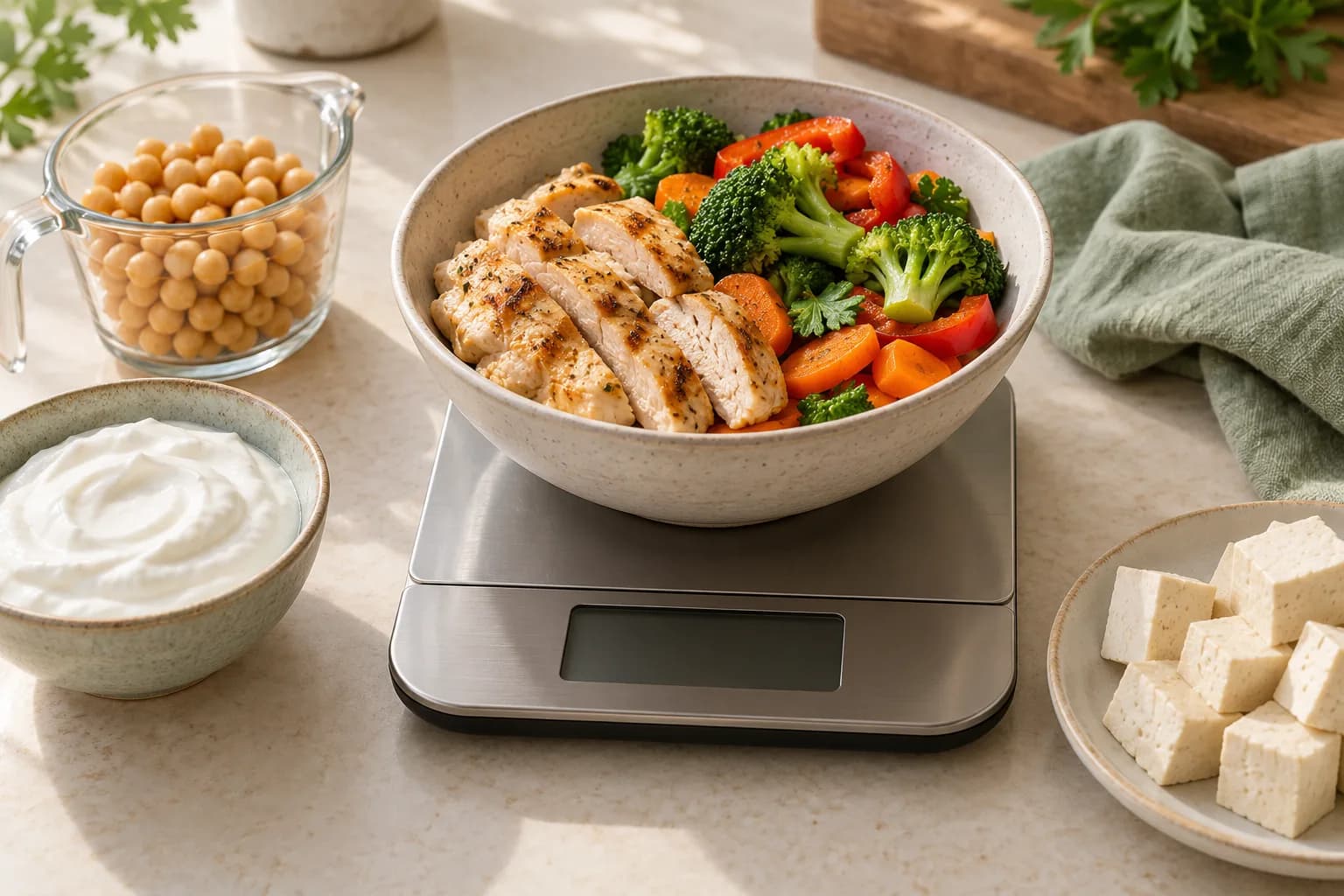
Best Product and Tracking Tools
| Product / tool | Best use | Target method | Watch for |
|---|---|---|---|
| Food scale | Most accurate cooked or raw gram-based tracking | Use grams, tare the plate, and log cooked or raw consistently | Do not mix raw database entries with cooked weights. |
| Barcode tracking app | Packaged foods, protein bars, shakes, yogurt, ready meals | Verify serving size, grams, protein, and calories against the package | Crowd-sourced entries can be wrong or outdated. |
| Protein powder scoop | Fast add-on when food protein is short | 20-30 g protein per serving with calories that fit your goal | A scoop is not always 30 g; weigh it once. |
| Meal-prep containers | Repeatable protein portions for the week | Label container with cooked grams and protein estimate | Sauces and oils need separate tracking. |
| USDA/FDC lookup | Generic whole foods without a package label | Choose cooked vs raw and the closest food form | Brand-specific foods can differ from generic entries. |
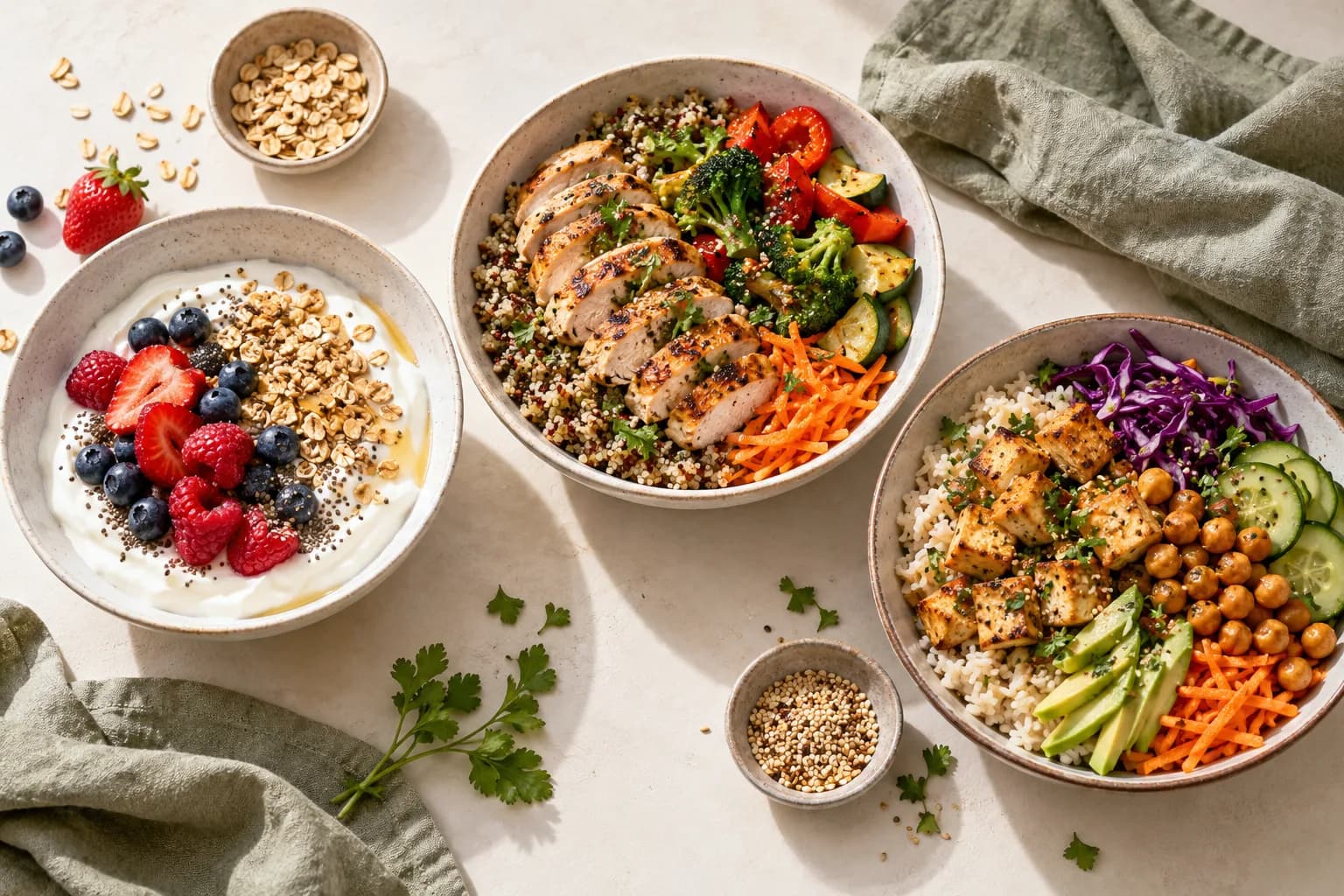
Recipe and Meal Templates
150g chicken protein bowl
150 g cooked chicken breast, rice or potatoes, salad, yogurt sauce
Uses a weighed lean protein anchor, then lets carbs and sauce scale to your goal.
Egg plus egg-white breakfast
2 whole eggs, 150 g egg whites, vegetables, salsa
Keeps yolk flavor while using egg whites to raise protein without many calories.
Greek yogurt protein bowl
250 g nonfat Greek yogurt, berries, optional half scoop whey
No-cook meal with easy label verification and high satiety.
Tofu edamame plant bowl
180 g firm tofu, 100 g edamame, slaw, soy-ginger dressing
Combines soy foods for a stronger plant-protein meal.
Protein Counting Method Comparison
| Method | Accuracy | Speed | Best for |
|---|---|---|---|
| Weigh foods in grams | Highest | Medium | Cutting, body recomposition, and precise macro targets. |
| Use package labels | High for packaged foods | Fast | Protein bars, shakes, yogurt, cottage cheese, ready meals. |
| Use standard servings | Medium | Fast | Simple habit building without obsessive tracking. |
| Estimate by palm portions | Lower | Fastest | Eating out, travel, and maintenance phases. |
| Only track daily target | Medium | Fast | Users who care most about protein, not full macro tracking. |
Proper Guide: How to Count Protein Intake
Use the right food form
Match raw foods with raw entries and cooked foods with cooked entries. Cooked chicken per 100 g is not the same as raw chicken per 100 g because water changes during cooking.
Track protein anchors first
Add the main protein source from each meal before small extras. Chicken, eggs, yogurt, tofu, fish, lentils, and protein powder usually drive the daily total.
Check packaged products
For bars, shakes, yogurt cups, deli meat, and ready meals, the package label is usually more accurate than a generic database entry.
Sources, Credit and Method
Generic whole-food values are based on USDA FoodData Central and rounded for practical meal planning. Packaged product examples use typical label ranges and should be replaced with the exact Nutrition Facts label when tracking a real product.
Frequently Asked Questions
How do I count protein intake accurately?
Use cooked or raw weights consistently, choose the matching database entry, and use package labels for branded products. A food scale is the most accurate method; standard servings are faster but less precise.
Should I count raw or cooked protein?
Either can work, but do not mix them. Raw foods contain more water, while cooked foods are more concentrated per gram. If you weigh cooked chicken, use a cooked chicken database entry.
Are food protein calculator values exact?
No. Values are planning estimates from USDA FoodData Central and common product-label ranges. Actual values vary by brand, cut, water loss, preparation method, and serving size.
What is the easiest way to hit my protein target?
Build each meal around a protein anchor: chicken, fish, eggs, Greek yogurt, cottage cheese, tofu, lentils, or a measured protein powder. Then use the counter to check whether the day reaches your target.