
GLP-1 nutrition
Protein for GLP-1 Weight Loss and High-Protein Meals for GLP-1 Users
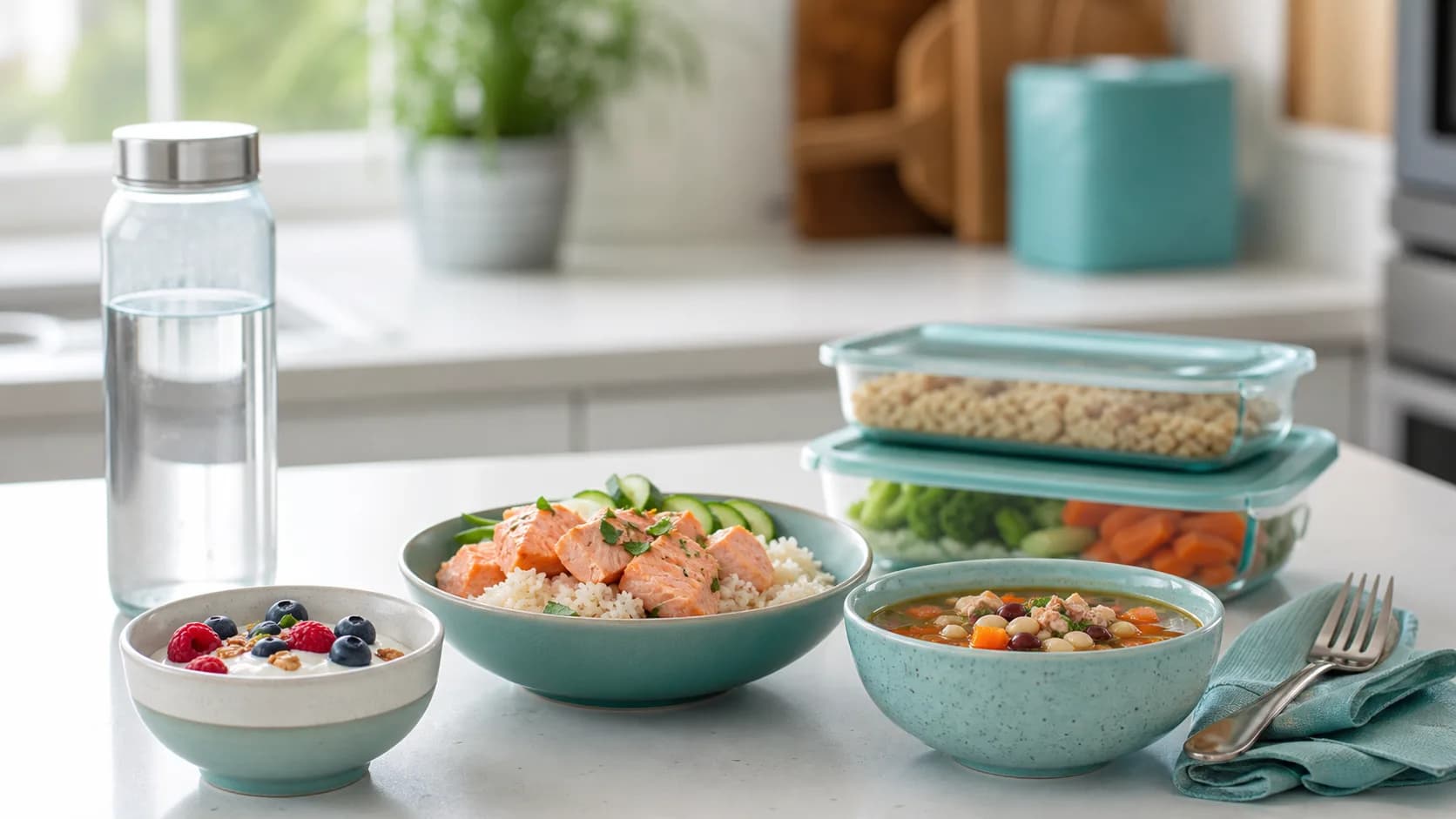
Protein for GLP-1 weight loss is not about forcing large bodybuilder meals into a smaller appetite. GLP-1 medications and related incretin therapies can make food feel different: appetite drops, fullness arrives earlier, rich foods may sit heavily, and old meal-prep habits may stop working. This complete guide shows how high-protein meals for GLP-1 users can be smaller, softer, more protein-dense, and easier to repeat while your prescribing clinician manages the medication plan.
Key Takeaways
- Protein for GLP-1 weight loss is a lean-mass, appetite, and meal-structure strategy; it is not medication advice or a replacement for clinician guidance.
- Many GLP-1 users do better with small protein anchors across the day instead of one or two large meals that become difficult to finish.
- A practical meal framework is often 25-35 g protein at main meals plus one or two 15-25 g backup snacks, adjusted to body size, kidney health, symptoms, activity, and care-team guidance.
- High-protein meals for GLP-1 users should also include fluids, gentle fiber, and tolerable carbohydrates because constipation, dehydration, nausea, and low energy can worsen when protein is planned alone.
- The target tables, 7-day plan, recipes, grocery workflow, and visual summaries are designed to help readers plan smaller high-protein meals without guesswork.
Article Structure
- 1. Who This Meal Plan Is For
- 2. Quick Answer: Protein for GLP-1 Weight Loss
- 3. The GLP-1 Plate Method
- 4. High-Protein Meals for GLP-1 Users: What Works
- 5. 7-Day High-Protein GLP-1 Meal Plan
- 6. High-Protein GLP-1 Meals Under 400 Calories
- 7. Protein Boosters for 80 g, 100 g, and 120 g Ranges
- 8. Common GLP-1 Eating Problems and Fixes
- 9. Grocery List and Prep Workflow
- 10. Three Small-Portion Recipes
- 11. More High-Protein Meal Ideas for GLP-1 Users
- 12. How to Adjust the Plan During Dose Changes
- 13. Safety Notes Before You Use the Plan
Use This as Decision Support, Not a Treatment Plan
This page can help organize meals and questions, but it cannot set a personal medical nutrition target. Bring these points to the clinician managing the medication, diabetes care, kidney health, pregnancy planning, or side effects.
- What protein and calorie range fits my medication, weight-loss pace, kidney function, labs, and activity?
- Which symptoms should trigger a medication or clinical check-in rather than another food swap?
- Do I need body-composition monitoring, hydration guidance, constipation support, or referral to a registered dietitian?
Who This Meal Plan Is For
This guide is for adults using a GLP-1 or related incretin medication under medical supervision who want practical food structure. It is not a medication guide, dose guide, or promise that protein alone handles every body-composition change. The food goal is narrower and more useful: make it easier to eat enough protein, calories, fluid, and fiber when appetite is low and meals become smaller.
The plan is especially useful if you start the day with good intentions but end up eating a few bites of random food because nothing sounds appealing. That pattern is common on GLP-1 medications because delayed gastric emptying and appetite suppression can make normal portion sizes feel heavy. Smaller meals are not a problem by themselves; the problem is when smaller meals become protein-light and nutrient-light.
A good GLP-1 meal plan does not try to copy a bodybuilder diet. It uses high-protein foods in tolerable portions: Greek yogurt, cottage cheese, eggs, tofu, fish, lean poultry, beans, lentils, protein smoothies, soups, and soft bowls. It also keeps vegetables, fruit, and slow carbohydrates in the plan because constipation, fatigue, and low training energy can show up when someone focuses only on protein.
Start with a planning range, then choose the plan version.
Use the GLP-1 protein planning tool as a discussion aid. If your clinician-supported range is near 80 g, use the lighter version of this plan. If it is 100-120 g or more, keep the same meals but add the listed protein boosters.
Quick Answer: Protein for GLP-1 Weight Loss
Protein for GLP-1 weight loss starts with one practical question: how do you protect nutrition quality when appetite is intentionally lower? GLP-1 medications can help people eat less, but a smaller appetite can also make it easier to skip protein, fluids, fiber, and resistance training. That is why the goal is not simply "eat less." The goal is to lose weight with a food structure that preserves function, energy, and lean-mass support as much as possible.
A common educational starting point is to discuss a higher-protein range with the clinician or registered dietitian managing the overall plan. Many adults using GLP-1 medications during weight loss start the conversation around 1.2 g/kg/day or more, while active users, users lifting weights, and users trying to preserve lean mass may discuss higher ranges. The right number depends on kidney function, diabetes medications, body size, rate of weight loss, total calories, symptoms, and clinical context.
The safest way to use this guide is to treat the tables as planning examples. If your prescriber or dietitian gave you a different target, follow that guidance. If you are vomiting, dehydrated, dizzy, losing weight very rapidly, unable to tolerate food, or changing diabetes medications, do not solve that with another recipe search. Contact the care team because medication side effects and nutrition risk need clinical judgment.
| GLP-1 context | Educational protein discussion range | Meal structure | Important caution |
|---|---|---|---|
| Low appetite, early treatment, no training | Often discuss 1.2-1.5 g/kg/day | 3 small protein-first meals or 2 meals plus 2 snacks | Escalate persistent nausea, vomiting, dehydration, or inability to eat. |
| Active weight loss with walking or light exercise | Often discuss 1.2-1.6 g/kg/day | 25-35 g at main meals plus one backup snack | Do not drop calories so low that weakness or dizziness becomes normal. |
| Resistance training or muscle-preservation focus | Often discuss 1.5-1.8 g/kg/day | 3-5 protein feedings across the day | Protein helps, but strength training and enough calories also matter. |
| Very high body weight or high body fat | Use clinician range or lean-mass-informed target | Start with realistic meals, then adjust upward | Total-weight formulas can produce unrealistic targets for some people. |
| Kidney disease, complex diabetes, pregnancy, eating disorder history | Individualized medical guidance only | Use this page only for discussion prompts | Do not set your own high-protein target without qualified care. |
| Daily protein goal | Best GLP-1 meal pattern | Example split | Why it works |
|---|---|---|---|
| 70-80 g/day | Three small meals | 25 g breakfast, 25 g lunch, 25 g dinner | Good beginner structure when appetite is low but meals are still tolerated. |
| 90-100 g/day | Three meals plus one snack | 30 g, 30 g, 25 g, 15 g | Adds a backup snack without making any one meal too large. |
| 110-120 g/day | Three meals plus two small protein moments | 30 g, 30 g, 30 g, 15 g, 15 g | Fits users who feel full quickly but can eat small amounts repeatedly. |
| 130-150 g/day | Four meals or three meals plus two stronger snacks | 35 g, 35 g, 35 g, 25 g, 15 g | Often requires planned dairy, lean meat, tofu, fish, or protein powder. |
| 150 g+/day | Personalized plan strongly preferred | Individualized | High targets can be hard with GLP-1 appetite suppression and should be realistic. |
The simplest GLP-1 protein rule
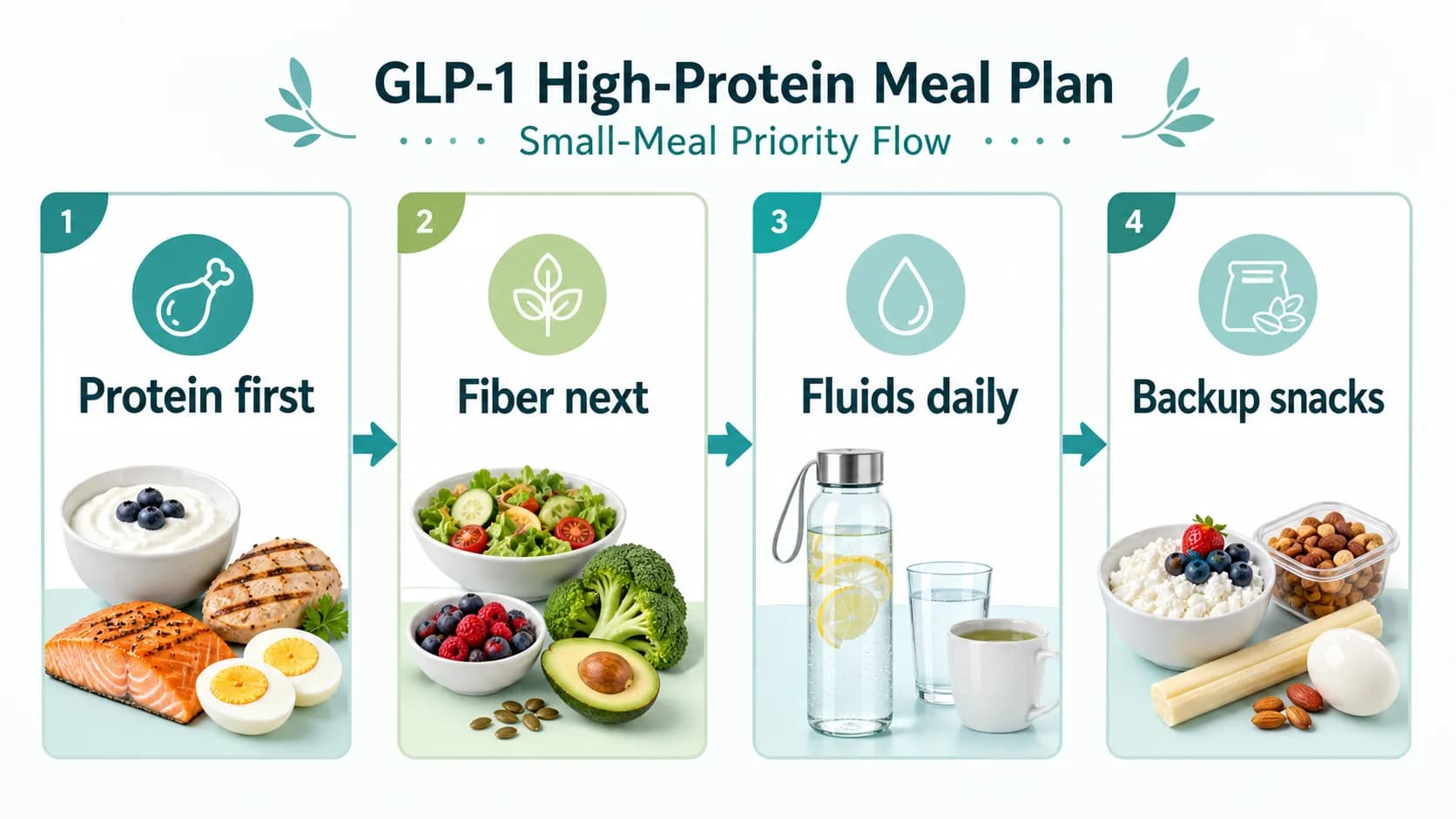
Put protein first in the meal, make the portion small enough to finish, keep a backup protein snack available, and add fluids plus gentle fiber so the plan does not become protein-only.
The GLP-1 Plate Method
On GLP-1 medication, the order of eating matters because fullness can arrive early. A simple rule is to eat the protein portion first, then vegetables or fruit, then the starch or fat portion. This does not mean carbohydrates or fat are bad. It means the highest-priority nutrients should not be left until the moment you already feel full.
For many users, a standard plate is too large. Think of a smaller plate or bowl with a protein anchor, a fiber anchor, a gentle carbohydrate, and a small amount of fat. The meal should feel boringly achievable. A small turkey soup with beans and vegetables is more useful than a huge salad that looks healthy but is abandoned after five bites because it feels too bulky.
| Plate part | Target | Examples | Why it matters |
|---|---|---|---|
| Protein anchor | 25-35 g at main meals | Greek yogurt, chicken, tuna, tofu, eggs, cottage cheese, fish | Supports lean mass, satiety, and daily protein consistency. |
| Fiber anchor | 1 cup when tolerated | Berries, cooked vegetables, lentils, beans, oats, chia | Helps digestion and reduces the chance of protein-only meals. |
| Gentle carbohydrate | 1/2 to 1 cup | Rice, oats, potato, whole-grain toast, soup noodles | Supports energy, training, and nausea management. |
| Small fat portion | 1 to 2 teaspoons or a small garnish | Olive oil, avocado, nuts, seeds, cheese | Adds flavor but should stay modest if nausea is triggered by fatty meals. |
This framework also makes restaurant and takeout choices easier. Choose a meal with a clear protein portion, ask for sauces on the side, and save leftovers instead of forcing the full serving. If the only tolerable meal is a small soup, add protein to the soup with chicken, tofu, Greek yogurt, collagen plus a complete protein source, or a side of cottage cheese.
High-Protein Meals for GLP-1 Users: What Works
High-protein meals for GLP-1 users work best when they are designed for early fullness. A normal diet meal might rely on a large salad, a big grain bowl, or a giant portion of lean meat. That can look healthy but fail in real life if the user feels full after a few bites. GLP-1 meals need a higher protein-to-volume ratio, softer textures when nausea is active, and backup options that can be eaten in two rounds.
The best meals are usually not extreme. They are familiar foods with better protein structure: Greek yogurt with berries, egg and cottage cheese scramble, chicken soup, tuna toast, tofu ginger soup, salmon rice bowl, turkey chili, skyr with cereal, cottage cheese fruit bowl, or a small smoothie with whey, soy, or pea protein. The meal should be easy to stop and restart if fullness arrives early.
Meal temperature, smell, fat content, spice level, and texture can all matter. Some users tolerate cold yogurt better than hot eggs. Others tolerate soup better than solid meat. Some can eat salmon easily but struggle with beef. The plan should allow swaps instead of treating one food list as mandatory. A successful GLP-1 meal plan is flexible enough to survive a dose-change week.
| Meal type | Protein target | Low-appetite version | Higher-protein version |
|---|---|---|---|
| Breakfast bowl | 25-40 g | Greek yogurt, berries, and a small spoon of oats | Greek yogurt plus half scoop protein powder, berries, oats, and chia. |
| Soup meal | 25-40 g | Brothy chicken or tofu vegetable soup | Chicken, turkey, tofu, or lentil soup with Greek yogurt sauce or extra lean protein. |
| Toast or wrap | 20-35 g | Tuna, egg, cottage cheese, or tofu on one slice toast | Double protein filling in a small wrap with vegetables and light sauce. |
| Smoothie | 20-40 g | Milk or soy milk with yogurt and berries | Milk, Greek yogurt, protein powder, fruit, and oats in a lower-volume blend. |
| Rice or potato bowl | 25-45 g | Small salmon, chicken, or tofu bowl | Lean protein plus rice or potatoes, cooked vegetables, and yogurt-based sauce. |
| Snack box | 15-30 g | Cottage cheese, boiled egg, or skyr | Cottage cheese plus turkey slices, edamame, tuna packet, or protein drink. |
| Symptom or barrier | Meal style to try | Foods that often fit | Foods to test cautiously |
|---|---|---|---|
| Nausea | Cool, mild, lower-fat meals | Greek yogurt, skyr, smoothies, broth, rice, banana, tofu soup | Fried foods, heavy cream sauces, greasy meats, very spicy meals. |
| Early fullness | Mini meals with protein first | Cottage cheese cup, tuna toast, egg bites, small soup, half smoothie | Large salads, giant bowls, high-volume raw vegetables before protein. |
| Constipation | Protein plus fluids and gradual fiber | Kiwi, berries, oats, chia, cooked vegetables, lentils, beans, soup | Very low-fiber protein-only days and abrupt high-fiber jumps. |
| Meat aversion | Dairy, egg, fish, tofu, or liquid protein | Greek yogurt, cottage cheese, eggs, tofu, edamame, tuna, protein shakes | Strong-smelling meats or dry reheated chicken. |
| Reflux or heaviness | Smaller, lower-fat portions | Brothy soup, yogurt, lean poultry, tofu, potatoes, oatmeal | Large late meals, high-fat meals, peppermint, carbonation, and trigger foods. |
| Busy schedule | Portable backup meals | RTD shake, tuna packet, skyr cup, protein bar, cottage cheese, shelf-stable milk | Skipping meals until dinner, then trying to catch up with one large meal. |
Texture matters
When solid food is hard, switch format before you abandon the target: yogurt instead of meat, soup instead of salad, smoothie instead of a large breakfast, tofu or fish instead of dry chicken, and split portions instead of one large plate.
7-Day High-Protein GLP-1 Meal Plan
The week below illustrates roughly 90-115 g protein per day before optional boosters. Calories vary because GLP-1 users differ widely in body size, dose, activity, and weight-loss phase. If your clinician has given you a calorie target, adjust portions to that plan. If you are losing weight too fast, feeling weak, or struggling to train, do not keep cutting portions just because appetite is low.
Day 1
About 102 g proteinBreakfast
31 gGreek yogurt bowl with 250 g plain Greek yogurt, berries, 20 g oats, and 1 tablespoon chia. If appetite is very low, eat the yogurt first and save the oats for later.
Lunch
29 gTurkey and white bean soup with lean turkey, white beans, carrots, spinach, and broth. Keep it brothy rather than creamy if nausea is active.
Snack
18 gCottage cheese cup with cucumber slices or a small fruit. Use lactose-free cottage cheese if dairy tolerance is inconsistent.
Dinner
24 gSoft salmon rice bowl with 100 g salmon, 1/2 cup rice, cooked zucchini, lemon, and a teaspoon of olive oil.
Day 2
About 96 g proteinBreakfast
27 gProtein oatmeal made with oats, milk, and half a scoop of whey stirred in after cooking. Add cinnamon and banana if nausea is not active.
Lunch
32 gChicken avocado wrap using 120 g cooked chicken, a small tortilla, lettuce, tomato, and a thin avocado spread.
Snack
12 gTwo hard-boiled eggs with salt or everything seasoning. If eggs feel heavy, swap for skyr.
Dinner
25 gTofu ginger soup with firm tofu cubes, mushrooms, spinach, rice noodles, and low-sodium broth.
Day 3
About 108 g proteinBreakfast
35 gSmall protein smoothie with milk, Greek yogurt, whey or pea protein, frozen berries, and ice. Keep volume low by using less liquid.
Lunch
28 gTuna cottage cheese toast: tuna mixed with cottage cheese and mustard over one slice whole-grain toast, plus pickles or cucumber.
Snack
15 gSkyr cup or high-protein yogurt. Choose low added sugar if this is a daily snack.
Dinner
30 gLean beef or turkey chili with beans, tomatoes, and cooked peppers. Serve in a smaller bowl and keep leftovers.
Day 4
About 101 g proteinBreakfast
30 gEgg and cottage cheese scramble with two eggs, 100 g cottage cheese, spinach, and toast on the side if tolerated.
Lunch
25 gLentil chicken soup with shredded chicken, lentils, carrots, and broth. Use lemon and herbs instead of a heavy sauce.
Snack
20 gReady-to-drink protein shake or clear whey drink when solid food sounds unappealing.
Dinner
26 gShrimp taco bowl with shrimp, rice, cabbage, salsa, and Greek yogurt lime sauce.
Day 5
About 94 g proteinBreakfast
28 gCottage cheese fruit bowl with 250 g cottage cheese, pineapple or berries, and a small portion of granola.
Lunch
27 gChicken salad lettuce cups with Greek yogurt dressing, celery, grapes, and walnuts in a small amount.
Snack
14 gEdamame with sea salt. If fiber feels too heavy, use a smaller serving and add a yogurt later.
Dinner
25 gPaneer or tofu tikka bowl with cooked vegetables and a small portion of rice or roti.
Day 6
About 110 g proteinBreakfast
32 gOvernight oats with Greek yogurt, protein powder, oats, and berries. Eat half early and half mid-morning if needed.
Lunch
30 gSoft chicken burrito bowl with shredded chicken, beans, rice, salsa, and a spoon of Greek yogurt.
Snack
18 gSmoked salmon cucumber bites with cottage cheese or light cream cheese.
Dinner
30 gTurkey meatballs with tomato sauce and zucchini noodles or a small pasta portion.
Day 7
About 99 g proteinBreakfast
29 gTofu scramble with nutritional yeast, spinach, mushrooms, and one small tortilla.
Lunch
28 gSardine or tuna rice bowl with cucumber, carrots, rice, lemon, and yogurt sauce.
Snack
17 gGreek yogurt with a tablespoon of peanut powder or powdered peanut butter.
Dinner
25 gChicken vegetable noodle soup or tofu noodle soup with extra protein added first.
This plan intentionally repeats ingredients. Repetition is not lazy; it is how many people succeed when appetite is unpredictable. If a meal works, repeat it. The goal is not culinary novelty every day. The goal is to create a dependable set of small meals that get protein into the day without creating side effects or decision fatigue.
High-Protein GLP-1 Meals Under 400 Calories
High-protein GLP-1 meals under 400 calories can be useful when the user has a clinician-supported calorie target, wants a smaller meal, or needs a high-protein snack that does not feel overwhelming. They should not become a rule for every meal. Some GLP-1 users already struggle to eat enough; making every meal tiny can worsen fatigue, constipation, dizziness, hair shedding, training decline, or very rapid weight loss.
Use under-400 meals as tools, not as proof of discipline. A 300-calorie yogurt bowl may be perfect at breakfast if dinner is larger. A 350-calorie soup may be ideal during dose escalation. But after a workout, during a long workday, or when weight is dropping too quickly, a higher-calorie meal with rice, potatoes, oats, beans, olive oil, avocado, or milk may be more appropriate.
| Meal | Approx protein | Approx calories | Best use |
|---|---|---|---|
| Greek yogurt, berries, chia, and half scoop protein | 35-45 g | 280-390 | Breakfast or snack when chewing feels difficult. |
| Tuna cottage cheese toast | 30-40 g | 300-390 | Small lunch with strong protein density. |
| Chicken vegetable soup with white beans | 30-40 g | 300-400 | Nausea-friendly lunch or dinner if kept brothy. |
| Egg and cottage cheese scramble | 30-38 g | 300-400 | Breakfast when eggs are tolerated. |
| Tofu ginger soup with mushrooms and spinach | 25-35 g | 250-390 | Vegetarian or vegan-friendly lower-volume meal. |
| Protein smoothie with milk, berries, and whey or soy | 30-45 g | 250-400 | Backup meal when solid food is unappealing. |
| Shrimp taco bowl with cabbage and yogurt sauce | 30-40 g | 300-400 | Light dinner with lean protein. |
| Cottage cheese fruit bowl with cereal | 25-35 g | 250-380 | Evening snack, breakfast, or split meal. |
| Turkey lettuce cups with Greek yogurt dressing | 30-40 g | 280-390 | Cold lunch or meal-prep option. |
| Salmon cucumber rice mini bowl | 25-35 g | 330-400 | Small dinner with protein plus gentle carbs. |
| When under-400 meals help | When to avoid making them the default |
|---|---|
| Appetite is low but you can tolerate a small protein-first meal. | You are losing weight faster than your clinician expected. |
| You need a snack-sized meal between larger meals. | You feel weak, dizzy, cold, irritable, or unable to train. |
| You are managing calories under professional guidance. | You are skipping meals because the small meal made you too full. |
| You want a lower-fat meal during nausea-prone weeks. | You have persistent vomiting, dehydration, severe constipation, or reflux symptoms. |
| You are building a backup list for busy days. | You have kidney disease, pregnancy, eating disorder history, or complex diabetes medication changes. |
Protein density beats meal size
For GLP-1 users, a smaller meal is only useful if it still delivers meaningful nutrition. A 350-calorie meal with 35 g protein, fluids, and some fiber is very different from a 350-calorie meal of crackers that leaves the daily protein gap untouched.
Protein Boosters for 80 g, 100 g, and 120 g Ranges
The same meal plan can work at different protein ranges. The difference is portion size and whether you add one extra protein booster. Do not force a 120 g range into two meals if you feel full quickly. Split the range into small eating occasions so no single meal has to carry the whole day.
| Daily range | Meal pattern | Best booster | How to use it |
|---|---|---|---|
| 80 g | Three small meals | Greek yogurt or eggs | Use the plan as written and skip optional shakes if meals are complete. |
| 100 g | Three meals plus one snack | Skyr, cottage cheese, tuna, tofu | Add one 15-25 g snack when appetite is strongest. |
| 120 g | Three meals plus two small snacks | Whey, clear whey, chicken, fish | Add a protein drink or split one meal into two smaller servings. |
| 140 g+ | Four to five eating occasions | Lean meats, protein powder, high-protein dairy | Work with a dietitian if appetite is very low or weight loss is rapid. |
Liquid protein can help when solid food feels impossible, but it should not become the whole diet. Smoothies and shakes are useful tools because they are predictable and easy to dose. They are less useful if they replace every meal and crowd out vegetables, fruit, fiber, and actual food texture. Most people do best with one liquid option as a backup, not as the entire plan.
Common GLP-1 Eating Problems and Fixes
Nausea after fatty meals
Keep fat portions small, choose broth-based meals, avoid heavy cream sauces, and test avocado, nuts, cheese, and fried foods in small amounts.
Meat sounds unappealing
Use Greek yogurt, cottage cheese, eggs, tofu, edamame, lentils, beans, skyr, protein smoothies, and fish if those feel easier.
Constipation
Increase fluid, add fiber gradually, include fruit and cooked vegetables, move daily, and ask your clinician about medication-safe options if constipation persists.
Forgetting to eat
Set a protein-first reminder, keep a backup shake or yogurt in the fridge, and use small scheduled meals instead of waiting for hunger.
When nothing sounds good, use neutral foods. A small smoothie, soup, yogurt bowl, toast with tuna, or rice with tofu can be easier than a highly seasoned meal. Many people try to solve low appetite with exciting food, but strong smells and heavy flavors can make nausea worse. Mild food is not a failure if it helps you meet your needs.
If you are consistently unable to eat enough, this is a medical conversation, not a willpower problem. Tell your prescribing clinician about persistent vomiting, dehydration, dizziness, weakness, very rapid weight loss, severe constipation, or inability to meet basic nutrition. Food planning can help, but medication side effects sometimes require clinical adjustment.
Grocery List and Prep Workflow
The grocery list is built around foods that can become several different meals. Cooked chicken can become soup, wraps, rice bowls, and chicken salad. Greek yogurt can become breakfast, sauce, smoothie base, or snack. Tofu can become scramble, soup, bowl, or curry. This keeps food waste low when appetite changes from day to day.
| Category | Buy | Prep |
|---|---|---|
| Protein | Greek yogurt, cottage cheese, eggs, chicken breast, tofu, tuna, salmon, turkey, edamame | Cook chicken, boil eggs, portion yogurt, press tofu if needed. |
| Carbohydrates | Oats, rice, small tortillas, potatoes, whole-grain toast, noodles | Cook one grain and keep portions small. |
| Fiber | Berries, bananas, spinach, zucchini, carrots, cucumbers, beans, lentils | Use cooked vegetables when raw salads feel too bulky. |
| Flavor | Lemon, salsa, mustard, ginger, herbs, low-sodium broth, Greek yogurt sauces | Keep sauces light and add after cooking. |
| Backups | Protein powder, clear whey, shelf-stable tuna, protein bars, broth | Store in visible places so low-appetite days have a plan. |
A realistic prep session takes about 75 minutes. Cook one tray of chicken or tofu, boil six eggs, cook two cups of rice or potatoes, chop cucumbers and carrots, and make one soup or chili. Do not prep seven different recipes unless you already enjoy that. GLP-1 eating is easier when components can be assembled in smaller portions.
Label containers with protein estimates. A container that says "chicken soup - 30 g protein" is easier to use than a mystery container. Protein labels also reduce the temptation to skip tracking entirely. If the exact number is not perfect, that is fine. A consistent estimate is better than no structure.
Three Small-Portion Recipes
Greek Yogurt Protein Bowl
A low-volume breakfast or snack that works when chewing feels like effort.
Ingredients
- 250 g plain Greek yogurt
- 1/2 scoop whey or pea protein
- 80 g berries
- 1 tablespoon chia
- Cinnamon
Method
- 1. Stir protein powder into yogurt until smooth.
- 2. Top with berries, chia, and cinnamon.
- 3. Eat half now and half later if fullness comes early.
Turkey White Bean Soup
Brothy, reheatable, and easier than a dense meat-heavy meal.
Ingredients
- 120 g cooked lean turkey
- 1/2 cup white beans
- 1 cup broth
- Carrots and spinach
- Lemon and parsley
Method
- 1. Warm broth with vegetables until soft.
- 2. Add turkey and beans until heated through.
- 3. Finish with lemon so it tastes bright without heavy fat.
Soft Salmon Rice Bowl
A small dinner with protein first, gentle carbs, and cooked vegetables.
Ingredients
- 100 g cooked salmon
- 1/2 cup cooked rice
- Cooked zucchini
- Greek yogurt lemon sauce
- Salt and herbs
Method
- 1. Flake salmon into a small bowl.
- 2. Add rice and zucchini.
- 3. Top with yogurt sauce and eat salmon first if fullness comes quickly.
More High-Protein Meal Ideas for GLP-1 Users
A complete GLP-1 meal guide needs more than a seven-day schedule because symptoms and appetite change. Use the ideas below as mix-and-match modules. If a meal feels too large, eat the protein first and save the rest. If a meal feels too rich, reduce fat and switch to a broth, yogurt, tofu, fish, or smoothie format. If a meal is too low in calories for your plan, add rice, potatoes, oats, fruit, milk, olive oil, avocado, or a larger starch portion.
| Meal idea | Protein range | Texture | Best fit |
|---|---|---|---|
| Skyr with berries, cereal, and powdered peanut butter | 25-35 g | Cool and soft | Breakfast or low-appetite snack. |
| Chicken noodle soup with extra shredded chicken | 30-45 g | Brothy and soft | Nausea, dose-change week, or cold-weather prep. |
| Tuna cucumber rice bowl | 30-40 g | Soft with crunch option | Small lunch with gentle carbs. |
| Tofu miso soup with edamame | 25-40 g | Brothy | Vegetarian or vegan-friendly meal. |
| Egg bites with cottage cheese | 25-35 g | Soft | Breakfast prep or portable snack. |
| Protein overnight oats with Greek yogurt | 30-45 g | Soft | Split breakfast across the morning. |
| Turkey meatballs with tomato sauce | 30-45 g | Soft and savory | Meal prep with pasta, zucchini, or potatoes. |
| Salmon potato bowl with yogurt dill sauce | 30-45 g | Soft | Dinner with protein and potassium-rich carbs. |
| Paneer or tofu curry with cooked vegetables | 25-40 g | Soft | Vegetarian dinner when spice is tolerated. |
| Clear whey or protein water plus yogurt later | 20-45 g | Liquid | Backup when solid food is hard. |
| Cottage cheese savory bowl with tomatoes and crackers | 25-35 g | Soft | Small lunch or evening meal. |
| Lean beef or turkey chili with beans | 35-50 g | Soft | Higher-protein meal prep when appetite is stable. |
| Shrimp rice paper rolls with yogurt dip | 25-35 g | Cool and light | Low-fat meal when fried foods feel heavy. |
| Soy milk smoothie with pea protein and banana | 30-45 g | Liquid | Dairy-free breakfast or post-walk meal. |
| Rotisserie chicken potato plate | 30-45 g | Soft if shredded | Quick dinner with minimal cooking. |
GLP-1 Chicken Protein Soup
A brothy meal that keeps volume manageable while still delivering meaningful protein.
Ingredients
- 140 g shredded cooked chicken
- 1 1/2 cups broth
- 1/2 cup cooked carrots or zucchini
- 1/3 cup cooked rice or noodles
- Lemon, parsley, and salt to taste
Method
- 1. Warm broth and vegetables until soft.
- 2. Add chicken and rice or noodles until heated through.
- 3. Eat the chicken first if fullness arrives early, then return to the broth and carbs later.
GLP-1 Tofu Miso Protein Bowl
A plant-based soft bowl for users who want protein without meat.
Ingredients
- 200 g firm tofu
- 1 cup miso or ginger broth
- 1/2 cup shelled edamame if tolerated
- Cooked mushrooms or spinach
- Small rice portion if calories are needed
Method
- 1. Warm broth with mushrooms or spinach.
- 2. Add tofu cubes and edamame until hot.
- 3. Serve in a small bowl and add rice only if the meal needs more energy.
GLP-1 Cottage Cheese Savory Bowl
A cold, low-effort meal when cooking smells are unappealing.
Ingredients
- 250 g cottage cheese
- Cucumber or tomato
- Everything seasoning or herbs
- Turkey slices or smoked salmon if more protein is needed
- Small crackers or toast
Method
- 1. Spoon cottage cheese into a small bowl.
- 2. Add vegetables, seasoning, and optional turkey or salmon.
- 3. Use crackers or toast for gentle carbs if the meal needs more staying power.
GLP-1 Protein Overnight Oats
A split breakfast that can be eaten in two rounds across the morning.
Ingredients
- 170 g Greek yogurt
- 30 g oats
- 1/2 scoop whey, soy, or pea protein
- Berries
- Milk or soy milk to thin
Method
- 1. Stir yogurt, oats, protein powder, and milk until smooth.
- 2. Refrigerate overnight.
- 3. Eat half first and keep the rest for later if early fullness hits.
GLP-1 Salmon Potato Mini Plate
A small dinner with soft protein, gentle carbohydrate, and a light sauce.
Ingredients
- 100-140 g cooked salmon
- 200 g cooked potato
- Cooked zucchini or green beans
- Greek yogurt, lemon, dill, and salt
Method
- 1. Flake salmon and plate it with potato and cooked vegetables.
- 2. Mix yogurt, lemon, dill, and salt for sauce.
- 3. Keep oil modest during nausea-prone weeks.
How to Adjust the Plan During Dose Changes
Many people tolerate food differently during the first weeks of therapy or after a dose increase. A meal that felt easy last month may suddenly feel too rich, too large, or too fibrous. That does not mean the plan failed. It means the plan needs a temporary lower-volume version until digestion and appetite settle again.
During a harder week, keep the protein anchor but simplify the rest of the meal. A chicken salad can become chicken soup. A dense rice bowl can become salmon with a few bites of rice. A large Greek yogurt bowl can become half yogurt now and half yogurt later. The priority is not perfect variety every day; the priority is preventing a chain of very low-protein days.
Nausea-friendly meals usually have less grease, less spice, less total volume, and a softer texture. Brothy soups, smoothies, yogurt bowls, cottage cheese, tofu, eggs, fish, soft rice, potatoes, bananas, and cooked vegetables are common fallback foods. Raw salads, fried foods, carbonated drinks, and very fatty meals are more likely to feel heavy for some users, although tolerance varies.
Constipation needs a different adjustment. If you raise protein but lower fiber, fluids, and total food volume, bowel habits can slow down. Add fiber gradually with berries, kiwi, oats, beans, lentils, chia, cooked vegetables, or psyllium if your clinician says it fits. Jumping from very low fiber to very high fiber overnight can worsen bloating, so build slowly.
| Problem week | Change the plan by | Example swap |
|---|---|---|
| Nausea | Lower fat and volume, keep protein soft | Chicken salad becomes chicken vegetable soup. |
| Meat aversion | Use dairy, eggs, tofu, fish, or smoothies | Chicken bowl becomes Greek yogurt plus tofu soup. |
| Constipation | Add fluid and gradual fiber | White rice bowl adds cooked zucchini, kiwi, and chia yogurt. |
| Very low appetite | Split each meal into two mini meals | Breakfast yogurt becomes two small servings across the morning. |
| Training fatigue | Add gentle carbs around workouts | Add banana, oats, potato, rice, or toast to the protein meal. |
If several weeks pass and you still cannot eat enough to meet basic nutrition needs, escalate the issue. Very low intake can increase fatigue, dizziness, constipation, hair shedding, and loss of training capacity. Your prescriber can evaluate medication side effects, dose timing, hydration, and whether referral to a registered dietitian is appropriate.
Safety Notes Before You Use the Plan
Do not use this meal plan to change medication dose. Food can support GLP-1 treatment, but medication decisions belong with the prescribing clinician. This matters especially if you have diabetes medications, kidney disease, gallbladder symptoms, pregnancy plans, a history of pancreatitis, severe reflux, or an eating disorder history.
Protein ranges should also be individualized. A healthy active adult trying to preserve muscle during weight loss may need a higher range than the standard baseline. A person with advanced kidney disease or other medical restrictions may need a different plan. The calculator is a planning tool, not medical guidance.
Resistance training is part of the muscle-preservation plan. Protein gives your body amino acids, but muscle also needs a reason to stay. Two to three sessions per week of appropriate strength training, even brief sessions, can be more useful than trying to solve lean-mass concerns with food alone.
| Situation | Use this guide for | Get clinician guidance for |
|---|---|---|
| Normal low appetite | Smaller protein-first meals, split portions, backup snacks | Persistent inability to eat enough or rapid decline in intake. |
| Nausea or reflux | Lower-fat, softer, cooler, smaller meals | Vomiting, dehydration, severe reflux, or symptoms that keep returning. |
| Constipation | Fluids, gradual fiber, cooked vegetables, fruit, and movement | Severe constipation, pain, no bowel movement, or medication questions. |
| Diabetes medication changes | Meal structure questions to bring to appointments | Hypoglycemia risk, insulin or sulfonylurea adjustments, glucose-management decisions. |
| Kidney disease | Recipe ideas only if they fit the prescribed plan | Personal protein targets, potassium, phosphorus, sodium, and fluid guidance. |
| Eating disorder history | A non-restrictive discussion prompt | Any calorie target, weight-loss pace, or tracking plan that could trigger relapse. |
| Pregnancy or trying to conceive | General meal ideas only after care-team approval | Medication decisions, weight-loss goals, and protein targets. |
Also remember that GLP-1 products are not all the same. Semaglutide and tirzepatide products have different indications, dosing schedules, contraindications, warnings, and side-effect profiles. This article does not compare medications or tell you which product to use. It focuses on food planning once a licensed prescriber has already made the medication decision.
Common Questions
Related Guides and Tools
Sources reviewed
- How to Eat Well and Feel Your Best on GLP-1 Medications - Obesity Action Coalition
- Wegovy prescribing information - DailyMed
- Ozempic prescribing information - DailyMed
- Effect of GLP-1 receptor agonists and co-agonists on body composition - PubMed
- Lean Mass Changes With Incretin Therapy Versus Lifestyle Intervention - PubMed
- A systematic review of the effect of semaglutide on lean mass - PubMed
- The Effect of Tirzepatide on Body Composition in People With Overweight and Obesity - PubMed
- USDA FoodData Central - U.S. Department of Agriculture
- How to Understand and Use the Nutrition Facts Label - U.S. Food and Drug Administration
- Cold Food Storage Chart - FoodSafety.gov