
Recipe guide
Protein Desserts: 25g+ Recipes for Every Goal
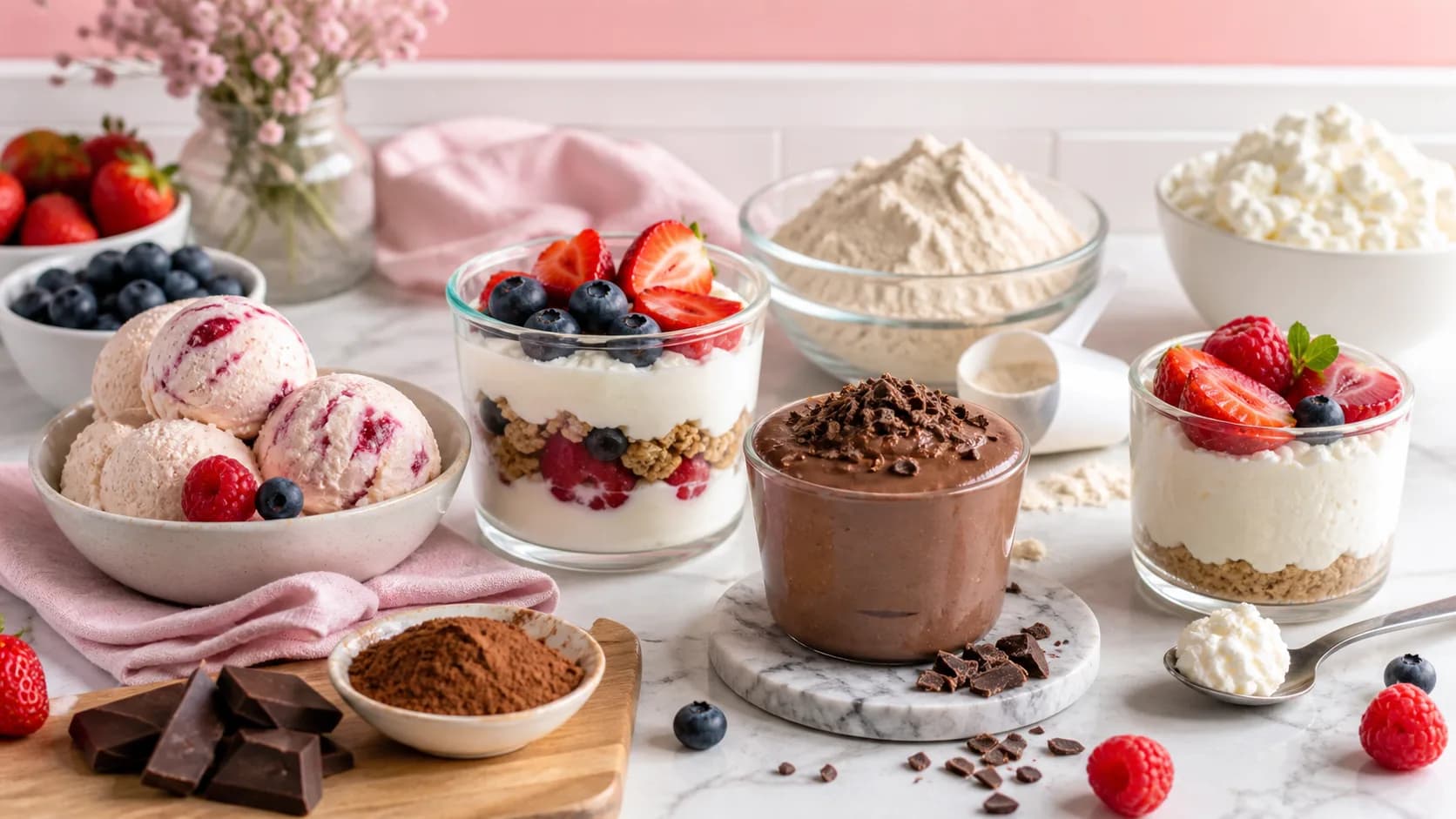
Protein desserts can make a high-protein diet easier to repeat because they let you keep a sweet ritual without abandoning your protein target. The problem is that many desserts marketed as high protein are really regular desserts with a small protein upgrade, while some homemade recipes become chalky because they force too much powder into the base. This complete guide covers protein desserts, protein desserts for beginners, protein desserts for weight loss, protein desserts for muscle gain, and protein desserts under 400 calories. You will get recipe comparison tables, protein and calorie estimates, no-bake formulas, baked options, protein ice cream notes, label checks, storage guidance, visual summaries, FAQs, and recipe cards for desserts that fit real nutrition goals.
Key Takeaways
- Useful protein desserts have a clear protein anchor, a realistic serving size, and calories that match the goal instead of only sounding healthy on the label.
- Protein desserts for beginners should start with forgiving bases such as Greek yogurt, skyr, cottage cheese, casein pudding, soy yogurt, or silken tofu before moving into complicated baking.
- Protein desserts for weight loss should keep protein high while measuring nut butter, granola, chocolate chips, cookie crumbs, syrups, nuts, oils, and large ice cream portions.
- Protein desserts for muscle gain should add planned calories from oats, granola, banana, dates, milk, nut butter, nuts, chocolate, or a larger serving.
- Protein desserts under 400 calories are easiest with Greek yogurt, skyr, cottage cheese, casein, whey, berries, cocoa, pudding-style bases, and measured toppings.
Article Structure
- 1. What Are Protein Desserts?
- 2. Protein Desserts Recipe Comparison Table
- 3. Protein Desserts for Beginners
- 4. Protein Desserts for Weight Loss
- 5. Protein Desserts for Muscle Gain
- 6. Protein Desserts Under 400 Calories
- 7. Full Protein Dessert Recipes
- 8. Protein Bases, Toppings, and Label Data
- 9. Store-Bought Protein Desserts and Label Checks
- 10. Storage, Meal Prep, and Troubleshooting
Use This as Decision Support, Not a Treatment Plan
This page can help organize meals and questions, but it cannot set a personal medical nutrition target. Bring these points to the clinician managing the medication, diabetes care, kidney health, pregnancy planning, or side effects.
- What protein and calorie range fits my medication, weight-loss pace, kidney function, labs, and activity?
- Which symptoms should trigger a medication or clinical check-in rather than another food swap?
- Do I need body-composition monitoring, hydration guidance, constipation support, or referral to a registered dietitian?
What Are Protein Desserts?
Protein desserts are sweet foods built around a meaningful protein source rather than a token protein claim. A dessert can be high protein because it uses Greek yogurt, skyr, cottage cheese, casein, whey, milk, soy milk, soy yogurt, silken tofu, eggs, or a higher-protein baking mix. The dessert still needs to taste like dessert, but the base should carry enough protein to change the role of the snack. A bowl with 30 g protein can help close the day; a cookie with 5 g protein may simply be a cookie with better marketing.
A practical threshold is at least 15 g protein for a snack-style dessert and 20-35 g when the dessert is replacing a planned protein snack. Protein per calorie matters too. A 180-calorie Greek yogurt pudding with 25 g protein is different from a 500-calorie brownie with 12 g protein. Both can fit, but they do different jobs. A weight-loss dessert should be protein-efficient and satisfying. A muscle-gain dessert can be higher calorie if it helps you eat enough total energy.
The third test is satisfaction. Some low-calorie protein desserts rely heavily on gums, added fibers, sugar alcohols, and intense sweeteners. They may work well for some people and cause bloating, aftertaste, or extra cravings in others. A dessert that technically fits macros but makes you feel worse is not a good default. The best protein desserts are repeatable: they taste good, digest well, fit the calorie target, and do not make you feel like you still need the real dessert afterward.
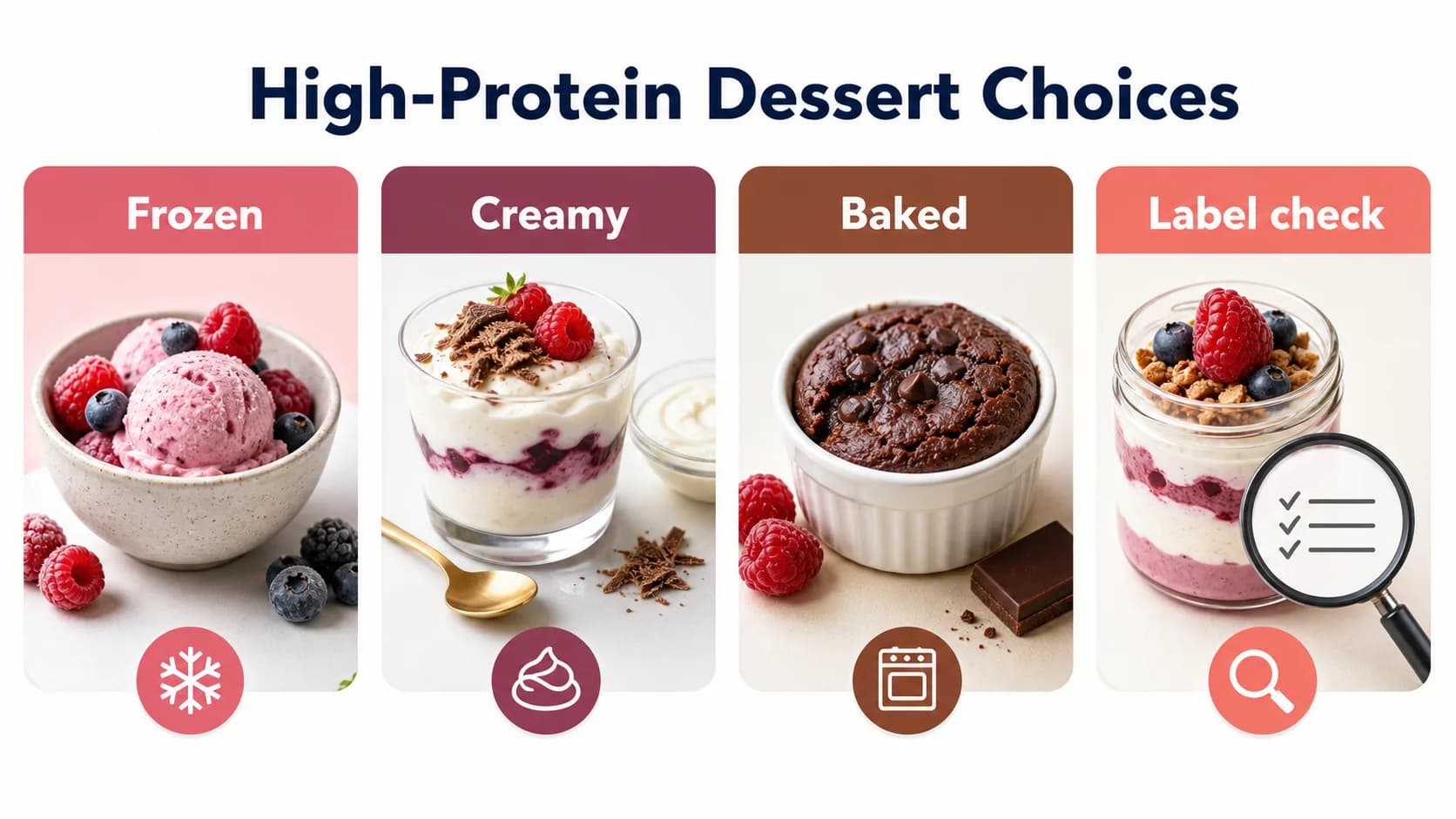
Best creamy bases
Greek yogurt, skyr, cottage cheese, casein pudding, silken tofu, soy yogurt, and milk-based pudding create the easiest high-protein dessert textures.
Best frozen bases
Milk, soy milk, Greek yogurt, blended cottage cheese, protein powder, fruit, and a small stabilizer can make protein ice cream smoother than powder plus water.
Best baked bases
Protein brownies, mug cakes, muffins, baked oats, and cookies need flour, oats, egg, yogurt, banana, pumpkin, or applesauce so protein powder does not dry them out.
Best calorie dials
Reduce calories by measuring nut butter, granola, chocolate chips, nuts, cookie crumbs, oils, syrup, and large servings. Increase calories with those same foods when muscle gain is the goal.
Protein Desserts Recipe Comparison Table
Use this table before choosing a recipe. Protein and calories are estimates for one serving, not lab values. Your numbers will change with brand, scoop size, yogurt fat level, milk choice, sweetener, toppings, and serving size. The texture note matters because a dessert with impressive macros is not helpful if it tastes chalky, icy, watery, or artificial.
| Protein dessert | Protein | Calories | Best for | Protein base | Texture note |
|---|---|---|---|---|---|
| Greek Yogurt Cheesecake Bowl | 35 g | 310 | Beginner, under 400 | Greek yogurt + whey | Thick and tangy. |
| Blended Cottage Cheese Chocolate Pudding | 32 g | 280 | Weight loss, beginner | Cottage cheese + cocoa | Smooth only if blended well. |
| Casein Chocolate Pudding | 34 g | 260 | Under 400, late-night snack | Casein + milk | Very thick, pudding-like. |
| Protein Ice Cream Base | 30 g | 320 | Frozen dessert, meal prep | Milk + yogurt + powder | Can be icy if too lean. |
| Silken Tofu Mocha Mousse | 24 g | 300 | Vegan, dairy-free | Silken tofu + plant protein | Smooth and rich when chilled. |
| Berry Skyr Parfait | 36 g | 340 | Beginner, weight loss | Skyr | Layered and high volume. |
| Chocolate Protein Mug Cake | 28 g | 360 | Under 400, warm dessert | Whey + egg + oat flour | Best slightly underbaked. |
| Protein Brownie Bowl | 30 g | 390 | Under 400, chocolate craving | Whey + Greek yogurt | Fudgy if not overcooked. |
| Peanut Butter Banana Protein Sundae | 38 g | 560 | Muscle gain | Greek yogurt + whey | Higher calorie, very filling. |
| Cottage Cheese Strawberry Mousse | 30 g | 260 | Weight loss, under 400 | Cottage cheese | Light if blended long enough. |
| Protein Cookie Dough Bowl | 31 g | 430 | Muscle gain, sweet snack | Casein + yogurt | Dense and spoonable. |
| Vegan Chocolate Soy Pudding | 27 g | 330 | Vegan, under 400 | Soy milk + tofu + plant protein | Smooth with strong chocolate flavor. |
| Frozen Yogurt Bark | 24 g | 240 | Beginner, snack | Greek yogurt | Crunchy frozen pieces. |
| High-Protein Rice Pudding | 26 g | 380 | Comfort dessert | Milk + casein or whey | Creamy but needs slow heating. |
Quick answer
The best protein desserts for most people start with a real protein base: Greek yogurt, skyr, cottage cheese, casein pudding, whey blended with dairy, soy yogurt, soy milk, or silken tofu. Add flavor with cocoa, berries, vanilla, cinnamon, lemon, coffee, or a small measured topping before adding extra sugar, nut butter, chocolate chips, or cookie crumbs.
Protein Desserts for Beginners
Protein desserts for beginners should be simple, no-bake, and hard to ruin. Start with Greek yogurt bowls, skyr parfaits, blended cottage cheese pudding, casein pudding, frozen yogurt bark, or a smoothie-style mousse. These desserts teach the most important skill: build flavor around a protein base before you attempt baked goods or protein ice cream. They also require less precision than brownies, cookies, or cakes.
The first beginner rule is to make the base taste good before adding toppings. Plain Greek yogurt plus protein powder can taste sour, chalky, or overly sweet if the powder is not right. Add vanilla, lemon juice, cinnamon, cocoa, salt, berries, or a small amount of sweetener. Let thick desserts rest for 5-10 minutes so casein, pudding mix, oats, or cocoa can hydrate. Cold desserts often taste less sweet than room-temperature mixtures, so adjust flavor after chilling too.
The second beginner rule is to use toppings deliberately. A little crushed graham cracker, mini chocolate chips, granola, peanut butter, or fruit can make the dessert feel real. Free-pouring those toppings can turn a 300-calorie dessert into a 600-calorie dessert quickly. Measure once so you know what a satisfying amount looks like.
| Beginner dessert | Protein | Calories | Why it works | Beginner tip |
|---|---|---|---|---|
| Greek Yogurt Cheesecake Bowl | 35 g | 310 | Simple no-bake base. | Use lemon and vanilla to create cheesecake flavor. |
| Blended Cottage Cheese Chocolate Pudding | 32 g | 280 | Cottage cheese becomes smooth when blended. | Blend longer than you think. |
| Berry Skyr Parfait | 36 g | 340 | Skyr is already thick and high protein. | Layer berries instead of adding lots of granola. |
| Casein Chocolate Pudding | 34 g | 260 | Casein thickens naturally. | Add liquid slowly because casein absorbs a lot. |
| Frozen Yogurt Bark | 24 g | 240 | Easy batch dessert. | Cut after freezing and store pieces in a bag. |
| Protein Ice Cream Base | 30 g | 320 | Flexible frozen dessert. | Use milk or yogurt, not only water. |
- Start with creamy desserts before baked desserts; they are more forgiving.
- Use a protein powder you already like in a shake before putting it in dessert.
- Add salt, vanilla, cocoa, cinnamon, lemon, or berries before adding more sweetener.
- Measure toppings at least once so the dessert keeps its intended calorie role.
- If a dessert tastes chalky, use less powder and more yogurt, milk, cottage cheese, or fruit.
Protein Desserts for Weight Loss
Protein desserts for weight loss should replace a normal snack or dessert, not simply add another eating occasion. If you usually have a 450-calorie dessert at night, a 280-calorie protein pudding with 30 g protein can be useful. If you normally would not snack and you add a large protein ice cream every night because it seems healthy, it can slow progress. Calories still decide the direction of weight change.
The best weight-loss desserts use protein-efficient bases: nonfat Greek yogurt, skyr, low-fat cottage cheese, casein, whey isolate, soy yogurt, silken tofu, berries, cocoa, cinnamon, and measured crunchy toppings. They feel like dessert but do not rely on large amounts of nut butter, granola, chocolate chips, oils, cookie crumbs, or syrup. Volume can help, but only if the dessert is satisfying and digestible.
Do not make every weight-loss dessert taste like punishment. A small amount of real topping can improve satisfaction enough to prevent grazing later. Ten grams of crushed cookie, five grams of mini chocolate chips, berries, cocoa, cinnamon, or a teaspoon of peanut butter can be worth it if the dessert feels complete. The problem is not toppings; the problem is unmeasured toppings pretending not to count.
| Weight-loss dessert | Protein | Calories | Why it helps | Calorie control move |
|---|---|---|---|---|
| Blended Cottage Cheese Chocolate Pudding | 32 g | 280 | High protein and creamy for modest calories. | Use cocoa before adding chocolate chips. |
| Casein Chocolate Pudding | 34 g | 260 | Thick and filling with little prep. | Add liquid slowly and skip heavy toppings. |
| Greek Yogurt Cheesecake Bowl | 35 g | 310 | Dessert flavor with a lean base. | Measure graham cracker crumbs. |
| Cottage Cheese Strawberry Mousse | 30 g | 260 | Fruit and dairy create volume. | Use berries instead of jam. |
| Frozen Yogurt Bark | 24 g | 240 | Portionable frozen pieces. | Cut into servings before storing. |
| Protein Brownie Bowl | 30 g | 390 | Warm chocolate option under 400. | Avoid adding nut butter unless planned. |
Weight-loss dessert rule
Choose one concentrated topping per dessert. Nut butter, granola, chocolate chips, cookie crumbs, nuts, syrup, and whipped topping can all fit, but stacking several of them often erases the calorie advantage.
Protein Desserts for Muscle Gain
Protein desserts for muscle gain can carry more calories because the goal is not always maximum protein per calorie. A lifter who needs more total energy may benefit from a Greek yogurt sundae with banana, granola, peanut butter, and chocolate chips. A person in a surplus may prefer a protein brownie bowl with milk or a cookie dough bowl with oats. The dessert should still have a real protein base, but it does not need to be ultra-light.
The muscle-gain mistake is adding too much powder and not enough food. Two scoops of protein powder can make pudding chalky, brownies dry, and ice cream icy. A better approach is to keep the powder moderate and add calories from foods that improve texture: oats, banana, dates, milk, granola, cereal, peanut butter, nuts, seeds, or a real cookie crumble. You can also pair a moderate dessert with a glass of milk or a bowl of yogurt.
Timing is flexible. A protein dessert can close the day, serve as a post-workout snack, or fill a calorie gap after dinner. Casein-rich foods such as Greek yogurt and cottage cheese are popular at night because they are filling and slow-digesting. If caffeine affects sleep, avoid mocha or coffee-flavored desserts late in the evening.
| Muscle-gain dessert | Protein | Calories | Why it works | Easy calorie booster |
|---|---|---|---|---|
| Peanut Butter Banana Protein Sundae | 38 g | 560 | Protein plus carbs and fats. | Add granola or cereal. |
| Protein Cookie Dough Bowl | 31 g | 430 | Dense, easy-to-eat calories. | Add chocolate chips or oats. |
| Protein Ice Cream with Cereal | 36 g | 520 | Frozen dessert plus training carbs. | Use whole milk or more cereal. |
| Protein Brownie Bowl | 30 g | 390 | Warm base with room to scale. | Add peanut butter or ice cream. |
| High-Protein Rice Pudding | 26 g | 380 | Comfort dessert with carbs. | Add raisins, honey, or nuts. |
| Greek Yogurt Cheesecake Bowl | 35 g | 310 | Lean base that can scale upward. | Add granola, banana, or nut butter. |
- Use the dessert to fill a planned calorie gap, not as random grazing.
- Add calories through toppings that improve taste and texture, not only more protein powder.
- Pair dessert with milk, yogurt, fruit, or cereal when a bigger snack is easier than a bigger dinner.
- Avoid high-caffeine dessert flavors late at night if sleep quality matters.
Protein Desserts Under 400 Calories
Protein desserts under 400 calories are the easiest category to make well because creamy bases and pudding bases naturally fit. The simplest formula is 150-250 g Greek yogurt, skyr, cottage cheese, soy yogurt, or silken tofu plus cocoa, vanilla, berries, casein or whey if needed, and one measured topping. Baked desserts can also fit under 400, but they need careful portions because flour, oil, nut butter, and chocolate add up quickly.
Under 400 does not mean tiny. Berries, cocoa, cinnamon, vanilla, lemon, coffee, pumpkin, applesauce, and a small amount of cereal or graham cracker can make the serving feel complete. The key is to use low-calorie flavor first and calorie-dense toppings second. If you need more food for training or appetite, choose the muscle-gain version instead of making the under-400 version do every job.
| Under-400 dessert | Protein | Calories | Main protein anchor | What to measure carefully |
|---|---|---|---|---|
| Greek Yogurt Cheesecake Bowl | 35 g | 310 | Greek yogurt + whey | Graham cracker and sweetener |
| Casein Chocolate Pudding | 34 g | 260 | Casein + milk | Nut butter or chocolate chips |
| Cottage Cheese Strawberry Mousse | 30 g | 260 | Cottage cheese | Jam or granola |
| Protein Brownie Bowl | 30 g | 390 | Whey + yogurt | Oil, chocolate, and flour |
| Vegan Chocolate Soy Pudding | 27 g | 330 | Soy milk + tofu + plant protein | Maple syrup or chocolate |
| High-Protein Rice Pudding | 26 g | 380 | Milk + casein | Rice portion and sugar |
Under-400 formula
For protein desserts under 400 calories, start with a 25-35 g protein base, add fruit or cocoa for flavor, and choose one measured topping. If the base is already sweet and creamy, do not add granola, nut butter, cookie crumbs, and chocolate chips all at once.
Full Protein Dessert Recipes
The recipes below are written as single-serving desserts unless noted. Use your own product labels for exact tracking because protein powders, yogurts, milk, cottage cheese, tofu, and sweeteners vary widely. For creamy recipes, blend or stir thoroughly and chill before judging texture. For baked recipes, stop cooking while the center is still slightly soft because high-protein batters continue to firm as they cool.
Greek Yogurt Cheesecake Protein Bowl
A beginner-friendly protein dessert around 310 calories with cheesecake flavor, berries, and measured crunch.
Ingredients
- 250 g nonfat Greek yogurt
- 1/2 scoop vanilla whey or casein
- 1 teaspoon lemon juice
- 1/2 teaspoon vanilla extract
- 100 g berries
- 10 g crushed graham cracker
- Pinch of salt
Method
- 1. Stir Greek yogurt, protein powder, lemon juice, vanilla, and salt until smooth.
- 2. Chill for 10 minutes so the powder hydrates and the bowl thickens.
- 3. Top with berries and crushed graham cracker.
- 4. Serve in a bowl rather than eating from the mixing container so the portion stays clear.
Blended Cottage Cheese Chocolate Pudding
A smooth under-400-calorie pudding around 280 calories with cottage cheese, cocoa, and protein powder.
Ingredients
- 250 g low-fat cottage cheese
- 8 g unsweetened cocoa powder
- 1/2 scoop chocolate protein powder
- 30-60 ml milk
- Sweetener to taste
- Pinch of salt
Method
- 1. Blend cottage cheese until completely smooth before adding dry ingredients.
- 2. Add cocoa, protein powder, milk, sweetener, and salt.
- 3. Blend again until glossy, then chill until thick.
- 4. Top with berries or a measured amount of chocolate chips if desired.
Casein Chocolate Protein Pudding
A thick late-night protein dessert around 260 calories with casein, milk, cocoa, and vanilla.
Ingredients
- 1 scoop chocolate casein
- 150 ml milk or soy milk
- 5 g cocoa powder
- 1/2 teaspoon vanilla extract
- Pinch of salt
- Optional berries
Method
- 1. Whisk casein, cocoa, vanilla, salt, and half the milk until a thick paste forms.
- 2. Add remaining milk slowly until pudding texture is reached.
- 3. Rest for 5-10 minutes so the casein thickens.
- 4. Top with berries or eat plain.
Protein Ice Cream Base
A flexible frozen protein dessert around 320 calories using milk, yogurt, protein powder, and vanilla.
Ingredients
- 180 ml milk or soy milk
- 120 g Greek yogurt or blended cottage cheese
- 1 scoop vanilla protein powder
- 1/2 teaspoon vanilla extract
- Pinch of salt
- Optional 1/2 banana or 5 g pudding mix for texture
Method
- 1. Blend all ingredients until smooth and slightly sweet.
- 2. Freeze in a suitable container for your ice cream method.
- 3. Process, churn, or blend according to your appliance or method.
- 4. If icy, add a splash of milk and process again.
Silken Tofu Mocha Protein Mousse
A dairy-free protein dessert around 300 calories with silken tofu, cocoa, coffee, and plant protein.
Ingredients
- 250 g silken tofu
- 1/2 scoop chocolate pea or soy protein
- 8 g cocoa powder
- 1 tablespoon cooled espresso or strong coffee
- Maple syrup or sweetener to taste
- Pinch of salt
Method
- 1. Blend silken tofu until smooth.
- 2. Add protein powder, cocoa, coffee, sweetener, and salt.
- 3. Blend until glossy and chill for at least 30 minutes.
- 4. Serve with berries or shaved dark chocolate if it fits your target.
Berry Skyr Protein Parfait
A high-volume under-400-calorie dessert around 340 calories with skyr, berries, and measured granola.
Ingredients
- 250 g plain or vanilla skyr
- 100 g mixed berries
- 1/2 scoop vanilla protein powder if needed
- 15 g granola
- Lemon zest or cinnamon
Method
- 1. Stir skyr with protein powder if using.
- 2. Layer skyr, berries, and granola in a glass.
- 3. Add lemon zest or cinnamon for flavor.
- 4. Eat immediately if you want the granola crunchy.
Chocolate Protein Mug Cake
A warm protein dessert around 360 calories with whey, oat flour, egg, cocoa, and yogurt.
Ingredients
- 1/2 scoop chocolate whey
- 25 g oat flour
- 1 large egg
- 50 g Greek yogurt
- 6 g cocoa powder
- 1/4 teaspoon baking powder
- 30 ml milk
- Sweetener and salt
Method
- 1. Mix dry ingredients in a microwave-safe mug.
- 2. Stir in egg, yogurt, milk, sweetener, and salt until smooth.
- 3. Microwave in short bursts until the center is just set.
- 4. Rest for one minute so the cake finishes setting without drying out.
Protein Brownie Bowl
A fudgy under-400-calorie dessert around 390 calories with Greek yogurt, cocoa, whey, and oat flour.
Ingredients
- 1/2 scoop chocolate whey
- 30 g oat flour
- 80 g Greek yogurt
- 1 large egg or 120 g egg whites
- 8 g cocoa powder
- 1/4 teaspoon baking powder
- 10 g mini chocolate chips
- Pinch of salt
Method
- 1. Mix whey, oat flour, cocoa, baking powder, and salt.
- 2. Stir in Greek yogurt and egg until thick.
- 3. Fold in mini chocolate chips.
- 4. Bake or microwave until just set and still fudgy in the center.
Peanut Butter Banana Protein Sundae
A muscle-gain dessert around 560 calories with Greek yogurt, banana, whey, peanut butter, and crunch.
Ingredients
- 250 g Greek yogurt
- 1 scoop vanilla or chocolate whey
- 1 banana, sliced
- 20 g peanut butter
- 15 g granola or cereal
- Cinnamon or cocoa
Method
- 1. Stir Greek yogurt with protein powder until smooth.
- 2. Layer banana slices over the yogurt base.
- 3. Drizzle peanut butter and sprinkle granola or cereal.
- 4. Finish with cinnamon or cocoa and serve immediately.
Cottage Cheese Strawberry Mousse
A light protein dessert around 260 calories with cottage cheese, strawberries, vanilla, and lemon.
Ingredients
- 250 g low-fat cottage cheese
- 120 g strawberries
- 1/2 teaspoon vanilla extract
- 1 teaspoon lemon juice
- Sweetener to taste
- Optional 1/4 scoop vanilla protein powder
Method
- 1. Blend cottage cheese until smooth.
- 2. Add strawberries, vanilla, lemon, sweetener, and optional protein powder.
- 3. Blend until airy and pink.
- 4. Chill for 20 minutes before serving.
Protein Cookie Dough Bowl
A dense spoonable dessert around 430 calories with casein, yogurt, oat flour, and mini chocolate chips.
Ingredients
- 1/2 scoop vanilla casein
- 150 g Greek yogurt
- 25 g oat flour
- 10 g peanut butter powder or peanut butter
- 10 g mini chocolate chips
- Vanilla, salt, and sweetener
Method
- 1. Stir casein, oat flour, yogurt, vanilla, salt, and sweetener into a thick dough.
- 2. Add a splash of milk if the dough is too stiff.
- 3. Fold in mini chocolate chips.
- 4. Chill for 10 minutes before eating.
Vegan Chocolate Soy Protein Pudding
A vegan protein dessert around 330 calories with silken tofu, soy milk, cocoa, and plant protein.
Ingredients
- 200 g silken tofu
- 100 ml unsweetened soy milk
- 1/2 scoop soy or pea protein
- 8 g cocoa powder
- Maple syrup or sweetener to taste
- Pinch of salt
Method
- 1. Blend tofu, soy milk, plant protein, cocoa, sweetener, and salt until smooth.
- 2. Chill until the pudding thickens.
- 3. Taste again after chilling and adjust sweetness if needed.
- 4. Serve with berries or a measured crunchy topping.
Protein Bases, Toppings, and Label Data
The protein base controls texture, taste, and nutrition. Greek yogurt and skyr are the easiest for cheesecake bowls and parfaits. Cottage cheese blends into mousse, pudding, and ice cream bases. Casein makes thick pudding. Whey blends easily but can become thin unless paired with yogurt or a thickener. Soy milk, soy yogurt, and silken tofu are useful for dairy-free desserts. Collagen mixes easily, but it should not be the primary protein source for muscle-focused targets because it is not a complete protein.
| Protein base | Best dessert use | Protein role | Texture impact | Main caution |
|---|---|---|---|---|
| Greek yogurt | Cheesecake bowls, parfaits, frozen bark | High | Thick and tangy | Can taste sour without flavoring. |
| Skyr | Parfaits and thick bowls | Very high | Very thick | Fat-free versions can taste sharp. |
| Cottage cheese | Mousse, pudding, ice cream | High | Creamy when blended | Texture needs blending. |
| Casein powder | Pudding and cookie dough bowls | High | Very thick | Can become chalky if overused. |
| Whey powder | Ice cream, mug cakes, yogurt bowls | High | Lighter, thinner | Can clump or dry baked goods. |
| Soy milk or soy yogurt | Vegan puddings and parfaits | Moderate to high | Smooth | Lower protein than powders. |
| Silken tofu | Vegan mousse and pudding | Moderate | Very smooth | Needs strong flavoring. |
| Collagen | Supplemental mix-in | Variable | Dissolves easily | Incomplete protein; not the main anchor. |
Toppings decide whether the dessert stays in its intended role. Fruit, cocoa, cinnamon, lemon, vanilla, coffee, and a pinch of salt add a lot of flavor for modest calories. Nut butter, granola, chocolate chips, cookie crumbs, nuts, syrups, dates, and oils are useful but calorie dense. For weight loss, use them as accents. For muscle gain, use them as planned boosters.
| Topping or mix-in | Best role | Calorie caution | Texture timing | Good pairing |
|---|---|---|---|---|
| Berries | Volume and color | Low | Add fresh or frozen | Yogurt, skyr, cottage cheese |
| Banana | Sweetness and carbs | Moderate | Fresh or blended | Peanut butter, cocoa, ice cream |
| Cocoa powder | Chocolate flavor | Low | Mix into base | Pudding, mousse, mug cake |
| Granola or cereal | Crunch and calories | High if free-poured | Add at serving | Muscle-gain bowls |
| Nut butter | Richness and calories | High | Drizzle after mixing | Banana, chocolate, cookie dough |
| Chocolate chips | Dessert texture | High if free-poured | Fold in measured amount | Brownie bowl, cookie dough |
| Cookie crumbs | Real dessert feel | High if free-poured | Top at serving | Cheesecake bowls |
| Sugar alcohols | Lower-sugar sweetness | Digestive tolerance varies | Use sparingly | Puddings and ice cream |
| Coffee or espresso | Mocha flavor | Low | Blend into base | Cocoa, tofu mousse, ice cream |
Store-Bought Protein Desserts and Label Checks
Store-bought protein desserts vary widely. Some are genuinely useful high-protein foods. Others are regular desserts with a protein claim. Check the Nutrition Facts panel, not just the front of the package. Added sugars, calories, saturated fat, serving size, sugar alcohols, and total protein all matter if the dessert becomes part of your routine.
A dessert can still be a dessert. That is not a problem. The problem starts when the protein claim makes you ignore portion size or your actual hunger. A protein ice cream pint may list calories per serving, but many people eat more than one serving. A protein brownie may have 12 g protein, but it can still carry dessert-level calories. Use the label to understand the role of the food, not to decide whether you are allowed to enjoy it.
| Label check | Good sign | Caution sign | Why it matters |
|---|---|---|---|
| Protein | 15-30 g per serving | Less than 10 g while marketed as high protein | The protein should change the nutrition role. |
| Calories | Fits your snack or dessert budget | Very high calories for modest protein | Calories still count for weight change. |
| Added sugar | Low enough for frequent use | Dessert-level added sugar every day | Frequent use changes the diet pattern. |
| Serving size | Realistic portion | Tiny serving people usually double | The real portion decides the real macros. |
| Digestibility | You tolerate sweeteners and fibers | Bloating, urgency, or cravings after eating | A dessert should not make you feel worse. |
| Protein source | Dairy, whey, casein, soy, pea blend | Mostly collagen as the only protein | Complete proteins matter for muscle targets. |
For protein ice cream, texture and serving size deserve extra attention. A lower-calorie pint can be helpful, but large servings of sugar alcohols or added fibers may not digest well for everyone. A homemade protein ice cream can be more flexible because you control the base, but it still needs enough milk, yogurt, cottage cheese, fruit, or stabilizer to avoid becoming icy.
Protein-washed dessert
If a dessert has regular dessert calories and only a small protein bump, treat it as dessert, not a main protein source.
Digestive overload
Large servings of sugar alcohols, added fibers, and gums can bother some people. Start with a smaller serving when trying a new product.
Tiny serving trick
Check whether the listed serving matches how you actually eat the dessert. Double portions mean double calories, sugar, and toppings.
Good default
A good frequent-use protein dessert is satisfying, digestible, protein-rich, and easy to portion.
Storage, Meal Prep, and Troubleshooting
Protein desserts can be meal-prepped, but each texture has its own rules. Yogurt bowls and puddings usually hold well for two or three days. Frozen bark and ice cream can hold longer in the freezer. Baked protein desserts often dry out faster than regular baked goods because protein powder and low-fat ingredients lose moisture. Store toppings separately when crunch matters.
Food safety still matters. Dairy-based desserts, tofu desserts, and cooked puddings should stay refrigerated. Do not leave yogurt bowls, cottage cheese mousse, protein pudding, or milk-based ice cream bases at room temperature for long periods. If you pack dessert for work, use an insulated lunch bag and cold pack. Freeze portions that will not be eaten soon.
| Dessert type | Best storage | Texture note | Best serving move |
|---|---|---|---|
| Greek yogurt bowls | Refrigerate 1-3 days | Can get watery with fruit. | Add granola or crumbs at serving. |
| Casein pudding | Refrigerate 1-2 days | Thickens as it sits. | Stir in milk if too thick. |
| Cottage cheese mousse | Refrigerate 1-3 days | Best after blending smooth. | Top with berries after chilling. |
| Protein ice cream | Freeze | Can become icy when very low fat. | Thaw briefly or reprocess with milk. |
| Frozen yogurt bark | Freeze in pieces | Melts quickly. | Serve straight from freezer. |
| Mug cake or brownie bowl | Best fresh | Can dry after refrigeration. | Undercook slightly and reheat gently. |
| Problem | Likely cause | Fast fix | Next batch adjustment |
|---|---|---|---|
| Chalky pudding | Too much powder or not enough liquid | Add milk and rest again. | Use less powder or more yogurt. |
| Icy protein ice cream | Base too lean or watery | Reprocess with a splash of milk. | Use milk, yogurt, banana, or cottage cheese. |
| Sour yogurt bowl | Plain yogurt plus unsweet powder | Add vanilla, lemon, salt, berries, or sweetener. | Use skyr or flavored powder carefully. |
| Dry brownie bowl | Overcooked or too much powder | Top with yogurt. | Cook less and add Greek yogurt. |
| Digestive symptoms | Sugar alcohols, fibers, gums, or large serving | Reduce serving size. | Choose simpler ingredients. |
| Not satisfying | Too low calorie or artificial tasting | Add one measured real topping. | Build topping into the plan. |
Common Questions
Related Guides and Tools
Sources reviewed
- USDA FoodData Central - U.S. Department of Agriculture
- Added Sugars on the Nutrition Facts Label - U.S. Food and Drug Administration
- How to Understand and Use the Nutrition Facts Label - U.S. Food and Drug Administration
- Cold Food Storage Chart - FoodSafety.gov
- International Society of Sports Nutrition Position Stand: protein and exercise - Journal of the International Society of Sports Nutrition
- Dietary Guidelines for Americans, 2025-2030 - U.S. Department of Agriculture and U.S. Department of Health and Human Services