
Recipe guide
Protein Coffee Recipes: Proffee Guide for Every Goal
Protein coffee recipes, often called proffee recipes, combine coffee with a protein source so your morning drink contributes to your daily protein target. This complete guide covers protein coffee recipes for beginners, protein coffee recipes for weight loss, protein coffee recipes for muscle gain, and protein coffee recipes under 400 calories. You will get hot and iced methods, recipe comparison tables, protein and calorie estimates, caffeine cautions, dairy-free swaps, troubleshooting, and practical visuals so the page works as a complete guide instead of a short trend note.
Key Takeaways
- Protein coffee recipes work best when the protein source is mixed cold first, then coffee is added after the powder is fully hydrated.
- Protein coffee recipes for beginners should start with iced vanilla proffee, RTD shake coffee, or a simple hot tempered latte before moving to blended recipes.
- Protein coffee recipes for weight loss should keep added sugar, creamer, syrup, whipped topping, and oversized milk portions controlled.
- Protein coffee recipes for muscle gain should add planned calories from milk, oats, banana, Greek yogurt, nut butter, dates, or a larger protein serving.
- Protein coffee recipes under 400 calories are easiest with cold brew, whey or plant protein, skim milk or soy milk, unsweetened cocoa, cinnamon, and ice.
Article Structure
- 1. What Is Protein Coffee?
- 2. Who Protein Coffee Helps Most
- 3. Best Protein Sources for Coffee
- 4. How to Make Smooth Protein Coffee
- 5. Protein Coffee Recipes
- 6. Protein Coffee Recipes for Beginners
- 7. Protein Coffee Recipes for Weight Loss
- 8. Protein Coffee Recipes for Muscle Gain
- 9. Protein Coffee Recipes Under 400 Calories
- 10. Protein Coffee Meal Pairings
- 11. Caffeine, Calories, and Added Sugar
- 12. Troubleshooting Taste, Texture, and Digestion
- 13. How to Fit Protein Coffee Into the Day
- 14. Protein Coffee Shopping Checklist
- 15. When Protein Coffee Is Not Enough
Use This as Decision Support, Not a Treatment Plan
This page can help organize meals and questions, but it cannot set a personal medical nutrition target. Bring these points to the clinician managing the medication, diabetes care, kidney health, pregnancy planning, or side effects.
- What protein and calorie range fits my medication, weight-loss pace, kidney function, labs, and activity?
- Which symptoms should trigger a medication or clinical check-in rather than another food swap?
- Do I need body-composition monitoring, hydration guidance, constipation support, or referral to a registered dietitian?
What Is Protein Coffee?
Protein coffee is coffee mixed with a protein source such as whey protein, ready-to-drink protein shake, milk, soy milk, Greek yogurt, collagen peptides, or clear whey. The concept became popular because it attaches protein to a habit people already have. If you drink coffee every morning, adding protein can be easier than adding another meal.
The main benefit is convenience. Many adults miss protein at breakfast, especially if breakfast is just coffee, toast, or a pastry. A protein coffee can add 15-35 g protein without changing the morning routine much. That can be useful for muscle gain, weight loss, GLP-1 appetite suppression, busy parents, commuters, and anyone who forgets breakfast.
The main limitation is that coffee is not a full meal by default. Protein coffee may provide protein, but it usually lacks fiber, fruit, vegetables, and enough total energy for an active morning. If you use it as a breakfast, consider pairing it with oats, fruit, toast, yogurt, or a small savory meal depending on your goals.
Who Protein Coffee Helps Most
Low-protein breakfast eaters
If breakfast is usually coffee only, proffee can move you from near zero protein to 20-30 g.
GLP-1 users
A small protein drink can help on low-appetite mornings, but persistent under-eating should be discussed with your clinician.
Commuters
A protein coffee can be easier to carry than eggs, yogurt, or a full breakfast bowl.
People who dislike shakes
Coffee flavor can make protein powder or ready-to-drink shakes more enjoyable.
Protein coffee is less useful if your breakfast already has enough protein. If you eat Greek yogurt, eggs, tofu, or a high-protein meal every morning, adding protein to coffee may be unnecessary. It can still fit, but do not add it just because the trend exists. Use your daily protein target as the decision point.
It is also less useful if it makes caffeine intake creep upward. A protein coffee made with espresso, cold brew, and a caffeinated protein drink can become a high-caffeine product quickly. The FDA notes that caffeine can fit a healthy diet for most adults, but large amounts can cause problems. Know your total daily caffeine, especially if you also use energy drinks or pre-workout products.
Best Protein Sources for Coffee
| Protein source | Protein | Best use | Caution |
|---|---|---|---|
| Whey isolate or concentrate | 20-27 g per scoop | Iced coffee, blended coffee, high-protein lattes | Can clump in hot coffee if added directly. |
| Ready-to-drink protein shake | 20-30 g | Fast iced proffee | Can be sweet and calorie-variable by brand. |
| Milk | 8 g per cup | Lower-protein latte | Not enough alone for high-protein breakfast. |
| Soy milk | 7-10 g per cup | Dairy-free latte | Choose higher-protein soy milk, not low-protein almond milk. |
| Greek yogurt | 15-25 g | Blended iced coffee smoothie | Can curdle if mixed into very hot coffee. |
| Collagen peptides | 10-20 g | Texture-friendly hot coffee | Not a complete muscle-building protein by itself. |
| Clear whey | 20-25 g | Fruit-style iced coffee experiments | Flavor may not pair well with classic coffee. |
For muscle-focused protein, whey, casein, milk, Greek yogurt, soy, pea blends, and complete protein powders are more reliable than collagen alone. Collagen can be useful for specific preferences and mixes easily, but it is low in some essential amino acids and should not be counted as your only high-quality protein source for the day.
If you are lactose intolerant, whey isolate may be easier than whey concentrate, but tolerance varies. Dairy-free users can choose soy milk, pea protein, or a plant protein blend. If you have kidney disease, pregnancy, medication concerns, or a history of disordered eating, ask a qualified clinician before using supplements as a daily habit.
How to Make Smooth Protein Coffee
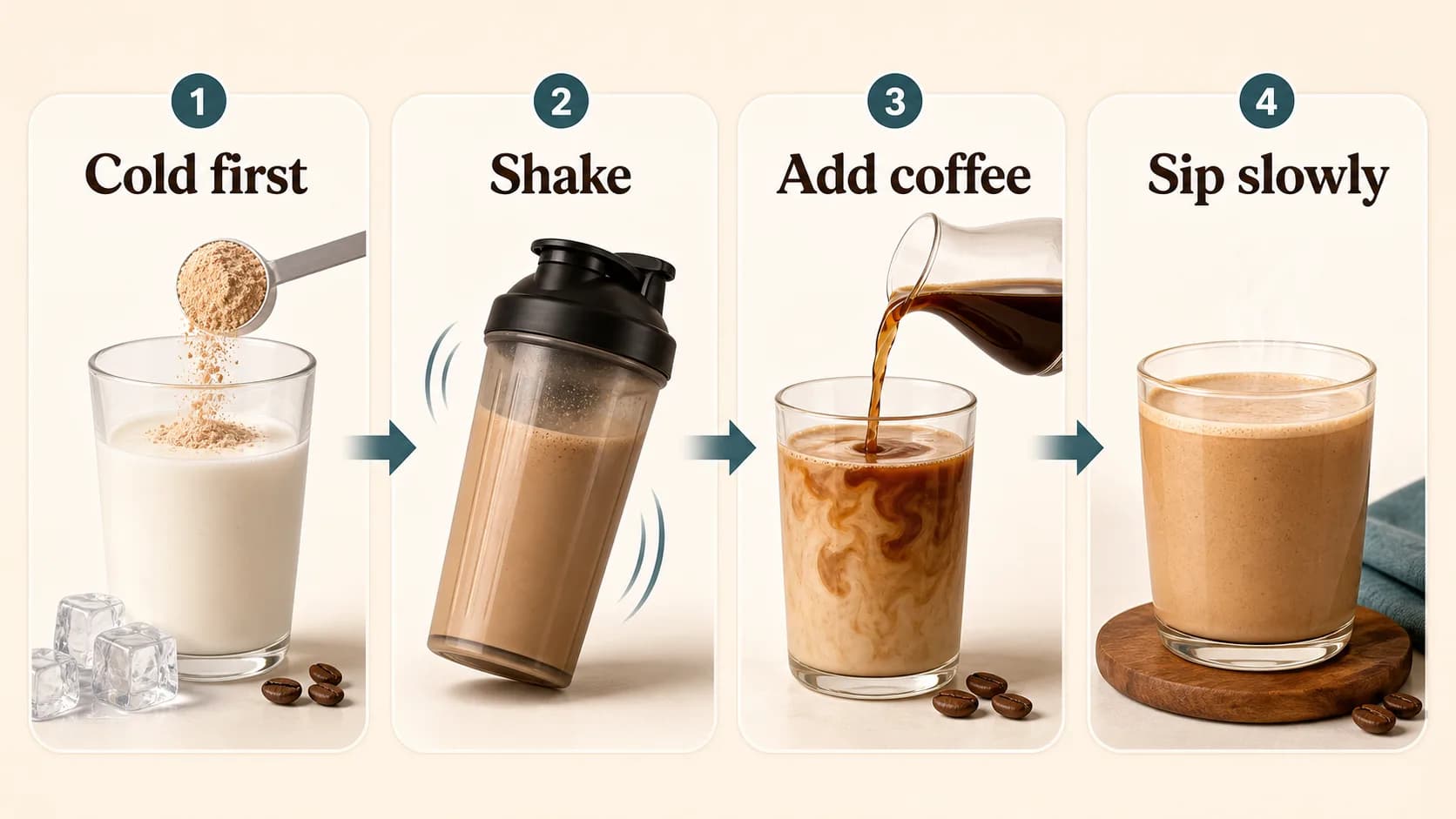
The biggest mistake is dumping protein powder into very hot coffee. Heat can make some powders clump, foam, or develop a cooked flavor. The easiest method is to mix protein with cold liquid first, then add coffee. If you want hot coffee, temper the protein mixture slowly or use collagen if collagen fits your goals.
| Method | Steps | Best for |
|---|---|---|
| Iced shake method | Shake protein powder with cold milk or water, pour over ice, add coffee. | Smoothest beginner method. |
| RTD method | Pour ready-to-drink protein shake over ice, add espresso or cold brew. | Fastest option. |
| Blender method | Blend coffee, protein, milk, ice, and optional banana. | Smoothie texture and breakfast replacement. |
| Hot temper method | Mix powder with cold milk, add a small amount of hot coffee, stir, then add the rest. | Hot latte with less clumping. |
| Collagen hot method | Stir collagen into hot coffee. | Convenience, but not complete protein. |
Best starting recipe
Use 8 oz cold brew, 1 scoop vanilla whey, 1/2 cup milk or soy milk, ice, and cinnamon. Shake the protein with milk first, then add coffee.
Protein Coffee Recipes
The best protein coffee recipes are not just coffee plus powder. A good recipe controls temperature, texture, sweetness, caffeine, protein quality, and calories at the same time. Use the table first, then choose the recipe that matches the job: a fast beginner proffee, a weight-loss iced latte, a muscle-gain breakfast coffee smoothie, a dairy-free soy latte, a hot coffee method, or an under-400-calorie drink that still tastes like real coffee.
The protein and calorie estimates below are practical ranges based on common portions. Labels vary, especially for protein powder, ready-to-drink shakes, flavored milks, syrups, creamers, and plant milks. If you drink protein coffee daily, save your default recipe in your tracker with the exact powder, milk, coffee, and sweetener you use.
| Protein coffee recipe | Protein | Calories | Best for | Main protein source | Method |
|---|---|---|---|---|---|
| Iced Vanilla Protein Latte | 30 g | 190 | Beginners, under 400 | Whey or plant protein | Cold shake |
| Hot Tempered Protein Coffee | 28 g | 210 | Hot coffee drinkers | Protein powder plus milk | Cold slurry, then hot coffee |
| RTD Shake Iced Coffee | 26 g | 180-260 | Fastest beginner option | Ready-to-drink shake | Pour over ice |
| Mocha Greek Yogurt Coffee Smoothie | 38 g | 360 | Breakfast, under 400 | Greek yogurt and protein powder | Blender |
| Dairy-Free Soy Proffee | 28 g | 240 | Dairy-free beginners | Soy milk and pea protein | Cold shake |
| Cinnamon Roll Iced Proffee | 32 g | 260 | Sweet craving | Vanilla whey or casein | Cold shake |
| Salted Caramel Muscle-Gain Coffee | 42 g | 520 | Muscle gain | Whey, milk, Greek yogurt | Blender |
| Peanut Butter Mocha Coffee Smoothie | 40 g | 480 | Muscle gain, low appetite | Whey, milk, yogurt | Blender |
| Collagen Plus Whey Hot Coffee | 35 g | 230 | Hot method with complete protein | Whey plus collagen | Tempered hot |
| Decaf Evening Protein Mocha | 30 g | 220 | Late-day protein gap | Casein or whey | Cold or warm |
| GLP-1 Small Protein Coffee | 22 g | 160 | Low appetite | Half scoop whey or RTD shake | Small cold drink |
| Under-400 Coffee Oat Breakfast Shake | 36 g | 390 | Training breakfast | Whey, milk, oats | Blender |
Iced Vanilla Protein Latte
The easiest smooth proffee for beginners, about 190 calories with skim milk.
Ingredients
- 1 scoop vanilla whey, whey isolate, or plant protein
- 1/2 cup skim milk or unsweetened soy milk
- 8 oz cold brew
- Ice
- Cinnamon and pinch of salt
Method
- 1. Shake protein powder with milk until smooth.
- 2. Fill a tall glass with ice and cold brew.
- 3. Pour protein milk over coffee and stir slowly.
- 4. Taste before adding sweetener because flavored protein may already be sweet.
- 5. Use decaf cold brew if caffeine timing is a problem.
Hot Tempered Protein Coffee
A hot protein coffee method that reduces clumps, about 210 calories.
Ingredients
- 1 scoop vanilla or unflavored whey protein
- 3/4 cup skim milk or soy milk
- 8 oz hot coffee, not boiling
- Cinnamon or cocoa
- Optional low-sugar sweetener
Method
- 1. Whisk or froth protein powder into cold milk until no dry pockets remain.
- 2. Pour a small splash of hot coffee into the protein milk and stir.
- 3. Add the rest of the hot coffee slowly while stirring.
- 4. Stop heating once mixed; do not microwave protein powder aggressively.
- 5. Drink promptly because hot protein drinks thicken as they sit.
RTD Shake Iced Coffee
The fastest protein coffee recipe when you have a ready-to-drink shake, usually 180-260 calories depending the bottle.
Ingredients
- 1 ready-to-drink protein shake
- 1-2 shots espresso or 6 oz cold brew
- Ice
- Cinnamon, cocoa, or vanilla
- Optional splash of milk if the shake is very thick
Method
- 1. Fill a glass with ice.
- 2. Pour the ready-to-drink shake over the ice.
- 3. Add espresso or cold brew and stir.
- 4. Taste before adding syrup because many shakes are already sweet.
- 5. Check the label for caffeine if the shake itself is caffeinated.
Mocha Greek Yogurt Coffee Smoothie
A thicker breakfast-style protein coffee recipe under 400 calories.
Ingredients
- 150 g plain nonfat Greek yogurt
- 1/2 scoop chocolate protein powder
- 6 oz chilled coffee or cold brew
- 1/2 frozen banana
- 1 tsp cocoa powder
- Ice and pinch of salt
Method
- 1. Add chilled coffee, Greek yogurt, protein powder, cocoa, salt, banana, and ice to a blender.
- 2. Blend until the yogurt and powder are fully smooth.
- 3. Add water, milk, or more coffee if the texture is too thick.
- 4. Taste and add cinnamon if the coffee is bitter.
- 5. Use this as a breakfast or post-workout drink, not just a casual beverage beside a full meal.
Dairy-Free Soy Proffee
A vegan protein coffee recipe with soy milk and pea protein, about 240 calories.
Ingredients
- 1 scoop pea or soy protein
- 1 cup unsweetened soy milk
- 1 shot espresso or 6 oz cold brew
- Ice
- Vanilla extract and cinnamon
Method
- 1. Shake pea protein with soy milk first so the powder hydrates.
- 2. Add ice to a glass and pour in coffee.
- 3. Add the protein soy milk and stir.
- 4. Taste before adding sweetener.
- 5. Use chocolate or mocha protein if plain pea protein tastes too earthy.
Cinnamon Roll Iced Proffee
A sweet-spiced protein coffee recipe under 300 calories when made with skim milk.
Ingredients
- 1 scoop vanilla whey or casein
- 3/4 cup skim milk or soy milk
- 8 oz cold brew
- Ice
- Cinnamon, vanilla, and pinch of salt
- Optional 1 tsp low-sugar maple-style syrup
Method
- 1. Shake protein, milk, cinnamon, vanilla, and salt until smooth.
- 2. Fill a glass with ice and cold brew.
- 3. Pour the cinnamon protein milk over the coffee.
- 4. Stir and add a very small amount of syrup only if needed.
- 5. For weight loss, keep the syrup optional and measure it.
Salted Caramel Muscle-Gain Coffee
A higher-calorie muscle-gain proffee smoothie, about 520 calories.
Ingredients
- 1 scoop vanilla or salted caramel whey
- 1 cup milk or soy milk
- 150 g Greek yogurt
- 1 small banana
- 25 g rolled oats
- 1 pitted date, ice, and pinch of salt
Method
- 1. Add milk, yogurt, protein powder, banana, oats, date, salt, chilled coffee, and ice to a blender.
- 2. Blend until the oats and date are smooth.
- 3. Add more milk if the drink gets too thick.
- 4. Use this as a planned meal or training-day snack.
- 5. For lower calories, skip the date and reduce oats.
Peanut Butter Mocha Coffee Smoothie
A richer protein coffee recipe for muscle gain or low appetite, about 480 calories.
Ingredients
- 1 scoop chocolate whey
- 1 cup skim milk or soy milk
- 120 g Greek yogurt
- 1/2 banana
- 16 g peanut butter
- 6 oz chilled coffee, cocoa, ice, and salt
Method
- 1. Add coffee, milk, yogurt, whey, cocoa, salt, banana, peanut butter, and ice to a blender.
- 2. Blend until thick and glossy.
- 3. Add more coffee if you want a stronger mocha flavor.
- 4. Use powdered peanut butter for a lighter version.
- 5. Keep regular peanut butter measured because it changes calories quickly.
Collagen Plus Whey Hot Coffee
A hot coffee recipe that uses collagen for mixability but keeps whey for complete protein.
Ingredients
- 1/2 scoop whey protein
- 10 g collagen peptides
- 3/4 cup milk or soy milk
- 8 oz hot coffee
- Cocoa or cinnamon
Method
- 1. Mix whey into cold milk first.
- 2. Stir collagen into hot coffee in a mug.
- 3. Slowly add the whey milk to the collagen coffee while stirring.
- 4. Do not count collagen as your only complete protein source.
- 5. Use decaf if this is an afternoon drink.
Decaf Evening Protein Mocha
A lower-caffeine protein coffee recipe for late-day protein gaps, about 220 calories.
Ingredients
- 1 scoop chocolate casein or whey
- 1 cup skim milk or soy milk
- 6 oz decaf coffee, chilled or warm
- Cocoa powder
- Ice for iced version or cinnamon for warm version
Method
- 1. For iced, shake protein with milk, cocoa, and decaf coffee, then pour over ice.
- 2. For warm, mix protein with cold milk first, then add warm decaf slowly.
- 3. Use casein for a thicker evening drink.
- 4. Keep the drink decaf if sleep is a priority.
- 5. Pair with fruit or oats if this is replacing a meal.
GLP-1 Small Protein Coffee
A smaller protein coffee recipe for low appetite, about 160 calories.
Ingredients
- 1/2 scoop whey isolate or plant protein
- 1/2 cup lactose-free milk, skim milk, or soy milk
- 4-6 oz cold brew or decaf coffee
- Ice
- Cinnamon or vanilla
Method
- 1. Shake the half scoop with milk until smooth.
- 2. Pour over ice and add coffee.
- 3. Sip slowly instead of forcing a large drink.
- 4. Use decaf if caffeine worsens nausea or reflux.
- 5. If even this is difficult to finish, discuss persistent low intake with a clinician.
Under-400 Coffee Oat Breakfast Shake
A protein coffee breakfast shake with oats that still fits under 400 calories.
Ingredients
- 1 scoop vanilla whey
- 3/4 cup skim milk or soy milk
- 6 oz cold brew
- 20 g rolled oats
- 1/2 banana
- Ice, cinnamon, and salt
Method
- 1. Add milk, cold brew, whey, oats, banana, cinnamon, salt, and ice to a blender.
- 2. Blend long enough for the oats to become smooth.
- 3. Add more coffee for a thinner drink.
- 4. Use this when protein coffee needs to behave more like breakfast.
- 5. For muscle gain, add more oats or nut butter.
Pumpkin Spice Protein Coffee
A seasonal protein coffee recipe under 300 calories when made with skim milk.
Ingredients
- 1 scoop vanilla protein powder
- 3/4 cup skim milk or soy milk
- 6 oz cold brew or cooled coffee
- 60 g pumpkin puree
- Pumpkin spice, vanilla, ice, and pinch of salt
Method
- 1. Shake or blend protein powder with milk, pumpkin, spice, vanilla, and salt.
- 2. Pour over ice with cold brew.
- 3. Stir until the pumpkin is evenly mixed.
- 4. Use real pumpkin puree, not sugary pie filling.
- 5. For a hot version, temper the protein milk with warm coffee slowly.
Clear Whey Americano Cooler
A lighter iced protein coffee for people who dislike creamy drinks, usually under 150 calories.
Ingredients
- 1 serving clear whey in a coffee-friendly flavor
- 10 oz cold water
- 1 shot espresso or 4 oz cold brew
- Ice
- Optional lemon peel only if the flavor suits it
Method
- 1. Mix clear whey with cold water and let foam settle.
- 2. Fill a glass with ice.
- 3. Add espresso or cold brew slowly.
- 4. Taste before adding citrus because coffee and fruit flavors can clash.
- 5. Use this as a light protein drink, not a full breakfast.
Protein Coffee Recipes for Beginners
Protein coffee recipes for beginners should solve one problem at a time: smooth texture. Do not begin with hot coffee, thick yogurt, oats, nut butter, and three sweeteners in the same mug. Start with an iced method because cold liquid gives protein powder time to hydrate before coffee bitterness and heat are involved. Once the basic method works, you can make the drink hot, blended, dairy-free, or more calorie-dense.
A beginner recipe should use one protein source, one coffee source, one liquid, ice, and one flavor. That might be vanilla whey, skim milk, cold brew, ice, and cinnamon. It might be a ready-to-drink shake, espresso, and ice. It might be soy milk, pea protein, cold brew, and vanilla. The formula is intentionally simple because most failed proffee attempts fail from powder clumps, too much sweetness, or coffee that is too hot.
| Beginner recipe | Protein | Calories | Why it works | Beginner tip |
|---|---|---|---|---|
| Iced Vanilla Protein Latte | 30 g | 190 | Few ingredients and very smooth. | Shake powder with milk before adding coffee. |
| RTD Shake Iced Coffee | 26 g | 180-260 | No powder mixing required. | Choose a shake you already tolerate. |
| Dairy-Free Soy Proffee | 28 g | 240 | Soy milk gives body and protein. | Use chocolate or vanilla plant protein first. |
| Hot Tempered Protein Coffee | 28 g | 210 | Teaches the safe hot method. | Never shake hot liquid in a sealed bottle. |
| Cinnamon Roll Iced Proffee | 32 g | 260 | Tastes like a coffee-shop drink without many steps. | Measure syrup or skip it. |
| Pumpkin Spice Protein Coffee | 31 g | 280 | Seasonal flavor hides protein taste well. | Use pumpkin puree, not pie filling. |
Beginner default
Use cold brew, milk or soy milk, one scoop of vanilla protein, ice, cinnamon, and a pinch of salt. Make that version smooth before adding oats, yogurt, nut butter, hot coffee, or extra sweeteners.
Protein Coffee Recipes for Weight Loss
Protein coffee recipes for weight loss can be useful when they replace a low-protein coffee-shop drink, pastry breakfast, or skipped meal that later causes overeating. They are less useful when they become an extra sweet drink beside a normal breakfast. The calorie target matters. A 190-calorie iced vanilla protein latte can fit easily. A large drink with a sweet shake, syrup, whole milk, whipped topping, and peanut butter can exceed a small meal.
For weight loss, keep protein visible and make every calorie-dense ingredient earn its place. Whey isolate, casein, pea protein, soy protein, skim milk, soy milk, cold brew, espresso, decaf coffee, cocoa, cinnamon, vanilla, and ice are easy to control. Creamer, flavored syrup, honey, sugar, whole milk, full-fat coconut milk, whipped topping, peanut butter, dates, oats, and ready-to-drink shakes can still fit, but they need measuring.
Satiety also matters. Some people drink calories quickly and feel hungry soon after. If that happens, make the protein coffee thicker with Greek yogurt, casein, ice, or a small amount of oats; drink it more slowly; or pair it with a small solid food such as fruit, boiled eggs, yogurt, cottage cheese, or toast. The best weight-loss protein coffee is the one that makes the next meal easier, not the one with the lowest possible calorie count.
| Weight-loss recipe | Protein | Calories | Why it helps | Calories to watch |
|---|---|---|---|---|
| Iced Vanilla Protein Latte | 30 g | 190 | High protein for low calories. | Sweetened milk and syrup. |
| GLP-1 Small Protein Coffee | 22 g | 160 | Smaller size for low appetite. | Creamer and large coffee portions. |
| Clear Whey Americano Cooler | 24 g | Under 150 | Very light and not creamy. | Flavor add-ins and sweetened powders. |
| Hot Tempered Protein Coffee | 28 g | 210 | Hot coffee habit with protein. | Large milk portions and sugar. |
| Decaf Evening Protein Mocha | 30 g | 220 | Closes protein gap without late caffeine. | Chocolate syrup and whipped topping. |
| Mocha Greek Yogurt Coffee Smoothie | 38 g | 360 | More filling breakfast texture. | Banana, oats, and extra yogurt. |
- Use unsweetened coffee and add sweetness only after tasting.
- Choose skim milk, lactose-free milk, soy milk, or water based on the calorie target.
- Measure syrups, creamers, nut butter, oats, dates, and whipped toppings.
- Use decaf if caffeine increases anxiety, reflux, appetite swings, or sleep disruption.
Protein Coffee Recipes for Muscle Gain
Protein coffee recipes for muscle gain should not be forced to stay tiny. Muscle gain needs enough protein, progressive resistance training, sleep, and total energy. If you struggle to eat breakfast, a blended protein coffee can help you drink calories that would be hard to chew early in the morning. That is where milk, Greek yogurt, oats, banana, dates, peanut butter, and larger protein servings become useful rather than mistakes.
The muscle-gain version should still be planned. A 520-calorie salted caramel coffee smoothie is useful if it helps you reach a surplus. It is not useful if it replaces a full breakfast and leaves the rest of the day unchanged. Watch the body-weight trend, training performance, and appetite. If weight is not rising, add oats, milk, banana, dates, nut butter, or another meal. If weight is rising too quickly, keep the protein anchor and reduce the easiest calories first.
Caffeine timing can help or hurt training. Some lifters like protein coffee before morning workouts because it combines caffeine and amino acids. Others feel shaky if coffee replaces food. If the session is long or hard, add carbohydrate with banana, oats, toast, cereal, or fruit. A protein coffee can be part of a training breakfast, but it does not need to be the entire plan.
| Muscle-gain recipe | Protein | Calories | Why it works | How to scale up |
|---|---|---|---|---|
| Salted Caramel Muscle-Gain Coffee | 42 g | 520 | Protein, carbs, and calories in one blender drink. | Add more oats, milk, or another date. |
| Peanut Butter Mocha Coffee Smoothie | 40 g | 480 | Nut butter and banana help low appetite. | Add oats or use whole milk. |
| Under-400 Coffee Oat Breakfast Shake | 36 g | 390 | Training breakfast base. | Add nut butter or more oats. |
| Mocha Greek Yogurt Coffee Smoothie | 38 g | 360 | High protein and thick texture. | Add granola, oats, or a full banana. |
| Collagen Plus Whey Hot Coffee | 35 g | 230 | Hot drink with complete protein included. | Pair with toast, oats, or yogurt. |
| Cinnamon Roll Iced Proffee | 32 g | 260 | Easy protein add-on beside breakfast. | Use as a drink with a solid meal. |
Muscle-gain rule
Do not make every protein coffee low calorie during a gaining phase. Keep the protein source, then deliberately add carbohydrate or fat when the day needs more energy.
Protein Coffee Recipes Under 400 Calories
Protein coffee recipes under 400 calories are usually the best daily default because they can deliver meaningful protein without turning coffee into dessert. The easiest formula is one protein source, one coffee source, one lower-calorie liquid, ice, and a flavor element. If you want the drink to feel like breakfast, add Greek yogurt or a small measured portion of oats while staying within the 400-calorie ceiling.
The ingredients most likely to break the under-400 target are not protein powder or coffee. They are syrups, sweet creamers, whole milk, full-fat coconut milk, peanut butter, dates, large oat portions, whipped topping, chocolate chips, and oversized ready-to-drink shakes. You can still use them, but choose one and measure it. If the drink already has a full protein shake, it may not need syrup or creamer.
| Under-400 recipe | Protein | Calories | Protein strategy | Best use |
|---|---|---|---|---|
| Clear Whey Americano Cooler | 24 g | Under 150 | Clear whey plus cold coffee. | Light snack |
| GLP-1 Small Protein Coffee | 22 g | 160 | Half scoop plus milk. | Low appetite |
| Iced Vanilla Protein Latte | 30 g | 190 | Protein powder plus milk. | Daily default |
| Hot Tempered Protein Coffee | 28 g | 210 | Cold protein slurry plus hot coffee. | Hot coffee routine |
| Decaf Evening Protein Mocha | 30 g | 220 | Decaf plus protein powder. | Late protein gap |
| Dairy-Free Soy Proffee | 28 g | 240 | Soy milk plus plant protein. | Dairy-free |
| Cinnamon Roll Iced Proffee | 32 g | 260 | Vanilla protein plus measured flavor. | Sweet craving |
| Pumpkin Spice Protein Coffee | 31 g | 280 | Protein powder plus pumpkin. | Seasonal drink |
| Mocha Greek Yogurt Coffee Smoothie | 38 g | 360 | Greek yogurt plus protein powder. | Breakfast |
| Under-400 Coffee Oat Breakfast Shake | 36 g | 390 | Whey plus oats. | Training breakfast |
- Start with cold brew, espresso, or decaf coffee because coffee itself adds very few calories.
- Use one scoop or a measured half scoop of protein powder, depending the target.
- Choose skim milk, lactose-free milk, soy milk, or unsweetened almond milk based on protein and calories.
- Use cocoa, cinnamon, vanilla, salt, and ice before adding syrup.
- Keep oats, nut butter, dates, and whipped toppings out of the daily version unless they are measured.
Protein Coffee Meal Pairings
Protein coffee can stand alone as a snack, but it often works better with a small meal. For weight loss, pair a lower-calorie proffee with fruit, Greek yogurt, eggs, cottage cheese, or a high-fiber toast if hunger returns quickly. For muscle gain, pair it with oats, a bagel, banana, yogurt bowl, breakfast wrap, or leftovers. For low appetite, split the drink into two smaller servings instead of forcing one large bottle.
| Goal | Protein coffee choice | Best food pairing | Why |
|---|---|---|---|
| Beginner breakfast | Iced Vanilla Protein Latte | Fruit or toast | Keeps the first routine simple. |
| Weight loss | Hot Tempered Protein Coffee | Greek yogurt or eggs | Adds satiety without many hidden calories. |
| Muscle gain | Salted Caramel Muscle-Gain Coffee | Oats or breakfast wrap | Adds planned carbohydrate and calories. |
| Under 400 calories | Mocha Greek Yogurt Coffee Smoothie | Berries if needed | Thicker drink behaves more like breakfast. |
| Dairy-free | Dairy-Free Soy Proffee | Tofu scramble or soy yogurt | Keeps protein quality stronger than almond milk alone. |
| Low appetite | GLP-1 Small Protein Coffee | Small crackers, fruit, or soup later | Separates nutrition into tolerable portions. |
Caffeine, Calories, and Added Sugar
Protein coffee can quietly become a high-calorie drink if you add sweetened creamer, flavored syrup, whole milk, whipped topping, and a sweet protein shake. That may be fine for muscle gain, but it can work against weight-loss goals. Track the first few versions so you know whether your drink is 120 calories or 450 calories.
Added sugars matter because coffee drinks are easy to sweeten heavily. The FDA requires added sugars on Nutrition Facts labels, which makes packaged protein drinks easier to compare. If you drink protein coffee daily, choose a default version with low added sugar and treat richer versions like dessert.
Caffeine is also cumulative. Coffee, espresso, cold brew, tea, energy drinks, pre-workout, and some sodas all count. Most healthy adults can tolerate moderate caffeine, but sensitivity varies. If protein coffee makes you anxious, worsens reflux, disrupts sleep, or raises your heart rate uncomfortably, reduce caffeine or switch to decaf coffee with protein.
Troubleshooting Taste, Texture, and Digestion
Most bad protein coffee comes from a mixing problem, not from the concept itself. If the drink is chalky, the powder may need more liquid, a stronger shaker, or a blender. If it tastes bitter, the coffee may be too strong for a sweet protein powder. If it tastes too sweet, use unflavored protein or split one scoop across two coffees.
Temperature is the most common texture issue. Whey and many plant proteins behave better when they are hydrated in cold liquid before they meet hot coffee. If you want a hot latte, stir protein into cold milk first, then slowly add hot coffee while stirring. Do not put sealed shaker bottles under pressure with hot liquid.
Digestive symptoms are also worth tracking. Some people react to lactose, sugar alcohols, added fibers, gums, or large caffeine doses. If protein coffee causes bloating or urgency, test one variable at a time: switch from whey concentrate to whey isolate, use lactose-free milk, choose an unsweetened powder, reduce the serving, or use decaf coffee.
Plant proteins can taste earthy in coffee, especially pea protein. Chocolate, mocha, cinnamon, vanilla, and a small pinch of salt can help. Soy milk usually creates a smoother dairy-free latte than almond milk because it has more protein and body. Almond milk can work for flavor, but it contributes very little protein unless fortified or paired with powder.
| Problem | Likely cause | Fix |
|---|---|---|
| Clumps | Powder added directly to hot coffee | Shake powder with cold milk first, then add coffee. |
| Foamy or cooked taste | Coffee too hot for the powder | Let coffee cool briefly or use the iced method. |
| Too sweet | Sweet RTD shake plus flavored syrup | Use unsweetened coffee, unflavored powder, or half a shake. |
| Not filling | Liquid protein without fiber or carbs | Add fruit, oats, toast, yogurt, or a solid snack. |
| Digestive upset | Lactose, sugar alcohols, fibers, or caffeine | Change protein type and reduce caffeine while testing tolerance. |
How to Fit Protein Coffee Into the Day
Protein coffee should have a role in the day's protein budget. If your target is 120 g and the drink gives you 30 g, you still need about 90 g from meals and snacks. That might mean lunch with 35 g, dinner with 35 g, and a snack with 20 g. Without that math, protein coffee can create a false sense that the day is handled when most of the target is still ahead.
For weight loss, a morning protein coffee can be useful if it prevents a low-protein pastry breakfast or helps you delay hunger until a planned meal. It is less useful if the drink is loaded with sweeteners and creamers and still leaves you hungry. Track hunger, not just macros. The best version should make the next meal calmer, not trigger more snacking.
For muscle gain, protein coffee is usually a supplement to breakfast rather than the whole breakfast. Add oats, toast, fruit, yogurt, or a regular meal if you need calories. Many hard-gainers accidentally make every protein habit low-calorie and then wonder why scale weight does not move. If gaining is the goal, the coffee can carry protein, but the day still needs enough total food.
For people who train early, consider timing and tolerance. Some people enjoy caffeine before training; others feel shaky if they drink coffee without food. If your session is intense or long, add carbohydrate. A banana, oats, toast, or a small granola serving can make the protein coffee perform more like a training breakfast instead of a low-calorie drink.
For evening protein gaps, use decaf. A decaf protein latte, casein pudding with coffee flavor, or Greek yogurt mocha bowl can help close protein without risking sleep. Sleep quality matters for appetite regulation, training performance, and recovery, so do not let the protein goal push caffeine too late in the day.
Protein Coffee Shopping Checklist
A good protein coffee setup starts before the recipe. Choose products that match how often you will drink it. Daily proffee should be simple, affordable, and easy to tolerate. Occasional dessert-style proffee can be richer. Problems usually appear when a daily drink is built from sweet coffee concentrate, sweet protein shake, syrup, and creamer without checking the label.
For protein powder, choose a flavor you already like in cold milk or water. Coffee will not rescue a powder you dislike. Vanilla, chocolate, mocha, cinnamon, salted caramel, and unflavored powders are the most flexible. Fruity powders can work in iced drinks, but they often clash with classic coffee bitterness.
For the coffee base, cold brew is forgiving because it mixes smoothly and tastes less sharp than some hot coffee. Espresso works well with ready-to-drink shakes because the small volume keeps the drink creamy. Regular brewed coffee works too, but let it cool slightly if you are mixing with dairy or protein powder.
For milk, choose according to your protein and calorie needs. Dairy milk and soy milk contribute meaningful protein. Almond milk is usually low calorie but also low protein. Oat milk tastes good but is mostly carbohydrate. None of these are automatically wrong; they simply do different jobs in the recipe.
Ready-to-drink shakes are convenient but not identical. Some are thin and coffee-friendly, some are thick and dessert-like, and some use sweeteners or fibers that do not suit every stomach. If you plan to use one daily, compare protein, calories, added sugar, sodium, and ingredients. The fastest option is only helpful if you tolerate it well.
Do not forget equipment. A shaker bottle works for iced protein coffee, a small handheld frother helps with cold milk mixtures, and a blender is best for yogurt, banana, ice, or cottage cheese versions. Hot protein coffee needs more care because pressure and heat do not belong in a sealed shaker.
If the article targets traffic, recipe intent should be handled clearly. Include a basic iced proffee, a hot method, a dairy-free option, a collagen caution, and a GLP-1-friendly small serving. That covers most searchers without making unsafe claims or pretending the drink is a magic fat-loss tool.
A strong guide should also explain when not to use protein coffee. People with reflux may find coffee uncomfortable. People who are caffeine sensitive may feel anxious or sleep poorly. People using stimulant medication or managing heart rhythm concerns should be careful with caffeine. Those caveats make the article more trustworthy and reduce the risk of overselling a trend.
For daily use, keep a default recipe and a richer recipe. The default might be cold brew, unsweetened soy milk, and whey or pea protein. The richer version might include a ready-to-drink shake, cocoa, whipped topping, or a measured syrup. Separating daily from occasional versions helps readers enjoy the trend without accidentally turning every coffee into dessert.
Protein coffee also needs context against total hydration. Coffee contributes fluid, but some people drink less water when coffee becomes the main morning beverage. If the day also includes a high-protein diet, creatine, training, hot weather, or GLP-1-related constipation, plain fluids and electrolytes may matter. Keep the coffee routine, but do not let it replace basic hydration habits.
The simplest editorial promise is this: make the drink smooth, count the protein honestly, keep caffeine reasonable, and pair it with food when your body needs more than a beverage.
That keeps the trend useful without letting the drink become a nutrition shortcut.
- Check protein per serving, not just front-label marketing.
- Check caffeine from coffee, espresso, cold brew, energy drinks, and pre-workout combined.
- Check added sugar if the drink is a daily habit.
- Check lactose, sugar alcohols, gums, and added fibers if digestion is sensitive.
- Keep decaf coffee available for afternoon or evening protein coffee.
When Protein Coffee Is Not Enough
A protein coffee can be a useful first meal if appetite is low, but an active adult usually needs more than liquid protein and caffeine. If you train in the morning, add carbohydrates such as oats, fruit, toast, or a banana. If you are trying to lose weight and the drink does not keep you full, pair it with a solid protein or fiber source.
For GLP-1 users, protein coffee may help on days when chewing feels difficult. Still, it should not become the only dependable nutrition source. Small meals with protein, fiber, and fluids are usually more complete. If medication side effects make real food consistently impossible, talk to your prescriber.
For muscle gain, use protein coffee as one protein feeding, not as your whole strategy. Total daily protein, progressive training, total calories, sleep, and consistency matter more than the exact morning drink. A proffee cannot compensate for a day that is too low in food overall.
Common Questions
Related Guides and Tools
Sources reviewed
- Spilling the Beans: How Much Caffeine is Too Much? - U.S. Food and Drug Administration
- Added Sugars on the Nutrition Facts Label - U.S. Food and Drug Administration
- International Society of Sports Nutrition Position Stand: protein and exercise - Journal of the International Society of Sports Nutrition
- USDA FoodData Central - U.S. Department of Agriculture
- Dietary Guidelines for Americans, 2025-2030 - U.S. Department of Agriculture and U.S. Department of Health and Human Services