
Vegetarian
High-Protein Indian Vegetarian Meal Plan: 7 Days of Paneer, Dal, Sattu, and Soya
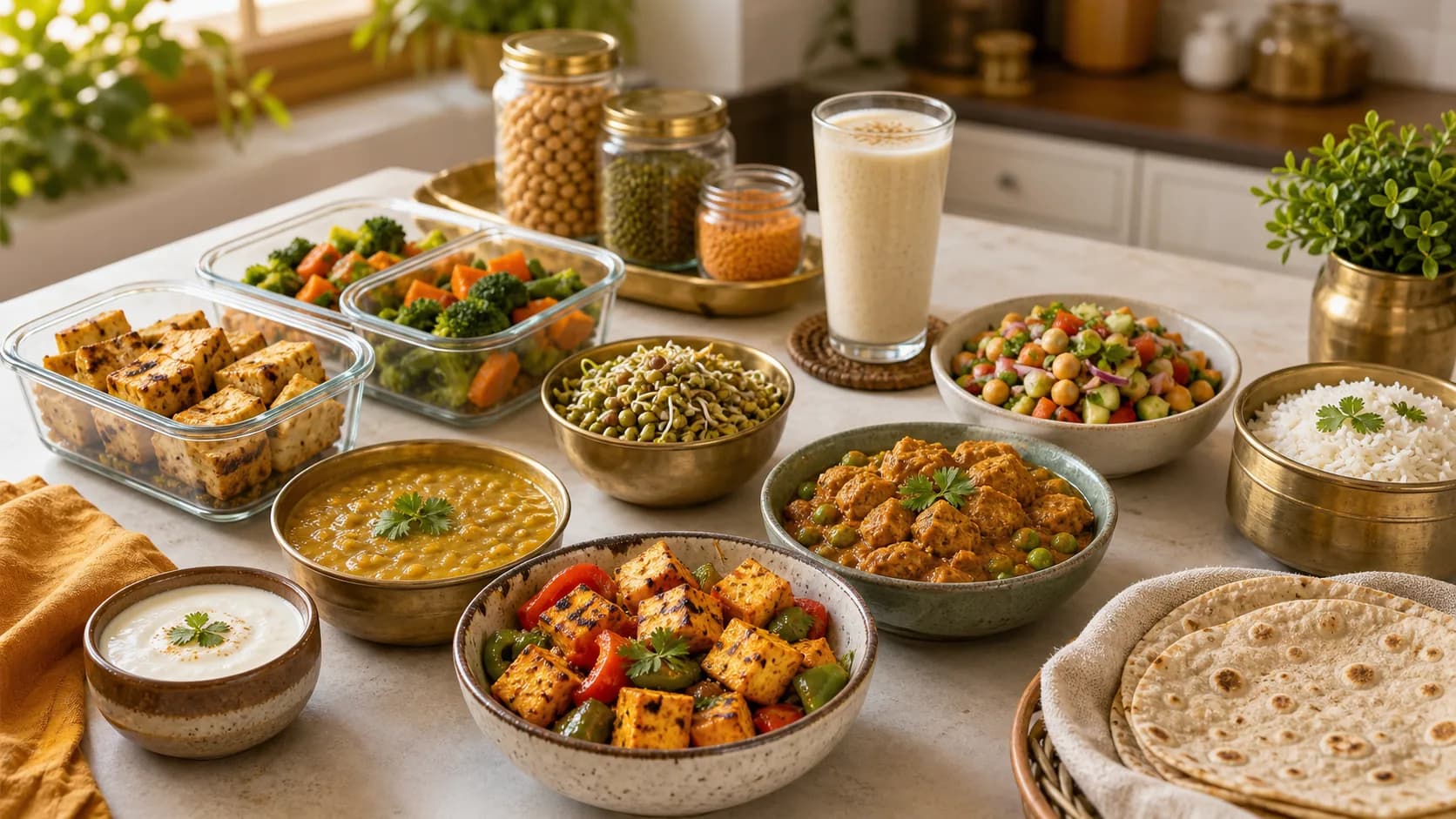
Indian vegetarian food can be high protein, but it rarely becomes high protein by accident. A typical plate can be heavy on rice, roti, poha, upma, or potatoes while the dal, curd, paneer, sprouts, or soya portion stays small. This plan keeps familiar Indian foods and changes the proportions so protein becomes visible at every meal.
Key Takeaways
- Use dal, curd, paneer, tofu, soya chunks, sattu, sprouts, chana, rajma, milk, and Greek-style yogurt as protein anchors.
- Vegetarian Indian meals need larger legume, dairy, soy, or paneer portions than many people expect.
- A 90-120 g protein day is possible without meat, but it needs deliberate planning and often some soy or dairy.
Article Structure
- 1. The Main Problem With Indian Vegetarian Protein
- 2. Paneer Protein, Soya Chunks, Sattu, Dal, and Curd
- 3. 7-Day High-Protein Indian Vegetarian Meal Plan
- 4. How to Adjust for Weight Loss
- 5. How to Adjust for Muscle Gain
- 6. Vegan and Lactose-Free Swaps
- 7. Meal Prep for Indian Vegetarian Protein
- 8. Three High-Protein Indian Vegetarian Recipes
- 9. How to Make the Plan Work in a Real Indian Kitchen
- 10. Common Mistakes
Use This as Decision Support, Not a Treatment Plan
This page can help organize meals and questions, but it cannot set a personal medical nutrition target. Bring these points to the clinician managing the medication, diabetes care, kidney health, pregnancy planning, or side effects.
- What protein and calorie range fits my medication, weight-loss pace, kidney function, labs, and activity?
- Which symptoms should trigger a medication or clinical check-in rather than another food swap?
- Do I need body-composition monitoring, hydration guidance, constipation support, or referral to a registered dietitian?
The Main Problem With Indian Vegetarian Protein
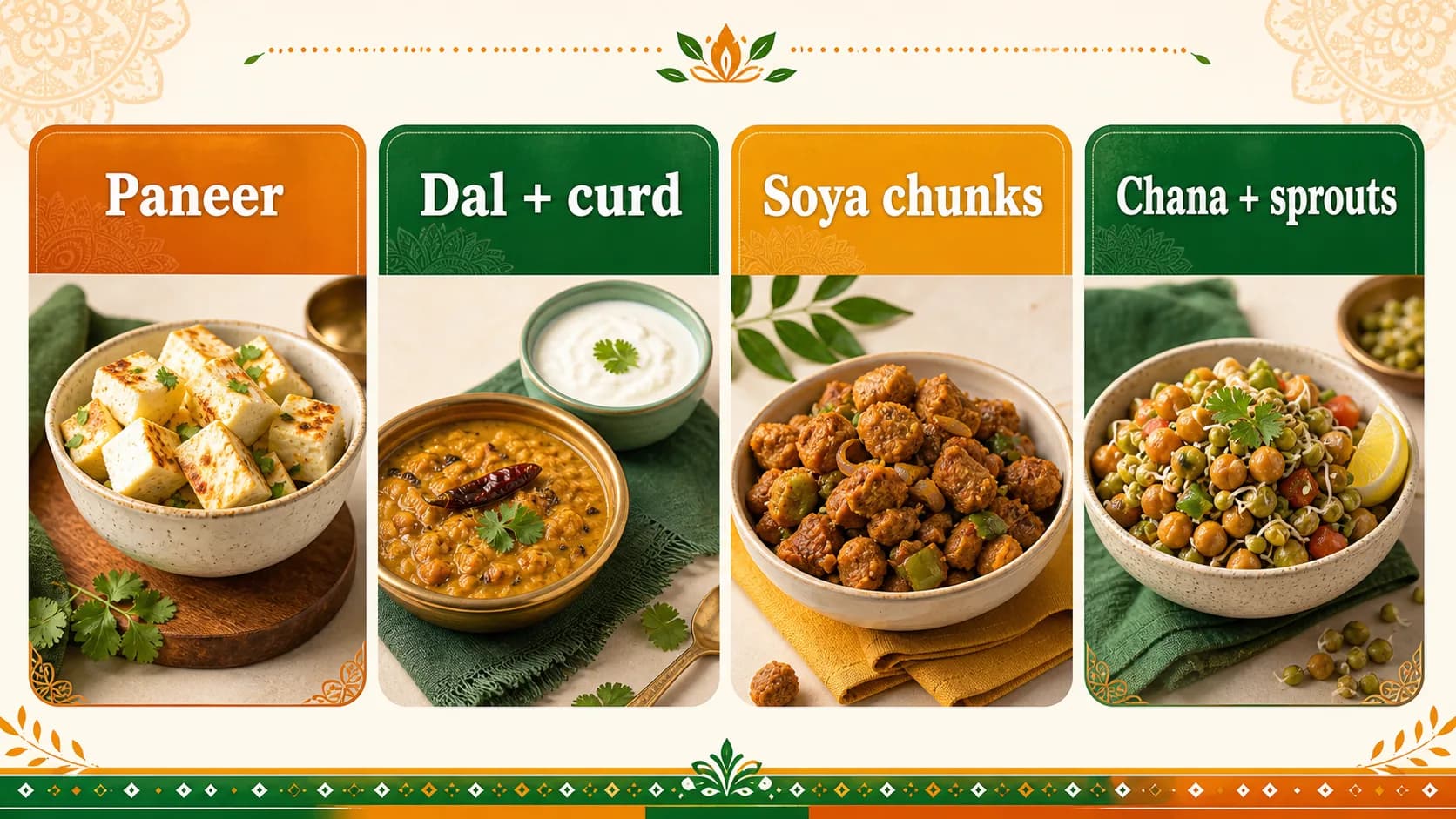
The issue is usually not that Indian vegetarian food lacks protein sources. The issue is proportions. A plate with two rotis, rice, potato sabzi, a small katori of dal, and a little curd may be satisfying, but it may not reach a high protein target. To make the same cuisine high protein, the dal, paneer, tofu, curd, sprouts, chana, rajma, soya, or sattu has to become a main component rather than a side.
This article is the India-focused companion to the broader vegetarian high-protein meal plan. It uses Indian staples such as paneer, dal, sattu, soya chunks, curd, chana, sprouts, roti, and rice instead of treating vegetarian eating as one generic global pattern.
This matters for people trying to lose fat, gain muscle, manage appetite, or support healthy aging. Protein helps make meals more filling and supports lean tissue when paired with training. But protein should not push out vegetables, fruit, whole grains, pulses, or healthy fats. The goal is a better-balanced thali, not a plate made only of paneer.
Indian vegetarian eating also varies by region, budget, religion, family habits, and cooking time. This plan uses flexible building blocks rather than one rigid menu. You can swap paneer for tofu, dal for chana, roti for rice, curd for soy yogurt, and soya chunks for tempeh if that fits your kitchen better.
Paneer Protein, Soya Chunks, Sattu, Dal, and Curd
| Food | Typical protein | Best use | Notes |
|---|---|---|---|
| Paneer | 18-22 g per 100 g | Bhurji, tikka, curry, rolls | High protein but can be high fat depending milk. |
| Tofu | 12-18 g per 100 g | Bhurji, stir-fry, curry | Lower calorie than many paneer options. |
| Soya chunks | 25-30 g per cooked serving | Pulao, curry, keema-style filling | Very protein dense; soak and rinse well. |
| Dal | 10-18 g per large serving | Lunch, dinner, soups | Increase portion; small katori may not be enough. |
| Chana or rajma | 12-18 g per serving | Bowls, chaat, curry | High fiber and filling. |
| Curd or Greek-style yogurt | 8-25 g depending type | Side, raita, bowls, smoothies | Choose higher-protein versions if available. |
| Sattu | 7-12 g per drink or paratha | Drink, stuffing, chilla | Budget-friendly and shelf stable. |
| Sprouts | 8-15 g per bowl | Chaat, salad, tikki | Good add-on, not always enough alone. |
| Milk | 8 g per cup | Tea, shakes, oats | Helpful but not enough by itself. |
For exact serving math, use the Indian vegetarian protein planner first, then check the detail pages for paneer, moong dal, and tofu before choosing portions. This prevents the common mistake of treating a small dal side, a calorie-dense paneer curry, and a tofu bowl as interchangeable protein anchors.
| If your goal is | Best anchor | Use less of | Why |
|---|---|---|---|
| Fat loss | Tofu, thick dal, Greek-style curd, measured paneer | Creamy paneer curries and excess oil | Keeps protein visible while calories stay easier to control. |
| Muscle gain | Paneer, soya chunks, curd, milk, dal, chana | Very watery dal as the only protein | Adds protein and calories without making every meal huge. |
| Low-cost protein | Dal, chana, rajma, sattu, curd | Specialty bars and powders as the default | Uses repeatable staples that fit normal Indian kitchens. |
| Dairy-free | Tofu, soya chunks, dal, chana, soy yogurt | Paneer, milk, curd, whey | Keeps the pattern high protein without depending on dairy. |
Soya chunks are one of the easiest ways to raise protein without meat, but they are not the only answer. Some people dislike the texture or digestion. Paneer is familiar and satisfying, but full-fat paneer can add calories quickly. Tofu is useful when calories are tighter. Dal and beans are excellent but need larger portions because cooked legumes contain water and fiber along with protein.
Curd is underrated because it improves the whole plate. It adds protein, makes spicy food easier to tolerate, and works as raita, smoothie base, or bowl. If Greek-style yogurt or hung curd is available, it can raise protein significantly. If dairy is not tolerated, soy yogurt and tofu can cover much of the same role.
7-Day High-Protein Indian Vegetarian Meal Plan
The plan below targets roughly 90-115 g protein per day depending brands and serving sizes. It assumes lacto-vegetarian eating with dairy. Vegan swaps are included later. If your target is lower, reduce one snack or choose smaller portions. If your target is higher, add a protein shake, larger curd portion, more tofu, or extra soya chunks.
Day 1
About 98 g proteinBreakfast
28 gBesan chilla stuffed with paneer plus mint chutney and curd.
Lunch
32 gRajma bowl with rice, extra rajma, cucumber salad, and Greek-style curd.
Snack
12 gSattu drink with milk or soy milk, lightly sweetened or salted.
Dinner
26 gTofu bhurji with two rotis and cooked vegetables.
Day 2
About 105 g proteinBreakfast
30 gGreek-style yogurt bowl with fruit, roasted chana powder, and seeds.
Lunch
35 gSoya chunk pulao with raita and salad. Keep oil controlled.
Snack
15 gSprouts chaat with curd and peanuts in a measured portion.
Dinner
25 gMoong dal tadka with paneer tikka and vegetables.
Day 3
About 92 g proteinBreakfast
25 gPaneer bhurji toast or roti roll with vegetables.
Lunch
28 gChana masala bowl with extra chana, small rice portion, and curd.
Snack
14 gRoasted chana plus masala chaas or soy milk.
Dinner
25 gDal palak with tofu cubes and one or two rotis.
Day 4
About 110 g proteinBreakfast
32 gProtein oats made with milk, Greek yogurt, and optional whey or pea protein.
Lunch
34 gPaneer tikka bowl with dal, salad, and a small roti or millet portion.
Snack
16 gCurd with fruit and roasted soy nuts or chana.
Dinner
28 gSoya keema lettuce cups or roti rolls with cucumber raita.
Day 5
About 96 g proteinBreakfast
26 gMoong dal chilla with tofu or paneer filling.
Lunch
30 gDal makhani-style black dal made lighter, with curd and salad.
Snack
15 gGreek-style lassi with no or low added sugar.
Dinner
25 gTofu tikka masala with vegetables and a measured rice portion.
Day 6
About 108 g proteinBreakfast
30 gSattu paneer paratha with curd. Use less oil and a measured paneer stuffing.
Lunch
32 gChole tofu bowl with salad and a small rice or roti portion.
Snack
18 gCottage cheese or paneer cubes with fruit or cucumber.
Dinner
28 gMixed dal soup with soya chunks and vegetables.
Day 7
About 100 g proteinBreakfast
30 gHigh-protein poha with soya granules, peanuts, peas, and curd on the side.
Lunch
28 gCurd rice bowl upgraded with tofu, sprouts, cucumber, and tempered spices.
Snack
14 gRoasted makhana with a high-protein yogurt dip.
Dinner
28 gPaneer or tofu bhurji with dal and cooked vegetables.
How to Adjust for Weight Loss
For weight loss, the easiest mistake is adding protein but keeping all previous portions of rice, roti, oil, sweets, and snacks unchanged. Protein helps satiety, but calories still matter. Start by increasing the protein portion and reducing the most calorie-dense extras: excess oil, ghee, fried snacks, large rice portions, large parathas, and sweet drinks.
Use tofu more often than full-fat paneer if calories are tight. Use hung curd or Greek-style yogurt instead of cream. Make chilla on a nonstick pan with minimal oil. Choose roasted chana, sprouts chaat, curd, or fruit instead of namkeen. Keep nuts and peanuts measured because they are nutritious but calorie dense.
| Usual choice | Weight-loss upgrade | Why |
|---|---|---|
| Paneer butter masala | Paneer tikka or tofu tikka with yogurt sauce | Keeps protein, reduces cream and butter. |
| Small dal side | Large dal bowl with vegetables | Makes protein and fiber central. |
| Fried namkeen snack | Roasted chana or sprouts chaat | Higher protein and fiber. |
| Sweet lassi | Plain chaas or high-protein yogurt lassi | Less added sugar. |
| Large rice plus small rajma | Extra rajma plus smaller rice | Improves protein density. |
How to Adjust for Muscle Gain
For muscle gain, the challenge is often getting enough total calories and protein without feeling stuffed. Keep the protein anchors, but do not make every meal ultra-low calorie. Add rice, roti, oats, potatoes, fruit, milk, curd, and measured fats around the protein. Training performance needs energy, not only amino acids.
A muscle-gain vegetarian day might include protein oats, paneer or tofu lunch, soya chunk dinner, and a yogurt or sattu snack. If appetite is low, use smoothies with milk, Greek yogurt, banana, and protein powder. If dairy is tolerated, it is a convenient way to raise both protein and calories.
Progressive resistance training is non-negotiable. A high-protein Indian vegetarian plan supports training, but it does not replace training. Track strength, body weight trend, waist, and how you feel in sessions. If weight is not increasing and muscle gain is the goal, add calories gradually rather than only adding more protein.
Vegan and Lactose-Free Swaps
A vegan Indian high-protein plan is possible, but it usually needs more soy, legumes, and protein powder. Replace paneer with tofu, curd with soy yogurt, milk with soy milk, and whey with pea or soy protein. Use dal, chana, rajma, sprouts, sattu, peanuts, and seeds, but remember that many plant foods require larger portions to match dairy or soy protein density.
| If the plan uses | Swap with | Protein note |
|---|---|---|
| Paneer | Firm tofu or tempeh | Tofu is usually lower calorie and dairy-free. |
| Curd | Soy yogurt or peanut curd | Check protein; coconut yogurt is often low protein. |
| Milk | Soy milk | Soy milk usually has more protein than almond or oat milk. |
| Whey | Pea, soy, or blended plant protein | Blends often improve amino acid profile. |
| Ghee-heavy cooking | Measured oil or nonstick cooking | Helps calories stay predictable. |
If you are lactose intolerant but not vegan, lactose-free milk, hung curd, Greek yogurt, or whey isolate may be better tolerated by some people, but responses vary. Start with small servings and choose foods that do not cause symptoms. Digestive comfort is part of adherence.
Meal Prep for Indian Vegetarian Protein
Indian vegetarian meal prep works best when you prepare protein components, not complete identical meals. Cook a pot of dal, soak and cook chana or rajma, marinate tofu or paneer, soak soya chunks, prepare curd or raita, and make chilla batter. Then assemble different meals through the week.
- Cook one dal and one bean dish every week so lunch is never protein-light.
- Keep soaked, squeezed soya chunks ready for pulao, keema, or curry.
- Marinate tofu or paneer with curd, spices, ginger, garlic, and lemon.
- Make besan or moong dal chilla batter for two breakfast days.
- Keep roasted chana, sattu, and soy nuts as shelf-stable protein backups.
Label containers with protein estimates if tracking matters. For example: "rajma, 18 g per bowl" or "tofu bhurji, 28 g per serving." Exact numbers vary by recipe, but labels create awareness. Most people under-eat protein because they cannot see it. Make it visible.
Three High-Protein Indian Vegetarian Recipes
Paneer-Stuffed Besan Chilla
A vegetarian breakfast that turns chilla into a real protein anchor.
Ingredients
- 60 g besan
- 100 g paneer or tofu
- Curd or water for batter
- Onion, coriander, chili
- Spices and minimal oil
Method
- 1. Make a pourable besan batter with spices.
- 2. Cook chilla on a nonstick pan.
- 3. Fill with grated paneer or tofu and fold.
Soya Chunk Keema Bowl
A high-protein lunch or dinner base that works with rice, roti, or salad.
Ingredients
- 50 g dry soya chunks
- Onion, tomato, ginger, garlic
- Peas or vegetables
- Spices
- Curd on the side
Method
- 1. Soak soya chunks in hot water, rinse, squeeze, and mince.
- 2. Cook masala with vegetables.
- 3. Add soya and simmer until flavors absorb.
High-Protein Curd Chana Bowl
A no-fry bowl with fiber, protein, and cooling curd.
Ingredients
- 1 cup cooked chana
- 200 g Greek-style curd or hung curd
- Cucumber, tomato, onion
- Roasted cumin
- Lemon and coriander
Method
- 1. Mix chana with vegetables and spices.
- 2. Add curd as the sauce.
- 3. Serve as a bowl or with a small roti.
How to Make the Plan Work in a Real Indian Kitchen
The easiest Indian vegetarian protein plan is not a separate fitness diet. It is a smarter version of normal food. Keep dal, sabzi, roti, rice, curd, chana, paneer, tofu, sprouts, and soya in rotation, but make the protein source visible in every meal. If the meal name is only poha, upma, rice, or roti-sabzi, protein is probably too low unless you deliberately add an anchor.
Batch cooking helps because many vegetarian protein foods need soaking, boiling, or chopping. Cook chana, rajma, sprouts, or dal in larger batches. Keep hung curd or Greek-style curd ready. Soak and mince soya chunks for keema. Press tofu if you use it. Grate paneer for chilla or wraps. These small prep steps turn high-protein eating from a daily project into assembly.
Use spices and chutneys to prevent boredom. The same protein anchor can become different meals: paneer bhurji, paneer chilla, paneer tikka bowl, paneer curd wrap, or paneer salad. Soya can become keema, pulao, curry, cutlets, or a dry sabzi. Chana can become chaat, curd bowl, hummus-style dip, or curry. Variety can come from seasoning instead of buying completely different foods every day.
Calories still matter. Vegetarian high-protein meals can become calorie-heavy if every meal uses ghee, oil, full-fat paneer, nuts, and large rice portions. That is not wrong for everyone, but it should match the goal. For fat loss, use measured oil, leaner paneer or tofu when useful, more curd, more dal and beans, and vegetables for volume. For muscle gain, keep the same protein anchors and add rice, roti, milk, fruit, nuts, or lassi as needed.
| Meal problem | Indian vegetarian fix | Protein anchor |
|---|---|---|
| Poha or upma is too low protein | Add sprouts, peanuts in measured amount, curd, or a side of paneer | Curd, sprouts, paneer, tofu |
| Dal-rice is not enough | Make dal thicker and add curd, tofu, paneer, or soya side | Dal plus dairy or soy |
| Evening snack becomes fried food | Use sattu drink, roasted chana, sprouts chaat, or curd bowl | Sattu, chana, curd, sprouts |
| Paneer calories too high | Rotate tofu, low-fat paneer, soya, dal, and Greek-style curd | Tofu, soya, curd, dal |
| Family meal is carb-heavy | Eat the protein side first and add extra curd or dal | Curd, dal, tofu, paneer |
For India-focused meal planning, use local food names only where they help the reader choose or cook: paneer bhurji, soya chunk keema, sattu drink, thick dal, chana chaat, dahi, rajma, moong sprouts, and curd rice. Familiar kitchen language should connect directly to portions, protein, calories, and cost.
Protein quality is another practical point for vegetarian diets. Dairy, soy, and paneer are generally easier complete-protein anchors. Dal, chana, rajma, and grains are still valuable, especially when eaten across the day in varied combinations. The reader does not need to combine every amino acid perfectly in one meal, but they do need enough total protein and enough variety.
For families, use modular meals. Cook the same dal, sabzi, rice, and roti for everyone, then add extra paneer, tofu, soya, curd, or sprouts for the person with a higher protein target. This avoids the common problem where the high-protein plan feels socially separate from normal Indian meals.
A practical page should also mention regional flexibility. South Indian meals can use dosa with sambar, curd, sprouts, tofu, or paneer filling. North Indian meals can use dal, rajma, chole, paneer, curd, and soya. Western Indian meals can use sprouts, besan, milk, curd, and legumes. The pattern matters more than copying one exact cuisine.
That regional approach makes the plan easier to follow for Indian readers without forcing unfamiliar foods into every meal.
Common Mistakes
The first mistake is counting every dal meal as high protein without checking portion size. A thin, small katori of dal may not provide much protein. Use a larger serving, thicker dal, mixed dal, or add tofu, paneer, soya, or curd when the meal needs to hit a higher target.
The second mistake is relying only on paneer. Paneer is useful, but a diet built mostly on full-fat paneer can become high in calories and saturated fat. Rotate tofu, dal, beans, curd, sprouts, and soya. Variety improves nutrition and makes the plan easier to sustain.
The third mistake is ignoring vegetables and fruit. A high-protein plan should not become low-fiber. Indian vegetarian food has excellent fiber opportunities: dal, chana, rajma, vegetables, salad, fruit, millets, oats, and seeds. Keep those in the plan so digestion and fullness improve.
Common Questions
Related Guides and Tools
Sources reviewed
- Dietary Guidelines for Indians 2024 - ICMR-National Institute of Nutrition
- USDA FoodData Central - U.S. Department of Agriculture
- Dietary Guidelines for Americans, 2025-2030 - U.S. Department of Agriculture and U.S. Department of Health and Human Services
- Dietary Reference Intakes summary tables - National Academies Press / NCBI Bookshelf
- International Society of Sports Nutrition Position Stand: protein and exercise - Journal of the International Society of Sports Nutrition