
Breakfast
High-Protein Breakfast Without Eggs: 25 Easy Ideas
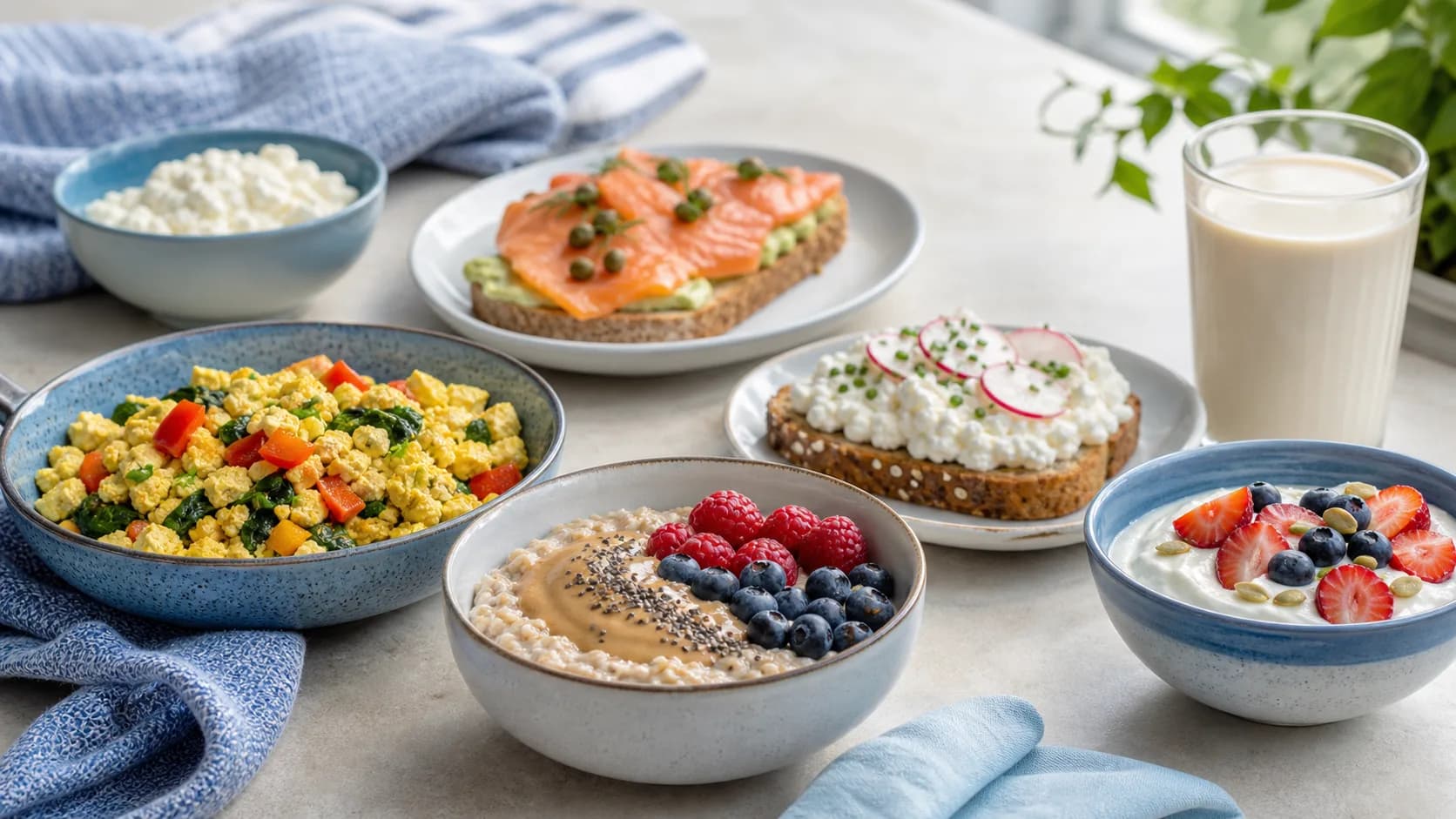
Eggs are useful, but they are not required for a high-protein breakfast. Whether you avoid eggs because of allergies, preference, cost, taste fatigue, vegan eating, or GLP-1 appetite changes, you can still build a 25-40 g protein breakfast with yogurt, cottage cheese, tofu, beans, lentils, protein powder, fish, poultry, dairy, soy, and smart grain choices.
Key Takeaways
- Egg-free breakfasts work best when you start with a protein anchor, not a carb base.
- Greek yogurt, cottage cheese, skyr, tofu, soy milk, tuna, chicken, lentils, and protein powder are the most practical anchors.
- A good target is 25-40 g protein at breakfast for many adults, adjusted to your total daily target.
Article Structure
- 1. Why Go Egg-Free?
- 2. Best Egg-Free Protein Anchors
- 3. 25 High-Protein Breakfast Ideas Without Eggs
- 4. No-Cook Egg-Free Breakfasts
- 5. Vegan High-Protein Breakfast Without Eggs
- 6. Meal Prep Plan for the Week
- 7. Three Egg-Free Breakfast Recipes
- 8. How to Build a 30-40 g Egg-Free Breakfast
- 9. Egg-Free Breakfast Ideas by Time Available
- 10. Mistakes to Avoid
Use This as Decision Support, Not a Treatment Plan
This page can help organize meals and questions, but it cannot set a personal medical nutrition target. Bring these points to the clinician managing the medication, diabetes care, kidney health, pregnancy planning, or side effects.
- What protein and calorie range fits my medication, weight-loss pace, kidney function, labs, and activity?
- Which symptoms should trigger a medication or clinical check-in rather than another food swap?
- Do I need body-composition monitoring, hydration guidance, constipation support, or referral to a registered dietitian?
Why Go Egg-Free?
Egg-free does not mean low protein. It only means you need a different anchor. Many common breakfasts are built around refined grains with a little protein on the side. Toast with jam, cereal with a splash of milk, a pastry, or plain oatmeal may be quick, but those meals often land below 15 g protein. That makes the rest of the day harder if your target is 100 g or more.
This page is the no-egg companion to the main high-protein breakfast guide. Use it when eggs are not an option; use the broader breakfast guide when eggs, yogurt, fish, poultry, and mixed breakfast formats are all on the table.
Some people avoid eggs because of allergy or intolerance. Others simply get tired of eating eggs every morning. Some people on GLP-1 medication find eggs too rich or sulfurous. Others follow a vegetarian or vegan pattern and want options beyond tofu scramble. A strong breakfast plan should work even when eggs are not available.
The solution is to think in protein anchors. Choose one main protein source, then build flavor and energy around it. Greek yogurt becomes a bowl, skyr becomes a parfait, cottage cheese becomes toast or a dip, tofu becomes scramble or breakfast tacos, lentils become savory pancakes, and protein powder becomes oats, smoothies, or pudding.
Best Egg-Free Protein Anchors
| Protein anchor | Typical protein | Best format | Notes |
|---|---|---|---|
| Greek yogurt | 20-25 g per 250 g | Bowls, smoothies, parfaits | Choose plain if added sugar is a concern. |
| Skyr | 18-25 g per cup | No-cook breakfast | Thick texture and high satiety. |
| Cottage cheese | 24-30 g per 250 g | Sweet bowls, savory toast, dips | Blend if texture is an issue. |
| Tofu | 20-35 g depending portion | Scramble, tacos, bowls | Use firm tofu for higher protein. |
| Protein powder | 20-27 g per scoop | Oats, smoothie, yogurt, pancakes | Use as a helper, not the whole breakfast. |
| Tuna or salmon | 20-30 g per serving | Toast, rice cakes, breakfast bowl | Savory and very protein dense. |
| Soy milk | 7-10 g per cup | Oats, smoothies, cereal | Often higher protein than almond or oat milk. |
| Lentils or beans | 10-18 g per meal | Chilla, toast, bowls | Fiber-rich and filling. |
Dairy options are the easiest for many people because they are ready to eat. Plant-based options can be just as effective, but they need slightly more planning. Tofu, tempeh, soy milk, pea protein, lentils, chickpea flour, and edamame are the most practical anchors. Almond milk, coconut yogurt, and most cereal bars are usually too low in protein unless fortified.
Oats alone are not a high-protein breakfast.
Oats are useful, but a plain bowl of oats is usually moderate protein. Add Greek yogurt, soy milk, protein powder, skyr, cottage cheese, or seeds if you want it to become high protein.
25 High-Protein Breakfast Ideas Without Eggs
| Idea | Protein | Time | Best for |
|---|---|---|---|
| Greek yogurt whey bowl | 35-45 g | 3 min | Fastest sweet option |
| Cottage cheese berry bowl | 28-35 g | 3 min | High satiety |
| Skyr parfait with granola | 25-35 g | 3 min | No-cook mornings |
| Protein overnight oats | 30-40 g | 5 min prep | Meal prep |
| Tofu scramble wrap | 28-35 g | 12 min | Savory vegan |
| Smoked salmon cottage cheese toast | 30-38 g | 5 min | Savory high protein |
| Tuna avocado rice cakes | 25-32 g | 5 min | No eggs, no cooking |
| Pea protein smoothie | 30-40 g | 5 min | Vegan or dairy-free |
| Lentil chilla with yogurt | 22-32 g | 15 min | Indian-style breakfast |
| Besan chilla stuffed with paneer | 25-35 g | 15 min | Vegetarian savory |
| Turkey breakfast wrap | 30-40 g | 8 min | Lean meat option |
| Chicken sausage and cottage cheese toast | 30-38 g | 10 min | Higher protein comfort |
| Soy yogurt protein bowl | 25-35 g | 4 min | Dairy-free |
| High-protein chia pudding | 25-35 g | 5 min prep | Make-ahead |
| Cottage cheese protein pancakes | 30-40 g | 15 min | Weekend prep |
| Tofu breakfast tacos | 25-35 g | 12 min | Plant-based savory |
| Greek yogurt peanut powder bowl | 30-38 g | 3 min | Sweet and filling |
| Quark with fruit and seeds | 25-35 g | 2 min | Very quick |
| Protein cereal with soy milk | 20-30 g | 2 min | Convenience |
| Tempeh breakfast bowl | 28-35 g | 15 min | Vegan high protein |
| Cottage cheese bagel thin | 25-35 g | 5 min | Balanced carbs |
| Sardine toast | 25-32 g | 5 min | Omega-3 rich |
| Protein coffee plus skyr | 30-45 g | 5 min | Coffee routine |
| Leftover chicken rice bowl | 30-45 g | 5 min | Non-breakfast breakfast |
| Bean and tofu breakfast burrito | 30-40 g | 15 min | High fiber |
There is no rule that breakfast has to taste like breakfast. If savory leftovers help you hit protein, use them. Chicken soup, tofu rice bowls, lentil dal, turkey wraps, or salmon toast can be better than forcing yourself into sweet foods that do not satisfy you. The best breakfast is the one you can repeat.
No-Cook Egg-Free Breakfasts
No-cook breakfasts are the most reliable for busy mornings. The key is to keep a high-protein base in the fridge and pair it with one carbohydrate and one flavor element. Greek yogurt with berries and oats, cottage cheese with fruit, skyr with granola, and tuna on rice cakes all take less time than making coffee.
If you get hungry quickly after yogurt bowls, add texture and fiber instead of only adding more protein. Chia, berries, oats, high-fiber cereal, or a small portion of nuts can make the bowl last longer. If calories are tight, choose berries and chia before nut butter because nut butter is easy to over-pour.
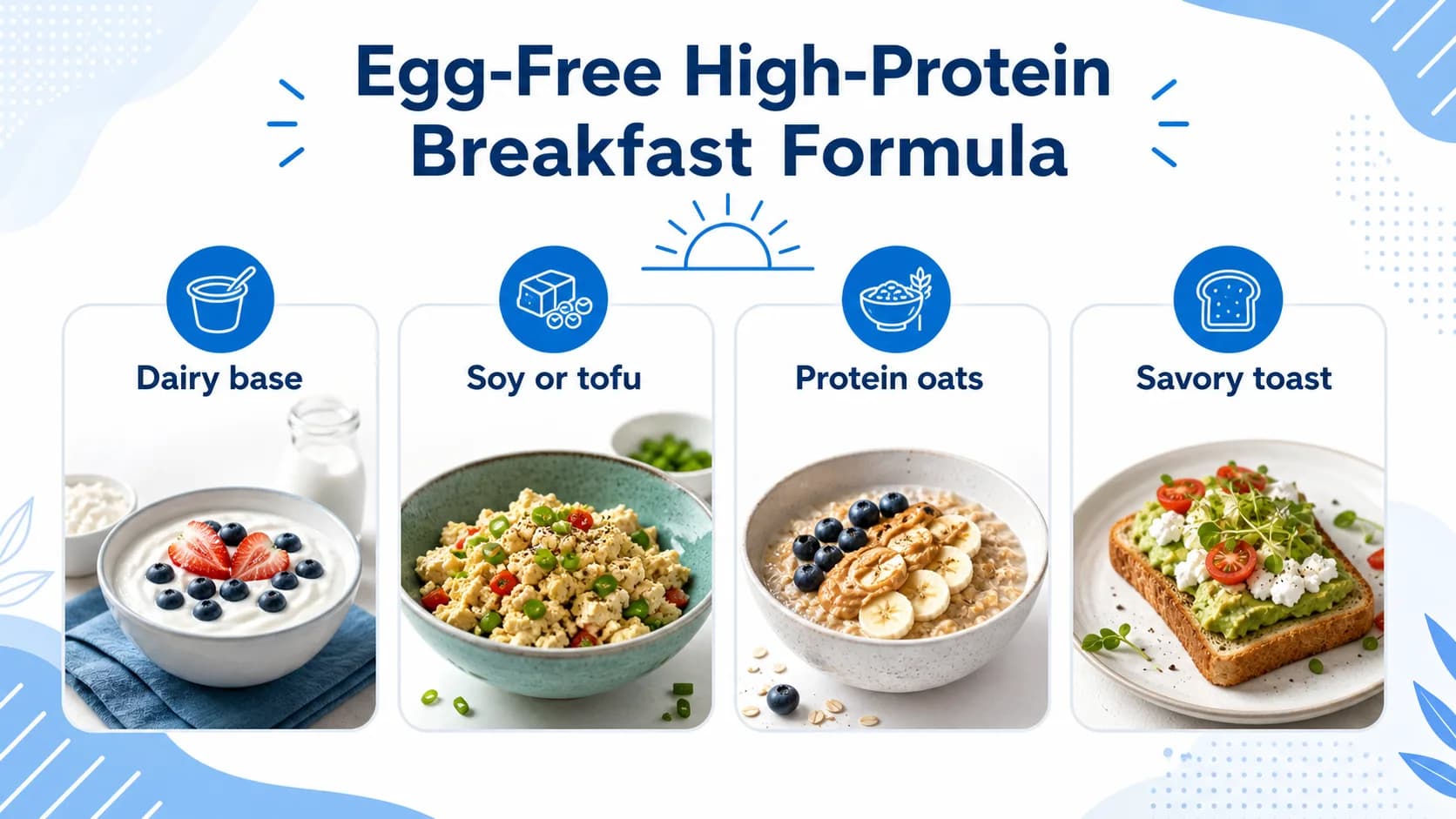
Sweet bowl formula
Greek yogurt or skyr plus fruit plus oats or chia plus cinnamon. Add protein powder if your target is high.
Savory toast formula
Cottage cheese, tuna, salmon, turkey, or tofu spread over toast, rice cakes, or a small wrap.
Smoothie formula
Milk or soy milk plus protein powder plus frozen fruit plus Greek yogurt or silken tofu.
Snack-box formula
Skyr or cottage cheese plus fruit plus a lean protein side if breakfast needs to travel.
Vegan High-Protein Breakfast Without Eggs
Vegan breakfasts need extra attention because many vegan breakfast staples are carbohydrate-dominant. Oats, toast, fruit, and almond milk can be healthy, but they are not enough protein by themselves. Use soy milk, pea protein, tofu, tempeh, chickpea flour, edamame, soy yogurt, peanut powder, lentils, or seitan-style breakfast slices if available.
Soy foods are especially useful because they are complete proteins and easy to use at breakfast. A tofu scramble with nutritional yeast and vegetables can reach 30 g protein. A smoothie with soy milk and pea protein can reach 35-45 g. Chickpea flour pancakes can work, but you may need a yogurt or tofu side to push protein high enough.
| Vegan breakfast | Protein | How to improve it |
|---|---|---|
| Tofu scramble wrap | 28-35 g | Use firm tofu and add nutritional yeast. |
| Soy milk protein oats | 30-40 g | Use pea protein and stir it in after cooking. |
| Chickpea flour chilla | 18-25 g | Stuff with tofu or serve with soy yogurt. |
| Tempeh breakfast bowl | 30-40 g | Pair with potatoes, vegetables, and salsa. |
| Silken tofu smoothie | 25-35 g | Add pea protein if the tofu serving is small. |
Meal Prep Plan for the Week
Do not prep seven different breakfasts. Prep two. For example, make three jars of protein overnight oats and keep tofu scramble filling ready for wraps. Or keep yogurt bowls as your weekday option and a savory cottage cheese toast as your backup. Repetition is the reason the plan works.
- Make three overnight oat jars with oats, Greek yogurt or soy yogurt, protein powder, berries, and chia.
- Cook one tofu scramble base with firm tofu, peppers, spinach, mushrooms, turmeric, and nutritional yeast.
- Portion cottage cheese or skyr into containers so breakfast is grab-and-go.
- Keep tuna, salmon, or turkey slices available for savory no-cook breakfasts.
- Pre-log your usual breakfast so tracking takes seconds instead of minutes.
The meal-prep rule is simple: prep the part that creates friction. If washing berries creates friction, wash berries. If cooking tofu creates friction, cook tofu. If measuring protein powder creates friction, pre-portion it. The best prep plan is not the prettiest one. It is the one that removes the reason you skip protein at 7 a.m.
Three Egg-Free Breakfast Recipes
Protein Overnight Oats Without Eggs
A make-ahead breakfast that is high protein without needing eggs.
Ingredients
- 50 g oats
- 170 g Greek yogurt or soy yogurt
- 1 scoop whey or pea protein
- 100 g berries
- 1 tablespoon chia
- Milk or soy milk as needed
Method
- 1. Mix oats, yogurt, protein powder, chia, and enough milk to loosen.
- 2. Refrigerate overnight.
- 3. Top with berries in the morning and adjust thickness with milk.
Savory Cottage Cheese Salmon Toast
A five-minute savory breakfast with no cooking.
Ingredients
- 2 slices whole-grain toast or rye crispbread
- 150 g cottage cheese
- 80 g smoked salmon
- Cucumber
- Lemon and black pepper
Method
- 1. Spread cottage cheese on toast.
- 2. Top with salmon and cucumber.
- 3. Add lemon and black pepper, then eat protein topping first if you get full quickly.
Tofu Breakfast Taco Filling
A vegan batch-prep option for wraps or bowls.
Ingredients
- 250 g firm tofu
- 2 tablespoons nutritional yeast
- Spinach and peppers
- Turmeric, cumin, salt
- Small tortillas or potatoes
Method
- 1. Crumble tofu into a nonstick pan.
- 2. Cook with vegetables and seasonings until hot.
- 3. Serve in tortillas or over potatoes with salsa.
How to Build a 30-40 g Egg-Free Breakfast
The easiest way to build an egg-free breakfast is to stop starting with the carbohydrate. Instead of asking how to add protein to toast, cereal, or oats, choose the protein anchor first and then decide what carbohydrate, fruit, fat, and flavor will make it satisfying. This single change prevents most weak breakfasts.
A 30-40 g breakfast usually needs one large protein anchor or two medium anchors. One large anchor could be 250 g Greek yogurt, 250 g skyr, a firm tofu scramble, a scoop of whey in oats, or smoked salmon plus cottage cheese. Two medium anchors could be cottage cheese plus turkey slices, soy yogurt plus pea protein, hummus plus tofu, or lentil dal plus curd.
If you prefer sweet breakfasts, build around thick dairy or soy bases. Greek yogurt, skyr, cottage cheese, soy yogurt, milk, soy milk, whey, casein, and pea protein all work. Add fruit for fiber and flavor, then add oats, chia, cereal, or toast only as much as your calorie target allows. The result should still taste like breakfast, not like a supplement punishment.
If you prefer savory breakfasts, breakfast can look like lunch. Cottage cheese toast, tofu wraps, turkey avocado toast, lentil soup, tuna rice cakes, paneer or tofu chilla, smoked salmon bowls, and leftover chicken bowls are all valid. Many people hit protein more easily once they stop limiting breakfast to eggs, cereal, and pastries.
Sweet formula
Greek yogurt or soy yogurt plus protein powder, fruit, and a controlled crunchy topping. This works for overnight oats, parfaits, smoothie bowls, and cheesecake-style bowls.
Savory formula
Cottage cheese, tofu, fish, turkey, paneer, lentils, or beans plus toast, potatoes, rice, or roti. Add vegetables, salsa, lemon, herbs, or chutney for flavor.
No-cook formula
Use ready-to-eat anchors: skyr, cottage cheese, smoked salmon, tuna packets, deli turkey, protein shakes, soy yogurt, or leftover cooked protein.
Vegan formula
Use soy milk, soy yogurt, pea protein, firm tofu, tempeh, chickpea flour, lentils, beans, and peanut powder. Aim for a little more total protein when most sources are plant-based.
Texture is a real compliance issue. If you dislike thick yogurt, thin it with milk and make a drinkable lassi-style smoothie. If tofu scramble feels dry, add salsa, tomato, or a yogurt-style sauce. If protein oats become chalky, cook the oats first and stir protein powder in after the heat drops. Small cooking details often decide whether the breakfast becomes a habit.
The best breakfast is also the one you can repeat. Pick two weekday defaults and one weekend option. For example: protein overnight oats on Monday, Wednesday, and Friday; cottage cheese salmon toast on Tuesday and Thursday; tofu chilla or a smoothie bowl on the weekend. Repetition helps shopping, prep, tracking, and digestion.
Egg-Free Breakfast Ideas by Time Available
Time is usually the real barrier, not lack of ideas. A breakfast that works on a Sunday may be useless on a school morning or before a commute. Build a short list by time window so you are not trying to cook a tofu scramble when you have four minutes.
| Time available | Best options | Protein target |
|---|---|---|
| 2 minutes | Ready-to-drink shake plus skyr, cottage cheese cup, tuna rice cakes, soy yogurt with pea protein | 20-40 g |
| 5 minutes | Greek yogurt bowl, cottage cheese toast, smoked salmon toast, protein smoothie, turkey wrap | 25-40 g |
| 10 minutes | Tofu scramble, paneer chilla, protein oats, lentil soup with curd, tempeh potato bowl | 30-45 g |
| Meal prep | Overnight oats, tofu taco filling, breakfast burritos, yogurt jars, chana curd bowls | 30-45 g |
For very rushed mornings, accept a two-part breakfast. Drink the protein coffee or smoothie at home, then eat fruit, yogurt, toast, or a wrap later. Splitting breakfast can work especially well for people with low morning appetite, early training, or medication-related fullness. The key is to plan both parts instead of calling coffee breakfast and hoping the rest of the day fixes itself.
If you are feeding a family, keep the base flexible. Make oats, toast, chilla, wraps, or smoothies, then let each person choose the protein add-on. One person may use Greek yogurt, another tofu, another cottage cheese, another whey. This keeps the kitchen practical and avoids making a separate high-protein meal for only one person.
For search-focused content, this section matters because readers often ask for breakfast without eggs for different reasons: allergy, taste fatigue, cholesterol concerns, vegan diet, religious preference, cost, or simply boredom. Answering all of those use cases makes the article more useful than a narrow recipe list.
Cost can also shape the best choice. Greek yogurt, cottage cheese, tofu, dal, beans, canned fish, milk, soy milk, and protein powder all have different price points by country. A budget version of egg-free breakfast should lean on repeatable staples such as oats with milk and protein, tofu scramble, lentil leftovers, cottage cheese toast, or curd bowls rather than specialty bars every morning.
Finally, watch the rest of the day. A high-protein breakfast is useful because it lowers pressure on lunch and dinner. If breakfast reliably gives you 35 g protein, a 120 g target only needs 85 g across the remaining meals. That is much easier than reaching noon with almost no protein and trying to recover with a huge dinner.
The article should also make substitutions easy. If a reader cannot eat dairy, show soy yogurt, tofu, pea protein, and tempeh. If a reader dislikes powder, show cottage cheese, fish, turkey, lentils, and paneer. If a reader wants no cooking, show skyr, tuna, ready tofu, smoked salmon, and overnight oats. This prevents the page from depending on one food the reader may not use.
That flexibility is what makes the guide durable instead of just another list of recipes.
Mistakes to Avoid
The first mistake is underestimating portion size. Two spoonfuls of Greek yogurt is not a high-protein breakfast. If you need 30 g protein, measure your usual bowl once so you know what 200-300 g looks like. After that, you can eyeball it more confidently.
The second mistake is building breakfast around protein powder only. Protein powder is useful, but a shake made only with water may not keep you full. Add yogurt, soy milk, fruit, oats, chia, or a side of solid food if satiety is the goal. If appetite is intentionally low because of medication, use clinician guidance to make sure you are not under-eating.
The third mistake is ignoring taste. A breakfast that is mathematically perfect but unpleasant will fail. Use spices, salsa, lemon, berries, cinnamon, cocoa, herbs, and texture. High-protein food does not need to be bland; it just needs a clear protein anchor.
Common Questions
Related Guides and Tools
Sources reviewed
- USDA FoodData Central - U.S. Department of Agriculture
- Dietary Reference Intakes summary tables - National Academies Press / NCBI Bookshelf
- International Society of Sports Nutrition Position Stand: protein and exercise - Journal of the International Society of Sports Nutrition
- Dietary Guidelines for Americans, 2025-2030 - U.S. Department of Agriculture and U.S. Department of Health and Human Services