ProteinCalc Logo
Reviewed for source accuracy and calculator consistency by the ProteinCalc editorial team. Research and methodology by Jitendra Kumar Kumawat, Researcher & Tool Creator, against the sources and methodology policy. Jitendra is not a registered dietitian or licensed medical provider.Last updated: June 16, 2026

Recipes and meal ideas

High Protein Breakfast Recipes: 30g+ Ideas for Every Goal

This complete guide to high protein breakfast recipes gives you beginner-friendly meals, weight-loss options, muscle-gain breakfasts, and under-400-calorie ideas with clear protein and calorie estimates. The recipes are built around Greek yogurt, skyr, cottage cheese, eggs, egg whites, tofu, tempeh, tuna, salmon, turkey, paneer, oats, chia, and protein powder so breakfast can carry a real share of your daily target.

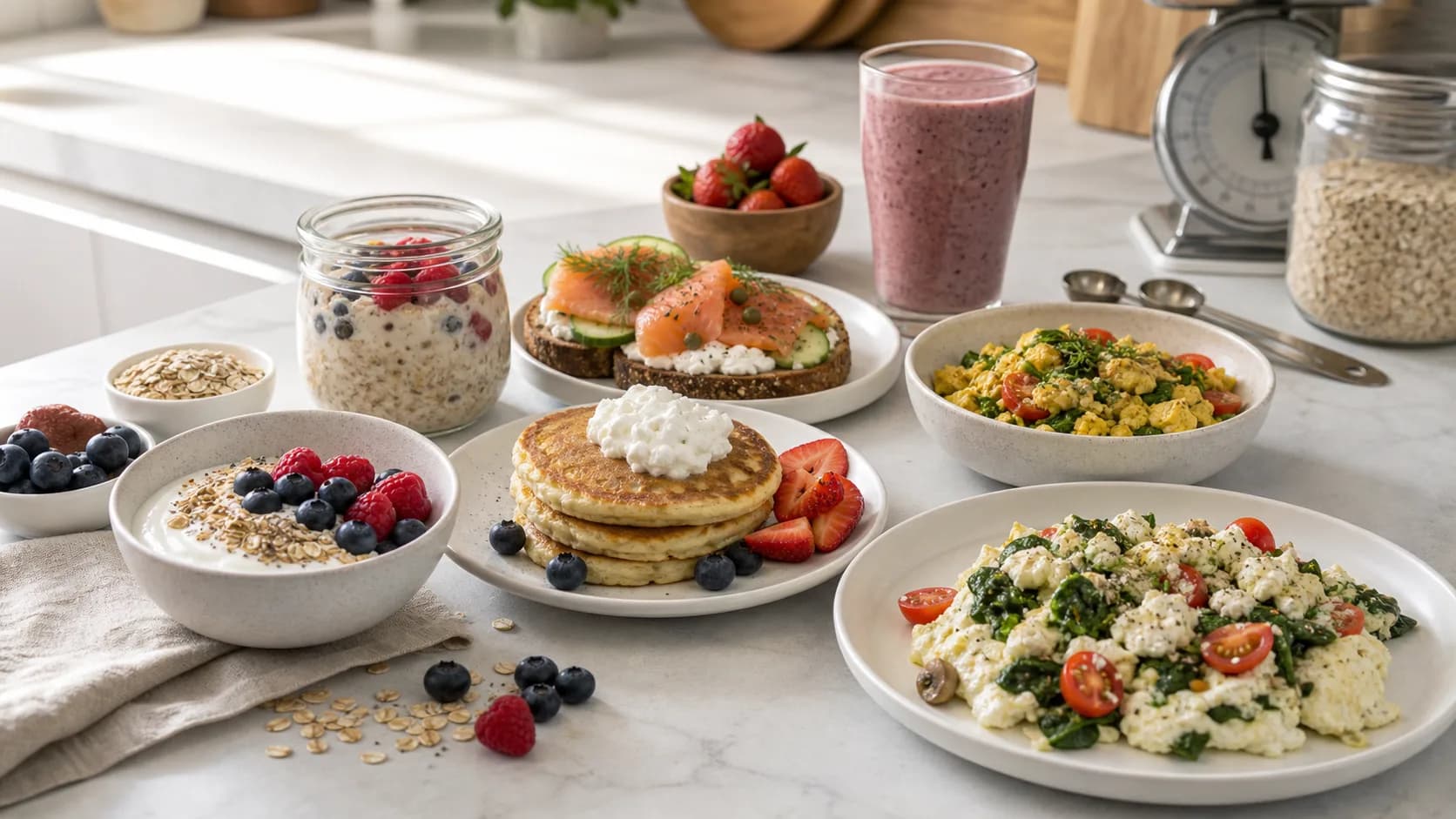
High-protein breakfast spread with Greek yogurt bowl, protein pancakes, overnight oats, salmon toast, tofu scramble, cottage cheese, berries, oats, and smoothie
High-protein breakfasts work best when the protein anchor is obvious and the calorie dial is adjusted for weight loss, muscle gain, or maintenance.

Quick Answer

The best high protein breakfast recipes start with a 25-45 g protein anchor, then add fiber, carbs, fats, and flavor based on your goal. Beginners should start with Greek yogurt bowls, overnight oats, cottage cheese bowls, or tofu scrambles. Weight-loss breakfasts should keep protein high while measuring oil, granola, nut butter, cheese, avocado, honey, and bread. Muscle-gain breakfasts should keep the same protein anchor but add useful calories from oats, potatoes, tortillas, fruit, rice, nuts, seeds, or whole-milk dairy. If you need high protein breakfast recipes under 400 calories, choose egg whites, tofu, skyr, cottage cheese, tuna, berries, vegetables, and measured oats or chia.

Key Takeaways

  • A practical high protein breakfast usually lands around 25-45 g protein, with lower-calorie recipes closer to 25-35 g and muscle-gain recipes closer to 40-55 g.
  • Beginners should start with repeatable anchors such as Greek yogurt, cottage cheese, eggs, tofu, skyr, turkey, tuna, or a measured scoop of protein powder.
  • For weight loss, protect protein first, then control calorie-dense extras like granola, oils, nut butter, cheese, avocado, honey, and large bread portions.
  • For muscle gain, keep the protein target but add useful calories from oats, potatoes, wholegrain bread, rice, fruit, olive oil, nuts, seeds, or whole-milk dairy.
  • Use labels and cooked weights where possible because brand, scoop size, dairy fat level, smoked fish, sausage, and bread portions can move calories quickly.

Recipes

16

Protein range

31-45g

Best for

Best for busy mornings, beginners, fat loss, muscle gain, meal prep, and appetite control.

Choose a Recipe by Goal

High Protein Breakfast Recipes for Beginners

Start here if you want simple recipes with short ingredient lists, familiar foods, and low cooking pressure.

High Protein Breakfast Recipes for Weight Loss

These recipes emphasize protein density, fiber, and measured fats so breakfast supports a calorie deficit without feeling tiny.

High Protein Breakfast Recipes for Muscle Gain

Use these when breakfast needs more total energy, more carbohydrates, or a bigger protein dose around training.

High Protein Breakfast Recipes Under 400 Calories

These options keep calories lower while still giving enough protein to count as a real breakfast anchor.

High Protein Breakfast Recipes: Calories, Protein, Time, and Best Use

Use this table to choose the right recipe before you cook. Protein and calorie values are practical estimates based on common portions, USDA data, and product-label ranges.

RecipeProteinCaloriesTimeBest useMeal prep note
Greek Yogurt Whey Bowl43 g4305 minBeginner, no-cook, high proteinPrep dry oats and berries separately.
Cottage Cheese Protein Pancakes38 g46018 minWeekend breakfast, muscle gainFreeze between parchment sheets.
Tofu Breakfast Scramble32 g39018 minVegan, dairy-free, weight lossReheats well with salsa.
Smoked Salmon Egg Toast35 g48011 minSavory, brunch, omega-3 fatsAssemble toast fresh.
Protein Overnight Oats35 g3905 min prepBeginner, under 400 caloriesBest after 4-8 hours chilled.
Egg White Turkey Omelette36 g33514 minWeight loss, lean proteinCook fresh or prep vegetables ahead.
Cottage Cheese Berry Bowl32 g3104 minNo-cook, under 400 caloriesKeep berries separate if packing.
Skyr Protein Parfait34 g3605 minBeginner, sweet breakfastAdd cereal or granola at serving.
High-Protein Breakfast Burrito45 g54018 minMuscle gain, portable mealWrap and reheat in foil.
Chicken Sausage Egg Muffin Cups33 g36030 min batchMeal prep, under 400 caloriesStore 3-4 days chilled.
Peanut Butter Banana Protein Smoothie42 g5205 minMuscle gain, low appetiteBlend fresh for best texture.
Tempeh Sweet Potato Hash34 g45022 minPlant-forward, higher fiberBatch roast sweet potatoes.
Tuna Cucumber Breakfast Toast34 g3808 minWeight loss, savory no-cookMix tuna fresh to protect texture.
Protein Chia Yogurt Pudding31 g3505 min prepUnder 400, make-aheadChill overnight.
Lean Turkey Sweet Potato Bowl41 g49025 minTraining day, hearty breakfastCook turkey in batches.
Paneer Bhurji Toast38 g47016 minVegetarian muscle gainCook bhurji fresh or reheat gently.

Breakfast Protein Anchors and Practical Serving Targets

A high-protein breakfast is easier when the protein anchor is decided first. Use this table to swap recipes without losing the protein target.

Protein anchorUseful servingApprox proteinBest breakfast useWatch for
Plain Greek yogurt or skyr250-300 g25-36 gBowls, parfaits, oats, smoothiesFlavored cups can add sugar and reduce protein density.
Low-fat cottage cheese200-250 g24-32 gPancakes, toast, bowls, egg platesTexture changes by brand; blend if needed.
Eggs plus egg whites2 eggs + 150-200 g whites28-40 gOmelettes, scrambles, burritosWhole eggs add fat and calories, which may be useful or limiting.
Firm tofu or tempeh200-250 g tofu or 120-150 g tempeh25-35 gScrambles, hash, breakfast bowlsTempeh is more calorie dense than tofu.
Lean turkey, chicken sausage, or tuna100-150 g cooked/drained25-40 gSavory bowls, toast, wraps, muffin cupsSodium varies widely in smoked, canned, and processed proteins.
Protein powder20-30 g powder16-25 gOats, smoothies, pancakes, yogurtScoop size and protein content vary by label.

Beginner Formula for Building a High Protein Breakfast

If recipes feel complicated, build breakfast with one item from each column. This is the simplest way to make high protein breakfast recipes for beginners repeatable.

StepChoose oneWhy it worksEasy examples
1. Protein anchorGreek yogurt, skyr, cottage cheese, eggs, tofu, tuna, turkey, protein powderThis is the part that gets breakfast above 25-30 g protein.Greek yogurt bowl, tofu scramble, turkey omelette
2. Fiber or carb baseOats, berries, wholegrain toast, potato, beans, chia, vegetablesFiber and carbs add fullness, texture, and training fuel.Overnight oats, salmon toast, sweet potato hash
3. Flavor elementCinnamon, berries, salsa, herbs, lemon, mustard, hot sauce, cocoa, vanillaFlavor keeps the recipe repeatable without adding many calories.Cinnamon oats, salsa scramble, lemon salmon toast
4. Calorie dialOil, avocado, nuts, nut butter, cheese, granola, honey, extra breadThis raises or lowers calories without changing the core protein.Use less for weight loss, more for muscle gain

High Protein Breakfast Recipes Under 400 Calories

These are the best fits when you want high-protein breakfast recipes under 400 calories. Keep toppings measured or the meal can move over 400 calories quickly.

RecipeProteinCaloriesWhy it stays under 400Best add-on if still hungry
Egg White Turkey Omelette36 g335Egg whites and lean turkey keep fat lower.Fruit, salsa, or extra vegetables
Tofu Breakfast Scramble32 g390Tofu plus vegetables gives protein and volume.Berries or one slice toast if calories allow
Protein Overnight Oats35 g390Measured oats, yogurt, and half scoop protein powder.More berries or cinnamon
Cottage Cheese Berry Bowl32 g310Cottage cheese and berries are protein dense and simple.Rice cakes or a boiled egg
Tuna Cucumber Breakfast Toast34 g380One toast slice, drained tuna, and cucumber keep it lean.Tomatoes, pickles, or salad greens
Protein Chia Yogurt Pudding31 g350Small chia portion plus high-protein yogurt base.Extra berries or a few almonds
Chicken Sausage Egg Muffin Cups33 g360Portioned eggs, egg whites, and lean sausage.Side fruit or vegetables
Skyr Protein Parfait34 g360Skyr carries most protein while cereal stays measured.More berries or a small latte

Goal-Based Swaps: Weight Loss vs Muscle Gain

The same recipe can serve different goals. Change the calorie dial, not the entire meal, so the protein anchor stays reliable.

GoalKeepReduce or measureAdd or increaseBest recipes
Weight lossLean protein, berries, vegetables, high-fiber carbsOil, granola, honey, nut butter, cheese, avocadoVolume from spinach, mushrooms, cucumber, salsa, berriesEgg white omelette, tofu scramble, tuna toast
Muscle gain30-50 g protein per breakfastVery low-carb versions that leave you under-fueledOats, potatoes, bread, rice, fruit, olive oil, nuts, whole-milk dairyBreakfast burrito, turkey bowl, smoothie
Beginner habit buildingOne default breakfast for weekdaysLong ingredient lists and too many tracking variablesConvenience items with clear labelsYogurt bowl, overnight oats, cottage cheese bowl
Under 400 caloriesProtein anchor and produceLarge bread portions, oil-heavy cooking, full-fat dairy, large nuts/seeds portionsLow-calorie flavor: mustard, hot sauce, lemon, cinnamonOmelette, chia pudding, skyr parfait

Recipe List

Greek Yogurt Whey Bowl

A no-cook beginner breakfast that uses Greek yogurt and whey to reach 40 g+ protein in about five minutes.

43g protein430 kcal5 min

Cottage Cheese Protein Pancakes

Blended cottage cheese pancakes with oats, eggs, and optional whey for a high-protein weekend breakfast.

38g protein460 kcal18 min

Tofu Breakfast Scramble

A plant-based high-protein breakfast with tofu, nutritional yeast, spinach, peppers, and warm spices.

32g protein390 kcal18 min

Smoked Salmon Egg Toast

A savory high-protein toast breakfast with eggs, smoked salmon, light cream cheese, cucumber, and lemon.

35g protein480 kcal11 min

Protein Overnight Oats

A make-ahead breakfast that combines oats, Greek yogurt, milk, and protein powder for a balanced under-400-calorie option.

35g protein390 kcal5 min

Egg White Turkey Omelette

A lean, filling breakfast built for weight loss with egg whites, one whole egg, turkey, mushrooms, and spinach.

36g protein335 kcal14 min

Cottage Cheese Berry Bowl

A no-cook under-400-calorie breakfast that uses cottage cheese, berries, chia, and cereal crunch.

32g protein310 kcal4 min

Skyr Protein Parfait

A thick yogurt-style parfait with skyr, berries, cereal, and seeds for a beginner-friendly high-protein breakfast.

34g protein360 kcal5 min

High-Protein Breakfast Burrito

A portable muscle-gain breakfast with eggs, egg whites, lean turkey, beans, salsa, and a wholegrain tortilla.

45g protein540 kcal18 min

Chicken Sausage Egg Muffin Cups

A batch-friendly high-protein breakfast with egg whites, whole eggs, vegetables, and lean chicken sausage.

33g protein360 kcal30 min

Peanut Butter Banana Protein Smoothie

A higher-calorie smoothie for muscle gain or low appetite, using milk, banana, Greek yogurt, peanut butter, and protein powder.

42g protein520 kcal5 min

Tempeh Sweet Potato Hash

A plant-forward breakfast hash with tempeh, sweet potato, peppers, onion, and salsa.

34g protein450 kcal22 min

Tuna Cucumber Breakfast Toast

A savory no-cook breakfast toast with tuna, cottage cheese, cucumber, mustard, and herbs.

34g protein380 kcal8 min

Protein Chia Yogurt Pudding

A make-ahead under-400-calorie breakfast pudding with Greek yogurt, chia, protein powder, and berries.

31g protein350 kcal5 min

Lean Turkey Sweet Potato Bowl

A hearty training-day breakfast bowl with lean turkey, sweet potato, egg, spinach, and salsa.

41g protein490 kcal25 min

Paneer Bhurji Toast

A vegetarian high-protein breakfast with paneer, egg whites, tomato, onion, spices, and wholegrain toast.

38g protein470 kcal16 min

Full Recipes

Recipe 1

Greek Yogurt Whey Bowl

A no-cook beginner breakfast that uses Greek yogurt and whey to reach 40 g+ protein in about five minutes.

43g

protein

Calories

430

Prep

5 min

Cook

0 min

Servings

1

Ingredients

  • 250g plain nonfat Greek yogurt
  • 25g whey protein powder
  • 40g rolled oats
  • 100g mixed berries
  • 10g honey or maple syrup
  • Cinnamon or vanilla extract

Instructions

  1. 1. Add Greek yogurt to a bowl and stir in whey protein slowly so the texture stays smooth.
  2. 2. Fold in cinnamon or vanilla, then taste before adding sweetener because many powders are already sweet.
  3. 3. Top with oats and berries, keeping honey measured if calories matter.
  4. 4. Let the bowl sit for 3 minutes if you want softer oats, or eat immediately for more texture.
  5. 5. For a lower-calorie version, use 20g oats and skip honey; for muscle gain, add banana or extra oats.

Recipe 2

Cottage Cheese Protein Pancakes

Blended cottage cheese pancakes with oats, eggs, and optional whey for a high-protein weekend breakfast.

38g

protein

Calories

460

Prep

8 min

Cook

10 min

Servings

1

Ingredients

  • 200g low-fat cottage cheese
  • 2 large eggs
  • 40g rolled oats
  • 15g whey or casein protein powder
  • 1 tsp baking powder
  • Vanilla, cinnamon, and berries

Instructions

  1. 1. Blend cottage cheese, eggs, oats, protein powder, baking powder, vanilla, and cinnamon until smooth.
  2. 2. Rest the batter for 3-5 minutes so the oats and protein powder hydrate.
  3. 3. Cook small pancakes in a nonstick pan over medium heat; large pancakes are harder to flip.
  4. 4. Flip once the edges look set and small bubbles appear on the surface.
  5. 5. Serve with berries or Greek yogurt, and measure syrup or nut butter if you are tracking calories.

Recipe 3

Tofu Breakfast Scramble

A plant-based high-protein breakfast with tofu, nutritional yeast, spinach, peppers, and warm spices.

32g

protein

Calories

390

Prep

8 min

Cook

10 min

Servings

1

Ingredients

  • 250g firm tofu, drained
  • 2 tbsp nutritional yeast
  • 1 cup spinach
  • 80g bell peppers
  • 1 tsp olive oil
  • Turmeric, garlic powder, black pepper, and salt

Instructions

  1. 1. Press tofu briefly with a towel, then crumble it into small pieces with your hands or a fork.
  2. 2. Warm olive oil in a nonstick pan and cook peppers for 2-3 minutes.
  3. 3. Add tofu, turmeric, garlic powder, pepper, and salt, then stir until evenly yellow.
  4. 4. Fold in spinach and nutritional yeast and cook until the spinach wilts.
  5. 5. Serve with salsa for weight loss, or add toast, potatoes, or avocado for a higher-calorie breakfast.

Recipe 4

Smoked Salmon Egg Toast

A savory high-protein toast breakfast with eggs, smoked salmon, light cream cheese, cucumber, and lemon.

35g

protein

Calories

480

Prep

5 min

Cook

6 min

Servings

1

Ingredients

  • 2 slices wholegrain toast
  • 2 large eggs
  • 80g smoked salmon
  • 30g light cream cheese
  • Cucumber slices
  • Lemon juice, dill, and black pepper

Instructions

  1. 1. Toast bread until crisp so it can hold the toppings without getting soggy.
  2. 2. Scramble, poach, or soft-boil the eggs based on the texture you prefer.
  3. 3. Spread toast with measured light cream cheese, then add cucumber slices.
  4. 4. Top with eggs, smoked salmon, lemon juice, dill, and black pepper.
  5. 5. For a lower-calorie version, use one toast slice and extra cucumber; for muscle gain, keep both slices and add fruit.

Recipe 5

Protein Overnight Oats

A make-ahead breakfast that combines oats, Greek yogurt, milk, and protein powder for a balanced under-400-calorie option.

35g

protein

Calories

390

Prep

5 min

Cook

0 min

Servings

1

Ingredients

  • 45g rolled oats
  • 150g plain Greek yogurt
  • 15g whey or plant protein powder
  • 120ml low-fat milk or soy milk
  • 80g berries
  • Cinnamon and pinch of salt

Instructions

  1. 1. Stir oats, Greek yogurt, protein powder, milk, cinnamon, and salt in a jar until no dry powder remains.
  2. 2. Add berries on top or keep them separate if you want the oats to stay thicker.
  3. 3. Cover and refrigerate for at least 4 hours, ideally overnight.
  4. 4. Stir before eating and add a splash of milk if the oats are too thick.
  5. 5. For muscle gain, add banana, nuts, or more oats; for weight loss, keep toppings limited to berries and cinnamon.

Recipe 6

Egg White Turkey Omelette

A lean, filling breakfast built for weight loss with egg whites, one whole egg, turkey, mushrooms, and spinach.

36g

protein

Calories

335

Prep

6 min

Cook

8 min

Servings

1

Ingredients

  • 200g liquid egg whites
  • 1 large egg
  • 70g cooked lean turkey or turkey breast
  • 100g mushrooms
  • 1 cup spinach
  • Salt, pepper, and hot sauce

Instructions

  1. 1. Cook mushrooms in a nonstick pan until they release moisture and start to brown.
  2. 2. Add spinach and turkey, then warm for 1 minute.
  3. 3. Whisk egg whites with one whole egg, salt, and pepper.
  4. 4. Pour eggs into the pan, lower heat, and cook until just set.
  5. 5. Fold the omelette and serve with hot sauce, salsa, or tomatoes for extra volume without many calories.

Recipe 7

Cottage Cheese Berry Bowl

A no-cook under-400-calorie breakfast that uses cottage cheese, berries, chia, and cereal crunch.

32g

protein

Calories

310

Prep

4 min

Cook

0 min

Servings

1

Ingredients

  • 250g low-fat cottage cheese
  • 120g strawberries or mixed berries
  • 10g chia seeds
  • 15g high-fiber cereal or low-sugar granola
  • Cinnamon
  • Optional lemon zest

Instructions

  1. 1. Add cottage cheese to a bowl and stir until creamy; blend it first if you prefer a smooth texture.
  2. 2. Top with berries, chia seeds, cereal, cinnamon, and lemon zest.
  3. 3. Keep cereal or granola measured because it is the easiest part to over-pour.
  4. 4. Eat immediately for crunch, or pack berries and cereal separately for meal prep.
  5. 5. For a higher-calorie version, add nuts, nut butter, honey, or extra cereal.

Recipe 8

Skyr Protein Parfait

A thick yogurt-style parfait with skyr, berries, cereal, and seeds for a beginner-friendly high-protein breakfast.

34g

protein

Calories

360

Prep

5 min

Cook

0 min

Servings

1

Ingredients

  • 300g plain skyr
  • 100g blueberries or raspberries
  • 20g high-fiber cereal
  • 8g pumpkin seeds
  • Cinnamon or vanilla
  • Optional low-calorie sweetener

Instructions

  1. 1. Spoon skyr into a glass or bowl and stir in cinnamon or vanilla.
  2. 2. Layer berries over the skyr so each bite has sweetness and texture.
  3. 3. Add cereal and pumpkin seeds right before eating.
  4. 4. Use plain skyr when possible because flavored versions can change calories and sugar.
  5. 5. For muscle gain, increase cereal or add banana; for weight loss, keep seeds and cereal measured.

Recipe 9

High-Protein Breakfast Burrito

A portable muscle-gain breakfast with eggs, egg whites, lean turkey, beans, salsa, and a wholegrain tortilla.

45g

protein

Calories

540

Prep

8 min

Cook

10 min

Servings

1

Ingredients

  • 1 large wholegrain tortilla
  • 1 large egg
  • 150g liquid egg whites
  • 90g cooked lean ground turkey
  • 60g black beans
  • 40g salsa
  • 15g reduced-fat cheese

Instructions

  1. 1. Warm turkey and beans in a pan with salsa until hot.
  2. 2. Add egg and egg whites, then scramble gently until just cooked.
  3. 3. Warm the tortilla so it folds without tearing.
  4. 4. Add the egg mixture and measured cheese, then roll tightly into a burrito.
  5. 5. For meal prep, wrap in foil and refrigerate; reheat until hot before eating.

Recipe 10

Chicken Sausage Egg Muffin Cups

A batch-friendly high-protein breakfast with egg whites, whole eggs, vegetables, and lean chicken sausage.

33g

protein

Calories

360

Prep

10 min

Cook

20 min

Servings

1

Ingredients

  • 2 large eggs
  • 200g liquid egg whites
  • 100g cooked lean chicken sausage
  • 80g diced peppers
  • 60g spinach
  • 15g reduced-fat cheese
  • Salt, pepper, and herbs

Instructions

  1. 1. Heat oven to 190C and grease or line a muffin tin.
  2. 2. Whisk eggs, egg whites, salt, pepper, and herbs in a bowl.
  3. 3. Divide chicken sausage, peppers, spinach, and cheese across muffin cups.
  4. 4. Pour the egg mixture over the fillings and bake until set in the center.
  5. 5. Cool before refrigerating; eat within a food-safe refrigerated window or freeze extras.

Recipe 11

Peanut Butter Banana Protein Smoothie

A higher-calorie smoothie for muscle gain or low appetite, using milk, banana, Greek yogurt, peanut butter, and protein powder.

42g

protein

Calories

520

Prep

5 min

Cook

0 min

Servings

1

Ingredients

  • 250ml low-fat milk or soy milk
  • 120g banana
  • 150g plain Greek yogurt
  • 25g whey or plant protein powder
  • 16g peanut butter
  • Ice and cinnamon

Instructions

  1. 1. Add milk, banana, Greek yogurt, protein powder, peanut butter, ice, and cinnamon to a blender.
  2. 2. Blend until completely smooth, scraping the sides if powder sticks.
  3. 3. Taste before adding sweetener because banana and protein powder may be enough.
  4. 4. Drink with toast or oats if you need a larger muscle-gain breakfast.
  5. 5. For a lower-calorie smoothie, use half banana and powdered peanut butter instead of regular peanut butter.

Recipe 12

Tempeh Sweet Potato Hash

A plant-forward breakfast hash with tempeh, sweet potato, peppers, onion, and salsa.

34g

protein

Calories

450

Prep

8 min

Cook

14 min

Servings

1

Ingredients

  • 150g tempeh
  • 180g cooked sweet potato cubes
  • 80g bell peppers
  • 50g onion
  • 1 tsp olive oil
  • Salsa, smoked paprika, and lime

Instructions

  1. 1. Crumble or cube tempeh and season with smoked paprika and salt.
  2. 2. Cook onion and peppers in olive oil until softened.
  3. 3. Add tempeh and cooked sweet potato cubes, then cook until browned in spots.
  4. 4. Finish with lime juice and salsa.
  5. 5. For extra protein, add edamame or a side of soy yogurt; for lower calories, reduce oil and potato.

Recipe 13

Tuna Cucumber Breakfast Toast

A savory no-cook breakfast toast with tuna, cottage cheese, cucumber, mustard, and herbs.

34g

protein

Calories

380

Prep

8 min

Cook

0 min

Servings

1

Ingredients

  • 1 large slice wholegrain toast
  • 120g drained tuna in water
  • 80g low-fat cottage cheese
  • 80g cucumber
  • Mustard, lemon juice, dill, and black pepper
  • Optional tomatoes or salad greens

Instructions

  1. 1. Mix drained tuna with cottage cheese, mustard, lemon juice, dill, and pepper.
  2. 2. Toast bread until crisp so the topping does not make it soggy.
  3. 3. Layer cucumber and the tuna mixture over the toast.
  4. 4. Add tomatoes or greens for more volume.
  5. 5. If sodium is a concern, compare tuna labels or use lower-sodium canned fish when available.

Recipe 14

Protein Chia Yogurt Pudding

A make-ahead under-400-calorie breakfast pudding with Greek yogurt, chia, protein powder, and berries.

31g

protein

Calories

350

Prep

5 min

Cook

0 min

Servings

1

Ingredients

  • 200g plain Greek yogurt
  • 15g chia seeds
  • 15g protein powder
  • 80ml milk or soy milk
  • 100g berries
  • Vanilla and cinnamon

Instructions

  1. 1. Whisk Greek yogurt, protein powder, milk, vanilla, and cinnamon until smooth.
  2. 2. Stir in chia seeds and let the mixture stand for 5 minutes.
  3. 3. Stir again so chia does not clump at the bottom.
  4. 4. Refrigerate overnight, then top with berries before eating.
  5. 5. For a thicker pudding, use less milk; for a softer texture, add more milk in the morning.

Recipe 15

Lean Turkey Sweet Potato Bowl

A hearty training-day breakfast bowl with lean turkey, sweet potato, egg, spinach, and salsa.

41g

protein

Calories

490

Prep

8 min

Cook

17 min

Servings

1

Ingredients

  • 130g cooked lean ground turkey
  • 220g cooked sweet potato
  • 1 large egg
  • 1 cup spinach
  • 60g salsa
  • Smoked paprika and garlic powder

Instructions

  1. 1. Warm cooked sweet potato cubes in a nonstick pan until lightly browned.
  2. 2. Add turkey, smoked paprika, garlic powder, and salsa, then heat through.
  3. 3. Fold in spinach until wilted.
  4. 4. Cook the egg separately or make a small space in the pan and cook it on top.
  5. 5. For muscle gain, add more potato or rice; for weight loss, reduce potato and add more spinach or peppers.

Recipe 16

Paneer Bhurji Toast

A vegetarian high-protein breakfast with paneer, egg whites, tomato, onion, spices, and wholegrain toast.

38g

protein

Calories

470

Prep

6 min

Cook

10 min

Servings

1

Ingredients

  • 120g paneer, crumbled
  • 120g liquid egg whites
  • 1 slice wholegrain toast
  • 80g tomato
  • 50g onion
  • Turmeric, chili powder, cumin, and coriander

Instructions

  1. 1. Cook onion and tomato in a nonstick pan with spices until softened.
  2. 2. Add crumbled paneer and stir until warm.
  3. 3. Pour in egg whites and cook gently until set, keeping the mixture moist.
  4. 4. Serve over wholegrain toast with coriander and extra tomato.
  5. 5. For lower calories, use reduced-fat paneer or a smaller paneer portion; for muscle gain, add a second toast slice.

How to Use These High Protein Breakfast Recipes

The fastest way to make breakfast more useful is to stop treating protein as a garnish. A slice of toast with a thin spread, a small bowl of cereal, or fruit by itself may be quick, but it usually leaves most of the day's protein target for lunch and dinner. These high protein breakfast recipes start with a protein anchor first, then add fiber, carbohydrates, fat, and flavor around it.

For most adults, a practical high-protein breakfast target is 25-45 g protein. Smaller bodies, lower-calorie diets, and snack-style breakfasts may sit near 25-30 g. Larger bodies, resistance-training days, and muscle-gain phases often work better near 40-55 g. The exact number should come from your daily target, but the recipe should make that number easy to see.

Use the calories as planning estimates, not as lab values. USDA FoodData Central and Nutrition Facts labels are useful starting points, but brand, cooked weight, scoop size, dairy fat level, smoked fish, sausage type, oil, and toppings can change the final plate. When tracking closely, enter the ingredients and portions you actually use.

  • Pick the recipe by goal first: beginner, weight loss, muscle gain, or under 400 calories.
  • Keep the protein anchor steady for at least a week before changing the whole recipe.
  • Adjust calories with toppings, starches, and fats rather than removing the protein source.
  • Save the exact version you repeat in your food tracker so future mornings take less effort.

High Protein Breakfast Recipes for Beginners

High protein breakfast recipes for beginners should be boring in the best possible way: short ingredient lists, obvious portions, minimal cooking, and foods you can buy at a normal grocery store. The goal is not to build the most impressive breakfast on day one. The goal is to make a default morning meal that reliably gives enough protein before your day becomes busy.

Start with no-cook or low-cook recipes if mornings are rushed. Greek yogurt with whey, cottage cheese with berries, skyr parfaits, overnight oats, and smoothies work because they can be assembled in minutes. If you like savory meals, tofu scramble, egg white omelettes, salmon toast, and turkey burritos are still beginner-friendly when vegetables are chopped ahead.

The beginner mistake is adding too many nutrition goals at once. Do not try to make breakfast high protein, ultra-low calorie, high fiber, low carb, dairy-free, low sodium, and meal-prepped all in the same first week unless you already eat that way. Build the protein habit first. Then tighten calories, ingredients, or dietary preferences once the meal is repeatable.

  • Best first recipe: Greek Yogurt Whey Bowl if you eat dairy, or Tofu Breakfast Scramble if you want a plant-based start.
  • Best meal-prep recipe: Protein Overnight Oats or Chicken Sausage Egg Muffin Cups.
  • Best no-powder recipe: Cottage Cheese Berry Bowl or Smoked Salmon Egg Toast.
  • Best pantry backup: protein powder, oats, tuna packets, shelf-stable milk, and chia seeds.

High Protein Breakfast Recipes for Weight Loss

High protein breakfast recipes for weight loss need two jobs: they should protect protein while leaving enough calories for the rest of the day. Protein can help make a lower-calorie breakfast feel more complete, but the recipe still has to fit the calorie target. A high-protein breakfast can become high calorie quickly when the toppings are free-poured.

The easiest weight-loss version uses a lean protein anchor, a high-volume fruit or vegetable, and one measured calorie-dense ingredient if needed. Egg whites, nonfat Greek yogurt, skyr, low-fat cottage cheese, tofu, tuna, lean turkey, and protein powder all work. Berries, mushrooms, spinach, tomatoes, cucumber, salsa, and high-fiber oats add volume without making the meal feel small.

The foods to measure most carefully are granola, nut butter, oil, cheese, avocado, honey, maple syrup, dried fruit, seeds, and large bread portions. None of these are bad foods, but they are easy to underestimate. If fat loss is the goal, keep the recipe satisfying by adding volume and flavor before adding more calorie-dense toppings.

  • Choose the under-400 table when breakfast must leave more calories for lunch and dinner.
  • Use spray oil or a nonstick pan when cooking eggs, tofu, turkey, or vegetables.
  • Use berries instead of large dried fruit portions when you want sweetness with fewer calories.
  • Keep a no-cook backup so a rushed morning does not become a pastry or vending-machine meal.

High Protein Breakfast Recipes for Muscle Gain

High protein breakfast recipes for muscle gain need enough protein, but they also need enough total food. A 300-calorie breakfast with 35 g protein may be excellent for cutting, yet too small for someone training hard and trying to gain. Muscle gain usually requires a consistent daily calorie surplus, progressive resistance training, and enough protein spread across the day.

For many active people, a muscle-gain breakfast feels better when it includes a protein anchor plus a clear carbohydrate source. Oats, potatoes, wholegrain bread, rice, tortillas, fruit, and cereal can all support training fuel. Fat can help raise calories too, but if a breakfast gets heavy from oil, nut butter, cheese, and avocado, some people feel sluggish. Use the form of calories that matches your appetite and workout schedule.

The recipe does not have to be enormous. You can start with the standard recipe and add one planned booster: extra oats in overnight oats, a banana in a smoothie, a second tortilla in a burrito, potatoes in a turkey bowl, or a side of yogurt with pancakes. The key is planned calories, not random grazing because breakfast was too small.

  • Best muscle-gain recipe: High-Protein Breakfast Burrito when you want portable calories.
  • Best low-appetite option: Peanut Butter Banana Protein Smoothie because liquids are easier for some people.
  • Best training-day bowl: Lean Turkey Sweet Potato Bowl with extra potato or rice.
  • Best vegetarian option: Paneer Bhurji Toast or Tempeh Sweet Potato Hash.

High Protein Breakfast Recipes Under 400 Calories

High protein breakfast recipes under 400 calories are useful when breakfast needs to be filling but not oversized. The trick is to choose recipes where most calories come from protein and produce rather than from added fats and large starch portions. That usually means egg whites, nonfat or low-fat dairy, tofu, tuna, lean turkey, berries, vegetables, and carefully measured oats or chia.

A recipe under 400 calories should still feel like breakfast. If the plate is only egg whites or only yogurt, it may technically fit the target but fail by 10 a.m. Add texture, flavor, and volume: berries, cinnamon, salsa, mushrooms, spinach, cucumber, tomatoes, mustard, lemon juice, herbs, or a small measured portion of oats, chia, toast, or potato.

When you make changes, recheck the calorie math. Moving from nonfat Greek yogurt to whole-milk yogurt, using two slices of toast instead of one, adding a full avocado, or cooking with a tablespoon of oil can move a recipe out of the under-400 category. That may be fine on a training day, but it should be a choice rather than a surprise.

  • Best no-cook under-400 recipe: Cottage Cheese Berry Bowl.
  • Best savory under-400 recipe: Tuna Cucumber Breakfast Toast.
  • Best make-ahead under-400 recipe: Protein Chia Yogurt Pudding.
  • Best hot under-400 recipe: Egg White Turkey Omelette.

Meal Prep, Storage, and Tracking Notes

Meal prep works best when you separate stable parts from wet parts. Cook turkey, tofu, sweet potatoes, vegetables, egg muffin cups, or pancake batches ahead. Keep berries, cereal, granola, salsa, yogurt toppings, cucumber, and toast components separate until serving. That keeps texture better and makes calorie tracking more accurate.

Food safety matters because many high-protein breakfast ingredients are perishable. FoodSafety.gov lists cooked leftovers and egg casseroles at a short refrigerated window, commonly 3-4 days for many cooked items. If you are prepping for a whole week, freeze portions that will not be eaten within that window, or prep twice per week instead of forcing everything into one batch.

For tracking, use a consistent method. If you weigh oats dry, always track oats dry. If you use cooked turkey, track cooked turkey. If you switch brands of yogurt, protein powder, bread, chicken sausage, smoked salmon, or cottage cheese, update the entry because label differences can be meaningful. The more often you repeat a recipe, the more valuable it is to save the exact version.

  • Store cooked proteins and wet toppings separately when possible.
  • Label containers with recipe name, date, and protein portion.
  • Freeze pancakes, burritos, and muffin cups when prepping beyond a few days.
  • Use the FDA Nutrition Facts label for packaged foods and USDA data for plain whole foods.

Common Mistakes That Make Breakfast Less Useful

The first mistake is counting a recipe as high protein because it contains one high-protein ingredient, even when the serving is tiny. A tablespoon of Greek yogurt on a bowl of oats does not make the whole bowl high protein. A recipe should show the protein grams clearly and make the protein source large enough to matter.

The second mistake is removing calories so aggressively that the meal becomes hard to repeat. If a breakfast is low calorie but leaves you distracted, cold, or hungry soon after, it may lead to more snacking later. For weight loss, a slightly higher-calorie breakfast that prevents grazing can be more useful than the lowest-calorie option on paper.

The third mistake is copying a muscle-gain breakfast while trying to lose weight, or copying a cutting breakfast while trying to gain muscle. The recipe names may look similar, but the portions should be different. Protein is the anchor; oats, tortillas, potatoes, oil, nuts, avocado, cheese, and fruit are the dials that make the recipe match the goal.

  • Do not assume all yogurt, cottage cheese, skyr, bread, sausage, or protein powder has the same macros.
  • Do not count uncooked and cooked weights as interchangeable unless your tracker entry matches.
  • Do not make breakfast dependent on one fresh ingredient that often runs out.
  • Do not ignore sodium if you rely heavily on smoked salmon, tuna, deli meat, or chicken sausage.

Full-Day Protein Tables

DayBreakfastLunchDinnerSnackTotal
Example day 1Greek Yogurt Whey BowlChicken, tuna, tofu, or bean bowl, 35-45g proteinLean protein dinner with rice, potatoes, or vegetables, 35-50g proteinCottage cheese, skyr, protein shake, or edamame, 20-30g protein~133g protein
Example day 2Cottage Cheese Protein PancakesChicken, tuna, tofu, or bean bowl, 35-45g proteinLean protein dinner with rice, potatoes, or vegetables, 35-50g proteinEggs, jerky, Greek yogurt, tofu snack, or tuna crackers, 20-30g protein~128g protein
Example day 3Tofu Breakfast ScrambleChicken, tuna, tofu, or bean bowl, 35-45g proteinLean protein dinner with rice, potatoes, or vegetables, 35-50g proteinCottage cheese, skyr, protein shake, or edamame, 20-30g protein~122g protein
Example day 4Smoked Salmon Egg ToastChicken, tuna, tofu, or bean bowl, 35-45g proteinLean protein dinner with rice, potatoes, or vegetables, 35-50g proteinEggs, jerky, Greek yogurt, tofu snack, or tuna crackers, 20-30g protein~125g protein
Example day 5Protein Overnight OatsChicken, tuna, tofu, or bean bowl, 35-45g proteinLean protein dinner with rice, potatoes, or vegetables, 35-50g proteinCottage cheese, skyr, protein shake, or edamame, 20-30g protein~125g protein
Example day 6Egg White Turkey OmeletteChicken, tuna, tofu, or bean bowl, 35-45g proteinLean protein dinner with rice, potatoes, or vegetables, 35-50g proteinEggs, jerky, Greek yogurt, tofu snack, or tuna crackers, 20-30g protein~126g protein
Example day 7Cottage Cheese Berry BowlChicken, tuna, tofu, or bean bowl, 35-45g proteinLean protein dinner with rice, potatoes, or vegetables, 35-50g proteinCottage cheese, skyr, protein shake, or edamame, 20-30g protein~122g protein
Example day 8Skyr Protein ParfaitChicken, tuna, tofu, or bean bowl, 35-45g proteinLean protein dinner with rice, potatoes, or vegetables, 35-50g proteinEggs, jerky, Greek yogurt, tofu snack, or tuna crackers, 20-30g protein~124g protein
Example day 9High-Protein Breakfast BurritoChicken, tuna, tofu, or bean bowl, 35-45g proteinLean protein dinner with rice, potatoes, or vegetables, 35-50g proteinCottage cheese, skyr, protein shake, or edamame, 20-30g protein~135g protein
Example day 10Chicken Sausage Egg Muffin CupsChicken, tuna, tofu, or bean bowl, 35-45g proteinLean protein dinner with rice, potatoes, or vegetables, 35-50g proteinEggs, jerky, Greek yogurt, tofu snack, or tuna crackers, 20-30g protein~123g protein
Example day 11Peanut Butter Banana Protein SmoothieChicken, tuna, tofu, or bean bowl, 35-45g proteinLean protein dinner with rice, potatoes, or vegetables, 35-50g proteinCottage cheese, skyr, protein shake, or edamame, 20-30g protein~132g protein
Example day 12Tempeh Sweet Potato HashChicken, tuna, tofu, or bean bowl, 35-45g proteinLean protein dinner with rice, potatoes, or vegetables, 35-50g proteinEggs, jerky, Greek yogurt, tofu snack, or tuna crackers, 20-30g protein~124g protein
Example day 13Tuna Cucumber Breakfast ToastChicken, tuna, tofu, or bean bowl, 35-45g proteinLean protein dinner with rice, potatoes, or vegetables, 35-50g proteinCottage cheese, skyr, protein shake, or edamame, 20-30g protein~124g protein
Example day 14Protein Chia Yogurt PuddingChicken, tuna, tofu, or bean bowl, 35-45g proteinLean protein dinner with rice, potatoes, or vegetables, 35-50g proteinEggs, jerky, Greek yogurt, tofu snack, or tuna crackers, 20-30g protein~121g protein
Example day 15Lean Turkey Sweet Potato BowlChicken, tuna, tofu, or bean bowl, 35-45g proteinLean protein dinner with rice, potatoes, or vegetables, 35-50g proteinCottage cheese, skyr, protein shake, or edamame, 20-30g protein~131g protein
Example day 16Paneer Bhurji ToastChicken, tuna, tofu, or bean bowl, 35-45g proteinLean protein dinner with rice, potatoes, or vegetables, 35-50g proteinEggs, jerky, Greek yogurt, tofu snack, or tuna crackers, 20-30g protein~128g protein

Use these full-day tables to keep the recipe from becoming an isolated high-protein meal. The goal is to anchor one meal with a clear protein serving, then let the other meals carry predictable protein instead of leaving the whole target for dinner. If your daily target is lower, reduce the snack or use smaller portions. If your target is higher, add a second protein snack or increase the main protein portion.

The totals are practical estimates, not prescriptions. A recipe with 35-45 g protein can fit a 100 g day, a 120 g day, or a 150 g day depending on what surrounds it. The useful habit is to plan the full day before hunger and schedule pressure take over.

Grocery List

This grocery list combines the ingredients used across the recipes. Buy exact amounts if you are cooking one recipe, or buy family-size protein packs and frozen produce if you are meal prepping several servings. Keep shelf-stable backups on hand so a missed grocery trip does not turn into a low-protein day.

250g plain nonfat Greek yogurt

25g whey protein powder

40g rolled oats

100g mixed berries

10g honey or maple syrup

Cinnamon or vanilla extract

200g low-fat cottage cheese

2 large eggs

15g whey or casein protein powder

1 tsp baking powder

Vanilla, cinnamon, and berries

250g firm tofu, drained

2 tbsp nutritional yeast

1 cup spinach

80g bell peppers

1 tsp olive oil

Turmeric, garlic powder, black pepper, and salt

2 slices wholegrain toast

80g smoked salmon

30g light cream cheese

Cucumber slices

Lemon juice, dill, and black pepper

45g rolled oats

150g plain Greek yogurt

15g whey or plant protein powder

120ml low-fat milk or soy milk

80g berries

Cinnamon and pinch of salt

200g liquid egg whites

1 large egg

70g cooked lean turkey or turkey breast

100g mushrooms

Salt, pepper, and hot sauce

250g low-fat cottage cheese

120g strawberries or mixed berries

10g chia seeds

15g high-fiber cereal or low-sugar granola

Cinnamon

Optional lemon zest

300g plain skyr

100g blueberries or raspberries

20g high-fiber cereal

8g pumpkin seeds

Cinnamon or vanilla

Optional low-calorie sweetener

1 large wholegrain tortilla

150g liquid egg whites

90g cooked lean ground turkey

60g black beans

40g salsa

15g reduced-fat cheese

100g cooked lean chicken sausage

80g diced peppers

60g spinach

Salt, pepper, and herbs

250ml low-fat milk or soy milk

120g banana

25g whey or plant protein powder

16g peanut butter

Ice and cinnamon

150g tempeh

180g cooked sweet potato cubes

50g onion

Salsa, smoked paprika, and lime

1 large slice wholegrain toast

120g drained tuna in water

80g low-fat cottage cheese

80g cucumber

Mustard, lemon juice, dill, and black pepper

Optional tomatoes or salad greens

200g plain Greek yogurt

15g chia seeds

15g protein powder

80ml milk or soy milk

100g berries

Vanilla and cinnamon

130g cooked lean ground turkey

220g cooked sweet potato

60g salsa

Smoked paprika and garlic powder

120g paneer, crumbled

120g liquid egg whites

1 slice wholegrain toast

80g tomato

Turmeric, chili powder, cumin, and coriander

Prep Notes for Better Meal Prep

Prep the protein anchor first

The protein source is the part that makes or breaks the meal. Cook or portion it first, then add carbohydrates, vegetables, sauces, and toppings around it. For breakfast recipes, this keeps the meal from drifting into a mostly-carb or mostly-fat plate with only a small amount of protein.

Keep wet ingredients separate

Sauces, yogurt, dressings, chopped fruit, salsa, and watery vegetables can make meal-prep containers soggy. Store them separately and combine when eating. This also makes tracking more accurate because oils, cheese, sauces, and sweeteners can be measured instead of guessed.

Build a two-day rotation

Pick two recipes from this page and alternate them. A smaller rotation is easier to shop for, easier to track, and less likely to leave unused ingredients in the fridge. Change seasonings, vegetables, fruit, wraps, grains, or sauces before changing the entire protein structure.

Swaps and Variations

NeedSwapTracking note
BudgetUse eggs, canned tuna, tofu, lentils, frozen vegetables, oats, rice, and store-brand Greek yogurt.Keep protein grams similar and let premium toppings be optional.
No-cookUse cottage cheese, Greek yogurt, canned fish, deli turkey, smoked salmon, tofu, edamame, or protein powder.Check sodium and labels because ready-to-eat proteins vary widely.
Dairy-freeUse tofu, tempeh, edamame, lean meat, fish, eggs if tolerated, soy yogurt, soy milk, or pea protein.Dairy-free products can be lower protein, so verify the label.
Lower calorieUse lean proteins, nonfat dairy, vegetables, berries, salsa, mustard, and lighter dressings.Measure oils, nut butter, cheese, sauces, and granola carefully.
Higher calorieAdd rice, pasta, potatoes, oats, bread, avocado, olive oil, nuts, seeds, or whole-milk dairy.Increase calories without accidentally dropping the protein anchor.

Portion Scaling, Storage, and Troubleshooting

Scale these recipes by changing the protein anchor first. If a recipe has 35 g protein and you need 45 g, add a small extra serving of the main protein, a side of Greek yogurt, extra tofu, an egg, edamame, canned fish, or a half scoop of protein powder depending on the recipe style. If you need less protein or fewer calories, reduce toppings, oils, cheese, grains, nut butter, or sauces before removing the entire protein source.

For meal prep, cool cooked foods quickly, store proteins and sauces separately when possible, and label containers with the protein portion. Recipes with yogurt, cottage cheese, fish, eggs, or cooked poultry should be kept cold and eaten within a reasonable food-safe window. If a recipe becomes dry after reheating, add salsa, broth, lemon juice, yogurt sauce, or a measured dressing instead of guessing with oil.

If the meal is not filling, add volume before adding calories: vegetables, salad, berries, soup, potatoes, beans, or a higher-fiber grain. If the meal is too filling, split it into two smaller eating occasions or choose a softer option such as a smoothie, yogurt bowl, soup, tofu scramble, or tuna salad. The best high-protein recipe is not the one with the largest number on paper; it is the one you can repeat without feeling forced.

Track the version you actually eat. Changing from nonfat yogurt to whole-milk yogurt, from chicken breast to thigh, from water-packed tuna to oil-packed tuna, or from tofu to tempeh can change calories even when the recipe name stays similar. Save your most common version in your tracker so future meals take seconds to log.

Make the recipe repeatable before making it more complicated. Keep one default serving size, one default protein source, and one default side for normal days. Then create only two planned variations: a lower-calorie version for lighter days and a higher-calorie version for harder training or bigger appetites. This keeps the page useful as a system, not just a list of meals.

When in doubt, simplify the plate: protein anchor, fiber source, carb or fat based on the goal, and one flavor element. That formula is easier to repeat than a long ingredient list and usually produces better adherence than chasing a different recipe every day.

Common Questions

What is the easiest high protein breakfast recipe for beginners?

The easiest option is usually a Greek yogurt whey bowl or a cottage cheese berry bowl because both are no-cook, fast to portion, and easy to adjust. If you prefer savory food, a tofu scramble or egg white turkey omelette is a good beginner recipe.

What high protein breakfast is best for weight loss?

Choose a breakfast with a lean protein anchor, fruit or vegetables for volume, and measured calorie-dense toppings. Good options include an egg white turkey omelette, tofu scramble, cottage cheese berry bowl, tuna cucumber toast, or protein chia yogurt pudding.

What high protein breakfast is best for muscle gain?

A muscle-gain breakfast should pair 35-55 g protein with enough carbohydrates and calories to support training. Good options include a breakfast burrito, turkey sweet potato bowl, peanut butter banana protein smoothie, paneer bhurji toast, or protein pancakes with extra oats or fruit.

Can I make high protein breakfast recipes under 400 calories?

Yes. Keep the protein anchor lean, use produce for volume, and measure fats, starches, granola, honey, and nut butter. Egg white omelettes, tofu scrambles, cottage cheese bowls, skyr parfaits, tuna toast, and chia yogurt pudding can all fit under 400 calories.

How much protein should breakfast have?

A practical target is 25-45 g protein for most high-protein breakfasts. Smaller appetites and lower-calorie days may use 25-30 g, while active people or muscle-gain phases may use 40-55 g. Your daily target should decide the exact amount.

Do I need protein powder at breakfast?

No. Protein powder is convenient, but eggs, egg whites, Greek yogurt, skyr, cottage cheese, tofu, tempeh, tuna, turkey, salmon, and paneer can also build high-protein breakfasts. Use powder when it makes the recipe easier, not because it is required.

Related Meal Guides

Sources reviewed

Note: Nutrition values are estimates based on common portions and USDA data. Brand, cooking method, and exact serving size can change the final protein and calorie count.