ProteinCalc Logo
Research and methodology by Jitendra Kumar Kumawat, Researcher & Tool Creator. Reviewed against the sources and methodology policy.Last updated: May 18, 2026

Meal plan

100g Protein Meal Plan

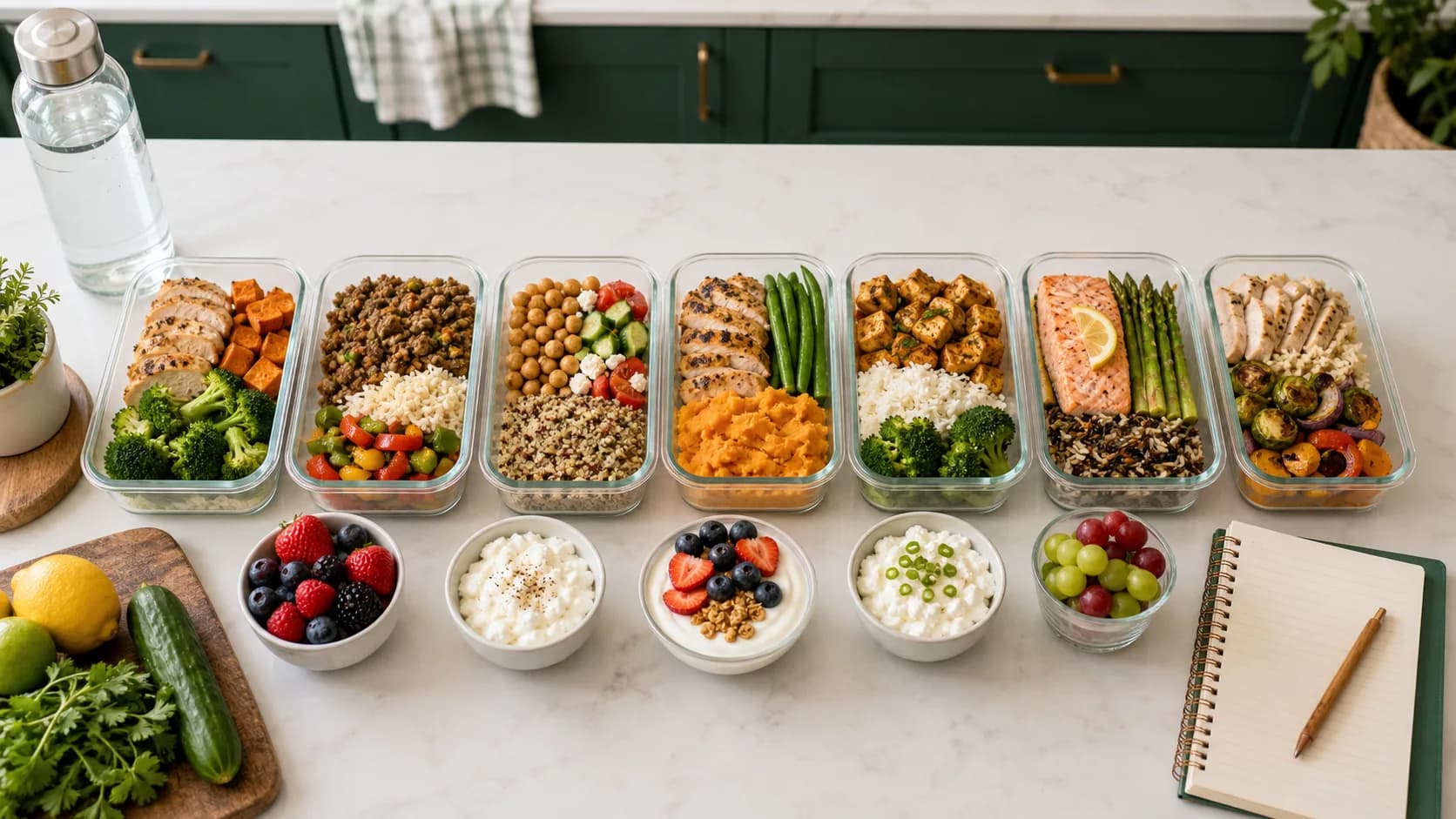
This plan is for people whose protein calculator target sits near 100g per day, or anyone building protein habits without jumping straight to larger portions. It uses familiar foods, moderate serving sizes, and one protein anchor at each meal.

Protein target

95-110g per day

Calories

1,450-1,800 kcal per day

Best for

Moderate protein targets, smaller appetites, weight loss, maintenance, and gradual high-protein habit building.

Weekly Overview

DayProteinCaloriesHighest protein meal
Day 1107g~1380Lunch: 34g
Day 2109g~1310Lunch: 36g
Day 3105g~1475Dinner: 36g
Day 4108g~1320Lunch: 36g
Day 5108g~1430Lunch: 34g
Day 6112g~1520Lunch: 34g
Day 7114g~1500Lunch: 32g

Full 7-Day Plan

Day 1

107g protein~1380 kcal
Breakfast
25g protein300 kcal

Greek yogurt with berries and oats

Lunch
34g protein420 kcal

Chicken salad wrap with vegetables

Snack
18g protein180 kcal

Cottage cheese with apple slices

Dinner
30g protein480 kcal

Salmon, potato, and broccoli plate

Day 2

109g protein~1310 kcal
Breakfast
28g protein360 kcal

Two eggs with egg whites and toast

Lunch
36g protein330 kcal

Tuna cucumber cottage bowl

Snack
17g protein120 kcal

Skyr or high-protein yogurt

Dinner
28g protein500 kcal

Turkey rice bowl with cooked vegetables

Day 3

105g protein~1475 kcal
Breakfast
28g protein370 kcal

Protein overnight oats with milk and Greek yogurt

Lunch
28g protein430 kcal

Lentil tofu salad, smaller portion

Snack
13g protein155 kcal

Two hard-boiled eggs

Dinner
36g protein520 kcal

Chicken pasta with cottage cheese sauce

Day 4

108g protein~1320 kcal
Breakfast
24g protein240 kcal

Cottage cheese bowl with berries and cinnamon

Lunch
36g protein470 kcal

Chicken rice bowl with salsa and greens

Snack
20g protein110 kcal

Small whey or pea protein shake

Dinner
28g protein500 kcal

Tofu edamame curry with rice

Day 5

108g protein~1430 kcal
Breakfast
27g protein390 kcal

Egg and smoked salmon toast

Lunch
34g protein450 kcal

Turkey bean chili

Snack
17g protein140 kcal

Greek yogurt with berries

Dinner
30g protein450 kcal

White fish, rice, and cooked vegetables

Day 6

112g protein~1520 kcal
Breakfast
26g protein350 kcal

Tofu scramble with wholegrain toast

Lunch
34g protein480 kcal

Chicken salad potatoes

Snack
18g protein150 kcal

Cottage cheese cup

Dinner
34g protein540 kcal

Lean beef stir-fry with noodles

Day 7

114g protein~1500 kcal
Breakfast
30g protein340 kcal

Greek yogurt whey bowl, smaller portion

Lunch
32g protein450 kcal

Tuna rice bowl with vegetables

Snack
20g protein210 kcal

Boiled egg and skyr

Dinner
32g protein500 kcal

Chicken with quinoa and vegetables

Grocery List for the Week

Protein anchors

  • Greek yogurt, skyr, cottage cheese, or dairy-free high-protein alternatives
  • Eggs, egg whites, tofu, tempeh, edamame, lentils, beans, or pea protein
  • Chicken, turkey, tuna, salmon, shrimp, lean beef, pork tenderloin, or other lean protein from the plan

Carbohydrate bases

  • Oats, rice, potatoes, quinoa, pasta, wraps, bread, cereal, or microwave grain packs
  • Fruit such as berries, bananas, apples, oranges, or frozen smoothie fruit
  • Beans, lentils, chickpeas, or starchy vegetables when extra fiber is useful

Vegetables and volume

  • Frozen vegetables, salad kits, spinach, peppers, cucumber, carrots, broccoli, or mixed greens
  • Salsa, tomato sauce, herbs, lemon, pickles, onions, and low-calorie flavor builders
  • Pre-cut vegetables for no-cook days or low-energy evenings

Fats, sauces, and extras

  • Olive oil, avocado, nuts, seeds, nut butter, hummus, cheese, or tahini when calories need to be higher
  • Greek-yogurt sauces, mustard, hot sauce, soy sauce, curry paste, spices, and marinades
  • Protein powder or ready-to-drink shakes for backup meals

Shop from the protein anchors first. If the proteins are in the fridge, pantry, or freezer, the rest of the plan is much easier to adjust. Carbs, vegetables, sauces, and fats can change by preference, but the protein target depends on having reliable anchor foods ready.

Prep Notes and Weekly Workflow

Batch the proteins

Cook or portion the protein anchors before anything else. Grill, roast, or pan-cook poultry and meat; boil eggs; portion Greek yogurt, cottage cheese, tofu, beans, or protein powder; and keep canned fish or ready-to-eat options available for busy days. This prevents the most common meal-plan failure: having carbohydrates and snacks available but no protein anchor ready.

Cook flexible bases

Prepare one or two base carbohydrates such as rice, potatoes, oats, pasta, quinoa, wraps, or bread. Keep vegetables simple: frozen vegetables, salad kits, pre-cut produce, and microwave options are often more useful than complicated recipes. The base should support the protein target, not make the plan harder.

Separate sauces and toppings

Store sauces, dressings, nuts, seeds, cheese, avocado, and oils separately when possible. They are useful for flavor and calories, but they are also the easiest place to accidentally change the meal by several hundred calories. Add them intentionally based on whether you need a lower-calorie or higher-calorie day.

Daily Adjustment Table

SituationWhat to changeWhat to keep stable
Need fewer caloriesReduce oils, nuts, cheese, sauces, grains, or portion size of calorie-dense sides.Keep the protein portion close to the plan.
Need more caloriesAdd rice, oats, pasta, potatoes, bread, avocado, olive oil, nuts, seeds, or whole-milk dairy.Keep meals distributed so one huge dinner is not carrying the whole day.
Missed breakfastUse a protein shake, Greek yogurt, cottage cheese, tofu snack, boiled eggs, or tuna lunch add-on.Avoid trying to fix the whole day with one uncomfortable meal.
Low appetiteUse smaller portions, softer foods, liquid protein, yogurt bowls, soups, smoothies, or snack plates.Keep fluids and total calories in view, not just protein grams.
Eating outChoose a clear protein entree and ask for sauces or dressings on the side.Use the plan's meal structure again at the next meal.

Budget, No-Cook, and Dairy-Free Variations

Budget version

Build the week around eggs, oats, rice, potatoes, beans, lentils, canned tuna, frozen vegetables, tofu, store-brand Greek yogurt, cottage cheese, and family packs of poultry or lean meat. Keep the same daily protein target, but make premium items optional rather than required.

No-cook version

Use Greek yogurt, cottage cheese, skyr, canned fish, deli turkey, rotisserie chicken, tofu, edamame, ready-to-drink shakes, protein powder, salad kits, fruit, microwave rice, wraps, and pre-cut vegetables. No-cook days work best when the protein source is already portioned.

Dairy-free version

Replace Greek yogurt, skyr, cottage cheese, milk, or whey with tofu, tempeh, edamame, beans plus grains, soy milk, soy yogurt, pea protein, eggs if tolerated, fish, poultry, or lean meat. Use labels carefully because dairy-free yogurts and milks can be much lower in protein than dairy versions.

Portion Scaling, Storage, and Troubleshooting

Scale the plan by changing one lever at a time. If protein is too low, add a simple protein booster: extra Greek yogurt, cottage cheese, tofu, egg whites, tuna, chicken, edamame, lean meat, or a scoop of protein powder. If calories are too high, reduce oils, nuts, cheese, sauces, granola, rice, pasta, bread, or other calorie-dense sides before cutting the protein anchor.

Store cooked proteins, cooked grains, chopped vegetables, and sauces separately when possible. This keeps texture better and makes it easier to adjust a meal without rebuilding the entire day. Label containers with the protein portion or serving count. A container that says "chicken, 40 g protein" or "tofu bowl base, 32 g protein" removes decision-making when the week gets busy.

If the plan feels too repetitive, change flavor systems instead of changing every meal: salsa and lime, curry spices, Greek yogurt sauce, soy-ginger sauce, tomato sauce, mustard, hot sauce, herbs, or lemon. If the plan feels too much food, split a meal into a smaller meal and snack. If hunger is high, increase vegetables, potatoes, beans, fruit, soup, or other high-volume foods before adding unmeasured fats.

A successful meal plan should survive imperfect days. Keep one emergency protein option in the fridge, freezer, or pantry: canned tuna, protein powder, tofu, Greek yogurt, cottage cheese, edamame, eggs, deli turkey, or a ready-to-drink shake. That backup prevents a missed cooking session from turning into a full day below target.

Make the week repeatable before making it more varied. Choose two breakfasts, two lunches, two dinners, and one backup snack that fit the target, then rotate seasonings and sides. This approach gives enough variety to avoid boredom while keeping shopping, prep, tracking, and leftovers manageable. A plan that is slightly simple but repeated consistently beats a perfect plan that only works once.

If a day falls apart, return to the next planned meal instead of restarting the entire week. Meal plans work best when they absorb normal interruptions and still guide the next choice.

Keep notes on which meals were easiest, cheapest, and most filling. Those meals should become the default rotation for the next week. This makes future planning faster, calmer, consistent, and less dependent on motivation.

Common Questions

How do I use this 95-110g per day meal plan?

Use it as a structured starting point, not a rigid prescription. Keep the protein anchors, adjust portions to your calorie target, and swap foods that match your budget, schedule, digestion, and preferences.

Can I repeat the same day more than once?

Yes. Repeating two or three reliable days is often easier than cooking seven totally different days. Keep protein and calories similar, then rotate sauces, vegetables, fruits, grains, or seasonings for variety.

What should I prep first?

Prep the main protein sources first, then cooked carbohydrates, then washed or chopped produce, and finally sauces or toppings. This protects the protein target even when the week gets busy.

How can I make the plan cheaper?

Use eggs, canned tuna, cottage cheese, Greek yogurt, tofu, lentils, beans, frozen vegetables, oats, rice, potatoes, and family packs of poultry or lean meat. Keep expensive ingredients optional.

Can I make this plan dairy-free or no-cook?

Yes. For dairy-free meals, use tofu, tempeh, edamame, soy milk, soy yogurt, eggs if tolerated, fish, poultry, lean meat, or pea protein. For no-cook days, use canned fish, deli turkey, rotisserie chicken, Greek yogurt, cottage cheese, tofu, protein shakes, salad kits, microwave grains, and fruit.

Related Meal Guides

Sources reviewed

Disclaimer: Protein and calorie values are practical estimates, not medical prescriptions. Adjust portions to your target from the protein calculator and follow individualized advice when needed.