
Meal Planning Tool
Vegetarian Protein Meal Planner: Complete Guide, Food Tables, and Meal Builder
A vegetarian protein meal planner works when it turns a daily protein target into repeatable meals, not when it lists random high-protein foods. This guide explains how to use the planner, which vegetarian foods carry the protein load, how to combine foods across the day, and how to avoid common gaps in calories, fiber, amino acid quality, and convenience.
Key Takeaways
- Vegetarian protein planning starts with a daily target, then splits protein across meals and snacks.
- Lacto-ovo vegetarians can use dairy and eggs; vegan users need more careful planning around soy, legumes, grains, seeds, and protein powders.
- The planner is useful because it combines target, calories, diet type, cuisine, budget, meal count, and grocery list into one workflow.
- Complete protein matters, but the full-day pattern matters more than forcing every single meal to be perfect.
- Use official food-composition data and labels for serving estimates because cooked legumes, dairy products, and meat alternatives vary widely.
Article Structure
- 1. How the Vegetarian Protein Planner Works
- 2. Best Vegetarian Protein Anchors
- 3. Complete Protein and Amino Acid Planning
- 4. Vegetarian Meal Formulas
- 5. Budget and Grocery Planning
- 6. Build the Day Before Choosing Recipes
- 7. Lacto-Ovo, Lacto-Vegetarian, and Vegan Versions
- 8. Meal Prep System for a Vegetarian Protein Week
- 9. Troubleshooting Vegetarian Protein Gaps
- 10. Sample Vegetarian Day Structures
- 11. Adapting the Planner for Weight Loss, Muscle Gain, and Maintenance
- 12. Vegetarian Grocery List Logic
- 13. How to Make the Planner Output Stick
- 14. Official Source Credits and Visual Assets
- 15. How to Use This With Other Tools
Use This as Decision Support, Not a Treatment Plan
This page can help organize meals and questions, but it cannot set a personal medical nutrition target. Bring these points to the clinician managing the medication, diabetes care, kidney health, pregnancy planning, or side effects.
- What protein and calorie range fits my medication, weight-loss pace, kidney function, labs, and activity?
- Which symptoms should trigger a medication or clinical check-in rather than another food swap?
- Do I need body-composition monitoring, hydration guidance, constipation support, or referral to a registered dietitian?
Personalized planner
Generate a protein day or week
The generator chooses meals from source-backed templates, scales portions toward your protein and calorie targets, then combines repeated ingredients into a grocery list.
Day 1
121.6 g protein · 1704 kcal
Tofu scramble with toast
15 min
Crumble tofu into a pan with vegetables, turmeric, salt, and nutritional yeast.
Add soy milk or a pea protein shake if the day needs more protein.
Black bean tofu bowl
18 min
Season tofu with cumin and chili powder, then serve with beans, rice, salsa, and lettuce.
Add pea protein later in the day if this is part of a high target vegan plan.
Boiled eggs
10 min
Boil eggs ahead and season with salt, pepper, or hot sauce.
Add egg whites at another meal if protein is short.
Tofu lentil curry
30 min
Simmer tofu, lentils, vegetables, curry spices, and tomato base. Serve with rice.
Use less rice or more tofu when protein density matters.
Day 2
123.6 g protein · 1663 kcal
Greek yogurt, oats, and berries
5 min
Layer yogurt, oats, and berries. Add cinnamon or a small sweetener if needed.
Add half a scoop of whey for higher protein or reduce oats when calories are tight.
Chana tofu bowl
20 min
Combine chana, tofu, rice, tomato-onion salad, lemon, and spices.
Use more tofu and less rice for a leaner version.
Edamame snack bowl
5 min
Warm edamame and season with soy sauce, chili, or sea salt.
Pair with tofu or a protein shake when protein target is high.
Tofu lentil curry
30 min
Simmer tofu, lentils, vegetables, curry spices, and tomato base. Serve with rice.
Use less rice or more tofu when protein density matters.
Day 3
125.4 g protein · 1630 kcal
Egg and egg-white toast plate
12 min
Scramble whole eggs with egg whites and vegetables. Serve with toast.
Use more egg whites for protein without much extra fat.
Tofu edamame rice bowl
20 min
Crisp tofu, then serve with edamame, rice, slaw, and soy-ginger dressing.
Use more edamame or tofu to raise protein without adding a supplement.
Cottage cheese and fruit
2 min
Serve cottage cheese with fruit and cinnamon.
Choose lower-sodium cottage cheese when needed.
Tofu lentil curry
30 min
Simmer tofu, lentils, vegetables, curry spices, and tomato base. Serve with rice.
Use less rice or more tofu when protein density matters.
Day 4
121.2 g protein · 1716 kcal
Tofu scramble with toast
15 min
Crumble tofu into a pan with vegetables, turmeric, salt, and nutritional yeast.
Add soy milk or a pea protein shake if the day needs more protein.
Lentil tofu salad
15 min
Combine lentils, tofu, chopped vegetables, herbs, lemon, and tahini dressing.
Add pea protein on the side if the day target is high.
Sattu drink and roasted chana
5 min
Mix sattu with water, lemon, salt, cumin, and chili. Eat roasted chana on the side.
Use soy milk instead of water for more protein.
Tofu lentil curry
30 min
Simmer tofu, lentils, vegetables, curry spices, and tomato base. Serve with rice.
Use less rice or more tofu when protein density matters.
Day 5
121.6 g protein · 1704 kcal
Tofu scramble with toast
15 min
Crumble tofu into a pan with vegetables, turmeric, salt, and nutritional yeast.
Add soy milk or a pea protein shake if the day needs more protein.
Black bean tofu bowl
18 min
Season tofu with cumin and chili powder, then serve with beans, rice, salsa, and lettuce.
Add pea protein later in the day if this is part of a high target vegan plan.
Boiled eggs
10 min
Boil eggs ahead and season with salt, pepper, or hot sauce.
Add egg whites at another meal if protein is short.
Tofu lentil curry
30 min
Simmer tofu, lentils, vegetables, curry spices, and tomato base. Serve with rice.
Use less rice or more tofu when protein density matters.
Day 6
121.6 g protein · 1704 kcal
Tofu scramble with toast
15 min
Crumble tofu into a pan with vegetables, turmeric, salt, and nutritional yeast.
Add soy milk or a pea protein shake if the day needs more protein.
Black bean tofu bowl
18 min
Season tofu with cumin and chili powder, then serve with beans, rice, salsa, and lettuce.
Add pea protein later in the day if this is part of a high target vegan plan.
Boiled eggs
10 min
Boil eggs ahead and season with salt, pepper, or hot sauce.
Add egg whites at another meal if protein is short.
Tofu lentil curry
30 min
Simmer tofu, lentils, vegetables, curry spices, and tomato base. Serve with rice.
Use less rice or more tofu when protein density matters.
Day 7
121.6 g protein · 1704 kcal
Tofu scramble with toast
15 min
Crumble tofu into a pan with vegetables, turmeric, salt, and nutritional yeast.
Add soy milk or a pea protein shake if the day needs more protein.
Black bean tofu bowl
18 min
Season tofu with cumin and chili powder, then serve with beans, rice, salsa, and lettuce.
Add pea protein later in the day if this is part of a high target vegan plan.
Boiled eggs
10 min
Boil eggs ahead and season with salt, pepper, or hot sauce.
Add egg whites at another meal if protein is short.
Tofu lentil curry
30 min
Simmer tofu, lentils, vegetables, curry spices, and tomato base. Serve with rice.
Use less rice or more tofu when protein density matters.
Planner Logic
Target fit
Meals are scored against your protein and calorie target, then scaled within realistic portion limits.
Diet filters
Vegan plans only use plant templates; vegetarian plans use eggs, dairy, soy, and legumes; pescatarian plans allow seafood.
Grocery math
Ingredient amounts are multiplied by the portion scale and plan length before being grouped into the list.
Planning Notes
This tool creates educational meal-planning estimates, not a medical nutrition prescription. Verify packaged foods with the label, adjust for allergies and preferences, and use clinician guidance for kidney disease, diabetes medication changes, pregnancy, eating disorder history, or other clinical contexts.
How the Vegetarian Protein Planner Works
The planner starts with a daily protein target and calorie target. It then uses diet type, cuisine, budget, meal count, and plan length to select meal templates. For this page, the tool opens with a vegetarian default so the first generated plan avoids meat and fish. Users can still adjust cuisine, budget, calories, protein, and number of meals.
The purpose is not to prescribe a medical diet. It is to make planning visible. A vegetarian day can easily look healthy but underdeliver protein if breakfast is mostly cereal, lunch is mostly rice, and dinner is mostly vegetables. The planner forces each meal to start with a protein anchor, then layers carbs, produce, fats, and flavor around it.
| Planner input | Why it matters | Vegetarian example |
|---|---|---|
| Protein target | Sets daily grams to plan around | 110 g protein/day |
| Calories | Prevents too little or too much total energy | 1900 kcal/day |
| Diet type | Controls allowed meal templates | Vegetarian or vegan |
| Cuisine | Keeps meals culturally practical | Indian, Mediterranean, mixed |
| Budget | Shifts toward lower-cost staples when needed | Beans, lentils, tofu, eggs, curd |
| Meal count | Controls protein per eating occasion | 4 meals with 25-35 g anchors |
Best Vegetarian Protein Anchors
A protein anchor is the food that carries most of the meal's protein. In lacto-ovo vegetarian meals, Greek yogurt, skyr, cottage cheese, paneer, milk, eggs, and whey can make protein easier. In vegan meals, tofu, tempeh, edamame, soy milk, soy isolate, pea-rice protein blends, lentils, beans, chickpeas, seitan, nuts, seeds, and grains all have roles.
The best anchors depend on the user's diet rules. Some vegetarians eat eggs; some do not. Some eat dairy; some are vegan. Some Indian vegetarian users rely on paneer, curd, dal, soya chunks, sattu, chana, and besan. A generic vegetarian planner should let those patterns differ instead of forcing one universal meal plan.
| Food | Protein role | Best use |
|---|---|---|
| Greek yogurt / skyr | High-protein dairy | Breakfast bowls and snacks |
| Paneer / cottage cheese | Complete dairy protein | Main meals and vegetarian curries |
| Eggs / egg whites | Complete protein | Fast breakfasts and snacks for ovo-vegetarians |
| Tofu / tempeh | Soy-based complete protein | Vegan stir-fries, bowls, and meal prep |
| Soya chunks | Very concentrated plant protein | Indian vegetarian high-protein meals |
| Lentils / dal | Protein plus fiber and carbs | Daily staple, best paired with other anchors |
| Chickpeas / beans | Protein plus fiber | Bowls, salads, chana, hummus, soups |
| Protein powder | Convenience tool | Close gaps without another cooked meal |
Complete Protein and Amino Acid Planning
Vegetarian protein quality is not a reason to panic, but it is a reason to plan. Dairy, eggs, whey, casein, soy, and some blended plant powders are complete proteins. Many legumes and grains are lower in one or more essential amino acids, but a varied full day can cover the pattern. The user does not need every bite to be complete if the day is well built.
For muscle gain or higher targets, protein distribution becomes more important. A vegetarian day with 90 g protein all at dinner is not as practical as breakfast, lunch, dinner, and a snack each carrying meaningful protein. The planner helps by spreading protein anchors across the day instead of leaving a late-night scramble.
- Use soy foods when a complete vegan anchor is needed.
- Pair legumes with grains across the day for a stronger amino acid pattern.
- Use dairy or eggs if they fit the vegetarian pattern.
- Use plant protein blends when convenience matters.
- Do not rely on nuts alone; they are calorie-dense and not protein-dense enough for large targets.
Vegetarian Meal Formulas
The most reliable vegetarian meal formula is protein anchor plus carbohydrate base plus produce plus flavor and fat. The anchor may be tofu, paneer, eggs, Greek yogurt, dal plus curd, soya chunks, tempeh, or a protein powder bowl. The carbohydrate base may be rice, roti, potato, oats, quinoa, bread, pasta, fruit, or beans. Produce and flavor make it repeatable.
A 30 g vegetarian protein meal often requires either one concentrated anchor or two moderate anchors. For example, tofu plus edamame, paneer plus curd, Greek yogurt plus whey, dal plus paneer, or eggs plus cottage cheese can all work. A meal built only from vegetables and rice may be nutritious but not protein-focused.
| Meal formula | Protein anchor | Use case |
|---|---|---|
| Greek yogurt bowl | Greek yogurt plus whey or seeds | Fast breakfast or snack |
| Paneer bowl | Paneer plus curd or dal | Lacto-vegetarian lunch |
| Tofu stir-fry | Tofu plus edamame or rice | Vegan meal prep |
| Besan chilla plate | Besan plus curd or paneer filling | Indian breakfast |
| Chana bowl | Chickpeas plus yogurt or tofu | Budget lunch |
| Protein oats | Oats plus milk, yogurt, or powder | High-protein breakfast |
Budget and Grocery Planning
Vegetarian protein can be budget-friendly when the plan uses staples intelligently. Lentils, beans, chickpeas, eggs where allowed, milk, curd, tofu, soya chunks, roasted chana, besan, and peanut butter can all help. But the cheapest foods are not always the easiest foods to hit high targets with. Soya chunks and tofu may be more protein-dense than dal; dal may be cheaper and easier to repeat.
The grocery list should repeat ingredients on purpose. A week with ten unrelated recipes is harder to shop and cook. A better vegetarian plan uses a small set of anchors in multiple forms: tofu bowl and tofu scramble, dal soup and dal rice bowl, Greek yogurt breakfast and yogurt dip, paneer curry and paneer wrap.
- Choose two breakfast anchors, two lunch anchors, and two dinner anchors for the week.
- Keep one no-cook protein backup such as Greek yogurt, cottage cheese, tofu, or a tested protein powder.
- Batch cook legumes, but track cooked and dry weights consistently.
- Use spices, sauces, chutneys, herbs, and vegetables for variety without changing the protein math.
Build the Day Before Choosing Recipes
The most reliable vegetarian planning method is to design the day before choosing recipes. Start with the daily target, decide the number of eating occasions, then assign a rough protein range to each meal. A 120 g target across four meals may need three meals around 30 g and one snack around 25-30 g. A 90 g target may work with three meals around 25 g plus a smaller snack. Once the structure is visible, recipe choice becomes easier.
This prevents the common vegetarian problem of recipe-first planning. A recipe can look healthy, colorful, and balanced but still provide only 8-12 g protein. Vegetable poha, plain dosa, simple rice and sabzi, fruit smoothies, and salads can be valuable meals, but they need an anchor if the user has a meaningful protein target. The planner should therefore treat protein as a design constraint, not an afterthought.
| Daily target | 3-meal structure | 4-meal structure | Planner note |
|---|---|---|---|
| 80 g | 25 g breakfast, 25 g lunch, 30 g dinner | 20 g x 4 meals | Useful for smaller users or moderate targets |
| 100 g | 30 g breakfast, 35 g lunch, 35 g dinner | 25 g x 4 meals | Common vegetarian planning target |
| 120 g | 35-40 g per meal | 30 g x 4 meals | Needs stronger anchors or one protein snack |
| 140 g | Hard with only 3 meals | 35 g x 4 meals | Often needs dairy, soy, eggs, or powder |
| 160 g | Very difficult vegetarian target | 40 g x 4 meals | Use calculator context and consider whether target is too high |
The planner should also separate protein from calories. A meal can hit protein but still be too low in energy for muscle gain, or too high in calories for weight loss. Paneer can provide protein but also meaningful fat. Dal can provide protein but also carbohydrate. Nuts and seeds add protein but are primarily fat-dense calorie sources. The user should choose anchors based on both protein and calorie context.
Once the structure is set, recipes become modular. A breakfast slot might use Greek yogurt, skyr, eggs, tofu scramble, besan chilla, or a smoothie. Lunch might use dal plus paneer, tofu bowl, chana salad, soya curry, or tempeh wrap. Dinner might repeat lunch with different spices. Snacks can close gaps with curd, roasted chana, milk, cottage cheese, edamame, protein powder, or soy milk. This is much more realistic than asking the user to invent seven perfect days from scratch.
Lacto-Ovo, Lacto-Vegetarian, and Vegan Versions
Vegetarian is not one diet. A lacto-ovo vegetarian can use dairy and eggs, which makes protein planning much easier. A lacto-vegetarian can use dairy but not eggs, which is common in Indian vegetarian patterns. A vegan user removes both, so soy foods, legumes, grains, seeds, seitan where suitable, and plant protein powders become more important. A good planner must respect these differences because a meal that works for one vegetarian may be unacceptable to another.
The biggest practical difference is the number of high-density anchors available. Dairy and eggs can quickly raise meal protein without adding very large food volume. Vegan meals can still be high protein, but they often require more deliberate use of tofu, tempeh, edamame, soy milk, soy isolate, seitan, lentils, beans, chickpeas, pea-rice blends, and higher-protein grains. The planner should not simply remove meat from a standard plan and leave the rest unchanged.
| Diet pattern | Strong anchors | Common gap | Planner solution |
|---|---|---|---|
| Lacto-ovo vegetarian | Eggs, Greek yogurt, paneer, cottage cheese, milk, whey | Overusing cheese and underusing fiber | Balance dairy/eggs with legumes, vegetables, and grains |
| Lacto-vegetarian | Paneer, curd, Greek yogurt, milk, whey, soya chunks | Breakfast and snacks can be low protein | Use curd bowls, paneer, soy, and dal combinations |
| Vegan | Tofu, tempeh, edamame, soy milk, seitan, legumes, plant powder | Protein density and amino acid balance | Use soy and varied legumes/grains across the day |
| Indian vegetarian | Dal, chana, rajma, paneer, soya chunks, sattu, curd | Rice/roti can dominate the plate | Set anchor portions before carb portions |
| Budget vegetarian | Lentils, beans, eggs if allowed, milk, curd, soya chunks, besan | Specialty products cost too much | Build repeatable staple meals and reserve powders for gaps |
This section is also important for search quality. Users searching vegetarian protein meal planner may have different intent than users searching vegan protein meal plan or Indian vegetarian protein planner. The page can serve the broad tool intent while sending specialized users to the more precise tools. That avoids duplicate routes and keeps each page's promise clear.
For users with ethical, religious, allergy, or medical restrictions, the planner should be treated as a starting point. It should never assume that eggs, dairy, soy, gluten, or protein powder are acceptable. The interface lets users adjust diet and cuisine, but the content should remind readers to verify ingredients, packaged foods, and restaurant meals. Vegetarian does not automatically mean allergy-safe, low-calorie, high-protein, or medically appropriate.
Meal Prep System for a Vegetarian Protein Week
A vegetarian week becomes easier when the user preps components instead of full meals. Cook one or two legumes, prepare one soy or paneer protein, keep a dairy or vegan high-protein snack ready, wash vegetables, and choose two carb bases. With those pieces ready, the user can assemble bowls, wraps, curries, salads, snacks, and breakfast plates without starting from zero every day.
Component prep also avoids flavor fatigue. The same tofu can become a stir-fry, wrap filling, curry, or salad topping. The same boiled chana can become chaat, hummus-style spread, salad, or curry. Paneer can be bhurji, tikka-style, curry, or salad cubes. Greek yogurt or curd can be a bowl, raita, dip, smoothie base, or sauce. This keeps the planner practical for people who do not want seven separate recipes.
| Prep component | Batch action | Protein use | Storage note |
|---|---|---|---|
| Lentils or dal | Cook a large pot | Lunch bowls, soup, dal-roti meals | Cool quickly and refrigerate in portions |
| Chickpeas or beans | Boil or rinse canned options | Chaat, salads, curries, wraps | Track drained weight for better accuracy |
| Tofu or tempeh | Press, marinate, and cook | Bowls, stir-fries, sandwiches | Keep sauce separate when possible |
| Paneer or cottage cheese | Cube or cook lightly | Curries, bhurji, snack bowls | Track fat level and portion size |
| Soya chunks | Soak, squeeze, season | High-protein Indian meals | Track dry weight before soaking |
| Curd or yogurt | Portion into 150-250 g servings | Breakfast, raita, dips, smoothies | Use label values and avoid sweetened versions |
| Protein powder | Pre-portion dry servings | Travel and snack backup | Keep separate until mixed |
The grocery list should match the user's budget. A budget week might use dal, chickpeas, eggs where allowed, milk, curd, soya chunks, oats, besan, and seasonal produce. A higher-budget week might use Greek yogurt, tofu, tempeh, paneer, protein powder, edamame, and specialty meat alternatives. Neither version is automatically better. The better plan is the one the user can repeat without waste.
For high-protein vegetarian SEO, this is where the page becomes more than a tool wrapper. The article explains how to use the tool output in real life: shop, batch, portion, rotate flavors, and troubleshoot. That helps the page satisfy readers who want a guide, while the embedded planner satisfies users who want an immediate interactive result.
Troubleshooting Vegetarian Protein Gaps
When a vegetarian plan misses protein, the fix is usually one of four things: increase the anchor portion, add a protein snack, swap a low-density ingredient for a higher-density one, or reduce the number of meals that are mostly starch. The fix should not always be protein powder. Powder is useful, but a planner should first show how foods can be arranged more intelligently.
Breakfast is the most common gap. Many vegetarian breakfasts are carb-forward: toast, poha, upma, cereal, fruit, paratha, idli, dosa, or tea and biscuits. These can fit, but they need support from curd, Greek yogurt, paneer, tofu, eggs if allowed, besan, sattu, soy milk, or protein powder. Lunch and dinner gaps often happen when dal is treated as the only protein but the serving is small. Snacks often miss protein because they are fruit, chips, sweets, or tea snacks without a protein anchor.
| Gap | Why it happens | Food-first fix | Tool fix |
|---|---|---|---|
| Low-protein breakfast | Mostly grain or fruit | Add Greek yogurt, paneer, tofu, besan, eggs, or soy milk | Set 25-30 g breakfast target |
| Lunch under target | Dal portion small and rice/roti large | Add paneer, tofu, soya chunks, chana, or extra dal | Use food calculator for cooked portions |
| Vegan day low in complete protein | Legumes and grains not distributed well | Use soy foods or plant blend powder | Choose vegan diet mode |
| Calories too low | High fiber but low energy | Add rice, potatoes, oats, olive oil, nuts, or dairy as needed | Raise calorie target |
| Calories too high | Paneer, nuts, oils, and sweets stack up | Use tofu, low-fat curd, dal, or measured oils | Lower calorie target separately from protein |
| Budget too high | Too many specialty products | Use lentils, beans, besan, curd, eggs where allowed, and soya chunks | Switch budget setting |
The planner should also flag unrealistic targets. Some users set a very high protein number because they believe more is always better. A vegetarian plan can reach high targets, but the food volume, budget, and digestion may become difficult. In those cases, the protein calculator should be used to confirm the target, and the plan should be adjusted around body size, training goal, appetite, and medical context.
Finally, users should track outcomes rather than perfect spreadsheets. If hunger is poor, fiber may be too high or meals too large. If training performance drops, calories or carbs may be too low. If body weight is rising too fast, calorie-dense vegetarian foods such as paneer, oils, nuts, sweets, and large carb portions may need adjustment. If digestion is poor, beans, lentils, dairy, soy, sweeteners, or fiber increases may need slower progression.
Sample Vegetarian Day Structures
Sample structures help users understand what the planner is trying to build. The exact foods can change, but the pattern should stay clear: every eating occasion has a protein anchor, the total protein is distributed across the day, and calories are adjusted through carb and fat portions. This is more useful than a single rigid meal plan because vegetarians differ by cuisine, egg use, dairy use, budget, appetite, and cooking time.
| Target | Breakfast | Lunch | Snack | Dinner |
|---|---|---|---|---|
| 90 g | Greek yogurt oats or besan chilla | Dal plus paneer or tofu bowl | Curd or roasted chana | Chana, tofu, or paneer plate |
| 110 g | Protein oats or tofu scramble | Soya or paneer curry with roti/rice | Greek yogurt or soy milk shake | Dal plus tofu or paneer |
| 130 g | Whey yogurt bowl or soy protein smoothie | Tofu/tempeh bowl with legumes | Cottage cheese, edamame, or protein shake | Soya chunks or paneer plus dal |
| Vegan 100 g | Soy milk oats with plant powder | Tofu bowl with beans | Edamame or plant shake | Tempeh or lentil pasta with vegetables |
| Budget 100 g | Besan chilla with curd or soy milk | Dal plus soya chunks | Roasted chana or milk if allowed | Chana/rajma plus tofu or paneer when budget allows |
The planner should not imply that every day must be different. Repetition is useful. A user can eat the same breakfast four days per week, rotate two lunches, and keep one reliable snack. This lowers decision fatigue and improves grocery efficiency. Variety can come from spices, sauces, vegetables, grains, and cooking methods rather than changing every protein anchor daily.
The sample structures also show why vegetarian protein planning often needs two anchors per meal. Dal plus rice is familiar, but dal plus paneer, dal plus tofu, or dal plus curd may work better for higher targets. A salad becomes more useful when it includes chickpeas, tofu, Greek yogurt dressing, cottage cheese, or tempeh. A breakfast becomes more useful when oats are paired with dairy, soy milk, or powder.
Adapting the Planner for Weight Loss, Muscle Gain, and Maintenance
The same vegetarian protein target can be used differently depending on the goal. For weight loss, the planner should emphasize leaner anchors, measured oils, high-volume vegetables, plain curd, tofu, dal portions, legumes, and controlled portions of paneer, nuts, and sweets. For muscle gain, the planner should keep protein high while adding calories through rice, roti, oats, potatoes, fruit, dairy, olive oil, nuts, and larger portions. For maintenance, the plan can be less aggressive and more flexible.
This goal-specific adjustment is important because vegetarian foods often combine protein with carbohydrate or fat. Dal and beans bring carbs and fiber. Paneer brings fat. Nuts bring mostly fat. Tofu is often leaner. Soya chunks are protein-dense. Curd varies by fat level. Eggs may or may not be allowed. The planner output should therefore be interpreted as a food system, not a list of isolated protein grams.
| Goal | Protein strategy | Calorie strategy | Common mistake |
|---|---|---|---|
| Weight loss | Keep anchors consistent and filling | Measure oils, nuts, paneer, sweets, and carb portions | Assuming vegetarian automatically means low calorie |
| Muscle gain | Use larger anchors and protein snacks | Add carbs and fats gradually | Using shakes but still missing total calories |
| Maintenance | Build repeatable meals with flexible snacks | Adjust portions by weight trend | Letting breakfast and snacks drift too low protein |
| Recomposition | Use moderate-high protein and consistent training | Avoid extreme deficits or uncontrolled bulks | Changing too many variables at once |
| Busy schedule | Use no-cook backups | Keep shelf-stable and fridge options ready | Depending on fresh cooking every meal |
A good planner page should teach users how to modify the result after they see progress. If weight is dropping too fast, add calories without cutting protein. If weight is not dropping, audit oils, paneer, sweets, nuts, and portions before blaming lentils or curd. If muscle gain is slow, check training progression and calories before doubling protein. If digestion is poor, increase legumes and fiber more gradually.
Vegetarian Grocery List Logic
A planner becomes more valuable when it produces a grocery list that matches the week. The list should include primary protein anchors, secondary protein helpers, carb bases, vegetables, fats, flavor builders, and emergency backups. A vegetarian user who shops without this structure often buys many healthy foods but not enough anchor foods to hit the target.
| Grocery category | Examples | Why it matters |
|---|---|---|
| Primary anchors | Tofu, tempeh, paneer, eggs, Greek yogurt, soya chunks, protein powder | Carry most meal protein |
| Secondary helpers | Dal, chana, rajma, curd, milk, besan, roasted chana | Raise totals and add variety |
| Carb bases | Rice, roti, oats, potatoes, pasta, bread, fruit | Fuel training and control calories |
| Vegetables | Leafy greens, cucumber, onion, tomato, peppers, seasonal vegetables | Add volume, fiber, and micronutrients |
| Fats and flavor | Oil, nuts, seeds, chutney, spices, herbs, sauces | Make meals repeatable but need portion awareness |
| Backups | Shelf-stable soy milk, protein powder, canned beans, roasted chana | Prevent missed targets on busy days |
The planner should help users buy enough of the anchors first. If the target is 120 g protein and the week has seven days, the grocery list must support about 840 g protein across the week. That does not mean one food supplies all of it, but it does mean the cart should visibly contain protein-dense items. This practical grocery math turns the page from an article into a planning workflow.
How to Make the Planner Output Stick
The best meal plan is the one the user repeats. A vegetarian planner can generate a strong day, but the user still needs to make it fit their kitchen, schedule, family meals, and appetite. The first step is to choose two breakfasts, two lunches, two dinners, and two snacks that fit the target. The second step is to buy enough anchor foods for those meals. The third step is to prep the hardest ingredient in advance. The fourth step is to review the plan after a week.
Many people fail because they try to change everything at once. A better approach is to upgrade the lowest-protein meal first. If breakfast is usually tea and toast, add a yogurt bowl, tofu scramble, besan chilla, eggs where allowed, soy milk smoothie, or protein oats. If lunch is mostly rice and sabzi, add dal, chana, tofu, paneer, or soya chunks. If dinner is already strong, keep it stable. This stepwise method is easier than rebuilding the whole diet overnight.
| Adherence problem | Planner adjustment | Why it helps |
|---|---|---|
| Too much cooking | Repeat components and rotate sauces | Reduces daily effort |
| Meals too large | Use four or five eating occasions | Spreads protein across the day |
| Budget too high | Use dal, chana, besan, curd, soya chunks, eggs where allowed | Keeps anchors affordable |
| Family meals differ | Add a protein side to shared meals | Avoids cooking separate dinners |
| Taste fatigue | Change spices, chutneys, vegetables, and carb bases | Keeps protein math stable with new flavors |
| Low appetite | Use yogurt, smoothies, tofu, or smaller frequent meals | Makes targets easier without huge plates |
The planner should also respect cultural meals. A user does not need to abandon roti, rice, dal, dosa, idli, poha, upma, paratha, pasta, sandwiches, or family curries. They need to add or resize protein anchors around those meals. That framing is more sustainable than telling every vegetarian to eat the same bodybuilding menu.
At the end of the week, the user should ask four questions: Did I hit protein most days? Was the plan affordable? Did digestion and hunger feel manageable? Did the meals fit my actual schedule? If the answer is yes, repeat the plan with small swaps. If not, adjust the bottleneck instead of abandoning vegetarian protein planning entirely.
The planner also works best when users keep a short list of approved substitutions. If tofu is unavailable, use paneer, tempeh, eggs where allowed, soya chunks, or a legume plus dairy combination. If Greek yogurt is too expensive, use curd with whey, cottage cheese, milk, soy milk, or roasted chana depending on the meal. If a vegan user cannot tolerate one plant powder, try soy foods, tempeh, edamame, beans, lentils, or a different blend. Substitution lists prevent one missing ingredient from breaking the whole week.
For families, the most practical strategy is often to keep the shared meal and add a protein side. A household dinner can stay dal, sabzi, rice, roti, or pasta while the protein-focused person adds tofu, paneer, curd, Greek yogurt, eggs where allowed, beans, or a shake. That approach respects normal eating patterns and makes the planner easier to use outside a fitness-only context.
The planner should also help users decide when a target is too aggressive. If a vegetarian user needs five large high-protein meals, feels overly full, spends too much on specialty foods, or loses interest after two days, the plan may be mathematically correct but behaviorally weak. A slightly lower target that is reached six or seven days per week can be better than a perfect-looking target that fails. This is especially true for beginners, smaller users, people with low appetite, and people transitioning from a lower-protein diet.
A strong vegetarian planner should therefore show both ambition and restraint. It should make high-protein vegetarian eating feel possible, but it should also keep meals recognizable: dal with a stronger anchor, oats with a better protein base, chana with a curd or tofu addition, rice bowls with soy or paneer, snacks with actual protein instead of only tea foods. That is the kind of guidance users can carry into normal weeks.
This is also where the planner earns links from the broader site. Food chart pages can send users here when one ingredient is not enough. Calculator pages can send users here when a target needs meals. Recipe pages can send users here when they need a full weekly structure. The page should feel like the bridge between protein math and vegetarian execution.
A final planner habit is to save the meals that worked. If a tofu bowl, paneer plate, Greek yogurt breakfast, soya curry, or chana snack hits the target and tastes good, it should become a reusable template. Users do not need endless novelty. They need dependable meals they can rotate when life gets busy.
That saved-meal library becomes more valuable over time. It lets the planner recommend familiar meals first, then introduce new options only when variety is needed.
The result is a vegetarian system that gets easier each week instead of harder.
When the same core meals repeat successfully, users can improve quality gradually by adding more vegetables, better carb timing, and more varied protein anchors without losing the structure.
That supports long-term adherence because the user is improving a familiar system instead of rebuilding their diet from scratch every Monday.
Official Source Credits and Visual Assets
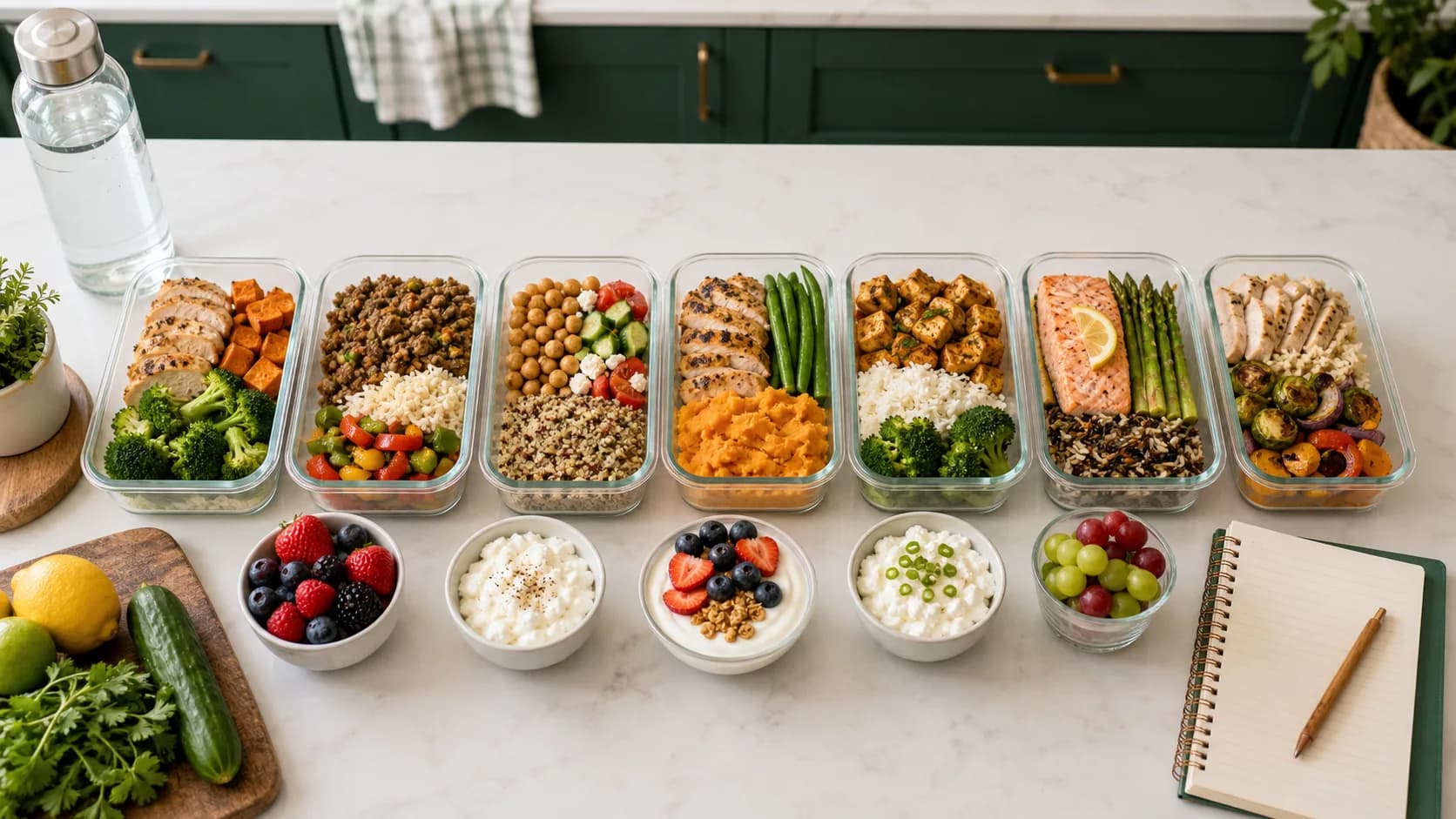
The feature image and infographic are generated by ProteinCalc. Food values and planning logic use official food-composition databases, label-reading guidance, and protein-quality references. The page links official sources and credits them instead of copying agency graphics or product photos.
| Asset or source | Asset type | How it is used and credited |
|---|---|---|
| USDA FoodData Central | Food composition database | Used for representative protein, calories, and serving-size comparisons. Credit: U.S. Department of Agriculture. |
| FDA Nutrition Facts Label | Label-reading education | Used for label fields such as serving size, calories, protein, added sugars, sodium, allergens, and Daily Value context. Credit: U.S. Food and Drug Administration. |
| ISSN and PubMed research | Sports-nutrition evidence | Used for training, muscle gain, protein distribution, and supplement evidence. Credit: cited journal authors and publishers. |
| ProteinCalc generated figures | Feature image and infographics | Page visuals are generated by ProteinCalc from the credited data sources instead of copying brand or journal images. |
| FAO protein quality report | Protein-quality reference | Used for complete protein and amino acid planning context. Credit: Food and Agriculture Organization. |
| ICMR-NIN Dietary Guidelines for Indians | Indian food context | Used for Indian vegetarian meal context. Credit: ICMR-National Institute of Nutrition. |
How to Use This With Other Tools
Use the protein calculator first if you do not know the daily target. Use the vegetarian planner to turn that target into meals. Use the food calculator when a recipe is not in the planner. Use the Indian vegetarian planner when the foods are specifically paneer, dal, soya chunks, sattu, curd, and chana.
- Start with a realistic target, not the highest possible target.
- Pick meals you can repeat three or four times per week.
- Use the grocery list to simplify the week.
- Adjust calories separately from protein when weight is not moving as expected.
Common Questions
Related Guides and Tools
Sources reviewed
- USDA FoodData Central - U.S. Department of Agriculture
- Dietary Guidelines for Indians 2024 - ICMR-National Institute of Nutrition
- Dietary protein quality evaluation in human nutrition - Food and Agriculture Organization of the United Nations
- How to Understand and Use the Nutrition Facts Label - U.S. Food and Drug Administration