
Fish & Seafood — Protein Chart
Fish and seafood deliver high-quality complete protein alongside heart-healthy omega-3 fatty acids and essential micronutrients. Use this chart to see exactly how many grams of protein each serving provides and plan meals that hit your daily target from the Protein Calculator.
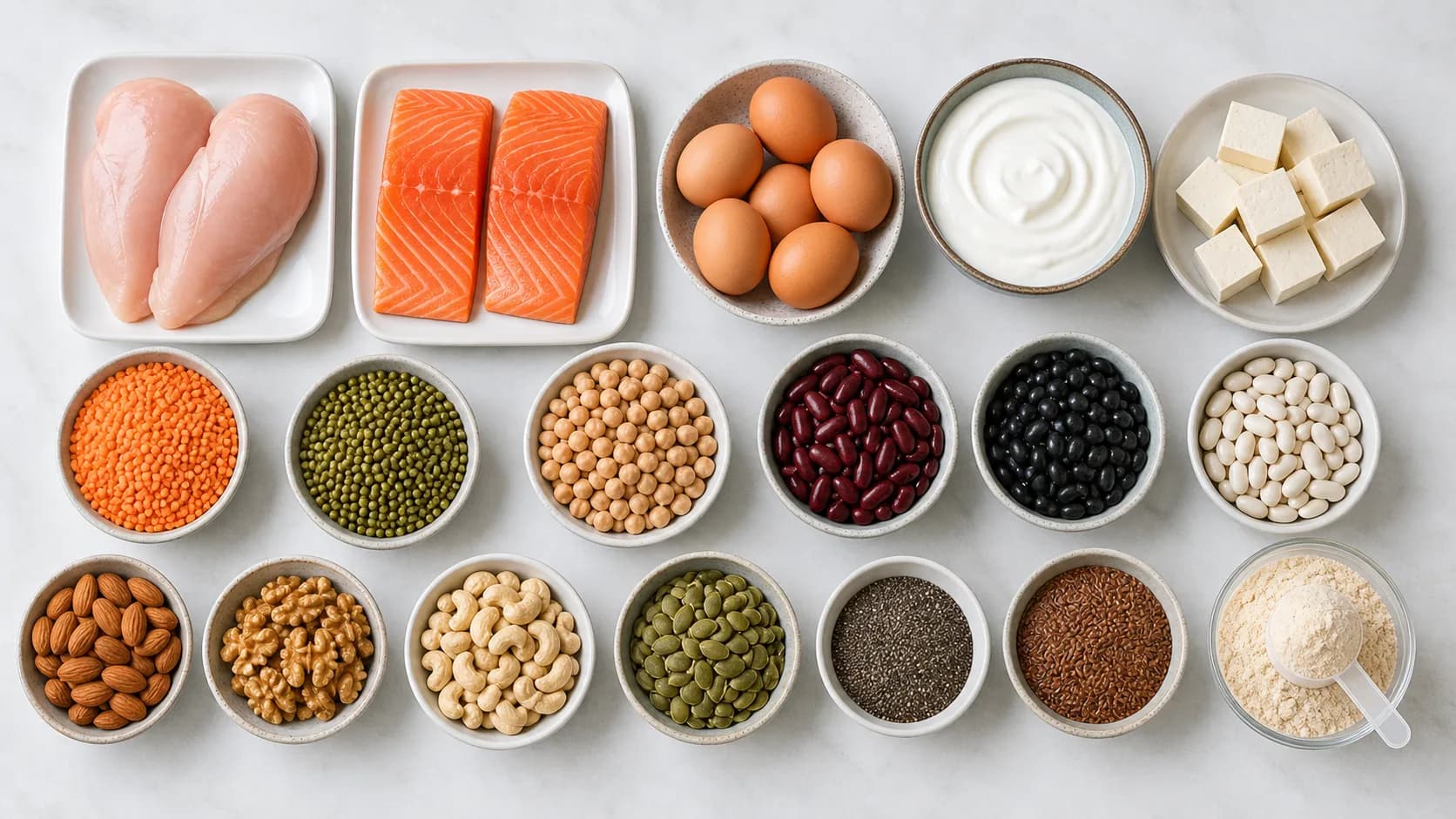
Why Fish Is a Top Protein Choice
Fish provides 19–27 g of protein per 100 g cooked — on par with chicken — while being rich in omega-3 fatty acids, which most people don't get enough of. A single 150 g salmon fillet delivers 38 g of protein. Canned tuna is even more convenient, providing 33 g from a single small can with virtually no prep time.
Protein per Serving — Fish & Seafood
| Food | Serving | Protein | Per 100 g |
|---|---|---|---|
| Fish (cooked average) | 100 g / 3.5 oz | 22g | 22g |
| Tuna (canned in water) | 130 g / 1 can | 33g | 25g |
| Albacore Tuna | 100 g / 3.5 oz | 24g | 24g |
| Atlantic Salmon | 100 g / 3.5 oz | 20g | 20g |
| Tilapia (cooked) | 150 g / 5.3 oz | 35g | 23g |
| Halibut (cooked) | 150 g / 5.3 oz | 35g | 23g |
| Cod (cooked) | 100 g / 3.5 oz | 18g | 18g |
| Shrimp (cooked) | 150 g / 5.3 oz | 30g | 20g |
| Dried Shrimp | 20 g / dried | 12g | 60g |
| Abalone | 85 g / 3 oz | 15g | 17g |
| Mahi-Mahi (cooked) | 150 g / 5.3 oz | 34g | 23g |
| Tuna Steak (cooked) | 150 g / 5.3 oz | 40g | 27g |
| Sardines (canned in water) | 100 g / 3.5 oz | 25g | 25g |
| Scallops (cooked) | 150 g / 5.3 oz | 28g | 19g |
| Crab / Dungeness Crab (cooked) | 150 g / 5.3 oz | 29g | 19g |
| Escargot (cooked snails) | 85 g / 3 oz | 13.6g | 16g |
| Lobster (cooked) | 150 g / 5.3 oz | 28g | 19g |
Values are approximate based on USDA data for cooked weights. Canned values are for drained weight. Actual protein varies by species, preparation, and brand.
Best Picks by Goal
Leanest Seafood
These are strong choices when calories are tight and the meal still needs a large protein serving.
Omega-3 Leaning
Use these when the goal is protein plus fatty-fish nutrients rather than the lowest calories.
Fast Weeknight Picks
These cook quickly or need no cooking, which makes them easier to repeat.
Notes on Each Fish & Seafood
Generic estimate; use species-specific entries when possible
One of the most convenient, affordable protein sources
White tuna with complete protein; rotate choices for mercury awareness
Complete protein; also provides omega-3 fats
Very lean white fish; mild flavor suits many dishes
Firm white fish; low fat, high protein
Cod (cooked)
18gVery lean; classic fish fillet choice
Ultra-lean; cooks in under 5 minutes
Dried Shrimp
12gVery dense dried seafood protein; sodium often high
Abalone
15gNiche shellfish protein; complete protein with a firm texture
Mahi-Mahi (cooked)
34gFirm, mild tropical fish; great grilled
Tuna Steak (cooked)
40gFresh tuna is even higher in protein than canned
Small but mighty; high in omega-3s and calcium
Scallops (cooked)
28gLow fat; delicate flavor; fast to cook
Lean complete shellfish protein; weigh edible meat after shell removal
Lean complete animal protein; track butter and shell weight separately
Lobster (cooked)
28gLow in fat; impressive protein for a luxury food
Tips for Using Fish to Hit Your Protein Target
Keep Canned Tuna on Hand
Canned tuna in water requires zero cooking and delivers 33 g of protein per can. Mix with Greek yogurt or avocado instead of mayo to keep the protein-to-calorie ratio high. A staple for quick high-protein lunches.
Prioritize Fatty Fish Twice a Week
Salmon, sardines, and mackerel deliver omega-3 EPA and DHA, which support heart and brain health. Aim for at least two servings of fatty fish per week alongside your other protein sources.
Shrimp for Low-Calorie High Protein
Shrimp is one of the best protein-to-calorie options available. A 150 g serving provides 30 g of protein with very few calories. Stir-fry or grill in under 5 minutes for a fast protein-dense meal.
Weigh After Cooking
Fish loses water during cooking and can shrink 15–25% in weight. All values in this chart use cooked or drained weight. Weigh your fish after cooking or draining for the most accurate protein count.
Frequently Asked Questions
Is fish a good source of protein?
Yes. Fish is one of the best protein sources available. Most cooked fish provide 19–27 g of protein per 100 g, comparable to chicken. Fish also provides omega-3 fatty acids, iodine, selenium, and vitamin D that other high-protein foods lack.
Which fish has the highest protein content?
Fresh tuna steak leads with about 27 g per 100 g cooked. Atlantic salmon provides about 20 g per 100 g while also bringing omega-3 fats, and tilapia or halibut can be higher-protein leaner options depending on the entry. Canned tuna in water is also excellent at about 25 g per 100 g and is far more convenient and affordable.
Is canned tuna as good as fresh fish for protein?
Yes. Canned tuna in water retains almost all of its protein content and provides around 25 g per 100 g — comparable to fresh tuna. It is one of the best value high-protein foods available, with a single can providing 30+ g of protein.
How often should I eat fish for protein?
Most health guidelines recommend eating fish 2–3 times per week. Fatty fish like salmon are particularly beneficial due to omega-3 content. Canned light tuna can be eaten more frequently; limit albacore tuna to 1–2 times per week due to higher mercury levels.
Is shrimp high in protein?
Yes. Shrimp provides about 20 g of protein per 100 g cooked, and a 150 g serving delivers 30 g of protein. It is also extremely low in fat and calories, making it one of the best protein-to-calorie ratios of any food.
Other Protein Chart Categories
Know How Much Protein You Need
Get your personalized daily protein target, then use this chart to build fish and seafood meals that consistently hit it.
Calculate My Daily Protein