
Moong Dal Protein: Dry, Cooked, 50g, 100g and Country-Wise Guide
Moong dal, also called split mung dal or split green gram, is high in protein by dry weight. A 50 g dry serving gives about 12 g protein, but cooked dal protein depends heavily on water content.
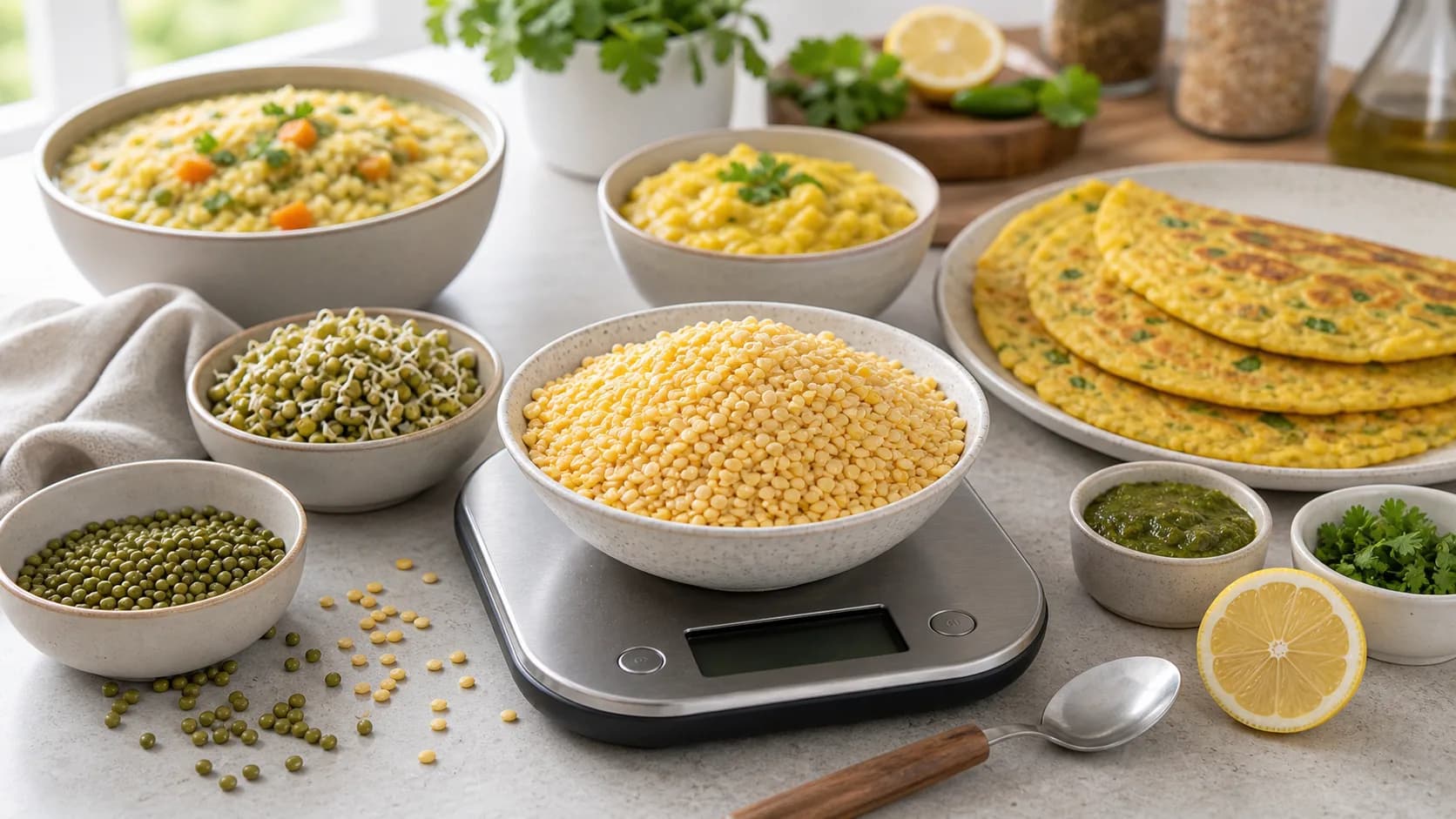
Quick Answer
Dry split moong dal has about 24 g protein per 100 g. A 50 g dry serving gives about 12 g protein. Once cooked, the protein is spread through water, so a bowl of thin dal has less protein per 100 g than dry dal or thick chilla batter.
Answer by Serving Size
50 g dry
Dry split moong dal. Best answer for a measured dry dal serving before cooking.
12.0 g
About 174 kcal
100 g dry
Dry split moong dal. High by dry weight, but not the same as 100 g cooked dal.
24.0 g
About 347 kcal
1 bowl / about 200 g cooked
Cooked thick moong dal. Depends on how much dry dal went into the bowl and how much water remains.
Usually 8-14 g
Recipe-dependent
1 bowl / about 200 g cooked
Cooked watery moong dal. Thin dal has lower protein per bowl because water dilutes the dry dal.
Often 4-8 g
Recipe-dependent
Source and Tracking Method
Primary values in this guide use the dry split mung dal benchmark supplied from IFCT context: 24.0 g protein per 100 g dry dal and 12.0 g per 50 g dry serving. Cooked dal values depend on water content and recipe yield.
For packaged, restaurant, raw, cooked, dry, or drained versions, use the label or database entry that matches the form you actually weighed.
View primary source: Indian Food Composition Tables 2017: green gram / mung dal contextHow Much Moong Dal Protein for 20-40g Protein?
| Protein target | Approx. amount | Approx. calories |
|---|---|---|
| 20 g protein | 83.3 g | 289.2 kcal |
| 25 g protein | 104.2 g | 361.5 kcal |
| 30 g protein | 125 g | 433.8 kcal |
| 40 g protein | 166.7 g | 578.3 kcal |
Protein and Nutrition Data Table
Serving estimates are rounded from the cited source record.
| Food / serving | Amount | Protein | Calories |
|---|---|---|---|
| Dry split moong dal | 50 g dry | 12.0 g | About 174 kcal |
| Dry split moong dal | 100 g dry | 24.0 g | About 347 kcal |
| Cooked thick moong dal | 1 bowl / about 200 g cooked | Usually 8-14 g | Recipe-dependent |
| Cooked watery moong dal | 1 bowl / about 200 g cooked | Often 4-8 g | Recipe-dependent |
| Moong dal chilla batter | 50 g dry dal equivalent | About 12 g | Before oil: about 174 kcal |
| Cooked or raw moong sprouts | 100 g | About 2 g | About 21 kcal |
Source: Indian Food Composition Tables 2017: green gram / mung dal context.
Best Product and Buying Options
| Product / format | Best for | Protein fit | Check before buying |
|---|---|---|---|
| Split yellow moong dal | Fast dal, khichdi, soups, easy digestion | 12 g protein per 50 g dry dal | Watery dal has much less protein per cooked bowl. |
| Whole green mung beans | Higher-fiber bowls, salads, sprouting | Similar dry pulse protein, more texture | Needs soaking or longer cooking. |
| Sprouted moong | Salads and chaat with high volume | Lower protein density | Handle sprouts safely and keep refrigerated. |
| Roasted moong snacks | Crunchy snack alternative | Can be concentrated if dry roasted | Oil, salt, and serving size. |
| Moong dal chilla mix | Fast breakfast or snack | Good if dry dal amount is measured | Ready mixes can add rice flour, oil, salt, or fillers. |
Protein Comparison Table
| Food | Protein | Calories | Best use |
|---|---|---|---|
| Dry split moong dal | 24.0 g / 100 g | About 347 kcal | Best source entry for dry dal before cooking. |
| 50 g dry moong dal | 12.0 g | About 174 kcal | Practical serving for dal, chilla, or khichdi. |
| Cooked moong dal | Water-dependent | Recipe-dependent | Use dry-dal input when recipes are watery. |
| Firm tofu | 17.3 g / 100 g | 144 kcal | Higher-protein vegetarian anchor. |
Country-Wise Moong Dal and Mung Bean Types
Moong dal names vary by country and form. Protein tracking should still match the actual form: dry split dal, whole mung beans, sprouts, cooked dal, or prepared dish.
| Country / region | Common name or type | Protein tracking note |
|---|---|---|
| India | Moong dal, yellow split moong, sabut moong | Use 24 g protein per 100 g dry split dal or 12 g per 50 g dry serving; cooked dal depends on water. |
| Pakistan | Moong dal, mung dal | Similar dry split dal use; track dry dal before cooking for dal, khichdi, or chilla-style meals. |
| Bangladesh | Mug dal / moong dal | Often used in dal and khichuri; cooked values depend on water and rice ratio. |
| Nepal | Mung dal / moong dal | Used in dal bhat and soups; dry serving math is more reliable than cooked bowl estimates. |
| Sri Lanka | Mung eta / green gram | Often whole mung or green gram; use whole-bean or split-dal entry based on the food used. |
| Myanmar | Pè byouk / mung beans | Whole mung bean preparations and snacks vary; package or recipe values should win. |
| Thailand | Thua khiao / mung bean | Often used in desserts or sprouts; sugar, coconut milk, and water change final nutrition. |
| China | Lu dou / mung bean | Common in soups, sprouts, and desserts; dry bean and cooked soup values are not interchangeable. |
| Philippines | Munggo / monggo | Cooked stews can include pork, fish, coconut, or vegetables; track the full recipe when possible. |
| Indonesia / Malaysia | Kacang hijau | Often cooked as porridge or dessert; sugar and coconut milk change calories. |
| Middle East / global | Mung beans / green gram | Use dry mung bean values for dry beans and separate cooked entries for soups or sprouts. |
| Western countries | Split mung dal / mung beans | Package labels vary; avoid using cooked sprout values for dry dal or chilla batter. |
High-Protein Recipe Ideas
Moong dal khichdi with Greek yogurt
50-70 g dry moong dal, rice, vegetables, spices, Greek yogurt or dahi side
Combines dal comfort food with a higher-protein dairy side.
Moong dal chilla
50-80 g dry moong dal soaked for batter, paneer or tofu filling, chutney
Turns dal into a higher-protein breakfast or snack.
Sprouted moong salad bowl
Sprouted moong, tofu or eggs, cucumber, tomato, lemon, spices
Adds a stronger protein anchor to a fresh sprout base.
Proper Guide and Practical Notes
Cooked vs dry moong dal protein
Dry split mung dal has about 24 g protein per 100 g, so a 50 g dry serving gives about 12 g protein. Once cooked, the same protein is spread through a larger, water-rich weight. This is why cooked dal protein depends on water content.
Why cooked dal protein changes by bowl
A thick dal, watery dal, khichdi, soup, and chilla can all start with the same dry moong dal but end with different cooked weights. For accuracy, track the dry dal used in the recipe, then divide by portions.
Use moong dal in an Indian vegetarian plan
Moong dal works best as one protein-and-fiber anchor inside a larger Indian vegetarian plan. Pair it with paneer, tofu, curd, soya chunks, chana, or Greek-style yogurt when the meal needs to reach 25-40 g protein.
How to make moong dal meals higher protein
Use thicker dal, increase dal relative to rice, and pair it with tofu, paneer, Greek yogurt, eggs, or chicken depending on your diet. This keeps the meal familiar while raising total protein.
Vegetarian protein quality note
Moong dal is a partial plant protein. It is nutritious, but legumes are usually lower in one or more essential amino acids than eggs, dairy, meat, or soy. Eating varied plant proteins across the day helps cover amino acid needs.
Best For
Sources, Credit and Method
Primary values in this guide use the dry split mung dal benchmark supplied from IFCT context: 24.0 g protein per 100 g dry dal and 12.0 g per 50 g dry serving. Cooked dal values depend on water content and recipe yield.
Frequently Asked Questions
How much protein is in dry moong dal per 100g?
Dry split moong dal has about 24.0 g protein per 100 g. Cooked dal has less protein per 100 g because it absorbs water.
How much protein is in 50g dry moong dal?
A 50 g dry serving of split moong dal gives about 12.0 g protein before cooking. The cooked bowl weight will be higher after water is absorbed.
How much protein is in cooked moong dal?
Cooked moong dal depends on water content. Thin dal may have much less protein per bowl than thick dal or chilla batter. Track the dry dal used in the recipe for the most accurate number.
Is moong dal high protein?
Moong dal is high in protein by dry weight, with about 24 g per 100 g dry dal. Cooked moong dal is less protein-dense because of water, so high-protein meals often need paneer, tofu, soya, curd, eggs, or another anchor.
Is moong dal a complete protein?
Moong dal is best treated as a partial plant protein. It contributes useful protein, but meals are stronger when moong dal is paired with grains, soy foods, dairy, eggs, or varied legumes across the day.
Is sprouted moong high in protein?
Sprouted moong is nutritious and low-calorie, but it is not very protein-dense per 100 g because sprouts contain a lot of water.
Supporting Charts and Tools
Related Food Protein Guides
Know Your Daily Protein Target
Use the calculator first, then use these food pages to build meals that match your goal.
Calculate My Daily Protein