
Last updated: April 2026
Protein-Maxxing: What the Trend Gets Right (and Wrong)
In early 2026, protein-maxxing became one of the most searched nutrition terms — covered by NPR, dominating fitness subreddits, and generating millions of TikTok views. The core idea: eat as much protein as possible to accelerate muscle gain, fat loss, and metabolic health.
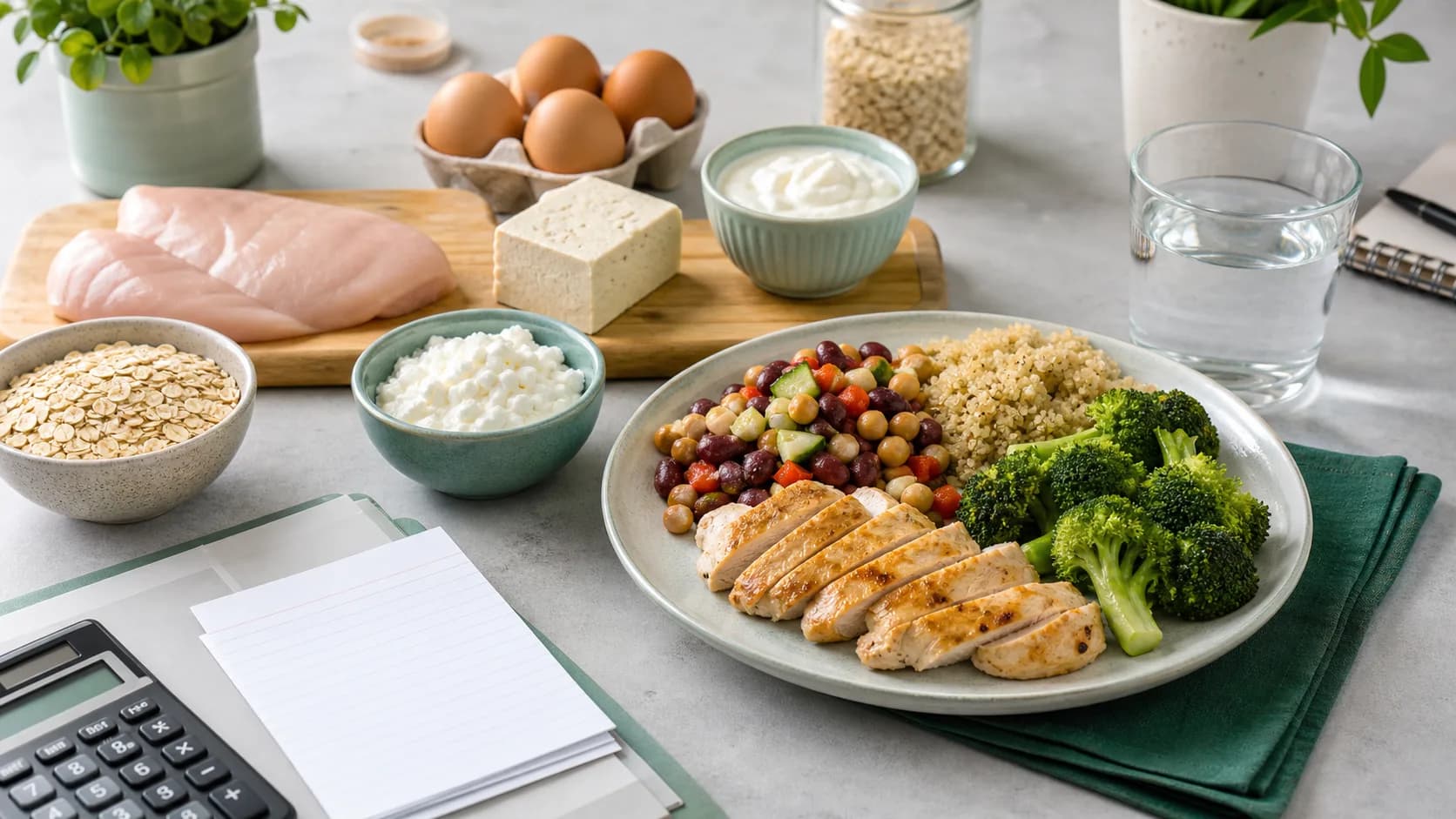
Some of it is grounded in real science. Some of it isn't. Here's an honest breakdown.
Sources reviewed
- International Society of Sports Nutrition Position Stand: protein and exercise - Journal of the International Society of Sports Nutrition
- Dietary Guidelines for Americans, 2025-2030 - USDA Food and Nutrition Service
- Effect of GLP-1 receptor agonists and co-agonists on body composition - PubMed
What Is Protein-Maxxing?
Protein-maxxing refers to the deliberate strategy of pushing daily protein intake to its upper practical limit — typically 2.0–3.0g per kg of body weight, sometimes higher. Followers track every gram, prioritise protein in every meal, and use protein supplements to bridge gaps.
The trend accelerated alongside the GLP-1 weight loss drug wave (Ozempic, Wegovy), where preserving lean muscle during rapid weight loss became a mainstream concern. It also followed revised 2025–2030 dietary guidance that moved public protein targets above the traditional 0.8g/kg RDA baseline for many adults.
The protein-maxxing spectrum:
Evidence Check: 4 Claims Examined
Claim: “More protein = more muscle”
Supported (with ceiling)Verdict: Mostly true — up to ~2.2g/kg
Meta-analyses show muscle protein synthesis plateaus around 1.6–2.2g/kg/day for most trained individuals. Beyond this, additional protein provides no measurable muscle-building advantage.
Claim: “High protein damages kidneys”
Myth (in healthy adults)Verdict: False for healthy people
No evidence that high protein intake (up to 3g/kg) causes kidney damage in healthy adults. This myth persists from studies in people with pre-existing kidney disease, where protein restriction is genuinely warranted.
Claim: “Protein speeds up metabolism”
SupportedVerdict: True — the thermic effect is real
Protein has the highest thermic effect of any macronutrient (20–30% of calories consumed used for digestion and metabolism). Replacing carbs or fat calories with protein at the same total intake does modestly increase total daily energy expenditure.
Claim: “3g/kg+ is better than 2g/kg”
Not supportedVerdict: Not supported
Studies directly comparing 2.0g/kg vs 3.0g/kg in trained athletes find no difference in muscle gain, fat loss, or performance. The extra protein is largely oxidised for energy — making it an expensive calorie source with no additional benefit.
Who Actually Benefits from Higher Protein?
People in a caloric deficit
Protein preserves lean muscle during weight loss. At 2.0–2.4g/kg, muscle loss is significantly reduced even in aggressive cuts.
Strong benefitGLP-1 medication users
Rapid weight loss from GLP-1s creates high muscle loss risk. High protein (1.8–2.2g/kg) combined with resistance training is the primary mitigation strategy.
Strong benefitAdults over 50
Anabolic resistance means older adults need more protein (~1.6–2.0g/kg) to stimulate the same muscle protein synthesis as younger adults at lower intakes.
Strong benefitTrained athletes in surplus
Already meeting protein needs at 1.6–2.0g/kg. Pushing to 2.5–3.0g/kg provides no additional muscle gain advantage — the extra protein is oxidised.
Diminishing returnsThe Practical Protein-Maxxing Target
If you want to capture the benefits of protein-maxxing without the excess, the evidence-backed sweet spot is 1.8–2.2g/kg of body weight per day. This range:
- Maximises muscle protein synthesis (beyond 2.2g/kg, no additional stimulus)
- Strongly supports fat loss by preserving lean mass in a deficit
- Provides significant satiety advantages over lower intakes
- Is achievable with whole foods — no excessive supplement reliance required
- Is safe for healthy adults with normal kidney function
Find your exact protein-maxxing target
Get a personalised number based on your weight, goal, and activity level.
Frequently Asked Questions
What is protein-maxxing?
Protein-maxxing is a social media trend where people deliberately maximise their daily protein intake — typically targeting 2.0–3.0g per kg of body weight, well above traditional dietary guidelines. It gained viral traction in late 2025 and early 2026 across TikTok, Reddit, and fitness communities, driven by interest in body recomposition, satiety, and the perception that higher protein always equals better results.
Is protein-maxxing backed by science?
Partially. The science clearly supports higher protein intakes than the outdated 0.8g/kg RDA — most sports nutrition research now supports 1.6–2.2g/kg for active individuals. However, intakes above 2.2g/kg show diminishing returns for muscle growth in most populations. Where protein-maxxing overshoots the evidence is in the upper ranges (3g/kg+), where no meaningful additional muscle or fat-loss benefit has been demonstrated in healthy, well-fed adults.
How much protein is too much?
For most healthy adults, up to 3.0g/kg/day appears safe based on current research, though evidence beyond 2.5g/kg is limited and primarily comes from well-trained athletes in caloric surplus. Intakes above 40% of total calories may displace other important nutrients. People with pre-existing kidney disease should consult a physician before targeting high protein, though high protein does not cause kidney damage in healthy individuals.
Why did protein-maxxing go viral?
Several factors converged: the 2025-2030 dietary guidance signalling that protein intakes above the RDA can be appropriate for many adults, the GLP-1 weight-loss drug trend increasing awareness of protein's role in muscle preservation during weight loss, and a broader cultural shift toward body recomposition. The simplicity of the message — 'eat more protein' — made it highly shareable.
Does protein-maxxing help with weight loss?
Yes, protein does support weight loss through several mechanisms: higher thermic effect of food (you burn ~25-30% of protein calories just digesting it), stronger satiety signals, and muscle preservation during a caloric deficit. However, protein-maxxing as a standalone strategy without caloric control will not produce fat loss. The most effective approach is adequate protein (1.6–2.2g/kg) within a modest caloric deficit.
What are the best protein foods for protein-maxxing?
The most protein-dense whole foods include: chicken breast (31g/100g), canned tuna (26g/100g), cottage cheese (11g/100g), Greek yoghurt (10g/100g), eggs (6g per egg), tofu (8g/100g), and lentils (9g/100g cooked). Protein supplements like whey isolate can help reach high targets without excess calories — but whole food sources should form the majority of intake for micronutrient balance.