
Complete vs Incomplete Protein Food List
Complete proteins include all nine essential amino acids in useful amounts. Most animal proteins are complete, while many plant foods need variety across the day. Use this guide as a practical food list first, then read the science behind amino acids and scoring.
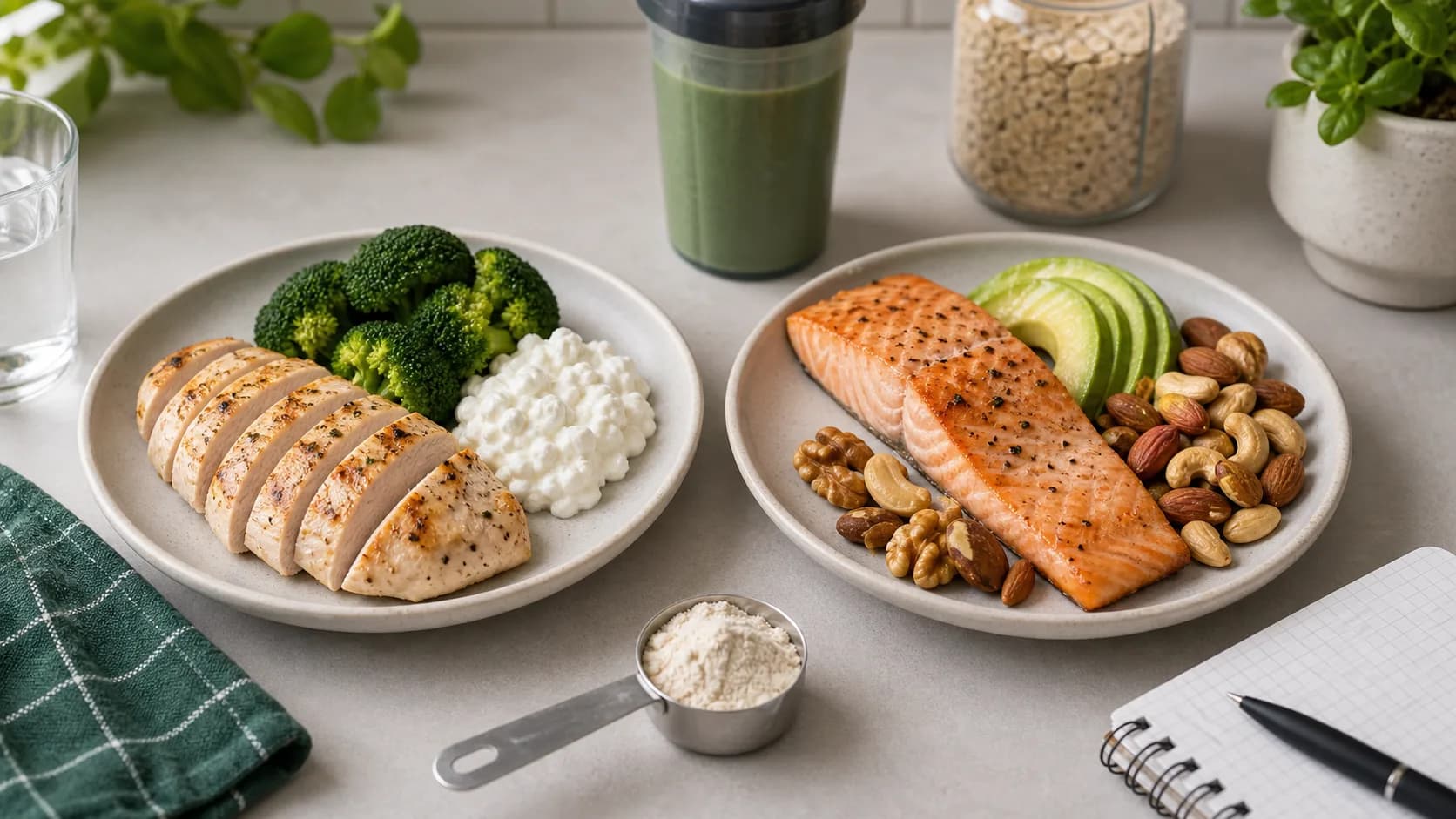
Quick Answer: Complete Protein Foods
Complete protein foods include eggs, dairy, meat, poultry, fish, seafood, soy foods, quinoa, buckwheat, and hemp seeds. Incomplete plant proteins like beans, lentils, rice, oats, nuts, and seeds can still work well when the overall day includes enough variety.
The Nine Essential Amino Acids
Proteins are built from 20 amino acids. Of these, nine are essential — the body cannot make them in sufficient quantities and they must come from food. The eleven non-essential amino acids can be synthesised by the body from other molecules.
| Essential Amino Acid | Key Role | Often Low In |
|---|---|---|
| Leucine | Primary MPS trigger (mTOR activation) | Hemp, rice |
| Lysine | Collagen synthesis, calcium absorption | Grains (wheat, rice, corn) |
| Methionine | Methylation, antioxidant production | Legumes (beans, lentils) |
| Isoleucine | Blood sugar regulation, MPS support | Peas, nuts |
| Valine | Tissue repair, energy production | Low in many plant foods |
| Threonine | Immune function, gut health | Grains |
| Tryptophan | Serotonin precursor, sleep regulation | Corn, gelatin |
| Phenylalanine | Neurotransmitter production | Rarely limiting |
| Histidine | Immune function, nerve signalling | Rarely limiting |
Complete vs Incomplete: Which Foods Are Which?
Complete Proteins
All 9 EAAs in adequate amounts
- ✓Meat (beef, pork, lamb)
- ✓Poultry (chicken, turkey)
- ✓Fish and seafood
- ✓Eggs
- ✓Dairy (milk, cheese, yogurt)
- ✓Soy (only complete plant protein)
- ✓Quinoa
- ✓Buckwheat
- ✓Hemp seeds
Incomplete Proteins
Missing or low in one or more EAAs
- —Grains (wheat, rice, oats) — low lysine
- —Legumes (beans, lentils) — low methionine
- —Peas — low methionine, cysteine
- —Nuts and seeds — low lysine
- —Corn — low lysine, tryptophan
- —Vegetables — generally low overall
- —Most plant proteins
Protein Quality Scores: PDCAAS vs DIAAS
Two scoring systems measure protein quality by combining amino acid content and digestibility:
| Protein Source | PDCAAS | DIAAS |
|---|---|---|
| Whey protein | 1.00 | ~1.09 |
| Egg | 1.00 | ~1.13 |
| Milk | 1.00 | ~1.18 |
| Soy protein isolate | 1.00 | ~0.91 |
| Beef | 0.92 | ~0.93 |
| Chicken breast | 0.95 | ~0.97 |
| Pea protein | 0.89 | ~0.82 |
| Lentils (cooked) | 0.52 | ~0.60 |
| Black beans (cooked) | 0.75 | ~0.72 |
| Wheat | 0.42 | ~0.45 |
| Brown rice | 0.59 | ~0.42 |
Scores above 1.00 are capped at 1.00 in PDCAAS but shown as-is in DIAAS. Higher = better protein quality.
Complementary Plant Proteins: Smart Combinations
Complementary proteins are plant foods that, when eaten together or across the same day, provide all nine essential amino acids. The classic example is rice + beans: rice is low in lysine but has adequate methionine; beans are low in methionine but rich in lysine. Together, they form a complete amino acid profile.
Rice + Beans / Lentils
Rice compensates for lysine deficit in grains; beans compensate for methionine deficit in legumes
E.g. Rice and black bean bowl, lentil soup with rice
Pea + Rice Protein Powder
Complementary amino acid profiles — together they approximate whey's profile
E.g. Most commercial 'plant protein blends'
Whole Grains + Legumes
Same logic as rice + beans across many grain/legume combinations
E.g. Oatmeal with peanut butter, corn tortillas with black beans
Nuts/Seeds + Legumes
Seeds are higher in methionine and cysteine; legumes supply lysine
E.g. Hummus (chickpea + tahini), lentil salad with pumpkin seeds
Dairy or Eggs + Any Plant Protein
Animal proteins are complete and boost the EAA profile of mixed meals
E.g. Greek yogurt with granola, eggs with whole-grain toast
Frequently Asked Questions
What is a complete protein?
A complete protein contains all nine essential amino acids in adequate amounts. Essential amino acids (EAAs) cannot be synthesised by the human body and must be obtained from food. The nine EAAs are: histidine, isoleucine, leucine, lysine, methionine, phenylalanine, threonine, tryptophan, and valine. Most animal proteins (meat, fish, eggs, dairy) are complete. Most plant proteins are incomplete, meaning they are low or deficient in one or more EAAs.
Can you build muscle on incomplete proteins?
Yes — if your overall diet provides all nine essential amino acids in adequate amounts across the day. The body does not need to get all EAAs in a single meal (the 'protein combining at every meal' rule was disproved decades ago). Eating a varied plant-based diet ensures your body has access to all EAAs it needs. However, each meal should still provide adequate leucine (the MPS trigger) — which often requires larger servings of plant proteins.
What is the difference between PDCAAS and DIAAS?
Both are protein quality scoring systems. PDCAAS (Protein Digestibility-Corrected Amino Acid Score) compares a protein's amino acid profile to a reference pattern and corrects for digestibility, but has methodological limitations — it can overestimate plant protein quality. DIAAS (Digestible Indispensable Amino Acid Score) is more accurate because it measures amino acid digestibility at the small intestine rather than faecal digestibility. The FDA is moving toward DIAAS as the preferred standard. Whey protein scores ~1.09 on DIAAS (above the maximum of 1.0); brown rice scores ~0.42.
Is soy a complete protein?
Yes — soy is one of the very few plant proteins that is nutritionally complete, containing all nine essential amino acids in adequate proportions. It has a PDCAAS of 1.0 (the maximum). Soy protein isolate has a DIAAS of approximately 0.91, making it the highest-quality plant protein commercially available. Multiple studies show soy protein produces similar muscle gains to whey when matched for dose.
Do I need to combine plant proteins at every meal?
No — this was a widespread myth popularised in the 1970s. The body maintains a pool of amino acids that draws from throughout the day. As long as your overall diet provides sufficient amounts of all EAAs, you do not need to combine proteins at every meal. That said, habitually combining complementary plant proteins (rice + beans, for example) is a practical strategy that makes it easier to consistently hit leucine thresholds and achieve a balanced amino acid profile.
Which plant foods are highest in leucine?
Leucine (the primary MPS trigger) varies significantly across plant foods. Highest leucine content per 100g protein: soy protein isolate (~8%), pea protein (~8%), edamame (~8%), lentils (~7%), tofu (~7%), hemp seeds (~6%), quinoa (~6%), black beans (~6%). For reference, whey protein contains ~11% leucine. Plant protein eaters need larger servings to hit the leucine threshold (~2.5–3 g per meal) for optimal muscle protein synthesis.