
Protein Absorption Per Meal: Is the 30g Myth True?
You may have heard that the body can only use 30 g of protein per meal and the rest is wasted. This is a persistent fitness myth. Here is what the research actually says about protein absorption limits, the leucine threshold, and how to distribute protein for maximum muscle gain.
Quick Answer: More Than 30g Is Not Wasted
Your gut can absorb more than 30 g of protein in a meal. The practical limit is different: about 20-40 g per meal is often enough to maximize muscle protein synthesis for many adults, while larger meals are still digested and used by the body.
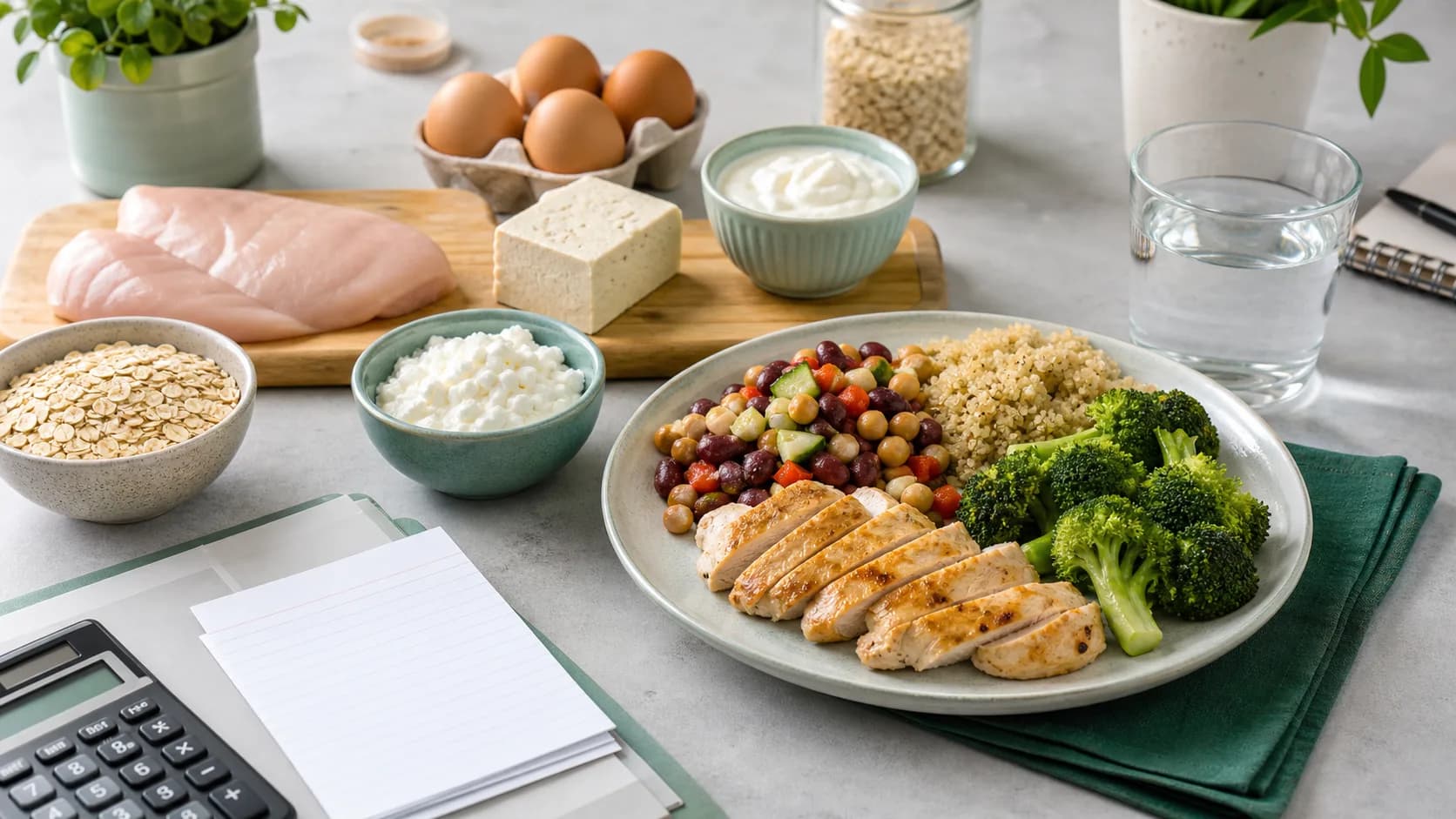
The “30 Grams Per Meal” Myth — Debunked
The digestive system is highly adaptable. It can absorb protein slowly but continuously — the small intestine can absorb 8–10 g of amino acids per hour, and gastric emptying adjusts to the size of the meal. A large protein meal simply stays in the digestive tract longer, allowing more time for absorption.
The real question is not “how much can you absorb?” but “how much is used for muscle protein synthesis?” These are different things. The body uses protein for many purposes: muscle repair and growth, enzyme production, immune function, gluconeogenesis (making glucose from protein), and more. Excess protein that is not used for MPS is not “wasted” — it contributes to energy balance.
The accurate version of the claim: Approximately 20–40 g of protein per meal (depending on body size and age) is enough to maximally stimulate muscle protein synthesis. Eating more per meal does not produce additional MPS above this threshold — but it is not wasted and does not need to be avoided.
Muscle Protein Synthesis: The Per-Meal Threshold
Muscle protein synthesis (MPS) — the process of building new muscle tissue — is not linearly proportional to protein intake. There is a ceiling effect per feeding. Research by Moore et al. (2009) found that MPS was maximally stimulated at 20 g of egg protein in young men, with no significant additional benefit at 40 g. However, several factors shift this threshold upward:
| Factor | Effect on Per-Meal Threshold | Optimal Range |
|---|---|---|
| Body size | Larger individuals need more protein per meal | 0.3–0.4 g/kg/meal |
| Age (65+) | Anabolic resistance requires more protein to trigger MPS | 30–40 g/meal |
| Post-exercise | Resistance training increases MPS sensitivity and ceiling | 30–40 g/meal |
| Protein source | Lower leucine sources (plant) require more total protein | 35–45 g/meal (plant) |
| Training status | More muscle mass = higher absolute protein needs per meal | Scales with LBM |
The Leucine Threshold: The Real Trigger for Muscle Growth
Of all the amino acids, leucine plays a unique role. It acts as a “sensor” that activates the mTOR (mechanistic target of rapamycin) signalling pathway — the primary driver of muscle protein synthesis. The minimum leucine dose needed to maximally activate mTOR per meal is approximately 2.5–3 g.
| Protein Source | Leucine % | Protein Needed for 3g Leu |
|---|---|---|
| Whey protein | ~11% | ~27 g |
| Egg white | ~9% | ~33 g |
| Casein | ~9% | ~33 g |
| Chicken breast | ~8% | ~37 g |
| Soy protein | ~8% | ~37 g |
| Pea protein | ~8% | ~37 g |
| Rice protein | ~7% | ~43 g |
| Hemp protein | ~5% | ~60 g |
This is why plant-based eaters need to consume more total protein per meal than animal-protein eaters to achieve the same MPS stimulus.
Optimal Protein Distribution Across the Day
Because each meal produces a separate MPS stimulus that fades over 3–5 hours, hitting the leucine threshold at each meal — rather than in one or two meals — produces more total MPS over 24 hours. This is sometimes called the “pulsing” theory of protein distribution.
A 2016 study by Areta et al. directly tested this: the same daily protein dose (80 g) was distributed across either 2 large meals, 4 moderate meals, or 8 small meals. The 4-meal distribution produced significantly greater MPS than either the 2-meal or 8-meal pattern. This suggests that too few meals (missing MPS pulses) and too many meals (doses below the leucine threshold) are both suboptimal.
2 large meals
40+ g each
Suboptimal
Missing MPS opportunities between meals
3–5 moderate meals
25–40 g each
Optimal
Maximises daily MPS pulses while hitting leucine threshold
6–8 small meals
<20 g each
Suboptimal
Doses may be below leucine threshold for MPS activation
Practical Protein Distribution Guide
Here is how to apply this for a person needing 160 g of protein per day:
| Meal | Protein Target | Example Source |
|---|---|---|
| Breakfast | 35–40 g | 4 eggs + 200g Greek yogurt + 1 scoop whey |
| Lunch | 40–45 g | 200g chicken breast + 100g cottage cheese |
| Snack | 20–25 g | 1 scoop whey shake or 200g Greek yogurt |
| Dinner | 40–45 g | 200g salmon + 100g lentils |
| Pre-sleep (optional) | 30–40 g | 250g cottage cheese or 1 scoop casein |
Frequently Asked Questions
Is there a protein absorption limit per meal?
The digestive system can absorb almost unlimited amounts of protein — true absorption (from gut to bloodstream) has no meaningful ceiling for most people. However, the amount of protein that maximally stimulates muscle protein synthesis per meal is approximately 20–40 g, depending on body size, age, and protein source. Protein consumed above this amount is still absorbed and used for energy, gluconeogenesis, or other bodily functions — it is not wasted.
Does eating 50+ grams of protein in one meal waste the excess?
No — excess protein is not excreted or wasted. It is used for energy (via gluconeogenesis), contributes to satiety, and can be directed to protein synthesis in other tissues beyond skeletal muscle. However, protein consumed above the muscle protein synthesis threshold does not produce additional muscle gain beyond that threshold. For muscle-building purposes, distributing protein across 3–5 meals is more effective than loading large amounts into one or two meals.
What is the leucine threshold?
The leucine threshold is the minimum amount of leucine per meal needed to maximally activate muscle protein synthesis via the mTOR pathway — approximately 2.5–3 g. For whey protein (11% leucine), this requires ~25 g of protein per meal. For plant proteins with lower leucine content (7–8%), this requires 35–45 g per meal. Hitting this threshold consistently across meals is more important than total daily protein alone.
How many times per day should I eat protein?
Evidence supports 3–5 protein-containing meals per day for maximal muscle protein synthesis stimulation. Each meal should provide enough protein to hit the leucine threshold (~25 g for whey/animal sources, ~35 g for plant sources). The 2017 ISSN position stand recommends distributing daily protein intake evenly across meals rather than concentrating it in one or two eating occasions.
Does protein absorption change with age?
Yes — older adults (65+) experience anabolic resistance, where a larger dose of protein is needed to produce the same muscle protein synthesis response as younger adults. Research suggests older adults need 30–40 g of high-quality protein per meal (versus 20–30 g for younger adults) to maximally stimulate MPS. This is one reason protein requirements increase with age.
Does the protein source affect absorption rate?
Yes. Whey protein is absorbed fastest (peak blood amino acids at 60–90 minutes). Casein digests over 7–8 hours. Whole food proteins fall somewhere in between, depending on food matrix complexity. Faster absorption produces a higher acute MPS spike. Slower absorption provides more sustained amino acid availability. For muscle building, the total daily intake across all sources matters more than the absorption rate of any single meal.