
Whey vs Casein Protein: Which Should You Take?
Whey and casein both come from milk, but they behave very differently in your body. Whey is fast — it spikes amino acids quickly. Casein is slow — it trickles amino acids steadily for hours. The right choice depends on when you’re taking it and what you’re trying to achieve.
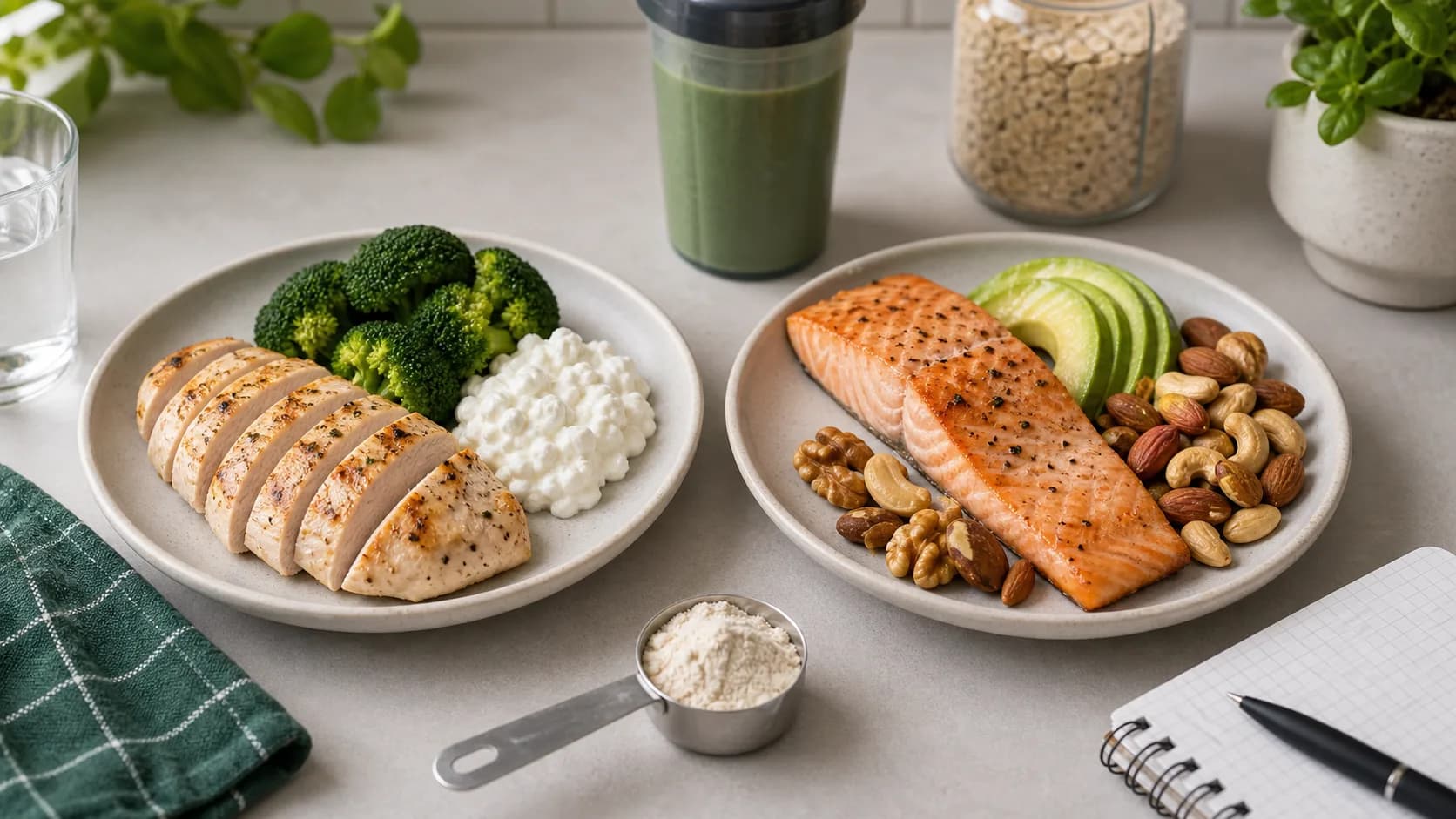
Whey vs Casein: Head-to-Head
| Factor | Whey | Casein |
|---|---|---|
| Absorption speed | Fast (1–2 hours) | Slow (7–8 hours) |
| Leucine content | ~10–11% | ~8–9% |
| Acute MPS spike | Higher | Lower |
| Anti-catabolic effect | Short-lived | Sustained (hours) |
| Best timing | Post-workout | Pre-sleep |
| Protein density | 80–95% | 75–85% |
| Solubility | Mixes easily | Thicker, gel-forming |
| Satiety | Moderate | High (fills up longer) |
| Cost | Moderate | Slightly higher |
| Lactose content | Low–moderate | Very low |
The Key Difference: Absorption Rate
Both proteins come from milk, but they behave oppositely in the stomach. Whey is soluble and passes through the stomach quickly, causing a rapid rise in blood amino acids within 60–90 minutes. This fast spike is ideal for triggering a strong acute muscle protein synthesis response.
Casein, however, curdles in the acidic stomach environment, forming a slow-digesting gel. Rather than a sharp spike, it produces a steady, sustained release of amino acids over 7–8 hours. This is less effective at triggering acute MPS but is superior for prolonged muscle protection during long periods without eating.
Key Insight from Research
A classic study by Boirie et al. (1997) demonstrated this directly: whey protein produced a 68% greater leucine peak than casein, while casein maintained higher leucine levels for 5+ hours. Total leucine availability over 7 hours was similar — but the timing differed dramatically.
When to Take Each Protein
Whey — Best Times
- ✓Post-workout (within 1–3 hours)
- ✓Morning to break the overnight fast
- ✓Between meals when a quick protein hit is needed
- ✓Any time you want a rapidly absorbing, high-leucine dose
Casein — Best Times
- ✓Before bed (30–60 min before sleep)
- ✓Before a long period without eating
- ✓When appetite control is a goal
- ✓On rest days as a slow-release meal replacement
What the Research Says
Multiple meta-analyses confirm that whey protein supplementation significantly increases muscle mass and strength gains when combined with resistance training. The effect size is modest but consistent — roughly 0.5–1.0 kg additional lean mass over 12 weeks compared to carbohydrate controls.
For casein’s pre-sleep benefit specifically, a 2012 RCT by Res et al. found 40 g of casein before sleep increased overnight muscle protein synthesis rate by 22% compared to a placebo. A 2015 study by Snijders et al. confirmed that nightly casein consumption over 12 weeks produced significantly greater muscle mass and strength gains than non-users, even when total daily protein was matched.
Practical takeaway: If you can only choose one, whey covers the most use cases. If you want to maximise muscle recovery and growth, use whey post-workout and casein before bed — this combination has the strongest evidence base.
Getting Casein and Whey From Food
Milk naturally contains both — approximately 80% casein and 20% whey by protein content. If you prefer whole foods:
Cottage cheese
Casein-rich200g ≈ 24g protein — excellent pre-sleep option
Greek yogurt
Mixed (casein-heavy)200g ≈ 20g protein — practical casein source
Milk
80% casein / 20% whey500ml ≈ 16g protein — whole-food option
Quark / Skyr
Casein-rich200g ≈ 22–28g protein — higher than yogurt
Frequently Asked Questions
Should I take whey or casein after a workout?
Whey is the better post-workout choice. Its fast absorption produces a rapid spike in blood amino acids within 60–90 minutes of ingestion, maximally stimulating muscle protein synthesis during the anabolic window following training. Casein's slow digestion is a disadvantage post-workout when you want rapid amino acid availability. Take 25–40 g of whey protein within 1–3 hours of training.
Should I take whey or casein before bed?
Casein wins before bed. Its 7–8 hour digestion provides sustained amino acid release throughout the night, supporting overnight muscle protein synthesis. A 40 g serving of casein before sleep increased overnight MPS by 22% in a landmark 2012 RCT. Whey, being fast-digesting, would be metabolised within 2–3 hours of ingestion — leaving the remaining night without amino acid support.
Can I use casein as my only protein supplement?
Yes, but it is not optimal if you also train in the evening. Casein alone will miss the post-workout window benefit. Using whey post-workout and casein before bed is more effective than either alone, but using only casein throughout the day is far better than no supplementation at all.
Is casein protein anti-catabolic?
Yes — the sustained amino acid release from casein suppresses muscle protein breakdown for longer than whey. This anti-catabolic effect is particularly valuable during long overnight fasts, extended training sessions, or periods when meals are widely spaced. While whey better stimulates MPS acutely, casein better suppresses muscle breakdown over time.
Which has more leucine — whey or casein?
Whey protein contains approximately 10–11% leucine by weight, while casein contains approximately 8–9%. Leucine is the primary amino acid that triggers muscle protein synthesis via the mTOR pathway — a minimum of 2.5–3 g per meal is needed to maximally stimulate MPS. A standard 25 g scoop of whey delivers ~2.75 g leucine; 25 g of casein delivers ~2.25 g — slightly below the threshold, meaning casein requires larger servings to hit the same leucine dose.
Should I combine whey and casein?
For optimal muscle protein synthesis, using whey post-workout and casein pre-sleep is the most evidence-backed combination. Some products blend whey and casein to produce a mixed absorption curve — a fast initial spike followed by sustained release. These blends are a practical compromise if you only want one product, though the research base for mixed blends is smaller than for the separate timing protocol.