
Weight Loss
Cutting vs Body Recomposition
Cutting and body recomposition can use similar habits: resistance training, high protein, sleep, and consistent tracking. The difference is the priority and calorie target.
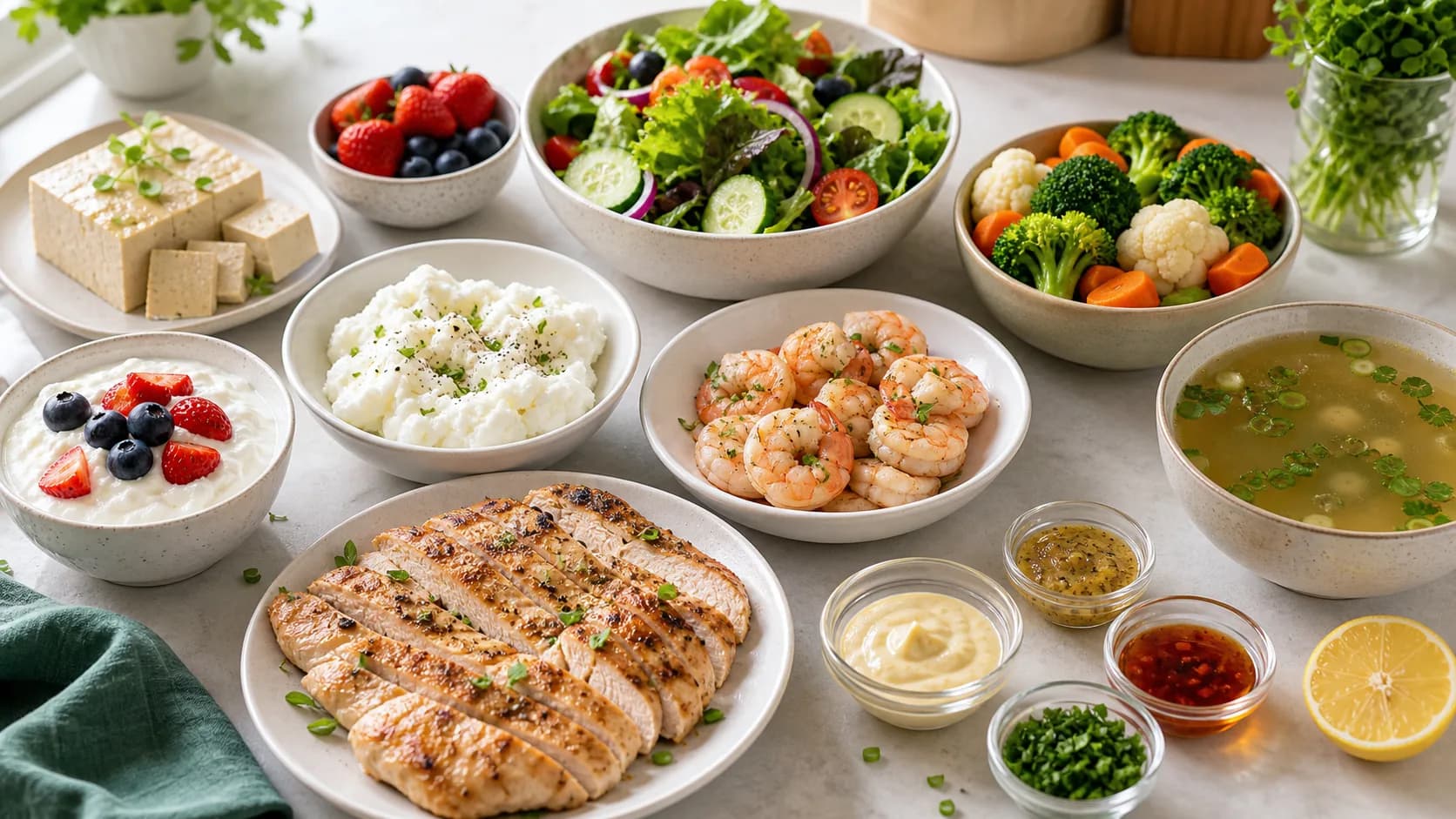
Quick Answer
Cut if fat loss is the urgent goal. Recomp if you are near your goal weight, newer to lifting, or willing to trade speed for muscle gain.
Best Next Step
Use the comparison to choose a direction, then run the matching calculator or guide for a specific target.
Use the Body Recomposition CalculatorSide-by-Side Comparison
| Factor | Cutting | Body recomposition | Best fit |
|---|---|---|---|
| Primary goal | Lose fat and scale weight. | Lose fat while gaining or preserving muscle. | Depends on priority |
| Calories | Clear deficit. | Maintenance to small deficit. | Cutting for speed |
| Scale trend | Should move down. | May move slowly or stay flat. | Cutting for measurable weight loss |
| Best fit | Higher body fat or deadline-driven fat loss. | Beginners, detrained lifters, or people close to goal weight. | Depends on starting point |
Decision Guide
Choose cutting
You want visible fat loss, have more weight to lose, or need a simpler success metric.
Use a moderate deficit, lift, and keep protein high.
Choose recomposition
You are new to lifting, returning after time off, or close to your goal weight.
Eat near maintenance, train progressively, and judge progress with photos and strength.
Switch phases
You have cut for months and training quality is falling.
Move to maintenance or recomp before another fat-loss phase.
Scenario-Based Recommendations
| Scenario | Recommendation | How to use it |
|---|---|---|
| Calories are tight | Choose the option that gives the clearest protein return for the fewest calories and is easiest to log accurately. | Keep sauces, oils, toppings, sides, or add-ins separate in your tracker so the comparison stays honest. |
| Training performance matters | Choose the option that supports the whole training day, not just the isolated protein number. | Pair the choice with enough carbohydrates, fluids, sodium, and total calories when workouts are intense or frequent. |
| Adherence is the weak point | Choose the option you can repeat without dreading the meal, even if it is not the mathematically perfect choice. | Use the decision guide below for a default, then rotate flavors or formats so the plan does not depend on willpower. |
| Tracking accuracy matters | Choose the option with clearer labels, simpler portions, and less preparation variation. | Weigh the first few servings, save the entry, and avoid swapping raw, cooked, dry, mixed, or branded entries casually. |
The safest way to use this comparison is to choose a default for the current goal, not for every possible future goal. If your priority is fat loss, the best default is usually the choice that lowers decision fatigue and makes a calorie deficit easier. If your priority is muscle gain, the best default is the choice that helps you finish enough food, recover from training, and keep protein spread across the day.
If you are comparing two foods, supplements, calculators, or diet approaches, keep the rest of the system stable while you test the decision. Changing calories, workouts, sleep, meal timing, and protein source all at once makes it hard to know which factor actually helped. A practical test is to run one option for two weeks, track the same metrics each week, then adjust only if the result is clearly worse.
Nutrition and Tracking Context
This comparison should sit inside the larger protein plan. Daily protein target, calorie target, meal frequency, training schedule, and appetite are usually more important than picking a perfect winner in isolation. Use the table above to make the first decision, then use the calculator linked on this page to turn the decision into a specific daily number.
For nutrition choices, protein density matters most when calories are limited. Satiety and convenience matter most when adherence is poor. Total energy matters most when gaining muscle is the goal. For calculator or method comparisons, accuracy depends on matching the tool to the question: use energy calculators for calories, protein calculators for protein targets, macro calculators for distribution, and body-composition tools only when inputs are reliable enough to justify the extra precision.
The comparison is also sensitive to labels and preparation. A food comparison can change when one option is fried, sweetened, packed in oil, diluted with water, mixed into a recipe, or served with a high calorie sauce. A supplement comparison can change by brand, scoop size, ingredient blend, amino acid quality, and whether the powder is replacing a snack or being added on top of the same calories.
Why Recomp Is Slower
Body recomposition asks the body to lose fat and build muscle at the same time. That can happen, especially in beginners and higher-body-fat lifters, but it is slower than a direct cut.
The scale can hide progress because fat loss and muscle gain move in opposite directions.
Protein and Training Are Non-Negotiable
Both approaches require resistance training and enough protein. During a cut, protein helps preserve lean mass. During recomp, protein supports training adaptation while calories stay closer to maintenance.
A deficit that is too aggressive makes recomp less likely because energy availability for muscle gain drops.
Common Mistakes
The biggest errors happen when a comparison becomes a shortcut for a full plan. Use the decision as one input, then check whether the full day still matches your protein target, calorie target, training needs, and medical constraints.
- Making the choice based on one metric only. Cutting and Body recomposition may differ in calories, protein density, digestion, preparation, convenience, sodium, fiber, fat, or training usefulness.
- Ignoring the food or routine around the choice. The added sauce, cooking oil, side dish, snack, skipped meal, or missed workout can matter more than the comparison itself.
- Using the comparison as a rule forever. A cutting phase, maintenance phase, travel week, GLP-1 appetite change, heavy training block, or busy work schedule may each need a different default.
- Changing the plan before there is enough data. Run one choice consistently long enough to evaluate hunger, energy, weight trend, digestion, gym performance, and actual adherence.
How to Apply the Decision This Week
Step 1: Pick the default
Use the quick answer to choose the default that best matches this week's goal. Do not optimize for every goal at once. A fat-loss week, a muscle-gain week, a travel week, and a high-stress work week can each justify a different choice.
Step 2: Set the measurable target
Turn the choice into a number: daily protein, meal protein, calories, grams, servings, workouts, or body-weight trend. Without a measurable target, the comparison stays interesting but does not change behavior.
Step 3: Review before changing
After one to two weeks, review adherence first. If the default was easy to repeat and the target was met, keep it. If hunger, energy, digestion, training, or tracking accuracy suffered, use the side-by-side table to choose the next adjustment instead of starting over.
Weekly Review Checklist
Before treating the decision as final, review the week like a practical experiment. The better choice should make the plan easier to repeat, not just look better in a table. If the winning option caused worse hunger, poor workouts, digestion problems, higher grocery friction, or inconsistent logging, it may not be the best default for you right now.
Use the same review questions each week: did you hit your protein target, did calories stay close to the plan, did the meals feel sustainable, did training quality improve or decline, and was the choice easy to track? For body-composition goals, also compare the trend, not one isolated day. A single high-sodium meal, restaurant meal, hard workout, or poor night of sleep can distort scale weight and make a good decision look worse than it is.
- Keep the choice if it improved adherence and the target was met without adding hidden calories or missed meals.
- Adjust portions if the choice worked but calories, hunger, digestion, or meal timing were slightly off.
- Switch options if the choice only works on perfect days or requires too much effort to repeat during normal weeks.
Related Tools and Guides
Sources reviewed
- International Society of Sports Nutrition Position Stand: diets and body composition - Journal of the International Society of Sports Nutrition / PMC
- Energy deficiency impairs resistance training gains in lean mass - PubMed
- Protein supplementation and resistance training meta-analysis - British Journal of Sports Medicine / PubMed
- International Society of Sports Nutrition Position Stand: protein and exercise - Journal of the International Society of Sports Nutrition