
Eggs & Dairy
Protein in Double Gloucester Cheese: Protein, Calories, and Meal Ideas
Double Gloucester cheese is a vegetarian hard cheese with very high protein by weight, about 25 g per 100 g. A typical 30 g portion gives about 7.5 g complete dairy protein, but it is also high in fat and calorie dense.
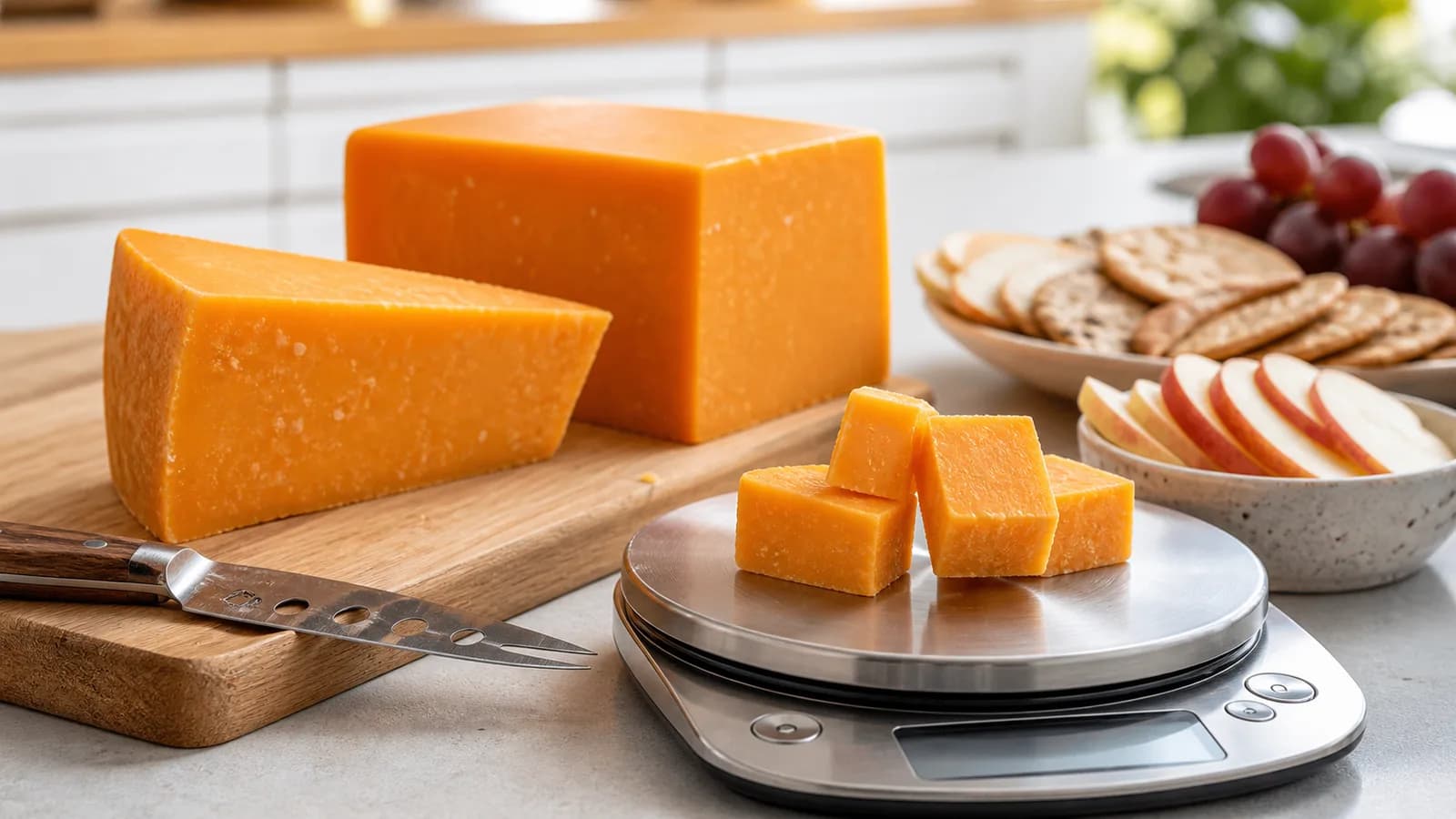
Protein per serving
7.5g
30 g Double Gloucester cheese / about 1 oz
Calories per serving
121
30 g serving
Protein per 100g
25g
403 calories per 100 g
Protein density
6.2g
protein per 100 calories
Double Gloucester Cheese Nutrition Snapshot
| Measure | Amount | Protein | Calories |
|---|---|---|---|
| Typical serving | 30 g Double Gloucester cheese / about 1 oz | 7.5g | 121 |
| Per 100 g | 100 g | 25g | 403 |
| Protein density | 100 calories | 6.2g | 100 |
Representative source entry: Cheese, Double Gloucester. Use the exact product label when available. Double Gloucester values can vary by producer, age, fat level, sliced versus block format, grated products, and added flavors such as chive or onion.
Good for weight loss? Fair
Double Gloucester can fit weight-loss meals in small measured portions, but it is not a lean protein. Use 15-30 g for flavor and complete protein, then anchor the meal with leaner foods, vegetables, or high-fiber carbs.
Good for muscle gain? Good
Double Gloucester can support muscle-gain meals because it provides complete dairy protein plus useful calories. It works best as an add-on to eggs, potatoes, pasta, sandwiches, chicken, turkey, beans, or vegetables.
Meal Ideas with Double Gloucester Cheese
30 g Double Gloucester in an omelet with vegetables
Measured Double Gloucester cubes with apple slices and whole-grain crackers
Double Gloucester on a baked potato with Greek yogurt and salad
Turkey, chicken, or bean melt with 15-30 g grated Double Gloucester
High-protein snack box with Double Gloucester, boiled eggs, fruit, and vegetables
How to Use Double Gloucester Cheese
How much protein is in Double Gloucester cheese?
Double Gloucester cheese has about 25 g protein per 100 g. A common 30 g serving, about 1 oz, gives about 7.5 g complete protein. It is protein dense, but it is also a hard cheese with substantial fat, so portions matter.
- 30 g Double Gloucester cheese: about 7.5 g protein.
- 100 g Double Gloucester cheese: about 25 g protein.
- Protein quality: complete dairy protein with all essential amino acids.
- Best tracking method: weigh the cheese and use the exact product label when available.
Double Gloucester protein by serving size
Most people eat Double Gloucester in slices, cubes, grated portions, or as a topping. The protein estimate scales directly from the 25 g protein per 100 g value, but calories and fat also scale quickly.
| Portion | Approx weight | Protein | Best use |
|---|---|---|---|
| Small topping | 15 g | 3.8 g | Flavor boost for eggs, potatoes, salad, or soup |
| Typical serving | 30 g / about 1 oz | 7.5 g | Snack box, sandwich, omelet, or measured cheese portion |
| Larger cheese portion | 50 g | 12.5 g | Higher-calorie meal add-on |
| Per 100 g | 100 g | 25 g | Reference value for comparing hard cheeses |
| Grated cheese | Weigh in grams | Depends on weight | Do not rely on loose cups because volume varies |
Types of Double Gloucester cheese
Double Gloucester is usually treated as a hard, orange English cheese, but product format changes the practical nutrition. Use this table to choose the closest label and avoid mixing up regular cheese with processed cheese products.
| Type | Protein note | What to check |
|---|---|---|
| Traditional Double Gloucester | Use about 25 g protein per 100 g as a guide | Brand label, fat level, sodium, and serving size |
| Mature or aged Double Gloucester | Protein is usually similar by weight | Higher flavor intensity may make smaller portions easier |
| Mild Double Gloucester | Protein is usually similar by weight | Texture, moisture, calories, and sodium by brand |
| Single Gloucester vs Double Gloucester | Do not assume identical nutrition | Single Gloucester may differ in fat, moisture, and protein |
| Sliced Double Gloucester | Protein depends on slice weight | Weigh slices or use the per-slice label |
| Grated Double Gloucester | Protein depends on gram weight | Anti-caking ingredients and loose volume can mislead |
| Reduced-fat Double Gloucester | May offer a better protein-to-calorie ratio | Compare protein, calories, fat, and taste |
| Smoked Double Gloucester | Protein is usually similar by weight | Sodium and flavor intensity |
| Double Gloucester with chives, onion, or herbs | Protein may be close, but not guaranteed | Added ingredients, sodium, and calories |
| Processed Double Gloucester-style slices or spreads | Use the label only | Often different from block cheese in protein, fat, and additives |
Double Gloucester vs cheddar, cottage cheese, and paneer
Double Gloucester and cheddar are both hard cheeses and can have similar protein density. Cottage cheese usually gives more protein for fewer calories in larger servings, while paneer is useful for Indian vegetarian meals but can also be calorie dense.
- Choose Double Gloucester when you want strong cheese flavor in a measured amount.
- Choose cottage cheese or Greek yogurt when the goal is more protein with fewer calories.
- Choose paneer when the meal is Indian vegetarian and the recipe works better with a firm dairy protein.
- Compare labels because cheese nutrition changes with fat level, moisture, salt, and processing.
Best ways to use Double Gloucester without overcounting protein
Double Gloucester is useful as a protein-and-flavor booster, not usually as the main lean protein. The easiest way to stay accurate is to weigh the cheese before adding it to a meal.
- Use 15-30 g in omelets, sandwiches, wraps, baked potatoes, salads, or snack boxes.
- Pair it with a leaner protein when the meal target is 25-40 g protein.
- For weight loss, use vegetables and lean protein to add fullness instead of increasing cheese portions.
- For muscle gain, pair it with carbs such as potatoes, pasta, rice, oats, or bread when calories are needed.
How Double Gloucester Cheese Compares for Protein Density
Double Gloucester Cheese works as an egg or dairy protein with about 25 g protein and 403 calories per 100 g. That equals 6.2 g protein per 100 calories, or about 16.1 calories per gram of protein. This density number is useful because two foods can both look high protein while one needs far more calories to deliver the same protein target.
Double Gloucester Cheese is less protein-dense than the related foods shown below, so portions, add-ins, and the rest of the meal matter more. Egg and dairy entries can vary sharply by fat level, straining, added sugar, and serving size. Plain, low-fat, nonfat, whole-milk, flavored, and fortified versions are not interchangeable. Use the comparison table as a planning shortcut: choose the higher-density option when calories are limited, and choose the more calorie-dense option when appetite is low or muscle-gain meals need to be easier to finish.
| Food | Serving protein | Protein / 100g | Protein / 100 cal |
|---|---|---|---|
| Cottage Cheese | 16.7g | 11.1g | 15.4g |
| Paneer | 21g | 21.4g | 6.7g |
| Double Gloucester Cheese | 7.5g | 25g | 6.2g |
| Cheddar Cheese | 7.5g | 25g | 6.2g |
Best Uses for Double Gloucester Cheese
For Weight Loss or Calorie Control
Double Gloucester Cheese can still fit a weight-loss plan, but the serving needs more attention because calories rise faster than they do with very lean proteins. Use it intentionally, measure portions, and let leaner foods or vegetables carry more of the plate volume. For this page's representative serving, 30 g Double Gloucester cheese / about 1 oz gives about 7.5 g protein. If your meal target is 30 g protein, that is roughly 4 typical servings, or about 120 g by weight. This is why weighing the first few servings is useful: it turns a vague protein food into a repeatable meal component.
For Muscle Gain or Higher-Calorie Meals
Double Gloucester can support muscle-gain meals because it provides complete dairy protein plus useful calories. It works best as an add-on to eggs, potatoes, pasta, sandwiches, chicken, turkey, beans, or vegetables. When using Double Gloucester cheese for muscle gain, the question is not only whether it contains protein; it is whether the whole meal has enough total protein, carbohydrates, and calories to support training. If you need more protein with fewer calories, compare against egg whites, skyr, Greek yogurt, or low-fat cottage cheese. If you need more calories, whole-milk dairy or larger servings can help. A practical muscle-gain plate is to keep the Double Gloucester cheese portion consistent, then adjust rice, pasta, oats, potatoes, bread, beans, oil, nuts, or dairy up or down depending on your calorie target.
For Meal Prep and Repeatable Tracking
Double Gloucester Cheese is easiest to track when the serving method stays the same from week to week. Choose one default serving, log it with the matching raw, cooked, dry, drained, or label-based entry, and then build meals around that known number. Good repeatable options include 30 g Double Gloucester in an omelet with vegetables, Measured Double Gloucester cubes with apple slices and whole-grain crackers, Double Gloucester on a baked potato with Greek yogurt and salad, and similar meals where the protein portion is measured before sauces and toppings are added.
Exact Serving Conversions
Serving conversions help when your food scale, recipe, or tracking app uses a different unit than this page. For Double Gloucester Cheese, 1 oz is about 28.35 g and provides roughly 7.1 g protein and 114.3 calories based on the representative per-100-g values. Half of the typical serving gives about 3.8 g protein and 60.5 calories, while a double serving gives about 15 g protein and 242 calories.
Use gram targets when precision matters. To get 25 g protein from Double Gloucester cheese, you need about 100 g, which is roughly 403 calories. To get 30 g protein, use about 120 g and 483.6 calories. To get 40 g protein, use about 160 g and 644.8 calories. These estimates are based on the USDA or representative source entry listed below, so the label on your exact product should win when there is a difference.
| Target | Approx. amount | Calories | Typical servings |
|---|---|---|---|
| 25g protein | 100g | 403 | 3.3x |
| 30g protein | 120g | 483.6 | 4x |
| 40g protein | 160g | 644.8 | 5.3x |
Raw, Cooked, Dry, or Label Weight?
The best tracking rule for Double Gloucester Cheese is simple: match the database entry to the state of the food when you weighed it. This page uses Cheese, Double Gloucester as the representative source entry, with the serving shown as 30 g Double Gloucester cheese / about 1 oz. Use the exact product label when available. Double Gloucester values can vary by producer, age, fat level, sliced versus block format, grated products, and added flavors such as chive or onion.
For eggs and dairy, brand labels and fat percentage matter. Use the exact label when the product is packaged, flavored, or fortified. If you batch cook, portion after cooking only when your tracker entry is also cooked. If you weigh before cooking, use a raw or dry entry and divide the finished batch into servings after cooking. If you are eating a packaged product, the label is normally the most specific source because brands can change water, sodium, sugar, fat, fortification, and serving size.
The most reliable workflow is to choose one method and repeat it: weigh the food, choose the matching raw, cooked, dry, drained, or packaged entry, then log oils, sauces, toppings, sides, and drinks separately. This avoids the most common protein tracking error, which is accidentally counting a prepared meal as if it were a plain serving of Double Gloucester cheese.
Common Mistakes with Double Gloucester Cheese
Most mistakes with Double Gloucester Cheese are not about the protein number itself; they are about matching the wrong food form, ignoring preparation, or forgetting the extra ingredients that travel with the serving. Avoid these issues before comparing your intake against a daily target from the protein calculator.
- Using a generic Double Gloucester cheese entry when the actual food is cooked, raw, flavored, breaded, sweetened, packed in oil, or from a specific brand.
- Counting Double Gloucester Cheese as the entire meal even when the real calorie load comes from oil, dressing, sauce, bread, rice, tortillas, cheese, nuts, or toppings.
- Estimating by eye instead of weighing the first few times. A small portion change can move the meal by 5-15 g of protein or by a few hundred calories for calorie-dense foods.
- For eggs and dairy, brand labels and fat percentage matter. Use the exact label when the product is packaged, flavored, or fortified.
- Weigh Double Gloucester in grams because slices, cubes, and grated portions vary.
- Track grated cheese by weight, not by loose cup volume.
- Check the label for fat, calories, and sodium because hard cheeses differ by brand and age.
- Track crackers, bread, butter, oil, sauces, chutney, and toppings separately.
- Use reduced-fat versions or smaller portions when calories are tight.
Building a High-Protein Meal with Double Gloucester Cheese
Start with the protein target, not the recipe name. A light snack might only need 10-20 g protein, while a main meal often works better at 30-45 g protein depending on body size, meal frequency, and training. With Double Gloucester Cheese, a 30 g protein meal is approximately 120 g of the representative food before sides and toppings. If that portion feels too large, combine a smaller amount of Double Gloucester cheese with another protein from the related-food list.
A balanced plate usually needs more than protein. Pair Double Gloucester cheese with a fiber source, a carbohydrate source if you train or need energy, and enough fat to make the meal satisfying. For lower-calorie meals, keep sauces light and increase vegetables. For higher-calorie meals, add rice, pasta, potatoes, bread, oats, beans, dairy, nuts, seeds, avocado, or oil depending on the type of food and your goal.
If the meal is meant to be repeated, write down the exact version that worked: the grams of Double Gloucester cheese, the cooking method, the sides, and the sauce. That gives you a reusable meal template instead of a one-time estimate, and it makes future protein targets easier to hit without redoing the math every day.
Tracking Tips
- Weigh Double Gloucester in grams because slices, cubes, and grated portions vary.
- Track grated cheese by weight, not by loose cup volume.
- Check the label for fat, calories, and sodium because hard cheeses differ by brand and age.
- Track crackers, bread, butter, oil, sauces, chutney, and toppings separately.
- Use reduced-fat versions or smaller portions when calories are tight.
Compare Similar Protein Foods
Related Calculators and Guides
Common Questions
How much protein is in Double Gloucester cheese?
Double Gloucester cheese has about 25 g protein per 100 g. A 30 g serving, about 1 oz, gives about 7.5 g protein.
How much protein is in 100 g Double Gloucester cheese?
A 100 g portion of Double Gloucester cheese has about 25 g protein. It is protein dense by weight, but it is also high in fat and calories.
How much protein is in 30 g Double Gloucester cheese?
A 30 g serving of Double Gloucester cheese gives about 7.5 g protein. This is a practical serving for slices, cubes, omelets, sandwiches, or snack boxes.
Is Double Gloucester cheese a complete protein?
Yes. Double Gloucester is a dairy cheese and provides complete protein with all essential amino acids.
Is Double Gloucester cheese good for weight loss?
It can fit weight-loss meals in measured portions, but it is calorie dense. Use small 15-30 g servings and pair it with leaner protein foods, vegetables, or high-fiber sides.
Is Double Gloucester cheese good for muscle gain?
Yes, it can support muscle-gain meals because it provides complete protein and calories. It works best as part of a meal that also includes enough total protein, carbs, and resistance training.
Is Double Gloucester the same as cheddar for protein?
They are similar hard cheeses and may have similar protein per 100 g, but they are not identical products. Use the exact label when tracking calories, fat, sodium, and protein.
Does grated Double Gloucester have the same protein as block cheese?
It can be similar by weight, but grated cheese may include anti-caking ingredients and loose cup measures are easy to misjudge. Weigh grated cheese in grams when accuracy matters.
Sources reviewed
- USDA FoodData Central: Double Gloucester cheese - U.S. Department of Agriculture
- International Society of Sports Nutrition Position Stand: protein and exercise - Journal of the International Society of Sports Nutrition