
Body Weight FAQ
Protein by Body Weight FAQ: Grams per kg, Grams per Pound, Goal Weight, and Meal Splits
Use this FAQ when you want to understand protein per kg, protein per pound, current weight vs goal weight, and how to turn body-weight math into meals.
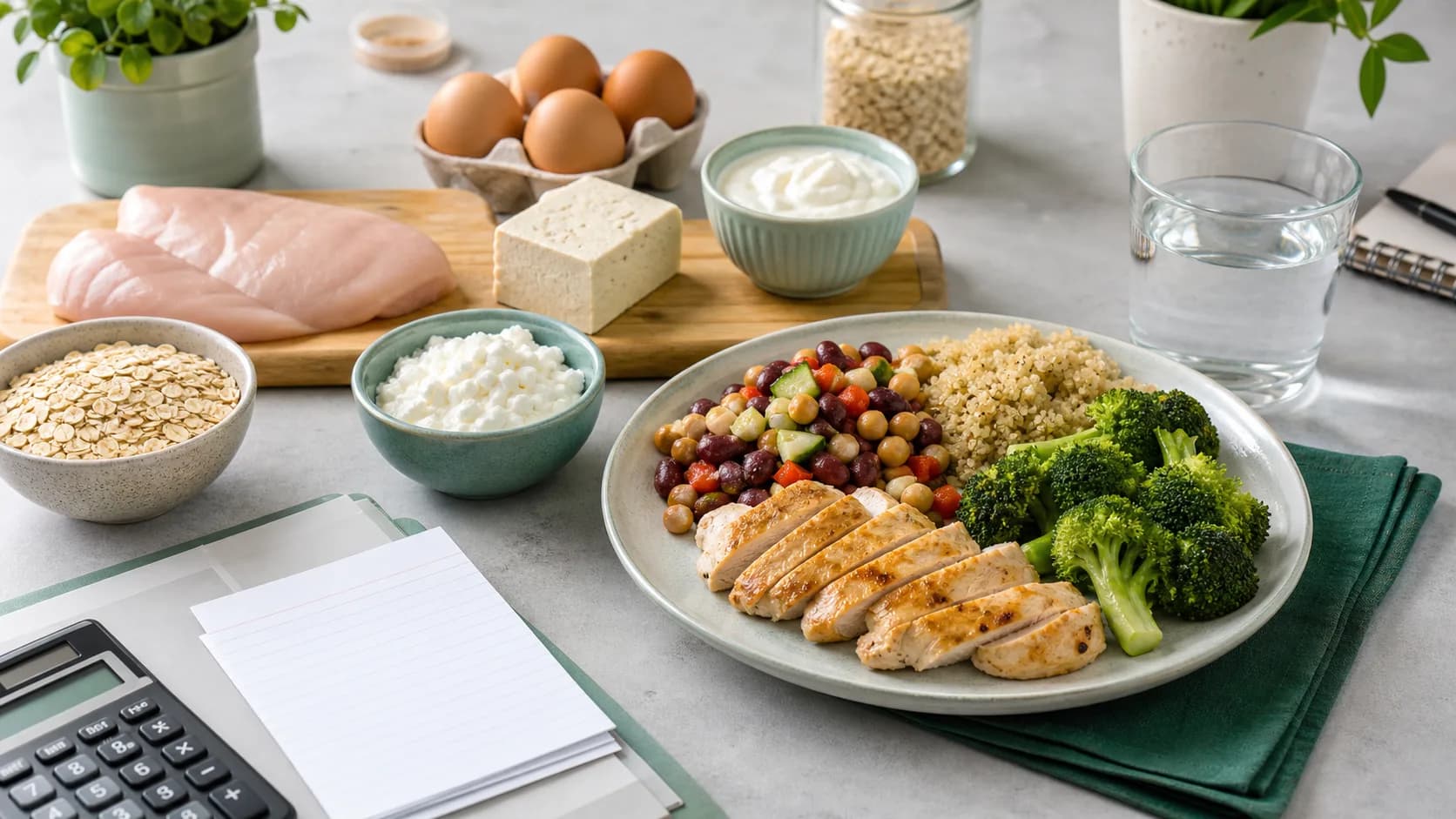
What This FAQ Covers
Answers to protein-by-body-weight questions about grams per kg, grams per pound, current vs goal weight, calculator ranges, and meal splitting.
Medical and Life-Stage Caution
Body-weight formulas are not medical prescriptions. Use clinician guidance for kidney disease, pregnancy, eating disorder recovery, prescribed diets, severe illness, or clinical nutrition plans.
Body-Weight Formulas
These answers explain the common math before goal-specific adjustments.
What does protein by body weight mean?+
It means estimating daily protein from body weight, usually as grams per kilogram or grams per pound. The formula is a starting point, not a complete nutrition plan.
Is grams per kg better than grams per pound?+
Research often uses g/kg, while many U.S. users prefer g/lb. Both are fine if the conversion is correct and you use one method consistently.
How do I convert g/kg to g/lb?+
Divide the g/kg number by 2.2. For example, 1.6 g/kg is about 0.73 g/lb.
How do I convert g/lb to g/kg?+
Multiply the g/lb number by 2.2. For example, 0.8 g/lb is about 1.76 g/kg.
Why do calculators use body weight?+
Body weight is easy to measure and correlates with total protein needs, but goal, activity, age, body composition, and health context can still change the range.
Current, Goal, and Lean Weight
The weight you choose can change the target a lot.
Should I use current weight or goal weight?+
Most people can start with current weight. Goal weight or adjusted weight can be useful when current weight makes the target unrealistic or when a clinician recommends it.
Should I use lean body mass instead of body weight?+
Lean body mass can help when body fat is high, but body-fat estimates are often noisy. Use it as a helpful context, not a perfect number.
Should I use ideal body weight?+
Ideal body weight can be useful in some clinical contexts, but generic web calculators should not replace dietitian or clinician formulas for medical plans.
What if my calculated target is too high?+
Use a lower point in the range, split protein across meals, and improve one meal at a time. A repeatable target is better than one you cannot hit.
What if my target is very low?+
Check whether activity, goal, age, or body-size inputs are correct. Some goals require higher ranges than a basic maintenance estimate.
Goals and Ranges
The same body weight can produce different targets depending on the job.
How much protein per kg is common for muscle gain?+
Many resistance-training plans use around 1.6-2.2 g/kg/day, depending on calories, training, body size, and adherence.
How much protein per kg is common for weight loss?+
Weight-loss plans often use moderate-to-higher ranges to support fullness and lean-mass retention, especially when resistance training is included.
How much protein per kg is common for maintenance?+
Maintenance may use a lower range than dieting or muscle gain, but active adults and older adults may still benefit from deliberate protein distribution.
Do athletes need a different body-weight range?+
Often yes. Training volume, sport type, recovery needs, and calorie intake can move athletes above general maintenance ranges.
Do seniors need a different body-weight range?+
Often yes. Older adults may discuss higher ranges than the basic adult RDA, but kidney function, appetite, illness, and swallowing issues matter.
Meal Splits
A body-weight target still has to become breakfast, lunch, dinner, and snacks.
How do I split a body-weight protein target across meals?+
Divide the daily target by the number of meals you actually eat, then make each meal realistic. Three meals plus one snack often works better than one huge dinner.
Is 30 g protein per meal enough?+
It can be enough for many people, but larger bodies, athletes, and higher daily targets may need more per meal or an extra protein snack.
Should breakfast have protein?+
Yes, especially if lunch or dinner is unpredictable. A protein-rich breakfast makes the daily target easier to reach.
Can one large protein meal cover the day?+
It is usually less practical and may be less useful for distribution. Most people do better spreading protein across multiple eating occasions.
How should I adjust on training days?+
Keep daily protein consistent and place one protein-rich meal or snack near training if it helps recovery or prevents long gaps.
Tools and Accuracy
Use calculators to avoid doing all the conversion and context math manually.
Which tool calculates protein by kg?+
Use the protein per kg calculator when you want a direct g/kg estimate and conversion.
Which tool calculates protein by pound?+
Use the protein per pound calculator when you prefer pounds-based planning.
Which calculator is best for body composition?+
Use the advanced protein calculator when body-fat estimate, health flags, or meal distribution should influence the result.
How accurate are body-weight protein formulas?+
They are useful estimates, not exact prescriptions. Real results depend on adherence, training, calories, appetite, digestion, and medical context.
When should I avoid generic body-weight formulas?+
Avoid generic formulas for kidney disease, pregnancy, eating disorder recovery, prescribed diets, severe illness, or clinician-directed nutrition plans.
Sources reviewed
- Dietary Reference Intakes reference tables - National Academies Press / NCBI Bookshelf
- International Society of Sports Nutrition Position Stand: protein and exercise - Journal of the International Society of Sports Nutrition
- Evidence-based recommendations for optimal dietary protein intake in older people - Journal of the American Medical Directors Association / PubMed
- How to Understand and Use the Nutrition Facts Label - U.S. Food and Drug Administration