
Calculator FAQ
Protein Calculator FAQ: Targets, Inputs, Results, and Safety
Use this focused FAQ when you want to understand how ProteinCalc estimates daily protein, why results change by goal, and how to turn a calculator number into meals.
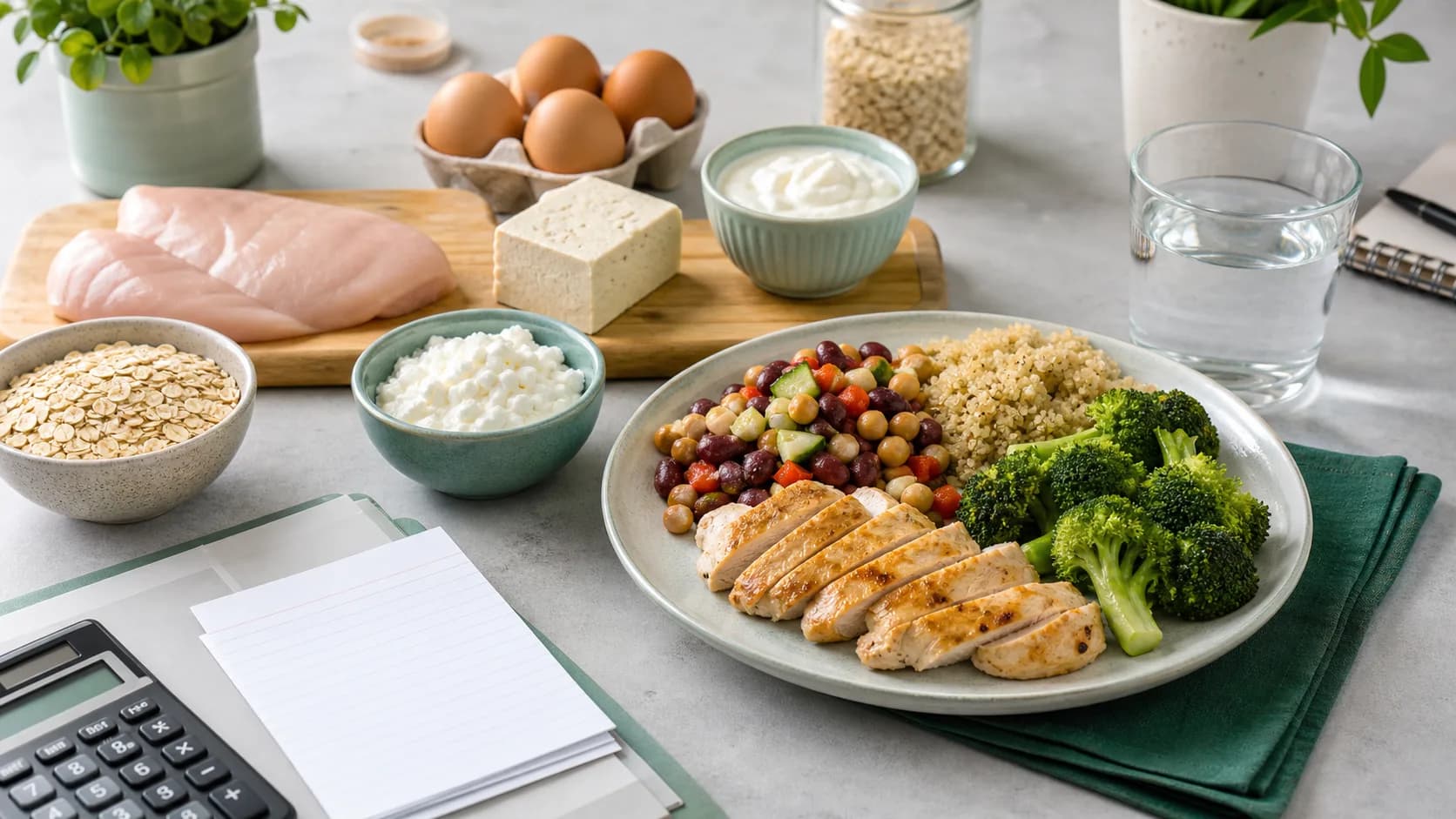
What This FAQ Covers
Answers to common protein calculator questions about inputs, targets, grams per kg, meal splits, goal ranges, accuracy, and safety cautions.
Medical and Life-Stage Caution
Calculator results can be useful for planning, but clinical contexts such as kidney disease, pregnancy, breastfeeding, diabetes medication changes, eating disorder history, or prescribed diets need individualized care.
Calculator Basics
Start here if you are deciding which calculator to use or why a result changed.
What does a protein calculator actually calculate?+
A protein calculator estimates a daily protein range from body weight, goal, activity, and sometimes age, body composition, or health context. It is a planning tool, not a medical prescription.
Why do calculator results use a range instead of one exact number?+
Protein needs vary by training, calories, appetite, body size, age, and medical context. A range is more useful than a false-precision number because you can choose a realistic point inside it.
Which protein calculator should I use first?+
Use the main protein calculator if you want a general target. Use a specialized calculator when your intent is muscle gain, weight loss, women, pregnancy, seniors, athletes, or advanced body-composition context.
Why did my result change when I changed my goal?+
Goals use different planning ranges. Weight loss and muscle gain often use higher protein ranges than maintenance because fullness, training, and lean-mass retention become more important.
Should I use kilograms or pounds?+
Either can work if the calculator converts correctly. Grams per kilogram is common in research, while grams per pound is easier for many U.S. users.
Inputs and Accuracy
These questions cover body weight, activity, body fat, and how much precision matters.
Should I enter my current weight or goal weight?+
Most users should start with current body weight. Goal weight or adjusted-weight logic can be useful when total weight makes the target unrealistic, but it should be interpreted carefully.
Does body fat percentage make the calculator more accurate?+
It can help when the estimate is reasonable and total body weight overstates needs. It can mislead when body-fat percentage is a guess from a smart scale or visual estimate.
How should I choose activity level?+
Choose your normal weekly pattern, not your best week or planned future routine. Overstating activity can push targets higher than you will actually use.
Should age change my protein target?+
Age can matter, especially for older adults where protein distribution and appetite are important. Medical context still matters more than age alone.
How often should I recalculate protein?+
Recalculate when body weight, training load, goal, appetite, or health context changes meaningfully. Do not recalculate every day because of normal scale fluctuations.
Reading the Result
Use these answers after the calculator gives a target.
Should I choose the low, middle, or high end of the range?+
Use the lower end when you are building the habit or appetite is limited. Use the middle for repeatable active planning. Use the higher end when training, dieting, or lean-mass retention makes it useful and practical.
What if the target feels too high?+
Start with a lower point inside the range, add protein to the weakest meal first, and review after one or two weeks. A target you can repeat is better than a number you miss every day.
Do I need to hit the same grams every day?+
No. A consistent weekly pattern is usually more useful than exact daily precision. Stay near the range most days and use meal anchors to keep the routine simple.
How do I split protein across meals?+
Divide the daily target across meals you actually eat. Many users do well with three or four protein anchors rather than saving most protein for dinner.
What if my calories are too low to fit the target?+
Use leaner protein anchors, but do not remove vegetables, carbs, fats, or fluids so aggressively that the diet becomes hard to follow. If medical dieting is involved, use professional guidance.
Safety and Medical Context
Calculator outputs need extra caution when health context changes the target.
Can a protein calculator set a target for kidney disease?+
No. Kidney disease targets depend on diagnosis, labs, stage, dialysis status, medications, and care plan. Use clinician or renal dietitian guidance.
Can pregnant or breastfeeding users rely on the calculator?+
They can use it for education, but personal targets should be discussed with the care team. Pregnancy, breastfeeding, nausea, appetite, and medical history can change needs.
Can the calculator replace a dietitian?+
No. It can organize general planning questions, but it cannot review labs, medications, symptoms, pregnancy, disease stage, allergies, or prescribed diet rules.
Is more protein always better?+
No. Once protein is high enough for the goal, more may crowd out carbs, fats, fiber, micronutrients, or budget. The best target is useful and sustainable.
What warning signs mean I should stop using a generic result?+
Stop relying on generic results if you have kidney disease, liver disease, pregnancy complications, diabetes medication changes, severe GI symptoms, eating disorder history, or clinician-prescribed targets.
Next Steps
Turn the number into a plan instead of stopping at the calculator result.
What should I do after I calculate protein?+
Build one normal day of meals that reaches the target. Then use food charts, a meal planner, or a food calculator to make the target repeatable.
Should I use protein powder to hit the result?+
Use powder only when it solves a real gap. Food anchors should still provide most of the diet unless a clinician or dietitian has another reason.
What if my food log and calculator disagree?+
The calculator estimates the target; the food log estimates intake. Check serving sizes, cooked vs raw weights, product labels, and recipe yields before changing the target.
How do I know if the target is working?+
Review adherence, hunger, digestion, training, body-weight trend, and energy after two to four weeks. Adjust based on outcomes, not one isolated day.
Which page should I visit next?+
Use the advanced calculator for body-fat and meal-split context, the meal planner for meals, and food charts when you need serving-level protein data.
Sources reviewed
- Dietary Reference Intakes reference tables - National Academies Press / NCBI Bookshelf
- International Society of Sports Nutrition Position Stand: protein and exercise - Journal of the International Society of Sports Nutrition
- Evidence-based recommendations for optimal dietary protein intake in older people - Journal of the American Medical Directors Association / PubMed
- How to Understand and Use the Nutrition Facts Label - U.S. Food and Drug Administration