
Powder FAQ
Protein Powder FAQ: Whey, Plant, Labels, Safety, Timing, and Buying
Use this FAQ when choosing protein powder, reading labels, comparing whey and plant options, or deciding whether powder belongs in your plan.
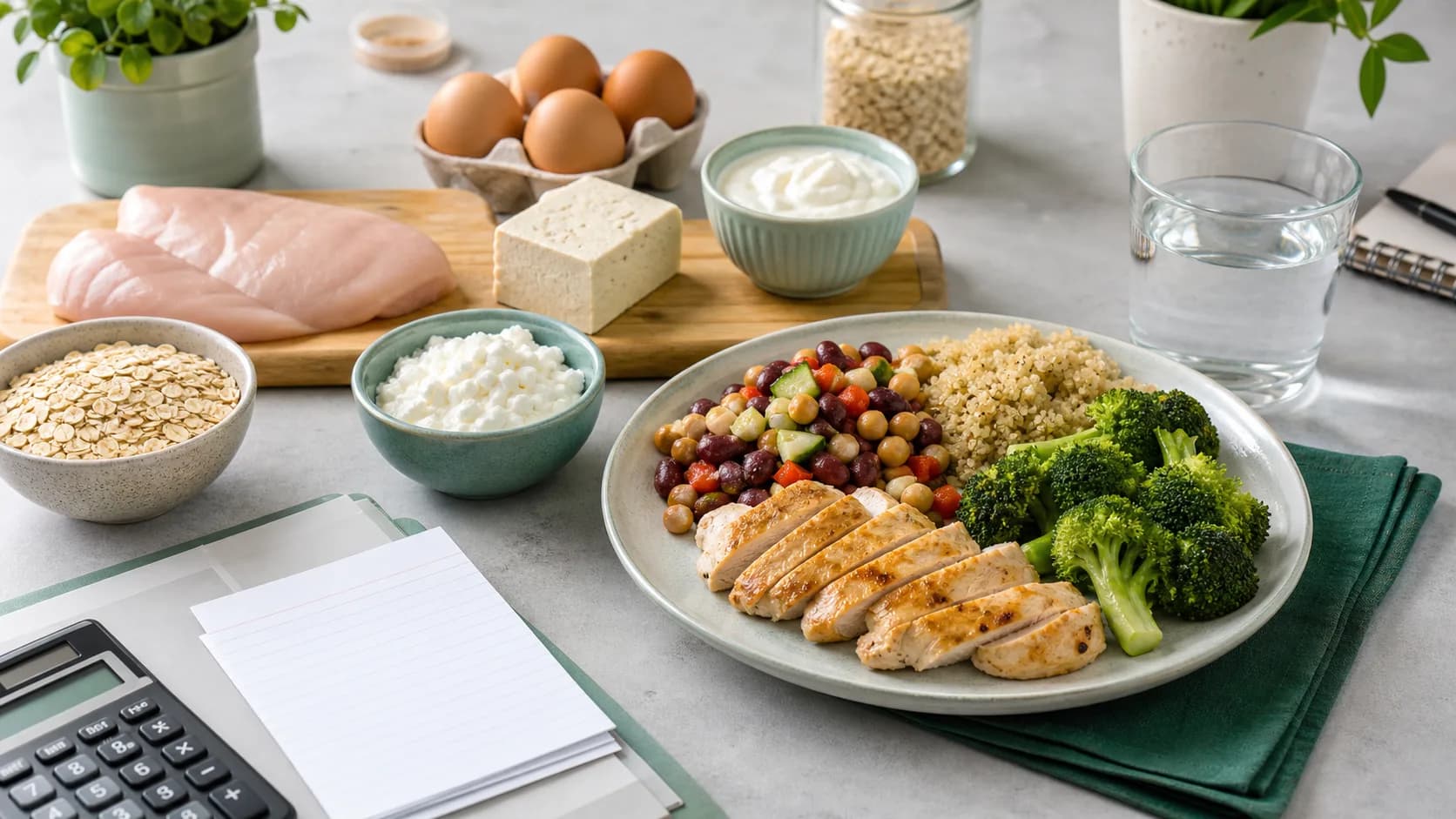
What This FAQ Covers
Answers to protein powder questions about whey, isolate, concentrate, plant protein, labels, calories, safety, timing, and buying decisions.
Medical and Life-Stage Caution
Protein powder questions can become medical when allergies, kidney disease, pregnancy, breastfeeding, liver disease, eating disorder history, medications, or prescribed diets are involved.
Powder Basics
Start here if you are deciding whether protein powder is useful at all.
Do I need protein powder?+
No one needs powder if they can reach protein targets from food. Powder is useful when convenience, appetite, schedule, or budget makes food-only planning difficult.
Is protein powder a meal replacement?+
Not by itself. Protein powder lacks the full fiber, produce, fats, and micronutrient variety of a balanced meal unless it is built into a complete meal.
How much protein is in one scoop?+
Many powders provide about 20-30 g protein per serving, but scoop size is not standardized. Always read serving grams and protein grams on the label.
Can I take protein powder every day?+
Many healthy adults can use it daily if it fits the diet and is tolerated. It should not replace varied meals or medical guidance.
When is the best time to take protein powder?+
Use it when it closes a protein gap. Post-workout is convenient, but total daily protein and repeatable distribution matter more.
Types of Protein Powder
Choose the category before comparing exact brands.
What is the difference between whey concentrate and isolate?+
Whey isolate is usually higher in protein percentage and lower in lactose, carbs, and fat. Whey concentrate is often cheaper and creamier.
Is hydrolyzed whey worth it?+
Most users do not need hydrolyzed whey. It may help some tolerance or specialty-use cases, but price often rises faster than practical benefit.
Is plant protein as good as whey?+
Soy isolate and well-designed plant blends can work well. Some single-source plant powders may need larger servings or better amino acid planning.
Is collagen a complete protein powder?+
No. Collagen is not a complete muscle-building protein by itself. It should not be counted the same way as whey, soy, casein, egg, or pea-rice blends.
What is clear whey?+
Clear whey is usually whey isolate formulated as a lighter drink. It can be useful for users who dislike creamy shakes, but the label still matters.
Labels and Buying
Front-label claims matter less than serving math and ingredients.
What should I check on a protein powder label?+
Check serving grams, protein grams, calories, carbs, added sugars, fat, sodium, protein source, allergens, sweeteners, and testing status.
What is protein density?+
Protein density compares protein grams to serving grams. It helps reveal whether a scoop is mostly protein or diluted with other ingredients.
How do I compare protein powder prices?+
Compare cost per 25-30 g protein, not tub price alone. Serving size, protein per serving, and total servings can all differ.
Are added BCAAs necessary?+
Not usually when the base powder is a complete protein such as whey or soy. Added BCAAs can be marketing unless they solve a clear use case.
Does zero sugar mean the powder is healthy?+
Not automatically. Check calories, sweeteners, protein density, allergens, sodium, and whether you tolerate the formula.
Safety and Tolerance
Protein powder is still a food or supplement product, so tolerance and quality control matter.
Is protein powder safe?+
Many healthy adults can use protein powder, but safety depends on ingredients, allergies, product quality, health context, and total diet.
Can whey bother lactose intolerance?+
Yes. Isolate may be easier for some people, but whey is still dairy-derived. Severe intolerance or milk allergy needs more caution.
Should athletes use third-party tested protein powder?+
Tested athletes should prioritize recognized third-party testing and batch transparency because supplement contamination risk matters.
Can protein powder cause digestive symptoms?+
Some users notice bloating, gas, nausea, or loose stools from serving size, lactose, sweeteners, gums, or drinking too quickly.
Who should ask a clinician before using powder?+
Ask before use with kidney disease, liver disease, pregnancy complications, breastfeeding concerns, food allergy, eating disorder history, or prescribed diets.
Using Protein Powder
A powder works best when it is assigned to a clear gap in the day.
Should I mix protein powder with water or milk?+
Water keeps calories lower. Milk adds protein, carbs, and calories. Choose based on goal and track the whole shake.
Can I cook with protein powder?+
Yes, but texture changes with heat. Start with small amounts in oats, pancakes, yogurt bowls, or smoothies before changing a full recipe.
Is protein powder good for weight loss?+
It can help if it replaces a lower-protein snack or makes meals more filling. It can hurt if shake add-ins raise calories too much.
Is protein powder good for muscle gain?+
It helps when it makes daily protein and calories easier to hit. It does not replace progressive training, sleep, or enough total food.
Which tool should I use before buying?+
Use the protein powder finder to choose a category and the protein score calculator to compare exact labels.
Sources reviewed
- How to Understand and Use the Nutrition Facts Label - U.S. Food and Drug Administration
- Daily Value on the Nutrition and Supplement Facts Labels - U.S. Food and Drug Administration
- International Society of Sports Nutrition Position Stand: protein and exercise - Journal of the International Society of Sports Nutrition
- Dietary protein quality evaluation in human nutrition - Food and Agriculture Organization of the United Nations
- USDA FoodData Central - U.S. Department of Agriculture