
Food Chart
200g Dahi Protein: Curd Nutrition, Indian Meal Uses, and Tracking Guide
A 200 g bowl of plain dahi or curd gives about 7 g protein when using a regular unstrained curd estimate of about 3.5 g protein per 100 g. That makes dahi a useful Indian dairy food, but not a high-protein food by itself. This guide explains the serving math, how dahi differs from Greek yogurt and hung curd, and how to pair it with stronger protein anchors.
Key Takeaways
- Plain regular dahi or curd is estimated at about 3.5 g protein per 100 g and about 7 g protein per 200 g.
- Dahi is complete dairy protein, but it is much less protein-dense than Greek yogurt, skyr, paneer, whey, chicken, fish, tofu, or soya chunks.
- Use the package label for packaged curd, buffalo curd, sweetened curd, Greek yogurt, hung curd, labneh, shrikhand, and high-protein yogurt.
- A 200 g bowl can support an Indian meal, but a 25-35 g protein meal usually needs another protein source.
- Track sugar, boondi, fruit, raita mix-ins, lassi ingredients, and curd rice separately from plain dahi.
Article Structure
- 1. Quick Answer: Protein in 200g Dahi
- 2. Dahi vs Greek Yogurt, Hung Curd, Skyr, and Labneh
- 3. How to Build a 25-35g Protein Indian Meal With Dahi
- 4. Weight Loss, Muscle Gain, and Everyday Use
- 5. Common Tracking Mistakes
- 6. How Homemade Dahi Changes the Number
- 7. 200g Dahi by Diet Goal
- 8. Packaged Curd Labels and Regional Variations
- 9. Indian Meal Examples Using Exactly 200g Dahi
- 10. How 200g Dahi Fits Common Indian Plates
- 11. Dahi, Digestion, Lactose, and Food Safety
- 12. Exact 200g Dahi Conversion Cheatsheet
- 13. When 200g Dahi Is Enough and When It Is Not
- 14. How to Use This Page With Food Logs and Apps
- 15. Common 200g Dahi Questions in Real Meals
- 16. Official Source Credits and Visual Assets
- 17. Best Internal Next Steps
Use This as Decision Support, Not a Treatment Plan
This page can help organize meals and questions, but it cannot set a personal medical nutrition target. Bring these points to the clinician managing the medication, diabetes care, kidney health, pregnancy planning, or side effects.
- What protein and calorie range fits my medication, weight-loss pace, kidney function, labs, and activity?
- Which symptoms should trigger a medication or clinical check-in rather than another food swap?
- Do I need body-composition monitoring, hydration guidance, constipation support, or referral to a registered dietitian?
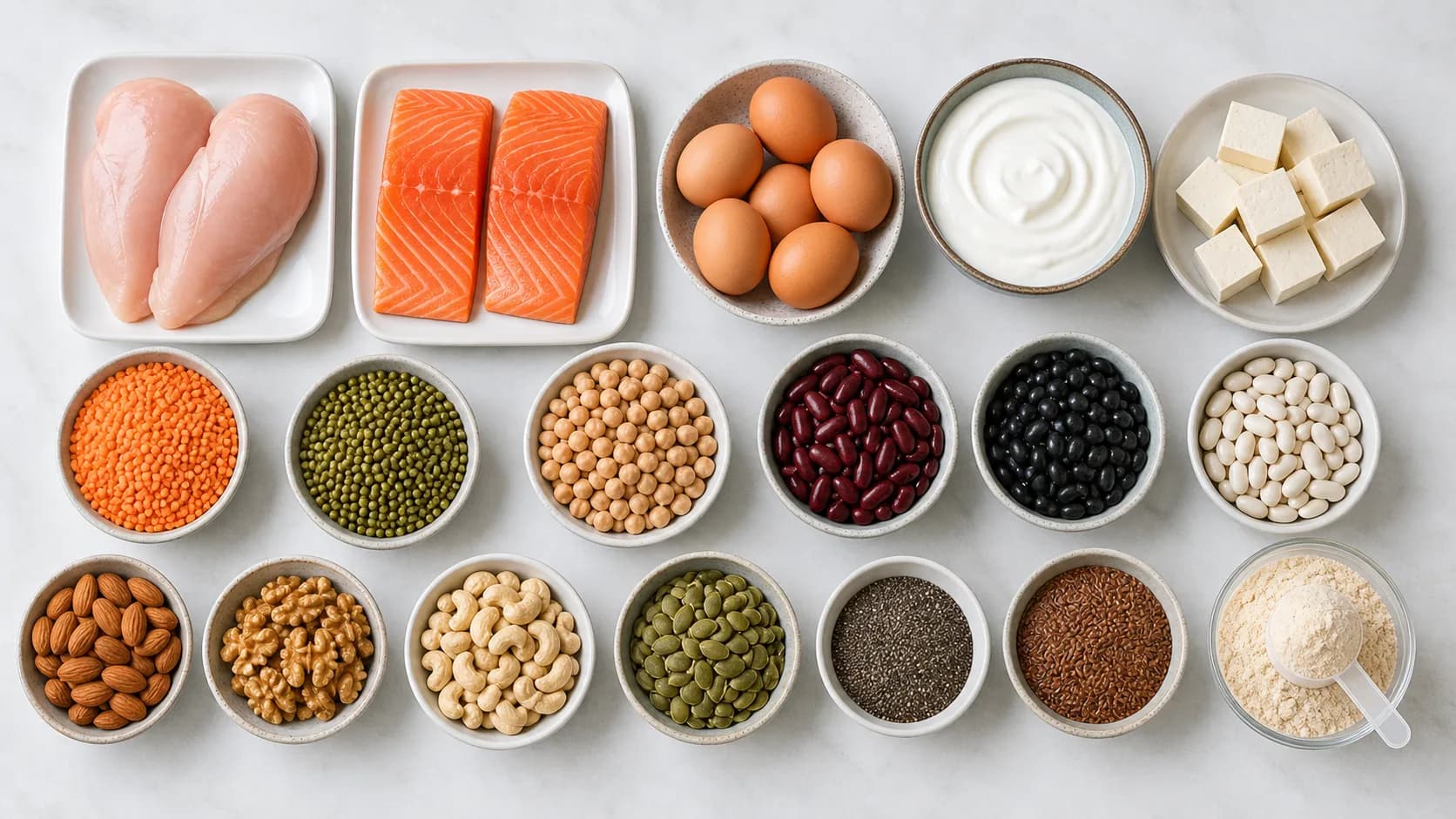
Quick Answer: Protein in 200g Dahi
A practical 200 g bowl of plain regular dahi or curd has about 7 g protein. The math is simple: about 3.5 g protein per 100 g, multiplied by 2. This is an estimate for plain unstrained curd. Packaged brands, homemade curd, milk type, water content, fat level, and straining can all change the final number.
The most important interpretation is that 200 g dahi is not the same as a high-protein meal. It is a helpful side, snack base, raita base, smoothie base, or cooling dairy component. To build a true high-protein meal, pair it with dal, chana, paneer, tofu, soya chunks, eggs, chicken, fish, whey, or another protein anchor that fits the diet.
| Serving | Estimated protein | Best tracking note |
|---|---|---|
| 100 g plain dahi | About 3.5 g | Use for exact gram tracking |
| 150 g dahi | About 5.3 g | Small bowl or side portion |
| 200 g dahi | About 7.0 g | Common bowl or raita base |
| 250 g dahi | About 8.8 g | Large bowl, still not a full protein anchor |
| 1 small katori | Varies | Weigh once because katori sizes differ |
Dahi vs Greek Yogurt, Hung Curd, Skyr, and Labneh
Regular dahi is usually unstrained or lightly set, so it contains more water relative to protein. Greek yogurt, skyr, hung curd, and labneh are strained or thickened, so their protein and calories are more concentrated per 100 g. That is why a 200 g regular dahi bowl may have about 7 g protein, while a similar amount of Greek yogurt may have far more depending on the label.
Do not use Greek yogurt numbers for regular homemade curd unless the food was actually strained to a similar thickness and you have a label or recipe calculation. Also do not use plain curd numbers for shrikhand, flavored yogurt, sweetened doi, packaged high-protein yogurt, lassi, chaas, or raita with added ingredients.
| Food | Protein density | Tracking advice |
|---|---|---|
| Regular dahi / curd | Low to moderate | Use plain-curd label or 3.5 g per 100 g estimate |
| Greek yogurt | Higher | Use exact label; straining concentrates protein |
| Hung curd | Higher than regular curd | Calculate from starting curd or use label |
| Skyr | High | Use product label; not the same as dahi |
| Labneh | Concentrated | Check fat and serving size |
| Shrikhand / sweetened curd | Varies | Track sugar and calories separately |
How to Build a 25-35g Protein Indian Meal With Dahi
Dahi works best as the supporting dairy component in a protein meal. A bowl of curd can add moisture, acidity, probiotics depending on product, and complete dairy protein, but the meal still needs a stronger anchor. In vegetarian meals, that anchor may be paneer, tofu, soya chunks, dal, chana, rajma, sprouts, besan chilla, Greek yogurt, or whey. In non-vegetarian meals, it may be eggs, chicken, fish, or lean meat.
The simplest formula is anchor plus dahi plus carb plus vegetables. For example, paneer bhurji with roti and 200 g dahi may reach a useful protein range. Chana salad with curd dressing can work if the chana portion is large enough. Soya chunk curry with curd raita can become very high protein, but dry soya weight should be tracked before cooking.
| Meal idea | Protein logic | Tracking caution |
|---|---|---|
| 200 g dahi + paneer bhurji | Dahi supports a stronger dairy protein anchor | Track paneer fat level and oil |
| Dahi + soya chunk curry | Soya supplies most protein; dahi adds dairy and cooling balance | Track dry soya weight |
| Curd rice + dal | Dahi alone is low; dal raises total protein | Rice can dominate calories |
| Raita + chana salad | Chana adds plant protein and fiber | Track boondi, sugar, oil, and sev |
| Dahi smoothie + whey | Whey turns curd into a high-protein snack | Track fruit and sweeteners |
Weight Loss, Muscle Gain, and Everyday Use
For weight loss, plain dahi can be useful because it is familiar, versatile, and can make meals feel more complete. The problem is not plain curd; the problem is untracked sugar, sweetened yogurt, lassi, boondi raita, fried toppings, or large curd-rice portions. If calories are tight, use plain curd, measure the serving, and pair it with a leaner protein anchor.
For muscle gain, dahi adds protein but usually not enough by itself. It can help raise meal calories and improve appetite when paired with rice, paratha, fruit, oats, paneer, or whey. If the daily target is high, Greek yogurt, skyr, paneer, tofu, soya chunks, eggs, fish, chicken, or protein powder may be more efficient.
- Use plain dahi as a side when the main meal already has protein.
- Use Greek-style or hung curd when protein density matters.
- Use dahi with spices and cucumber for a lower-calorie raita.
- Avoid counting sweet lassi as plain dahi.
- Use the vegetarian planner when building a full day around Indian foods.
Common Tracking Mistakes
The biggest mistake is using a spoon, katori, or bowl as if it were a fixed serving. One household katori may hold 100 g, another may hold 180 g, and a large bowl may cross 250 g. Weigh your normal bowl once, then you can estimate more confidently in future meals. The second mistake is mixing up regular curd and Greek yogurt values.
The third mistake is counting a mixed dish as plain curd. Raita can include cucumber, onion, tomato, boondi, spices, sugar, salt, and sometimes fried toppings. Chaas and lassi add water, sugar, salt, fruit, or flavorings. Curd rice adds rice and tempering. These foods can be healthy or useful, but they are not the same nutrition entry as plain dahi.
- Weigh your usual dahi bowl once.
- Use the package label for packaged curd.
- Do not apply Greek yogurt values to regular dahi.
- Track raita, lassi, shrikhand, and curd rice as separate recipes.
- Track sugar, fruit, honey, boondi, oil, and tempering separately.
How Homemade Dahi Changes the Number
Homemade dahi is one of the hardest foods to estimate perfectly because the nutrition starts with the milk, then changes with boiling, evaporation, fermentation, setting thickness, and how much whey separates. If the curd is made from toned milk, full-fat milk, buffalo milk, skim milk, or a mix, the calories and protein per 100 g can shift. The 200 g estimate on this page is therefore a practical tracker value, not a lab result for every household.
The best home method is to calculate from the milk used. If one liter of milk is turned into curd and the final pot weighs close to one kilogram, the curd nutrition is close to the milk nutrition per gram, adjusted slightly for water loss. If the curd is strained into hung curd, the final food becomes more concentrated because some liquid whey is removed. That is why hung curd and Greek-style yogurt cannot be tracked with regular dahi numbers.
| Homemade factor | What changes | Best tracking method |
|---|---|---|
| Milk type | Protein, fat, and calories | Start with the milk label or local milk nutrition |
| Boiling and evaporation | Final weight may drop | Weigh the finished curd batch if accuracy matters |
| Water separation | Bowl may contain more liquid whey | Stir before weighing if you eat the whole serving |
| Straining | Protein and calories become concentrated per 100 g | Track as hung curd, not regular dahi |
| Added cream or milk powder | Raises calories and sometimes protein | Track the added ingredient separately |
| Sugar or flavoring | Raises calories and carbs | Do not use plain dahi values |
For most users, weighing a usual 200 g bowl and using a consistent estimate is enough. Accuracy matters more for people cutting calories aggressively, managing prescribed diets, preparing bodybuilding meals, tracking diabetes-related carbohydrate intake, or comparing packaged products. For everyday meal planning, the bigger insight is that curd is a supporting protein source. The main protein still needs to come from a stronger anchor.
200g Dahi by Diet Goal
The same 200 g serving can play different roles depending on the goal. In a weight-loss meal, plain dahi can add volume, tang, and creaminess without turning the meal into a heavy sauce. In a muscle-gain meal, it can add calories, protein, and appetite-friendly moisture. In a vegetarian meal, it helps add complete dairy protein but usually needs paneer, tofu, soya, dal, chana, rajma, whey, or Greek yogurt to reach a high-protein target.
The common error is to treat dahi as either a miracle food or a food to avoid. Plain curd is neither. It is a flexible ingredient. The meal context decides whether it supports the goal. Two hundred grams of plain curd with cucumber, roasted jeera, and salt is very different from 200 g curd blended with sugar, mango, cream, and nuts. Both can fit some diets, but they solve different nutrition problems.
| Goal | Best use of 200 g dahi | What to pair it with | Watch point |
|---|---|---|---|
| Weight loss | Raita, snack bowl, or side with a protein anchor | Cucumber, vegetables, dal, grilled paneer, tofu, eggs, chicken | Avoid sugar, fried boondi, and large curd-rice portions |
| Muscle gain | Shake base, rice side, or dairy add-on | Whey, oats, fruit, paneer, roti, rice, nuts | Make sure total calories are actually high enough |
| Vegetarian high protein | Complete dairy support protein | Soya chunks, tofu, paneer, dal, chana, Greek yogurt | Dahi alone will not reach 25-35 g protein |
| Indian family meals | Cooling side that improves meal satisfaction | Dal, sabzi, roti, rice, salad, pickle in moderation | Serving size varies by bowl |
| Sports recovery | Easy dairy base after training | Fruit, cereal, oats, whey, or a full meal later | Low protein if used without an anchor |
This diet-goal framing helps the exact-serving page answer more than one keyword variant. A reader searching how much protein in 200g dahi gets the number. A reader asking whether 200g curd is good for weight loss gets context. A reader building an Indian high-protein meal gets combinations. The page should keep the answer direct while giving enough practical guidance for meal planning.
Packaged Curd Labels and Regional Variations
Packaged curd labels are the best source for a specific brand because dairy processing, fat percentage, and serving size vary. Some labels list nutrition per 100 g, some per serving, and some may use cup-style serving sizes. A 200 g serving is easy to calculate when the label gives per 100 g values: multiply protein, calories, carbohydrate, fat, and sodium by two. If the label gives a different serving size, convert it before comparing products.
Regional naming also matters. Dahi, curd, yogurt, set curd, mishti doi, flavored yogurt, Greek yogurt, hung curd, lassi, chaas, buttermilk, and raita can all appear in search behavior, but they are not interchangeable. Mishti doi and flavored yogurt can contain meaningful added sugar. Chaas is diluted. Hung curd is concentrated. Raita is a recipe. A precise page should tell readers which food the number belongs to.
| Label situation | How to calculate 200 g | Example caution |
|---|---|---|
| Nutrition per 100 g | Multiply each value by two | Best format for 200 g tracking |
| Nutrition per 150 g serving | Value / 150 x 200 | Do not copy the serving number directly |
| Cup or katori serving | Weigh the serving or use grams from the label | Cup sizes differ by country and brand |
| Flavored curd | Use that product label | Sugar and calories can rise quickly |
| Greek-style curd | Use exact label | Protein can be much higher than regular curd |
| Low-fat or full-fat curd | Use exact label for calories and fat | Protein may be similar but calories differ |
For a website, this distinction helps prevent thin or misleading content. The route can target protein in 200g dahi while internally linking to the broader curd chart, Greek yogurt chart, paneer chart, and vegetarian meal planner. The page should not try to rank by pretending every curd product has the same nutrition. It should explain the estimate and teach the conversion.
Indian Meal Examples Using Exactly 200g Dahi
A dedicated 200 g dahi guide should include examples that use the serving exactly, because that is what makes it more useful than a general curd page. The examples below are not prescriptions. They are tracking templates. The user can change the protein anchor, fat level, carb portion, and spices while keeping the curd serving stable. This helps people who meal prep or repeat similar lunches during the week.
| Meal template | How 200 g dahi is used | Protein strategy | Best fit |
|---|---|---|---|
| Paneer roti plate | Plain curd side or cucumber raita | Paneer supplies most protein; curd adds about 7 g | Vegetarian lunch |
| Soya curry bowl | Curd raita to balance spice | Soya chunks drive high protein | High-protein vegetarian dinner |
| Chana chaat bowl | Curd dressing with spices | Chana adds plant protein and fiber | Snack or light meal |
| Curd rice upgrade | Exactly 200 g curd mixed with measured rice | Add dal, tofu, egg, or grilled chicken | Comfort meal with better protein |
| Dahi whey smoothie | Curd base for a thick shake | Whey lifts protein to snack range | Post-workout or breakfast |
| Besan chilla plate | Curd dip or side bowl | Besan plus curd gives moderate protein | Breakfast or evening meal |
The key is to avoid double-counting. If 200 g dahi is used as a raita base, the cucumber and spices add little protein, but boondi, peanuts, sev, oil tempering, or sugar can change calories. If 200 g dahi is blended into a smoothie, fruit and honey add carbohydrate, and whey or milk powder adds protein. If it is mixed into curd rice, the rice becomes the main calorie source. A tracker should treat each mixed dish as a recipe.
This page can also support regional search behavior by mentioning normal Indian serving patterns without overclaiming. Many users do not weigh food daily, but they can weigh their favorite bowl once. If the normal bowl holds about 200 g, future estimates become easier. If the bowl holds only 120 g, the user should not assume they ate the full 7 g protein estimate. That one practical habit improves tracking more than memorizing dozens of numbers.
How 200g Dahi Fits Common Indian Plates
Two hundred grams of dahi usually behaves like a side bowl, not the main protein of an Indian plate. That matters because many plates look balanced but still fall short of protein. A rice, sabzi, pickle, and dahi plate may be satisfying and culturally normal, but most of the protein may come only from the curd and small amounts in grain. Add dal, paneer, tofu, soya, eggs where eaten, chicken, fish, or chana when the goal is a protein-focused meal.
The exact role changes by meal. At breakfast, 200 g dahi can be a base for oats, fruit, sattu, whey, or roasted chana. At lunch, it can be raita with dal, paneer, chana, rajma, or tofu. At dinner, it can cool a spicy curry or make a lighter plate feel complete. In summer, it can support hydration and appetite, but chaas and lassi should be tracked separately because dilution and sugar change nutrition.
| Plate | Protein from 200 g dahi | What completes the meal | Tracking note |
|---|---|---|---|
| Rice + sabzi + dahi | About 7 g | Add dal, tofu, paneer, eggs, fish, or chicken | Rice may dominate calories |
| Roti + paneer + dahi | About 7 g plus paneer | Paneer is the main anchor | Paneer fat level changes calories |
| Dal chawal + dahi | About 7 g plus dal | Increase dal if protein target is high | Cooked dal portions vary |
| Chana salad + dahi | About 7 g plus chana | Use enough chana for a real anchor | Track sev, oil, sugar, and chutney |
| Soya curry + raita | About 7 g plus soya | Soya chunks provide most protein | Track dry soya weight |
| Curd oats bowl | About 7 g plus oats and add-ins | Add whey, milk, or Greek yogurt for higher protein | Fruit and honey add carbs |
This approach makes the page useful for both quick-answer and meal-intent users. Someone who only wants the number can get it immediately. Someone who wants to use dahi in a diet gets plate examples. Someone building Indian vegetarian meals can move to the planner. That keeps the exact-serving page focused while still giving it enough depth to rank for related questions.
Dahi, Digestion, Lactose, and Food Safety
Dahi is fermented, but it is still a dairy food. Some lactose-sensitive people tolerate curd better than milk, while others still notice symptoms. Tolerance depends on the product, fermentation, serving size, the rest of the meal, and individual digestion. A 200 g serving may be comfortable for one person and too much for another. If dairy causes repeated symptoms, the safe advice is to reduce the serving, choose a different product, or ask a clinician when symptoms are significant.
Food safety also matters with homemade curd. Use clean utensils, safe milk handling, refrigeration, and reasonable storage time. Sourness alone is not a nutrition problem, but spoilage signs, unpleasant odor, mold, or unsafe storage should not be ignored. For infants, pregnancy, immune-compromised users, or medically vulnerable readers, food safety guidance from a clinician or public health source is more important than macro tracking.
| Concern | What to check | Practical action |
|---|---|---|
| Lactose tolerance | Symptoms after milk, curd, lassi, or yogurt | Use smaller portions or lactose-free alternatives if needed |
| Milk allergy | Immune reaction to dairy proteins | Avoid dairy and use clinician guidance |
| Sweetened products | Added sugar and flavoring | Use product label instead of plain dahi estimate |
| Homemade storage | Clean preparation and refrigeration | Discard if spoilage signs appear |
| Medical diets | Kidney, diabetes, pregnancy, or GI conditions | Use care-team advice rather than generic serving rules |
This does not mean dahi is unsafe for normal use. It means the page should avoid universal claims. For most healthy users, 200 g plain dahi can fit easily into meals. For users with allergy, intolerance, prescribed diets, or clinical conditions, the exact protein number is less important than personal safety and medical context.
Exact 200g Dahi Conversion Cheatsheet
The strongest reason for this page to exist is conversion. Many readers already know curd is healthy or familiar, but they need the exact serving math. If a label gives values per 100 g, double them. If a recipe uses 50 g, 100 g, 150 g, 250 g, or 500 g, scale from the same per-100 g estimate. If the curd is strained, sweetened, flavored, diluted, or mixed into a recipe, stop using the plain dahi entry and calculate the actual food.
| Amount | Protein using 3.5 g per 100 g | How to think about it |
|---|---|---|
| 50 g | About 1.8 g | Small spooned topping |
| 100 g | About 3.5 g | Small side or half bowl |
| 150 g | About 5.3 g | Moderate side bowl |
| 200 g | About 7.0 g | Main serving on this page |
| 250 g | About 8.8 g | Large bowl |
| 500 g | About 17.5 g | Large amount, still lower than Greek yogurt |
This cheatsheet should be paired with a reminder about labels. A packaged curd with 4.0 g protein per 100 g gives about 8 g protein per 200 g. A product with 3.2 g per 100 g gives about 6.4 g per 200 g. A high-protein yogurt may be much higher, but it is no longer the same food entry. A sweetened product may add calories without adding much protein.
For users tracking Indian meals, the best habit is to weigh the serving once and save it as a custom food or recurring meal. The user does not need to weigh every bowl forever. They only need a reliable reference for their normal katori, raita bowl, or breakfast bowl. This makes the page immediately actionable and reduces the uncertainty that leads to undercounting or overcounting.
When 200g Dahi Is Enough and When It Is Not
The simplest way to judge 200 g dahi is to compare it with the meal's protein goal. If the meal target is only 10-15 g protein, a 200 g bowl can be meaningful. If the meal target is 25-35 g, the curd is only part of the solution. If the meal target is 40 g or more, dahi is clearly a supporting ingredient unless it is replaced by Greek yogurt, combined with whey, or paired with a concentrated anchor such as paneer, tofu, soya chunks, eggs, chicken, or fish.
This matters for weight-loss searches because people often ask whether curd is good for weight loss. Plain curd can help a meal feel complete, but it does not automatically make the meal high protein or low calorie. It matters for muscle-gain searches because dahi can add appetite-friendly calories, but it will not close a high target by itself. It matters for vegetarian searches because dahi provides complete dairy protein, but the quantity is modest.
| Meal protein target | Role of 200 g dahi | Add this if target is higher |
|---|---|---|
| 10-15 g | Can be a major contributor | Fruit, oats, or a small dal portion may be enough |
| 20 g | Useful but incomplete | Add dal, chana, besan, egg, tofu, or paneer |
| 25-35 g | Supporting protein | Use a clear anchor such as paneer, tofu, soya, Greek yogurt, or chicken |
| 40 g+ | Small part of the meal | Use concentrated protein and treat dahi as side or sauce |
| Snack target | Can work when paired | Add roasted chana, whey, milk, or high-protein yogurt |
A reader who understands this distinction is less likely to overestimate curd. They can still enjoy it daily, but they will not build a high-protein plan around a food that provides only about 7 g protein per 200 g. That is the main educational value of the page: keep the serving familiar while making the protein math clear.
How to Use This Page With Food Logs and Apps
Food logs often contain many entries for curd, yogurt, homemade dahi, low-fat curd, buffalo curd, sweet curd, Greek yogurt, and raita. The wrong entry can change the day's totals. For a plain 200 g serving, choose a plain curd entry that matches the product or use the package label. If the app has only a per-100 g entry, enter 200 g. If the app uses cups, convert to grams by weighing the bowl once.
For homemade curd, create a custom entry if the same milk and method are used repeatedly. For a mixed dish, create a recipe. A raita recipe should include dahi plus cucumber, onion, boondi, sugar, spices, salt, or other additions. A smoothie recipe should include dahi plus fruit, whey, milk, honey, oats, or nuts. Curd rice should include curd, rice, oil, tempering, and any extras. This prevents the common mistake of logging a mixed dish as plain dahi.
- Use grams when possible because spoons, katori, and cups vary.
- Use product labels for packaged curd and high-protein yogurts.
- Create a separate recipe for raita, lassi, chaas, curd rice, and smoothies.
- Do not copy Greek yogurt protein values into regular dahi entries.
- Save your usual 200 g bowl as a recurring item if you eat it often.
This logging guidance gives the page a practical purpose beyond the protein number. It helps users avoid tracking errors that affect weight loss, muscle gain, and vegetarian meal planning. It also naturally connects the exact-serving article to the protein food calculator and broader food protein charts.
Common 200g Dahi Questions in Real Meals
The most common real-life question is whether 200 g dahi should be counted as a snack, side, or protein source. The honest answer is that it can be all three, but not with the same meaning. As a snack, it is a modest-protein dairy bowl. As a side, it improves a meal but does not replace the main anchor. As a protein source, it contributes complete dairy protein but usually needs support. The serving is useful because it is familiar, not because it is extremely high in protein.
Another question is whether the serving should be eaten plain or mixed. Plain curd is easiest to track. Salt, roasted cumin, cucumber, onion, and tomato add flavor with small protein changes. Boondi, sugar, fruit, honey, nuts, cream, rice, and oil tempering change calories more significantly. If the goal is weight loss, keep the additions simple. If the goal is muscle gain, additions can be useful, but they should be deliberate.
| Question | Short answer | Best next step |
|---|---|---|
| Is 200 g dahi high protein? | No, it is moderate at about 7 g | Pair with a stronger anchor |
| Can I eat it daily? | Most healthy users can if tolerated | Use plain versions and vary the meal |
| Is it better than milk? | It depends on serving, tolerance, and use | Compare labels and total meal context |
| Is it good before workouts? | It can be, if digestion is comfortable | Pair with carbs if training needs fuel |
| Can it replace dinner protein? | Usually no | Add dal, paneer, tofu, soya, eggs, fish, or chicken |
| Should I use Greek yogurt instead? | Use it when higher protein density matters | Track the exact label |
A final practical point: 200 g dahi is easy to overestimate visually. A small bowl may be only 100-150 g. A deep bowl may be more than 250 g. If this food appears daily in the diet, weigh the normal bowl once. After that, the user can estimate more confidently without turning every meal into a weighing exercise.
This question-and-answer framing helps the page serve quick snippets, voice searches, and long-tail queries while still sending users to deeper tools. It also keeps the answer grounded: dahi is useful, but the full meal decides whether the diet is high protein.
For recipe creators, the same logic applies at scale. A recipe that uses 200 g dahi across four servings gives only about one quarter of that curd protein per serving. A recipe that uses 200 g per person can count the full amount. This serving distinction is one reason nutrition labels, food logs, and homemade recipe calculators can disagree when the recipe yield is not entered carefully.
For a quick manual estimate, remember the anchor phrase: 200 g plain regular dahi is about 7 g protein, then adjust up or down when the product is strained, sweetened, diluted, or made from a different milk base.
When unsure, use the label or weigh the homemade serving before relying on the estimate.
Consistency matters.
Official Source Credits and Visual Assets
The feature image and infographic are generated by ProteinCalc for this exact serving question. The nutrition tables use source-backed food-composition logic, and the Indian meal context is credited to official Indian dietary guidance plus food-label best practices. Official source links are provided instead of copying agency PDFs or brand images into the page.
| Asset or source | Asset type | How it is used and credited |
|---|---|---|
| USDA FoodData Central | Food composition database | Used for representative protein, calories, and serving-size comparisons. Credit: U.S. Department of Agriculture. |
| FDA Nutrition Facts Label | Label-reading education | Used for label fields such as serving size, calories, protein, added sugars, sodium, allergens, and Daily Value context. Credit: U.S. Food and Drug Administration. |
| ISSN and PubMed research | Sports-nutrition evidence | Used for training, muscle gain, protein distribution, and supplement evidence. Credit: cited journal authors and publishers. |
| ProteinCalc generated figures | Feature image and infographics | Page visuals are generated by ProteinCalc from the credited data sources instead of copying brand or journal images. |
| ICMR-NIN Dietary Guidelines for Indians | Official Indian nutrition guidance | Used for Indian food context and balanced-diet framing. Credit: ICMR-National Institute of Nutrition. |
Best Internal Next Steps
Use the broader dahi and curd page when you want general curd comparisons, country-wise naming, and Greek yogurt differences. Use this page for the exact 200 g question. Use the Indian vegetarian planner when the goal is building a full day from paneer, dal, soya, curd, sattu, chana, tofu, and other vegetarian foods.
- Use the food calculator to combine dahi with rice, dal, fruit, or whey.
- Use the protein meal planner when you need a full day instead of one food answer.
- Use the Greek yogurt page if you are comparing strained yogurt instead of regular curd.
Common Questions
Related Guides and Tools
Sources reviewed
- USDA FoodData Central - U.S. Department of Agriculture
- Dietary Guidelines for Indians 2024 - ICMR-National Institute of Nutrition
- How to Understand and Use the Nutrition Facts Label - U.S. Food and Drug Administration