
Muscle Gain
Best Protein Powder for Muscle Gain: Complete Label, Timing, and Buying Guide
The best protein powder for muscle gain is the one that helps you reach a sound daily protein target while fitting your calories, training schedule, digestion, budget, and taste. This guide separates muscle-building fundamentals from supplement marketing so readers can choose a powder category, compare labels, and use the product without ignoring food, training, and calories.
Key Takeaways
- Protein powder supports muscle gain only when total protein, calories, progressive resistance training, and recovery are already organized.
- Whey isolate and concentrate are strong default choices for many lifters; plant blends and soy isolate can work for dairy-free or vegan users.
- A good muscle-gain label is protein-dense, clear about serving grams, tested when needed, and affordable enough to use consistently.
- Mass gainers are not automatically better for muscle gain; many are mostly calories and carbohydrate with a standard amount of protein.
- Use the powder as a flexible protein anchor, then build meals with carbs and calories around training demands.
Article Structure
- 1. Do You Need Protein Powder to Build Muscle?
- 2. Best Powder Types for Muscle Gain
- 3. Label Checklist for Muscle Gain
- 4. How Much and When to Take It
- 5. Muscle Gain Without Overbuying Supplements
- 6. Match the Powder to the Muscle-Gain Phase
- 7. Mass Gainer vs Whey Plus Food
- 8. Label Scoring for Muscle Gain Products
- 9. Training-Day and Rest-Day Use Cases
- 10. Product Selection by Buyer Intent
- 11. Muscle-Gain Shake Examples
- 12. How to Judge Results After Buying
- 13. Best Powder Choice by Training Level
- 14. Final Purchase Checklist
- 15. Realistic Muscle-Gain Timelines
- 16. Official Source Credits and Visual Assets
- 17. Step-by-Step Buying Decision
Use This as Decision Support, Not a Treatment Plan
This page can help organize meals and questions, but it cannot set a personal medical nutrition target. Bring these points to the clinician managing the medication, diabetes care, kidney health, pregnancy planning, or side effects.
- What protein and calorie range fits my medication, weight-loss pace, kidney function, labs, and activity?
- Which symptoms should trigger a medication or clinical check-in rather than another food swap?
- Do I need body-composition monitoring, hydration guidance, constipation support, or referral to a registered dietitian?
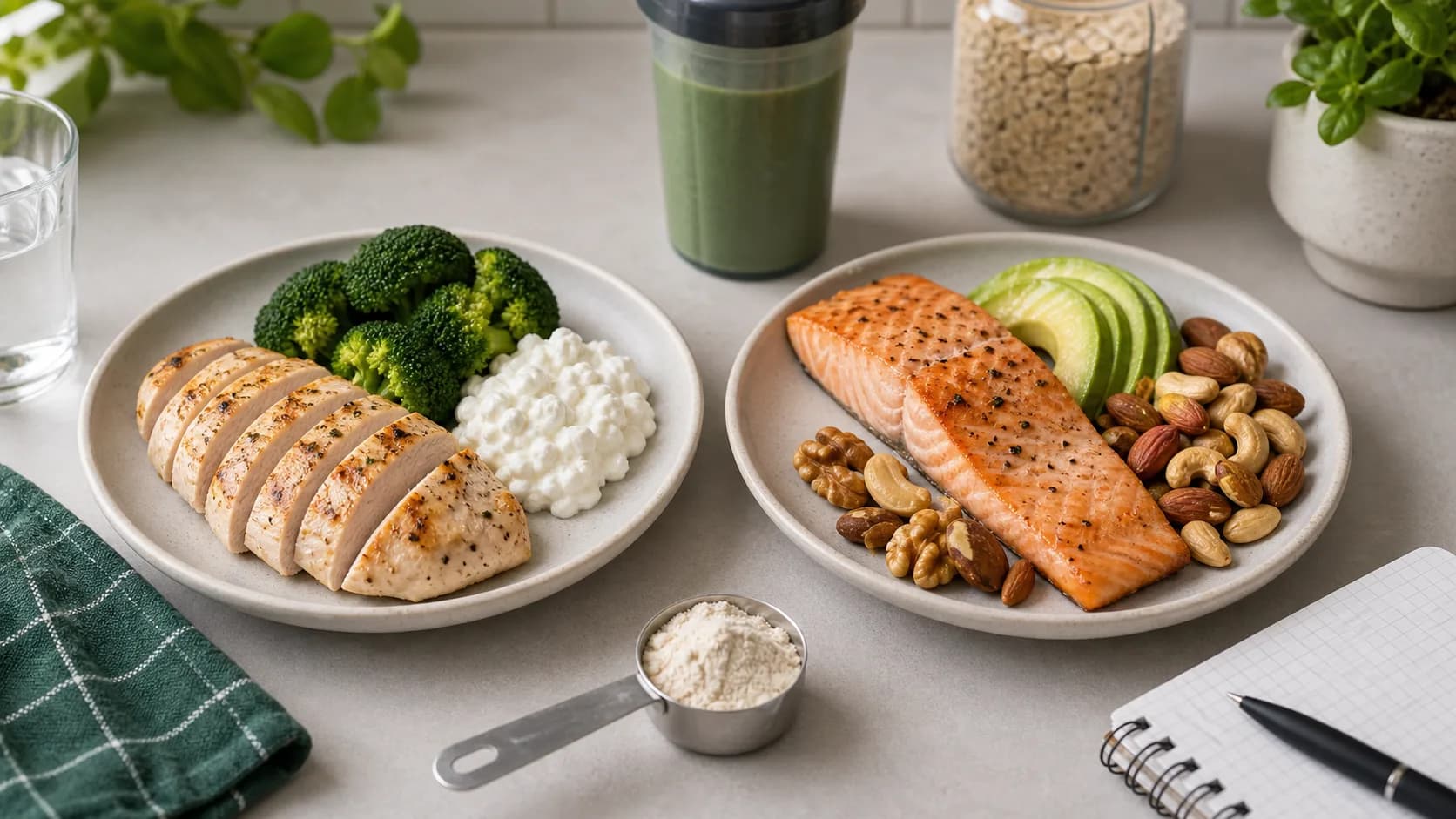
Do You Need Protein Powder to Build Muscle?
You do not need protein powder to build muscle. Muscle gain requires progressive resistance training, enough total calories over time, enough protein, sleep, and repeatable meals. Powder becomes useful when whole-food protein alone is inconvenient. A lifter can build muscle with eggs, dairy, chicken, fish, tofu, tempeh, paneer, lentils, beans, or soy foods; powder is simply a concentrated and portable option.
The practical question is not whether powder is magical. The question is whether it closes a real gap. If a reader needs 150 g protein and normally reaches only 115 g, one scoop after training or with breakfast can make the plan realistic. If the reader already hits the target from food, more powder may add cost without better results.
| Scenario | Powder priority | Why |
|---|---|---|
| Hits protein from food | Low | Use powder only for convenience or travel |
| Short by 20-40 g daily | High | One serving can close the gap without another cooked meal |
| Bulking with low appetite | Medium-high | Liquid calories and protein can be easier to consume |
| Cutting while lifting | Medium | Powder can raise protein without much prep |
| Vegan muscle gain | Medium | Soy isolate or pea-rice blends can simplify complete protein planning |
Best Powder Types for Muscle Gain
Whey is the default recommendation for many non-vegan lifters because it is protein-dense, rich in essential amino acids, widely studied, and easy to mix. Whey isolate is useful when calories, lactose, or protein density matter. Whey concentrate can be a better value when dairy tolerance is good. Casein is slower and thicker, which can make it useful before bed or as a more filling snack.
Vegan users should look for complete plant proteins or complementary blends. Soy isolate is a complete protein. Pea and rice blends can complement amino acid patterns. Single-source plant powders can still help total protein, but a blend often makes planning easier for muscle gain.
| Powder type | Muscle-gain strengths | Watch-outs |
|---|---|---|
| Whey isolate | High protein density, lower lactose, easy post-workout option | Often costs more |
| Whey concentrate | Good value, creamy taste, widely available | More lactose and slightly lower protein percentage |
| Casein | Thicker, slower, useful as a bedtime snack | Not necessary if daily protein is already distributed well |
| Soy isolate | Complete plant protein and dairy-free | Flavor and texture vary by brand |
| Pea-rice blend | Vegan-friendly complementary blend | Check protein per calorie and sodium |
| Mass gainer | Raises calories quickly | Can be mostly carbohydrate and expensive calories |
Label Checklist for Muscle Gain
Muscle-gain shoppers often look only at the largest protein number on the front label. That is not enough. Compare serving grams, calories, protein percentage, carbohydrate, fat, sodium, sweeteners, allergens, third-party testing, and cost per 30 g protein. A clean label that is affordable and digestible usually beats a flashy label that is hard to use daily.
If two products both provide 25 g protein, the better buy may be the one with fewer calories, clearer ingredient order, better testing, lower cost per protein, or better tolerance. If calories are intentionally high because the user is bulking, extra carbohydrates are not automatically bad, but they should be chosen on purpose.
| Metric | Good sign | Concern |
|---|---|---|
| Protein density | 20-30 g protein in a moderate serving | Large serving needed to reach normal protein |
| Calories | Matches goal: lean gain or bulk | Hidden calories from creamers, fats, or sugars |
| Ingredient clarity | Protein source listed clearly first | Vague blends or amino spiking concerns |
| Testing | Recognized third-party certification if needed | Only vague purity claims |
| Cost | Affordable per 30 g protein | Large tub price hides poor protein value |
| Tolerance | Fits lactose, dairy, soy, gluten, and sweetener needs | Causes repeated digestive issues |
How Much and When to Take It
A practical serving is usually one dose that contributes about 20-40 g protein, depending on body size, meal pattern, and daily target. The powder does not need to be taken immediately after the last set if a normal protein-rich meal is coming soon. It becomes more useful when training creates a long gap before the next meal.
For muscle gain, powder can also be paired with carbohydrates. A whey shake with milk and banana is different from whey mixed with water. Both can be correct. The lean-gain user may prefer water or low-fat milk. The hard-gainer may need milk, oats, fruit, honey, or nut butter. The important step is matching the shake to the calorie target instead of copying a generic recipe.
- Use one scoop after training when dinner or lunch is delayed.
- Use casein, Greek yogurt, or cottage cheese before bed if it helps close a protein gap.
- Use a plant blend after training if vegan or dairy-free.
- Use the macro calculator before deciding whether a high-calorie shake is helpful.
- Avoid stacking multiple powder servings while leaving meals low in fiber and produce.
Muscle Gain Without Overbuying Supplements
A muscle-gain supplement stack can become expensive quickly. The priority order is simple: train progressively, eat enough calories, hit protein, sleep, and keep digestion predictable. Protein powder may be a first supplement because it solves a food problem. Creatine may be useful for many lifters. Most other extras should be judged more strictly.
Do not let powder replace the meal habits that actually make a bulk work. Rice, potatoes, oats, bread, fruit, olive oil, dairy, legumes, tofu, meat, fish, and eggs all carry roles beyond protein. If a reader relies on shakes but under-eats at meals, the scale and training log may stall.
Lean gain
Choose a protein-dense powder and add calories slowly through meals.
Hard gainer
Use shakes with milk, oats, fruit, and nut butter when total calories are the bottleneck.
Dairy-free
Use soy isolate or pea-rice blends and check texture before buying a large tub.
Tested athlete
Prioritize recognizable third-party testing and batch transparency.
Match the Powder to the Muscle-Gain Phase
Muscle gain does not look the same in every phase. A beginner trying to gain their first 5-10 kg of training body weight has different needs from an intermediate lifter running a cautious lean bulk, and both differ from an athlete who must stay inside a weight class. The powder choice should follow the phase. Beginners usually need consistency and calories. Lean-bulk lifters usually need enough protein without pushing calories too fast. Weight-class athletes often need tested products, precise labels, and a plan that does not create unwanted weight gain.
A powder page becomes more useful when it explains these contexts because readers often search for best protein powder for muscle gain without knowing whether they need whey, a mass gainer, a vegan blend, or simply a better breakfast. The correct answer is not always the highest-protein product. Sometimes the best product is cheaper, mixes well, and is easy to use daily. Sometimes it is a tested isolate. Sometimes it is no product at all until the reader fixes meal timing and total calories.
| Muscle-gain phase | Main problem | Best powder role | What to avoid |
|---|---|---|---|
| Beginner bulk | Inconsistent meals and low calories | Simple whey or plant protein in a daily shake | Buying advanced formulas before building habits |
| Lean bulk | Protein target with controlled surplus | Protein-dense powder with modest calories | High-calorie gainers that move body weight too quickly |
| Hard-gainer phase | Low appetite and hard-to-reach calories | Powder blended with milk, oats, fruit, or nut butter | Relying on powder alone without raising total food |
| Cut-to-gain transition | Maintaining protein while calories rise slowly | One measured serving as a stable anchor | Adding multiple shakes before tracking weekly weight |
| Weight-class sport | Performance and testing constraints | Certified powder with clear batch controls | Unverified products and proprietary blends |
| Vegan hypertrophy | Protein quality and meal distribution | Soy isolate or pea-rice blend | Single-source plant powders that are hard to use consistently |
The most practical recommendation is to decide the phase first, then choose the product. If the reader is gaining too fast, the solution is rarely a bigger shake. If the reader is not gaining at all, the solution may be more calories, not a more expensive isolate. If digestion is poor, the solution may be a smaller serving, a simpler formula, or moving powder away from heavy meals. The page should teach the reader how to diagnose the bottleneck before clicking a product.
Mass Gainer vs Whey Plus Food
Mass gainers are popular because they promise a simple answer to slow weight gain. They usually combine protein with a large dose of carbohydrate and calories. That can help a small group of readers: people with high energy expenditure, low appetite, limited cooking access, or a history of missing calorie targets despite training hard. But a mass gainer is not automatically a muscle-gain supplement in the way many ads imply. It is mostly a calorie-delivery product with protein included.
For many lifters, whey plus food is more flexible. A scoop of whey can be blended with milk, banana, oats, peanut butter, dates, yogurt, olive oil in savory contexts, or cereal depending on the target. That lets the user scale calories up or down without changing the protein source. It also lets the user choose carbohydrate quality, fiber, taste, and portion size. If digestion becomes heavy, the user can remove oats or nut butter without changing the powder.
| Option | Strength | Weakness | Best reader |
|---|---|---|---|
| Mass gainer | Fast calories with little prep | Less flexible and often expensive per calorie | Hard-gainer who repeatedly misses calorie targets |
| Whey plus milk | Adds protein, carbs, and calories simply | Not suitable for dairy-free users | Beginner bulk or post-workout shake |
| Whey plus oats and banana | Adds training carbs and fiber | Thicker texture and more total calories | Lifter needing a meal-like shake |
| Whey plus yogurt | Thick, filling, higher-protein bowl | May be too filling for hard gainers | Lean bulk or high-protein snack |
| Plant powder plus soy milk | Dairy-free complete protein option | Texture and flavor vary strongly | Vegan or dairy-free muscle gain |
A useful rule is to buy mass gainer only after confirming that calories are truly the bottleneck. If protein is the bottleneck, buy protein powder. If meal timing is the bottleneck, change the schedule or use a smaller shake. If appetite is the bottleneck, liquid calories can help, but homemade shakes may be cheaper and more adjustable. If training progression is the bottleneck, supplements cannot replace a better program.
This section also supports monetization without weakening trust. A page can still recommend mass gainers for the right users, but it should compare them with lower-cost grocery alternatives. Readers who need the convenience will appreciate the clarity, and readers who do not need a gainer are less likely to waste money or bounce after seeing only aggressive product rankings.
Label Scoring for Muscle Gain Products
A muscle-gain product should be scored on the details that affect repeated use. Protein amount matters, but so do calories, protein source, serving size, cost, third-party testing, allergen risk, sweetness, texture, and whether the product can be used in the way the reader intends. A powder that tastes good only with whole milk may not be ideal for a reader who needs a low-calorie shake with water. A powder that is very lean may not help a hard-gainer who needs calories.
The label should make the protein source obvious. Whey concentrate, whey isolate, micellar casein, soy isolate, pea protein, rice protein, egg white protein, and collagen are not identical. Collagen can be useful in some contexts, but it is not a complete muscle-gain powder by itself. A plant blend may be more useful than a single plant source when amino acid balance is the concern. The page should direct readers to compare exact products, not just categories.
| Score area | High score signal | Low score signal | Why it matters |
|---|---|---|---|
| Protein source | Clear complete protein source listed first | Vague proprietary blend | Muscle gain depends on complete protein quality |
| Serving clarity | Serving grams and protein grams easy to compare | Large scoop hides low density | Prevents unfair product comparisons |
| Calories | Matches the reader's surplus plan | Very high or very low for stated use | Controls body-weight pace |
| Cost | Good cost per 25-30 g protein | Premium price without a real constraint solved | Supports long-term consistency |
| Testing | Recognizable certification when needed | Only vague purity claims | Important for tested athletes |
| Tolerance | Allergens and sweeteners easy to identify | Heavy gums, unknown blends, unclear allergen statement | Digestive comfort affects adherence |
The score should be interpreted by goal. For a lean-gain reader, a low-calorie isolate with strong protein density may score higher. For a hard-gainer, mixability with calorie add-ins may matter more than the leanest label. For a vegan lifter, amino-acid completeness and taste may matter more than comparing every product to whey. For a tested athlete, certification can outweigh small differences in cost or flavor.
Product pages should avoid pretending that one number can rank everything. A weighted score is useful only when the weighting is visible. The best editorial pattern is to show the primary use case, then explain why the product fits that use case. That helps readers trust affiliate recommendations and gives internal calculators a natural role: estimate target, identify bottleneck, then compare labels.
Training-Day and Rest-Day Use Cases
Protein powder does not need a complicated training-day ritual. If a reader trains after work and eats dinner within an hour, the shake may be unnecessary. If they train early and cannot eat until later, a shake can prevent a long protein gap. If they train during lunch and return to meetings, a ready shake can be the difference between hitting the target and missing it. The right timing is the timing that improves consistency.
Rest days still matter for muscle gain because muscle protein remodeling and recovery do not stop when the workout ends. A reader who uses powder only on training days may under-eat protein on rest days if meals are less structured. On the other hand, a reader who eats full meals on rest days may not need any powder. The page should teach readers to manage daily totals rather than attach protein only to workouts.
| Situation | Simple plan | Why it works |
|---|---|---|
| Early workout | Shake after training, breakfast later | Closes the gap without forcing a full meal immediately |
| Lunch workout | Pre-packed shake plus fruit | Easy to consume before returning to work |
| Evening workout with dinner soon | Skip shake or use half serving if dinner is low protein | Avoids redundant calories |
| Rest day low appetite | Use powder in oats or yogurt | Keeps protein repeatable without another cooked meal |
| Travel day | Carry single-serving powder or use a tested ready-to-drink option | Protects the target when food access is poor |
A reader also needs to know when not to add powder. If digestion is poor before training, move the shake earlier or later. If body weight is climbing too fast, reduce shake calories before cutting protein from meals. If the training log is not improving despite enough calories and protein, examine program quality, sleep, and progression. Powder is one lever; it is not the entire muscle-gain system.
Product Selection by Buyer Intent
Best protein powder for muscle gain is a buyer-intent query, so the guide should help readers make a purchase decision without pretending every buyer has the same goal. A lean lifter, hard-gainer, vegan athlete, lactose-sensitive user, and tested competitor all need different filters. The page should first route the reader into the correct product family, then send them to exact product comparison when they are ready.
A dairy-tolerant lifter who wants a simple supplement can usually start with whey concentrate or isolate. A user with lactose issues may begin with isolate, but still needs to verify the label. A vegan user can compare soy isolate, pea-rice blends, and other complete plant formulas. A hard-gainer may not need a different protein source; they may need more calories added around the protein. A tested athlete should prioritize certification before flavor rankings.
| Buyer intent | Best first category | What to compare | Internal next step |
|---|---|---|---|
| Lean muscle gain | Whey isolate or protein-dense blend | Calories per 25-30 g protein | Protein score calculator |
| Budget muscle gain | Whey concentrate or soy isolate | Cost per 25-30 g protein | Protein powder finder |
| Hard-gainer | Whey plus calorie add-ins or mass gainer | Total calories, carbs, and serving cost | Macro calculator |
| Vegan muscle gain | Soy isolate or pea-rice blend | Protein quality, texture, serving size | Vegan protein guide |
| Lactose-sensitive | Whey isolate or dairy-free powder | Lactose claims, sweeteners, allergens | Whey guide |
| Tested sport | Certified protein product | NSF/Informed Sport style verification | Athlete calculator |
This structure makes the article commercially useful while still being honest. The reader is not pushed into the most expensive tub by default. They are given a filter that matches their constraint. That makes affiliate recommendations more credible and reduces the risk of cannibalizing the broader protein powder guide, because this page is specifically about muscle-gain purchase decisions.
Muscle-Gain Shake Examples
A muscle-gain shake should be designed around the bottleneck. If protein is low but calories are fine, the shake can be lean. If calories are low, the shake needs carbohydrate and fat. If appetite is poor, liquid calories can be easier than another plate of food. If digestion is sensitive, the shake should be smaller, simpler, and separated from a heavy meal. The same powder can serve all of these roles when the recipe is adjusted.
| Shake type | Ingredients | Best use | Watch point |
|---|---|---|---|
| Lean protein shake | Whey or plant powder plus water | Close a protein gap with low calories | May not help if calories are the true bottleneck |
| Training shake | Powder, milk, banana, oats | Post-workout or breakfast during a bulk | Track the full recipe, not only powder |
| Hard-gainer shake | Powder, whole milk, oats, peanut butter, dates | Raise calories when appetite is low | Can overshoot calories quickly |
| Vegan bulk shake | Soy milk, plant powder, banana, oats, tahini or peanut butter | Dairy-free muscle gain | Check texture and sweetness |
| Bedtime bowl | Greek yogurt or casein plus fruit | Slow, filling protein before sleep | Not required if daily target is already hit |
| Travel shake | Single serving powder plus shelf-stable milk or water | Protect target on busy days | Choose tested options when sport rules matter |
The article should not imply that shakes are superior to meals. A shake is a tool for convenience, appetite, or timing. Many lifters gain better with simple meals: rice, dal, paneer, tofu, eggs, chicken, fish, potatoes, oats, yogurt, fruit, olive oil, and vegetables. The shake fills the gap that the meal plan cannot cover reliably. That message helps readers use protein powder without replacing the rest of nutrition.
For search intent, shake examples also capture related queries such as protein powder for bulking, best whey for muscle gain, mass gainer vs whey, and how to take protein powder for muscle gain. They keep the page helpful after the purchase decision because readers can immediately use the product in a plan.
How to Judge Results After Buying
A powder choice should be evaluated by outcomes, not only by taste on day one. After two to four weeks, the user should ask whether the product helped them hit protein, whether digestion stayed comfortable, whether body weight moved at the intended pace, whether training performance improved or at least held steady, and whether the product is affordable enough to continue. If the answer is no, the issue may be the plan rather than the powder.
If weight is not increasing during a bulk, the user should first check total calories and weekly body-weight trend. Adding a more expensive powder will not help if the total calorie surplus is missing. If body fat is rising too quickly, the user should reduce calorie-dense shake add-ins before cutting protein. If training is stalled, the issue may be program progression, volume, sleep, or recovery. If digestion is poor, the serving size, sweeteners, lactose, gums, or timing may need adjustment.
| Problem after buying | Likely cause | First adjustment |
|---|---|---|
| Still not gaining weight | Calories still too low | Add measured carbs or fats around meals |
| Gaining too fast | Shake calories too high | Remove nut butter, reduce oats, or use lower-fat milk |
| Protein target still missed | Serving not used consistently | Place shake at a fixed meal time |
| Digestive discomfort | Serving size, lactose, sweeteners, or gums | Try smaller serving or simpler formula |
| Taste fatigue | One flavor repeated too often | Use neutral flavors in food or rotate recipes |
| Training not improving | Program or recovery issue | Review training plan, sleep, and calories |
This results-focused section makes the page more useful after conversion. It reduces returns, helps readers troubleshoot, and naturally links to calculators and planners. It also keeps the page from becoming a static list of products. The reader learns how to decide, buy, use, and reassess the powder.
Best Powder Choice by Training Level
Training level changes what a reader should expect from protein powder. Beginners often gain strength and muscle from basic consistency: train hard, eat enough, sleep, and hit a reasonable protein target. They do not need the most technical supplement label. Intermediate lifters usually benefit from more precise meal timing, calorie control, and product consistency. Advanced lifters may care more about testing, digestion, repeatability, and small improvements because the easy progress is already gone.
A beginner who buys an expensive hydrolyzed isolate but misses meals is solving the wrong problem. An intermediate lifter who trains well but is always 30 g short may benefit from one reliable serving per day. A weight-class or drug-tested athlete may need a certified product even if it costs more. A vegan lifter may need to compare amino acid quality and serving size more carefully. The best product is the one that removes the limiting friction in the user's current training level.
| Training level | Powder priority | Good choice | Main warning |
|---|---|---|---|
| Beginner | Consistency and affordability | Basic whey, soy isolate, or plant blend | Do not overbuy before building meals |
| Intermediate | Macro fit and repeatability | Protein-dense powder that tastes good enough to use | Do not let shakes replace calorie planning |
| Advanced | Precision, testing, digestion | Certified product with clear serving math | Small label differences still matter less than training |
| Hard-gainer | Calories and appetite support | Powder in a calorie-containing shake | Mass gainer is optional, not mandatory |
| Cutting lifter | Protein with controlled calories | Lean isolate or measured blend | Watch add-ins and snack calories |
| Vegan lifter | Complete plant protein strategy | Soy isolate or pea-rice blend | Single-source plant powders may need diet context |
This training-level framing keeps the article useful for multiple commercial searches without repeating the same recommendation. It also makes internal links more natural. Beginners can move to the main protein calculator and meal planner. Intermediate users can compare product labels. Advanced athletes can use the athlete calculator and certification notes. Vegan users can move to the vegan guide. Each reader has a clear next action.
Final Purchase Checklist
Before buying, the reader should be able to answer six questions. What daily protein target am I trying to hit? How much of that target is currently missing? Which protein source fits my diet and tolerance? Does the label give enough protein for the calories and serving size? Is the product affordable enough to repeat? Do I need third-party testing? If any answer is unclear, the reader should use the calculator or product score tool before buying a large container.
- Buy a small size first when trying a new flavor, sweetener system, or protein source.
- Compare cost per 25-30 g protein instead of tub price alone.
- Choose mass gainer only when calories are genuinely the limiting factor.
- Use certified products if sport testing or contamination risk matters.
- Keep the first use simple so you can judge tolerance before adding many ingredients.
- Reassess after two to four weeks using weight trend, training log, digestion, and adherence.
A strong buyer page should not end with pressure. It should end with a decision. If the reader knows the target, category, label checks, and use case, they are ready to compare products. If not, they should calculate first. That protects the reader and strengthens the page's commercial quality.
Realistic Muscle-Gain Timelines
Protein powder is often marketed as if it creates fast visible change, but muscle gain is slower than supplement ads suggest. A beginner may notice strength improvements quickly, but visible muscle changes still depend on months of training, food, and recovery. Intermediate lifters usually progress more slowly. Advanced lifters may need very careful programming and nutrition to see smaller improvements. Protein powder helps only by making the protein part easier.
A useful page should therefore set expectations. If the reader starts a powder and expects dramatic change in one week, they may switch products unnecessarily. If they understand that powder is one support habit, they are more likely to judge results by adherence, training log, body-weight trend, measurements, and photos over time. That is better for both trust and retention.
| Timeline | What to evaluate | Do not overreact to |
|---|---|---|
| First week | Taste, digestion, ease of use | No visible muscle change |
| Two to four weeks | Protein adherence and weight trend | Small daily scale fluctuations |
| Four to eight weeks | Training performance and body measurements | One bad workout |
| Three months | Body composition direction and consistency | Comparing progress to supplement marketing |
| Ongoing | Cost, tolerance, and whether powder still solves a gap | Brand novelty or flavor hype |
This timeline section is important because it prevents the product guide from overpromising. A powder can be the right purchase even if it does not create immediate visible change. It is doing its job when it helps the user hit protein consistently while training and calories drive the adaptation.
If progress is absent after several weeks, the user should review the whole system: training progression, calorie surplus, sleep, stress, steps, digestion, and meal consistency. Changing from one whey to another rarely fixes a poor program or an inconsistent diet. The best protein powder for muscle gain is still only one part of the muscle-gain process.
This is also why the page should not rank products only by protein grams. The better recommendation is the product that a specific lifter can use consistently during the training block they are actually running.
Official Source Credits and Visual Assets
The feature image and infographic for this page are ProteinCalc-generated educational assets. The underlying nutrition and supplement guidance is credited to official label guidance, USDA food composition data, and published sports nutrition research. Brand product photos are not copied into this page.
| Asset or source | Asset type | How it is used and credited |
|---|---|---|
| USDA FoodData Central | Food composition database | Used for representative protein, calories, and serving-size comparisons. Credit: U.S. Department of Agriculture. |
| FDA Nutrition Facts Label | Label-reading education | Used for label fields such as serving size, calories, protein, added sugars, sodium, allergens, and Daily Value context. Credit: U.S. Food and Drug Administration. |
| ISSN and PubMed research | Sports-nutrition evidence | Used for training, muscle gain, protein distribution, and supplement evidence. Credit: cited journal authors and publishers. |
| ProteinCalc generated figures | Feature image and infographics | Page visuals are generated by ProteinCalc from the credited data sources instead of copying brand or journal images. |
| NSF and Informed Sport | Certification references | Used to explain athlete testing and supplement quality-control signals. Credit: NSF and Informed Sport. |
Step-by-Step Buying Decision
Start with diet constraint, then goal, then label. A dairy-tolerant lifter can compare whey concentrate and isolate. A lactose-sensitive reader may start with isolate or a dairy-free alternative. A vegan reader can start with soy isolate or pea-rice blends. Once the category is clear, use the label metrics to compare actual products.
- Set your daily target with the muscle gain calculator.
- Choose a powder category that fits diet and tolerance.
- Compare protein per serving and serving grams.
- Check calories against the bulk or lean-gain plan.
- Score cost per 30 g protein before buying a large tub.
- Use third-party testing if you are a tested athlete.
Common Questions
Related Guides and Tools
Sources reviewed
- International Society of Sports Nutrition Position Stand: protein and exercise - Journal of the International Society of Sports Nutrition
- Protein supplementation and resistance training-induced gains in muscle mass and strength - British Journal of Sports Medicine / PubMed
- The effect of protein timing on muscle strength and hypertrophy - Journal of the International Society of Sports Nutrition / PubMed
- How to Understand and Use the Nutrition Facts Label - U.S. Food and Drug Administration
- Dietary protein quality evaluation in human nutrition - Food and Agriculture Organization of the United Nations
- Product and Ingredient Certification - NSF
- Informed Sport certification - Informed Sport