
Nutrition research · Research analysis
What Strength Training Changed in a 40-Week Tirzepatide Trial
Adults lost about 22 kilograms on average in both groups. Those assigned to supervised resistance exercise lost less lean soft tissue on scans and gained strength on three tests.
The bathroom scale would have told a similar story for the two groups. By the end of 40 weeks on tirzepatide, both had lost about 22 kilograms on average. What happened at the gym told a different part of it. As a group, people assigned to supervised strength sessions improved on the lifting tests. The usual-activity group went down on the same measures.[1]
The randomized study, published November 9 in Nature Medicine, followed 120 adults who began treatment for overweight or obesity. In the group assigned to resistance exercise, scans showed a smaller loss of lean soft tissue, an estimated 1.09 kilograms less than in the group receiving tirzepatide with usual activity. That difference is about 2.4 pounds. Both groups still lost lean tissue over the course of the trial.[1][3]
What makes the finding worth reading closely is the way the researchers separated the outcomes. Body weight includes everything on the scale. The scans estimated fat and lean soft tissue, and the strength tests recorded what participants could lift. Each measure answers a question of its own. The study followed all three through a period of substantial weight loss, which helps explain why a small difference on one measure can sit beside a much clearer difference on another.[1]
The question has particular relevance for readers following protein intake during weight loss. Both trial groups got the same broad advice about maintaining their intake, and the researchers changed one part of the treatment plan through random assignment. That part was supervised exercise. The resulting evidence is strongest for the exercise program as delivered in the trial. It leaves a separate question about what changing dietary protein would do under similar conditions.[1][6]
Evidence access
We reviewed the full Nature Medicine paper, its published results and extended data, and the trial's public registration. The article provides source data for figures. The authors say the individual participant dataset is unavailable for sharing.
The findings in brief
- Both groups received tirzepatide. One group added supervised resistance training three times a week.
- Estimated weight and fat loss were similar between groups. The group assigned to training had a smaller decline in DXA-measured lean soft tissue.
- Bench press, lat pulldown and knee extension performance improved in the exercise arm and declined in the usual-activity arm.
- The experimental comparison was exercise plus tirzepatide versus tirzepatide with usual activity. Protein intake was assessed in a subset of the trial.
Who took part and what was randomized
Daniel Green and colleagues at the University of Western Australia and collaborating institutions recruited adults around ages 50 to 70. Participants had obesity, or overweight along with at least one weight-related condition. The study enrolled people who reported relatively little moderate or more vigorous exercise before the trial. It screened out people with histories of diabetes or cardiovascular disease, among other exclusions. Women in the study were postmenopausal. These choices define a narrower group than the full range of people who receive tirzepatide in practice.[1][3]
The researchers randomized 121 participants. One withdrew before any treatment or exercise, leaving 120 who started. Of those, 61 received tirzepatide and continued their usual activities, and 59 received tirzepatide and were assigned to resistance training. The investigators reported similar numbers of women and men overall and a mean age of 57.7. The main analysis could use measurements from participants who started, including available follow-up from people who later left the trial.[1]
The trial was registered in November 2023 before participants were randomized. Its two-group structure addresses what changes when strength training is added to tirzepatide. The drug was part of the treatment in both groups, with dosing managed by the research team. Estimating what the exercise program would achieve during a different weight-loss treatment, or by itself, would require its own comparison group. The people in the usual-activity arm also had scheduled clinical contact for the study drug and assessments.[1][2]
The composition outcomes were fat mass and total lean soft tissue mass, measured against baseline and followed during the trial. Strength was among the secondary outcomes. For readers trying to weigh the findings, that hierarchy is helpful. The difference in lean tissue addresses one of the central questions the paper was designed to test. The strength changes give it practical context. They were measured alongside the scans and reported separately from them.[1][2]
What supervised training meant in this study
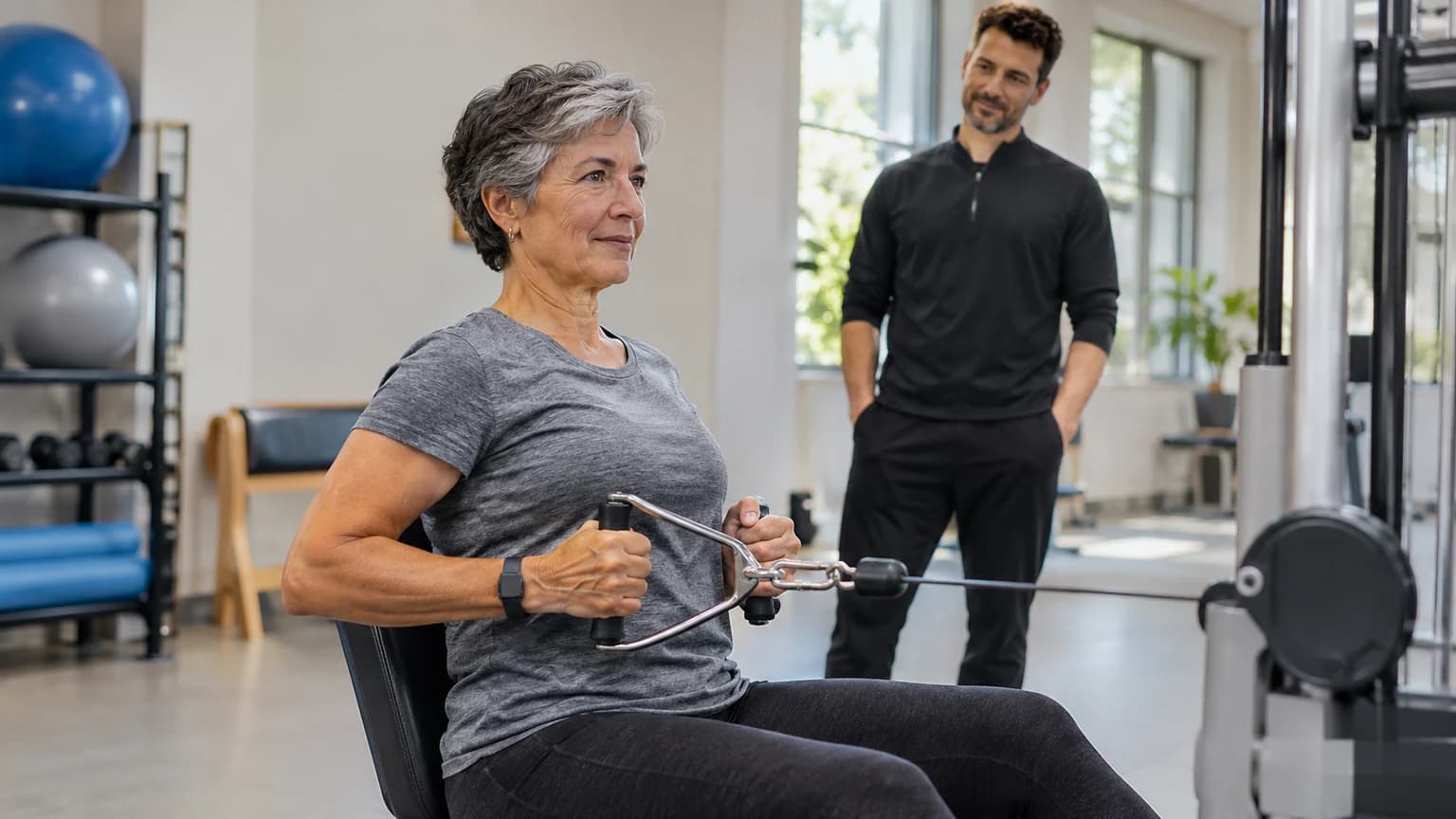
The exercise group attended three hour-long sessions a week at the study center. Accredited exercise physiologists supervised the groups and adjusted training to the participants. The first block emphasized technique and getting used to the movements. The program progressed in stages over 40 weeks, with equipment and scheduled sessions already in place. The extra support was part of the assignment. Results from that setup belong to a supervised program that people had repeated opportunities to attend and practice.[1]
Participants assigned to exercise attended an average of 91 percent of their sessions. That level of attendance matters when interpreting how much training actually happened. It reflects the circumstances of the trial, including people willing to join a center-based program and a team available to run it. A less supported program, a different exercise mix or a schedule that participants can attend less often could produce a different effect. Comparing those approaches would be a useful next experiment.[1]
Of the 120 people who started, 111 completed the trial. Six of the nine withdrawals after treatment began were attributed to adverse events. The investigators collected reports at weekly contacts. Nausea was reported by roughly half of the participants and several other gastrointestinal symptoms were common. Frequencies for those symptoms were similar across the two groups. Reporting those details alongside adherence gives a fuller picture of what it took to stay with the intervention.[1]
A real-world program would have to solve the logistical questions that a study site can handle for its participants. Getting to sessions three times a week takes time. The equipment has to be accessible and someone needs to be able to adapt movements when a participant has pain, fatigue or difficulty with an exercise. The paper establishes an effect under the support it offered. Whether similar changes can be achieved with a shorter schedule, community facilities or home equipment is a practical research question of its own.[1]
The scale and the scan measure different changes
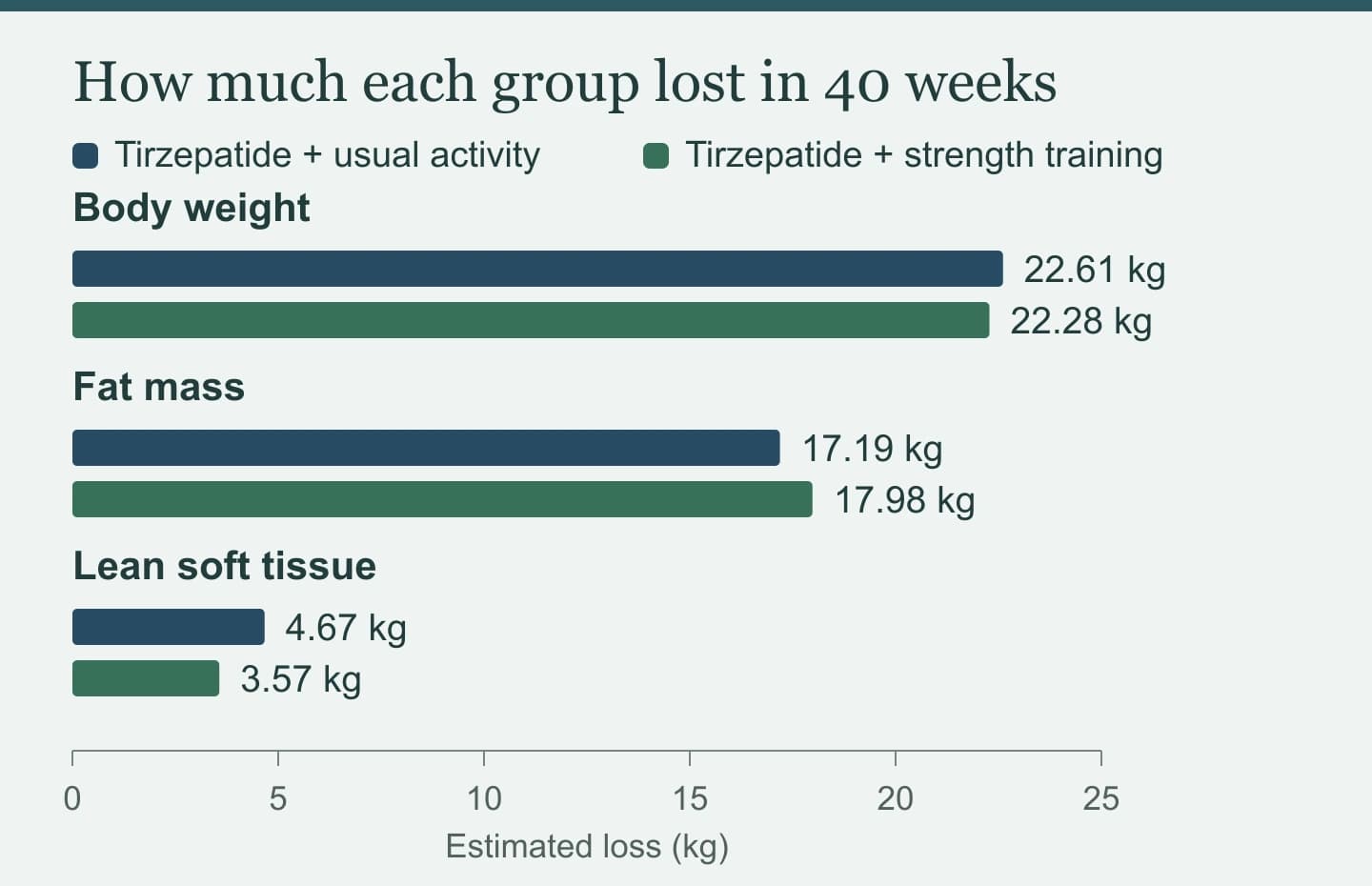
The trial's estimates put the average change in body weight at a loss of 22.61 kilograms with usual activity and 22.28 with exercise. The corresponding losses in fat mass were 17.19 and 17.98 kilograms. The paper found a similar pattern of fat loss over time between the arms. The observed body-weight difference was small. The study was designed to compare body composition and investigate strength, and a small body-weight difference here leaves open what a different intervention or setting would produce.[1]
The separation was clearer for lean soft tissue. The trial estimated losses of 4.67 kilograms for tirzepatide with usual activity and 3.57 kilograms for tirzepatide with training. On the paper's week-40 comparison, the exercise arm lost an estimated 1.09 kilograms less. The reported interval around the estimated difference stretched from 0.43 to 1.75 kilograms. Those limits describe uncertainty around the between-group effect estimated by the model. The amount an individual might lose or retain could vary more.[1]
The researchers also looked at lean soft tissue in the arms and legs, often called appendicular lean soft tissue. Losses on that measure were about 3.55 kilograms in the usual-activity arm and 2.92 in the training arm. The limb measure brings the analysis closer to regions with a large proportion of skeletal muscle. It still includes components besides muscle. The finding fits with the whole-body pattern and is reported as a related endpoint, alongside the primary whole-body result.[1][4]
A reader adding up the scan and scale figures will notice that each estimate has its own measurement and rounding. It is better to compare each row across the two groups than to treat these numbers as a balance sheet for every lost kilogram. The authors fitted models using repeated measurements and reported separate estimates for each outcome. In a paper with several outcomes, that is also a reason to read the group's modeled difference and its interval directly from the results.[1]
What lean soft tissue includes
In this study the researchers estimated composition with dual-energy X-ray absorptiometry, usually shortened to DXA. The scanner uses measurements at two X-ray energies to estimate how much tissue belongs to categories for fat, lean soft tissue and bone mineral. Lean soft tissue includes skeletal muscle along with body water and other tissues. The label matters when you read a result in kilograms. The same number has a more specific meaning when a study measures skeletal muscle volume directly.[1][4]
The investigators tried to limit changes in scan conditions over time. Scans were scheduled at the same time of day under fasting conditions, with participants instructed to maintain normal hydration. The DXA analyst was blinded to the group assignments. Those choices improve the comparison because body composition readings can be affected by factors such as hydration and measurement conditions. A sequence of scans under the same protocol gives the researchers more to work with than a single measurement taken during weight loss.[1][4]
One complication the authors discuss is that fat tissue also contains lean components, including water and protein. Large reductions in fat tissue can therefore go along with some change in the lean measurement. The researchers point out that fat losses were similar in the two arms, which makes this less likely as an explanation for the difference between the groups. The lean tissue result is best stated in the unit the study measured. A more direct measurement would be needed to quantify the precise change in skeletal muscle.[1]
There is useful earlier evidence on the same distinction. A DXA substudy of the placebo-controlled SURMOUNT-1 trial also reported changes in both fat and lean mass during tirzepatide treatment. Its purpose and participants differed from this study. The Western Australian trial adds a randomized comparison of a specific intervention for people already receiving the drug. That comparison answers a question a drug-versus-placebo scan can leave open, which is how composition responds when a supervised training program is added.[1][5]
Why the strength tests deserve their own headline
The trial assessed how much people could lift for a single repetition on three exercises. Bench press performance rose by an estimated 4.68 kilograms in the exercise arm and fell by 4.09 in the usual-activity arm. Lat pulldown rose by 8.58 kilograms in the training group and fell by 4.42 in the other group. Knee extension showed an improvement of 5.88 kilograms with training and a decline of 4.42 with usual activity. Both upper- and lower-body measures followed the same pattern.[1]
The kilograms on a strength test represent resistance moved. The kilograms in the DXA report represent estimated tissue mass. Improvements in a lift can reflect the capacity available to produce force, coordination and familiarity with the movement. Since participants practiced resistance exercises as part of the intervention, learning to perform those movements is one plausible contributor to the strength changes. The study establishes the measured performance difference without tracing how much came from each mechanism.[1]
Another useful detail is the change in knee extension strength relative to body weight. The authors report that this ratio stayed roughly stable in the usual-activity group and improved in the training group. Absolute strength can fall while the body becomes lighter, changing what the same amount of strength means for moving that body. The relative measure helps explain why a decline in an absolute gym test should be interpreted alongside the scale, especially when the question is about mobility.[1]
The strength findings have a boundary that matters for patients and caregivers. The investigators had results for gym tests, including a measure adjusted for body weight. Claims that an intervention reduces falls, makes it easier to climb stairs or improves a person's ability to live independently would need direct measurements of those outcomes. Standardized tests are a good place to see change over a trial. Following participants in their usual lives would add another kind of evidence about what the changes mean.[1][6]
What happened to blood pressure and blood markers
The team also measured blood pressure, blood glucose, insulin and several cholesterol and fat measures in the blood. Average systolic blood pressure declined by about 15.3 millimeters of mercury in the usual-activity group and 16.6 in the strength-training group. Fasting glucose, HbA1c and triglycerides fell in both. The trial found no clear additional change attributable to the training group on those cardiovascular risk markers. The detectable differences in this study were concentrated in the body composition and strength outcomes.[1]
A change measured from the beginning of the trial and a difference between randomized groups answer separate questions. The first describes how a marker moved over time among people who received tirzepatide and took part in the study. The second is the comparison that isolates assignment to the training package. Both arms received medication and attended the study clinic. Changes that took place in both groups reflect that shared context and cannot establish how the markers would have changed with placebo, a different drug or a different course of care.[1][2]
The measures in this section are useful for understanding health during weight loss. Claims about heart attacks, strokes or longer-term clinical outcomes would need a study designed to record those events over enough time. It also matters which workout program is tested. A trial comparing other forms of activity or enrolling people with established cardiovascular disease would study a different group and could answer different questions. The clearest evidence from this trial concerns adding supervised strength exercise to the care both groups received.[1]
Where dietary protein fits in the evidence
The study team asked everyone to maintain protein and fiber intake and stay hydrated. Both arms had that advice. There were no separate groups assigned to protein doses, particular menus or a supplement. The experiment therefore estimates what changed with adding exercise in the program that was delivered. A trial of protein intake would need to assign different nutrition strategies while measuring intake and keeping the relevant exercise and medication comparisons clear.[1][2]
The researchers invited the second 60 people enrolled to fill out three-day food diaries and 57 responded. In the analysis of those records, reported energy and protein intake looked similar between the arms at the recorded time points. This was a secondary, post hoc look at a subset. The entries were self-reported, and the researchers screened out some implausible energy values. The result provides context about what these participants recorded under the two assignments, with remaining uncertainty about actual intake throughout the trial.[1]
Protein intake can also be expressed in more than one way. The methods describe calculating how much of the recorded energy came from protein. That proportion can be stable even if daily calories and protein grams both change. A study focused on dietary adequacy would want a closer look at the absolute amounts, their changes over time and variation between individuals. An average from a few reporting days answers a narrower question, particularly when appetite and eating patterns are changing during treatment.[1][6]
A joint advisory from four medical and nutrition societies discusses nutrition and physical function as part of care with GLP-1 therapies. Its scope includes evaluating the diet and considering strength and body composition alongside other goals. That clinical context helps explain the interest in the November study. The advice in the societies' paper and the evidence from this specific exercise trial have different bases. Neither the amount of protein needed by a particular patient nor the impact of a supplement can be calculated from the observed training effect.[1][6]
What makes the comparison informative
The randomization and repeat scans are an important combination. Assignment by chance helps make the groups comparable at the start, and taking measurements at several points gives researchers a picture of how the difference develops. The trial reports the results of a sensitivity analysis accounting for baseline body mass index because that measure was among the more noticeable baseline differences. Adding it to the analysis left the reported direction of the lean tissue and strength findings intact.[1][2]
The team evaluated fat and total lean soft tissue as co-primary outcomes and used a statistical adjustment for those two tests. The main results give a 97.5 percent interval for the week-40 lean tissue difference, with the whole range favoring less loss in the exercise arm. The interval gives a sense of precision for the group comparison. The strength results were secondary and are strongest as converging evidence about the tested movements when read alongside the composition outcomes.[1]
Blinding is harder when the intervention is a gym session. People knew whether they were attending training and the exercise physiologists testing strength could have been involved with the sessions. The authors standardized the testing procedure and kept the scan analyst blinded. These measures help with different possible sources of bias. A strength test can still be influenced by familiarity with the equipment and motivation to lift. That is another reason to give the scan and exercise results their own interpretations.[1]
The paper discloses that Eli Lilly supplied the drug, reviewed the protocol and reviewed the draft for intellectual property and safety issues. The investigators say they controlled recruitment, procedures, analysis and reporting, and that the company gave no other trial funding. The disclosures also list a Western Australian research award and company relationships for some authors. This information is relevant when reading the report and when considering how a future independently replicated trial might strengthen confidence in the finding.[1][8]
What the result leaves for future trials
The next step is to find out how this result travels. The people in the trial were relatively inactive before enrollment and willing to go to a study center. Patients with different exercise experience, younger adults and adults with conditions excluded by the study may need different support and could see different results. Multicenter trials could check the result in clinics with different staffing and equipment and show how much of the benefit is possible in a program that is easier to access.[1]
Time after treatment is another open question. Forty weeks is long enough to observe changes across several phases of the intervention. A longer follow-up could test whether participants maintain strength and function once supervised study sessions end or when medication use changes. An earlier randomized study of exercise and liraglutide looked at weight-loss maintenance after a low-calorie diet. That separate design makes it useful context for asking about timing, while the results belong to that different medicine and stage of treatment.[1][7]
Researchers could also enroll people at risk of functional decline and measure outcomes those patients care about from the start. A test of walking or rising from a chair would ask a different question from the three strength tests in this paper. A combination of direct muscle imaging, practical strength measures and follow-up on daily activities could show how much change in composition matters to life outside the gym. The current study gives good reasons to study those links and leaves room for a range of outcomes.[1][6]
For now, the most grounded reading is that the same broad amount of weight loss can go along with different changes in strength and lean tissue. In this trial, the people offered supervised training lost less lean soft tissue and got stronger on the lifts the researchers measured. Those findings are worth seeing next to the scale reading. They tell a reader far more about what happened over those 40 weeks than the weight-loss number would have told on its own.[1]
Check the evidence
Sources & reporting notes
- Resistance exercise to attenuate lean mass loss during tirzepatide therapy for obesity
Green and colleagues · Nature Medicine
Primary randomized trial published November 9, 2026. Includes participant flow, methods, composition and strength results, extended data and disclosures.
- T-REx trial registration ACTRN12623001236684
Australian New Zealand Clinical Trials Registry
Public registry entry, prospectively registered November 30, 2023. The Nature Medicine methods describe the treatment and assessments as delivered.
- University record of the T-REx trial publication
University of Western Australia Research Repository
Institutional publication record with authors, publication date and a copy of the primary abstract.
- Official Adult Positions on clinical densitometry
International Society for Clinical Densitometry
The body-composition section addresses DXA measures and conditions for repeat scans.
- Body composition changes during weight reduction with tirzepatide in SURMOUNT-1
Look and colleagues · Diabetes, Obesity and Metabolism
Primary report on the DXA substudy of a separate placebo-controlled tirzepatide trial.
- Nutritional priorities to support GLP-1 therapy for obesity
Joint advisory of four medical and nutrition societies · American Journal of Clinical Nutrition
Clinical background on nutrition assessment, body composition and strength during treatment.
- Healthy Weight Loss Maintenance with Exercise, Liraglutide, or Both Combined
Lundgren and colleagues · New England Journal of Medicine
Earlier randomized trial of a different medication and exercise during weight-loss maintenance after a dietary run-in.
- Publication record and disclosures for the T-REx paper
Crossref Crossmark · Nature Medicine
Publisher-supplied record includes funding and competing-interest disclosures for the published paper.
How this article was reported
The group changes and strength outcomes use the published trial estimates. The between-group figure of 1.09 kg and its 0.43 to 1.75 kg interval come from the adjusted co-primary endpoint analysis in the Results section. The individual group values are rounded separately.
DXA lean soft tissue, estimated tissue in the limbs and the kilograms lifted on strength tests are distinct outcomes. The randomized assignment was to exercise or usual activity on a background of tirzepatide. Dietary data were collected in a subset.
The clinical advisory and earlier trials provide context. They address separate questions and do not alter the result of this randomized comparison.
Educational research reporting. This article does not diagnose a condition, prescribe a supplement or replace advice from a qualified healthcare professional. Our corrections policy explains how to report an error.