
Nutrition research · Research analysis
Can Corn Protein Match Milk Protein? A Trial Tested It in 48 Older Adults
Corn protein isolate, a pea–corn blend and milk protein isolate all increased short-term muscle protein synthesis compared with a low-energy placebo. The comparison lasted five hours.
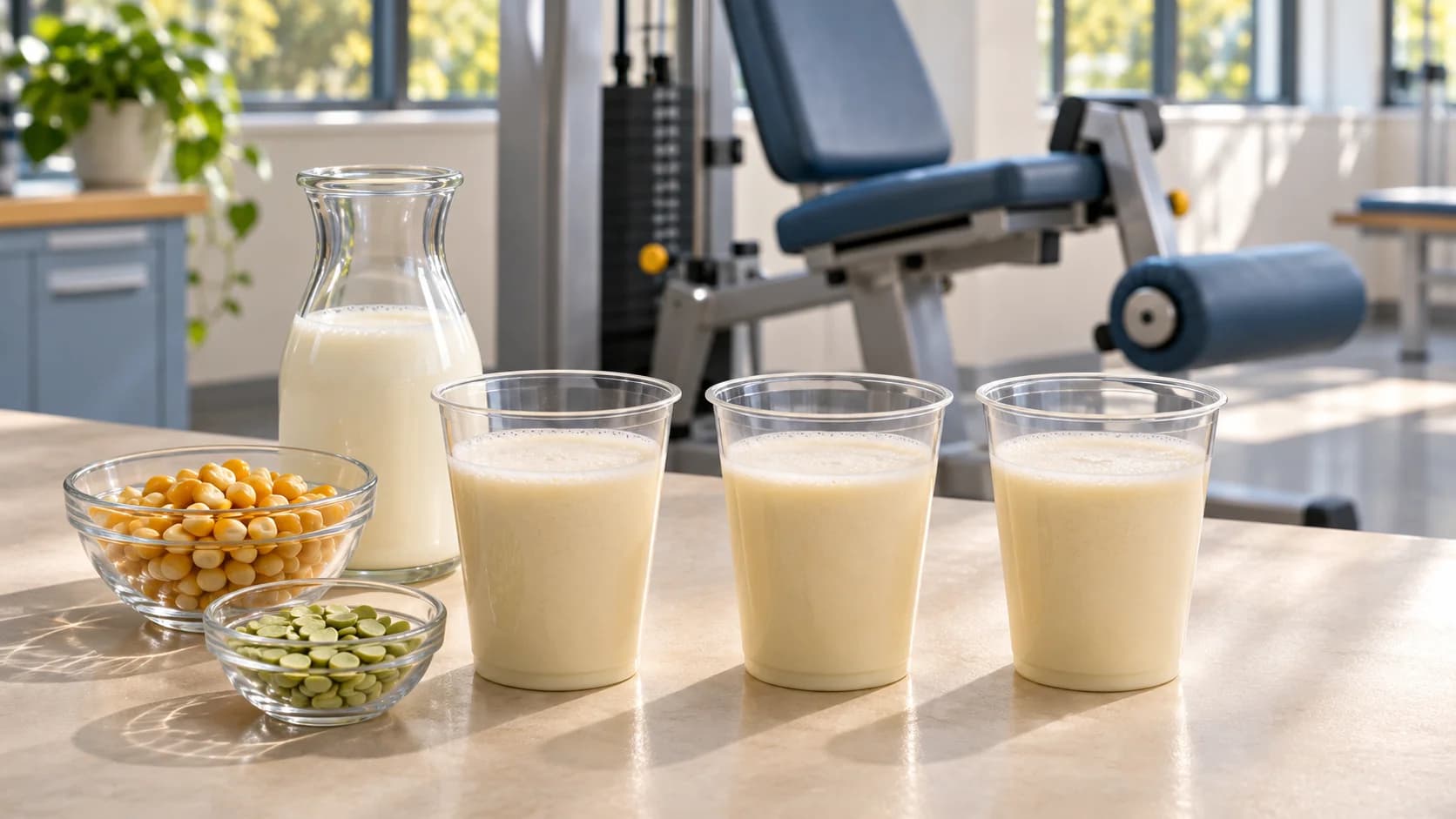
An older adult in the lab did knee extensions with one leg, left the other leg at rest and drank a single assigned beverage. For the next several hours, researchers followed a labeled amino acid to see how quickly it became part of muscle protein. With that setup they could look at two things at once. One was how muscle responded to protein from corn, a pea–corn blend or milk. The other was what changed in the leg that had done the work.[1][2]
The trial, published online on October 26 in The Journal of Nutrition, involved 48 healthy older adults. Each protein drink provided 20 grams of protein and stimulated a larger increase in muscle protein synthesis than a low-energy drink without protein. The study did not detect a clear difference between the protein drinks. The exercised leg had a greater synthesis response in each group.[1][2]
Corn is an interesting addition to a conversation often framed around whey, soy and pea protein. The result puts a specific corn ingredient in the running for further study. Its reach is narrower than the phrase ‘builds muscle’ suggests. What the investigators measured was a rate over several hours. What many people want to know is whether using that protein over months helps them keep muscle, lift more or climb the stairs with less effort.[1][4][8]
Evidence access
The journal abstract, trial registration, publisher-deposited funding record and public conflict-of-interest statement were checked. The full paper could not be retrieved for this article. The reporting stays with the endpoints and comparisons described in those public records.
The findings in brief
- Each of the three protein drinks increased short-term muscle protein synthesis more than the low-energy placebo.
- The study detected no statistically clear difference among the three protein groups. An equivalence claim would require a different statistical test and enough precision.
- The researchers measured a response to one drink and one exercise session. Muscle size, strength and physical function require longer follow-up.
One drink, one leg exercise and five hours in the lab
Participants averaged 68 years of age. The researchers reported an even split between men and women across the full study. They randomly assigned each person to one of four beverage groups. Three drinks supplied 20 grams of protein, from corn isolate, a blend of pea and corn protein, or milk isolate. A fourth drink provided a low-energy placebo without protein. The test was double blind, with the assignment masked from participants and investigators according to the trial registry.[1][2]
Each person did three sets of ten knee extensions with one leg. The load was set relative to their own strength, at 75% of the maximum they could lift for one repetition. The other leg provided a resting comparison inside the same person. Both legs were exposed to the same drink through the circulation. Their difference gives the researchers a way to examine the contribution of the exercise performed by one leg.[1][2]
These are two kinds of comparison inside one experiment. The beverage comparison is between people because each person was assigned one drink. The exercise comparison uses two legs from the same person. That arrangement helps researchers see how each leg responds under the same feeding conditions. It does not turn the beverage comparison into a crossover trial where everyone tries every drink, or double the number of people who received each protein.[1][2]
The five hours came from the registered window for the primary outcome. The team collected blood and muscle samples and used a tracer to estimate the rate at which muscle made new proteins. It is a demanding laboratory test because that rate cannot be read from the scale or inferred from a drink’s nutrition panel. A handful of hours can reveal a measurable biological response to a meal and an exercise bout. It cannot stand in for a training program.[1][2][4]
What the comparison with placebo tells us
The paper’s public abstract reports larger rises from baseline with corn, pea–corn and milk protein than with the low-energy placebo. This is the clearest positive finding. In this study, each of the three formulations supplied protein that supported an acute synthesis response above the comparator. It is reasonable to include the corn isolate and blend in that sentence. The result applies to the drinks and dose used in the trial.[1]
The reference point for the reported rises was the baseline synthesis rate. A percentage measured from that starting point describes how fast protein was being assembled during the experiment. It does not describe the percentage of muscle someone gained. There was considerable variation in the reported percentage responses. Comparing the three averages by eye gives an impression of ranking that the reported comparison did not establish.[1]
The placebo provides a useful reference for what happened without the test dose of protein. It was described as low energy. The abstract supports describing the four assigned drinks as tested. More detailed claims about which differences in the full beverage recipes explain the response would need the published composition table. What can be compared directly from the abstract is the measured outcome after each formulation.[1][2]
The exercise result is a separate piece of evidence. The increase associated with the exercised leg was reported in all four groups, including the placebo. That provides a reminder that the muscle was responding to both the local work and the feeding condition. It does not show that the same drink would change someone’s strength or training progress, and it gives no precise schedule for meals around a workout.[1][4]
What it would take to establish that two proteins match
In ordinary conversation, ‘matched’ can mean that two drinks ended up in the same general range. In a trial, a stronger claim would say how big a difference the investigators can rule out. The public abstract reports that the protein groups were not significantly different. That is a statement about what this experiment detected. It leaves open whether a larger study could distinguish the drinks, or whether any true difference would be small enough to matter little.[1][3]
An equivalence study would specify an acceptable difference before seeing the results. Researchers would need a confidence interval narrow enough to sit within that margin in both directions. A noninferiority study would pose a different question, testing whether one treatment is unlikely to be worse than another by more than an agreed margin. Either design needs a clear reason for choosing the margin and enough participants to estimate the comparison with the required precision.[3]
Here, 48 participants were divided across four beverage groups. The overall sample may sound sizable for a lab study with muscle sampling, but the number contributing to any one drink is smaller. The study can show a response above placebo while leaving the difference between two active drinks uncertain. Readers can take the corn finding seriously without using it as a reason to declare that every difference between corn and milk has been settled.[1][2]
What a tracer can see inside a muscle
When a muscle makes a new protein, it assembles amino acids into a chain. The researchers used a labeled form of the amino acid phenylalanine. By tracking the label in samples over time, they could estimate how quickly new muscle protein was being made. This is an estimate of a process taking place inside the tissue. It can detect a response much earlier than a meaningful change in the size of a thigh could be measured.[1][2]
Muscle is continuously making and breaking down proteins. Over time, the balance between those processes, the type of proteins being made and the training stimulus all matter. A temporary increase in synthesis may contribute to repair and remodeling. One rate measured after a meal and exercise session cannot predict precisely how much tissue will accumulate across repeated meals, rest days, illnesses or interruptions to training.[4][5]
An earlier experiment in young men tested this distinction more directly. It measured the acute synthesis response after a first workout and later measured muscle size after a training program. In that sample, the first measurement did not predict the eventual growth of each person’s muscle. Those participants were younger than the people in the corn study. The finding illustrates why an early response and eventual muscle growth are separate outcomes worth measuring.[4]
Why corn was an interesting ingredient to test
Researchers often compare proteins by how much of each indispensable amino acid they supply and how much becomes available after digestion. Leucine attracts particular attention in muscle studies because it participates in the signaling that turns on protein synthesis. Corn protein is relatively rich in leucine, which gave the researchers a reason to test it in older adults. The result is evidence about the tested corn isolate. It is not a measurement of how the leucine in a serving of sweet corn behaves.[1][6][7]
One amino acid cannot stand in for the full recipe. Building a protein requires the rest of its amino acid components as well. How quickly the amino acids reach the blood, how long they remain available and what exercise the muscle just did can all help shape the response researchers observe. For that reason, the presence of a large amount of leucine is a plausible feature to study. It does not explain, by itself, why a given drink produced the result it did.[6][7]
The pea–corn blend gave the team a second plant formulation to compare with the isolate. It is tempting to assume the blend worked because one ingredient supplied something the other lacked. The group results do not isolate that mechanism. The abstract does not describe a pea-only beverage, so the trial cannot separate the effect of adding corn to pea from the response to the blend as formulated. It tells us that both plant drinks supported the measured response at the amount tested.[1][2]
An earlier trial of wheat protein in older men helps explain why dose and formulation deserve their own labels. In that experiment, the response to 35 grams of casein was greater than to the same amount of wheat protein. A larger dose of wheat protein hydrolysate also stimulated synthesis. The wheat trial used a different plant ingredient, doses and comparison drinks. Its value here is to show how much the details inside the phrase ‘plant protein’ can change the question.[6]
Why two lab studies can get different answers
A separate 2026 study gave 45 older men one of three drinks at rest. The choices were a soy–pea blend, that blend with added leucine, or whey protein. Each supplied 20 grams of protein. The investigators reported different concentrations of circulating amino acids but did not detect a rise in muscle protein synthesis above fasting values in the four-hour measurement window. Their experiment used different ingredients and a different activity condition from the corn trial.[7][1]
The two studies are sometimes tempting to read as votes for or against a plant ingredient. A more useful comparison starts with what they have in common and then looks at the details. Both used tracer methods in older adults and a protein dose of 20 grams. The drinks, participant groups, controls and sampling windows were different. The corn experiment also included a leg that had exercised. Any of those differences can affect how comparable the reported outcomes are.[7][1][2]
We also do not know how a second dose of corn protein would have changed the result. Each protein beverage was tested at a single amount. A dose-response experiment would include several amounts of the same formulation and look at the precision of the comparison across them. It could ask whether the source matters differently at lower and higher doses, or whether the same amount behaves differently in a mixed meal. Those are practical questions that this trial leaves open.[1][6]
What a longer training study measures differently
A person who wants to be able to rise from a chair without using their arms may care more about leg strength than a laboratory synthesis rate. A longer study can record chair stands, strength tests and changes in muscle mass. Those endpoints can move differently. Strength depends in part on learning and coordination, and a change in body composition does not automatically tell us whether a task is easier.[8][5]
The 12-week IMPACT trial gives an example of the questions a longer study can answer. It randomized 108 adults aged 55 or older to counseling for either a lacto-ovo vegetarian or an omnivorous diet, with resistance training in both groups. Both groups gained arm and leg muscle mass and improved measures of strength and function. The vegetarian group consumed less total protein, and the trial did not establish that its arm and leg muscle mass result was within the predefined margin of the omnivorous group.[8]
IMPACT does not resolve how the specific corn drink would perform with repeated use. It compared whole diets that people selected for themselves and measured how the body changed across weeks. It also illustrates the value of defining the comparison in advance. Researchers can report improved performance in both groups while still acknowledging uncertainty about how close the groups were on a different endpoint, such as arm and leg muscle mass.[8][3]
A follow-up to the corn trial could compare the same formulations as part of a shared training program, track participants’ total diet and record actual use of the drinks. It could also measure muscle mass, knee strength and a functional task such as repeated chair stands over the same period. Collecting those measurements together would help reveal whether the early synthesis signal corresponds to a change that matters to the people using the product.[1][8][5]
Corn on a plate and corn in a test drink
Corn protein isolate is an ingredient made by concentrating protein from corn. A bowl of kernels or a corn tortilla is a food with water, starch and other components as well as protein. The trial used a drink formulated to supply a specified protein dose. A serving of an everyday corn food will have its own amount of protein, and eating it with other foods changes the meal again. The study offers no conversion from its test drink to a portion of corn at dinner.[1][2]
The dairy comparator also needs its exact name. It was milk protein isolate, a specific ingredient, rather than a glass of ordinary milk or a trial of whey isolate alone. An article about whey could ask a different question and use a different comparator. The distinction is easy to miss when the headline says ‘milk protein.’ The methods are where a reader can see which form of protein the researchers actually used.[1]
A retail label may list a blend, a serving size or a protein total without telling the shopper much about the proportions of each protein. If two powders have the same amount of protein per serving, they can still differ in the ingredients that supplied it and in the other ingredients in the mix. The corn trial establishes an observation for three specified formulations. It supplies no data for ranking brands, picking a dose or predicting the results from a new blend.[1][2]
Who took part and who would need a separate study
The trial was designed around healthy older volunteers. The registry describes eligibility for adults aged 60 to 80 who were generally healthy, recreationally active and below the exercise threshold listed in the protocol. It excluded people using walking aids and people with several significant medical conditions. The volunteers therefore represent a narrower group than everyone who might shop for a protein supplement or look for help with strength later in life.[2][1]
That distinction can change the outcome one would want to see. In a healthy volunteer, a small lab response can help scientists choose what to test next. Someone recovering from a hospital stay might be most interested in walking, appetite or the ability to return home. Those outcomes depend on more than how muscle responds to one drink. Testing them would require a different study with eligibility, practical support and follow-up designed for that situation.[2][8]
Having women and men in the trial broadens the description of the sample. It does not tell us that the response was the same in both groups. The public abstract presents pooled findings, and the four beverage groups already divide the sample. A reliable comparison by sex, age or baseline protein intake would need enough participants in each category and a clear plan for those analyses. Until then, the pooled result is the one readers can check.[1]
How the trial registry helps put the measurements in order
The public registration identifies the rate of muscle protein synthesis as the primary outcome. It also lists measurements of amino acids in the blood, muscle signaling, glucose and insulin as secondary outcomes. Those measures belong to different parts of the process. Blood amino acids show what is circulating after the drink. A muscle sample can show whether labeled amino acid has entered new protein. A change in one measurement cannot be used as a substitute for a change in the other.[2][1][7]
The registry is also a record of what researchers planned to measure. It should not be read as a table of results. For instance, the fact that the protocol lists glucose and insulin does not tell a reader how those values compared between drinks or whether either would matter for managing blood sugar. Those are separate questions. The published abstract provides a direct result for muscle protein synthesis, which is why that measurement belongs at the center of the story.[2][1]
The resting leg deserves the same attention to scope. It was a leg that did not do the knee extensions during a visit in which the other leg did. That makes it a useful local comparison under shared conditions. A visit in which a participant rested completely would answer a related question about the whole body, including whether exercise elsewhere changes the response in muscle that did not contract. The two designs ask slightly different questions.[1][2]
There is a practical way to read any new result from this experiment. First ask whether it came from blood, muscle or a performance test. Then check the time window, which drink was tested and whether the leg exercised. The same person can have a larger change in one measurement and a smaller change in another. Keeping those distinctions clear matters more than trying to combine them into a single ranking of the drinks.[2][1]
What would make the next result more useful
One useful next step would be an independent replication that names the protein sources precisely, provides the full drink composition and reports an interval for the difference between the active drinks. Replication would show whether the acute finding repeats with a new group. A comparison with a prespecified margin would tell readers how close two formulations could reasonably be on that specific endpoint.[1][3]
Another step is to follow people long enough to measure strength and function while checking which foods or drinks they actually use. A formulation that looks promising in a lab has to fit a person’s routine before it can contribute to a longer change. Researchers would need to record adherence, total dietary protein and training exposure. Those details help explain why a result might be different when the same drink is taken at home for several months.[8][1]
The October trial gets the research to a specific point. In a healthy older sample, a drink made with corn protein isolate and one made with a pea–corn blend both stimulated the same measured process that the milk drink stimulated. Each response was greater than the low-energy placebo comparison. The questions readers bring to that finding, about repeated use, muscle size and a stronger or easier day, are now easier to define and still need their own tests.[1][2]
Check the evidence
Sources & reporting notes
- Corn protein alone, or in blends, and muscle protein synthesis in older adults
Lim C et al. · The Journal of Nutrition · October 26, 2026 · doi:10.1016/j.tjnut.2026.101895
Primary published abstract and public conflict-of-interest statement. It reports the randomized comparisons of corn, pea–corn, milk and placebo.
- The Impact of Plant-based Blends on Skeletal Muscle Protein Synthesis Rates in Older Adults
ClinicalTrials.gov · NCT05917223
Registered eligibility, trial design, masking, sponsor and five-hour primary measurement window.
- Reporting of Noninferiority and Equivalence Randomized Trials
Piaggio G et al. · JAMA · CONSORT extension · 2012
Methods guidance on prespecified margins and the interpretation of uncertainty in comparisons designed to establish equivalence or noninferiority.
- Acute Post-Exercise Myofibrillar Protein Synthesis and Training-Induced Hypertrophy
Mitchell CJ et al. · PLOS ONE · 2014
A separate study that measured the early response to one workout and subsequent changes in muscle size in young men.
- Resistance training, muscle protein synthesis and hypertrophy after muscle damage subsides
Damas F et al. · The Journal of Physiology · 2016
Primary training study on how the relationship between muscle protein synthesis and growth changes across training.
- Ingestion of Wheat Protein Increases In Vivo Muscle Protein Synthesis Rates in Healthy Older Men
Gorissen SHM et al. · The Journal of Nutrition · 2016
A different acute experiment in older men that compared wheat protein preparations and doses with dairy proteins.
- A soy–pea protein blend, leucine fortification and whey protein in older men
Kuin LM et al. · The Journal of Nutrition · 2026
A separate randomized comparison of 20-gram drinks. Its ingredients, setting and measurements differ from the corn experiment.
- Vegetarian and omnivorous diets during resistance exercise in older adults
van Oppenraaij SL et al. · The American Journal of Clinical Nutrition · IMPACT trial · 2026
A longer randomized trial with outcomes for appendicular muscle mass, strength and function. It did not test corn protein drinks.
- Publisher-deposited funding record for the corn protein trial
Crossref · doi:10.1016/j.tjnut.2026.101895
The publisher lists Cargill Inc as a funder. The trial registry separately lists McMaster University as sponsor.
How this article was reported
The publisher-deposited record names Cargill Inc as a funder, and the trial registry names McMaster University as sponsor. The journal’s public conflict statement describes nutrition-industry research funding or professional relationships for Stuart Phillips and Luc van Loon.
The main article relies on the primary abstract and the registry for the measured outcomes. The findings on wheat, soy–pea blends and training come from separate studies and are identified as such.
Educational research reporting. This article does not diagnose a condition, prescribe a supplement or replace advice from a qualified healthcare professional. Our corrections policy explains how to report an error.