
Muscle FAQ
Protein for Muscle Gain FAQ: Amount, Timing, Meals, Powder, and Results
Use this FAQ when your main question is how protein supports hypertrophy, strength training, bulking, recomposition, and recovery.
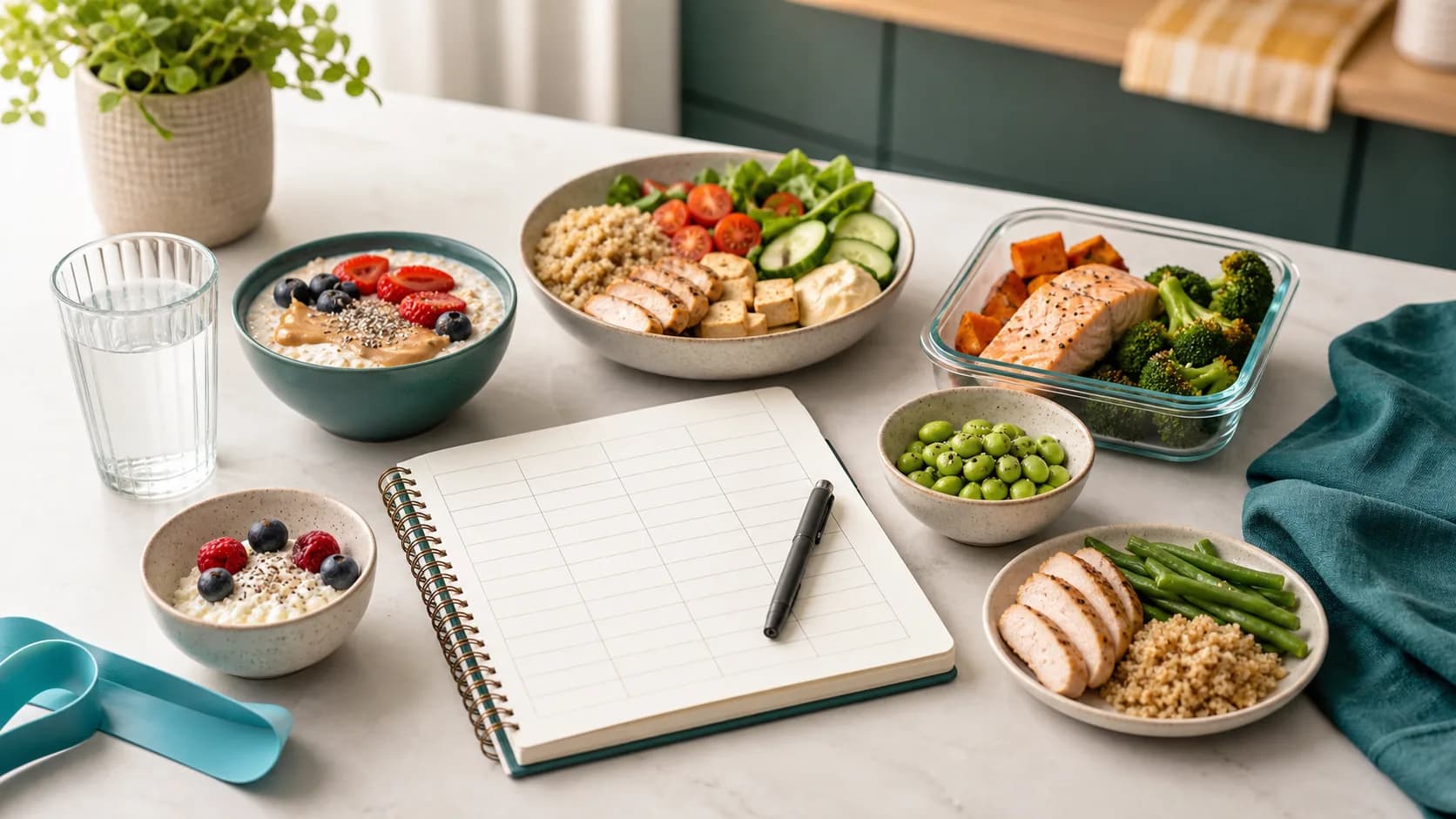
What This FAQ Covers
Answers to muscle-gain protein questions about grams per kg, timing, per-meal targets, protein powder, bulking, cutting, and realistic progress.
Daily Amount
Start with total daily protein before worrying about timing or supplements.
How much protein do I need to build muscle?+
Many muscle-gain plans use a higher protein range than maintenance, commonly around 1.6-2.2 g/kg for resistance training. The best point depends on calories, training, body size, and adherence.
Is more than 2.2 g/kg better for muscle gain?+
Not automatically. Very high intakes may be useful in some dieting or advanced contexts, but more protein does not replace calories, training progression, or sleep.
Can I build muscle with the RDA only?+
The RDA is a baseline for avoiding deficiency in many healthy adults, not an optimized hypertrophy target. Lifters often use higher ranges.
Should beginners eat as much protein as advanced lifters?+
Beginners need enough protein, but consistency, training quality, and calories usually matter more than chasing the highest target immediately.
How do I know if my protein target is too high?+
It may be too high if it crowds out carbs and calories, causes digestive problems, is too expensive, or cannot be repeated most days.
Timing and Distribution
Protein timing is useful, but it should not distract from daily consistency.
Is protein before or after workout better?+
Both can work. Total daily protein matters most, and a protein-rich meal before or after training is useful when it prevents a long gap.
How much protein should I eat per meal for muscle gain?+
Many lifters do well with 25-45 g per meal depending on body size and target. The goal is meaningful distribution across the day.
Can the body absorb more than 30 g protein at once?+
The body can digest and absorb more than 30 g. The better question is how much maximizes muscle protein synthesis and fits your daily meal pattern.
Should I eat protein before bed?+
Pre-bed protein can help when it closes a daily gap. Casein, Greek yogurt, cottage cheese, milk, soy foods, or a shake can all fit.
Do rest days need the same protein?+
Often yes. Muscle remodeling and recovery continue after training, so rest-day protein should still support the weekly plan.
Food and Supplements
Protein powder can help, but it is not the whole muscle-gain plan.
Do I need protein powder to gain muscle?+
No. You can build muscle with food. Powder is useful when it closes a protein gap or makes a busy schedule easier.
What is the best protein powder for muscle gain?+
For many dairy-tolerant lifters, whey concentrate or isolate is practical. Vegan users can use soy isolate or pea-rice blends. The best choice depends on tolerance, budget, testing, and calories.
Is a mass gainer better than whey?+
Only if calories are the real bottleneck. Many lifters are better served by whey plus foods like milk, oats, fruit, rice, potatoes, and nut butter.
Can vegetarian lifters build muscle?+
Yes. Soy foods, dairy, eggs if eaten, legumes, paneer, tofu, tempeh, seitan, and protein powders can all support a muscle-gain plan.
What foods are easiest for muscle-gain protein?+
Chicken, fish, eggs, Greek yogurt, cottage cheese, paneer, tofu, tempeh, soy milk, lentils, beans, whey, and plant protein powders are common anchors.
Bulking, Cutting, and Recomposition
Protein works differently depending on calorie context.
Do I need more protein while bulking?+
You need enough protein, but the calorie surplus and training progression usually drive the bulk. Extremely high protein is not required for every bulk.
Do I need more protein while cutting?+
Often yes. Higher protein can support fullness and lean-mass retention during a calorie deficit, especially when resistance training continues.
Can protein help body recomposition?+
It can support recomposition when combined with resistance training, adequate calories, sleep, and consistency. Progress is usually slower than a focused bulk or cut.
What if I am gaining fat too quickly?+
Review total calories first. Protein may be fine, while shake add-ins, snacks, oils, and surplus size may be too high.
What if strength is not increasing?+
Check training progression, calories, sleep, and carbs before assuming protein is the only issue.
Progress and Troubleshooting
Muscle gain should be judged by weeks and months, not one shake or one workout.
How fast should I expect muscle gain?+
Beginners may progress faster, while trained lifters usually gain slower. Protein supports the process, but visible change takes consistent training and time.
How long before protein changes results?+
Protein helps when it fixes a real intake gap. Judge adherence, strength, body weight, and measurements over several weeks rather than a few days.
Can I gain muscle and lose fat at the same time?+
Some users can, especially beginners, detrained lifters, or people with higher body fat. Protein helps, but training and calorie control are essential.
Should I track protein every day?+
Track long enough to learn your portions. After that, repeat reliable meal anchors and audit periodically.
Which page should I use next?+
Use the muscle-gain guide for details, the muscle-gain calculator for a target, and the protein-powder-for-muscle-gain guide if supplements are part of the plan.
Sources reviewed
- International Society of Sports Nutrition Position Stand: protein and exercise - Journal of the International Society of Sports Nutrition
- Protein supplementation and resistance training-induced gains in muscle mass and strength - British Journal of Sports Medicine / PubMed
- The effect of protein timing on muscle strength and hypertrophy - Journal of the International Society of Sports Nutrition / PubMed
- USDA FoodData Central - U.S. Department of Agriculture
- How to Understand and Use the Nutrition Facts Label - U.S. Food and Drug Administration