
Fish & Seafood
Protein in Dried Shrimp: Protein, Calories, and Meal Ideas
Dried shrimp is a very dense complete seafood protein: a small 20 g serving can provide about 12 g protein, but sodium is often high.
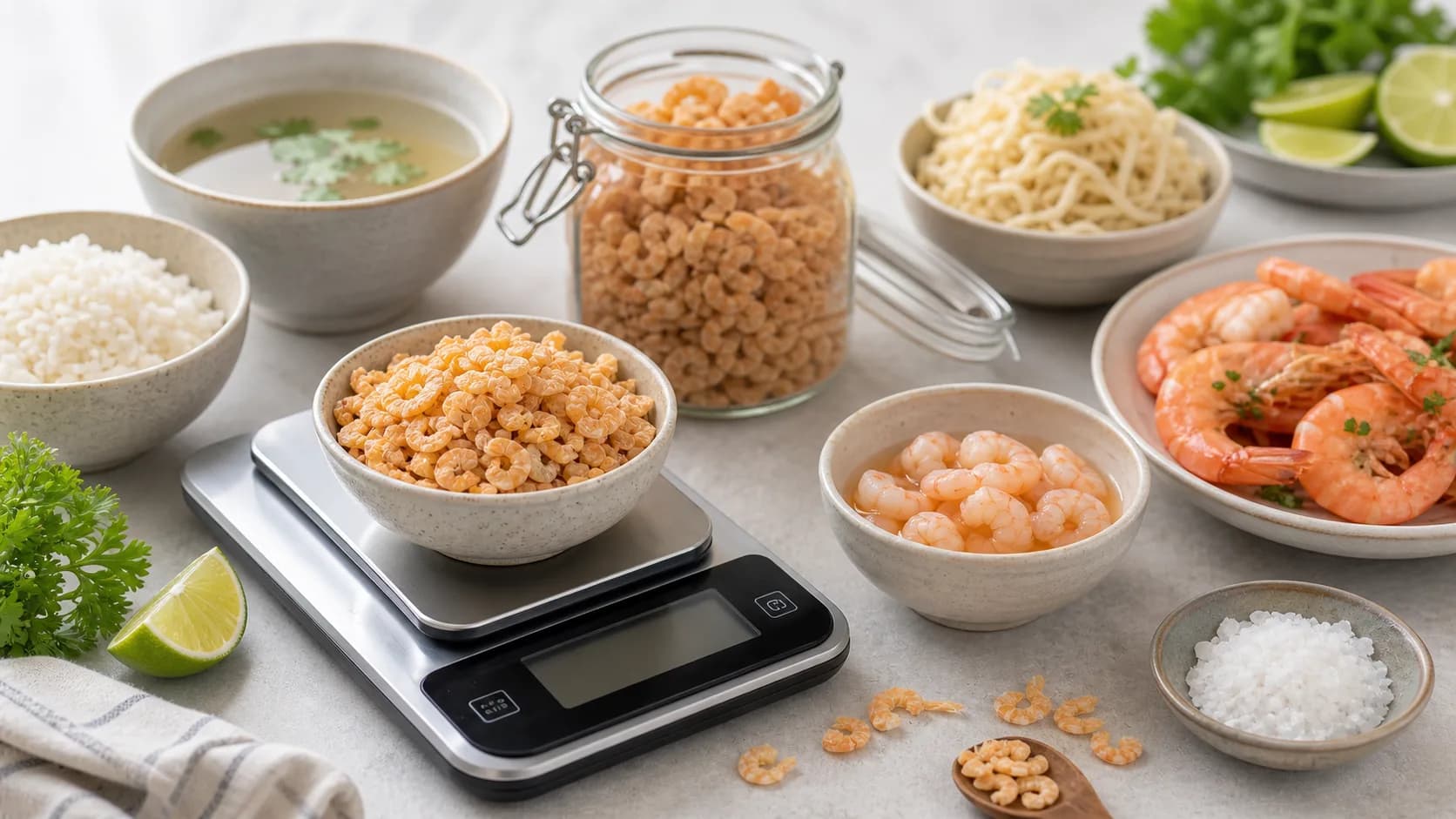
Protein per serving
12g
20 g dried shrimp / small measured serving
Calories per serving
58
20 g serving
Protein per 100g
60g
290 calories per 100 g
Protein density
20.7g
protein per 100 calories
Dried Shrimp Nutrition Snapshot
| Measure | Amount | Protein | Calories |
|---|---|---|---|
| Typical serving | 20 g dried shrimp / small measured serving | 12g | 58 |
| Per 100 g | 100 g | 60g | 290 |
| Protein density | 100 calories | 20.7g | 100 |
Representative source entry: Dried shrimp. Use dry weight before soaking or cooking. Salted, smoked, powdered, paste, and seasoned dried shrimp products should be tracked from the package label when possible.
Good for weight loss? Good
Dried shrimp can support weight-loss meals because it adds a lot of protein in a small serving, but high sodium and strong flavor make it better as a measured ingredient than a large standalone serving.
Good for muscle gain? Good
Dried shrimp provides complete protein, but muscle-gain meals usually need additional calories from rice, noodles, potatoes, eggs, tofu, or other meal anchors.
Meal Ideas with Dried Shrimp
Dried shrimp fried rice with eggs and vegetables
Dried shrimp noodle soup with tofu
Vegetable stir-fry with 10-20 g dried shrimp
Dried shrimp rice porridge with eggs
How to Use Dried Shrimp
Quick Answer
Dried shrimp is extremely protein-dense because most of the water has been removed. A 20 g dried shrimp serving gives about 12 g complete protein, while 100 g dried shrimp can provide about 60 g protein. The tradeoff is sodium: many dried shrimp products are salted, so the exact label matters.
- 20 g dried shrimp: about 12 g protein.
- 100 g dried shrimp: about 60 g protein.
- Protein quality: complete pescatarian seafood protein.
- Main caution: sodium is often high, especially in salted or seasoned dried shrimp.
Dried Shrimp Protein by Serving Size
Small dried seafood servings look tiny, but the protein adds up quickly. Use gram weight rather than spoonfuls because dried shrimp size and moisture vary by product.
| Serving | Protein | Best use | Tracking note |
|---|---|---|---|
| 10 g dried shrimp | About 6 g | Flavor booster for soup, noodles, rice, or vegetables | Useful when the dish only needs a small savory seafood boost. |
| 20 g dried shrimp | About 12 g | Practical protein-supporting serving | The serving in this guide; sodium can still be meaningful. |
| 30 g dried shrimp | About 18 g | Higher-protein topping or stir-fry ingredient | Check sodium and rehydration because this is a compact serving. |
| 50 g dried shrimp | About 30 g | Very high protein, larger recipe batch | Often too salty as a single-person serving unless rinsed or spread across portions. |
| 100 g dried shrimp | About 60 g | Reference value, not a normal single serving | Use mostly for comparing labels and calculating recipes. |
Types of Dried Shrimp and How to Track Them
Dried shrimp is sold in many forms across Asian, Latin American, Caribbean, and seafood pantry cuisines. The right nutrition entry depends on whether the shrimp is whole, peeled, salted, powdered, rehydrated, or cooked into a recipe.
| Type | Common use | Protein tracking note | Sodium caveat |
|---|---|---|---|
| Small whole dried shrimp | Soups, fried rice, noodles, sambal, broths | Use dry weight before cooking; shells may be edible depending on product. | Usually salty; rinse or soak if sodium matters. |
| Peeled dried shrimp | Stir-fries, dumplings, salads, sauces | Easier edible-weight tracking than shell-on dried shrimp. | Can still be salted heavily. |
| Large dried shrimp | Rehydrated seafood dishes and stews | Weigh dry before soaking or use a rehydrated label if available. | Water changes weight but not the original sodium unless soaking water is discarded. |
| Ground dried shrimp powder | Seasoning, chutneys, sauces, spice mixes | Use label values; powders can be mixed with salt or anti-caking ingredients. | Often very sodium-dense by teaspoon. |
| Unsalted dried shrimp | Lower-sodium home cooking | Still very protein-dense; use the package label when available. | Lower sodium than salted versions, but not automatically sodium-free. |
| Salted dried shrimp | Pantry seafood seasoning | Protein can be similar, but the sodium load is the limiting factor. | Use smaller servings and track sodium if relevant. |
| Smoked dried shrimp | Soups, stews, sauces | Track by product label because moisture loss and smoking vary. | Smoked and salted versions may be especially high sodium. |
| Dried shrimp paste | Curry pastes, sauces, fermented condiments | Do not use plain dried shrimp values; paste may include salt, oil, sugar, or fermentation brine. | Usually very salty; serving sizes are small. |
| Rehydrated dried shrimp | Cooked into rice, soup, noodles, or vegetables | If you weighed it dry first, keep the dry value and divide across portions. | Soaking may remove some surface salt, but the label remains the safest guide. |
Dried Shrimp vs Cooked Shrimp
Dried shrimp and cooked shrimp should not share the same nutrition entry. Cooked shrimp is water-rich and usually around 20 g protein per 100 g. Dried shrimp is water-reduced and can be about 60 g protein per 100 g, but it is also much more concentrated in sodium and flavor.
- Use cooked shrimp values for boiled, steamed, grilled, or frozen cooked shrimp.
- Use dried shrimp values only for dried seafood weighed before soaking or cooking.
- If a recipe uses dried shrimp as seasoning, divide the dry weight across the whole recipe.
- If the dried shrimp is salted, track sodium from the package when possible.
How to Use Dried Shrimp in High-Protein Meals
Dried shrimp is best used as a protein-dense flavor booster rather than the only protein anchor. It works well with eggs, tofu, rice, noodles, vegetables, soups, and seafood dishes where a small amount adds savory depth and a useful protein bump.
- Add 10-20 g to fried rice, stir-fried vegetables, soups, or noodle bowls.
- Pair with eggs or tofu when the meal needs 25-40 g total protein.
- Use rice, noodles, potatoes, or vegetables to balance the strong salty flavor.
- Rinse or soak salted dried shrimp when the recipe allows it.
How Dried Shrimp Compares for Protein Density
Dried Shrimp works as a seafood protein with about 60 g protein and 290 calories per 100 g. That equals 20.7 g protein per 100 calories, or about 4.8 calories per gram of protein. This density number is useful because two foods can both look high protein while one needs far more calories to deliver the same protein target.
Dried Shrimp sits close to the related-food average for protein density, so the best choice usually comes down to calories, preparation, taste, and how easy it is to repeat. Fish and seafood pages should be read with cooking method in mind. Plain baked, grilled, steamed, or dry-heat seafood is usually very different from breaded, fried, butter-poached, or restaurant seafood. Use the comparison table as a planning shortcut: choose the higher-density option when calories are limited, and choose the more calorie-dense option when appetite is low or muscle-gain meals need to be easier to finish.
| Food | Serving protein | Protein / 100g | Protein / 100 cal |
|---|---|---|---|
| Dried Shrimp | 12g | 60g | 20.7g |
| Shrimp | 30g | 20g | 20.2g |
| Crab / Dungeness Crab | 16.2g | 19g | 19.6g |
| Cod | 18g | 18g | 17.1g |
Best Uses for Dried Shrimp
For Weight Loss or Calorie Control
Dried Shrimp can work for weight loss or maintenance when the serving is measured and the rest of the plate is planned. The easiest approach is to decide the protein target first, then add carbs, fats, and sauces around that target. For this page's representative serving, 20 g dried shrimp / small measured serving gives about 12 g protein. If your meal target is 30 g protein, that is roughly 2.5 typical servings, or about 50 g by weight. This is why weighing the first few servings is useful: it turns a vague protein food into a repeatable meal component.
For Muscle Gain or Higher-Calorie Meals
Dried shrimp provides complete protein, but muscle-gain meals usually need additional calories from rice, noodles, potatoes, eggs, tofu, or other meal anchors. When using dried shrimp for muscle gain, the question is not only whether it contains protein; it is whether the whole meal has enough total protein, carbohydrates, and calories to support training. If you need more calories, pair it with rice, potatoes, pasta, avocado, or olive oil. If you need fewer calories, keep the cooking method dry and use vegetables or salad for volume. A practical muscle-gain plate is to keep the dried shrimp portion consistent, then adjust rice, pasta, oats, potatoes, bread, beans, oil, nuts, or dairy up or down depending on your calorie target.
For Meal Prep and Repeatable Tracking
Dried Shrimp is easiest to track when the serving method stays the same from week to week. Choose one default serving, log it with the matching raw, cooked, dry, drained, or label-based entry, and then build meals around that known number. Good repeatable options include Dried shrimp fried rice with eggs and vegetables, Dried shrimp noodle soup with tofu, Vegetable stir-fry with 10-20 g dried shrimp, and similar meals where the protein portion is measured before sauces and toppings are added.
Exact Serving Conversions
Serving conversions help when your food scale, recipe, or tracking app uses a different unit than this page. For Dried Shrimp, 1 oz is about 28.35 g and provides roughly 17.0 g protein and 82.2 calories based on the representative per-100-g values. Half of the typical serving gives about 6 g protein and 29 calories, while a double serving gives about 24 g protein and 116 calories.
Use gram targets when precision matters. To get 25 g protein from dried shrimp, you need about 41.7 g, which is roughly 120.8 calories. To get 30 g protein, use about 50 g and 145 calories. To get 40 g protein, use about 66.7 g and 193.3 calories. These estimates are based on the USDA or representative source entry listed below, so the label on your exact product should win when there is a difference.
| Target | Approx. amount | Calories | Typical servings |
|---|---|---|---|
| 25g protein | 41.7g | 120.8 | 2.1x |
| 30g protein | 50g | 145 | 2.5x |
| 40g protein | 66.7g | 193.3 | 3.3x |
Raw, Cooked, Dry, or Label Weight?
The best tracking rule for Dried Shrimp is simple: match the database entry to the state of the food when you weighed it. This page uses Dried shrimp as the representative source entry, with the serving shown as 20 g dried shrimp / small measured serving. Use dry weight before soaking or cooking. Salted, smoked, powdered, paste, and seasoned dried shrimp products should be tracked from the package label when possible.
For seafood, the most common tracking mismatch is using a plain cooked fillet entry for a fried, sauced, or battered serving. If you batch cook, portion after cooking only when your tracker entry is also cooked. If you weigh before cooking, use a raw or dry entry and divide the finished batch into servings after cooking. If you are eating a packaged product, the label is normally the most specific source because brands can change water, sodium, sugar, fat, fortification, and serving size.
The most reliable workflow is to choose one method and repeat it: weigh the food, choose the matching raw, cooked, dry, drained, or packaged entry, then log oils, sauces, toppings, sides, and drinks separately. This avoids the most common protein tracking error, which is accidentally counting a prepared meal as if it were a plain serving of dried shrimp.
Common Mistakes with Dried Shrimp
Most mistakes with Dried Shrimp are not about the protein number itself; they are about matching the wrong food form, ignoring preparation, or forgetting the extra ingredients that travel with the serving. Avoid these issues before comparing your intake against a daily target from the protein calculator.
- Using a generic dried shrimp entry when the actual food is cooked, raw, flavored, breaded, sweetened, packed in oil, or from a specific brand.
- Counting Dried Shrimp as the entire meal even when the real calorie load comes from oil, dressing, sauce, bread, rice, tortillas, cheese, nuts, or toppings.
- Estimating by eye instead of weighing the first few times. A small portion change can move the meal by 5-15 g of protein or by a few hundred calories for calorie-dense foods.
- For seafood, the most common tracking mismatch is using a plain cooked fillet entry for a fried, sauced, or battered serving.
- Weigh dried shrimp before soaking or cooking.
- Track sodium from the package label when possible.
- Do not use cooked shrimp values for dried shrimp.
- Divide dried shrimp across the whole recipe if used as seasoning.
Building a High-Protein Meal with Dried Shrimp
Start with the protein target, not the recipe name. A light snack might only need 10-20 g protein, while a main meal often works better at 30-45 g protein depending on body size, meal frequency, and training. With Dried Shrimp, a 30 g protein meal is approximately 50 g of the representative food before sides and toppings. If that portion feels too large, combine a smaller amount of dried shrimp with another protein from the related-food list.
A balanced plate usually needs more than protein. Pair dried shrimp with a fiber source, a carbohydrate source if you train or need energy, and enough fat to make the meal satisfying. For lower-calorie meals, keep sauces light and increase vegetables. For higher-calorie meals, add rice, pasta, potatoes, bread, oats, beans, dairy, nuts, seeds, avocado, or oil depending on the type of food and your goal.
If the meal is meant to be repeated, write down the exact version that worked: the grams of dried shrimp, the cooking method, the sides, and the sauce. That gives you a reusable meal template instead of a one-time estimate, and it makes future protein targets easier to hit without redoing the math every day.
Tracking Tips
- Weigh dried shrimp before soaking or cooking.
- Track sodium from the package label when possible.
- Do not use cooked shrimp values for dried shrimp.
- Divide dried shrimp across the whole recipe if used as seasoning.
Compare Similar Protein Foods
Related Calculators and Guides
Fish and Seafood Protein Chart
Compare dried shrimp with cooked shrimp, crab, cod, salmon, tuna, sardines, and other seafood proteins.
Cooked Shrimp Protein
Use this when the shrimp is fresh, frozen, boiled, steamed, grilled, or cooked rather than dried.
Protein Food Calculator
Add dried shrimp by dry weight, then include rice, noodles, eggs, tofu, oil, broth, sauces, and sodium-heavy condiments.
Common Questions
How much protein is in dried shrimp?
Dried shrimp has about 60 g protein per 100 g. A practical 20 g dried shrimp serving gives about 12 g protein.
Is dried shrimp high in protein?
Yes. Dried shrimp is very high in protein because water has been removed. It is much more concentrated than cooked shrimp by weight.
Is dried shrimp a complete protein?
Yes. Dried shrimp is seafood, so it provides complete animal protein with all essential amino acids.
Is dried shrimp high in sodium?
Often yes. Many dried shrimp products are salted or seasoned. Use the package label for sodium and consider rinsing or soaking when the recipe allows it.
Can I use cooked shrimp nutrition for dried shrimp?
No. Cooked shrimp and dried shrimp have very different water content. Use dried shrimp values for the dry product and cooked shrimp values for regular cooked shrimp.
How much dried shrimp should I add to a meal?
For most meals, 10-20 g is a practical flavor and protein boost. Larger servings can become very salty unless the product is unsalted or spread across multiple portions.
Sources reviewed
- USDA FoodData Central - U.S. Department of Agriculture
- International Society of Sports Nutrition Position Stand: protein and exercise - Journal of the International Society of Sports Nutrition