
High-Protein Diet for Weight Loss: Foods, Meals, Products and Plan
A high-protein diet for weight loss works best when protein is paired with a sustainable calorie deficit, high-fiber foods, and resistance training.
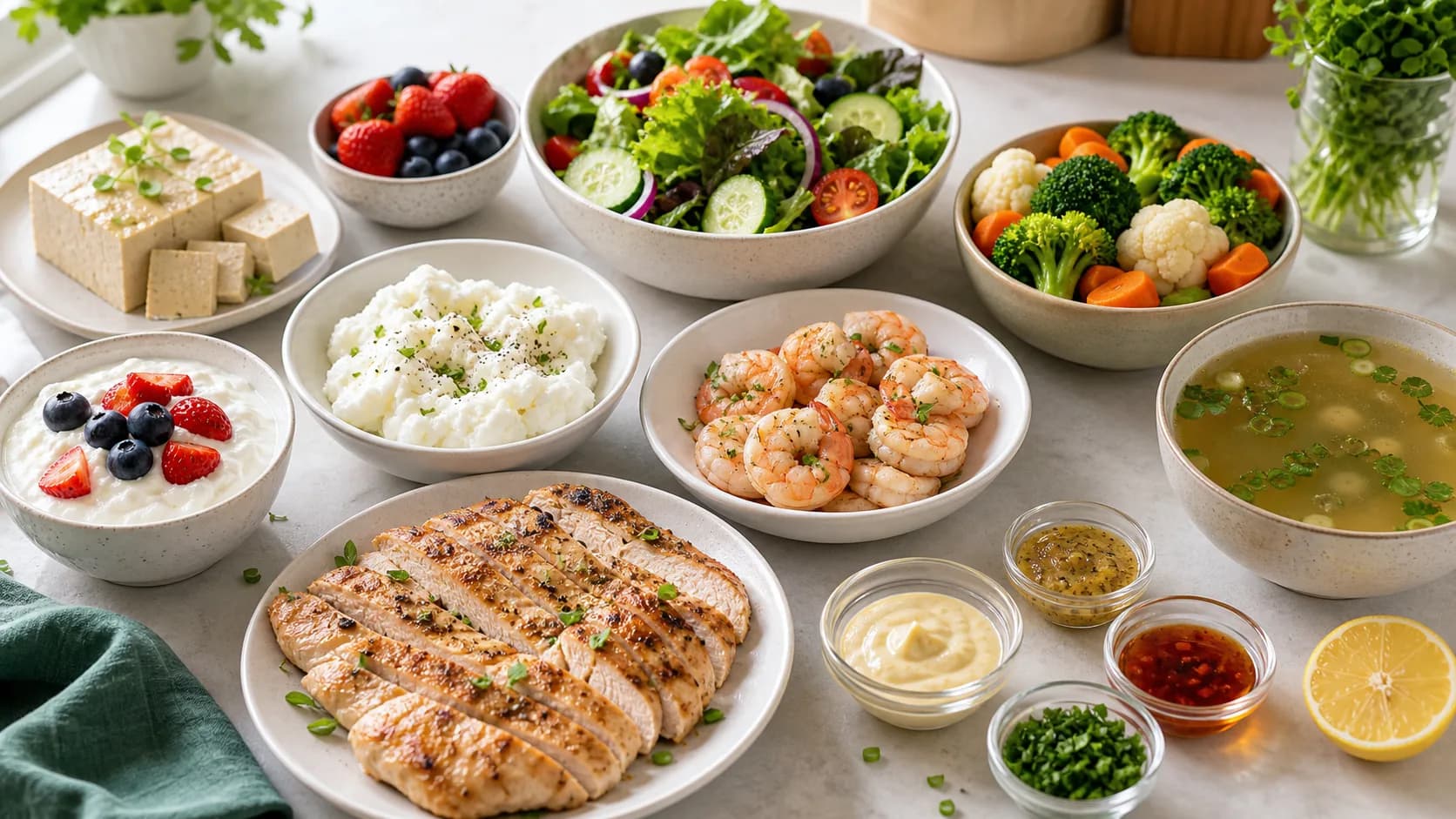
Quick Answer
For weight loss, prioritize lean protein at each meal, keep calories controlled, and aim for a daily target that fits your body size and activity. Most active adults dieting for fat loss do well around 1.2-2.0 g/kg/day, with higher targets useful during resistance training.
Why This Matters
Protein improves fullness, which makes a calorie deficit easier to maintain.
Higher protein helps preserve lean mass while body weight is dropping.
Protein has a higher thermic effect than carbohydrate or fat, so it costs more energy to digest.
Food quality still matters: lean proteins, vegetables, fruit, legumes, and lower-sugar dairy are easier to fit than fried or high-fat protein foods.
High-Protein Low-Calorie Food Data Table
| Food | Serving | Protein | Calories | Protein / 100 kcal |
|---|---|---|---|---|
| Shrimp, cooked | 100 g | 24 g | 99 kcal | 24 g |
| Chicken breast, cooked skinless | 100 g | 30.5 g | 151 kcal | 20 g |
| Egg whites | 100 g | 10.9 g | 52 kcal | 21 g |
| Cod or white fish, cooked | 100 g | 22-23 g | 100-110 kcal | 20-23 g |
| Tuna, canned in water | 100 g drained | 23-25 g | 105-120 kcal | 20-23 g |
| Nonfat Greek yogurt or skyr | 200 g | 20-24 g | 110-150 kcal | 15-20 g |
| Low-fat cottage cheese | 200 g | 22-26 g | 160-220 kcal | 11-15 g |
| Firm tofu | 150 g | 20-26 g | 180-220 kcal | 10-14 g |
| Lentils, cooked | 1 cup / about 200 g | 17-18 g | 230 kcal | 8 g |
| Chickpeas, cooked | 1 cup / 164 g | 14.5 g | 269 kcal | 5 g |
| Turkey breast, cooked skinless | 100 g | 29 g | 135-150 kcal | 19-21 g |
| Lean ground turkey, cooked | 100 g | 26-28 g | 165-190 kcal | 14-17 g |
| Pork tenderloin, cooked | 100 g | 26 g | 140-160 kcal | 16-19 g |
| Salmon, cooked | 100 g | 24-25 g | 190-220 kcal | 11-13 g |
| Seitan | 100 g | 22-25 g | 130-170 kcal | 13-19 g |
| Edamame, shelled | 1 cup / 155 g | 17-19 g | 180-210 kcal | 8-10 g |
| Protein powder isolate | 1 scoop / label serving | 20-30 g | 100-160 kcal | 15-25 g |
Food values are rounded from USDA FoodData Central records and common product-label ranges. Weight-loss guidance is educational and aligns with public-health advice to use sustainable eating patterns and physical activity.
Low-Calorie High-Protein Meal Templates
| Meal | Ingredients | Protein | Calories |
|---|---|---|---|
| Egg-white breakfast scramble | 250 g egg whites, 1 whole egg, spinach, mushrooms, salsa | 35-40 g | 260-320 kcal |
| Greek yogurt protein bowl | 250 g nonfat Greek yogurt, berries, 15 g whey or casein, cinnamon | 35-45 g | 250-330 kcal |
| Chicken salad plate | 150 g cooked chicken breast, large salad, pickles, light yogurt dressing | 45-50 g | 330-430 kcal |
| Tuna cucumber rice-cake plate | 1 tuna pouch, cucumber, tomatoes, mustard, 2-3 rice cakes | 30-40 g | 250-350 kcal |
| Shrimp vegetable stir-fry | 180 g shrimp, frozen vegetables, garlic, soy sauce, cauliflower rice | 40-45 g | 300-380 kcal |
| Tofu edamame bowl | 180 g firm tofu, edamame, cabbage slaw, low-sugar sauce | 30-40 g | 400-500 kcal |
Best Product and Label Guide
| Product type | Best use | Target label | Caution |
|---|---|---|---|
| Ready-to-drink protein shake | Fast protein when a meal is not practical | 20-30 g protein, 120-180 kcal, low added sugar | Liquid calories may be less filling than solid food. |
| Protein bar | Travel, office, and emergency snacks | 18-25 g protein, under 250 kcal, 5-10 g fiber if tolerated | Some bars are candy-like; check calories and sugar alcohols. |
| Nonfat Greek yogurt, skyr, or quark | High-satiety breakfast or dessert replacement | 15-25 g protein per serving, no or low added sugar | Flavored cups can add sugar quickly. |
| Cottage cheese cups | High-protein snack plate with vegetables or fruit | 12-15 g protein per 100 g, low-fat if calories are tight | Sodium varies widely by brand. |
| Tuna, salmon, chicken, or turkey pouches | Shelf-stable lean protein for salads and wraps | 20 g or more protein per pouch, packed in water | Watch sodium and added oils. |
| Egg white carton | Lean breakfast, pancakes, and scrambles | 5 g protein per 45-50 g serving, minimal additives | Pair with vegetables or a whole egg for flavor and satiety. |
Comparison Table
| Approach | Protein fit | Calorie fit | Best for |
|---|---|---|---|
| Lean whole-food protein first | High | High | Most sustainable fat-loss meals. |
| Protein shakes as backup | High | High | Convenience, not the only protein source. |
| Protein bars as snacks | Medium to high | Mixed | Travel and cravings when labels are checked. |
| Legume-heavy vegetarian meals | Medium | Moderate | Fiber, fullness, and plant-based diets. |
| High-fat protein foods | Often high | Lower | Bulking or maintenance, not tight deficits. |
Recipe Ideas
Chicken cucumber crunch bowl
150 g chicken breast, cucumber, lettuce, tomato, pickles, Greek-yogurt ranch
Slice chicken over vegetables and use yogurt-based dressing instead of oil-heavy dressing.
Shrimp cauliflower fried rice
180 g shrimp, cauliflower rice, egg whites, peas, soy sauce, garlic
Cook shrimp first, scramble egg whites, then stir-fry vegetables with a small amount of oil spray.
Skyr berry cheesecake bowl
Skyr, berries, whey or casein, lemon zest, crushed low-calorie biscuit topping
Stir protein powder into skyr slowly, add berries, and keep toppings measured.
Proper Guide
Step 1: set calories before choosing foods
Weight loss still requires a calorie deficit. Use high-protein foods to make that deficit easier, not as permission to ignore total calories.
Step 2: build each meal around a protein anchor
Start with 25-50 g protein from chicken, fish, eggs, dairy, tofu, legumes, or a measured supplement. Add vegetables and a measured carb or fat source based on your calorie target.
Step 3: use products only where they solve a real problem
Protein shakes, bars, tuna pouches, and yogurt cups are useful when convenience prevents missed protein. Whole foods usually provide more chewing, volume, and satiety.
Step 4: choose foods by protein-per-calorie, not hype
For weight loss, rank foods by protein per 100 calories, then filter for taste, digestion, budget, and cooking method. Egg whites, shrimp, white fish, lean poultry, tuna, nonfat Greek yogurt, skyr, cottage cheese, tofu, and seitan are usually easier to fit than fatty cuts, fried foods, or oil-heavy protein meals.
Medical caution for weight-loss diets
If you use diabetes medication, GLP-1 medication, have kidney disease, are pregnant, have an eating disorder history, or have had bariatric surgery, do not use a generic high-protein deficit as a treatment plan. Use clinician or registered dietitian guidance.
Sources, Credit and Method
Food values are rounded from USDA FoodData Central records and common product-label ranges. Weight-loss guidance is educational and aligns with public-health advice to use sustainable eating patterns and physical activity.
Frequently Asked Questions
What is the best high-protein diet for weight loss?
The best high-protein diet is the one you can repeat: lean protein at each meal, plenty of vegetables, measured fats, and carbohydrates that fit your calorie target.
Can I lose weight just by eating more protein?
Not reliably. Protein can reduce hunger and protect muscle, but fat loss still requires an overall calorie deficit.
Are protein shakes good for weight loss?
They can help if they replace a higher-calorie snack or help you hit protein without extra calories. They are less useful if they are simply added on top of your current intake.
Related Tools and Guides
Calculate Your Protein and Calories
Use the calculator to set your daily target, then use these tables to choose foods and meals.
Open Weight Loss Protein Calculator