ProteinCalc Logo
Reviewed for source accuracy and calculator consistency by the ProteinCalc editorial team. Research and methodology by Jitendra Kumar Kumawat, Researcher & Tool Creator, against the sources and methodology policy. Jitendra is not a registered dietitian or licensed medical provider.Last updated: June 16, 2026

Recipes and meal ideas

High Protein Dinner Recipes: 30g+ Meals for Every Goal

This complete guide to high protein dinner recipes gives you beginner-friendly dinners, weight-loss meals, muscle-gain plates, family-style options, and under-400-calorie recipes with clear protein and calorie estimates. The recipes use chicken, turkey, salmon, cod, shrimp, tuna, lean beef, pork tenderloin, eggs, cottage cheese, Greek yogurt, tofu, tempeh, edamame, paneer, chickpeas, lentils, beans, pasta, rice, potatoes, cauliflower rice, and vegetables so dinner can carry a dependable share of your daily protein target.

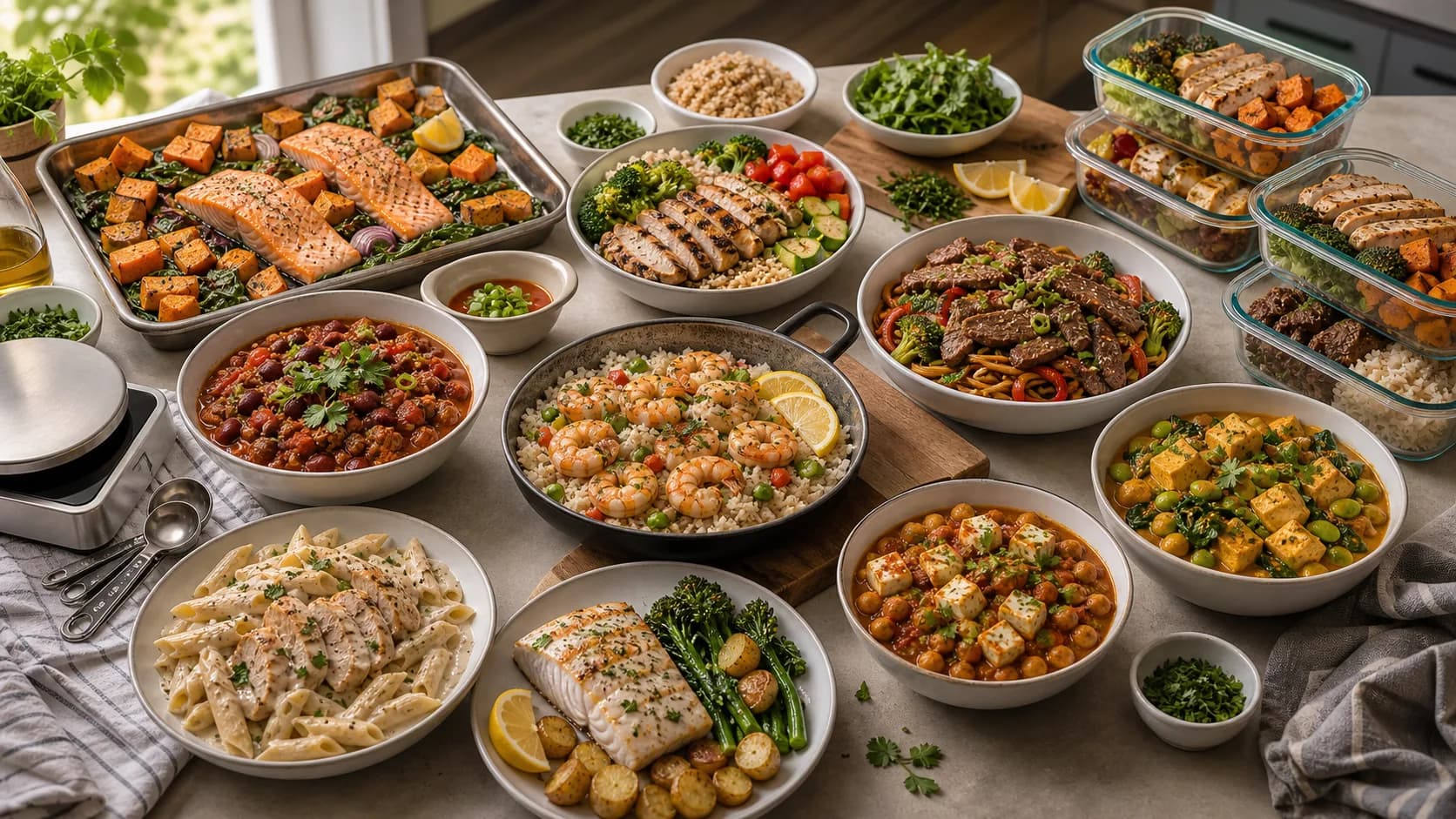
High-protein dinner spread with salmon sweet potato tray bake, chicken grain bowl, turkey chili, shrimp cauliflower rice, beef noodles, tofu edamame curry, chicken pasta, cod, and meal-prep containers
High-protein dinners work best when the protein anchor, vegetable volume, starch portion, and cooking format match the evening goal.

Quick Answer

The best high protein dinner recipes start with a 35-55 g protein anchor, then use vegetables, starches, sauces, and fats to match the goal. Beginners should start with salmon tray bakes, turkey chili, chicken pasta, cod plates, or chicken fajitas. For weight loss, keep the protein lean and measure oil, butter, cheese, coconut milk, pesto, avocado, nuts, tortillas, rice, pasta, and potatoes. For muscle gain, keep protein high and add planned calories from rice, noodles, pasta, potatoes, tortillas, beans, olive oil, avocado, seeds, or full-fat dairy. For high protein dinner recipes under 400 calories, choose shrimp, chicken breast, turkey, tuna, egg whites, tofu, vegetables, cauliflower rice, salsa, Greek yogurt sauces, and measured beans or potatoes.

Key Takeaways

  • A reliable high protein dinner recipe usually gives 35-55 g protein per serving; under-400-calorie dinners may sit closer to 30-45 g, while muscle-gain dinners can reach 50-65 g.
  • Beginners should build dinner around one obvious protein anchor, one vegetable, one flavor system, and one optional starch instead of trying to cook a complicated meal every night.
  • For weight loss, keep the protein portion steady and control the quiet calorie sources: oil, butter, creamy sauces, cheese, nuts, tortillas, rice, pasta, potatoes, and coconut milk.
  • For muscle gain, keep the same protein anchor but add planned calories from rice, pasta, potatoes, bread, beans, olive oil, avocado, nuts, seeds, or full-fat dairy.
  • The best high protein dinner recipes also solve the real evening problem: they reheat well, feed more than one person, become leftovers, or can be cooked on one sheet pan or in one skillet.

Recipes

16

Protein range

36-55g

Best for

Best for family dinners, fat loss, muscle gain, meal prep leftovers, training days, and higher-protein targets.

Choose a Recipe by Goal

High Protein Dinner Recipes for Beginners

Start with recipes that use familiar proteins, simple heat methods, and forgiving sauces.

High Protein Dinner Recipes for Weight Loss

These dinners keep protein high while using vegetables, lean proteins, and measured fats to control calories.

High Protein Dinner Recipes for Muscle Gain

Use these when dinner needs more protein, carbohydrates, and total calories after training or during a gaining phase.

High Protein Dinner Recipes Under 400 Calories

These lower-calorie dinners use lean protein, high-volume vegetables, and measured sauces.

High Protein Dinner Recipes: Calories, Protein, Time, and Best Use

Use this table to choose dinner by goal before cooking. Protein and calories are practical estimates from common portions, USDA data, and Nutrition Facts label ranges.

RecipeProteinCaloriesTimeBest useMeal prep note
Salmon Sweet Potato Tray Bake42 g59035 minBeginner, family dinner, omega-3 richRoast extra sweet potato for lunches.
Lean Beef Noodle Stir-Fry48 g62022 minMuscle gain, quick skilletKeep sauce separate if packing leftovers.
Chicken Cottage Cheese Pasta55 g65025 minMuscle gain, comfort dinnerBlend sauce fresh or reheat gently.
Tofu Edamame Curry38 g54028 minVegetarian, plant proteinStore rice separately from curry.
Shrimp Cauliflower Rice Skillet39 g33015 minWeight loss, under 400 caloriesBest cooked fresh or reheated once.
Turkey Zucchini Meatballs44 g39032 minWeight loss, under 400 caloriesBake a double batch and freeze.
Cod Potato Green Bean Plate42 g43025 minBeginner, light balanced dinnerReduce potato for a sub-400 version.
Chicken Zucchini Cauliflower Dinner Bowl47 g36020 minWeight loss, under 400 caloriesAdd rice for training days.
Turkey Bean Chili Dinner45 g50040 minBatch cooking, family dinnerFreezes well in single servings.
Paneer Chickpea Curry42 g62030 minVegetarian muscle gainUse reduced-fat paneer for lower calories.
Greek Yogurt Chicken Tikka Bowl50 g56035 minHigh-protein bowl, meal prepMarinate chicken ahead.
Egg White Turkey Frittata36 g34025 minUnder 400 calories, leftoversEat hot or cold with salad.
Tuna White Bean Salad Dinner40 g39010 minNo-cook, under 400 caloriesKeep greens dry until serving.
Tempeh Lentil Bolognese36 g52035 minVegan, high fiberSauce improves after a day.
Pork Tenderloin Apple Skillet44 g47028 minLean protein, family dinnerSlice pork after resting.
High-Protein Chicken Fajita Plate52 g58025 minBeginner, muscle gain, family stylePrep peppers and onions ahead.

Dinner Protein Anchors and Practical Serving Targets

Dinner becomes easier when you choose the protein first. Use these anchors to build high protein dinner recipes without recalculating the whole plate every night.

Protein anchorUseful servingApprox proteinBest dinner formatWatch for
Chicken or turkey breast150-200 g cooked45-62 gBowls, fajitas, pasta, sheet-pan dinnersOil, skin, breading, and creamy sauces change calories.
Lean ground turkey or lean beef140-180 g cooked35-50 gChili, meatballs, stir-fries, taco platesFat percentage can shift calories by hundreds.
Salmon, cod, shrimp, tuna, or white fish150-220 g cooked or drained35-50 gTray bakes, skillets, salads, rice bowlsCanned and smoked seafood can be high in sodium.
Eggs, egg whites, cottage cheese, Greek yogurtEgg whites plus dairy or lean meat30-45 gFrittatas, sauces, bowls, breakfast-for-dinnerWhole eggs and full-fat dairy add calories quickly.
Tofu, tempeh, edamame, lentils, beans250-350 g combined plant proteins30-45 gCurries, bolognese, bowls, stir-friesPlant dinners often need combined anchors for 30g+ protein.
Paneer, seitan, soy mince, or high-protein pastaPortion depends on label25-50 gVegetarian curries, pasta, stir-friesUse labels because brands vary widely.

Beginner Formula for Building a High Protein Dinner

If you are new to cooking, use this formula before trying the full recipes. It keeps dinner simple while still covering protein, vegetables, flavor, and calories.

StepChoose oneWhy it worksEasy examples
1. Protein anchorChicken, turkey, beef, salmon, cod, shrimp, tofu, tempeh, eggs, tuna, paneerThis gets dinner to 30g+ protein before sides and sauces take over.Chicken fajitas, salmon tray bake, turkey chili
2. Vegetable volumeBroccoli, zucchini, peppers, spinach, salad greens, cauliflower rice, green beans, mushroomsVegetables make dinner filling and improve plate volume.Sheet-pan broccoli, skillet zucchini, salad base
3. Carb or baseRice, pasta, potatoes, sweet potato, beans, lentils, noodles, tortillas, cauliflower riceThis decides whether dinner is light, balanced, or training-focused.Cauliflower rice for weight loss, pasta for muscle gain
4. Flavor systemSalsa, tikka spices, lemon herbs, soy ginger, tomato sauce, curry paste, Greek yogurt sauceFlavor keeps high-protein dinners from becoming plain protein and vegetables.Tikka bowl, stir-fry, chili, fajita plate
5. Calorie dialOil, butter, cheese, avocado, nuts, seeds, coconut milk, larger starch portionsThis moves the same dinner toward weight loss or muscle gain.Measure for fat loss, increase for gaining phases

High Protein Dinner Recipes Under 400 Calories

These are the strongest fits when you need high protein dinner recipes under 400 calories. Keep sauces measured because oil, cheese, pesto, mayo, and large starch portions can push the meal over 400 quickly.

RecipeProteinCaloriesWhy it stays under 400Best add-on if still hungry
Shrimp Cauliflower Rice Skillet39 g330Shrimp is very lean and cauliflower rice replaces most starch.Broth-based soup or extra vegetables
Turkey Zucchini Meatballs44 g390Lean turkey and zucchini add protein and volume without much added fat.Side salad, cucumber, or tomatoes
Chicken Zucchini Cauliflower Dinner Bowl47 g360Chicken breast dominates the macros and vegetables fill the bowl.Salsa, pickles, or broth
Egg White Turkey Frittata36 g340Egg whites and lean turkey keep fat controlled.Fruit or a large salad
Tuna White Bean Salad Dinner40 g390Tuna provides dense protein and beans are measured.Extra greens, cucumber, or tomato
Cod Potato Green Bean Plate42 g430Not under 400 as written; reduce potato to make a 390-calorie version.Extra green beans or salad

Goal-Based Swaps: Weight Loss vs Muscle Gain Dinners

Most high protein dinner recipes can support different goals. Keep the protein anchor visible and change the energy portion around it.

GoalKeepReduce or measureAdd or increaseBest recipes
Weight lossLean protein, vegetables, salsa, tomato sauce, herbs, lemon, yogurt saucesOil, butter, cheese, nuts, avocado, coconut milk, large pasta or rice portionsLow-calorie volume from salad, zucchini, cauliflower rice, green beans, mushroomsShrimp skillet, chicken cauliflower bowl, turkey meatballs
Muscle gain40-65 g protein and a dinner you can finish consistentlyVery low-carb dinners that leave training under-fueledRice, pasta, potatoes, tortillas, beans, olive oil, avocado, full-fat dairyBeef noodle stir-fry, chicken pasta, tikka bowl
Beginner habit buildingOne protein anchor, one pan or tray, familiar seasoningsRecipes with ten-step sauces or hard-to-find ingredientsRotisserie chicken, frozen vegetables, microwave rice, jarred salsa, premixed spicesSalmon tray bake, turkey chili, chicken fajita plate
Under 400 caloriesProtein anchor plus vegetables and sharp flavorCreamy sauces, free-poured oil, cheese-heavy toppings, large starch portionsMustard, hot sauce, vinegar, herbs, salsa, lemon, brothFrittata, tuna salad dinner, shrimp cauliflower skillet

Dinner Meal Prep, Leftovers, and Reheating Table

High-protein dinners work better when leftovers are planned. Use this table to decide what to batch, what to keep separate, and how to protect texture.

Dinner typeBatch aheadKeep separateReheat noteBest storage use
Sheet-pan fish or chickenVegetables and starchesFresh herbs, lemon, yogurt saucesReheat gently so fish and chicken do not dry out.1-3 day leftovers
Chili or curryFull pot, beans, sauce, proteinRice, herbs, yogurt, crunchy toppingsReheat until steaming hot.2-4 day meal prep or freezer portions
Pasta and noodlesProtein and sauceFresh greens, extra sauce, crunchy toppingsAdd a splash of water before reheating.Next-day dinner or lunch
Salad dinnerProtein, beans, chopped sturdy vegetablesGreens, dressing, avocado, crackersUsually eat cold; keep chilled.Same-day or next-day meal
Frittata or meatballsFull batchSauce, salad, bread, riceReheat gently or eat cold if kept food-safe.Meal prep, snack plates, lunch leftovers

Recipe List

Salmon Sweet Potato Tray Bake

A beginner-friendly tray bake with salmon, sweet potato, broccoli, greens, lemon, and herbs.

42g protein590 kcal35 min

Lean Beef Noodle Stir-Fry

A fast muscle-gain dinner with lean beef, noodles, vegetables, soy, ginger, and garlic.

48g protein620 kcal22 min

Chicken Cottage Cheese Pasta

A creamy high-protein pasta that uses blended cottage cheese instead of heavy cream.

55g protein650 kcal25 min

Tofu Edamame Curry

A plant-forward dinner that combines tofu, edamame, vegetables, curry paste, and light coconut milk.

38g protein540 kcal28 min

Shrimp Cauliflower Rice Skillet

A lean under-400-calorie dinner with shrimp, cauliflower rice, peas, peppers, lemon, and herbs.

39g protein330 kcal15 min

Turkey Zucchini Meatballs

Lean turkey meatballs with grated zucchini, marinara, and salad for a filling under-400-calorie dinner.

44g protein390 kcal32 min

Cod Potato Green Bean Plate

A simple lean fish dinner with cod, baby potatoes, green beans, yogurt tartar sauce, and lemon.

42g protein430 kcal25 min

Chicken Zucchini Cauliflower Dinner Bowl

A lean under-400-calorie bowl with chicken breast, zucchini, cauliflower rice, salsa, lime, and herbs.

47g protein360 kcal20 min

Turkey Bean Chili Dinner

A batch-friendly dinner with lean turkey, beans, tomato, peppers, chili spices, and Greek yogurt topping.

45g protein500 kcal40 min

Paneer Chickpea Curry

A vegetarian high-protein curry with paneer, chickpeas, tomato sauce, spinach, and warm spices.

42g protein620 kcal30 min

Greek Yogurt Chicken Tikka Bowl

A high-protein chicken dinner bowl with yogurt-marinated chicken, rice, cucumber, tomatoes, and mint.

50g protein560 kcal35 min

Egg White Turkey Frittata

A high-protein under-400-calorie breakfast-for-dinner recipe with egg whites, lean turkey, vegetables, and cottage cheese.

36g protein340 kcal25 min

Tuna White Bean Salad Dinner

A no-cook under-400-calorie dinner with tuna, white beans, greens, cucumber, tomatoes, and lemon mustard dressing.

40g protein390 kcal10 min

Tempeh Lentil Bolognese

A vegan high-protein dinner with tempeh, lentils, tomato sauce, vegetables, and pasta.

36g protein520 kcal35 min

Pork Tenderloin Apple Skillet

A lean pork dinner with apples, cabbage, mustard, potatoes, and a quick pan sauce.

44g protein470 kcal28 min

High-Protein Chicken Fajita Plate

A family-style dinner with chicken breast, peppers, onions, tortillas, salsa, Greek yogurt, and beans.

52g protein580 kcal25 min

Full Recipes

Recipe 1

Salmon Sweet Potato Tray Bake

A beginner-friendly tray bake with salmon, sweet potato, broccoli, greens, lemon, and herbs.

42g

protein

Calories

590

Prep

10 min

Cook

25 min

Servings

1

Ingredients

  • 180g salmon fillet
  • 250g sweet potato, cubed
  • 150g broccoli florets
  • 1 cup spinach or kale
  • 1 tsp olive oil
  • Lemon juice, garlic, dill, salt, and pepper

Instructions

  1. 1. Heat oven to 200C and line a sheet pan so cleanup is easy.
  2. 2. Toss sweet potato with olive oil, garlic, salt, and pepper, then roast for 10 minutes.
  3. 3. Add broccoli and salmon to the tray, season the salmon with lemon and dill, and return to the oven.
  4. 4. Bake until the salmon flakes and the sweet potato is tender.
  5. 5. Serve over spinach or kale so the warm tray juices soften the greens; reduce sweet potato for a lower-calorie plate or add rice for muscle gain.

Recipe 2

Lean Beef Noodle Stir-Fry

A fast muscle-gain dinner with lean beef, noodles, vegetables, soy, ginger, and garlic.

48g

protein

Calories

620

Prep

10 min

Cook

12 min

Servings

1

Ingredients

  • 180g lean beef strips
  • 150g cooked noodles
  • 200g broccoli, peppers, and snap peas
  • 1 tsp sesame oil or neutral oil
  • Soy sauce, ginger, garlic, and chili flakes
  • Spring onion and lime

Instructions

  1. 1. Slice beef thinly so it cooks quickly and stays tender.
  2. 2. Heat oil in a large pan, sear beef in a single layer, then move it to a plate.
  3. 3. Cook vegetables with ginger and garlic until crisp-tender.
  4. 4. Add noodles, soy sauce, chili flakes, and the beef back to the pan.
  5. 5. Toss until hot, then finish with spring onion and lime; reduce noodles for weight loss or add extra noodles for a higher-calorie training dinner.

Recipe 3

Chicken Cottage Cheese Pasta

A creamy high-protein pasta that uses blended cottage cheese instead of heavy cream.

55g

protein

Calories

650

Prep

10 min

Cook

15 min

Servings

1

Ingredients

  • 160g cooked chicken breast, sliced
  • 80g dry pasta
  • 150g low-fat cottage cheese
  • 100g spinach
  • 1 tbsp grated parmesan
  • Garlic, black pepper, lemon zest, and pasta water

Instructions

  1. 1. Cook pasta until al dente and reserve a small mug of pasta water before draining.
  2. 2. Blend cottage cheese with garlic, black pepper, lemon zest, and a splash of pasta water until smooth.
  3. 3. Warm chicken and spinach in the pot over low heat.
  4. 4. Add pasta and cottage cheese sauce, stirring gently so the sauce stays creamy instead of grainy.
  5. 5. Finish with measured parmesan; reduce pasta for weight loss or add extra pasta and olive oil for muscle gain.

Recipe 4

Tofu Edamame Curry

A plant-forward dinner that combines tofu, edamame, vegetables, curry paste, and light coconut milk.

38g

protein

Calories

540

Prep

10 min

Cook

18 min

Servings

1

Ingredients

  • 200g firm tofu, pressed and cubed
  • 100g shelled edamame
  • 150ml light coconut milk
  • 200g mixed vegetables
  • 1-2 tbsp curry paste
  • Lime juice, coriander, and optional cooked rice

Instructions

  1. 1. Press tofu briefly, cube it, and brown it in a nonstick pan.
  2. 2. Add vegetables and curry paste, then stir until the paste coats the tofu.
  3. 3. Pour in light coconut milk and simmer until vegetables are tender.
  4. 4. Stir in edamame for the final few minutes so it stays bright and firm.
  5. 5. Finish with lime and coriander; serve with cauliflower rice for fewer calories or rice for a higher-calorie dinner.

Recipe 5

Shrimp Cauliflower Rice Skillet

A lean under-400-calorie dinner with shrimp, cauliflower rice, peas, peppers, lemon, and herbs.

39g

protein

Calories

330

Prep

6 min

Cook

9 min

Servings

1

Ingredients

  • 200g shrimp, peeled
  • 250g cauliflower rice
  • 80g peas or edamame
  • 100g bell peppers
  • 1 tsp olive oil
  • Lemon juice, garlic, paprika, parsley, and black pepper

Instructions

  1. 1. Pat shrimp dry and season with paprika, garlic, pepper, and a pinch of salt.
  2. 2. Cook peppers in olive oil for 2 minutes, then add cauliflower rice.
  3. 3. Stir in peas or edamame and cook until hot.
  4. 4. Add shrimp and cook just until opaque and firm.
  5. 5. Finish with lemon and parsley; add cooked rice or potatoes if you need a muscle-gain version.

Recipe 6

Turkey Zucchini Meatballs

Lean turkey meatballs with grated zucchini, marinara, and salad for a filling under-400-calorie dinner.

44g

protein

Calories

390

Prep

12 min

Cook

20 min

Servings

1

Ingredients

  • 180g lean ground turkey
  • 100g grated zucchini, squeezed dry
  • 20g oats or breadcrumbs
  • 150g marinara sauce
  • Large salad or zucchini noodles
  • Italian herbs, garlic, salt, and pepper

Instructions

  1. 1. Heat oven to 200C and line a small baking tray.
  2. 2. Mix turkey, squeezed zucchini, oats, herbs, garlic, salt, and pepper until just combined.
  3. 3. Shape into meatballs and bake until cooked through.
  4. 4. Warm marinara sauce and add the baked meatballs.
  5. 5. Serve with salad or zucchini noodles for under 400 calories, or add pasta for a muscle-gain dinner.

Recipe 7

Cod Potato Green Bean Plate

A simple lean fish dinner with cod, baby potatoes, green beans, yogurt tartar sauce, and lemon.

42g

protein

Calories

430

Prep

8 min

Cook

17 min

Servings

1

Ingredients

  • 200g cod fillet
  • 180g baby potatoes
  • 180g green beans
  • 80g plain Greek yogurt
  • Pickles, lemon juice, mustard, and dill
  • Salt, pepper, and garlic powder

Instructions

  1. 1. Boil or microwave baby potatoes until tender, then halve them.
  2. 2. Season cod with salt, pepper, garlic powder, and lemon.
  3. 3. Bake or pan-cook cod until it flakes easily.
  4. 4. Steam green beans and mix Greek yogurt with pickles, mustard, lemon, and dill for a quick tartar sauce.
  5. 5. Serve as written for a balanced dinner; reduce potatoes for a 390-calorie version or increase potatoes for training days.

Recipe 8

Chicken Zucchini Cauliflower Dinner Bowl

A lean under-400-calorie bowl with chicken breast, zucchini, cauliflower rice, salsa, lime, and herbs.

47g

protein

Calories

360

Prep

8 min

Cook

12 min

Servings

1

Ingredients

  • 170g cooked chicken breast
  • 250g zucchini
  • 150g cauliflower rice
  • 60g salsa
  • Lime juice
  • Garlic powder, cumin, coriander, and hot sauce

Instructions

  1. 1. Slice zucchini and cook it in a nonstick pan with garlic powder and cumin.
  2. 2. Add cauliflower rice and cook until hot and tender.
  3. 3. Fold in cooked chicken breast and warm gently.
  4. 4. Top with salsa, lime juice, coriander, and hot sauce.
  5. 5. Keep it under 400 calories as written, or add rice, beans, tortillas, avocado, or olive oil for a higher-calorie dinner.

Recipe 9

Turkey Bean Chili Dinner

A batch-friendly dinner with lean turkey, beans, tomato, peppers, chili spices, and Greek yogurt topping.

45g

protein

Calories

500

Prep

10 min

Cook

30 min

Servings

1

Ingredients

  • 170g lean ground turkey
  • 120g cooked kidney or black beans
  • 200g crushed tomatoes
  • 100g peppers and onions
  • 50g plain Greek yogurt
  • Chili powder, cumin, smoked paprika, garlic, and coriander

Instructions

  1. 1. Brown turkey in a pot with chili powder, cumin, smoked paprika, and garlic.
  2. 2. Add peppers and onions and cook until softened.
  3. 3. Stir in beans and crushed tomatoes, then simmer until thick.
  4. 4. Taste and adjust seasoning with salt, pepper, and coriander.
  5. 5. Top with Greek yogurt; add rice, cornbread, or avocado for muscle gain, or add extra vegetables for weight loss.

Recipe 10

Paneer Chickpea Curry

A vegetarian high-protein curry with paneer, chickpeas, tomato sauce, spinach, and warm spices.

42g

protein

Calories

620

Prep

10 min

Cook

20 min

Servings

1

Ingredients

  • 130g paneer, cubed
  • 120g cooked chickpeas
  • 200g tomato passata or crushed tomatoes
  • 100g spinach
  • 50g Greek yogurt or curd
  • Garam masala, cumin, turmeric, ginger, garlic, and chili

Instructions

  1. 1. Brown paneer cubes in a nonstick pan if you want a firmer texture.
  2. 2. Cook ginger, garlic, cumin, turmeric, and chili for 30 seconds, then add tomatoes.
  3. 3. Add chickpeas and simmer until the sauce thickens.
  4. 4. Fold in paneer, spinach, and Greek yogurt over low heat.
  5. 5. Serve with rice or roti for muscle gain, or use reduced-fat paneer and extra spinach for a lighter version.

Recipe 11

Greek Yogurt Chicken Tikka Bowl

A high-protein chicken dinner bowl with yogurt-marinated chicken, rice, cucumber, tomatoes, and mint.

50g

protein

Calories

560

Prep

15 min

Cook

20 min

Servings

1

Ingredients

  • 180g chicken breast
  • 100g plain Greek yogurt
  • 160g cooked rice
  • 150g cucumber, tomato, and onion
  • Tikka spice blend, lemon juice, ginger, and garlic
  • Mint, coriander, and optional chili sauce

Instructions

  1. 1. Mix half the Greek yogurt with tikka spices, lemon, ginger, garlic, and salt.
  2. 2. Coat chicken and marinate while the rice cooks, or refrigerate longer if you have time.
  3. 3. Grill, bake, or pan-cook chicken until cooked through, then rest before slicing.
  4. 4. Build a bowl with rice, cucumber, tomato, onion, and sliced chicken.
  5. 5. Thin the remaining yogurt with lemon and mint for sauce; reduce rice for weight loss or add extra rice for muscle gain.

Recipe 12

Egg White Turkey Frittata

A high-protein under-400-calorie breakfast-for-dinner recipe with egg whites, lean turkey, vegetables, and cottage cheese.

36g

protein

Calories

340

Prep

8 min

Cook

17 min

Servings

1

Ingredients

  • 220g liquid egg whites
  • 80g cooked lean turkey
  • 80g low-fat cottage cheese
  • 150g spinach, mushrooms, and peppers
  • 10g reduced-fat cheese
  • Salt, pepper, parsley, and hot sauce

Instructions

  1. 1. Heat oven to 190C and use an oven-safe nonstick pan.
  2. 2. Cook mushrooms, peppers, spinach, and turkey until vegetables soften.
  3. 3. Whisk egg whites with cottage cheese, salt, pepper, and parsley.
  4. 4. Pour the mixture into the pan, sprinkle with measured cheese, and bake until set.
  5. 5. Serve with hot sauce and salad; add toast or potatoes if you need a larger dinner.

Recipe 13

Tuna White Bean Salad Dinner

A no-cook under-400-calorie dinner with tuna, white beans, greens, cucumber, tomatoes, and lemon mustard dressing.

40g

protein

Calories

390

Prep

10 min

Cook

0 min

Servings

1

Ingredients

  • 140g drained tuna in water
  • 100g cooked white beans
  • 2 cups salad greens
  • 150g cucumber and tomatoes
  • 1 tsp olive oil
  • Lemon juice, mustard, parsley, capers, and black pepper

Instructions

  1. 1. Drain tuna and beans well so the salad does not become watery.
  2. 2. Whisk olive oil, lemon juice, mustard, parsley, capers, and black pepper.
  3. 3. Toss greens, cucumber, tomatoes, beans, and tuna with the dressing.
  4. 4. Taste before adding salt because tuna and capers can be salty.
  5. 5. Serve immediately for best texture; add bread, potatoes, or rice if you need more calories.

Recipe 14

Tempeh Lentil Bolognese

A vegan high-protein dinner with tempeh, lentils, tomato sauce, vegetables, and pasta.

36g

protein

Calories

520

Prep

10 min

Cook

25 min

Servings

1

Ingredients

  • 120g tempeh, crumbled
  • 120g cooked lentils
  • 70g dry high-protein or wholegrain pasta
  • 200g crushed tomatoes
  • 100g mushrooms, carrot, and onion
  • Italian herbs, garlic, balsamic vinegar, and black pepper

Instructions

  1. 1. Cook pasta and reserve a splash of pasta water.
  2. 2. Brown crumbled tempeh with mushrooms, carrot, onion, and garlic.
  3. 3. Add lentils, crushed tomatoes, Italian herbs, and balsamic vinegar.
  4. 4. Simmer until the sauce thickens and tastes rich.
  5. 5. Toss with pasta; reduce pasta for weight loss or add olive oil and extra pasta for muscle gain.

Recipe 15

Pork Tenderloin Apple Skillet

A lean pork dinner with apples, cabbage, mustard, potatoes, and a quick pan sauce.

44g

protein

Calories

470

Prep

10 min

Cook

18 min

Servings

1

Ingredients

  • 180g pork tenderloin medallions
  • 150g cooked baby potatoes
  • 150g cabbage
  • 80g apple slices
  • 1 tsp olive oil
  • Dijon mustard, broth, thyme, salt, and pepper

Instructions

  1. 1. Season pork medallions with salt, pepper, and thyme.
  2. 2. Sear pork in olive oil until browned, then remove to a plate.
  3. 3. Cook cabbage and apple in the same pan until just softened.
  4. 4. Add broth and mustard, return pork to the pan, and simmer until cooked through.
  5. 5. Serve with potatoes; reduce potatoes and add more cabbage for weight loss or increase potatoes for training days.

Recipe 16

High-Protein Chicken Fajita Plate

A family-style dinner with chicken breast, peppers, onions, tortillas, salsa, Greek yogurt, and beans.

52g

protein

Calories

580

Prep

10 min

Cook

15 min

Servings

1

Ingredients

  • 190g chicken breast, sliced
  • 200g peppers and onions
  • 2 small corn tortillas
  • 80g black beans
  • 50g plain Greek yogurt
  • Fajita seasoning, lime juice, salsa, and coriander

Instructions

  1. 1. Season chicken with fajita spices and lime juice.
  2. 2. Cook chicken strips in a hot pan until browned and cooked through.
  3. 3. Cook peppers and onions in the same pan until tender and lightly charred.
  4. 4. Warm tortillas and beans, then build the plate with chicken, vegetables, salsa, yogurt, and coriander.
  5. 5. Use one tortilla and extra vegetables for weight loss, or add rice, beans, avocado, and more tortillas for muscle gain.

How to Use These High Protein Dinner Recipes

The best high protein dinner recipes do more than put a large serving of chicken on a plate. Dinner is where many people need a filling meal, a family meal, leftovers, or a training-day recovery meal. A useful dinner recipe has to hit protein, but it also has to feel like a real meal at the end of the day. That means vegetables, a clear flavor system, enough energy for your goal, and cooking steps that still feel possible after work, school, training, errands, or childcare.

For many adults, a practical high-protein dinner target is 35-55 g protein. Smaller appetites, lower-calorie diets, and high protein dinner recipes under 400 calories may sit closer to 30-45 g. Larger bodies, athletes, and people chasing muscle gain may prefer dinners closer to 50-65 g protein, especially if breakfast or snacks were lighter. The exact target should come from your daily protein goal, but every recipe here makes the main protein source obvious so the meal is easier to adjust.

Use the tables before you cook. If the goal is weight loss, choose lean protein, vegetables, and measured starches or fats. If the goal is muscle gain, keep the protein anchor and add rice, pasta, potatoes, tortillas, beans, or oil in a planned way. If you are a beginner, choose the easiest cooking format first: tray bake, skillet, chili, frittata, or bowl. Once a recipe is repeatable, you can change the seasoning, carb, or vegetable without rebuilding the whole meal.

  • Choose the protein anchor before choosing the side dish.
  • Use the under-400 table when dinner needs to leave room for snacks or dessert.
  • Use the muscle-gain swaps when dinner needs to support hard training or a calorie surplus.
  • Scale family dinners by increasing vegetables and starches first, then protein if your target requires it.

High Protein Dinner Recipes for Beginners

High protein dinner recipes for beginners should be forgiving. The first priority is not novelty; it is building a dinner that you can repeat without stress. Start with familiar proteins such as chicken breast, turkey mince, salmon, cod, shrimp, tuna, eggs, tofu, paneer, beans, lentils, cottage cheese, and Greek yogurt. Then choose one cooking method: roast, saute, simmer, bake, or assemble cold. When you understand the method, you can change the flavor without changing the whole recipe.

The easiest beginner structure is protein plus vegetable plus base plus sauce. A salmon sweet potato tray bake uses one tray and clear timing. Turkey bean chili uses one pot and reheats well. Chicken cottage cheese pasta feels like comfort food but uses a high-protein sauce instead of heavy cream. Cod with potatoes and green beans is simple because the plate is obvious: fish, starch, vegetable, lemon. Chicken fajitas work because the protein, peppers, onions, tortillas, and salsa are easy to see and easy to scale.

Do not start with a dinner that requires perfect timing across four pans. If you are new, choose recipes with built-in flexibility. Chili can simmer a few extra minutes. Meatballs can be baked rather than pan-fried. A tray bake can use frozen vegetables if fresh vegetables are not ready. A frittata can turn leftovers into dinner. The goal is not to make a restaurant plate; the goal is to make a high-protein dinner that appears on the table consistently.

  • Best first recipe: Salmon Sweet Potato Tray Bake if you like fish, or Turkey Bean Chili Dinner if you want leftovers.
  • Best beginner comfort meal: Chicken Cottage Cheese Pasta.
  • Best no-cook beginner dinner: Tuna White Bean Salad Dinner.
  • Best family-style beginner dinner: High-Protein Chicken Fajita Plate.

High Protein Dinner Recipes for Weight Loss

High protein dinner recipes for weight loss should keep the protein anchor steady while controlling the foods that silently raise calories. Dinner can look healthy and still become calorie-dense through oil, butter, cheese, creamy sauces, pesto, nuts, avocado, coconut milk, large tortillas, large rice servings, large pasta servings, and repeated tastes while cooking. None of those foods are forbidden, but they need a planned portion when calories matter.

A strong weight-loss dinner uses lean protein, vegetables, high-volume sides, and enough flavor to feel satisfying. Shrimp, chicken breast, turkey breast, tuna, cod, egg whites, lean turkey, low-fat cottage cheese, Greek yogurt, tofu, and measured beans can all work well. Vegetables such as zucchini, cauliflower rice, green beans, broccoli, peppers, cabbage, mushrooms, spinach, salad greens, cucumber, and tomatoes make the plate bigger without forcing calories too high.

The best adjustment is usually not to remove every carbohydrate. Many people do better with a measured portion of potato, beans, rice, lentils, quinoa, or a small tortilla because dinner stays satisfying and late-night snacking becomes less tempting. Reduce free-poured fats and creamy extras before cutting the protein. If the meal still feels small, increase low-calorie volume first with vegetables, broth, salad, salsa, pickles, herbs, and sharp seasonings.

  • Choose shrimp cauliflower rice, chicken zucchini cauliflower bowls, egg white turkey frittata, tuna white bean salad, or turkey zucchini meatballs when calories need to stay low.
  • Measure oil, butter, cheese, pesto, tahini, coconut milk, avocado, nuts, tortillas, rice, pasta, and potatoes.
  • Use Greek yogurt, salsa, mustard, lemon, vinegar, herbs, hot sauce, pickles, tomato sauce, and spices for lower-calorie flavor.
  • Keep a planned high-protein snack available if dinner is intentionally light and bedtime is late.

High Protein Dinner Recipes for Muscle Gain

High protein dinner recipes for muscle gain need more than protein. Muscle gain is easier when dinner supplies a useful protein dose, enough total calories, and enough carbohydrates to support training. A 330-calorie shrimp cauliflower skillet can be perfect during a cut, but it may not be enough after a hard lower-body workout. A gaining dinner usually needs a clear protein anchor plus a real energy source.

Start with 40-65 g protein from chicken, turkey, lean beef, pork tenderloin, salmon, cod, tuna, shrimp, eggs, egg whites, tofu, tempeh, paneer, lentils, beans, Greek yogurt, cottage cheese, or high-protein pasta. Then add planned calories from rice, pasta, noodles, potatoes, sweet potatoes, tortillas, bread, beans, olive oil, avocado, nuts, seeds, pesto, or full-fat dairy. This keeps dinner productive instead of relying on random snacks after the meal.

A muscle-gain dinner should also be easy to finish. Some people do better with saucy foods such as chili, curry, tikka bowls, bolognese, pasta, and noodle stir-fries. Others prefer simple plates like salmon with sweet potato or pork tenderloin with potatoes. If appetite is low, avoid extremely fibrous, dry, low-fat plates at dinner and use a softer starch or sauce. Consistency matters more than building the largest plate possible.

  • Best training-day dinner: Greek Yogurt Chicken Tikka Bowl with rice or Chicken Cottage Cheese Pasta.
  • Best higher-calorie skillet: Lean Beef Noodle Stir-Fry.
  • Best vegetarian muscle-gain dinner: Paneer Chickpea Curry or Tempeh Lentil Bolognese.
  • Best family-style muscle-gain dinner: High-Protein Chicken Fajita Plate with extra tortillas or rice.

High Protein Dinner Recipes Under 400 Calories

High protein dinner recipes under 400 calories are useful when your daily calories are limited, when lunch was larger, or when you want a lighter meal before bed. The meal still needs to look and feel like dinner. That usually means a lean protein anchor, a large vegetable portion, a strong flavor system, and a measured amount of beans, potatoes, rice, or sauce if included.

The under-400 version often changes the base and fat source. Cauliflower rice replaces most rice. Zucchini noodles or extra vegetables replace part of pasta. Egg whites increase protein without adding much fat. Greek yogurt replaces heavy cream or mayo. Salsa, lemon, herbs, mustard, vinegar, and hot sauce replace oil-heavy dressings. You can still include beans, potatoes, or tortillas, but the portion has to be deliberate.

Under-400 dinners should not be so small that they create a second dinner later. If you are still hungry, add volume first: salad greens, cucumber, tomatoes, cabbage, broth, green beans, zucchini, mushrooms, cauliflower rice, salsa, pickles, or extra herbs. If training was hard or your daily target allows more calories, move the dinner out of the under-400 category and add rice, potatoes, bread, fruit, or healthy fats intentionally.

  • Best under-400 seafood dinner: Shrimp Cauliflower Rice Skillet.
  • Best under-400 family prep: Turkey Zucchini Meatballs.
  • Best under-400 no-cook dinner: Tuna White Bean Salad Dinner.
  • Best under-400 breakfast-for-dinner option: Egg White Turkey Frittata.

Dinner Meal Prep, Storage, and Family Scaling

High-protein dinners are easier when leftovers are part of the plan. Cook once and decide where the extra protein goes: tomorrow's lunch, a freezer chili portion, a second dinner, or a training-day bowl. This is especially helpful for chicken, turkey, beef, chili, curry, meatballs, frittata, bolognese, and fajita fillings. Fish and shrimp can work as leftovers too, but they are best reheated gently and eaten within a shorter window for texture.

Meal prep also gives you more control over different goals in the same household. Keep the protein and vegetables common, then change the base. One person can use cauliflower rice and salsa for weight loss while another adds rice, tortillas, potatoes, or olive oil for muscle gain. This prevents dinner from becoming two separate meals and makes the protein anchor easier to track.

Food safety matters because dinner leftovers often become lunch. Cool cooked food promptly, store it in shallow containers, keep cold foods cold, and reheat leftovers thoroughly. FoodSafety.gov storage guidance is a useful reference for cold storage windows. If you cook a large batch that will not be eaten soon, freeze single portions rather than letting them sit in the refrigerator too long.

  • Batch turkey chili, meatballs, chicken fajita filling, curry, and bolognese for the easiest leftovers.
  • Store rice, pasta, tortillas, salad greens, fresh herbs, yogurt sauces, and crunchy toppings separately when texture matters.
  • Label containers with the protein portion so tracking does not become guesswork.
  • Freeze extra chili, meatballs, cooked turkey, bolognese, and some curry portions if cooking beyond a short refrigerated window.

Common Mistakes That Make Dinner Less Useful

The first mistake is treating dinner as high protein because it contains a small amount of meat, tofu, beans, or cheese. A pasta dish with a few chicken pieces may still be mostly pasta. A salad with a sprinkle of cheese may not be high protein. A vegetarian curry may need tofu, paneer, Greek yogurt, lentils, chickpeas, edamame, or another anchor to reach a meaningful protein target.

The second mistake is letting the sauce decide the calories. Cream, butter, coconut milk, pesto, cheese, oil, mayo, tahini, nuts, and avocado can be useful foods, especially for muscle gain, but they are also dense. If weight loss is the goal, measure them. If muscle gain is the goal, use them intentionally rather than adding calories without knowing where they came from.

The third mistake is building a dinner that does not match the evening. A complex recipe may be realistic on Sunday and impossible on Wednesday. A very light meal may not work after a late workout. A delicate salad may not satisfy someone who needs a hot meal. The best high protein dinner recipes match the night: one-pan for busy days, batch chili for meal prep, under-400 meals when calories are tight, and higher-carb bowls when training demands it.

  • Do not count a dinner as high protein unless the protein serving is visible and meaningful.
  • Do not use cooked and uncooked weights interchangeably unless the tracker entry matches.
  • Do not rely on one recipe style every night; rotate tray bake, skillet, chili, salad, curry, pasta, and frittata formats.
  • Do not ignore sodium if dinner often uses canned tuna, canned beans, smoked fish, deli meat, packaged sauces, or ready-made spice blends.

Full-Day Protein Tables

DayBreakfastLunchDinnerSnackTotal
Example day 1Greek yogurt bowl or tofu scramble, 30-40g proteinChicken, tuna, tofu, or bean bowl, 35-45g proteinSalmon Sweet Potato Tray BakeCottage cheese, skyr, protein shake, or edamame, 20-30g protein~122g protein
Example day 2Greek yogurt bowl or tofu scramble, 30-40g proteinChicken, tuna, tofu, or bean bowl, 35-45g proteinLean Beef Noodle Stir-FryEggs, jerky, Greek yogurt, tofu snack, or tuna crackers, 20-30g protein~128g protein
Example day 3Greek yogurt bowl or tofu scramble, 30-40g proteinChicken, tuna, tofu, or bean bowl, 35-45g proteinChicken Cottage Cheese PastaCottage cheese, skyr, protein shake, or edamame, 20-30g protein~135g protein
Example day 4Greek yogurt bowl or tofu scramble, 30-40g proteinChicken, tuna, tofu, or bean bowl, 35-45g proteinTofu Edamame CurryEggs, jerky, Greek yogurt, tofu snack, or tuna crackers, 20-30g protein~118g protein
Example day 5Greek yogurt bowl or tofu scramble, 30-40g proteinChicken, tuna, tofu, or bean bowl, 35-45g proteinShrimp Cauliflower Rice SkilletCottage cheese, skyr, protein shake, or edamame, 20-30g protein~119g protein
Example day 6Greek yogurt bowl or tofu scramble, 30-40g proteinChicken, tuna, tofu, or bean bowl, 35-45g proteinTurkey Zucchini MeatballsEggs, jerky, Greek yogurt, tofu snack, or tuna crackers, 20-30g protein~124g protein
Example day 7Greek yogurt bowl or tofu scramble, 30-40g proteinChicken, tuna, tofu, or bean bowl, 35-45g proteinCod Potato Green Bean PlateCottage cheese, skyr, protein shake, or edamame, 20-30g protein~122g protein
Example day 8Greek yogurt bowl or tofu scramble, 30-40g proteinChicken, tuna, tofu, or bean bowl, 35-45g proteinChicken Zucchini Cauliflower Dinner BowlEggs, jerky, Greek yogurt, tofu snack, or tuna crackers, 20-30g protein~127g protein
Example day 9Greek yogurt bowl or tofu scramble, 30-40g proteinChicken, tuna, tofu, or bean bowl, 35-45g proteinTurkey Bean Chili DinnerCottage cheese, skyr, protein shake, or edamame, 20-30g protein~125g protein
Example day 10Greek yogurt bowl or tofu scramble, 30-40g proteinChicken, tuna, tofu, or bean bowl, 35-45g proteinPaneer Chickpea CurryEggs, jerky, Greek yogurt, tofu snack, or tuna crackers, 20-30g protein~122g protein
Example day 11Greek yogurt bowl or tofu scramble, 30-40g proteinChicken, tuna, tofu, or bean bowl, 35-45g proteinGreek Yogurt Chicken Tikka BowlCottage cheese, skyr, protein shake, or edamame, 20-30g protein~130g protein
Example day 12Greek yogurt bowl or tofu scramble, 30-40g proteinChicken, tuna, tofu, or bean bowl, 35-45g proteinEgg White Turkey FrittataEggs, jerky, Greek yogurt, tofu snack, or tuna crackers, 20-30g protein~116g protein
Example day 13Greek yogurt bowl or tofu scramble, 30-40g proteinChicken, tuna, tofu, or bean bowl, 35-45g proteinTuna White Bean Salad DinnerCottage cheese, skyr, protein shake, or edamame, 20-30g protein~120g protein
Example day 14Greek yogurt bowl or tofu scramble, 30-40g proteinChicken, tuna, tofu, or bean bowl, 35-45g proteinTempeh Lentil BologneseEggs, jerky, Greek yogurt, tofu snack, or tuna crackers, 20-30g protein~116g protein
Example day 15Greek yogurt bowl or tofu scramble, 30-40g proteinChicken, tuna, tofu, or bean bowl, 35-45g proteinPork Tenderloin Apple SkilletCottage cheese, skyr, protein shake, or edamame, 20-30g protein~124g protein
Example day 16Greek yogurt bowl or tofu scramble, 30-40g proteinChicken, tuna, tofu, or bean bowl, 35-45g proteinHigh-Protein Chicken Fajita PlateEggs, jerky, Greek yogurt, tofu snack, or tuna crackers, 20-30g protein~132g protein

Use these full-day tables to keep the recipe from becoming an isolated high-protein meal. The goal is to anchor one meal with a clear protein serving, then let the other meals carry predictable protein instead of leaving the whole target for dinner. If your daily target is lower, reduce the snack or use smaller portions. If your target is higher, add a second protein snack or increase the main protein portion.

The totals are practical estimates, not prescriptions. A recipe with 35-45 g protein can fit a 100 g day, a 120 g day, or a 150 g day depending on what surrounds it. The useful habit is to plan the full day before hunger and schedule pressure take over.

Grocery List

This grocery list combines the ingredients used across the recipes. Buy exact amounts if you are cooking one recipe, or buy family-size protein packs and frozen produce if you are meal prepping several servings. Keep shelf-stable backups on hand so a missed grocery trip does not turn into a low-protein day.

180g salmon fillet

250g sweet potato, cubed

150g broccoli florets

1 cup spinach or kale

1 tsp olive oil

Lemon juice, garlic, dill, salt, and pepper

180g lean beef strips

150g cooked noodles

200g broccoli, peppers, and snap peas

1 tsp sesame oil or neutral oil

Soy sauce, ginger, garlic, and chili flakes

Spring onion and lime

160g cooked chicken breast, sliced

80g dry pasta

150g low-fat cottage cheese

100g spinach

1 tbsp grated parmesan

Garlic, black pepper, lemon zest, and pasta water

200g firm tofu, pressed and cubed

100g shelled edamame

150ml light coconut milk

200g mixed vegetables

1-2 tbsp curry paste

Lime juice, coriander, and optional cooked rice

200g shrimp, peeled

250g cauliflower rice

80g peas or edamame

100g bell peppers

Lemon juice, garlic, paprika, parsley, and black pepper

180g lean ground turkey

100g grated zucchini, squeezed dry

20g oats or breadcrumbs

150g marinara sauce

Large salad or zucchini noodles

Italian herbs, garlic, salt, and pepper

200g cod fillet

180g baby potatoes

180g green beans

80g plain Greek yogurt

Pickles, lemon juice, mustard, and dill

Salt, pepper, and garlic powder

170g cooked chicken breast

250g zucchini

150g cauliflower rice

60g salsa

Lime juice

Garlic powder, cumin, coriander, and hot sauce

170g lean ground turkey

120g cooked kidney or black beans

200g crushed tomatoes

100g peppers and onions

50g plain Greek yogurt

Chili powder, cumin, smoked paprika, garlic, and coriander

130g paneer, cubed

120g cooked chickpeas

200g tomato passata or crushed tomatoes

50g Greek yogurt or curd

Garam masala, cumin, turmeric, ginger, garlic, and chili

180g chicken breast

100g plain Greek yogurt

160g cooked rice

150g cucumber, tomato, and onion

Tikka spice blend, lemon juice, ginger, and garlic

Mint, coriander, and optional chili sauce

220g liquid egg whites

80g cooked lean turkey

80g low-fat cottage cheese

150g spinach, mushrooms, and peppers

10g reduced-fat cheese

Salt, pepper, parsley, and hot sauce

140g drained tuna in water

100g cooked white beans

2 cups salad greens

150g cucumber and tomatoes

Lemon juice, mustard, parsley, capers, and black pepper

120g tempeh, crumbled

120g cooked lentils

70g dry high-protein or wholegrain pasta

100g mushrooms, carrot, and onion

Italian herbs, garlic, balsamic vinegar, and black pepper

180g pork tenderloin medallions

150g cooked baby potatoes

150g cabbage

80g apple slices

Dijon mustard, broth, thyme, salt, and pepper

190g chicken breast, sliced

200g peppers and onions

2 small corn tortillas

80g black beans

Fajita seasoning, lime juice, salsa, and coriander

Prep Notes for Better Meal Prep

Prep the protein anchor first

The protein source is the part that makes or breaks the meal. Cook or portion it first, then add carbohydrates, vegetables, sauces, and toppings around it. For dinner recipes, this keeps the meal from drifting into a mostly-carb or mostly-fat plate with only a small amount of protein.

Keep wet ingredients separate

Sauces, yogurt, dressings, chopped fruit, salsa, and watery vegetables can make meal-prep containers soggy. Store them separately and combine when eating. This also makes tracking more accurate because oils, cheese, sauces, and sweeteners can be measured instead of guessed.

Build a two-day rotation

Pick two recipes from this page and alternate them. A smaller rotation is easier to shop for, easier to track, and less likely to leave unused ingredients in the fridge. Change seasonings, vegetables, fruit, wraps, grains, or sauces before changing the entire protein structure.

Swaps and Variations

NeedSwapTracking note
BudgetUse eggs, canned tuna, tofu, lentils, frozen vegetables, oats, rice, and store-brand Greek yogurt.Keep protein grams similar and let premium toppings be optional.
No-cookUse cottage cheese, Greek yogurt, canned fish, deli turkey, smoked salmon, tofu, edamame, or protein powder.Check sodium and labels because ready-to-eat proteins vary widely.
Dairy-freeUse tofu, tempeh, edamame, lean meat, fish, eggs if tolerated, soy yogurt, soy milk, or pea protein.Dairy-free products can be lower protein, so verify the label.
Lower calorieUse lean proteins, nonfat dairy, vegetables, berries, salsa, mustard, and lighter dressings.Measure oils, nut butter, cheese, sauces, and granola carefully.
Higher calorieAdd rice, pasta, potatoes, oats, bread, avocado, olive oil, nuts, seeds, or whole-milk dairy.Increase calories without accidentally dropping the protein anchor.

Portion Scaling, Storage, and Troubleshooting

Scale these recipes by changing the protein anchor first. If a recipe has 35 g protein and you need 45 g, add a small extra serving of the main protein, a side of Greek yogurt, extra tofu, an egg, edamame, canned fish, or a half scoop of protein powder depending on the recipe style. If you need less protein or fewer calories, reduce toppings, oils, cheese, grains, nut butter, or sauces before removing the entire protein source.

For meal prep, cool cooked foods quickly, store proteins and sauces separately when possible, and label containers with the protein portion. Recipes with yogurt, cottage cheese, fish, eggs, or cooked poultry should be kept cold and eaten within a reasonable food-safe window. If a recipe becomes dry after reheating, add salsa, broth, lemon juice, yogurt sauce, or a measured dressing instead of guessing with oil.

If the meal is not filling, add volume before adding calories: vegetables, salad, berries, soup, potatoes, beans, or a higher-fiber grain. If the meal is too filling, split it into two smaller eating occasions or choose a softer option such as a smoothie, yogurt bowl, soup, tofu scramble, or tuna salad. The best high-protein recipe is not the one with the largest number on paper; it is the one you can repeat without feeling forced.

Track the version you actually eat. Changing from nonfat yogurt to whole-milk yogurt, from chicken breast to thigh, from water-packed tuna to oil-packed tuna, or from tofu to tempeh can change calories even when the recipe name stays similar. Save your most common version in your tracker so future meals take seconds to log.

Make the recipe repeatable before making it more complicated. Keep one default serving size, one default protein source, and one default side for normal days. Then create only two planned variations: a lower-calorie version for lighter days and a higher-calorie version for harder training or bigger appetites. This keeps the page useful as a system, not just a list of meals.

When in doubt, simplify the plate: protein anchor, fiber source, carb or fat based on the goal, and one flavor element. That formula is easier to repeat than a long ingredient list and usually produces better adherence than chasing a different recipe every day.

Common Questions

What is the easiest high protein dinner recipe for beginners?

The easiest beginner options are salmon sweet potato tray bake, turkey bean chili, chicken cottage cheese pasta, cod potato green bean plate, and chicken fajita plates. They use familiar ingredients, clear protein anchors, and simple cooking methods.

What high protein dinner is best for weight loss?

Good weight-loss dinners use lean protein, vegetables, and measured fats or starches. Shrimp cauliflower rice skillet, chicken zucchini cauliflower bowls, turkey zucchini meatballs, egg white turkey frittata, and tuna white bean salad are strong options.

What high protein dinner is best for muscle gain?

A muscle-gain dinner should pair 40-65 g protein with enough carbohydrates and calories. Lean beef noodle stir-fry, chicken cottage cheese pasta, Greek yogurt chicken tikka bowls, paneer chickpea curry, tempeh lentil bolognese, and chicken fajita plates are good fits.

Can I make high protein dinner recipes under 400 calories?

Yes. Use lean proteins, egg whites, seafood, chicken breast, turkey, tuna, tofu, vegetables, cauliflower rice, salsa, Greek yogurt sauces, and measured beans or potatoes. Shrimp skillets, frittatas, chicken cauliflower bowls, turkey meatballs, and tuna white bean salads can fit under 400 calories.

How much protein should dinner have?

A practical high-protein dinner target is often 35-55 g protein. Smaller appetites and lower-calorie dinners may sit near 30-45 g, while muscle-gain or training-day dinners may sit closer to 50-65 g.

What high protein dinners make good leftovers?

Turkey bean chili, turkey zucchini meatballs, chicken fajita filling, Greek yogurt chicken tikka bowls, paneer chickpea curry, tofu edamame curry, tempeh lentil bolognese, and egg white turkey frittata all make useful leftovers when stored and reheated properly.

Related Meal Guides

Sources reviewed

Note: Nutrition values are estimates based on common portions and USDA data. Brand, cooking method, and exact serving size can change the final protein and calorie count.