
Browse the 15 recipe sections
One complete serving: toast, all cooked custard, 100g yogurt, 100g berries and pan oil. Nutrition is an ingredient-based estimate; extra toppings are additional. Cooking times are estimates. See the breakdown.
Recipe Overview
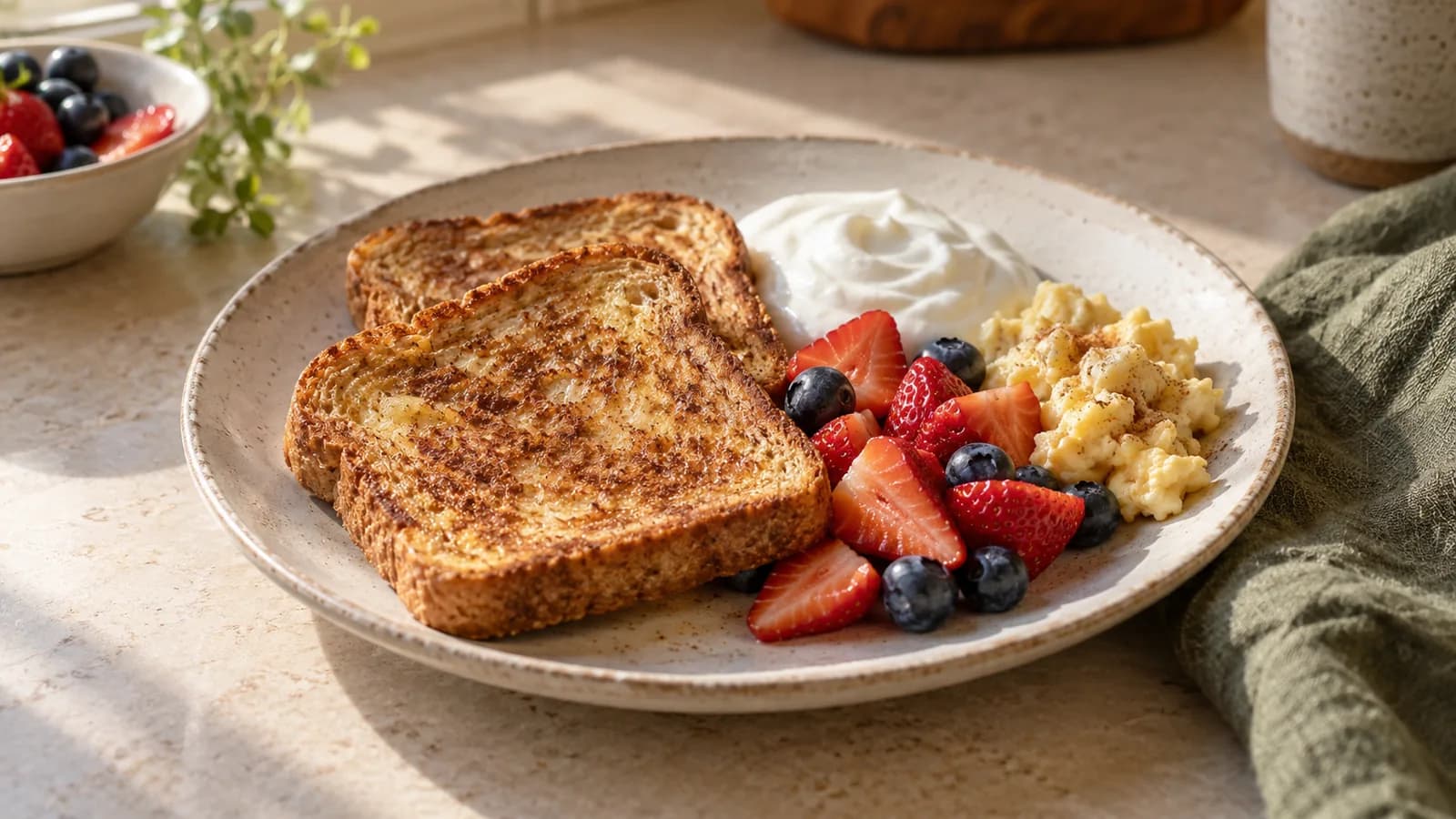
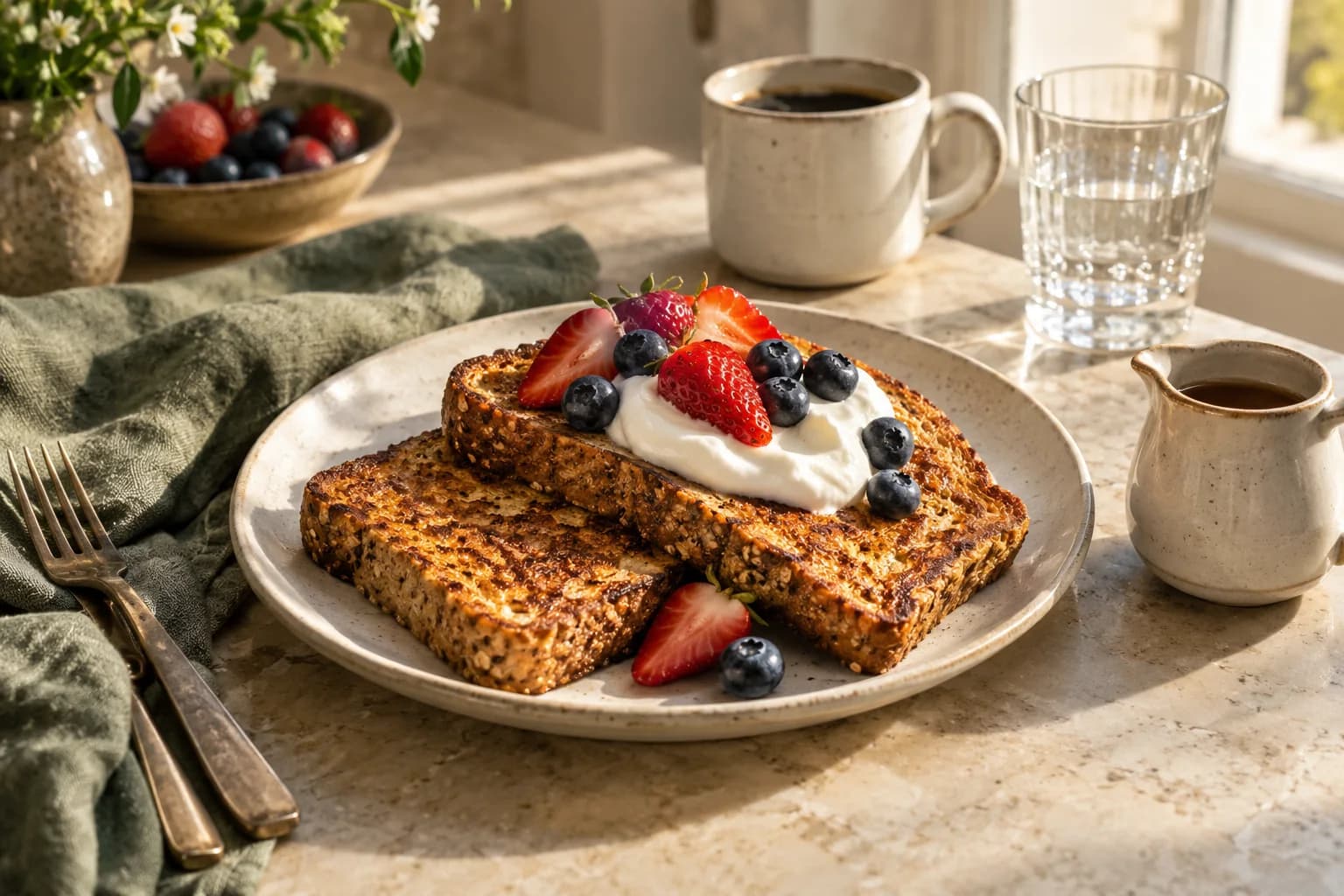
French toast should smell like a good breakfast before it ever becomes a nutrition calculation: warm cinnamon, vanilla and bread browning in the pan. This version keeps that familiar comfort. It uses ordinary whole-wheat sandwich bread, one whole egg and extra egg whites, with tangy Greek yogurt and juicy berries on the side. The outside turns golden while the middle stays tender and fully cooked.
One generous serving is two slices of toast, 100g yogurt, 100g berries and a small cooked-custard side. Together, the measured ingredients provide approximately 478 calories and 39g protein. That last detail matters: the figure describes the full breakfast, including the egg mixture left in the dipping dish, cooked and served beside the toast. It is not a claim that two bread slices alone contain 39g protein.
What to expect on the plate
The custard contains cinnamon and vanilla, but no added table sugar. Most of the sweetness comes from the fruit, so the finished breakfast tastes gently sweet rather than syrup-soaked. The yogurt brings a cool, creamy contrast. Keep it beside the toast for crisper edges, or spoon it on top just before your first bite. There is room to make breakfast sweeter if you prefer; syrup is an optional addition.
A useful starting point
Allow about five minutes to prepare and ten minutes to cook one serving in a pan large enough for both slices. These are cooking estimates, not a deadline. Bread thickness and your hob decide how quickly the center sets. The guide below helps you judge the bread, adjust the heat and rescue common problems. If you already know your way around a skillet, the recipe card has everything you need in one place.
Why You’ll Love This Recipe
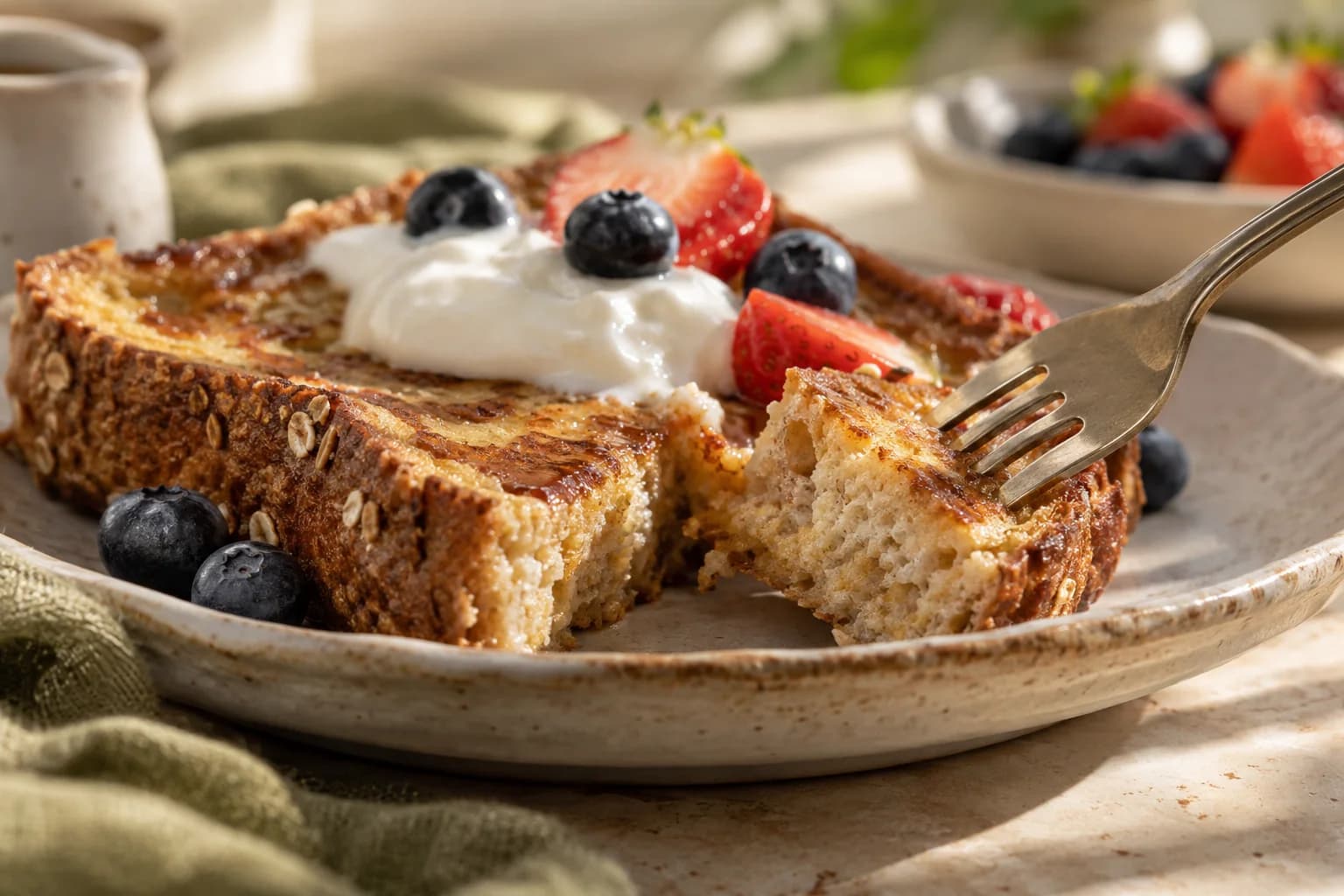
Familiar ingredients, a more substantial breakfast
There is no need to buy protein bread or find a powder that behaves well in a hot pan. A whole egg gives the custard richness; whites add more protein without a second yolk. Greek yogurt makes a useful topping because it supplies creaminess as well as protein. The bread still tastes like bread, and cinnamon still gets to be the main aroma.
You get several textures from one simple meal: a gently crisp surface, a soft middle, thick yogurt and berries that burst as you eat them. That variety is a good reason to keep the toppings separate until serving. A little attention to temperature and texture makes this feel more inviting than another bowl assembled only around a target number.
It works with the rest of your groceries
Almost every ingredient has another easy use. Bread can become a sandwich; yogurt can go into overnight oats or a savory dip; eggs and milk are everyday staples. If you buy frozen berries, you can use a small portion without racing to finish a fresh punnet. A breakfast that fits the food already in your kitchen is easier to repeat than one that needs its own shopping list.
You can learn the technique once
The basic routine is short: whisk, dip, cook, then finish the plate. Once you find a dipping time that suits your usual loaf, you can repeat it without reconsidering every step. The important decisions are visible and practical: does the slice lift intact, does the pan sizzle gently, and is the center cooked? Those checks are more useful than trying to follow someone else’s hob setting exactly.
It also scales sensibly for a shared breakfast. Prepare the toppings while the pan warms, cook bread in an uncrowded layer and let everyone add their own fruit. Keep the quieter weekday version simple; on a slower morning, a warm fruit topping or a pot of coffee can turn the same base into brunch.
Nutrition at a Glance
- Calories
- 478kcal
- Protein
- 39g
- Carbs
- 53g
- Fat
- 11g
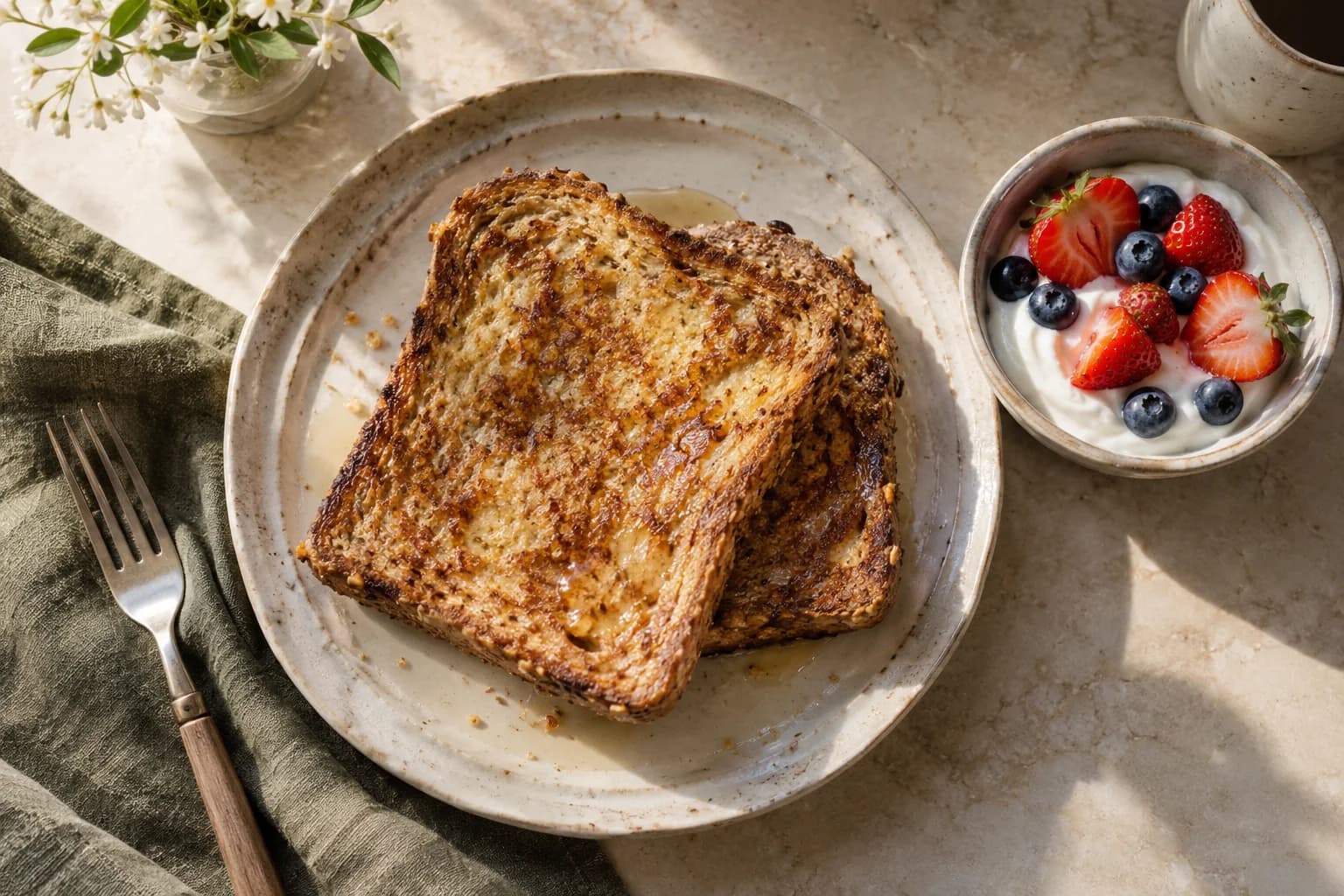
These estimates describe one complete breakfast with all measured custard, yogurt, berries and oil. Optional syrup, nut butter and extra toppings are separate. Use the ingredient breakdown later in the guide if you want to adapt the numbers to your usual bread or yogurt.
Where the protein comes from
The whole egg and whites contribute about 17g combined. Greek yogurt contributes about 10g, and the reference whole-wheat bread adds another 10g. Milk, fruit and flavorings make up the small remainder. That is why the yogurt is a meaningful part of this breakfast rather than just a decorative spoonful.
A balanced view of the other nutrients
Most carbohydrate comes from bread and fruit. The full serving provides approximately 7.7g fiber, while the yolk and pan oil supply much of the fat. The portion is substantial: 478 calories before extras. Whether that suits your morning depends on appetite, activity and the rest of your meals, rather than on the phrase “high protein.”
Bread varies particularly widely. The reference is commercially prepared whole-wheat bread, not a universal value for every brown loaf. A lighter slice, a bakery sourdough and a specialty protein loaf can all change the total. The estimate is a starting point for a specified portion, with the assumptions kept visible.
Ingredients
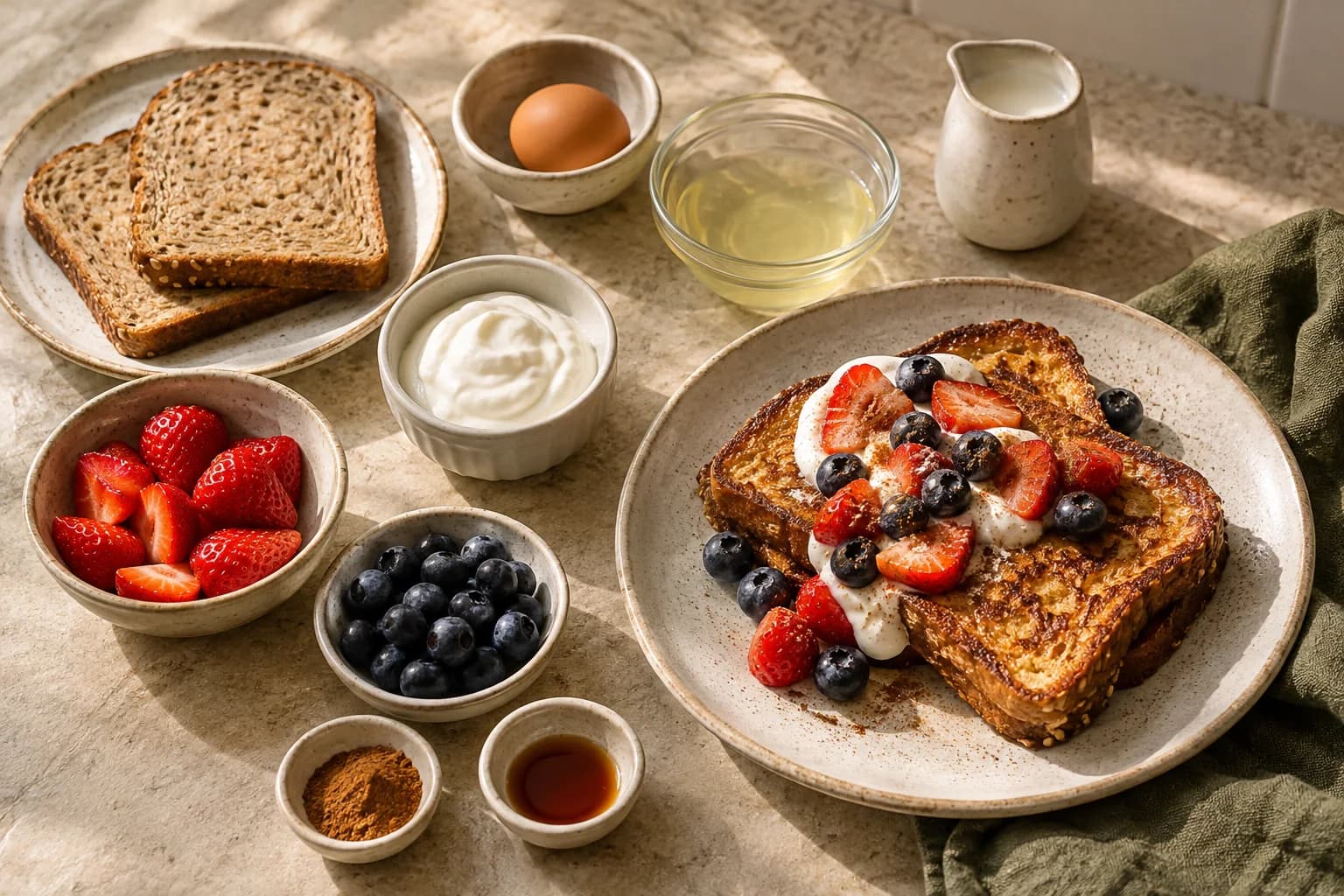
Whole-wheat bread: 80g total
Choose two sturdy slices with an even crumb, ideally around 40g each and roughly 1–1.5cm thick. Bread that is slightly dry is often easier to dip without tearing. Extremely airy bread can collapse, while a very dense loaf may need a little more time in the custard. Look for whole-wheat flour in the ingredient list if that is the bread you want; a dark color alone does not tell you the flour type.
One whole egg plus 100g egg whites
The combination gives the custard some yolk richness while increasing protein through extra whites. Use one large egg weighing about 50g without its shell. Pasteurized liquid whites are convenient to measure, but freshly separated whites work too. The weight is the reliable reference because eggs vary in size. Three large whites are only an approximate equivalent to 100g; use your scale or the carton serving guidance for a closer measurement.
Milk, cinnamon and vanilla
Forty milliliters of skim milk loosen the custard without making it excessively watery. Whisk in half a teaspoon of ground cinnamon and half a teaspoon of vanilla extract. Cinnamon may initially float, so whisk again just before dipping the second slice. Vanilla brings aroma rather than making the mixture taste like syrup. If you use sweetened vanilla flavoring or a flavored milk, account for the label difference in your nutrition estimate.
Greek yogurt: 100g for serving
Use plain nonfat Greek yogurt for the reference recipe. A thick, strained texture sits well on warm toast and supplies a useful amount of protein. Keep it refrigerated while the bread cooks, then spoon it on just before serving. Some products described as Greek-style yogurt contain less protein than other strained yogurts, so compare labels. A pleasant texture and a flavor you enjoy are both worth considering when choosing your regular topping.
Berries and a measured amount of oil
The fruit portion is 50g strawberries and 50g blueberries. Wash, dry and slice the strawberries before you start cooking so the finished toast does not sit waiting. Frozen fruit can be warmed separately and used as a quick sauce. For the pan, measure 3g olive oil and brush it across the surface. A functioning nonstick skillet matters here; the same small amount may not prevent sticking in a damaged or unsuitable pan.
You will need a shallow dipping dish, whisk or fork, kitchen scale, large nonstick skillet, spatula and plate. A food thermometer helps check the egg-soaked center, especially with thicker bread. Set out the tools before the custard is mixed. Keeping raw-egg utensils separate from the yogurt spoon and serving plate makes the cooking sequence more convenient as well as cleaner.
Your ingredient checklist
- Whole-wheat bread2 substantial slices, about 40g each80g
- Whole egg1 large egg, without shell50g
- Liquid egg whitesPasteurized whites; about 3 large whites by weight100g
- Skim milkAbout 2 tablespoons plus 2 teaspoons40ml
- Plain nonfat Greek yogurtFor serving; choose thick, unsweetened yogurt100g
- StrawberriesWashed, hulled and sliced50g
- BlueberriesWashed and dried50g
- Olive oilFor the pan; a scant ¾ teaspoon3g
- Ground cinnamon½ teaspoon1.3g
- Vanilla extract½ teaspoon2g
Contains wheat, egg and milk. See substitutions for dietary adjustments.
Ingredient Substitutions
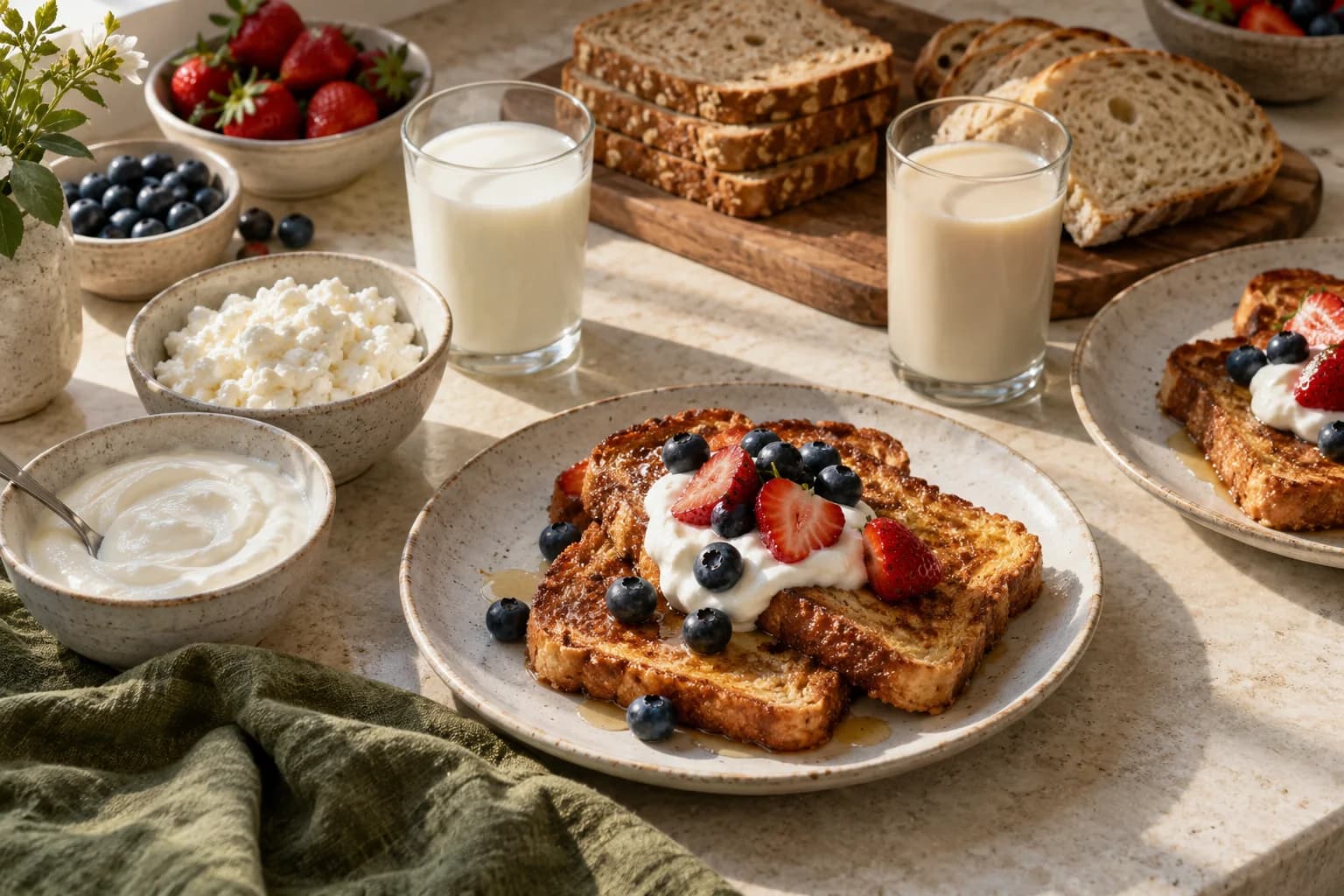
Choose a swap for the result you want
Some substitutions change flavor, others change texture, and some change the main protein contribution. Decide which matters most before replacing several ingredients together. If you want to learn whether sourdough works better in your pan, keep the custard and toppings the same for that batch. A single change makes it much easier to understand the result.
Here are the practical tradeoffs at a glance. The published nutrition applies to the original ingredients; a substituted plate needs its own calculation.
| Original | Alternative | Main difference |
|---|---|---|
| Whole-wheat bread | Sturdy sourdough | An open crumb may soak unevenly; dip carefully. |
| Skim milk | Unsweetened soy drink | Different flavor and nutrition; check the product. |
| Greek yogurt | Blended cottage cheese | Usually less tangy, with a saltier finish. |
| Whole egg | 50g extra egg whites | Paler, leaner custard with less richness. |
| Fresh berries | Thawed frozen berries | Juicier topping; keep liquid off crisp edges. |
Bread: keep the slice sturdy
Sourdough gives a mild tang that goes well with yogurt, although large air pockets can take up custard irregularly. A soft white sandwich loaf gives a gentler flavor but may need a shorter dip. Avoid assuming that a thick slice is automatically better: the outside can brown before a deep center sets. Start with a manageable thickness and leave room to slide a spatula underneath.
Dairy-free and gluten-free versions
For dairy-free toast, use a suitable plant drink in the custard and a dairy-free yogurt or another topping you enjoy. Soy products may be useful when preserving protein matters, but the amount depends on the actual product. Coconut yogurt can provide creaminess with a very different protein contribution. Also check the bread ingredients. For gluten-free cooking, use certified gluten-free bread and appropriate ingredients; dedicated clean utensils matter when cross-contact is a concern.
Cottage cheese instead of yogurt
Blend plain cottage cheese until smooth if you prefer a milder topping. A little milk or water can loosen it, but add that gradually so it stays spoonable. Its saltiness can balance sweet fruit pleasantly. Taste it with a berry before adding extra flavoring; you may prefer vanilla, a little cinnamon or a finely grated citrus zest. Keep it chilled until the toast is ready.
Egg changes need a little more care
An all-white custard is the simplest egg adjustment; the variation section gives exact amounts. Using two whole eggs instead of the original egg-and-white mixture changes both the liquid volume and the nutrition. Keep a little milk available if the dipping mixture needs loosening. For an egg allergy, use a separately developed egg-free method. Ground flax or starch does not automatically behave like this custard, and the original cooking instructions should not be treated as a validated egg-free recipe.
How to Make It
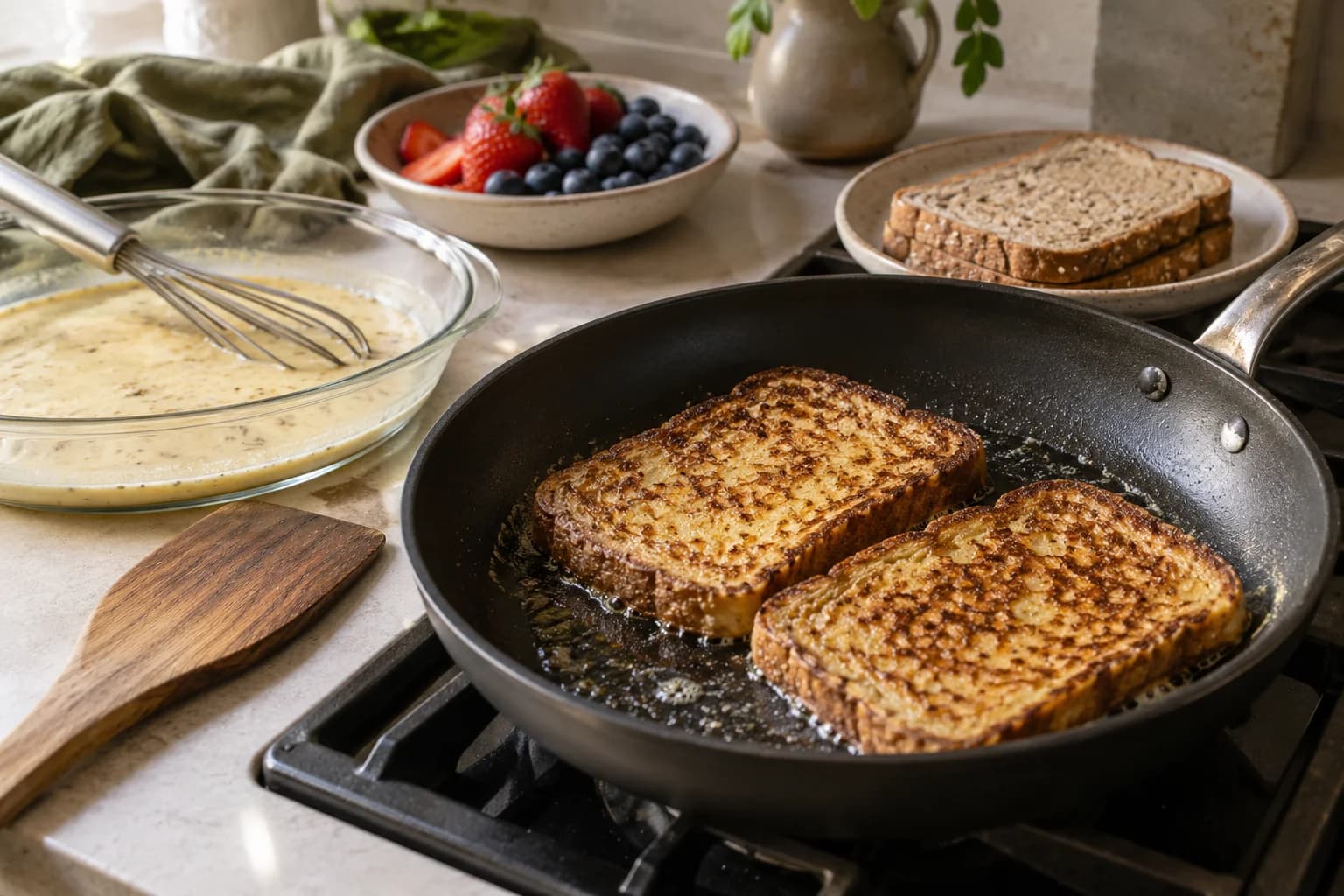
1. Prepare the toppings and custard
Start by weighing the bread, yogurt and fruit. Slice the strawberries and set the toppings aside in the refrigerator if the kitchen is warm. Crack the whole egg into a shallow dish, add the measured whites and milk, then whisk in cinnamon and vanilla. Break up the egg completely so the mixture is evenly colored and there are no long strands of white. The dish should be wide enough to lay one bread slice flat without bending it.
Use a shallow dish rather than a deep bowl when possible. It makes contact with the bread more even and lets you lift each slice easily. If cinnamon gathers on the surface, whisk briefly before each dip. Do not taste raw custard to judge sweetness. The base version relies on the finished toppings for most of its sweetness, and you can adjust the plate after the eggs are safely cooked.
2. Preheat a suitable pan
Warm a large nonstick skillet over medium-low to medium heat for a minute or two, depending on your hob. Add the measured oil and brush or tilt it across the cooking surface. You want gentle sizzling when bread touches the pan, not aggressive smoke or instant darkening. If your skillet comfortably holds only one slice, cook in two batches. Crowding two slices into a small pan traps moisture and makes turning them harder.
3. Dip, observe and lift
Place the first slice in the custard for about 10–20 seconds, turn it, then dip the other side for a similar time. This is a starting range, not a rigid rule. Soft fresh bread may need less, while firm bread may need longer. The surface should be moist and the slice should remain intact when lifted. Let excess custard drip back into the dish for a few seconds before moving the bread to the skillet.
Do not soak the second slice for several minutes while the first one cooks. Dip immediately before cooking so you can control absorption. Handle the wet bread with a broad spatula if it feels fragile. The aim is to soften the crumb and coat it evenly, while keeping enough structure to turn the toast. A slice that falls apart in the dish will not recover its shape simply because the pan is hot.
4. Cook both sides gently
Leave the toast undisturbed for approximately 3–4 minutes on the first side. Slide the spatula underneath to check for a golden surface, then turn carefully and cook for another 2–3 minutes. Times vary with bread thickness, pan and hob. If the outside darkens quickly, lower the heat and allow more time. Avoid pressing the toast firmly into the pan, which can flatten the crumb and force liquid out.
Check that the egg-soaked middle is cooked rather than judging only by the crust. USDA guidance for egg dishes uses an internal temperature of 160°F / 71°C. Insert a suitable thermometer into the thickest part without touching the pan. If the outside is already brown, continue over gentle heat until the middle reaches that temperature. For this recipe, a tender interior means fully cooked bread and egg, not a center that is still wet with raw custard.
5. Use the remaining custard
Bread absorption varies, so you may have egg mixture left in the dipping dish. Once the toast is out, pour that remainder into the pan and stir it into a small scramble until it is fully set and reaches 160°F / 71°C. Serve it beside the toast or beneath a slice. This is part of the measured breakfast and prevents the protein calculation from crediting eggs that were actually thrown away. Discard uncooked mixture if you choose not to use it, and understand that the meal then contains less protein.
6. Finish and serve
Move the toast to a plate, add the cold Greek yogurt and scatter over the berries. Keep syrup or nut butter as an optional measured addition. Serve promptly for the best contrast between warm toast and cool topping. Wash the dipping dish, whisk, raw-egg spatula and any affected counter surfaces before preparing more ready-to-eat food. If you are making several portions, keep the cooked slices separate until plating rather than building a steamy stack.
Tips for the Best Results
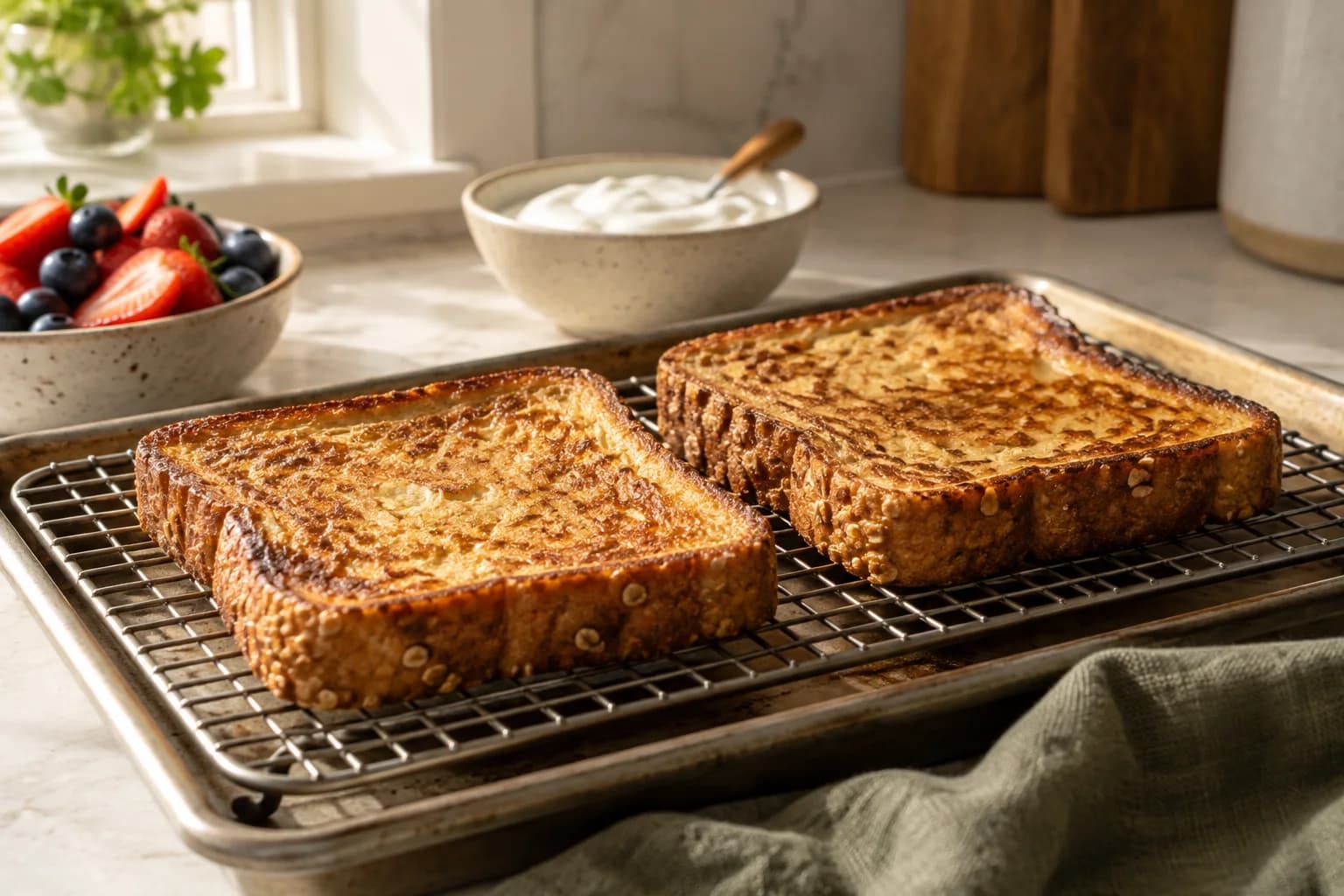
Let the bread tell you when to stop dipping
A wet surface is enough; the slice does not need to become waterlogged. Lift one corner with a broad spatula. If the bread holds its shape, you are ready to move it to the pan. If it bends heavily or begins to tear, shorten the next dip. Fresh, delicate bread can reach that point much sooner than a slightly dry slice.
Listen to the pan
A gentle sizzle is a useful sign. Loud spattering, smoke or edges turning dark almost immediately suggest the pan is too hot. Turn the heat down before adding the second slice. At the other extreme, bread sitting quietly in a cool pan can absorb oil while the surface stays pale. Give the pan time to warm, then adjust in small steps.
Use this table to identify the likely problem before changing the whole recipe.
| What happened | Likely cause | Try next time |
|---|---|---|
| Brown outside, wet middle | Heat too high for the slice | Lower heat; finish the center gently. |
| Bread tears during lifting | Long dip or fragile bread | Shorten the soak; use a broad spatula. |
| Pale, soft surface | Cool or crowded pan | Preheat; leave space between slices. |
| Rubbery egg coating | Aggressive heat or overcooking | Use moderate heat and check the center. |
| Soft edges after plating | Steam or wet toppings | Avoid stacking; add yogurt at serving. |
Give the first side time to release
Trying to move the toast every few seconds can tear the egg coating before it sets. Leave it alone for the first part of cooking, then slide a spatula underneath an edge to inspect the color. If the surface still clings, wait briefly instead of scraping harder. This is especially helpful with a less slippery pan. A clean nonstick skillet makes the measured oil easier to distribute.
A browned crust is only one check
The outside can look finished while the egg-soaked middle is still wet. Check the thickest part and use a suitable thermometer for the temperature check in the method. If the crust is already brown, a gentler finish is the answer. Pressing the slice flat does not solve an undercooked center; it mostly squeezes out moisture and changes the texture.
Keep the good edges crisp
Let hot slices rest separately while you finish the egg side. A rack is useful for a larger batch because air can move underneath. Place yogurt and fruit beside the toast, then add a little to each bite. Warm berry sauce is lovely, but pooling it under the bread softens the bottom quickly. Serve any sauce in a small jug if crispness is your favorite part.
For the next breakfast, remember just two things: which loaf you used and how long you dipped it. That small observation is often enough to repeat a good result. There is no need to keep changing the eggs, milk, bread and heat together. Get comfortable with one version, then make the variation you actually want.
High-Protein / Lower-Calorie Variations
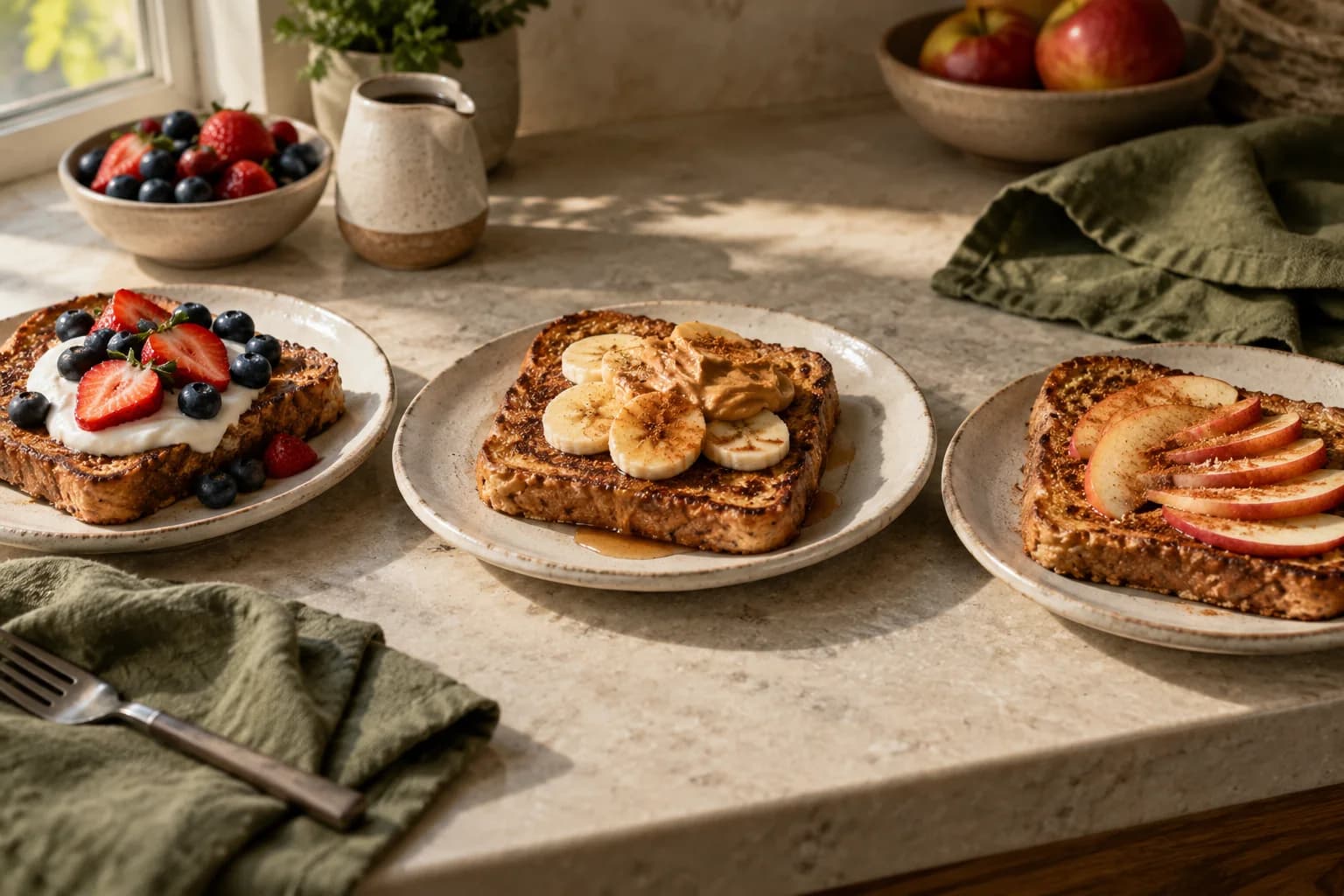
Three measured variations
These versions keep the same berries, flavorings and pan oil unless stated otherwise. The approximate totals use the same reference foods as the base recipe, with all measured custard cooked and eaten.
| Version | Change to the base | Calories | Protein |
|---|---|---|---|
| Original | 1 egg + 100g whites, 80g bread, 100g yogurt | 478 kcal | 39g |
| All egg whites | Replace the 50g egg with 50g extra whites | 433 kcal | 39g |
| Smaller bread portion | Use 60g bread instead of 80g | 427 kcal | 37g |
| Extra yogurt | Use 150g yogurt instead of 100g | 507 kcal | 45g |
For a lighter custard
Use 150g egg whites in total and leave out the whole egg. The toast will have less yolk richness and may look paler. Cinnamon and vanilla still provide aroma, while the yogurt supplies creaminess at the table. Keep the heat moderate; more aggressive browning does not replace the richness of the original mixture. This version is useful when you specifically want less fat from the eggs.
For a smaller breakfast
Use 60g bread and keep the original egg mixture and toppings. The result is a smaller bread portion, not a promise that every low-calorie loaf tastes or behaves the same. Smaller or thinner slices may need less dipping time. You may have more custard left in the dish, so allow time to cook the little side portion. If you simply want half a serving, halve every ingredient rather than changing only the bread.
For more protein without changing the toast
Increase the yogurt to 150g. It is a straightforward way to make the plate creamier without asking the bread to absorb more egg liquid. Serve the extra yogurt in a small bowl if it crowds the plate. A yogurt-and-berry spoonful between bites gives you the contrast of warm toast and cool topping without soaking the crust.
For a bigger, more energetic meal
Banana, nut butter or an extra slice of bread can make breakfast more substantial. Choose the addition for the flavor and portion you want. Banana brings softness and sweetness; nut butter adds a richer finish. A thin spread on the toast works differently from a large dollop mixed into yogurt. Neither is included in the original totals, so use your ingredient amounts when working out the new portion.
If you enjoy protein powder
Powder is optional, and it is easier to start small. Try 10g mixed smoothly into the milk, with a little extra liquid available if the mixture thickens. Powders differ in sweetness, texture and browning. Alternatively, stir a small amount into the yogurt so the toast method stays familiar. Taste the yogurt mixture before topping the breakfast. There is no standard “scoop” nutrition: use the amount and product you actually choose.
Serving Suggestions
The everyday plate
Set the toast beside the yogurt, add the berries and tuck the small cooked-custard side into the remaining space. This keeps the bread’s edges uncovered until you eat. Add a light dusting of cinnamon to the yogurt if you enjoy that aroma. The custard side is flavored with the same cinnamon and vanilla as the toast, so it belongs with the breakfast rather than feeling like an unrelated savory extra.
Warm fruit for a cooler morning
Heat a small portion of frozen berries gently until they release juice. Let the fruit cool a little before pairing it with cold yogurt. For a thicker topping, simmer briefly rather than adding lots of liquid. Taste before sweetening: a ripe strawberry mixture may need nothing, while tart berries may suit a small drizzle of honey. Spoon the fruit onto the toast just before eating, or serve it separately to protect the crust.
Apple, pear and citrus
Thin apple or pear slices can be softened in a separate pan with cinnamon and a splash of water. Keep the pieces small enough to sit comfortably on a slice. A little orange zest on the yogurt gives a brighter finish without turning the custard into a new recipe. These are flavor alternatives to the original berries; use the fruit portion and any added cooking ingredients when estimating your version.
A little syrup goes where it tastes best
If you like maple syrup, drizzle it on the cut surface or the yogurt instead of flooding the entire plate. You can enjoy a sweeter bite while some of the toast stays crisp. A small jug makes it easy to choose the amount at the table. Honey has a different flavor but serves the same purpose here. The base breakfast is designed without either, leaving sweetness as your choice.
A breakfast table for several people
Put toast, yogurt and fruit out separately and let people assemble their plates. Use separate serving utensils for different dietary versions. A warm platter can help while you finish the last pan batch, but avoid a deep stack that traps steam. Offer tea or coffee and enjoy the meal while the toast is warm. For a relaxed brunch, berries in a shared bowl are often more useful than elaborate individual decorations.
Meal Prep & Storage
Batch around the pan, not the clock
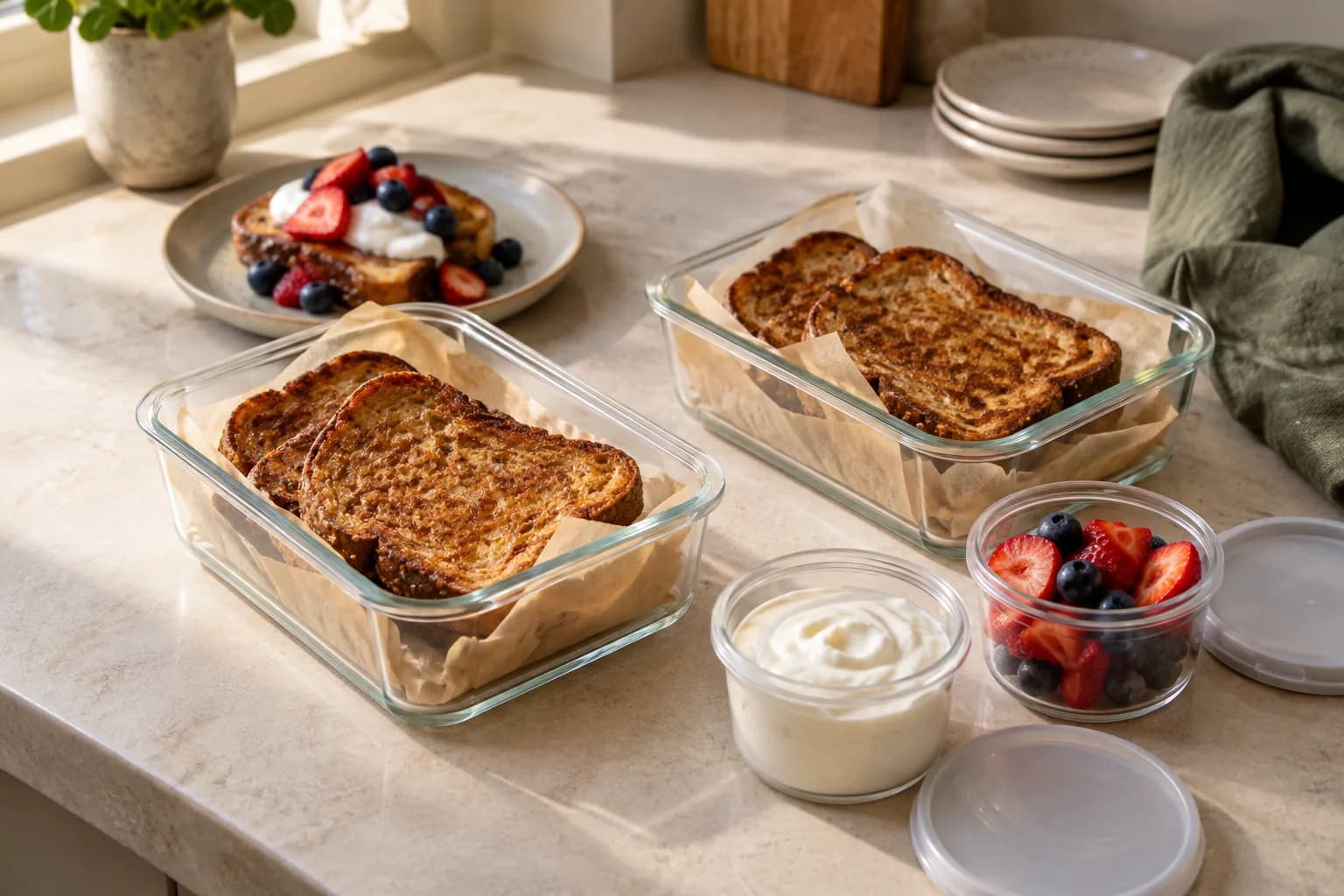
Double the ingredients for two servings or multiply by four for four. The serving buttons do that calculation for you, but your skillet still has the same cooking area. Cook in an uncrowded layer and allow extra time for additional batches. Portion the toast and cooked egg side evenly, and keep yogurt and berries in separate containers so the bread does not sit in moisture.
Refrigerate promptly
USDA recommends refrigerating perishable leftovers within two hours, or within one hour above 90°F / 32°C. Keep the refrigerator at 40°F / 4°C or below and use cooked leftovers within 3–4 days. Use shallow covered containers and do not leave breakfast sitting out until the afternoon. The USDA leftovers guidance explains safe cooling and reheating in more detail.
Pack for the texture you want
Store toast in one container, yogurt in a sealed pot and washed, dried berries separately. If using juicy thawed fruit, keep its liquid away from the toast. The cooked-custard side can share the toast container, but let the pieces lie separately rather than tightly stacking them. When you open the container later, a little surface softness is normal; reheating can restore some of the browned finish.
Freeze slices individually
Arrange cooked slices in one layer to freeze, then pack them with parchment between pieces in a sealed freezer container. This lets you take out the portion you need without breaking a frozen stack apart. Freeze the egg side separately if you want to keep the complete breakfast portion together. Aim to use the toast within one month for a practical texture target; that is a quality suggestion, not a tested shelf-life claim. Add fresh yogurt and fruit after reheating.
Warm the middle before crisping the surface
A covered skillet over gentle heat can warm the toast, followed by an uncovered finish. An oven is useful for several pieces; a microwave is convenient but generally leaves a softer surface. Choose the method for the texture and time you have. Reheated leftovers should reach 165°F / 74°C in the center. Thickness, starting temperature and equipment change the time required, so a fixed reheating minute count would be less useful than checking the food itself.
Prepare the easy parts the night before
Weigh bread, portion the yogurt and prepare the berries in advance. If mixing custard ahead, cover it, refrigerate promptly and use it the next morning within the egg-white product’s guidance. Leave the bread out of the custard until you are ready to cook. An overnight soak changes the texture and handling substantially; that would need a different baked French toast method rather than a small tweak to this skillet recipe.
Full Nutrition Information
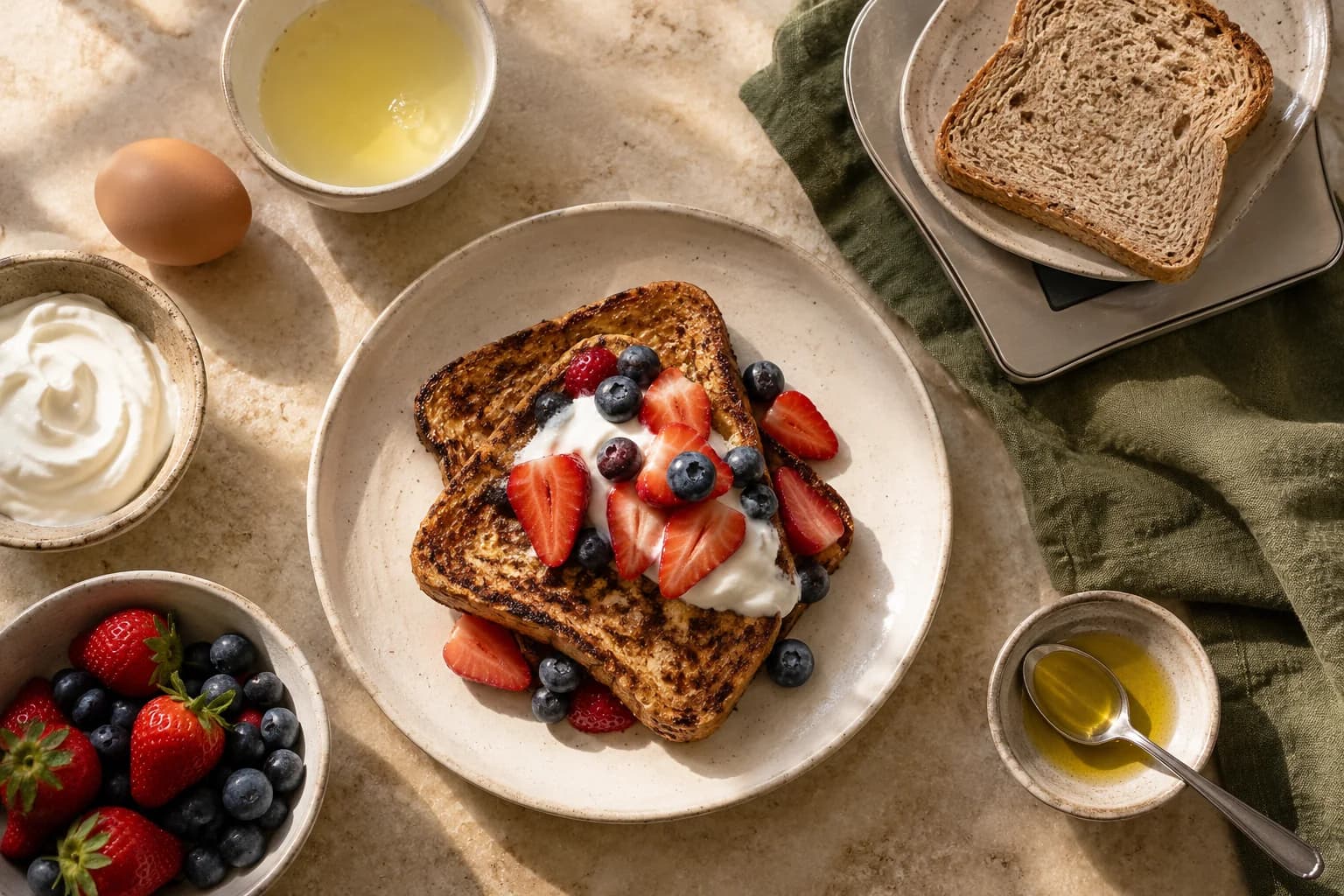
The calculation below uses edible ingredient weights before cooking and generic USDA Standard Reference values. Skim milk is approximated as one gram per milliliter. These historical reference foods give a transparent starting point; they are not a laboratory analysis of the cooked plate or a substitute for a specific packaged food’s label. The full ingredient amounts are added before values are rounded for display.
What the total includes
The 80g bread, 50g whole egg, 100g whites, 40ml milk, 100g yogurt, 50g strawberries, 50g blueberries, 3g oil, cinnamon and vanilla all contribute. The full custard is included because the method cooks any leftover mixture as a side. Oil is counted in full, without assuming a percentage stays behind in the pan. Syrup, honey, butter toppings, nut butter and powder are outside the base recipe.
Adjust a label to your portion
If a bread label lists nutrition for a 35g slice and your two slices weigh 80g, multiply the listed values by 80 ÷ 35, or about 2.29. A yogurt label based on a 170g tub needs a factor of 100 ÷ 170, or about 0.59, for a 100g topping. Use the same basis for every ingredient. The FDA serving-size guide explains what the label’s stated serving represents.
Small rounding differences are normal
Adding the rounded ingredient rows may differ slightly from the rounded total. For example, several protein contributions rounded to one decimal place can add up differently from the original values. The recipe uses the original contributions for its total, then rounds the headline macros. A calculation using four calories per gram of protein and carbohydrate and nine per gram of fat can also differ from reference-food energy values.
Understand the additional nutrients
Whole-wheat bread, berries and cinnamon contribute most of the fiber. Total sugars include those naturally present in fruit and dairy. Added sugar is not calculated because bread formulations differ. Much of the estimated sodium comes from bread and whites, even with no added salt. Most cholesterol comes from the whole egg. These totals describe the listed portion, with the same reference limitations as the headline macros.
If some custard is discarded
The published total will overstate what you eat if uncooked custard is thrown away. Bread absorption has no universal fixed percentage, so there is no honest exact “toast-only” macro figure for every batch. Cooking and eating the remaining mixture keeps the ingredient-based serving consistent. If you prefer to leave it out, calculate the retained portion separately and describe the result as an estimate.
For other everyday ingredients, the Protein Food Calculator can help you compare generic food portions. Choose the relevant food and preparation state, and use a current product label when your item differs. Keeping units consistent is more valuable than adding extra decimal places to an uncertain portion.
| Ingredient | Amount | Calories | Protein | Carbs | Fat |
|---|---|---|---|---|---|
| Whole-wheat bread | 80g | 202 kcal | 10.0g | 34.2g | 2.8g |
| Whole egg | 50g | 72 kcal | 6.3g | 0.4g | 4.8g |
| Liquid egg whites | 100g | 52 kcal | 10.9g | 0.7g | 0.2g |
| Skim milk | 40ml | 14 kcal | 1.3g | 2.0g | 0.0g |
| Plain nonfat Greek yogurt | 100g | 59 kcal | 10.2g | 3.6g | 0.4g |
| Strawberries | 50g | 16 kcal | 0.3g | 3.8g | 0.1g |
| Blueberries | 50g | 29 kcal | 0.4g | 7.2g | 0.2g |
| Olive oil | 3g | 27 kcal | 0.0g | 0.0g | 3.0g |
| Ground cinnamon | 1.3g | 3 kcal | 0.1g | 1.0g | 0.0g |
| Vanilla extract | 2g | 6 kcal | 0.0g | 0.3g | 0.0g |
| Complete serving | 1 breakfast | 478 kcal | 39g | 53g | 11g |
| Dietary fiber | 7.7g |
|---|---|
| Total sugars | 17.3g |
| Saturated fat | 2.7g |
| Sodium | 655mg |
| Cholesterol | 192mg |
Estimated recipe nutrition, not a laboratory analysis. Micronutrient totals and added sugar are not calculated; check your product labels for those details.
How This Fits Your Daily Protein Goal
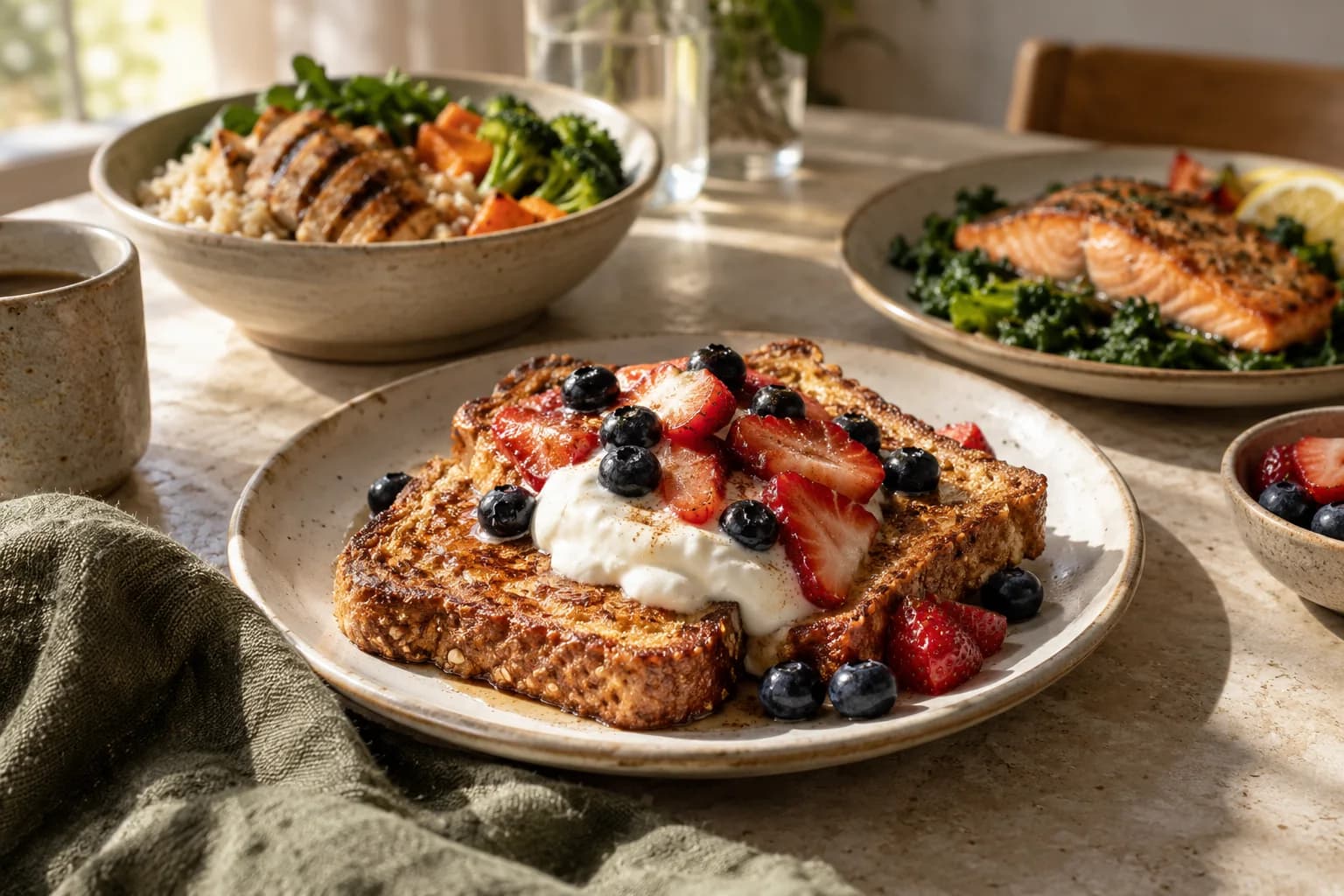
Breakfast contributes to a day of eating; it does not have to carry the whole plan. The complete serving’s estimated 39g protein provides about 39% of a 100g target, 33% of a 120g target or 26% of a 150g target. Those are arithmetic examples, not targets prescribed for every reader.
Use your own starting point
Your protein needs depend on body size, activity, goals and health context. If you already follow a personalized plan, use its target. Otherwise, the Protein Calculator can help estimate a starting point from your circumstances. A person with a prescribed protein limit should follow their care plan rather than use a recipe headline as a reason to increase intake.
Keep the rest of the day flexible
With an illustrative 120g target, this breakfast leaves about 81g for lunch, dinner and snacks. You could spread that in different ways depending on your usual meals. There is no need to make each plate identical. A varied day still includes vegetables, grains, fruit and fats alongside protein foods. Start with meals you enjoy enough to repeat, then adjust the portions if needed.
Around training
The NIH sports-nutrition overview discusses protein as part of activity and the overall diet. This breakfast is one food-based option, with carbohydrate and energy as well as protein. Before training, choose an amount and timing that feels comfortable. Afterward, it can be a meal when you are hungry. A shake is not an automatic extra requirement when planned food already covers your needs.
Appetite counts too. Two substantial slices may suit a slower morning, while a smaller portion may fit before an early commute. Use the measured variations if you want a different plate. A breakfast you can enjoy comfortably is more useful than forcing the largest possible protein number into every morning.
Make it personal
Where does breakfast fit in your day?
Estimate your daily protein target, then plan meals you enjoy.
Recipe Card
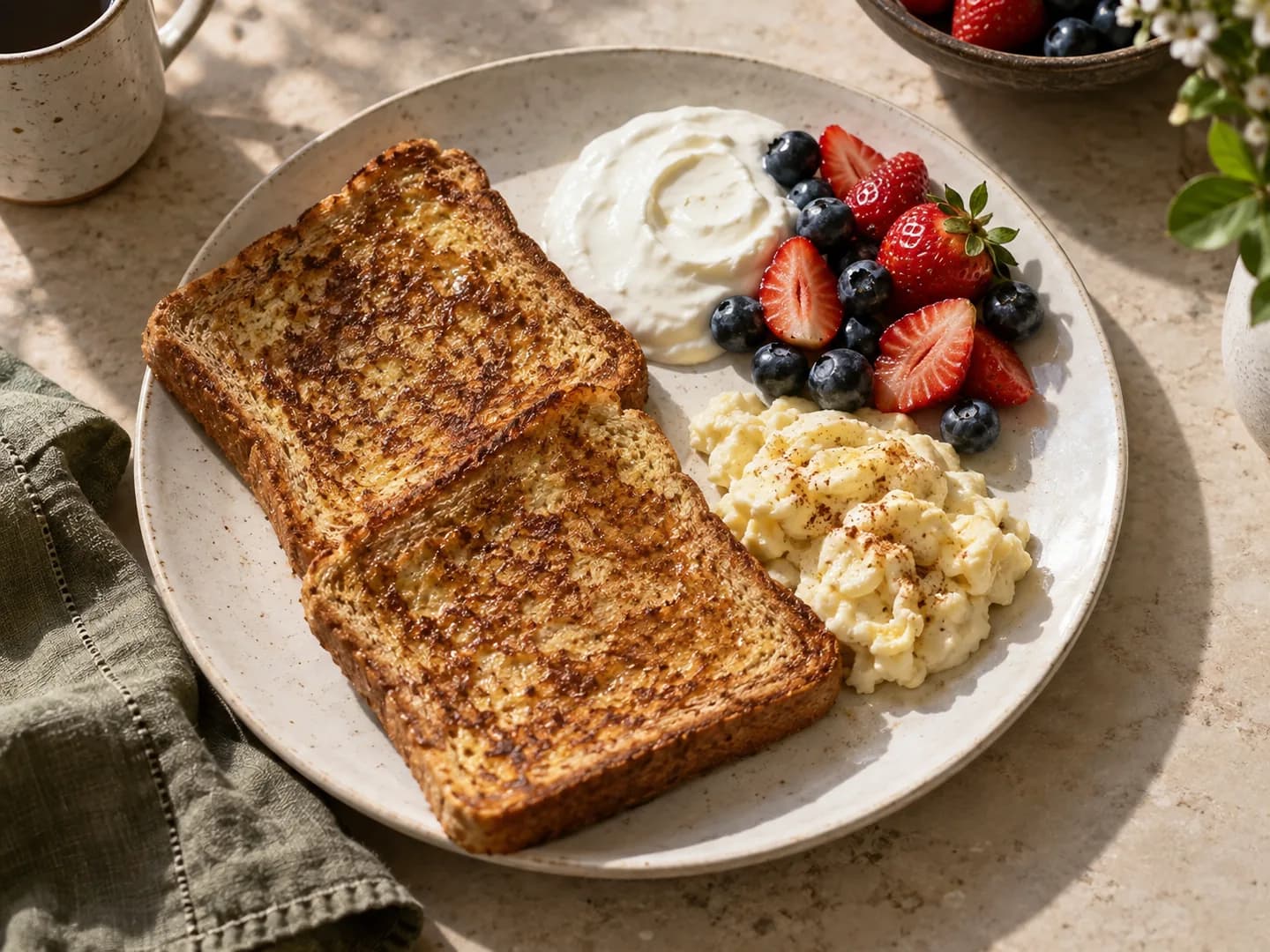
Here is the cooking version: exact amounts, six steps and a checklist you can use beside the pan. Select one, two or four servings to change both ingredients and method quantities. Nutrition stays per serving; larger batches take longer if your pan needs several rounds.
Your breakfast, ready to make
High-Protein French Toast
Cinnamon, vanilla, Greek yogurt & fresh berries.
*Times are for one serving. Larger batches need extra cooking time. All nutrition below stays per serving.
Ingredients
Method
- Prepare
Weigh the bread and toppings. Wash and dry the berries. Whisk 1 large egg with 100g liquid egg whites, 40ml skim milk, 0.5 teaspoon cinnamon and 0.5 teaspoon vanilla in a shallow dish.
- Warm the pan
Heat a large nonstick skillet over medium-low to medium heat. Brush the base with the measured 3g olive oil. The oil should shimmer gently without smoking.
- Dip the bread
Dip each slice in the custard for about 10–20 seconds per side, adjusting for bread firmness. Lift carefully and let excess drip back into the dish. Do not leave soft bread soaking while the pan warms.
- Cook the toast
Cook in a single layer for about 3–4 minutes on the first side and 2–3 minutes on the second. Lower the heat if the surface darkens before the middle sets. The egg-soaked center should reach 160°F / 71°C.
- Cook remaining custard
After removing the toast, cook any remaining egg mixture in the same pan as a small scramble until fully set and at least 160°F / 71°C. Serve it alongside the toast. The stated nutrition includes all of this custard.
- Serve
Add 100g Greek yogurt and 100g mixed berries. Enjoy straight away. Optional syrup, nut butter and other extras are additional to the listed nutrition. Wash anything that touched raw egg.
For larger batches, cook in a single layer and divide the toast, cooked custard and toppings evenly. Allow more time if you need multiple pan batches.
Includes all custard (cook excess as a side), yogurt, berries and oil. Extra toppings are additional. Contains wheat, egg and milk.
Frequently Asked Questions
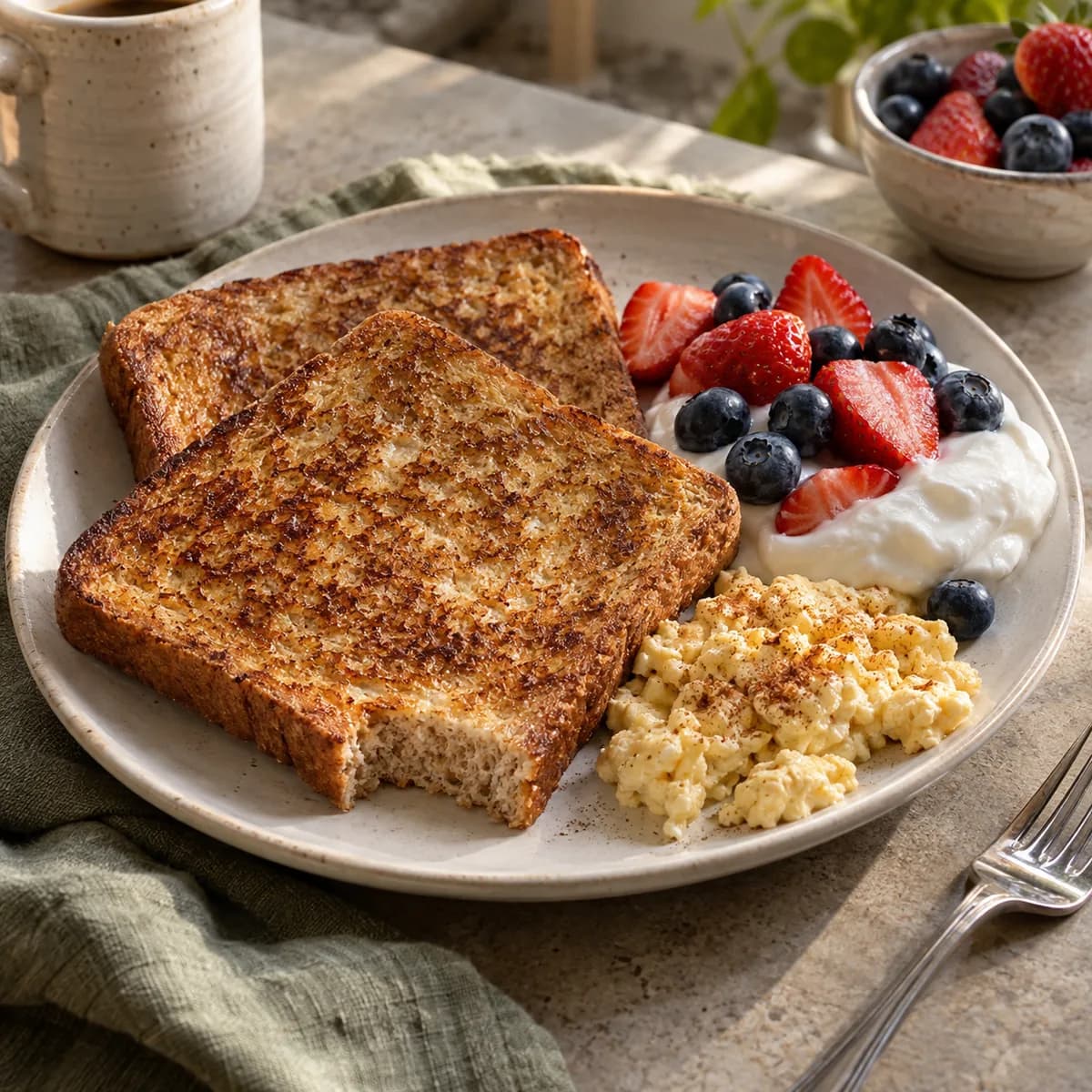
A different loaf or topping can change the result more than you expect. These answers help with the most common adjustments and cooking problems. They refer to the base breakfast unless a variation is specified.
How much protein is in this French toast?
The complete one-person breakfast provides approximately 39g protein using the ingredients and weights listed here. That includes the yogurt, berries and all the egg mixture, including any excess custard cooked as a small side scramble. Bread and yogurt labels vary. If you discard custard or eat only part of the yogurt, your portion contains less protein than the full-recipe estimate.
Can I make high-protein French toast without protein powder?
Yes. This base recipe uses no protein powder. Egg whites, one whole egg and Greek yogurt provide most of its protein, with additional protein from whole-wheat bread and milk. Keeping the yogurt as a topping also avoids changing the custard texture. If you dislike yogurt, choose another protein-rich side and recalculate its contribution instead of assuming the original total stays the same.
Can I add protein powder to the egg mixture?
You can try a small amount, but it is optional and changes the recipe. Start with 10g of a powder you already enjoy, mix it smoothly with the milk, then whisk in the eggs. Add a splash more liquid if needed. Different powders thicken differently and may brown quickly. Use its label for additional calories and protein; a scoop has no universal weight.
What bread works best for protein French toast?
Choose sturdy whole-wheat sandwich bread with an even crumb and slices around 1–1.5cm thick. Slightly dry bread is easier to handle than very fresh, soft bread. Sourdough also works, although an open crumb can absorb custard unevenly. The reference portion weighs 80g before dipping. Thin diet bread and thick bakery slices need different dipping times and give different nutrition totals.
Why is my French toast soggy in the middle?
The most common causes are soaking delicate bread too long, crowding the pan or using heat that browns the exterior before the center cooks. Use shorter dips, leave space between slices and lower the heat. For already browned toast, continue gently until the center is fully cooked rather than serving it wet. A crisp surface alone does not establish that the egg mixture has reached a safe temperature.
Is this recipe suitable for weight loss?
It can fit a calorie-controlled day if the portion matches your needs. The reference breakfast is about 478 calories before extra toppings. A smaller bread portion or an all-egg-white custard can lower that amount. No recipe causes weight loss on its own: the overall eating pattern, portions and your circumstances matter. Choose a serving that leaves room for balanced meals later in the day.
Can I use only egg whites?
Yes. Replace the 50g whole egg with 50g additional egg whites, keeping the original 100g whites. This makes 150g egg whites in total and removes the yolk. The breakfast is approximately 433 calories with 39g protein under the same assumptions. Expect a lighter color and a slightly firmer texture. Cinnamon, vanilla and careful cooking help keep the result pleasant without extra sweetener.
Can I make it dairy-free or gluten-free?
For dairy-free toast, replace skim milk with a suitable plant drink and replace Greek yogurt with a dairy-free side you tolerate. Check protein on both labels; coconut yogurt is not nutritionally interchangeable with Greek yogurt. For gluten-free toast, use certified gluten-free bread and appropriate ingredients, with clean equipment if cross-contact matters. Neither swap automatically preserves the published macros. The original recipe contains wheat, egg and milk.
How long does cooked French toast last in the fridge?
Refrigerate promptly in a covered container at 40°F / 4°C or below and use within 3–4 days. Keep yogurt and fruit separately. Reheat the cooked toast to 165°F / 74°C before serving. Discard food left at room temperature for more than two hours, or one hour when the temperature is above 90°F / 32°C. Storage dates assume safe cooking, cooling and refrigeration.
Can I freeze it or prepare the batter overnight?
Freeze cooked, cooled slices with parchment between them and store in a sealed freezer container. Aim to eat within one month for good texture. Thaw in the refrigerator or reheat from frozen, checking the center reaches 165°F / 74°C. For advance preparation, keep a freshly mixed custard covered and refrigerated, follow the egg-white carton guidance and use it the next morning. Dip bread only when you are ready to cook.
More High-Protein Recipes
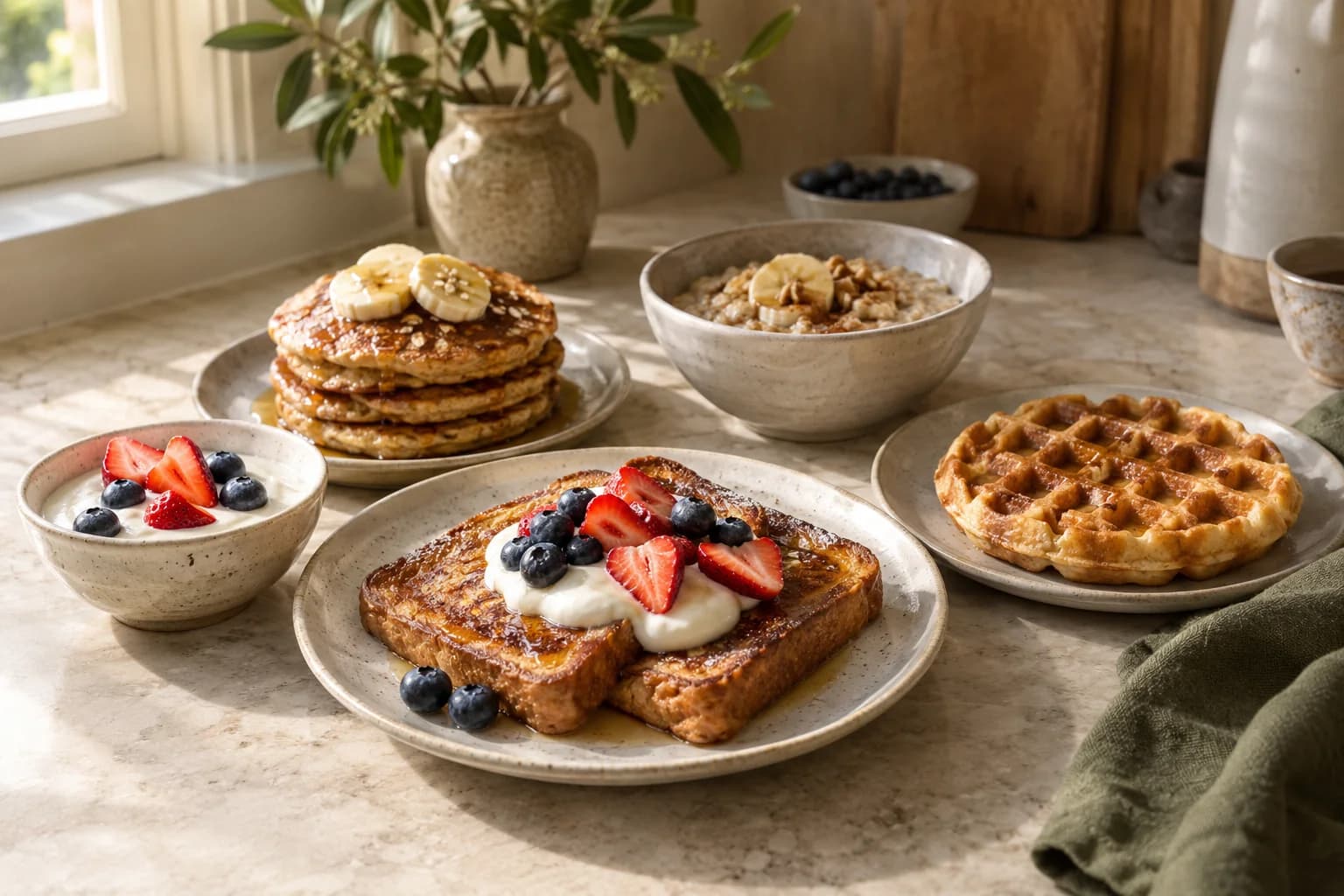
Keep a few breakfasts that suit different mornings. Pancakes and waffles offer another warm, pan-made option; oatmeal makes a comforting bowl; overnight oats remove the morning cooking step. If the creamy yogurt and fruit are your favorite part, a yogurt bowl keeps that combination with very little preparation.
Choose by the kind of breakfast you want to eat, then use that recipe’s own portion and nutrition information. The same berries on a pancake stack do not make it nutritionally identical to this French toast. The guides below give you another starting point for the week.