
Browse the 15 recipe sections
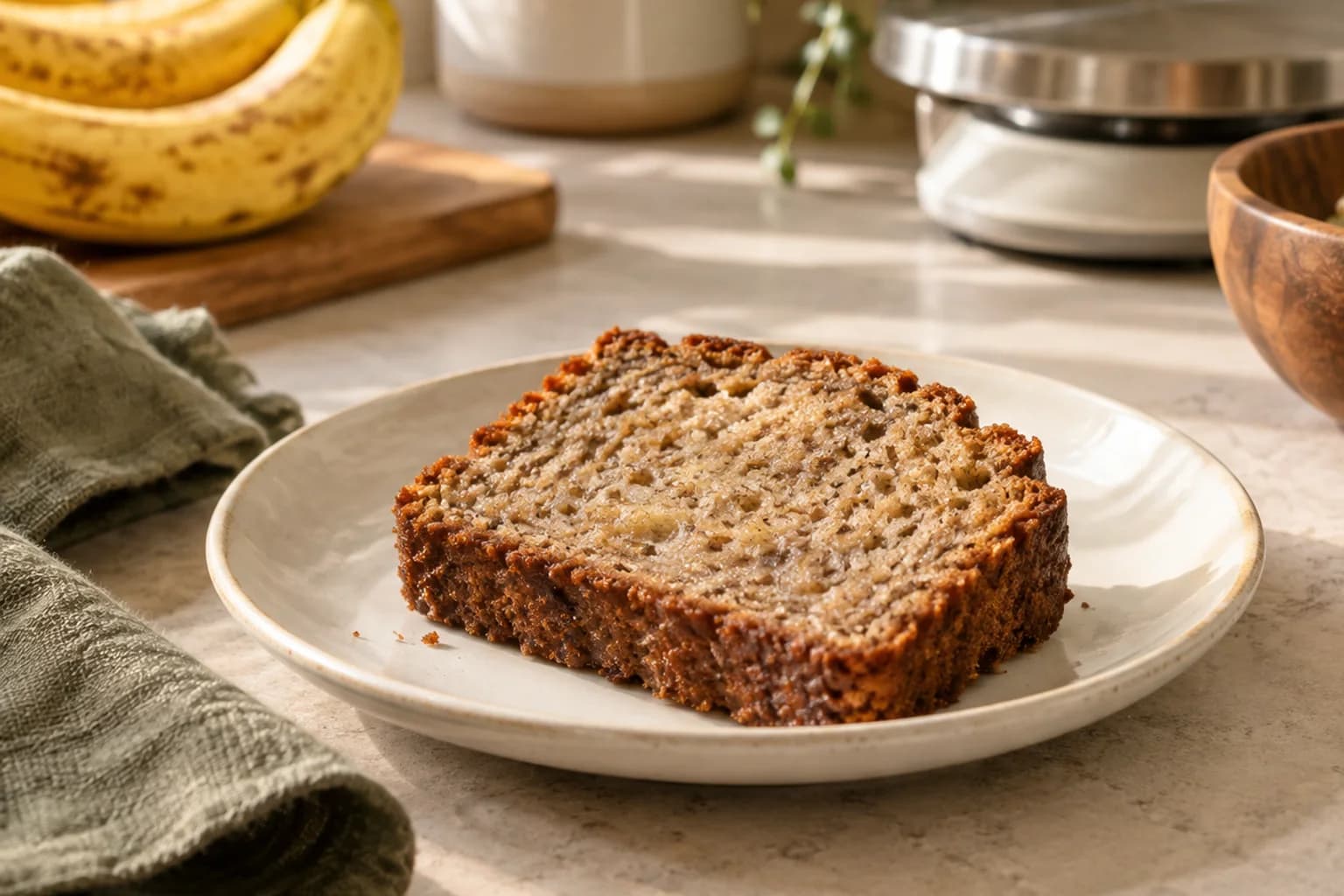
One reference slice: one tenth of the plain loaf, without toppings. Nutrition is calculated from measured ingredients. Allow about an hour to cool after baking; oven times are estimates. See the breakdown.
Recipe Overview
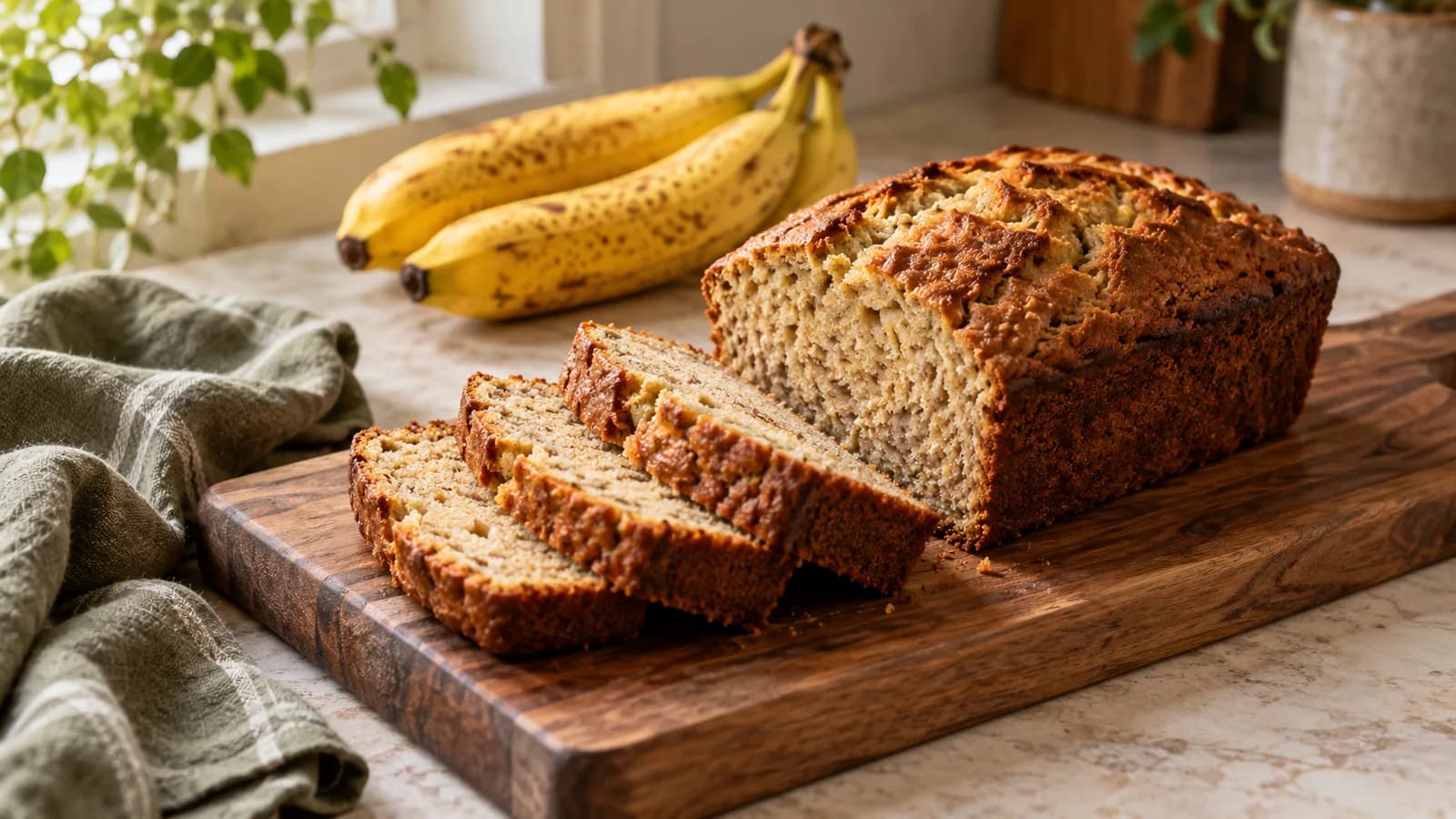
Banana bread starts with a small kitchen dilemma: a few bananas have gone soft, their skins are freckled, and nobody wants to eat them straight from the fruit bowl. Baking gives them a second life. Mash those bananas into a loaf and the smell changes from ripe fruit to warm vanilla, cinnamon and toasted crust. This version adds Greek yogurt, eggs, egg whites and a measured amount of whey, while keeping banana at the centre of the flavour.
The reference batch makes one 9 × 5-inch loaf, divided into ten equal slices. One slice provides approximately 224 calories, 12g protein, 33g carbohydrate and 5g fat. Those figures describe the bread itself, without yogurt served alongside it, nut butter, chocolate chips or a second slice. It is useful to know exactly what is included before deciding whether the portion suits your breakfast or afternoon snack.
What the finished loaf should feel like
Expect a lightly sweet quick bread with a tan crumb, small banana flecks and a golden top that may split as it rises. It is more substantial than a light sponge cake. Ground oats give it a little body; yogurt and banana bring moisture; flour helps the slices hold together. Whey changes the batter, so the loaf benefits from careful measuring and a gentle hand when the wet and dry mixtures meet.
The recipe is designed around a vanilla whey blend, rather than treating every protein powder as interchangeable. Pure casein, plant blends and meal-replacement powders can absorb moisture differently. If your usual powder is strongly sweetened, the banana bread may also taste sweeter than expected. The substitutions section explains how to approach those differences before using a whole bag of ingredients.
Allow time for the loaf to cool
Plan for about 15 minutes of preparation, roughly 55–65 minutes in the oven and around an hour of cooling. A warm slice is tempting, but cutting immediately can compress a crumb that has not settled yet. Bake earlier in the day if you want tidy slices for breakfast tomorrow. These times are estimates: your pan, oven and ingredients determine when the centre is baked through.
Why You’ll Love This Recipe
It gives ripe bananas a useful job
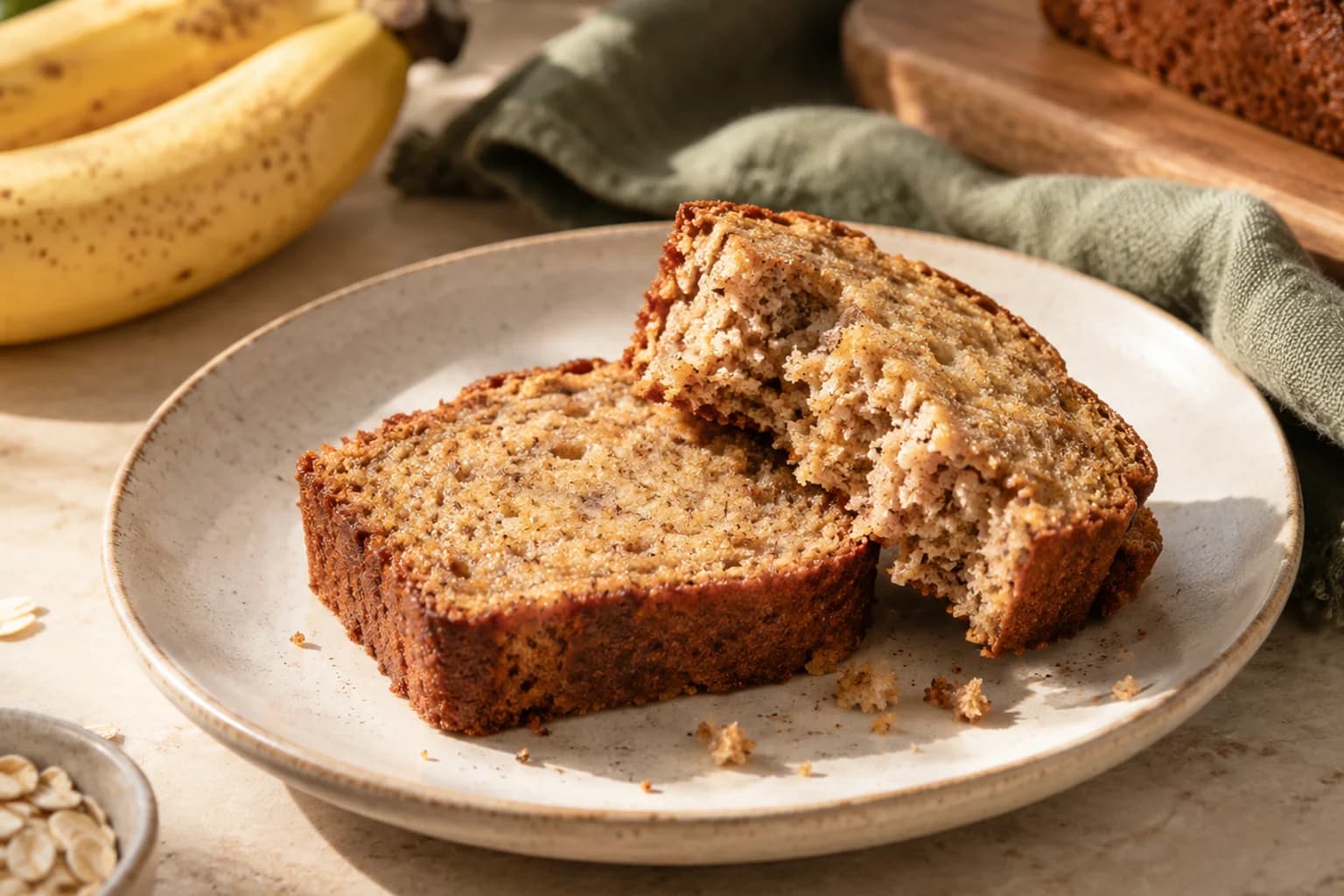
The best reason to make banana bread is still the fruit. Very ripe bananas mash easily and bring a rounder sweetness than firm, just-yellow ones. They also distribute through the batter more readily. You do not need to cover that flavour with a thick icing or a large quantity of chocolate. A little cinnamon and vanilla give the loaf a familiar bakery smell without turning it into a different dessert.
This is also an approachable way to use ingredients you might already have for breakfast. Greek yogurt can go into a bowl or a dip, oats can become porridge, and egg whites can join an omelette. The loaf does need protein powder, but it does not ask for specialist protein flour or expensive baking mixes. You can read the ingredient list once and recognise what each item is doing.
A slice can travel with your day
A cooled slice is easy to pack for a desk snack, an early train or the gap between errands. It has a defined portion, so you can decide whether you want one slice, two thinner slices or bread alongside another food. Pairing it with yogurt makes a more substantial breakfast; eating it alone can suit a smaller snack. The same loaf can serve several different moments without another round of cooking.
The bread is gently sweet rather than an imitation of a heavily sugared café slice. There is still sugar in the recipe, and bananas contribute their own sugars. That balance is deliberate. A small amount of added sugar helps flavour and texture, while the portion remains clear. Enjoyment and a useful nutrition estimate can sit comfortably together on the same plate.
The method teaches transferable skills
You will practise weighing peeled fruit, distributing leaveners through dry ingredients, folding without excessive mixing and checking a deep loaf through its centre. Those habits help with other quick breads too. The recipe card keeps the essential sequence close at hand, and the longer guide explains what to look for if a loaf browns early or feels heavier than expected. There is no need to rush through the oven stage just because the timer has finished.
Nutrition at a Glance
- Calories
- 224kcal
- Protein
- 12g
- Carbs
- 33g
- Fat
- 5g
The four figures above are rounded estimates for one slice from a ten-slice loaf. The underlying calculation uses ingredient weights for the whole batch, then divides every nutrient total by ten. A thick end piece and a slim middle slice will not necessarily contain equal amounts. If you want closer portions, let the loaf cool, weigh it and aim for ten pieces of approximately equal weight.
Calories: about 224 per slice
Flour, oats, bananas, sugar and oil all contribute energy. Whey, eggs and yogurt contribute calories as well as protein. Baking evaporates water, which changes the weight of the finished bread, but it does not make the batch calories disappear. A slice from a loaf cut into eight portions is larger than the reference slice and will contain about 281 calories under the same ingredient assumptions.
Protein: about 12g per slice
The unrounded reference is approximately 12.4g. Whey provides the largest individual protein contribution, with meaningful amounts from yogurt, eggs, egg whites, flour and oats. Banana itself contributes relatively little protein. That is why adding more banana mainly changes sweetness, moisture and carbohydrate, rather than turning the loaf into a higher-protein food. A yogurt topping can add protein, but that belongs to the combined meal calculation.
Carbohydrate: about 33g per slice
This loaf contains wheat flour, oats, banana and sugar, so it is not a low-carbohydrate or keto recipe. The carbohydrate figure includes fibre under the USDA-style calculation used here. Total sugars are approximately 9.8g per reference slice, coming from the fruit, measured sugar, yogurt and other ingredients. The 50g granulated sugar added to a ten-slice batch contributes about 5g per slice before considering any sugar in your powder.
Fat: about 5g per slice
Measured oil and egg yolks provide most of the fat. Replacing the oil or yolks changes how the bread tastes and behaves, so it is worth considering texture as well as the number. Use these estimates as a practical planning aid. Your own flour, yogurt and powder labels can shift the totals; a nutrition tracker built from your actual ingredients will be more specific than a generic reference recipe.
Ingredients
Bananas: ripe, sound and weighed without skins
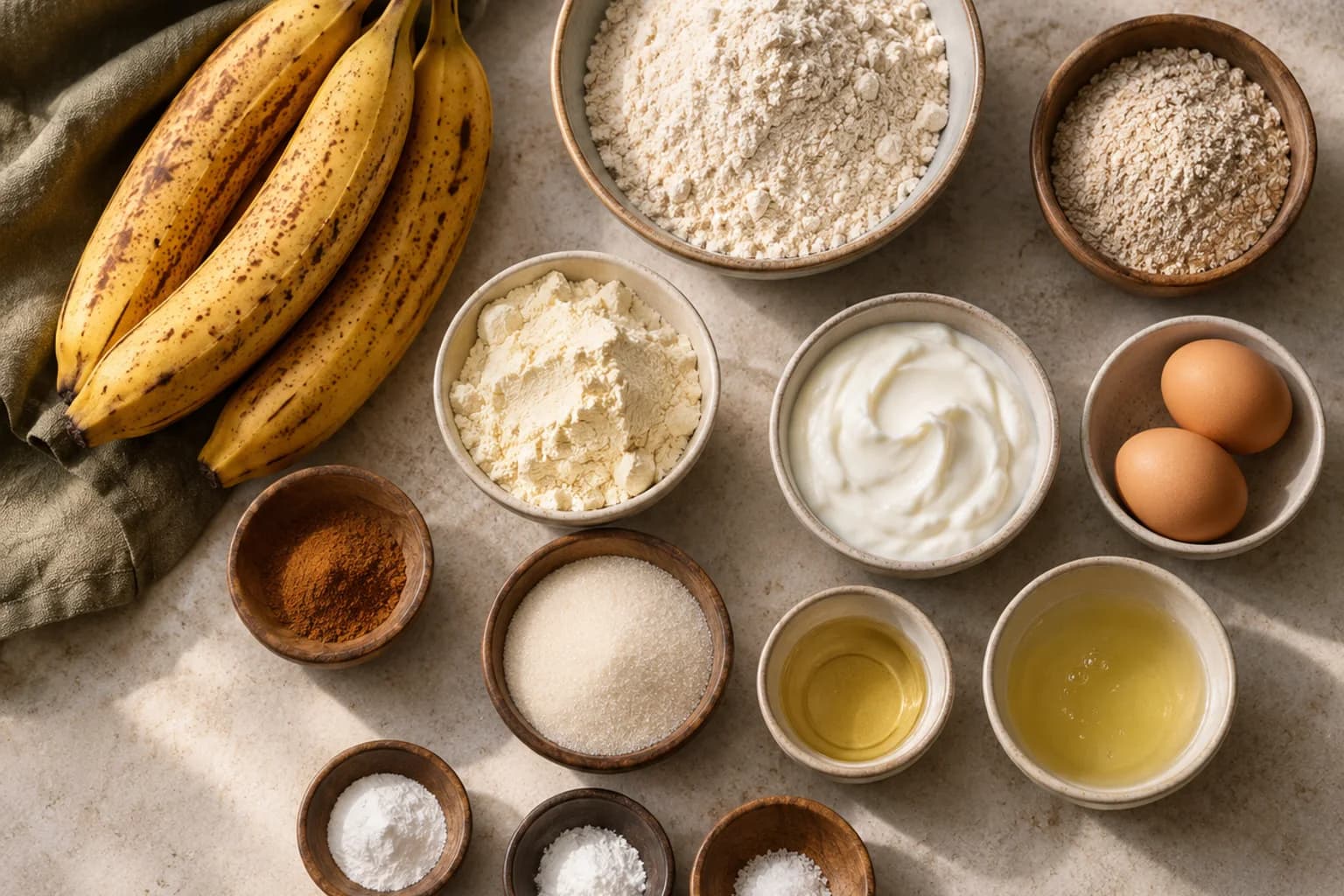
Use 300g peeled banana. Depending on size, that may be around three medium bananas, but the scale is more reliable than counting fruit. Choose bananas with plenty of brown speckles that still smell pleasantly fruity. Discard fruit with mould, an unpleasant smell or signs of spoilage. Dark peel alone does not tell you everything about the flesh, so inspect the fruit as you peel it.
Flour, oats and whey have different roles
The 180g all-purpose flour helps create a sliceable structure. Grind 80g rolled oats into a fine meal so large flakes do not leave rough pockets in the crumb. The 60g vanilla whey blend adds concentrated protein and some flavour. Do not replace the flour with another scoop of powder: whey cannot perform all of the structural jobs that flour does in a baked loaf.
For the reference nutrition, the whey label supplies 376 calories and 79g protein per 100g. That is a specific example from the linked manufacturer's UK French Vanilla information, rather than a promise about every vanilla powder. Scoop sizes are not standard across tubs. Measure the powder in grams, and check its ingredient list if milk, soy or another allergen matters to you.
Yogurt, eggs and measured oil
Use 200g thick plain nonfat Greek yogurt, two large eggs weighing approximately 100g without shells, and 100g liquid egg whites. Together these supply moisture and protein. The yolks also bring richness. Thin drinking yogurt adds a different balance of water, and sweetened yogurt adds flavour and sugar that the reference does not include.
The 30g mild olive oil goes into the batter. Choose a gentle-tasting oil if you want banana to remain the dominant flavour. Parchment lining avoids needing a second unmeasured amount for the pan. Granulated sugar, vanilla and cinnamon finish the flavour, while baking powder, baking soda and fine salt need small, accurate measurements. Set them out before mixing; it is easier to catch a missing leavener while the ingredients are still separate.
Your ingredient checklist
- Ripe bananasPeeled weight; roughly 3 medium bananas300g
- All-purpose flourPlain wheat flour; weigh rather than pack a cup180g
- Rolled oatsGrind into a fine meal before weighing into batter80g
- Vanilla whey protein blendWeigh 60g; scoop sizes vary. Contains milk; reference label also contains soy60g
- Plain nonfat Greek yogurtThick and unsweetened200g
- Whole eggs2 large eggs, weighed without shells100g
- Liquid egg whitesPasteurized; about 3 large whites by weight100g
- Granulated sugarAbout ¼ cup; sweetness also comes from ripe bananas50g
- Mild olive oilAbout 2 tablespoons; use a mild-tasting oil30g
- Double-acting baking powderAbout 1¾ teaspoons; reference uses phosphate baking powder8g
- Baking soda½ teaspoon2.3g
- Ground cinnamon1 teaspoon2.6g
- Vanilla extract1 teaspoon4g
- Fine table salt¼ teaspoon1.5g
Contains wheat, egg and milk; the reference whey also contains soy. Check all labels and see substitutions for dietary adjustments.
Ingredient Substitutions
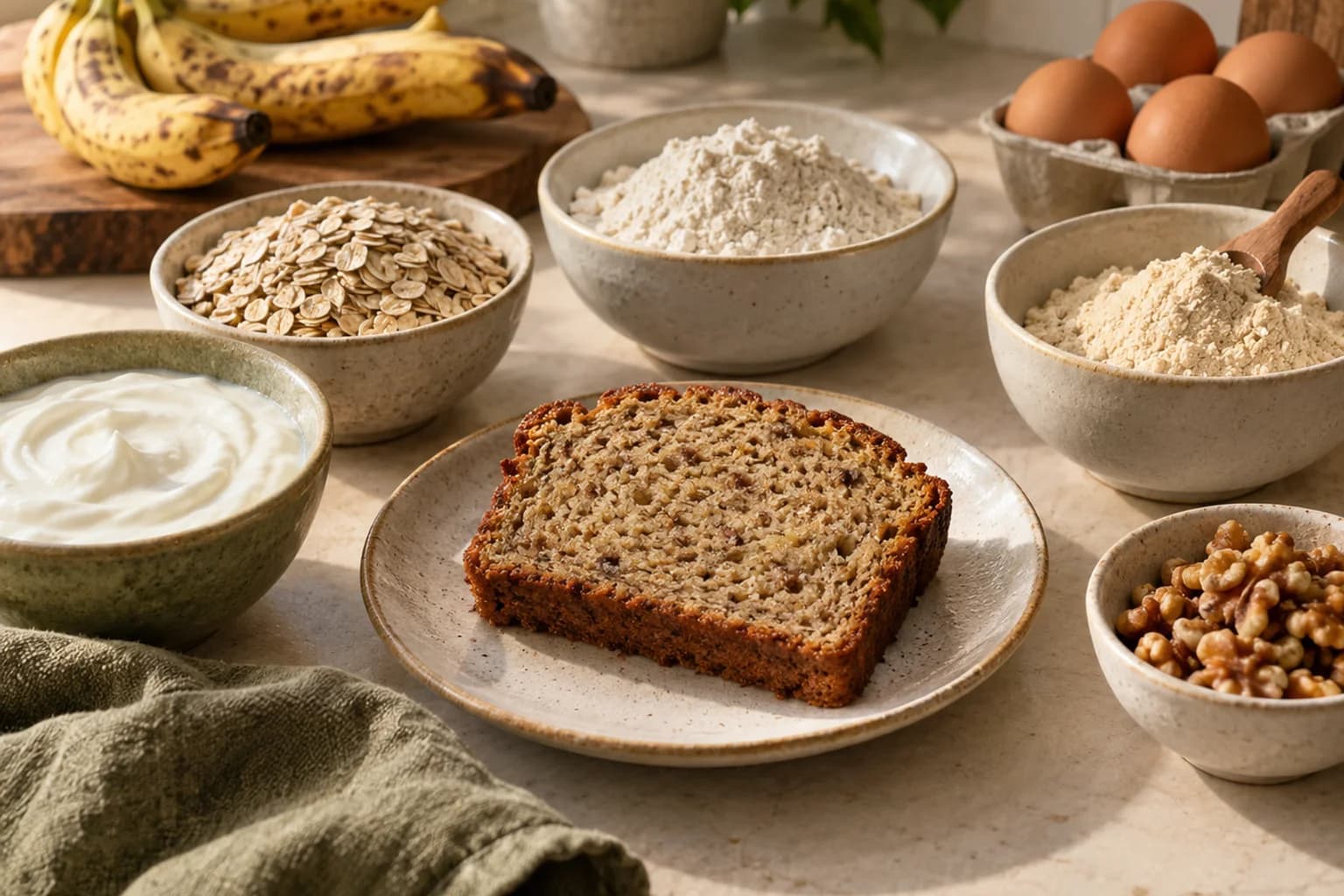
Choose the swap for a reason
A substitution might solve a dietary requirement, use what is available or adjust the texture you prefer. Those are different jobs. A change that improves protein does not automatically improve the loaf, and a gluten-free ingredient does not automatically preserve the same calories. Keep a short note of the ingredient, amount and result so your next batch starts from what you learned.
Plain low-fat Greek yogurt can replace the nonfat yogurt by weight. Expect somewhat different fat and energy totals. Skyr with a similar thickness is another possible starting point, but check its protein and acidity rather than assuming an identical product. A watery yogurt can make the centre slower to set. Straining it first is more sensible than pouring in extra flour without measuring.
A version without protein powder
For a no-powder starting point, replace the 60g whey with 60g additional all-purpose flour, keeping the other ingredients unchanged. That brings the flour total to 240g. The calculated slice is approximately 224 calories and 8.3g protein, using the same reference foods. It is a different formulation, so judge the batter and baking checks rather than assuming the original oven time will be exact. Flour replaces some structure; it does not preserve the whey protein contribution.
Oats, gluten and dairy
For gluten-free baking, use certified gluten-free oats and a baking blend intended to replace wheat flour in quick breads. Check the whey and every other ingredient for relevant cross-contact statements. Almond flour and coconut flour are not direct substitutes for the 180g wheat flour: their fat, binding and liquid requirements differ substantially. A dedicated recipe is more dependable than stacking several unfamiliar swaps here.
For dairy-free needs, both yogurt and whey need replacing. A high-protein soy yogurt and a suitable plant powder may be options, but their moisture and absorption can change the crumb. This guide does not claim the original method is validated for that combination. Likewise, replacing eggs, whey and flour all at once creates a new recipe. Start with a recipe designed for those requirements if avoiding those ingredients is essential.
Quick swap reference
These are starting points, rather than promises of identical baking behaviour. Recalculate your chosen ingredients.
| Original ingredient | Possible change | What changes |
|---|---|---|
| 60g whey | 60g additional all-purpose flour | About 8.3g protein per ten-slice portion; different formulation |
| Nonfat Greek yogurt | Same weight plain low-fat Greek yogurt | Similar thick consistency; more fat and calories |
| Wheat flour | A suitable gluten-free baking blend | Different structure; check every ingredient and cross-contact |
| Whey and yogurt | Plant powder and high-protein dairy-free yogurt | A new formulation; original timing and macros do not transfer |
How to Make It
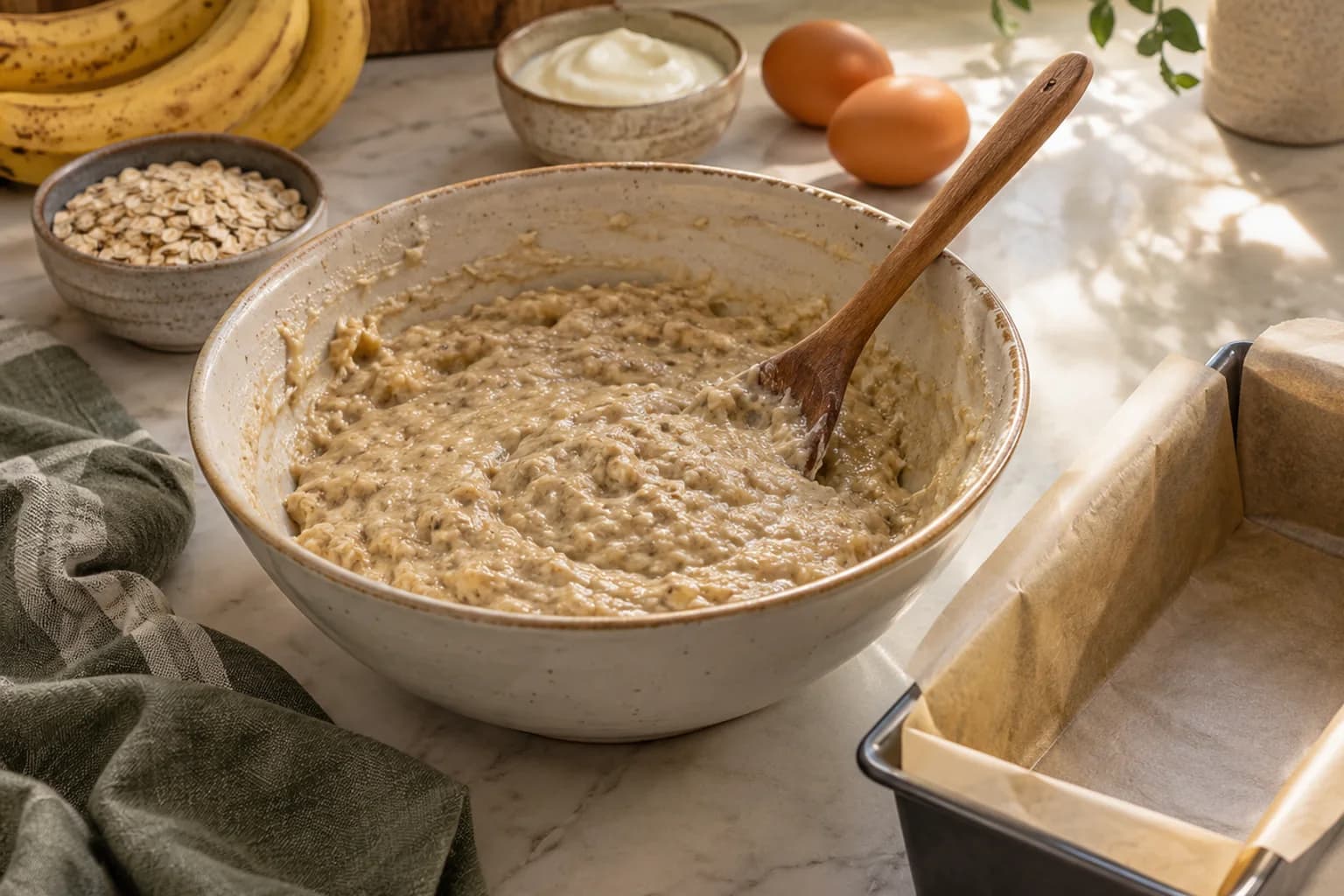
Prepare before you mash
Set the oven to 350°F / 175°C conventional and place a rack near the middle. Line a 9 × 5-inch metal loaf pan with parchment, leaving enough overhang to lift the loaf later. Check your pan's dimensions: a smaller, deeper pan changes how quickly the centre heats. Grind the oats into a fine meal and arrange the weighed ingredients where you can reach them without stopping halfway through mixing.
Mash the peeled bananas in a large bowl with a fork. A few small soft lumps are fine; large pieces can leave very wet patches. Whisk in the yogurt, whole eggs, egg whites, sugar, oil and vanilla until the wet mixture looks even. There is no need to beat it into a foam. Use a bowl large enough to leave room for folding once the dry ingredients are added.
Give the dry mixture its own bowl
Whisk together the flour, ground oats, whey, baking powder, baking soda, cinnamon and salt. Pay attention to little clumps of powder or leavener. Breaking them up now is easier than trying to find them in a thick batter, and evenly distributed leaveners help the loaf rise more consistently. If your baking powder has been open for a long time, check the packaging date and storage instructions.
Add the dry mixture to the wet and fold with a spatula, reaching along the bottom of the bowl. Stop when you no longer see dry streaks. Scrape into the lined pan and level gently. Keep the pan around two-thirds full; bake any excess separately rather than risking overflow. Put the main loaf in the preheated oven promptly. Do not taste raw batter, which contains both uncooked eggs and raw flour.
Bake the centre, then let it settle
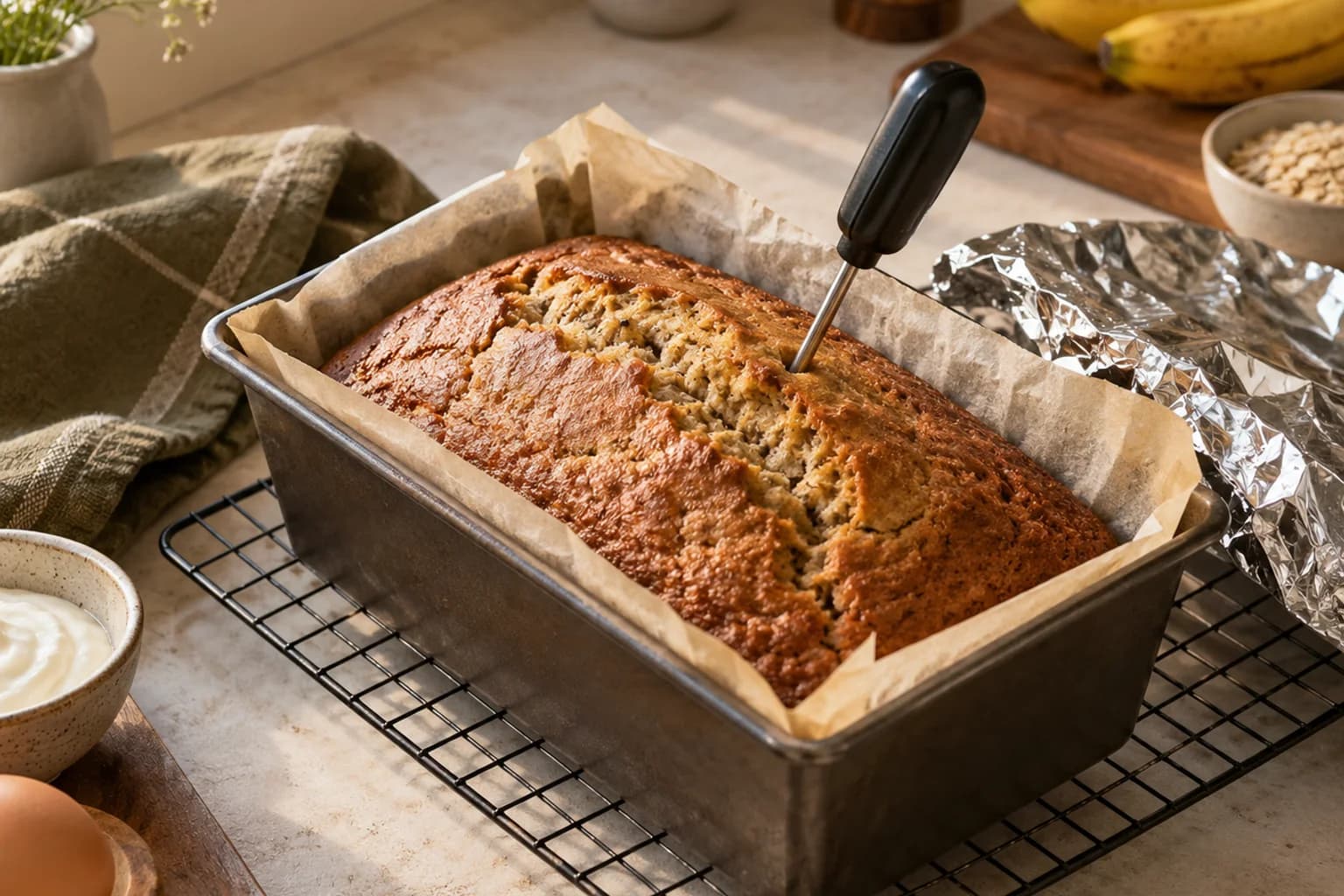
Start checking around 50 minutes; approximately 55–65 minutes is the working range. If the top darkens while the centre is still wet, loosely tent with foil. Test the thickest centre with a skewer: moist crumbs are acceptable, wet batter is not. A quick-bread centre temperature around 200–205°F / 93–96°C supports that assessment. Rest 10–15 minutes in the pan, lift onto a rack and cool fully before dividing into ten portions.
Tips for the Best Results
Protect the banana-to-dry-ingredient balance
A fourth banana can feel like an innocent way to use the last piece of fruit, but it adds moisture and weight. Stick to 300g peeled fruit for the reference batch. Save extra banana for freezing or another breakfast. The same discipline applies to flour: a firmly packed cup can add much more than you expect. Weighing helps you avoid correcting a thick batter with an unplanned splash of liquid.
A protein powder that blends beautifully in a cold shake may still behave differently in baking. Vanilla whey blends are the starting point here. Casein and some plant blends can thicken batter more strongly. If you change the powder, resist changing several other ingredients too. Make a note of the batter consistency, oven time and cooled texture before deciding what needs adjusting in a future batch.
Mix less once flour enters the bowl
Wet ingredients can be whisked until uniform, and dry ingredients can be whisked thoroughly on their own. Once those mixtures combine, use folding rather than prolonged beating. Scrape the sides and bottom so you do not leave a hidden dry pocket. A few banana flecks are expected; chasing an absolutely silky batter can mean mixing longer than the loaf needs.
Use the middle rack as a starting position and leave room around the pan. Glass, ceramic and very dark metal behave differently, so the suggested time is not a universal setting. If every loaf you bake browns early, an oven thermometer can help identify whether the actual temperature differs from the dial. Open the door briefly for checks, then let the oven recover rather than inspecting every few minutes.
Diagnose the cooled loaf
A sunken middle with wet batter suggests the centre needed more baking or the formula became too wet. A rubbery crumb can follow heavy mixing or an unsuitable powder balance. Dry edges may reflect prolonged baking, a small pan or an oven running hot. Let the loaf cool before judging: a freshly cut hot slice often looks denser than it will after resting. Keep observations specific so one adjustment has a clear purpose next time.
Use what you see to choose the next adjustment.
| What you notice | Check first | Next time |
|---|---|---|
| Dark top, wet centre | Centre doneness and oven temperature | Tent the top; keep baking until the centre sets |
| Dry, firm slices | Powder type, ingredient weights and baking duration | Use the reference powder type and check earlier |
| Gummy cooled crumb | Extra banana, underbaking or major swaps | Measure fruit and test the deepest centre |
| Loaf sinks | Leaveners, pan fill and centre doneness | Use fresh measured leaveners; avoid overfilling |
High-Protein / Lower-Calorie Variations
More protein at serving time
One practical way to make a more protein-rich breakfast is to serve a reference slice with 100g plain nonfat Greek yogurt. Using the same USDA yogurt values, the combined plate is approximately 283 calories and 22.6g protein. The bread recipe stays the same, and you can choose the extra yogurt on the day you eat it. Keep the distinction clear when entering the meal in a tracker.
Two reference slices provide approximately 449 calories and 24.7g protein before additions. That may suit a larger breakfast, but it is also twice the bread portion. Adding more whey directly to the batter is less predictable: it can change moisture balance, sweetness and texture. If the original loaf works for your ingredients, adjusting the side dish is easier than rebuilding the baking formula around another scoop.
A lighter sugar adjustment
Reducing granulated sugar from 50g to 25g lowers the ingredient-based estimate to approximately 215 calories per slice, while protein stays about 12.4g. The saving is roughly ten calories per slice, rather than a dramatic transformation. The bread will taste less sweet, and reduced sugar can change browning and tenderness. Very ripe bananas are particularly useful if you try this version.
Keeping ten slices as the portion count makes comparisons fair. Cutting the reference loaf into twelve smaller pieces gives approximately 187 calories and 10.3g protein each. That changes portion size, not the batch recipe. It can work well for a smaller snack, but do not describe the smaller piece as having all the protein of a ten-slice portion.
Chocolate, nuts and flavour
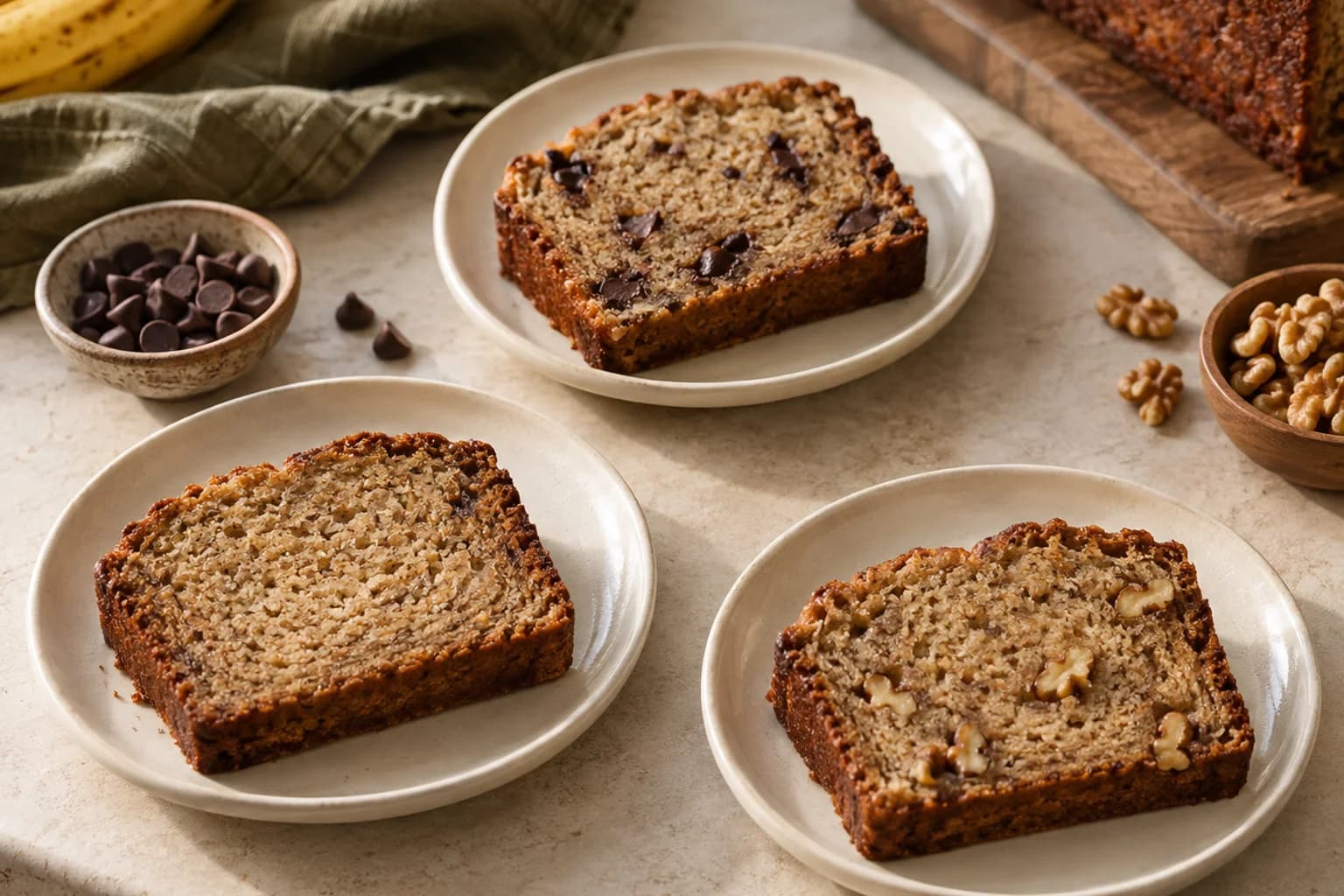
For an occasional chocolate version, start with 30g chocolate chips folded into the final batter. For a nut version, try 30g chopped walnuts. Calculate their contribution from your package and divide by the number of slices. These additions are optional and are not included in the reference macros. Nuts also introduce an additional allergen, while chocolate may contain milk or other ingredients.
A little orange zest or a small pinch of nutmeg can vary the aroma without a major change to the ingredient balance. Avoid adding large amounts of juice or fruit puree casually: liquids influence the centre as well as the flavour. Treat the baking formula as a starting point you can understand, then make small changes with a reason.
Compare the same portion definition before choosing a variation.
| Version | Approximate calories | Approximate protein |
|---|---|---|
| 1 reference slice (loaf ÷ 10) | 224 kcal | 12.4g |
| 1 reference slice + 100g nonfat Greek yogurt | 283 kcal | 22.6g |
| 2 reference slices | 449 kcal | 24.7g |
| Sugar reduced to 25g, loaf ÷ 10 | 215 kcal | 12.4g |
| Reference loaf divided into 12 pieces | 187 kcal | 10.3g |
| No whey; replace with 60g flour, loaf ÷ 10 | 224 kcal | 8.3g |
Serving Suggestions
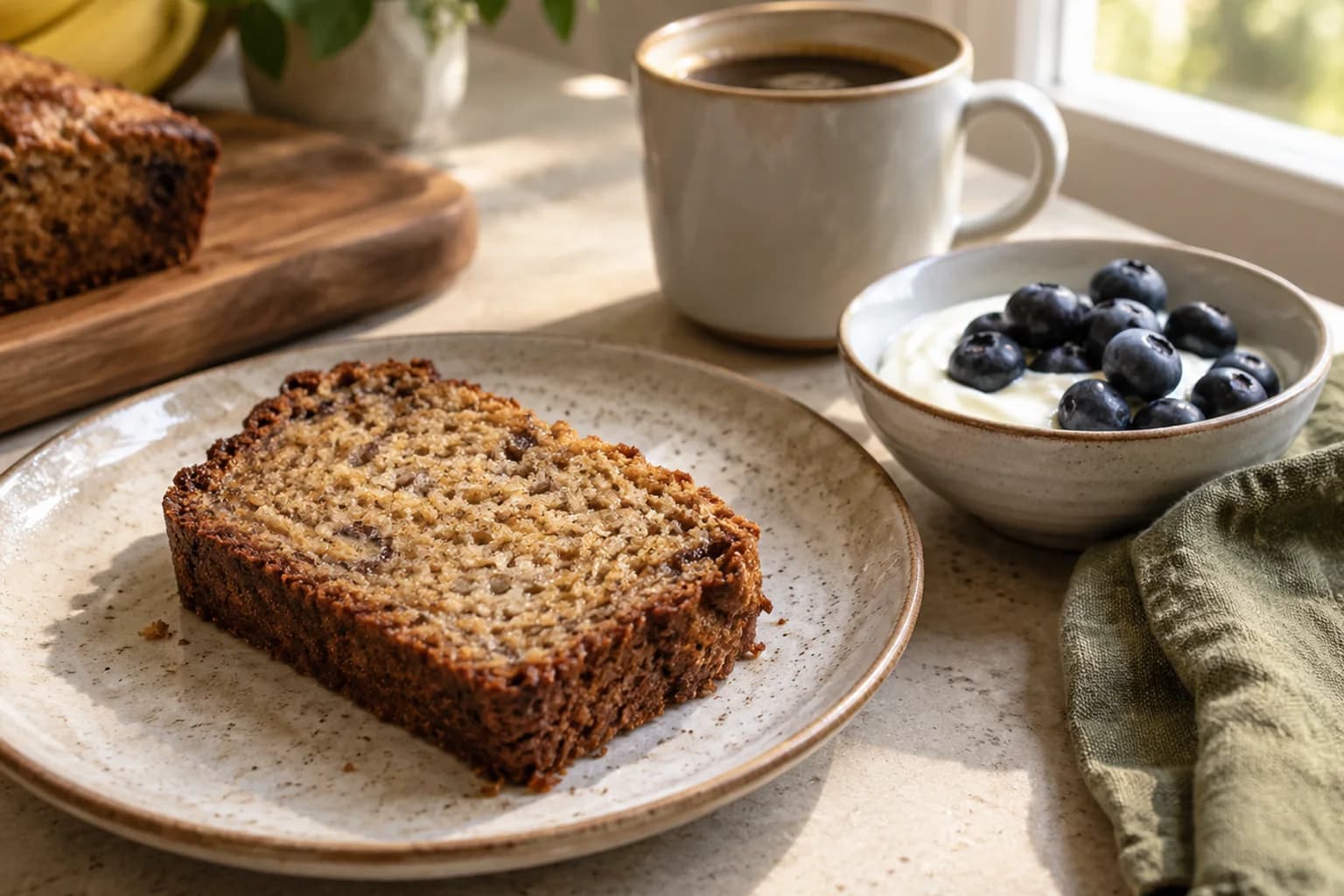
Keep the first slice simple
Try a cooled plain slice before adding anything. You can notice the banana, the sweetness of your powder and how the crumb holds together. If you like a warm slice, warm it gently for a short interval and check it before adding more heat. A brief warming can soften refrigerated bread; a long blast can make the edges tough. Let the temperature become comfortable before eating.
For breakfast, put thick plain yogurt beside the bread and add a small portion of berries. The cool yogurt brings a tangy contrast to the sweet loaf, and separate serving keeps the bread from becoming soggy. Coffee, tea or a glass of milk can complete the table. Choose the drink you enjoy; its calories and protein depend on what is actually in the cup.
A snack that feels intentional
A slice on a small plate is often more satisfying to eat than a piece taken quickly from a bag. That is also a useful moment to decide whether you need a snack or a full meal. If lunch is soon, a single slice may be enough for your appetite. If the afternoon is long, yogurt or another food can make the snack more substantial without changing the entire loaf.
Nut butter works well with banana flavour. Measure it if a nutrition target matters, because a generous spread can add a meaningful amount of energy. Cream cheese or butter can also be enjoyable; the bread does not need to become a protein-maximising exercise every time you serve it. A small, deliberate topping often gives more flavour than several additions piled together.
Share it without overselling the numbers
For a brunch table, slice the cooled loaf evenly and put optional toppings in separate bowls. Guests can choose plain bread, fruit or a spread, and you can identify the wheat, egg, milk and possible soy clearly. Keep any nut version separate. The ten-slice nutrition estimate belongs to this measured recipe, so a differently sized slice or a customised plate should be described accordingly.
Meal Prep & Storage
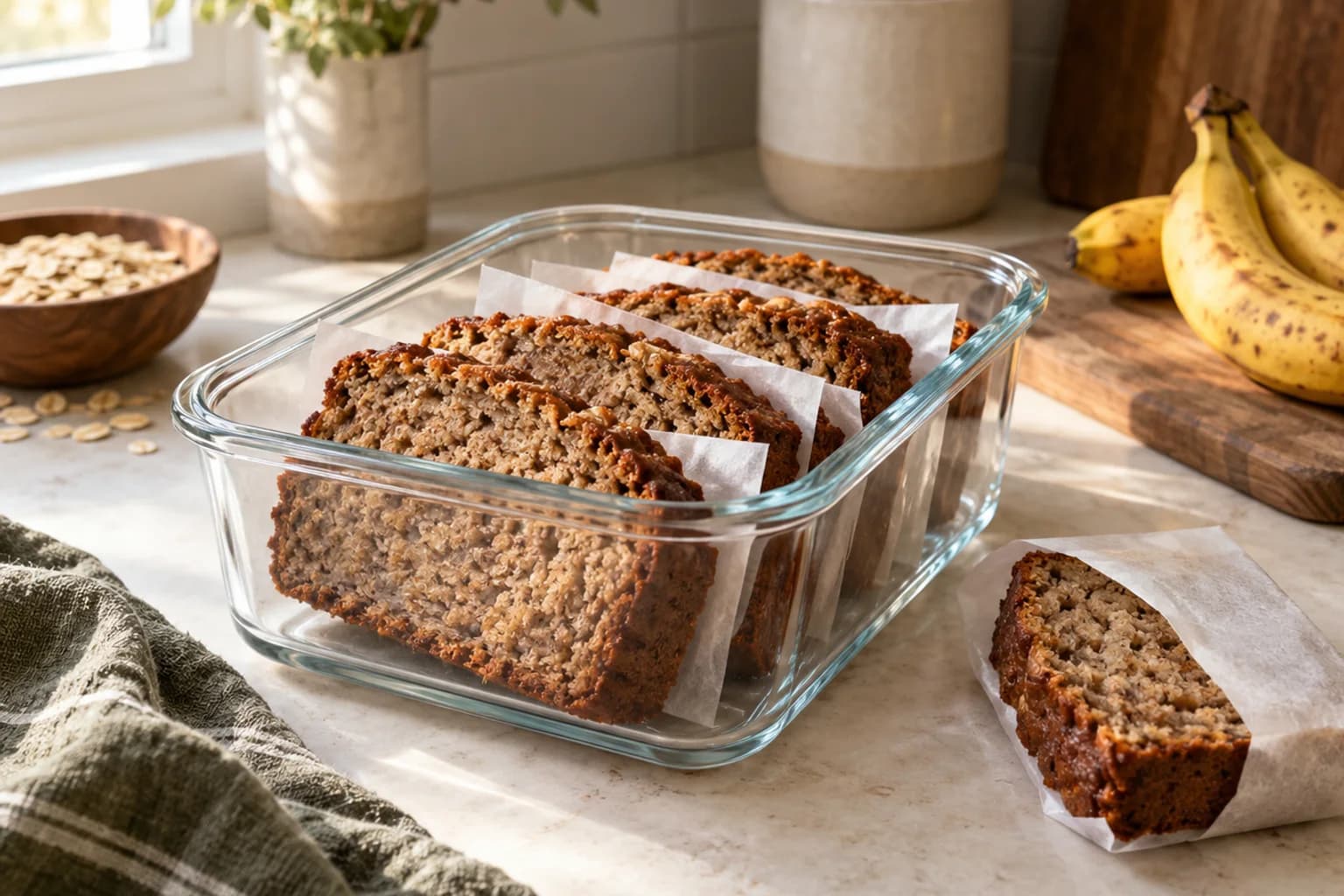
Let steam escape before sealing
After the initial 10–15 minutes in the pan, move the loaf to a rack so air can reach the bottom as well as the top. Sealing a warm loaf traps steam and can leave the surface sticky. Fully cool it before wrapping or packing. Do not leave it on the counter overnight to finish cooling, and avoid placing a steaming loaf directly into a tightly closed container.
For this moist homemade recipe, a cautious practical approach is to refrigerate cooled slices at 40°F / 4°C or below and use within three to four days, or freeze what you will not eat promptly. That is conservative handling guidance, not a laboratory-tested shelf life for this specific loaf. Clean utensils, a fully baked centre and reliable refrigeration all matter. Discard bread showing mould or signs of spoilage; do not trim mould away and eat the remainder.
Freeze portions you will actually use
Once cool, divide into portions and separate slices with parchment. Wrap well or place in a suitable sealed freezer container. Label with the baking date and portion count. Aim to use within about two months for good eating quality; that is a quality target, rather than a claim that food changes from safe to unsafe on a particular day. Smaller packages are convenient if you usually eat one slice at a time.
Thaw a wrapped slice in the refrigerator, then warm gently if you prefer. Avoid repeated thawing and refreezing of the same portion. Keep yogurt, fruit and spreads separate until serving. Packing bread with a wet topping the night before changes both the texture and handling of the finished meal, so assemble when you are ready to eat where practical.
Prep ingredients ahead, rather than hold batter
You can grind oats and measure the dry ingredients in advance, keeping them dry and covered. Store peeled or mashed banana safely in the refrigerator for short advance preparation, or freeze ripe fruit for later use and weigh it after thawing. Mix the batter close to baking time. Leaving a leavened wet mixture overnight can change how it rises, and the raw eggs and flour still require safe handling. Wash bowls, utensils and work surfaces after mixing.
Full Nutrition Information
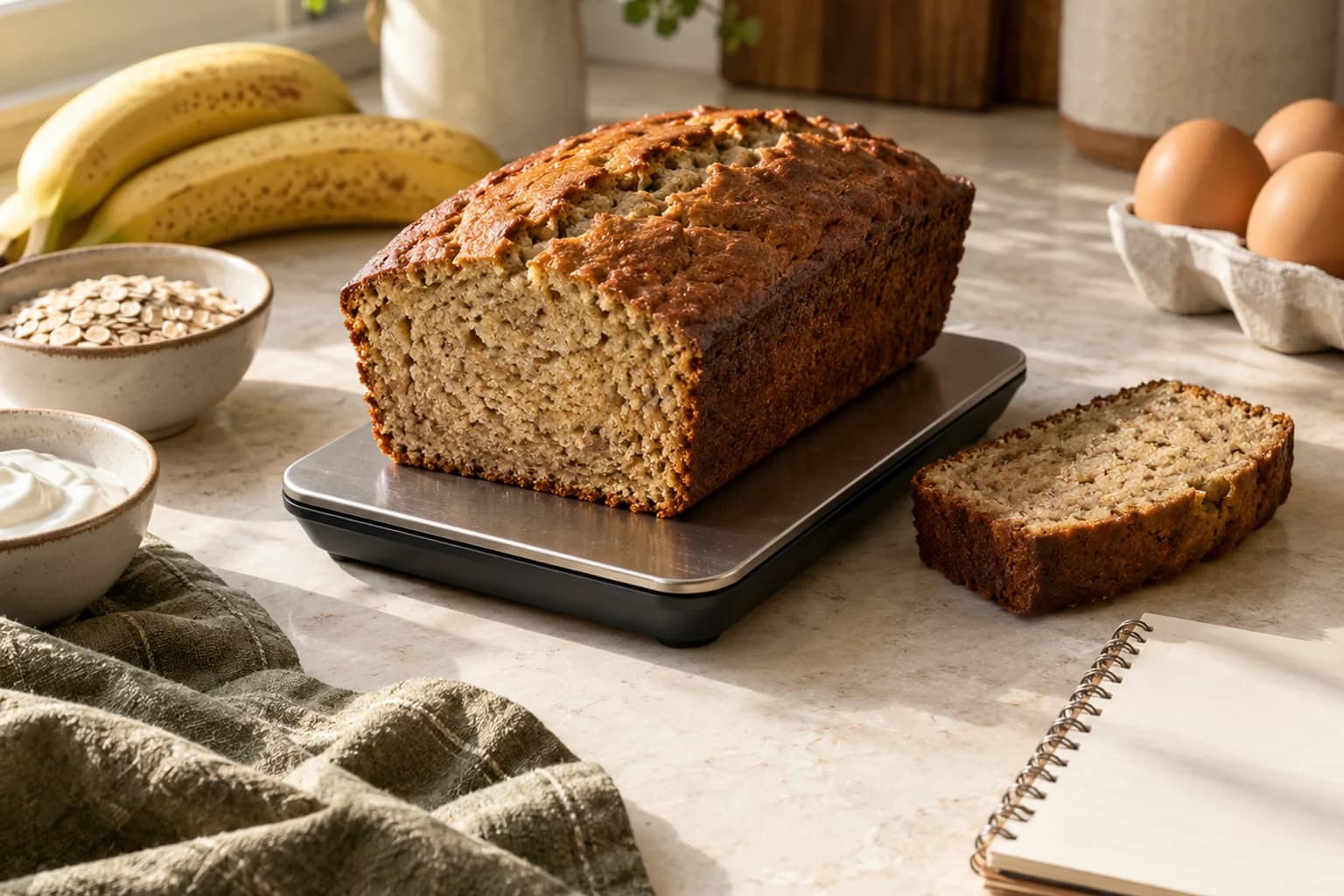
What the calculation includes
The ingredient table below accounts for every measured item in the plain loaf: peeled banana, flour, oats, whey, yogurt, eggs, egg whites, sugar, oil, leaveners, cinnamon, vanilla and salt. Small ingredients are included because their contributions are not always trivial. Baking powder, baking soda and salt, for example, influence the sodium estimate even though they make up a small part of the batter weight.
Most reference values come from USDA Standard Reference 28, a historical food composition dataset. The whey uses the linked manufacturer's UK French Vanilla label, with 79g protein and 376 calories per 100g. Other flavours and regional labels may differ. Salt on that label is converted to sodium using the usual relationship of salt divided by 2.5. The powder's fibre is not declared, so the fibre estimate below counts only the other ingredients; cholesterol and complete micronutrients are not calculated.
Read batch and slice figures separately
The table shows ingredient contributions to the whole loaf, followed by loaf and per-slice totals. The reference batch contains approximately 2,245 calories and 123.7g protein. Dividing by ten produces about 224 calories and 12.4g protein per slice. Rounded rows may not add exactly to the displayed totals, because calculation uses the underlying values before rounding.
If you weigh the cooled loaf, a weight-based portion can be estimated without guessing a final baked weight in advance. Divide your slice weight by the cooled loaf weight, then multiply that fraction by the batch nutrient total. For example, a slice weighing one-tenth of your actual loaf gets one-tenth of the batch estimate. Water loss varies, so publishing one universal gram weight for a baked slice would create false precision.
Update the ingredients you change
Your powder label and yogurt tub are especially useful places to start. Replace the reference per-100g values with your actual label, multiply by the amount used and sum the batch. Include toppings separately. A tracker can help with the arithmetic, but its generic entries may use a different recipe or portion size. Select ingredient entries rather than a vaguely named banana bread serving if you want the estimate to reflect your own bake.
| Ingredient | Amount | Calories | Protein | Carbs | Fat |
|---|---|---|---|---|---|
| Ripe bananas | 300g | 267 kcal | 3.3g | 68.5g | 1.0g |
| All-purpose flour | 180g | 655 kcal | 18.6g | 137.4g | 1.8g |
| Rolled oats | 80g | 303 kcal | 10.5g | 54.2g | 5.2g |
| Vanilla whey protein blend | 60g | 226 kcal | 47.4g | 3.1g | 2.5g |
| Plain nonfat Greek yogurt | 200g | 118 kcal | 20.4g | 7.2g | 0.8g |
| Whole eggs | 100g | 143 kcal | 12.6g | 0.7g | 9.5g |
| Liquid egg whites | 100g | 52 kcal | 10.9g | 0.7g | 0.2g |
| Granulated sugar | 50g | 194 kcal | 0.0g | 50.0g | 0.0g |
| Mild olive oil | 30g | 265 kcal | 0.0g | 0.0g | 30.0g |
| Double-acting baking powder | 8g | 4 kcal | 0.0g | 1.9g | 0.0g |
| Baking soda | 2.3g | 0 kcal | 0.0g | 0.0g | 0.0g |
| Ground cinnamon | 2.6g | 6 kcal | 0.1g | 2.1g | 0.0g |
| Vanilla extract | 4g | 12 kcal | 0.0g | 0.5g | 0.0g |
| Fine table salt | 1.5g | 0 kcal | 0.0g | 0.0g | 0.0g |
| Whole loaf | 10 equal slices | 2245 kcal | 123.7g | 326.3g | 51.0g |
| One reference slice | Loaf ÷ 10 | 224 kcal | 12.4g | 33g | 5g |
| Dietary fiber | 2.2g |
|---|---|
| Total sugars | 9.8g |
| Saturated fat | 1.0g |
| Sodium | 235mg |
Estimated recipe nutrition, not a laboratory analysis. Fibre excludes undeclared powder fibre. Cholesterol and complete micronutrients are not calculated. The measured sugar contributes about 5g added sugar per slice; check powder labels for any additional amount.
How This Fits Your Daily Protein Goal
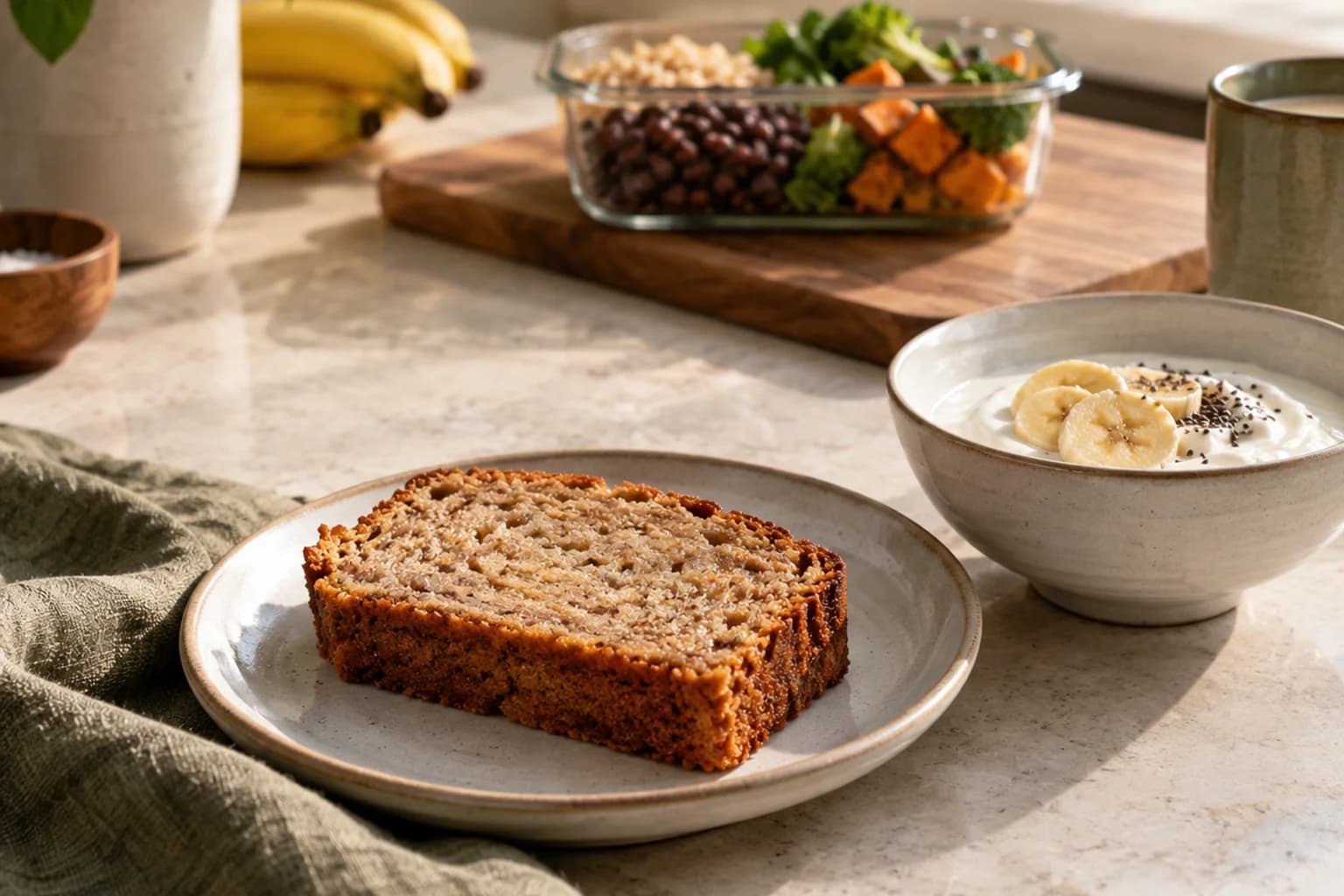
Start with your own target
A protein target depends on body size, activity, goals and personal circumstances. There is no single daily number that this loaf is meant to solve for everyone. Use the protein calculator to estimate a target that suits your context, then look at how the foods you enjoy can contribute. The recipe is one option within that pattern, alongside meals built around dairy, eggs, beans, tofu, fish or other foods you normally eat.
At approximately 12.4g protein per reference slice, one portion contributes about 12% of a 100g daily target or 8% of a 150g target. Those targets are arithmetic examples, not recommendations for every reader. A slice with 100g plain nonfat Greek yogurt provides approximately 22.6g protein under the reference values, which makes a larger contribution while keeping the bread portion unchanged.
Think in meals you can repeat
If you enjoy banana bread in the morning, it can be useful to plan a lunch and dinner with other protein sources rather than asking breakfast to carry the whole day. Variety also brings different flavours, textures and nutrients. You might have bread with yogurt, a bean-and-grain lunch and a dinner based on a protein source you prefer. The exact foods can vary with culture, budget and appetite.
A numerical target should help you organise meals, not make every snack feel like an exam. A portion you like and can prepare regularly has practical value. Some mornings you may prefer a plain slice and coffee; other days a larger breakfast is more appropriate. The difference can be handled through the rest of the day's food without rewriting the loaf every time your schedule changes.
Match the portion to the purpose
For a smaller snack, one slice may fit well. For a fuller meal, add foods that suit your appetite and nutritional needs. Two slices double the reference bread nutrition, and toppings count too. If you are managing a medical condition or have a prescribed protein limit, follow the individual guidance you have been given. This recipe provides ingredient information so you can make a more informed portion choice; it does not set a clinical eating plan.
Make it personal
Where does a slice fit in your day?
Estimate your daily protein target, then plan meals you enjoy.
Recipe Card
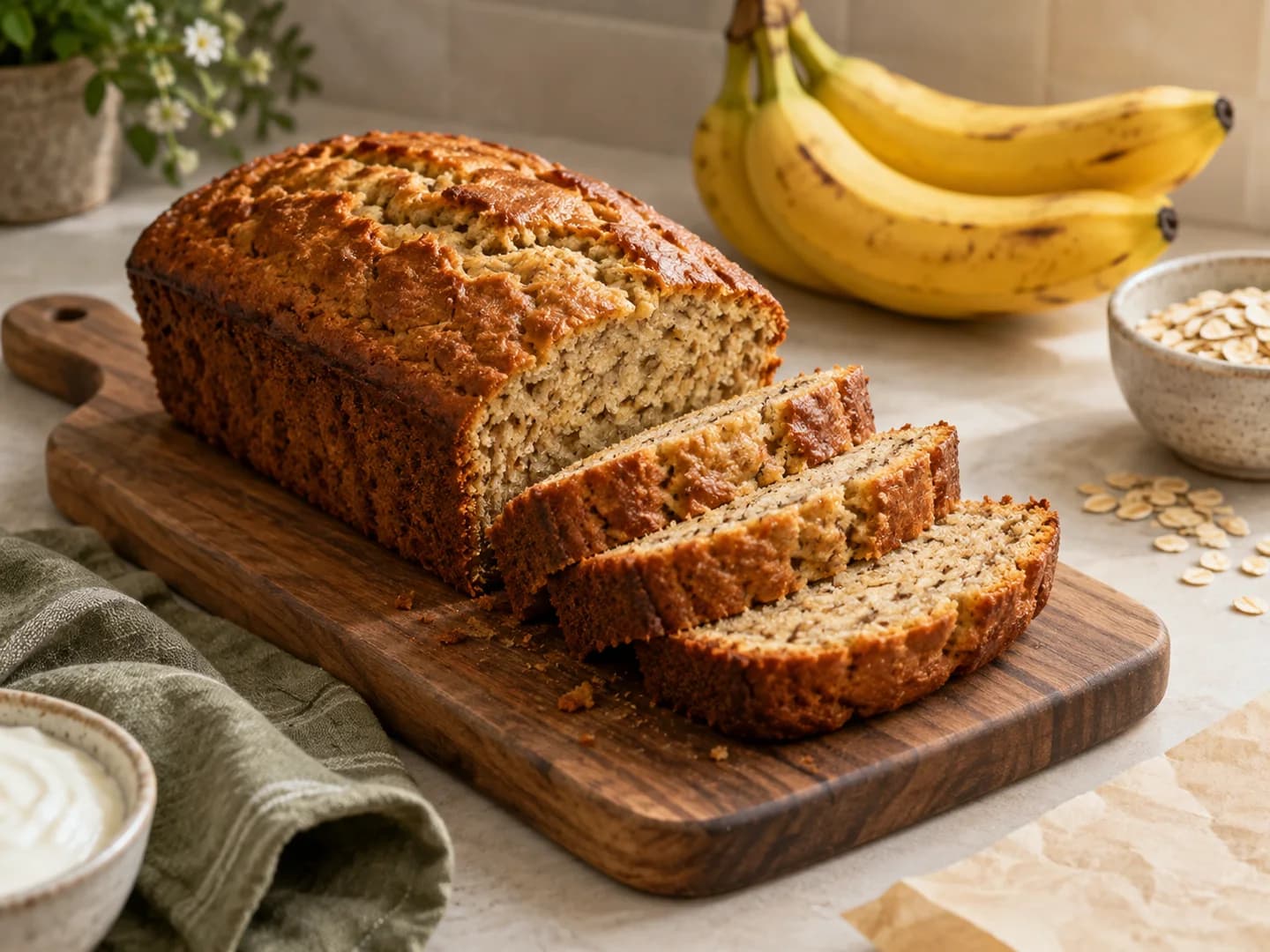
Everything you need in one place
The card below brings the weighed ingredients, pan size, oven setting and method together. Choose one or two loaves before you begin; the ingredient checklist updates to match. A two-loaf batch needs two suitable pans, with the batter divided evenly. Doubling the ingredients does not mean doubling the size of a single pan or simply doubling the oven time. Check each loaf through its own centre.
Nutrition in the card always stays per reference slice. One loaf has ten portions and two loaves have twenty, assuming each is divided equally. The preparation estimate refers to the base batch; a larger batch may take more time to measure, mix and cool. Baking two pans together can also affect airflow and heating, so allow the doneness checks to decide when each loaf is ready.
A checklist that supports the method
Use the ingredient checkboxes as you measure, then follow the six steps in order. The small amount of salt and the two different leaveners are easy to overlook, so check those deliberately. If you change the loaf count after ticking items, the checklist resets: the new quantities need a fresh check. Keep the phone or recipe printout away from raw batter and wash your hands before touching it after handling eggs.
The print control opens your browser's print dialog with a compact recipe layout. It is useful for keeping a flour-dusted screen out of the work area or sharing the core method with someone helping you bake. The detailed notes elsewhere on the page explain substitutions and troubleshooting if you need them.
Use the checks, not only the clock
The oven range is a starting estimate. A top that looks golden can still conceal an underbaked centre, while a fully baked loaf benefits from cooling before it is sliced. Keep the skewer, centre-temperature guidance and cooling instruction with the recipe, even if you are experienced with quick breads. The method has been assembled from ingredient calculations and baking guidance; the timing is not a claim of kitchen testing for every powder and pan combination.
Your loaf, ready to bake
High-Protein Banana Bread
Ripe bananas, Greek yogurt, oats & vanilla whey.
*Base-batch estimates; bake about 55–65 minutes and check the centre. Two loaves need two pans and may take longer. Nutrition stays per slice.
Ingredients
Method
- Prepare the oven and pan
Preheat to 350°F / 175°C conventional. Line a 9 × 5-inch metal loaf pan with parchment, leaving a lifting sling. Grind the measured oats to a fine meal. Weigh all ingredients using the checklist.
- Mix the wet ingredients
Mash the peeled bananas in a large bowl, keeping only small soft lumps. Whisk in the yogurt, whole eggs, egg whites, sugar, measured oil and vanilla until evenly combined.
- Combine the dry ingredients
In a second bowl, whisk the flour, ground oats, whey blend, baking powder, baking soda, cinnamon and salt. Break up powder lumps before they meet the wet mixture.
- Fold and fill
Fold the dry mixture into the wet with a spatula just until no dry pockets remain. Scrape into the lined pan and gently level. Do not fill beyond about two-thirds of the pan; bake any excess separately.
- Bake and check the centre
Bake on the middle rack for about 55–65 minutes, checking from 50 minutes. Tent loosely with foil if the top darkens early. A skewer in the thickest centre should show a few moist crumbs and no wet batter. A centre reading around 200–205°F / 93–96°C is a supporting quick-bread check; examine the crumb too.
- Cool before slicing
Rest in the pan for about 10–15 minutes, then lift onto a rack. Allow about one hour total cooling, or until fully cool, before slicing into 10 equal portions. Refrigerate cooled slices in a sealed container; keep toppings separate.
For two pans, leave space for airflow and check each centre. Do not double the baking time automatically. No raw batter tasting.
Plain bread only; toppings are additional. Contains wheat, egg and milk; the example whey also contains soy. Refrigerate cooled slices and use within 3–4 days, or freeze promptly.
Frequently Asked Questions
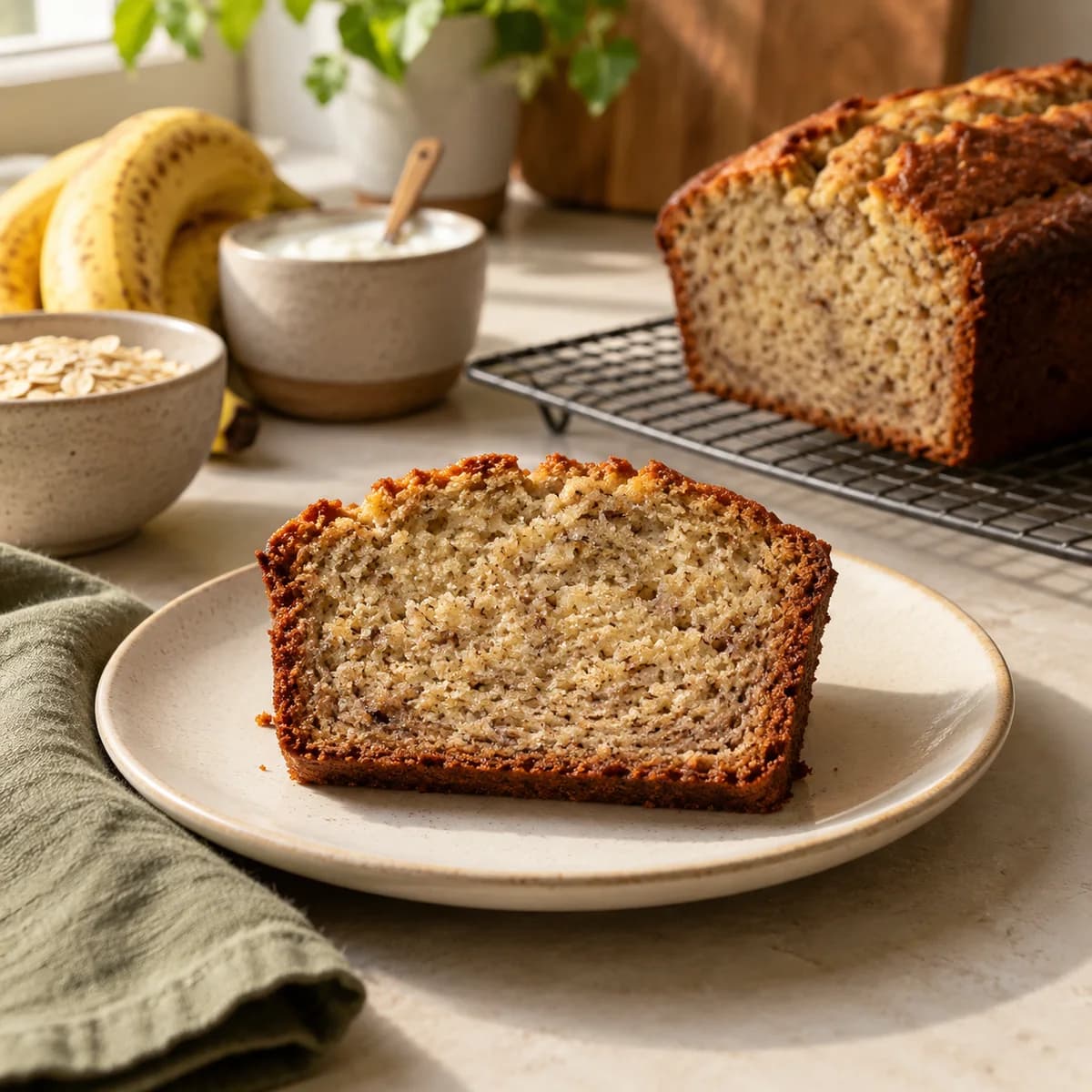
Banana bread questions tend to appear at the same moments: when choosing a powder, when the top browns faster than the centre, and when deciding how thick a slice should be. The answers below keep those practical decisions connected to the recipe's measured ingredients. If you change several parts of the batter, use the original estimate as a reference rather than a guaranteed result for the new formulation.
Before making a dietary swap
The base loaf contains wheat, egg and milk. The example whey also contains soy lecithin, so check your own packaging rather than treating the short recipe name as an allergen statement. Optional walnuts add another allergen; some chocolate chips introduce milk. Dietary suitability depends on every ingredient and on handling where cross-contact is relevant.
A powder is not simply protein in a bag. Sweeteners, thickeners, flavourings and the type of protein can affect batter and taste. Read the label before measuring. If you only have an unfamiliar casein or plant blend, making a smaller separate trial or finding a recipe designed for it may save ingredients. Adding an arbitrary amount of extra yogurt until the batter looks familiar is less repeatable than a weighed formulation.
When comparing recipes
Check whether another page's protein figure belongs to a slice, a whole loaf, two slices or a breakfast with yogurt. Those are different portions. Check the ingredients too: a loaf containing a large amount of powder may have a different texture and serving size from this one. A useful comparison needs both the nutrient number and the amount of food it describes.
The FAQ is a quick reference, while the ingredient table and method show the assumptions behind the answers. For your own loaf, package values and observations from the cooled bread are more informative than a promise that all powders bake alike. Keep the first batch simple, note the changes you make and use that information when you bake again.
How much protein is in a slice of this banana bread?
About 12.4g protein, rounded to 12g, when the reference loaf is divided into ten equal portions. That figure is for bread alone. Two slices provide approximately 24.7g protein; one slice with 100g plain nonfat Greek yogurt provides about 22.6g. Different powders, ingredient weights and portion sizes change the estimate.
Can I make high protein banana bread without protein powder?
For a no-powder starting point, replace 60g whey with 60g additional all-purpose flour, for 240g flour total. The calculated ten-slice portion is about 224 calories and 8.3g protein. This changes the formulation and has not been kitchen-tested here; judge the batter and centre doneness carefully. Yogurt alongside a slice can add protein without changing the bread.
Which protein powder works best for this recipe?
The starting formula uses a vanilla whey blend, with a reference label providing 79g protein per 100g. Measure 60g by weight rather than by scoop count. Casein, plant blends and meal replacements can absorb moisture differently, so they are not guaranteed direct swaps. Strong sweeteners and flavourings can also change taste. Check your own label and allergens.
Why is my protein banana bread dry or rubbery?
First check whether you changed the powder, packed in extra flour or baked longer than the centre needed. Excessive mixing after flour enters can also make the crumb tougher. Weigh the ingredients, fold just until combined and begin checking around 50 minutes. Let the loaf cool before judging it. Replacing too much flour with whey can create a different, less pleasant texture.
Why is the centre gummy even though the top is brown?
A deep loaf can brown outside before the centre finishes. Test the thickest centre for wet batter, and use a temperature around 200–205°F / 93–96°C as a supporting quick-bread check. Tent a dark top loosely with foil and continue baking as needed. Extra banana, a smaller pan and cutting while hot can also contribute to a gummy-looking crumb. Do not eat an underbaked raw centre.
Can I use frozen bananas?
Thaw safely, peel if necessary, and weigh 300g of the banana pulp before mixing. Frozen and thawed fruit may release more liquid, so expect the batter to differ from fresh mashed banana. Do not casually add another banana or extra thawing liquid beyond the measured fruit. Use the centre checks rather than relying on exactly the same baking time.
Can I use almond flour or oat flour instead of wheat flour?
Almond flour is not a direct replacement for the 180g wheat flour because its fat and structural behaviour differ. The recipe already contains 80g finely ground oats; replacing all wheat flour with oats also changes binding and texture. For a fully almond-flour, oat-only or gluten-free loaf, a recipe designed for that flour is a more dependable starting point.
Is this banana bread suitable for weight loss?
A reference slice is about 224 calories before toppings and can fit a calorie-controlled eating pattern when its portion suits your needs. The recipe does not cause weight loss on its own. Nut butter, chocolate and larger slices can increase the energy of the meal. Choose a portion that works with your overall food intake and appetite rather than relying on the high-protein label.
Can I make muffins or bake two loaves?
Two loaves need twice the ingredients divided into two 9 × 5-inch pans; the recipe card scales the checklist. Check each centre individually and allow for changes in oven airflow. Muffins are a separate pan format and generally bake faster, but a precise muffin time has not been established for this formula. Do not apply the full loaf time to smaller portions.
How should I store and freeze it?
Cool fully before wrapping. For this moist homemade loaf, refrigerate at 40°F / 4°C or below and use within three to four days, or freeze portions promptly. This is conservative guidance, not a validated shelf life for this specific recipe. Separate slices with parchment and seal well; aim to use frozen portions within about two months for quality. Thaw in the refrigerator and keep wet toppings separate.
Is this recipe gluten-free, dairy-free or vegan?
The base recipe contains wheat, eggs and milk, and the example whey also contains soy lecithin. Certified gluten-free oats alone do not make the wheat-based loaf gluten-free. Dairy-free requires changes to both yogurt and whey; vegan baking also requires an egg replacement. Multiple substitutions create a different formulation with different nutrition and baking behaviour. Use a dedicated recipe when those requirements are essential.
Should I remove all the sugar or oil?
The measured sugar and oil contribute to flavour, browning and tenderness. Reducing sugar to 25g saves approximately ten calories per ten-slice portion, with a less sweet result. Removing all oil or replacing it with fruit puree changes moisture and texture, so it is not a guaranteed improvement. Start with one measured change and assess the fully cooled loaf before making another.
More High-Protein Recipes
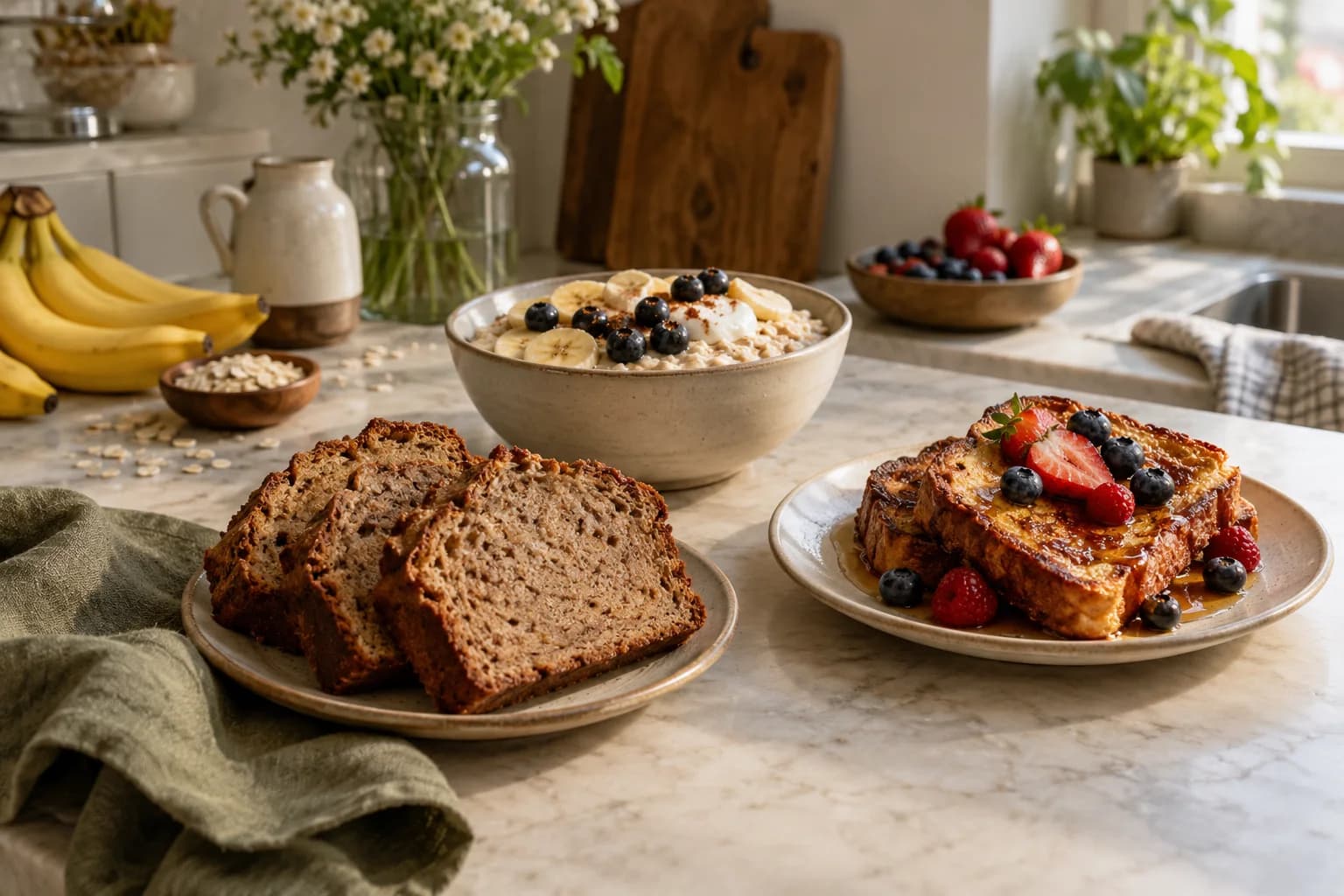
Choose the next recipe by your morning
If you enjoy a warm breakfast made to order, French toast offers golden bread, yogurt and fruit with a shorter cooking session than a loaf. Its nutrition belongs to a complete breakfast, so read the portion description before comparing it with one banana bread slice. Pancakes and waffles are other options for a slower morning when you want a plate cooked fresh rather than something sliced from the fridge.
For mornings with little time, overnight oats or a yogurt bowl can be convenient companions to this make-ahead loaf. They use some of the same groceries, which helps you finish a tub of yogurt or a bag of oats without making identical breakfasts all week. Oatmeal offers a warm bowl when you want a spoonable meal and a different texture from bread.
Make the shopping list work across meals
Look at ingredients you already have before choosing another recipe. Ripe fruit can top yogurt; oats can go into porridge; eggs can support a savoury meal. Keeping a few useful staples often makes meal planning easier than collecting a separate set of specialised ingredients for every breakfast. Choose two or three recipes you actually want to eat, then buy quantities that suit the week.
The wider high-protein recipe collection includes options for breakfast and other meals. A snack loaf does not need to be the answer to lunch or dinner as well. Using different protein sources across the day gives you more room for food preferences, cultural dishes and whatever groceries are available. Think of the bread as a useful addition to that rotation.
Bring what you learned to the next bake
Weighing ingredients, respecting pan size and waiting for a loaf to cool are habits you can keep. So is reading the portion description beside a nutrition claim. The next recipe may have a different method, but those small checks still help you understand the result. Pick a breakfast that fits the time and equipment you have, and let flavour matter alongside the numbers.