
Browse the 15 recipe sections
One reference serving: one of ten equal cookies, including all measured dough ingredients and chocolate. Protein is about 9.6g before rounding. Sides are additional; baking times are estimates. See the breakdown.
Recipe Overview
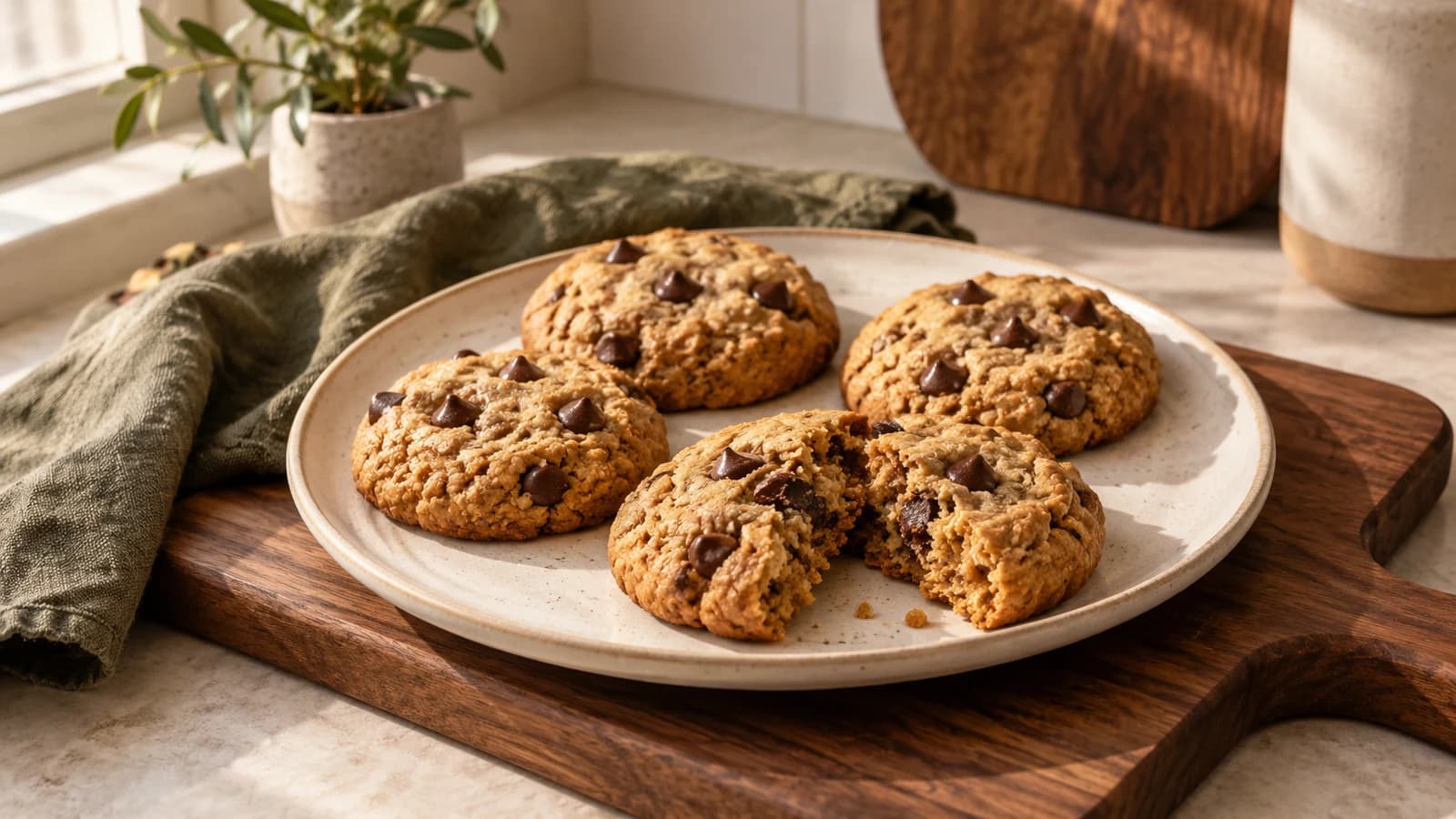
A good cookie still needs to feel like something you chose because you wanted a cookie. This high protein cookies recipe starts there: peanut butter, a little brown sugar, pockets of chocolate and a soft oat centre. Vanilla whey adds protein, while mashed banana and an egg help bring the dough together. The cookies are shaped before baking, so you can make a neat batch without waiting for the dough to spread into perfect circles on its own.
The reference makes ten cookies. Each one is one tenth of the measured dough and provides approximately 179 calories and 9.6g protein, rounded to 10g in the quick nutrition summary. Two reference cookies provide about 358 calories and 19.2g protein. That distinction matters when you are planning a snack: the figures describe the actual portion, including the peanut butter, sugar and chocolate, rather than counting the whey and forgetting the rest.
The texture to expect
These are soft, fairly substantial peanut-butter oat cookies with a mild banana note. They are not designed to be wafer-thin, crisp biscuits or oversized bakery cookies with a liquid centre. Finely ground oats make the crumb less coarse, and the peanut butter gives it richness without a separate butter or oil ingredient. The chocolate chips are spread through the dough so a modest measured amount still gives you little chocolate moments across the batch.
Plan around fifty minutes from weighing ingredients to a cooled first cookie. About ten minutes is active mixing, ten minutes lets the dough rest, the oven stage is roughly twelve to sixteen minutes, and cooling needs another fifteen minutes or so. These are estimates for the base batch. The important checks are an evenly mixed dough, similarly sized discs, set centres and enough cooling time for the cookies to hold together.
A useful starting batch
Begin with the ingredients as written before swapping the protein powder, nut butter and sweetener all at once. Each can change how the dough feels. The recipe card scales to ten, twenty or thirty cookies, keeping the planned size per cookie the same. A larger batch needs more trays or baking rounds. If you want a smaller snack, divide the original batch into twenty mini cookies and use the separate mini-cookie estimate rather than assuming a smaller cookie carries the full-size nutrition.
Why You’ll Love This Recipe
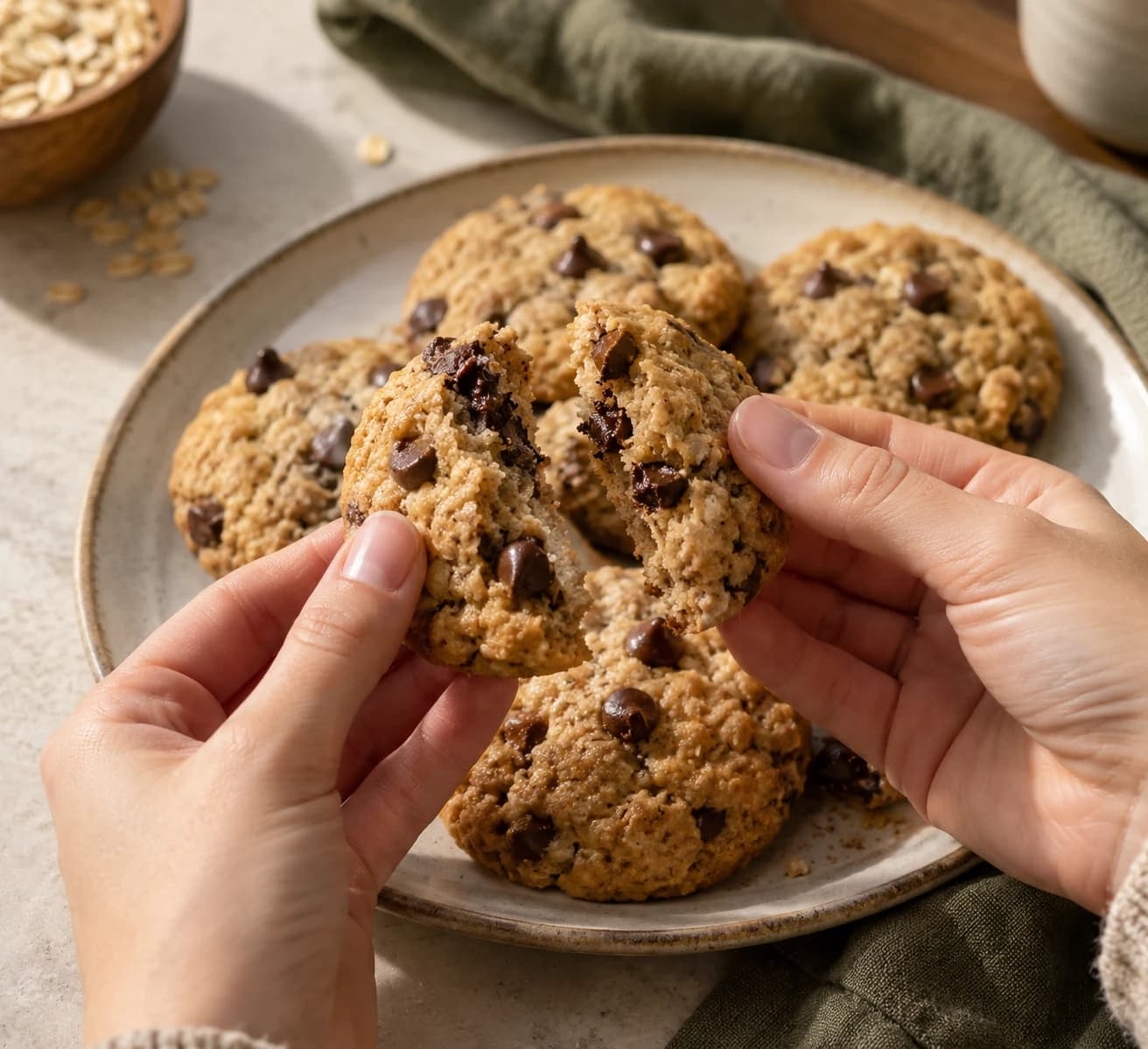
The ingredients have a job
Peanut butter supplies flavour and fat, the oats provide structure, and the egg helps bind the mixture during baking. Mashed banana brings moisture as well as sweetness, while a measured amount of brown sugar keeps the flavour recognisably cookie-like. The whey is part of that balance. It is not a reason to leave out every other ingredient and hope the oven turns a scoop of powder into a satisfying bake.
The ingredient list also makes the protein total easy to understand. Whey provides the largest single contribution, but peanut butter, oats and egg contribute too. You do not need to add an icing, filling or a protein drink to reach the reference figure. Those can be your serving choices, but the number shown on the page already describes a complete plain cookie with its chocolate chips included.
A manageable baking routine
There is no stand mixer, creaming stage or overnight chilling requirement. A bowl, spatula, scale and lined baking sheet do most of the work. Grinding the oats is the extra step, and you can do it while the oven warms. Once the dough is rested, divide it evenly, flatten the pieces and bake. Washing the peanut-butter bowl promptly is easier than leaving the sticky mixture to dry on its sides.
The dough is portioned before baking, which is helpful if one person likes larger cookies and another likes smaller ones. Choose a size for the whole batch so you can compare the result fairly. A cookie that looks generous beside a cup of tea can still have a defined serving size. You do not need to make every snack identical throughout the week; you just need to know which portion your estimate describes.
Room for an ordinary snack
These cookies can be an afternoon snack, a small dessert or something to pack with lunch. They do not have to replace meals or become the only way you eat protein. A savoury lunch, fruit, yogurt and an enjoyable cookie can all fit into the same day. The recipe gives you another option when you want to bake, especially if you already keep a vanilla whey blend in the cupboard.
The full guide explains what to watch for when cookies feel dry, fragile or unusually sticky. Those practical checks are more useful than describing every batch as foolproof. Powder formulations, peanut-butter consistency and oven temperatures vary, and a little attention to the dough gives you a better starting point for repeating a result you enjoy.
Nutrition at a Glance
- Calories
- 179kcal
- Protein
- 10g
- Carbs
- 18g
- Fat
- 9g
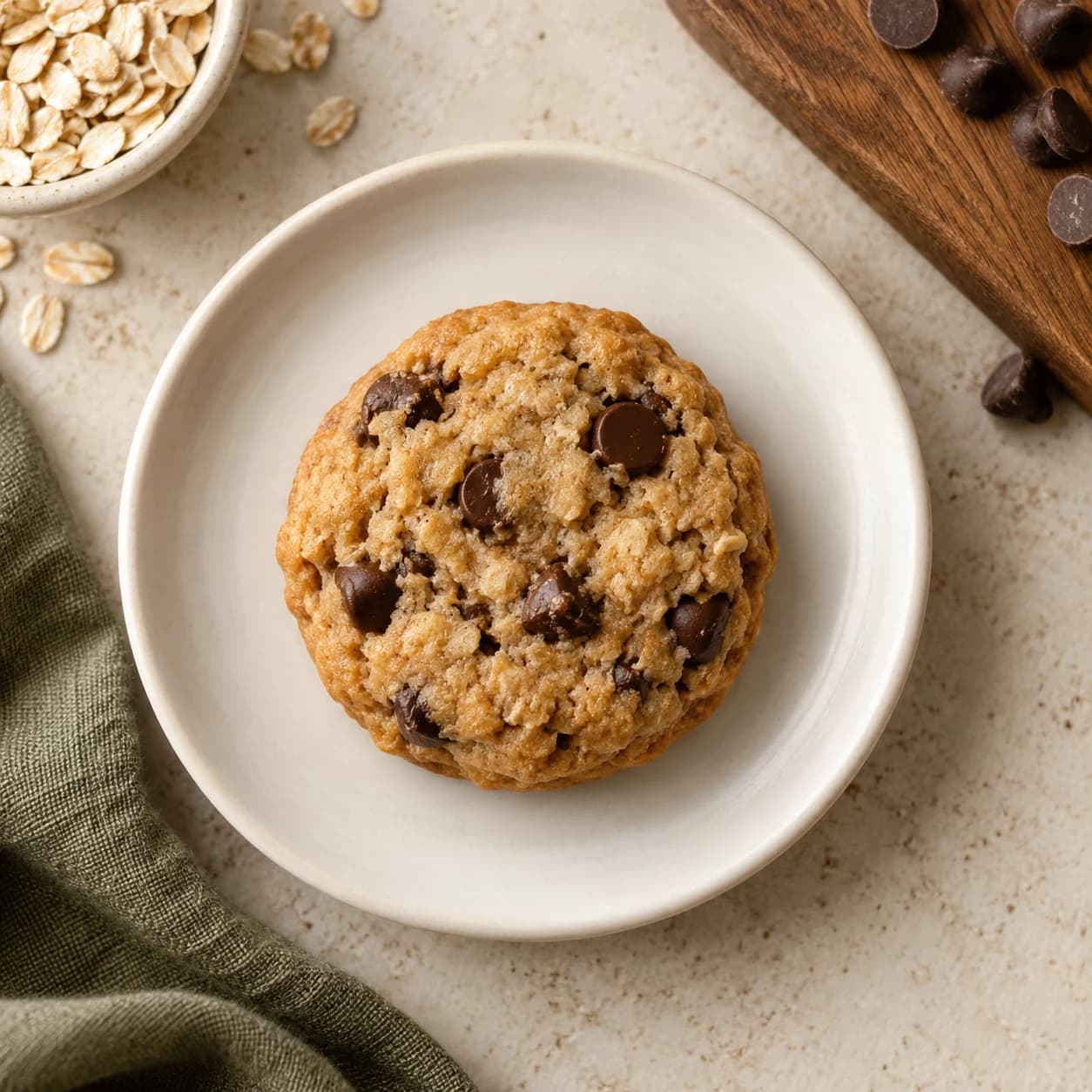
A reference cookie provides approximately 179 calories, 10g protein, 18g carbohydrate and 9g fat. Before rounding, the calculation gives 9.6g protein, 17.9g carbohydrate and 8.6g fat. The quick summary uses whole numbers for readability. Those rounded figures are not a promise that every powder flavour or peanut-butter jar will produce exactly the same nutritional result.
Calories and the complete cookie
Peanut butter accounts for a substantial share of the food energy, followed by oats, whey, sugar and chocolate. Banana and egg also count. There is no separate oil or butter in this reference, but that does not make the finished cookie fat-free or automatically low-calorie. It is a portioned snack with a measured protein contribution. The serving size is the most useful place to start when deciding whether it suits the meal or snack you have in mind.
The chocolate is part of the reference, not a decoration left outside the total. If you press extra chips onto the tops after portioning, weigh them and add their nutrition. Likewise, a drizzle of peanut butter or a glass of milk belongs to your served snack. Keeping those additions visible in your calculation helps the estimate describe what you actually eat.
Protein, carbs and fat together
One cookie supplies about 9.6g protein; two supply about 19.2g. Carbohydrate comes from the oats, banana, sugar, chocolate and a small amount from the other ingredients. Fat comes mainly from peanut butter, with smaller contributions from egg and chocolate. These nutrients all belong to the recipe. You do not need to treat the carbohydrate or fat as a mistake because the title focuses on protein.
The additional estimate is about 2.0g fibre, 8.2g total sugars, 2.2g saturated fat and 127mg sodium per cookie. Powder fibre is not declared on the example manufacturer label, so the fibre figure counts the other ingredients only. Total sugars includes naturally occurring banana sugars and sugars in the measured ingredients; a separate added-sugars panel has not been calculated.
Use the detailed ingredient breakdown when you want to adjust the recipe to your own products. A tracker entry called protein cookie may describe a commercial snack, a very different recipe or a different size. Weighed ingredient entries are easier to reconcile with the ten cookies cooling on your rack.
Ingredients
Peanut butter and oats
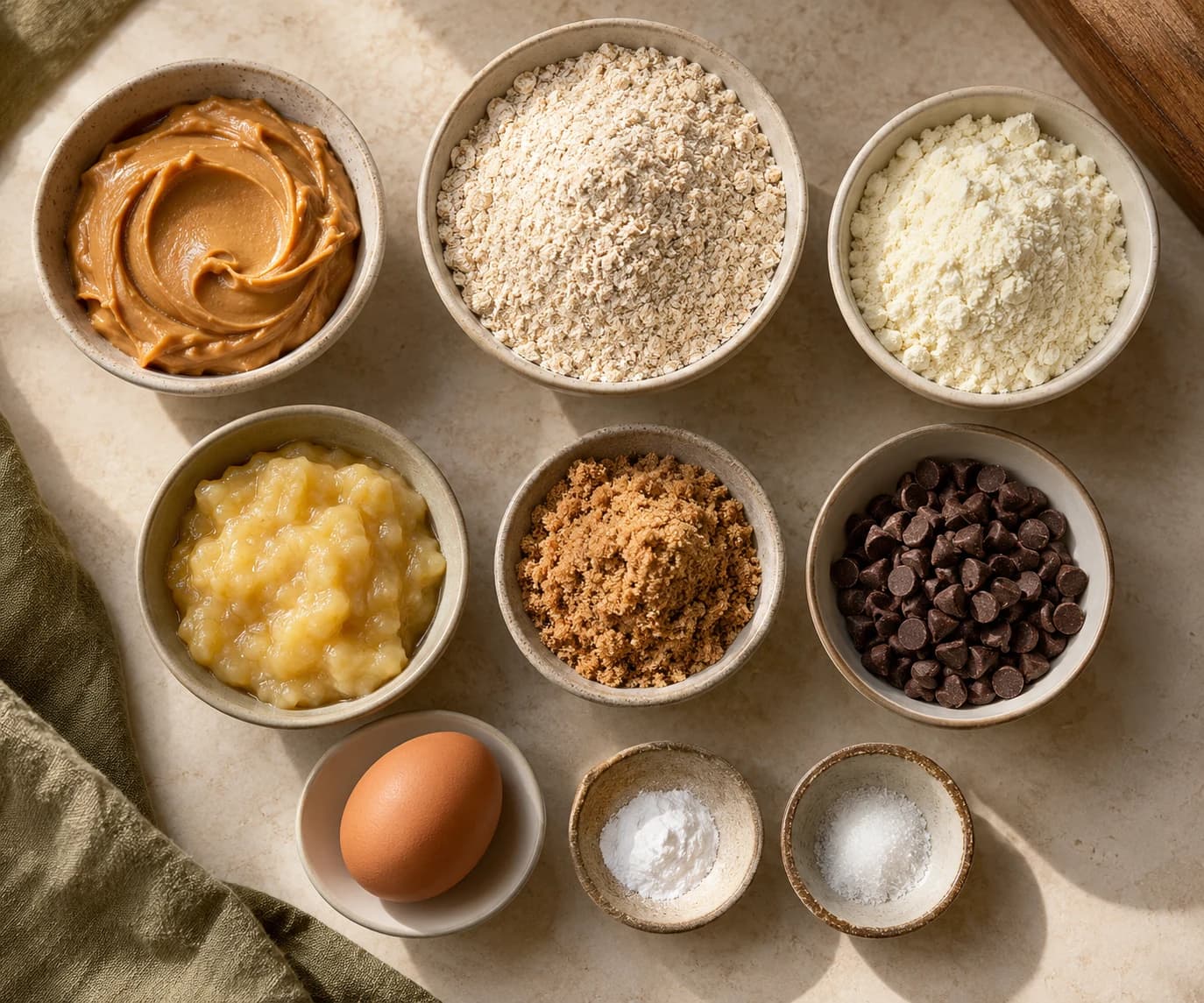
Use 120g smooth peanut butter, stirred thoroughly if oil has separated in the jar. The nutrition reference uses a generic salted smooth peanut butter. A natural product can work differently from a stabilised spread, so bring it to an even consistency before weighing. Scooping only the oily top or the dry bottom changes the mixture you put into the bowl. Avoid substituting dry peanut powder at the same weight; it has a very different fat and moisture balance.
Grind 100g rolled oats into a fine meal. Weigh the oats first and scrape the full amount into the dough after grinding. If a noticeable quantity stays in the grinder, the actual batch has less structure than intended. A few small oat flecks are fine, but whole flakes give a coarser result than the reference. Instant flavoured porridge packets are not the same ingredient because they may already contain sugar, flavourings and other additions.
Powder, banana and egg
Measure 60g vanilla whey protein blend by weight. The calculation uses the linked French Vanilla label, which declares 79g protein per 100g. Your scoop size may differ, and a heaped scoop is especially hard to reproduce. Read the allergy information too: the example powder contains milk and soy. Casein, plant protein and meal-replacement blends are separate formulations, not guaranteed direct replacements.
Mash 100g ripe banana, weighed after peeling, until mostly smooth. Choose a banana that is soft enough to mash easily without large firm pieces. Its exact sweetness and moisture vary, but the weighed amount keeps the starting point consistent. Use 50g whole egg without the shell, roughly one large egg. Crack it into a small bowl first if you need to remove a little to reach the reference weight.
The finishing ingredients
Add 40g brown sugar, 30g chocolate chips, 2g double-acting baking powder and 1g fine table salt. The chocolate estimate uses generic sweet chocolate composition; your chip package is a better match for your own log. Break up sugar lumps and distribute the leavener evenly. The salt is small but measured, and the peanut butter already contains sodium in the reference.
You also need parchment, a baking sheet, a scale, a mixing bowl and a rack. Keep the raw egg mixture away from ready-to-eat foods, and wash utensils and hands after handling raw dough. The cookie dough is intended to be baked, not tasted from the bowl.
Your ingredient checklist
- Smooth peanut butterSmooth, well-stirred; salted reference120g
- Rolled oatsGrind finely; weigh the full 100g into the dough100g
- Vanilla whey protein blendWeighed; reference contains milk and soy60g
- Ripe bananaPeeled weight; mash smooth100g
- Whole eggWeighed without shell; about 1 large egg50g
- Brown sugarWeigh before mixing40g
- Chocolate chipsGeneric sweet chocolate reference; use your own chip label30g
- Double-acting baking powderAbout ½ teaspoon; phosphate reference2g
- Fine table saltAbout a scant ¼ teaspoon; weigh if possible1g
Contains peanuts, egg and milk; the reference whey also contains soy. Check labels, including chocolate, and oat cross-contact if avoiding gluten.
Ingredient Substitutions
Another nut or seed butter
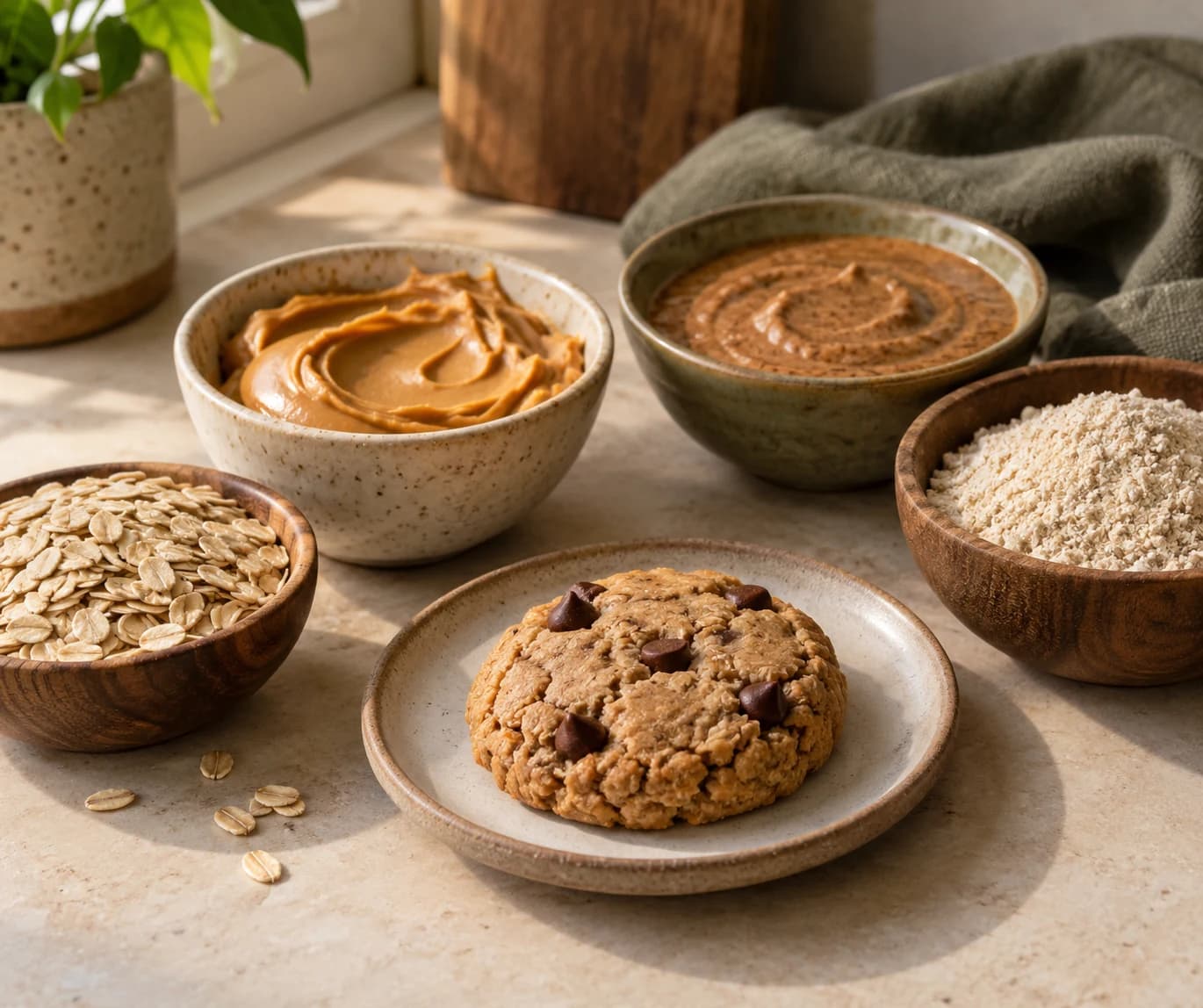
Almond butter or a smooth seed butter can be explored at the same starting weight, but expect different flavour, oil separation and nutrition. Stir the product well and read its label. A runny spread may make the dough harder to shape, while a firm paste may make it feel dry. The original peanut-butter result does not establish an identical outcome for every alternative.
If you need to avoid peanuts, check the entire ingredient list and cross-contact information, including the powder and chocolate. Simply changing the jar in the mixing bowl is not enough to describe a cookie as suitable for a particular allergy. A peanut-free trial also needs different nutrition accounting because the replacement can contribute a different amount of protein and fat.
Oats and protein powder
Plain oat flour is the closest practical alternative to grinding the rolled oats yourself, though fineness and absorption can still vary. Begin with the same weighed amount and assess the rested dough. Whole-wheat flour, almond flour and coconut flour have different properties; they are not interchangeable gram for gram. Coconut flour in particular is not a small neutral change to a dough that relies on oats and banana.
Use another vanilla whey blend only after checking its per-100g nutrition and ingredient list. An unflavoured whey may taste less sweet, while a strongly sweetened flavour can dominate the cookie. Casein and many plant powders absorb liquid differently, so the published method does not promise a one-for-one swap. Replacing all the whey with oats changes the protein substantially and requires a separately adjusted dough rather than keeping the original headline.
Banana, egg and sweetener
Applesauce is not an established identical replacement for the banana here. It can be thinner and may change the cookie's structure. Egg whites alone do not replace the whole egg's yolk fat and binding behaviour, and a flax mixture has not been verified in this formula. For a vegan cookie, choose a recipe developed around plant ingredients rather than making several dependent substitutions at once.
Brown sugar affects more than sweetness. Removing it, replacing it with liquid syrup or switching to a sugar substitute can change spread, browning and the cooled texture. A powder already containing sweetener does not make the measured sugar nutritionally disappear. Try one deliberate change at a time and write down the product and amount so a useful result can be repeated.
Use the product label and the rested dough together when judging a change.
| Reference ingredient | Possible alternative | What changes |
|---|---|---|
| Smooth peanut butter | Smooth almond or seed butter | Different flavour, fat, protein and dough consistency |
| Ground rolled oats | Plain oat flour | Fineness and absorption may differ |
| Vanilla whey blend | Another whey flavour | Use that label; sweetness can differ |
| Vanilla whey blend | Casein or plant powder | Not an established one-for-one swap |
| Whole egg | Egg whites or flax mixture | Not verified for this formula |
| Brown sugar | Syrup or sugar substitute | Different moisture, browning and texture |
How to Make It
Prepare before mixing
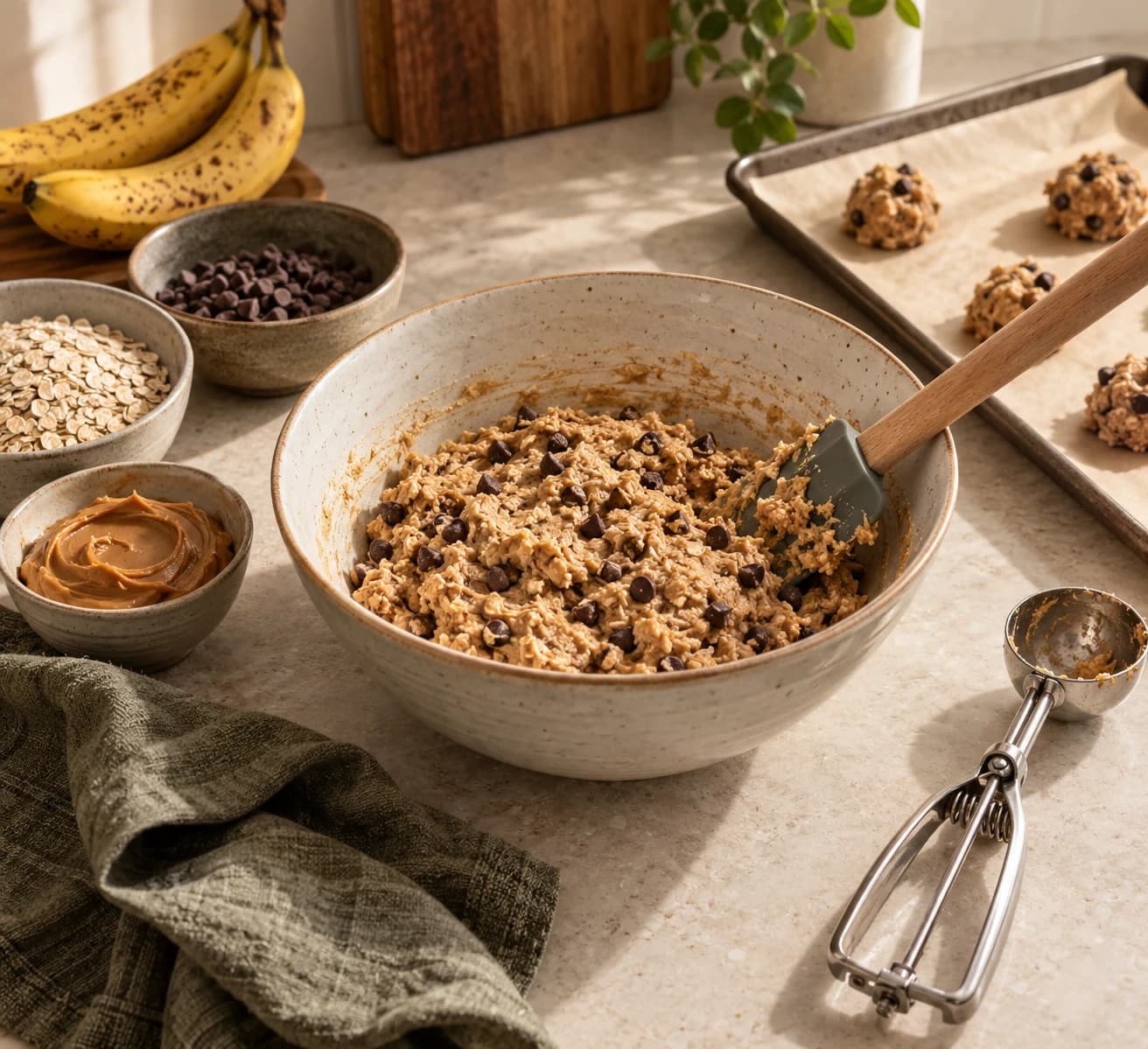
Heat the oven to 350°F / 175°C conventional and line a large baking sheet with parchment. Set a rack aside for cooling. Grind the weighed oats finely and check that the peanut butter is evenly stirred. Weigh the banana after peeling and the egg without its shell. This short preparation keeps you from adding a guessed extra scoop while the dough is already mixed.
In a large bowl, stir the peanut butter, mashed banana, whole egg and brown sugar until evenly combined. Small banana flecks are fine, but break down large pieces and scrape the bottom of the bowl. A spatula works well. There is no need to beat the mixture for several minutes or introduce a mixer just to bring these wet ingredients together.
Fold and rest
Whisk the ground oats, whey, baking powder and salt in a separate bowl, breaking up visible powder lumps. Fold them into the wet mixture until no dry pockets remain, then fold in the measured chocolate chips. The dough should be thick and scoopable. Let it stand for around ten minutes so the ground oats can take up some moisture before you judge the final consistency.
If the rested dough is very loose, check that the ingredient weights and powder type match the reference. A brief refrigerated rest may help handling, but it does not correct a missing dry ingredient. If the dough is crumbly, press a small portion together and review whether oats or powder were overmeasured. Adding extra peanut butter or milk would change both the dough and its nutrition; do not treat unmeasured additions as part of the reference.
Shape, bake and cool
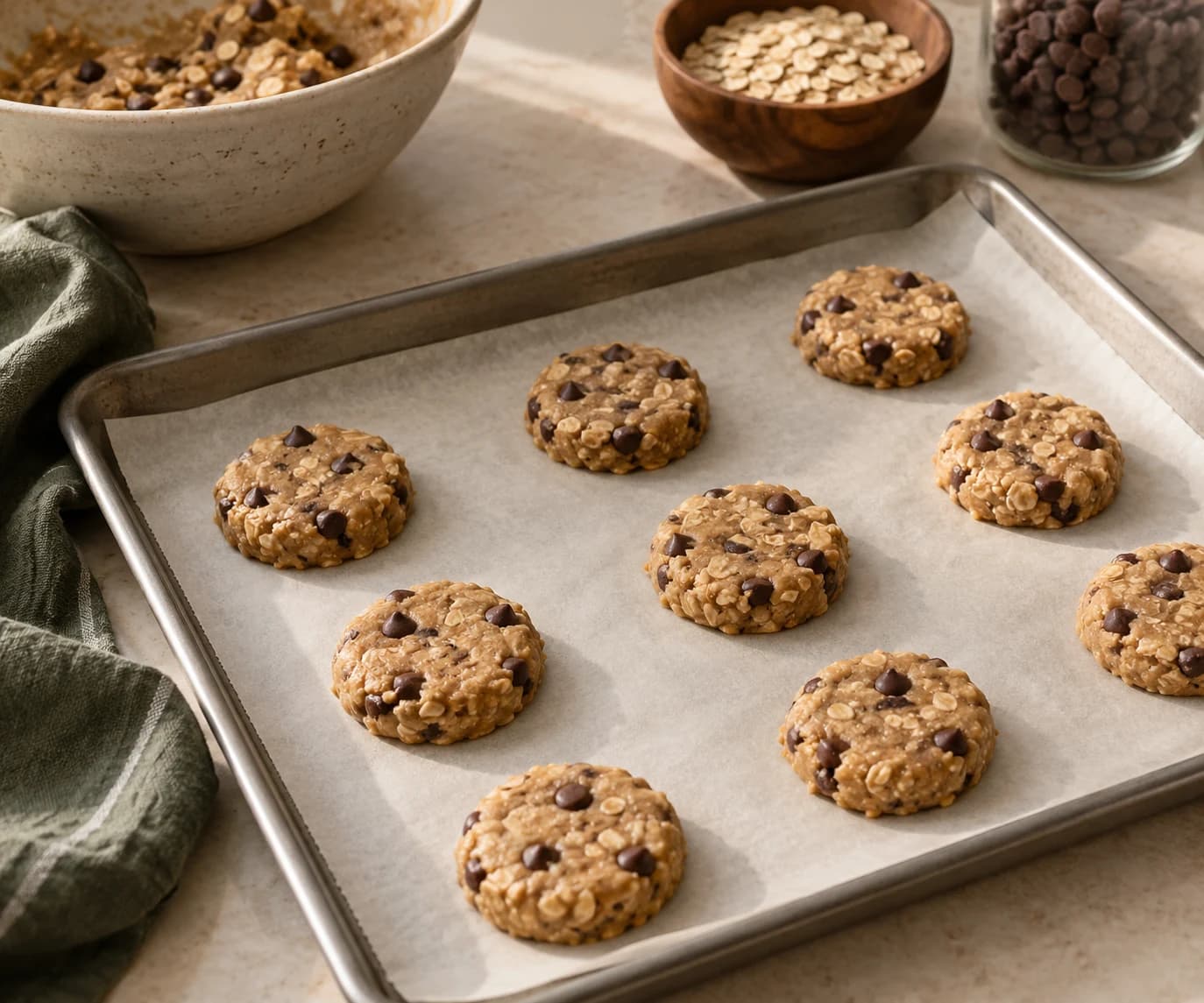
Divide the entire dough into ten equal portions. Weigh the complete mixed dough if possible, then divide that weight by ten; small losses on utensils can make it differ from the ingredient sum. Shape the portions into discs roughly 6–7cm wide and about 1cm thick, leaving space between them. Flatten gently rather than relying on substantial spreading in the oven. Use another tray or baking round if needed.
Bake on the middle rack for roughly twelve to sixteen minutes, checking from twelve. Look for lightly coloured edges and centres that are set rather than glossy wet dough. Do not chase deep browning as proof that the cookies are ready. Allow about five minutes on the tray, then move them carefully to a rack and cool for at least another ten minutes. The exact measured formula has not undergone a physical kitchen test here; timings are estimates, and product and oven differences matter.
Tips for the Best Results
Start with an even peanut butter
A layer of oil at the top of the jar needs to be stirred back through before measuring. This is a small preparation step with a noticeable effect on the dough. If the first spoonful is mostly oil and the last spoonful is dry paste, the same nominal weight will not behave like an evenly mixed spread. Use a clean utensil and give the jar enough attention to reach a consistent texture.
Give the oats their short rest
The dough can change between the final fold and the first scoop. Ground oats absorb moisture as they sit, so wait for the ten-minute rest before deciding it needs another dry ingredient. Adding powder too early can turn a manageable mixture into a stiff dough after resting. Keep the timing modest and deliberate; this is a brief hydration pause, not a requirement to leave raw egg dough on the counter for hours.
Make thickness consistent
Use the same portion weight and similar width for every cookie on a tray. One thick mound surrounded by thin discs will not finish at the same moment. A spoon, scoop or clean fingertips can help shape the dough, but the scale provides the reliable portion comparison. Flatten the tops gently and avoid compressing them into a very thin sheet, which would change both the texture and the baking time.
Know what can cause dryness
Extra whey, overmeasured oats, prolonged baking and very thin shaping can all move the result toward a dry cookie. More powder is not automatically a better recipe simply because it raises a calculated protein total. Check the measured dough first and use the early oven check. A cookie can look soft while hot and become firmer as it cools, so do not keep baking solely because it is too fragile to lift immediately.
If a tray turns out drier than you wanted, a yogurt side can make the served snack more pleasant, but it does not undo the baking change. For the next batch, review one variable at a time. Recording the powder flavour, peanut-butter product, disc thickness and actual oven time is more helpful than changing four ingredients and then trying to guess which one improved things.
Cool before packing
Leave the cookies on the tray briefly before moving them, then let them finish cooling on a rack. Warm cookies can bend or break when handled, and a sealed warm container traps moisture. Cooling is part of the method, not optional waiting time. Keep the rack clear and the storage container ready so the cookies are not packed into a lunch bag while the centres are still hot.
High-Protein / Lower-Calorie Variations
Twenty mini cookies
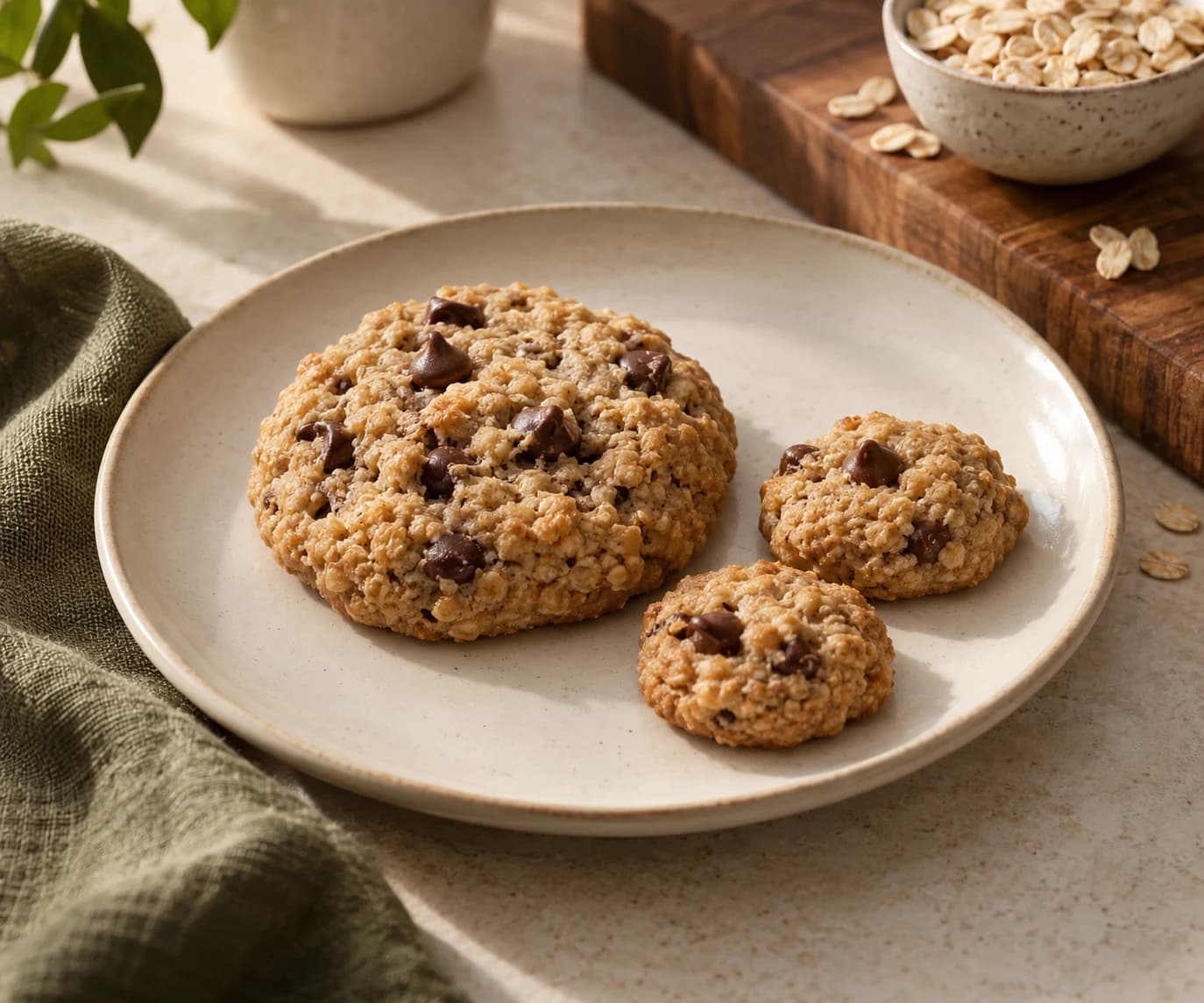
Divide the original dough into twenty equal pieces instead of ten. Each mini cookie then provides approximately 89 calories and 4.8g protein. Two minis equal one reference cookie nutritionally if every ingredient is divided evenly. This is a portion change, not an ingredient trick that preserves the full-size protein in half the food. Smaller pieces also need an earlier baking check; begin checking around eight minutes and continue until their centres are set.
Shape the minis to a consistent smaller diameter and similar modest thickness. Do not leave them as tall balls and assume their lower weight guarantees a cooked centre. Their exact baking time has not been established here. Keep the full-size card method for the full-size portions, and treat the mini timing as a separate estimate that needs observation in your oven.
Less chocolate in the dough
Reducing the chocolate from 30g to 15g for the ten-cookie batch gives an estimated 171 calories and 9.5g protein per cookie. The difference is modest because chocolate is only one part of the mixture. Fold the smaller quantity through thoroughly so each cookie still gets some. This option changes the chocolate experience more than it changes the recipe's protein contribution.
Leaving out sugar or cutting peanut butter sharply is a more substantial formulation change. It can affect structure and enjoyment, not just calories. If the smaller chocolate reduction does not suit you, the plain reference or a smaller cookie may be the more useful choice. A version you enjoy and can portion clearly is easier to repeat than one chosen only for a lower number.
Add a measured yogurt side
One reference cookie with 100g plain nonfat Greek yogurt provides approximately 238 calories and 19.8g protein. The extra protein comes from the separate yogurt serving. It does not change the baked cookie into a 20g-protein cookie. Keep the yogurt chilled and pack it separately if taking the snack away from home.
Two reference cookies provide about 358 calories and 19.2g protein without a side. That can suit a different appetite or meal plan, but it is nearly twice the energy of one cookie. These examples give you practical portion choices. They do not establish that a cookie causes fat loss or that eating more protein automatically makes the whole snack lower in calories.
The estimates change only the named portion or ingredient; extra sides remain separate.
| Version | Calories | Protein |
|---|---|---|
| One full-size reference cookie | 179 kcal | 9.6g |
| Two reference cookies | 358 kcal | 19.2g |
| One of twenty mini cookies | 89 kcal | 4.8g |
| 15g instead of 30g chocolate per batch | 171 kcal | 9.5g |
| One cookie + 100g nonfat Greek yogurt | 238 kcal | 19.8g |
Serving Suggestions
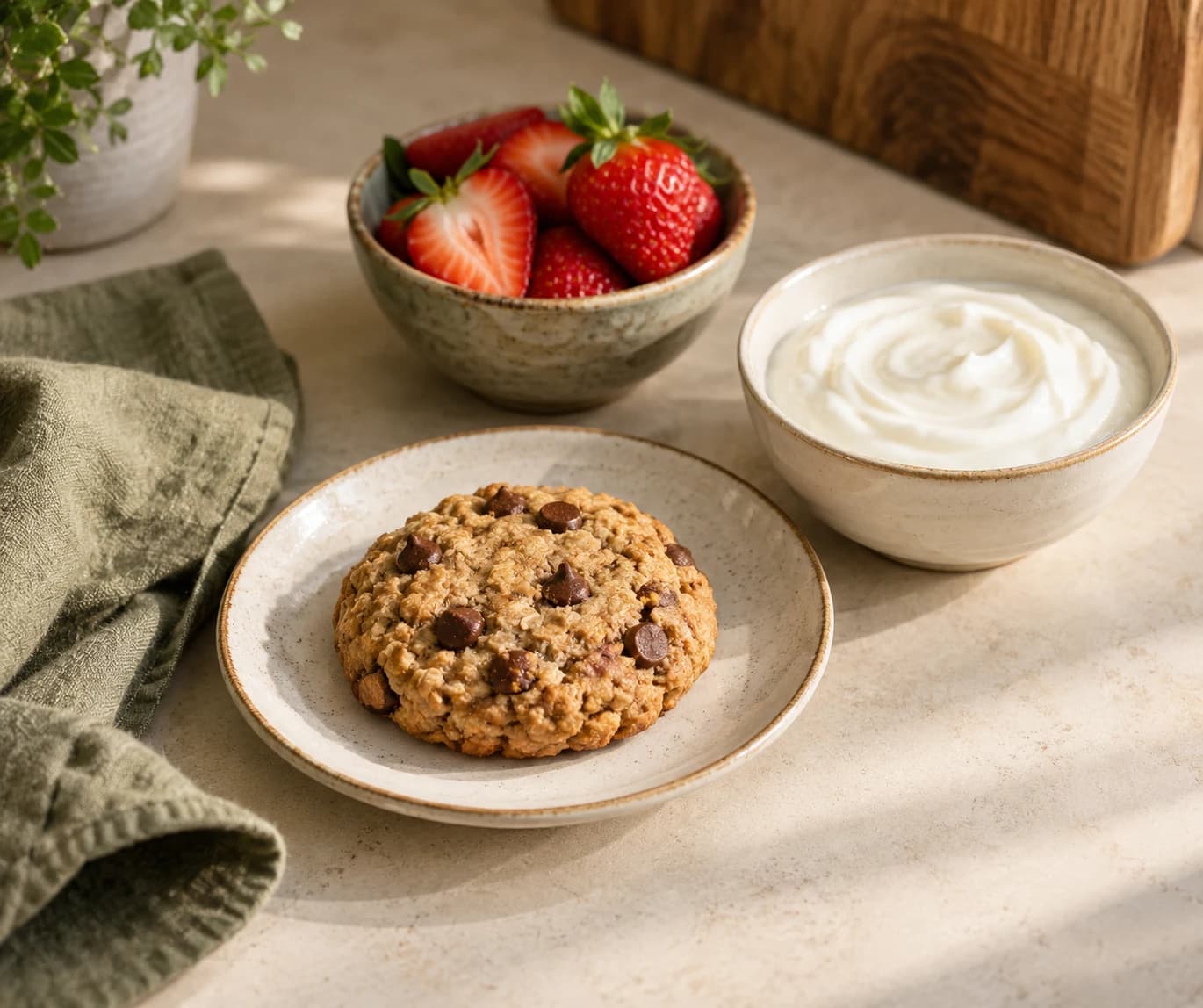
A plain cooled cookie works well with tea or coffee when you want something small alongside a drink. The peanut butter and chocolate provide enough flavour without an icing. Serve it on a small plate if you prefer to notice the portion before eating, especially when the whole cooling rack is still on the counter. You can always choose a second cookie; it is easier to log that decision when the first serving is clear.
Make a more substantial snack
Plain Greek yogurt is a simple partner if you want more protein and a cool contrast to the cookie crumb. A 100g reference portion adds about 59 calories and 10.2g protein. Stirring honey, jam or more nut butter into that yogurt adds another ingredient to count. The cookie-and-yogurt example in the variations section assumes the yogurt is plain, not a sweetened dessert cup.
Fruit brings a different texture and can make the snack feel fresher. Try strawberries, apple slices or a small piece of fruit you already enjoy. Fruit is additional to the cookie nutrition. You do not need to scatter it over a warm cookie or create a complicated dessert plate for an ordinary weekday snack; a separate bowl keeps the portions simple and avoids making the cookie wet during storage.
A small dessert after dinner
Serve one cookie after a meal if that is when you most enjoy something sweet. Its protein contribution still counts even if you are not eating it directly after exercise. You can plan the day's protein across meals and snacks without turning every eating occasion into a strict routine. The cookie is one option within the day, alongside savoury foods and whatever else suits your appetite.
If you add ice cream, melted chocolate or another spoonful of peanut butter, use the label and measured amount for the complete dessert. Those additions are perfectly visible choices, not part of the base recipe. When serving several people, leave sides separate so everyone can choose a portion. Keep the plain cookies available for anyone who prefers them without toppings, and ask about allergies before presenting a peanut-and-dairy bake as a shared snack.
Meal Prep & Storage
Prepare ingredients ahead
You can grind oats and weigh the dry ingredients in advance, keeping them in a clean covered container. Leave the chocolate separate if that makes folding easier. Follow package storage instructions for all ingredients. Mash the banana and crack the egg close to mixing, or keep prepared wet ingredients properly refrigerated until needed. The raw dough is not intended to sit beside the oven while several unrelated meals are prepared.
For a larger bake, label the trays by baking round if their cookies went into the oven at different times. Allow each tray to cool before loading more dough onto it. A hot sheet can change how the next round spreads and browns. Use the same shaping routine for each round so the thirty-cookie setting means thirty similar portions rather than ten large cookies and twenty much smaller ones.
Refrigerate the finished cookies
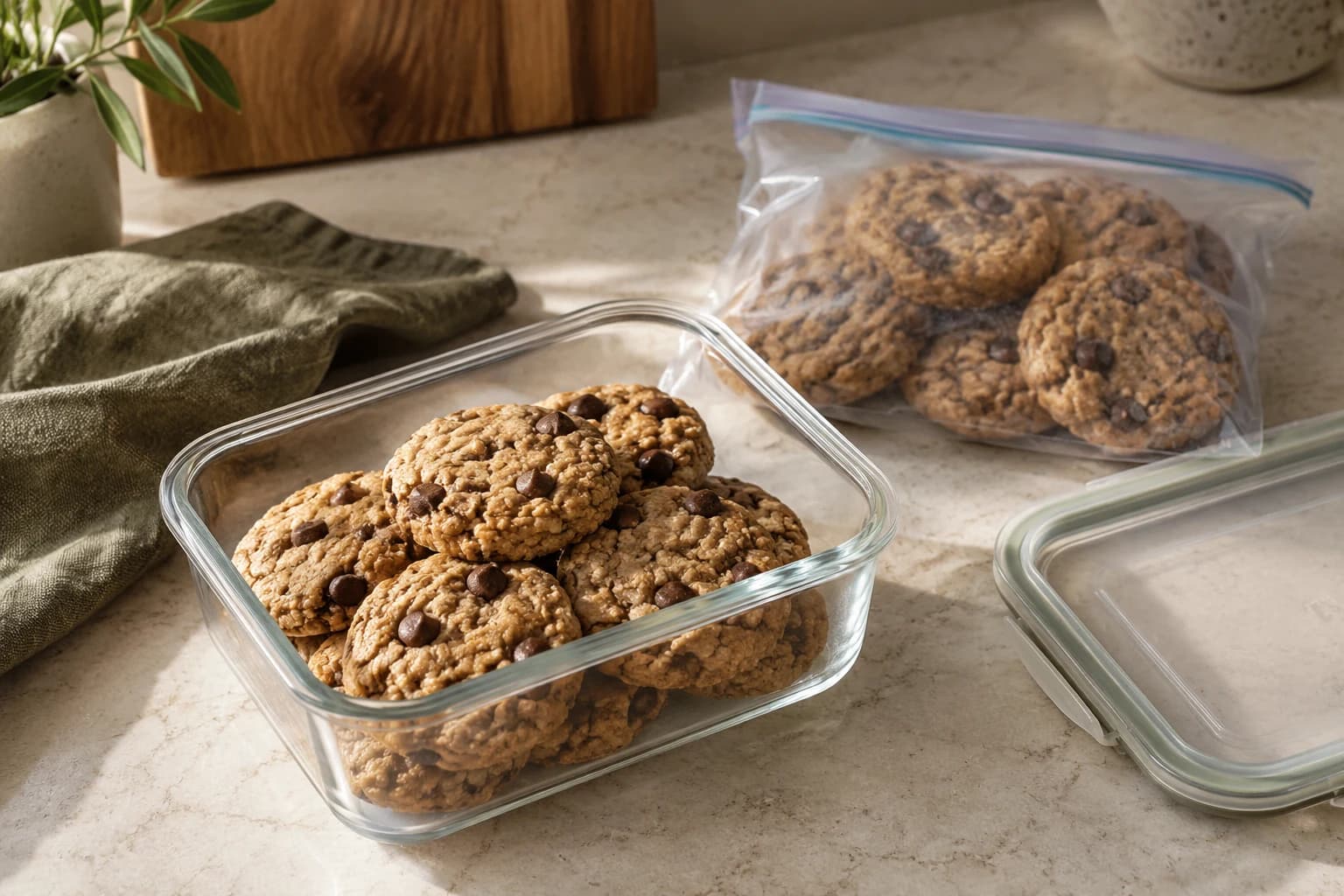
Let the cookies cool on the rack, then store in a sealed container in the refrigerator at 40°F / 4°C or below. Use within three to four days with appropriate handling as a conservative planning window. These are moist banana-and-egg cookies; this recipe has no measured shelf-life study and does not adopt a week at room temperature from a different protein-cookie formula. Pack only the number you plan to eat and keep chilled yogurt sides in a separate cold container.
Refrigeration makes peanut butter and chocolate firmer, so the cold texture will differ from a freshly cooled cookie. If you prefer, let a portion lose its chill briefly before serving. Keep the rest refrigerated. Do not rely on a smell check to justify food that was stored poorly, and keep raw-dough utensils away from the cooked batch.
Freeze individual portions
Freeze cooled cookies in a suitable airtight container or freezer-safe bag, with parchment between layers if needed. About one month is a practical quality target rather than a laboratory-tested limit. Mark the date and portion count so you can take out one or two without defrosting the entire batch. Thaw a portion in the refrigerator and keep it covered to reduce drying.
A short gentle warm-up can soften a chilled cookie, but there is no need to bake it again until deeply browned. Follow the appliance instructions and check frequently if warming in a microwave. Molten chocolate can be hotter than the surrounding crumb. Avoid repeated cycles of warming, cooling and repacking; take the portion you want while the remaining cookies stay stored.
Full Nutrition Information
Where the estimate comes from
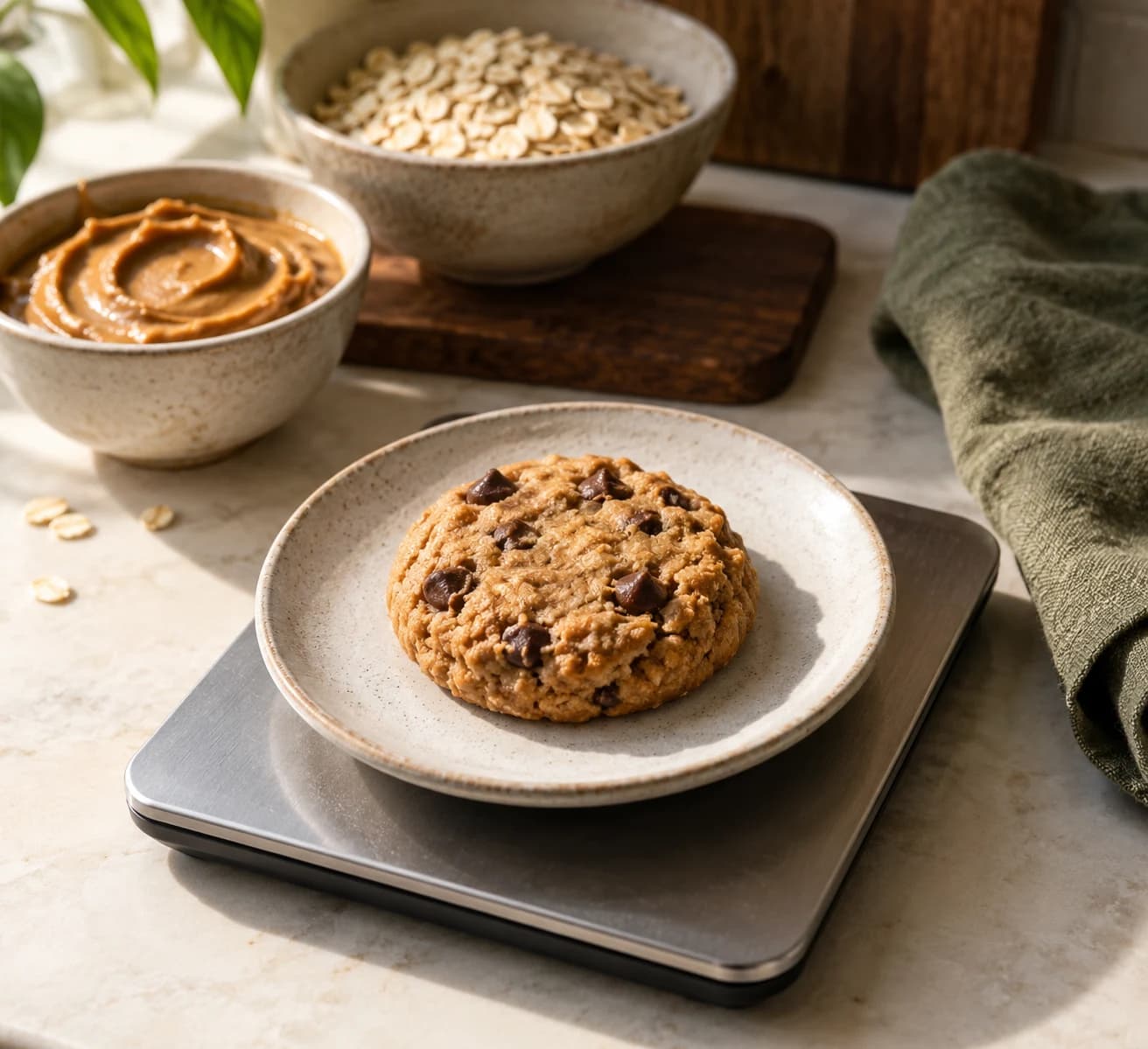
The reference uses historical USDA Standard Reference food-composition values per 100g for peanut butter, oats, banana, egg, brown sugar, generic sweet chocolate, baking powder and salt. The vanilla whey uses the linked manufacturer's French Vanilla label. It provides 376 calories and 79g protein per 100g, along with declared carbohydrate, fat, sugars, saturated fat and salt. Current product labels can differ from these reference values.
Salt on the powder label is converted to sodium by dividing by 2.5. Powder fibre is undeclared and entered as zero for arithmetic, so the fibre estimate represents the other ingredients rather than a verified total for every possible powder. Cholesterol, a complete vitamin and mineral panel, and added sugars are not calculated here. The additional nutrition table describes the information actually available, without filling gaps with invented precision.
Batch arithmetic and portion size
Multiply each ingredient's per-100g value by its measured weight divided by 100, then sum those contributions. Divide the batch by ten for one reference cookie. This gives about 1,788 calories and 95.8g protein for the whole dough, before rounding each serving. The dough's egg, sugar and chocolate count even if you think of the cookie primarily as a protein snack.
Baking removes water and changes the finished weight, but this calculation does not assume an exact cooked weight per cookie. Divide the dough evenly before baking and use the same number of portions in your log. If some dough remains on the bowl or utensils, counting the full measured batch is a conservative estimate. An unusually large cookie made from two portions carries roughly twice the reference nutrition.
Use your own labels for precision
Peanut butter, protein powder and chocolate chips are especially useful places to replace generic entries with your actual product data. Keep the weighed amounts the same when comparing labels, then recalculate the batch. A scoop with a different protein amount or a peanut spread containing extra sugar can change the result even if the finished cookies look similar.
Use ingredient entries in a tracker rather than a commercial protein-cookie listing. The food calculator can help total your weighed recipe and chosen sides. Retain the serving count, and count changes such as extra chips or milk used to loosen dough. These steps make the estimate practical without presenting a homemade cookie as a laboratory-analyzed packaged product.
| Ingredient | Amount | Calories | Protein | Carbs | Fat |
|---|---|---|---|---|---|
| Smooth peanut butter | 120g | 718 kcal | 26.7g | 26.8g | 61.6g |
| Rolled oats | 100g | 379 kcal | 13.2g | 67.7g | 6.5g |
| Vanilla whey protein blend | 60g | 226 kcal | 47.4g | 3.1g | 2.5g |
| Ripe banana | 100g | 89 kcal | 1.1g | 22.8g | 0.3g |
| Whole egg | 50g | 72 kcal | 6.3g | 0.4g | 4.8g |
| Brown sugar | 40g | 152 kcal | 0.0g | 39.2g | 0.0g |
| Chocolate chips | 30g | 152 kcal | 1.2g | 18.1g | 10.3g |
| Double-acting baking powder | 2g | 1 kcal | 0.0g | 0.5g | 0.0g |
| Fine table salt | 1g | 0 kcal | 0.0g | 0.0g | 0.0g |
| Whole batch | 10 full-size cookies | 1788 kcal | 95.8g | 178.6g | 86.0g |
| One reference serving | Batch ÷ 10 | 179 kcal | 9.6g | 18g | 9g |
| Dietary fiber | 2.0g |
|---|---|
| Total sugars | 8.2g |
| Saturated fat | 2.2g |
| Sodium | 127mg |
Estimated recipe nutrition, not a laboratory analysis. Includes all weighed dough ingredients and chocolate. Sides and extra toppings are additional. Powder fibre is undeclared, so the fibre estimate counts the other ingredients only. Cholesterol, added sugars and complete micronutrients are not calculated.
How This Fits Your Daily Protein Goal
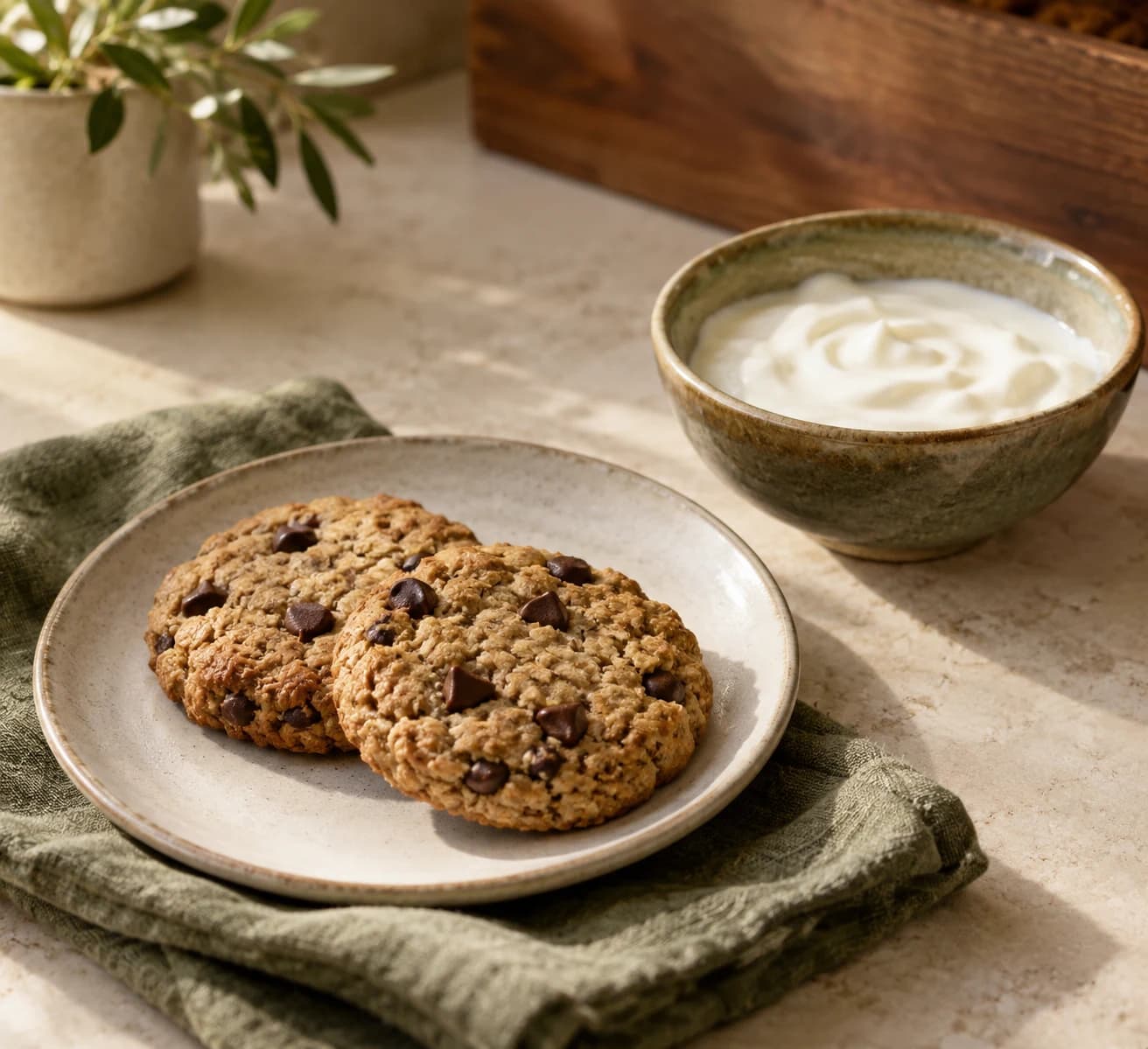
One reference cookie adds about 9.6g protein to your day. Two add about 19.2g. That is useful when you want a sweet snack, but it is only one part of a complete eating pattern. Your daily target depends on your circumstances and goals; the protein calculator gives a starting estimate that you can use alongside meals you actually enjoy. The recipe does not prescribe the same target to every reader.
Plan the snack around the day
Suppose you are using a daily target of 100g for your own planning. One cookie supplies about 9.6% of that example, while two supply around 19.2%. With an example target of 120g, one cookie supplies about 8.0%. These are arithmetic examples, not recommendations that every person should choose either target. They help translate a recipe number into a daily log without adding a new health claim.
Look at your meals before deciding how many cookies would be useful. Breakfast may include yogurt or eggs, lunch may contain beans, tofu, fish or meat, and dinner may already provide a substantial protein portion. A cookie can sit between those meals or follow one of them. If you need much more protein than a single cookie offers, a measured yogurt side may suit you better than repeatedly making the cookies larger.
Keep energy and enjoyment in view
The reference cookie contributes about 179 calories as well as protein. Two cookies contribute about 358 calories. If you are watching total food energy, keep both numbers visible and include any drink or topping. A protein-focused title does not make the sugar, fat or portion size disappear, and the cookie does not cause a particular body-composition result on its own.
You also do not need to eat this snack at a precise minute after training for its protein to count in the daily total. Choose a time that fits your appetite and routine. If you prefer savoury snacks, the bagel or pasta guides offer other ideas. Variety makes it easier to build a day from familiar foods rather than depending on one bake for every gap in your plan.
Treat the cookie as a small enjoyable contribution. Record the portion you eat, use your own labels when needed, and leave enough room for meals, fruit, vegetables and other foods you enjoy. The useful part is a repeatable serving, not an expectation that every bite has to maximise protein.
Make it personal
Where does a cookie fit in your day?
Estimate your daily protein target, then plan meals you enjoy.
Recipe Card
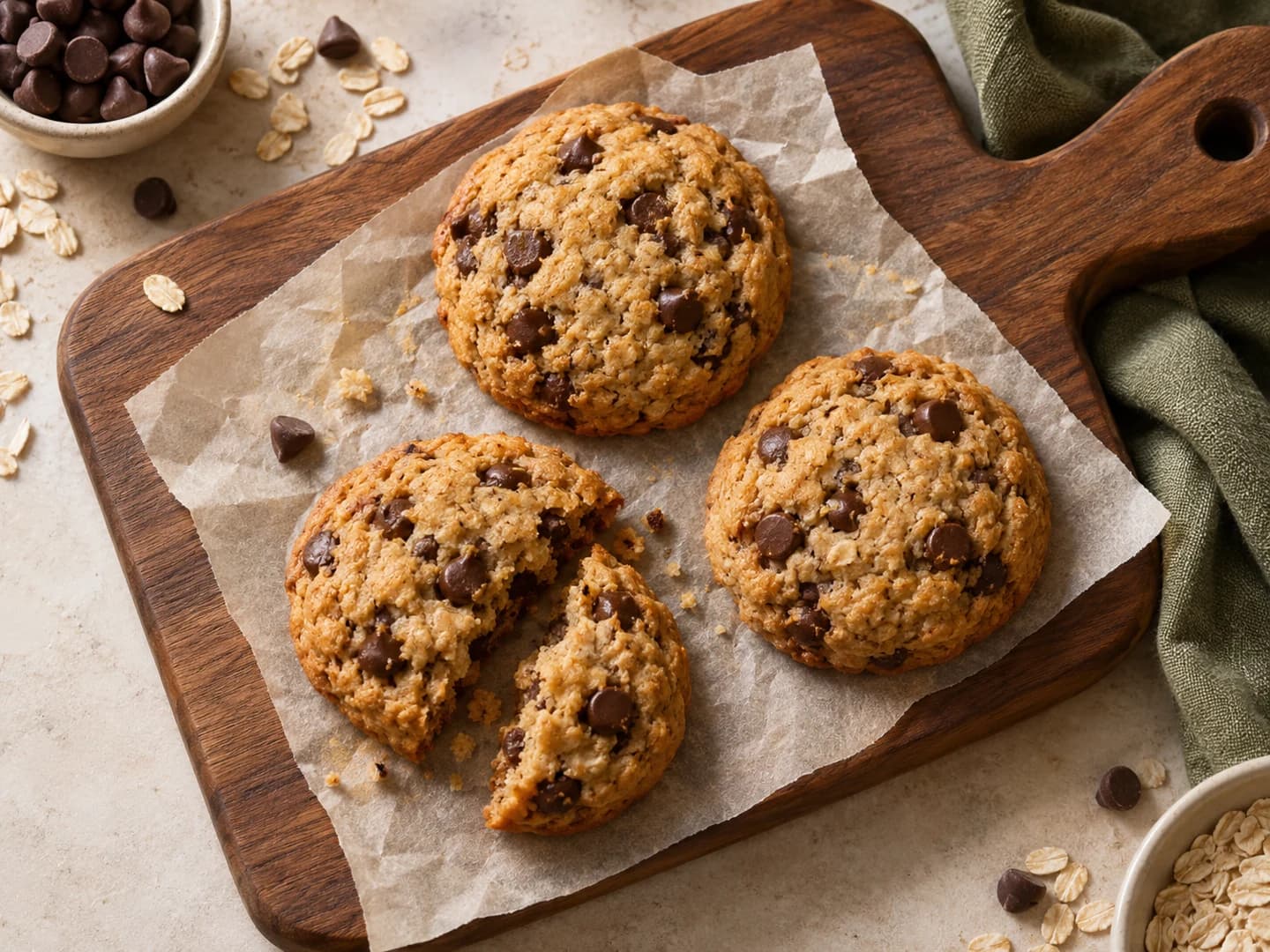
The recipe card brings the measured dough and the oven sequence into one place. Start with ten cookies if you are learning how your powder and peanut butter behave. The twenty- and thirty-cookie buttons multiply all ingredients while preserving the planned amount per cookie. They do not make the cookies larger, and they do not mean thirty portions will fit on one tray or finish in the same elapsed time as the base batch.
Use the checklist while weighing so a small ingredient is not forgotten. Changing the batch size resets the checks, which helps prevent a checked base quantity being mistaken for a weighed double quantity. Divide the finished dough by the selected yield and flatten similarly sized discs. Keep the same oven setting and assess each baking round separately.
Print the card if you prefer a sheet beside the mixing bowl. The print view focuses on ingredients, method, storage notes and per-cookie nutrition. The surrounding article remains useful for substitutions, troubleshooting and the nutrition calculation. Cooling time is included in the planning estimate; a warm cookie that breaks during lifting needs more settling time, not necessarily another long oven stage.
Your little bake, ready to make
High-Protein Cookies
Peanut butter, oats, vanilla whey and chocolate chips.
*Base-batch estimates, including a ten-minute dough rest and cooling. Larger batches need extra trays or rounds and more elapsed time. These settings make full-size cookies; mini cookies use the separate variation.
Ingredients
Method
- Prepare the oven and oats
Preheat to 350°F / 175°C conventional. Line a large baking sheet with parchment and set out a cooling rack. Grind 100g rolled oats finely and scrape the full amount into a bowl. Stir separated peanut butter before weighing.
- Mix the wet ingredients
Mash 100g peeled banana mostly smooth. Stir with 120g peanut butter, 50g whole egg without shell and 40g brown sugar until evenly combined. Scrape the bowl. Do not taste raw dough; keep utensils away from ready-to-eat foods.
- Fold and rest
Whisk ground oats, 60g whey, baking powder and salt separately. Fold into the wet mixture until no dry pockets remain, then fold in 30g chocolate chips. Rest about ten minutes so the oats hydrate before assessing the thick scoopable dough.
- Divide and flatten
Divide the entire dough into 10 equal portions, weighing the mixed dough and dividing by 10 if possible. Shape discs roughly 6–7cm wide and about 1cm thick, leaving space between them. Use extra trays or baking rounds as needed; cool sheets between rounds.
- Bake until set
Bake on the middle rack for roughly 12–16 minutes, checking from twelve. Edges should be lightly coloured and centres set rather than glossy wet dough. Oven and powder differences affect timing; avoid a long extra bake solely for deep browning.
- Cool and store
Rest about five minutes on the tray, then transfer carefully to a rack and cool at least another ten minutes. Cool fully before sealing. Refrigerate at 40°F / 4°C or below and use within 3–4 days with proper handling; freeze cooled portions if needed.
Shape equal discs, check set centres and cool before packing. Timing varies with powder, thickness and oven. This dough is intended for baking.
Protein before rounding: 9.6g. Includes all dough ingredients and chocolate; sides are additional. Contains peanuts, egg and milk; reference whey contains soy. Check labels and oat cross-contact. Refrigerate cooled cookies and use within 3–4 days with proper handling.
Frequently Asked Questions
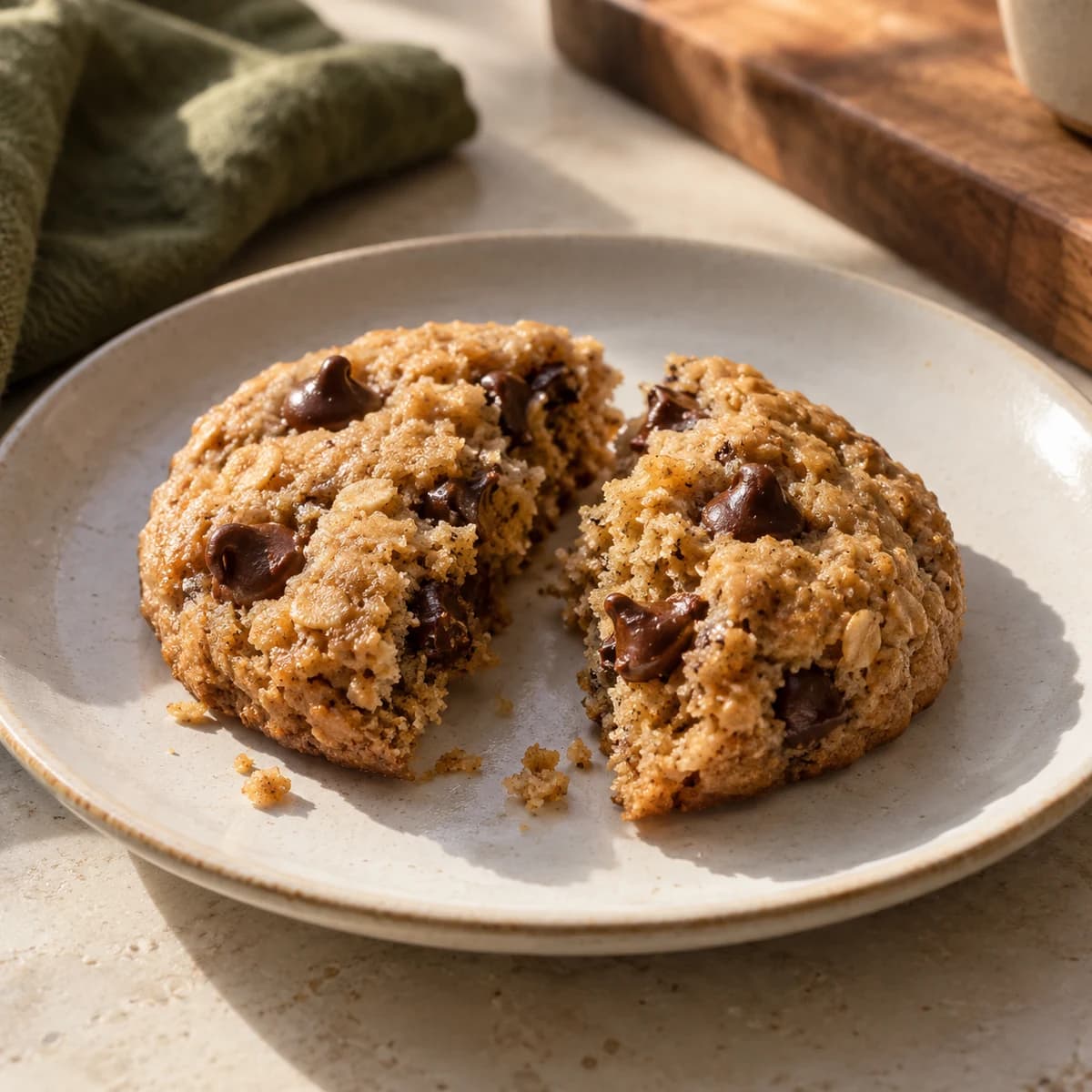
Protein cookies invite a lot of substitutions because the ingredients look familiar. The most useful answers explain what changes when you swap a powder, remove sugar, replace peanut butter or shape a smaller portion. Start with the weighed formula, judge the rested dough and keep the oven checks visible. An attractive finished cookie does not prove that every version has the same nutrition or behaves identically in the oven.
The answers below distinguish the plain reference from serving additions and unverified substitutions. They also clarify the ten-cookie yield, the measured chocolate and storage choices, so the recipe card and your food log describe the same portion.
How much protein is in one cookie?+
One of the ten reference cookies provides approximately 9.6g protein, rounded to 10g in the quick summary. It includes the measured peanut butter, oats, whey, banana, egg, sugar and chocolate. Two cookies provide about 19.2g. The estimate is tied to equal dough portions; a cookie made twice as large carries roughly twice the nutrition.
Can I make these cookies without protein powder?+
The published formula uses 60g vanilla whey blend. Removing it leaves a different balance of dry ingredients, moisture and protein. Replacing all of it with extra oats has not been established here as an identical method and would lower the protein contribution. Choose a recipe developed without powder if that is the result you need rather than retaining this recipe’s macros after a major change.
Which protein powder should I use?+
Start with a vanilla whey blend weighed to 60g. The calculation uses the linked French Vanilla manufacturer label with 79g protein per 100g. Scoop sizes, sweeteners and thickeners vary, so use weight and your own label. An unflavoured or chocolate whey changes taste. Casein, plant protein and meal-replacement blends can behave differently and are not guaranteed direct swaps.
Why are my protein cookies dry?+
Too much whey or ground oats, very thin shaping and a long bake can all make cookies drier. Weigh the powder, rest the dough before adjusting it and check the oven from twelve minutes for the full-size version. Let the cookies cool before judging the final texture. Adding another scoop solely to raise protein changes the recipe and can make the dough harder to manage.
Why is the dough sticky or loose?+
Peanut-butter consistency, banana moisture, powder formulation and measuring differences can affect the dough. Stir separated peanut butter before weighing, grind the oats finely and allow the ten-minute rest. Review the ingredient amounts before adding more dry powder. A brief refrigerated rest may help handling, but it does not correct a missing ingredient or establish that a changed formula will bake identically.
Should I flatten the cookies before baking?+
Yes. Divide the complete dough into ten equal portions and shape discs roughly 6–7cm wide and about 1cm thick. The reference does not rely on substantial spreading to flatten a tall ball. Similar thickness helps the tray finish evenly. A much smaller or thinner cookie needs a different baking check, even when the total ingredient batch is unchanged.
Can I eat the raw dough?+
No. This dough contains raw egg and ground oats and is intended to be baked. Do not taste it while mixing or offer it as an edible cookie dough. Keep raw-dough utensils away from ready-to-eat foods and wash hands and work surfaces after handling. An egg-free change alone does not establish that all remaining ingredients are ready to eat raw.
Can I replace the peanut butter?+
A smooth almond or seed butter can be explored at the same starting weight, with a new label-based calculation and a check of the rested dough. Oiliness, thickness and flavour differ. Dry peanut powder is not an equivalent replacement for the full-fat spread. For allergy needs, review every ingredient and cross-contact statement, including the whey and chocolate, rather than relying on the single swap.
Are these gluten-free, dairy-free or vegan?+
The reference contains peanut, egg and milk, and the example whey contains soy. Oats can have gluten cross-contact, so the default recipe is not presented as certified gluten-free. Suitable labelled oats and compatible other ingredients are needed if avoiding gluten. Whey is dairy-derived, and a plant powder plus egg replacement would create a separately adjusted vegan formula, not an established identical version.
Can I remove the brown sugar?+
Brown sugar affects sweetness, browning and the cooled cookie texture. Removing all 40g or replacing it with syrup or a sugar substitute has not been verified as an equivalent method. The whey may contain sweetener, but that does not remove the structural role of the measured sugar. The less-chocolate variation or twenty-cookie portion option makes a smaller documented nutrition change.
How do I make smaller cookies?+
Divide the original batch into twenty equal pieces for mini cookies. Each then provides about 89 calories and 4.8g protein; two minis equal one reference cookie nutritionally. Shape evenly and begin checking around eight minutes, continuing until the centres are set. That smaller-cookie timing is an estimate. The card’s twenty-cookie setting instead doubles the ingredients to make twenty full-size reference cookies.
Can I double or triple the recipe?+
Yes. The card scales to ten, twenty or thirty full-size cookies. Every ingredient multiplies while the planned dough portion per cookie stays the same. Use extra trays or baking rounds and let hot sheets cool before loading fresh dough. Keep the oven setting the same and assess each round separately; a larger total batch does not have the same elapsed preparation and cooling time.
How should I store the cookies?+
Cool fully before sealing, then refrigerate at 40°F / 4°C or below and use within three to four days with appropriate handling as a conservative planning window. Freeze individual cooled portions if needed; about one month is a practical quality target, not a measured shelf-life limit. Store chilled yogurt sides separately and thaw a frozen portion in the refrigerator.
Do these cookies fit a lower-calorie eating pattern?+
One reference cookie is about 179 calories. A mini cookie is about 89 calories with half the protein, while the ten-cookie batch using 15g chocolate gives about 171 calories per cookie. Choose the portion for your appetite and complete snack, including drinks and toppings. The protein content does not make the recipe calorie-free or cause weight loss on its own.
More High-Protein Recipes
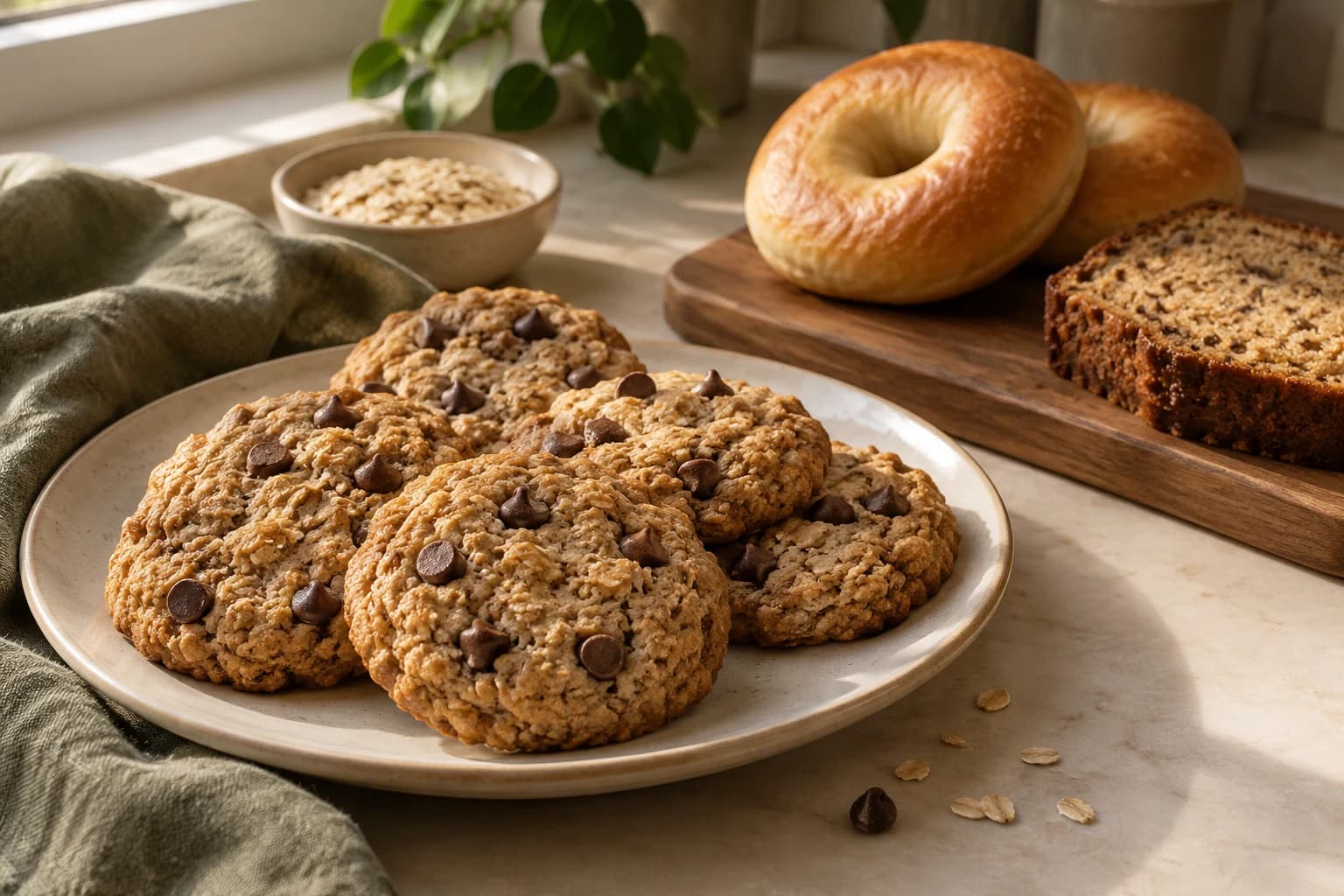
If you enjoyed the peanut butter and chocolate combination, the banana bread guide offers another use for ripe banana and vanilla whey, with a different batter and a slice-based serving. Its yogurt and flour structure is different from this cookie dough, so follow that recipe's own ingredient weights and baking checks. A familiar ingredient does not make two methods interchangeable.
For a savoury homemade option, try the high-protein bagels or the Greek-yogurt-crust pizza. The French toast, pancake and oatmeal guides offer breakfast ideas, while mac and cheese provides a warm meal with measured pasta and sauce. Choose what sounds appealing and compare the serving definitions as well as the protein figures. One cookie, one bread slice and one complete dinner are different amounts of food.
The recipe collection brings those choices together when you want to plan a few meals and snacks for the week. You can keep these cookies as an occasional bake and build the rest of the day around other foods. Repeating a recipe you like is useful; having several clear, enjoyable options makes the routine less dependent on a single snack.
High-protein cheesecake
Chilled vanilla cheesecake with cottage cheese, Greek yogurt and a measured biscuit crust.
Explore the recipeHigh-protein banana bread
A ripe-banana loaf with yogurt, oats and whey, portioned by the slice.
Explore the recipeHigh-protein bagels
Soft Greek-yogurt rings for a savoury breakfast or sandwich.
Explore the recipeHigh-protein French toast
Golden pan-cooked toast with yogurt and berries.
Explore the recipeProtein pancakes
A familiar breakfast stack with measured ingredients.
Explore the recipeHigh-protein oatmeal
A warm bowl with useful ways to add protein.
Explore the recipeHigh-protein pizza
A Greek-yogurt crust dinner with complete measured toppings.
Explore the recipeHigh-protein mac and cheese
Creamy stovetop pasta with cottage cheese and real cheddar.
Explore the recipeMore high-protein recipes
Browse breakfasts, homemade bakes and savoury meals.
Explore the recipe