
Browse the 15 recipe sections
One reference serving: one quarter of the complete pasta and sauce batch. Nutrition counts the dry pasta and measured dairy ingredients. Toppings and sides are additional; cooking times are estimates. See the breakdown.
Recipe Overview
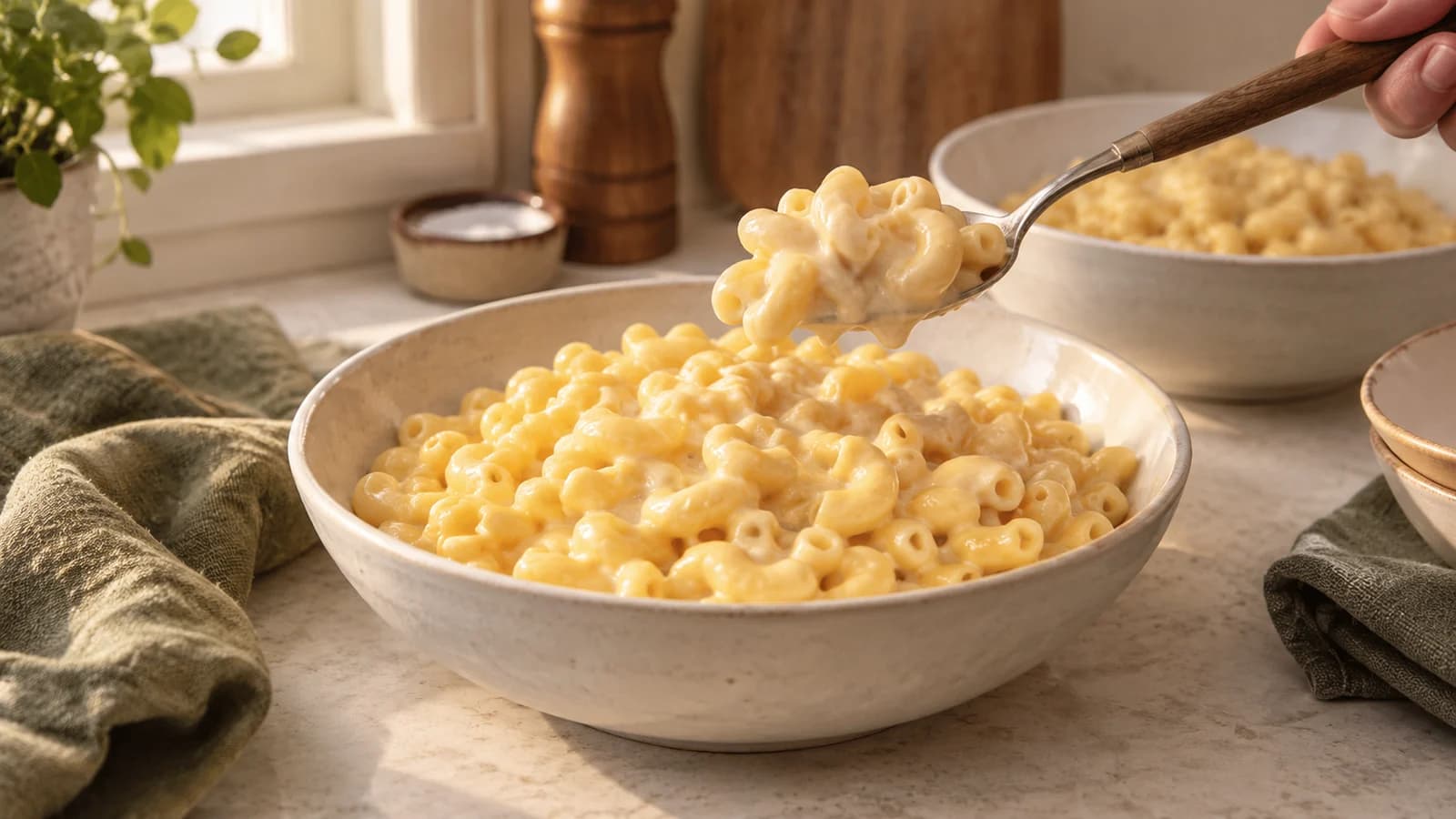
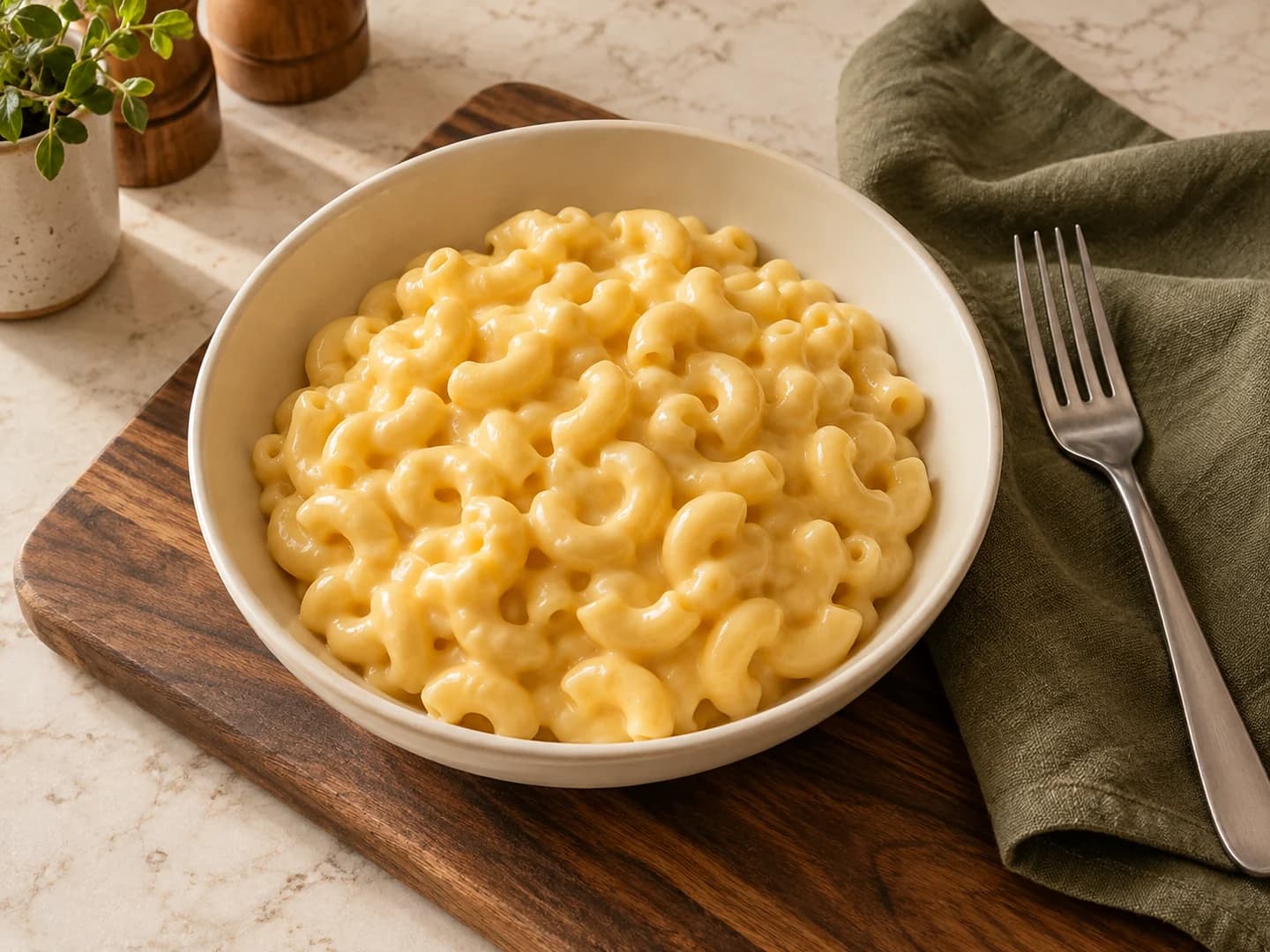
Mac and cheese has a fairly simple job: soft pasta, a warm cheese sauce and a spoon you keep reaching for. This high protein mac and cheese keeps that familiar shape while using blended cottage cheese as much of the sauce base. Real cheddar provides the recognisable flavour, skim milk helps the mixture blend, and ordinary elbow macaroni carries it to the bowl. There is no protein powder, no special pasta requirement and no long oven bake before dinner.
The reference batch makes four servings. One quarter of the finished pasta and sauce provides approximately 431 calories and 31g protein. That means a serving starts with 60g dry macaroni, 125g cottage cheese, 50g skim milk and 25g cheddar, plus its share of pepper. Water used for cooking or loosening contributes no calories in the reference. Extra chicken, vegetables, breadcrumbs or a finishing handful of cheese belong to the meal you make, but they are additional to the plain version.
The kind of mac and cheese you are making
This is a creamy stovetop dish with a modest cheddar flavour, not a baked casserole with a crunchy top. Blending removes the obvious cottage-cheese curds before the sauce reaches the pan. Gentle warming and adding grated cheddar off the heat help keep the finish smooth. The result will depend on the cottage cheese you buy and how hot the pan becomes; a rolling boil is not a shortcut to a better sauce.
Plan around 30 minutes for the base batch, with sauce preparation happening while the pasta cooks. Your pasta packet supplies the relevant boiling time. Have the blender ready, grate the cheddar early, and set out the bowls before the final stir. Mac and cheese is easiest to enjoy when the sauce has just coated the pasta, rather than after a long wait on the hob while the rest of dinner gets organised.
A clear starting point
Begin with the reference ingredients if you want to understand the texture and the nutrition estimate. Once you know how the sauce behaves, the variations offer a smaller cheese amount, whole-wheat pasta or a cooked-chicken addition. The recipe card scales to four, eight or twelve servings. Those are equal portions of the completed batch, not a guarantee that a particular household’s favourite bowl happens to hold exactly one serving.
Why You’ll Love This Recipe
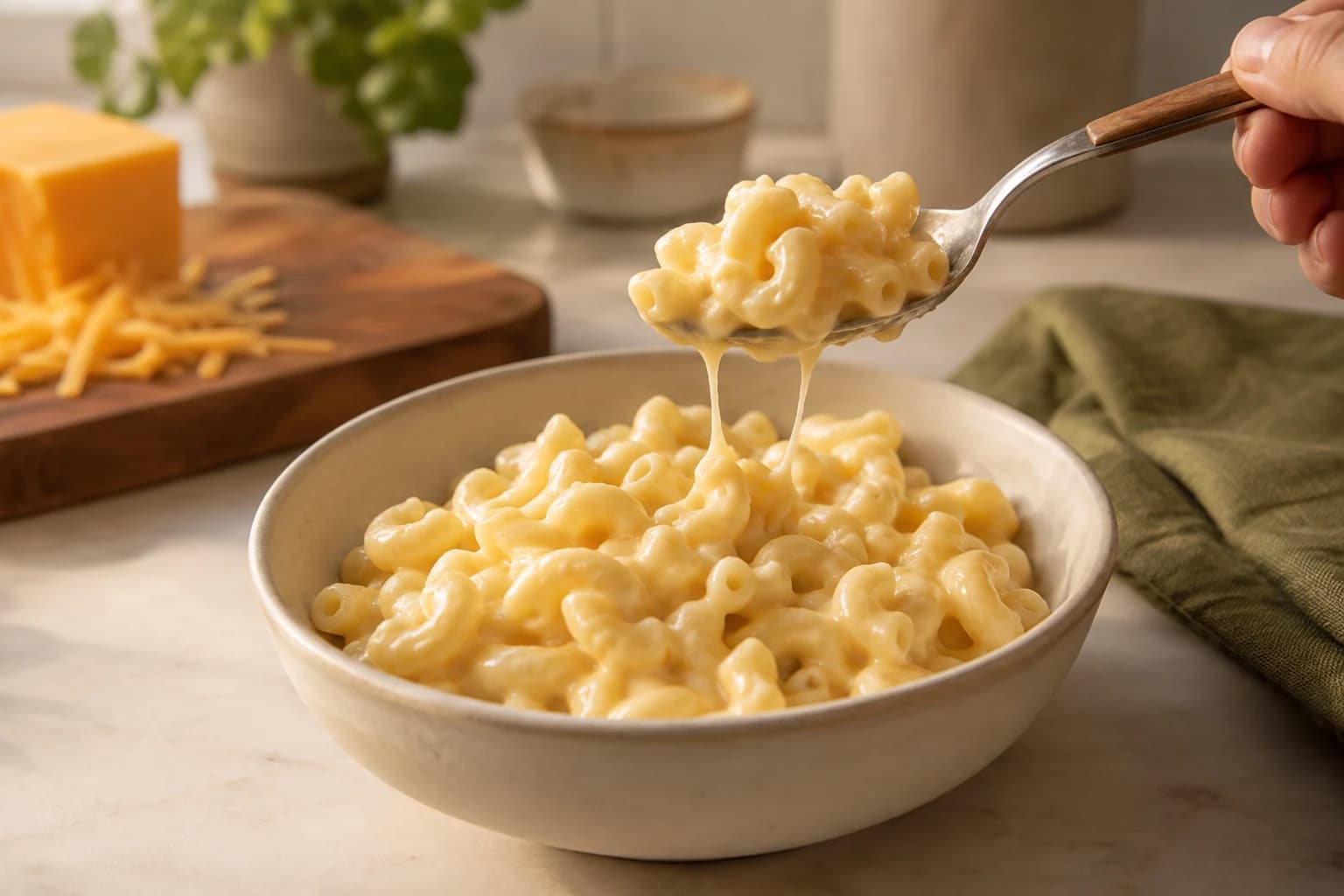
Dinner stays recognisable
Some high-protein versions of familiar dishes change so much that the original craving disappears. Here, you still cook pasta, melt cheddar into a sauce and serve a warm bowl. Cottage cheese has a practical role instead of becoming the entire personality of the meal. Its mild dairy flavour sits behind the cheddar when blended well. If you prefer a stronger cheese taste, choosing a cheddar you enjoy is more useful than hiding a bland sauce beneath several extra toppings.
The pasta can be the ordinary bag already in your cupboard. You do not need to buy a speciality product before making the first batch. That is helpful when people at the table have different opinions about chickpea or lentil pasta textures. A higher-protein pasta can be a later choice with its own label and cooking time; the reference protein total does not depend on it.
A short cooking sequence
There is no roux to measure and no butter-and-flour stage to watch. You blend the cottage cheese with milk, warm that mixture carefully and stir in cheddar. The important moments are easy to identify: a smooth blender mixture, a warm pan without aggressive bubbling, and cheese that has melted before the pasta is folded in. Those signals make the cooking sequence manageable without pretending that the sauce needs no attention at all.
While the macaroni boils, you can prepare almost everything else. This overlap keeps the dinner moving, especially if the kitchen is small or you would rather wash one sauce pan than use an oven dish as well. The blender is an extra item to clean, but rinsing it promptly is much easier than letting dairy sauce dry against the sides. A little organisation at the beginning saves several small interruptions at the end.
It can be a main dish or a side
A full reference serving brings around 31g protein, so the plain pasta can form the centre of a meal. A half portion works as a side with another dish and carries about 15.4g protein of its own. You can choose the portion for the meal rather than automatically adding meat because the bowl looks like ordinary mac and cheese. The recipe’s protein is already in the pasta and dairy ingredients.
It also leaves room for a fresh contrast. A salad, steamed broccoli or tomatoes on the side can make the plate feel varied without changing every spoonful of the base dish. Keeping additions separate is useful when serving several people. Everyone gets the same creamy pasta, then chooses whether to add crunch, vegetables or a stronger seasoning at the table.
Nutrition at a Glance
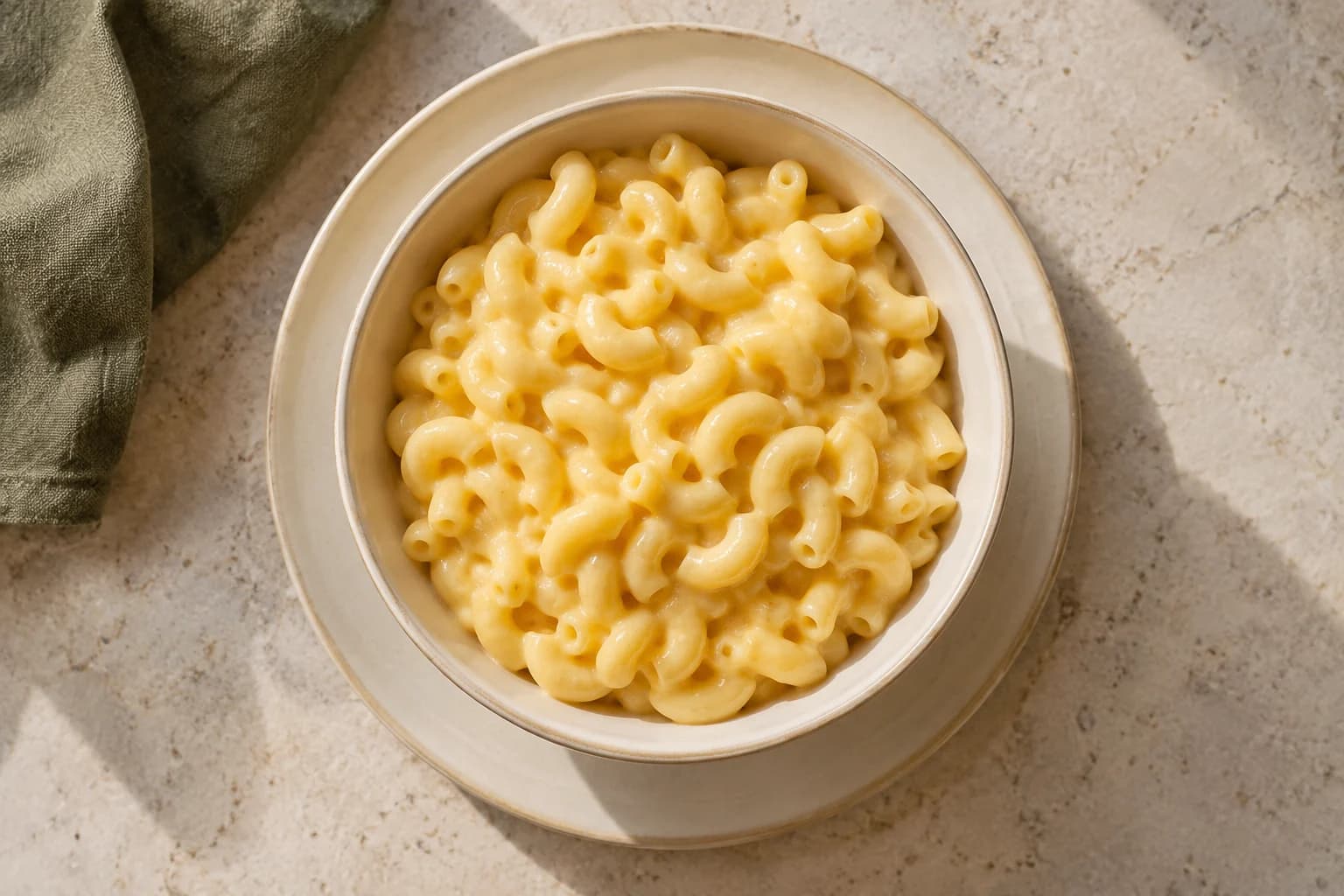
- Calories
- 431kcal
- Protein
- 31g
- Carbs
- 52g
- Fat
- 11g
The headline estimate
A reference serving provides approximately 431 calories, 31g protein, 52g carbohydrate and 11g fat. The calculation before rounding gives 30.7g protein, 51.6g carbohydrate and 10.6g fat. Rounded numbers are easier to use on a recipe page, but they cannot describe every brand to the decimal. Treat the figures as a transparent starting estimate and use your own labels when a more specific log is useful.
The reference includes the dry pasta, cottage cheese, skim milk, cheddar and black pepper. It does not include extra salt, oil, butter or breadcrumbs. The pasta is cooked in unsalted water for this calculation, and plain hot water loosens the finished sauce. If you season the cooking water or stir in a richer ingredient, the appropriate amount is additional. Keeping that baseline simple makes later adjustments easier to compare.
How the protein is distributed
Per serving, the cottage cheese contributes about 15.5g protein, the dry macaroni about 7.8g, cheddar about 5.7g and skim milk about 1.7g. Small rounding differences explain the remaining decimal. This distribution shows why the complete bowl can reach about 31g without fortified pasta. It also makes the effect of a swap visible: a lower-protein cottage cheese or a smaller cheddar portion will change the total even if the pasta quantity stays the same.
Most carbohydrate comes from the macaroni. This is a high protein pasta meal, not a low-carbohydrate or keto recipe. The dairy ingredients contribute some carbohydrate too. If you want a smaller carbohydrate portion, serving less of the whole dish is one option, but that also lowers protein and calories. Replacing pasta with vegetables creates a different meal and requires a new calculation rather than keeping the original headline.
Bowl size is not a serving measure
Divide the completed pasta and sauce into four comparable portions. A small bowl filled to the rim and a large bowl with space around the food may hold the same amount. If you want exact portions for meal prep, weigh the finished batch without the pan, then divide that cooked weight by four. Water absorption and the amount used to loosen the sauce affect cooked weight, so an unmeasured fixed gram serving would be misleading.
Half a reference serving is approximately 216 calories and 15.4g protein. A serving and a half is about 647 calories and 46.1g protein before additions. Those fractions can be useful for appetite and shared meals, but choose the amount you actually eat. The full nutrition section shows the ingredient contributions and the additional available nutrient estimates.
Ingredients
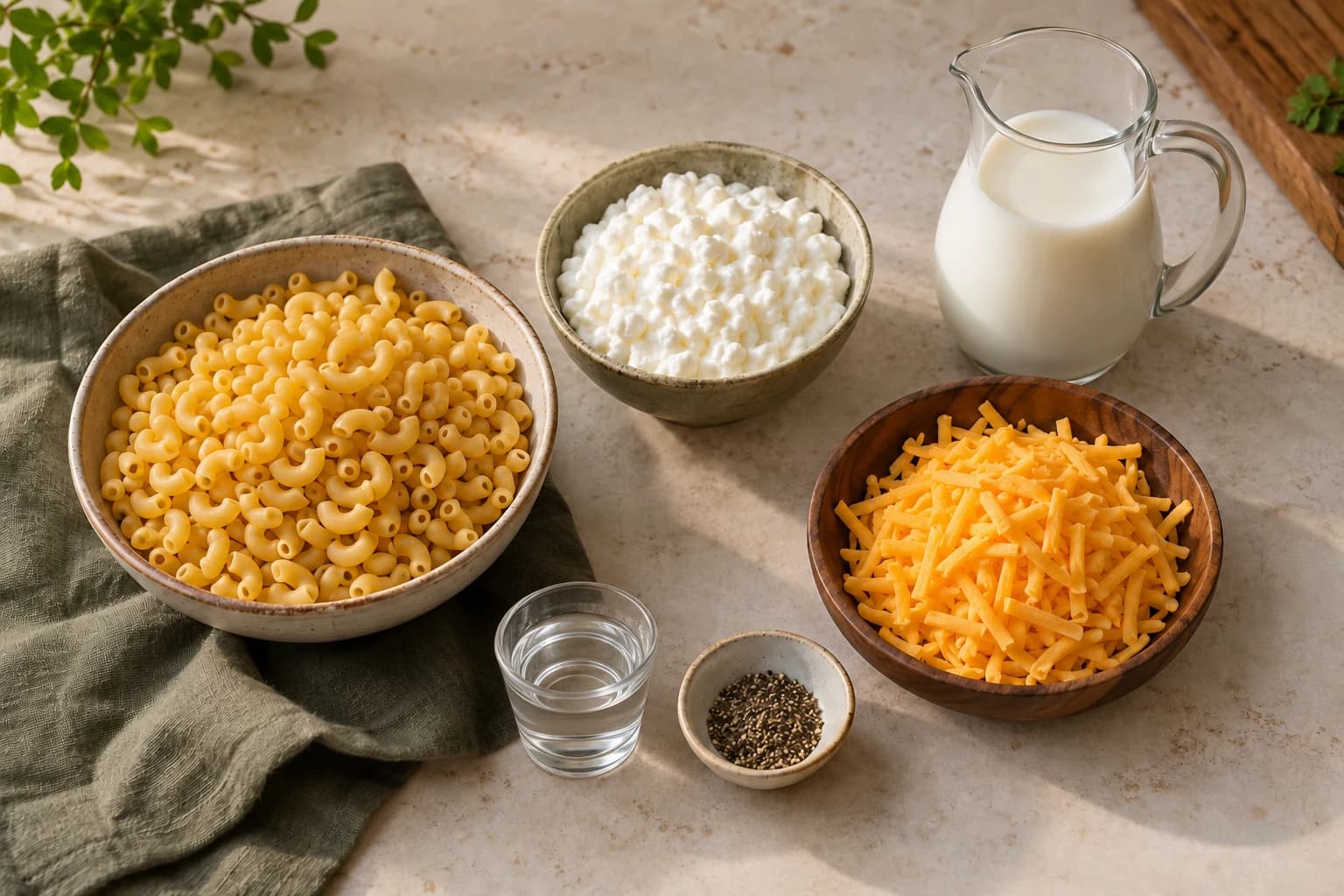
Pasta and the sauce base
Use 240g dry elbow macaroni for four reference servings. The nutrition calculation uses generic dry enriched wheat pasta. Elbows are familiar and catch sauce in their curves, but another short shape can work with the same measured dry amount. Follow that shape’s packet for cooking time. A bag labelled high protein may have a different ingredient mix, so its values should replace the generic pasta row if you use it.
The sauce starts with 500g plain low-fat cottage cheese labelled 1% milkfat and 200g skim milk. Keep both chilled until you blend them. The reference counts the cottage cheese as bought, including its usual moisture; it is not drained to a different weight first. Products vary in curd size, thickness, salt and stabilisers. Choose a plain version and blend until you no longer see obvious curd pieces before putting the mixture in the pan.
Cheddar and pepper
Measure 100g cheddar for the whole batch and grate it finely. That gives 25g per reference serving. A block makes the quantity easy to control and lets you choose the flavour you prefer. A sharp cheddar can bring a more pronounced cheese taste, but ageing and brand can also affect melting. Bagged grated cheese is convenient, though its coating and formulation may produce a slightly different finish.
The plain recipe uses 1g ground black pepper, approximately half a teaspoon for the batch. Adjust it to your taste. There is no measured added salt in the base, because cottage cheese and cheddar already contribute sodium. Taste the completed sauce before deciding whether it needs salt. If you add some, count that separately rather than assuming the no-added-salt reference describes the seasoned batch.
Water and equipment
Have about 125g, roughly 125ml, of plain hot water available for loosening the sauce. Add it gradually and stop when the coating feels right; your cottage cheese may not need all of it. The water changes consistency and cooked weight without adding reference calories. The calculation does not assume a rich stock or a salty pasta-water concentrate. Milk used beyond the measured 200g would contribute additional nutrition.
You need a pasta pot, colander, blender or suitable food processor, a roomy saucepan and a spoon or heatproof spatula. A kitchen scale makes the reference portions easy to reproduce. Blend the dairy cold, so there is no need to put a hot sauce into a sealed blender jar. Check the appliance’s instructions and capacity, especially when scaling to eight or twelve servings. Work in blender batches if necessary rather than filling past its safe level.
Your ingredient checklist
- Dry elbow macaroniOrdinary wheat pasta; weigh dry and cook in unsalted water240g
- Low-fat cottage cheese (1%)Plain and chilled; choose suitable vegetarian rennet if needed500g
- Skim milkWeighed in grams; blend with the cottage cheese200g
- CheddarGrate from a block; 25g per reference serving100g
- Ground black pepperAbout ½ teaspoon; adjust to taste1g
- Hot plain waterAbout 125ml to loosen; add gradually, using only what is needed125g
Contains wheat and milk. Check ingredient labels and cross-contact for allergies; choose suitable rennet in both cheeses if following a vegetarian diet.
Ingredient Substitutions
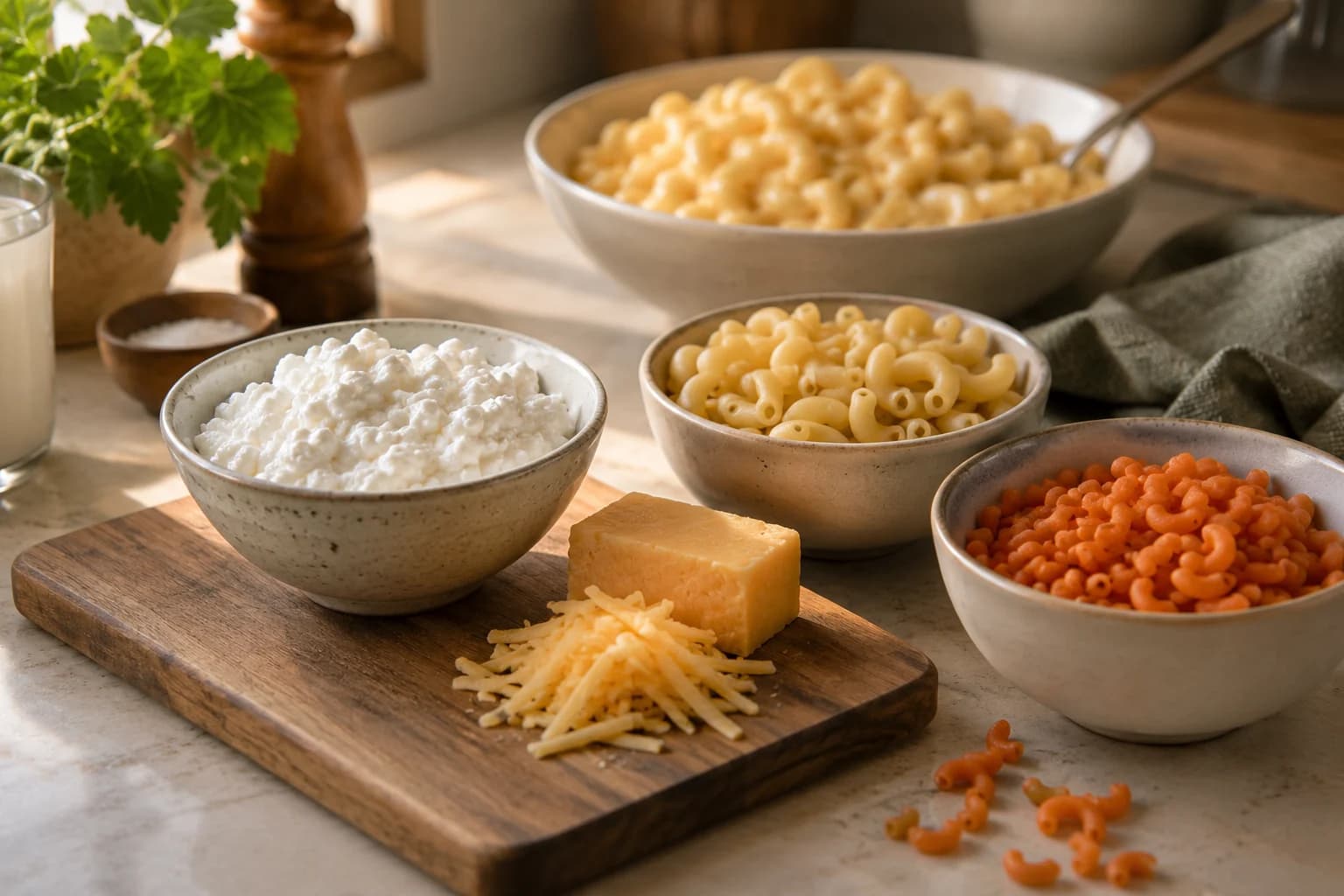
Cottage cheese with a different fat level
A plain 2% or full-fat cottage cheese can be explored at the same measured weight, but it changes calories, fat and possibly protein. Look at the label rather than treating every tub as nutritionally identical. Its moisture can also affect how much water you need at the end. Keep the blending step and assess the sauce before making another adjustment. Changing one main ingredient at a time makes the result easier to understand.
Greek yogurt is not an established one-for-one replacement for all 500g cottage cheese in this formula. It is more tart and can behave differently when warmed. Likewise, cream cheese brings a different fat and protein balance and is not a way to preserve the original macros automatically. If you want a yogurt-based or cream-cheese sauce, start from a method developed around that ingredient rather than replacing the whole base and expecting the same texture.
Pasta that suits your table
Whole-wheat short pasta is a straightforward option if you enjoy its firmer bite and wheat flavour. Use 240g dry for the batch, follow its own cooking time and update the nutrition. The calculated generic whole-wheat version provides about 420 calories and 31.2g protein per serving, with about 5.6g fibre. Those values describe a specific generic swap, not every whole-grain packet in the shop.
Lentil, chickpea and other protein pastas vary considerably in taste, texture and protein. They may become soft quickly or release more starch, so cook according to the packet and check a piece before draining. A gluten-free pasta can address the wheat ingredient when appropriately labelled and handled, but other allergy and cross-contact requirements still matter. There is no single universal cooking time or macro total for all pasta alternatives.
Milk and cheese choices
Regular low-fat milk is the closest milk adjustment, with a new fat and calorie count. Lactose-free dairy milk can be appropriate for some preferences or tolerances, but it still contains milk proteins and is not a solution for milk allergy. Plant drinks vary in protein and flavour; an unsweetened soy drink is quite different from a low-protein almond drink. Substituting the liquid does not make the rest of the cheese sauce dairy-free.
Reduced-fat cheddar, a different melting cheese or a smaller cheddar quantity can change both flavour and texture. The measured lower-cheese variation uses less ordinary cheddar, so its effect can be calculated cleanly. Dairy-free cheese products do not necessarily provide comparable protein or melting. For a fully dairy-free mac and cheese, use a complete appropriate recipe rather than several simultaneous swaps. Check suitable rennet in cottage cheese and cheddar if following a vegetarian diet.
Use the label and cooking behaviour together when choosing a change.
| Reference | Possible change | Practical effect |
|---|---|---|
| 1% cottage cheese | Plain 2% or full-fat cottage cheese | Different calories, fat, moisture and potentially protein |
| Ordinary dry elbows | Whole-wheat short pasta | Different bite, cooking time and fibre |
| Ordinary dry elbows | Lentil, chickpea or fortified pasta | Use the packet nutrition and timing |
| Skim milk | Low-fat or lactose-free dairy milk | Different nutrition; milk allergy is still relevant |
| 100g cheddar per batch | 50g cheddar per batch | Milder flavour; about 381 kcal and 27.9g protein per serving |
How to Make It
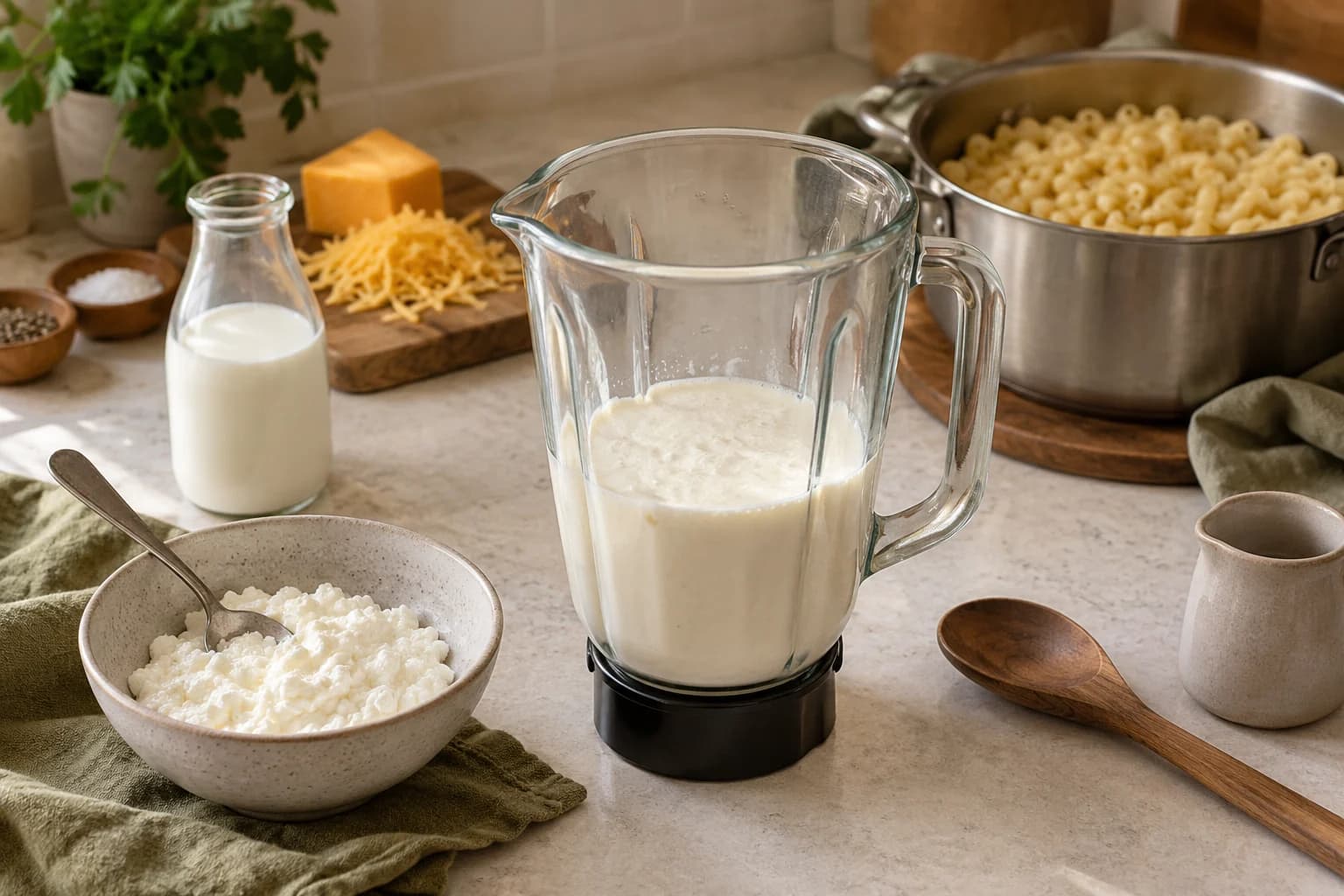
Weigh and get the pasta moving
Bring a large pot of unsalted water to a boil. Weigh the dry macaroni, cottage cheese, milk and cheddar before you start cooking. Grate the cheddar finely and keep it ready beside the sauce pan. Put the pasta into the boiling water and cook according to its packet, stirring early so the elbows do not settle into a clump. Taste a cooked piece near the end of the stated time to judge the bite you prefer.
The reference uses unsalted cooking water so sodium accounting stays clear. You can season your own pasta water if desired, but the amount retained in the cooked pasta is not measured here. Keep another small jug of plain hot water ready for sauce adjustment. There is no need to save a salty liquid and then try to work out how much of its salt returned to the finished dish.
Blend until the curds disappear
Put the 500g cottage cheese and 200g skim milk into the blender. Blend until the mixture looks smooth, stopping to scrape down safely if needed. Depending on the appliance and curd size, this may take around 30–60 seconds or longer. Look at a spoonful rather than judging only from the spinning surface. If visible pieces remain, blend again before warming. Heating does not replace the smoothing step.
Keep this a cold blending job. Do not transfer a hot mixture into a sealed jar that is not designed for it. For a larger batch, blend in portions below the appliance’s fill limit and combine them in a suitable pan. The dairy can stay cool while the pasta cooks; the aim at this point is texture, not temperature. Stir the pepper into the smooth mixture or add it during gentle warming.
Warm the sauce without boiling it hard
Pour the blended mixture into a roomy saucepan and set it over low heat. Stir across the base and around the edges as it warms. Allow roughly 4–6 minutes as a starting estimate, adjusting the heat so the mixture becomes hot without a rolling boil. If it starts bubbling aggressively, remove the pan briefly and lower the heat. A thin pan or powerful hob can bring the bottom to a high temperature before the rest of the sauce catches up.
Drain the pasta once it is cooked, without leaving it sitting in the colander for a long time. Remove the warm sauce pan from the heat and add grated cheddar in small handfuls, stirring until each addition melts. If a few pieces remain, use a brief return to the lowest heat while stirring, then remove again. You are looking for a smooth coating rather than a strongly bubbling pot of cheese.
Combine, loosen and portion
Fold the hot drained macaroni into the sauce. Add the plain hot water a small splash at a time, up to the 125g guide as needed, and stir until the pasta is coated. Stop before the sauce becomes a thin soup. Some cottage-cheese products will need less water; the sauce should be a little looser than your final preference because it thickens as the pasta stands and cools.
Taste and adjust seasonings if you want them, remembering that additions change the reference. Divide the complete dish into four equal portions and serve promptly. Cooking times are planning estimates and this exact measured formula has not undergone a physical kitchen test here. The smoothing, heating and consistency checks are included so you can judge the food in your pan instead of treating the timer as proof of the finish.
Tips for the Best Results
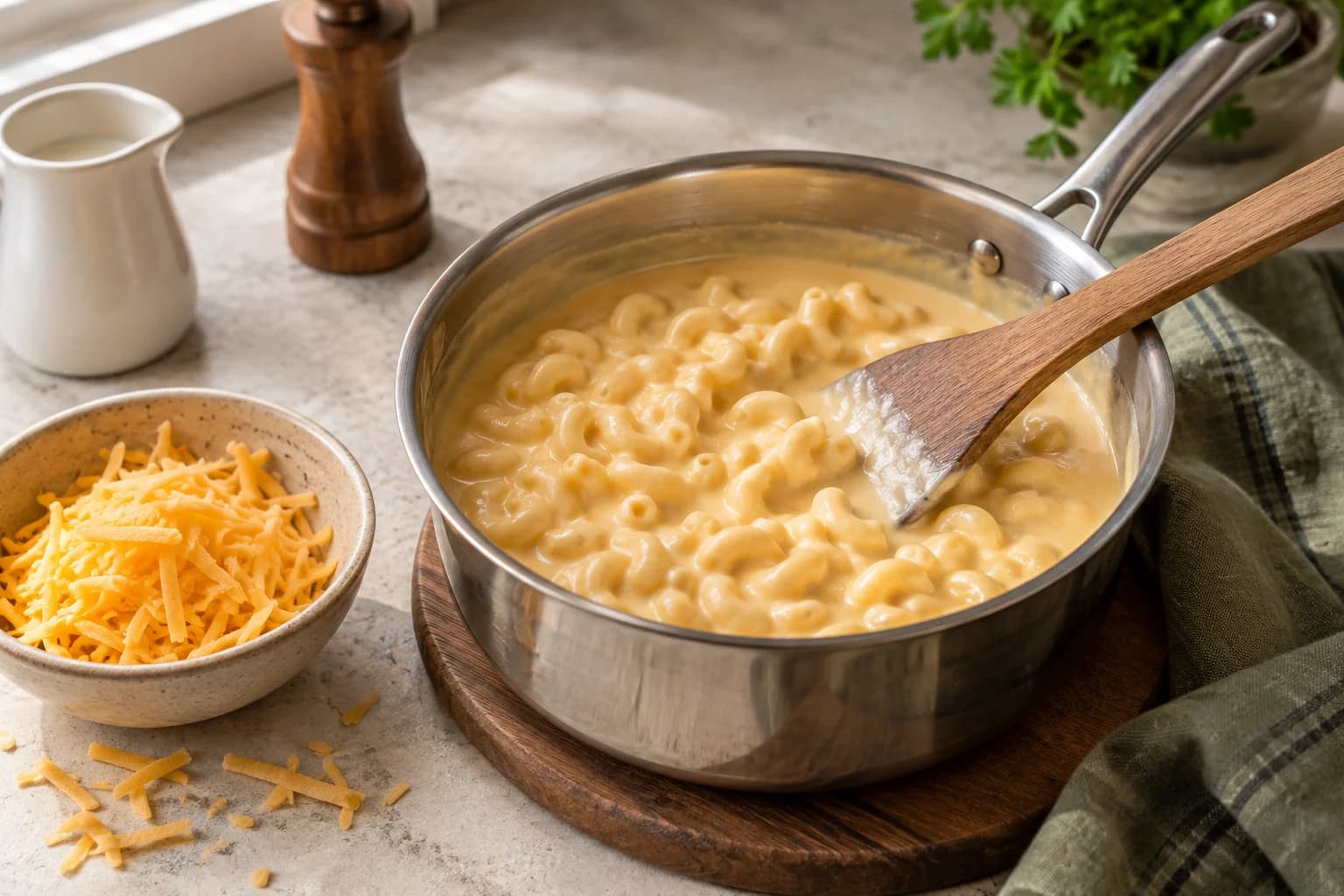
Check the blender mixture before the pan
A grainy sauce can begin before any heat is involved. If the cottage cheese still has obvious curds when poured into the pan, those pieces may remain visible in the finished bowl. Blend, pause and check a small spoonful. A powerful blender often handles this well, but a food processor may need more time and scraping. Use the appliance safely and keep the amount within its capacity rather than assuming one brief pulse is enough.
Some cottage cheeses have a firmer curd or a thicker surrounding liquid. That can affect how smooth they become and how much water the sauce later needs. Make a note of the tub you used if you like the result. Consistency across shopping trips is helpful when repeating a short recipe, especially when several products share the same fat percentage but have different salt and texture.
Give cheddar a gentle landing
Grate cheddar finely and add it to a warm sauce off the heat. Smaller shreds melt more readily than large cold cubes. Stir between additions rather than dropping the whole pile in and turning up the hob. The residual warmth can do much of the work. If more heat is needed, a short low-heat return is easier to control than bringing the whole mixture to a hard boil.
If the sauce becomes rough or oily, stop heating first. A splash of warm water and gentle stirring may improve a slightly thick mixture, but it is not a guaranteed cure for a fully separated sauce. Avoid promising yourself that more cheese or more boiling will reverse every texture problem. On the next batch, check the blender smoothness, lower the heat and add cheddar gradually. Those are useful variables you can actually control.
Keep pasta timing and sauce timing together
Use the packet time for the pasta shape you bought, then check its texture. Very overcooked macaroni can lose definition and break during stirring. Pasta left to cool and stick in the colander makes the final mixing harder. Aim to have the sauce warm and ready as the pasta finishes. If the sauce is ready early, remove it from the heat rather than continuing to cook it while waiting.
The finished coating should still move when you stir. Pasta absorbs liquid and the cheese mixture firms as it cools, so a sauce that looks perfectly thick in the hot pan can feel dense a few minutes later. Add the plain water in small amounts and judge after stirring, not before it has mixed through. Keep the bowls ready and serve rather than holding the dish uncovered over heat for a long stretch.
Season after tasting
Cottage cheese and cheddar already bring salt. A pinch added without tasting may make the sauce saltier than you wanted, particularly with a different brand. Pepper can be adjusted at the table, and a little mustard or paprika can be explored in a later version. Start with the plain reference if learning the sauce. Changing heat, dairy, spices and pasta all at once makes it difficult to tell what caused a result you want to improve.
High-Protein / Lower-Calorie Variations
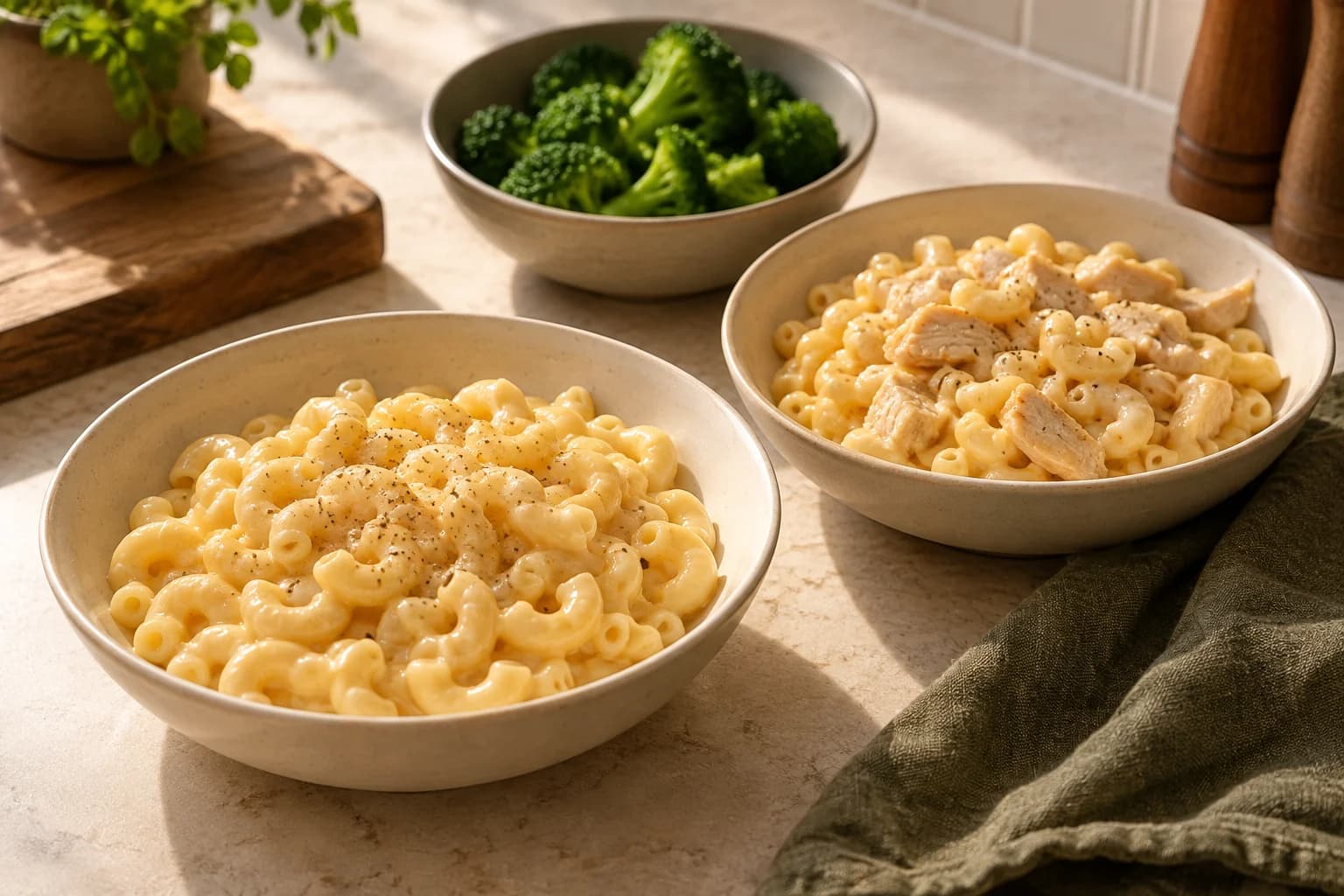
Add a cooked lean protein
Adding 50g plain cooked chicken breast to one reference serving gives approximately 514 calories and 46.2g protein. Use the cooked weight, cut the chicken into small pieces and warm it appropriately before folding it through. The gentle sauce-warming stage is not a method for cooking raw chicken safely. Oil, breading or a rich marinade on the chicken should be counted separately from the plain roasted-breast reference.
For all four servings, that means 200g cooked chicken added to the complete batch. If only one person wants it, add the topping to that person’s bowl instead. The rest of the plain batch should not acquire a chicken protein total simply because the pans were on the same hob. This separation is useful for shared meals and makes vegetarian and meat portions easier to identify when packing leftovers.
Use half the cheddar
Reduce cheddar from 100g to 50g in the four-serving batch, leaving the other ingredients unchanged. A serving then provides about 381 calories and 27.9g protein. The decrease is approximately 51 calories and 2.9g protein per serving. Cottage cheese still contributes most of the sauce’s protein, but the cheddar flavour and richness will be milder. Choose that version because it suits your taste and meal, not because it must imitate the full-cheddar bowl exactly.
Half of the original reference serving is about 216 calories and 15.4g protein. It can work as a side beside another dish or as a smaller portion when appetite is limited. Count the rest of the plate separately. A smaller mac and cheese portion with a heavily dressed salad or buttery bread is a different total from the pasta fraction alone. Portion arithmetic is useful when it describes what you actually served.
Swap to whole-wheat pasta
Use the same 240g dry weight of whole-wheat pasta and cook it according to its own packet. The generic calculation gives about 420 calories, 31.2g protein and 5.6g fibre per serving, compared with about 2g fibre in the ordinary-pasta reference. Your actual whole-wheat product can differ. Expect a firmer, more pronounced grain flavour, and choose a short shape that carries the sauce comfortably.
Protein pasta is another possible change, but there is no single number for it here. Chickpea, lentil and wheat-based fortified products are not interchangeable records. Use the packet’s dry serving weight and nutrient values, multiply by the amount in your batch, then add the unchanged sauce ingredients. An impressive number on the front of a packet should not be added on top of the original pasta protein without replacing that row.
Add vegetables for variety
Steamed broccoli, peas or cooked mushrooms can be served beside the plain bowl or stirred into an individual portion. Drain them well so they do not dilute the sauce unpredictably. They contribute their own nutrition and alter the size of the meal. If you replace some pasta with vegetables, count both the removed pasta and the added vegetables; keeping the original 31g headline would no longer describe the changed portion accurately.
These comparisons change only the named portion or ingredient; extra sides are separate.
| Version | Calories | Protein |
|---|---|---|
| Plain reference serving | 431 kcal | 30.7g |
| Half a reference serving | 216 kcal | 15.4g |
| Reference + 50g cooked chicken | 514 kcal | 46.2g |
| 50g cheddar instead of 100g per batch | 381 kcal | 27.9g |
| Same dry weight of generic whole-wheat pasta | 420 kcal | 31.2g |
Serving Suggestions
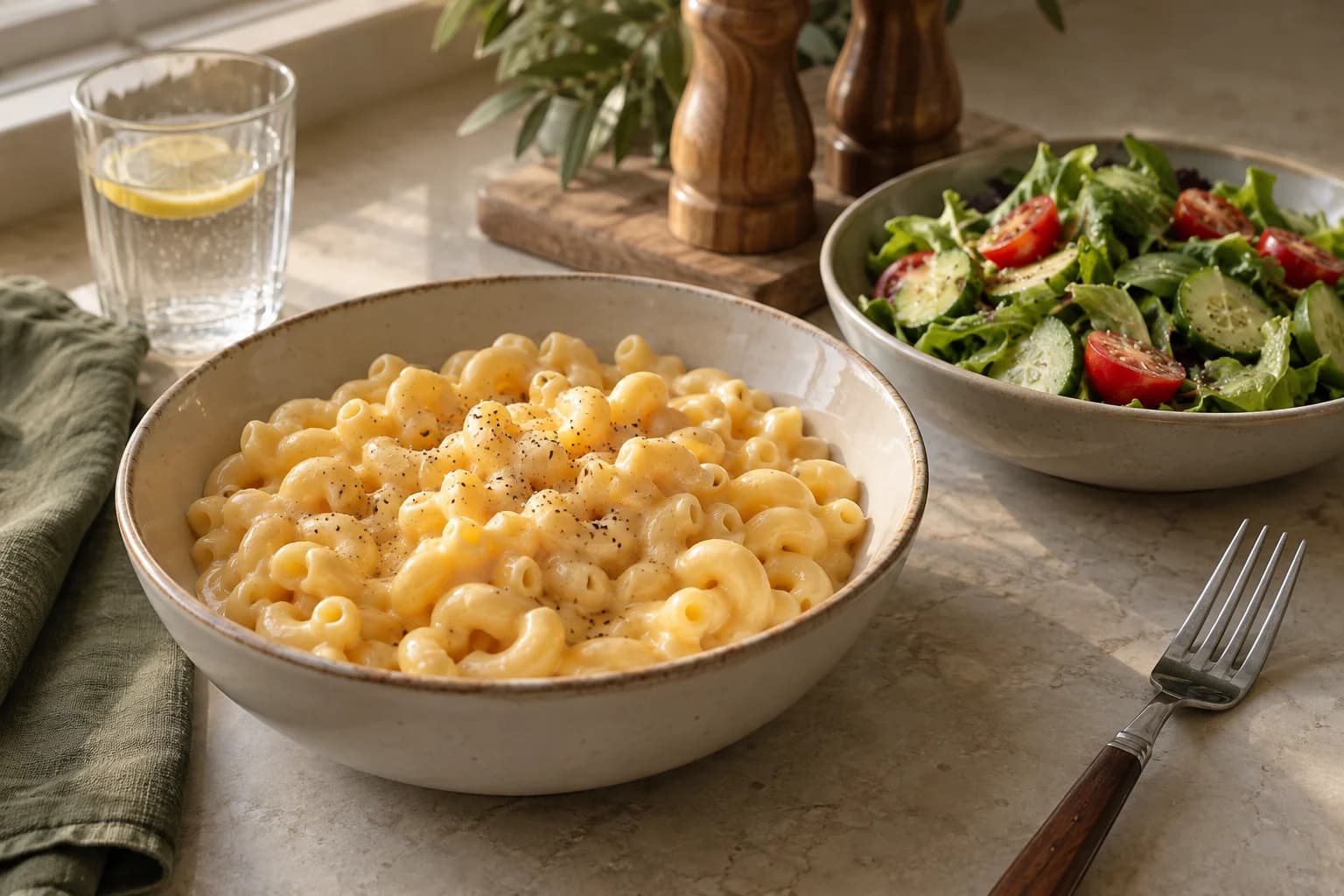
Serve it while the coating is loose
Spoon the mac and cheese into warm or room-temperature bowls soon after the final stir. The sauce will thicken as the dish cools, so keep serving simple. A spoon or fork is enough; no extra baked layer is necessary. If the pot has waited while you dealt with another dish, stir in a small splash of hot water and assess the temperature before portioning, rather than trying to scoop a dense mound out unchanged.
A side of steamed broccoli gives a different colour and bite. Green beans, carrots or a cucumber-and-tomato salad work too. The vegetables do not have to be disguised within the sauce for the meal to feel complete. Keeping them separate can help people choose the combination they enjoy, especially if one person wants a plain bowl and another likes a lot of vegetables beside it.
Choose additions for flavour or appetite
Pepper, a little paprika or a small amount of mustard can change the character of an individual bowl. Use those as taste choices rather than claiming they preserve every reference figure perfectly. Extra grated cheddar, crisp breadcrumbs and garlic bread are more substantial additions and should be counted if tracking. They can be enjoyable, but the plain serving number does not cover a finished plate with all of them.
For a larger meal, cooked chicken can be added using the measured variation or served separately with its own portion. For a vegetarian table, choose cheese with suitable rennet and pair the pasta with sides you enjoy. The base already provides a meaningful protein contribution, so there is no obligation to add another protein ingredient just to make it qualify as dinner.
A smaller side portion
A half serving can sit beside fish, chicken, tofu or a vegetable-centred main dish. Its roughly 15.4g protein belongs to that side portion; combine it with the rest of the meal as appropriate. When serving from a shared pot, try to stir well first so sauce and pasta are distributed evenly. A scoop taken only from a sauce-heavy corner will not represent the same balance as a scoop of mostly macaroni.
For packed lunches, portion the complete dish into shallow containers and refrigerate promptly. Keep salad in a separate container so it stays crisp, and carry the chilled pasta with an ice pack if refrigeration is not immediately available. Reheat thoroughly where suitable facilities exist. Creamy pasta should not spend the morning in a warm bag simply because the lunch container has a tight lid.
Meal Prep & Storage
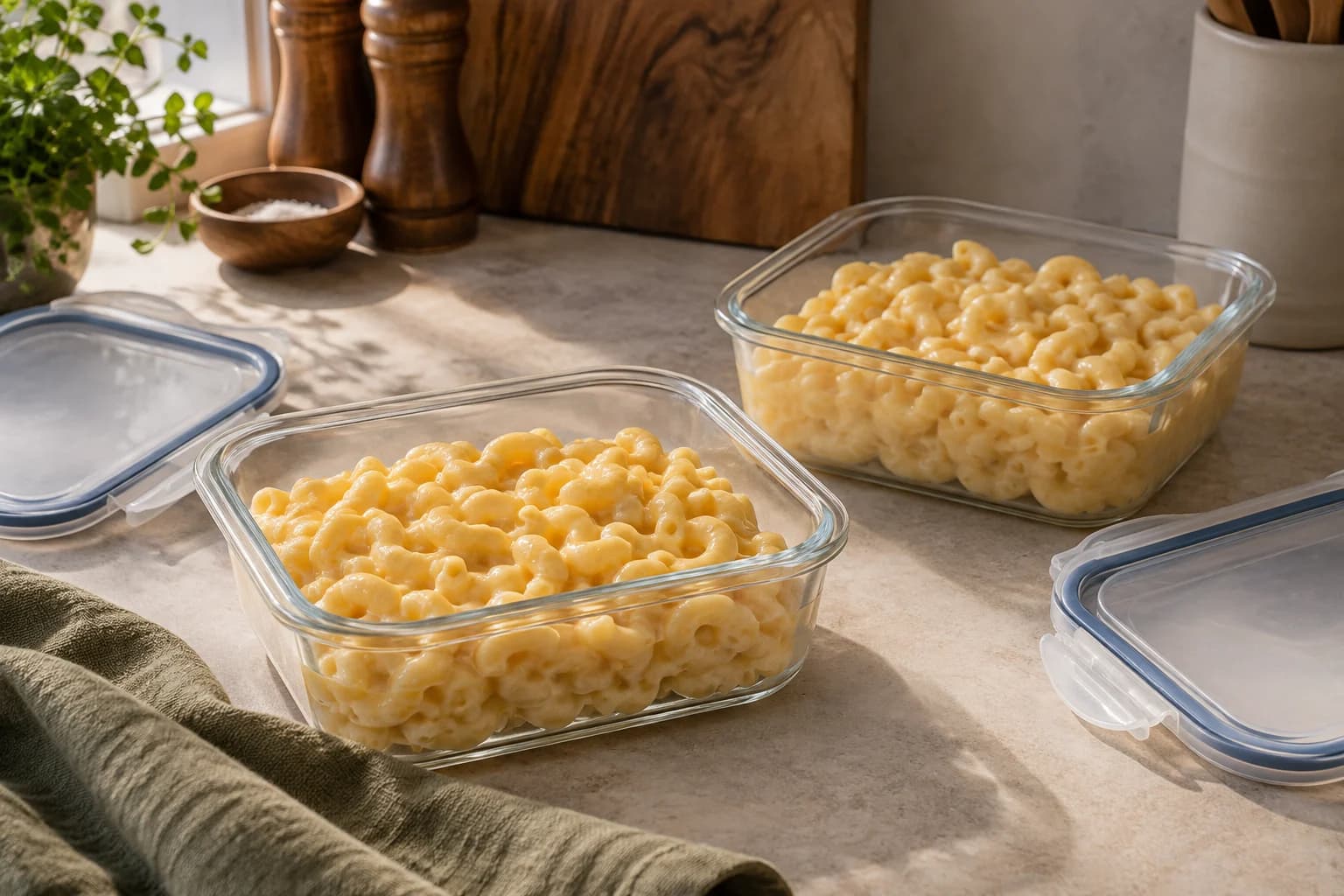
Prepare components when possible
You can weigh the dry pasta and grate cheddar ahead, keeping the dairy ingredients refrigerated. Blending the cottage cheese and milk shortly before cooking is a simple routine, especially if the blender can be rinsed while the pasta boils. For a longer preparation gap, keep components separately and follow their package storage instructions. The exact blended sauce has not been tested here for a separate multiday shelf life.
The finished pasta is a practical meal-prep option if you accept that the texture will change in the fridge. It becomes thicker and less glossy as it cools. That does not mean you need to add extra butter or cheese automatically when warming it. A modest amount of water or measured milk, combined with careful reheating, can restore a more comfortable coating. Additional milk changes nutrition; plain water does not add reference calories.
Refrigerate safely
Follow USDA guidance for perishable cooked leftovers: refrigerate within two hours, or within one hour when the surroundings are above 90°F / 32°C. Divide a big pot into shallow containers rather than leaving a deep pan on the counter until it feels cold. Keep the refrigerator at 40°F / 4°C or below. Prompt cooling is a handling step, not something to postpone until all the dishes are washed.
Use properly handled refrigerated leftovers within 3–4 days. Mark the cooking date on the container and consider any older cooked ingredients added to the dish. Previously stored chicken does not become newly cooked in a storage sense just because it is stirred into fresh sauce. If the food has been left out too long, reheating is not a reason to treat that earlier handling as harmless.
Freezing and reheating expectations
Freeze portions promptly in suitable airtight containers if you will not eat them within the refrigerated window. Around one month is a practical quality target for this particular creamy pasta, not a laboratory-tested limit. Dairy sauces may look less smooth after freezing, and pasta can soften. A small trial portion is a sensible way to see whether the thawed texture suits you before freezing a very large batch.
Thaw in the refrigerator when convenient, then reheat the portion you plan to eat thoroughly to 165°F / 74°C, checked with a food thermometer. Use a covered microwave-safe container with appropriate venting, or a saucepan with a little added liquid. Stir during reheating and check more than one spot in a dense portion. Safety temperature takes priority over keeping the sauce below a certain texture-related heat level. Reheat only what you need rather than repeatedly cooling and warming the whole batch.
Full Nutrition Information
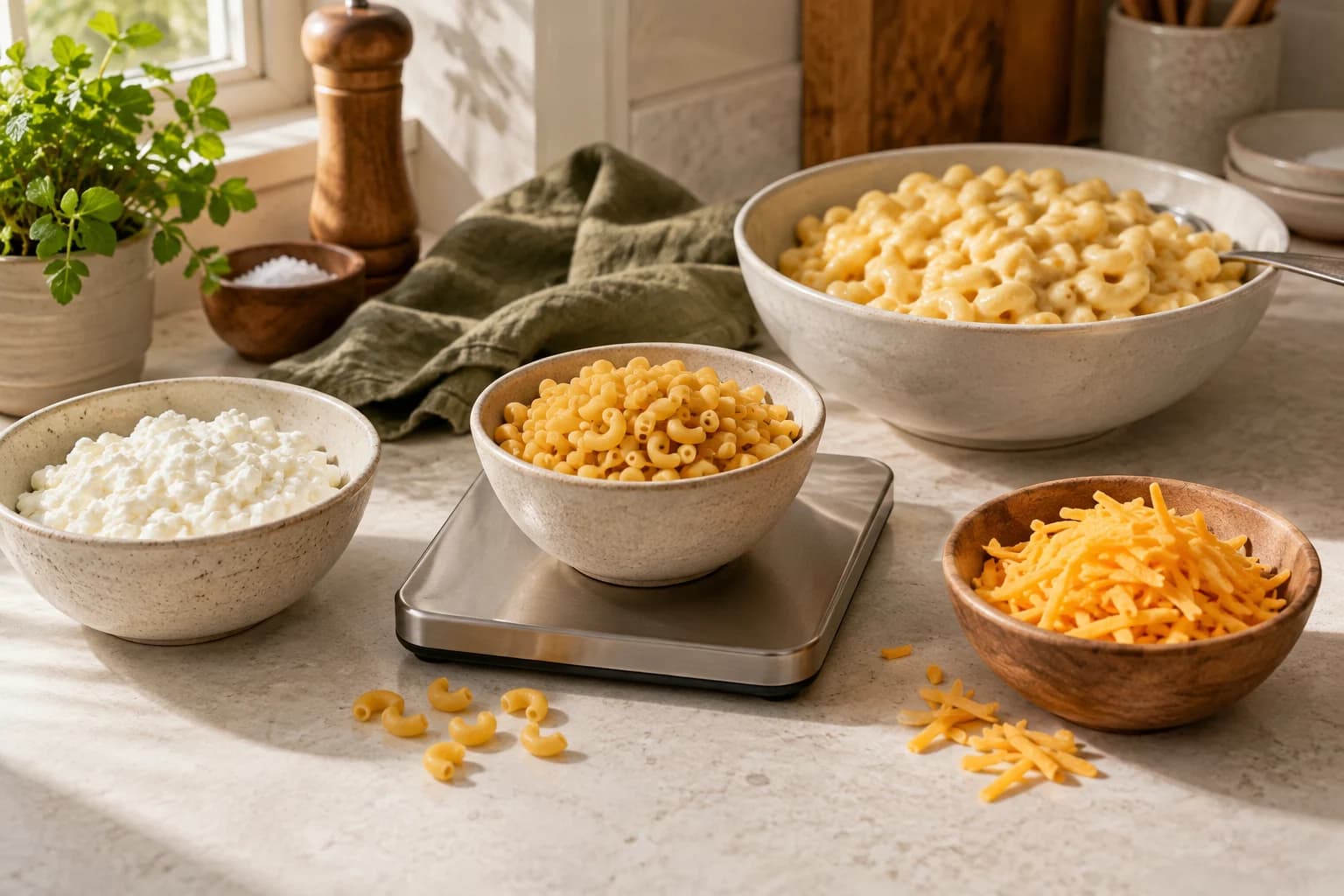
What is included
The reference calculation uses USDA Standard Reference food-composition values per 100g of edible ingredient. Each row is multiplied by the measured amount, the batch is added together, and the result is divided by four. That method includes the pasta and every measured dairy ingredient. There is no separate sauce allowance omitted from the calorie headline. Plain water is treated as adding no food energy; any minerals in your water are outside the reference estimate.
The table shows where the calories and protein come from. Cottage cheese brings a substantial amount of protein without replacing the cheddar flavour entirely. Ordinary pasta contributes some protein as well as most of the carbohydrate. Cheddar supplies much of the fat and saturated fat. Those contributions make it easier to understand why using half the cheddar gives a different result from simply serving half the whole dish.
Product labels can change the total
The generic pasta record describes dry enriched wheat pasta, and the cottage-cheese record describes a plain 1% product. Your pasta shape, milk brand and dairy formulation may differ. A tub’s declared serving size also matters: compare values per the same gram weight rather than assuming one label’s cup is identical to another label’s portion. For tracking a specific batch, your actual products are a more direct starting point than a generic food record.
The headline protein is rounded from about 30.7g to 31g. When making two servings or a larger batch, calculate from the ingredient amounts or the unrounded values rather than expecting every rounded figure to add perfectly. There is no practical need to chase a tiny rounding difference while leaving an extra handful of cheese uncounted. Clear quantities make the estimate more useful than a long decimal presented as exact nutrition for all kitchens.
Additional nutrient estimates
Per reference serving, the available estimates include about 2g fibre, 7.7g total sugars, 5.7g saturated fat and 695mg sodium. Calcium and cholesterol estimates are provided below from the same reference ingredient records. Total sugars include naturally occurring sugars in milk and dairy; they are not a statement that 7.7g sugar was added from a spoon. The plain recipe has no separately added sugar.
Sodium is present even though the reference uses unsalted cooking water and no added salt. Cottage cheese and cheddar account for much of it. If lowering sodium matters to your meal planning, compare labels and portions rather than assuming a homemade dish is automatically low in sodium. Lower-sodium products can also differ in texture, so treat the nutrition and the cooking result as related but separate things to assess.
Cooked weight and limits
Pasta absorbs water, and sauce can lose or gain water as it warms and is loosened. Those changes affect the finished gram weight without creating a new amount of protein. Weighing the complete cooked batch is the way to obtain an actual portion weight for your pan. A full vitamin and mineral panel is not provided, and the figures are not a laboratory analysis of the finished food. Extra seasonings, toppings and sides require their own accounting.
| Ingredient | Amount | Calories | Protein | Carbs | Fat |
|---|---|---|---|---|---|
| Dry elbow macaroni | 240g | 890 kcal | 31.3g | 179.2g | 3.6g |
| Low-fat cottage cheese (1%) | 500g | 360 kcal | 62.0g | 13.6g | 5.1g |
| Skim milk | 200g | 68 kcal | 6.7g | 9.9g | 0.2g |
| Cheddar | 100g | 404 kcal | 22.9g | 3.1g | 33.3g |
| Ground black pepper | 1g | 3 kcal | 0.1g | 0.6g | 0.0g |
| Hot plain water | 125g | 0 kcal | 0.0g | 0.0g | 0.0g |
| Whole batch | 4 equal servings | 1725 kcal | 123.0g | 206.5g | 42.2g |
| One reference serving | Batch ÷ 4 | 431 kcal | 30.7g | 52g | 11g |
| Dietary fiber | 2.0g |
|---|---|
| Total sugars | 7.7g |
| Saturated fat | 5.7g |
| Sodium | 695mg |
| Calcium | 328mg |
| Cholesterol | 31mg |
Estimated recipe nutrition, not a laboratory analysis. Includes the dry pasta and all measured dairy ingredients. Extra toppings, seasonings and sides are additional. Plain water contributes no reference food energy; its minerals are not counted. A complete vitamin and mineral panel is not calculated.
How This Fits Your Daily Protein Goal
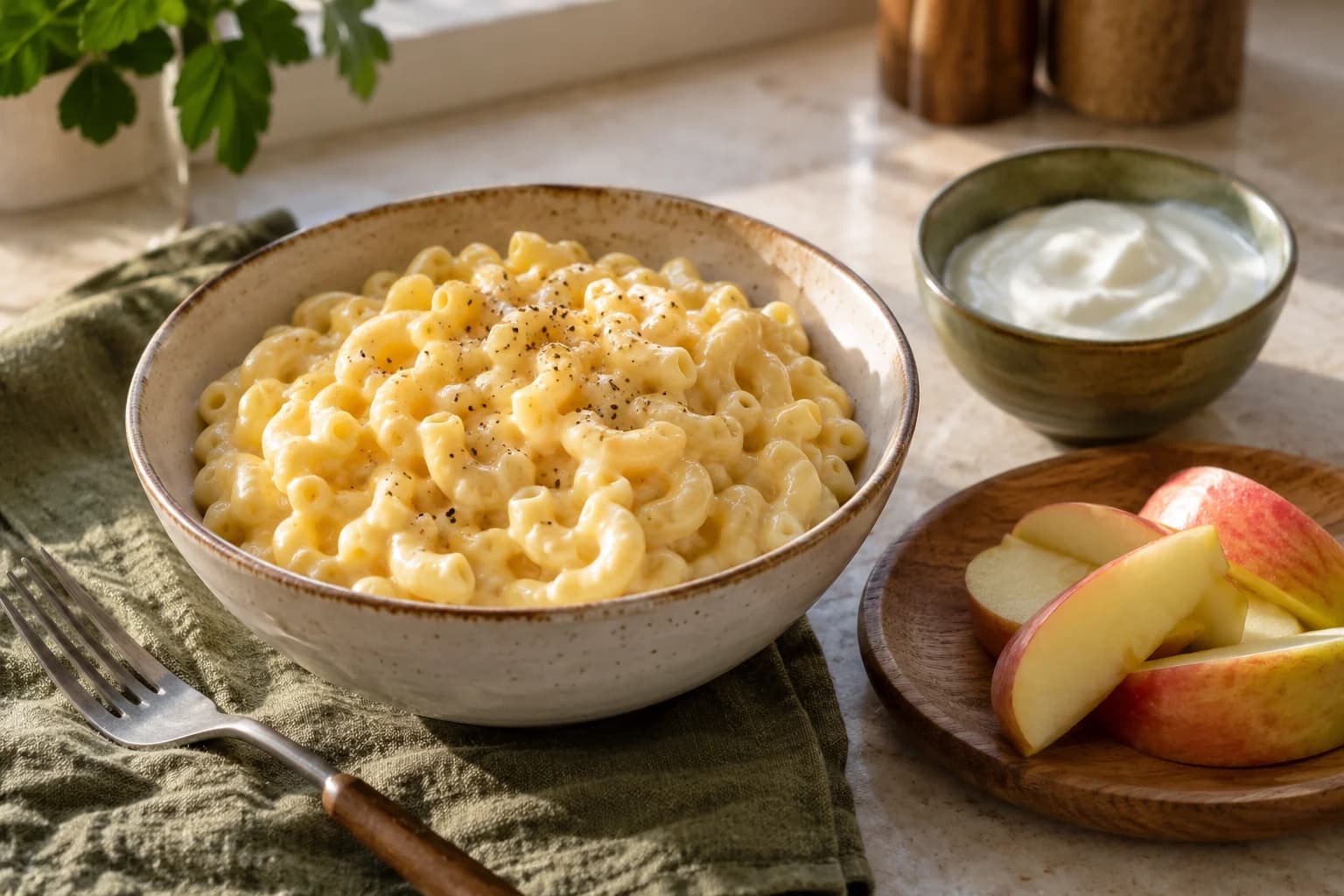
Put one bowl beside your own target
A reference serving contributes about 30.7g protein. If your personal daily target happens to be 100g, that is roughly 31% of it; at 120g it is about 26%. These are arithmetic examples, not recommended goals for every reader. Your own needs depend on factors such as body size, activity and overall circumstances. Use the protein calculator for a starting estimate based on your inputs, then consider that result in the context of meals you enjoy and can prepare.
The practical advantage of a clear recipe serving is that you can plan the rest of the day without guessing how much protein was in the sauce. Breakfast and lunch can contribute in their own ways. You do not need to make this dinner extremely large just because it has a high-protein name. A normal portion that you enjoy can be more useful than a bowl that feels like a chore to finish.
Choose a change for a real reason
If you want a larger protein contribution and also want chicken with dinner, the named chicken variation raises the serving to about 46.2g protein. If the plain pasta satisfies you, there is no need to add it merely to chase a higher headline. The lower-cheddar version still provides about 27.9g protein, while a half reference serving provides about 15.4g. Each can make sense in a different meal arrangement.
Look at appetite, flavour and the whole meal alongside the numbers. A vegetable side can add variety without supplying much extra protein, and that is still a useful role. A yogurt side or another protein dish changes the protein total and should be counted separately. One food does not have to handle every part of nutrition planning by itself. This recipe gives you a clear contribution to work with.
Keep the food log consistent
If you log the complete recipe serving, its pasta, cottage cheese, milk and cheddar are already included. Adding those same dairy ingredients again as extras would double count them. If you prefer to enter the batch ingredient by ingredient, use that method instead and divide by the actual portions. Decide how you are recording the meal before mixing two approaches, especially when meal-prepping a doubled batch with several containers.
Make it personal
Where does this bowl fit in your day?
Estimate your daily protein target, then plan meals you enjoy.
Recipe Card
A compact companion for cooking
The card keeps the reference ingredients and the six method steps together so you do not have to scroll through the whole article with a spoon in your hand. Select four, eight or twelve servings, weigh the scaled amounts, and tick ingredients as they are ready. Water remains a guide for loosening rather than a requirement to pour every drop into the pan. The checklist resets when the serving number changes.
Larger batches need suitable equipment. Check the blender’s safe capacity, blend in portions if necessary, and use a pan with room for stirring. A larger amount of sauce may take longer to warm gently, and pasta may need more than one pot or cooking round. Scaling ingredients is straightforward; scaling heat by turning the hob much higher is not the same thing. Keep the same smoothing and low-heat checks.
Finish the bowl, then divide it
The nutrition on the card stays per reference serving as you change the batch size. Stir the complete pasta and sauce together before dividing so the portions have a comparable balance. Print the card if a paper copy is useful in the kitchen. The ingredient swaps, detailed nutrition assumptions and storage section remain available here when you want to understand a change beyond the short cooking instructions.
Your creamy bowl, ready to cook
High-Protein Mac and Cheese
Blended cottage cheese, real cheddar and ordinary elbow pasta.
*Base-batch estimates with pasta and sauce preparation overlapping. Larger batches may need blender batches, extra pans and more time to warm gently. Nutrition stays per reference serving.
Ingredients
Method
- Weigh and cook the pasta
Bring a large pot of unsalted water to a boil. Weigh 240g dry macaroni and cook according to the packet, stirring early and checking its bite. Grate the measured cheddar while the water heats.
- Blend the dairy cold
Blend 500g cottage cheese and 200g skim milk until smooth, about 30–60 seconds or longer as needed per blender batch. Scrape down safely and work within the appliance's fill limit. Do not blend a hot mixture in a sealed unsuitable jar.
- Warm gently
Pour the smooth mixture into a roomy saucepan and add the pepper. Warm over low heat for roughly 4–6 minutes, stirring across the bottom and edges, until hot. Avoid a rolling boil; remove briefly and reduce heat if bubbling aggressively.
- Melt cheddar off the heat
Drain the cooked pasta promptly. Remove the sauce pan from the heat and stir in the grated cheddar in small handfuls until melted. If needed, return briefly to the lowest heat while stirring, then remove again.
- Combine and loosen
Fold the hot drained macaroni into the sauce. Add plain hot water in small splashes, up to the 125g guide as needed, until the coating moves comfortably. Stop before it becomes watery; it thickens as it stands.
- Portion and serve
Stir well and divide the complete pasta and sauce into 4 equal servings. Serve promptly. Extra seasonings, toppings and sides are additional. Refrigerate leftovers promptly in shallow containers; reheat to 165°F / 74°C.
Blend cold, warm gently and add cheddar off the heat. A larger quantity may need more warming time; keep the heat low. Added chicken must be fully cooked.
Includes dry pasta and all measured dairy. Reference uses unsalted pasta water and no added salt; extras are additional. Contains wheat and milk. Choose suitable rennet if needed. Refrigerate promptly, use within 3–4 days and reheat to 165°F / 74°C.
Frequently Asked Questions
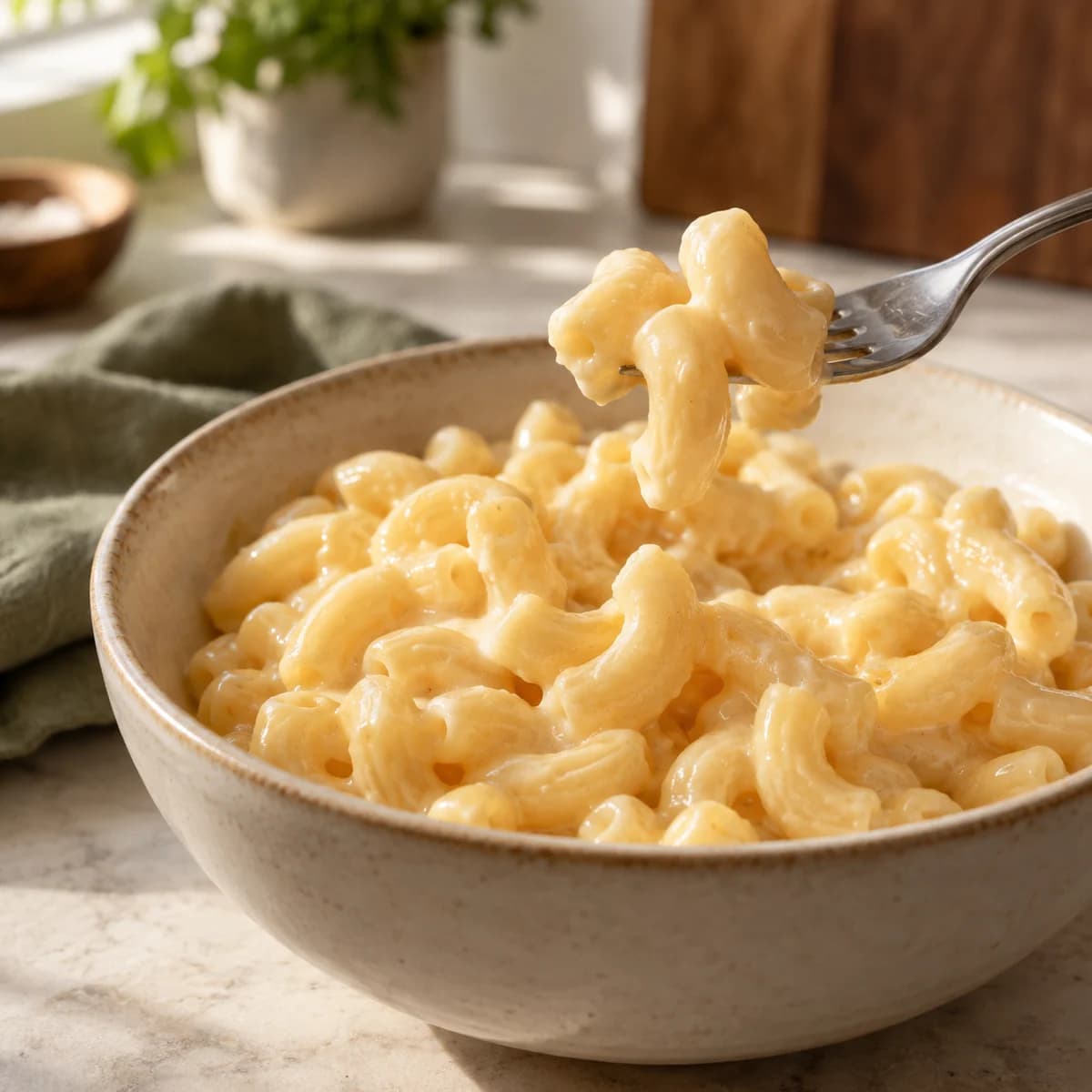
Cottage cheese can look very different in the tub and in the finished sauce. That is why the blending step and the heat level deserve more attention than the speed of the final stir. The answers below cover the common choices that change this recipe: cottage-cheese type, pasta, milk, cheddar, portioning and reheating. A substitution can be worth exploring without being a tested identical replacement.
Nutrition answers describe the complete measured plain serving unless a variation is named. Storage assumes safe handling and refrigeration. If you want a baked, dairy-free or substantially different version, begin with a method developed for that result rather than transferring every number and timing from this stovetop sauce. The aim is to help you make a clear choice before opening several new ingredients.
How much protein is in this mac and cheese?
One reference serving provides about 30.7g protein, rounded to 31g. It is one quarter of the complete pasta and sauce batch, including 60g dry macaroni, 125g cottage cheese, 50g skim milk and 25g cheddar. Half a serving is about 15.4g. Extra toppings are additional; the number is not for a plain pasta portion without sauce.
Can I make high protein mac and cheese without protein powder?
Yes. The reference uses ordinary pasta, cottage cheese, milk and real cheddar. Those foods provide the protein without a supplement. Adding protein powder would alter flavour and sauce behaviour and is not part of this method. Special protein pasta is optional, with its own product values replacing the ordinary pasta row.
Will it taste like cottage cheese?
The sauce contains a substantial amount of cottage cheese, so a mild dairy tang may remain. Blending removes the obvious curd texture, while cheddar provides the familiar cheese flavour. Products vary, and the recipe does not promise that every person will find it indistinguishable from a butter-and-cream sauce. Choose a cheddar you enjoy and try the reference before making several swaps.
Do I have to blend the cottage cheese?
Blending is important for the smooth sauce described here. Whole curds will not necessarily disappear when warmed. Blend the cold cottage cheese with milk until a spoonful looks smooth, scraping down safely as needed. A food processor may need more time. Do not blend a hot sauce in a sealed appliance that is not designed for it.
Why did my cheese sauce become grainy?
Visible curds before heating, too much heat, or cheese that melts differently can all affect texture. Blend thoroughly first, warm gently and add finely grated cheddar off the heat. If the mixture starts boiling hard, remove the pan and lower the heat. Extra boiling is not a dependable cure, and a fully separated sauce may not return to its original texture.
Why is the sauce too thick?
Pasta absorbs liquid and the cheese mixture thickens as it cools. Stir in plain hot water a small splash at a time until the coating moves comfortably, using the reference 125g as a guide rather than a requirement. Serve promptly. Extra milk can also loosen it, but milk beyond the measured amount adds nutrition and should be counted.
Can I use 2% or full-fat cottage cheese?
A plain cottage cheese with a different fat level can be explored at the same weight. Check its protein, fat, calories and sodium on the label and assess how much water the sauce needs. The reference calculation uses generic 1% cottage cheese. A different tub is not guaranteed to give exactly the same texture or macros.
Can I use protein pasta or whole-wheat pasta?
Yes, with the same measured dry amount and that packet’s cooking instructions. Replace the ordinary pasta nutrition row with the product you use. The generic whole-wheat variation is about 420 calories and 31.2g protein per serving with 5.6g fibre. Protein pasta brands vary, so there is no one fixed macro total for all of them.
Is this gluten-free, dairy-free or vegetarian?
The reference contains wheat pasta and milk from cottage cheese, milk and cheddar. It is not gluten-free or dairy-free. Suitable labelled gluten-free pasta changes the wheat ingredient, with appropriate handling and new nutrition. For a vegetarian version, choose cottage cheese and cheddar made with suitable rennet. A fully dairy-free version needs a separately developed sauce.
Can I bake it with a breadcrumb topping?
The published method is a stovetop sauce. Baking can dry the pasta and change the dairy texture, and breadcrumbs, butter or extra cheese add nutrition. An exact baked method has not been established for this formula. Use a recipe developed for baking if a crunchy casserole top is the result you want rather than assuming the stovetop timings transfer.
Can I add chicken or vegetables?
Use fully cooked chicken, not raw pieces cooked only by the gentle sauce-warming stage. Adding 50g plain cooked chicken to one reference serving gives about 514 calories and 46.2g protein. Cooked, drained vegetables can add variety, but their nutrition is additional. If you replace pasta with vegetables, subtract the removed pasta as well.
Can I double or triple the batch?
The card scales to eight or twelve servings. Use suitable pans, and blend in safe appliance-sized batches. A larger sauce quantity may take longer to warm gently, and pasta may need separate pots or rounds. Do not compensate by boiling the sauce hard. Divide the complete pasta and sauce evenly; nutrition remains per reference serving.
How do I store and reheat leftovers?
Refrigerate promptly in shallow containers at 40°F / 4°C or below and use within 3–4 days with proper handling. Follow the two-hour limit, or one hour above 90°F / 32°C. Freeze promptly if needed; about one month is a practical quality target. Reheat portions thoroughly to 165°F / 74°C, adding a little liquid and stirring to heat evenly.
Can this fit a lower-calorie eating pattern?
A plain reference serving is about 431 calories. The half-cheddar version is about 381 calories with 27.9g protein, while half a reference serving is about 216 calories with 15.4g protein. Choose the portion for your appetite and the complete meal, and count sides or toppings separately. The dish does not cause weight loss on its own.
More High-Protein Recipes
Other savoury options
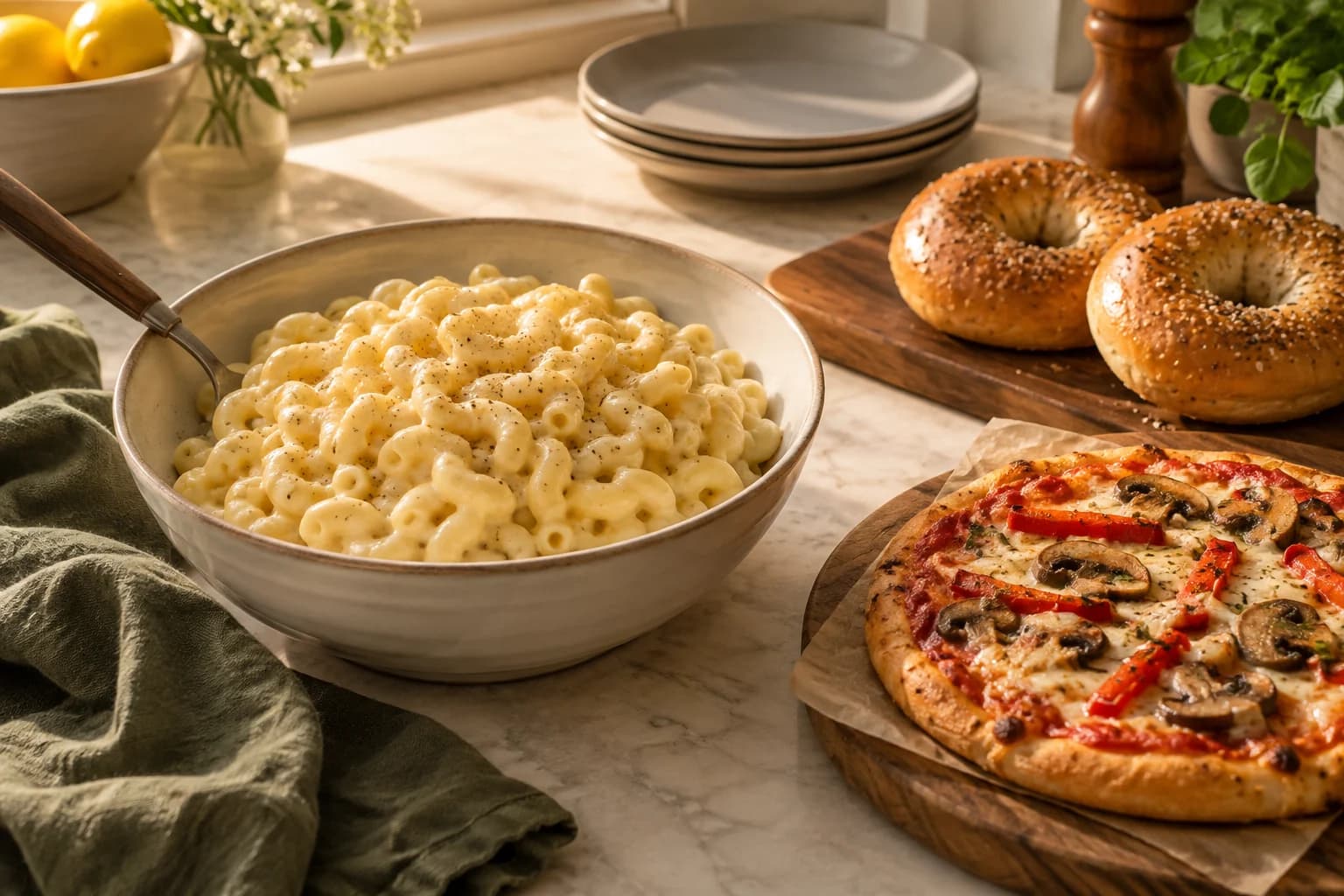
High-protein pizza offers a different dinner texture, with a quick Greek-yogurt crust, tomato sauce and measured toppings. The general high-protein pasta guide gives ideas beyond a cheese sauce, including ingredient and portion comparisons. Choose the meal that fits what you have and the kind of cooking you feel like doing. A stovetop bowl and a tray-baked pizza each have their place without needing to compete for the biggest protein number.
High-protein bagels are useful for a savoury breakfast or a sandwich lunch. Their yogurt dough has its own formula and baking guidance; it is not interchangeable with this blended cheese sauce simply because both use dairy. Keep the portion definitions attached to each recipe. One bagel, one bowl and one personal pizza are different servings, and their nutrition should be compared with that in mind.
Breakfast and make-ahead variety
French toast, oatmeal and pancakes offer familiar morning options, while banana bread can be sliced ahead when you want a baked breakfast or snack. A yogurt bowl is another simple way to use dairy already in the fridge. The links below let you explore those meals when you want variety. Start with a few recipes you actually enjoy repeating, then add another when it helps the week’s meals feel easier.