
Browse the 15 recipe sections
One reference serving: one complete personal pizza, including measured sauce, mozzarella, vegetables and cooking oil. Extra toppings and sides are additional. Oven times are estimates. See the breakdown.
Recipe Overview
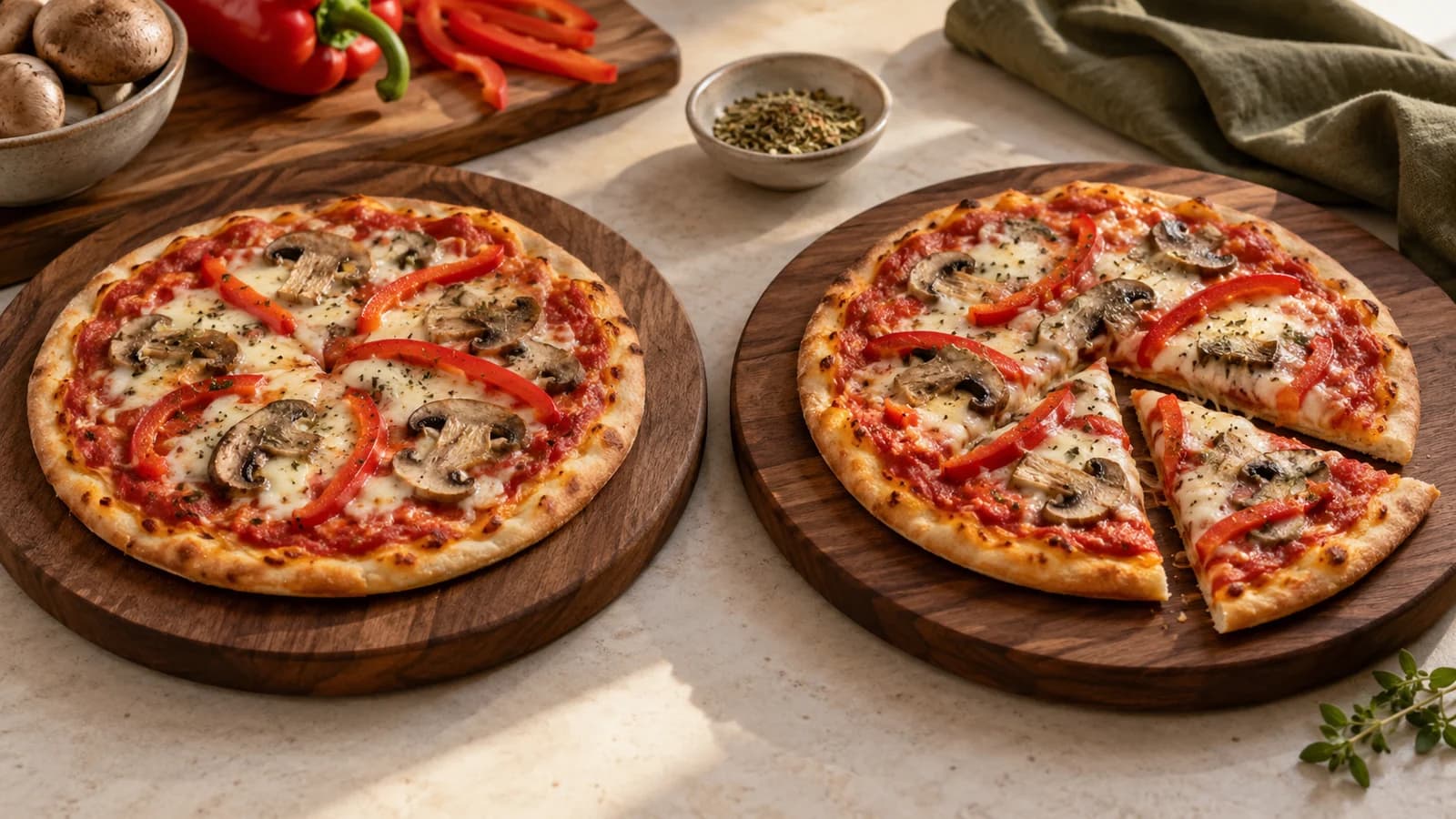
Pizza night usually starts with a small decision: order something familiar, or make whatever the fridge can support. This high protein pizza gives you a third easy route. Thick Greek yogurt and flour become a quick dough, then tomato sauce, mozzarella, mushrooms and red pepper turn it into a proper savoury meal. There is no yeast to activate and no protein powder to disguise beneath the cheese. The ingredients do the ordinary jobs you would expect in a kitchen.
The reference batch makes two personal pizzas, each about 8 inches across. One whole pizza, including its measured toppings, provides approximately 437 calories and 26g protein. Cut each into four wedges if you like, but remember that the full nutrition serving is one pizza, not one little wedge. Half a pizza supplies about 219 calories and 12.8g protein. The portion description matters more than how many cuts you make with the wheel.
What the crust is like
This is a baking-powder yogurt dough. Expect a thin, tender centre and a modest golden edge, with a little tang beneath the tomato sauce. It does not need hours of fermentation, and it will not reproduce the big blistered rim of a high-temperature Neapolitan pizza. Roll it evenly, give the bare base a short bake, and keep the toppings light enough that the middle can finish cooking. Those choices make more difference than achieving a perfect circle.
Allow about 20 minutes for weighing, shaping and preparing the vegetables, roughly 15–20 minutes of oven time, and a few minutes for the finished pizzas to settle before slicing. Around 45 minutes is a useful planning estimate for the base batch, with tasks overlapping while the oven warms. Your pan, oven and dough thickness affect the actual timing. The method includes things to look for rather than asking you to trust the clock alone.
Start with the complete reference pizza
For a first attempt, use the measured vegetable and cheese topping. It gives you a clear starting point for both texture and nutrition. Later, you can add cooked chicken, use less cheese, or serve a smaller portion beside another dish. Those changes are explained separately so a lighter pizza does not accidentally inherit the protein total of a larger one. The recipe card scales the batch to two, four or six personal pizzas while keeping the size of each pizza the same.
Why You’ll Love This Recipe
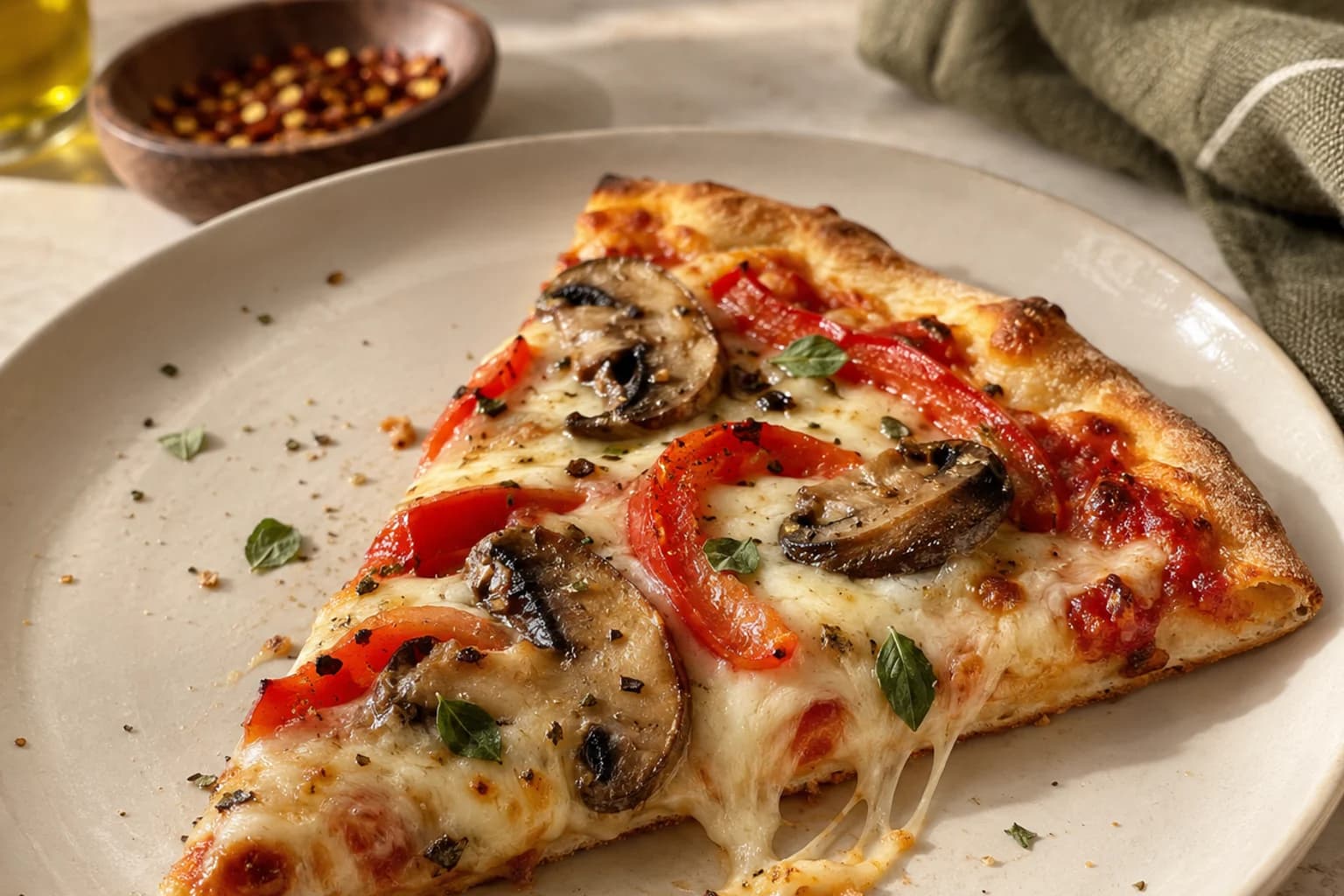
A dough you can make on an ordinary evening
A long-rise dough can be lovely when you have planned ahead. This one is useful when dinner needs to happen with the ingredients already in the kitchen. Mix the dry ingredients, fold in the yogurt and bring the dough together briefly. There is no proofing stage to schedule around work, school pickups or a hungry household. You can prepare the vegetables while the oven heats and the dough becomes easier to handle.
The protein comes from recognisable foods. Greek yogurt contributes to the crust, mozzarella adds more on top, and flour supplies a smaller share as well. You do not need an unflavoured supplement or a special high-protein flour blend. That also makes the taste easier to keep familiar: warm bread, tangy tomato, melted cheese and the sweet edges of red pepper. A protein number is useful, but the pizza still needs to be something you want for dinner.
Personal pizzas make toppings easier
Two small bases are easier to adapt than one large shared pizza. One person can have mushrooms across the whole surface; another can keep them on one side. For the reference nutrition, divide the ingredients evenly. If you change one pizza, track that one separately rather than averaging a chicken topping or extra cheese across both. Personal portions let you make the adjustment visible before anything goes into the oven.
The small format also helps with shaping and serving. You can roll a disk on parchment, move it onto a tray without stretching a huge sheet of dough, and lift a finished pizza with a broad spatula. A slightly oval base works perfectly well. Once it is sliced, nobody needs a compass measurement to enjoy the meal. Consistent thickness and a dry, cooked centre are more valuable than a bakery-perfect outline.
Familiar groceries, several uses
The remaining yogurt can become breakfast, a dip or a simple lunch side. Extra mushrooms and peppers can go into eggs or pasta. A block of mozzarella keeps its place in the fridge instead of becoming an ingredient you buy for one elaborate recipe and never touch again. This pizza works especially well as a flexible end-of-week meal, provided the vegetables are fresh and any leftover meat has been stored safely.
There is room to enjoy it without turning every topping choice into a nutrition project. Start with the measured version, learn the feel of the dough, and then choose the adjustments that suit your appetite. A drizzle of sauce or a little extra cheese is not a failure. It simply changes the finished meal, and the guide gives you a straightforward way to account for it when you want to.
Nutrition at a Glance
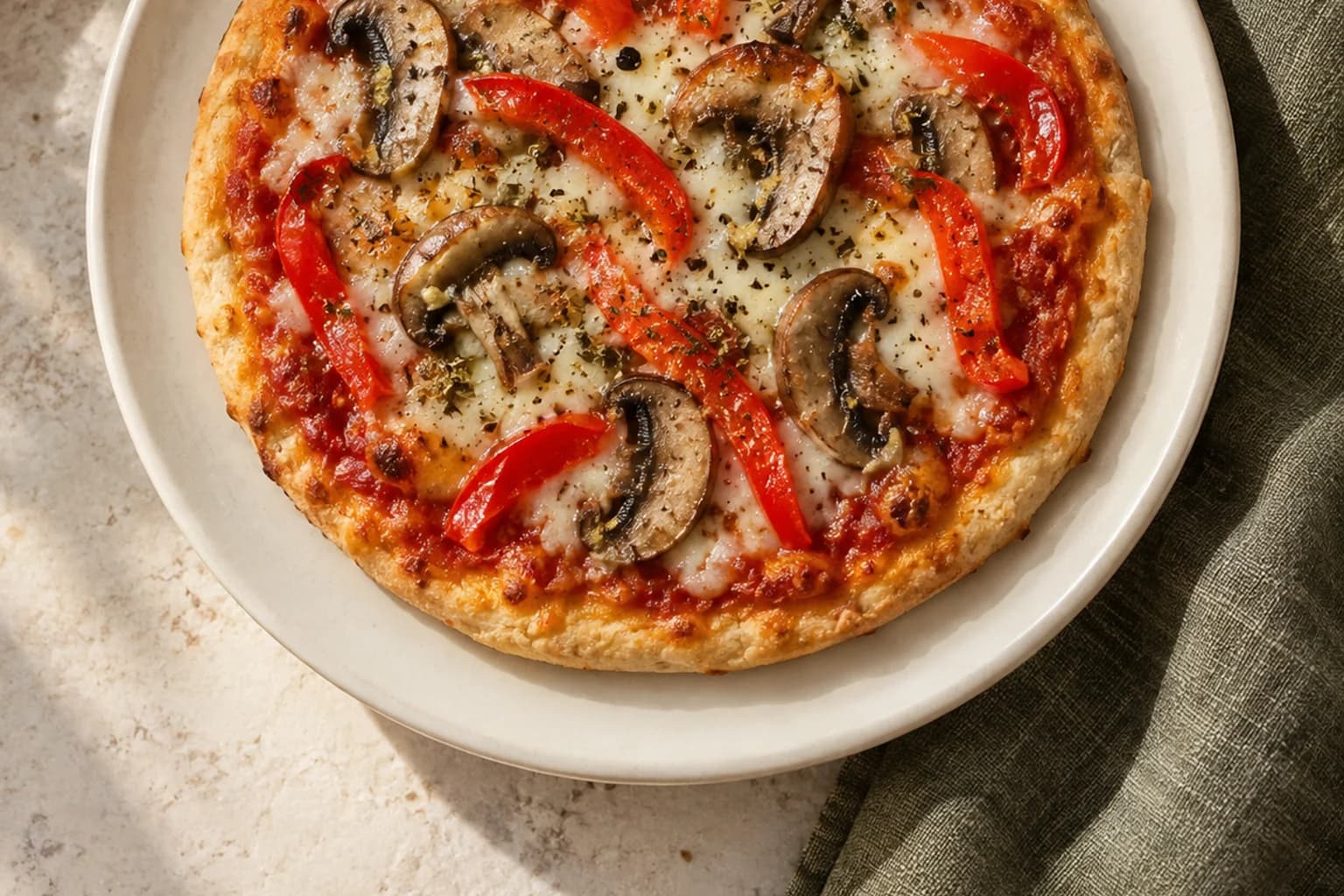
- Calories
- 437kcal
- Protein
- 26g
- Carbs
- 58g
- Fat
- 12g
Four useful numbers
One complete reference pizza is estimated at 437 calories, 26g protein, 58g carbohydrate and 12g fat. Those headline figures are rounded. The calculation before rounding gives about 25.6g protein and 57.7g carbohydrate, which explains why adding two rounded servings may not exactly match the unrounded batch totals. Use the displayed estimate consistently rather than trying to make every last decimal describe your own groceries.
The serving includes half of every ingredient in the two-pizza batch: dough, tomato sauce, mozzarella, vegetables and the olive oil used to cook them. There is no separate topping allowance hidden from the calorie figure. Extra dipping sauce, salad dressing, drinks and additional cheese are outside that serving. If you eat one pizza with a side, the meal total is the pizza plus the side, not the pizza number stretched to cover the whole table.
Where the protein comes from
The yogurt contributes about 7.6g protein to each pizza, mozzarella about 9.5g, and flour about 6.2g. The vegetables and sauce supply smaller amounts. This distribution is helpful when you make changes: reducing the cheese lowers both calories and protein, while adding a cooked lean topping raises both. The crust alone is not responsible for the complete pizza’s 26g headline. Keep that distinction in mind when comparing a plain base with a topped recipe.
Carbohydrate is mainly from the flour, with smaller contributions from yogurt, sauce and vegetables. This recipe is not a low-carbohydrate or keto crust. The reference amount can fit a mixed meal pattern, but someone specifically seeking a very low-carbohydrate pizza would need a different base and a different calculation. A high protein meal can still contain a substantial amount of bread; the two descriptions answer different questions.
A portion you can actually identify
If you cut a personal pizza into four equal wedges, each wedge is roughly one quarter of the complete serving: about 109 calories and 6.4g protein. Two wedges make the half-pizza estimate of about 219 calories and 12.8g protein. Slice sizes can drift, especially with an oval base, so use the fraction of the finished pizza you ate rather than assuming every triangle is identical. The full nutrition section includes ingredient contributions and additional nutrients.
Ingredients
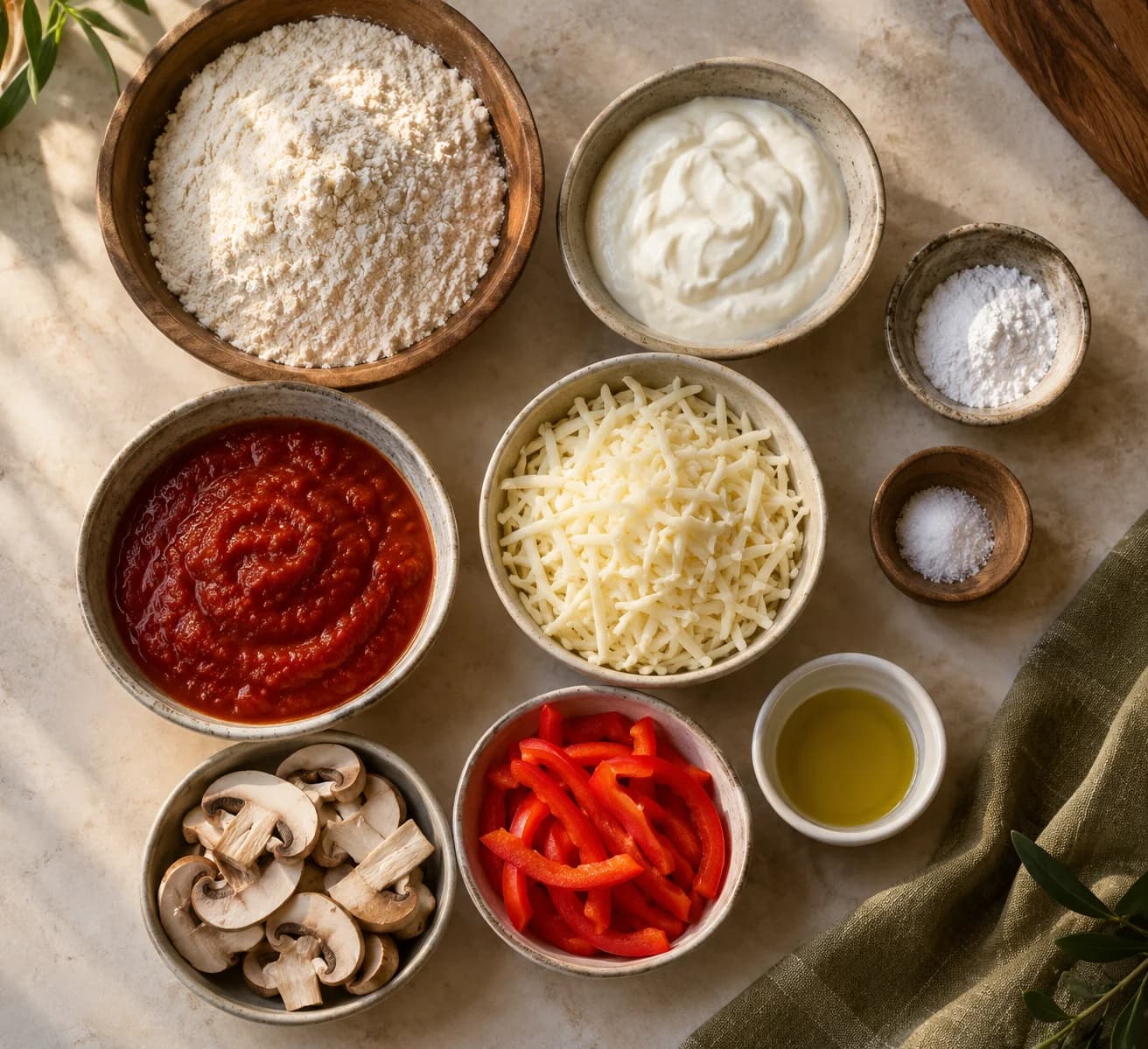
The dough ingredients
Use 120g all-purpose flour, 150g plain nonfat Greek yogurt, 5g double-acting baking powder and 1.5g fine table salt for the two-pizza batch. Reserve up to 5g of the flour for rolling, leaving the rest for the bowl. That small reserve is already part of the 120g total. If your dough genuinely needs more flour, add it gradually, note the amount, and include it when recalculating rather than treating dusting flour as nutritionally invisible.
Choose yogurt thick enough to sit on a spoon. Pour off obvious liquid on the surface before weighing, and avoid sweetened or flavoured yogurt. A pourable drinking yogurt brings a different amount of water and is harder to manage with this flour quantity. A low-fat Greek yogurt can work as a swap, but the base nutrition here uses nonfat plain yogurt. Thickness and the product label are both useful when choosing the tub.
The sauce and cheese
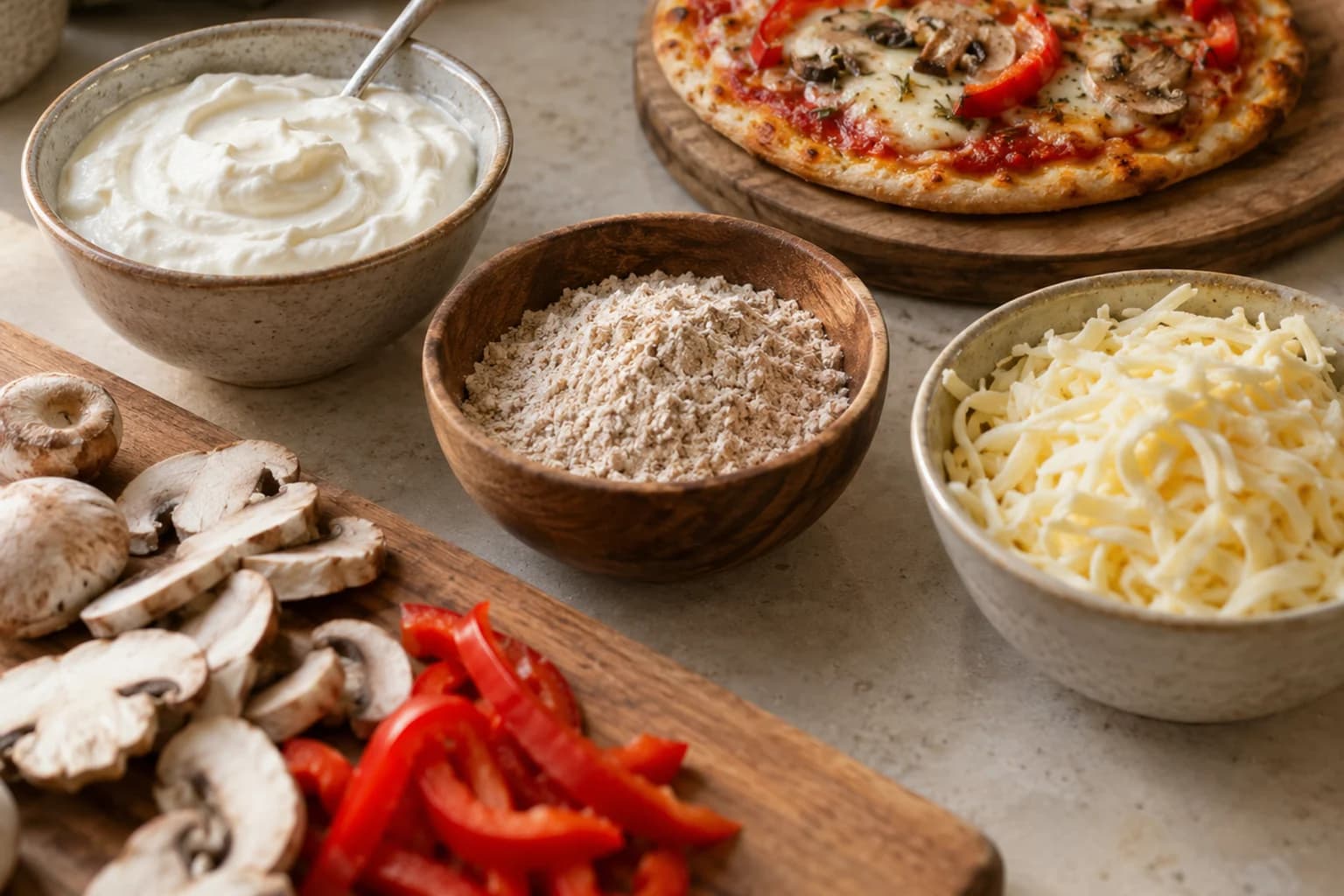
The topping uses 100g thick no-salt-added tomato sauce and 80g low-moisture part-skim mozzarella. Divide them as 50g sauce and 40g cheese per pizza. The sauce should spread as a thin coating rather than run into a puddle. If you simmer a watery sauce to thicken it, cool it and weigh the amount you actually use; its label and concentration may differ from the generic canned sauce used in the reference calculation.
Grate mozzarella from a block if possible. It is easy to measure, distributes well, and avoids the extra surface water of fresh mozzarella balls. Bagged shredded cheese is convenient too, though its nutrition can differ because of the formulation and coating. If you follow a vegetarian diet, check that the cheese uses suitable rennet. Milk is present in both the yogurt and mozzarella; this is not a dairy-free base even before the topping goes on.
Vegetables and the measured oil
Use 80g white mushrooms and 80g red bell pepper, weighed raw after trimming. Slice the mushrooms thinly and cut the pepper into narrow strips. Cook them briefly in the batch’s 5g olive oil before topping, until the mushrooms have released their moisture and the pan no longer holds a watery puddle. You are not trying to create a deeply fried topping. You are reducing the liquid that would otherwise collect on the small crust.
A bowl, spoon, scale, rolling pin, large metal baking sheet and oven-rated parchment cover the main equipment. Check the parchment manufacturer’s temperature limit for the 425°F / 220°C oven setting. A broad spatula helps you inspect the underside and transfer the pizza. A stone or steel is optional and requires its own preheating instructions; this recipe is designed to be approachable with an ordinary sheet pan.
Your ingredient checklist
- All-purpose flourIncludes up to 5g reserved for rolling; no extra uncounted flour120g
- Plain nonfat Greek yogurtThick and unsweetened; pour off visible whey before weighing150g
- Double-acting baking powderAbout 1 teaspoon; weigh for the reference batch5g
- Fine table saltAbout ¼ teaspoon; added to the dough1.5g
- No-salt-added tomato sauceThick plain canned sauce; 50g per pizza100g
- Low-moisture part-skim mozzarellaGrate from a block; 40g per pizza; check vegetarian rennet if needed80g
- White mushroomsWeighed raw, sliced thin and cooked before topping80g
- Red bell pepperWeighed raw without stem or seeds, thinly sliced80g
- Olive oilAbout 1 teaspoon; all of it counted for cooking vegetables5g
Contains wheat and milk. The reference has no added egg. Check labels and cross-contact for allergies; choose suitable mozzarella rennet if following a vegetarian diet.
Ingredient Substitutions
Changing the yogurt
A similarly thick plain low-fat Greek yogurt is the closest starting substitution for the nonfat reference. Weigh the same amount, look at the dough after mixing, and compare the protein and fat on the tub. A product that feels much looser may need a different flour balance. Do not add a large amount of flour immediately just because the dough is slightly tacky; a short rest and careful handling can be more useful than making it dry.
Cottage cheese is sometimes used in protein doughs, but it is not an automatic one-for-one replacement here. Even blended cottage cheese can differ in salt, moisture and curd structure. A cottage-cheese crust needs its own measured formula and baking checks. If that is the texture you want, start from a recipe developed around it rather than assuming the nutrition and method on this page still apply after switching the main wet ingredient.
Flour and leavening choices
You can explore replacing a small portion of the white flour with whole-wheat flour, such as 30g of the 120g total. Expect a stronger wheat flavour and potentially different absorption. Keep the total flour measured, assess the dough before adding more, and use the relevant flour values for nutrition. This is a possible starting adjustment, not a tested whole-wheat version with a guaranteed texture.
Self-rising flour already includes leavening and usually salt. Its composition varies by market, so follow a suitable self-rising-flour yogurt dough formula and omit additions that are already accounted for. Do not simply replace the flour while keeping the full baking powder and salt on top. Gluten-free flour also needs a separate developed method; removing wheat changes the structure, and a general baking blend is not proof that this crust will handle or bake the same way.
Cheese, vegetables and sauce
Low-moisture mozzarella is the easiest reference topping. Fresh mozzarella can be drained and used in a modest amount, but it tends to release more water. A reduced-fat cheese may melt differently and should be counted from its own label. Dairy-free cheese does not necessarily provide comparable protein. If you replace both yogurt and cheese, the name of the recipe alone cannot preserve the original protein total.
Thin onion, cooked courgette or well-drained spinach can replace some of the vegetables. Aim for a similar modest topping load and remove excess moisture first. Jarred sauce is fine when it is thick enough, but check its sodium and any added oil or sugar. Pesto and creamy sauces can taste excellent while changing calories and fat considerably. A swap is a choice with a new result, not a way to keep every number fixed.
Use this summary alongside the dough and topping guidance above.
| Reference ingredient | Possible change | What to check |
|---|---|---|
| Nonfat Greek yogurt | Similarly thick plain low-fat yogurt | Moisture, protein and fat from its label |
| 120g white flour | Replace 30g with whole-wheat flour | Absorption and texture; keep total flour measured |
| Low-moisture mozzarella | Drained fresh mozzarella or reduced-fat cheese | Water release, melting and different nutrition |
| Mushrooms and pepper | Other cooked, drained vegetables | Keep topping load modest |
| Flour, powder and salt | A suitable self-rising-flour method | Avoid doubling its existing leavening and salt |
How to Make It
Heat the oven and prepare the vegetables
Set a conventional oven to 425°F / 220°C and place a rack in the lower-middle area. Line a large metal sheet with parchment rated for that temperature. Weigh the ingredients, reserve up to 5g from the measured flour, and divide the topping ingredients mentally into two equal portions. Having the cheese and sauce ready prevents the bare crust from sitting around while you search the fridge halfway through baking.
Heat the measured 5g olive oil in a small pan over medium heat. Add the sliced mushrooms and pepper, then cook for roughly 4–6 minutes, stirring, until softened and the released liquid has mostly evaporated. Let the mixture cool briefly while you make the dough. The raw weights are used in the nutrition calculation; cooked vegetables may weigh less because water has escaped. Keep all the measured oil in the accounting even if a little remains in the pan.
Mix a soft dough and roll two bases
Whisk the flour remaining in the bowl with the baking powder and salt. Add the yogurt and fold until rough clumps come together. Knead gently for about 1–2 minutes, only until you have a reasonably cohesive dough. It should feel soft, with a little tackiness, rather than dry and crumbly. If it resists rolling, give it about five minutes to relax while you finish preparing the toppings.
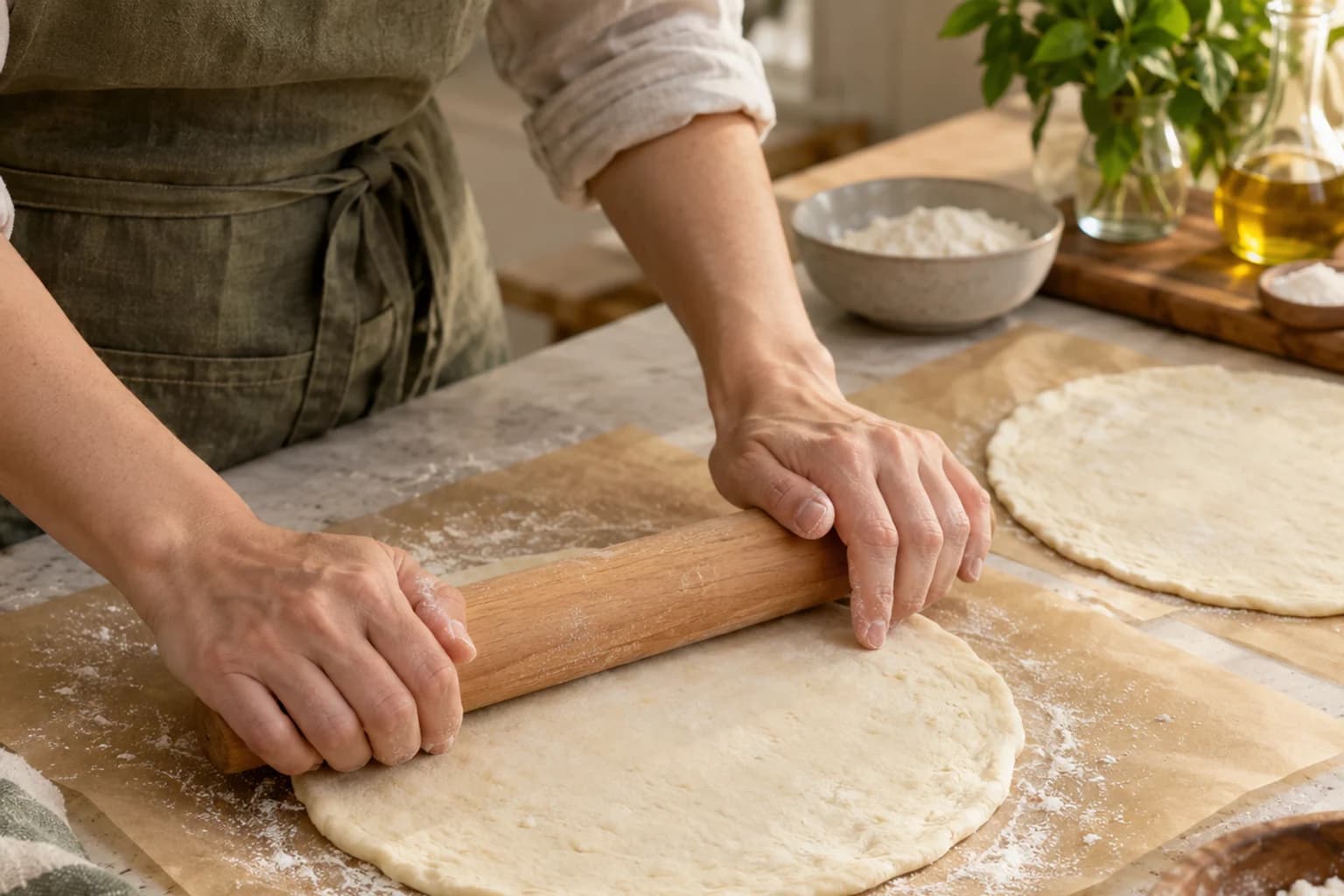
Divide the dough into two equal pieces. On parchment, roll each into an approximately 8-inch disk with a centre about 3–4mm thick. Leave a slightly thicker edge if you like, but avoid a bulky rim or a thick patch in the middle. Use the reserved flour sparingly on the pin or dough surface. A rough oval is fine. Transfer the parchment and bases to the sheet, allowing space rather than forcing overlapping disks onto a tray that is too small.
Give the crust a head start
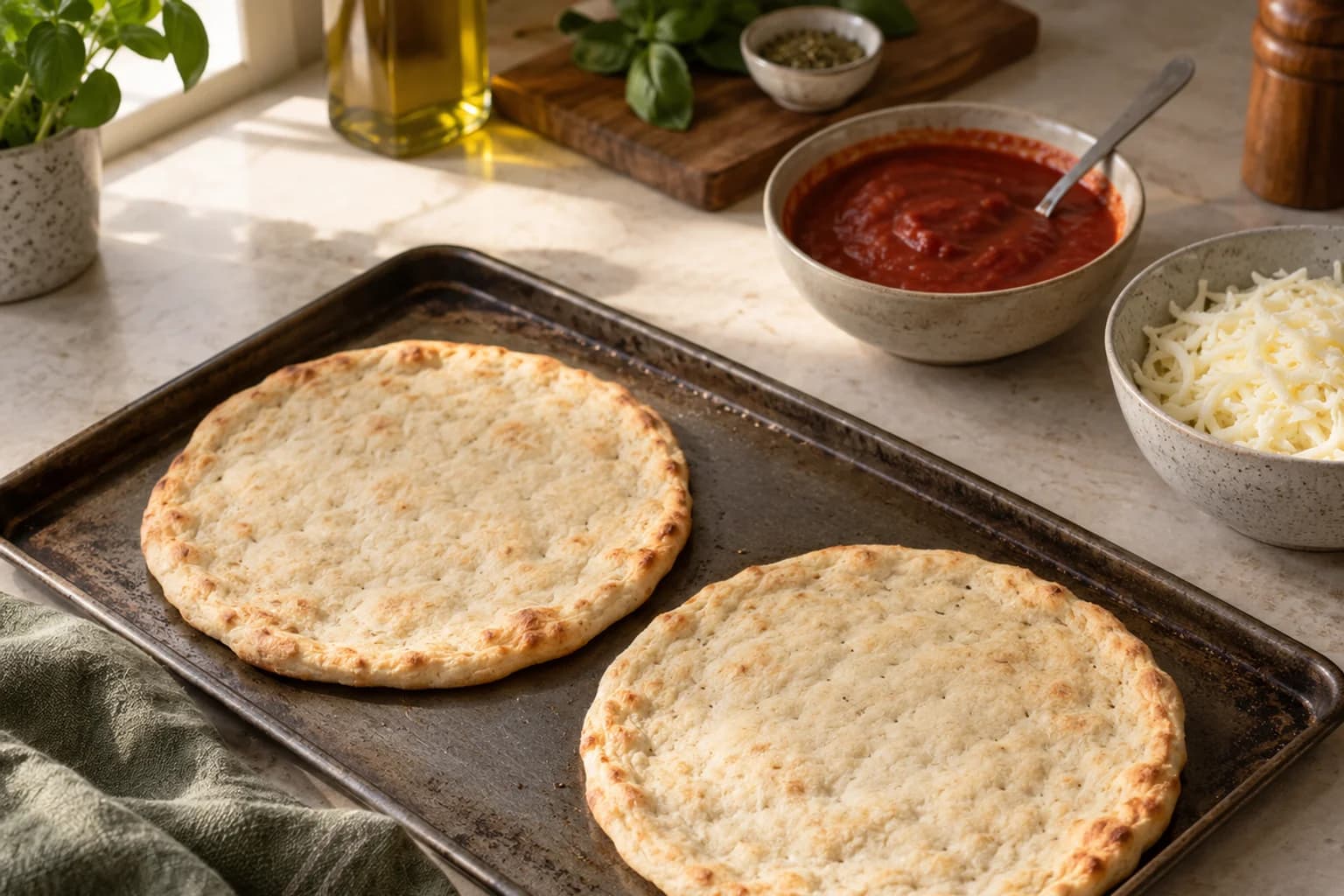
Bake the untopped bases for about 6–8 minutes. The top should look matte and set rather than sticky and raw; a little colour at the edge is enough at this stage. Do not wait for a fully browned crust before topping. This short first bake reduces the chance of trapping raw dough under sauce and cheese. Exact timing depends on thickness and your pan, so begin checking near the shorter end.
Remove the hot tray carefully. Spread 50g sauce over each base, leaving a narrow border. Add half the cooked vegetables and 40g mozzarella to each. Return to the oven for approximately 8–12 minutes, checking until the cheese has melted, the rim is golden and the underside and centre are cooked. Lift an edge with a spatula to inspect the base. Melted cheese alone does not confirm that the dough beneath it is ready.
Rest briefly, then slice
If the middle still looks wet or doughy, continue baking and check again. Once done, move each pizza onto a board or rack and allow roughly 3–5 minutes before cutting. This gives the cheese a moment to settle and makes the wedges easier to lift. Serve while warm. The times are estimates for this measured quick dough, not evidence of a physical kitchen test; use the texture checks and adjust to your oven.
Tips for the Best Results
Keep the centre the same thickness
When a crust seems cooked at the edge but remains pasty in the middle, uneven rolling is often part of the problem. Turn the dough as you roll and check the centre with your fingertips. A thick island under the sauce needs more time than a thin edge. Aim for an even sheet first, then deliberately leave a small rim. It is easier to control a modest personal pizza than a very large one stretched across the tray.
Resist the urge to make the dough completely non-sticky by adding handfuls of flour. Greek yogurt dough can be soft and slightly tacky. A little reserved flour on the rolling pin and a short rest may be enough to handle it. If the yogurt was unusually loose and extra flour is necessary, add a few grams at a time. Keep a note of that change for the next batch, especially if the nutrition estimate matters to you.
Manage water before it reaches the crust
A pizza base has a limited amount of surface area to dry in a short bake. Watery sauce, raw mushrooms and a pile of fresh mozzarella can overwhelm it. Cooking the reference vegetables first helps, and a thin sauce layer gives tomato flavour without flooding the centre. Drain substitutions such as thawed spinach thoroughly. If the topping bowl contains a puddle, leave that liquid behind rather than tipping it onto the dough.
Scatter the cheese across the whole sauced area rather than creating a thick mound in the centre. A modest amount distributed evenly can still make every bite feel like pizza. The pepper strips should be thin enough to soften, and the mushroom slices should not be stacked into a wet cluster. These details also make the wedges easier to cut and keep the topping from sliding away in one piece when you take a bite.
Check the underside, not just the cheese
Look beneath the pizza with a spatula before deciding it is finished. The base should be set and beginning to colour, and a cut through the centre should reveal cooked bread rather than a damp flour paste. If the top is browning faster than the bottom, a lower oven position may help on the next bake. For the current pizza, extend the bake carefully and protect the top if needed without treating a pale raw centre as ready.
Do not taste raw yogurt dough: flour is a raw ingredient even when the recipe contains no egg. Wash hands and utensils after mixing, and keep the rolling area clean. Handle the hot tray with proper oven gloves, particularly when topping between bakes. The recipe does not require balancing a floppy raw pizza on a blazing stone. Start with the straightforward sheet-pan method before experimenting with different baking equipment.
High-Protein / Lower-Calorie Variations
Add cooked chicken for more protein
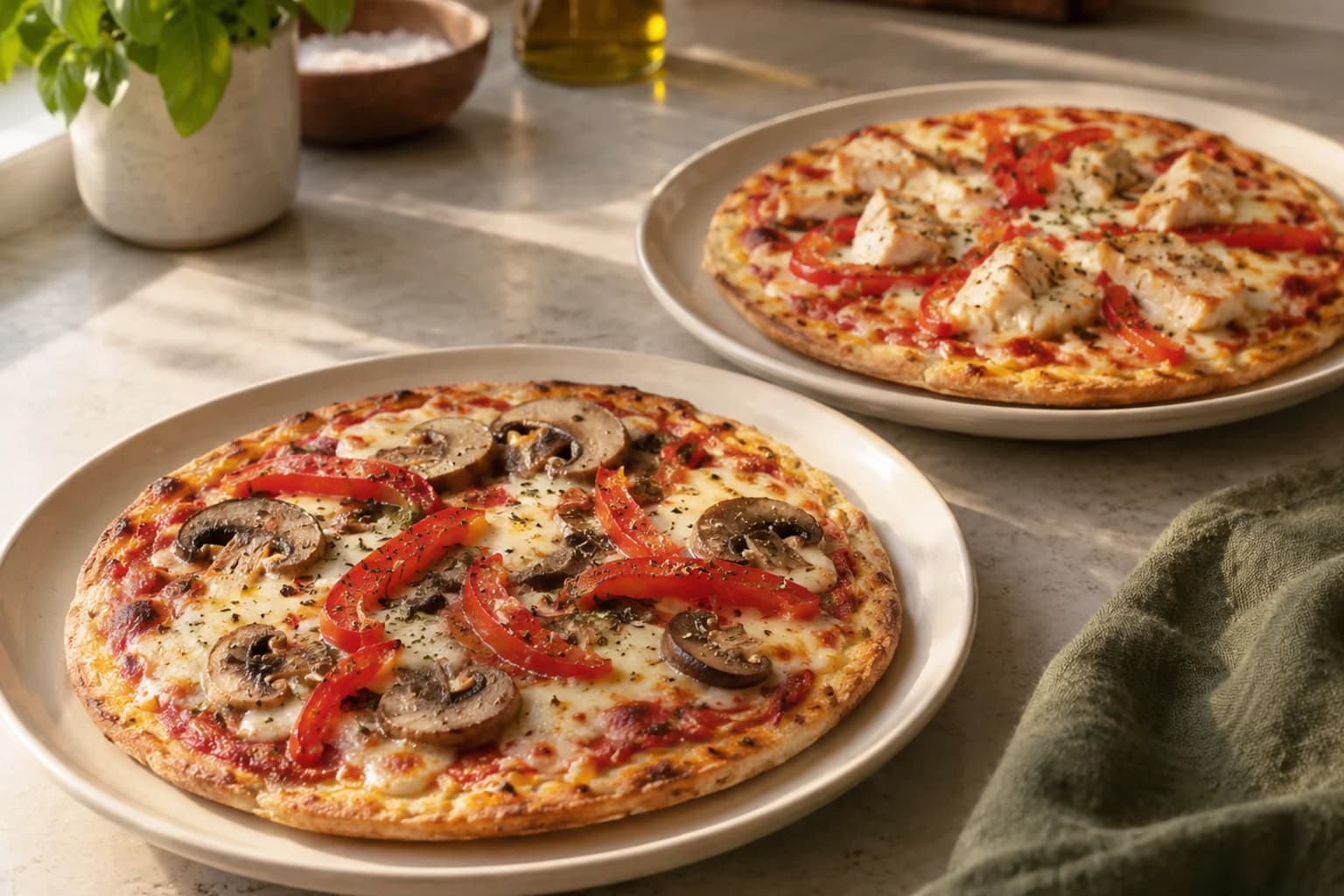
Add 50g plain cooked chicken breast to one reference pizza and its estimate becomes about 520 calories and 41.1g protein. That is the cooked weight, not the weight of raw chicken before cooking. Shred or slice it into small pieces and spread it lightly with the vegetables. Use fully cooked chicken, handle it safely, and include any oil or rich marinade separately. The short pizza bake should not be relied on to cook raw chicken pieces through.
For the whole two-pizza batch, that variation uses 100g cooked chicken in total. Keep the amount clear if only one person wants it. Chicken already seasoned with salty sauce or prepared as breaded strips will not match the plain roasted-breast reference. Check the label or recipe you actually used. A topping can raise protein without becoming a licence to ignore everything else that came with it.
Reduce the cheese rather than promising identical macros
Use 20g mozzarella per pizza instead of 40g, leaving the other ingredients unchanged. The result is approximately 378 calories and 20.8g protein per complete pizza. You save about 59 calories while giving up roughly 4.8g protein. Spread the smaller cheese amount carefully so the pizza still feels finished. This is a lower-calorie variation of this recipe, not a universal claim that every pizza under a particular calorie number is a light meal.
Another option is to serve half a reference pizza with a separately counted side. Half contains about 219 calories and 12.8g protein. A salad adds vegetables and volume, while a yogurt side adds protein. Count dressing and spreads rather than assuming that a small slice makes the whole meal low in calories. The smaller portion is useful when it matches your appetite; it does not have to replace a full pizza on a hungry evening.
Keep the pizza, add a yogurt side
A whole reference pizza plus 100g of the same nonfat Greek yogurt is about 496 calories and 35.8g protein before seasonings or other additions. You can serve the yogurt plain on the side or turn it into a dip with herbs; substantial additions need their own count. The yogurt does not have to be baked into the topping. Keeping it separate can be simpler and avoids putting another wet ingredient on the crust.
Less added salt, different topping flavours
Reducing dough salt from 1.5g to 0.75g for the two-pizza batch lowers the reference sodium estimate to about 646mg per pizza. Cheese and baking powder still contribute sodium, so this is not a sodium-free recipe. A salty jarred sauce can change the picture again. For flavour variety, try cooked onion, herbs or chilli if you enjoy them, but start with a small topping load and recalculate any meaningful ingredient changes.
These estimates describe the named portion with every other reference ingredient unchanged.
| Version | Calories | Protein |
|---|---|---|
| Complete vegetarian reference pizza | 437 kcal | 25.6g |
| Half a reference pizza | 219 kcal | 12.8g |
| Reference pizza + 50g cooked chicken | 520 kcal | 41.1g |
| 20g mozzarella instead of 40g per pizza | 378 kcal | 20.8g |
| Reference pizza + 100g nonfat yogurt side | 496 kcal | 35.8g |
Serving Suggestions
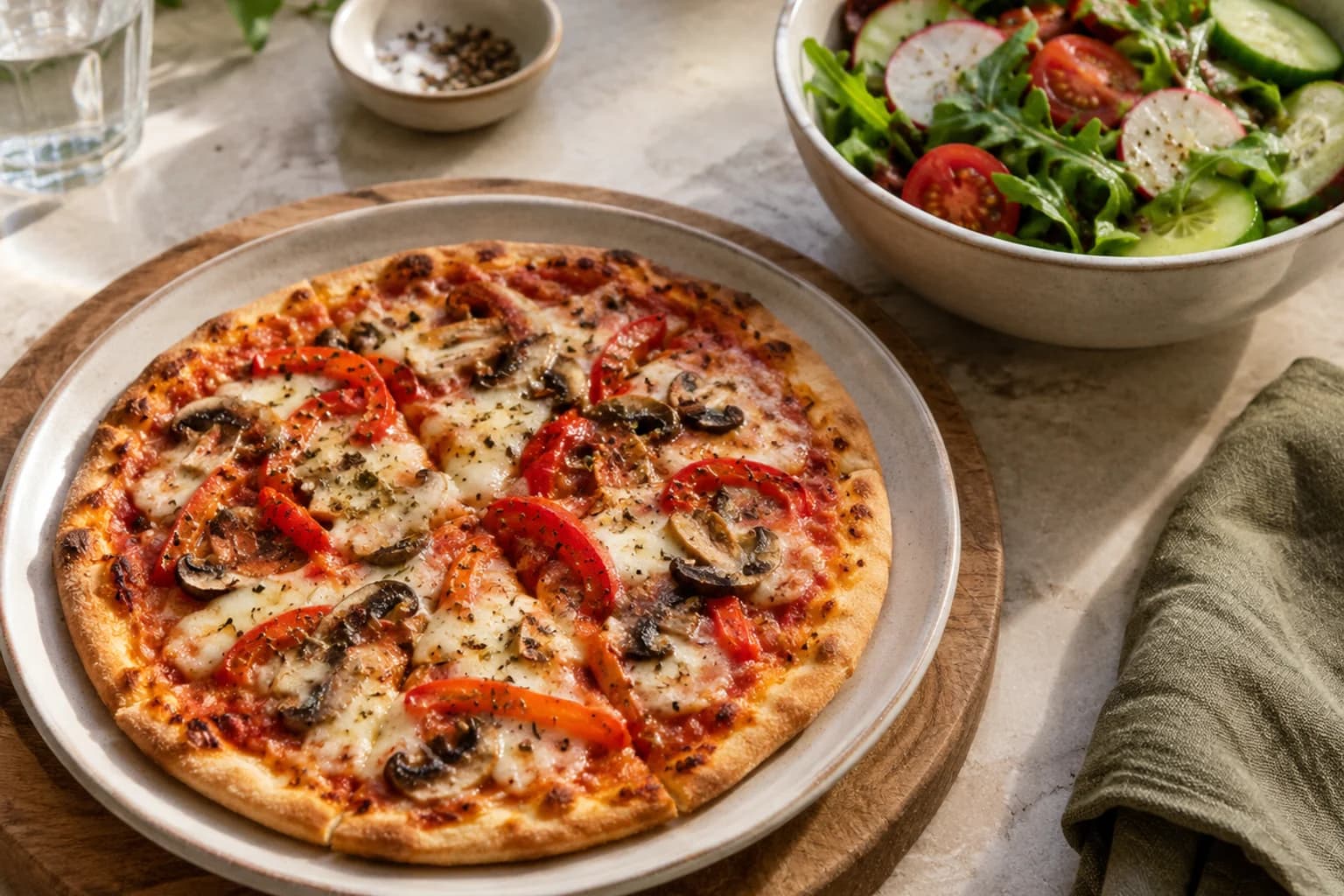
Let the pizza stay at the centre
Serve one warm personal pizza on a plate with the wedges still loosely arranged in a circle. A crisp salad works well alongside the soft cheese and bread: cucumber, leaves, tomato or radish give a fresh contrast without needing an elaborate dressing. Use the vegetables you enjoy. Measure oil-based dressing when tracking the meal, because it can contribute more calories than the salad vegetables themselves.
A simple tomato and cucumber bowl is enough when cooking the pizza has already used your energy for the evening. Add a piece of fruit afterwards if it suits the meal. There is no requirement to create a restaurant-style side course. The useful question is whether the finished meal feels satisfying and fits the rest of your day. A full personal pizza can be the main dish; half can be part of a larger lunch with another protein source.
A dip without a heavy sauce layer
For a cool contrast, serve a spoonful of plain Greek yogurt beside the plate. If you want a larger protein addition, the 100g yogurt-side variation has its own estimate. Add herbs, pepper or lemon to taste, and count richer mix-ins separately. Putting the dip in a little bowl keeps it from softening the whole pizza before you eat it. You can dip one wedge at a time rather than coating the crust in a wet blanket.
Tomato-based dipping sauce is another option. Use the label and actual amount rather than assuming it is identical to the sauce on the pizza. Pesto, garlic butter and creamy dips have a different fat and calorie profile. They can still belong on the table, but they are additional ingredients. The reference nutrition is useful precisely because it describes a particular complete pizza, not every possible pizza-night spread.
Shared meals and packed lunches
For a shared table, cut both pizzas into wedges and put them on a board with serving utensils. If you are logging a portion, keep track of which toppings you chose and roughly what fraction of a pizza you ate. A chicken wedge and a vegetable wedge may look similar in size while carrying different nutrition. Personal pizzas make the distinction easy before slicing; a labelled container is useful afterwards if storing several versions.
For lunch away from home, cool and refrigerate portions promptly, then pack them cold with an ice pack when needed. Reheat where suitable facilities are available, or eat safely chilled leftovers if you enjoy that texture. Do not leave a cheese-topped pizza in a warm bag through the morning. Storage is part of making the meal practical, just as much as rolling the crust and choosing the topping.
Meal Prep & Storage
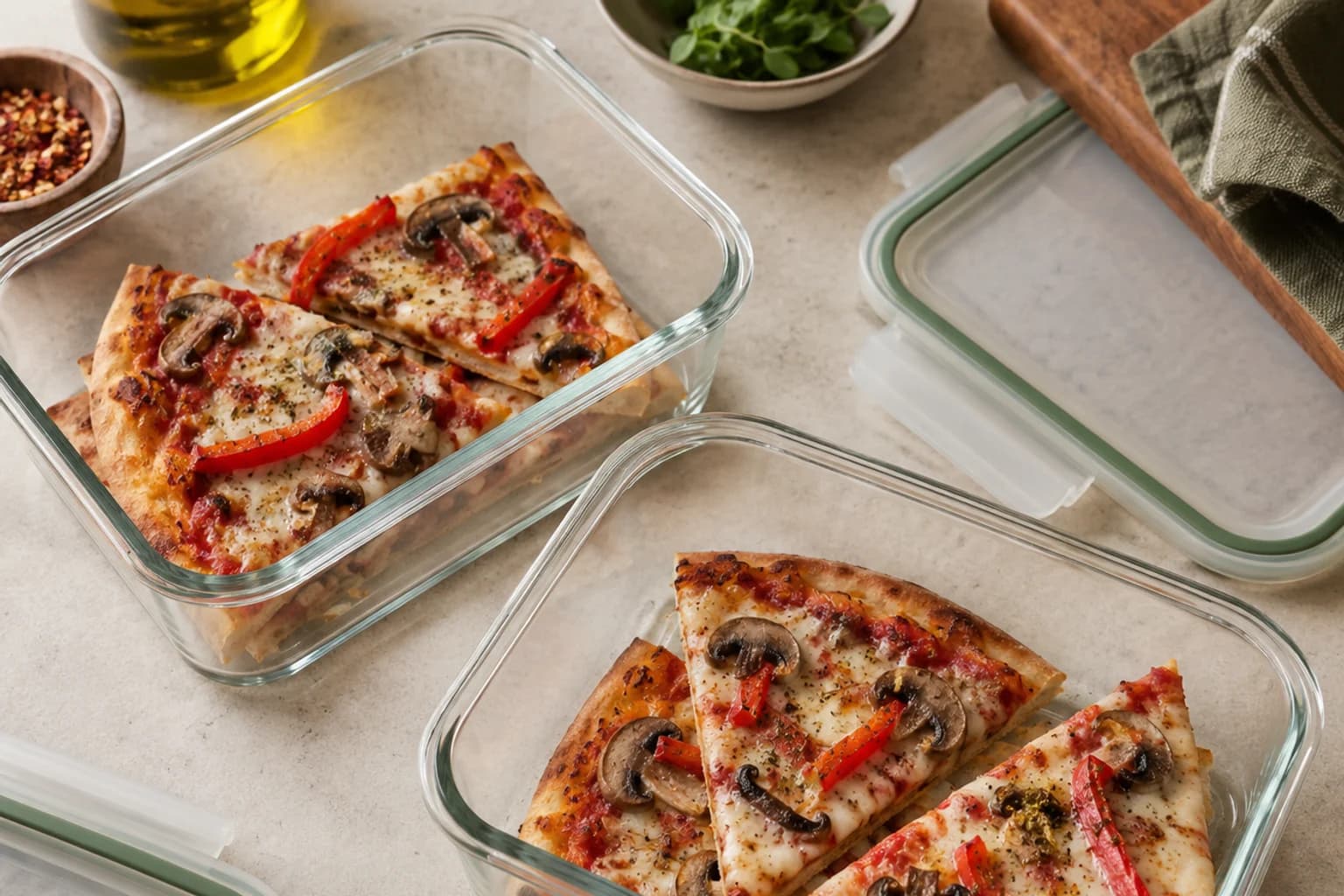
Plan the work, not only the quantity
The easiest preparation is often weighing the dry ingredients and grating the cheese in advance, then mixing the dough when you are ready to bake. Keep yogurt and cheese refrigerated until needed. You can cook and chill the vegetables ahead with safe handling, then portion them for topping. This saves the small jobs that tend to slow an evening meal without requiring you to keep a mixed baking-powder dough for days.
The exact raw dough has not been validated for overnight storage or freezing. Baking powder begins working once the ingredients are mixed, and the texture may change during a long hold. For dependable planning, prepare components separately or bake the pizzas and store the finished slices. If you experiment with raw-dough storage, treat it as a new preparation method rather than a guaranteed extension of the recipe card.
Refrigerate cooked pizza promptly
USDA leftover guidance supports refrigerating perishable cooked food within two hours, or within one hour when the surroundings are above 90°F / 32°C. Use shallow containers so portions can cool efficiently, and keep the refrigerator at 40°F / 4°C or below. Do not wait for a large stack of pizza to reach room temperature on the counter. Separate slices rather than building a deep pile that traps heat in the middle.
Use refrigerated leftovers within 3–4 days under appropriate handling. Label the container with the cooking date so lunch plans do not depend on memory. If you used previously cooked chicken or other leftovers as toppings, account for their earlier storage history rather than resetting their age when the pizza is baked. The most perishable ingredient and the handling history matter more than the neat appearance of the finished slices.
Freeze portions you will not use soon
Freeze cooled portions promptly in suitable airtight packaging, separating wedges if you want to remove them one at a time. Around one month is a practical quality target for this homemade pizza, rather than a tested maximum shelf life for the exact formula. Wrapping well reduces drying and freezer flavours. Mark both the date and topping type, especially when vegetarian and chicken versions are stored together.
Reheat for safety and texture
Reheat leftovers thoroughly to 165°F / 74°C, checking with a food thermometer. An oven or covered pan can help the crust regain some firmness; a microwave is convenient but may leave it softer. Begin with a moderate heat setting and adjust the time to the thickness and whether the portion is chilled or frozen. Do not use browned cheese as the only check. Reheat the portion you intend to eat rather than repeatedly warming and cooling the whole batch.
Full Nutrition Information
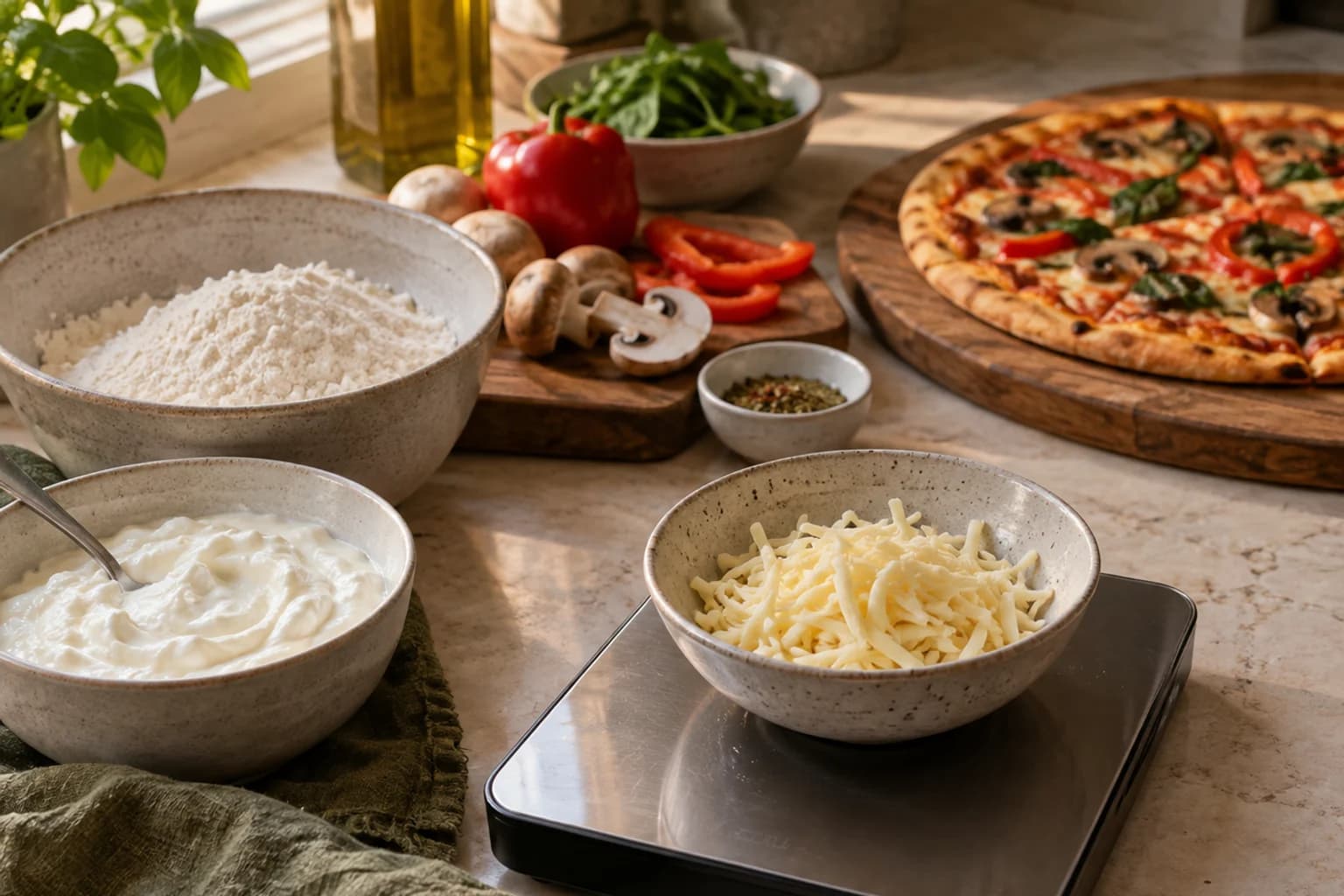
How the estimate is built
The calculation uses generic edible-ingredient values from USDA’s Standard Reference dataset, multiplied by the measured grams of each ingredient. It adds the two-pizza batch first and divides that result by two for the complete serving. This keeps the crust and topping in the same accounting. The ingredient table below lets you see the contribution of flour, yogurt, cheese and the other items without guessing which part of the recipe carries the headline protein.
These are estimates, not a laboratory analysis of a finished pizza. Product labels can differ from generic records, particularly for mozzarella, yogurt, tomato sauce and baking powder. If you use a specific branded ingredient, calculate from its stated serving weight rather than assuming the generic row is exact. A difference of a few calories is less important than remembering an extra spoon of oil or an additional handful of cheese.
Water loss changes weight, not the starting ingredient list
The mushrooms and pepper are counted from their raw trimmed weights. Cooking reduces their water, so the finished topping may weigh less. The dough and cheese also lose some moisture in the oven. This recipe therefore defines a portion as half of the complete batch rather than a fixed cooked gram weight. Without weighing the finished pizzas, an exact per-100g cooked-food value would add precision that the method cannot support.
All 120g flour and the full 5g olive oil are included. A little flour left on the parchment or oil remaining in the pan makes the reference slightly conservative. Do not subtract those amounts unless you actually measure them. Conversely, extra rolling flour, a greased tray, rich sauce or finishing oil should be added if used. Small cooking details are easier to track when the reference recipe states its assumptions clearly.
Beyond the headline macros
Per complete pizza, additional estimates are 3.6g fibre, 7.6g total sugars, 5.1g saturated fat and 792mg sodium. Total sugars include naturally occurring sugar in yogurt, vegetables and tomato; they are not a separate claim about added sugar. The reference sauce has no added salt, but mozzarella, baking powder and dough salt still contribute sodium. Your actual labels may give a different balance.
Cholesterol and a complete vitamin and mineral panel are not calculated here. The heading provides the full nutrition information available for this recipe, with those limits stated rather than filled with guessed numbers. For a different topping or dietary requirement, start with the measured ingredient list and update the relevant rows. The base table should help you make a useful comparison, not imply that one generic estimate overrides your own product information.
| Ingredient | Amount | Calories | Protein | Carbs | Fat |
|---|---|---|---|---|---|
| All-purpose flour | 120g | 437 kcal | 12.4g | 91.6g | 1.2g |
| Plain nonfat Greek yogurt | 150g | 89 kcal | 15.3g | 5.4g | 0.6g |
| Double-acting baking powder | 5g | 3 kcal | 0.0g | 1.2g | 0.0g |
| Fine table salt | 1.5g | 0 kcal | 0.0g | 0.0g | 0.0g |
| No-salt-added tomato sauce | 100g | 24 kcal | 1.2g | 5.3g | 0.3g |
| Low-moisture part-skim mozzarella | 80g | 236 kcal | 19.0g | 4.5g | 15.8g |
| White mushrooms | 80g | 18 kcal | 2.5g | 2.6g | 0.3g |
| Red bell pepper | 80g | 25 kcal | 0.8g | 4.8g | 0.2g |
| Olive oil | 5g | 44 kcal | 0.0g | 0.0g | 5.0g |
| Whole batch | 2 complete pizzas | 874 kcal | 51.1g | 115.4g | 23.4g |
| One complete pizza | Batch ÷ 2 | 437 kcal | 25.6g | 58g | 12g |
| Dietary fiber | 3.6g |
|---|---|
| Total sugars | 7.6g |
| Saturated fat | 5.1g |
| Sodium | 792mg |
Estimated recipe nutrition, not a laboratory analysis. Includes all measured flour, sauce, cheese, vegetables and oil; small unused amounts make the estimate conservative. Extra toppings, dips and sides are additional. Cholesterol and complete micronutrients are not calculated.
How This Fits Your Daily Protein Goal
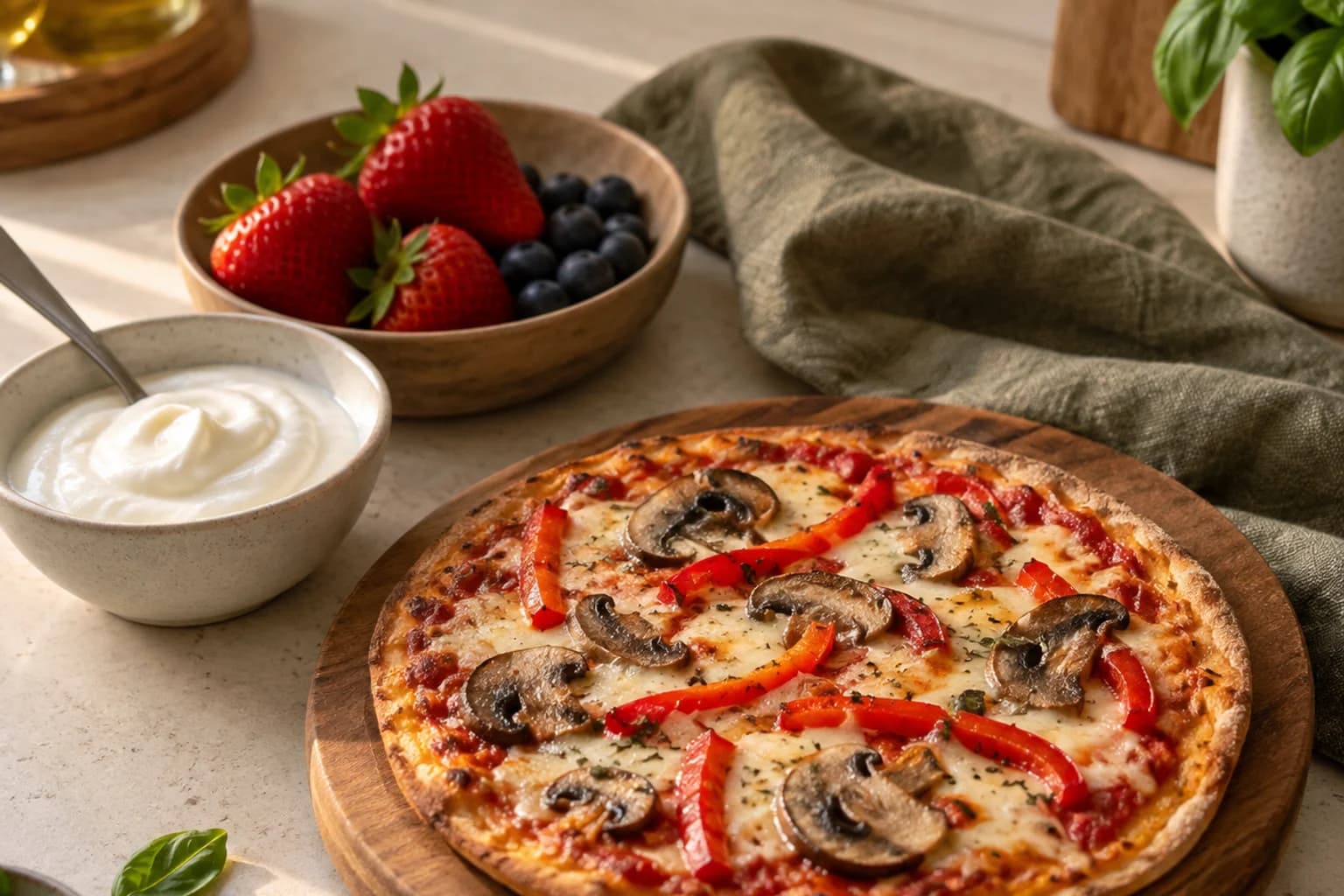
Put the serving in context
A daily protein goal is easier to use when familiar meals have clear portions. One complete reference pizza contributes about 25.6g protein before rounding. If your own target happens to be 100g for the day, that is roughly one quarter; at 120g it is about one fifth. Those are arithmetic examples, not recommended targets for everyone. Your body size, activity, overall diet and circumstances affect the goal that is appropriate for you.
Use the protein calculator if you want a starting estimate based on your own inputs, then consider the result alongside meals you actually enjoy. The pizza does not need to supply the whole day’s protein. Breakfast, lunch, dinner and snacks can each contribute. A lunch you can repeat comfortably is often more useful than one giant evening meal designed to make up for everything missed earlier.
Choose the adjustment that solves your need
If you want more protein at dinner and are comfortable with a larger calorie total, the cooked-chicken version raises the estimate to about 41.1g. If you prefer to keep the vegetarian pizza unchanged, a separately counted yogurt side is another option. If appetite is smaller, half a pizza can be paired with another dish. These are different meals, and each has its own trade-off rather than one universally best arrangement.
A lower-calorie cheese version provides around 20.8g protein, which can still be a useful contribution. You do not have to restore every removed gram with a supplement. Look at the whole day before deciding whether a particular dinner needs more. The reason for tracking is to support practical choices, not to turn a pleasant homemade pizza into a test that must pass an arbitrary protein score.
Count actual toppings and portions
The vegetarian reference already includes mozzarella and yogurt. Adding them again as separate extras in a food log would double count. On the other hand, using the plain-crust entry for a pizza with cheese would miss a substantial part of the meal. Choose either the complete recipe serving or an ingredient-by-ingredient log, and keep the approach consistent. The clear recipe yield makes that decision easier when cooking for several people.
Make it personal
Where does pizza fit in your day?
Estimate your daily protein target, then plan meals you enjoy.
Recipe Card
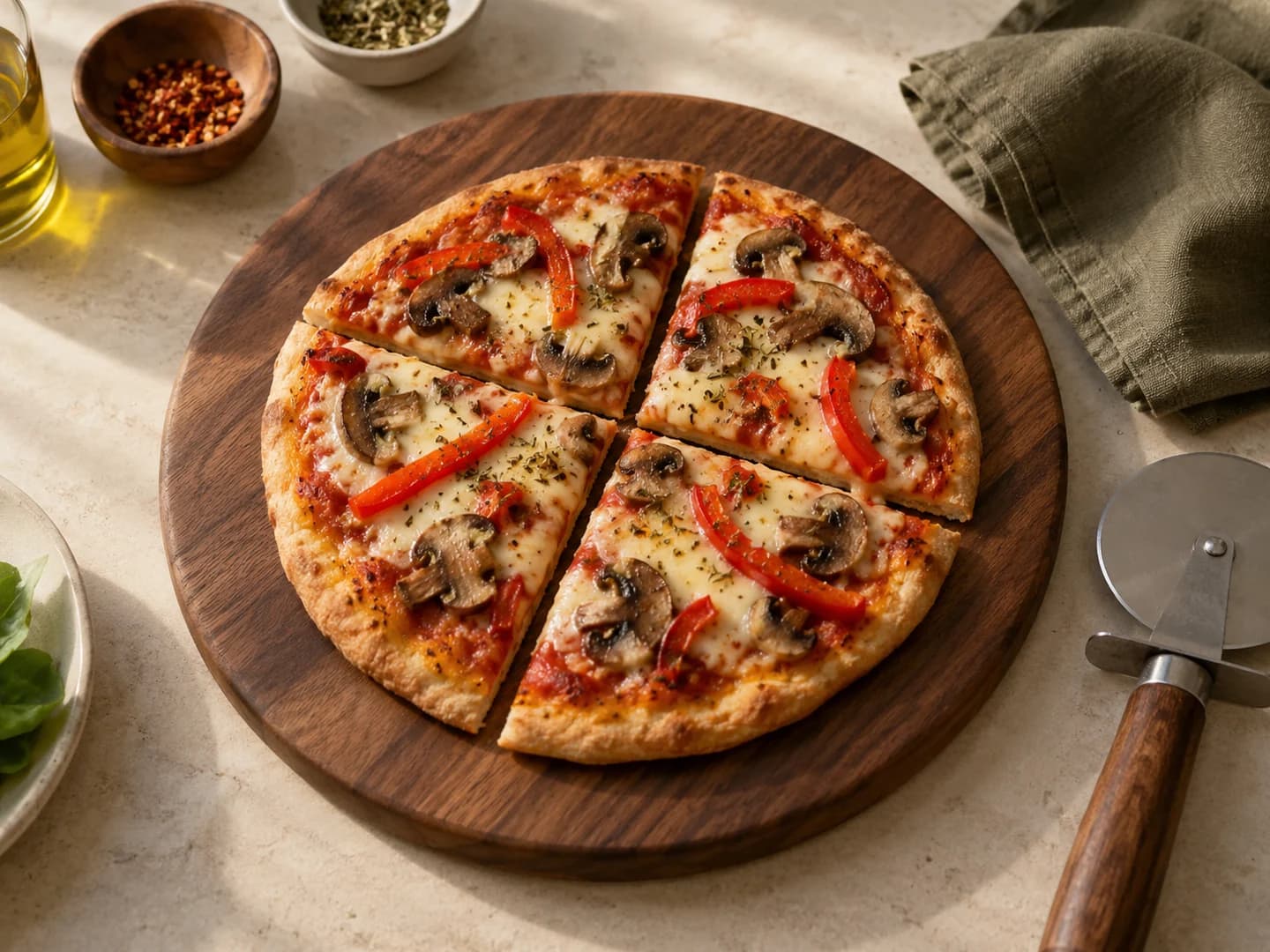
Keep the card beside your bowl
The card brings the weighed ingredients and the method into one place. Select two, four or six personal pizzas before you begin, then tick ingredients as you prepare them. Each pizza remains approximately 8 inches across. Scaling the batch changes the shopping and mixing quantities; it does not turn the reference into one giant thick crust with the same baking time. Use enough trays or bake in rounds so the bases can cook evenly.
The displayed nutrition stays per complete reference pizza as you scale. Two pizzas feed two reference servings, four provide four, and six provide six. Oven timing can increase when you need separate rounds, so the base-batch total is a planning estimate rather than a promise for every batch size. Resetting the checklist when you change the amount helps prevent a quantity checked for one batch from being mistaken for another.
Use the finish checks
Parbake until the bare surface is set, top lightly, then finish until the underside and centre are cooked as well as the cheese. A little extra oven time is preferable to serving a wet middle because the timer rang. Print the card if you like a paper copy on the counter. For ingredient swaps, storage and detailed nutrition assumptions, the surrounding sections provide the context that a compact cooking card cannot hold by itself.
Your pizza, ready to bake
High-Protein Greek Yogurt Pizza
Quick yogurt crust, mozzarella, mushrooms and red pepper.
*Base-batch estimates, with preparation tasks overlapping. Keep each pizza about 8 inches across. Extra trays or baking rounds can increase total time. Nutrition stays per complete reference pizza.
Ingredients
Method
- Prepare the oven and ingredients
Preheat a conventional oven to 425°F / 220°C. Line a large metal sheet with parchment rated for that heat. Weigh the ingredients and reserve up to 5g from the 120g flour for rolling.
- Cook the vegetables
Heat the measured 5g oil over medium heat. Cook the sliced mushrooms and pepper for about 4–6 minutes until softened and released liquid has mostly evaporated; use a large enough pan or work in rounds. Cool briefly.
- Mix the yogurt dough
Whisk the remaining flour, baking powder and salt. Fold in the yogurt and knead gently for about 1–2 minutes until cohesive. If it resists rolling, rest for about 5 minutes. Use the reserved flour sparingly.
- Roll and parbake
Divide into 2 equal pieces. Roll each on parchment into an approximately 8-inch disk with a 3–4mm centre and modest rim. Place without overlap on the lined sheets. Bake bare bases for about 6–8 minutes until the surface is matte and set, working in rounds if needed.
- Top and finish baking
Carefully remove the tray. Add 50g sauce, one half of the cooked vegetables and 40g mozzarella to each base, leaving a narrow border. Bake another 8–12 minutes until cheese melts, edges are golden and the underside and centre are cooked. Extend if the centre is wet dough.
- Rest, slice and serve
Rest the finished pizzas for about 3–5 minutes before slicing. One whole topped pizza is one reference serving; cut each into four wedges if desired. Refrigerate leftovers promptly in shallow containers.
Keep bases separate and check each tray. Do not multiply baking time automatically. Do not taste raw dough. Added chicken must be fully cooked.
Includes measured dough, sauce, mozzarella, vegetables and oil. Extras are additional. Contains wheat and milk; check cheese rennet if needed. Refrigerate leftovers promptly, use within 3–4 days, and reheat to 165°F / 74°C.
Frequently Asked Questions
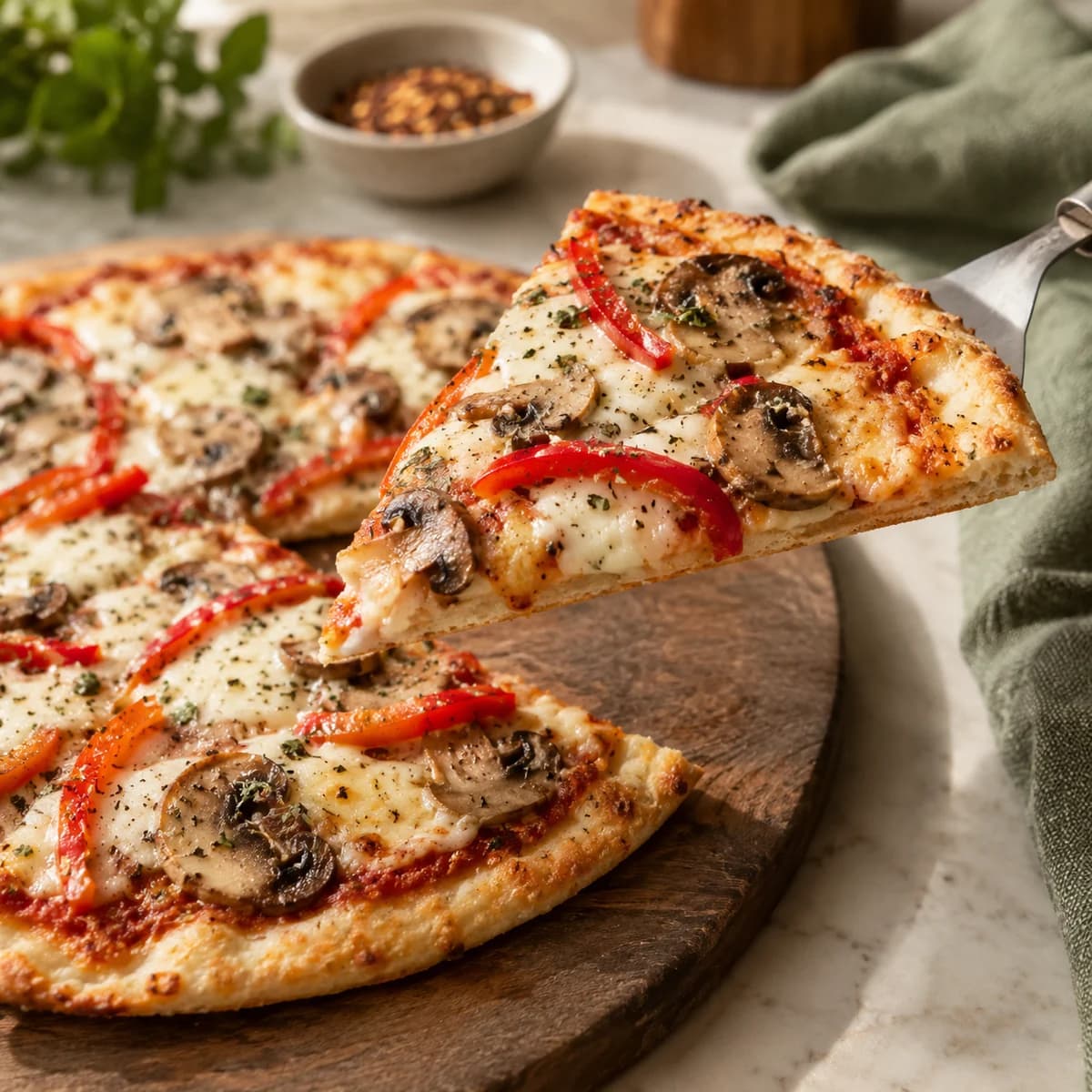
Greek yogurt pizza is straightforward once the dough is soft enough to roll and the toppings are kept under control. The answers below cover the choices most likely to change your first batch: yogurt type, flour, cheese, portions and oven method. A substitution can be reasonable without being a tested equivalent. If a change alters the structure of the crust, start cautiously and judge the bake rather than expecting the original timing to carry over automatically.
Nutrition answers refer to the complete measured vegetarian pizza, unless a variation is named. Storage answers assume proper refrigeration and handling. If you are trying a new appliance or a substantially different dough, use instructions developed for that method rather than copying the same temperature and time into every setting. The aim is a useful dinner, with a clear explanation of what the figures and steps actually describe.
How much protein is in this high protein pizza?
One complete reference vegetarian pizza provides about 25.6g protein, rounded to 26g. That includes its yogurt crust, 40g mozzarella, sauce, vegetables and measured cooking oil. Half a pizza is about 12.8g protein. Adding 50g plain cooked chicken breast to a whole pizza raises the estimate to 41.1g; the plain crust alone does not have the complete pizza’s protein total.
Can I make protein pizza without protein powder?
Yes. This recipe uses plain Greek yogurt, flour and mozzarella as its main protein contributors. No protein powder is needed. Adding whey or another powder would change dough hydration and structure, so do not replace flour casually and assume the same method works. Start with the measured food-based dough if you want the published texture and nutrition estimate.
Does Greek yogurt pizza dough need yeast?
This quick dough uses baking powder, so it has no yeast activation or proofing stage. Expect a tender thin crust with a modest rim rather than a long-fermented, airy pizza edge. A short pause can help rolling if the dough resists, but leaving it for hours does not turn it into a yeast dough.
Can I use regular yogurt instead of Greek yogurt?
Pourable regular yogurt is not a reliable direct swap for the thick Greek yogurt in this formula. Its extra water can make the dough sticky and alter the flour balance. Choose a thick plain strained product. If using a different yogurt, assess its consistency and nutrition label, and treat any necessary adjustment as a changed recipe.
Can I use self-rising flour?
Yes, with a suitable yogurt-dough formula that accounts for the flour’s existing baking powder and salt. Do not keep all the reference leavening and salt automatically. Self-rising flour formulations differ between products and countries, so use the label and a matching method rather than assuming every packet behaves identically. Recalculate nutrition for your actual ingredients.
Why is my pizza dough too sticky?
The yogurt may be looser than the reference, or the flour may have been under-measured. Begin with the reserved rolling flour and a short rest; a soft dough can be slightly tacky without being unusable. If it remains unmanageable, add small weighed amounts of flour and record them. Large unmeasured handfuls can produce a dry crust and change the calorie estimate.
Why is the middle of my pizza soggy?
Common causes include a thick centre, watery sauce, wet vegetables or a heavy cheese layer. Roll evenly, parbake until the bare surface is set, cook and drain vegetables, then top modestly. Finish until the underside and centre are cooked, not only until the cheese melts. If the middle is still wet dough, continue baking rather than relying on topping colour.
Is this recipe gluten-free or dairy-free?
No. The reference contains wheat and milk from yogurt and cheese. It contains no added egg, but check packaged ingredients and cross-contact where allergies matter. Gluten-free and dairy-free versions need appropriate developed formulas; replacing both main ingredients can change structure and protein substantially. Check mozzarella rennet if you need vegetarian cheese.
Can I add raw chicken to the pizza?
Use fully cooked chicken for the variation. The short finishing bake is not a dependable method for cooking raw chicken pieces through. Weigh 50g cooked chicken for the stated single-pizza variation, and account separately for oily marinades, breading or additional sauce. Store and reheat the finished pizza safely, considering any earlier storage of the chicken.
Can I make this pizza in an air fryer?
The published method is for a conventional oven at 425°F / 220°C. An exact air-fryer time has not been established for this formula. Basket size, airflow and lining rules can change the result. Use a method developed for your appliance rather than copying the oven time, and never place loose parchment into a preheating air fryer.
Can I double or triple the recipe?
The card scales the batch from two to four or six personal pizzas. Keep each base about 8 inches across and use enough trays or separate baking rounds. Quantities scale, but the time for each pizza does not multiply automatically. The total evening can take longer with extra rounds. Nutrition remains per complete reference-size pizza.
How do I store leftover high protein pizza?
Refrigerate promptly in shallow containers and keep at 40°F / 4°C or below. Follow the two-hour room-temperature limit, or one hour above 90°F / 32°C. Use refrigerated leftovers within 3–4 days with safe handling, or freeze promptly; about one month is a practical quality target. Reheat leftovers to 165°F / 74°C. This formula has no measured shelf-life study.
Is high protein pizza suitable for weight loss?
One reference pizza is about 437 calories and can fit a calorie-controlled eating pattern if the portion suits your needs. It does not cause weight loss by itself. The lighter-cheese version is about 378 calories with 20.8g protein, and half a reference pizza is about 219 calories with 12.8g protein. Count sides, dips and the rest of the day as well.
How can I lower the sodium?
Use the reference no-salt-added sauce and reduce dough salt to 0.75g for the two-pizza batch. Estimated sodium falls from about 792mg to 646mg per complete pizza. Cheese and baking powder still contain sodium, and product labels vary. Salty toppings or jarred sauces can increase the total again; this variation is not a sodium-free recipe.
More High-Protein Recipes
Keep a small collection you will use
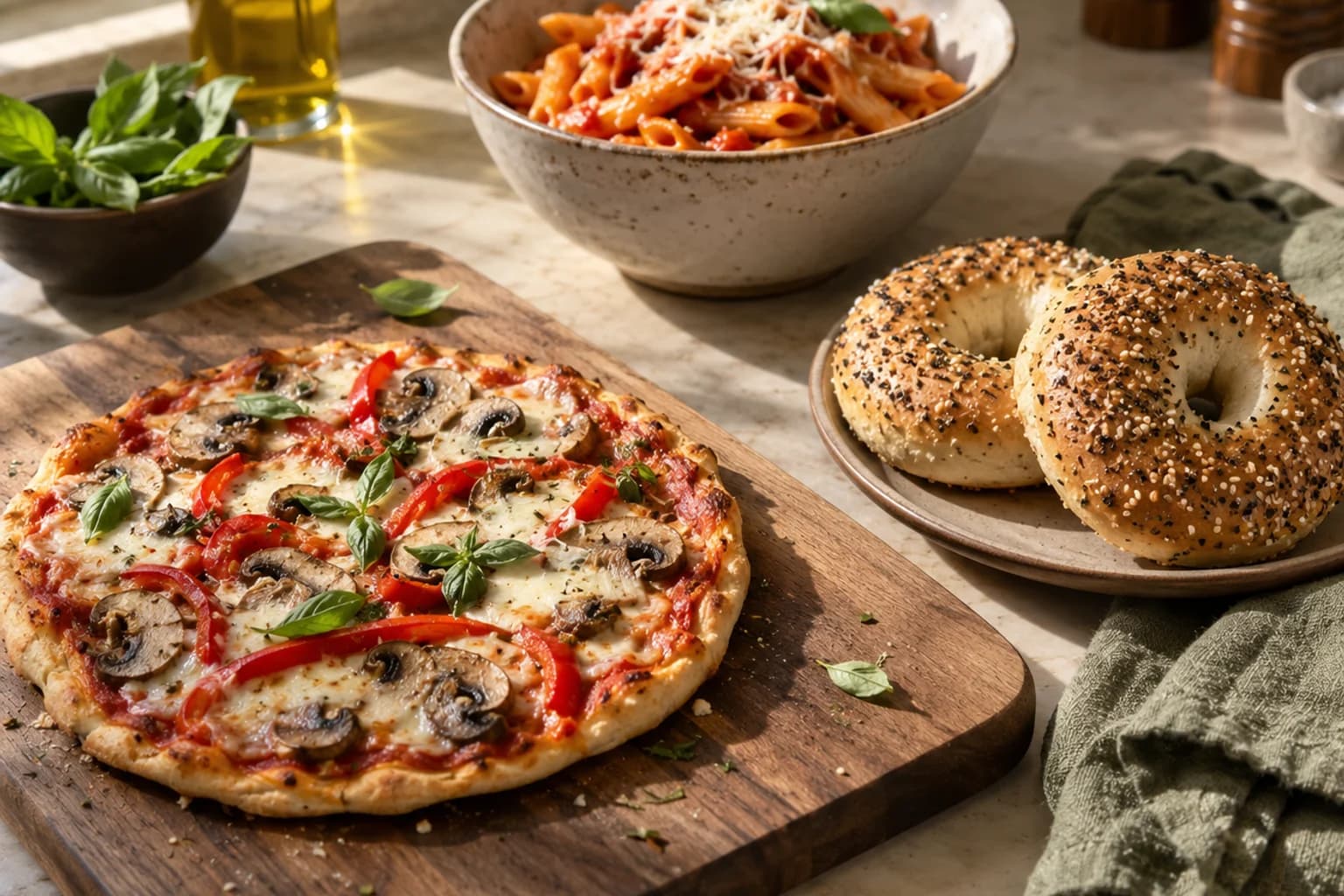
If you enjoy the yogurt dough, high-protein bagels give you another way to practise mixing and shaping it. They are a different recipe with their own portion size and baking guidance, not pizza dough formed into rings without adjustment. For another savoury meal, the high-protein pasta guide offers ingredient and portion ideas that suit a bowl rather than a crust. Choose the dish that fits the groceries and time you have.
For breakfast, French toast, oatmeal, pancakes and a yogurt bowl offer different textures and preparation styles. Banana bread is useful when you want a baked option that can be portioned ahead. Each recipe should be counted using its own serving and ingredients. A number attached to one slice, bowl or bagel does not transfer to another food just because both sit in a high-protein collection.
The links below let you explore those choices without complicating tonight’s pizza. Start with one or two meals you enjoy making, then add variety when it is helpful. Repeatable recipes leave you more room to think about flavour, appetite and the people at the table. A small collection that gets cooked regularly is more practical than a long list of ambitious meals that never makes it beyond the shopping stage.