
Browse the 15 recipe sections
One reference serving: one whole folded quesadilla, about 528 calories and 42.7g protein. Tortilla, cooked chicken, both cheeses and all measured oil are included. Sides are additional; timings are estimates. See the breakdown.
Recipe Overview
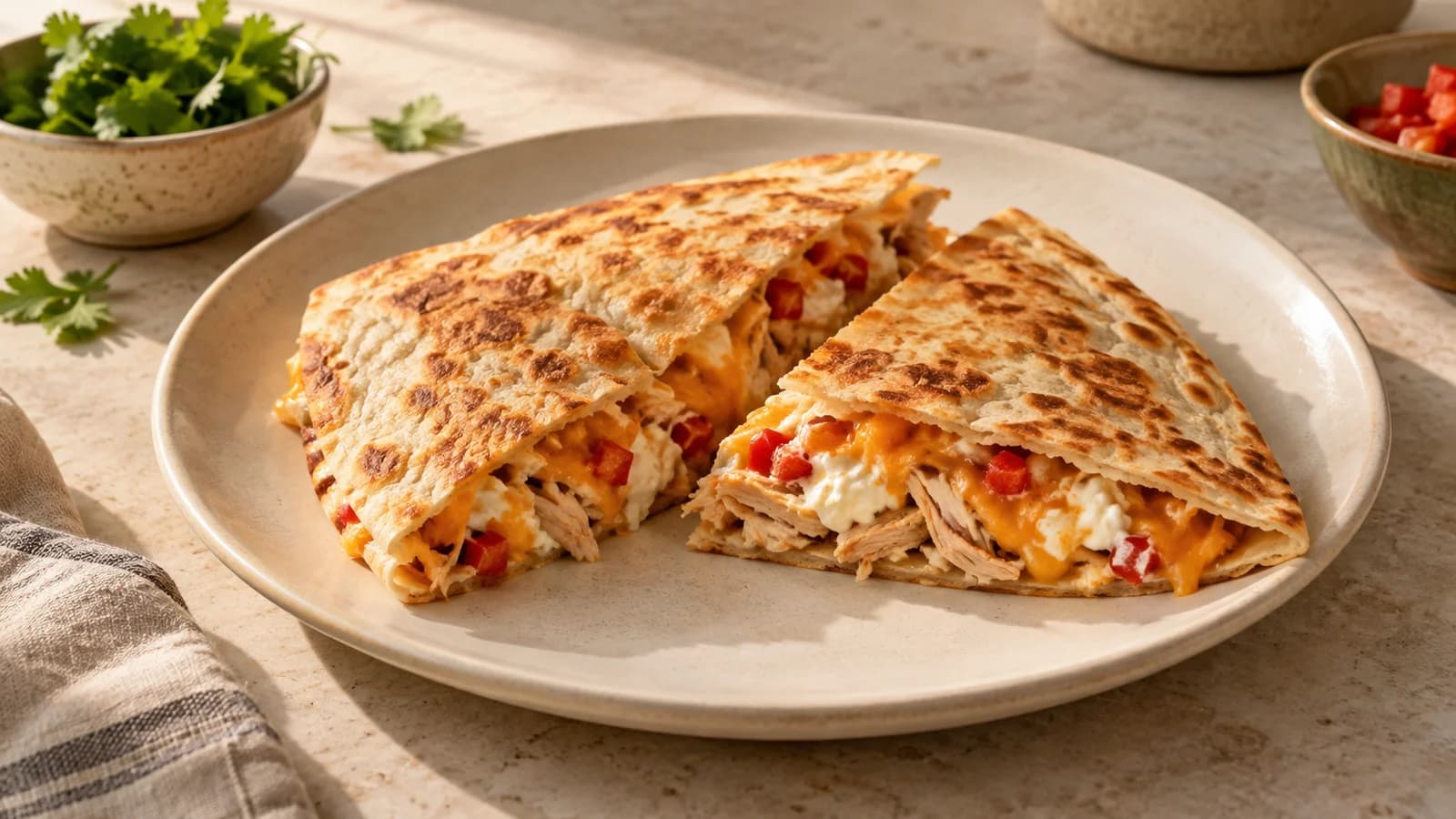
A crisp lunch with a proper filling
A good quesadilla gives a little crackle when the knife goes through the tortilla, then gives way to warm cheese and tender chicken. This high protein quesadilla brings those familiar textures together with cooked chicken breast, a small amount of blended cottage cheese, grated cheddar, sweet pepper and onion. Cumin and paprika make the filling savoury without requiring a long list of seasonings. It is a flour-tortilla version designed for a home skillet, with enough guidance to help you manage the heat and keep the filling inside.
The reference batch makes two complete folded quesadillas. Each starts with one 60g flour tortilla and contains half the chicken, cheese, vegetables, spices and measured oil. One serving is one entire folded quesadilla, which you can cut into three wedges for eating. Cutting it into smaller triangles changes the presentation, not the amount of food. The estimated nutrition is about 528 calories and 42.7g protein per complete serving, before salsa, yogurt, salad or any other side.
What to expect before you start
Allow about 10 minutes for chopping, weighing and assembly, around 6 minutes for the vegetables and filling, and roughly 12–16 minutes to toast two quesadillas sequentially. A short two-minute rest helps the cheese settle before cutting. Around 35 minutes is a reasonable planning allowance with cooked chicken ready, although your skillet and starting temperatures will affect it. Cooking fresh chicken from raw adds a separate preparation stage and is outside that timing. This is especially convenient when you already have plain cooked chicken that has been safely cooled and refrigerated.
The exact weighed formula has not been physically kitchen-tested. Cooking times are estimates, the images are illustrative, and the nutrient figures come from a transparent ingredient calculation. Use the visual cues and thermometer checks alongside the timing. You do not need protein powder, a homemade dough or a special high-protein wrap to make the reference version. A kitchen scale, a broad turner and a skillet with enough flat space for the folded tortilla are the useful tools here.
Why You’ll Love This Recipe
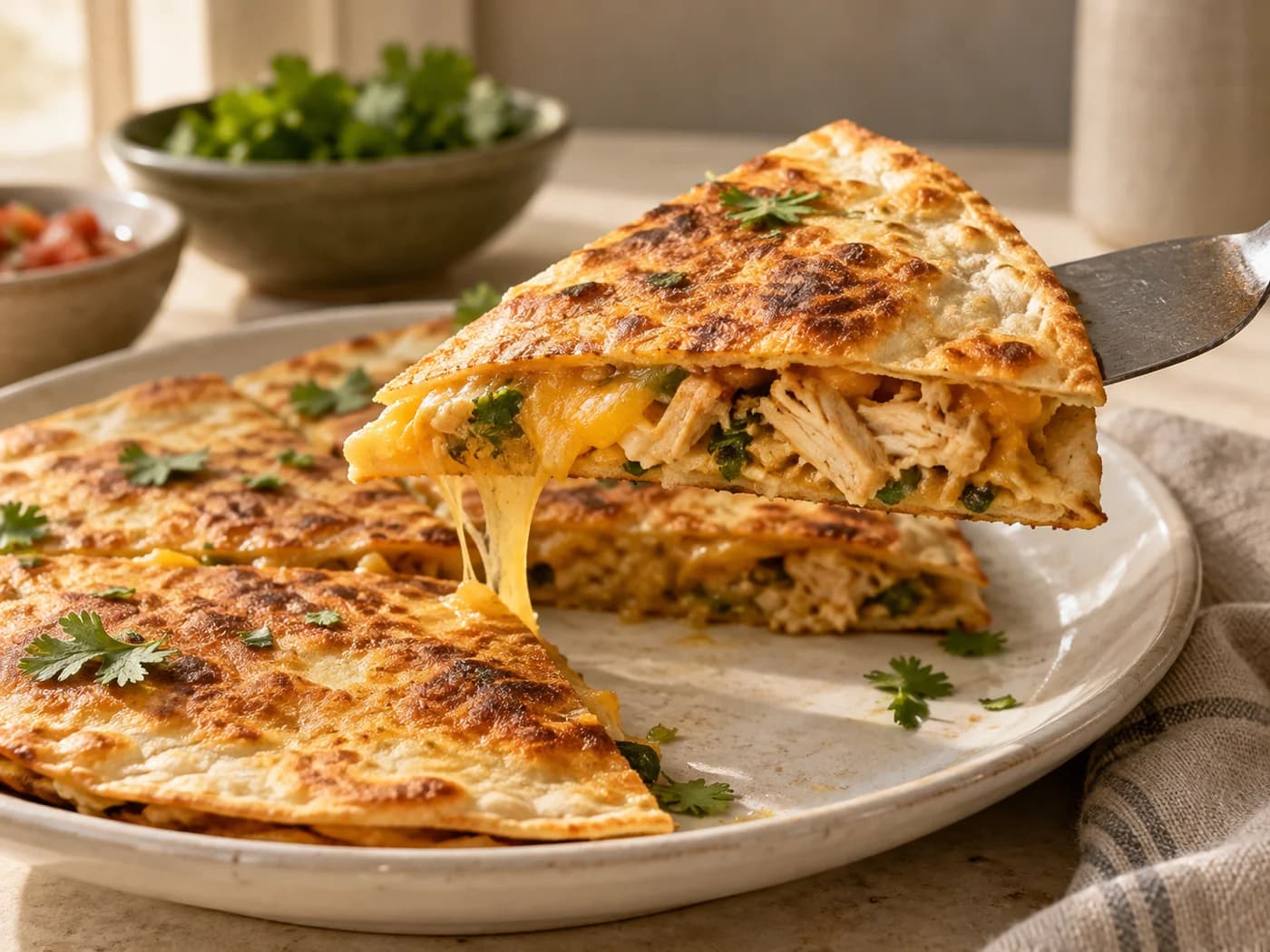
It still tastes like a quesadilla
The cheddar has a clear job: it supplies the familiar cheese flavour and helps the tortilla cling to the filling. The cottage cheese has a quieter role, making the shredded chicken creamy without turning the whole centre into a heavy layer of melted cheddar. Blending it first removes large curds if those bother you. You still get warm, savoury cheese in each bite, with sweet little pieces of pepper and a gentle cumin aroma when you cut the first wedge.
Chicken supplies most of the protein, so there is no need to pile on cheese just to make the number look impressive. The reference contains 80g cooked chicken and 30g cheddar per quesadilla, with 50g cottage cheese alongside them. Those are ordinary ingredients with different jobs in the meal. Keeping that distinction in mind makes substitutions easier: a cheese swap changes melting and flavour, while a chicken swap changes the main filling and usually the protein calculation too.
Easy to make yours at the table
The base filling is mildly seasoned. If one person wants heat and another does not, put hot sauce or chopped chilli on the table instead of making the entire skillet batch fiery. A small bowl of tomato salsa gives brightness; cucumber or cabbage on the side brings a cool crunch. Keeping those wet additions outside the tortilla also protects its crispness. Everyone can finish a plate differently while the cooking method stays manageable.
The folded shape is another practical advantage. You turn one half-moon instead of trying to balance two loose tortillas with filling between them. A single skillet can handle the vegetables and then the quesadillas, and the second tortilla can be assembled while the first cooks if your ingredients are ready. There is still some chopping and washing up, but the work is easy to see from the beginning. For a weekday lunch, that can matter as much as the total cooking time.
Nutrition at a Glance
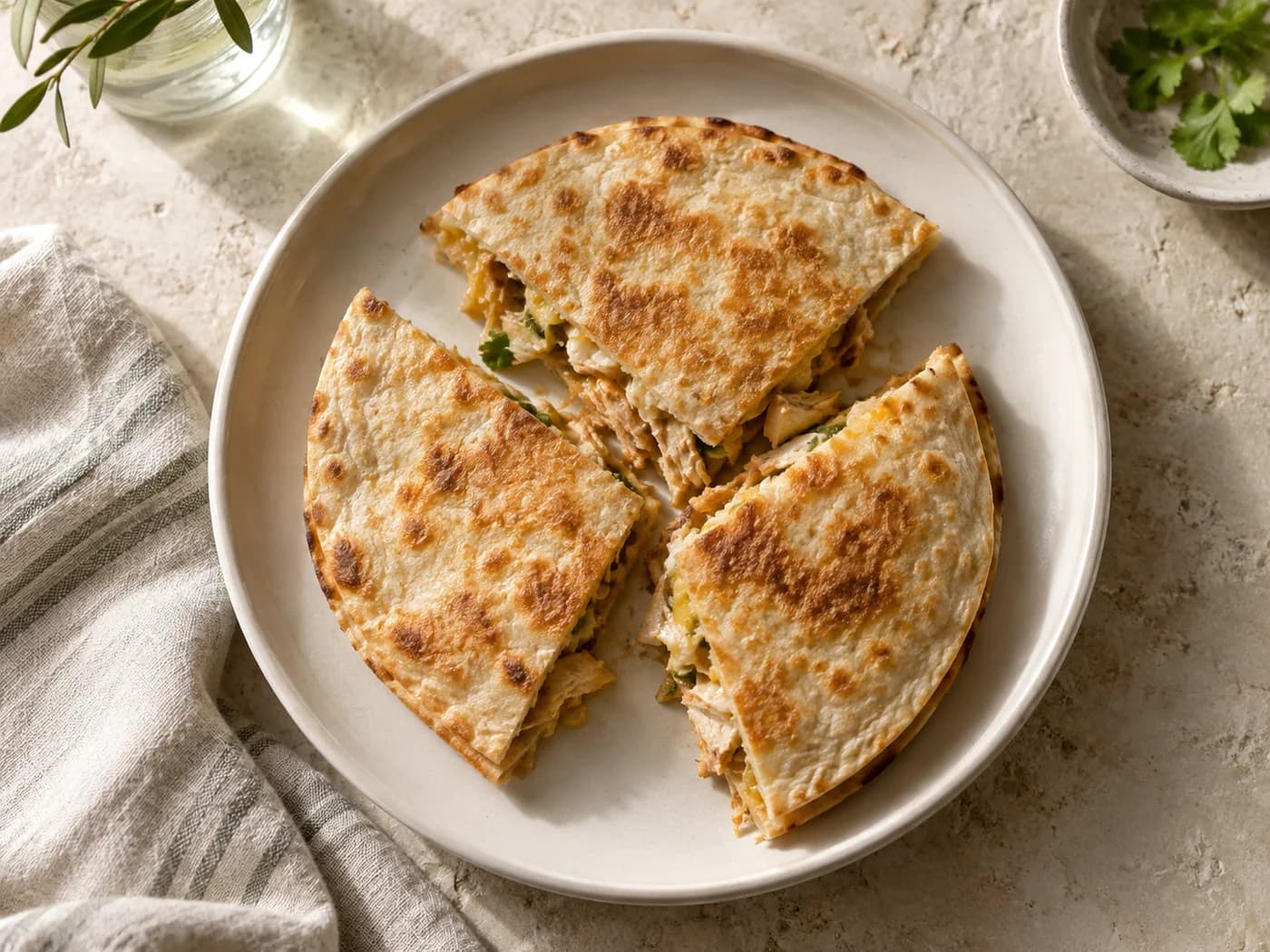
- Calories
- 528kcal
- Protein
- 43g
- Carbs
- 39g
- Fat
- 22g
A clearly defined portion
For one complete reference quesadilla, the calculated values are approximately 528 calories, 42.7g protein, 38.7g carbohydrate and 22.1g fat. The headline cards round those to 528 calories, 43g protein, 39g carbs and 22g fat. All nine weighed ingredients are included. The cooking oil counts even though it is spread thinly, and both cheeses count even though the cottage cheese blends into the filling. Nothing is subtracted for an assumed amount left in the skillet.
The portion contains one whole flour tortilla. A tortilla may look like a small part of the finished meal, but its weight and label make a meaningful difference to the estimate. Two wraps with similar diameters can have different thicknesses, fat contents and weights. The reference uses 60g per tortilla and a generic shelf-stable flour-tortilla entry. If your wrap weighs 85g, it does not fit the reference merely because it folds into the same half-moon shape.
What the numbers help you decide
At around 528 calories, this is a substantial savoury meal component. Whether it fits a lighter lunch or a larger dinner depends on the rest of your day and what you serve with it. High protein does not automatically mean low calorie. Cheddar contributes useful flavour as well as fat, and the tortilla supplies much of the carbohydrate. You can adjust those amounts deliberately using the comparisons below instead of assuming that every high-protein version must have the same nutrition.
The estimate also includes approximately 3.3g fibre, 6.8g total sugars, 8.3g saturated fat and 860mg sodium per full quesadilla. Sodium varies particularly widely with tortillas, cottage cheese, cheddar and prepared chicken. There is no added salt in the reference, but that does not make it salt-free. These figures are a useful starting point for comparing portions; your actual ingredient labels and the amount you eat provide the more relevant personal calculation.
Ingredients
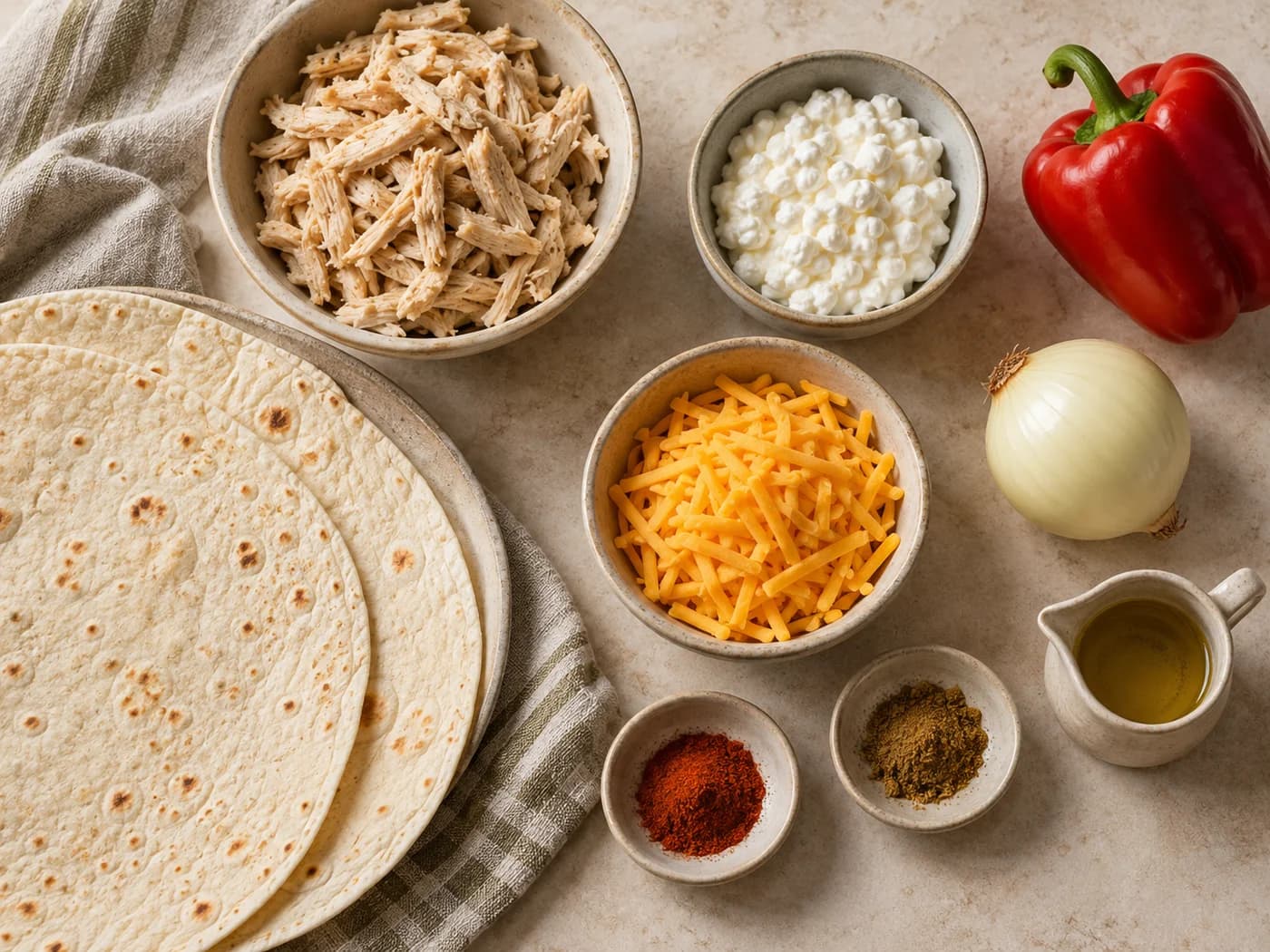
Choose a pliable tortilla
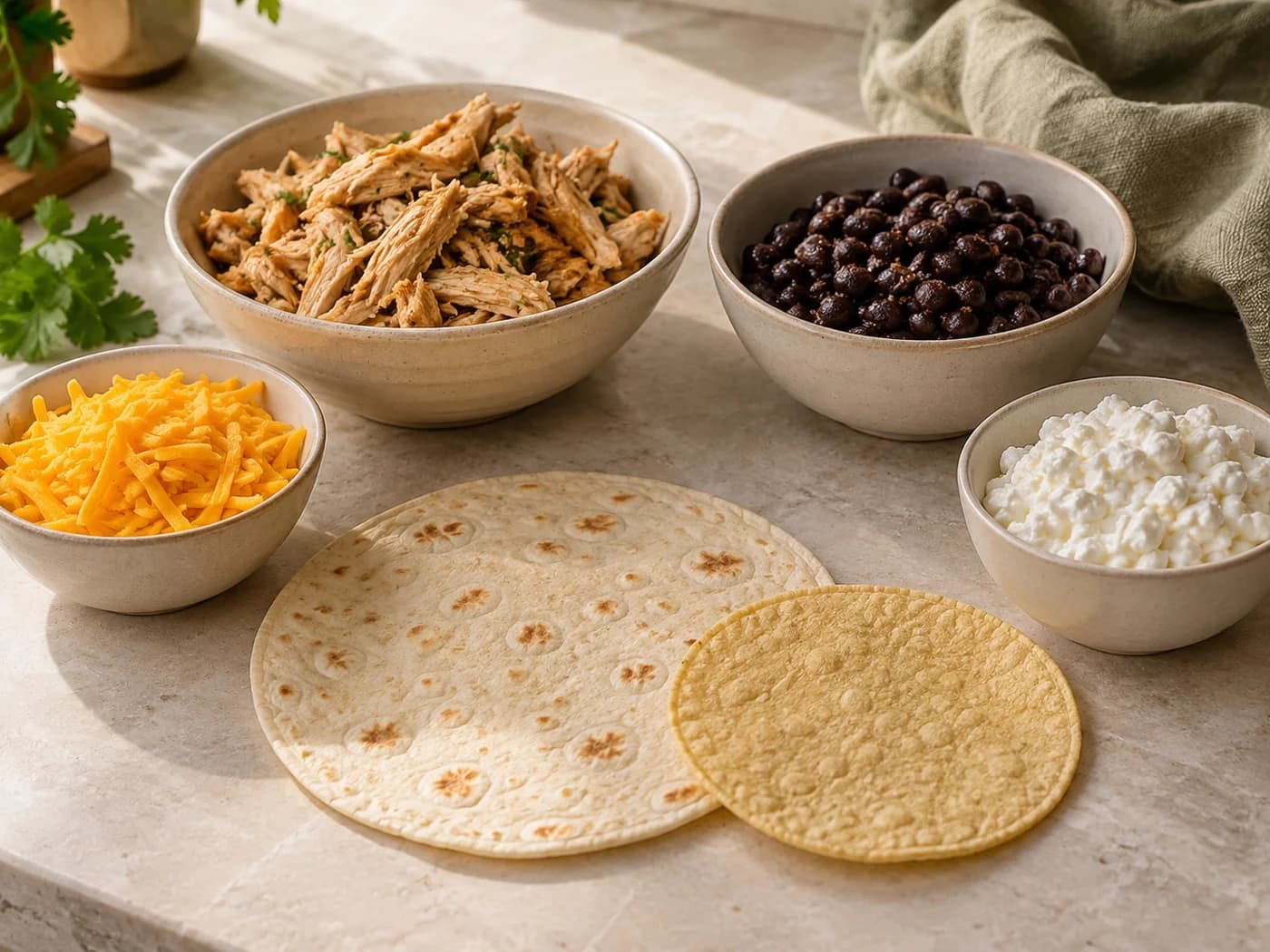
Use two flour tortillas weighing 60g each, approximately 10 inches or 25cm across, with enough flexibility to fold over the filling. Diameter is a fit guide; weight is the nutrition reference. A very small tortilla will struggle to hold this filling, and a brittle one may split at the fold. Check the package for storage and warming directions. If the tortillas feel stiff, warm them briefly as directed before assembly, keeping them covered so the edges stay flexible.
The chicken amount is 160g cooked skinless breast meat for the batch. Remove bones, skin and any tough pieces before weighing, then shred or chop the meat finely. Plain roasted chicken is the reference form. A strongly seasoned rotisserie chicken, oily leftovers or meat with sauce can work differently and need their own label or recipe values. Do not weigh 160g raw breast and record it as 160g cooked breast; water changes during cooking, so those are different quantities of food.
Two cheeses with different jobs
Use 100g low-fat cottage cheese at 2% milkfat, stirred before measuring. Blend it alone into a thick cream, scraping the sides of the small blender as needed. Do not add milk or water simply to make the blades move. For such a small batch, a narrow blending cup helps; a fork is an acceptable option if you are happy with fine curds. The reference includes the normal curds and dressing from the tub rather than a separately drained weight.
Finely grate 60g cheddar, giving each tortilla 30g. Divide that into 15g underneath and 15g over the chicken filling. Grating it yourself makes a thin, even layer easier to spread, although a packaged grated product can be used with its own label values. The vegetables are 100g trimmed red pepper and 40g peeled onion, both diced small. Finish the ingredient list with 6g olive oil, 2g ground cumin and 2g paprika. Of the oil, 2g cooks the vegetables and 4g coats the two tortilla exteriors.
Your ingredient checklist
- Shelf-stable flour tortillasTwo pliable tortillas, 60g each, approximately 10 inch / 25cm; use actual package weight120g
- Cooked skinless chicken breastCooked edible weight, plain roasted, finely shredded; not raw weight160g
- Low-fat cottage cheese (2%)Stir the tub, then blend without added liquid; use 50g per tortilla100g
- CheddarFinely grate a block; 30g per tortilla in two thin layers60g
- Red bell pepperRaw edible weight after removing stem and seeds; finely dice100g
- OnionPeeled raw edible weight; finely dice40g
- Olive oil2g for vegetables; 2g for each tortilla exterior; all counted6g
- Ground cuminOne gram per quesadilla; ground from cumin seed2g
- PaprikaPlain paprika, not a salted seasoning blend2g
Contains wheat and milk; check every actual package for allergens. Chicken weight is cooked, not raw. Each serving uses one 60g tortilla; all measured oil is counted. Dips and sides are additional.
Ingredient Substitutions
Change the chicken thoughtfully
Plain cooked turkey breast is a practical alternative to chicken, provided you match the cooked form and recalculate using the turkey values. Finely chopped cooked thigh meat is another possibility, with a richer taste and usually a different fat content. Keep pieces small enough to spread in an even layer. Large cubes make pockets of filling that can stay cool while the tortilla browns. Whatever meat you choose, use safely handled cooked food and do not depend on a brief tortilla toast to cook raw poultry.
For a vegetarian direction, drained beans, tofu or a suitable meat-free filling need a separate recipe calculation. An equal weight of beans does not supply the same protein as cooked chicken breast. Beans also bring carbohydrate, fibre and a different amount of moisture. Mash some beans to bind the mixture and keep the layer modest, but do not carry the 43g claim over to that version. Check the cheeses for vegetarian suitability if that matters to you.
Swap dairy and wraps with a reason
A thick strained yogurt can make chicken creamy, but it is not an identical cottage-cheese replacement when heated. Its acidity and water content can change the filling, and a thin yogurt can make the tortilla damp. If avoiding cottage cheese, choose a thick alternative, use a modest quantity and expect to adjust the texture. Low-moisture mozzarella offers a milder cheese flavour than cheddar and a different melt. Cheese alternatives vary considerably in protein, so read the label rather than assuming every product performs like dairy cheddar.
A gluten-free tortilla needs a separate check for flexibility, size and ingredients. Corn tortillas are often smaller and may require several pieces rather than one large folded wrap. Warm them as their packet recommends; do not force this full filling into one small tortilla. Whole-wheat flour tortillas can be a straightforward choice when their size and flexibility suit the method, but their nutrition is still a new calculation. For milk allergies, both cheeses need replacing, and the reference recipe is unsuitable as written. Check all package allergen statements, including possible cross-contact warnings.
Use actual product values and check the fit and moisture whenever you change an ingredient.
| Reference | Possible alternative | What to check |
|---|---|---|
| Cooked breast chicken | Cooked turkey or thigh meat | Cooked weight, fat and seasoning |
| 2% cottage cheese | Thick strained yogurt | Moisture and heated texture |
| Cheddar | Low-moisture mozzarella | Flavour, melting and nutrition |
| 60g flour tortilla | Whole-wheat or protein wrap | Size, flexibility, weight and label |
| Chicken | Beans or tofu | New protein and moisture calculation |
| Wheat tortilla and dairy | Allergen-suitable alternatives | All labels; a separately adapted recipe |
How to Make It
Prepare the filling before toasting
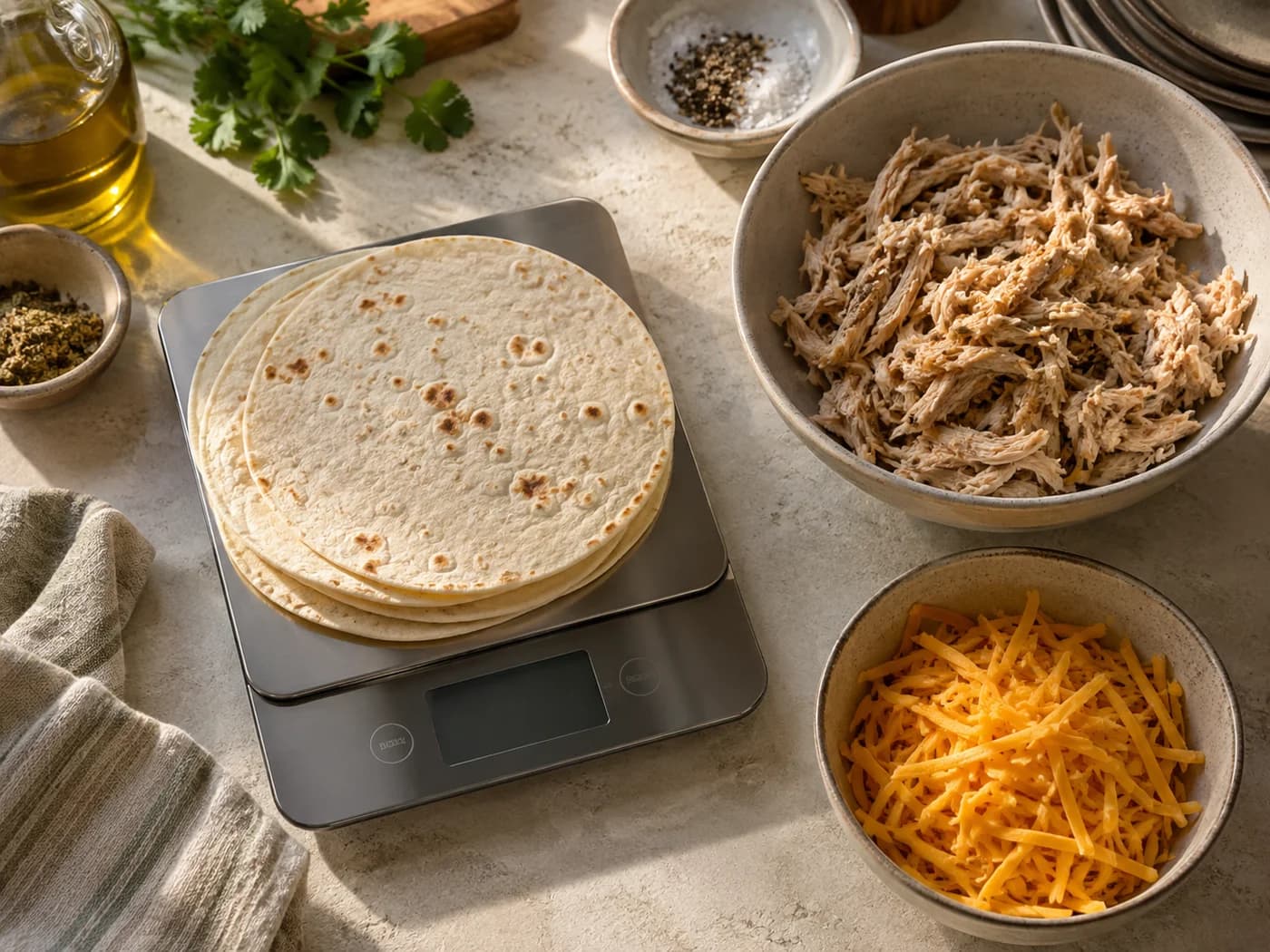
Start with the scale and chopping board. Weigh the cooked chicken, cheeses, trimmed pepper, peeled onion, oil and spices. Shred the chicken finely, dice the vegetables into small pieces and grate the cheddar. Blend the cottage cheese without extra liquid. Set aside two equal cheddar portions, one for each tortilla, and remember that each will be split again into a lower and upper layer. Having these small divisions ready means you can concentrate on the skillet when browning begins.
Heat 2g oil in a large nonstick skillet over medium-low to medium heat, following the pan manufacturer's guidance. Add the onion and pepper and cook for about 5–6 minutes, stirring, until softened and any obvious watery liquid has evaporated. You want small tender pieces, not blackened edges. Add the cumin and paprika for about 30 seconds, then stir in the cooked shredded chicken and blended cottage cheese. Lower the heat as needed and stir gently until the filling is hot throughout, reaching 165°F / 74°C if reheating cooked chicken. Divide it evenly into two portions.
Assemble one folded tortilla at a time
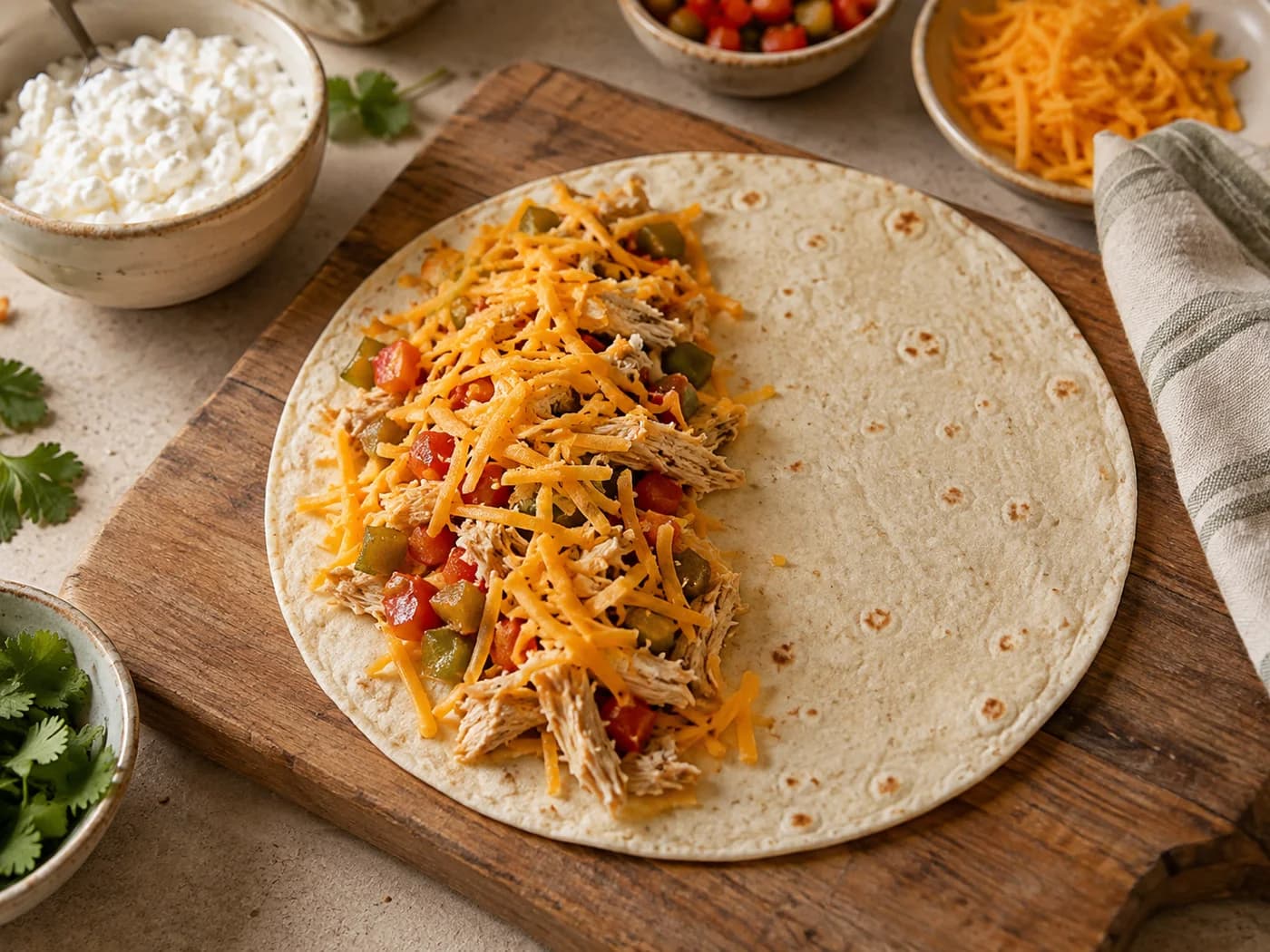
On one half of each tortilla, scatter 15g cheddar, leaving a narrow border at the curved edge. Spread half the chicken mixture in a flat layer, then cover with another 15g cheddar. Leave the other half free of filling. Fold that bare half over gently and press just enough to bring the surfaces together. Spread 2g oil over the outside of each folded quesadilla, divided between its two faces. A brush or clean fingertips can distribute this small measured amount without pouring extra oil into the pan.
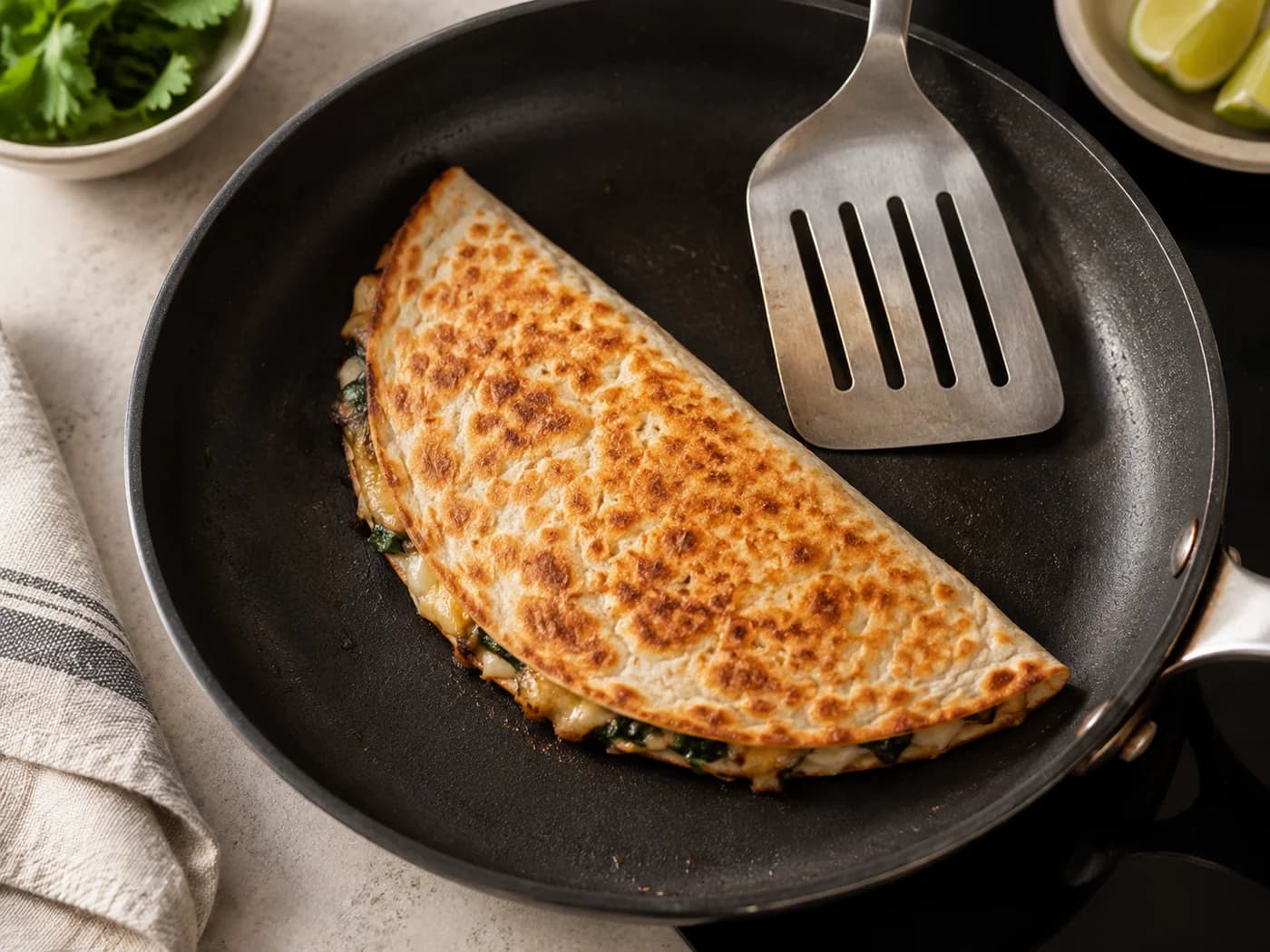
Wipe out stray filling from the skillet safely, then return it to medium-low heat. Toast one folded quesadilla at a time for about 3–4 minutes on the first side, adjusting the heat until the tortilla develops golden patches. Slide a broad turner well underneath and turn toward the folded edge to contain the filling. Toast the second side for another 3–4 minutes. The cheese should melt and the filling must be hot throughout; check thick areas from the cut edge with a thermometer, aiming for 165°F / 74°C. If the outside colours too fast, reduce the heat and allow the centre more time. Rest briefly and repeat with the second quesadilla.
Tips for the Best Results
Crispness starts with the filling
Water is the main texture problem to solve. Cook the vegetables until they are tender and the pan has no puddle, use thick cottage cheese and keep salsa outside the tortilla. The finished chicken mixture should sit on a spoon rather than run from it. If it looks loose before assembly, heat it gently a little longer while stirring. Do not try to compensate for a wet centre by blasting the outside over high heat; a dark tortilla can still surround a soggy filling.
Shredding the chicken finely helps more than adding extra cheese. Short pieces distribute evenly, warm more readily and make the wedges easier to bite. If the chicken is in long ropes, cut across the shreds once or twice. The filling should be flat from fold to curved edge, with a small clear border to contain any melted cheese. A mound in the middle makes the tortilla touch the pan unevenly and puts pressure on the fold when you turn it.
Watch the second round
The skillet may retain more heat for the second quesadilla than it had for the first. Check the underside early, and lower the burner before the tortilla scorches. Golden freckles and a lightly crisp surface are useful cues; solid dark brown patches and smoke mean the heat is excessive. Use a pan that fits the half-moon without bending it up the sides. Avoid scraping a nonstick surface with unsuitable metal utensils, and follow its instructions for heating and oil use.
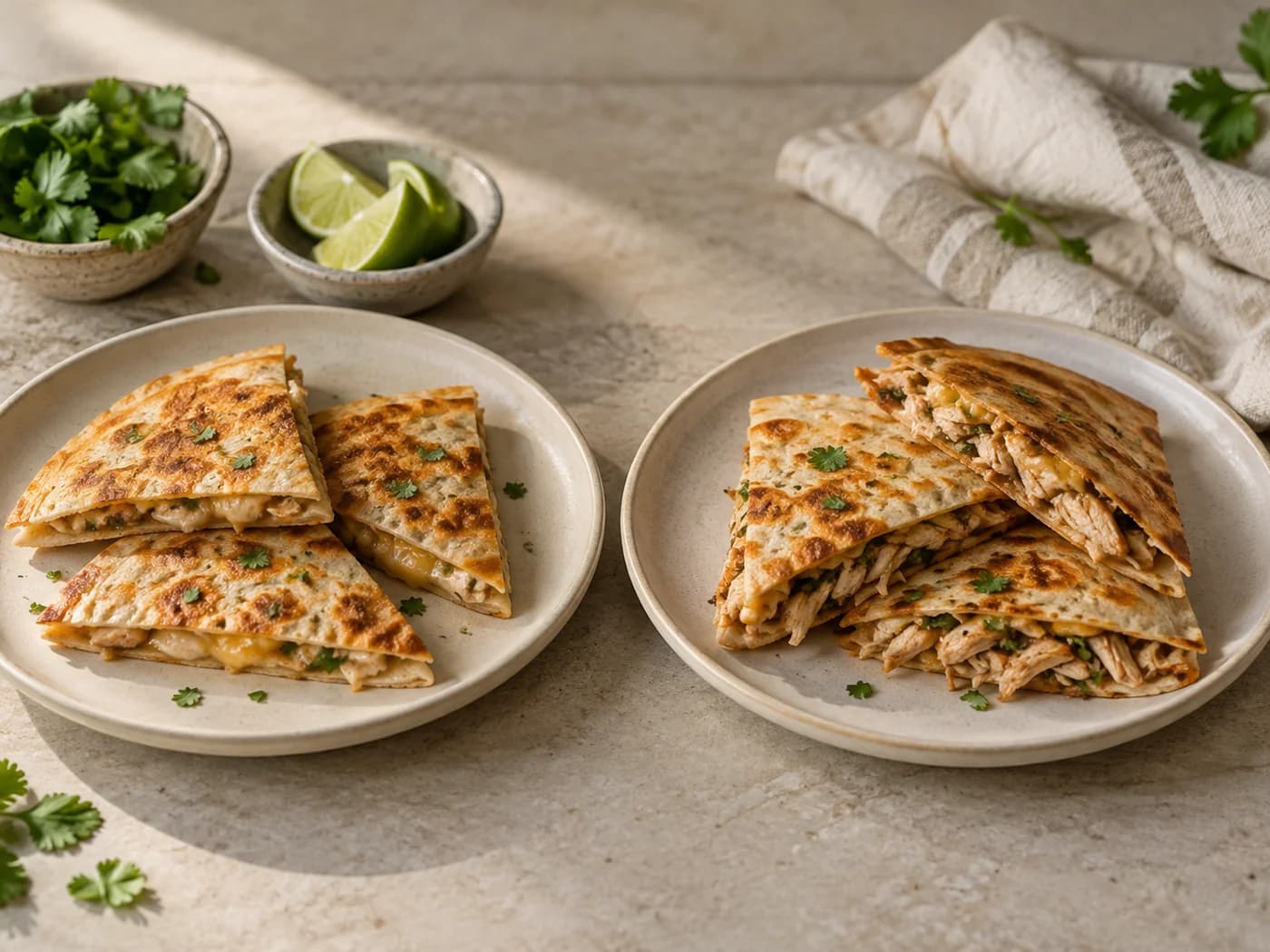
Give the cooked quesadilla about two minutes on a board or rack before cutting. That short pause lets the molten cheese settle without allowing the meal to go cold. A sharp knife makes a cleaner cut than repeated pressing with a dull blade. Keep cooked pieces in a single layer until serving; stacking them traps steam against the crisp surfaces. If filling escapes, take the pan off the heat and tidy it with a suitable utensil before the next round. Burnt cheese left behind can darken the following tortilla and make it taste bitter.
High-Protein / Lower-Calorie Variations
A lighter cheese layer
Reducing the cheddar from 60g to 40g for the two-serving batch lowers the estimate to about 488 calories and 40.5g protein per quesadilla. Use 10g cheddar below and 10g above the filling in each tortilla. This keeps some cheese against both tortilla surfaces, although the finished result will be less rich. It is a modest change with a clear amount, rather than an open-ended instruction to use less cheese and keep the original numbers.
Using two 50g flour tortillas instead of two 60g tortillas, while retaining the other ingredients, gives a calculated estimate of about 499 calories and 41.9g protein per serving using the same generic tortilla values. That comparison only works if the lighter wraps are still large and flexible enough for the filling. A much smaller wrap may need less filling or a different assembly. Actual packaged wraps can differ, so use this as an arithmetic comparison rather than a claim about every smaller tortilla.
More chicken or a smaller portion
Adding 40g extra cooked chicken to the whole batch gives 100g cooked chicken per quesadilla and a calculated estimate of about 561 calories and 48.9g protein. Spread the extra meat evenly and check that the tortilla closes without forcing it. More filling can need longer gentle heating, especially if it starts cold. The reference timings have not been validated for this adjustment. Increasing chicken is a more direct way to add protein than increasing the amount of oil or piling on an unmeasured cheese topping.
Half of a reference quesadilla supplies about 264 calories and 21.4g protein. That can suit a smaller appetite alongside other food, but it is half the portion, including half its tortilla and filling. Decide how you will divide it before cutting: three wedges are convenient for a full serving, while four or six equal wedges are easier for sharing halves. Any salad, yogurt, beans or avocado served with a smaller portion still adds its own nutrition. None of these variations promises a particular weight change; they simply give you measured choices for the meal you want.
Each ingredient comparison is per complete quesadilla. Sides are additional; adaptations have not been separately kitchen-tested.
| Version | Calories, approximately | Protein, approximately |
|---|---|---|
| Reference | 528 kcal | 42.7g |
| 40g cheddar per two-serving batch | 488 kcal | 40.5g |
| 100g tortillas per two-serving batch | 499 kcal | 41.9g |
| 40g extra chicken per two-serving batch | 561 kcal | 48.9g |
| Half a reference quesadilla | 264 kcal | 21.4g |
Serving Suggestions
Add brightness and crunch
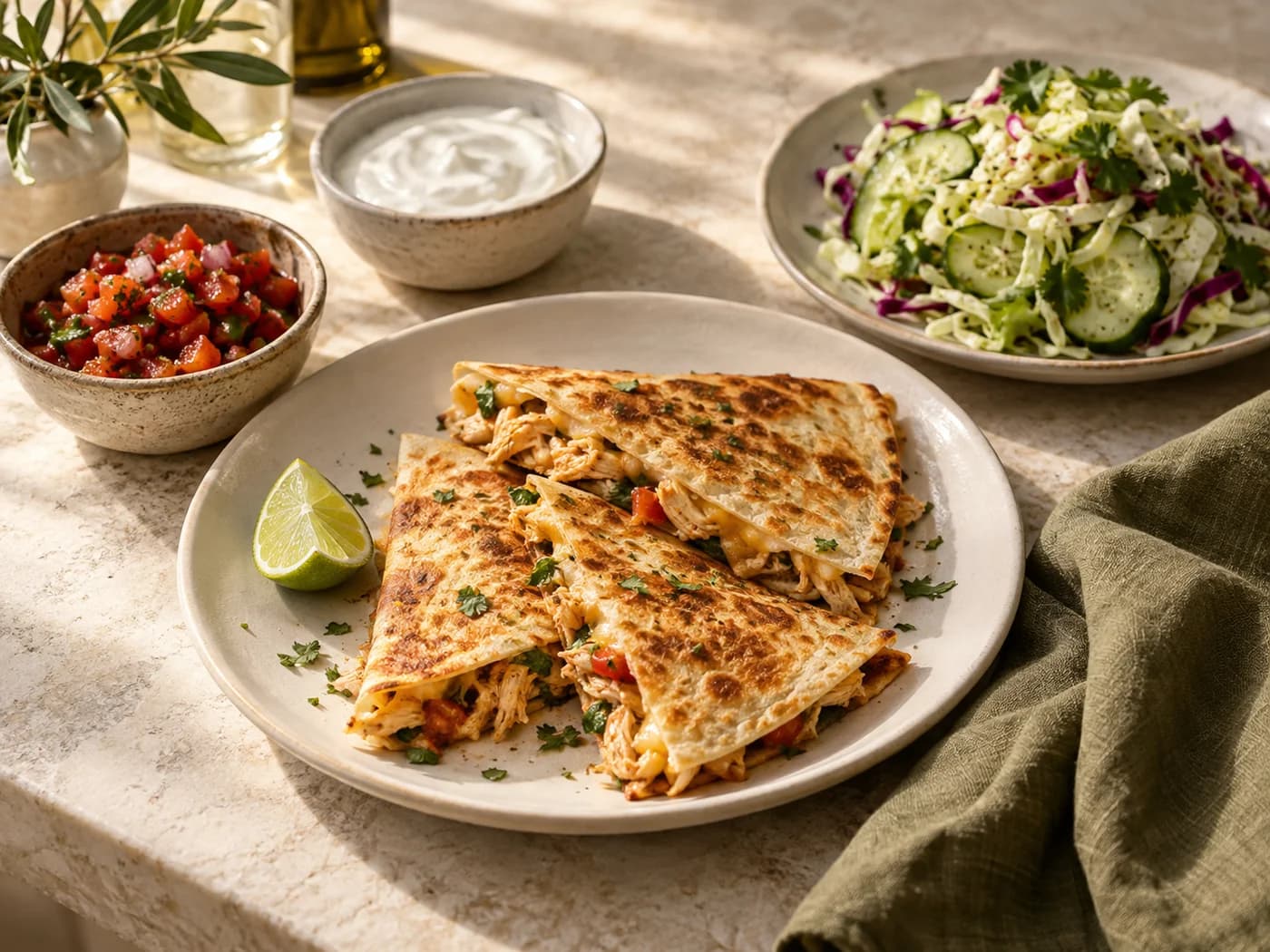
A quesadilla comes out of the skillet warm, savoury and rich, so a cool sharp accompaniment gives the plate a welcome change of pace. Tomato salsa, a lime wedge or a little chopped pickled onion can provide that contrast. Spoon salsa beside the wedges rather than over the whole plate if you want the tortilla to stay crisp. The nutrition reference does not include those extras, and packaged salsa can add sodium even when the amount looks small.
For an uncomplicated vegetable side, thinly slice cucumber and cabbage and dress them lightly just before serving. The cool crunch works with the softer chicken filling. A simple leafy salad or leftover roasted vegetables can also fit, depending on what is already in the kitchen. You do not need to prepare an elaborate second dish to make this feel like lunch. Use the side to add something you enjoy rather than to decorate a plate that is already enough for your appetite.
Choose extras to match the meal
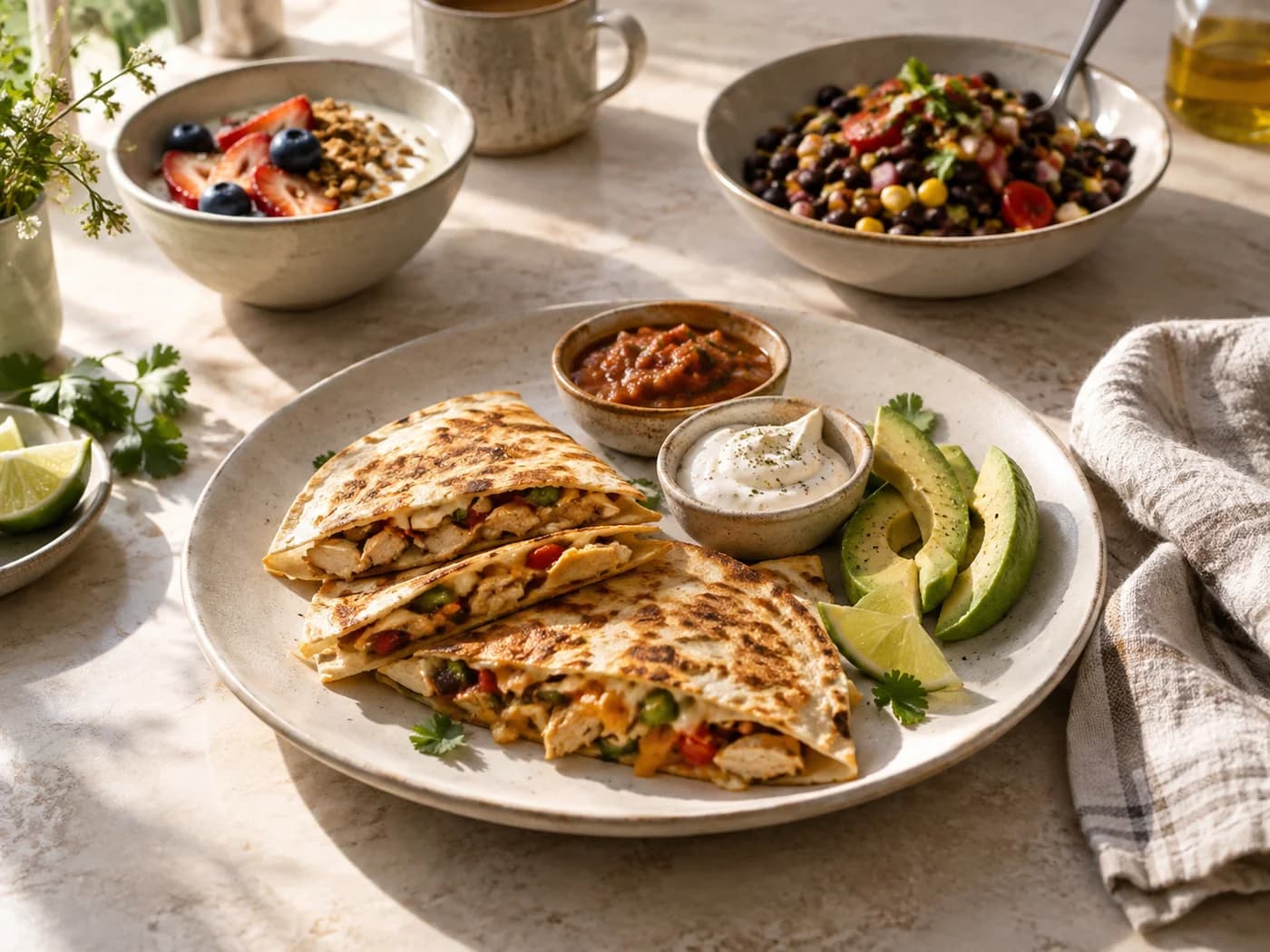
Plain strained yogurt makes a creamy dip with a tangier finish than sour cream. If you want to count it, weigh the serving and use its actual label. Avocado provides a different texture and flavour, with its own calorie and fat contribution. Beans or rice make the meal larger and may suit a hungry dinner, but neither is included in the quesadilla estimate. A photo showing a bowl or garnish is not a nutrition portion guide for that additional food.
If serving two people, bring the first quesadilla to the table while the second finishes, or use two suitable skillets if you can safely manage them. Keeping the cooked wedges under a tight lid makes them steam and soften. For a casual shared plate, cut the half-moons into manageable pieces and leave the dips in small bowls. Do not describe each triangle as a full high-protein serving: the headline amount belongs to the complete quesadilla. A little clarity about portions saves everyone from having to guess how much food the numbers describe.
Meal Prep & Storage
Prep components for a fresher finish
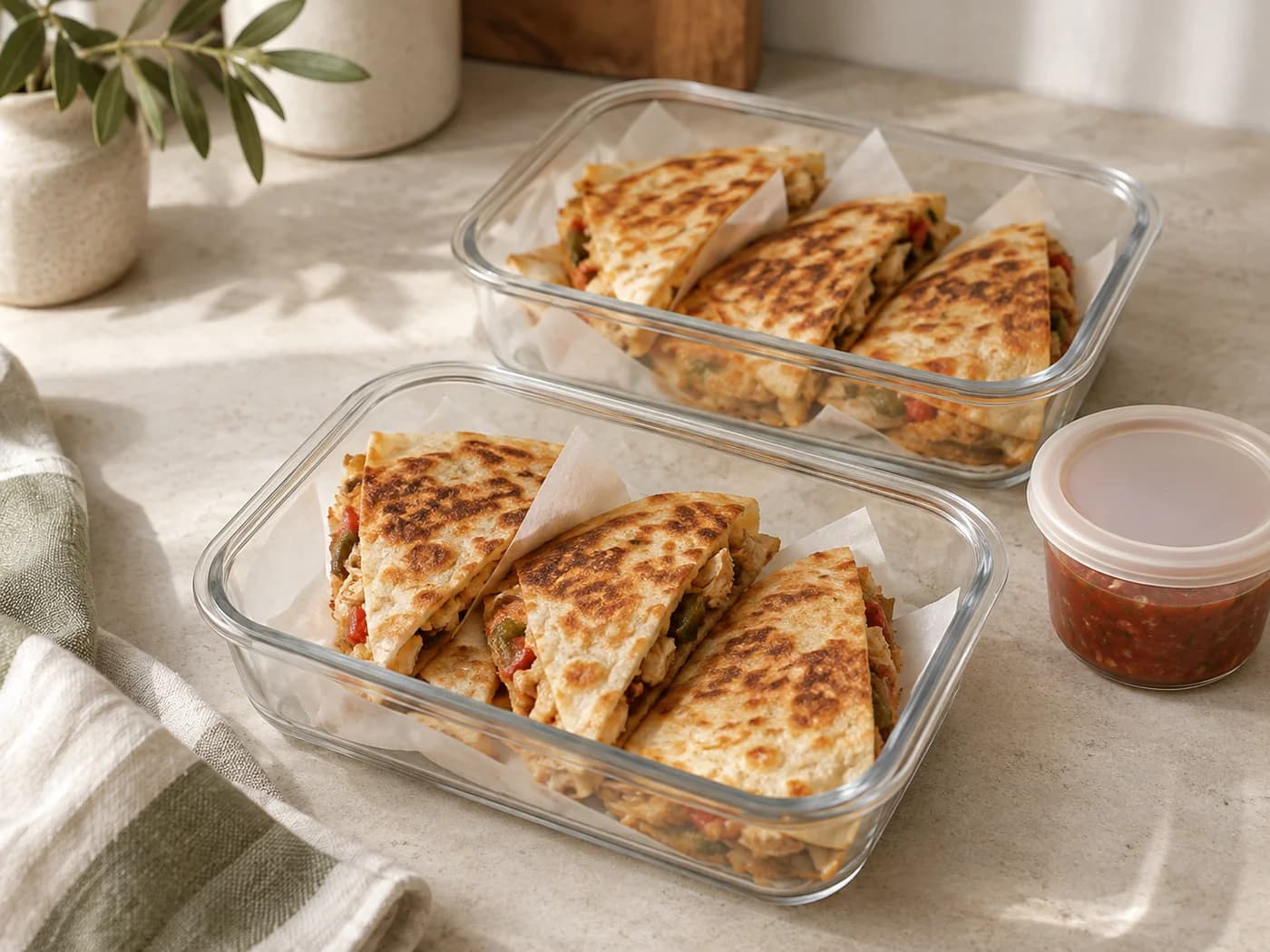
The best plan for crispness is to keep the filling and tortillas separate until you are ready to toast. Cook the pepper and onion, combine the filling, then cool and refrigerate it promptly in shallow containers. Store grated cheddar separately if convenient and assemble only what you need. You still have a short skillet step at mealtime, but the chopping is already done. The stored filling must be reheated thoroughly; starting with a cold mixture may take longer than the reference method.
Track the age of the chicken from its original cooking date. Turning yesterday's chicken into today's filling does not restart its refrigerator storage time. With suitable cooking, cooling and handling, cooked poultry leftovers are generally used within 3–4 days at 40°F / 4°C or below. Follow a stricter use-by instruction if the product requires one. If you cannot confidently establish when the chicken was cooked or how it was stored, choose fresh safely prepared ingredients instead of trying to rescue it through extra toasting.
Store finished quesadillas sensibly
Refrigerate cooked leftovers promptly within two hours, or within one hour when the surroundings are above 90°F / 32°C. Use shallow containers and avoid leaving a stack on the counter while waiting for every piece to reach room temperature. Keep wet dips separate. Finished quesadillas will soften in the refrigerator, so storage is a convenience tradeoff rather than a way to preserve the exact fresh skillet texture. Label the container with the relevant original cooking date.
For reheating, warm the centre thoroughly before concentrating on crisping the outside. A suitable covered microwave container can help heat a chilled portion evenly; follow the appliance guidance, rotate as needed and verify 165°F / 74°C throughout. Finish briefly in a skillet if desired. You can freeze safely cooled portions at 0°F / −18°C or below; one month is a conservative, untested quality suggestion for this formula. Thaw in the refrigerator. Freezing does not repair food that was handled unsafely, and the exact frozen texture and reheating time have not been tested here.
Full Nutrition Information
Where the estimate comes from
The calculation uses historical USDA SR28 generic food entries, each expressed per 100g. For every ingredient, its per-100g nutrient values are multiplied by the grams used and divided by 100. The batch totals are then divided by two complete quesadillas. The ingredient table below shows where the main nutrients come from, so the total can be inspected rather than treated as a mysterious number. This is a recipe estimate, not laboratory analysis or a current branded-product claim.
The chicken entry is cooked, roasted breast meat without skin. Pepper and onion use raw trimmed weights before their skillet cooking, while tortillas use the packaged ready-to-eat product weight. Cheddar and cottage cheese use the weights actually added. All 6g oil is included, along with both spices. No added salt, cooking spray, salsa, yogurt or salad is hidden in the total. If you add any of those, record the amount separately. The calculation makes no deduction for hypothetical oil left behind or water lost during heating.
Rounding and ingredient differences
One serving calculates to 528.49 calories, 42.7425g protein, 38.7343g carbohydrate and 22.0536g fat before display rounding. Extra decimal places explain the arithmetic; they do not mean your tortilla has that level of measured precision. Displayed ingredient rows are rounded individually, so adding the visible whole-calorie numbers may differ slightly from the batch total, which is calculated before rounding. Historical food data and differences between real products create much larger uncertainty than a decimal place does.
To personalise the estimate, use the food calculator with the actual weights and package values for your tortillas, dairy and chicken. Sodium is especially sensitive to those choices: the reference is about 860mg per serving without added salt, and a brined or heavily seasoned chicken can change it substantially. Fibre, total sugars and saturated fat are included because the chosen entries supply them. Separate added sugars, cholesterol and complete vitamins and minerals are not calculated here. A label that reports different calories from a simple four-four-nine macro equation is not automatically wrong; database energy methods, fibre and rounding can all affect that comparison.
| Ingredient | Amount | Calories | Protein | Carbs | Fat |
|---|---|---|---|---|---|
| Shelf-stable flour tortillas | 120g | 356 kcal | 9.6g | 59.1g | 9.1g |
| Cooked skinless chicken breast | 160g | 264 kcal | 49.6g | 0.0g | 5.7g |
| Low-fat cottage cheese (2%) | 100g | 81 kcal | 10.4g | 4.8g | 2.3g |
| Cheddar | 60g | 242 kcal | 13.7g | 1.9g | 20.0g |
| Red bell pepper | 100g | 31 kcal | 1.0g | 6.0g | 0.3g |
| Onion | 40g | 16 kcal | 0.4g | 3.7g | 0.0g |
| Olive oil | 6g | 53 kcal | 0.0g | 0.0g | 6.0g |
| Ground cumin | 2g | 8 kcal | 0.4g | 0.9g | 0.4g |
| Paprika | 2g | 6 kcal | 0.3g | 1.1g | 0.3g |
| Whole batch | 2 complete quesadillas | 1057 kcal | 85.5g | 77.5g | 44.1g |
| One reference serving | Batch ÷ 2 | 528 kcal | 42.7g | 39g | 22g |
| Dietary fiber | 3.3g |
|---|---|
| Total sugars | 6.8g |
| Saturated fat | 8.3g |
| Sodium | 860mg |
Estimated recipe nutrition, not laboratory analysis. Includes tortillas, cooked chicken, both cheeses, vegetables, spices and all measured oil. Sides and extra toppings are additional. Uses historical generic USDA SR28 values; actual labels take priority. Cholesterol, separate added sugars and complete micronutrients are not calculated.
How This Fits Your Daily Protein Goal
Start with your own target
A protein calculator can give a starting estimate based on the information you enter and the goal you choose. Treat that as a planning aid, then consider your appetite, training, usual meals and any personalised professional advice. This recipe does not set a daily requirement for every reader. Its practical contribution is clearer: one complete reference quesadilla adds approximately 42.7g protein to the food you eat that day, with the calories and other nutrients shown alongside it.
For arithmetic examples only, 42.7g is about 43% of a 100g daily target, 36% of a 120g target and 28% of a 150g target. Those example targets are not recommendations for a particular body weight or age. They show how a known serving can fit into different plans. Use the unrounded estimate if you are doing a detailed calculation, or the rounded 43g value for simple planning, while remembering that real product labels will shift the result.
Leave room for the rest of your food
You do not need every meal to look like this one. Breakfast might be yogurt and oats, dinner might include beans or fish, and a snack may contribute a smaller amount of protein. Look at the whole day before deciding that the quesadilla needs extra chicken or an additional protein drink. The standard portion already has a substantial protein contribution. More is a choice to match your circumstances, not an automatic improvement to the dish.
If the full portion feels too large, half a quesadilla provides about 21.4g protein, and you can account for the food served alongside it. If it feels too small for dinner, add a side you enjoy and include that in the meal total. Protein planning is more useful when the meals remain pleasant enough to repeat. A crisp tortilla and a filling you actually like can make this a workable lunch; there is no need to turn it into a competition for the highest possible number on the plate.
Make it personal
Where does this meal fit in your day?
Estimate your daily protein target, then plan meals you enjoy.
Recipe Card
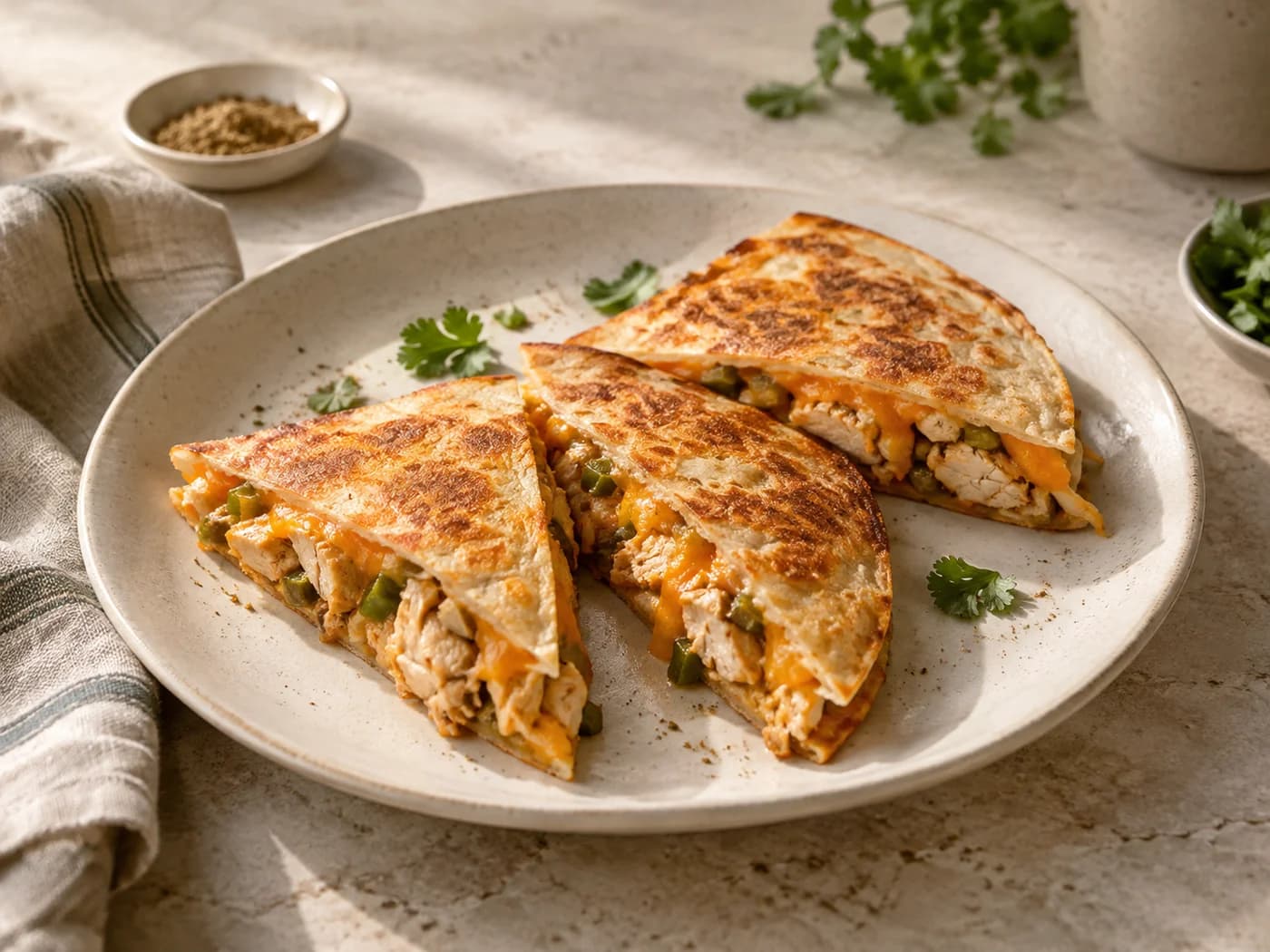
Before you use the serving buttons
The default card makes two complete quesadillas, one for each serving. The four- and six-serving settings scale every ingredient while keeping the same filling per tortilla. They do not make one giant tortilla or ask you to cram a larger filling into the same wrap. Keep each tortilla at the reference 60g weight and approximately 25cm diameter. The ingredient list gives the total tortilla weight, while the method tells you how many individual tortillas to use.
A larger batch takes more skillet rounds unless you use additional suitable cookware. The displayed timing is a planning estimate for two quesadillas with cooked chicken ready, not a promise that six will be finished in the same time. Prepare the vegetables in uncrowded rounds if needed and divide the filling evenly before assembly. Check each quesadilla rather than assuming the first result proves the rest are ready. The amount of cheddar and oil per tortilla stays the same when the serving count changes.
A useful checklist at the stove
Tick each ingredient as you prepare it, then use Reset checklist when you want to start again. Changing the serving setting also clears the ticks so that a previous quantity is not mistaken for the new one. The printed card keeps the selected batch quantities and the matching method. If you want the standard two-serving recipe on paper, return the control to two before printing. Your printer and browser may arrange the page slightly differently, so check the print preview for your chosen setting.
Read the chicken hint carefully before weighing. The amount in the card is already cooked meat, and the preparation time assumes it is ready to use. If you are starting from raw poultry, cook it separately to a safe endpoint and weigh the edible cooked amount afterwards. Use clean utensils for the ready-to-eat components. The exact formula remains untested in a physical kitchen, so let the method's texture and temperature checks guide your adjustments instead of treating the timer as a guarantee.
Golden, folded and ready to cut
High-Protein Quesadilla
Crisp flour tortillas filled with cooked chicken, cottage cheese, cheddar and sweet pepper.
*Planning estimates for two quesadillas with cooked chicken ready. Larger batches need more skillet rounds. Keep filling per tortilla the same and check each centre. Exact weighed formula not physically kitchen-tested.
Ingredients
Method
- Weigh and prepare
Use 2 pliable flour tortillas, 120g total (60g each, about 10 inch / 25cm). Finely shred 160g cooked skinless chicken breast. Blend 100g 2% cottage cheese without extra liquid. Grate 60g cheddar. Finely dice 100g trimmed red pepper and 40g peeled onion.
- Soften vegetables and warm filling
Heat 2g oil in a suitable skillet over medium-low to medium heat. Soften the pepper and onion about 5–6 minutes; evaporate obvious liquid. Stir in 2g cumin and 2g paprika for 30 seconds. Add chicken and cottage cheese; heat gently, stirring, to 165°F / 74°C throughout. Use uncrowded rounds if needed. Divide filling into 2 equal portions.
- Fill and fold
For EACH tortilla (2 total), cover one half with 15g cheddar, one filling portion and another 15g cheddar. Leave a narrow curved border and the other half bare. Fold over gently. Spread 2g oil over the exterior of each folded quesadilla, divided between its two faces (4g oil total for exteriors).
- Toast the first side
Safely clear stray filling from the skillet. Toast one folded quesadilla at a time over medium-low heat, about 3–4 minutes on the first side, until golden in patches. Keep the filling flat. You need 2 individual skillet rounds if cooking one at a time; extra servings take longer.
- Turn and check
Slide a broad turner underneath and turn toward the closed fold. Toast the second side about 3–4 minutes, adjusting heat as needed. Check thick filling areas from the edge with a thermometer: each quesadilla must reach 165°F / 74°C throughout. Lower heat and allow more time if the outside browns before the centre is hot. Repeat for all 2 quesadillas.
- Rest, cut and store
Rest each quesadilla about 2 minutes, then cut into three wedges. All three wedges make ONE serving; 2 full servings total. Keep dips separate. Refrigerate leftovers promptly in shallow containers at 40°F / 4°C or below; use within 3–4 days of the chicken’s original cooking with suitable handling. Reheat throughout to 165°F / 74°C.
Contains wheat and milk; check actual labels. Chicken is weighed cooked. Includes all measured ingredients; sides are additional. Refrigerate within 2 hours, or 1 hour above 90°F / 32°C. Keep chilled; reheat throughout to 165°F / 74°C.
Frequently Asked Questions
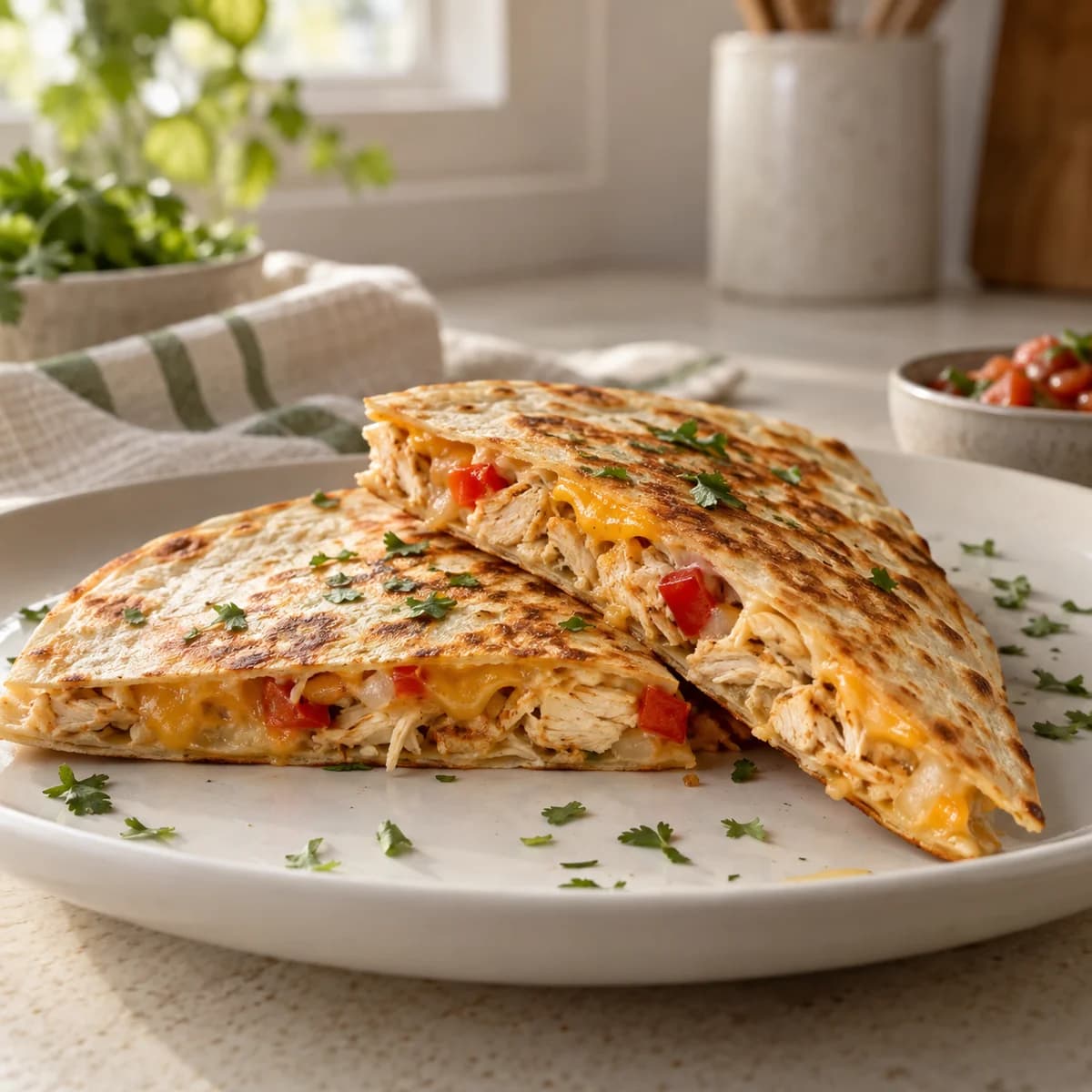
Small questions that change the result
The same short ingredient list can behave differently with a thick deli tortilla, a very wet cottage-cheese tub or chicken straight from the refrigerator. The answers below focus on those everyday differences. If a change affects the amount or form of an ingredient, it also needs a fresh nutrition calculation. A smaller tortilla, for example, is not automatically interchangeable simply because it is still called a wrap.
Before changing several ingredients at once, decide what problem you are solving. If the filling is too wet, look at the vegetables and dairy first. If the tortilla breaks, consider its flexibility and the depth of filling. If the outside is dark while the centre is cool, reduce the heat and allow more gentle warming. Adding more cheese to every problem can make the meal richer without correcting its cause.
Use the reference as a starting point
A quesadilla is forgiving in some ways: a little extra paprika or a different shape of chicken shred is unlikely to make assembly impossible. It is less forgiving when the wrap cannot close, the filling is watery or the heating is rushed. Keep a note of the wrap weight, the pan setting and any ingredient changes that helped your version. That practical record is more useful for repeating your lunch than assuming someone else's exact minute count will suit your cooker.
For food allergies, storage uncertainty or a question about an individual nutrition requirement, the recipe estimate cannot replace product information or advice suited to your circumstances. The reference contains wheat and milk, uses cooked poultry and has a defined storage window under suitable handling. The frequently asked questions make those boundaries easy to find. They also explain what has been calculated and what has not been kitchen-tested, so you can make an informed choice before the pan is hot.
How much protein is in one quesadilla?
One complete reference quesadilla provides approximately 42.7g protein and 528 calories. That means one whole 60g flour tortilla with half of the batch filling and oil, even when it is cut into three wedges. A single wedge is not a complete serving. Sides, dips and extra toppings are additional, and your ingredient labels can change the estimate.
Do I weigh the chicken raw or cooked?
Cooked. The reference batch uses 160g cooked skinless breast meat, or 80g per quesadilla. Remove skin and bones before weighing. Raw chicken loses water during cooking, so 160g raw is not interchangeable with 160g cooked. If starting from raw poultry, cook it separately to 165°F / 74°C, then weigh the edible cooked amount for this recipe.
Can I use rotisserie chicken?
Yes, as a modified ingredient. Remove bones and skin, shred finely and weigh the cooked meat you actually add. Rotisserie chicken may contain brine, oil, seasonings or a mixture of breast and thigh meat. Use its label when available rather than assuming it matches the plain roasted breast reference. Keep its original storage history in mind when planning leftovers.
Do I have to blend the cottage cheese?
No, if fine curds do not bother you. Blending makes the chicken filling smoother, but it does not change the nutrition when the ingredients stay the same. Use a small narrow blending cup and avoid adding water or milk. A loose filling can soften the tortilla, so the goal is a thick cream rather than a pourable sauce.
What size tortilla works best?
Use a pliable flour tortilla around 10 inches / 25cm across and 60g in weight for each reference serving. Diameter is a fit guide and weight is the nutrition reference. Wraps vary in thickness, so check both. A much smaller tortilla needs less filling or a different assembly; do not force this amount inside until the fold splits.
Can I use a high-protein or low-carb wrap?
You can use a suitable pliable wrap, but calculate nutrition from its actual label and weight. Products sold under those descriptions differ in protein, fibre and ingredients. Some brown or become brittle faster than regular flour tortillas. Follow the packet directions and watch the skillet closely. The reference 528-calorie and 43g-protein figures do not automatically apply to the replacement.
Why is my quesadilla soggy?
Check for watery vegetables, a loose cottage-cheese mixture, wet salsa inside the tortilla or a stack of hot wedges trapping steam. Soften the vegetables and evaporate obvious liquid before mixing the filling. Use thick dairy and keep dips separate. Toast at moderate heat, then rest briefly in a single layer. Higher heat alone will not fix a wet centre.
How do I flip it without losing the filling?
Keep a narrow clear border, spread the filling evenly and use one folded tortilla rather than two loose tortillas. Let the first side become lightly crisp, slide a broad turner underneath and turn toward the closed fold. Avoid squeezing hard. If filling is already spilling before cooking, reduce its depth or choose a tortilla that properly fits the reference amount.
Can I make it vegetarian?
A bean, tofu or meat-free version needs separate quantities, moisture adjustments and nutrition values. Replacing 80g chicken with 80g beans does not retain the same protein contribution. Check the cheeses for vegetarian suitability too. The chicken reference is not vegetarian, and a vegetarian adaptation has not been separately kitchen-tested here.
Can I make this in an oven or air fryer?
Those appliances need their own temperature, timing and arrangement checks. This page gives a skillet method; it does not claim a tested oven or air-fryer conversion. Air movement can lift a light tortilla and browning can happen before the centre is hot. If adapting, follow appliance guidance, arrange food safely and verify the filling reaches 165°F / 74°C throughout.
How can I reduce the calories?
For the two-serving batch, reducing cheddar from 60g to 40g gives a calculated estimate of about 488 calories and 40.5g protein per complete quesadilla. Half a standard quesadilla provides approximately 264 calories and 21.4g protein before sides. Those are measured comparisons, not universal diet recommendations. Ingredient adaptations and their texture have not been separately kitchen-tested.
Can I assemble it ahead for lunch?
For better texture, refrigerate the filling and cheeses appropriately and assemble shortly before toasting. An assembled tortilla can absorb moisture while it sits. The storage time follows the oldest cooked component, including the chicken; assembly does not restart that clock. A cold filling takes longer to heat, and every finished quesadilla should be checked rather than relying on the reference minutes.
How long do leftovers keep and how should I reheat them?
With suitable preparation and handling, use cooked poultry leftovers within 3–4 days at 40°F / 4°C or below, counting from the chicken’s original cooking date. Refrigerate promptly. Reheat throughout to 165°F / 74°C, then crisp briefly in a skillet if desired. One month frozen is an untested quality suggestion for this formula, not a measured shelf-life claim.
Is it gluten-free, dairy-free or kitchen-tested?
The reference uses wheat flour tortillas and both cottage cheese and cheddar, so it contains wheat and milk. Check all actual package allergen statements. The exact weighed formula has not been physically kitchen-tested; timings are estimates and photographs illustrate the intended dish. The nutrition has been calculated from the stated ingredient forms, not measured in a laboratory.
More High-Protein Recipes
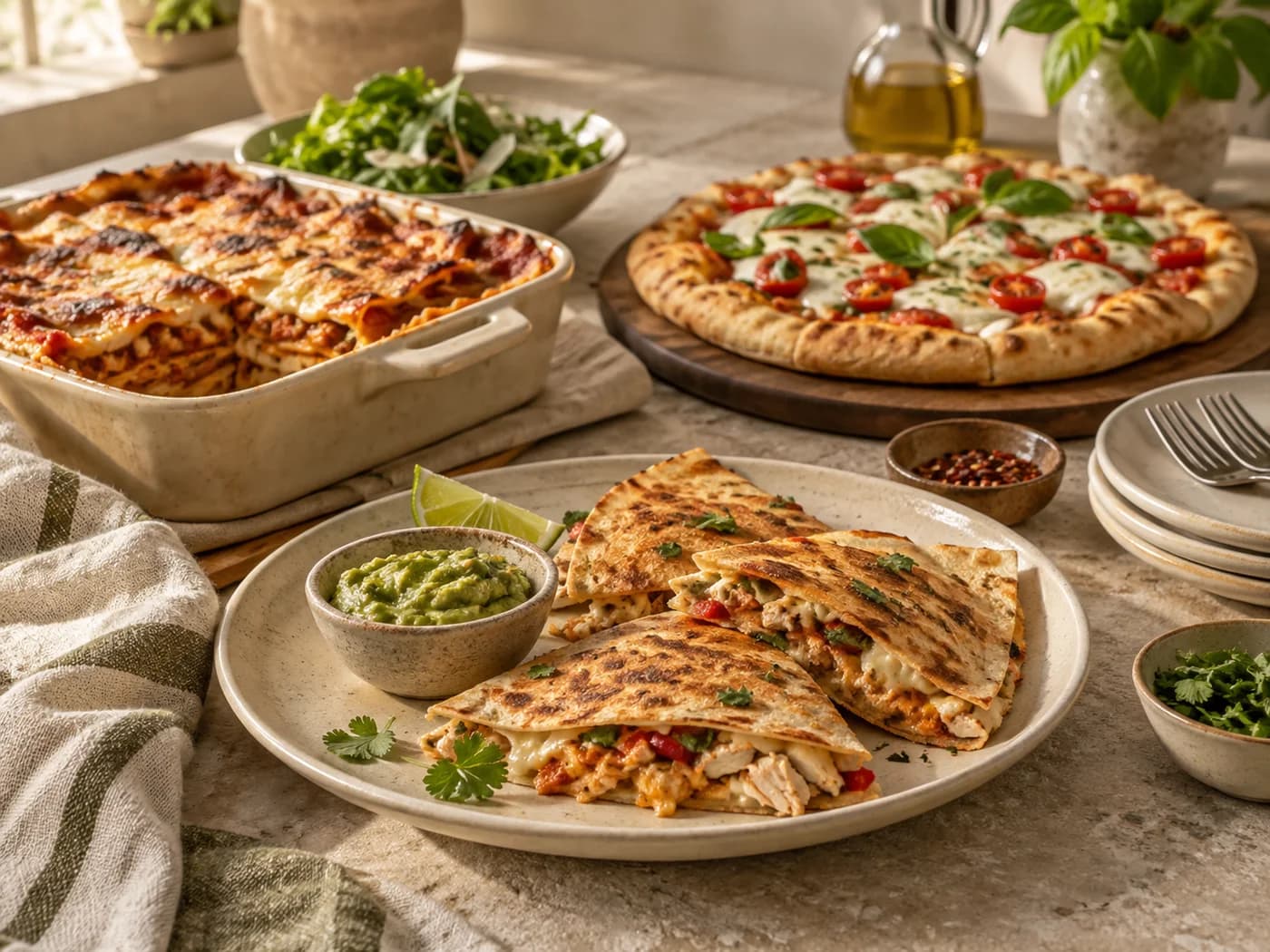
Keep savoury meals varied
If the appeal here is a crisp base and warm cheese, the high-protein pizza is a natural next recipe to explore. It uses a different base and cooking method, so follow its own quantities rather than trying to transfer this quesadilla filling into its nutrition claim. For a softer, spoonable dinner, mac and cheese offers another way to use dairy in a savoury meal. The lasagna page suits a day when you want a larger pan to portion rather than individual skillet rounds.
Breakfast sandwiches and breakfast pizza bring a similar savoury flavour direction to the morning. They can be useful when you want eggs or a toasted base instead of chicken. Each recipe has its own serving definition, ingredients and timing, so compare the actual complete portion rather than just the bold protein number. A breakfast sandwich and a full quesadilla do not necessarily provide the same amount of food even if both feel like a handheld meal.
Build a collection you will cook
Start with the recipes that use ingredients already familiar in your kitchen. If cottage cheese is a new purchase for this lunch, look for another recipe that uses the remainder while it is still within its storage guidance. If your main convenience is a batch of safely cooked chicken, plan how you will use it over the next few days and freeze what you will not use in time. Planning around ingredients can reduce waste without turning every meal into a repeat of the same filling.
The recipe collection and dinner guide linked below give more starting points when you want a change. Choose according to the texture and cooking effort you want as well as the nutrition estimate. Some days a quick skillet meal is appealing; on others, a pan in the oven makes more sense. Keep the portions and toppings clear, adjust for your own product labels, and use the recipe you look forward to eating. This chicken quesadilla can be one reliable option in that rotation, with room for plenty of different meals around it.