
Browse the 15 recipe sections
One reference serving: one complete personal pita pizza, including cottage cheese, egg topping, cheddar, vegetables and measured oil. About 34.4g protein before rounding. Sauces and sides are additional; timings are estimates. See the breakdown.
Recipe Overview
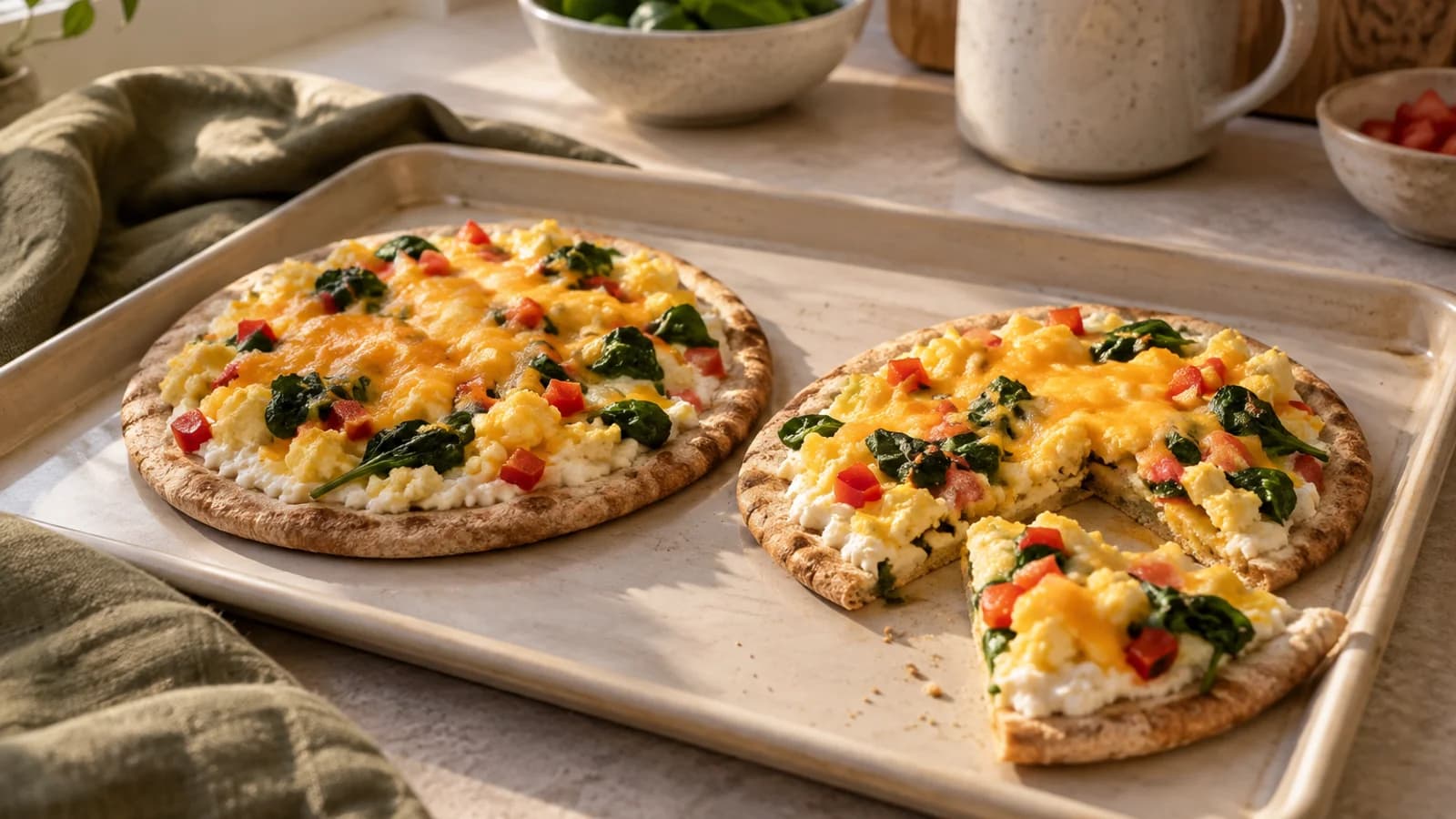
A pizza you can make before the morning gets busy
Breakfast pizza works best when it still feels like breakfast. This version starts with a whole-wheat pita, adds a thin cottage-cheese spread, and finishes with scrambled eggs, spinach, sweet red pepper and cheddar. The bread has a lightly crisp edge, the egg stays in small tender curds, and there is a little browned cheese on top. It is the sort of meal you can cut into wedges and eat at the table, without making dough before you have even had coffee.
The reference batch makes two personal pizzas, using two whole 60g pitas, approximately 17cm or six to seven inches across. One serving means one complete pizza, including its bread, cottage cheese, egg topping, vegetables, cheddar and share of cooking oil. The weighed ingredients give an estimate of about 454 calories and 34g protein per pizza. There is no protein powder, breakfast meat or tomato sauce in the listed recipe. Fruit, coffee additions, sauces and other sides are separate from that estimate.
What to expect from the base and topping
This is a quick pita pizza with a modest topping, rather than a thick-crust pizza or a deep egg bake. Keep the pita whole; separating its pocket into two thin layers changes how much topping each piece can support. The cottage cheese forms a light white spread beneath the eggs. Small curds are fine, and a fork is enough to mash larger ones. Cook the pepper and spinach before adding egg so their visible moisture does not end up soaking into the bread.
Allow roughly ten minutes to prepare ingredients and fifteen minutes for the overlapping skillet and oven stages, about twenty-five minutes altogether once you can work comfortably. Oven preheating and extra batches can add time. The exact weighed formula has not been physically kitchen-tested; the timings are starting estimates. An established scrambled-egg pita pizza provides a method reference, while the cottage-cheese spread, weighed egg-white balance and quantities here are a separate adaptation. The photographs illustrate the intended food and serving ideas rather than a documented test batch.
Why You’ll Love This Recipe
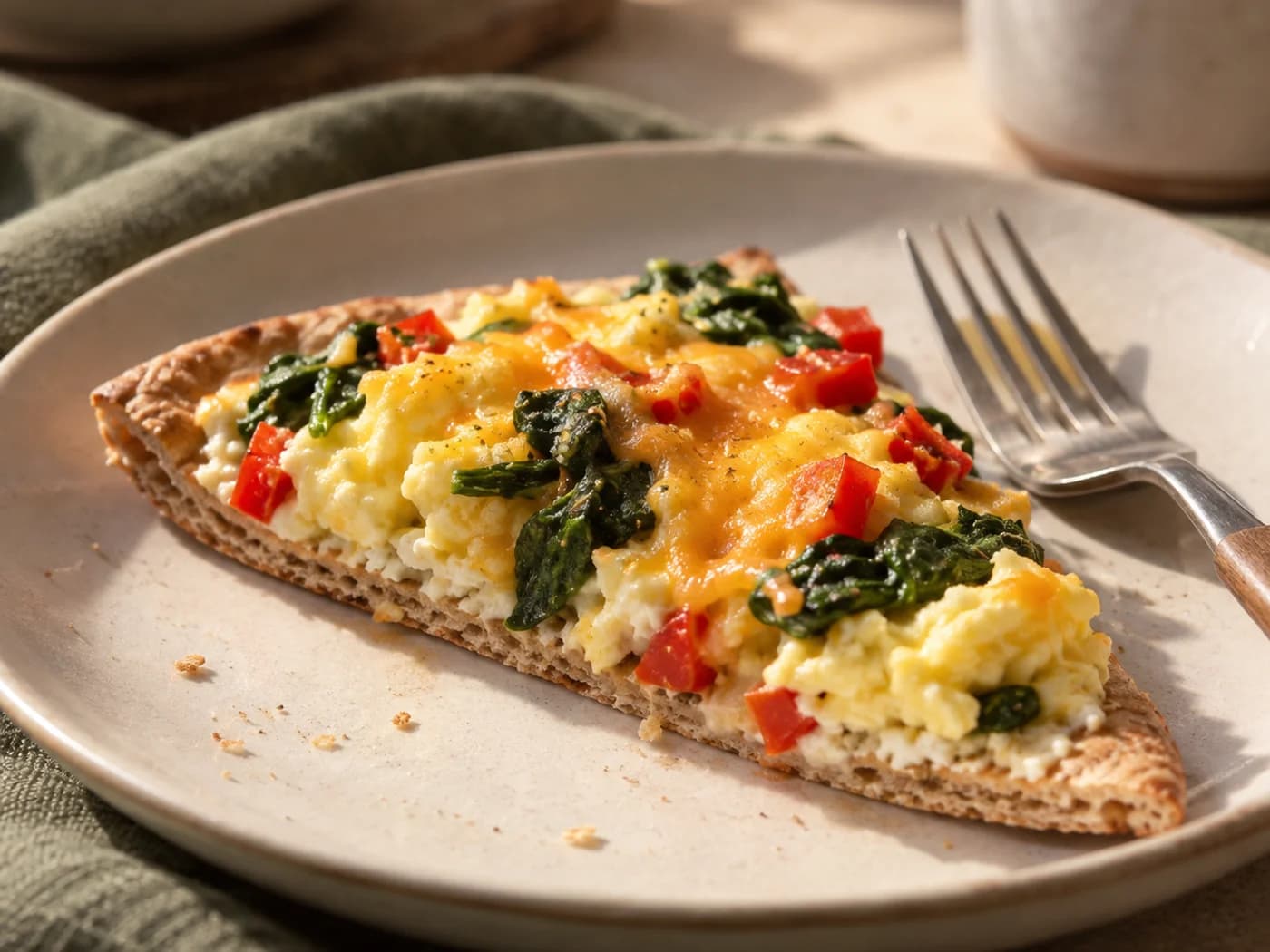
Familiar breakfast ingredients in a different shape
Eggs and toast are familiar for a reason, but a change in shape can make the same sort of breakfast more appealing. A round pita gives you a ready-made base, and cutting it into wedges makes it easy to share or eat gradually. The cottage cheese adds a gentle dairy flavour beneath the egg rather than turning the topping into a heavy sauce. Red pepper brings a little sweetness, spinach adds small green pieces, and cheddar supplies a recognisable savoury finish.
There is also a practical division of work. The skillet handles the vegetables and eggs; the oven lightly toasts the pita and melts the cheese. You are not asking raw egg to set on top of already browned bread. That makes the reference method easier to judge than cracking a whole egg onto a pizza and hoping the crust and yolk finish together. You can see the egg texture in the pan before the topping reaches the bread.
A complete portion with room for your preferences
The nutrition describes an actual breakfast portion: one whole personal pizza. It does not use a tiny wedge to produce a striking protein-to-calorie claim. If you want half a pizza, that is a valid smaller portion, and the numbers can be divided accordingly. If you are hungrier, choose a side you enjoy and account for it separately. The reference gives you a clear starting point without deciding how much breakfast you personally need.
You can make the preparation feel relaxed by weighing the cheese, chopping the pepper and setting out the pitas before heating the skillet. The topping does not need an impressive cheese pull or perfect restaurant edges. A slightly irregular pita and a few uneven egg curds suit a homemade breakfast. What matters is a base that holds together, eggs that are properly cooked, and a topping spread far enough towards the edges that the last wedge tastes as good as the first.
Nutrition at a Glance
- Calories
- 454kcal
- Protein
- 34g
- Carbs
- 42g
- Fat
- 17g
Calories: about 454 per complete pizza
The estimate includes a 60g whole-wheat pita, half the complete egg-and-vegetable mixture, 50g cottage cheese, 20g cheddar and half the measured skillet oil and seasonings. Weighing the bread is particularly useful because personal pitas can look similar while differing in thickness and weight. A larger bakery flatbread is not automatically the reference serving. There is no additional butter, cooking spray or oil brushed onto the pita in the listed formula.
Protein: about 34g
The unrounded estimate is 34.40g protein per pizza. Whole egg and plain whites provide much of it, with contributions from cottage cheese, cheddar and bread. The bread contribution is counted even though it is not the main protein ingredient. This is not a claim that a generic whole-wheat pita is a special high-protein product. If your cottage cheese or egg-white carton has different values, its label is more useful than treating the rounded headline as an exact measurement.
Carbohydrate: about 42.4g
Most of the carbohydrate comes from the whole-wheat pita, with smaller amounts from dairy, vegetables and seasonings. Fibre is estimated at about 5.6g per serving. This recipe is not presented as low carb or keto. The bread gives the pizza its structure and familiar bite; removing it would make a different dish. Whole-wheat labelling also varies, so check the actual bread ingredients and nutrition rather than relying only on its colour.
Fat, saturated fat and sodium
Fat is approximately 17.1g per pizza, including 6.5g saturated fat. Whole egg, cheddar, cottage cheese and olive oil all contribute. Sodium is approximately 1,058mg per serving with the generic references, including the added salt and sodium already in bread, egg whites and cheese. That is a meaningful amount to consider if you monitor sodium. A high protein description does not make every other nutrient irrelevant. Use a different label-based calculation if you select lower-sodium products or change the salt.
Ingredients
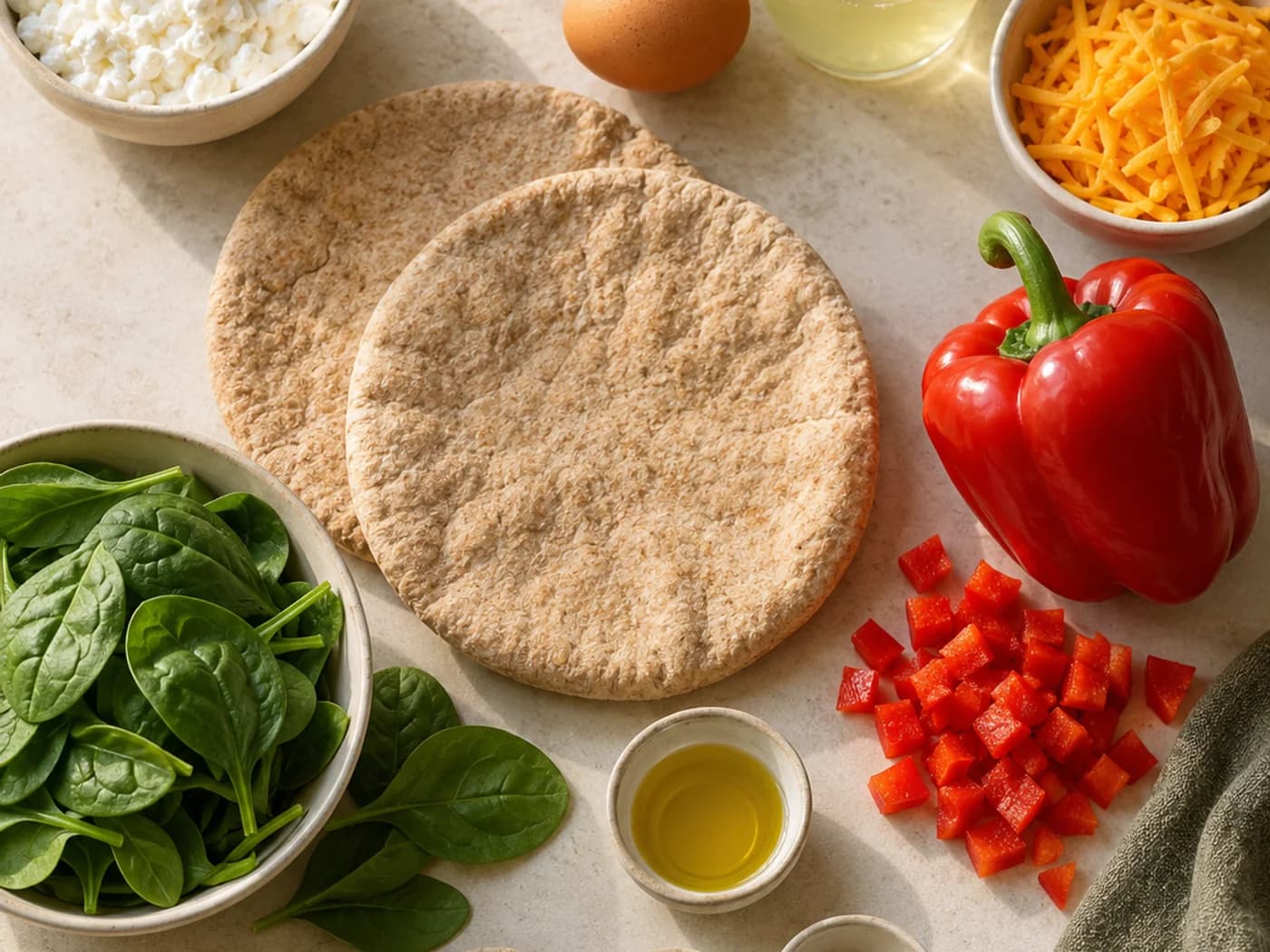
Start with two whole pitas
Use 120g whole-wheat pita bread in total, two whole pitas of about 60g each and roughly 17cm across. The reference is a soft, already baked pita with enough surface area for a personal breakfast topping. It is not raw pizza dough, a thick naan, a wrap or a hollowed-out bread bowl. Keep each pita intact instead of opening its pocket. If your bread is substantially smaller, do not force the entire topping onto it in a tall mound.
Bread that has become very dry can turn brittle during the first oven stage. A pita that is soft and flexible before toasting is easier to handle. Check its storage instructions and ingredient label, including any allergens relevant to you. The reference contains wheat; a gluten-free flatbread is a possible separate trial, but its texture and nutrition need their own assessment. There is no extra flour for rolling because there is no dough-making step.
Eggs and the cottage-cheese spread
Weigh 100g whole egg without shells, approximately two large eggs, and 200g plain egg whites. Whisk them together with the seasonings shortly before cooking. Carton whites are convenient, but a flavoured egg substitute or whole-egg liquid product is a different ingredient. Use a clean bowl and utensils, and keep raw egg away from the cottage cheese that will be spread on the bread. The reference egg mixture does not need milk or additional water.
Measure 100g low-fat cottage cheese with 2% milk fat. Stir the tub before weighing, then mash large curds with a fork. Spread 50g on each lightly toasted pita. If there is a conspicuous pool of separated whey, stir and assess the tub rather than pouring that pool onto the bread. Rinsing and heavily draining the cheese would make the reference amount harder to interpret. The intention is a thin spread, with small curds allowed, rather than a thick layer of liquid dairy.
Vegetables, cheddar and measured oil
Prepare 80g seeded red bell pepper in small dice and 60g baby spinach, washed, dried and chopped. Grate 40g cheddar, 20g for each pizza. Measure 6g olive oil for the complete skillet stage; no extra oil is used on the bread or tray. Add 2g garlic powder, 1g paprika, 1g ground black pepper and 1g fine salt to the egg mixture. Plain paprika is the nutrition reference; smoked paprika is an optional flavour change. Contains wheat, egg and milk. Check cheese rennet if vegetarian suitability matters.
Your ingredient checklist
- Whole-wheat pita breadTwo whole 60g pitas, about 17cm / 6–7 inches; do not split120g
- Whole eggShell-free weight; about two large eggs100g
- Egg whitesPlain liquid whites; check carton label200g
- Low-fat cottage cheese (2%)Stir before weighing; mash for the base spread100g
- Cheddar cheese20g over each personal pizza40g
- Red bell pepperRaw seeded edible weight; small dice80g
- Baby spinachWashed, dried and chopped60g
- Olive oilAll for the skillet vegetables and eggs; no extra oil6g
- Garlic powderPlain powder, not garlic salt2g
- PaprikaPlain ground paprika; smoked is an optional flavour change1g
- Ground black pepperFor the complete two-pizza batch1g
- Fine saltFor the complete two-pizza batch1g
Contains wheat, egg and milk. Check actual bread and dairy labels, including trace warnings; for vegetarian suitability, check cheese rennet. No meat or protein powder in the reference recipe.
Ingredient Substitutions
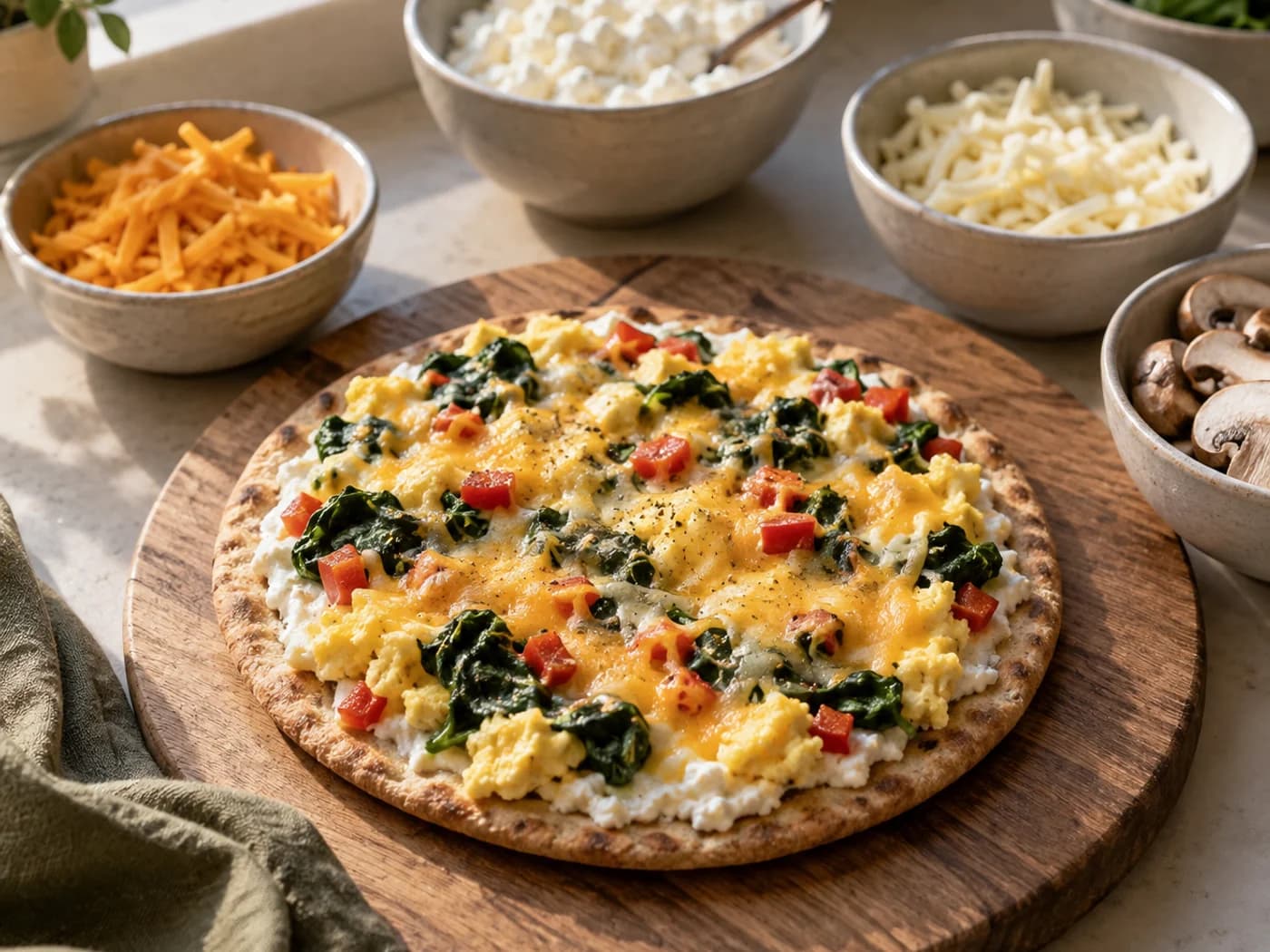
A different base changes the whole pizza
A similar whole-wheat pita can work as a practical alternative when its weight, diameter and thickness are close. A large wrap is thinner and more flexible, while naan is often thicker and can contain more fat. An English muffin is smaller and has a different crumb. None is a direct nutritional replacement for the weighed 60g pita. Use the actual label, consider how much topping its surface can carry, and treat toasting times as new observations.
If you would rather make the dough yourself, the separate high-protein pizza recipe gives you a Greek-yogurt crust and a different topping plan. That is a better starting point than putting this pita schedule onto raw dough. Fresh dough needs its own thickness, baking and handling decisions before the eggs are added. The quick breakfast method relies on bread that is already baked, so its brief oven stages should not be expected to cook a raw crust.
Dairy swaps need a texture check
Another cottage-cheese fat level can be considered using its own label and moisture level. A very loose tub can soften the base more than a thick one. Thick Greek yogurt has a different acidity and does not behave exactly like mashed curds when heated. Ricotta and cream cheese also change flavour, richness and texture. They may be useful in a separately adjusted version, but this exact recipe does not establish them as equal-weight direct replacements.
Part-skim mozzarella can replace cheddar as a flavour trial if you use a measured amount and recalculate from its label. It melts differently and may give less sharp flavour. Dairy-free cheese alone does not remove the cottage cheese, and an egg substitute does not automatically behave like the listed whole egg and whites. If you need an egg-free and dairy-free pizza, start from a recipe designed for that combination rather than stacking several untested substitutions here.
Vegetables and extra toppings
Cooked mushrooms can bring a deeper savoury flavour, but release their moisture in the skillet before adding them. Courgette needs similar attention. Frozen spinach requires preparation and drainage according to its packet; a frozen block is not interchangeable with the raw-leaf weight. Keep pieces small enough to distribute through the egg. Bacon, sausage or ham add different preparation, food-safety and nutrition considerations and are not included in the meatless reference. Adding them should be a deliberate new version, not an invisible extra under the original numbers.
Use the label for nutrition and judge the structure of the actual base.
| Reference | Possible change | What to check |
|---|---|---|
| Whole-wheat pita | Similar pita | Weight, diameter and thickness |
| Already baked pita | Raw pizza dough | Needs a different crust baking method |
| Cottage cheese | Another cottage-cheese fat level | Moisture, curds and product label |
| Cheddar | Part-skim mozzarella | Weight, flavour and melting |
| Pepper and spinach | Mushrooms or courgette | Cook away visible moisture |
| Whole egg and whites | Whole raw egg topping | Different doneness and timing method |
How to Make It
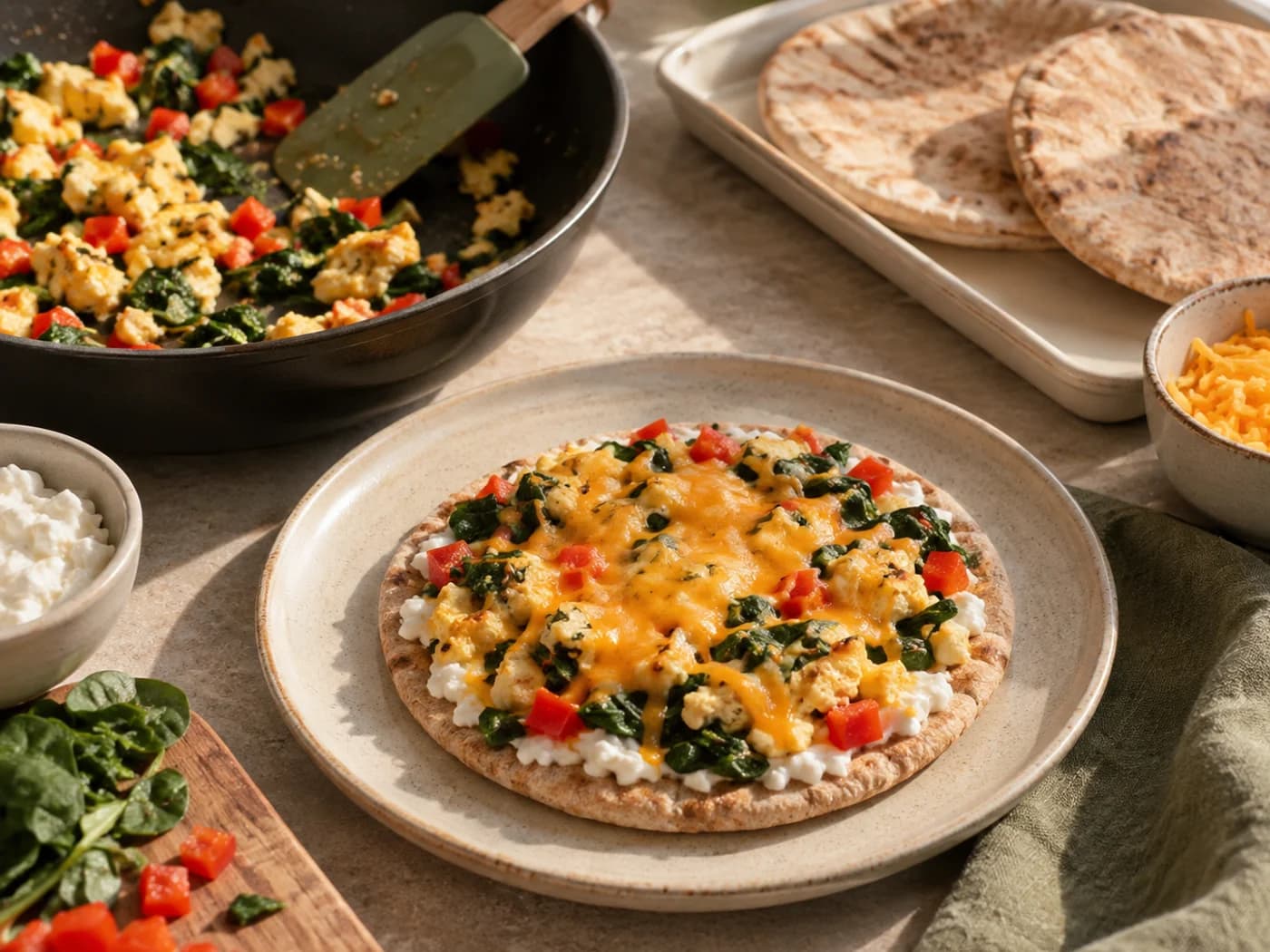
Toast the base while you prepare the topping
Preheat a conventional oven to 400°F / 200°C. Place two whole 60g pitas on a suitable baking sheet, leaving space between them. Lightly toast for roughly four to five minutes, just until the surface begins to firm. The bread should still be able to support cutting without shattering. Use oven protection to remove the tray. There is no extra oil or butter on the pita in this step; a suitable clean tray or baking surface is enough.
While the oven heats, dice the pepper, chop and dry the spinach, grate the cheddar and mash the cottage cheese. Put the 100g shell-free whole egg and 200g whites in a bowl with the garlic powder, paprika, pepper and salt. Whisk until the yolks and whites are evenly combined. Setting everything out first makes it easier to stay with the skillet when the egg begins to set. Do not start the eggs and then leave to search for the cheese grater.
Cook moisture out before making the scramble
Warm the measured 6g olive oil in a nonstick skillet over medium heat. Add 80g diced red pepper and cook until it starts to soften, around three to four minutes as a guide. Add 60g chopped spinach and stir until wilted and visible liquid has evaporated, roughly another minute or two. The timing depends on the pan and vegetable moisture. Look at the surface of the skillet rather than following the clock while a pool of water remains.
Lower the heat to medium-low. Pour in the whisked egg mixture and move it gently with a silicone spatula, lifting and folding to form small curds. Cook until the eggs are set with no visible liquid egg and the mixture reaches 160°F / 71°C. The reference starts with about two to four minutes for this stage, but the temperature and texture checks decide when it is done. Remove the pan from the heat promptly; the topping will spend a short additional time in the oven.
Assemble, melt and cut
Spread 50g mashed cottage cheese over each lightly toasted pita, leaving a narrow edge. Divide the cooked egg-and-vegetable topping evenly between the two bases, then scatter 20g cheddar over each. Spread the curds into an even layer rather than piling everything in the centre. Return the tray to the oven for roughly five to seven minutes, until the cheese melts, the topping is hot and the pita edges are lightly crisp. Watch the bread so the finishing stage does not turn it hard.
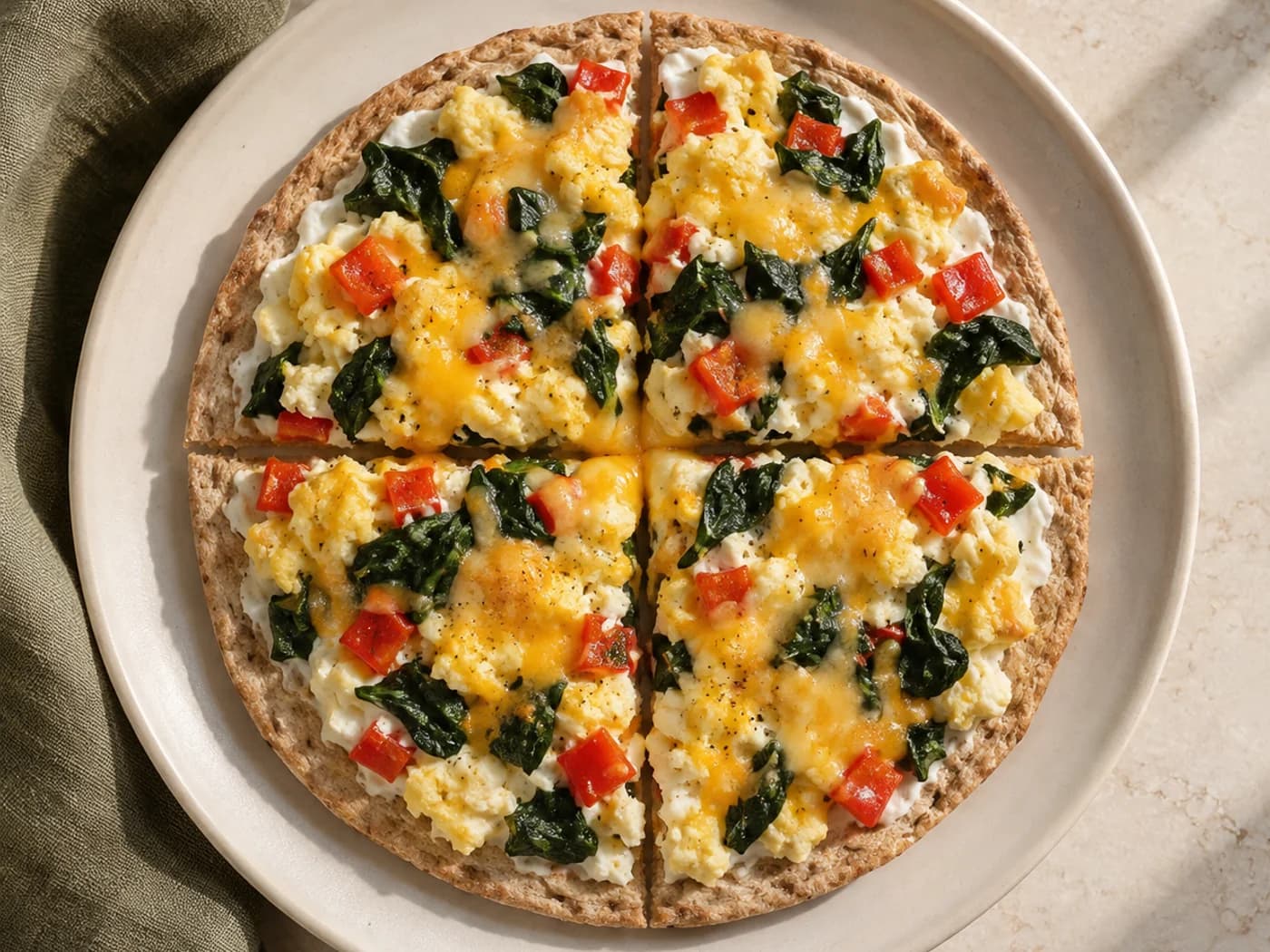
Let the pizzas settle on the tray for about two minutes before moving them to a board. Cut each into four wedges with a suitable knife or pizza cutter. All four wedges together are one reference serving. A spatula under the first wedge helps keep the topping attached while the cheese is still soft. Serve promptly, with any fruit, sauce or other side kept separate from the stated recipe nutrition. Extra batches need their own tray space and skillet rounds rather than one overloaded pan.
Tips for the Best Results
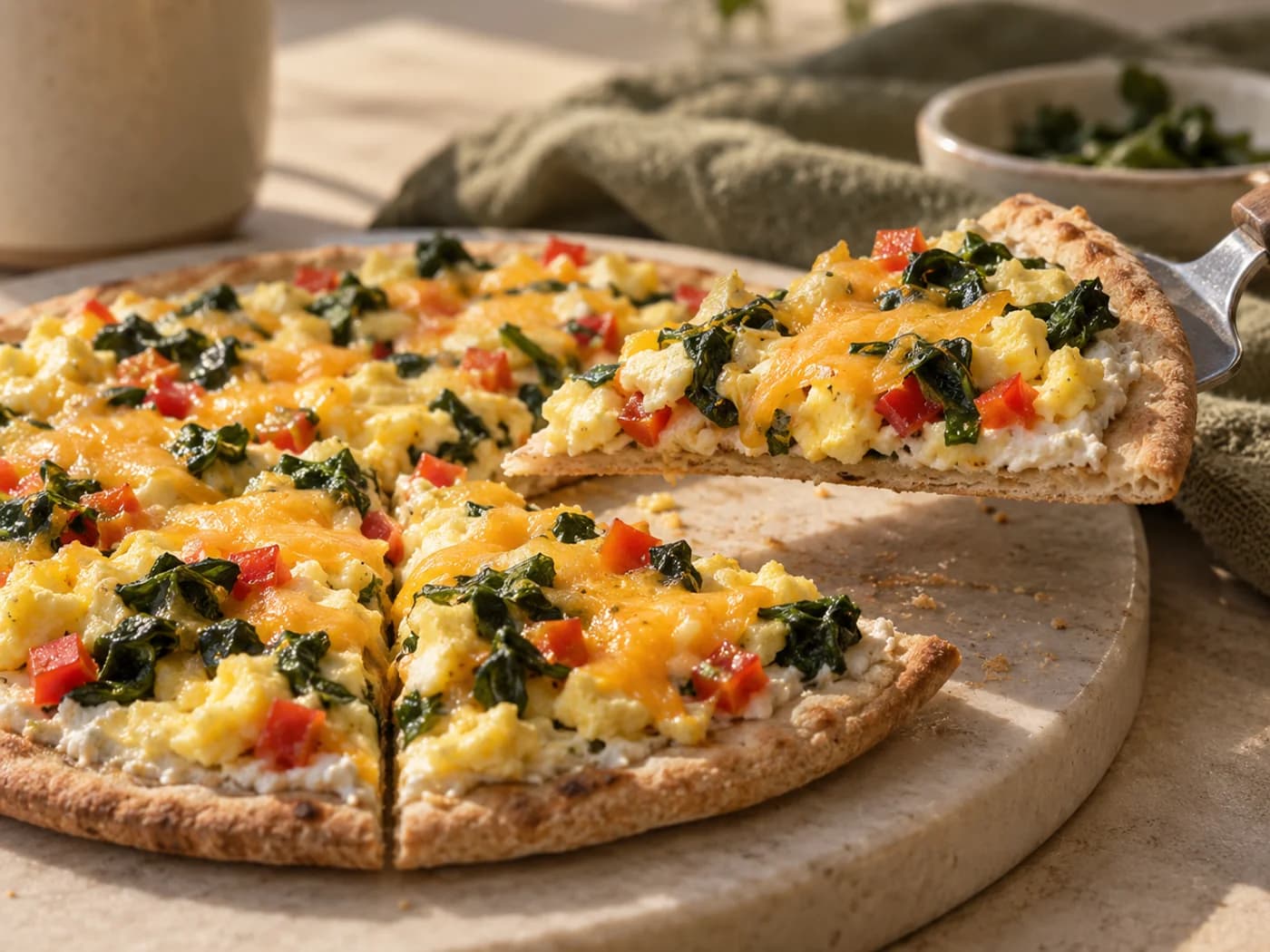
Protect the bread from unnecessary moisture
The cottage cheese is a spread, not a sauce bath. Keep it thin and even, with the reference 50g allocated to each pita. Large curds can be mashed without adding liquid. A deep spoonful in the middle may leave the centre soft while the edge browns. The same applies to the vegetables: wet spinach or pepper sitting in skillet liquid brings extra moisture to a bread base that only has a few minutes to finish.
Light toasting gives the pita a head start, but there is a balance. It should firm slightly without becoming a cracker before the topping goes on. Very thin, dry or small pitas may need less time than the reference estimate. Watch the edge and touch only when it is safe to do so. A dark rim does not become better while you wait for more cheese colour. If the cheese is melted and the base is ready, there is no need to chase a dramatic brown topping.
Keep the egg curds small and comfortably cooked
Small curds distribute more easily than a single omelet-sized slab. Moving a spatula gently through the pan lets you break up the topping without mashing it into crumbs. Avoid using very high heat to finish faster; the outside of the curds can become firm while moisture collects around them. Once the egg is properly cooked, take the skillet off the heat. Leaving it on a hot burner while assembling the pitas adds cooking you did not intend.
The pepper pieces should be small enough to stay on a wedge. Large rings or long strips can pull several bites of topping away from the bread at once. Chop spinach after washing and drying so it does not leave a long leaf dangling from a slice. These details do not require perfect knife work. They simply make the finished pizza easier to cut and eat, particularly if you want to use your hands for the outer wedges.
Give every pizza enough space
The tray should hold the pitas flat with a little room around each. Overlapping edges or squeezing a pita against the tray wall makes browning harder to judge. Larger batches are better handled in additional uncrowded rounds. A few minutes of settling before cutting also helps: freshly melted cheese and hot scrambled egg move easily, so a broad spatula is kinder than lifting a wedge by its tip. Use cookware-safe utensils and a board for cutting, not a nonstick tray that can be scratched.
High-Protein / Lower-Calorie Variations
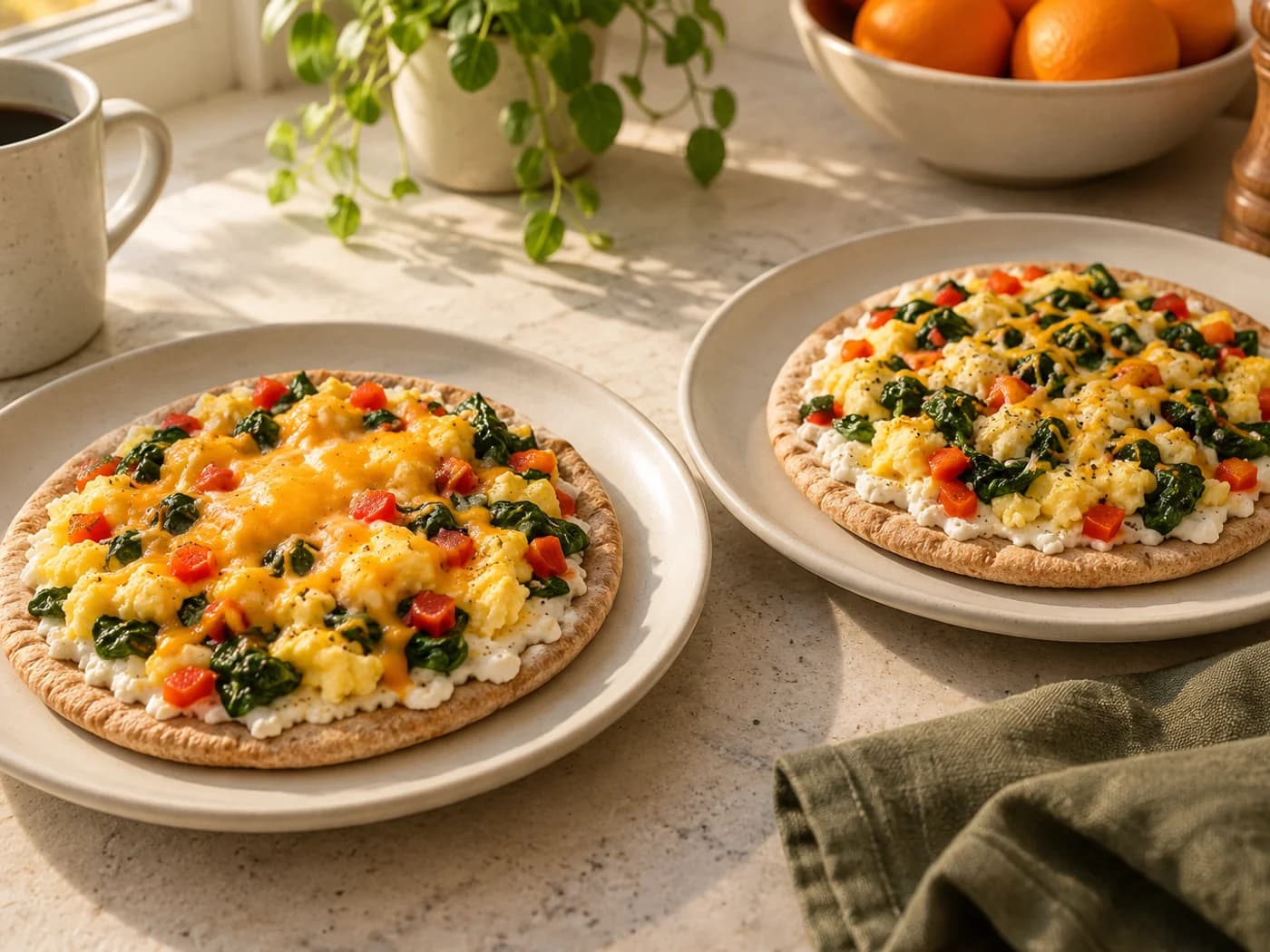
A smaller serving without a new recipe
Half of one complete reference pizza supplies approximately 227 calories and 17.2g protein. That is two of the four equal wedges, assuming the topping is evenly spread. It can suit a smaller appetite or a meal with another component. It is not the same as eating all the egg topping and leaving most of the bread. For closer tracking, divide the finished pizza and its toppings evenly rather than assuming any two irregular pieces represent exactly half.
If you share the two-pizza batch between four people, each person receives half a pizza. That changes the serving size, while the recipe card's larger settings add more complete pizzas. The difference matters when saving or printing a recipe. Four servings in the card means four full personal pizzas, not the original two pizzas cut into more pieces. Choose the preparation that matches the actual number of complete breakfasts you want to make.
Use less cheddar deliberately
A calculated lower-cheddar version uses 20g cheddar for the entire two-pizza batch, 10g per pizza, with every other amount unchanged. Its estimate is approximately 413 calories and 32.1g protein per complete pizza. The lighter topping will look and taste different. A fine grate helps distribute a small amount over the egg, but it will not create the same coverage as the original 20g per pizza. This is a quantity change to try, not a tested guarantee of identical texture.
Omitting or reducing added salt changes sodium, but bread, egg whites and cheeses still contain their own sodium. Different lower-sodium products require a fresh label-based total. Likewise, switching to a smaller pita can reduce calories while also shrinking the surface for the topping. Do not stack all the original topping on an unsuitable small base and assume the same method will remain easy to handle.
Add protein with a practical limit
Adding 100g extra egg whites to the complete two-pizza batch, 50g additional whites per pizza, produces a calculated estimate of about 480 calories and 39.9g protein per full pizza. The scramble will take longer and the topping will be larger. Cook it thoroughly, use an uncrowded pan, and judge whether your pita can carry the extra volume. Serving part of the additional cooked egg beside the pizza may be more practical than building a tall pile. This altered balance has not been kitchen-tested.
These are calculated comparisons, not physically tested altered batches.
| Serving or change | Calories, approximately | Protein, approximately |
|---|---|---|
| One complete reference pizza | 454 kcal | 34.4g |
| Half of one reference pizza | 227 kcal | 17.2g |
| One pizza with 10g cheddar | 413 kcal | 32.1g |
| One pizza with 50g extra egg whites | 480 kcal | 39.9g |
Serving Suggestions
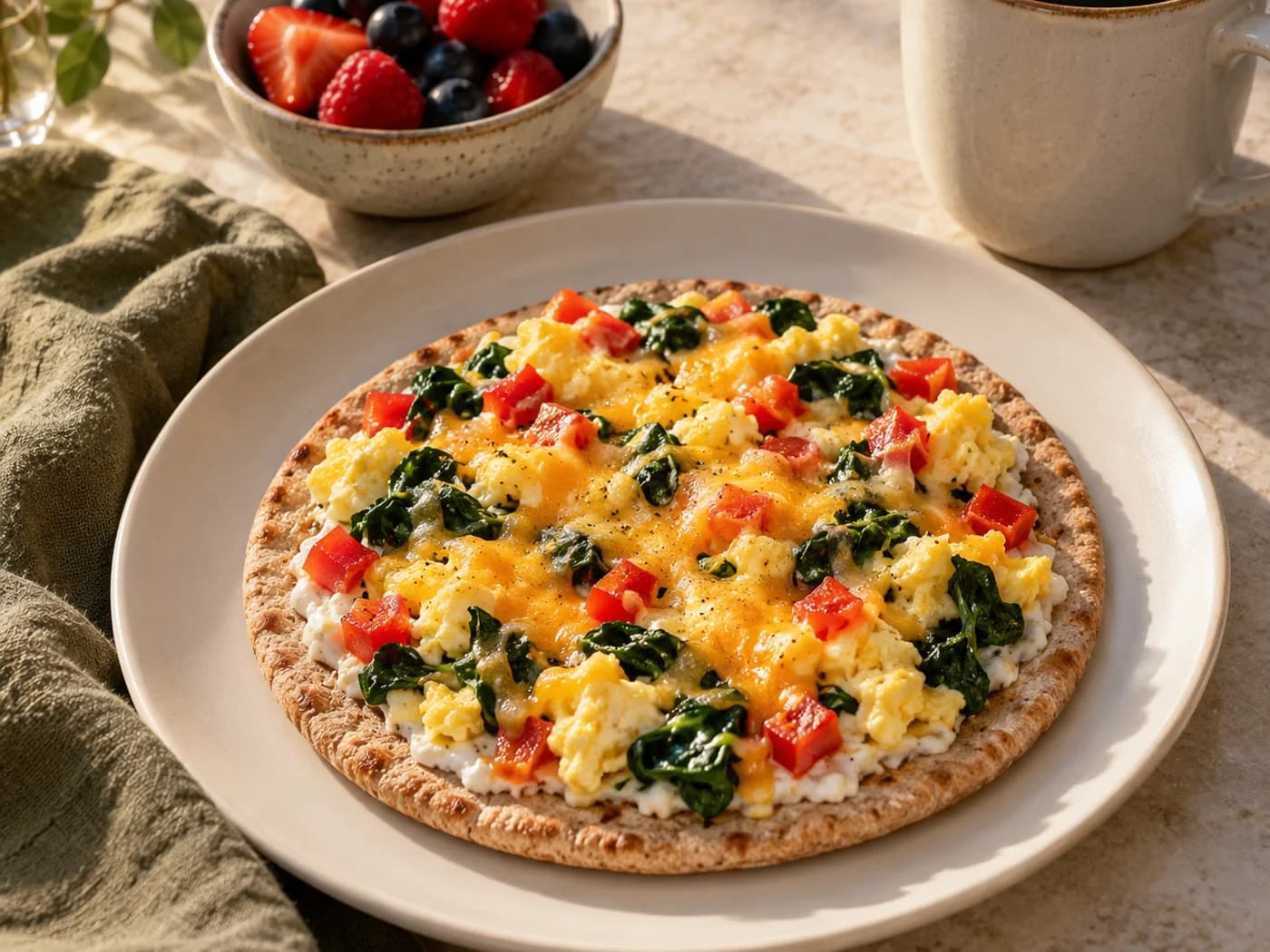
Serve the pizza while the edge still has bite
Move the finished pizza to a board, let it settle briefly, then cut it into wedges. Serve on a warm or room-temperature plate rather than leaving it on a steaming tray for a long wait. The first wedge may need a fork and spatula, especially if the pita is soft. That does not mean the pizza has failed. A personal pizza can be a sit-down breakfast; it does not have to behave like a rigid takeaway slice to be enjoyable.
Fresh fruit makes a straightforward side. Berries, an orange or a small bowl of melon offer a different texture from warm egg and cheese. Those foods are not included in the reference calories. If you want to track the whole plate, use the portions you actually serve. A photograph with fruit beside a pizza should not imply that the headline nutrition covers everything on the table.
Sauces and greens can stay on the side
A little hot sauce or salsa may suit the eggs, but add it after baking and measure it if a close estimate matters. A wet sauce spread under the egg changes the base more than a spoonful served beside the finished pizza. You can also offer a small cucumber or leafy salad at brunch. Dress it separately so its liquid does not run into the pita. The reference intentionally keeps its toppings simple enough to understand on their own.
For coffee or tea, use your usual preparation and account for milk, cream, sugar or syrup separately if you track them. Plain water is equally at home on the table. There is no need to turn the meal into a collection of special high-protein products. The pizza already has several ordinary protein-containing ingredients; choose drinks and sides because they suit the rest of your day and your appetite.
Sharing a relaxed brunch
Two full pizzas are easy to put in the centre of a small table, with wedges offered as people sit down. For a larger group, use the card to make more personal pizzas and plan oven rounds. Keep toppings and serving utensils within reach, and bring out each finished round promptly. If guests have different dietary needs, identify the wheat, egg and milk clearly. A separate suitable meal is more considerate than describing a heavily modified version as though it has the original ingredients or nutrition.
Meal Prep & Storage
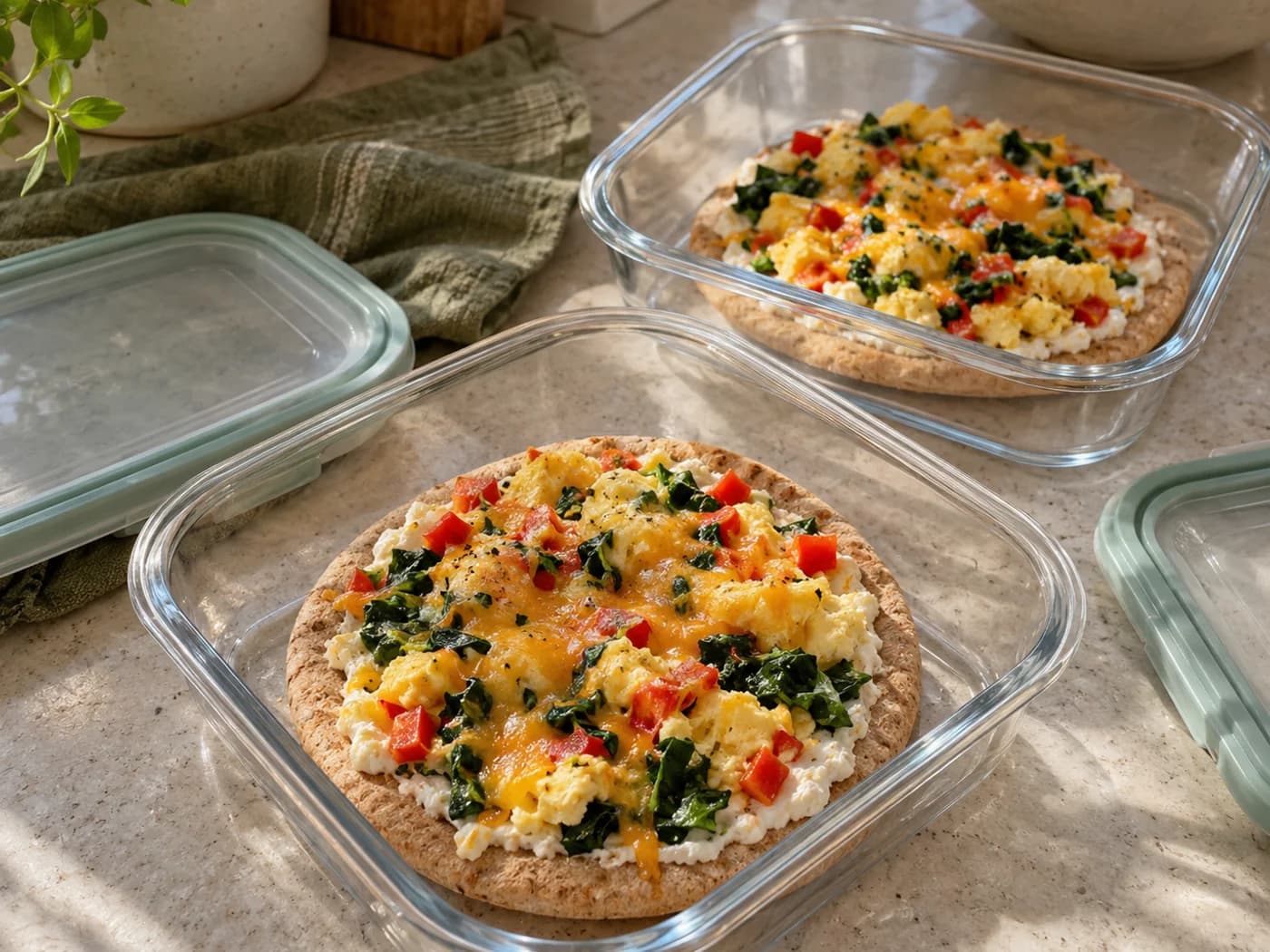
Prepare components when texture matters most
For the freshest bread texture, prepare the components ahead and assemble close to eating. You can dice the pepper, wash and dry the spinach, grate the cheddar and portion the bread in advance, following each ingredient's storage instructions. Keep the cottage cheese in its own covered container. This avoids leaving a layer of dairy on a pita for hours before it reaches the oven. Do not use a raw assembled egg pizza as the make-ahead reference; this method cooks the egg topping first.
Cooked topping can also be prepared ahead, cooled promptly and stored separately, but cold topping needs a different reheating assessment from the freshly cooked mixture in the main method. A brief cheese-melting stage may not heat a chilled mound evenly. Reheat the topping thoroughly before assembly or check the complete reheated pizza properly. Treat its elapsed time as a fresh observation rather than copying the short finishing estimate for hot ingredients.
Refrigerate and reheat with a clear plan
Cool leftovers promptly in shallow containers and refrigerate at 40°F / 4°C or below. USDA guidance allows three to four days for suitably handled refrigerated leftovers. Do not leave this perishable breakfast out for more than two hours, or one hour above 90°F / 32°C. Keep portions covered once cooled enough for appropriate storage. These are handling limits, not a measured shelf-life claim for this particular formula.
Reheat leftovers throughout to 165°F / 74°C. An oven at about 350°F / 175°C can help the bread regain some firmness, but the time depends on starting temperature and topping thickness. Cover loosely if the edge is becoming too dark while the middle warms. A microwave is convenient and may soften the pita; rotate or reposition the portion as needed and check more than one spot. A crisp edge is a texture preference, while the middle still needs adequate reheating.
Freezing is an optional texture trial
Freeze cooled individual pizzas or wedges in suitable packaging with the date noted. About one month is a practical quality target to try, rather than a tested promise for this recipe. Egg curds and cottage cheese may change texture after thawing, and bread can soften. Thaw in the refrigerator when possible and reheat properly. If you are uncertain whether the meal was handled safely before freezing, freezing does not resolve that uncertainty. For a first batch, learning how one refrigerated portion reheats may be more useful than filling the freezer immediately.
Full Nutrition Information
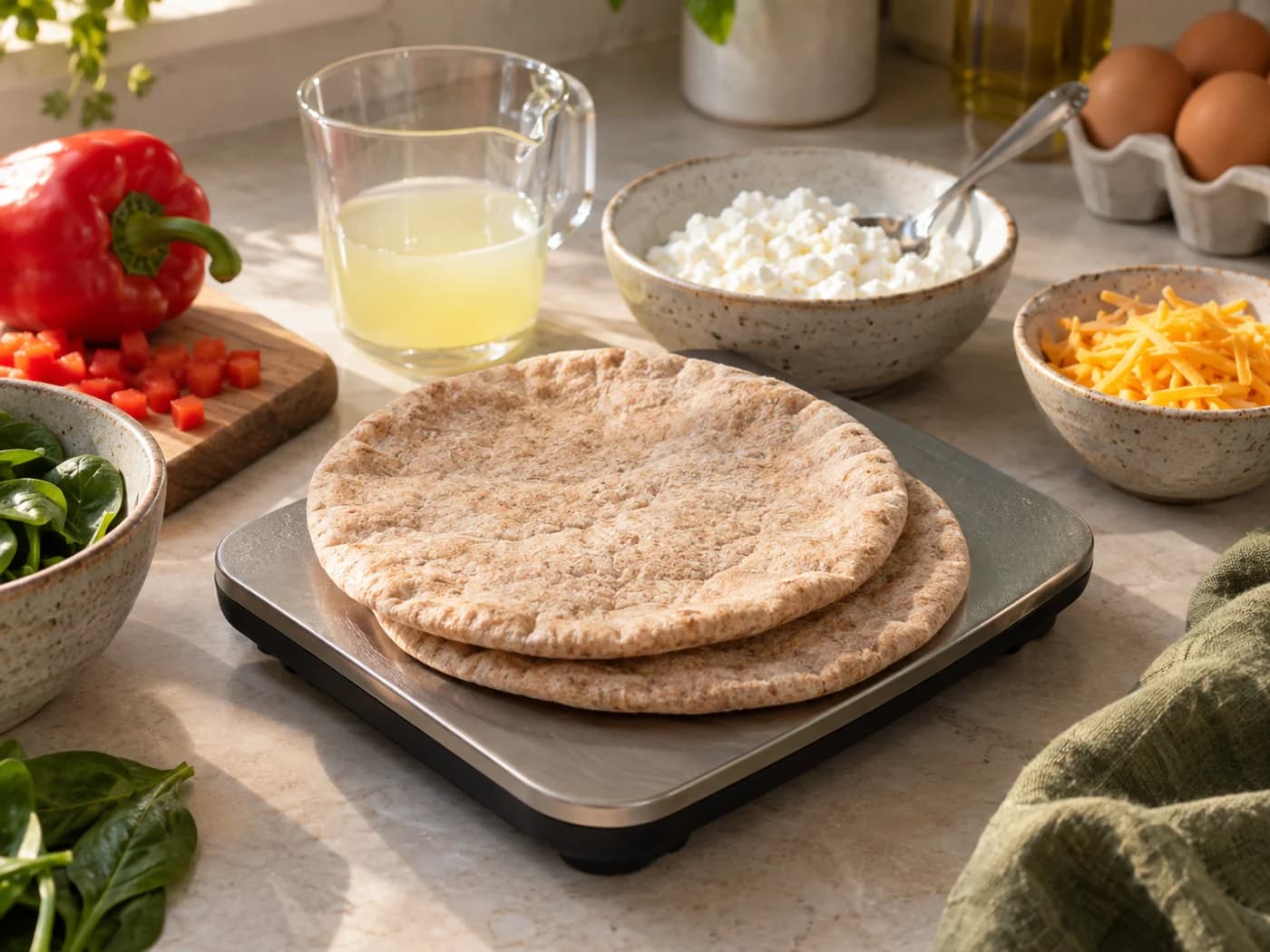
How the calculation is built
The ingredient table uses historical generic USDA Standard Reference release 28 values for twelve ingredients. Each per-100g value is multiplied by the weighed edible amount and divided by one hundred. Those contributions are summed for the two-pizza batch, then divided by two for one complete personal pizza. Bread is weighed as supplied, whole egg without shells, and vegetables as raw edible amounts before cooking. The method includes all measured olive oil and salt, even if a small amount remains in the skillet.
The unrounded batch contains approximately 907.59 calories and 68.80g protein. Dividing it into two complete pizzas gives 453.795 calories and 34.401g protein each. The quick panel rounds those to 454 and 34. Small differences between rounded ingredient rows and the batch total are expected because the batch is summed before rounding. Cooking can change water weight, but it does not justify discarding the calories from ingredients that remain part of the meal.
What the estimate covers and what it does not
Carbohydrate is about 42.44g, fat 17.07g, fibre 5.55g, total sugars 6.60g, saturated fat 6.51g and sodium 1,057.99mg per pizza with these references. Total sugars are not an added-sugar calculation. Cholesterol and a complete micronutrient panel have not been calculated here. Missing fields are not zero values. The table gives the nutrients supported by the selected ingredient data rather than filling every possible label field with an assumption.
Bread is a particularly important source of variation. Your 60g pita might have different calories, sodium, fibre or protein from the generic whole-wheat reference. Cottage cheese and egg-white cartons also differ. For a closer personal estimate, enter your actual weighed ingredients and label values into the food calculator. Include oil, cheese, seasonings and any sides you actually eat. A familiar-looking ingredient is not necessarily nutritionally identical to the generic database entry.
Tracking wedges and altered batches
One quarter of the complete reference pizza is about 113 calories and 8.6g protein, before rounding differences. Four quarters are the full reference serving. A thicker piece with most of the topping is not automatically equal to a mostly bare edge wedge, so distribute the ingredients before baking if even portions matter. The 2/4/6 card settings keep the same per-pizza nutrition because they multiply complete pizzas. They do not change the size of the reference pita or split an unchanged batch into more servings.
| Ingredient | Amount | Calories | Protein | Carbs | Fat |
|---|---|---|---|---|---|
| Whole-wheat pita bread | 120g | 314 kcal | 11.8g | 67.1g | 2.1g |
| Whole egg | 100g | 143 kcal | 12.6g | 0.7g | 9.5g |
| Egg whites | 200g | 104 kcal | 21.8g | 1.5g | 0.3g |
| Low-fat cottage cheese (2%) | 100g | 81 kcal | 10.4g | 4.8g | 2.3g |
| Cheddar cheese | 40g | 162 kcal | 9.1g | 1.2g | 13.3g |
| Red bell pepper | 80g | 25 kcal | 0.8g | 4.8g | 0.2g |
| Baby spinach | 60g | 14 kcal | 1.7g | 2.2g | 0.2g |
| Olive oil | 6g | 53 kcal | 0.0g | 0.0g | 6.0g |
| Garlic powder | 2g | 7 kcal | 0.3g | 1.5g | 0.0g |
| Paprika | 1g | 3 kcal | 0.1g | 0.5g | 0.1g |
| Ground black pepper | 1g | 3 kcal | 0.1g | 0.6g | 0.0g |
| Fine salt | 1g | 0 kcal | 0.0g | 0.0g | 0.0g |
| Whole batch | 2 complete personal pizzas | 908 kcal | 68.8g | 84.9g | 34.1g |
| One reference serving | Batch ÷ 2 | 454 kcal | 34.4g | 42g | 17g |
| Dietary fiber | 5.6g |
|---|---|
| Total sugars | 6.6g |
| Saturated fat | 6.5g |
| Sodium | 1058mg |
Estimated recipe nutrition, not a laboratory analysis. Includes the whole pita, egg topping, cottage cheese, cheddar, vegetables, seasonings and all measured skillet oil. Extra sauces and sides are additional. Uses historical generic USDA food values; actual product labels take priority. Cholesterol, added sugars and complete micronutrients are not calculated.
How This Fits Your Daily Protein Goal
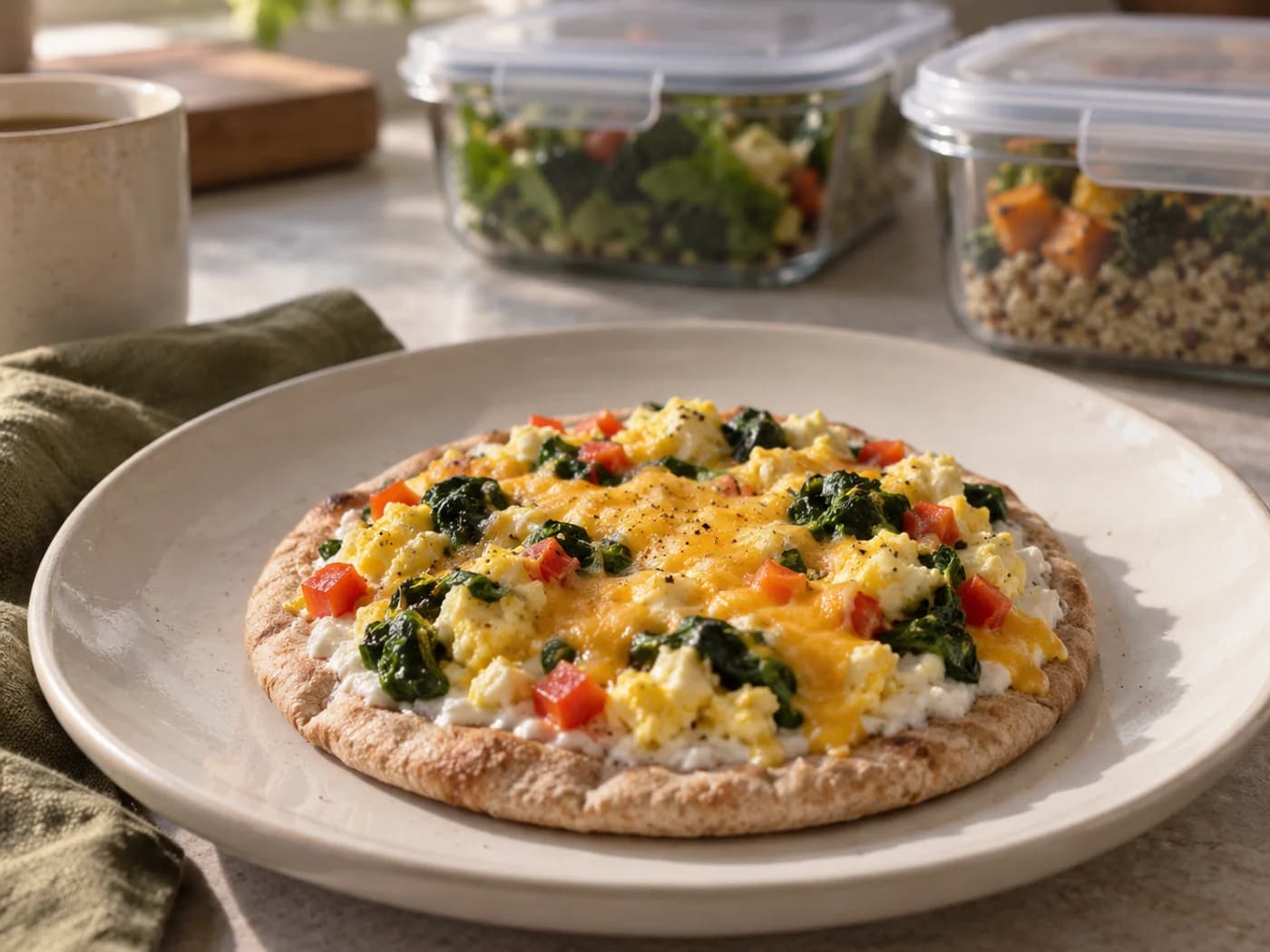
Begin with a target that applies to you
If you already have an appropriate daily protein target, this breakfast contributes about 34.4g towards it. You can use the protein calculator to estimate a starting target when needed, then adapt it to your circumstances. The recipe itself does not decide your requirement. Appetite, activity, the rest of your meals and any individual nutrition advice still matter. A meal can be convenient without becoming a rule that every person should follow each morning.
For a purely arithmetic example, 34.4g is about 34% of a 100g daily target, 29% of 120g, or 23% of 150g. Those targets are examples, not recommendations for everyone. At 120g, the remainder after one reference pizza is about 85.6g. That could be spread over lunch, dinner and snacks in whatever practical pattern suits your day. There is no need to force the remaining amount into one particular food or another serving of breakfast pizza.
Think about the rest of the plate and day
Protein is only one part of choosing breakfast. The whole pizza also brings bread carbohydrate, measured oil and cheese, vegetables, fibre and sodium. If you already know that sodium or saturated fat needs particular attention in your plan, look at those values and the actual product labels. A protein number should help you understand the meal, not distract you from the ingredients or the eating experience. Choose a portion you can enjoy comfortably rather than treating the largest number as the best breakfast.
The same applies around exercise. You do not need to describe a pizza as a specialised training product for it to be useful. It is an ordinary meal with a known approximate contribution. Some people prefer a larger breakfast, others eat a smaller portion and more later. If half a pizza suits you, use the half-serving estimate rather than eating a full one just because the card's default is one personal pizza per person.
Make the plan repeatable
Look at what is easy to buy, prepare and store in your kitchen. A carton of whites and a pack of pitas may make this recipe practical; another breakfast may suit a week when you have less oven time. Keep a few different meals in rotation so the plan does not depend on enjoying the same texture every day. The related recipes include both savoury and sweeter choices. Consistency is easier when breakfast feels like food you want to eat, with enough flexibility for a different morning.
Make it personal
Where does this breakfast fit in your day?
Estimate your daily protein target, then plan meals you enjoy.
Recipe Card
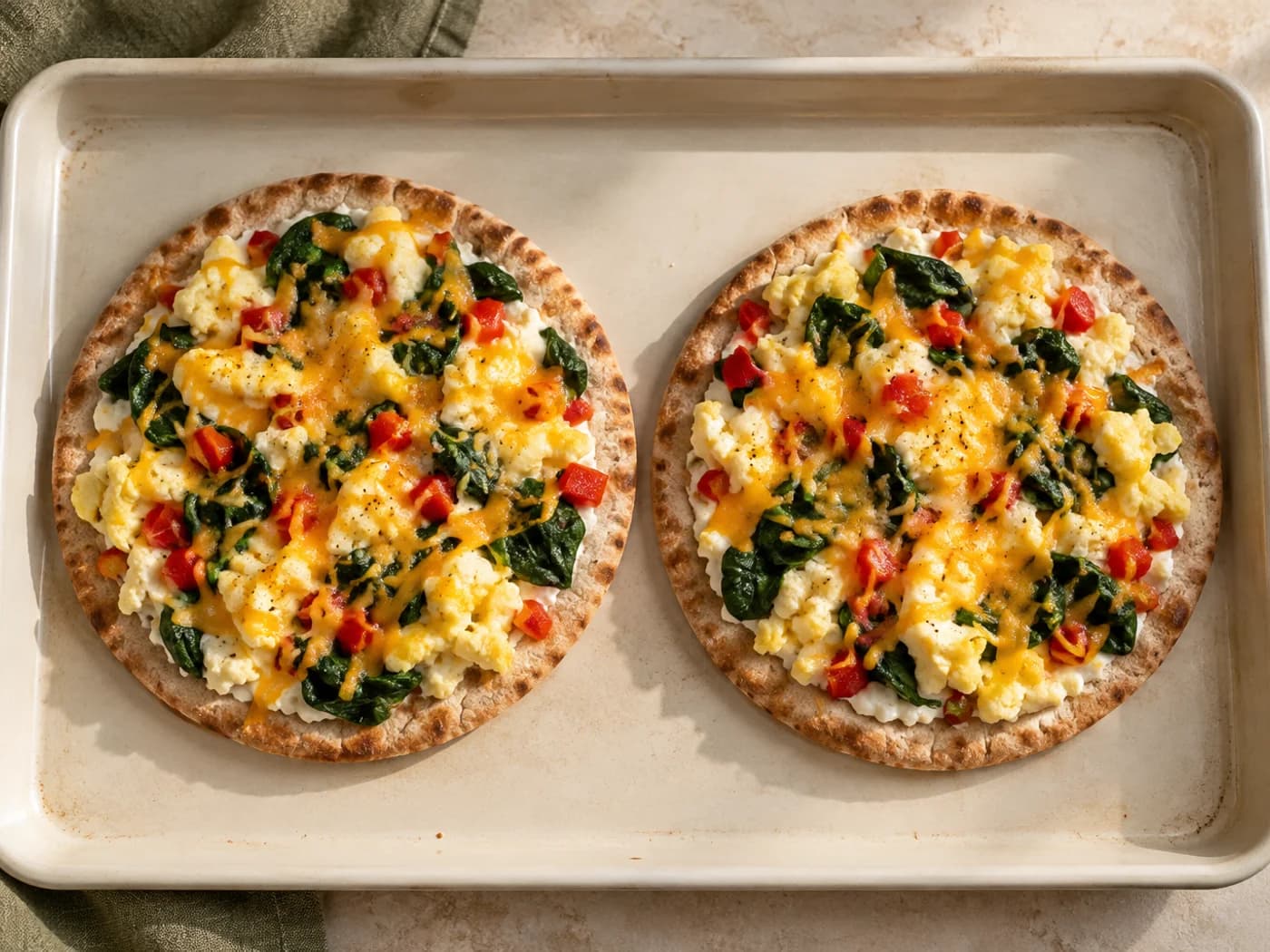
Set out the ingredients, then follow the cooking order
The card below brings the weighed formula and six main steps into one place. Start with the two-serving setting when using two whole 60g pitas. The four- and six-serving settings make four or six complete personal pizzas, with all ingredients multiplied accordingly. Each pizza still receives the same bread, cottage-cheese spread, egg topping and cheddar allocation. Use the ingredient checklist as you prepare, and change the setting before checking items off because changing the batch resets the list.
For a larger batch, think in complete two-pizza rounds. Use enough flat tray space, cook vegetables and egg in uncrowded skillet rounds, and keep waiting raw egg mixture refrigerated. A six-serving setting is not a suggestion to put three times the raw egg into a small pan or cover one pita with all the topping. More equipment and rounds change total elapsed time. The oven temperature and initial checks are starting points; observe each round as it cooks.
Print a practical kitchen copy
The print button creates a concise recipe sheet with the ingredients, selected serving count, cooking steps and per-pizza nutrition. The long article and photographs stay out of the kitchen copy so you can read the method easily. Print after choosing the number of complete pizzas you intend to make. If you share or save the sheet, keep the portion definition with it; that prevents a four-wedge pizza from being mistaken for four complete reference servings.
The listed formula is an untested adaptation, and the card says so. Use the egg doneness check in the skillet, watch the bread during both oven stages, and use the storage guidance for leftovers. There is no need to chase a photograph's exact browning or curd arrangement. A useful result is a properly cooked, manageable breakfast with the quantities you intended, not a perfectly symmetrical image. Once you know how your particular pita and oven behave, your own notes can make the next batch simpler.
A crisp edge, ready for breakfast
High-Protein Breakfast Pizza
Whole-wheat pita with cottage cheese, scrambled eggs, spinach, red pepper and cheddar.
*Planning estimates for two pizzas; preheating and extra skillet/tray rounds can add time. Use uncrowded rounds and keep waiting raw egg refrigerated. Exact formula not physically kitchen-tested.
Ingredients
Method
- Lightly toast the pitas
Preheat a conventional oven to 400°F / 200°C. Put 2 whole 60g whole-wheat pitas, 120g total and about 17cm each, on uncrowded baking sheets. Toast roughly 4–5 minutes per round until just firm. Keep pitas whole; no added oil. Use extra tray rounds if needed.
- Prepare the spread and egg
Mash 100g 2% cottage cheese. Whisk 100g shell-free whole egg and 200g plain whites with 2g garlic powder, 1g paprika, 1g pepper and 1g salt. Use separate two-pizza batches if needed; keep waiting raw egg refrigerated and its utensils separate from the spread.
- Cook the vegetables
Use 6g total olive oil to soften 80g small-diced red pepper, roughly 3–4 minutes per uncrowded round. Add 60g dried, chopped spinach; cook until wilted and visible liquid evaporates, roughly 1–2 minutes. Divide oil between rounds; no extra oil.
- Scramble until properly cooked
Lower to medium-low, add the egg mixture in uncrowded rounds and gently fold into small curds. Cook until set, with no visible liquid egg, and reaching 160°F / 71°C; roughly 2–4 minutes per round is a starting estimate. Remove from heat promptly; check each batch.
- Top and finish the pizzas
Spread 50g cottage cheese per toasted pita, 100g total. Divide cooked topping evenly over 2 pitas, then add 20g cheddar per pizza, 40g total. Bake roughly 5–7 minutes per round until cheese melts, topping is hot and edges are lightly crisp. No raw egg goes on the pita.
- Settle, cut and serve
Let settle about 2 minutes, then cut each pizza into four wedges, 2 complete pizzas total. One whole pizza is one serving. Cool leftovers promptly in shallow containers and refrigerate at 40°F / 4°C or below for 3–4 days with suitable handling. Reheat throughout to 165°F / 74°C.
Cook the egg topping before assembly. Light toast and final bake times depend on your pita and oven; watch the edges.
Includes the whole pita, egg topping, dairy, vegetables, seasonings and measured oil. Sauces and sides are additional. Contains wheat, egg and milk; check labels and cheese rennet where relevant. Cool promptly and keep chilled; reheat leftovers throughout to 165°F / 74°C.
Frequently Asked Questions
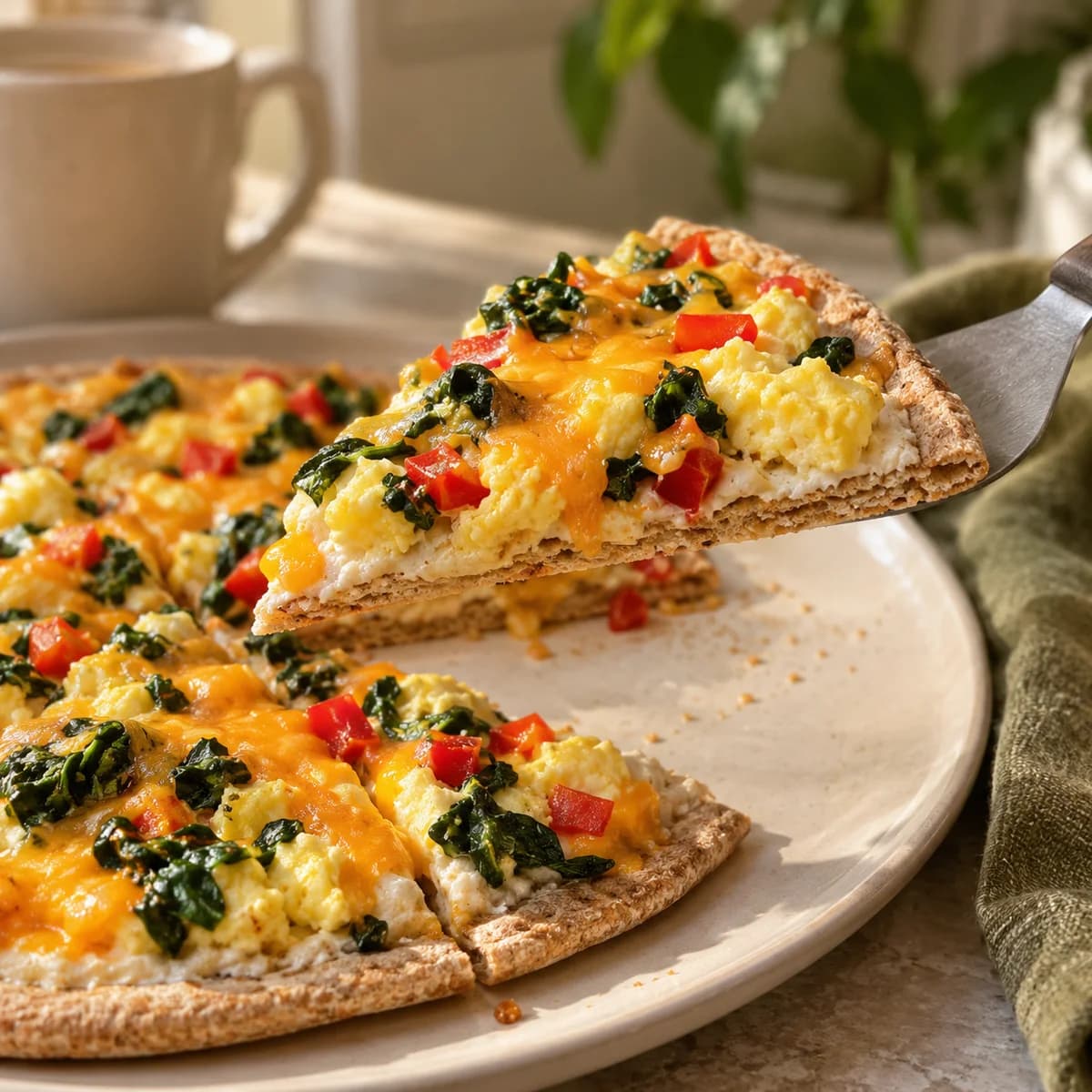
Choose the answer that matches your version
The questions below refer to the listed whole-wheat pita recipe. That matters because a raw-dough breakfast pizza, a tortilla pizza and a pita pizza can look similar after baking while needing different preparation. Before troubleshooting, identify what you actually used: the bread weight and diameter, whether it stayed whole, the cottage-cheese consistency, and whether the vegetables and egg were cooked before assembly. Those observations are more useful than assuming every breakfast pizza should follow one oven time.
If the bread is soft, consider the dairy layer and visible vegetable moisture. If the topping is firm, consider how long the egg stayed in the skillet and oven. If the nutrition differs from the panel, look at actual labels and portion size. These are separate questions. A crisp base does not establish egg doneness, and a protein estimate does not tell you whether the pita was too thin for the topping. Deal with the part that changed rather than rewriting the whole recipe at once.
Keep useful notes for the next breakfast
Write down which pita you used and how it looked after the first toast. Note whether the cottage cheese needed mashing and whether the pepper released much liquid. A short observation such as “base firm after four minutes; finished after six” can be more useful than an elaborate rating. It applies to your cookware and ingredients without pretending the same timing is universal. If you changed several ingredients, record that too, because you may have made a different recipe.
The reference does not include an air-fryer schedule, a raw whole-egg topping or an egg-free binding method. Those are possible directions for separate recipes, but they are not established results of this formula. The FAQ makes that boundary clear so you can choose a suitable preparation rather than discover halfway through cooking that the instructions do not match your version. Start with the stated method when you want to assess this particular breakfast pizza.
How much protein is in one breakfast pizza?
One complete reference pita pizza provides approximately 34.4g protein and 454 calories. That includes its 60g bread base, cottage cheese, egg topping, vegetables, cheddar, seasonings and measured oil. The headline rounds protein to 34g; actual ingredient labels can change the estimate.
Is one wedge a serving?
No. The reference serving is one complete personal pizza, all four equal wedges together. Half a pizza is approximately 227 calories and 17.2g protein. Cutting the same pizza into more wedges does not increase the batch protein or create additional full reference servings.
Can I use raw pizza dough?
This method uses already baked whole-wheat pita. Raw dough needs a separate crust thickness and baking plan before the cooked egg topping is added. Use the linked homemade high-protein pizza recipe for its Greek-yogurt crust rather than assuming these short pita toasting times will cook raw flour.
Do I split open the pita pocket?
Keep the pita whole. The reference uses two complete 60g pitas, roughly 17cm across. Separating each into thin layers changes their ability to support the topping and how quickly they crisp. Smaller or thinner bread also needs its own assessment rather than an overloaded centre.
Can I crack a raw egg onto the pizza?
That is a different method. Here the whole egg and whites are scrambled with the cooked vegetables before assembly. This avoids relying on the short cheese-melting stage to cook a raw egg. A whole-egg topping needs a separately developed timing and doneness plan.
Does the cottage cheese need blending?
A fork is enough to mash larger curds after stirring and weighing the tub. Small curds can remain in the thin spread. Do not add milk to make it pourable; extra liquid can soften the pita. A very loose cheese may behave differently from the reference.
Why is the middle of my pita soft?
A thick or wet cottage-cheese layer, undried spinach, visible skillet liquid or a tall topping can soften the middle. Lightly toast the whole pita first, cook moisture from the vegetables and spread the topping evenly. A different thin or small bread may also have less support.
Why did the eggs become dry?
High skillet heat, prolonged scrambling or too long in the oven can make curds firm. Cook the eggs properly, then remove the pan from the burner and use the finishing stage only as needed to melt cheese and finish the bread. Do not keep baking solely for darker cheese.
What temperature should the eggs reach?
Cook the scrambled egg mixture to 160°F / 71°C, with no visible liquid egg. Reheated leftovers need 165°F / 74°C throughout. Check the actual topping, not the tray or bread surface. The fresh preparation and leftover reheating checks are different.
Can I make four or six complete pizzas?
Yes. The card multiplies the full two-pizza formula to four or six personal pizzas. Keep each pita at the reference size and distribute all topping evenly. Use uncrowded skillet and oven rounds, and keep waiting raw egg refrigerated. Larger batches increase elapsed time.
Can I make it in an air fryer?
An air-fryer schedule has not been established for this formula. Small baskets, strong airflow and proximity to the element change how bread and cheese brown. Use the stated conventional oven method when following this reference, or a separately developed air-fryer breakfast pizza recipe.
What is the lower-calorie version?
A calculated version with 20g cheddar for the whole two-pizza batch, 10g each, gives approximately 413 calories and 32.1g protein per complete pizza. Keep the other quantities unchanged. The thinner cheese coverage is a texture change to try, not a physically tested identical result.
Can I store or freeze cooked pizzas?
Refrigerate promptly at 40°F / 4°C or below and use within 3–4 days with suitable handling. Freeze cooled portions in suitable packaging; about one month is an untested quality target. Bread and dairy texture can change. Reheat the topping throughout to 165°F / 74°C.
Is the recipe vegetarian or gluten-free?
The reference has no meat and contains wheat, egg and milk. Check cheddar rennet for vegetarian suitability and every actual label for your dietary needs. It is not gluten-free as written. Dairy-free cheddar alone does not remove cottage cheese, and an egg-free version needs a different topping method.
More High-Protein Recipes
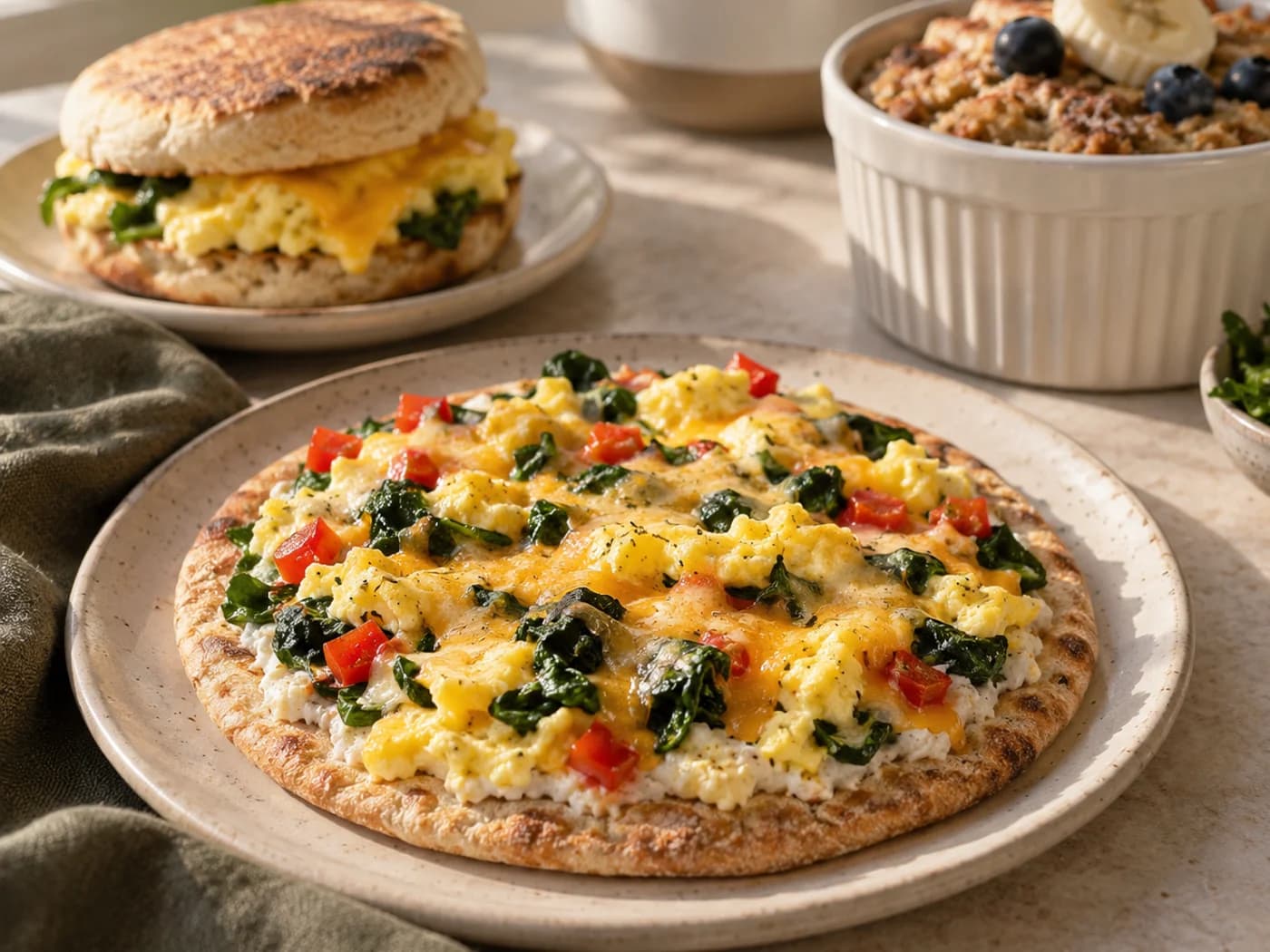
Keep a small breakfast rotation
If you like the egg-and-cheese combination but want a handheld meal, the breakfast sandwich gives you a folded egg filling in a toasted English muffin. If you are cooking for a table rather than making personal pizzas, the breakfast casserole uses a broad dish and portions a potato-and-egg bake. Those recipes solve different kitchen problems. Choosing among them can be as simple as deciding whether you want a skillet sandwich, a quick pita pizza or a tray to share.
The general high-protein pizza recipe is the option for making a Greek-yogurt crust from flour and yogurt, with tomato sauce, mozzarella and vegetables. It has its own ingredients and baking sequence. This breakfast pizza saves that dough-making work by using already baked pita, then adds a cooked egg topping. Keep each recipe's quantities and nutrition with its own method instead of mixing a crust from one and a topping from another while retaining the original headline numbers.
Sweeter mornings have a place too
French toast, baked oats and banana bread offer a change when you want a sweeter breakfast texture. They do not need to compete with a savoury pizza for the single best choice. Compare the actual serving sizes and preparation you have time for. A slice of loaf, a complete baked-oats ramekin and a whole pita pizza are different portions, even if each page gives a protein estimate. The recipe collection keeps those definitions available so you can make a useful comparison.
Build a rotation around ingredients you already use and meals you enjoy reheating, if reheating is part of your routine. Pitas and egg whites may suit one week; oats or a loaf baked ahead may suit another. Keep the shared habits simple: weigh the ingredients that matter to your estimate, follow the cooking checks for the specific recipe, and leave room for sides and preferences. Breakfast is easier to repeat when the recipe gives you enough detail to cook confidently without asking you to make every morning identical.