
Browse the 15 recipe sections
One reference serving: one sixth of the complete potato-and-egg bake, including cheese, vegetables and all measured cooking oil. About 32g protein. Sauces and sides are additional; timings are estimates. See the breakdown.
Recipe Overview
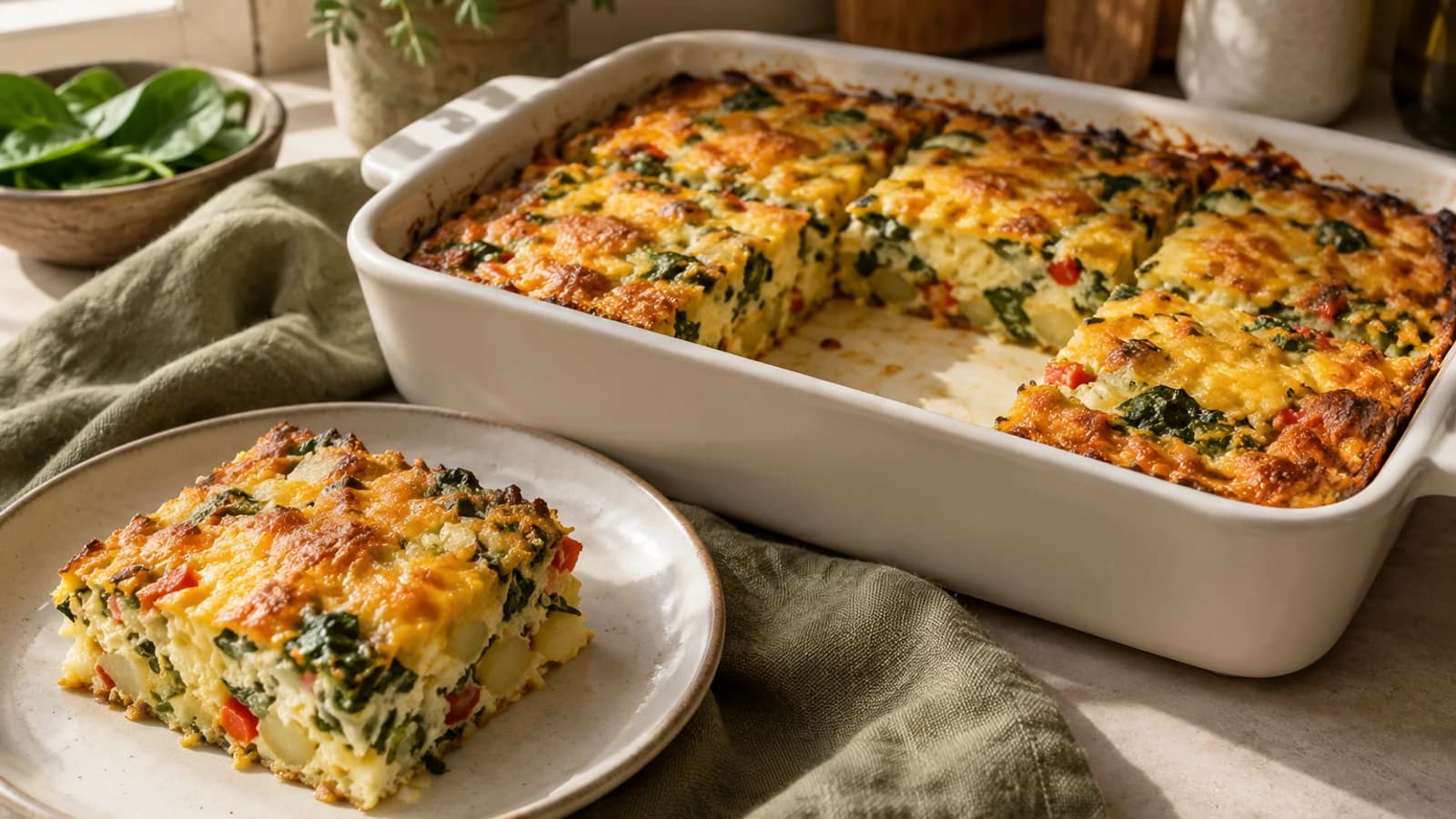
A proper savoury breakfast, baked in one dish
There is a particular pleasure in bringing a warm breakfast casserole to the table. The edges are lightly golden, the cheese has settled into the top, and the first cut reveals little pieces of potato, red pepper and spinach inside the egg. You can serve everyone from the same dish without standing over a frying pan making one breakfast after another. This high protein breakfast casserole uses whole eggs, egg whites and cottage cheese for a substantial filling, with potatoes and vegetables mixed through rather than left as an afterthought on the plate.
The base recipe makes six generous portions in a 9-by-13-inch / 23-by-33cm ovenproof baking dish of at least 3 litres capacity. One portion is one sixth of the complete bake, including its share of the cheddar and all measured cooking oil. Using the linked generic food values, that portion supplies approximately 388 calories and 32g protein. There is no protein powder, pastry crust, bread layer or breakfast meat in the reference recipe. The potatoes provide the main starchy ingredient, and they are cooked until tender before the egg mixture goes into the oven.
The kind of casserole this is
Expect a sliceable, fully set egg bake with a tender interior, small cottage-cheese curds and visible vegetable pieces. It should not have a bread-pudding texture or the distinct layers of a lasagna. The potato cubes are small enough to sit comfortably inside a forkful of egg. Half the cheddar is mixed through, while the other half makes a modest topping. The first portion may come out less neatly than the others; a flexible serving spatula and a short rest make that easier without requiring a flawless square.
Plan for about 25 minutes of preparation and vegetable cooking, around 40 minutes of baking, and a ten-minute rest, approximately 75 minutes altogether. These are estimates for one reference dish. The exact weighed formula has not been physically kitchen-tested; the method adapts established egg-and-cottage-cheese baking principles, with separate potato and vegetable preparation. The photographs illustrate the intended food and serving rather than documenting a tested batch. Use the dish size, tender-potato checks and centre-temperature guidance below to judge the casserole in your own kitchen.
Why You’ll Love This Recipe
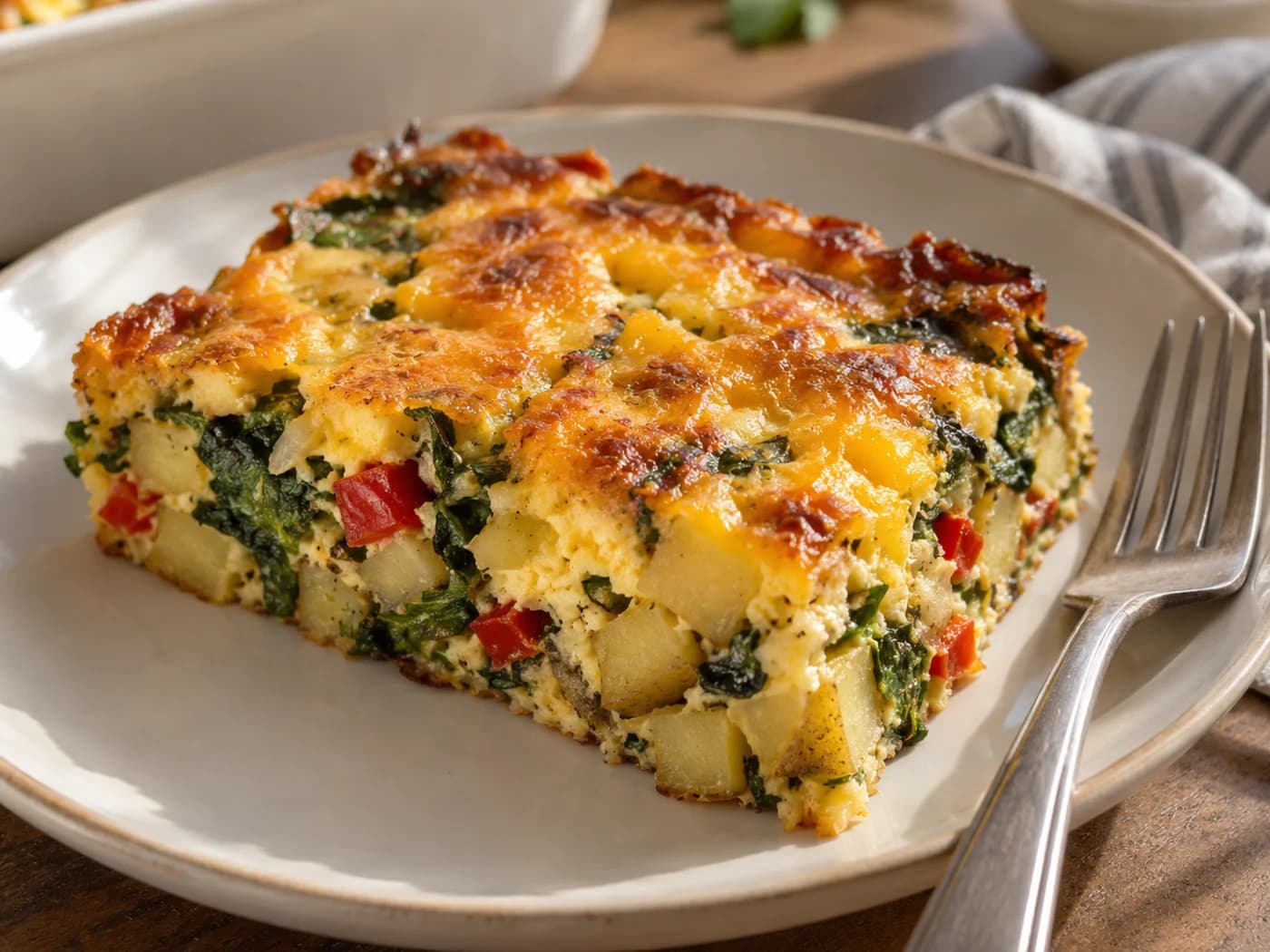
One bake, several breakfasts
The main attraction is how the work moves out of the morning rush. You cook a complete dish, portion it, then have breakfast components ready for later days. There is no need to cook six separate omelets or try to keep six toasted sandwiches crisp at once. For a shared brunch, the dish can go to the table after resting, with fruit or bread offered separately. For a working week, individual portions are easier to cool, store and reheat than a large casserole repeatedly going in and out of the refrigerator.
The ingredients are familiar. Whole eggs give the bake colour and richness, egg whites build the filling, and cottage cheese adds dairy protein without requiring a creamy sauce. Potatoes make it feel like a breakfast meal rather than a plate of plain egg whites. Red pepper brings little sweet bites, onion supplies a savoury base, and finely chopped spinach spreads through the egg. Cheddar is measured but still present in both the centre and the top, so you can taste it without covering the entire bake in a thick blanket.
Flexible at the table
A casserole is forgiving about presentation. If your cuts are slightly uneven, you can weigh the finished portions when you want closer tracking. If someone wants a smaller breakfast, serve less of the complete bake and keep the rest appropriately chilled. That flexibility does not require changing the ingredient balance before you know how the recipe behaves. Start with the listed version, then use the measured comparisons later in the guide to choose a smaller portion or less cheddar.
The card also scales the recipe to twelve or eighteen full servings, using two or three matching dishes. That makes the practical limit clear: more people require more pan area, not a deeper pool of raw egg in the original dish. Ingredients can be checked off as you set them out, and the printable recipe keeps the essential cooking sequence together. You can make the meal feel considered without treating breakfast like a catering exam. A warm slice, a fork and a few minutes to sit down are enough.
Nutrition at a Glance
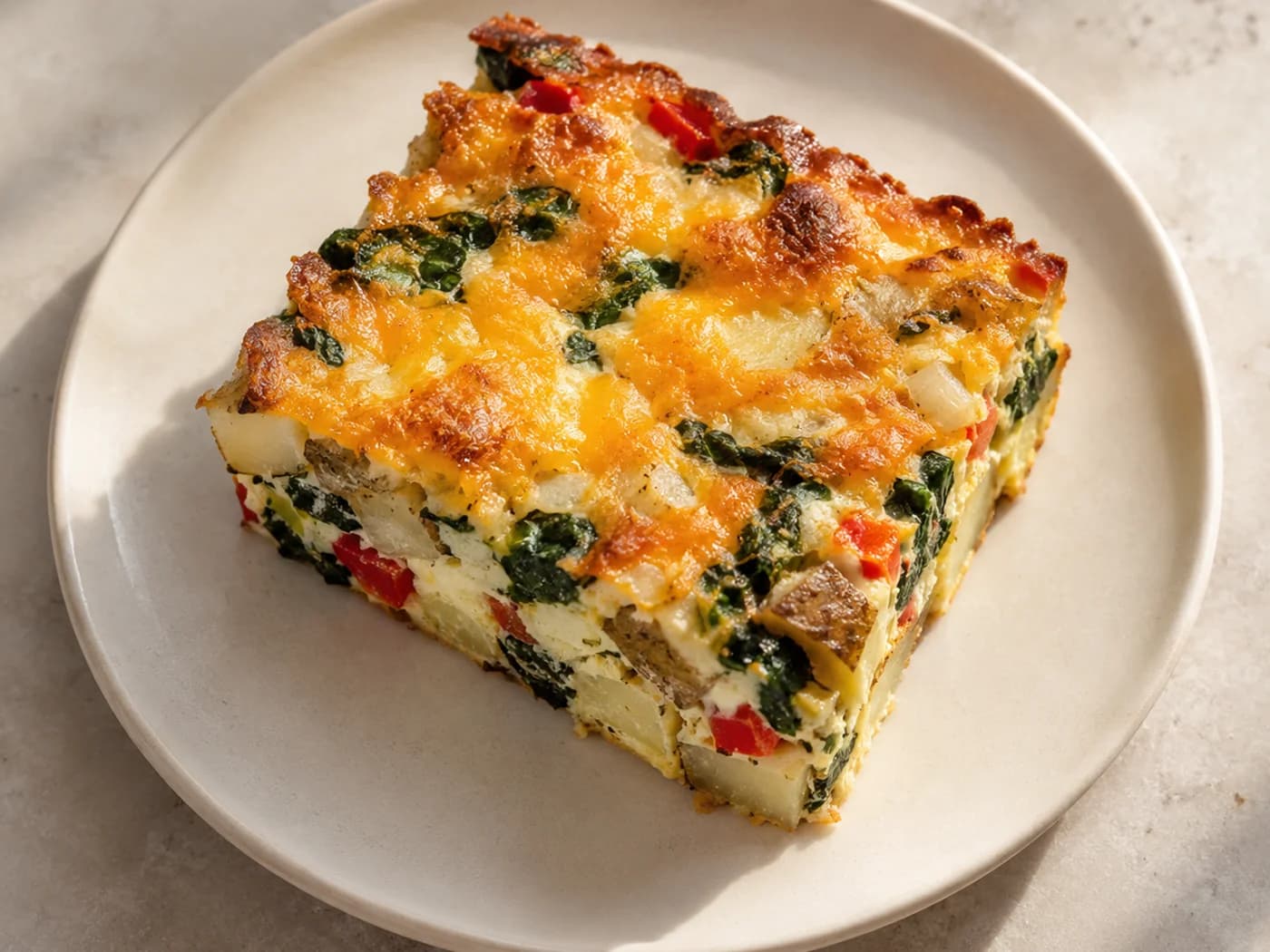
- Calories
- 388kcal
- Protein
- 32g
- Carbs
- 27g
- Fat
- 17g
Calories: approximately 388 per portion
The estimate counts the whole eggs, egg whites, cottage cheese, potatoes, vegetables, cheddar, garlic powder, pepper, salt and cooking oil. The oil used to grease the dish is included, even though some may remain on its surface. There is no extra butter or unmeasured cooking spray outside the reference. Fruit, toast, sauce and drinks are additional if you serve them. The panel describes one complete casserole portion, rather than an entire brunch table.
Protein: approximately 32g
Before rounding, the estimate is about 31.96g protein per sixth of the bake. Egg whites make a substantial contribution, alongside whole egg, cottage cheese and cheddar. The potatoes and vegetables add smaller amounts too. A carton of seasoned egg product is not necessarily the same as plain whites, and cottage-cheese labels can differ even at the same fat percentage. If a close estimate matters, use the quantities you actually weigh and the product information in your kitchen.
Carbohydrate: approximately 27.1g
The potatoes supply most of the carbohydrate, with further contributions from cottage cheese, red pepper, onion and other ingredients. This is a potato-and-egg casserole, so it is not presented as carbohydrate-free or keto. Dietary fibre is estimated at 3.6g per portion. Keeping the washed potato skin in the edible reference quantity helps define what was counted. Replacing those potatoes with frozen hash browns or a different vegetable changes both the calculation and how the casserole cooks.
Fat: approximately 16.7g
Whole egg, cheddar, cottage cheese and canola oil supply most of the fat. Saturated fat is approximately 6.5g per portion with the chosen generic references. That is a reason to consider the complete recipe when planning around fat intake, rather than assuming a high protein label answers every nutrition question. Sodium is estimated at about 726mg per portion, including the measured salt and sodium already present in egg whites and cheeses. These are estimated food values, not a laboratory analysis or a promise that the casserole fits every dietary requirement.
Ingredients
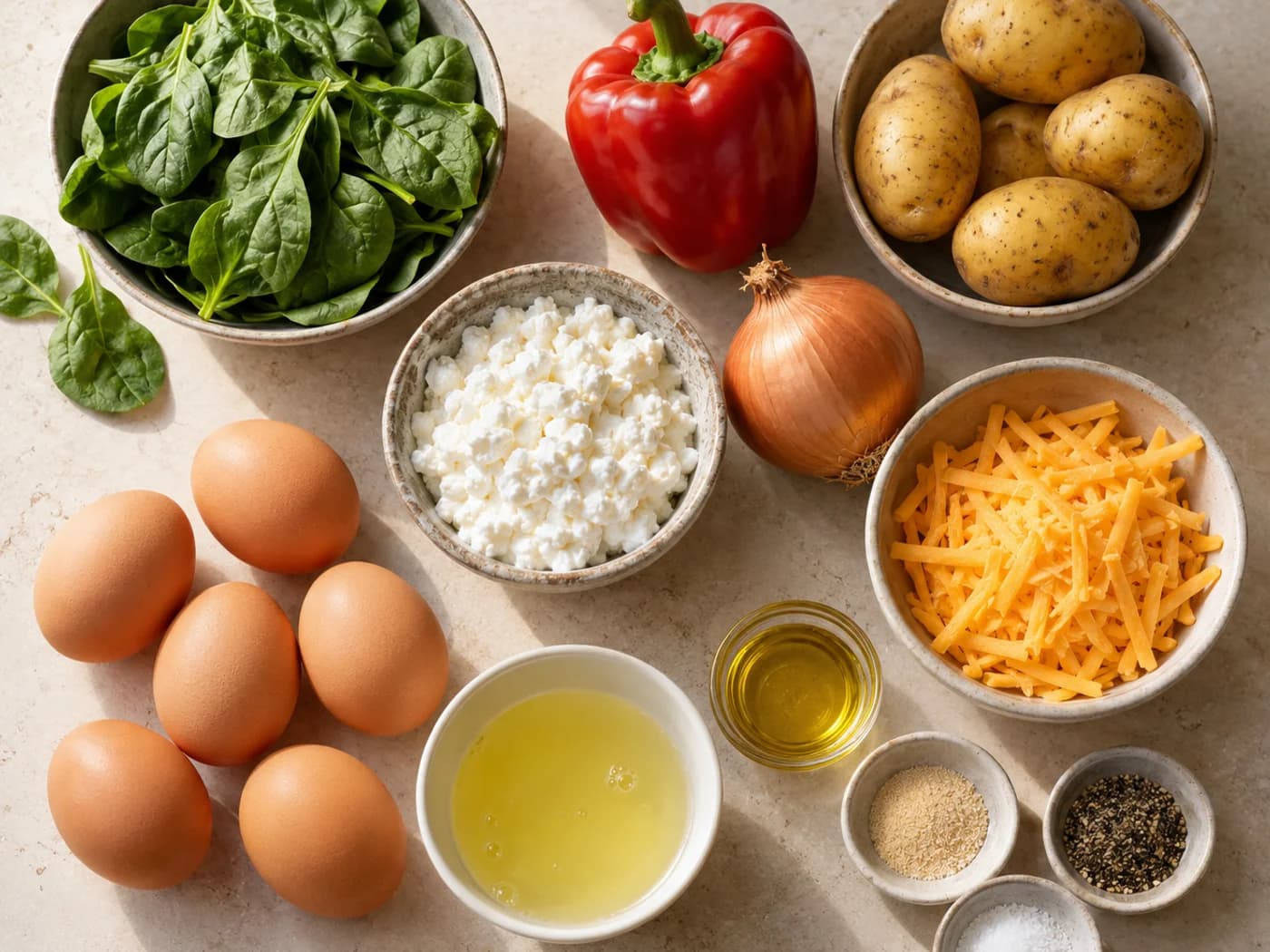
Whole eggs, whites and cottage cheese
For one six-serving dish, use 300g whole egg without shells, roughly six large eggs, and 600g plain egg whites. Weighing the edible egg makes the formula clearer than relying on egg-size names, which can vary between shops. Carton whites are convenient for this quantity. Check the label and handling instructions, especially after opening. Keep raw egg and the utensils used for it separate from ready-to-eat food, and do not taste the uncooked mixture.
Use 400g low-fat cottage cheese with 2% milk fat. Stir the tub before weighing so its liquid and curds are distributed. Mash very large curds with a fork if you prefer a less noticeable texture. There is no extra milk in the recipe; the eggs and cottage cheese already contribute plenty of moisture. A different cottage cheese can have different protein, sodium and water content, so the fat percentage alone does not guarantee an identical result. The reference cheese is weighed as supplied after stirring, rather than rinsed or heavily drained.
Potatoes and vegetables
Weigh 600g washed, trimmed potatoes with their edible skin on before cooking. Cut them into roughly 1cm cubes. Similar sizes matter because a few large pieces can remain firm while the smaller cubes become soft. The potatoes will be simmered until fork-tender, drained and allowed to steam dry briefly. Their cooked weight can change, but the nutrition starts from the raw edible quantity that goes into the recipe.
Prepare 200g seeded red bell pepper and 100g peeled onion in small dice. Wash, dry and finely chop 120g baby spinach. Cooking the pepper and onion before assembly softens their texture; wilting the spinach and allowing visible liquid to evaporate helps keep that water out of the finished bake. Do not replace a dry chopped vegetable measure with a bowl containing its wash water. The egg mixture needs vegetables, not another unplanned source of liquid.
Cheese, oil and seasoning
Measure 120g cheddar, with 60g mixed into the filling and 60g scattered over the top. A fine grate distributes the topping more evenly than a few thick chunks. If vegetarian suitability matters, check the cheese's rennet information. Measure 20g canola oil: 12g for the skillet vegetables and 8g for the baking dish. Add 3g plain garlic powder, 1g ground black pepper and 2g fine salt to the egg mixture. Garlic salt is not a direct replacement for plain garlic powder because it introduces additional salt. The base contains egg and milk; check every label and any trace warnings relevant to you.
Your ingredient checklist
- Whole eggShell-free weight; about six large eggs300g
- Egg whitesPlain liquid whites; check your actual carton label600g
- Low-fat cottage cheese (2%)Stir the tub before weighing; no extra milk400g
- Cheddar cheese60g inside and 60g over the top120g
- Potatoes, skin onRaw edible weight; cut into 1cm cubes and precook600g
- Red bell pepperSeeded edible weight; small dice200g
- Baby spinachWashed, dried and finely chopped120g
- OnionPeeled edible weight; small dice100g
- Canola oil12g for vegetables; 8g for the baking dish20g
- Garlic powderPlain garlic powder, not garlic salt3g
- Ground black pepperFor the complete six-serving batch1g
- Fine saltFor the complete six-serving batch2g
Contains egg and milk. There is no bread or pastry in the listed formula; gluten-free suitability depends on actual labels and preparation. For vegetarian suitability, check cheese rennet.
Ingredient Substitutions
Potato swaps need a cooking plan
White or yellow potatoes that hold together after cooking can suit this general method, provided the raw edible portion is weighed and the cubes are cooked tender before assembly. Sweet potato can be considered as a separate variation, but it has its own flavour, nutrition and tendency to soften. Do not assume that a bag of frozen hash browns is simply a pre-cut version of the reference. Some products include oil, salt or other ingredients, and their cooking directions may be different.
Removing the potatoes changes more than carbohydrate. It reduces the solids in the pan and leaves an egg mixture that may set differently. Adding extra vegetables to replace their volume brings different amounts of water. If you want a potato-free bake, use a recipe developed around that balance or make a deliberate trial with new quantities. The original 388-calorie and 32g-protein estimate should not follow an altered formula unchanged.
Dairy and egg alternatives
Another cottage-cheese fat level can be tried with its actual label and a close look at its texture. Ricotta, thick yogurt and cream cheese are different products; they are not established direct swaps in this exact casserole. If the main concern is large curds, mashing the cottage cheese is a smaller change than replacing it entirely. A brief blend of cottage cheese can smooth it, but there is no need to whip the whole egg mixture full of air. Excess foam makes even pouring and portioning less straightforward.
You can choose another melting cheese you enjoy, weighing the intended amount and allowing for different flavour or browning. A mature cheddar may give a noticeable flavour at a smaller quantity. Dairy-free cheddar alone does not remove the cottage cheese, so it does not make the recipe dairy-free. An egg-free casserole needs a separate binding and baking method. Tofu or a chickpea mixture may be useful in another recipe, but the egg-based method and original nutrition cannot be assumed to apply.
Keep vegetable moisture under control
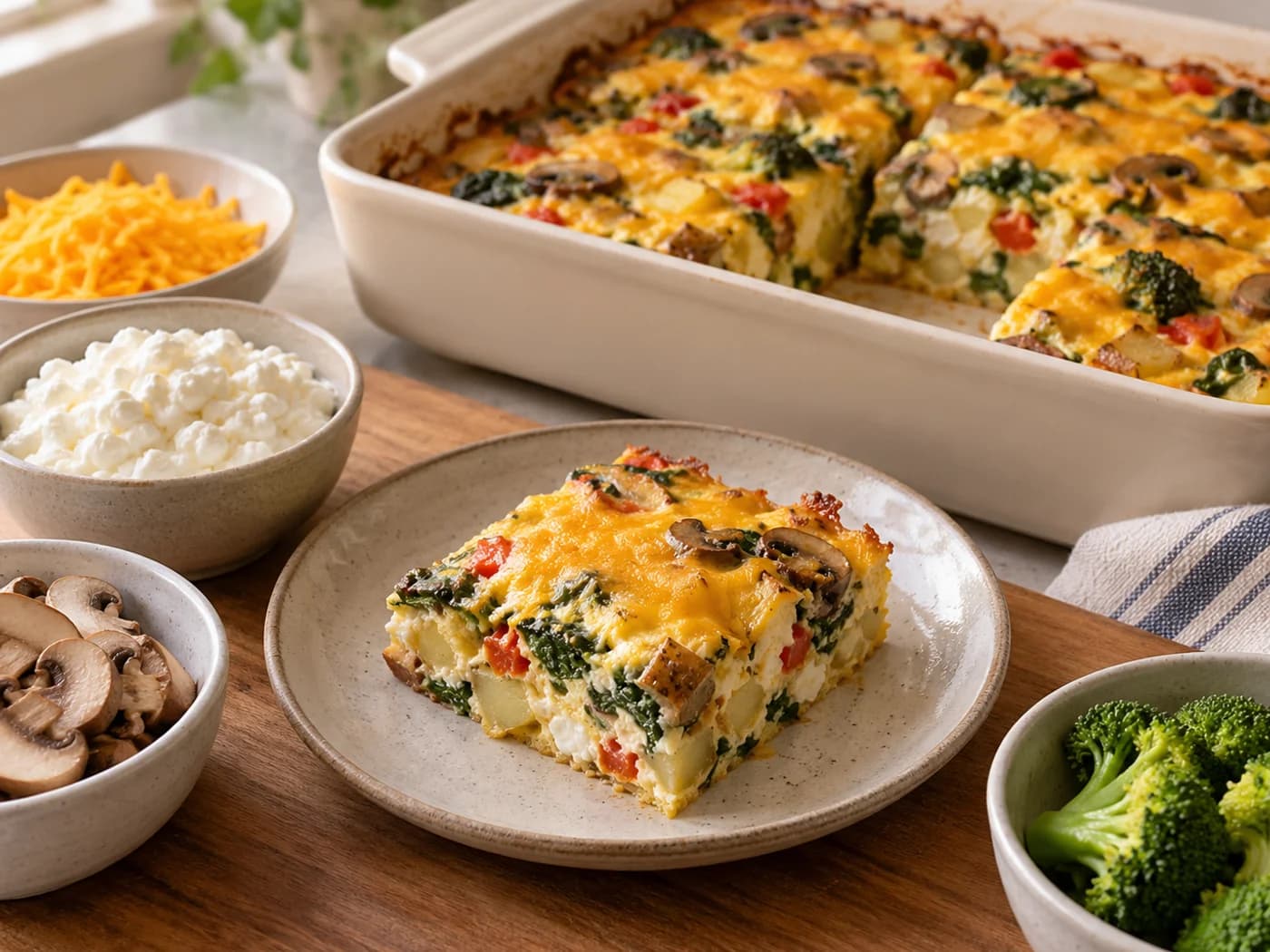
Mushrooms, courgette or broccoli can change the flavour, but prepare them appropriately before they go into the egg. Mushrooms need cooking to release and evaporate liquid. Courgette can carry substantial water. Broccoli should be cut into small, suitably tender pieces so a large hard floret does not interrupt every slice. Count any additional oil used during those preparations. Frozen spinach requires its own preparation and drainage according to the packet; its cooked quantity is not a direct raw-leaf equivalent. For a first attempt, keep the listed vegetables and learn how the base behaves before changing several things together.
Prepare substitutions for their moisture and texture, then recalculate the actual ingredients.
| Reference | Possible change | What to check |
|---|---|---|
| Raw skin-on potato | Another potato or sweet potato | Weight and tender precooked texture |
| Raw potato | Frozen hash browns | Added oil, salt, moisture and packet directions |
| 2% cottage cheese | Another cottage-cheese fat level | Moisture, curds and label |
| Cottage cheese | Yogurt, ricotta or cream cheese | Not established direct swaps |
| Cheddar | Another melting cheese | Label, flavour and browning |
| Pepper and spinach | Mushrooms, courgette or broccoli | Precook appropriately; count added oil |
| Whole egg and whites | Egg-free filling | Needs a different recipe |
How to Make It
Prepare the dish and cook the potatoes
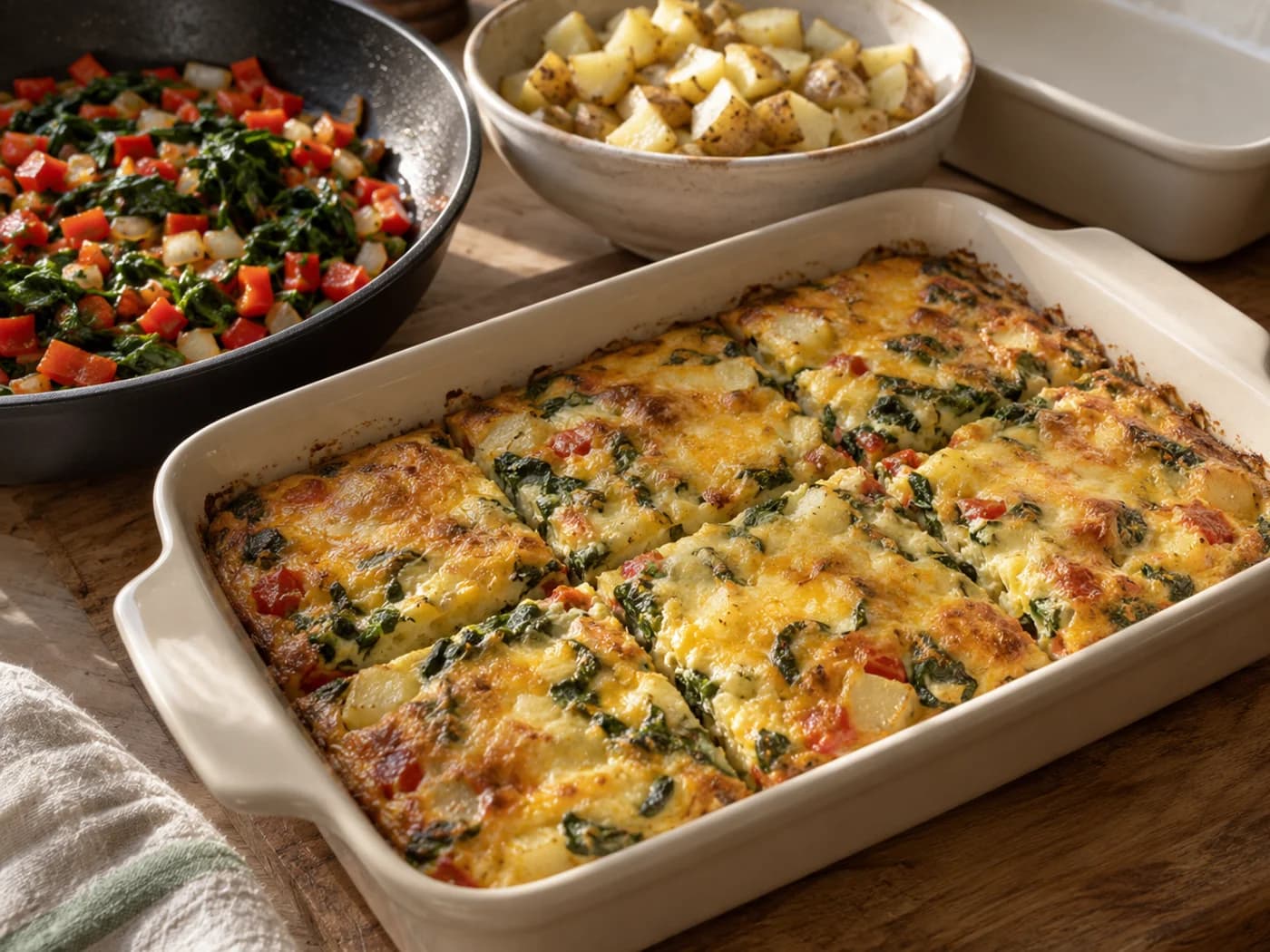
Preheat a conventional oven to 350°F / 175°C. Choose a 9-by-13-inch / 23-by-33cm ovenproof dish with at least 3 litres capacity and suitable expansion room. Follow its manufacturer's instructions, especially if using glass or ceramic. Coat the bottom and sides with the measured 8g oil. A smaller deep dish is not an equivalent substitute, because it changes the distance heat must travel to reach the middle.
Put the 600g of 1cm potato cubes into a saucepan, cover with water and bring to a gentle boil. Simmer roughly six to ten minutes, checking the actual cubes until a fork enters easily without the pieces collapsing. Drain thoroughly and let visible steam escape for a few minutes. The oven step is intended to set the eggs around already tender potatoes. It should not be expected to rescue large raw potato chunks hidden in a thick filling. Water used for boiling is drained and adds no reference calories; avoid uncounted oil or butter at this stage.
Soften the vegetables and mix the base
Warm 12g oil in a skillet over medium heat. Cook the 100g diced onion and 200g diced red pepper until softened, roughly six to eight minutes. Add 120g chopped, dried spinach and cook until wilted and visible liquid has evaporated, about another one to two minutes as a starting point. Let the vegetables and potatoes cool until no longer steaming hot before mixing with raw egg. They do not need a prolonged room-temperature wait. Have the remaining ingredients ready so assembly follows promptly.
In a large bowl, whisk 300g shell-free whole egg with 600g whites, 400g cottage cheese, 3g garlic powder, 1g pepper and 2g salt. Break up the yolks thoroughly and mash larger curds where needed. Fold in the drained tender potatoes, prepared vegetables and 60g cheddar. Stir from the bottom to distribute the heavier potato pieces rather than leaving them all in one end of the dish. Pour into the greased dish and spread into an even shallow layer. Scatter the remaining 60g cheddar over the surface.
Bake to a set centre, then give it a short rest
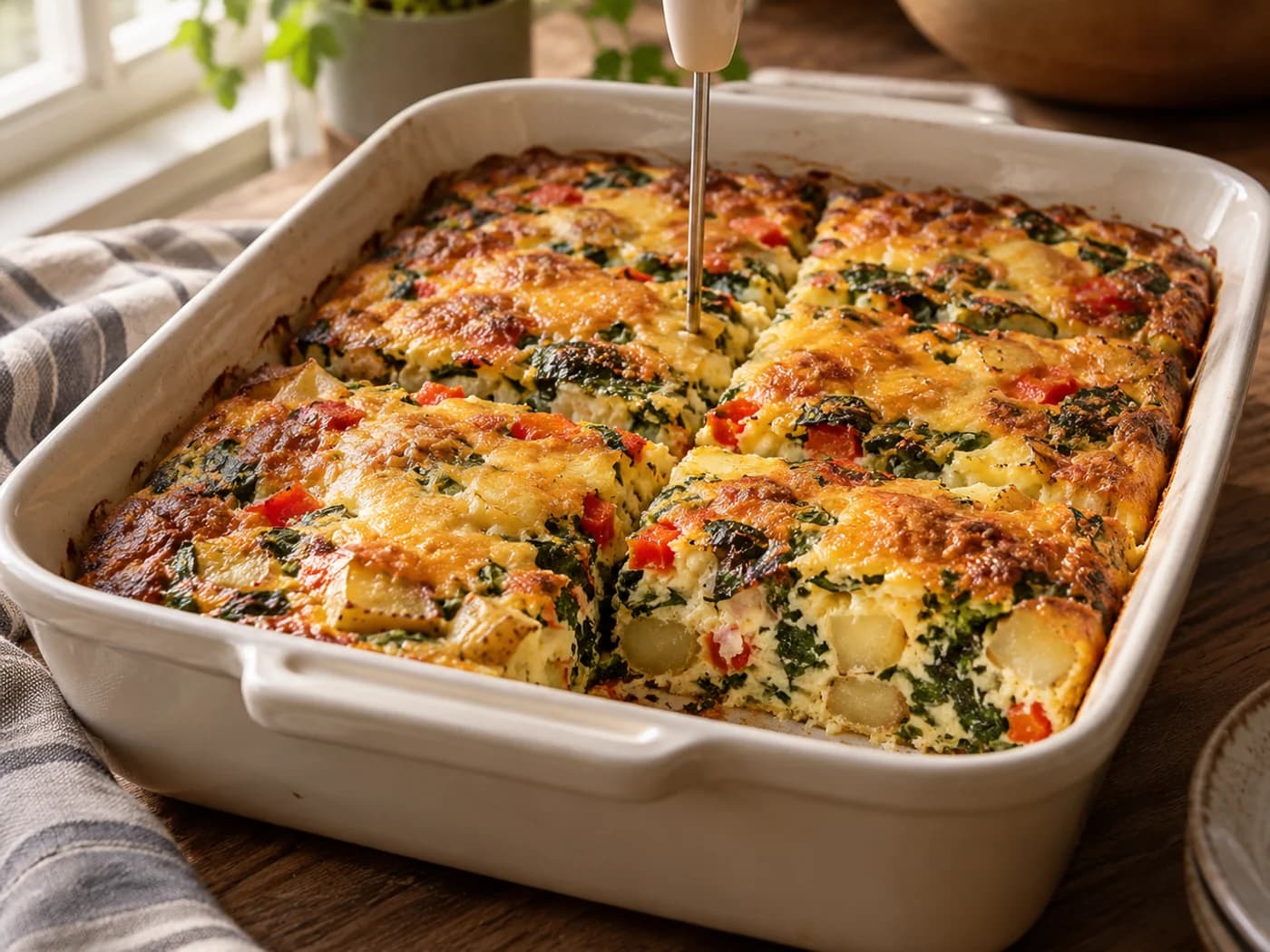
Bake for roughly 35–45 minutes, starting checks around thirty minutes. The centre should be set with no liquid egg, and a food thermometer inserted into the centre away from the dish should read at least 165°F / 74°C, following the linked casserole guidance. A golden topping alone does not answer whether the middle is cooked. If the top colours too quickly, loosely cover it with foil while the centre finishes, using appropriate oven protection.
Rest the dish on a heatproof surface for about ten minutes, then cut into six equal portions, a two-by-three grid. The rest helps the slice hold together, but it is not a reason to undercook the middle. Serve warm, or portion and cool leftovers promptly in shallow containers. The hot baking dish is not the storage container of choice for a deep stack of food. For larger batches, repeat the reference recipe in additional matching dishes and assess each dish separately rather than doubling the filling depth.
Tips for the Best Results
Make the potatoes easy to eat
Small, similarly sized cubes are worth the extra minute of attention. A casserole slice with one large hard potato chunk is awkward to eat and difficult to judge from the outside. Test a few cubes from the saucepan before draining, particularly the larger ones. They should be tender enough for a fork, while still able to hold their shape. If some cubes are much bigger than the rest, trim them before cooking rather than relying on a longer oven bake that can toughen the eggs.
Drain well. Water clinging to a large bowl of potatoes becomes additional liquid in the casserole. Let the drained pieces steam briefly, then look at the bottom of their container before tipping them into the egg. The same principle applies to vegetables. A skillet full of spinach liquid will not disappear simply because cheddar is scattered over the top. Cooking the vegetables first lets you judge their moisture before the egg mixture makes that harder to see.
Use enough surface area
The reference dish has a broad footprint. A smaller pan can make the casserole look appealingly thick, but that thicker centre needs a different heating assessment. The listed times belong to a shallow reference bake, not any dish that happens to hold the mixture. Check the internal dimensions and capacity of your cookware where possible. Leave room above the filling, and use additional suitable dishes if the intended pan is too small. Do not fill a dish to the rim and hope the egg will stay exactly where it started.
Keep the cheese topping light and evenly scattered. A thick pile over the centre can hide how the egg beneath it is setting. If one side of your oven browns faster, judge the whole dish and follow your cookware's instructions about rotating it. Use a probe in more than one central spot if the filling looks uneven. A small cottage-cheese curd can remain pale after the surrounding egg is cooked, so assess the egg structure and temperature together.
Cut after the bake settles
A ten-minute rest gives you a better chance of lifting a neat portion. Run a suitable knife or spatula around the edge carefully, then cut a clear two-by-three grid. Use a broad serving spatula to support the underside, especially for the first piece. Avoid scraping a nonstick dish with a metal utensil if its instructions prohibit it. For meal prep, let portion weight guide closer tracking rather than assuming unevenly cut pieces are equal. Keep the food handling prompt while you work; presentation does not require leaving the entire dish out for a long photo session.
High-Protein / Lower-Calorie Variations
A smaller slice can be the simplest change
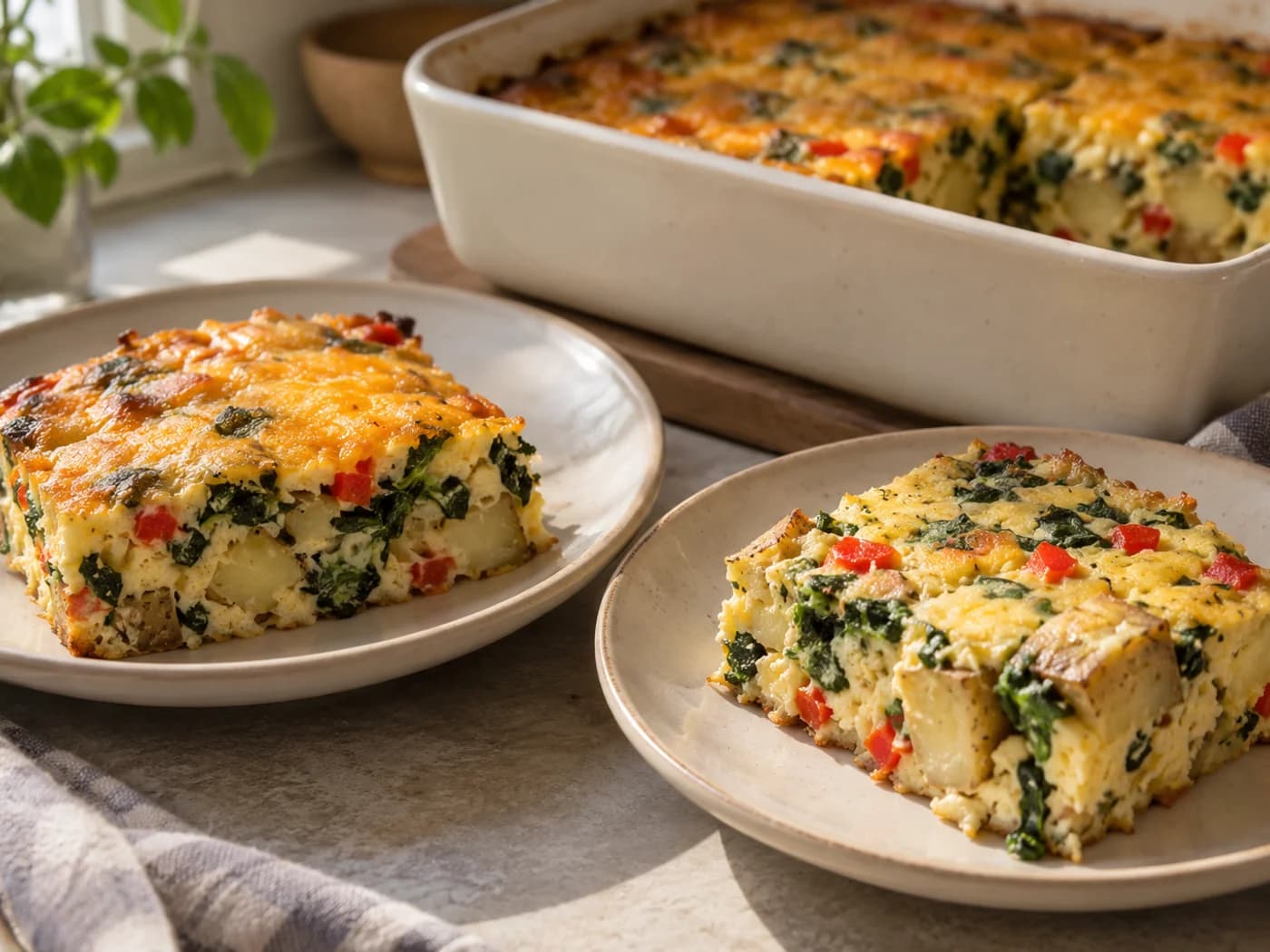
If six generous portions are more breakfast than you want, divide the complete reference bake into eight equal portions instead. Each eighth is approximately 291 calories and 24g protein. You have changed the serving size, not the recipe or its baking depth. That can be useful alongside another food you already enjoy, or when your morning appetite is smaller. Eight pieces are not eight full reference servings, so label stored portions with the division you actually used.
Half of a reference sixth supplies around 194 calories and 16g protein. Cutting a portion in half is different from removing some potato cubes while leaving all the egg and cheese behind. For a close estimate, take a representative share of the whole bake. The egg, potato and vegetables should have been evenly distributed before baking, and the top cheese should be spread across the surface rather than concentrated over one corner.
Reduce cheddar deliberately
A lower-cheddar trial uses 60g total cheddar for the six-serving dish: 30g mixed through and 30g on top. Keeping everything else unchanged gives approximately 348 calories and 29.7g protein per sixth. The flavour will be milder and the surface less cheesy. This is a calculated variation, not a claim that its texture has been kitchen-verified. Use the same broad reference dish, assess the centre and do not assume a change in cheese makes a different oven time automatically correct.
Do not replace the missing cheese with an unmeasured creamy sauce and keep the lower estimate. Likewise, “light cheese” can describe different products with different melting behaviour. Use the actual label, decide how much you want to serve and calculate that version. The goal is to understand the change rather than search for a swap that sounds lower-calorie while bringing several new ingredients into the pan.
Add protein beside the portion
If you want a larger protein contribution, a separate side keeps the casserole formula intact. One complete reference portion plus 100g of the reference 2% cottage cheese is approximately 469 calories and 42.4g protein. The side can be eaten separately rather than stirred into the baked portion. Plain yogurt or another food can work too, using its own serving weight and label. Do not carry the cottage-cheese side's numbers over to a different product.
Adding more egg whites inside the casserole changes the liquid volume and can make the middle deeper in the same dish. That is a recipe-development change, not a free increase in protein with no cooking consequences. The same applies to adding sausage or cooked chicken. Count the ingredients, handle them appropriately and reassess the filling depth. A separate side is often the more straightforward choice when you like the base bake and simply need a different meal size.
Portion examples divide the same complete bake; the lower-cheddar trial changes only cheddar quantity.
| Serving | Calories, approximately | Protein, approximately |
|---|---|---|
| One sixth of reference bake | 388 kcal | 32g |
| One eighth of reference bake | 291 kcal | 24g |
| Half of a reference sixth | 194 kcal | 16g |
| One sixth of lower-cheddar trial | 348 kcal | 29.7g |
| Reference sixth + 100g cottage cheese side | 469 kcal | 42.4g |
Serving Suggestions
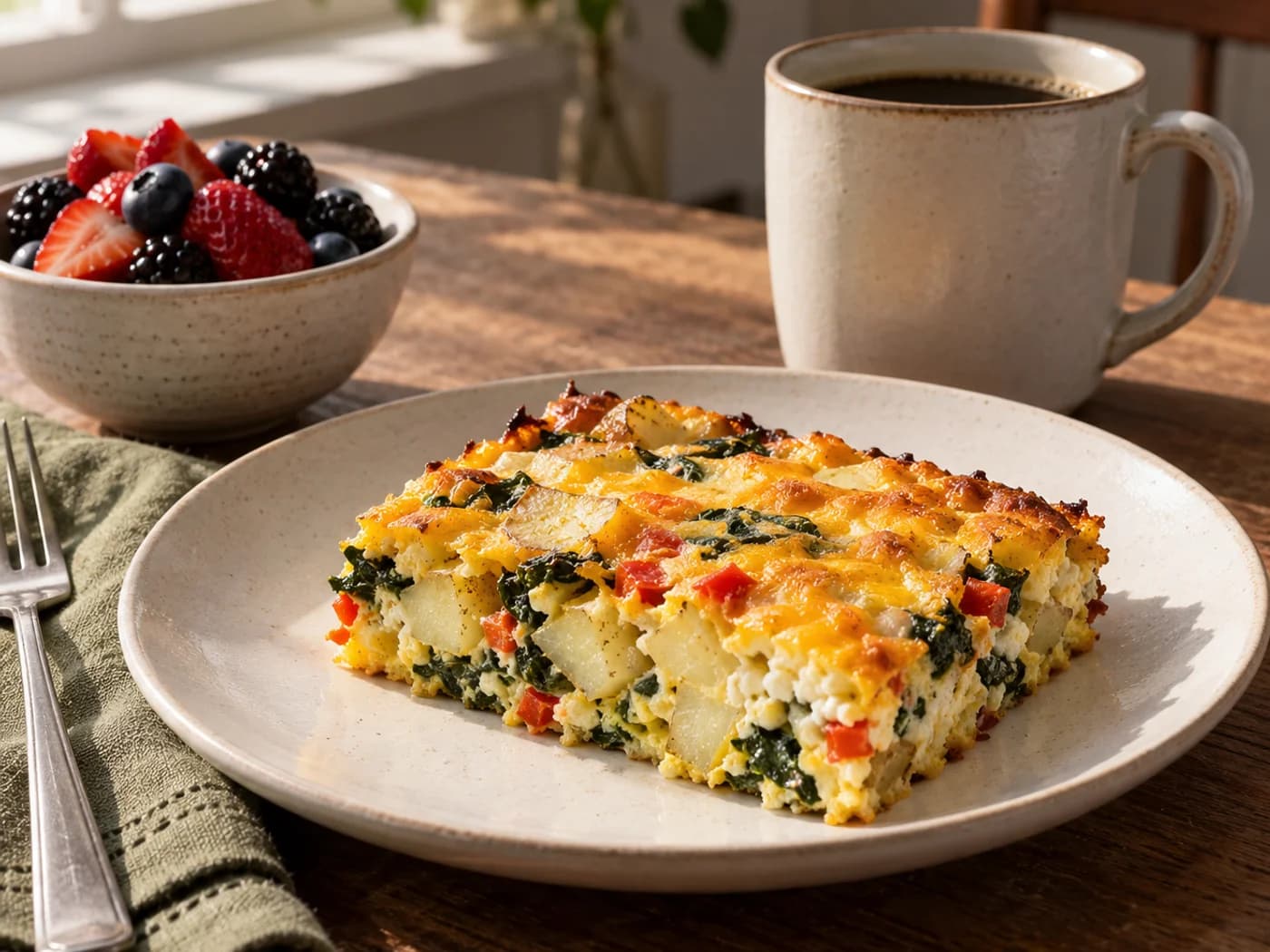
Keep an ordinary breakfast easy
A complete casserole portion can stand on its own when it matches your appetite. There are already potatoes, vegetables, egg and cheese in the slice, so another cooked side is optional. Add a cup of tea or coffee and sit down while the bake is still warm. If you track your meal, remember that milk or sugar in a drink is separate from the casserole estimate. That small distinction is more useful than making every plate look like an elaborate brunch spread.
Fruit offers a cool contrast to the savoury filling. Berries, orange wedges, sliced apple or melon can be served in a bowl beside the casserole. Keep juicy fruit off the hot slice so the surface does not become wet. A little plain yogurt can be another side if you enjoy it. Use the food you have and want to eat, rather than buying several garnishes because a breakfast photograph happens to include them.
For a shared brunch
Put the rested casserole on a suitable heatproof surface and mark the six portions before people serve themselves. A broad spatula makes it easier to lift a complete piece. Offer extra sides separately so someone can choose a smaller slice with toast or a full slice without another starch. There is no need to assume everybody at the table has the same appetite, but keep your own portion definition clear if you are following the reference nutrition.
Toast can add crunch, although it also makes this a larger meal than the casserole alone. A green salad can work for a later brunch or light lunch. If you serve cooked vegetables, avoid adding another very wet topping directly over the egg. The casserole is also pleasant with a small amount of a condiment you like, such as hot sauce or ketchup. Begin with a little, taste, and include it separately where relevant. The measured garlic, salt and cheddar already provide seasoning.
Make room for real schedules
If you are eating at a desk, pack one cooled portion in a suitable chilled container and transport it with cold packs when needed. Refrigerate it at your destination and reheat properly before eating. Keep fruit in a separate compartment so it does not warm with the egg. A casserole portion is portable, but it still contains perishable ingredients. Do not leave it in a warm bag or car for the morning and treat reheating as a way to undo uncertain handling. If reliable chilling is unavailable, choose a different breakfast that suits those conditions.
Meal Prep & Storage
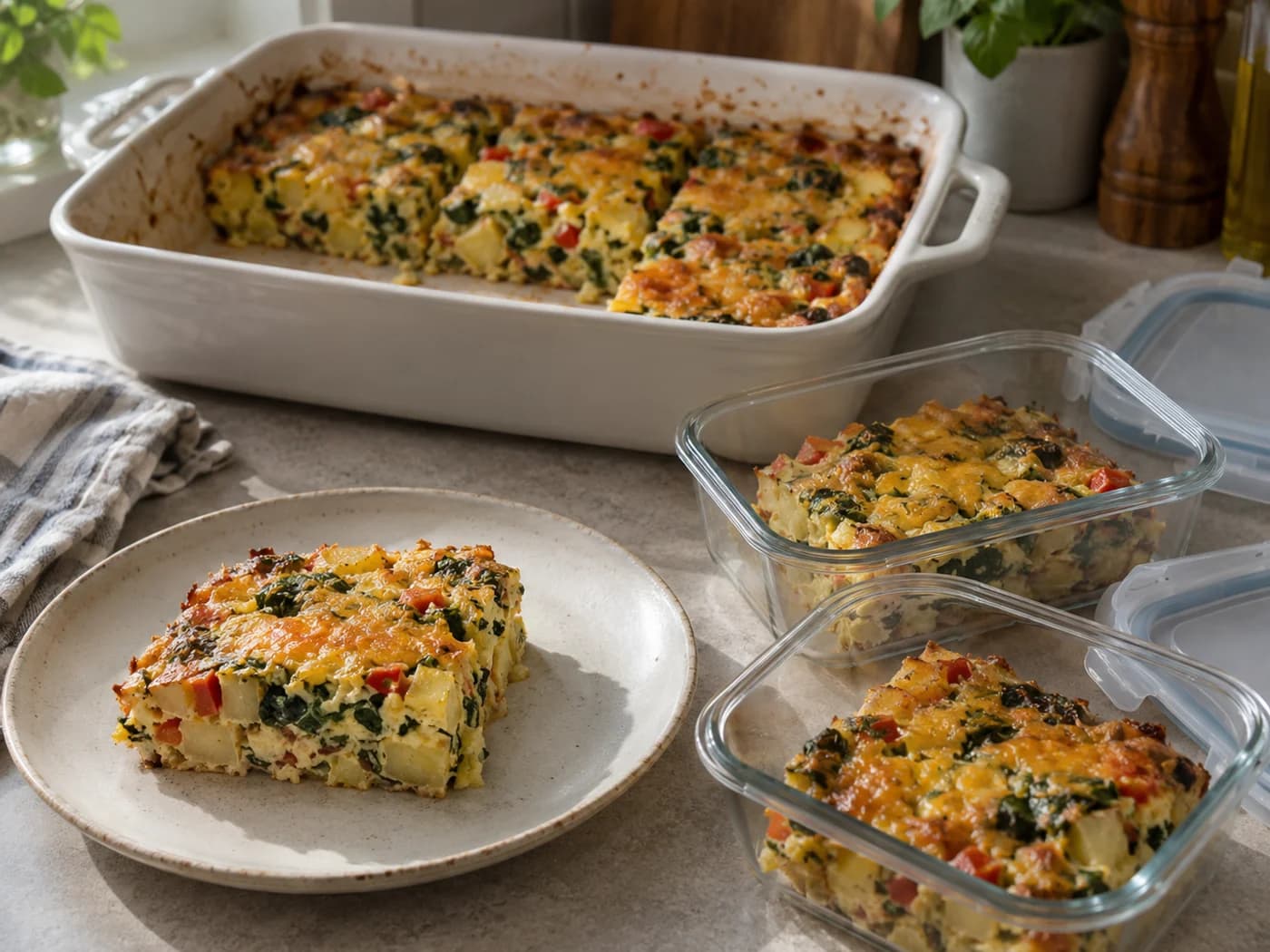
Cool smaller portions promptly
For leftovers, divide the cooked casserole into portions and place them in shallow containers rather than refrigerating a deep stack in the hot baking dish. Cooling should be prompt. Do not leave the whole dish on the counter until it feels completely cold before thinking about refrigeration. Label containers with the preparation date and the portion division, especially if you cut eight smaller pieces instead of six reference servings. That avoids a later breakfast being counted as the wrong fraction of the bake.
Follow general leftovers guidance: refrigerate at 40°F / 4°C or below and use within a conservative three-to-four-day window with suitable handling. Refrigerate perishables within two hours, or within one hour when the surrounding temperature is above 90°F / 32°C. These are general handling limits, not a measured shelf-life study of this formula. Keep raw egg equipment away from the containers and utensils used for cooked portions. A closed lid does not compensate for a portion that spent too long warm.
Freeze individual portions for later
Freeze cooled portions individually in suitable freezer containers or wrapping, with the date noted. About one month is a practical quality target to try for this untested recipe, rather than a guaranteed deadline for texture. Potatoes and cottage cheese can change slightly after freezing and reheating, so expect a different result from a freshly rested bake. Freeze only what you plan to use, and take out individual portions rather than repeatedly thawing the whole batch.
Thaw in the refrigerator when possible. Reheat using suitable microwave or oven cookware, checking that the centre reaches 165°F / 74°C throughout. A microwave can heat the edges before the middle, so use stages, rotate or reposition where needed, and assess the thickest central part. Oven reheating may take longer, particularly from chilled ingredients. There is no reliable universal number of seconds for every portion, container and appliance. Keep any cover appropriate to the appliance and follow the cookware's instructions.
Prepare ahead without assuming an overnight method
You can prepare components ahead, cool cooked potatoes and vegetables promptly, and refrigerate them separately. Assemble the egg mixture near baking time for the reference method. A fully assembled overnight casserole starts colder and may heat differently; its timing has not been established here. Cold glass or ceramic going into a hot oven also requires the manufacturer's guidance about thermal shock. Do not leave raw egg mixture out to reach room temperature as a workaround. Use suitable cookware and actual centre checks, and keep waiting mixtures refrigerated while other dishes bake.
Full Nutrition Information
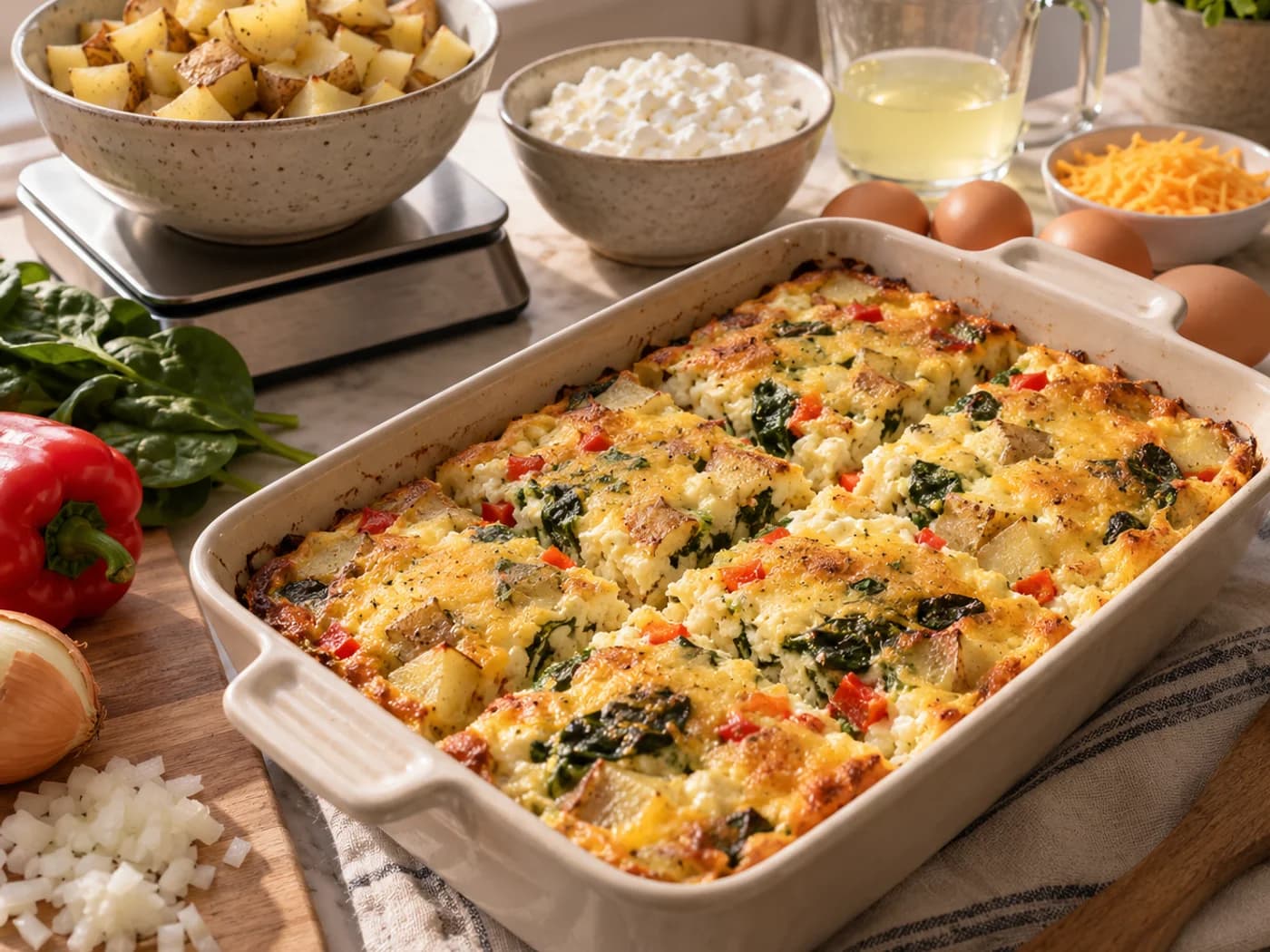
How the full-batch calculation works
Each of the twelve ingredients has a linked historical USDA Standard Reference release 28 food entry. The calculation multiplies its per-100g values by the raw edible amount used, sums those contributions for the complete batch and divides by six. Whole eggs are weighed without shells; onion and pepper are weighed after removing their inedible parts. The potatoes use their raw skin-on weight, even though they are precooked before assembly. Cooking water is drained, and every gram of measured cooking oil and salt is included.
The finished casserole will weigh less than the starting ingredient total because cooking releases water. That does not mean the same fraction of protein or calories has disappeared. The reference portion is one sixth of the complete cooked bake, with the ingredients distributed evenly. If you weigh the finished casserole for tracking, subtract the empty dish weight and divide the food into six equal portions. Do not use a new cooked weight together with the raw-food values without accounting for that change in concentration.
The numbers behind the quick panel
One reference portion is approximately 388.4 calories, 31.96g protein, 27.1g carbohydrate and 16.7g fat before the main display rounds them. Further estimates are 3.6g dietary fibre, 6.7g total sugars, 6.5g saturated fat and 726mg sodium. Total sugars are not the same as added sugars. This calculation does not establish a complete micronutrient panel, added-sugar amount or cholesterol figure for your actual ingredients. The table below shows the major ingredient contributions so the estimate is easier to inspect and adjust.
The food calculator can help rebuild your version with actual product labels. Egg-white cartons, cottage cheese and cheddar may differ from the generic references. A lower-sodium cottage cheese can change sodium substantially without looking different in the bowl. A garlic seasoning blend may include salt even when plain garlic powder does not. Read the full label, enter the actual quantity and keep a note of the version you repeat. The database is a transparent starting point, not a guarantee that every supermarket product is identical.
Compare complete servings
The reference is a generous portion of the full potato-and-egg casserole. It is not directly comparable to a tiny egg muffin cup simply because both are counted as “one serving.” Likewise, changing the recipe to eight portions changes the per-portion number without changing the batch. When comparing options, consider energy, protein, saturated fat, sodium, appetite and preparation together. The calculation can help answer what is in the food; it cannot decide what meal size is right for every person or whether a particular dietary restriction has been met.
| Ingredient | Amount | Calories | Protein | Carbs | Fat |
|---|---|---|---|---|---|
| Whole egg | 300g | 429 kcal | 37.7g | 2.2g | 28.5g |
| Egg whites | 600g | 312 kcal | 65.4g | 4.4g | 1.0g |
| Low-fat cottage cheese (2%) | 400g | 324 kcal | 41.8g | 19.0g | 9.1g |
| Cheddar cheese | 120g | 485 kcal | 27.4g | 3.7g | 40.0g |
| Potatoes, skin on | 600g | 462 kcal | 12.3g | 104.9g | 0.5g |
| Red bell pepper | 200g | 62 kcal | 2.0g | 12.1g | 0.6g |
| Baby spinach | 120g | 28 kcal | 3.4g | 4.4g | 0.5g |
| Onion | 100g | 40 kcal | 1.1g | 9.3g | 0.1g |
| Canola oil | 20g | 177 kcal | 0.0g | 0.0g | 20.0g |
| Garlic powder | 3g | 10 kcal | 0.5g | 2.2g | 0.0g |
| Ground black pepper | 1g | 3 kcal | 0.1g | 0.6g | 0.0g |
| Fine salt | 2g | 0 kcal | 0.0g | 0.0g | 0.0g |
| Whole batch | 6 complete casserole servings | 2331 kcal | 191.7g | 162.8g | 100.4g |
| One reference serving | Batch ÷ 6 | 388 kcal | 32.0g | 27g | 17g |
| Dietary fiber | 3.6g |
|---|---|
| Total sugars | 6.7g |
| Saturated fat | 6.5g |
| Sodium | 726mg |
Estimated recipe nutrition, not a laboratory analysis. Includes the complete potato, egg, cottage cheese and vegetable bake, all cheddar, seasonings and measured cooking oil. Extra sauces and sides are additional. Uses historical generic USDA food values; actual product labels take priority. Cholesterol, added sugars and complete micronutrients are not calculated.
How This Fits Your Daily Protein Goal
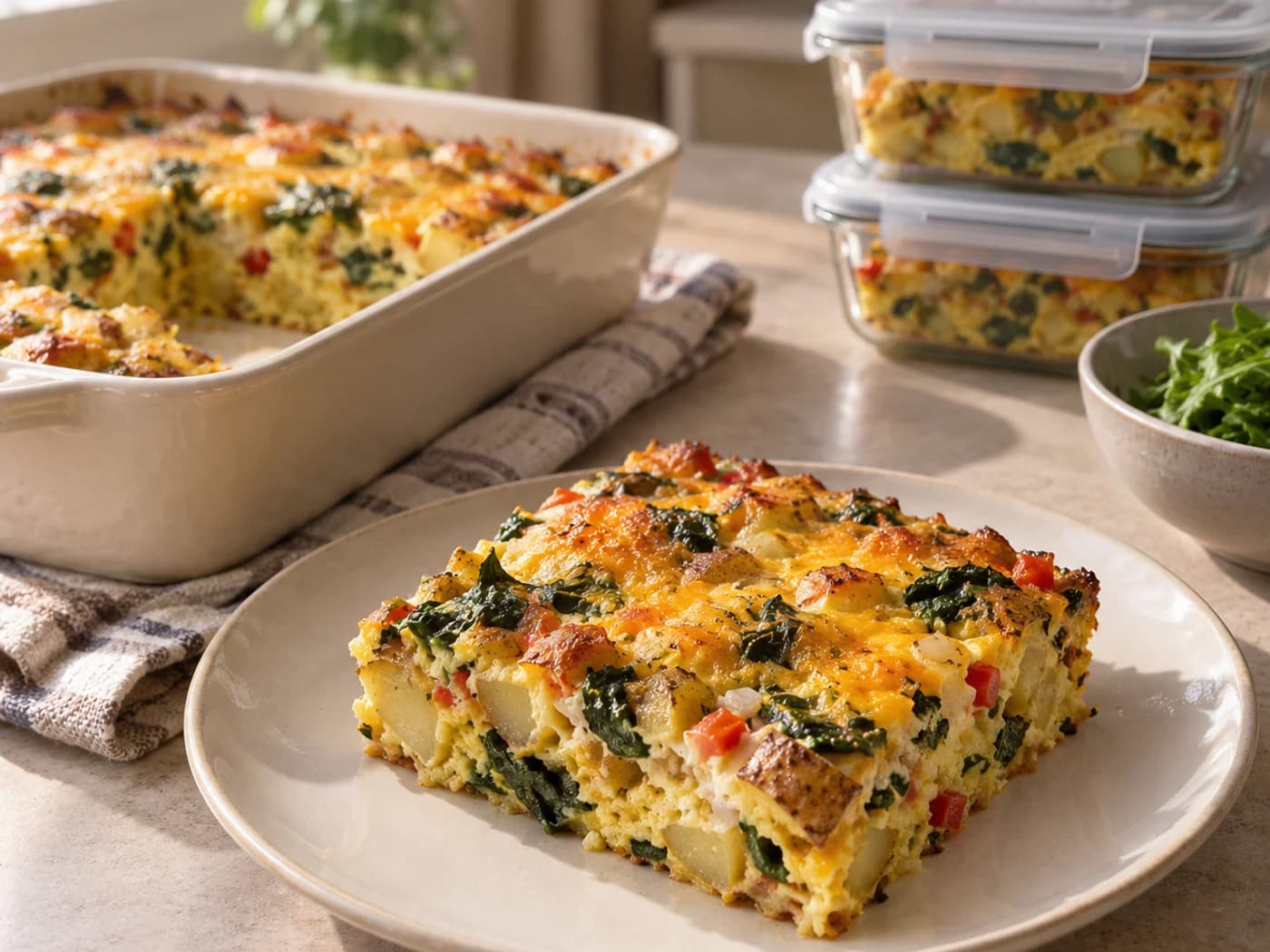
Start with your own target
The protein calculator can help estimate a daily target based on your information and chosen goal. This recipe does not prescribe that target. Its approximately 32g protein would contribute about 32% of a hypothetical 100g day, 27% of a 120g day or 21% of a 150g day. These examples are arithmetic illustrations, not a recommendation that everyone should aim for one of those totals. Individual needs and any clinical advice come before a general recipe panel.
For a hypothetical 120g target, one reference portion leaves about 88g to obtain from later food. You could distribute that across lunch, dinner and a snack in a way that fits your routine. A casserole can be a convenient breakfast anchor, but the other meals do not have to resemble it. Different protein foods and preparation methods can make the day more varied and easier to follow. You do not need to keep eating the same ingredients simply because the first breakfast calculation was convenient.
Keep the rest of the meal in view
The casserole brings potatoes, vegetables, eggs and dairy together, but its vegetable quantity is not a whole day's produce. Fruit or another side can add variety when you want it, and the rest of the day still matters. The sodium and saturated-fat estimates may be relevant if you plan around those nutrients. Use actual labels and personalised guidance where needed; “high protein” is a description of one feature, not a complete assessment of suitability.
A smaller morning appetite can be accommodated with a smaller portion and more food later. A larger appetite might call for a side or a different complete breakfast. Try to make those decisions around what leaves you comfortably fed and what you can prepare reliably. Meal prep is useful when it reduces friction, not when it obliges you to finish a portion that does not suit the day. The serving comparisons give you a clear starting point while leaving room for real schedules, preference and appetite.
Make it personal
Where does this breakfast fit in your day?
Estimate your daily protein target, then plan meals you enjoy.
Recipe Card
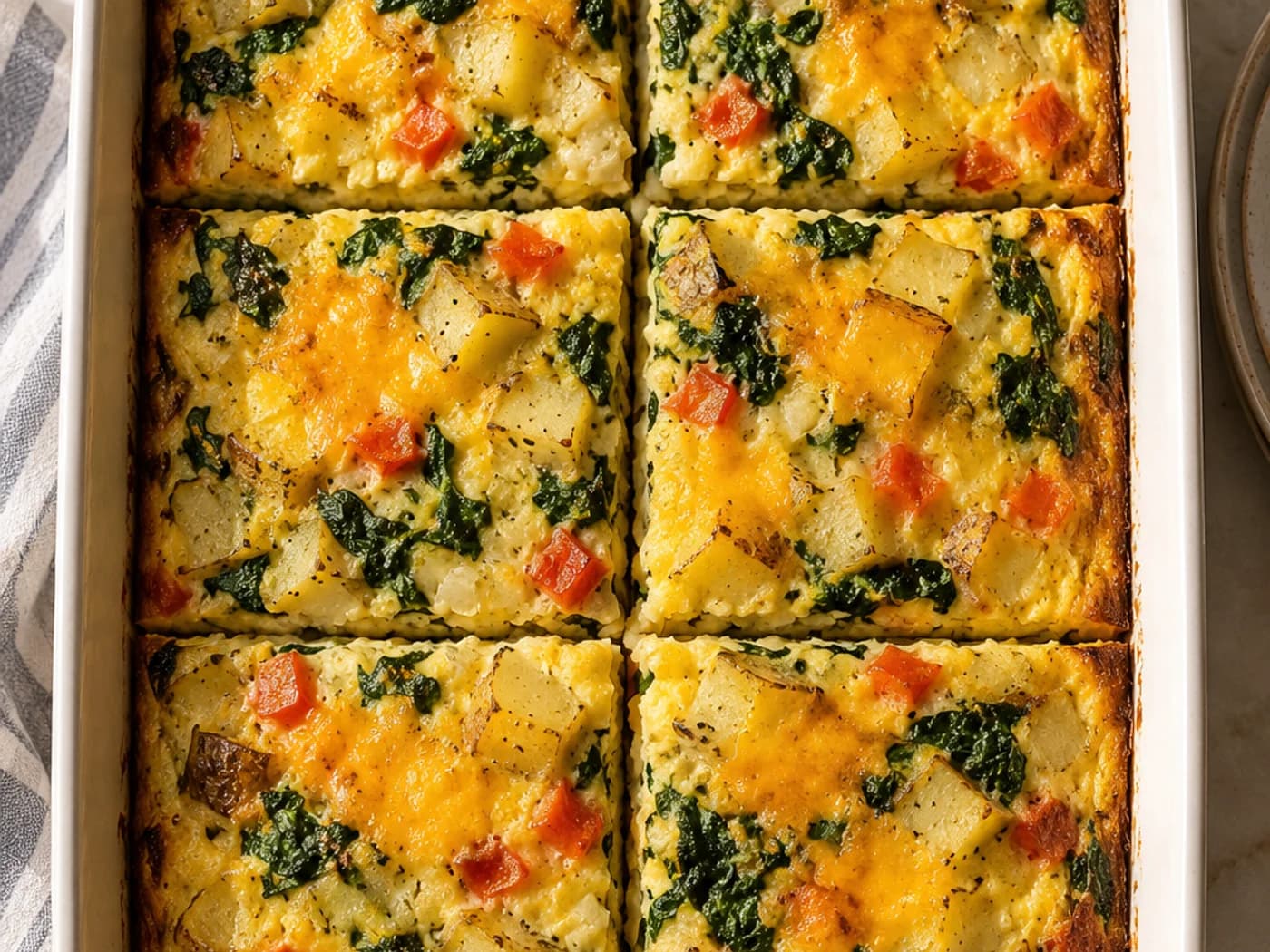
Keep the sequence beside the oven
The printable card collects the weighed ingredients and cooking method in one place. Start with one six-serving dish while you learn how the filling sets in your oven. The twelve- and eighteen-serving options multiply complete batches and use two or three matching 9-by-13-inch dishes. If your oven does not have enough space for them with suitable air circulation, cook separate rounds and keep waiting raw mixture refrigerated. Extra dishes can increase total preparation and elapsed time.
The per-serving nutrition stays the same when you increase the number of complete batches. Each dish gets the same ingredient share, its own 8g greasing oil and the same shallow filling depth. The skillet allocation is 12g oil per six-serving batch. Use separate vegetable-cooking rounds if a large amount would overcrowd the pan. Scaling the shopping list is straightforward; crowding cookware is not a shortcut to the same result.
Check off ingredients as you measure them, then follow the texture and temperature checks in the method. Potatoes should be tender before assembly, vegetables should not bring a puddle of liquid, and the baked centre should be fully set. The card describes the reference formula. If you change cheese, vegetables, portion divisions or side dishes, note those changes separately rather than assuming the original nutrition has updated itself.
A warm slice, ready to share
High-Protein Breakfast Casserole
Potato, egg and cottage cheese bake with spinach, red pepper and a golden cheddar top.
*Planning estimates for one six-serving dish. Larger batches need more cookware or cooking rounds, not a deeper filling. Check every dish; keep waiting raw mixture refrigerated. Exact formula not physically kitchen-tested.
Ingredients
Method
- Prepare the oven and potatoes
Preheat a conventional oven to 350°F / 175°C. Grease 1 matching 9x13 inch / 23x33cm ovenproof dish of at least 3 litres each with 8g total oil, 8g per dish. Simmer 600g raw skin-on potato, cut into 1cm cubes, in water for roughly 6–10 minutes until fork-tender. Use separate rounds if needed; drain well and steam dry briefly.
- Cook the vegetables
Use 12g total skillet oil to soften 100g diced onion and 200g diced red pepper, roughly 6–8 minutes per uncrowded round. Add 120g chopped, dried spinach; cook until wilted and visible liquid evaporates. Let prepared vegetables and potatoes stop steaming before mixing with egg.
- Whisk the egg base
Whisk 300g shell-free whole egg, 600g whites, 400g 2% cottage cheese, 3g garlic powder, 1g pepper and 2g salt. Break up yolks and large curds. Use separate equal base batches if needed; do not taste raw mixture. Keep waiting raw mixture refrigerated.
- Assemble evenly
Fold prepared potatoes, vegetables and 60g cheddar into the egg base. Divide evenly between 1 reference dish, keeping the same shallow filling depth. Spread evenly and scatter 60g remaining cheddar across the tops, 60g per dish. Leave room above the filling.
- Bake and check the centre
Bake roughly 35–45 minutes, checking from 30. Check every dish separately: the centre should be fully set with no liquid egg and reach at least 165°F / 74°C away from the dish. Loosely cover if the top browns too fast. Use extra oven rounds if needed; more dishes may alter elapsed time.
- Rest, portion and store
Rest about 10 minutes, then cut each dish into six equal portions in a 2-by-3 grid, 6 complete portions total. Serve warm, or cool portions promptly in shallow containers and refrigerate at 40°F / 4°C or below for 3–4 days with suitable handling. Reheat leftovers throughout to 165°F / 74°C.
Potatoes must be tender before assembly. Judge the centre of the bake, away from the dish; browned cheese alone does not establish doneness.
Includes potatoes, egg, dairy, vegetables, seasonings and all measured oil. Sauces and sides are additional. Contains egg and milk; check labels and cheese rennet where relevant. Cool portions promptly and keep chilled; reheat leftovers throughout to 165°F / 74°C.
Frequently Asked Questions
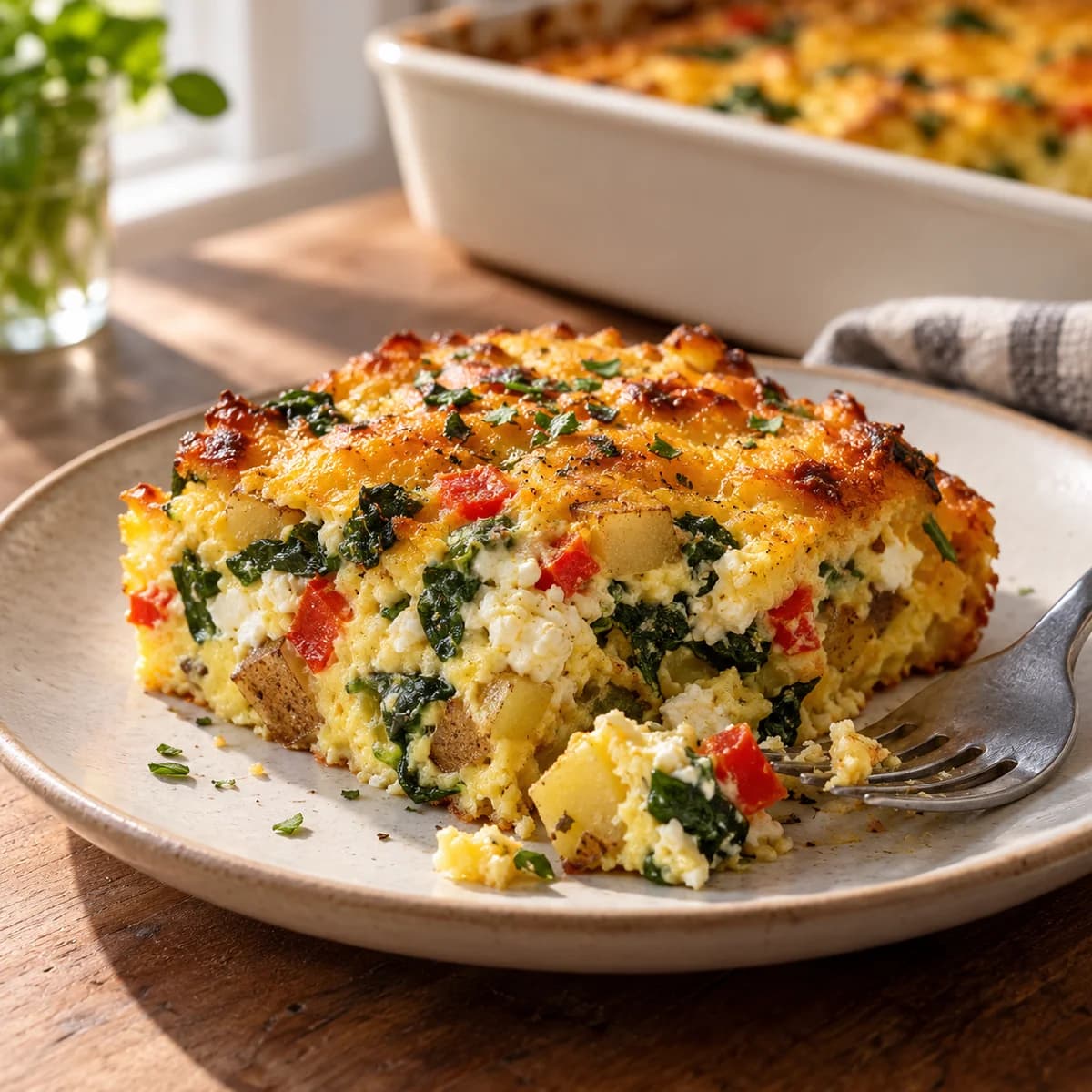
Questions worth answering before the first batch
The common decisions are practical ones: which dish to use, whether the potatoes need cooking first, how to recognise a set centre, and what changes when the casserole is chilled or frozen. The answers below use the same six-serving reference recipe as the card. Start with that version where possible, then change one part deliberately if you want a different flavour or portion. A packet label or cookware instruction may be more specific to your kitchen than a general recipe estimate.
If a bake turns watery, look back at the vegetables and draining steps before adding more cheese to cover it. If the top browns quickly, assess the oven and dish depth rather than assuming the centre is done. If a portion is larger than you want, change the serving division instead of quietly altering several ingredients. Those small, clear decisions are easier to repeat than a different guess at every breakfast, and they make the nutrition estimates more useful too.
How much protein is in one serving?
One sixth of the complete reference casserole provides approximately 32g protein and 388 calories. That includes potatoes, vegetables, both cheeses, seasonings and all measured skillet and dish oil. The calculation uses generic USDA references; your actual product labels may differ.
What size baking dish do I need?
Use a broad 9x13 inch / 23x33cm ovenproof dish with at least 3 litres capacity and room above the shallow filling. A smaller deep dish heats differently. Follow cookware instructions, including guidance for glass or ceramic. Larger card settings use additional matching dishes rather than a deeper layer.
Do the potatoes need cooking first?
Yes. The reference uses 600g raw edible skin-on potato cut into roughly 1cm cubes, simmered until fork-tender, drained and briefly steam-dried. The oven step sets egg around tender potatoes. Large raw chunks may remain firm while the surrounding egg becomes overcooked.
Can I use frozen hash browns?
They are not the reference ingredient. Frozen potato products can differ in added oil, salt, moisture and cooking instructions. Use their label and preparation directions, and reassess the casserole rather than assuming the same raw-potato weight gives the same result. Recalculate your actual version.
Does the cottage cheese need blending?
Stir the tub before weighing and mash very large curds. Small curds can remain visible in cooked egg. Brief blending of cottage cheese is an optional texture change, but avoid whipping the whole egg mixture into excessive foam. A pale curd alone is not evidence of uncooked egg.
Why did my casserole turn watery?
Undrained potatoes, wet spinach, vegetables carrying visible cooking liquid or an under-set centre can contribute. Prepare and drain the components before assembly. Check the actual egg centre and its temperature. A thin cheddar topping can brown while the filling beneath it is still loose.
Why is the egg rubbery or dry?
Excess baking, an overly hot oven or a different filling depth can make the egg firm. Use the stated shallow dish, check from around thirty minutes and stop once the centre is properly cooked and set. A short rest helps portioning; prolonged baking to darken the cheese can toughen the interior.
What internal temperature should I check?
This guide follows the FoodSafety.gov casserole recommendation of at least 165°F / 74°C in the centre, measured away from the dish. Reheated leftovers also need 165°F / 74°C throughout. The centre should be set with no liquid egg; browned cheese alone is not a doneness check.
Can I assemble it the night before?
The reference method is assembled and baked promptly. You can prepare cooked components ahead, cool them promptly and refrigerate separately. An assembled chilled casserole needs its own timing assessment and suitable cookware, especially regarding glass or ceramic thermal shock. Do not leave raw egg mixture out to warm as a workaround.
Can I make twelve or eighteen servings?
Yes. The card multiplies complete six-serving batches into two or three matching reference dishes, each retaining 8g greasing oil and the same filling depth. Cook vegetables in separate rounds if needed. Extra dishes or oven rounds increase elapsed time; keep waiting raw mixture refrigerated and check each dish.
How can I make a lower-calorie portion?
Divide the full bake into eight equal portions for approximately 291 calories and 24g protein each. A calculated lower-cheddar trial uses 60g total cheddar per six-serving dish, 30g inside and 30g on top, for approximately 348 calories and 29.7g protein per sixth. Other amounts stay unchanged.
Can I freeze the cooked casserole?
Freeze cooled individual portions in suitable packaging with the date noted. About one month is a practical quality target to try for this untested formula. Texture can change after freezing. Thaw in the refrigerator when possible and reheat the centre throughout to 165°F / 74°C.
Is this gluten-free, vegetarian or dairy-free?
The listed formula has no wheat, bread or pastry, but gluten-free suitability depends on every actual label and preparation conditions. It contains egg and milk. There is no meat; check cheese rennet if vegetarian suitability matters. Dairy-free cheddar alone does not remove the cottage cheese.
Does the nutrition include bread and toppings?
It includes every listed casserole ingredient, all 20g measured oil and the 2g salt divided over six portions. Toast, fruit, sauces, extra cheese and drinks are additional. The per-serving number stays constant when the card adds complete batches; cutting the same bake into smaller pieces changes the serving fraction.
More High-Protein Recipes
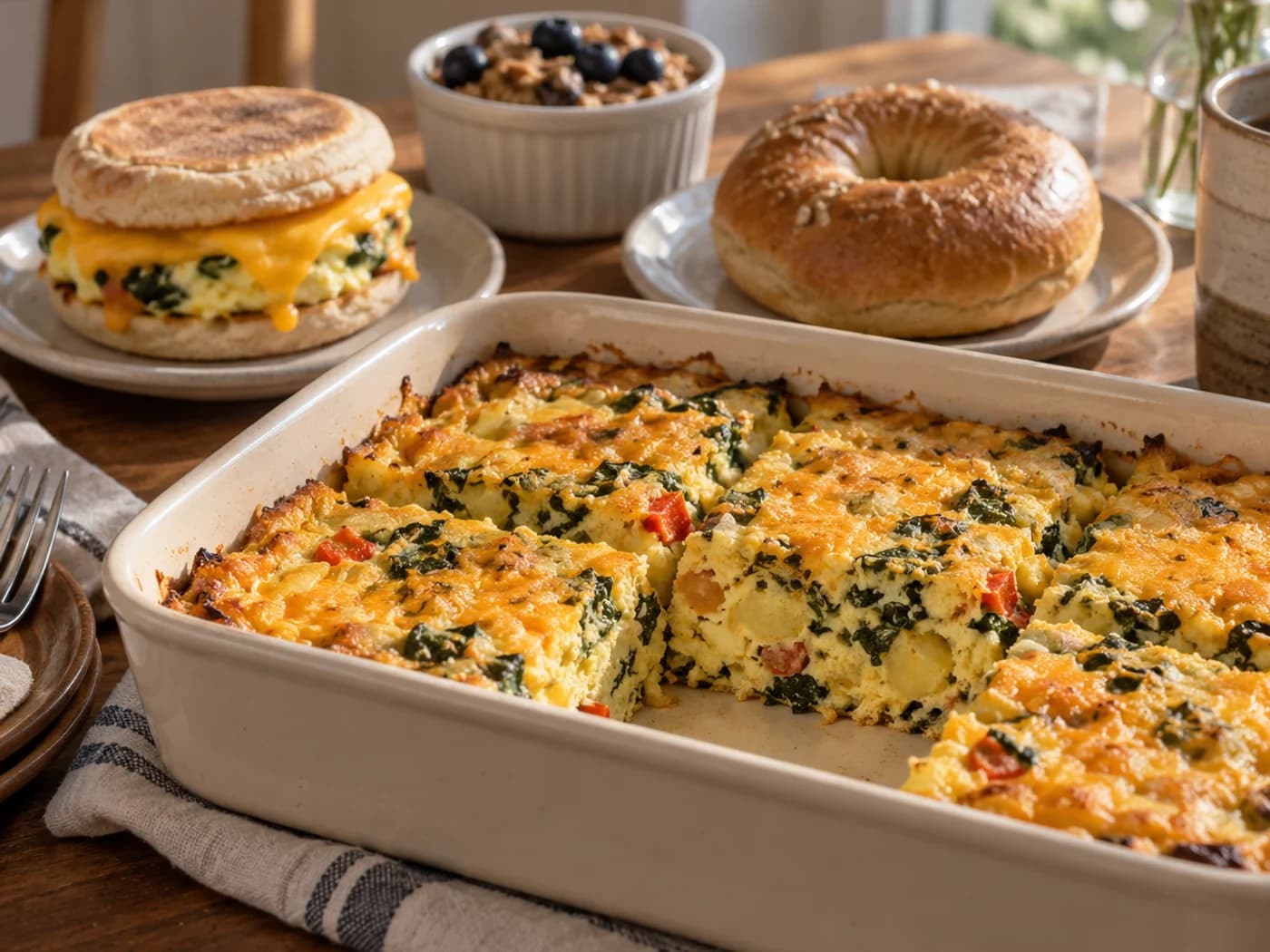
A little variety beyond the baking dish
The high-protein breakfast sandwich is a useful next option when you want toasted bread and a pan-cooked egg fold. It uses some familiar ingredients, but its method and complete serving are different from this casserole. High-protein bagels focus on the bread itself, leaving you to choose a filling or side. French toast takes breakfast in a sweeter direction while still using a skillet. Each guide has its own portion definition and nutrition notes, so check those before treating two recipes as interchangeable meals.
If you prefer a spoonable breakfast, explore high-protein oatmeal, overnight oats or baked oats. Stovetop oatmeal is warm and creamy, overnight oats are chilled and prepared ahead, and baked oats use an individual oven-baked preparation. Banana bread offers something sliceable for a different routine. The wider recipe collection also includes savoury lunches and dinners, which can help when you want a break from eggs at breakfast or need another meal to prepare for the week.
You do not need a different elaborate recipe every morning. A few meals you enjoy, with clear portions and storage habits, can be enough to make the week easier. Keep this casserole for days when a shared bake or prepared portion makes sense, and use a faster fresh breakfast when it does not. Variety should make eating more pleasant and practical, rather than adding another task to an already busy morning.