
Browse the 15 recipe sections
One reference serving: one sixth of the full lasagna pan, about 548 calories and 44.1g protein. Pasta, turkey, both cheeses and all measured oil are included. Sides are additional; timings are estimates. See the breakdown.
Recipe Overview
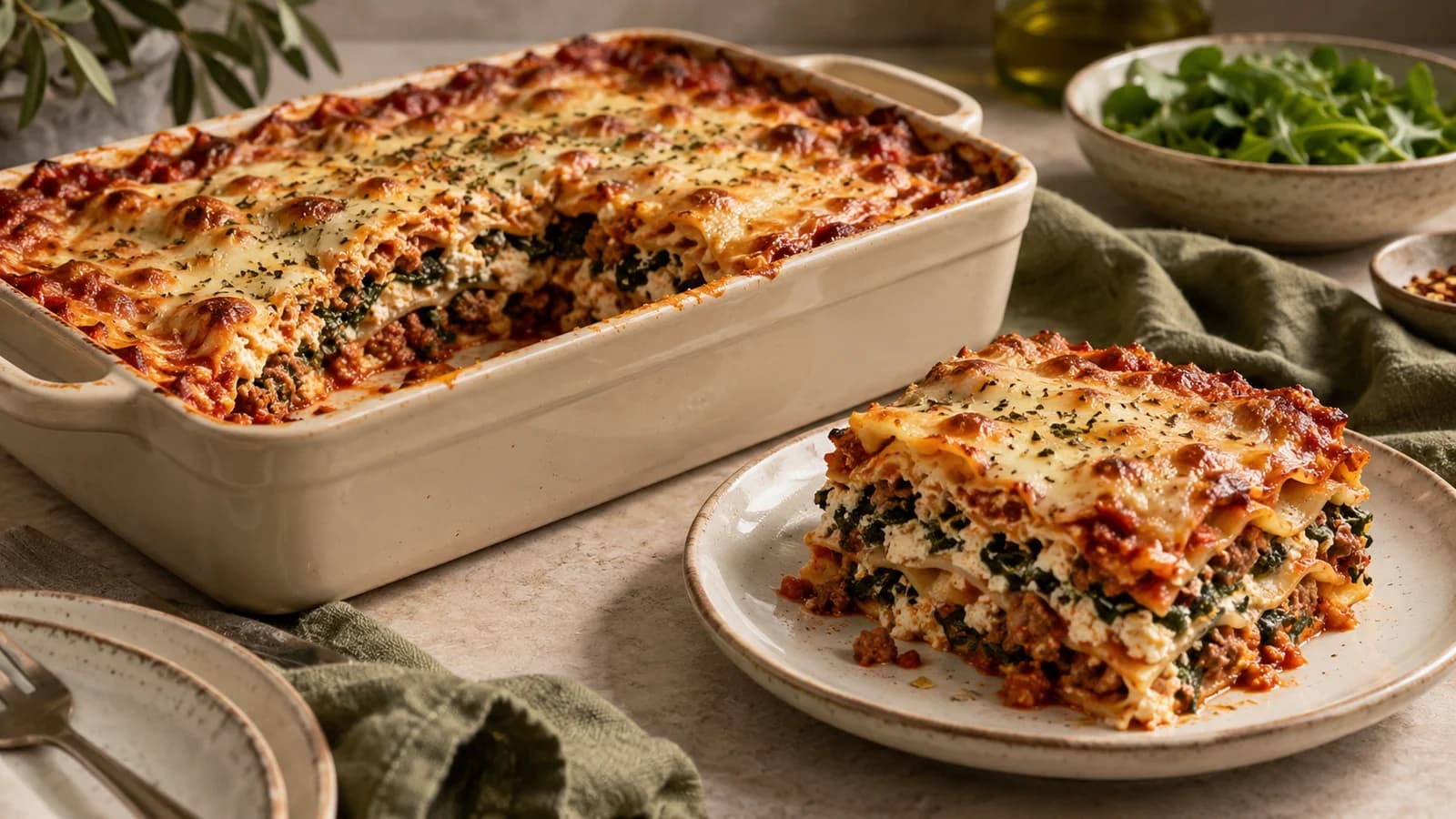
A familiar dinner with a little more protein
There is a particular pleasure in pushing a fork through the browned top of a lasagna and finding soft pasta underneath. This version keeps that experience: three layers of regular noodles, a thick turkey and tomato sauce, a cottage-cheese filling flecked with spinach, and mozzarella where it matters. The protein comes from ordinary food rather than a supplement. You still get a proper pasta dinner, with enough sauce to bring the layers together and a short rest that makes serving less messy.
What you are making
The reference recipe fills one 9-by-13-inch / 23-by-33cm ovenproof dish of at least 3 litres. Cut it into six equal portions. Each portion includes its share of all the noodles, turkey, cheeses, vegetables, oil and seasonings, giving an estimated 548 calories and 44g protein. These are generous dinner servings, not tiny tasting squares. If your household prefers eight smaller pieces, that works too; the nutrition becomes about 411 calories and 33.1g protein per piece. The pan has the same total food either way.
Set aside an unhurried cooking window
Plan on about 25 minutes for preparation and assembly, 25 minutes of stovetop cooking, 45 minutes in the oven, and a 15-minute rest: roughly 110 minutes altogether. Some tasks can overlap once you know the sequence, but a first attempt is easier without racing the clock. Have a large skillet, pasta pot, colander, mixing bowl, foil and food thermometer ready. The noodles are boiled before assembly. Oven-ready sheets need a different liquid plan, so they are not a direct replacement in these instructions.
A useful starting point, with honest limits
This exact weighed formula has not been physically kitchen-tested. The quantities, estimated nutrition and cooking guidance are developed as a practical reference, and the photographs illustrate the intended dish rather than a recorded trial batch. Use the packet instructions for your pasta and check the actual bake for tenderness and temperature. Turkey and the finished casserole should reach 165°F / 74°C. Oven time alone cannot establish that. Expect a homestyle serving edge, small cottage-cheese curds and a moist filling; a perfectly rigid restaurant rectangle is not the goal.
Why You’ll Love This Recipe
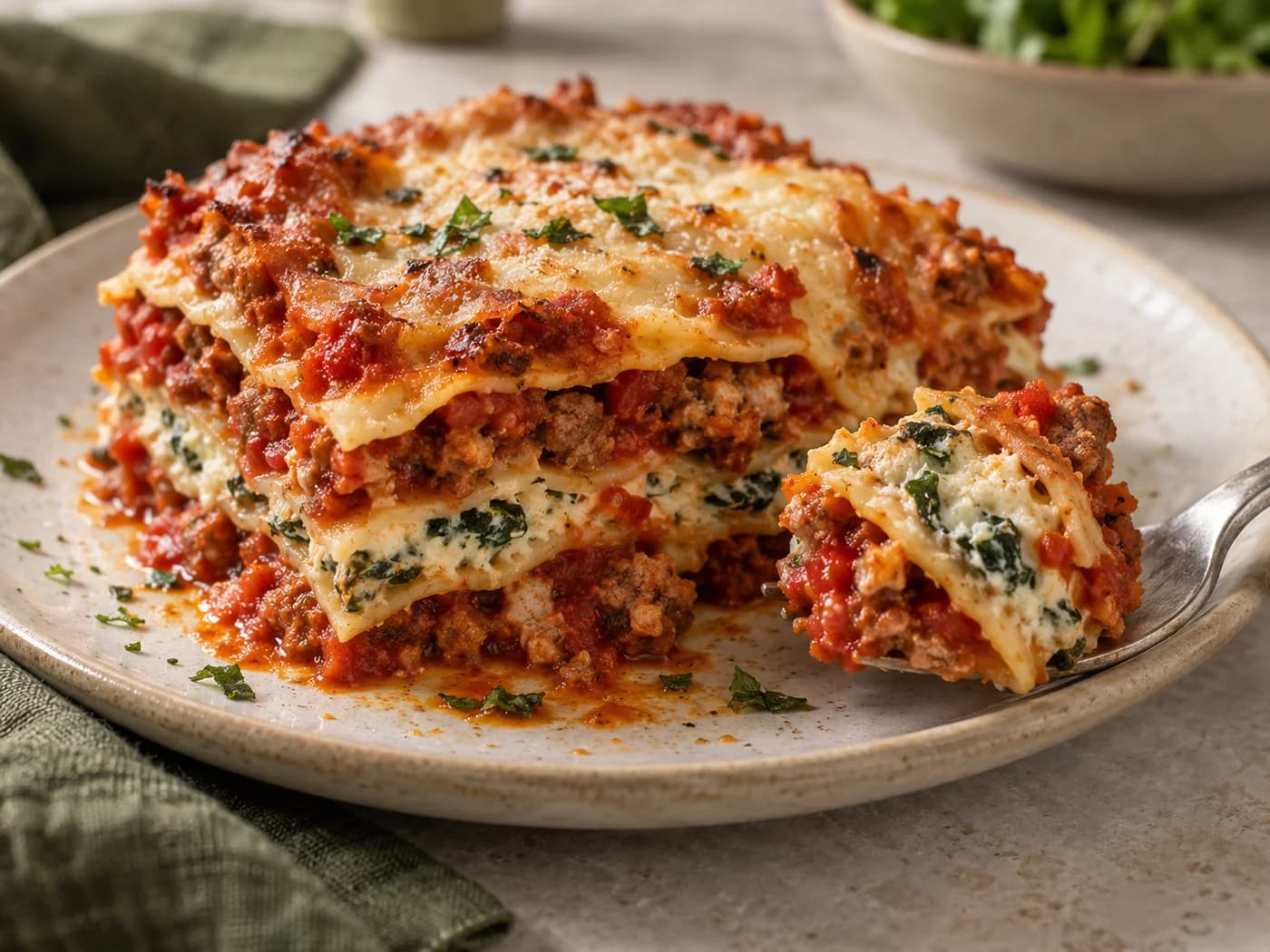
It keeps the parts people look forward to
The top has browned patches of mozzarella, the pasta stays recognisable, and the sauce has small turkey crumbles in every forkful. Cottage cheese adds a mild, creamy layer without requiring a separate white sauce. Spinach brings little dark-green pockets rather than replacing the noodles. Those details matter because a dinner is easier to return to when it tastes like something you wanted in the first place. You do not need to describe the plate as a reward, a cheat meal or an exercise in willpower.
The protein is spread through the whole slice
Turkey is the largest single protein contributor, while cottage cheese, mozzarella and pasta also add to the total. That means you are not relying on a token spoonful of meat hidden between thick sheets. The sauce and filling are divided across the dish so each slice has a similar balance. It also explains why adding a little more cheese is not automatically the most useful adjustment: flavour, energy, salt and texture change together. The full nutrition breakdown makes those trade-offs visible without turning dinner into a complicated calculation.
It suits a shared table
One pan gives you six complete reference portions, so it can cover a family dinner or leave lunches for another day. A plain salad or cooked vegetables can sit alongside it, and everyone can choose the size of slice that suits their appetite. You can put extra chilli, herbs or dressing on the table instead of changing the whole casserole. If someone dislikes cottage-cheese curds, blending the filling before adding spinach is an option; there is no need to make a second dish just to get a smoother mouthful.
The work has a sensible payoff
Lasagna asks for more effort than a bowl of quickly dressed pasta. In return, you get a dinner that holds together, portions well and can be reheated in individual pieces. Most of the attention goes into the sauce and moisture control before the dish reaches the oven. After that, you have time to clear the counter or set the table. The instructions explain what to look for at those early stages, so an unfamiliar tomato brand or a wetter tub of cheese does not leave you guessing at the end.
Nutrition at a Glance
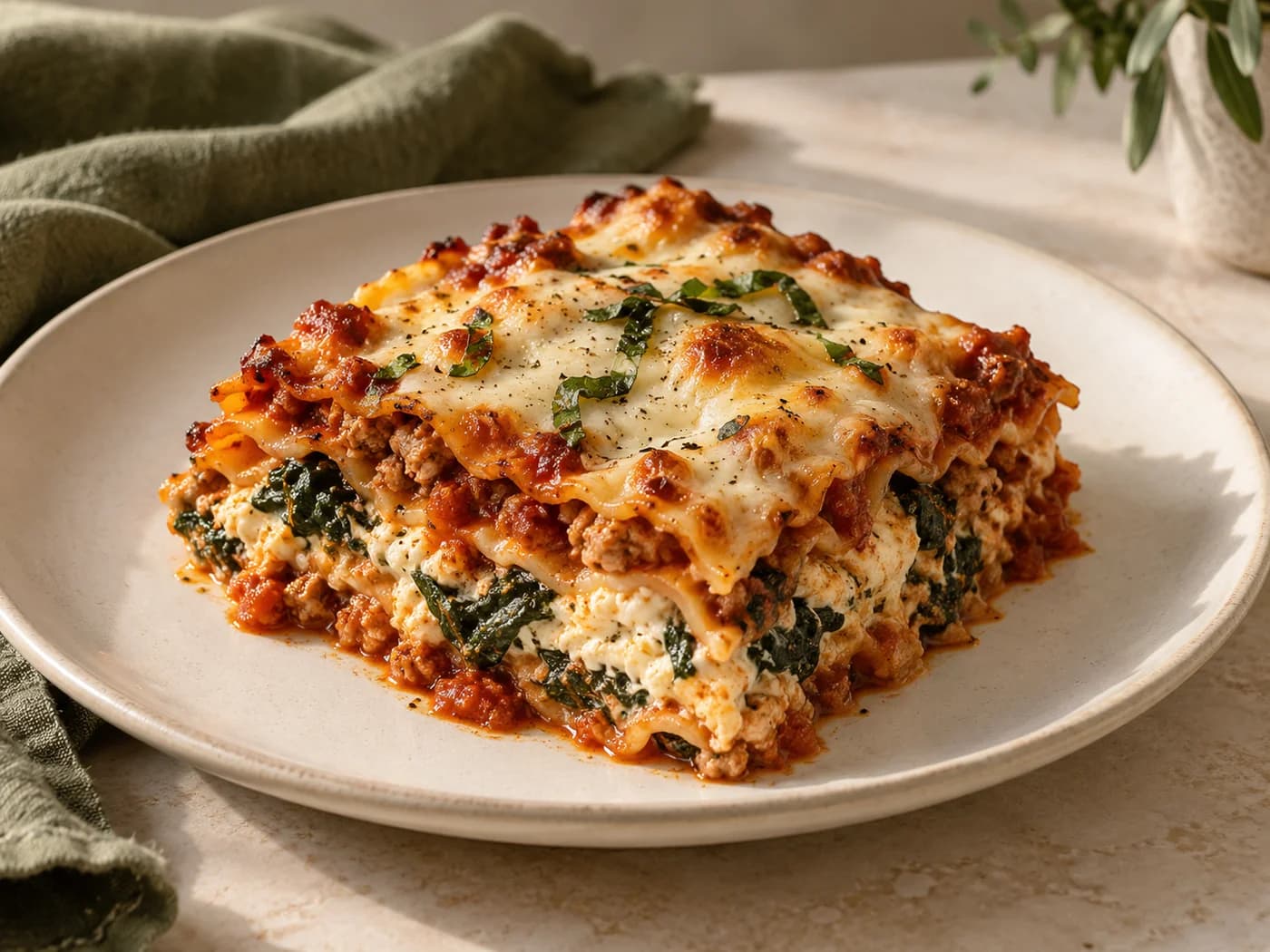
- Calories
- 548kcal
- Protein
- 44g
- Carbs
- 51g
- Fat
- 20g
Calories: about 548 per reference portion
The calorie estimate covers one sixth of the complete pan. There is no deduction for an assumed amount of fat left in the skillet, and the measured olive oil is included. Salad dressing, garlic bread, extra Parmesan and drinks are additional. A plate can still be enjoyable with those additions; the important point is to count the meal you actually eat. If you divide the same bake into eight portions instead of six, the energy per piece falls because the piece is smaller, not because the recipe has changed.
Protein: about 44g
The unrounded reference estimate is 44.1g protein per sixth. That includes turkey weighed raw, cottage cheese as supplied, mozzarella and dry pasta. Your ground turkey might contain a different amount of protein per 100g even if its front label gives the same lean percentage. Cheese labels vary too. Treat 44g as a useful reference, then use your own labels if you need a closer estimate. There is no requirement to make dinner larger simply because a particular protein number appears attractive on the page.
Carbohydrate: about 51g
Most of the carbohydrate comes from the lasagna sheets, with smaller contributions from tomatoes, onion and dairy. Pasta is doing a structural job as well as contributing energy: the sheets separate the filling and give the slice its familiar texture. This is not a low-carbohydrate or ketogenic formula. Whole-wheat or legume-based sheets may offer a different balance of fibre and protein, but their labels and cooking behaviour need checking. Replacing every noodle with vegetables creates a different dish and needs more attention to released water.
Fat: about 20g, plus the details behind it
Turkey, mozzarella, cottage cheese and olive oil provide most of the fat. The estimate also includes approximately 7.4g saturated fat, 5.1g fibre, 12.2g total sugars and 949mg sodium per reference portion. Total sugars include naturally present sugars in tomatoes, onion and dairy; separate added sugars have not been calculated. Salted crushed tomatoes and cheese make sodium worth checking on your actual labels. These figures describe the recipe, rather than deciding whether it is suitable for a specific medical diet or telling you what every dinner should contain.
Ingredients
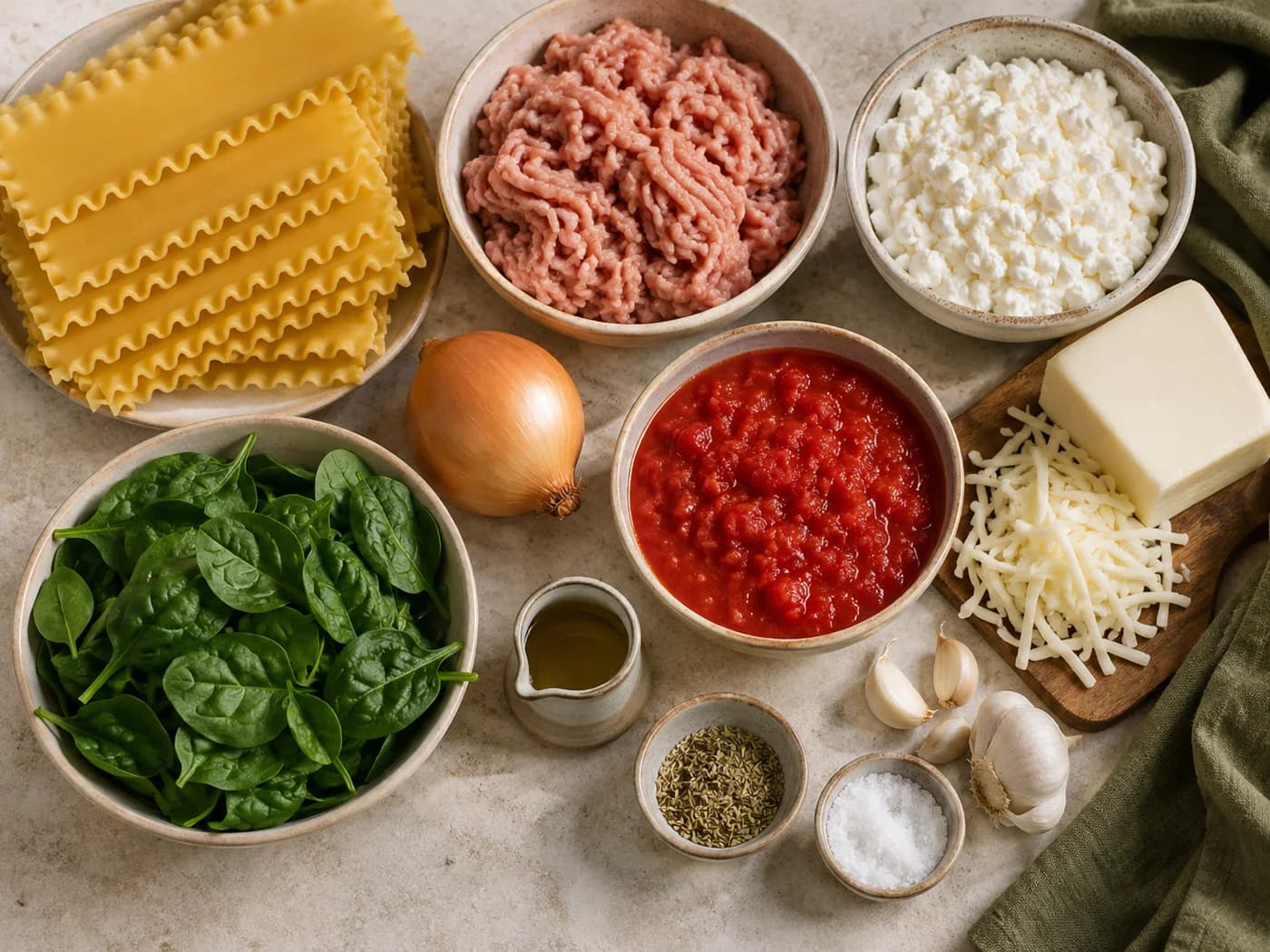
Regular noodles, weighed before boiling
Use 250g regular dry lasagna sheets intended for boiling. The number of sheets depends on their width and thickness, so weight is more reliable than a fixed count. Before cooking, loosely check how they would cover your dish in three layers. They can be trimmed or patched with smaller pieces; a neat overlap is more useful than a thick pile in the centre. Boil in unsalted water according to the packet until flexible and just al dente, then drain. The reference calculation uses dry pasta nutrition, not the much heavier cooked weight.
Turkey and the two cheeses
You need 600g raw ground turkey labelled around 93% lean, 500g plain 2% cottage cheese, and 200g low-moisture part-skim mozzarella. Stir the cottage-cheese tub before weighing so you get curds and dressing together. If there is an unusual pool of loose liquid, choose a thicker tub rather than quietly draining an unknown amount and retaining the same nutrition estimate. Grate a mozzarella block for predictable melting. Divide it into 100g for the two filling layers and 100g for the top; reserve those amounts before assembling.
Tomatoes, onion, spinach and garlic
The sauce uses 800g plain canned crushed tomatoes, including their juice, 150g peeled onion and 12g peeled garlic. Choose crushed tomatoes rather than thin tomato juice or a heavily seasoned ready-made pasta sauce. The filling uses 150g fresh spinach weighed before wilting. Wash and dry it, wilt it in a separate pan with the water clinging to its leaves, then cool enough to squeeze out excess liquid and chop. Its raw starting weight remains the nutrition reference even though the cooked handful looks surprisingly small.
Small ingredients that still count
Measure 10g olive oil in total: 2g for the dish and 8g for the onion and turkey. Add 3g dried oregano and 2g fine salt to the sauce. Pasta water is unsalted in this reference, so there is no hidden salt allowance to estimate. Cooking water is drained rather than added to the casserole. This formula contains wheat and milk; some pasta also contains egg or carries cross-contact statements. Check actual packaging. It contains no added egg binder, protein powder, cream sauce or Parmesan, so adding any of those means updating both the method and the totals.
Your ingredient checklist
- Regular dry lasagna sheetsWeigh dry; boil in unsalted water according to the packet, then drain250g
- Raw ground turkey (93% lean)Raw edible weight; cook through before layering600g
- Low-fat cottage cheese (2%)Stir the tub; use curds with dressing, not drained weight500g
- Low-moisture part-skim mozzarellaGrate a block; 100g inside and 100g on top200g
- Canned crushed tomatoesPlain crushed tomatoes, including juice; salted generic reference800g
- OnionPeeled edible weight, finely diced150g
- Fresh spinachRaw edible weight, washed, dried, wilted and squeezed150g
- GarlicPeeled cloves, finely chopped12g
- Olive oil2g to grease the dish, 8g for onion and turkey; all counted10g
- Dried oreganoFor the turkey tomato sauce3g
- Fine saltFor the sauce; no added salt in pasta water2g
Contains wheat and milk; check pasta for egg and other allergen statements. Uses regular dry sheets boiled before assembly, not oven-ready sheets. Keep raw-turkey utensils separate from ready-to-eat foods. All measured oil and salt are counted.
Ingredient Substitutions
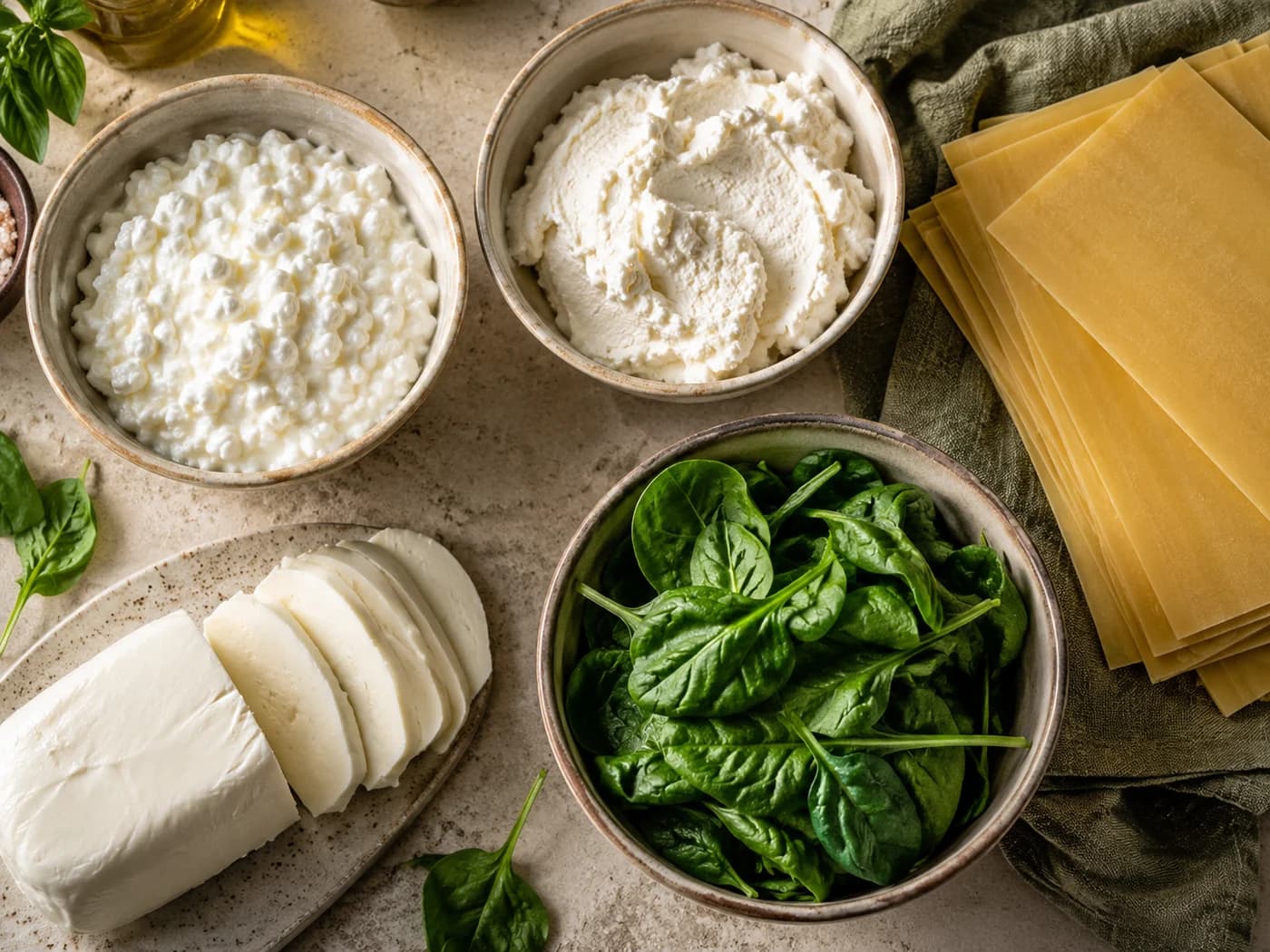
Ricotta can replace the cottage cheese
A thick ricotta can take the place of the cottage cheese by weight, but expect a different balance of protein, fat and moisture. Some ricottas are quite firm; others carry loose liquid. Stir a spoonful and look at how it holds its shape before adding spinach. A soft filling should spread in a thin layer without running between the noodles. If texture is your only concern, try blending the reference cottage cheese first. That changes the size of the curds while keeping the original ingredients, instead of introducing a new cheese just to make it smooth.
Other meat needs its own reference values
Ground chicken or lean ground beef can work in a similar cooked tomato sauce. Use their raw product labels for nutrition, and follow the correct safe temperature for the chosen meat. A lean percentage is not enough to make turkey, chicken and beef nutritionally identical. Very lean turkey can also feel drier if cooked hard and left exposed; keep the sauce moist and stop browning once the meat is properly cooked. Sausage brings seasoning, fat and sodium of its own, so it is a flavour change rather than an equal replacement for plain turkey.
Frozen spinach needs a different weighing note
Frozen spinach is convenient, particularly if you already keep a small bag for dinners. Thaw it safely, squeeze it thoroughly and add enough to give a similar modest amount of chopped greens in the filling. Do not assume that 150g frozen spinach after squeezing equals 150g fresh leaves before cooking. The water content and resulting solids are different. Record the amount and label values you actually use if you are calculating the modified pan. Kale is another possibility, but remove tough stems and cook the leaves until tender before they go into the cheese.
Pasta and dairy alternatives deserve a separate check
Whole-wheat, gluten-free and legume-based lasagna sheets have different thicknesses and instructions. A sheet designed to go straight into the oven needs more liquid than the preboiled sheets used here. Follow a formula developed for that product instead of simply dropping it into this pan dry. Dairy-free cheese alternatives can differ greatly in melting and protein, while replacing turkey with lentils or mushrooms changes the filling substantially. A vegetarian version also requires suitable cheese rennet. These ideas are useful directions for another bake, but they do not inherit the reference recipe’s 44g protein figure.
Use the actual label and cooking instructions for any ingredient you change.
| Reference | Possible change | What changes |
|---|---|---|
| 2% cottage cheese | Thick ricotta | Protein, fat and moisture |
| 93% lean turkey | Ground chicken or beef | Raw nutrition and cooking endpoint |
| Fresh spinach, raw weight | Thawed and squeezed frozen spinach | Weight and water content |
| Regular preboiled sheets | Whole-wheat or legume sheets | Label, tenderness and cooking directions |
| Low-moisture mozzarella | Fresh mozzarella | More water; not a direct texture match |
| Preboiled noodles | Oven-ready sheets | Needs a different sauce/liquid plan |
How to Make It
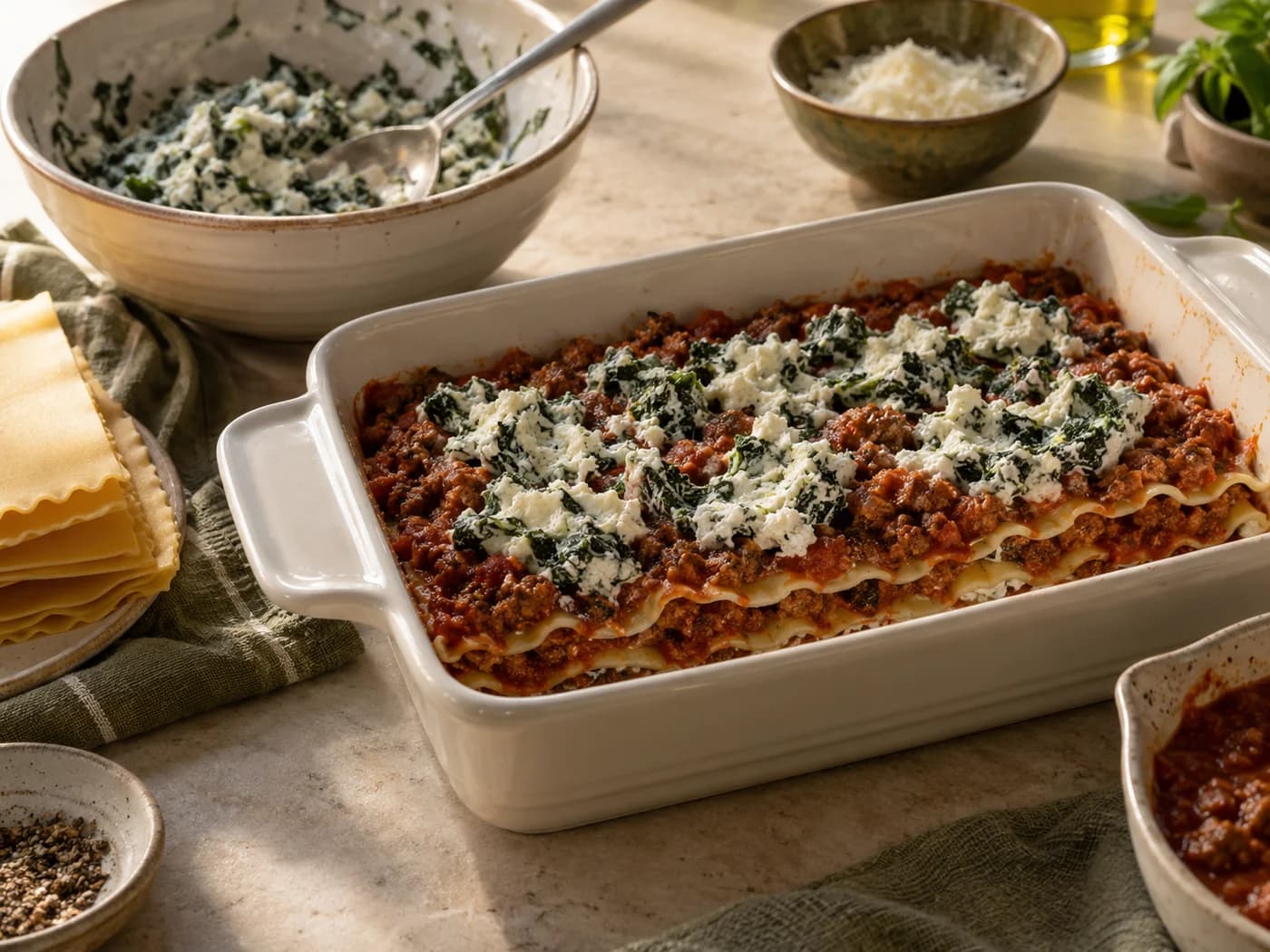
Start with the dish and the noodles
Heat a conventional oven to 375°F / 190°C. Lightly coat a 9-by-13-inch / 23-by-33cm dish of at least 3 litres with 2g of the measured oil. Cook the 250g dry sheets in unsalted boiling water according to their packet, stopping at flexible and just al dente. Drain carefully and lay them apart on a clean surface so they do not fuse into one stack. Wilt the washed spinach separately, let it stop steaming, squeeze it gently but thoroughly and chop it. Keep its utensils separate from anything used for raw turkey.
Make a thick, spoonable turkey sauce
Warm the remaining 8g oil in a large skillet. Soften the finely diced onion for about five minutes, then add the turkey and break it into small crumbles. Cook through to 165°F / 74°C, checking with a suitable food thermometer; colour is not the test. Add garlic and stir briefly, then add crushed tomatoes, oregano and salt. Simmer uncovered until the sauce is spoonable with no pool of watery liquid, roughly 10–15 minutes. If your skillet is crowded, cook the meat in batches. Keep the cooked turkey juices in the sauce for this reference calculation.
Mix and divide the filling before layering
Combine the 500g cottage cheese with the squeezed, chopped spinach. Leave the curds as they are, or blend the cheese before mixing in the greens for a smoother filling. Split it into two equal amounts. Separately divide the reserved 100g interior mozzarella into two 50g amounts, keeping the other 100g aside for the top. Taking a moment to make those piles prevents the first layer from using nearly all the cheese. The filling should be thick enough to dollop and spread; it should not pour like milk.
Assemble in a repeatable order
Spread a thin coat of turkey sauce over the base. Divide the remaining sauce into three roughly equal amounts. Add the first third of the cooked noodles, half the spinach filling, 50g mozzarella and one portion of sauce. Repeat with the second third of noodles, the remaining filling, 50g mozzarella and another sauce portion. Finish with the final third of noodles, the last sauce portion and the reserved 100g mozzarella. Cover exposed noodle edges with sauce and leave headroom in the dish. Small gaps can be patched; avoid thick, uneven overlaps.
Bake, check, then let it settle
Cover with tented foil and bake for about 30 minutes, then uncover for about 10–20 minutes until the centre reaches 165°F / 74°C and the noodles are tender. Start checking around 40 minutes total; ovens and dish materials differ. If the top browns before the centre is ready, cover it again. Rest for about 15 minutes before cutting a two-by-three grid of six portions. The rest helps the slice hold, but the thermometer check comes first. Transfer leftovers promptly to shallow containers rather than leaving the full heavy dish on the counter to cool completely.
Tips for the Best Results
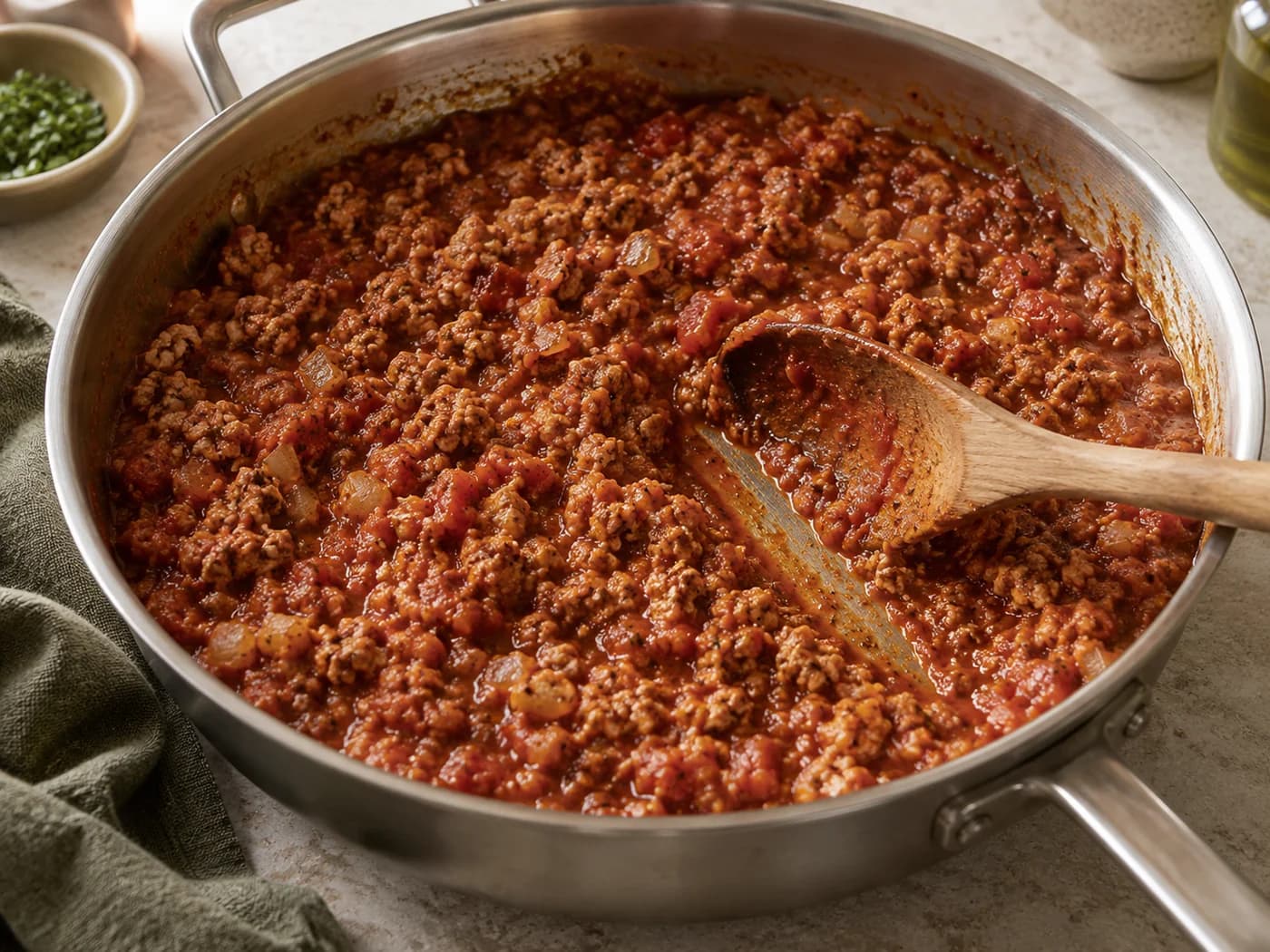
Solve excess moisture before it reaches the pan
Lasagna becomes watery for several small reasons at once: tomato sauce that has barely simmered, spinach that still drips, noodles carrying cooking water, or a very loose cheese filling. Deal with each one while it is easy to see. A spoon dragged through the sauce should leave a short channel before the mixture settles back. Squeezed spinach should feel damp rather than release a stream when pressed. Drain the noodles thoroughly. None of these ingredients needs to become dry, but they should not contribute an unnoticed bowlful of water to the finished dish.
Keep the corners as comfortable as the middle
The corners are often the first parts to dry out because they have less surrounding filling. Spread sauce right to the edges of every noodle layer and tuck any protruding tips under a little sauce. Tenting the foil gives the cheese space while trapping moisture early in the bake. When uncovering, watch the outer edge as well as the centre. If one side of the oven browns faster, rotate the dish carefully. A brown corner can be delicious; a rigid, uncooked piece of pasta is a sign that coverage or cooking needs attention.
Use small crumbles and thin, even filling
Large turkey clumps make the layers bumpy and leave some slices mostly pasta. Break the meat up while it cooks, using the edge of a spatula rather than compressing it into a paste. Spread the cheese in several small dollops before smoothing, so you are not dragging the noodles underneath. An offset spatula helps, but the back of a spoon is enough. If a sheet tears, patch it and carry on. Once the filling is covered, an irregular seam matters far less than an even distribution of sauce and cheese across the dish.
Give the first slice a little help
Cut through all the pasta layers with a sharp knife, then slide a broad serving spatula underneath the entire portion. The first piece has no open space beside it and may come out less neatly. That is normal, especially while the filling is warm. Lift rather than lever it against the side of the dish, and spoon any escaped filling onto the plate. If the entire pan slumps, look at moisture and resting time on your next attempt. Waiting longer can improve shape, but do not leave dinner at room temperature indefinitely in pursuit of a perfect photograph.
High-Protein / Lower-Calorie Variations
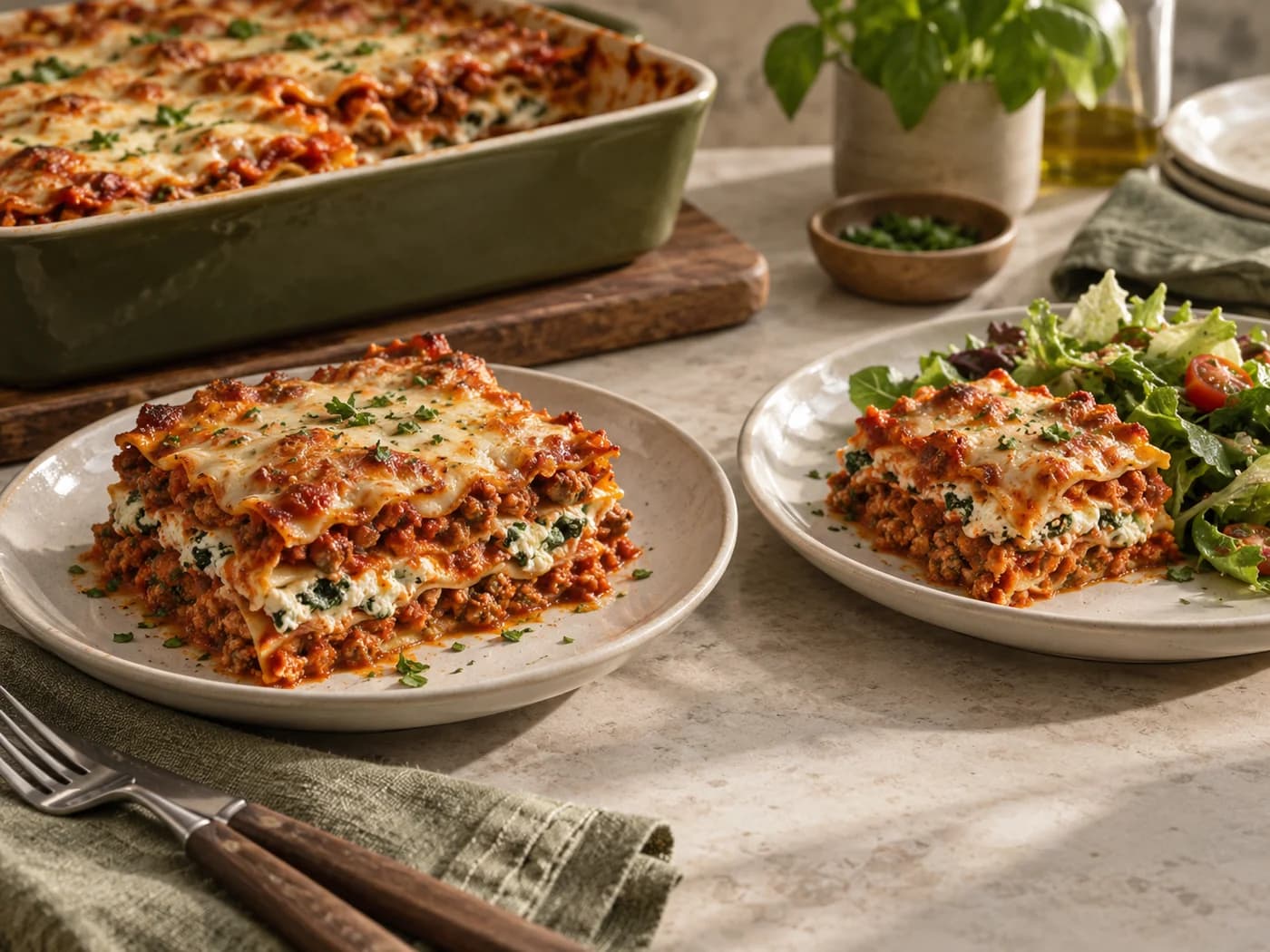
Start with the portion you actually want
The simplest lower-energy option is to cut the unchanged pan into eight portions. Each becomes about 411 calories and 33.1g protein. A half reference portion, one twelfth of the pan, is about 274 calories and 22.1g protein. Those pieces can suit a smaller appetite or a lunch with another component. They are not the same serving as the six-portion dinner described at the top. Use the same division consistently when you portion containers, and remember that a salad’s oil, dressing or cheese adds its own nutrition.
A lighter cheese topping keeps most of the protein
Reducing total mozzarella from 200g to 150g lowers the reference estimate to about 523 calories and 42.2g protein per sixth. Keep 100g inside and use the remaining 50g on top for a thinner crust. You lose some of the golden coverage, so spread it evenly and watch exposed noodle edges. This is a calculated ingredient variation, not a separately tested bake. It is a modest adjustment rather than a dramatic transformation; a large drizzle of oil or extra bread beside the slice could exceed the energy difference quite easily.
Extra cottage cheese has a small, measurable effect
Adding 100g cottage cheese to the whole pan raises the estimate to about 561 calories and 45.9g protein per sixth. That is only around 1.7g additional protein per portion, while the filling also becomes wetter. A thicker tub is helpful, and the layer still needs to remain shallow. This comparison is included to show the scale of the change, not to suggest that more filling is always better. If you already enjoy the reference slice, changing another meal in your day may be more comfortable than making this lasagna increasingly heavy.
Bigger changes need a new cooking plan
Replacing pasta with zucchini, doubling the turkey, using very lean poultry or switching to a legume sheet all alter more than a nutrition number. Zucchini releases water, extra meat needs more sauce, and different pasta can absorb liquid at a different rate. Treat those as new versions with their own amounts and checks. There is no need to force this one recipe into every dietary pattern. The reference is a generous pasta dinner; smaller portions and clearly measured sides often give enough flexibility without sacrificing the layered texture that made you want lasagna.
Sides are additional in each comparison. Ingredient variations are calculated, not separately kitchen-tested.
| Version | Calories per portion, approximately | Protein per portion, approximately |
|---|---|---|
| Reference pan ÷ 6 | 548 kcal | 44.1g |
| Same pan ÷ 8 | 411 kcal | 33.1g |
| Half reference portion (pan ÷ 12) | 274 kcal | 22.1g |
| 150g total mozzarella, modified pan ÷ 6 | 523 kcal | 42.2g |
| 100g extra cottage cheese, modified pan ÷ 6 | 561 kcal | 45.9g |
Serving Suggestions
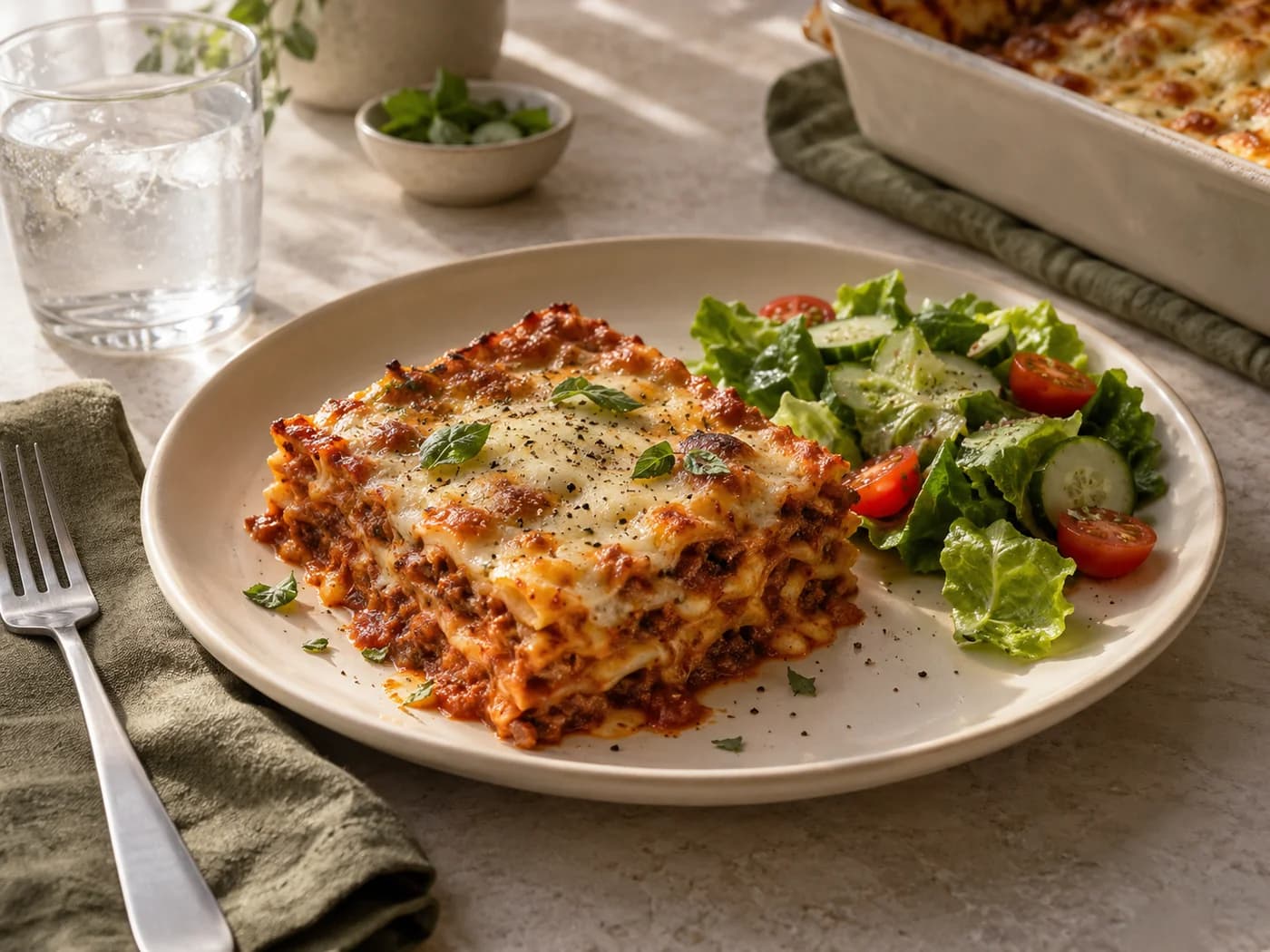
Give the warm slice something fresh beside it
A green salad is a pleasant contrast to soft pasta and creamy cheese. Lettuce, cucumber and a few tomato pieces are enough; the lasagna already has plenty of flavour. Dress the salad just before eating so it stays crisp. Lemon juice or vinegar can provide brightness, with oil measured to suit your meal. Keep the dressing out of the leftover lasagna container. That way the salad does not become limp during reheating, and the pasta portion can be warmed thoroughly without cooking the fresh vegetables along with it.
Cooked vegetables work just as well
Roasted broccoli, green beans or sautéed courgette can make the plate more varied without requiring a second rich sauce. If oven space is tight, choose a vegetable you can cook on the hob while the lasagna rests. Season the side to complement the tomato sauce rather than automatically adding another large layer of cheese. Portions remain flexible: a bigger vegetable serving might accompany a smaller lasagna piece, while someone with a larger appetite can have the reference slice and a side. The lasagna estimate covers neither version’s extras.
Bread can be part of the meal
Garlic bread, a plain roll or a slice of sourdough is optional, and there is no need to pretend it is forbidden beside a protein-focused dinner. Decide whether it is something you want, then include its ingredients and portion in your meal estimate if you are tracking. A small piece can be useful for the sauce left on the plate. If you prefer the pasta to be the main source of starch at dinner, simply leave the bread off. Both choices can fit an ordinary meal without requiring a special justification.
Make the table easy to navigate
For a shared dinner, cut the pan before bringing it to the table and explain that it contains turkey, wheat pasta and dairy. Put additional chilli flakes, grated cheese or herbs in separate little dishes if wanted. Keep serving tools for the lasagna and salad separate, particularly if someone is managing an allergy. A shallow serving spatula makes it easier to lift a full piece. Plate the first portion without worrying about its shape; once that space opens up, the remaining slices usually have a much clearer route out of the dish.
Meal Prep & Storage
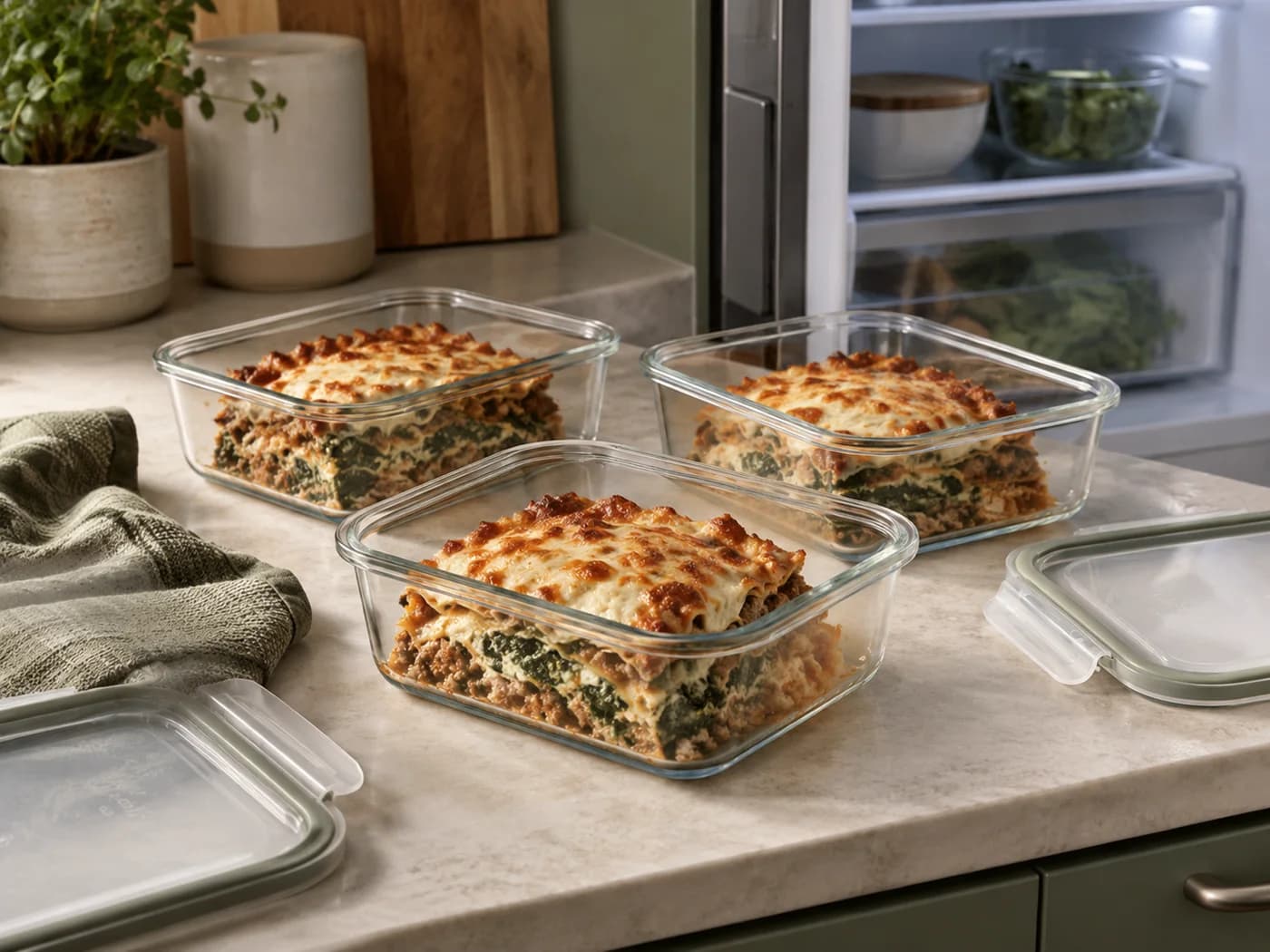
Portion promptly and keep it cold
Cooked leftovers should be refrigerated within two hours, or within one hour when the surroundings are above 90°F / 32°C. Divide the bake into shallow containers and keep the refrigerator at 40°F / 4°C or below. Do not wait for the entire casserole to become cold on the counter. With suitable cooking, cooling and handling, use refrigerated leftovers within 3–4 days. These are general food-safety limits, not a shelf-life test of this particular recipe. If you cannot keep the food properly chilled, shorten the journey or choose another lunch.
Freeze portions you will not use soon
Freezing individual pieces is easier than repeatedly thawing a whole pan. Once portions have been cooled safely, wrap or cover them well in freezer-suitable containers and mark the contents and date. For this untested formula, one month is a conservative quality-planning suggestion; it is not a measured limit or a guarantee of texture. Cottage cheese may release some liquid after thawing, and pasta can soften further. Freeze the lasagna by itself, then add fresh salad or other sides after reheating so the full meal is more enjoyable.
Reheat the middle, not just the cheese
Thaw frozen portions in the refrigerator. Reheat covered in the oven or microwave until the centre reaches 165°F / 74°C, checking more than one spot. In a microwave, turn the container if needed and follow the appliance’s standing-time guidance so heat can distribute. A hot edge or bubbling sauce does not prove the middle is ready. Add a small splash of water around a dry-looking portion if necessary, then keep it covered. Use a suitable microwave-safe or oven-safe container; a chilled glass dish should only go into an oven if its manufacturer allows that temperature change.
Separate make-ahead tasks from a finished bake
You can chop onion, grate mozzarella and prepare the spinach ahead, keeping each properly chilled. For the clearest first attempt, cook the sauce and assemble the lasagna on the day you plan to bake it. If you make sauce earlier, cool it promptly in shallow containers and refrigerate; time spent in the fridge before assembly still matters. A cold assembled dish needs longer than the reference oven estimate, and its centre must reach the same temperature. A small batch of prepared components is often easier to manage than a heavy, fully assembled cold casserole.
Full Nutrition Information
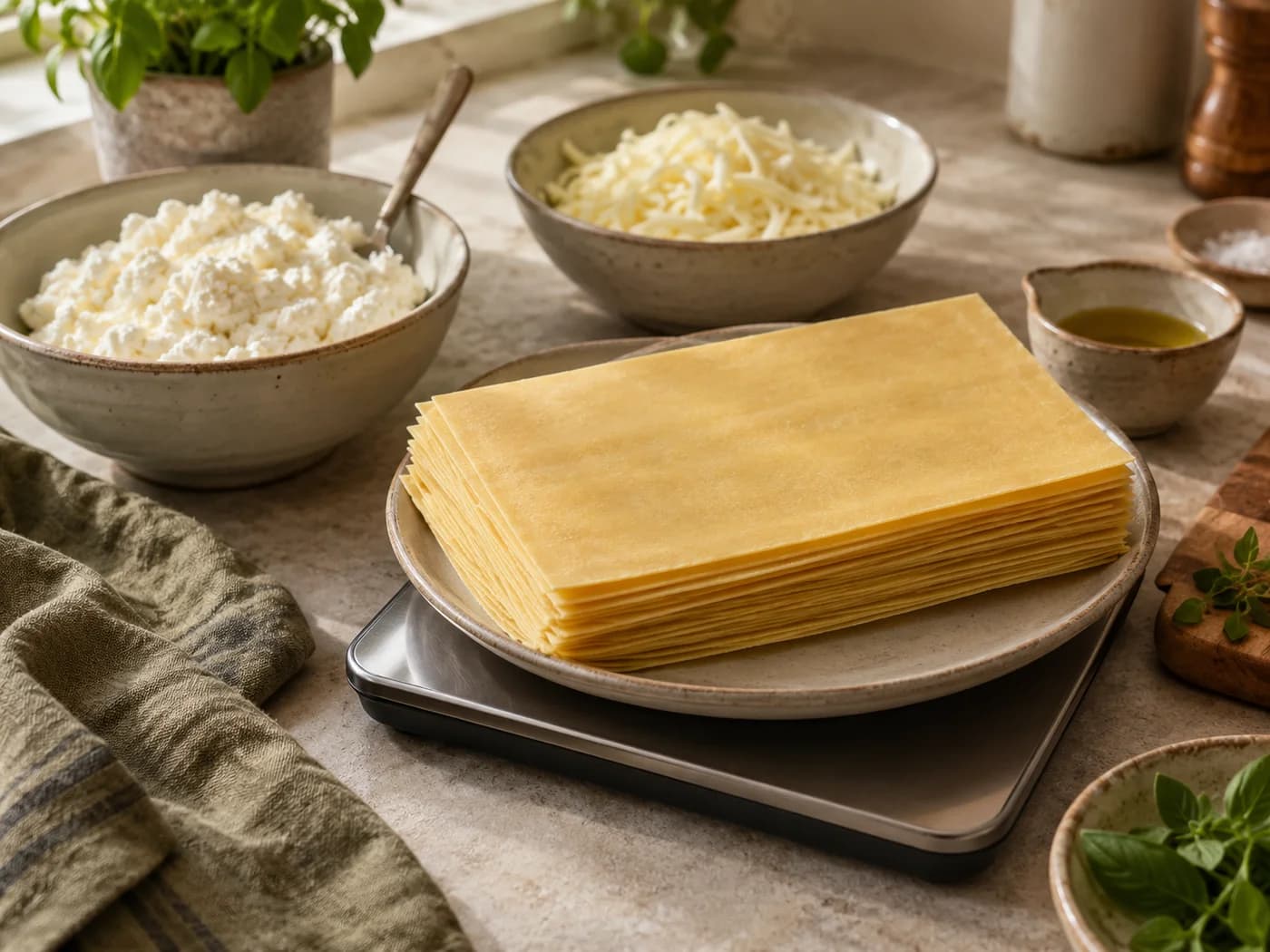
How the reference estimate is built
The calculation multiplies historical USDA SR28 generic values per 100g by each weighed ingredient amount, adds the ingredients together and divides by six. Pasta is entered dry, turkey raw, onion and garlic peeled, and spinach as raw edible leaves. Cottage cheese is weighed as supplied. The tomatoes include their juice, while all measured olive oil and salt are counted. No invented allowance is deducted for fat lost in the pan. The estimate assumes the cooked turkey juices stay in the sauce; draining them changes the actual food but does not provide a precise new total.
Why the cooked weight is not fixed
Pasta absorbs water, sauce loses some during simmering, spinach is squeezed, and the oven releases steam. That means the finished pan cannot be assigned an exact weight just by adding the raw ingredients. For a weight-based portion, weigh the actual finished food after subtracting the empty dish, then divide that total by six. You can also cut six equal-area portions when the layers are spread evenly. Do not weigh one arbitrarily chosen 300g slice and automatically call it the reference serving; the relationship depends on the actual yield of your batch.
Read the smaller numbers as estimates too
The reference portion provides about 5.1g fibre, 12.2g total sugars, 7.4g saturated fat and 949mg sodium. Sodium is especially sensitive to the canned tomatoes, cottage cheese, mozzarella and measured salt. A no-added-salt tomato product will not necessarily match the generic salted crushed-tomato row used here. Separate added sugars, cholesterol and a complete set of vitamins and minerals have not been calculated, so the page does not invent them. Rounding individual ingredient contributions can also make the displayed row totals differ slightly from the unrounded batch calculation.
Recalculate the version in your kitchen
Use the food calculator with the values on your actual packs if you change brands, quantities or portion count. Enter each ingredient once, include oil and cheese, and avoid switching between raw and cooked nutrition entries halfway through. The turkey product label takes priority over a generic turkey row, just as your pasta label takes priority over a generic dry-pasta value. You do not need to chase decimal-level precision to make a useful meal plan. A consistent method and an honest serving definition are more valuable than an apparently exact number built from mismatched weights.
| Ingredient | Amount | Calories | Protein | Carbs | Fat |
|---|---|---|---|---|---|
| Regular dry lasagna sheets | 250g | 928 kcal | 32.6g | 186.7g | 3.8g |
| Raw ground turkey (93% lean) | 600g | 900 kcal | 112.4g | 0.0g | 50.0g |
| Low-fat cottage cheese (2%) | 500g | 405 kcal | 52.3g | 23.8g | 11.3g |
| Low-moisture part-skim mozzarella | 200g | 590 kcal | 47.5g | 11.2g | 39.6g |
| Canned crushed tomatoes | 800g | 256 kcal | 13.1g | 58.3g | 2.2g |
| Onion | 150g | 60 kcal | 1.6g | 14.0g | 0.1g |
| Fresh spinach | 150g | 35 kcal | 4.3g | 5.4g | 0.6g |
| Garlic | 12g | 18 kcal | 0.8g | 4.0g | 0.1g |
| Olive oil | 10g | 88 kcal | 0.0g | 0.0g | 10.0g |
| Dried oregano | 3g | 8 kcal | 0.3g | 2.1g | 0.1g |
| Fine salt | 2g | 0 kcal | 0.0g | 0.0g | 0.0g |
| Whole batch | 6 complete lasagna portions | 3287 kcal | 264.8g | 305.4g | 117.9g |
| One reference serving | Batch ÷ 6 | 548 kcal | 44.1g | 51g | 20g |
| Dietary fiber | 5.1g |
|---|---|
| Total sugars | 12.2g |
| Saturated fat | 7.4g |
| Sodium | 949mg |
Estimated recipe nutrition, not laboratory analysis. Includes pasta, turkey, dairy, vegetables, seasonings and all measured oil. Sides and extra toppings are additional. Uses historical generic USDA SR28 values; actual labels take priority. Cholesterol, separate added sugars and complete micronutrients are not calculated.
How This Fits Your Daily Protein Goal
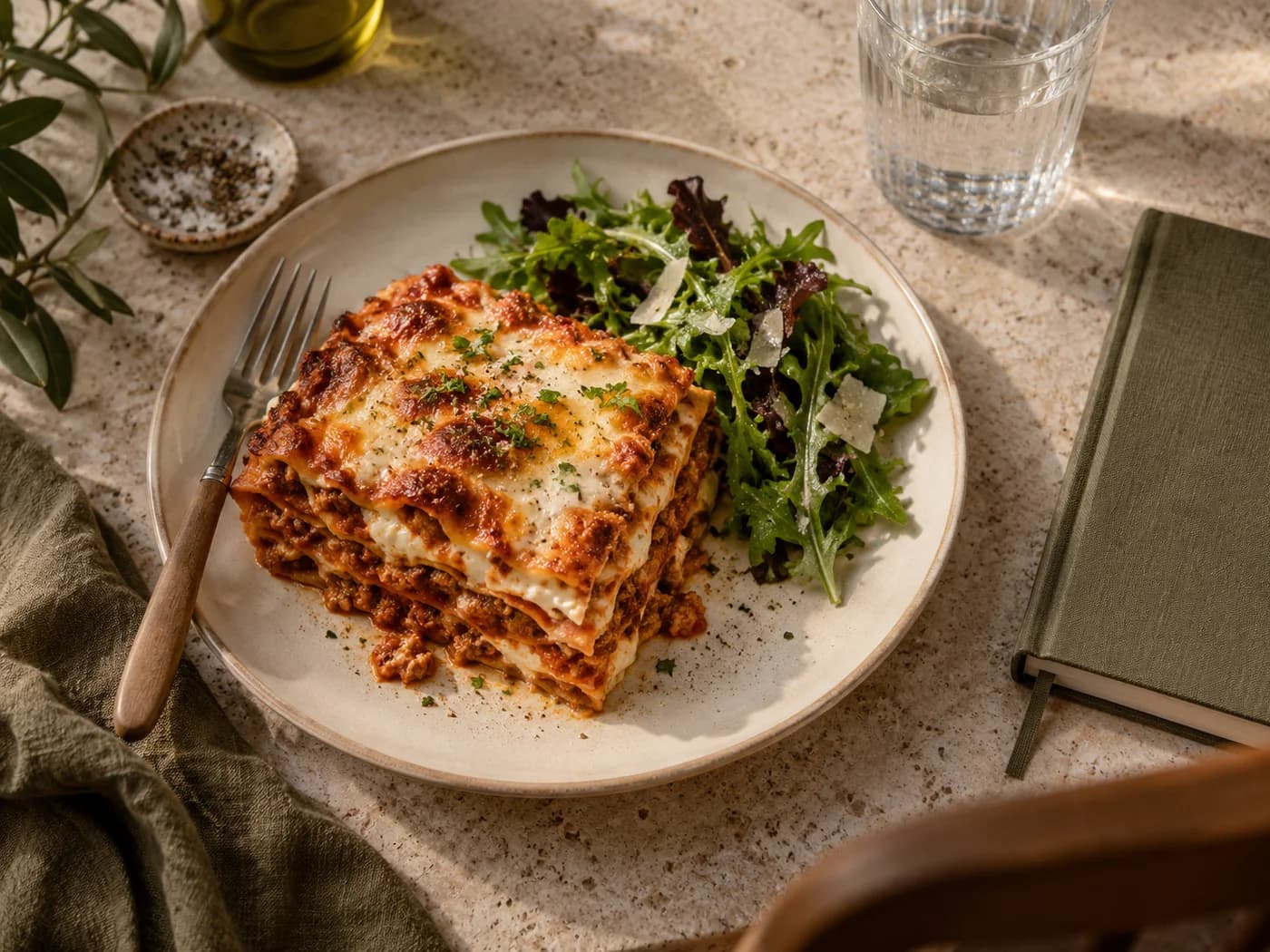
A substantial contribution from an ordinary dinner
The protein calculator can help you estimate a daily target from your own circumstances. Once you have a target, this reference dinner contributes about 44.1g protein before sides. For illustration, that is around 44% of a 100g target, 37% of a 120g target, or 29% of a 150g target. Those targets are examples for arithmetic, not recommendations for every reader. Your body size, activity, preferences and any relevant clinical advice matter more than the fact that a round number makes a tidy table.
Leave room for the rest of your day
A substantial dinner can make planning easier, but it does not need to supply nearly all your protein. Breakfast, lunch and snacks can contribute in ways that suit your routine. Someone who likes a lighter evening meal might choose an eighth-pan portion with about 33g protein and eat more earlier. Someone else might prefer the six-portion slice after a busy day. There is no requirement to add a shake on top simply to make the meal sound more complete. Look at the full day and your appetite before adding food you do not particularly want.
Count energy and enjoyment alongside protein
The reference slice contains about 548 calories as well as protein. If you are planning a particular energy intake, consider the pasta, cheese, oil and sides together rather than treating protein as a free addition. At the same time, a meal that leaves you disappointed may be harder to repeat than one with a little golden cheese and a proper pasta layer. The smaller-portion and lighter-topping comparisons give options without demanding that you remove everything satisfying. Choose the adjustment that helps the meal fit your day while still feeling like dinner.
Use tracking as a practical aid
A simple meal note can record the recipe, the number of portions and any major changes, such as a different meat or tomato brand. You do not need to weigh every visible spinach fleck on the plate. Keep batch entries consistent, and update the portion count if you cut the pan differently. If you have been given a prescribed protein, sodium or other dietary limit, use the actual labels and personalised professional guidance rather than relying on a generic recipe estimate. This page helps describe a meal; it cannot determine an individual medical target.
Make it personal
Where does this dinner fit in your day?
Estimate your daily protein target, then plan meals you enjoy.
Recipe Card
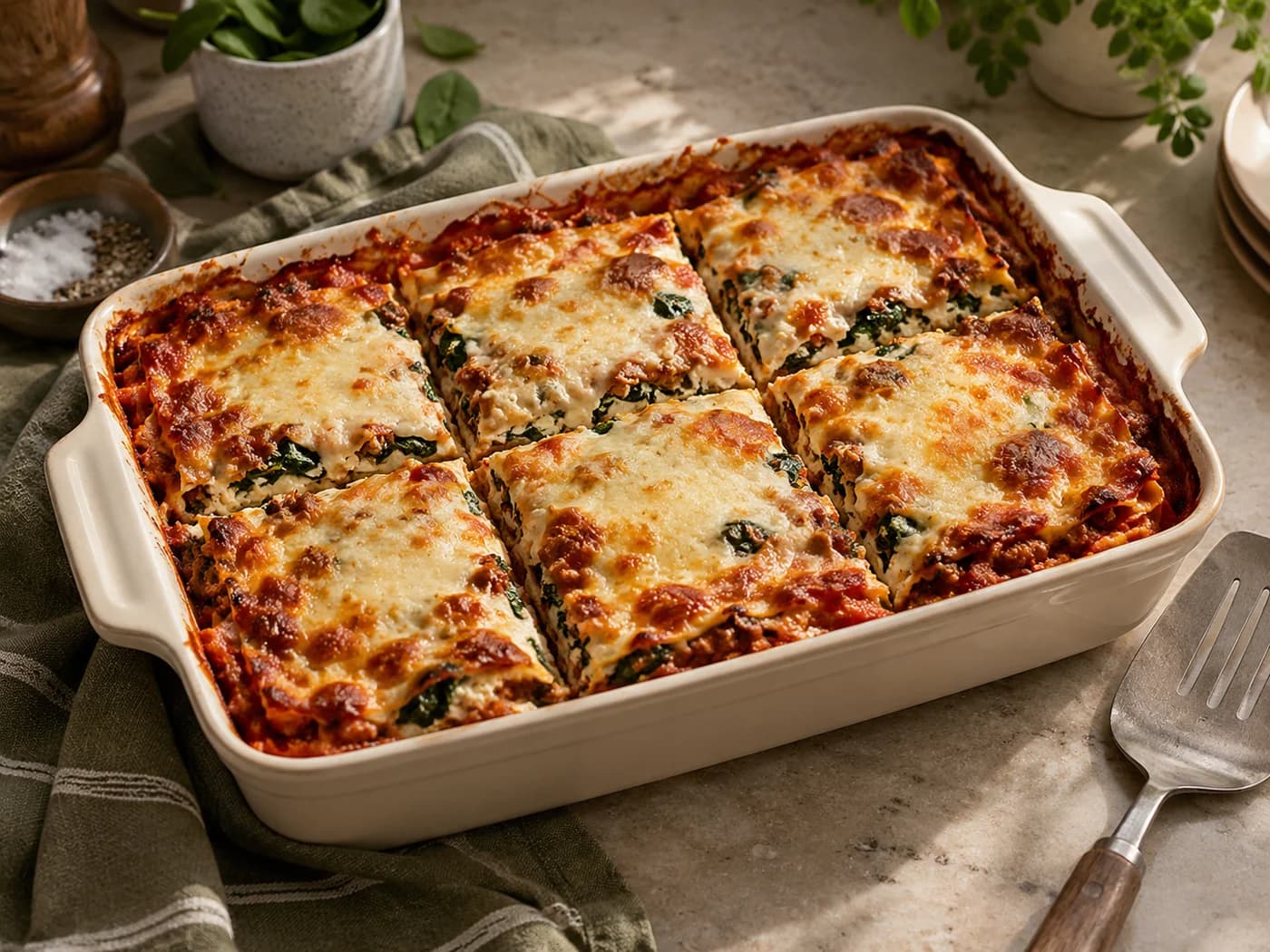
Everything needed beside the cooker
The card below gathers the weighed ingredients, cooking sequence and serving estimate in one place. Start with six servings for one reference dish. The twelve- and eighteen-serving controls multiply ingredients for two or three matching dishes, keeping the same layer depth. They do not mean piling twice or three times as much food into a single pan. Oven capacity, skillet size and boiling-pot space determine whether you can cook those batches together. Plan separate rounds when needed, and check the centre of every dish rather than assuming one temperature reading covers them all.
A checklist that follows the batch
Tick each ingredient as you measure it, then clear the checklist when you start a new batch. Changing the serving control resets the ticks so a quantity checked at six servings is not accidentally treated as complete at twelve. The ingredient list includes the full oil allowance and the salt, which are easy to miss when reading a long article. Divide the mozzarella before layering: half inside and half on top in the reference version. The method text changes with the selected batch size, while the nutrition per complete reference portion stays the same.
Print a useful kitchen copy
The print button opens your browser’s print dialogue with the recipe card isolated for a kitchen-friendly copy. Check the selected serving count before printing; the ingredient amounts and instructions reflect the current control setting. A reference six-serving card is designed to stay compact, with temperatures, layer order and leftover guidance kept visible. Printer margins and paper settings can change the final layout, so preview before saving or printing. For a first attempt, having the card beside the ingredients is easier than scrolling back and forth with sauce on your hands.
Keep your own useful observations
After cooking, note whether your tomatoes needed a longer simmer, how the sheets fitted the dish, and when your oven reached the required centre temperature. Those observations are more useful for the next attempt than forcing your bake to match an illustrative photo. This exact formula remains untested in a physical kitchen, so the times are starting estimates rather than a promised result. A different brand of cottage cheese or a thicker ceramic dish can change what you see. Keep the ingredient weights and the safe temperature checks clear while adapting to your actual equipment.
A golden slice, ready to share
High-Protein Lasagna
Turkey tomato sauce, cottage cheese, spinach and mozzarella between three tender pasta layers.
*Planning estimates for one six-serving dish. Larger batches need more cookware or cooking rounds, with the same layer depth. Check every dish. Exact weighed formula not physically kitchen-tested.
Ingredients
Method
- Prepare noodles and spinach
Heat a conventional oven to 375°F / 190°C. Grease 1 matching 9x13 inch / 23x33cm ovenproof dish of at least 3 litres each with 2g oil total. Boil 250g regular dry lasagna sheets in unsalted water to packet directions, just al dente; drain and lay apart. Wilt 150g fresh spinach separately, cool briefly, squeeze and chop. Keep raw-turkey utensils separate.
- Cook the turkey sauce
Soften 150g diced onion in 8g oil, about 5 minutes. Add 600g raw 93% lean turkey; crumble and cook to 165°F / 74°C. Work in uncrowded rounds if needed. Add 12g garlic briefly, then 800g crushed tomatoes, 3g oregano and 2g salt. Simmer uncovered about 10–15 minutes until thick and spoonable; retain the cooked juices.
- Prepare the filling
Combine 500g 2% cottage cheese with the prepared spinach. Blend the cheese first if desired. Divide filling evenly between 1 six-serving batch, then into two filling layers per dish. Reserve 100g mozzarella for the tops; divide 100g more across the two interior layers per dish.
- Layer each dish
In each dish (1 total): spread a thin sauce coat on the base; split its remaining sauce into thirds. Layer one third of its noodles, half its spinach filling, 50g mozzarella and one sauce third. Repeat once. Finish with its last noodle third, last sauce third and 100g reserved mozzarella. Cover all noodle edges; leave headroom.
- Bake and check
Cover each dish with tented foil. Bake about 30 minutes, uncover and bake about 10–20 minutes more. Check from 40 minutes total: noodles must be tender and every dish must reach 165°F / 74°C in its centre and other thick spots, away from the dish. Re-cover if browning too fast. Use extra oven rounds as needed; more dishes may take longer.
- Rest, portion and store
Rest about 15 minutes. Cut each dish into a 2-by-3 grid of six equal pieces, 6 reference portions total. Refrigerate leftovers promptly in shallow containers at 40°F / 4°C or below for 3–4 days with suitable handling. Reheat throughout to 165°F / 74°C. Sides and extra toppings are additional.
Contains wheat and milk; pasta may contain egg. Includes all measured ingredients; sides are additional. Regular noodles are boiled first. Refrigerate leftovers within 2 hours, or 1 hour above 90°F / 32°C. Keep chilled; reheat throughout to 165°F / 74°C.
Frequently Asked Questions
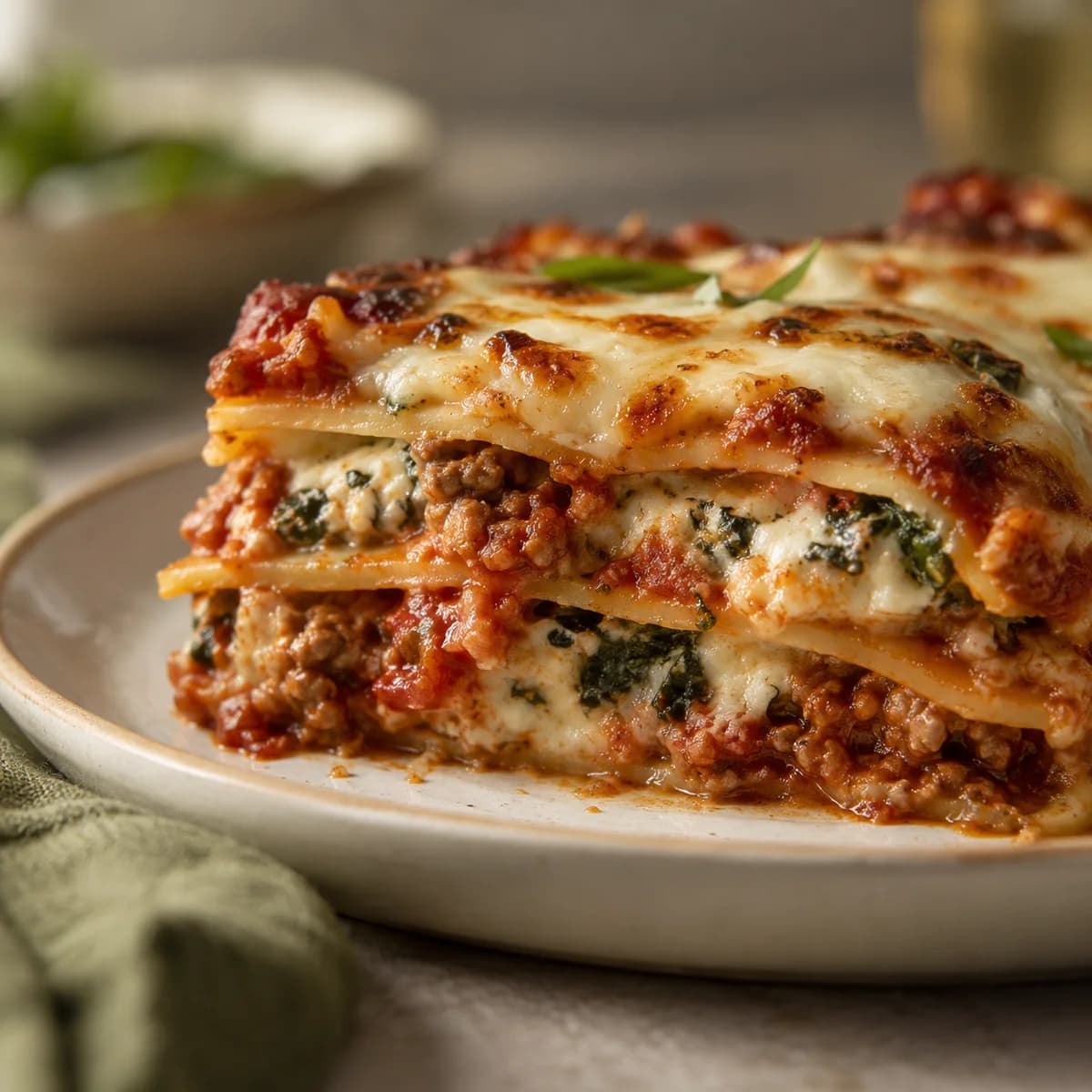
The questions that come up mid-recipe
Lasagna is forgiving about a torn noodle or a slightly untidy first slice, but less forgiving about uncontrolled water or an overcrowded dish. The answers below focus on those practical decisions: which sheets to buy, what to do with cottage-cheese curds, how to portion the bake, and how to handle leftovers. Start with the ingredient form specified in the recipe rather than combining instructions from several very different versions. A no-boil lasagna, a vegetable-layer bake and a preboiled pasta lasagna do not all need the same amount of sauce or time.
When a change is small enough to make directly
Blending the cottage cheese, cutting the finished pan into eight pieces or serving salad alongside it leaves the basic cooking sequence intact. Replacing the turkey with a plant ingredient, swapping to oven-ready sheets or substantially increasing the filling changes the structure. For those larger changes, take the substitution notes as guidance and use a formula developed around the new ingredients. A confident answer should explain the limits as well as the possibility. The reference protein number belongs to the listed six-serving recipe and does not automatically follow every variation.
How much protein is in this lasagna?
One sixth of the reference pan provides approximately 44.1g protein and 548 calories. That includes dry pasta, raw turkey, both cheeses, vegetables, seasonings and all measured oil. An eighth of the same pan provides about 33.1g protein and 411 calories. Your product labels and actual portions can change the estimate.
Can I use oven-ready or no-boil lasagna sheets?
Not as a direct swap in this method. The reference uses regular dry sheets that are boiled and drained before layering. Oven-ready products need a suitable sauce and liquid balance to hydrate in the oven. Follow a recipe designed for your particular sheets rather than leaving these amounts unchanged and hoping the pasta softens.
Do I need to blend the cottage cheese?
No. Small curds are expected in the filling. If you prefer a smoother texture, blend the cottage cheese before folding in the squeezed, chopped spinach. Blending the same ingredients does not change the calculated nutrition. Avoid adding milk to help the blender, because extra liquid can make the layers loose.
Can I use ricotta instead of cottage cheese?
A thick ricotta can replace it by weight, with a different flavour, texture and nutrition estimate. Check the tub for excess liquid and use its actual label values. The listed 44g protein figure belongs to the cottage-cheese reference recipe. A ricotta version has not been separately kitchen-tested here.
Why did my lasagna turn out watery?
Check whether the sauce was reduced until spoonable, the spinach was squeezed, and the boiled noodles were drained thoroughly. A loose cottage-cheese tub can also add liquid. Rest the fully cooked dish for about 15 minutes before slicing. On the next attempt, correct the wet component before assembly rather than relying on a much longer uncovered bake.
Can I use ground beef or chicken?
Yes, as a different meat version with its own raw label values and appropriate safe cooking temperature. Plain ground chicken and beef do not have identical nutrition to 93% lean turkey. Cook the chosen meat through before layering; the finished casserole still needs to reach 165°F / 74°C throughout.
Can I make this vegetarian?
The reference contains turkey. A lentil, soy or mushroom filling would need its own quantities, moisture balance and nutrition calculation. Check that the cheeses use suitable rennet too. Do not remove the turkey and retain the reference protein claim; it is the largest single protein contributor in this pan.
Can I use frozen spinach?
Yes, if it is thawed safely, squeezed well and chopped. Its amount needs checking against the texture you want, rather than assuming a squeezed frozen weight equals the raw fresh-leaf weight in the reference. Use the actual frozen product label and the amount you add when recalculating a modified batch.
What dish size should I use?
Use one 9x13 inch / 23x33cm ovenproof dish of at least 3 litres for six reference servings, with headroom above the filling. Twelve or eighteen servings require two or three matching dishes. A smaller, deeper pan changes the layer depth and heating time. Follow the dish manufacturer’s temperature and thermal-shock guidance.
How do I know the lasagna is done?
Check that the noodles are tender and use a food thermometer to verify at least 165°F / 74°C in the centre and other thick areas, away from the dish. Cook the turkey to the same temperature before assembly. A browned top, bubbling edge or specified number of minutes does not prove the centre is properly heated.
Can I prepare it ahead of time?
You can prepare and chill components separately. Cool any cooked sauce promptly in shallow containers and keep it refrigerated; its storage time starts then, not when the lasagna is baked later. A cold assembled dish needs more oven time than the reference estimate and must reach 165°F / 74°C in the centre. The exact chilled-assembly timing has not been tested.
How long can I refrigerate or freeze it?
With suitable cooking, cooling and handling, use refrigerated cooked leftovers within 3–4 days at 40°F / 4°C or below. Refrigerate promptly within two hours, or one hour above 90°F / 32°C. Freeze portions you will not use soon. One month frozen is a conservative untested quality suggestion for this formula, not a measured shelf-life claim.
What is the best way to reheat a portion?
Thaw frozen portions in the refrigerator, then reheat covered in a suitable oven or microwave container until the centre and other cold spots reach 165°F / 74°C. Rotate or rearrange as needed and follow appliance standing-time guidance. Keep fresh salad separate. A small splash of water can help a dry-looking piece stay moist.
Is this recipe low calorie, gluten-free or kitchen-tested?
It is a generous pasta dinner with about 548 calories per sixth, not a universal low-calorie option. Wheat noodles mean the reference is not gluten-free; it also contains milk. Smaller portions and the measured lighter-topping comparison have separate estimates. The exact weighed formula has not been physically kitchen-tested, and the photographs illustrate intended food rather than a documented test batch.
More High-Protein Recipes
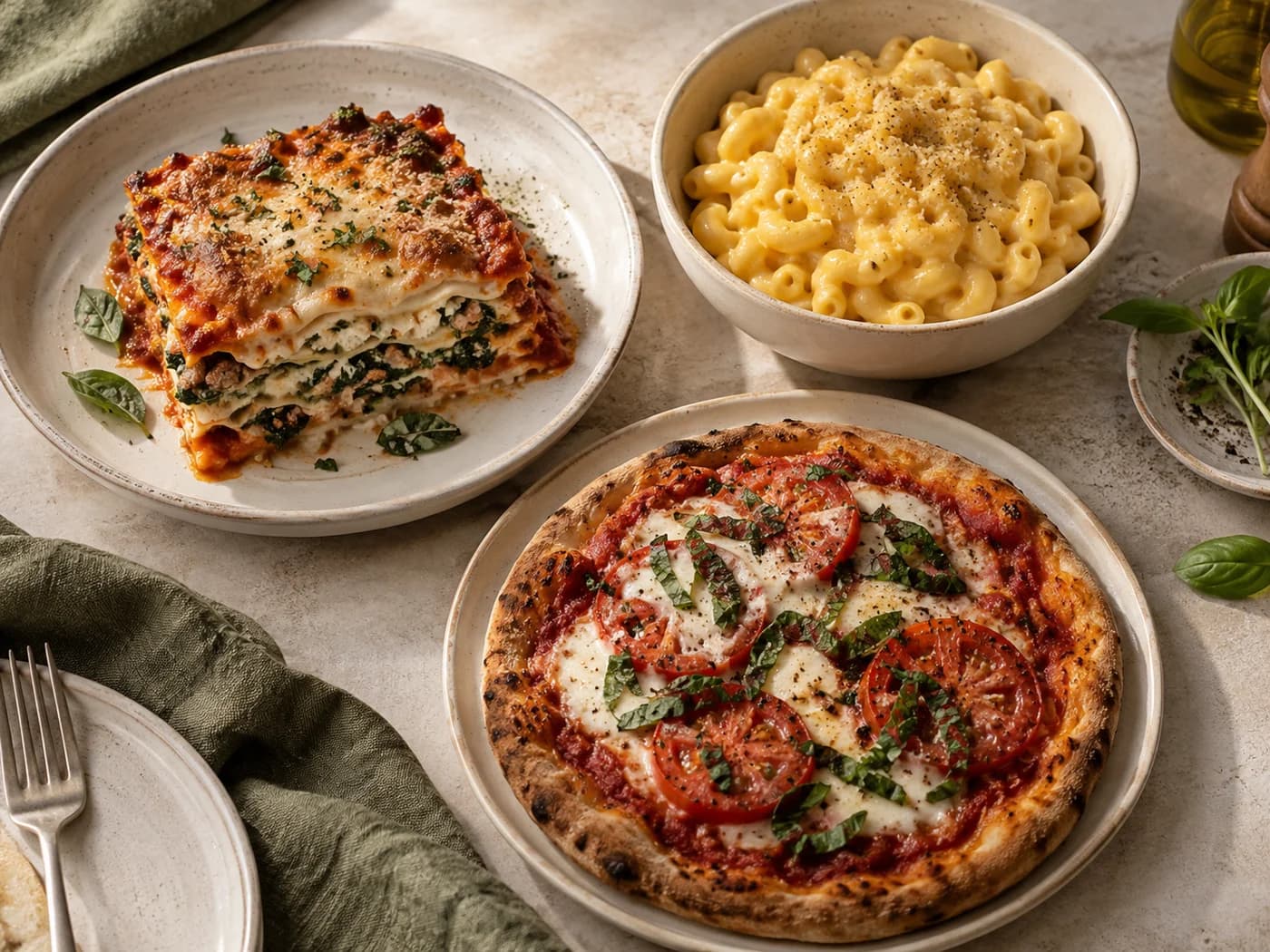
Keep a small rotation you look forward to
A handful of dependable dinners is often more useful than a long list you never cook. Lasagna is a good candidate for an evening when you have time to assemble a pan and would welcome leftovers. On a busier night, a quicker pasta dish or a personal pizza may be more comfortable. Choosing between them can be about time, appetite and what is already in the fridge. It does not need to become a contest to find the meal with the highest possible protein number every single evening.
Try a different sauce or format
The high-protein mac and cheese guide offers a creamy elbow-pasta dinner with a different texture from layered tomato lasagna. The high-protein pasta recipe is useful when you want a bowl rather than a casserole, and the pizza guide gives another way to combine measured bread, cheese and toppings. Each recipe has its own ingredients and serving definition. Use the estimate for the dish you actually make rather than transferring this lasagna’s 44g protein figure to another meal just because it also contains pasta or cheese.
Plan around useful ingredient leftovers
If your cottage-cheese tub or mozzarella block is larger than the recipe requires, plan another meal that uses the remainder while it is still within its storage guidance. The breakfast casserole and breakfast sandwich guides give savoury options, while a granola-and-yogurt breakfast offers a change of texture. Keep raw turkey separate from ready-to-eat foods, and use or freeze it according to its packaging and safe handling guidance. Buying one ingredient for two planned meals can be convenient, but leftovers should not sit around waiting for an increasingly ambitious cooking project.
Build the week around your actual schedule
You might cook this lasagna on a free evening, refrigerate only the portions you expect to eat soon and freeze the rest promptly. Another day can be a quick pasta supper, while breakfast uses something already prepared. Leave room for meals out and changes of plan rather than filling every container in advance. The recipe collection below can help you find those alternatives. A useful meal rotation should make daily cooking easier, offer enough variety to stay appealing, and let the protein target fit around ordinary food and ordinary life.