
Browse the 15 recipe sections
One reference serving: one of eight equal slices, including the complete filling and biscuit base. Protein is about 16.8g before rounding. Toppings are additional; baking and chilling times are estimates. See the breakdown.
Recipe Overview
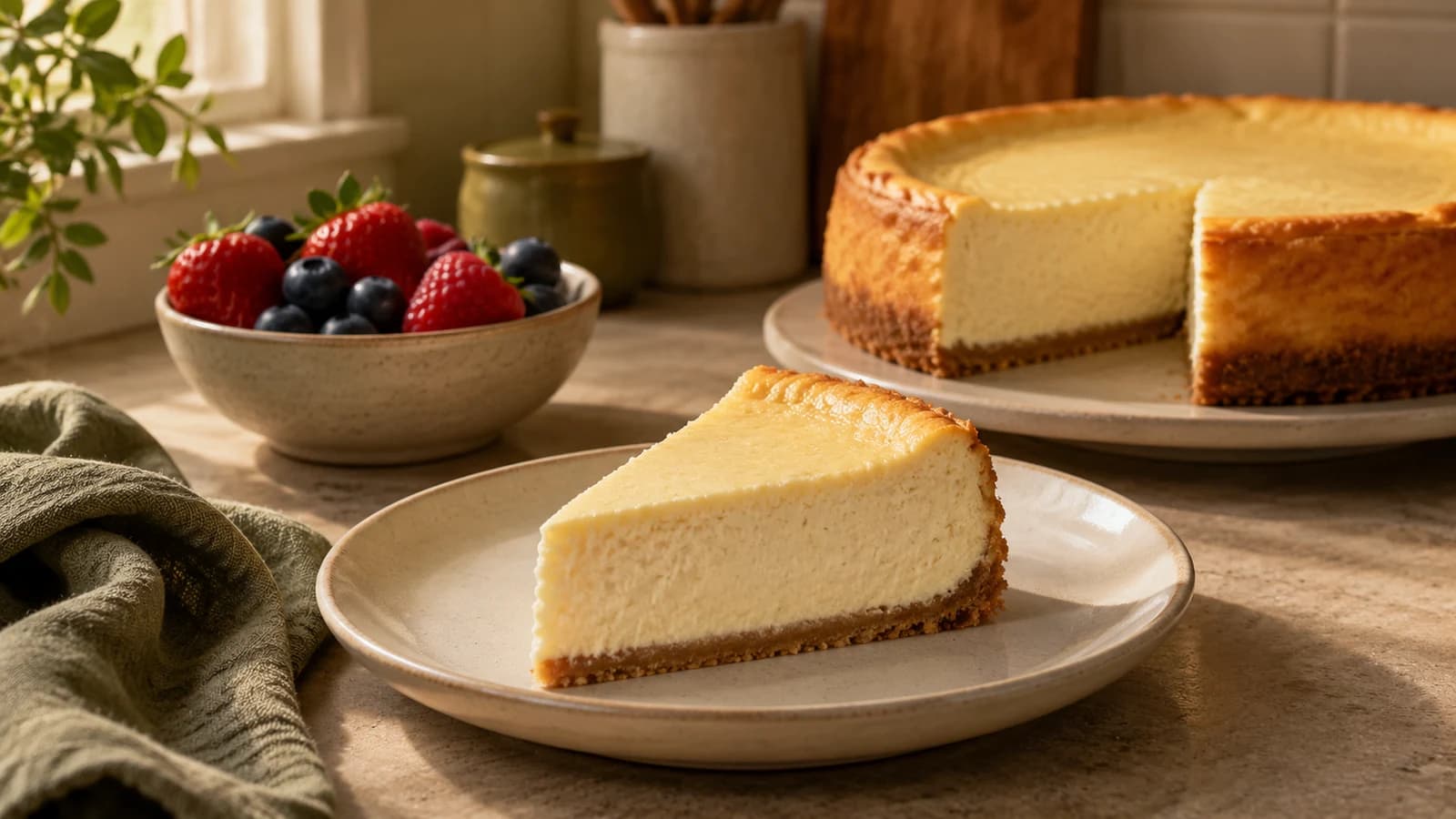
There is something lovely about a cheesecake that needs very little on the plate: a neat wedge, a thin crumb base and a fork. This high protein cheesecake keeps that familiar dessert shape. The filling combines blended cottage cheese, thick Greek yogurt and a modest block of Neufchatel, with eggs, vanilla and lemon. It is baked gently, refrigerated thoroughly and sliced cold. There is no protein powder to choose, dissolve or work around. The dairy itself supplies most of the protein.
What you are making
The reference makes one 8-inch / 20cm round cheesecake, divided into eight equal slices. Each slice is approximately 316 calories and 16.8g protein, rounded to 17g in the quick summary. That includes the complete graham-cracker crust and all its butter. A slice with berries, yogurt, chocolate or sauce becomes a different plated portion, so those extras are counted separately. Eight slices describes how the cake is divided; it is not a claim that everyone needs the same dessert portion.
Plan it for tomorrow
Allow roughly twenty-five minutes to prepare, about an hour for the crust and filling bake, up to an hour of initial cooling and at least six hours in the refrigerator. An overnight chill is convenient. The roughly eight-and-a-half-hour total is a planning estimate, not eight hours of active work. Make it earlier in the day or the evening before serving. A warm cheesecake may look ready from above while still being much too soft for tidy slices.
A clear starting point
Use a springform pan at least 2½ inches / 6cm deep, a kitchen scale, a blender or food processor and a food thermometer. The ingredient weights are more useful than cups because curds, yogurt and cracker crumbs settle differently. The method below explains what to look for at each stage rather than relying entirely on a timer. This exact weighed formula has not been physically kitchen-tested; baking and chilling times are estimates informed by established cheesecake technique, with ingredient and nutrition assumptions stated openly.
Why You’ll Love This Recipe
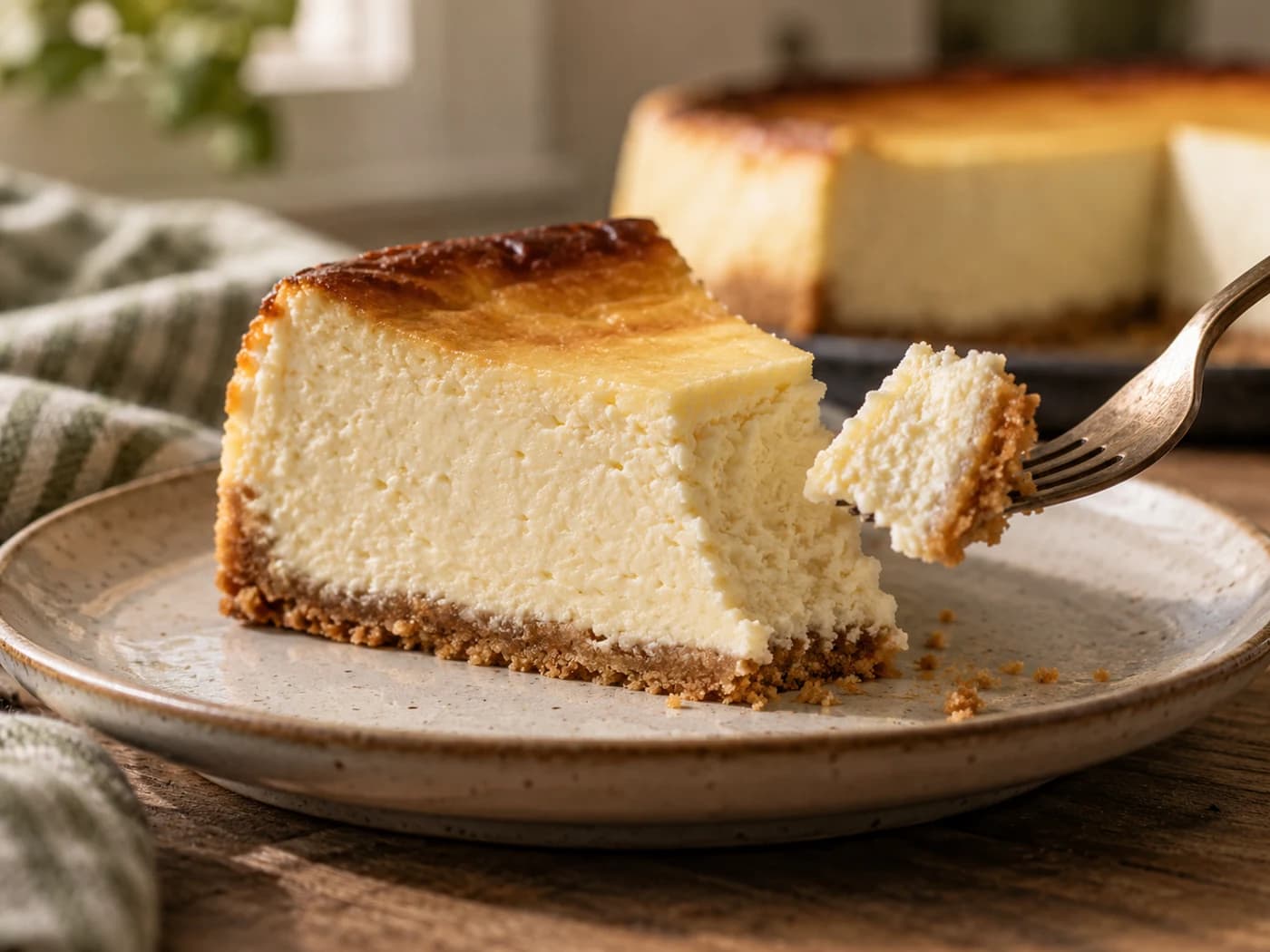
The appeal begins with contrast. A cold vanilla filling meets the slightly sandy crunch of a biscuit base. Lemon brings a quiet tang rather than turning the cake into a lemon dessert, and the Neufchatel keeps a recognisable cheese flavour alongside the yogurt. You can leave the top plain. A bowl of berries beside the cake is enough to make serving feel considered without covering the filling in a thick sauce.
Protein from familiar foods
Cottage cheese, Greek yogurt, Neufchatel and eggs all contribute protein. Together they provide most of the roughly 134g protein in the complete eight-slice cake. A protein powder is not required, which removes one source of flavour and absorption differences between brands. You still need to choose thick dairy ingredients and blend the curds carefully. The benefit is a relatively short ingredient list that can be checked on ordinary food labels rather than a collection of supplements and dessert mixes.
A dessert you can portion before serving
Once the cake is chilled, you can cut eight reference wedges or cut those wedges in half for sixteen smaller portions. A half-slice contains roughly half the nutrition, including half the protein. That gives you a useful choice when the dessert follows a larger meal. There is no need to call the smaller portion a failure or the larger one a reward. Choose what suits the occasion, enjoy it and account for the amount you actually serve.
Useful preparation, without a complicated finish
Most of the waiting happens while the cake cools and chills. You do not have to make a separate frosting, assemble multiple layers or whip cream just before guests arrive. Store the cake plain and bring out small bowls of optional toppings at serving time. A thin crack or a few crumbs on the plate will not spoil the dessert. What matters more is a smooth filling, a properly cooked centre, sound refrigeration and enough patience before the first cut.
Nutrition at a Glance
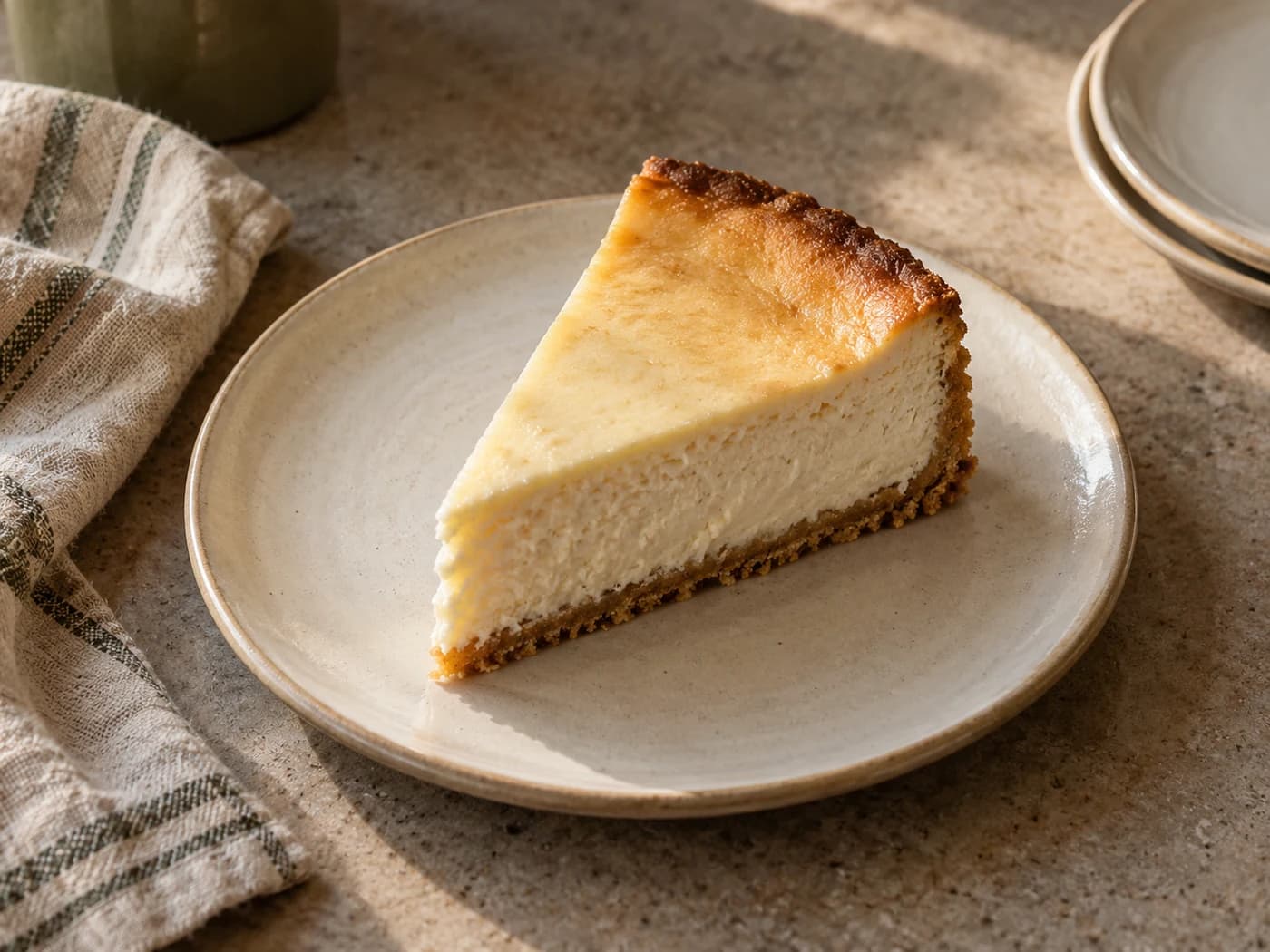
- Calories
- 316kcal
- Protein
- 17g
- Carbs
- 29g
- Fat
- 15g
One of eight equal reference slices provides approximately 316 calories, 17g protein, 29g carbohydrates and 15g fat. The protein value before rounding is 16.8g. These are ingredient-based estimates, calculated from the listed weights using historical USDA Standard Reference values. They describe the published formula with its full crust. Your current cottage cheese, yogurt, cheese, butter and cracker labels may produce different totals, especially for sodium, fat and sugars.
Calories
About 316 calories per slice makes this a substantial dessert portion. It is not presented as an extremely low-calorie food. The biscuit base and butter together account for about 100 calories of each reference slice, while the entire filling accounts for about 216. Both parts have a purpose: the filling provides the creamy centre and most of the protein, and the crust provides contrast and a more conventional cheesecake presentation. Decide whether both belong in the version you want to eat.
Protein
The dairy blend and eggs make the protein contribution meaningful without adding powder. A half-slice provides about 8.4g protein, while two reference slices provide about 33.6g. Those numbers follow the portion arithmetic; they are not suggested minimums. If you want extra protein alongside one slice, a measured serving of plain Greek yogurt is easier to calculate than changing the whole filling. Adding 100g of the reference yogurt gives approximately 27g protein for the combined plate.
Carbs and fat
The roughly 29g carbohydrates include cracker starch, added sugar, dairy sugars and the small amount of cornstarch. The roughly 15g fat includes butter, Neufchatel, egg yolks and the other ingredients. Protein does not cancel those contributions. A dessert can contain protein and still contribute sugar and saturated fat. The more detailed table later includes estimated total sugars, saturated fat, sodium, calcium and cholesterol so you can consider the recipe within the rest of your day.
Ingredients
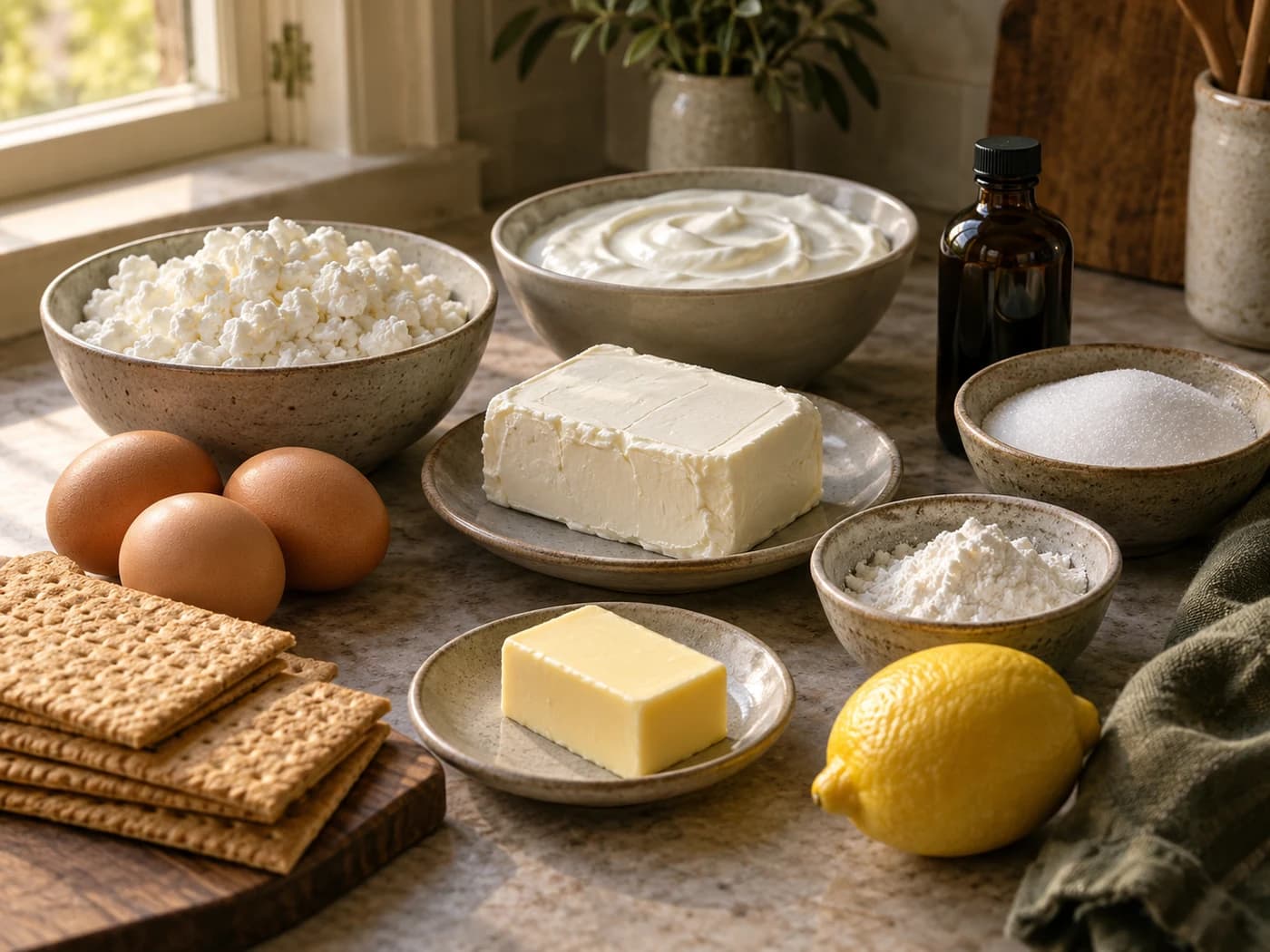
For one cake, weigh 450g low-fat cottage cheese with 1% milkfat, 300g plain nonfat Greek yogurt, 225g block-style Neufchatel cheese, 150g whole egg without shells, 90g granulated sugar, 20g cornstarch, 5g vanilla extract and 15g lemon juice. The crust uses 120g plain graham crackers and 40g salted butter. These amounts make the filling and base together; no separate cooking oil, extra sugar or topping is included in the reference.
Choose dairy for texture as well as protein
Look for ordinary thick cottage cheese and a genuinely strained Greek yogurt. A drinkable yogurt or a sweetened fruit pot brings a different balance of moisture and sugar. Include the cottage cheese’s normal moisture in the weighed amount; do not deliberately pour in a separate pool of loose liquid. If your tub is unusually watery, it may not behave like the reference ingredient. Blending should remove visible curds before eggs enter the mixture. Check a small smear with a spoon rather than assuming every blender needs the same running time.
Why Neufchatel is here
The reference uses a block of Neufchatel, which contributes fat, protein and familiar cheesecake flavour. It is not the same ingredient as a whipped tub spread, a cheese triangle or sweetened cheesecake filling. Different countries also use the name for different products. If your package differs from the American-style reference, read the fat and protein values rather than relying only on the name. Soften the block briefly enough to mix smoothly, keeping the overall handling time sensible.
Eggs, sugar and starch
Weigh the eggs after removing their shells; three large eggs are a practical starting point, but the reference is 150g. The measured sugar affects both taste and the baked filling, and the starch helps support the dairy mixture. Cornstarch here means the fine white starch, sometimes called cornflour in the UK, rather than yellow cornmeal. Vanilla extract and lemon juice are small quantities but still enter the calculation. There is no baking powder, added flour or protein powder in this filling.
A complete crumb base
Crush the graham crackers finely and mix all 120g with the melted 40g butter. Press them across the pan bottom, not into a tall wall around the sides. Keep the layer even so each wedge receives a similar share. A few coarse pieces are harmless, but large biscuit chunks make a weaker base. The reference cracker entry includes the sugar already present in the biscuits; it is counted in addition to the filling’s granulated sugar.
Your ingredient checklist
- Low-fat cottage cheese1% milkfat; use thick curds, include normal moisture450g
- Plain nonfat Greek yogurtThick strained yogurt, not a drinking yogurt300g
- Neufchatel cheeseBlock style, softened briefly; not whipped spread225g
- Whole eggAbout 3 large eggs, weighed without shells150g
- Granulated sugarFor the filling; cracker sugar is counted separately90g
- CornstarchPlain starch, not cornmeal20g
- Vanilla extractWeighed liquid extract5g
- Lemon juiceFresh juice; no zest included in reference15g
- Plain graham crackersCrushed finely; choose your own label for exact macros120g
- Salted butterMelted for the crumb base40g
Contains milk, eggs and wheat from the crackers. Check all ingredient labels and cross-contact statements for other allergens.
Ingredient Substitutions
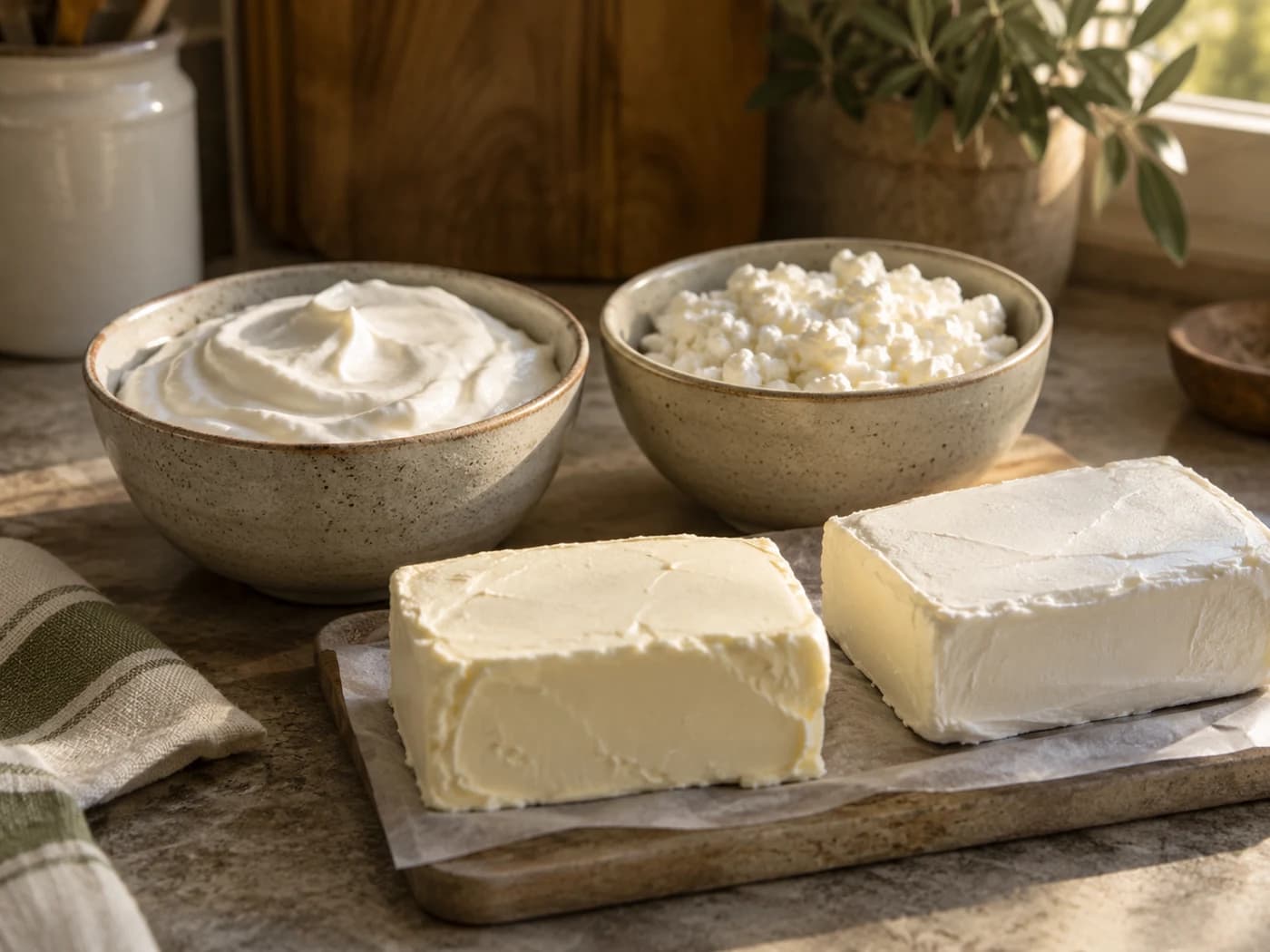
A substitution changes more than the number in a nutrition table. In a baked dairy filling, moisture, fat and thickness affect how the cake sets and feels after chilling. Keep your first attempt close to the reference if you want to understand its texture. If you change an ingredient, make one deliberate change, keep a note of the weight and recalculate with that product’s label. Several simultaneous swaps make it much harder to explain a soft centre or a grainy slice.
Cottage cheese and yogurt choices
A 2% cottage cheese can be explored at the same starting weight, with a new calculation and attention to moisture. A full-fat version brings more fat and calories. Thick plain skyr may be another possible yogurt alternative, but it is not established here as an identical bake. A loose plain yogurt is less suitable as a simple replacement for thick Greek yogurt. Avoid substituting a whole tub merely because its total weight is close; weigh the specified amount and review the label.
Replacing the cheese block
Ordinary block cream cheese can be used as an exploratory alternative to Neufchatel, but the final fat, calories and texture change. The approximately 316-calorie figure would no longer describe that version. Very low-fat spreads may contain different stabilisers and considerably more moisture, and whipped products include air. Do not use their apparent volume as a guide. Match the weight, choose an appropriate recipe when the product is very different and judge the result only after it has fully chilled.
Crackers, sweeteners and flavour
Digestive biscuits or labelled gluten-free crackers can make a different crumb base. Their sweetness, fat and absorption differ, so start with the crumb weight but reassess how the melted butter binds them. A liquid syrup is not a direct replacement for granulated sugar because it adds moisture. A zero-calorie sweetener can have different bulk and baking behaviour. Neither swap has been validated in this exact formula. Vanilla can be changed to another suitable extract in a small amount, but avoid adding a large liquid flavouring mixture.
Allergies and dietary needs
The reference contains milk, eggs and wheat from the crackers. Labels may list soy or other allergens, and cross-contact statements matter. A gluten-free crust requires suitable labelled crackers plus compatible remaining ingredients and preparation conditions. Removing eggs and dairy creates a different type of cheesecake that needs its own developed method. This page does not label the reference vegan, dairy-free or certified gluten-free, and it does not assume a lactose-free product automatically makes the whole cake suitable for every person avoiding dairy.
Use the reference as your baseline, and calculate an adapted version with its actual ingredient labels.
| Reference ingredient | Possible change | What to review |
|---|---|---|
| 1% cottage cheese | 2% cottage cheese | Moisture, fat, calories and protein |
| Thick nonfat Greek yogurt | Thick plain skyr | Product thickness; bake not verified as identical |
| Block Neufchatel | Block cream cheese | Fat, calories and filling texture |
| Graham crackers | Digestives or labelled gluten-free crackers | Crumb binding, sweetness and allergens |
| Granulated sugar | Syrup or alternative sweetener | Moisture and bulk; not a direct verified swap |
| Whole eggs | Egg-free replacement | Requires a separately developed method |
How to Make It
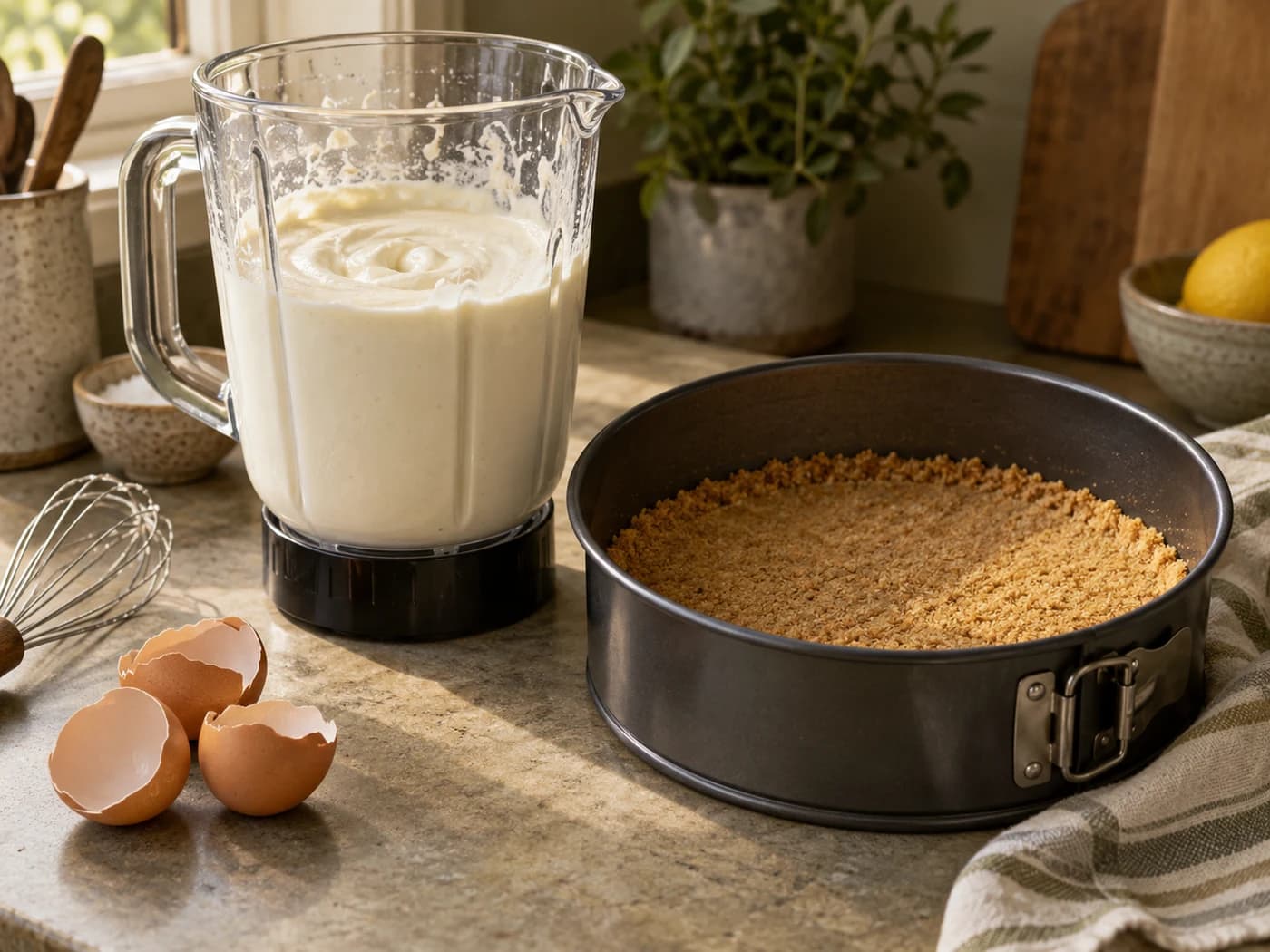
Begin with a clear counter and an empty shelf in the refrigerator. The cake needs space to cool and chill without being balanced beside hot food or uncovered ingredients. Preheat a conventional oven to 325°F / 160°C and put a rack near the middle. Line the bottom of an 8-inch / 20cm springform pan with parchment, assemble it securely and place it on a rimmed baking sheet. The sheet catches incidental butter drips; this method does not use a water bath.
Prepare the base
Combine the finely crushed crackers with the melted butter until the crumbs look evenly damp. Tip the mixture into the pan and press a level layer across the bottom with a flat-bottomed glass or spoon. Bake for about eight to ten minutes, then set the pan aside while preparing the filling. It should be lightly fragrant rather than deeply browned. Keep the oven at the same temperature. A thin, even base is easier to portion than a crust piled thickly in the centre.
Smooth the dairy before adding eggs
Blend the cottage cheese with the Greek yogurt until the mixture looks smooth, stopping to scrape the container as needed. In a separate bowl, mix the softened Neufchatel and sugar until evenly combined, then incorporate the blended dairy, cornstarch, vanilla and lemon juice. Scrape the bottom and sides. Check for visible cheese lumps at this point. It is easier to correct them before the eggs are added, and it avoids having to run the finished egg mixture at high speed.
Finish the filling and bake
Lightly mix the weighed eggs in a small bowl, then stir them into the dairy mixture slowly until combined. Avoid deliberately whipping a foamy batter. Pour the filling over the prepared base and level it gently. Bake for roughly forty-five to sixty minutes, beginning to check around forty minutes. Look for set edges and a centre that moves together when the pan is gently nudged. Check the middle with a food thermometer: the centre must reach at least 160°F / 71°C. A liquid-looking wave needs more baking; a completely rigid centre is not the goal.
Cool within a sensible window
Remove the cake to a rack. Allow roughly forty-five to sixty minutes of initial cooling away from direct cold draughts, then refrigerate. Do not leave it on the counter until it feels refrigerator-cold, and do not extend unrefrigerated cooling beyond two hours. Use a heat-safe surface in the fridge and leave room for air circulation. Cover once the cake has chilled enough that a lid will not trap obvious steam against the surface. Refrigerate for at least six hours, preferably overnight, before releasing the ring.
Slice after chilling
Run a thin knife around the inside edge before opening the springform clasp. Transfer carefully using the firm base for support. Mark eight equal wedges, wipe the knife between cuts and lift each slice with a broad server. If the first wedge catches on the parchment, ease it free instead of pulling from the tip. Keep the remaining cake refrigerated while serving. Timing is approximate because pan material, dairy moisture, oven accuracy and filling temperature all affect the bake.
Tips for the Best Results
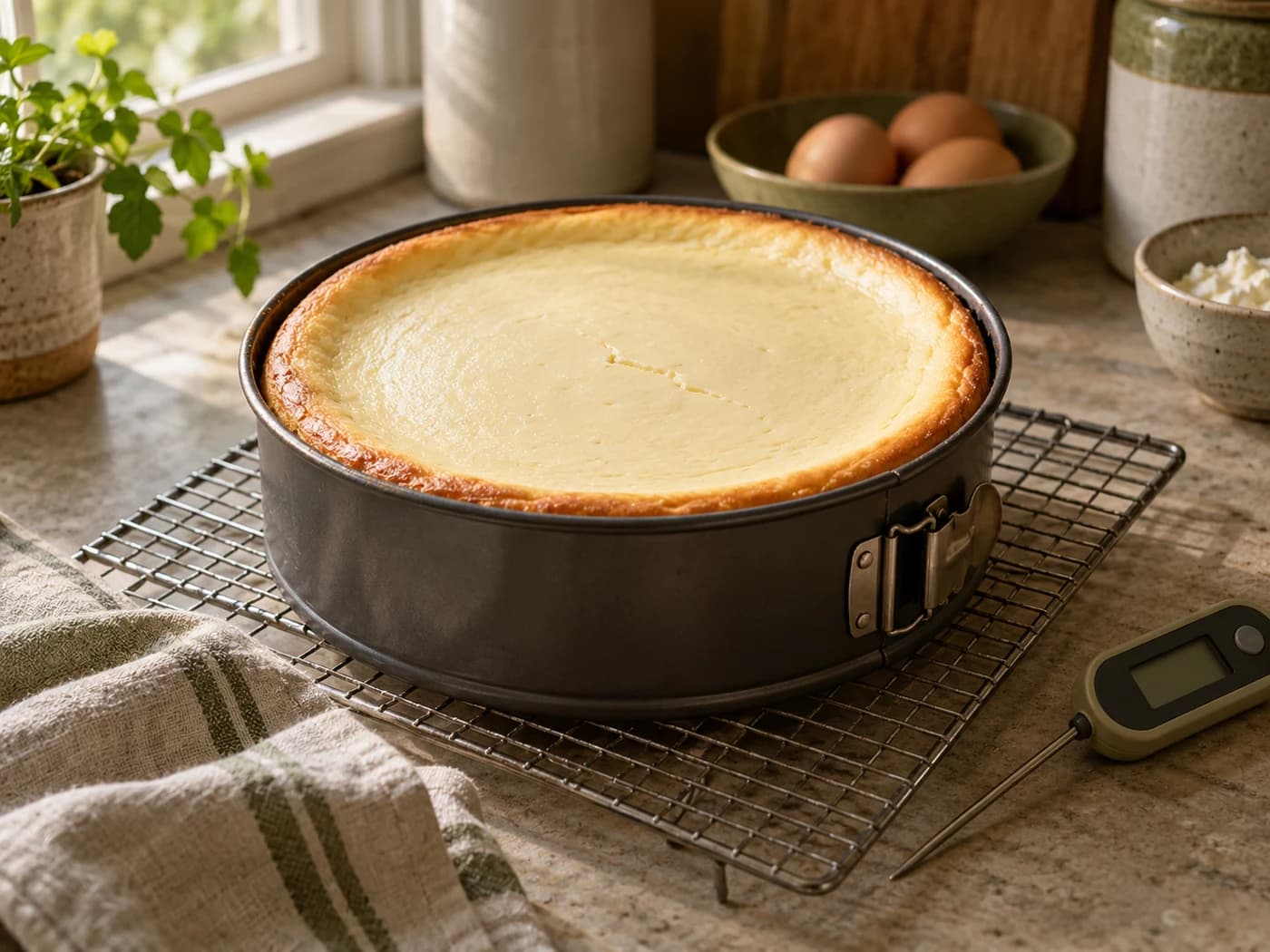
The most useful checks happen before the cake is sliced. Is the dairy smooth? Is the base even? Are the edges set? Has the centre reached the intended temperature? Has the cake chilled long enough? These questions tell you more than whether the top matches a photograph. Home ovens and ingredient brands differ, so use the pictures for a sense of the dish while relying on the measured method and actual cake in front of you.
Deal with lumps early
Cold Neufchatel can leave little white pieces that remain visible in the finished filling. Give the block a brief softening period and scrape the mixing bowl carefully. Cottage cheese needs its own blending step; simply stirring curds into yogurt will not make the same smooth filling. If your blender struggles with the thick dairy, work in manageable batches rather than adding unmeasured milk. The recipe has no extra milk in its reference, and extra liquid may make the centre harder to set.
Keep the pan size consistent
The 8-inch pan determines filling depth and makes the timing estimates meaningful. A wider pan makes a shallower cake, while a smaller one makes a deeper cake and may overflow. Doubling the ingredients does not mean pouring them all into the original pan. Use one same-size pan per cake when scaling. Leave suitable oven space and bake in rounds if necessary. Avoid stacking filled pans or crowding the oven so closely that air cannot circulate around them.
A small wobble is useful information
A baked cheesecake continues to firm during cooling and chilling. That is why the centre does not have to look completely rigid when it leaves the oven. Here, the food-thermometer check of at least 160°F / 71°C at the centre sits alongside the visual cues. Do not adopt a lower centre temperature from a different recipe without understanding its ingredient and safety assumptions. Keep the probe in the filling, away from the metal base, and take care around the hot pan.
If the top cracks
A crack can follow excess mixing, a long bake or contraction during cooling. It does not by itself explain whether the cake is safely cooked or pleasantly creamy; use the other checks too. Serve a properly cooked, chilled cake with its ordinary homemade appearance. Berries can sit beside the slice without becoming a cover-up project. If the centre is still loose after a full chill, revisit the ingredient weights, product thickness and measured baking endpoint rather than assuming more refrigeration will solve an undercooked filling.
High-Protein / Lower-Calorie Variations
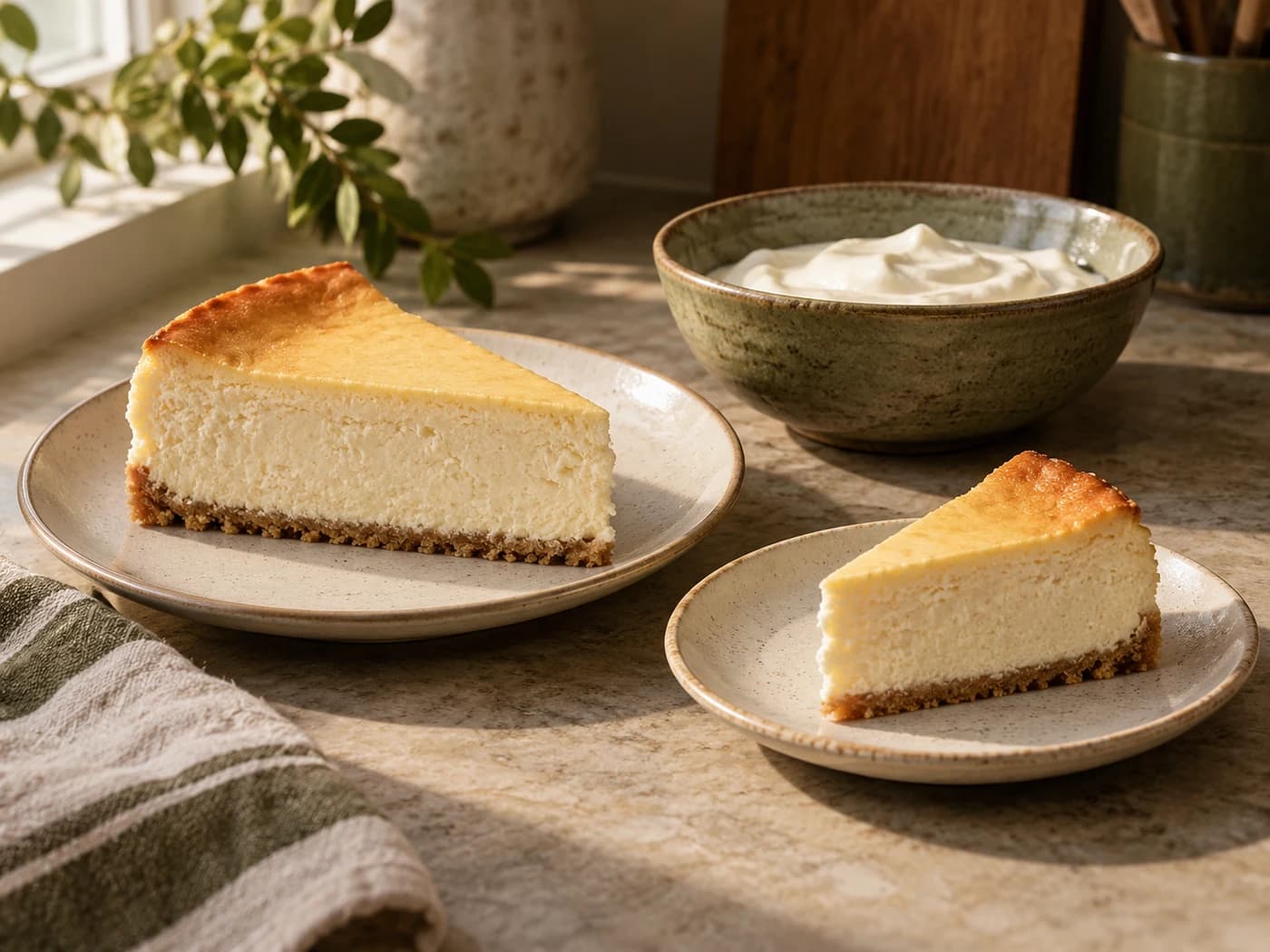
There are two different ways to adapt this dessert: change the portion of the existing cake, or change the ingredients and create a different cake. Portion changes are straightforward to calculate. Ingredient changes also alter structure and can need different preparation. The options below keep those consequences visible. None is described as producing weight loss or as being automatically better for everyone. A suitable dessert portion depends on appetite, preferences and the complete eating pattern around it.
A smaller slice
Cut each of the eight reference wedges in half for sixteen smaller servings. Each provides about 158 calories and 8.4g protein. The recipe, pan and baking method stay the same; only the serving amount changes. This is useful when you want a few bites after dinner or are sharing several desserts. The recipe card’s sixteen-slice setting means two complete cakes with eight slices each, so it is different from cutting one cake into sixteen smaller pieces.
Add protein at serving time
Serve one reference slice with 100g plain nonfat Greek yogurt. Using the reference yogurt composition, the plate is about 375 calories and 27g protein before any fruit. Put the yogurt on the side so the cheesecake stays easy to slice and the amount remains clear. A larger spoonful or a flavoured yogurt needs its own calculation. This option adds food and energy; it raises the protein contribution without asking the original filling to cope with another scoop of dry powder.
A crustless version
Removing all 120g crackers and 40g butter leaves an arithmetic estimate of about 216 calories and 15.7g protein per eighth of the filling batch. That is a nutrition scenario, not a verified identical baking method. A crustless cake can stick differently, lose the crunchy contrast and need its own timing check. Line the pan carefully if exploring it, and still use the centre temperature and full chill. Do not claim the crustless numbers while serving the original crumb base.
What about less sugar or more powder?
Reducing sugar or introducing protein powder changes the filling’s balance and has not been established here as a direct improvement. A large addition of whey can change flavour and texture, while another powder can absorb moisture differently. If you specifically want a powder-based cheesecake, choose a formula developed around that ingredient. For this page, the smaller slice, separate yogurt side and clearly calculated crustless scenario give more transparent starting points than promising an unverified thirty-gram slice.
These estimates describe the exact portion or change shown; any fruit, sauce or drink is additional.
| Version | Calories | Protein |
|---|---|---|
| One reference slice with crust | 316 kcal | 16.8g |
| Half a reference slice | 158 kcal | 8.4g |
| One slice + 100g reference Greek yogurt | 375 kcal | 27.0g |
| One eighth of filling, without crust* | 216 kcal | 15.7g |
| *Crustless ingredient scenario | Method requires reassessment | Not an identical validated bake |
Serving Suggestions
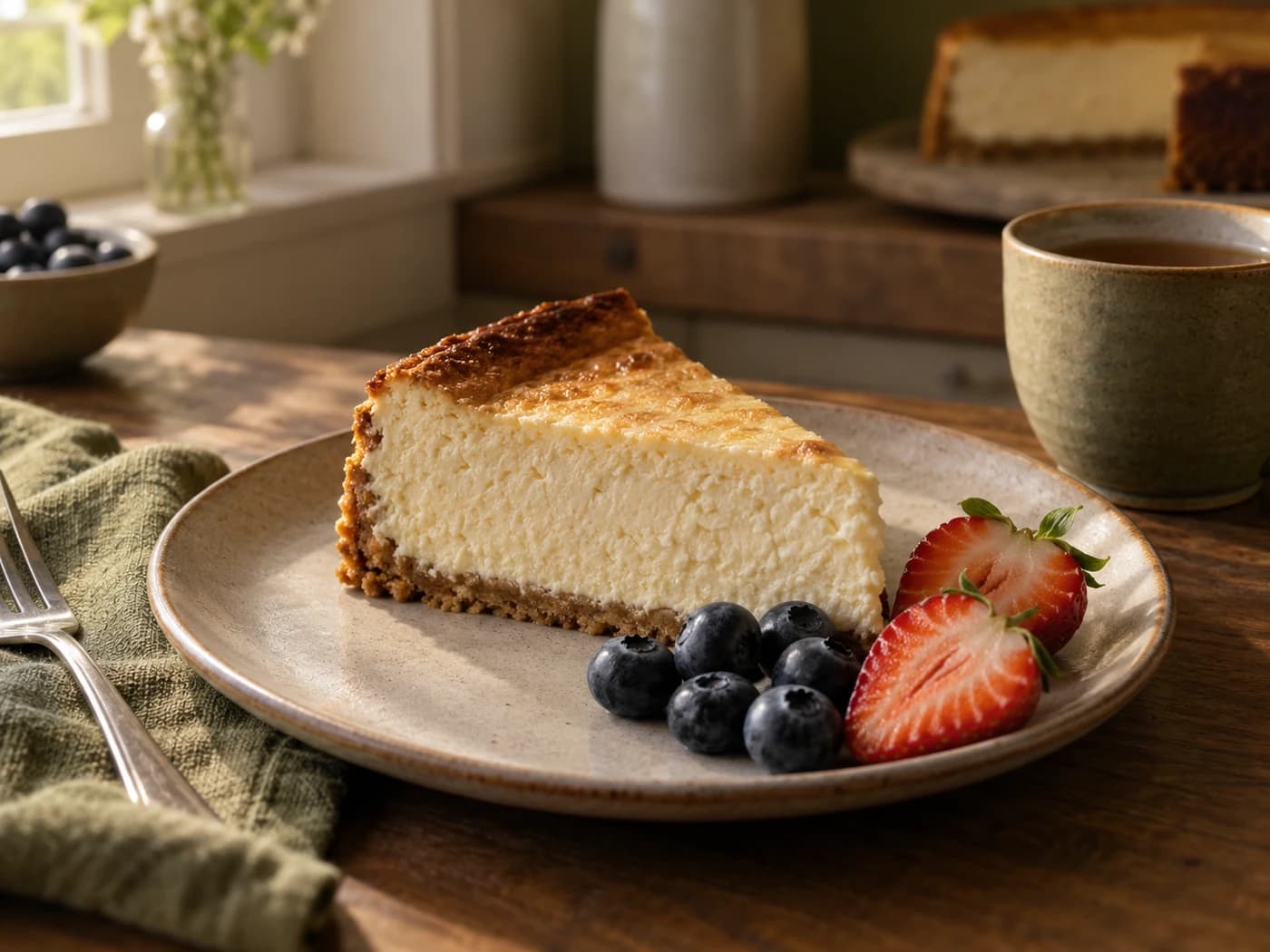
Serve the cheesecake cold enough to hold its shape, with a fork that cuts cleanly through the filling and base. Fresh berries work well because they give a juicy contrast beside the creamy slice. Wash and dry the fruit before plating so excess water does not soak the crumbs. Leave most toppings off the stored cake and add them to individual plates. That makes the next day’s slice easier to portion and avoids turning the whole base damp.
A quiet everyday plate
A plain wedge and an unsweetened cup of tea or coffee can be enough. The vanilla and lemon already give the filling some interest. You do not need to add another sweet layer simply because the cake contains protein. If you prefer fruit, weigh your chosen berries separately or use the serving amount from their label where appropriate. The 316-calorie reference ends at the cake slice; it does not include a latte, sweetened drink or any extra food on the plate.
A more substantial snack
Plain Greek yogurt alongside a slice can provide a larger snack, with the measured 100g option described in the variations section. A half-slice with yogurt is another useful arrangement when you want more tang and a smaller amount of cake. Think about the combination you actually enjoy. A dessert does not have to become a complete meal to earn a place in your day, and adding protein to every item is not always necessary once your usual meals already meet your needs.
Chocolate and sauces
A little grated chocolate, a spoon of fruit sauce or a small drizzle can be pleasant, but each adds to the plate. Chocolate brings fat and sugar as well as flavour. Fruit sauce may contain added sugar even when it looks like plain berries. Keep the serving amount visible instead of estimating from a generous pour. If you are serving several people, put extras in small separate bowls and let each person choose rather than covering the entire cake before cutting.
For a shared table
Cut and lift portions with a clean server, keep the remaining cake chilled and bring out only what you expect to serve soon. Use a separate spoon for each topping bowl. Let guests know the cake contains milk and eggs and that the standard base contains wheat. A plain top makes a simple presentation, while individual toppings give variety. Keep the emphasis on good food and a comfortable occasion rather than turning the dessert table into a discussion of everybody’s calorie target.
Meal Prep & Storage
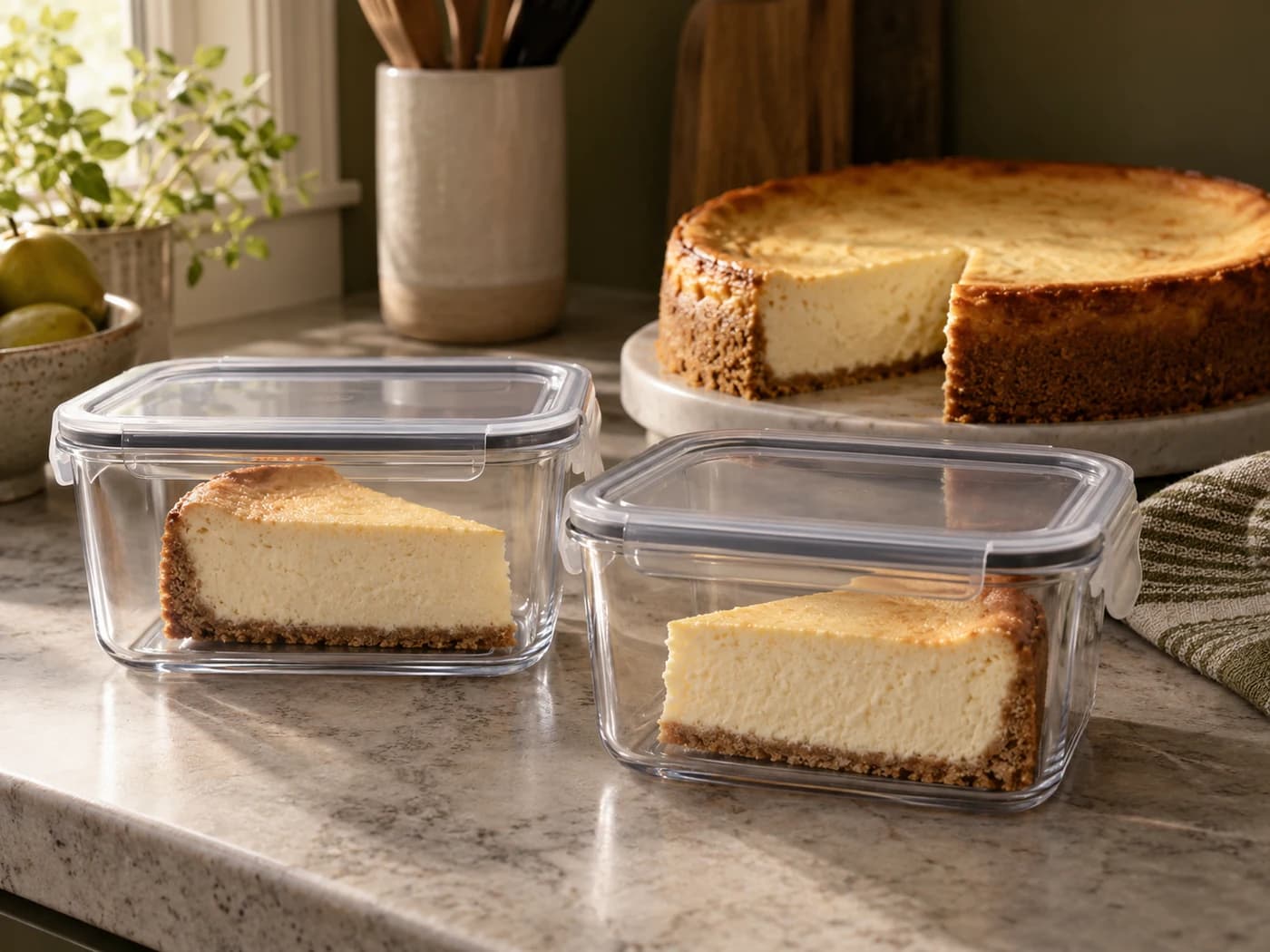
This recipe suits advance preparation because the long refrigeration period is already part of the method. Bake the day before, chill thoroughly, then cut when the filling is firm enough to handle. Store the cake covered in the refrigerator at 40°F / 4°C or below. A conservative planning window is three to four days with prompt cooling and good handling. That window is based on general cooked-egg and leftover guidance, not a measured shelf-life study of this exact cheesecake.
Cooling without leaving it out all evening
After baking, use roughly forty-five to sixty minutes on a rack for initial cooling, then move the cake into the refrigerator on an appropriate heat-safe surface. Do not wait for it to become cold on the counter. Keep unrefrigerated cooling within two hours, and remember the shorter one-hour limit when the environment is above 90°F / 32°C. Refrigerator space should be ready before baking finishes. In a hot kitchen, shorten the counter stage and prioritise timely refrigeration over a perfectly uncracked top.
Whole cake or individual portions
A covered whole cake protects the cut surfaces if you have not served it yet. Once sliced, individual containers make portions convenient and keep the crumbs from being crushed by other food. Pack the slices after chilling, not while they are warm and fragile. A small piece of parchment under each slice can help lift it out. Keep berries, sauce and yogurt in separate containers so they do not wet the crust during storage.
Freezing for later
For a practical quality target, freeze well-chilled individual slices for up to about one month in suitable freezer packaging. This is a planning suggestion, not a promise that the texture will be identical after thawing. Dairy fillings may release some moisture, and the base can become softer. Protect slices from air and strong freezer smells, note the preparation date and thaw a portion in the refrigerator. Do not use a long countertop thaw as a shortcut for a perishable dairy-and-egg dessert.
Serving leftovers
Use a clean knife and server each time, return the rest of the cake to the fridge promptly and avoid repeatedly leaving the container out while other food is prepared. Check when it was made rather than relying only on appearance or smell to decide whether it is suitable. A slice does not need reheating for ordinary cold serving. If you are transporting it, use an insulated container with sufficient cold packs and keep toppings chilled as well.
Full Nutrition Information
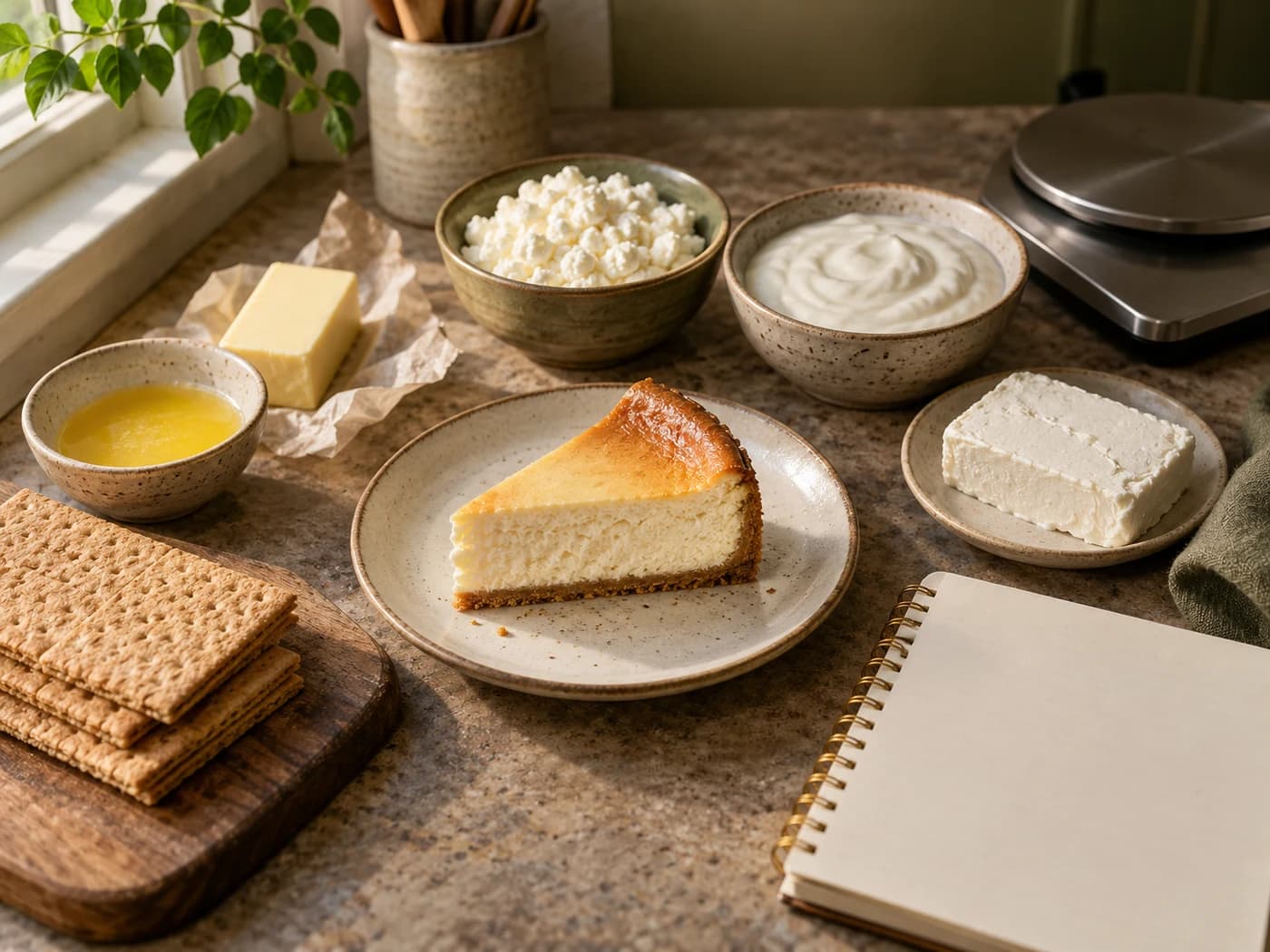
The nutrition table below is built from the ten ingredient weights, with each ingredient’s reference values multiplied by its weight and then summed. The whole-cake total is divided by eight for the serving estimate. This approach keeps the crust, sugar, vanilla and lemon in the calculation alongside the protein-rich dairy. It does not estimate only the ingredients that sound favourable. No topping, extra greasing fat or side dish belongs to the reference unless it is explicitly listed.
Understanding the detailed numbers
A reference slice provides about 0.5g fibre, 18.8g total sugars, 7.4g saturated fat, 464mg sodium, 132mg calcium and 105mg cholesterol. Total sugars include naturally occurring dairy sugars and sugars in the crackers as well as the measured granulated sugar. Added sugars are not separately calculated. The 90g filling sugar averages 11.25g per eighth before considering added sugar in the crackers, but that arithmetic is not a complete added-sugars declaration for the cake.
Where the values come from
The reference uses the USDA historical SR28 composition entries for low-fat 1% cottage cheese, plain nonfat Greek yogurt, Neufchatel, whole raw egg, granulated sugar, cornstarch, vanilla extract, raw lemon juice, plain or honey graham crackers and salted butter. These generic entries make the assumptions reproducible. They are not a claim that every current supermarket product matches an older database entry. Your packaging should take priority when you calculate a particular branded version.
Rounding and portioning
The quick summary rounds protein from 16.8g to 17g, carbohydrates from 29.4g to 29g and fat from 14.6g to 15g. Ingredient-row rounding can create small differences if you add the displayed cells yourself; the underlying calculation uses the unrounded values. Baking removes some water and can change the finished weight without making the entire ingredient energy disappear. If your wedges are unequal, weigh the chilled edible cake and the slice to estimate that slice’s share rather than assuming every cut is exactly one eighth.
The limits of a recipe calculation
This is not a laboratory analysis or a complete vitamin-and-mineral panel. Dairy moisture, product formulation, crumb loss and portion size all affect the food you actually eat. Some nutrition labels round heavily, so recalculations also have limits. Use the numbers as practical estimates, not as a reason to make highly precise claims about a homemade slice. The food calculator can help you total your chosen ingredients and divide by the number of servings you actually make.
| Ingredient | Amount | Calories | Protein | Carbs | Fat |
|---|---|---|---|---|---|
| Low-fat cottage cheese | 450g | 324 kcal | 55.8g | 12.2g | 4.6g |
| Plain nonfat Greek yogurt | 300g | 177 kcal | 30.6g | 10.8g | 1.2g |
| Neufchatel cheese | 225g | 569 kcal | 20.6g | 8.1g | 51.3g |
| Whole egg | 150g | 215 kcal | 18.8g | 1.1g | 14.3g |
| Granulated sugar | 90g | 348 kcal | 0.0g | 90.0g | 0.0g |
| Cornstarch | 20g | 76 kcal | 0.1g | 18.3g | 0.0g |
| Vanilla extract | 5g | 14 kcal | 0.0g | 0.6g | 0.0g |
| Lemon juice | 15g | 3 kcal | 0.1g | 1.0g | 0.0g |
| Plain graham crackers | 120g | 516 kcal | 8.0g | 93.2g | 12.7g |
| Salted butter | 40g | 287 kcal | 0.3g | 0.0g | 32.4g |
| Whole batch | 8 equal slices | 2530 kcal | 134.2g | 235.3g | 116.5g |
| One reference serving | Cake ÷ 8 | 316 kcal | 16.8g | 29g | 15g |
| Dietary fiber | 0.5g |
|---|---|
| Total sugars | 18.8g |
| Saturated fat | 7.4g |
| Sodium | 464mg |
| Calcium | 132mg |
| Cholesterol | 105mg |
Estimated recipe nutrition, not a laboratory analysis. Includes the complete filling and cracker-and-butter base. Toppings and sides are additional. Added sugars and a complete vitamin-and-mineral panel are not calculated.
How This Fits Your Daily Protein Goal
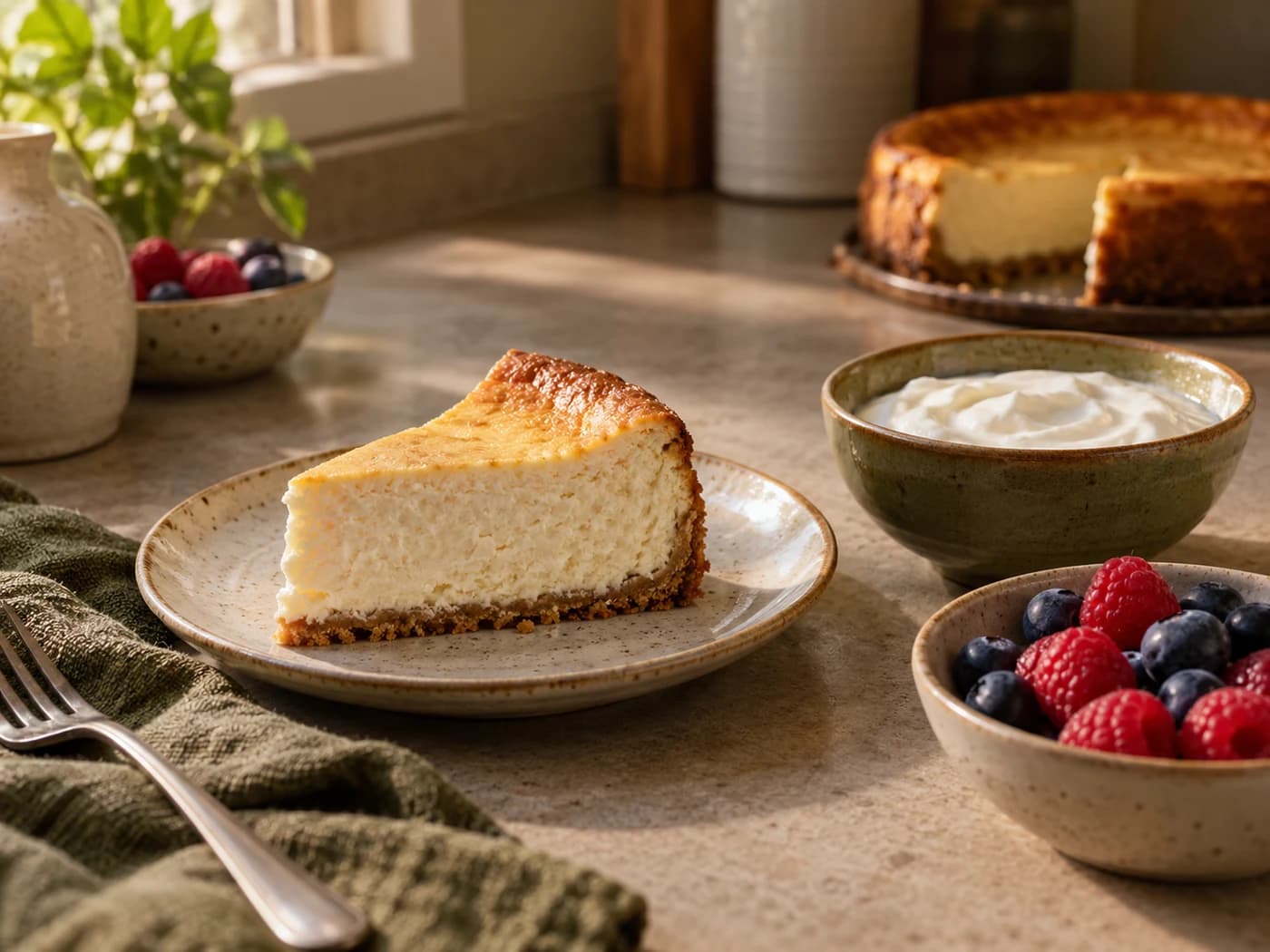
A reference slice supplies approximately 16.8g protein. Relative to an example daily target of 100g, that is about 17%; relative to 120g, about 14%; and relative to 150g, about 11%. Those are arithmetic examples, not recommended targets for every reader. Your own target depends on personal circumstances and the approach you use for your overall meals. The protein calculator can provide a planning starting point, with its assumptions explained on the tool page.
Count the rest of the day first
Consider breakfast, lunch, dinner and usual snacks before deciding whether dessert needs to close a protein gap. If those meals already provide the amount you planned, you can choose cheesecake because you enjoy it. If a snack would be useful, one slice offers a known contribution alongside its calories and other nutrients. It is generally easier to plan familiar meals consistently than to rely on one large dessert portion to supply most of the day’s protein.
A worked example
Suppose your own plan uses a 120g target and your meals so far provide about 90g. One reference slice adds about 16.8g, taking that arithmetic total to roughly 106.8g. A separate 100g portion of the reference yogurt adds another 10.2g, bringing the combined example to roughly 117g. This is an illustration of adding foods, not a prescription to eat this exact combination. You would still consider appetite, energy intake and the rest of your diet.
Avoid a single-number decision
Two slices offer more protein than one, but they also double the calories, sugars, fat and sodium from the cake. A smaller slice may fit better after a substantial dinner even though it contributes less protein. The choice does not have to maximise one nutrient. Foods such as beans, fish, eggs, tofu, yogurt and other suitable staples can all contribute across the day. Cheesecake can be one enjoyable part of that pattern rather than the centre of the plan.
Keep the calculation personal
If you need a diet tailored to a medical condition, a general recipe and calculator are not substitutes for individual advice. For ordinary planning, keep your own target and serving size consistent and use the food labels you actually buy. Do not copy another person’s dessert portion simply because they have a similar body weight. A useful food plan should make room for preference, convenience and a range of foods, with the numbers supporting those decisions.
Make it personal
Where does a slice fit in your day?
Estimate your daily protein target, then plan meals you enjoy.
Recipe Card
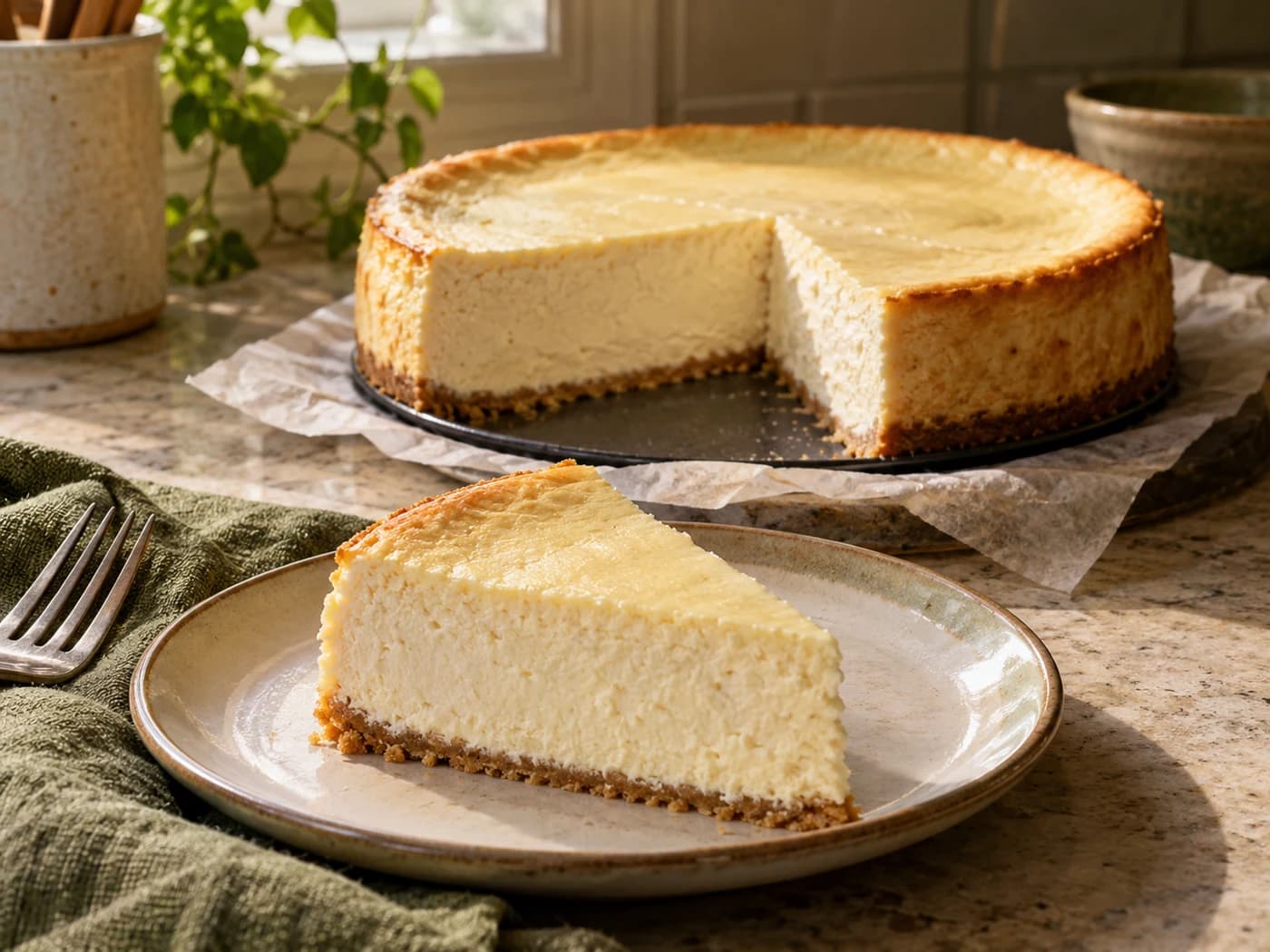
The card gathers the measured ingredients and the six main steps in one place. Start with the eight-slice setting for one 8-inch cheesecake. The sixteen- and twenty-four-slice settings make two and three complete cakes respectively. Each cake needs its own same-size pan and is divided into eight reference wedges. The ingredients scale, but the slice size and approximate per-slice nutrition remain the same. Do not pour a double or triple batch into one original-size pan.
Set up before mixing
Choose your batch size before opening the dairy tubs. Check that you have enough pans, mixing-bowl space and refrigerator room for every cake. The card’s checkboxes are a temporary ingredient checklist; checking one does not change the amount or remove it from nutrition. Changing batch size clears the checklist so the new weights are easier to review. Weigh eggs without shells and combine them before measuring when a carton’s individual egg sizes do not match the reference.
Timing for multiple cakes
The displayed preparation, baking, cooling and chilling estimates describe one cake. More cakes can need extra mixing rounds, oven rounds and cooling space. Even if two pans fit in the oven, check each cake separately rather than assuming both centres finish at the same moment. Keep the oven setting the same and maintain room for air circulation. Refrigeration still needs at least six hours for each cake; increasing the batch does not remove the waiting period that makes the filling sliceable.
Printing and cooking from the card
Use Print recipe for a compact cooking copy. The print layout focuses on the ingredient checklist, method, timing and serving notes so you do not have to print the whole article. Choose the batch setting you intend to make before printing. Keep the full guide available if you need the substitution explanations or storage detail. The card is deliberately concise, while the longer sections explain why the pan, ingredient type, centre temperature and refrigeration period matter.
The final check
Before serving, confirm that the cake was cooked to the stated centre endpoint, promptly refrigerated and thoroughly chilled. Release the ring carefully and divide each cake into eight equal wedges. The reference macro line applies to a plain wedge with its share of the complete base. Add optional fruit and yogurt separately. Keep the remaining cake covered and cold. A printed card helps organise the bake, but the actual doneness and handling checks still belong to the person making it.
Your vanilla bake, ready to make
High-Protein Cheesecake
Cottage cheese, Greek yogurt and a thin biscuit base.
*One-cake planning estimates, including crust bake, initial cooling and at least six hours chilling. Larger batches need separate same-size pans, more preparation and possibly extra oven rounds. Never multiply the filling in one original-size pan.
Ingredients
Method
- Prepare the pan and base
Preheat to 325°F / 160°C conventional. Line 1 8-inch / 20cm springform pan, each at least 2½ inches / 6cm deep, with bottom parchment. Place on rimmed sheets. Mix 120g fine graham crumbs with 40g melted salted butter. Divide evenly between pans, press across the bottoms and bake 8–10 minutes.
- Blend the dairy
Blend 450g cottage cheese with 300g thick Greek yogurt until smooth, in manageable rounds if needed. Separately mix 225g softened Neufchatel and 90g sugar. Stir in the dairy, 20g cornstarch, 5g vanilla and 15g lemon juice.
- Add the eggs gently
Lightly mix 150g whole egg without shells, then stir into the dairy just until combined. Scrape the bowl; avoid whipping a foamy batter. Divide the filling evenly between 1 prepared pan and level gently. Do not taste raw filling.
- Bake and check the centre
Bake roughly 45–60 minutes, checking from about 40. Edges should be set and the centre move together without a liquid wave. Confirm at least 160°F / 71°C at the centre with a food thermometer, avoiding the metal base. Timing varies with oven and dairy.
- Cool and refrigerate
Cool on a rack roughly 45–60 minutes, then refrigerate on a heat-safe surface. Keep unrefrigerated cooling within 2 hours, or 1 hour above 90°F / 32°C. Cover when no longer steaming and chill at least 6 hours, preferably overnight, at 40°F / 4°C or below.
- Release, slice and store
Run a thin knife around each ring and release carefully. Cut each cake into eight equal wedges: 8 slices total. Wipe the knife between cuts. Store covered and refrigerated; use within 3–4 days with proper handling. Toppings are additional and best stored separately.
No water bath. Use the centre temperature alongside visual cues; cool promptly and slice after a full chill.
Protein before rounding: 16.8g. Includes the complete filling and crust. Toppings are additional. Contains milk, eggs and wheat; check all labels. Refrigerate at 40°F / 4°C or below and use within 3–4 days with proper handling.
Frequently Asked Questions
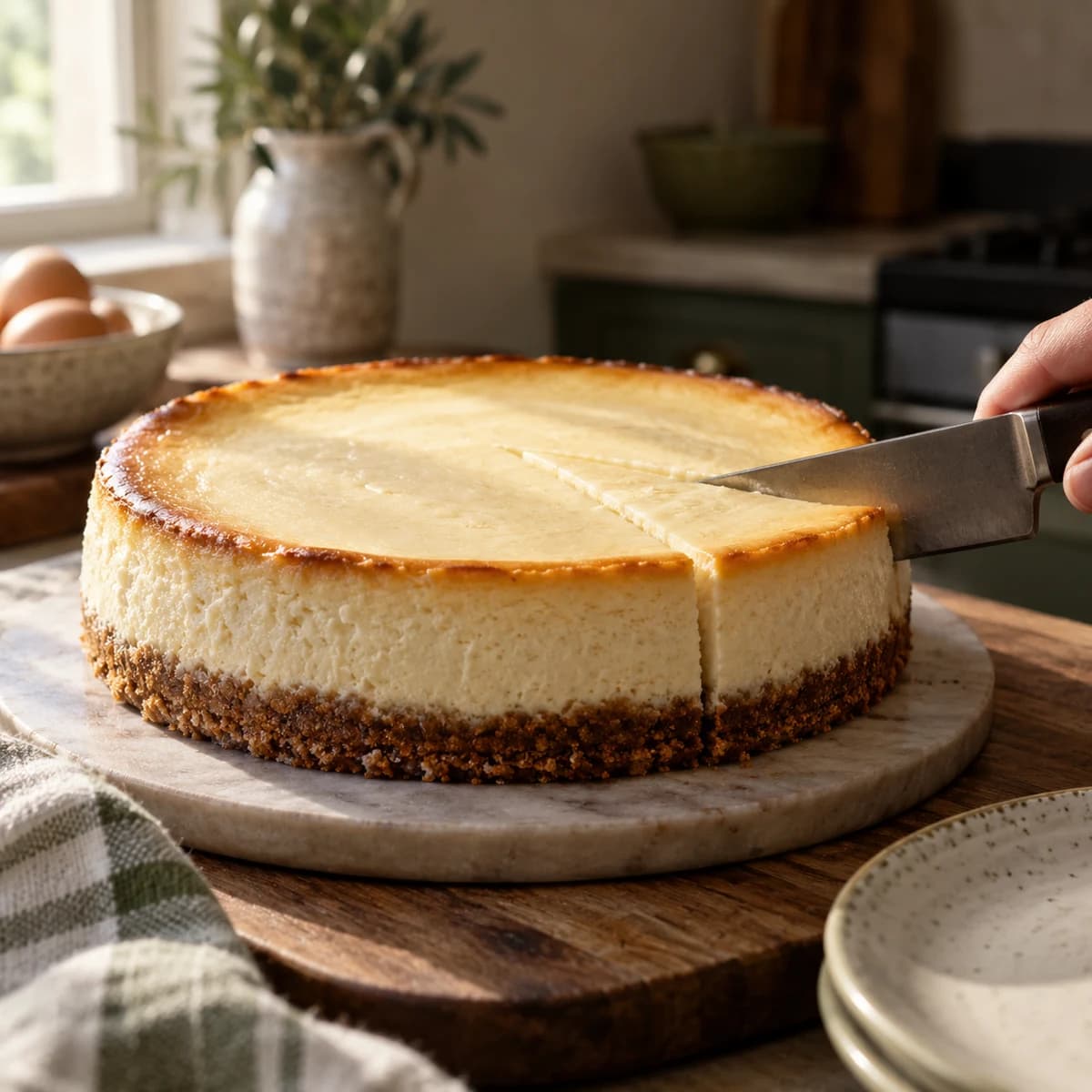
Cheesecake questions tend to arrive at the moments when a visual cue is ambiguous: the centre moves, the top cracks, the pan is a different size or the supermarket has a different cheese block. The answers below connect those questions to the measured reference instead of promising that every change produces the same result. If you make an adaptation, note the ingredient and the amount so you can calculate it and understand the texture afterward.
The two kinds of substitution question
“Can I use another product?” and “Will it behave exactly the same?” are different questions. A thicker yogurt or a different cracker may be usable as an exploration, yet still change calories, moisture and the bake. Dairy-free and egg-free changes are much larger. For a first attempt, matching the listed ingredient types gives you a clearer baseline than changing sugar, cheese, eggs and pan size together. Keep a photo or note of the package label if you want to repeat your version.
When a number needs context
A protein amount is tied to a defined portion. The reference here is eight equal wedges of one complete cake with crust. Cutting twelve wedges lowers the nutrition in each wedge; it does not change the total protein in the cake. Removing the base changes the recipe, while adding yogurt changes the plate. The card keeps the full-size slice definition consistent when scaling multiple cakes, and the nutrition section shows what is included in the estimate.
Questions after baking
A thin crack alone is not a reason to discard a correctly cooked and properly stored cake. A liquid centre after a full chill calls for a closer review of the bake and ingredient choice. A cake left out beyond a suitable handling window is a storage question, not something solved by hiding the top with berries. Read the relevant answer and the method together. The guidance is intended to make your next decision clearer without pretending that a photograph or a timer can inspect your actual cake.
How much protein is in one slice?
One eighth of the complete reference cake provides approximately 16.8g protein, rounded to 17g in the summary. That includes the filling and the full cracker-and-butter crust. The estimate uses the listed weights and generic USDA food entries. Different brands and unequal wedges change the result. A half-slice provides about 8.4g protein; a larger wedge has a larger share of the whole-cake nutrition.
Does this cheesecake need protein powder?
No. The reference uses cottage cheese, thick plain nonfat Greek yogurt, Neufchatel and eggs as its main protein contributors. There is no whey, casein or plant powder in the ingredient list. Adding powder is not an established direct improvement to this filling: it changes flavour, dry ingredients and moisture handling. Use a recipe developed around powder if that is the type of cake you want.
Can I taste the cottage cheese?
Blending removes the visible curds, while yogurt, Neufchatel, vanilla and lemon shape the final flavour. Cottage cheese still contributes its own mild dairy flavour and saltiness; the recipe does not promise it will be undetectable for every person or brand. Choose a plain product, blend it smooth before adding eggs and avoid an unusually watery tub for the first attempt.
Can I use cream cheese instead of Neufchatel?
Block cream cheese is a possible exploratory alternative at the same starting weight, but it changes fat, calories and the filling texture. The published nutrition would no longer describe that version. Whipped spreads and very low-fat tubs can have different air content, moisture and stabilisers. Weigh the chosen product and recalculate from its label rather than assuming every cheese spread is interchangeable.
Which pan should I use?
Use one 8-inch / 20cm springform pan at least 2½ inches / 6cm deep per cake, with parchment on the bottom and a rimmed baking sheet underneath. A wider pan makes the filling shallower, while a smaller pan makes it deeper and may overflow. Both change the timing. The scaled card makes additional same-size cakes rather than putting a multiplied batch into the original pan.
Do I need a water bath?
The published method does not use a water bath. It uses a moderate 325°F / 160°C conventional oven, gentle mixing and a measured centre endpoint, followed by cooling and chilling. A rimmed sheet beneath the springform catches incidental drips. Adding a water bath changes the baking conditions and is not established here as an identical timed method; a leaking springform can also wet the crumb base.
How do I know the cheesecake is cooked?
Look for set edges and a centre that moves together rather than sloshing like liquid. Use a food thermometer to confirm at least 160°F / 71°C at the middle of the filling, keeping the probe away from the metal base. The centre can still wobble at that point and will firm during chilling. Time and appearance alone cannot confirm the temperature of your actual cake.
Why did the top crack?
A long bake, excess air introduced during mixing or contraction while cooling can contribute to cracks. Smooth the dairy before adding eggs, then mix the finished filling gently and avoid baking until the entire centre is rigid. A small crack alone does not mean a properly cooked cake is ruined. Review actual doneness and storage separately, and serve a safely prepared chilled cake with its ordinary homemade appearance.
Why is my cheesecake still soft after chilling?
First check whether it received at least six hours in the refrigerator. Very wet dairy, incorrect weights, a different pan or an undercooked centre can also lead to a soft result. Refrigeration does not correct an undercooked filling. Review the centre temperature and ingredient choices rather than assuming another hour of chilling will fix every problem. Do not serve raw-looking or inadequately cooked filling.
Can I make it without the crust?
Removing the crackers and butter gives an ingredient-based estimate of about 216 calories and 15.7g protein per eighth of the filling batch. That is a calculated variation, not an established identical baking method. The filling may stick differently and the texture loses its biscuit contrast. If exploring it, line the pan carefully, reassess timing and retain the centre-temperature and refrigeration checks.
Can I make it gluten-free or vegan?
The default cake contains milk and eggs, and its graham-cracker base contains wheat. A gluten-free version needs suitable labelled crackers, compatible remaining ingredients and appropriate preparation conditions. Dairy-free and egg-free swaps create a substantially different filling requiring its own developed method. This reference is not vegan, dairy-free or certified gluten-free. Check every package for other allergens and cross-contact statements.
Can I replace or remove the sugar?
The filling uses 90g granulated sugar, and the crackers contain additional sugars of their own. Replacing it with a syrup adds moisture; an alternative sweetener may have different bulk and baking behaviour. Removing all the sugar has not been verified as an equivalent result in this formula. A smaller slice is the simplest documented portion change when you want less of the original dessert.
What do the 8, 16 and 24 slice settings mean?
They make one, two or three complete cakes, each cut into eight equal reference wedges. All ingredients scale while the approximate nutrition per full-size slice stays the same. Use a separate same-size pan for each cake and allow extra preparation, oven rounds and refrigerator space. To make sixteen smaller servings from one cake, keep the eight-slice ingredient setting and cut each finished wedge in half.
How long does it keep, and can I freeze it?
Refrigerate at 40°F / 4°C or below and use within three to four days with prompt cooling and suitable handling as a conservative planning window. Keep toppings separate. For longer planning, freeze well-chilled slices in suitable packaging for about one month as a quality target; texture may change. Thaw in the refrigerator. Neither window is a measured shelf-life guarantee for this exact formula.
More High-Protein Recipes
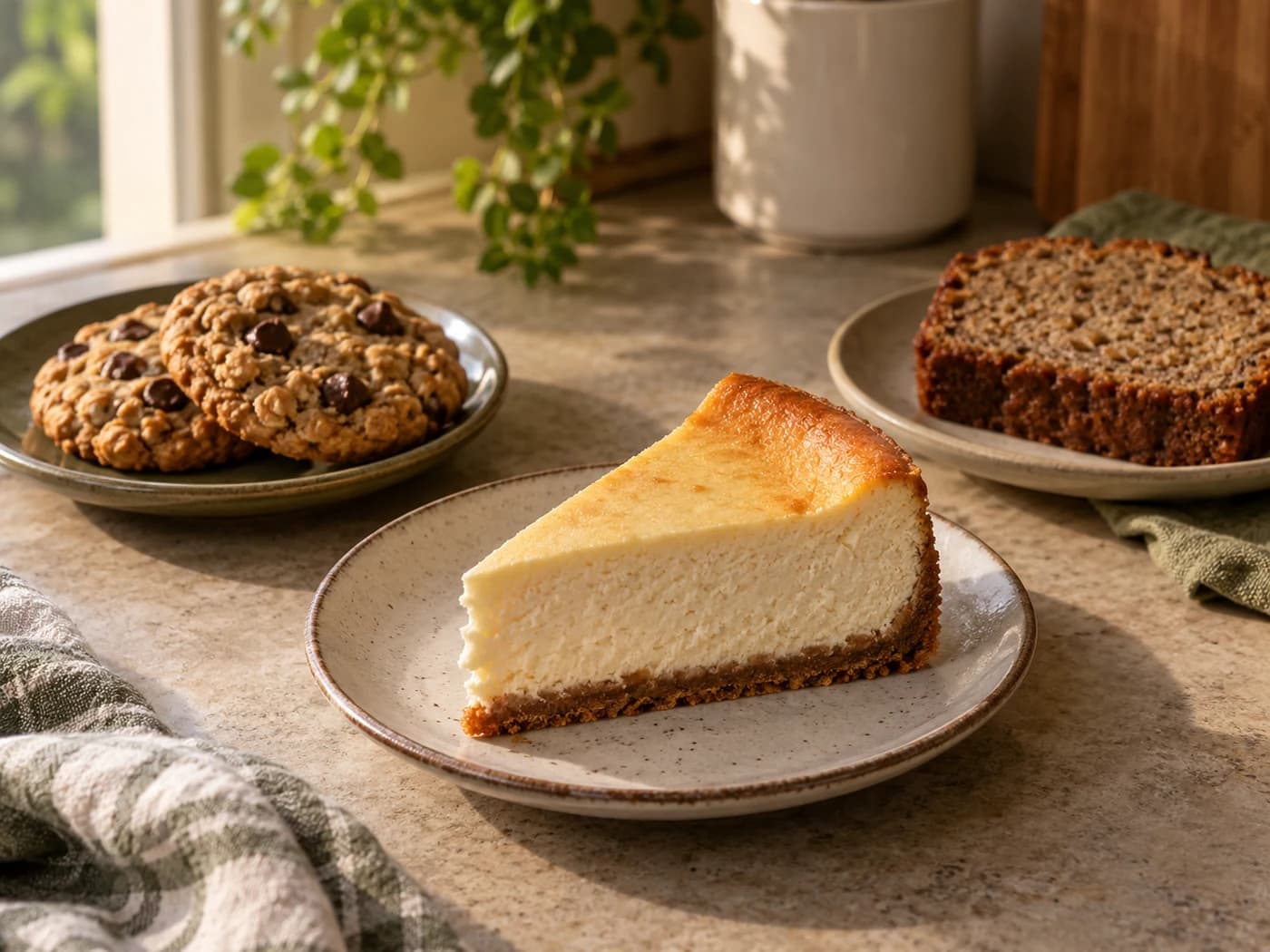
If you enjoy the make-ahead rhythm of this cheesecake, there are other recipes that use familiar ingredients and measured portions. Banana bread is a different kind of bake, with a sliceable loaf and a warm banana flavour. Cookies offer individual portions and a shorter baking session. French toast is made fresh in a pan rather than chilled overnight. Choose the recipe for the food and preparation time you want, then use its own nutrition reference rather than transferring numbers from this cake.
Another sweet bake
The high-protein banana bread guide uses yogurt, oats and whey in a weighed loaf. The high-protein cookies page uses peanut butter, oats, vanilla whey and chocolate chips, with a clear full-size cookie portion. Both include ingredient assumptions and preparation detail. Neither is a substitute for this cheesecake method: loaf batter and cookie dough behave differently from an egg-and-dairy filling. A recipe collection is useful because you can choose a suitable formula instead of forcing one mixture to become every dessert.
Breakfast and savoury options
French toast, bagels and oatmeal provide different breakfast choices, while pizza and mac and cheese offer familiar savoury meals. Those pages count their own crusts, sauces and dairy ingredients. If your goal is to plan more protein across the day, a mix of ordinary meals and snacks may be more useful than making several rich desserts at once. Match the recipe to the occasion, keep the ingredient measurements consistent and allow room for fruit, vegetables and other foods you enjoy.
Browse with a purpose
The recipe hub brings the collection together so you can compare preparation styles. Think about whether you want something quick, a weekend bake, a chilled dessert or a meal that can be served soon after cooking. Read the serving definition before comparing protein numbers: one cookie, one bagel, one slice and one dinner portion are different amounts of food. The best next recipe is the one you are likely to make and enjoy, with a method that suits the time and ingredients available.