
Browse the 15 recipe sections
One reference serving: one of eight equal rolls, with its full share of cinnamon filling and yogurt glaze. Protein is about 14.3g before rounding. Extra toppings are additional; timings are estimates. See the breakdown.
Recipe Overview
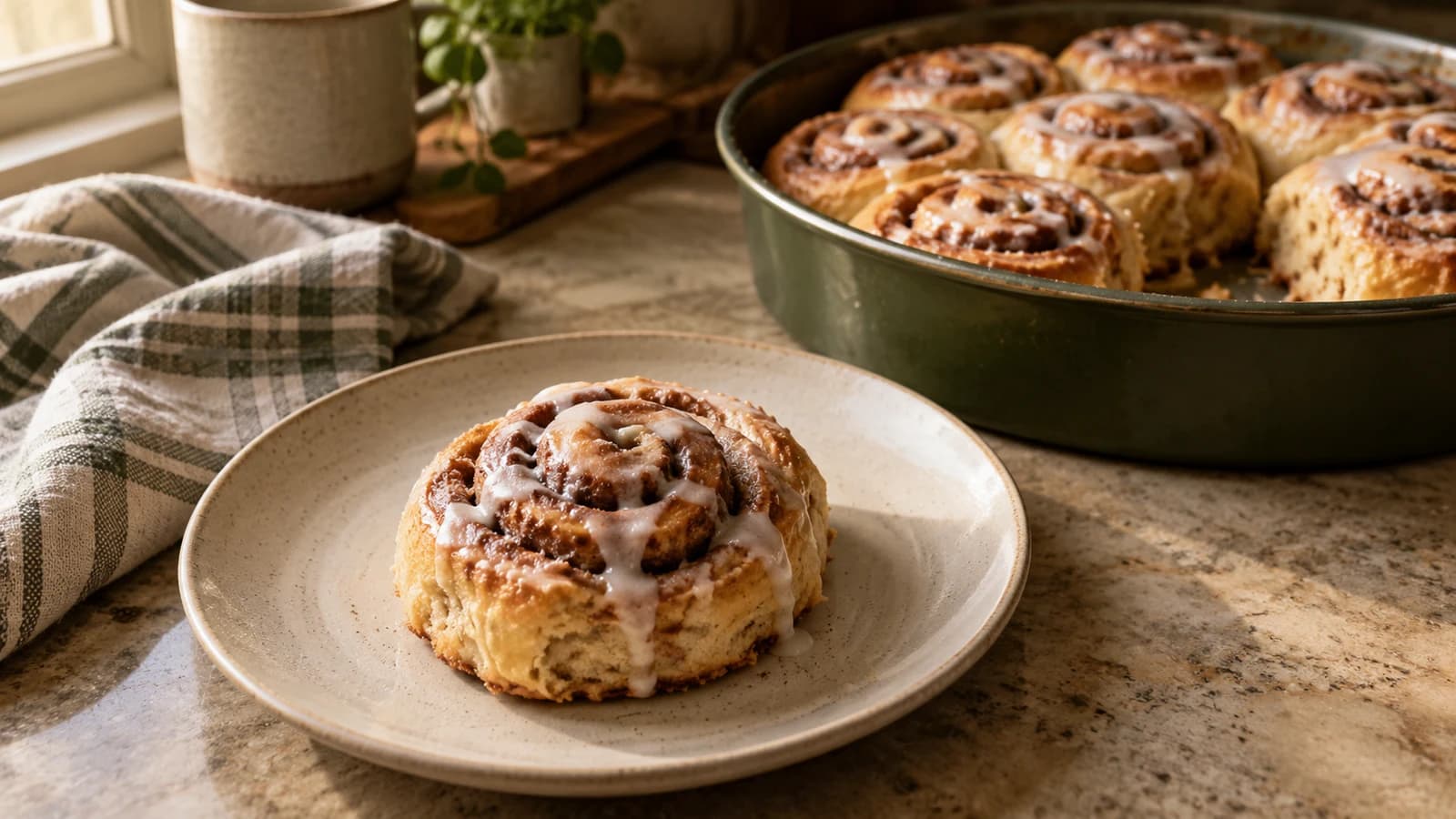
A cinnamon roll has a small ritual built into it: find the edge of the spiral, cut a bite and taste the warm cinnamon filling against the dough. This high protein version keeps that familiar shape with a quick Greek-yogurt and whey dough. A measured layer of butter, brown sugar and cinnamon runs through the centre, and a light vanilla yogurt glaze finishes the top. The glaze is part of the reference nutrition, along with the filling and the flour reserved for rolling.
One pan, eight rolls
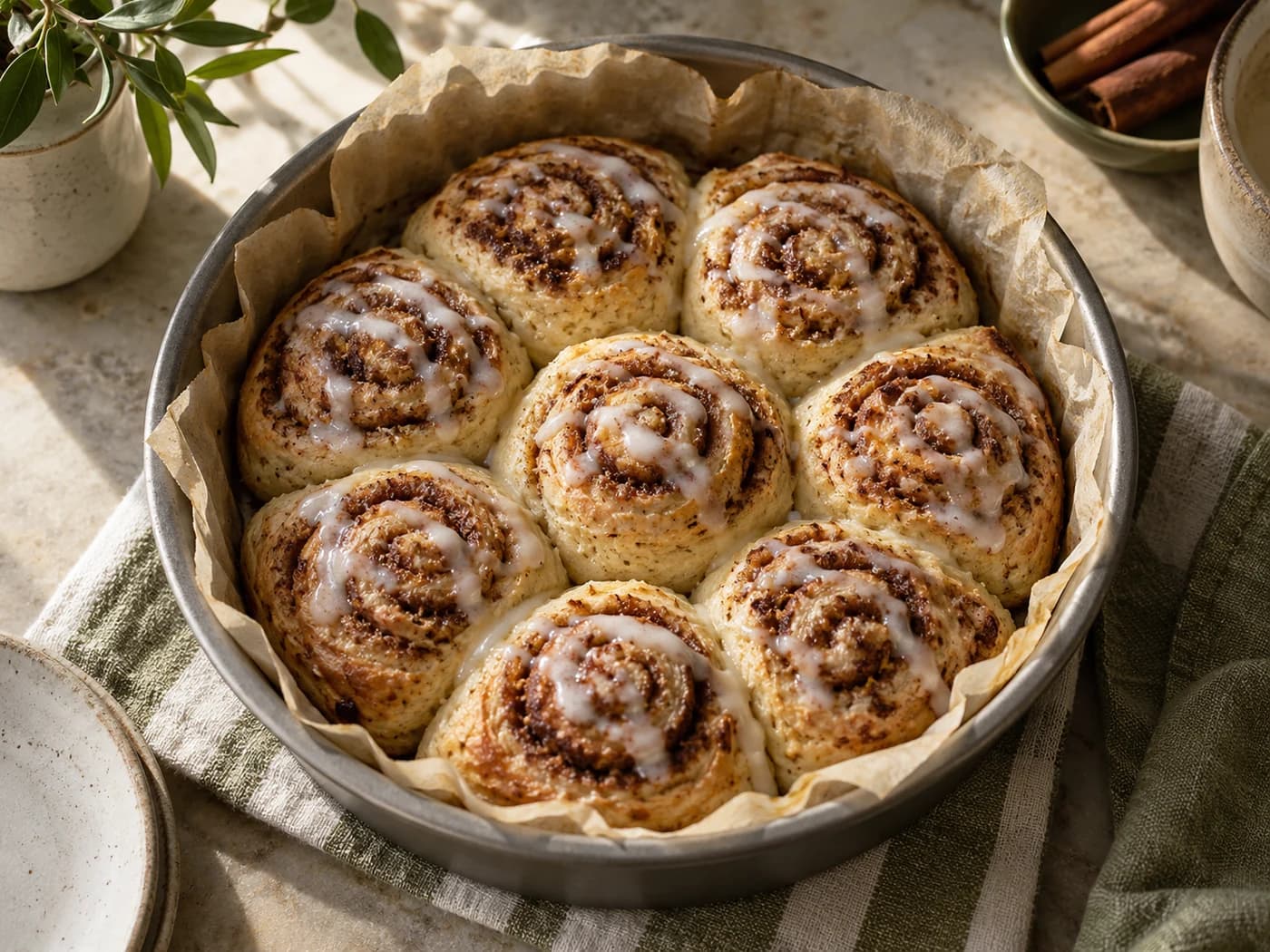
The reference makes eight equal rolls in a parchment-lined 9-inch / 23cm round pan. One complete roll with one eighth of the full yogurt glaze provides approximately 252 calories and 14.3g protein, rounded to 14g in the quick summary. The recipe uses baking powder for lift, with no yeast-proving period. Expect a modest quick-dough roll with a closer, slightly biscuit-like crumb. The filling gives the spiral its cinnamon flavour without requiring a thick layer of frosting to make the bake interesting.
A manageable morning bake
Allow about thirty minutes for weighing, mixing, a short dough rest, rolling and slicing. Baking is roughly thirty minutes, with another ten minutes of initial cooling and glazing. Around seventy minutes is a one-pan planning estimate. More pans need more preparation and possibly extra oven rounds. Set out the ingredients and check the pan before starting, so the dough can move from mixing to shaping without a long wait on the counter.
Begin with a useful baseline
A kitchen scale, rolling pin, parchment and a dough scraper are helpful. Use thick plain Greek yogurt and the weighed vanilla whey blend rather than assuming every powder behaves alike. This exact weighed formula has not been physically kitchen-tested; timings and dough handling are estimates informed by established quick-roll and protein-baking technique. The guide states the ingredient assumptions and explains how to judge the actual dough, centre and glaze rather than claiming a photograph guarantees your result.
Why You’ll Love This Recipe
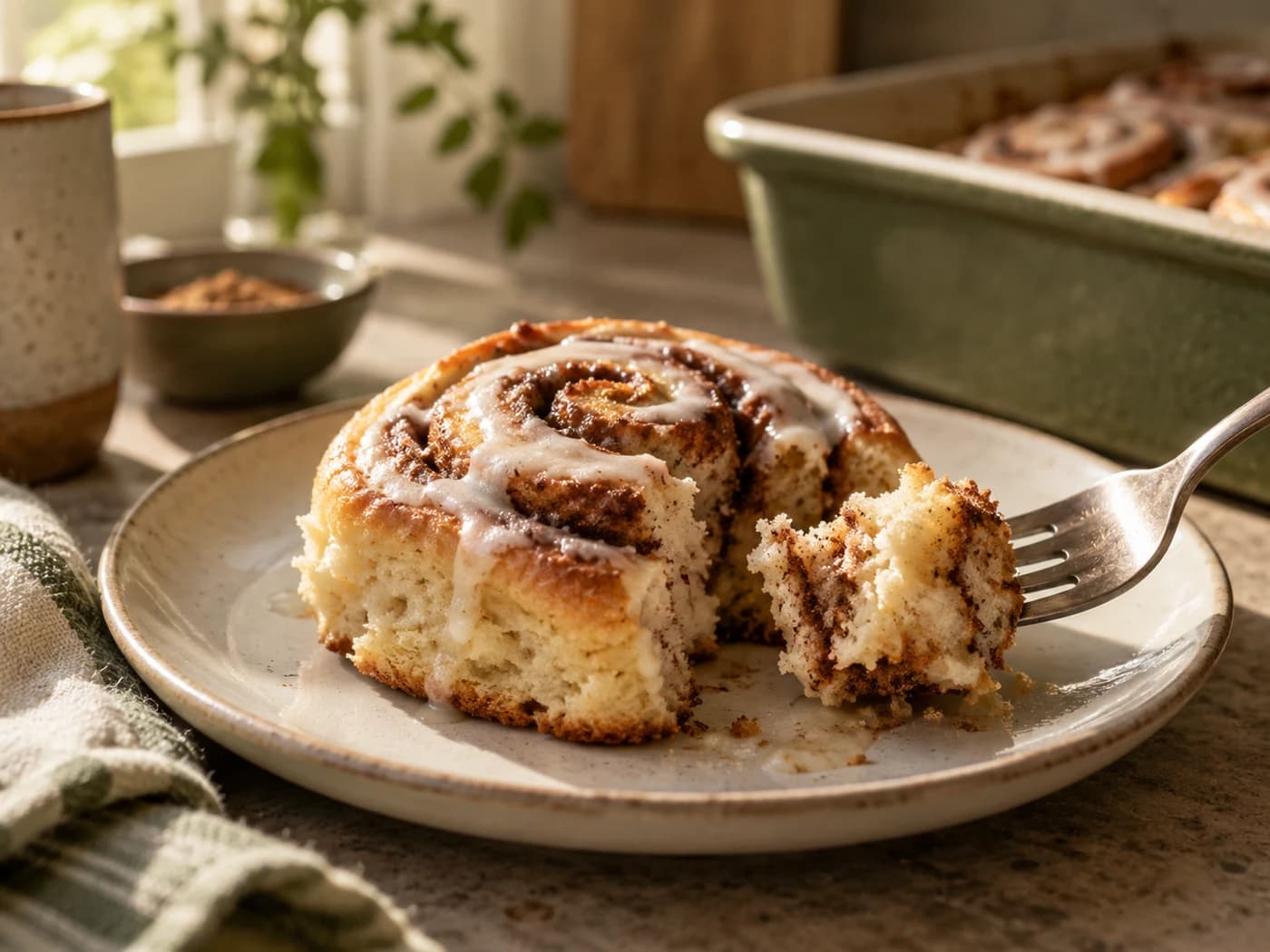
These rolls give you the cinnamon spiral people usually want from the dish, with a simple dough that can be shaped soon after mixing. The scent comes mainly from the measured cinnamon and brown sugar filling. Yogurt gives the dough some tang, while the vanilla glaze brings a cooler contrast to a warm bite. Leave the spiral visible when glazing; a thin finish is enough for the intended portion and makes the homemade shape part of the presentation.
Protein built into the complete roll
Whey, Greek yogurt and flour contribute most of the roughly 114.5g protein in the eight-roll batch. The reference does not describe a plain roll and then quietly leave the topping out of its calorie figure. It includes all 400g yogurt, with 300g in the dough and 100g in the glaze. Butter, both kinds of filling and dough sugar, the glaze sugar and the measured oil are counted too. That gives you a defined portion rather than a headline attached to only part of the food.
A shorter preparation rhythm
Baking powder gives this dough a different schedule from a yeast-raised roll. There is a short five-minute rest for handling, but no long proving stage. You can spend that interval mixing the filling and preparing the work surface. Rolling and slicing still take care, particularly with a whey-containing dough, but the process is easy to break into small steps. A scraper helps lift a sticky edge without immediately adding another handful of flour.
Enjoy a measured serving
One roll is a useful starting portion, and half a roll is about half the reference nutrition. You can add fruit or a weighed yogurt side according to appetite. There is no need to make the dessert earn its place by being the lowest possible calorie version. A warm homemade roll can be enjoyable while still contributing protein, carbohydrate, fat and sugar. The purpose of the numbers is to make your chosen portion understandable and repeatable.
Nutrition at a Glance
- Calories
- 252kcal
- Protein
- 14g
- Carbs
- 38g
- Fat
- 5g
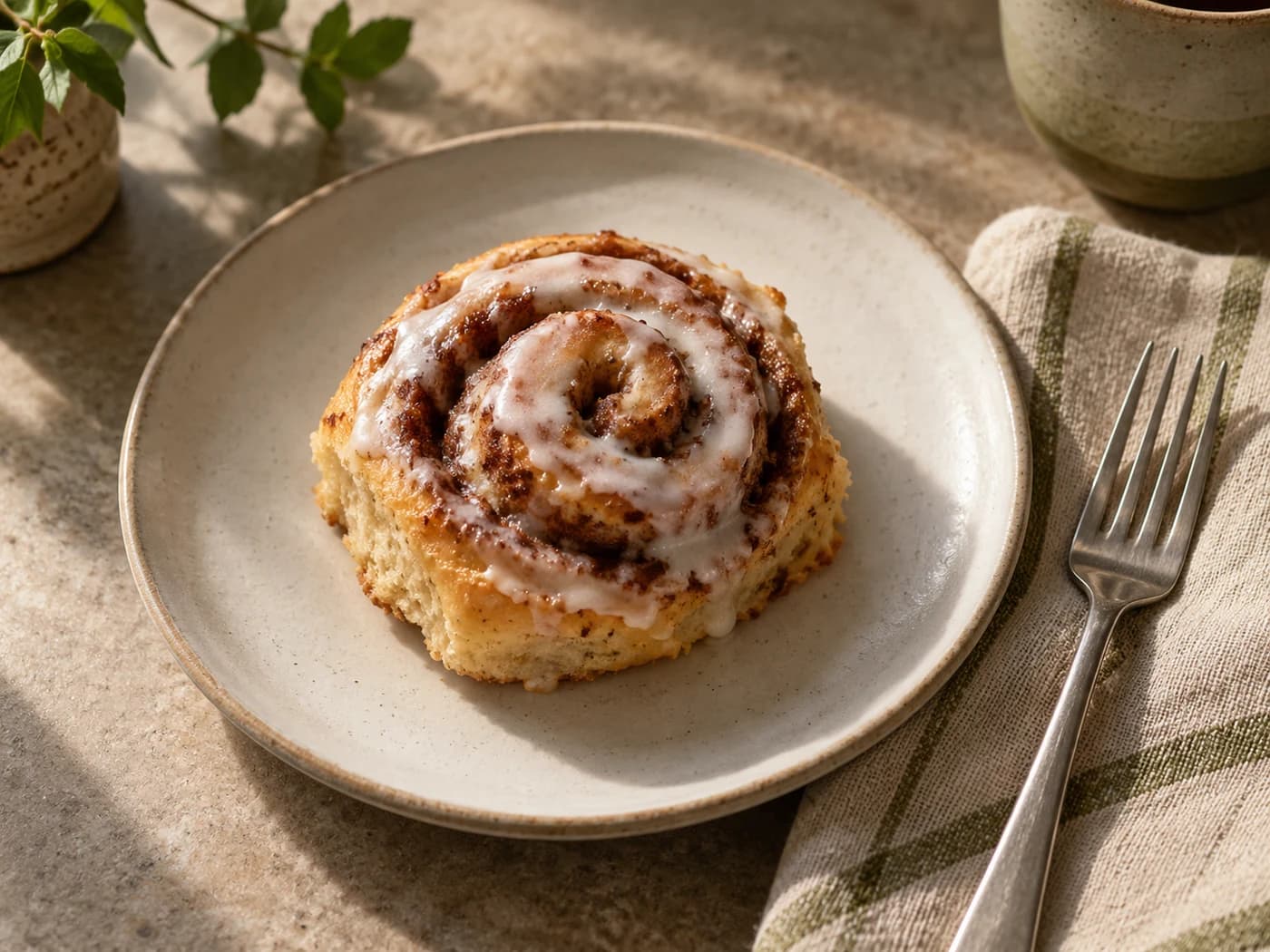
One of eight equal complete rolls provides approximately 252 calories, 14g protein, 38g carbohydrates and 5g fat after rounding. Protein before rounding is about 14.3g. These ingredient-based estimates count the full dough, all measured filling, the 10g flour reserved for dusting and the complete yogurt glaze. No additional butter is used to grease the parchment-lined pan in the reference. Extra flour, a second layer of frosting, berries and drinks belong to your own additional calculation.
Calories
A complete roll is about 252 calories, while half is about 126. An unglazed roll, retaining the original filling but removing its share of all glaze ingredients, is approximately 233 calories. The difference is relatively small because the reference glaze is a thin measured mixture. Cutting the serving in half changes the amount of the whole roll; omitting glaze changes only the topping. These are distinct choices, and neither gives the nutrition of an unmeasured large bakery roll.
Protein
About 14.3g protein comes with the complete portion. Half gives about 7.2g, while two complete rolls give about 28.6g. A single roll served with an additional 100g portion of the reference plain nonfat Greek yogurt provides approximately 24.5g protein and 311 calories before fruit. That side is separate from the 100g yogurt already included across the whole batch’s glaze. Count the food you actually plate instead of adding the same yogurt twice in your log.
Carbs and fat
Flour provides much of the carbohydrate, with further contributions from the measured sugars, yogurt and whey. The roughly 5g fat comes mainly from butter and canola oil, plus the other ingredients. Brown sugar and cinnamon give flavour to the filling, and powdered sugar changes the glaze’s sweetness and consistency. A protein contribution does not erase those ingredients. The full nutrition section includes total sugars, fibre, saturated fat and sodium, alongside the reference assumptions and the nutrients that are not calculated.
Ingredients
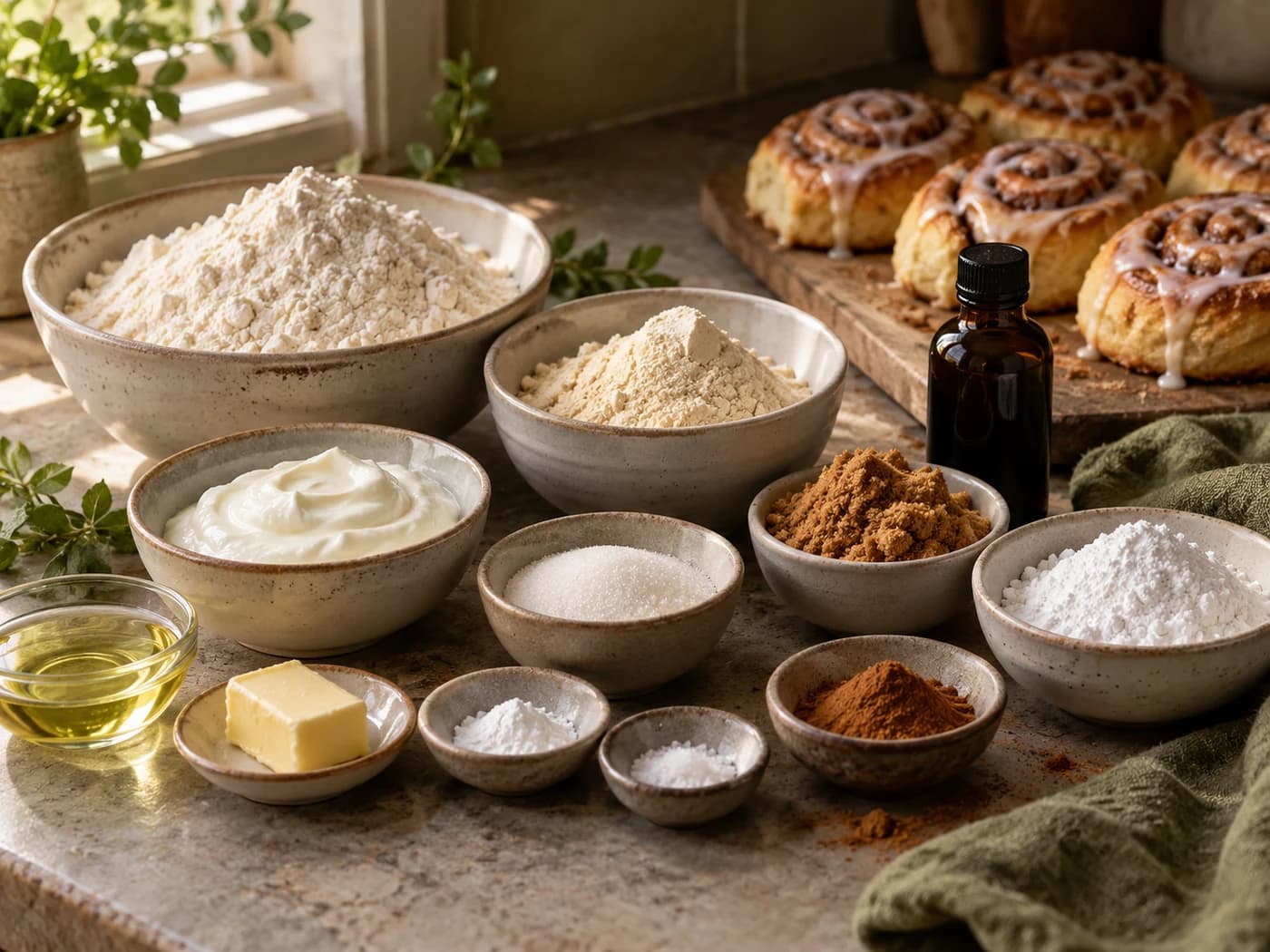
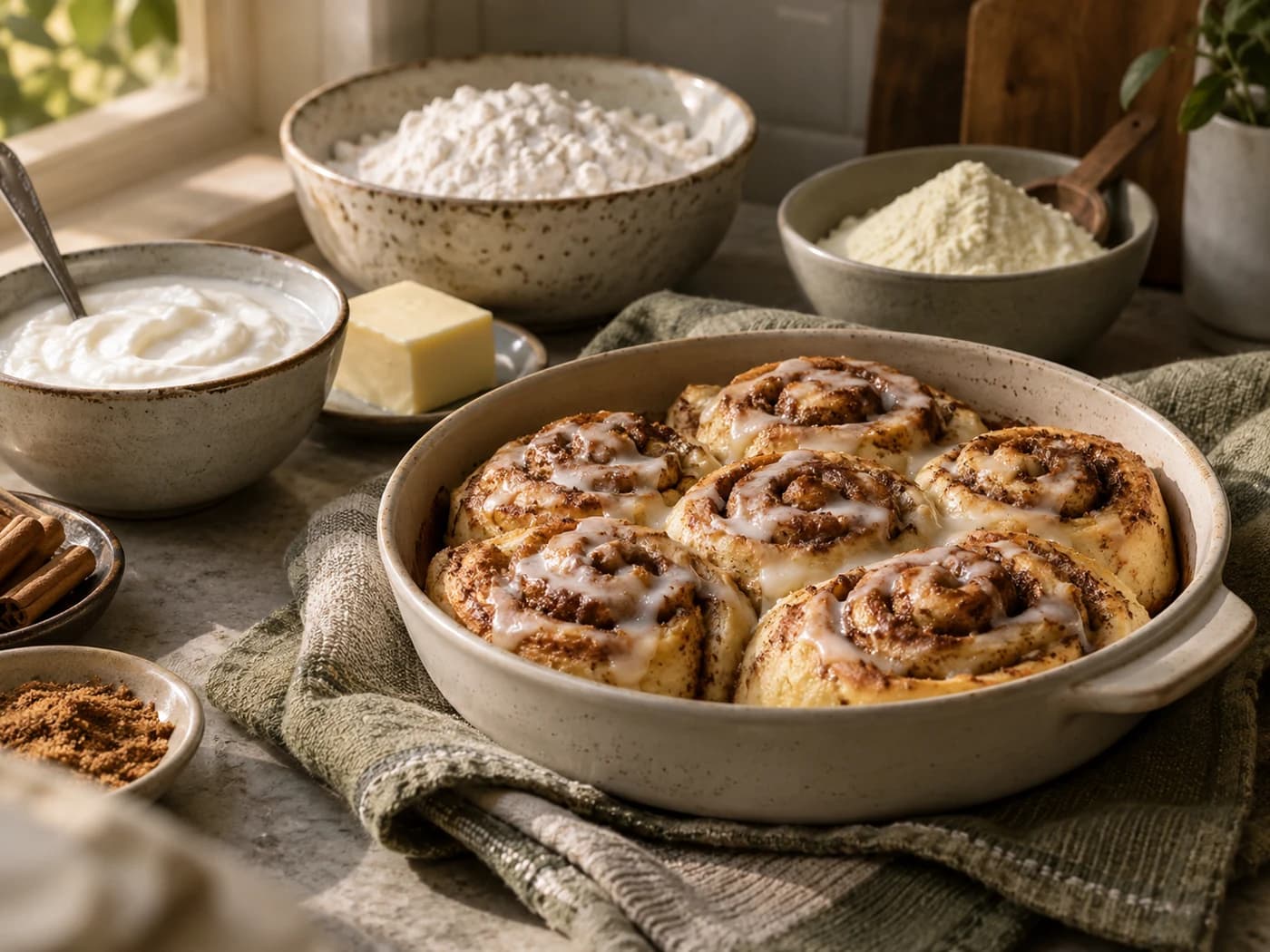
For eight complete rolls, weigh 250g all-purpose flour, 60g vanilla whey blend, 400g plain nonfat Greek yogurt, 20g granulated sugar, 10g canola oil, 8g baking powder, 2g fine salt, 25g salted butter, 50g brown sugar, 6g ground cinnamon, 20g powdered sugar and 5g vanilla extract. Allocate 240g flour to the dough and reserve 10g for dusting. Allocate 300g yogurt to the dough and 100g to the glaze. The full quantities are counted even if a little dusting flour or glaze remains behind.
The dough ingredients
Plain all-purpose wheat flour supplies the structure needed to roll a sheet and hold a spiral. The whey blend adds protein and vanilla flavour, while thick Greek yogurt supplies moisture and protein together. The dough also uses the granulated sugar, oil, baking powder and salt. This is a baking-powder dough, so no yeast, egg wash or warm proving liquid is listed. Use ordinary plain flour, rather than self-raising flour that already contains a variable amount of leavener and salt.
The cinnamon layer
Use the 25g butter softened enough to spread thinly, without turning it into a hot liquid that runs across the dough. Mix brown sugar and cinnamon separately so the spice is distributed rather than concentrated in dark patches. Spread the butter first, then sprinkle the mixture evenly over it. Leave a narrow clean margin along the far long edge to help the seam close. There are no raisins, chopped nuts or extra butter in the reference filling.
A light yogurt glaze
The glaze uses 100g of the total yogurt, all 20g powdered sugar and all 5g vanilla extract. Whisk until smooth and keep refrigerated while the rolls bake. The mixture is a light yogurt finish, not a thick cream-cheese frosting. Spread or drizzle it after the first cooling interval, keeping the complete amount divided across eight portions if you want the published reference. The vanilla extract is counted even though its quantity looks small beside the flour and dairy.
Preparation equipment
Use a 9-inch round pan at least 2 inches / 5cm deep, lined across the base and sides with suitable baking parchment. Set out a scale, mixing bowl, rolling pin, scraper, knife and rack. A food thermometer can give an additional centre check. Reserve a clear work surface or large sheet of parchment for rolling. Keeping flour for dusting separate from dough flour avoids adding the complete 250g to the bowl and then using an uncounted extra handful on the counter.
Your ingredient checklist
- All-purpose flour240g dough plus 10g reserved for dusting; all counted250g
- Vanilla whey protein blendVanilla whey blend for dough; reference contains milk and soy60g
- Plain nonfat Greek yogurt300g dough plus 100g glaze400g
- Granulated sugarFor dough20g
- Canola oilFor dough; parchment pan uses no extra oil10g
- Baking powderDouble-acting reference; no yeast8g
- Fine saltFor dough2g
- Salted butterSoftened for filling25g
- Brown sugarFor filling50g
- Ground cinnamonFor filling6g
- Powdered sugarFor yogurt glaze20g
- Vanilla extractFor yogurt glaze5g
Contains wheat and dairy; the reference whey contains soy. No egg is deliberately added, but cross-contact statements can include egg and other allergens. Check every label.
Ingredient Substitutions
A rolled dough needs to hold together, lift from the surface and close around its filling. Ingredient swaps affect those tasks as well as calories and protein. For the first attempt, use the listed types and weights to establish a baseline. If you adapt it, change one ingredient deliberately and keep a note of the new product and quantity. Several changes at once make it hard to explain a tearing sheet, sticky dough or a dry finished centre.
Flour choices
Another plain all-purpose flour is the closest practical starting change, though protein content and absorption can vary. Whole-wheat flour can make a heavier dough and may need a separately adjusted moisture balance. Oat, almond and coconut flour do not provide the same wheat-flour structure and are not established direct replacements for a rollable sheet here. A gluten-free version needs a developed blend and handling method rather than simply keeping the reference weights and expecting the spiral to hold.
Powder and yogurt choices
Use a vanilla whey blend weighed to 60g. Another whey flavour changes the taste and can also change sweetness or thickening. Casein and plant powders can absorb liquid differently, so their substitutions are not established as identical. Thick plain 2% Greek yogurt may be explored with new fat and calorie values. A very loose yogurt brings a different moisture balance. Skyr is another possible exploration, but its thickness and behaviour should be assessed rather than assumed to match the reference.
Filling and glaze changes
A suitable butter alternative needs its own label and a review of spreading and water content. A liquid syrup in place of brown sugar can leak more moisture through the spiral. Removing the powdered sugar changes the glaze’s taste and texture, while cream cheese would create a different topping. These alternatives have not been validated as identical versions. If you prefer less topping, the clearly calculated unglazed portion is a simpler choice than changing multiple filling and glaze ingredients together.
Dietary needs
The reference contains wheat and dairy, and the example whey includes soy. No egg is deliberately added, but the powder label can list egg cross-contact, so the page does not claim certified egg-free suitability. For allergies, read every package and consider preparation conditions. Replacing whey, yogurt and butter for a vegan roll is a larger reformulation needing a developed method. A lactose-free ingredient choice also requires review of the complete recipe rather than assuming that one changed tub addresses every dairy-related need.
A change to the dough needs both a new calculation and an assessment of rolling and baking.
| Reference ingredient | Possible change | What to review |
|---|---|---|
| All-purpose wheat flour | Another plain wheat flour | Protein and absorption |
| All-purpose flour | Oat, almond or gluten-free flour | Needs a developed rollable dough |
| Vanilla whey blend | Another whey flavour | Label, sweetness and thickening |
| Whey blend | Casein or plant powder | Not an established direct swap |
| Thick nonfat Greek yogurt | Thick 2% yogurt or skyr | Fat, moisture and handling |
| Brown sugar | Syrup or alternative sweetener | Moisture and filling behaviour |
| Yogurt glaze | Cream-cheese topping | New ingredients and nutrition |
How to Make It
Preheat a conventional oven to 350°F / 175°C. Line the base and sides of the 9-inch / 23cm pan with suitable baking parchment, then set out a rack for the finished pan. Weigh the flour into its separate 240g dough and 10g dusting portions. Keep the 300g dough yogurt separate from the 100g glaze yogurt. Preparing these allocations first prevents confusion later when the dough and topping use the same named ingredient for different purposes.
Mix a soft dough
Whisk the dough flour with whey, baking powder, fine salt and granulated sugar. Stir the 300g yogurt and 10g oil together, then add them to the dry mixture. Mix until a shaggy dough forms and press it together gently. Allow about five minutes of rest before judging stickiness. Work only enough to make a cohesive sheet; there is no long kneading stage. Do not taste the raw flour dough. Keep the yoghurt for the glaze refrigerated until you whisk it separately.
Roll the sheet
Dust the work surface lightly from the reserved 10g flour. Roll the dough gently into a rectangle roughly 30 by 24cm, with an even thickness around 7–8mm. Lift the sheet occasionally with a scraper so it does not become firmly attached to the surface. Use the reserved flour sparingly and note any amount added beyond it. A smaller, thicker rectangle makes a different log, while a thin patch can tear and let filling escape. Even thickness matters more than a perfectly square corner.
Add filling and form a log
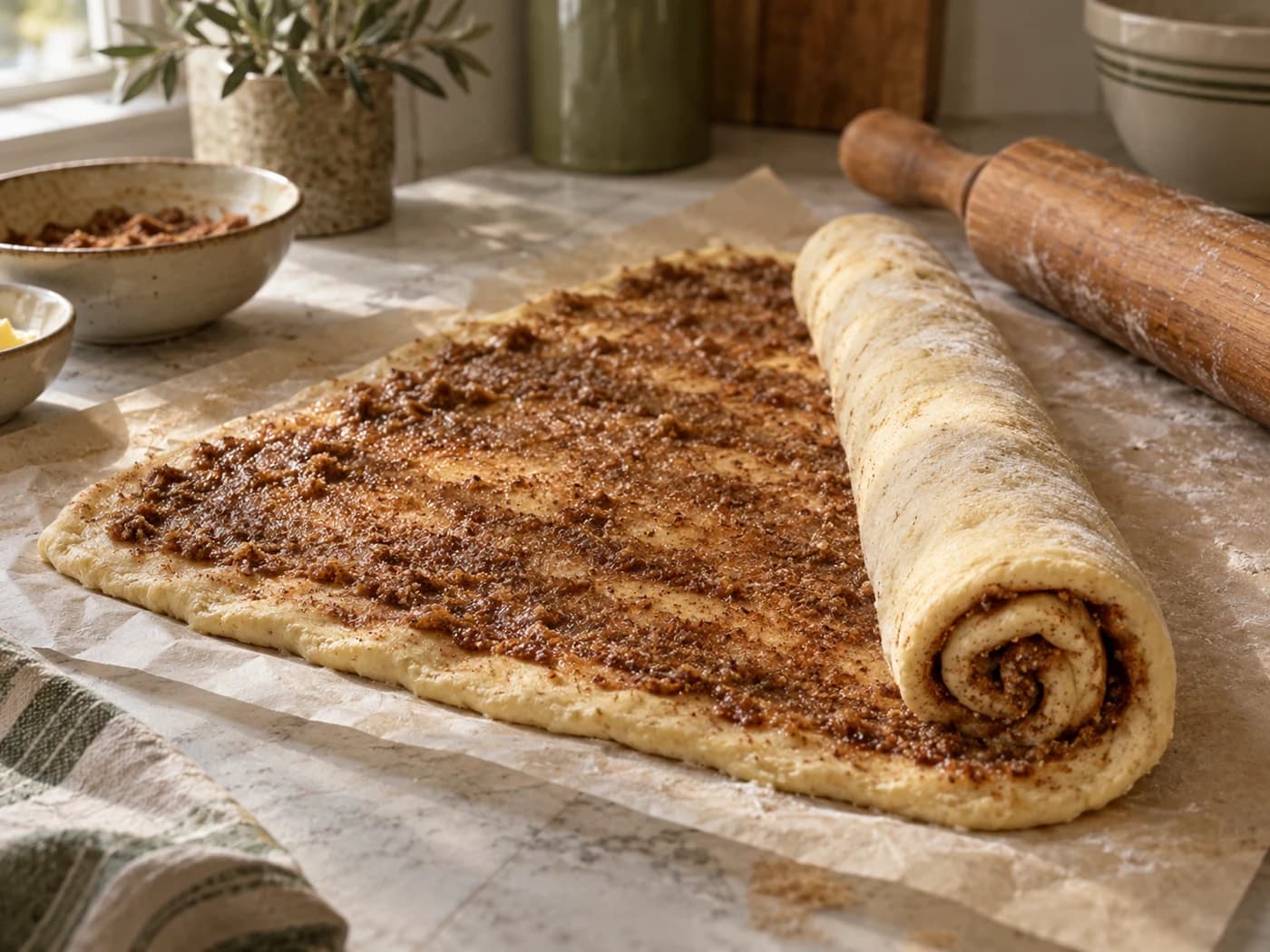
Spread the softened 25g butter thinly over the sheet, leaving roughly a 1cm clean margin along one long edge. Sprinkle the 50g brown sugar mixed with 6g cinnamon evenly over the butter. Starting at the opposite long edge, roll towards the clean margin to make a log about 30cm long. Keep it snug enough to hold the spiral without stretching the dough hard. Place the seam underneath and mark eight equal sections before cutting with a sharp knife.
Arrange and bake
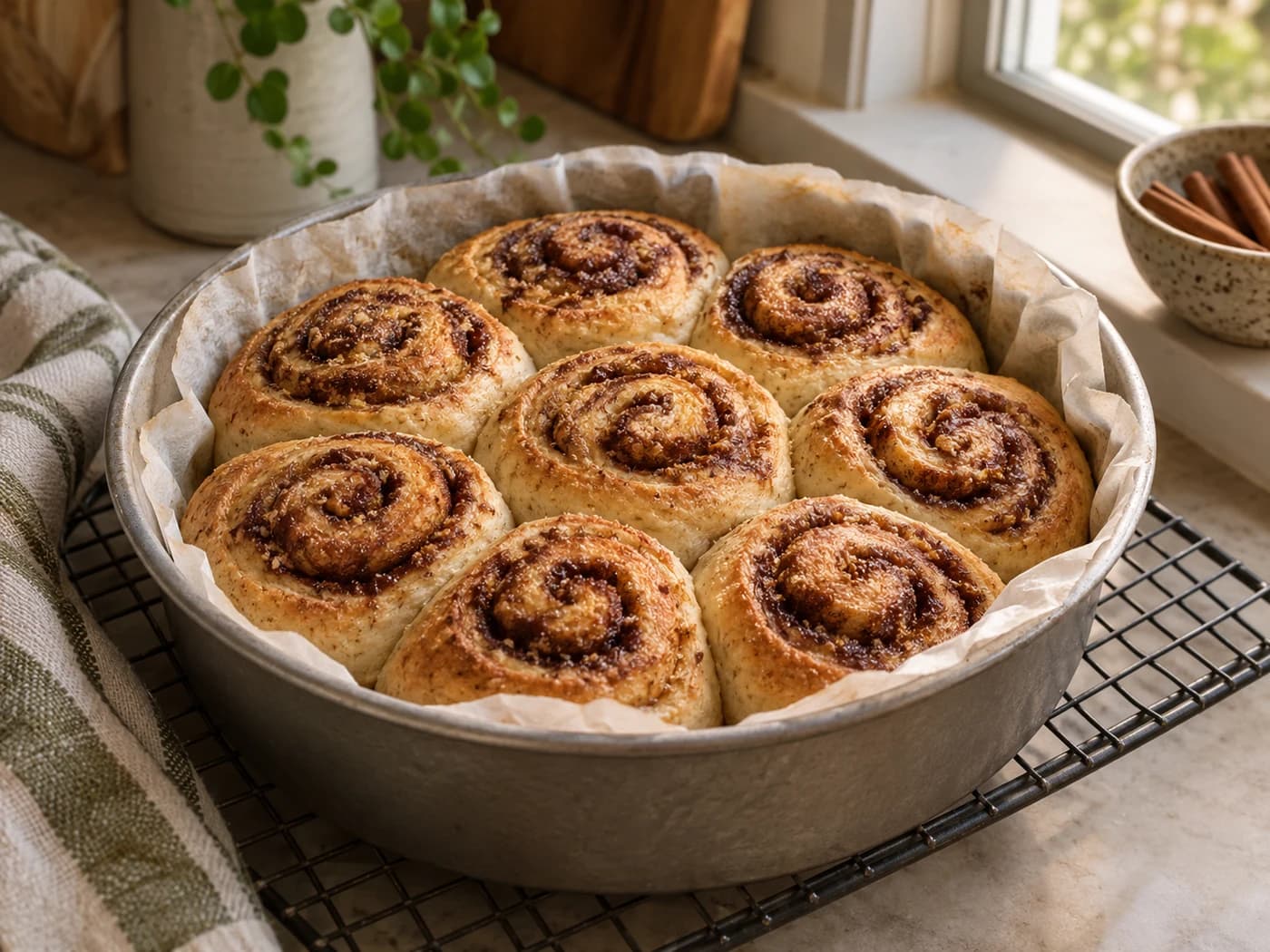
Cut eight rolls roughly 3.75cm wide and place them cut-side up in the lined pan, with seven around one in the middle and room for expansion. Bake for approximately twenty-five to thirty-five minutes, beginning to check at twenty-five. The tops should be lightly golden and the dough at the centre of a middle roll should be set, without a wet floury seam. Around 190°F / 88°C in the thick dough can be a useful additional baking cue, checked away from the pan and cinnamon filling. Timing and that cue are estimates for this formula; assess the actual centre too.
Cool and glaze
Rest the pan on a rack for about ten minutes. Whisk the reserved 100g yogurt with powdered sugar and vanilla, keeping it chilled until needed. Divide the complete glaze across the eight rolls after the initial cooling interval, leaving the spirals visible. For storage, it is often more convenient to keep rolls and glaze separate and apply one eighth of the glaze when serving. Refrigerate covered portions at 40°F / 4°C or below, following the storage guidance below. Extra pans need their own checks and more elapsed time.
Tips for the Best Results
The roll is easier to shape when you treat the dough and filling as separate small tasks. Prepare the pan, reserve the dusting flour, mix the sugar and cinnamon, and soften the butter enough to spread. Then make the dough. That order gives you fewer interruptions once the yogurt meets the flour and leavener. The five-minute rest is a short handling step; leaving the dough out for a long period does not turn it into a yeast-proved roll.
Handle stickiness with a scraper first
A soft dough can feel sticky on a warm counter. Lift and turn it with a scraper, and use the reserved flour lightly. Adding large amounts of flour because the first touch feels tacky can make the final roll drier and changes the nutrition. If the dough is exceptionally loose, review the yogurt thickness and weighed quantities. If it is cracking before shaping, check the powder and flour balance. Both conditions need observation rather than an automatic extra scoop of one ingredient.
Keep the filling thin and even
A thick lump of butter or a mound of cinnamon sugar can make the log uneven and leave some rolls much sweeter than others. Spread from the centre towards the edges, keeping the clean seam margin. Sprinkle rather than dumping the filling in one stripe. A little spilled filling can be placed with the rolls and counted if it is eaten; the reference already includes the entire measured amount. Avoid adding unweighed butter just because one corner looks paler than the rest.
Cut without flattening the spiral
Mark the eight sections before slicing. A sharp knife used with a gentle sawing movement can help preserve the shape. If you use food-safe unflavoured floss, slide it under the log and cross the ends carefully, keeping the work clean. Tuck the seam underneath each roll if it loosens. Place the pieces with space in the pan rather than squeezing a multiplied batch into the same area. Equal cuts also make the serving estimate easier to use.
Read the middle of the pan
The outer rolls can colour before the centre is set. Check a middle roll as well as the edges, and continue only as needed. If the tops brown quickly, a loose foil cover can protect them while the centre finishes, keeping foil safely away from heating elements. A dry roll can reflect a long bake or excess flour; a gummy seam needs a closer review of centre doneness and dough thickness. Allow the cooling interval before judging the finished crumb and applying the chilled glaze.
High-Protein / Lower-Calorie Variations
The simplest variation is a different portion of the complete original roll. Changing the dough, filling or glaze creates a different recipe balance and can affect handling. Protein-rich baking is especially sensitive to powder and moisture changes, so avoid treating every numerical improvement as an established texture improvement. The options here give you clear arithmetic starting points and state when a method needs reassessment. Fruit, drinks and other extras remain separate from each named scenario.
Half a complete roll
Half of a reference roll with half its glaze share is about 126 calories and 7.2g protein. This gives a few warm cinnamon bites alongside a larger breakfast or another snack. It uses the same recipe and baking method. Making sixteen mini rolls from the original log is a different shaping choice: each carries half the nutrition but may need a shorter bake. The card’s sixteen-roll setting doubles the ingredients to make sixteen full-size reference rolls in two pans.
Leave the glaze off
An original roll with its complete dough and cinnamon filling, but no yogurt, powdered sugar or vanilla glaze, is approximately 233 calories and 13g protein. That removes about nineteen calories and 1.3g protein from the reference portion. It is a modest change because the glaze is light. Keep the flavour and portion you actually want, and do not use the unglazed numbers while adding a different unmeasured frosting. The original filling butter and sugars remain counted in this scenario.
Add plain yogurt at serving
Serve one complete roll with an additional 100g plain nonfat Greek yogurt for roughly 311 calories and 24.5g protein before fruit. Keep that side separate from the measured yogurt already allocated to the glaze. A half-roll plus the same yogurt side is about 185 calories with 17.3g protein. These options change the plate without asking the rolled dough to cope with more whey. Another yogurt brand or flavoured version needs a label-based calculation.
Changing the filling or powder
Reducing brown sugar or butter changes sweetness and the cinnamon layer, while adding powder changes the dough’s dry balance. These changes have not been verified as equivalent bakes here. A sugar substitute may behave differently in a warm filling, and a liquid syrup introduces moisture. If you want a substantially different dough or a very low-calorie filling, choose a formula developed for that result. The smaller portion and clearly counted glaze choice are easier ways to keep the reference understandable.
The following are defined portions or topping changes, with fruit and drinks counted separately.
| Version | Calories | Protein |
|---|---|---|
| One complete reference roll | 252 kcal | 14.3g |
| Half a complete roll | 126 kcal | 7.2g |
| Original roll without any glaze | 233 kcal | 13.0g |
| One complete roll + 100g extra yogurt | 311 kcal | 24.5g |
| Half a complete roll + 100g extra yogurt | 185 kcal | 17.3g |
| Two complete rolls | 504 kcal | 28.6g |
Serving Suggestions
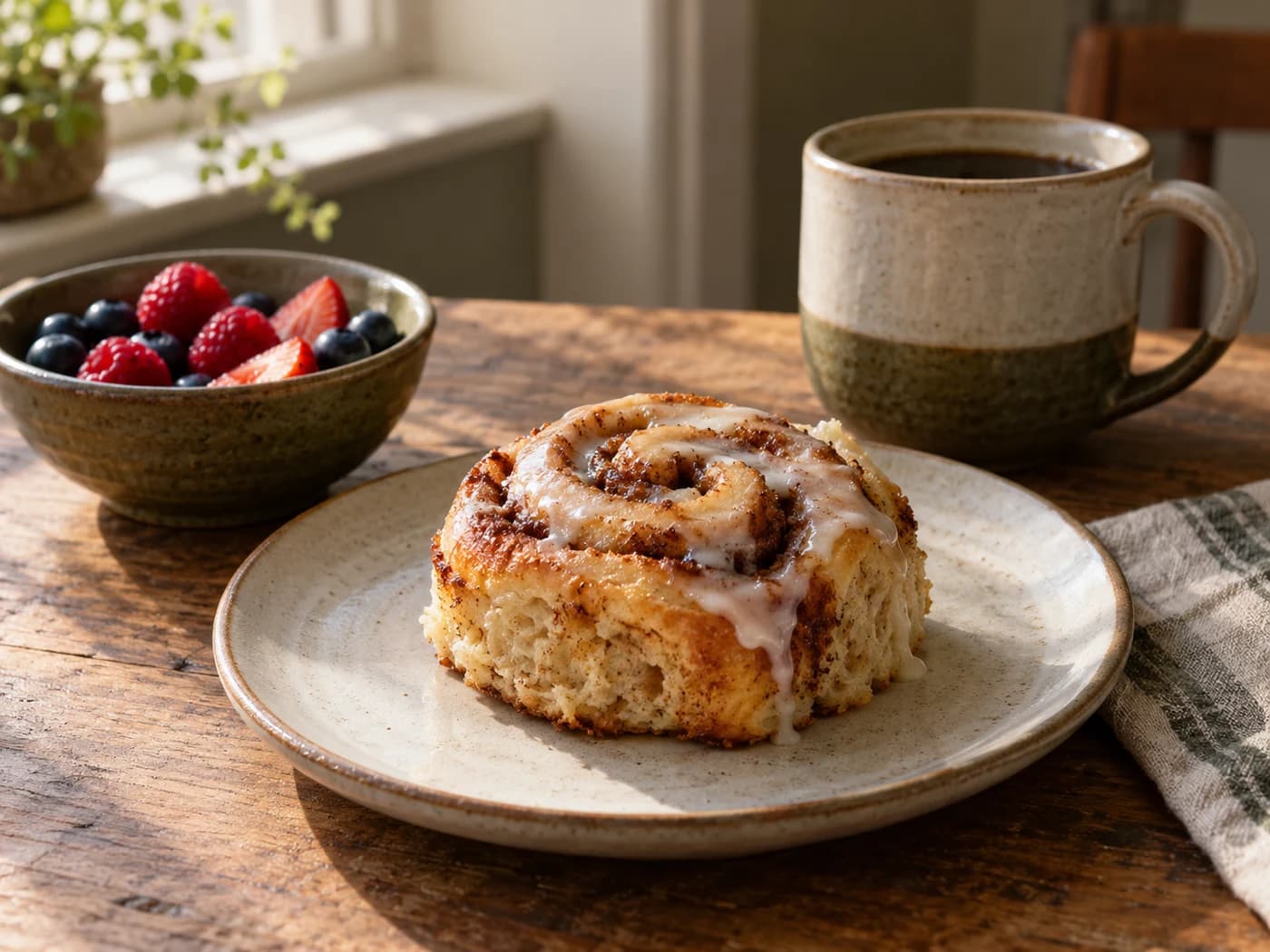
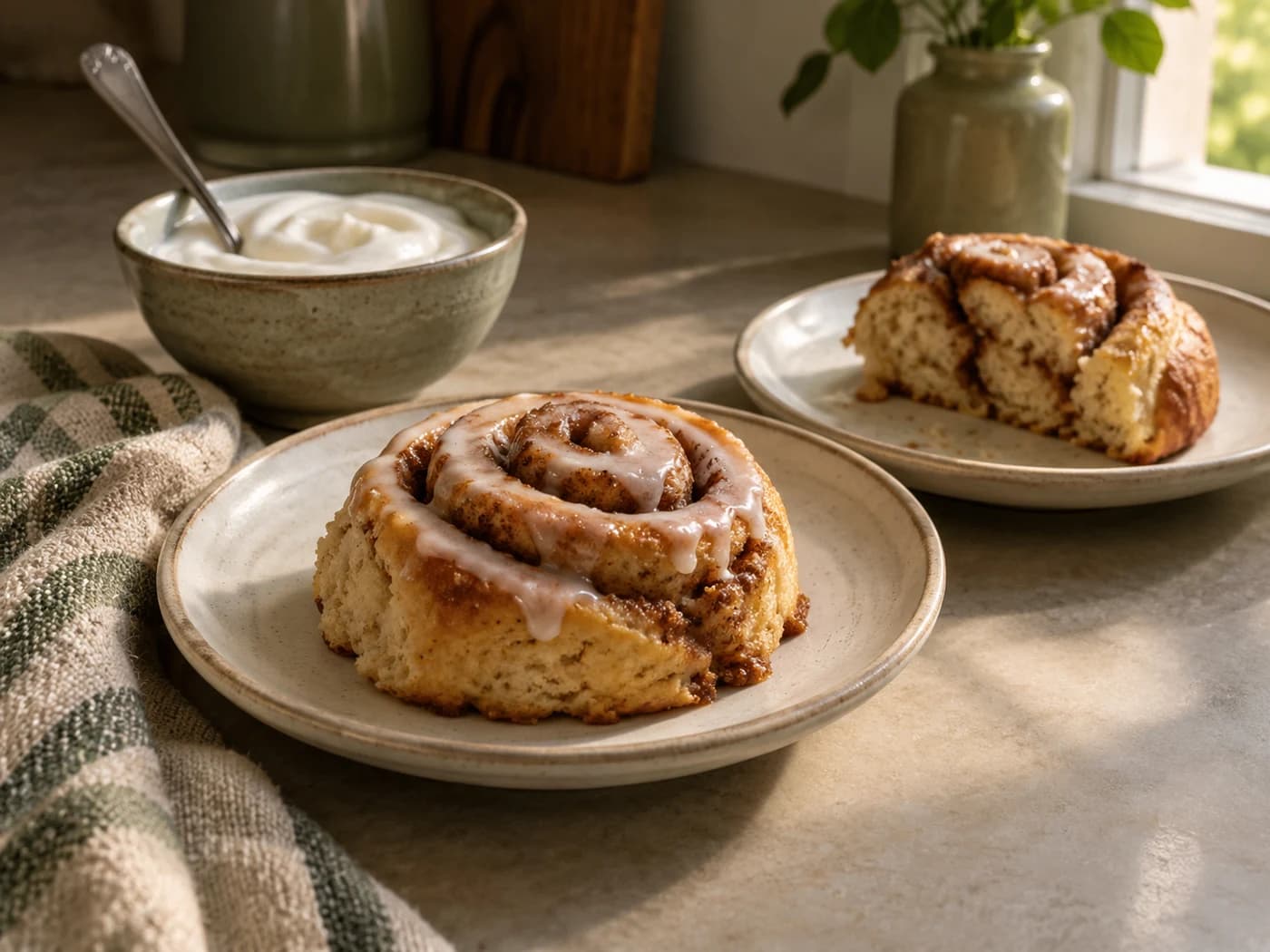
A cinnamon roll is pleasant when the dough has cooled enough to hold its spiral but still feels warm. The light yogurt glaze supplies a little tang against the brown-sugar filling. Add it after the first cooling interval so it does not immediately run into a very hot pan. An unsweetened coffee or tea and a separate bowl of berries can make a simple plate. Keep the food comfortable to eat rather than rushing to serve it directly from the oven.
A measured breakfast plate
One complete reference roll can sit alongside fruit or another breakfast food. If you add plain yogurt, weigh the side and count it separately from the glaze. Consider the whole breakfast when planning energy and protein. A sweetened drink or a larger topping can change the total significantly even when the roll itself is measured. The 252-calorie figure belongs to one eighth of the original complete recipe, not to an unlimited selection of extras around it.
For sharing
Bring the pan to a heat-safe serving surface and lift each roll carefully from the parchment. Use a broad utensil to support the spiral. Serve the expected portions and keep the rest stored appropriately rather than leaving glazed rolls out for a long gathering. Explain that the reference contains wheat and dairy and that the whey example includes soy. Packages can list other cross-contact concerns, so the recipe name alone is not enough information for somebody with an allergy.
Extra toppings
A few chopped nuts, a chocolate drizzle or a thicker cream-cheese topping can be chosen deliberately, with a new calculation. Each brings its own flavour and nutrients. You do not need to cover the visible spiral to make a satisfying plate. If topping several portions, divide the measured addition evenly or record the amount on each individual roll. The original thin yogurt glaze is already counted, so adding another finish is additional rather than a free replacement unless you remove and recalculate the original.
An afternoon portion
Half or one complete roll can work as a small bake with a drink, depending on appetite and the next meal. Let the portion suit the occasion rather than automatically making it as large as possible to raise the protein amount. The cinnamon flavour is spread through the filling, so a smaller piece still gives a clear taste of the dish. Enjoy it as food, with the recipe numbers there to support practical planning when you want them.
Meal Prep & Storage
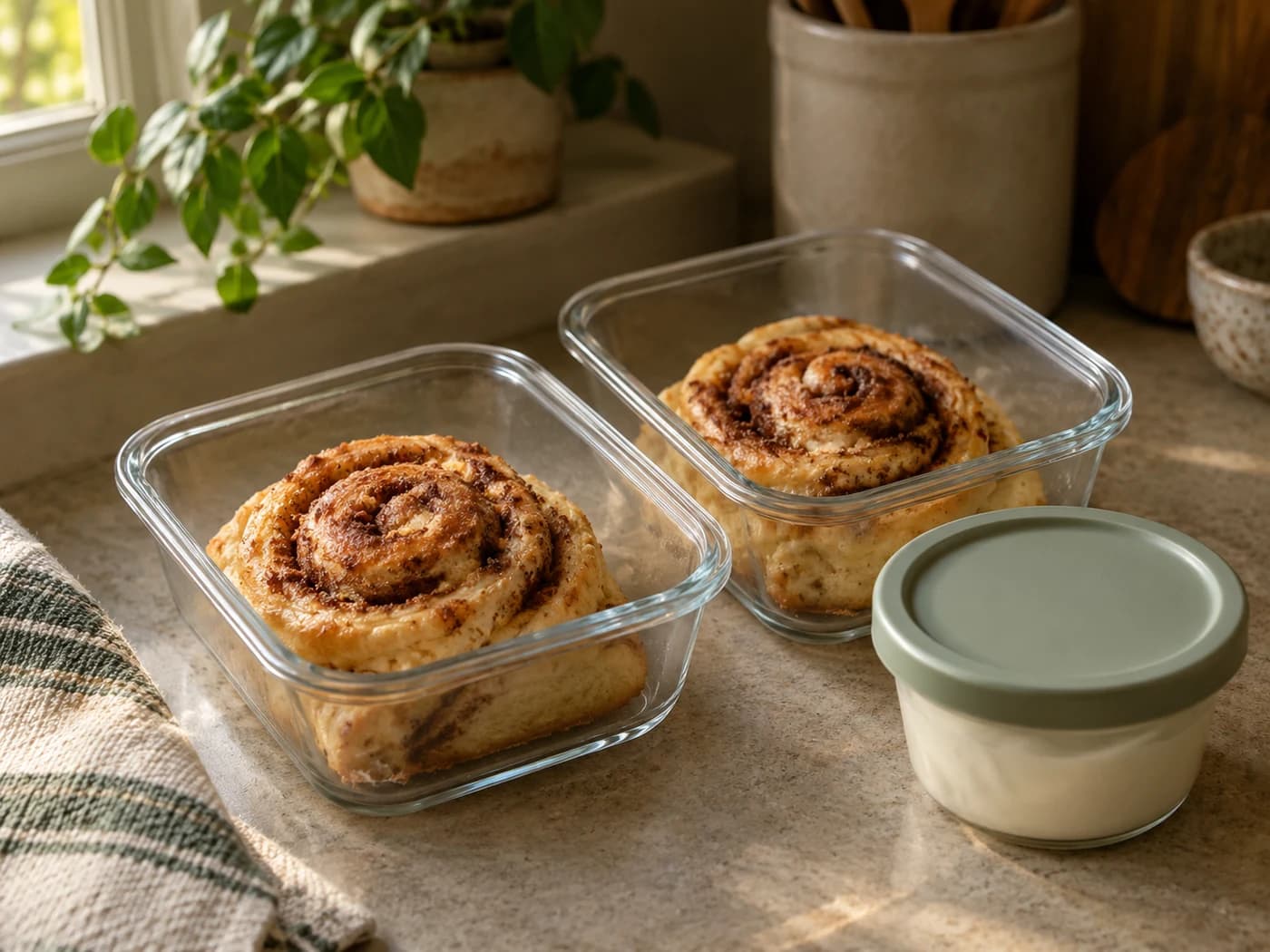
For advance preparation, bake the rolls, cool them fully and store the glaze separately. Refrigerate covered at 40°F / 4°C or below, planning to use within three to four days with suitable handling as a conservative window. This is based on general leftover and perishable-food guidance, not a measured shelf-life study of this exact whey-and-yogurt roll. Plain rolls can firm during chilling, while glaze can wet a stored surface. Keeping the two parts separate gives you more control at serving.
Cool before sealing
Place the pan on a rack, release the rolls when they are manageable and allow them to cool before closing a storage container. Steam trapped against a lid can leave the crumb and surface damp. Complete cooling and refrigeration within a sensible handling window rather than leaving the pan out all afternoon. Keep total unrefrigerated time within two hours, shortened to one hour when the environment is above 90°F / 32°C. Prepare refrigerator space before making a larger batch.
Allocate the glaze clearly
The full glaze weighs about 125g from the listed ingredients, before bowl losses. Divide it into eight equal shares for the reference servings, ideally using the actual finished amount rather than guessing from spoon sizes. The quantity is small, so a single shared chilled container can also be convenient if you measure each serving. Do not add another 100g yogurt per roll by confusing the whole-batch glaze amount with an individual side portion.
Freeze plain portions
Freeze fully cooled, unglazed rolls in suitable packaging, with about one month as a practical quality target. Protect them from freezer air and label the preparation date. Texture may change after freezing, so the window is not a promise of an identical fresh crumb. Thaw in the refrigerator. Prepare a fresh measured glaze when convenient instead of expecting frozen yogurt glaze to retain the same appearance and texture. Count the glaze you actually use on the thawed portion.
Rewarming and transport
A plain refrigerated roll can be warmed briefly for serving, then glazed with its chilled measured topping. Small whey-containing bakes can become firmer or rubbery after excessive microwave heating, so use a short interval and judge the result. Follow suitable leftover reheating guidance when applicable. Keep stored portions chilled during transport with an insulated container and sufficient cold packs. Warming cannot correct a portion that was improperly stored or left out beyond an appropriate handling period.
Full Nutrition Information
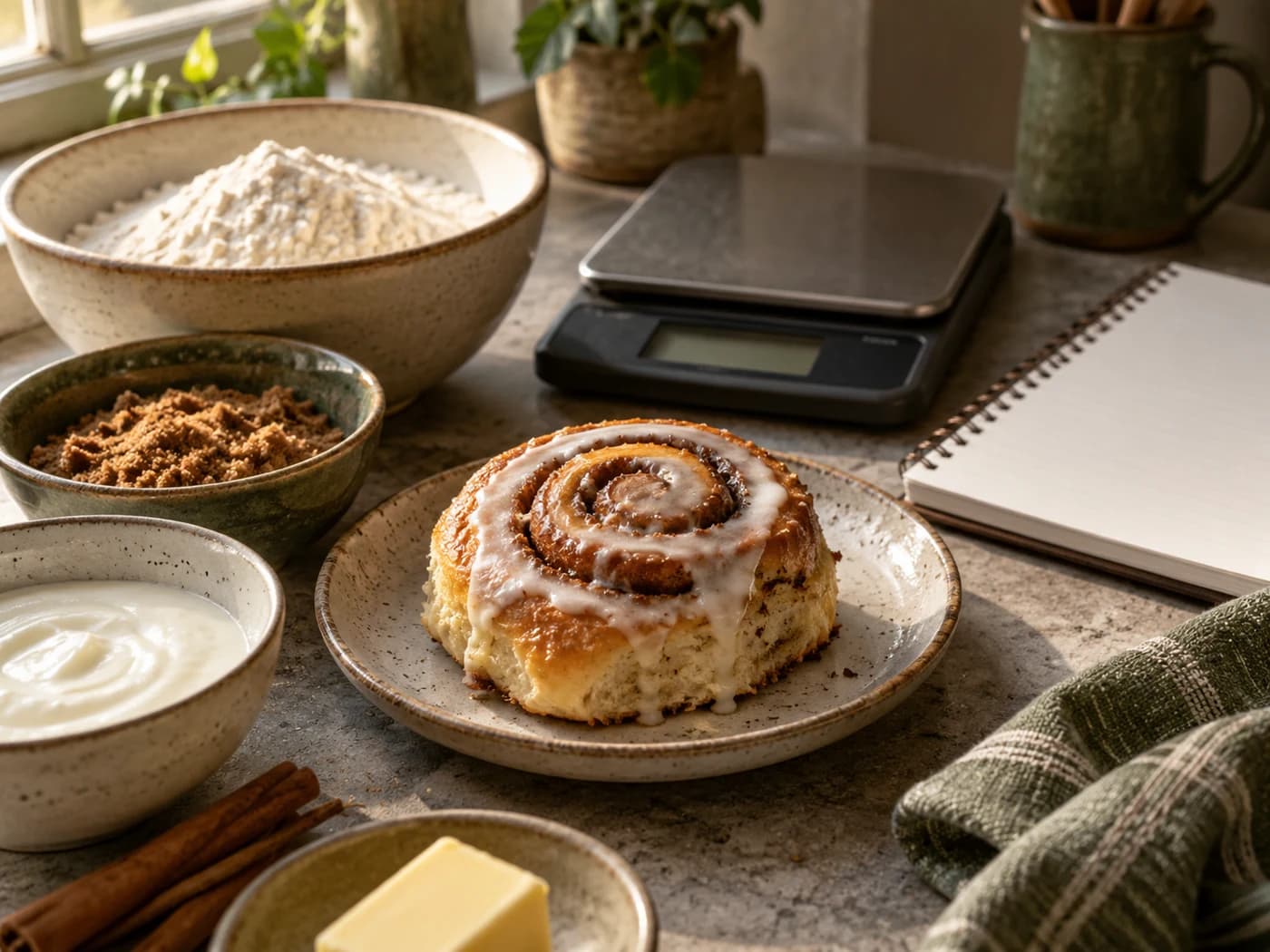
The calculation multiplies each ingredient’s per-100g reference values by its weighed quantity, adds them for the batch and divides by eight equal complete rolls. The flour is counted at the full 250g, including the 10g dusting reserve. Yogurt is counted at the full 400g across dough and glaze. Butter, oil, granulated sugar, brown sugar and powdered sugar are included as well as the protein-rich ingredients. This avoids describing only the most favourable part of the roll.
Additional nutrients
One complete reference roll provides about 1.2g fibre, 13.1g total sugars, 1.9g saturated fat and 258mg sodium. Total sugars include naturally occurring dairy sugars and the sugars in the measured sweeteners and whey. Added sugars are not separately calculated. The recipe uses 90g total granulated, brown and powdered sugar ingredients, but their ingredient weights are not a complete added-sugars declaration for every component. Cholesterol and a complete vitamin-and-mineral panel are not calculated because the powder label does not supply all relevant values.
Source assumptions
The generic ingredients use historical USDA SR28 composition values, including unenriched all-purpose wheat flour, plain nonfat Greek yogurt, salted butter, canola oil and the named sugars. Whey uses the linked French Vanilla manufacturer label with 376 calories and 79g protein per 100g. Its salt is converted to sodium using a factor of 2.5. Powder fibre is undeclared and is not added to the fibre estimate. Brand, flavour, country and formulation differences should be handled with the current product label you actually buy.
Rounding and equal portions
Before rounding, one complete roll is about 252.2 calories, 14.31g protein, 38.12g carbohydrates and 4.61g fat. Ingredient-row rounding can cause small differences if you sum only the displayed cells. The calculation uses the unrounded contributions. Unequal cuts or glaze portions change the per-roll amount even when the whole recipe is unchanged. Baking removes moisture and changes finished weight; it does not provide a reason to remove all ingredient energy from the reference total.
Calculate a changed recipe
If you use another powder, yogurt or filling, keep the full ingredient total and serving yield separate. Use the food calculator to total the actual weights and divide by the complete rolls you make. Record extra dusting flour, pan butter or toppings rather than assuming they are too small to matter. Treat the result as a useful homemade-food estimate, not a laboratory result. The purpose is transparency and a repeatable portion, with enough context to understand where the values come from.
| Ingredient | Amount | Calories | Protein | Carbs | Fat |
|---|---|---|---|---|---|
| All-purpose flour | 250g | 910 kcal | 25.8g | 190.8g | 2.5g |
| Vanilla whey protein blend | 60g | 226 kcal | 47.4g | 3.1g | 2.5g |
| Plain nonfat Greek yogurt | 400g | 236 kcal | 40.8g | 14.4g | 1.6g |
| Granulated sugar | 20g | 77 kcal | 0.0g | 20.0g | 0.0g |
| Canola oil | 10g | 88 kcal | 0.0g | 0.0g | 10.0g |
| Baking powder | 8g | 4 kcal | 0.0g | 2.2g | 0.0g |
| Fine salt | 2g | 0 kcal | 0.0g | 0.0g | 0.0g |
| Salted butter | 25g | 179 kcal | 0.2g | 0.0g | 20.3g |
| Brown sugar | 50g | 190 kcal | 0.1g | 49.0g | 0.0g |
| Ground cinnamon | 6g | 15 kcal | 0.2g | 4.8g | 0.1g |
| Powdered sugar | 20g | 78 kcal | 0.0g | 20.0g | 0.0g |
| Vanilla extract | 5g | 14 kcal | 0.0g | 0.6g | 0.0g |
| Whole batch | 8 complete glazed rolls | 2018 kcal | 114.5g | 305.0g | 36.9g |
| One reference serving | Batch ÷ 8 | 252 kcal | 14.3g | 38g | 5g |
| Dietary fiber | 1.2g |
|---|---|
| Total sugars | 13.1g |
| Saturated fat | 1.9g |
| Sodium | 258mg |
Estimated recipe nutrition, not a laboratory analysis. Includes complete dough, reserved dusting flour, cinnamon filling and the full yogurt glaze. Extra toppings and sides are additional. Powder fibre is undeclared, so its contribution is not calculated. Cholesterol, added sugars and complete micronutrients are not calculated.
How This Fits Your Daily Protein Goal
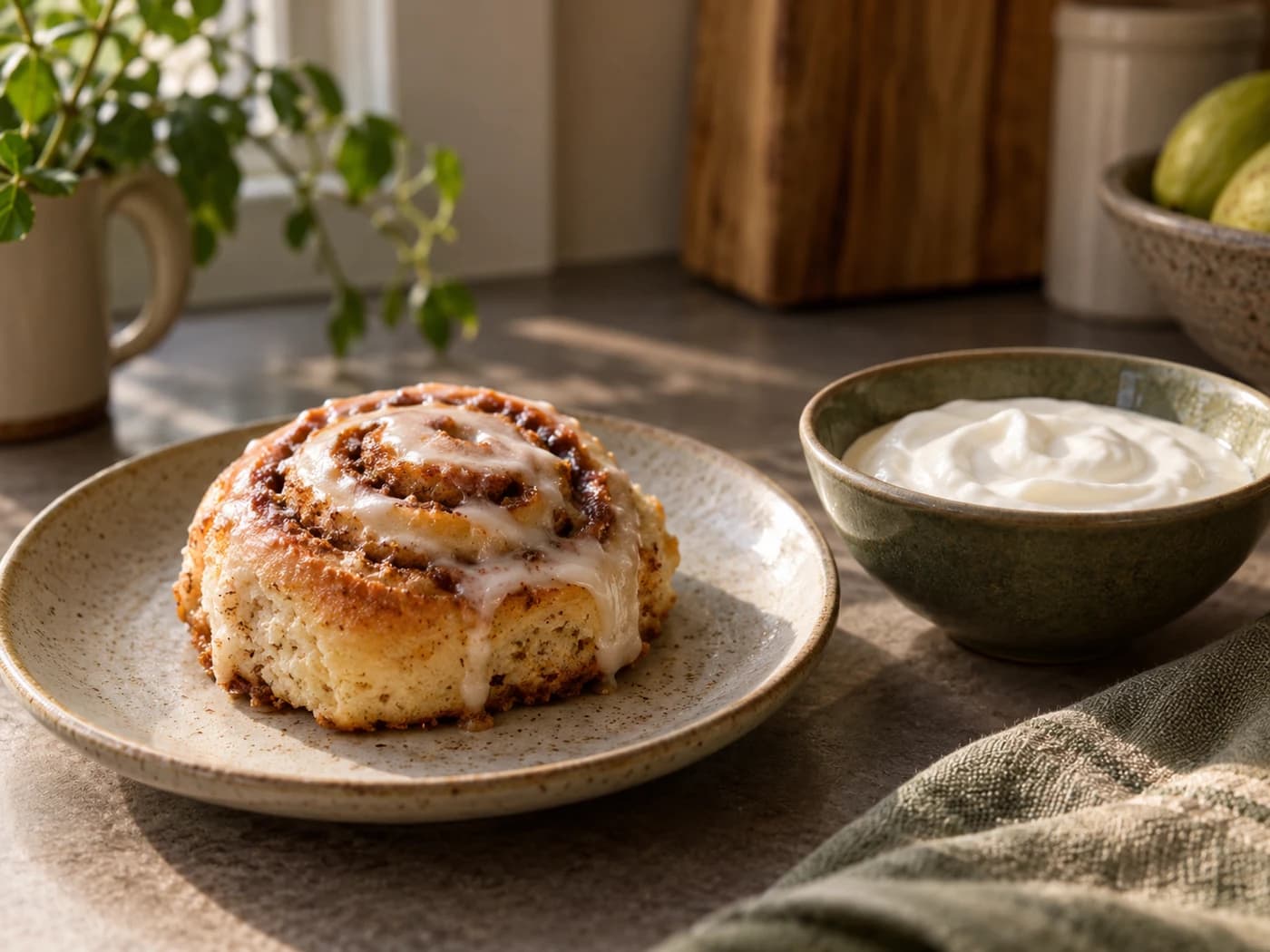
One reference roll contributes about 14.3g protein. For example, that is roughly 14% of a 100g daily target, 12% of 120g and 10% of 150g. These are arithmetic examples rather than target recommendations for every reader. Your own needs and chosen planning method determine the appropriate number. The protein calculator can provide a starting point with its assumptions explained, while the recipe helps you understand one particular serving within that wider plan.
Look across the day
Check breakfast, lunch, dinner and your regular snacks before deciding whether a cinnamon roll needs to close a protein gap. A range of suitable foods can contribute, including dairy, eggs, beans, tofu, fish and other familiar staples. The roll can be chosen because you enjoy it as well as for its protein contribution. It does not need to replace an entire varied meal merely because its label contains the word protein.
A worked example
Suppose your own plan uses a 120g target and your meals so far contribute around 90g. One complete reference roll adds about 14.3g, taking the arithmetic total to roughly 104g. An additional 100g portion of the reference nonfat Greek yogurt adds about 10.2g, bringing the example to roughly 114.5g. That is an illustration of counting measured foods, not a prescription to eat that exact plate. Appetite, total energy and the rest of the day still matter.
Portion without chasing one number
Two complete rolls supply about 28.6g protein and about 504 calories. Half a complete roll supplies about 7.2g protein and 126 calories. Both follow the same recipe arithmetic, and either amount may suit a different occasion. There is no need to choose the larger amount automatically to maximise protein. A separate yogurt side can be a clearer adjustment than adding untested extra whey to a dough that still needs to roll and hold its spiral.
Keep a useful level of precision
The values are estimates from ingredient references and equal portions. It is sensible to round them for everyday tracking rather than treating a homemade roll as accurate to several decimal places. Use your own labels consistently and count the glaze share once. If you follow an individual medical nutrition plan, use its ingredient and portion guidance. A general article and calculator can organise ordinary planning but cannot define a tailored diet for every circumstance.
Make it personal
Where does a cinnamon roll fit in your day?
Estimate your daily protein target, then plan meals you enjoy.
Recipe Card
The card combines the twelve ingredients and six main steps in a compact cooking view. Eight rolls means one base batch in one 9-inch pan. Sixteen and twenty-four mean two and three same-size eight-roll pans. Every ingredient scales, including the dusting reserve, filling and glaze. The planned reference roll and its approximate nutrition stay the same. Do not compress a double or triple dough batch into one original-size pan and expect the same centre or timing.
Shape in manageable batches
For more than eight rolls, divide the dough into equal base-batch portions and roll each into its own roughly 30 by 24cm rectangle. Divide filling in the same way and cut each log into eight pieces. This keeps the sheet thickness, log length and pan arrangement comparable to the reference. One enormous rectangle can be harder to lift and may develop thin patches. A larger mixing bowl does not remove the value of shaping smaller consistent sheets.
Check the allocations
The flour total includes 240g dough and 10g dusting per base batch. The yogurt total includes 300g dough and 100g glaze. Set those portions aside before mixing, and follow their scaled amounts in the method. The checklist helps keep track of weighing; it does not remove an ingredient from nutrition. Changing the yield clears the checkboxes so you can review the new quantities. There is no separate uncounted pan oil because the reference uses lined pans.
Print before starting
Choose the number of full-size rolls you plan to make, then use Print recipe for a compact cooking copy. The print view focuses on ingredients, timing, steps and serving notes. The full article remains useful for powder swaps, rolling issues and storage detail. Read the complete method once before beginning, particularly if you have not shaped a spiral dough before. A printed checklist is helpful, but the actual dough and middle roll still need your observation.
Allow extra elapsed time
The roughly seventy-minute planning total is for the base batch. More dough sheets, pans or oven rounds add preparation and waiting. Check each pan separately and keep the yogurt glaze refrigerated until needed. The per-roll macro line remains about 252 calories and 14.3g protein, rounded to 14g, when each roll receives its share of the complete reference. An unglazed portion uses the separate variation. Added fruit, nuts, extra frosting and drinks are additional.
Your cinnamon swirls, ready to make
High-Protein Cinnamon Rolls
Quick Greek-yogurt dough, cinnamon filling and light yogurt glaze.
*One-pan planning estimates. Larger batches use separate same-size pans, more shaping and possibly extra oven rounds. Roll each base batch as its own sheet; these settings make complete reference rolls, not mini rolls.
Ingredients
Method
- Prepare the pan and allocations
Preheat to 350°F / 175°C conventional. Line 1 separate 9-inch / 23cm round pan, at least 2 inches / 5cm deep, with baking parchment. Separate 250g flour into 240g dough and 10g dusting; separate 400g yogurt into 300g dough and 100g glaze.
- Mix and rest the dough
Whisk dough flour, 60g whey, 8g baking powder, 2g salt and 20g granulated sugar. Stir in dough yogurt mixed with 10g oil. Press together gently and rest about five minutes. Divide into 1 equal base-batch dough portion before rolling. Do not taste raw flour dough.
- Roll and fill
Roll each base-batch dough portion into an even 30 by 24cm rectangle, about 7–8mm thick, using reserved flour lightly. Divide 25g softened butter and the 50g brown sugar mixed with 6g cinnamon equally between sheets. Leave a 1cm clean margin along one long edge of each sheet.
- Form and arrange eight rolls
Roll each sheet from the opposite long edge towards its clean margin into a roughly 30cm log, seam underneath. Mark and cut each log into eight equal pieces about 3.75cm wide: 8 complete rolls total. Arrange each set of eight in its own lined pan, seven around one centre roll with expansion room.
- Bake and check the middle
Bake roughly 25–35 minutes, checking from twenty-five. Tops should be lightly golden; a middle roll should have set dough without a wet floury seam. Around 190°F / 88°C in thick dough is an additional estimated cue, checked away from filling and pan. Judge the actual centre as well.
- Cool, glaze and store
Cool each pan on a rack about ten minutes. Whisk reserved 100g yogurt, 20g powdered sugar and 5g vanilla; keep chilled. Divide the complete glaze equally across 8 rolls. For storage, cool fully and refrigerate covered at 40°F / 4°C or below; use within 3–4 days with suitable handling, keeping glaze separate if convenient.
Check a middle roll as well as the edges. Apply the measured glaze after initial cooling; keep stored glaze chilled.
Protein before rounding: 14.3g. Includes dough, dusting flour, complete filling and full yogurt glaze. Extras are additional. Contains wheat and dairy; reference whey contains soy. Check all labels. Refrigerate at 40°F / 4°C or below and use within 3–4 days with suitable handling.
Frequently Asked Questions
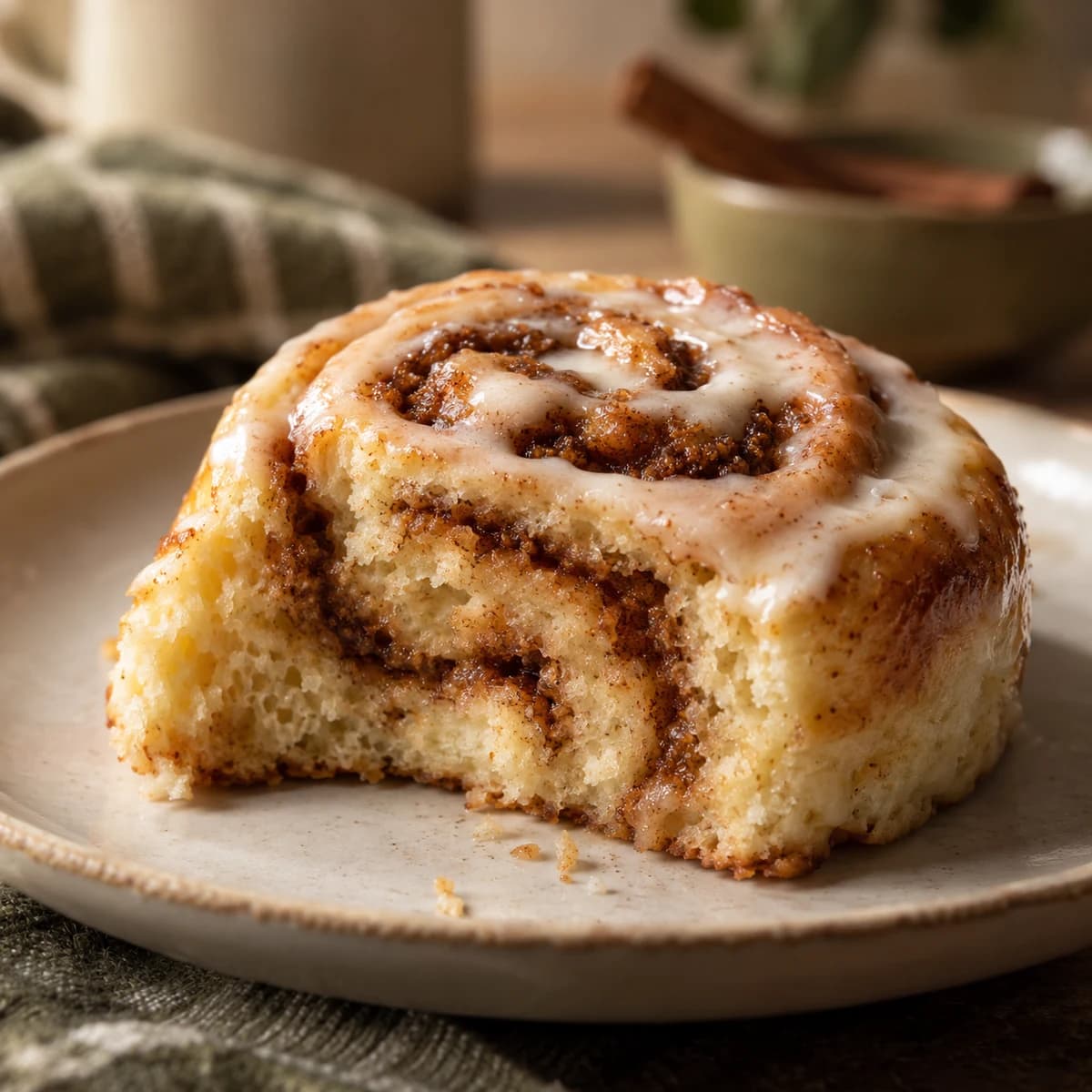
Cinnamon-roll questions often involve two separate concerns: whether an ingredient can be changed, and whether the changed dough will still roll and bake in the same way. The FAQ below keeps those concerns visible. It also clarifies which serving includes the glaze and how the card handles larger batches. A few straightforward notes about weights and shaping can prevent a much less useful conversation about why two very different products did not produce an identical picture.
Questions before rolling
Check that the yogurt is thick, the flour is plain and the powder is the intended type. Keep dusting flour separate from the dough amount and give the mixed dough its short rest. If you explore a swap, note the product and quantity. That makes it possible to recalculate and understand the result. An ingredient described as high protein may still have a different moisture, sweetness or thickener balance from the reference whey and dairy.
Questions about the pan
Eight equal pieces from a consistent log give a clearer reference than different-sized cuts squeezed into available spaces. Each scaled base batch has its own same-size pan. A deeper or narrower pan changes how the middle pieces bake, while an oversized tray can allow more spreading. Use the listed pan and arrangement for a first attempt when possible. Keep the centre check separate from how attractive the outer edges look.
Questions after baking
Judge the crumb after the first cooling interval. A dry roll can reflect excess flour, a changed powder or a long bake, while a wet dough seam needs a review of centre doneness. The glaze cannot fix an inadequately baked middle. A slightly uneven spiral is an ordinary shaping result and can still be enjoyable when the roll is properly prepared and stored. Use the answers with the method and your actual ingredients, without treating a timer as a complete inspection of the food.
How much protein is in one cinnamon roll?
One eighth of the full recipe, including filling and yogurt glaze, provides approximately 14.3g protein, rounded to 14g in the summary. Half provides about 7.2g. The estimate counts all measured flour, including the dusting reserve. Unequal cuts or glaze portions change the per-roll amount; use your own product labels for a brand-specific calculation.
Does the nutrition include the filling and glaze?
Yes. The reference includes all dough ingredients, the butter, brown sugar and cinnamon filling, and the full yogurt, powdered sugar and vanilla glaze. It conservatively counts all reserved dusting flour too. Extra toppings and sides are additional. An original roll without any of the glaze is about 233 calories and 13g protein.
Do I need yeast or a proving period?
No. This quick dough uses 8g baking powder per eight-roll batch. A five-minute rest helps handling; it is not a yeast-proving stage. The reference is intended as a modest quick-dough roll with a closer crumb. Adding yeast or leaving it for a long rise would create a different method and is not established here as an identical version.
Which powder should I use?
Start with 60g vanilla whey blend, weighed. The linked French Vanilla label is the nutrition reference, with 79g protein per 100g. Brands, flavours and thickeners vary. Casein and plant powders can absorb liquid differently and are not established direct swaps. Scoop sizes do not replace the recipe weight or guarantee matching dough behaviour.
Can I make the rolls without protein powder?
Removing the 60g whey changes dry ingredients, protein and the yogurt balance. Replacing it with more flour also makes a different dough. A powder-free version has not been established as identical here. Choose a method developed without powder if that is your preference rather than retaining the reference macros and timing after a substantial change.
Why is my dough sticky or cracking?
Yogurt thickness, powder formulation, flour absorption and weighing errors can affect the sheet. Complete the five-minute rest, use a scraper and apply the reserved dusting flour lightly. Review the weights before adding more ingredients. Record any added flour or liquid and recalculate. A very thin yogurt or different powder may require a separately adjusted dough.
How much flour and yogurt go into the dough?
Each base batch uses 240g flour in the dough with 10g reserved for dusting, and 300g Greek yogurt in the dough with 100g reserved for glaze. Those totals are 250g flour and 400g yogurt. Keep the allocations separate before mixing, especially when scaling, so glaze yogurt is not accidentally put into the dough.
How should I roll and cut the dough?
Roll one base-batch dough into an even rectangle roughly 30 by 24cm and about 7–8mm thick. Spread the measured butter and cinnamon-sugar filling, leaving a clean margin along one long edge. Roll from the opposite long edge into a roughly 30cm log, seam underneath. Mark eight equal cuts of about 3.75cm before slicing gently.
What pan should I use?
Use a parchment-lined 9-inch / 23cm round pan at least 2 inches / 5cm deep for each eight-roll batch. Arrange seven rolls around one in the centre with expansion room. A narrower or deeper pan changes centre baking. The scaled settings use additional same-size pans rather than compressing multiplied dough into the original pan.
How do I check the middle is baked?
Begin checking around twenty-five minutes. Tops should be lightly golden, and a middle roll should have set dough without a wet floury seam. Around 190°F / 88°C in the thick dough is a useful additional estimated cue, checked away from filling and pan. Judge the actual centre as well; time and top colour alone cannot inspect your dough.
Can I make them gluten-free or vegan?
The reference contains wheat and dairy, and the example whey contains soy. Gluten-free flour and plant powder are not established direct swaps for this rolled dough. A vegan version replacing whey, yogurt and butter needs its own developed method. No egg is deliberately added, but cross-contact statements can include egg and other allergens; check every package and preparation condition.
Can I reduce sugar or replace the butter?
Changing the brown-sugar filling, dough sugar, glaze sugar or butter can change flavour, moisture and shaping. Syrups and alternative sweeteners are not verified as identical substitutions here. Calculate from actual labels and amounts. Half a complete roll or the clearly calculated unglazed version is a more straightforward documented portion choice than several simultaneous recipe changes.
What do the 8, 16 and 24 roll settings mean?
They make one, two or three eight-roll batches in separate same-size pans. All ingredients scale, including dusting flour and glaze. Divide larger dough into base-batch portions before rolling, and cut each log into eight full-size rolls. Per-roll nutrition stays constant with equal portions. Sixteen mini rolls from the original batch is a different size and timing scenario.
How should I store or freeze them?
Cool fully and refrigerate rolls and glaze at 40°F / 4°C or below, ideally separately. Use within three to four days with suitable handling as a conservative window. Freeze cooled unglazed rolls for about one month as a practical quality target, with possible texture changes; thaw in the refrigerator. These are planning guidelines rather than a measured shelf-life guarantee.
More High-Protein Recipes
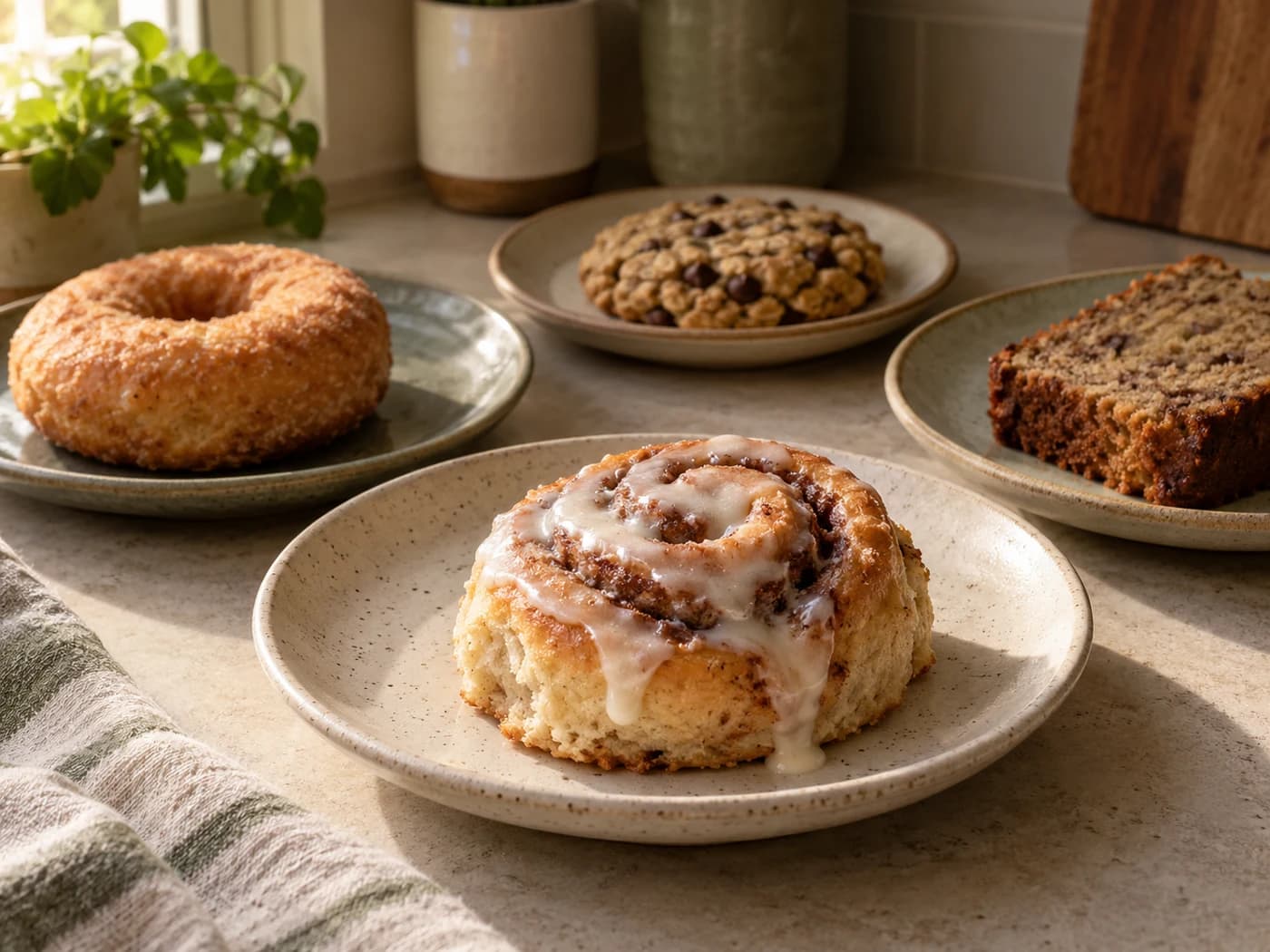
The recipe collection gives you several different ways to make a homemade protein-containing bake. Donuts use a ring pan and a spoonable batter. Cookies are portioned onto a tray. Banana bread is baked as a loaf. Cheesecake needs a long chill. Those differences help you choose a recipe for the equipment and time you have, rather than deciding entirely from a headline macro number that refers to a different-sized portion.
Other sweet bakes
The donut page uses oats, Greek yogurt and vanilla whey in plain baked rings, with measured pan oil. The cookies page uses peanut butter, oats, whey and chocolate chips. Banana bread uses a ripe-banana loaf, while cheesecake combines cottage cheese, yogurt and a biscuit base. Each guide states its own ingredient assumptions and serving definition. Use that page’s method for that food instead of transferring cinnamon-roll dough weights into a muffin, cookie or chilled dessert.
Breakfast and savoury ideas
French toast, bagels and oatmeal offer other breakfast styles. Pizza and mac and cheese give familiar savoury options with their crusts, sauces and dairy counted. A practical weekly plan may include ordinary meals and one or two bakes rather than several rich desserts at once. Choose recipes you can repeat comfortably and keep room for the other foods you enjoy. Protein can come from a varied pattern, with a cinnamon roll as one part of it.
Find the next recipe you will actually make
The recipe hub brings the guides together so you can compare preparation styles and move directly to a method. Read the serving definition before comparing the numbers: a donut, cookie, bagel, loaf slice and dinner bowl are different amounts of food. Consider whether you want something ready after cooking, a weekend bake or a dessert prepared the previous day. A useful next recipe fits your kitchen and appetite, with measurements clear enough to repeat when it becomes a favourite.